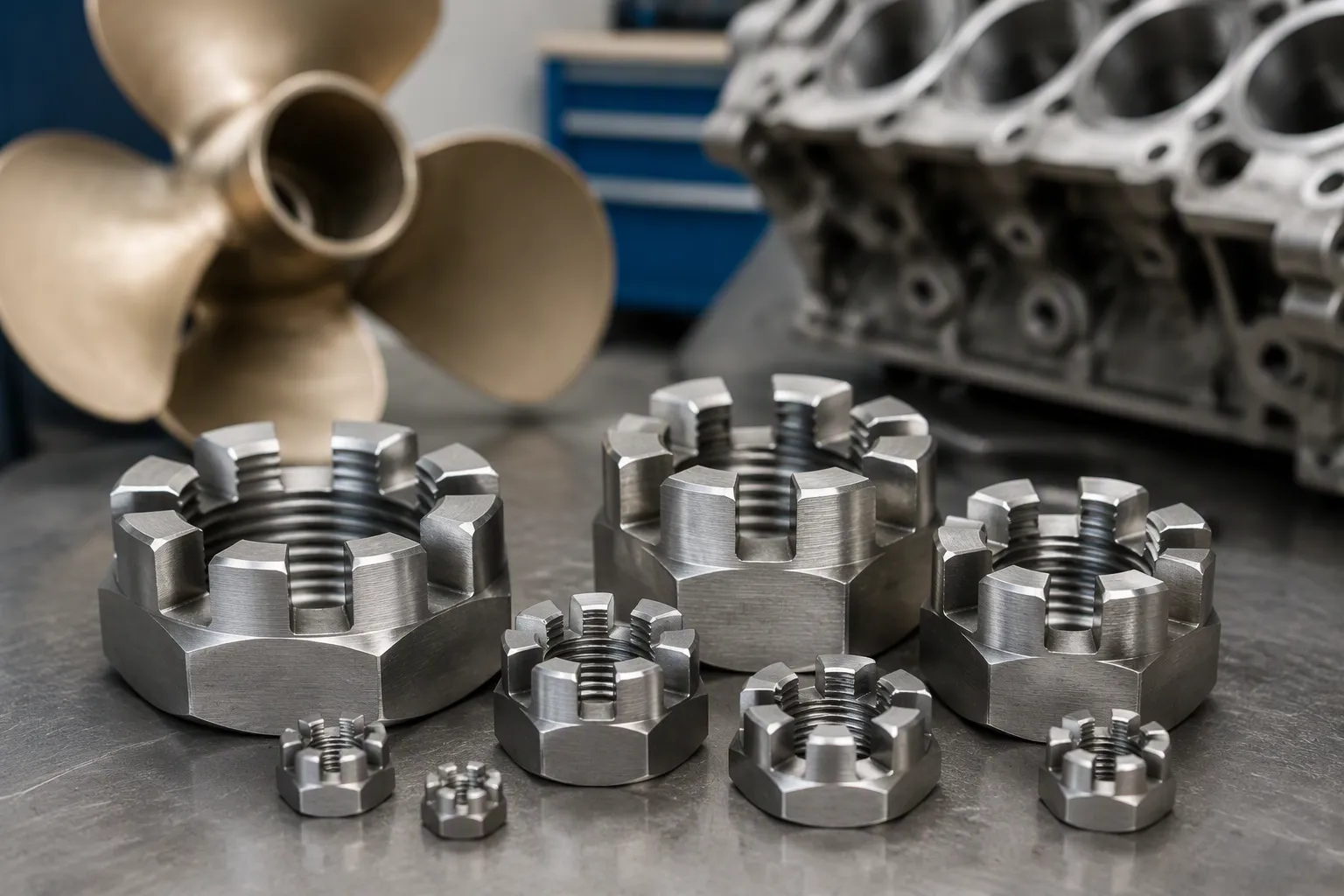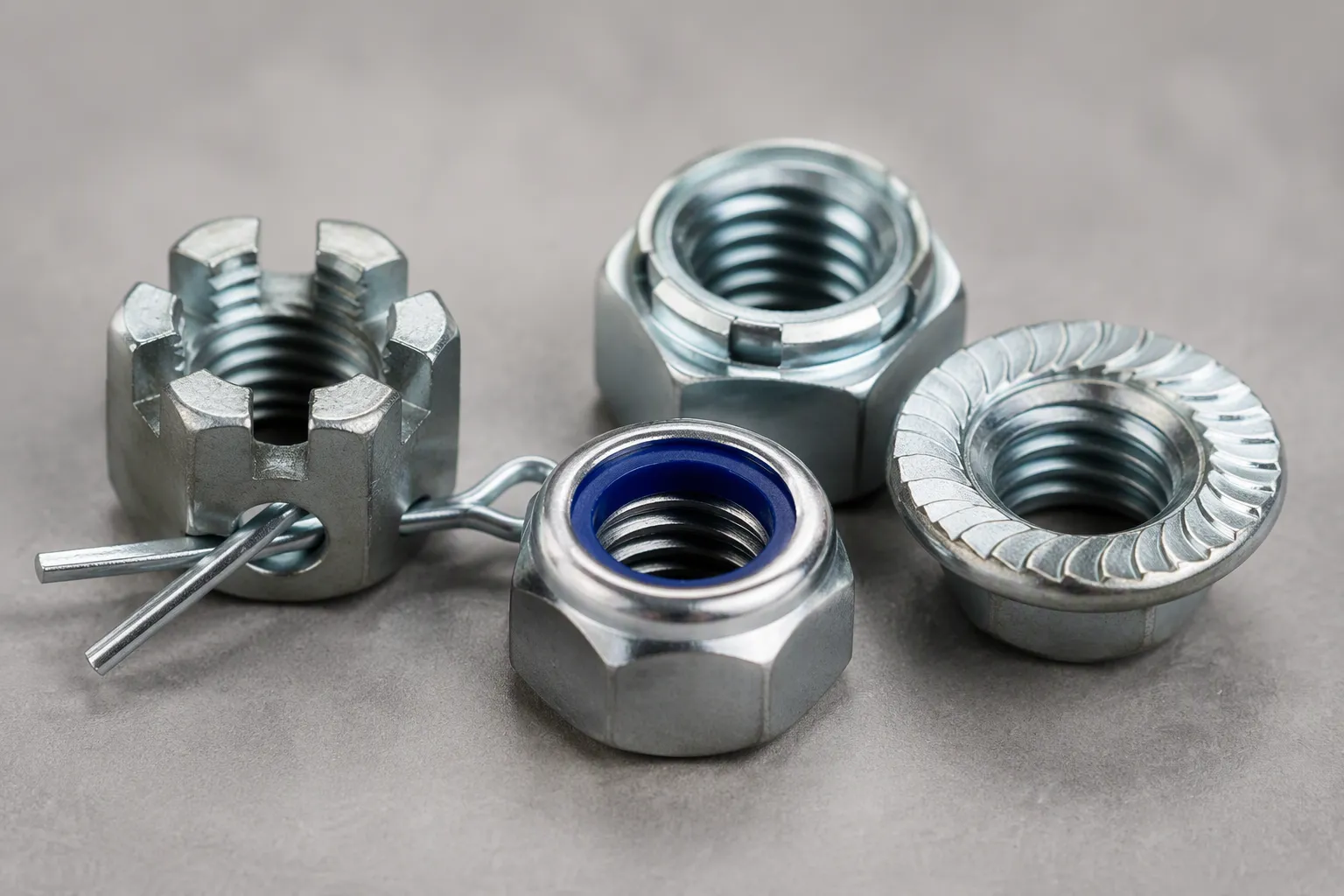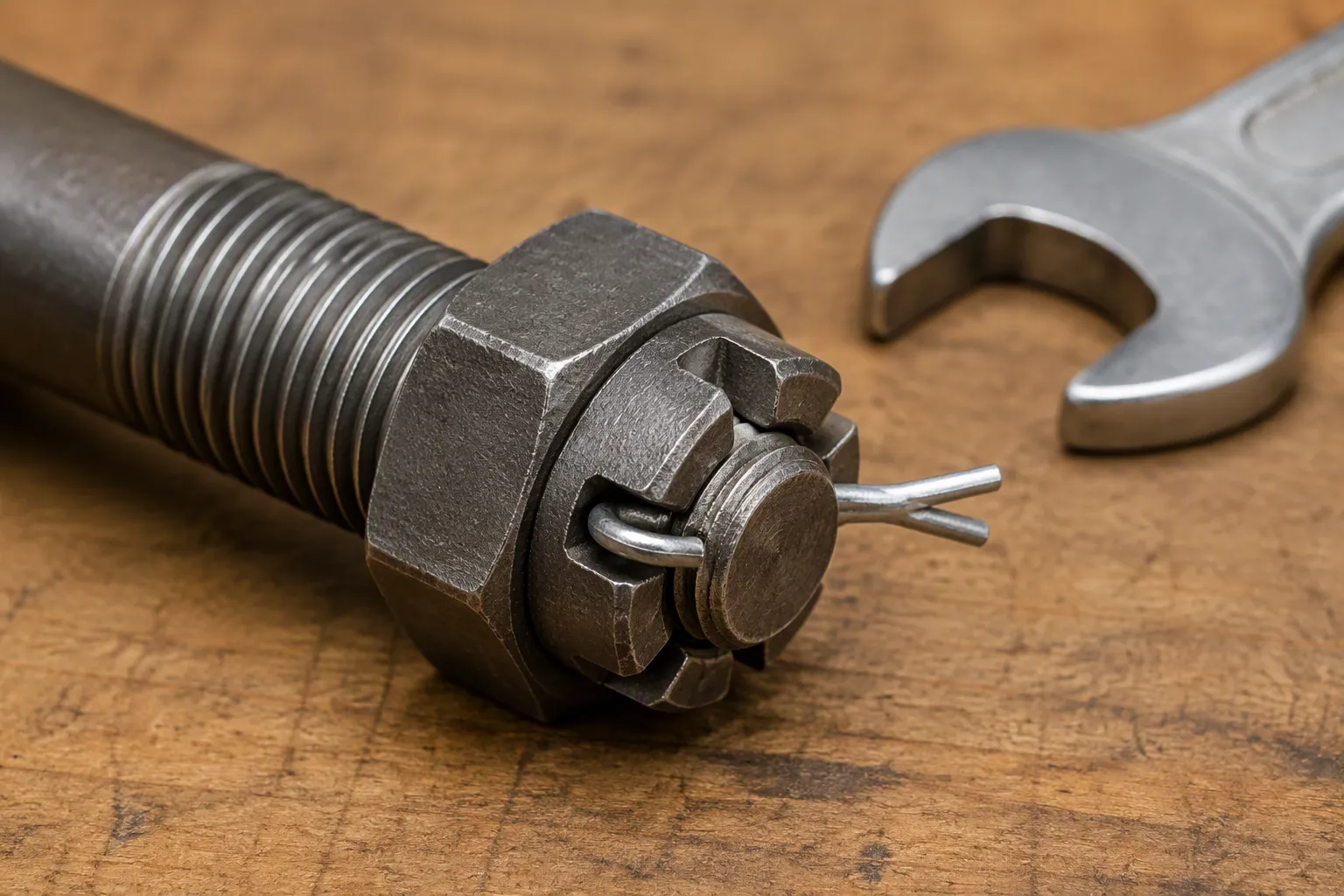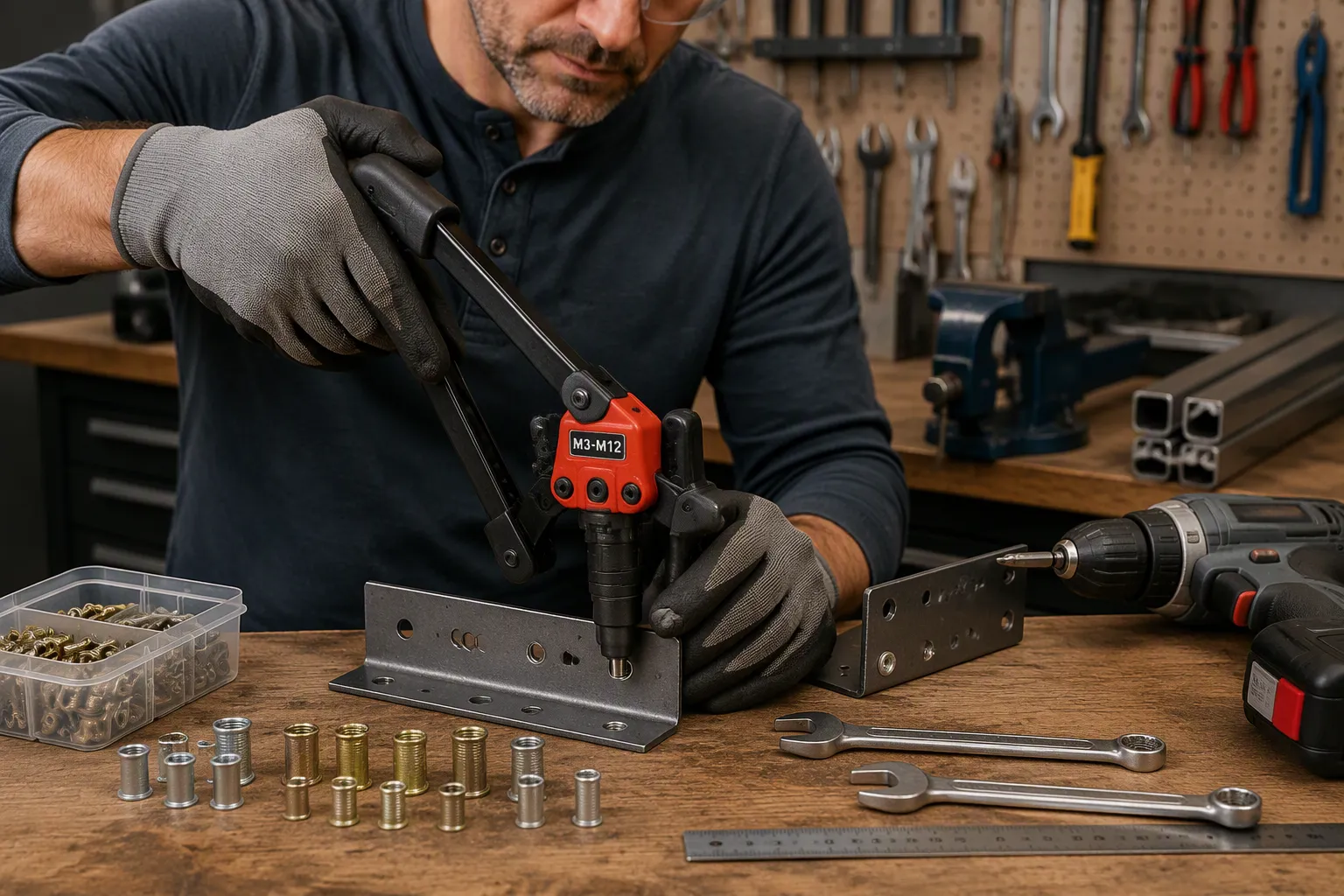
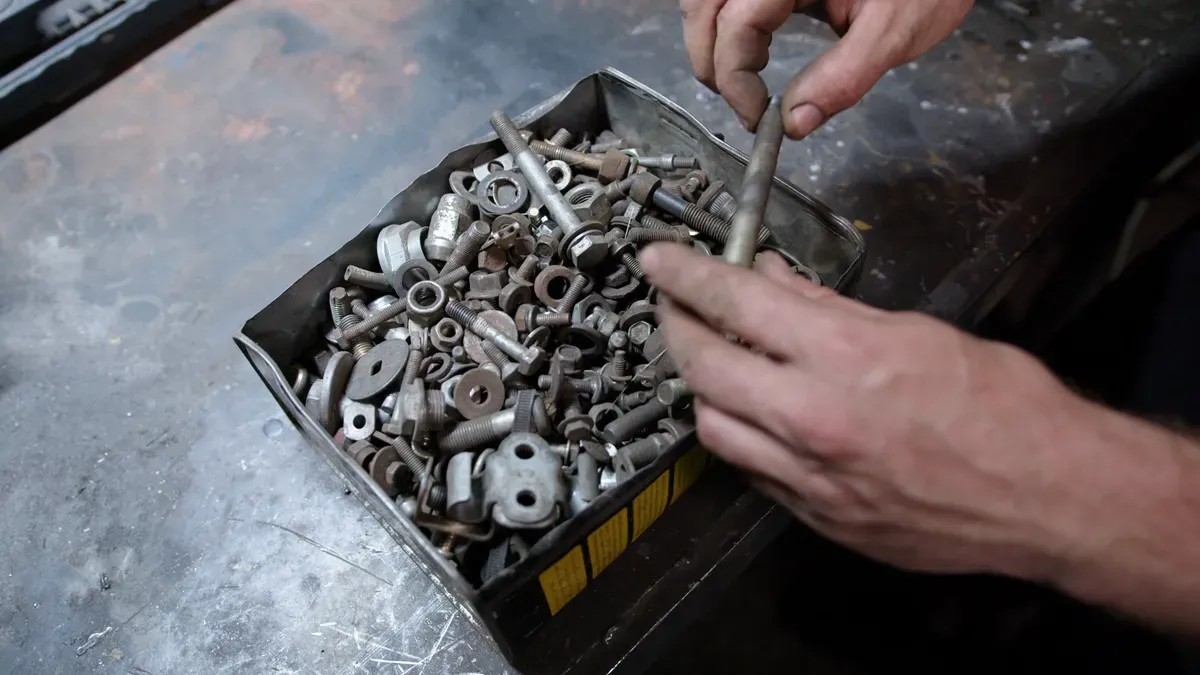
Choosing the appropriate lock nut depends on specific application needs, especially regarding safety and vibration resistance. Castle nuts, known for their castellated design, often provide mechanical locking through cotter pins, making them suitable for critical safety applications. Other lock nuts, such as nylon insert or prevailing torque types, offer quick installation and cost efficiency for less demanding environments. Evidence shows that nearly 70% of machinery-related accidents result from loose المسامير والبراغي, highlighting the importance of selecting the right fastener. A reputable مُصنِّع أدوات التثبيت المخصصة can help identify the best options to ensure safety and reliability.
Castle Nuts and Self-Locking Castellated Nut: What Are They?
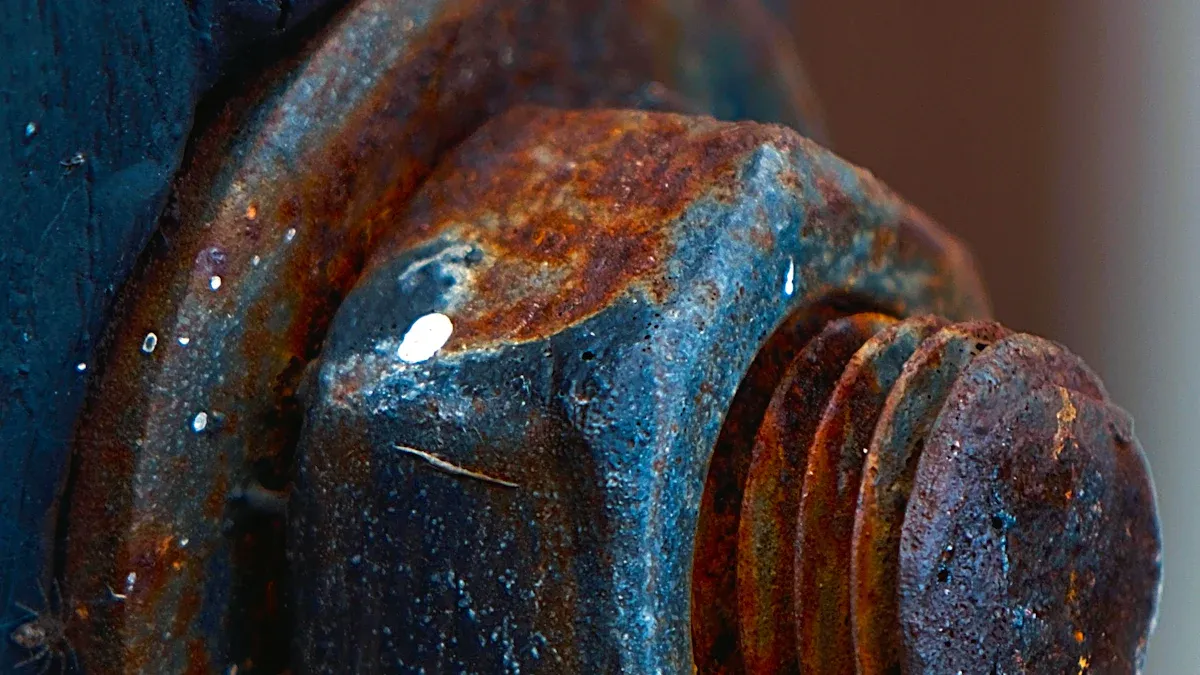
Castle Nuts Design Features
Slot structure and cotter pin mechanism
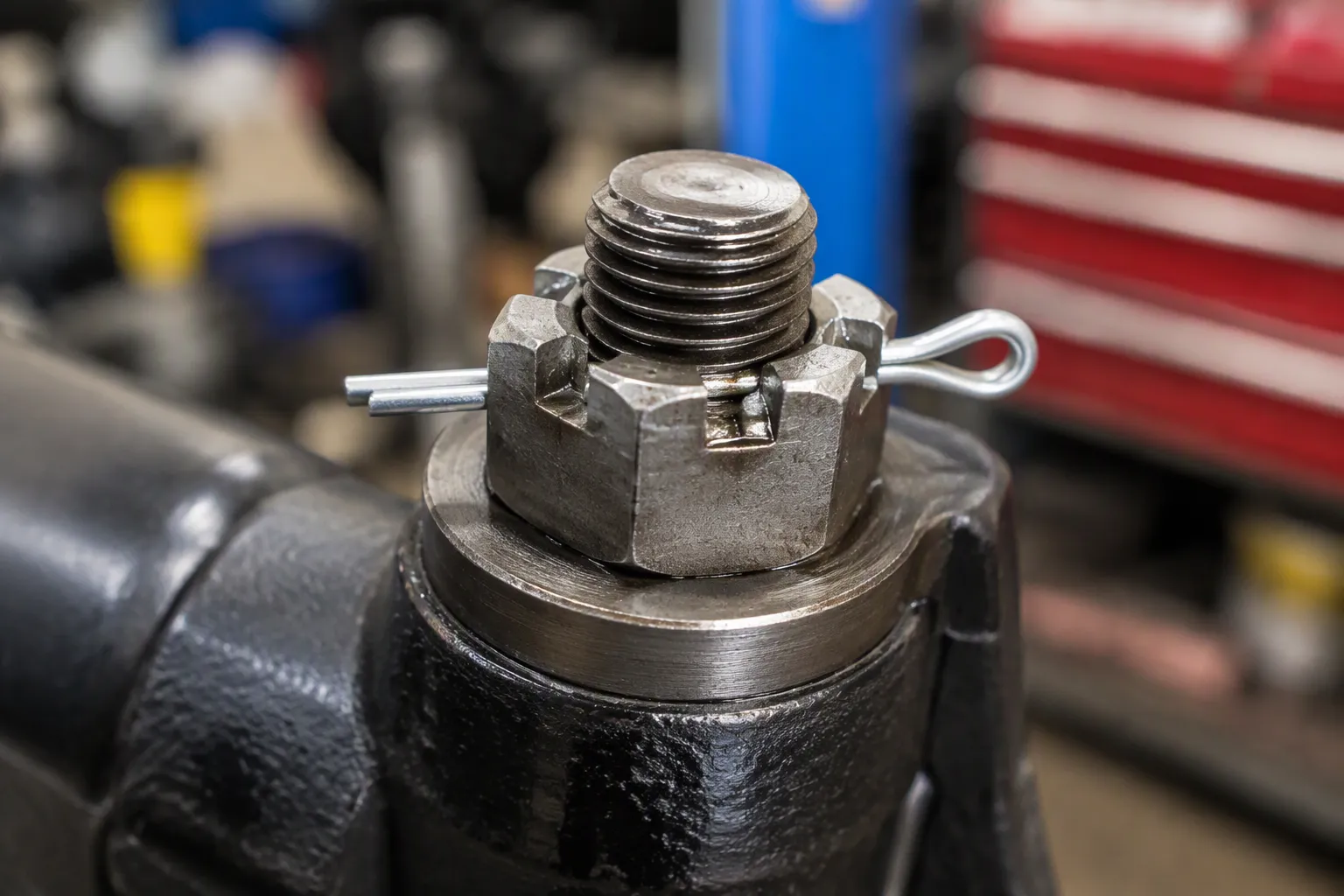
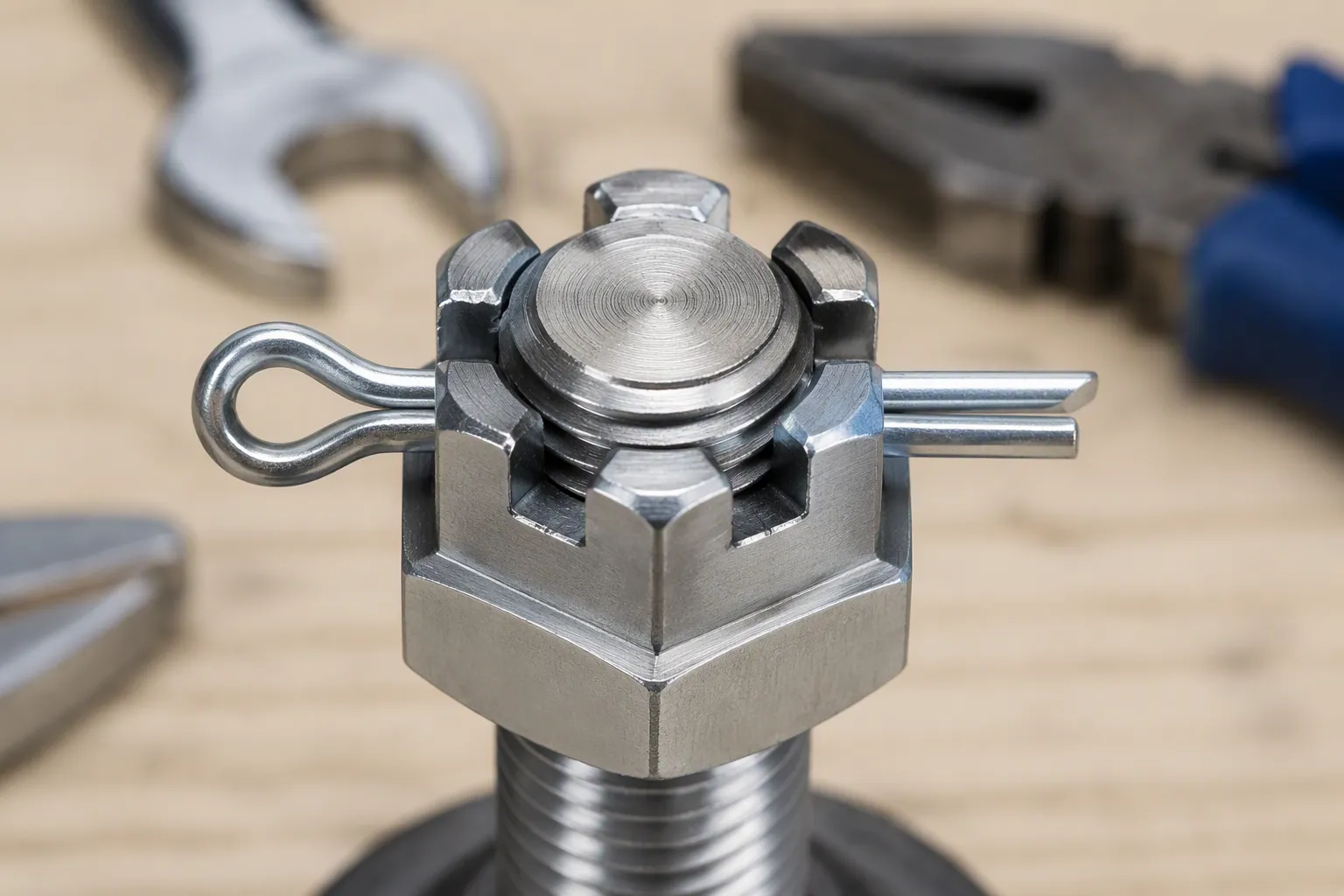
Castle nuts stand out due to their unique slot structure at the top. These slots align with a drilled hole in the bolt or stud. A cotter pin passes through both the slots and the hole, creating a mechanical lock that prevents the nut from rotating loose. This design ensures that castle nuts remain secure even in environments with significant vibration or movement. Mechanics often choose castle nuts for assemblies that require frequent adjustments or disassembly, such as wheels, steering systems, and suspension components. The cotter pin mechanism offers a reliable safeguard, making castle nuts a preferred choice for safety-critical connections.
Common materials used
Manufacturers produce castle nuts from a variety of materials to suit different applications. Common choices include carbon steel, stainless steel, and alloy steel. These materials provide the necessary strength and corrosion resistance for demanding environments. In some cases, castle nuts may feature protective coatings like zinc plating to enhance durability. The selection of material depends on the specific requirements of the application, such as exposure to moisture, chemicals, or extreme temperatures.
Self-Locking Castellated Nut Characteristics
Mechanical locking vs friction-based locking
الـ self-locking castellated nut combines two locking principles. It incorporates a prevailing-torque feature, such as a deformed thread section, an integrated locking collar, or a non-metallic locking element. This feature creates friction-based resistance to rotation. At the same time, the self-locking castellated nut retains the traditional slot structure for use with a cotter pin or lockwire. This hybrid approach provides both friction-based and mechanical locking, offering enhanced security compared to standard lock nuts. The self-locking castellated nut resists loosening from vibration while also delivering a positive mechanical stop.
Enhanced security for critical applications
Engineers rely on the self-locking castellated nut in critical applications where failure is not an option. The combination of friction-based and mechanical locking ensures that the nut remains secure under extreme conditions. Industries such as aerospace, automotive, and heavy machinery frequently specify the self-locking castellated nut for components exposed to constant vibration or dynamic loads. The dual locking system reduces the risk of accidental loosening, which can lead to equipment failure or safety hazards. By using the self-locking castellated nut, professionals achieve a higher level of reliability and peace of mind in their assemblies.
Other Lock Nuts: Types and Features
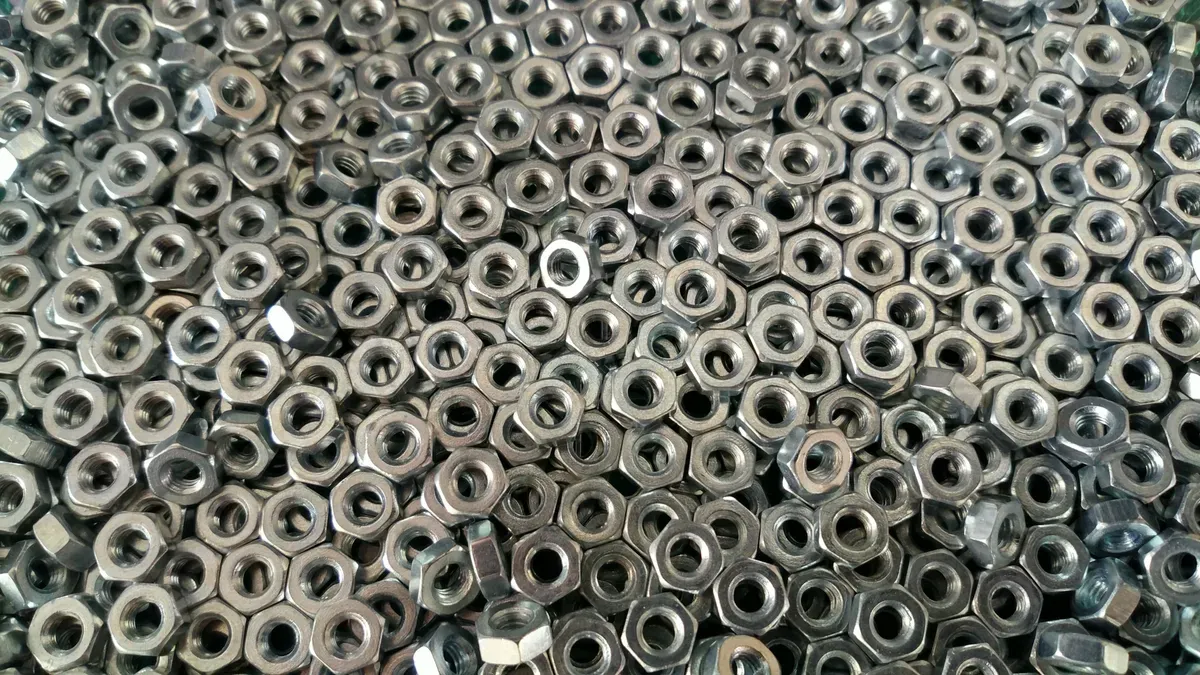
Lock nuts serve as essential fasteners in many assemblies. Each type offers unique features that suit specific applications. Proper selection and regular inspection of these nuts ensure safety and reliability. The following table summarizes several main types of lock nuts besides castle nuts and their distinguishing features:
| Type of Lock Nut | Distinguishing Features |
|---|---|
| Tri-Loc® Nuts | All-metal locknut with three locking elements that deflect threads at the top. Available in flange style. |
| Side Top Locknut | Features positive thread deflection on two sides at the top, with a punch on the outside of the top flat. |
| Serrated Hex Nut | Regular hex nuts with serrations on the top flat surface, used in tight spaces, especially in electronics. |
| PM Nuts | Patented fasteners with specific manufacturing standards, originally from NKR Precision. |
| Serrated Flange Lock Nut | Has an integral flange and serrated base, used with metal sheeting to distribute forces and minimize damage. |
| K-Lock Nut / Keps® Nut | Features a free-spinning external tooth lock washer that digs in when tightened, providing a locking mechanism. |
Nylon Insert Lock Nuts
Friction-based locking
Nylon insert lock nuts use a nylon ring inside the nut to create friction against the bolt threads. This friction-based locking mechanism prevents the nut from loosening during vibration or normal use. Many industries rely on this fastener for assemblies that require moderate vibration resistance. Regular inspection of the nylon insert ensures continued effectiveness. Guidance from manufacturers recommends replacing the nut after each removal to maintain locking strength.
Reusability and wear concerns
Nylon insert lock nuts cannot withstand temperatures above 250°F. The nylon insert deforms after installation, which limits reusability. Technicians must replace the nut after each use to guarantee secure fastening. Frequent inspection helps detect wear or damage to the nylon ring. Guidance from industry standards emphasizes the importance of using new nuts for critical applications. This practice ensures the fastener maintains its locking function and overall performance.
Jam Nuts
Application in light-duty settings
Jam nuts consist of thin nuts used together with a standard nut to lock the assembly in place. This fastener works best in light-duty settings where high vibration is not a concern. Maintenance teams often use jam nuts for adjusting set screws or securing components that require frequent repositioning. Inspection of both nuts during routine maintenance ensures continued security. Guidance from technical manuals suggests using jam nuts only in non-critical assemblies.
Installation simplicity
Jam nuts offer simple installation. Workers tighten the first nut, then add the jam nut against it to create opposing friction. This method locks the fastener without special tools. Regular inspection of the assembly helps detect any loosening over time. Guidance from experienced technicians recommends checking torque values to ensure proper locking.
Prevailing Torque Lock Nuts
مقاومة الاهتزاز
Prevailing torque lock nuts use a deformed thread or an all-metal design to maintain constant resistance against rotation. This fastener excels in high-vibration environments and can withstand elevated temperatures. Many industries choose prevailing torque lock nuts for machinery, automotive, and heavy equipment. Inspection intervals should follow manufacturer guidance to ensure the nut retains its locking force. These nuts can be reused a limited number of times, but regular inspection remains essential.
Cost and performance
Prevailing torque lock nuts offer a balance between cost and reliability. Their all-metal construction allows for repeated use, which reduces replacement costs. Guidance from industry experts highlights the importance of proper installation and inspection to maintain locking effectiveness. These nuts deliver consistent performance in demanding applications, making them a preferred fastener for many engineers.
Tip: Always follow manufacturer guidance for installation and inspection of any lock nut. Proper procedures extend the life of the fastener and ensure safety.
Flanged Lock Nuts
Distribution of load
Flanged lock nuts play a crucial role in distributing load across a wider surface area. The integrated flange acts as a washer, spreading the force applied by the nut over a larger section of the material. This design reduces the risk of damage to the fastener or the connected parts. Engineers often select this nut for assemblies where the material underneath is softer or prone to deformation. The flange helps maintain the integrity of the fastener connection, especially in applications involving sheet metal or thin substrates.
The nut’s flange also improves the stability of the fastener. When mechanics tighten the nut, the flange prevents the fastener from digging into the material. This feature ensures consistent torque values and reduces the likelihood of uneven stress distribution. Many industries rely on flanged lock nuts for automotive, machinery, and electrical assemblies. The nut’s ability to distribute load enhances the overall performance of the fastener system.
Note: Regular inspection of flanged lock nuts is essential. Technicians should check for signs of wear, corrosion, or loosening. Proper guidance from manufacturers ensures that the nut maintains its load distribution properties throughout its service life.
سهولة التركيب
Flanged lock nuts offer significant advantages in terms of installation. The integrated flange eliminates the need for a separate washer, simplifying the assembly process. Workers can install the nut quickly, reducing labor time and minimizing the risk of missing components. The nut’s design allows for easy alignment with the fastener, which streamlines installation in tight spaces or automated production lines.
The nut’s locking mechanism often incorporates features similar to prevailing torque designs. Some flanged lock nuts use deformed threads or serrations on the flange to provide resistance against loosening. This combination of locking and load distribution makes the nut a versatile fastener for many applications. Mechanics appreciate the nut’s reliability during installation, especially when guidance from technical manuals specifies torque values and installation procedures.
Flanged lock nuts also support repeated use in non-critical assemblies. Technicians can remove and reinstall the nut without significant loss of locking strength, provided that regular inspection confirms the integrity of the fastener. The nut’s ease of installation and reusability contribute to cost savings and improved workflow in manufacturing environments.
Tip: Always follow guidance from industry standards when installing flanged lock nuts. Proper torque application and routine inspection help maintain the fastener’s locking and load distribution capabilities.
Assemblies that require both load distribution and vibration resistance often combine flanged lock nuts with prevailing torque features. This approach maximizes the nut’s performance and ensures a secure connection. Engineers recommend this fastener for projects where safety, reliability, and efficiency are top priorities.
Pros and Cons: Castle Nuts vs Other Lock Nuts
Castle Nuts and Self-Locking Castellated Nut Pros
Mechanical locking for safety
Castle nuts and self-locking castellated nuts provide a high level of safety through their mechanical locking mechanism. The slot structure allows for cotter pin installation, which physically prevents the nut from rotating loose. This feature does not rely solely on friction, making the fastener ideal for critical applications where safety is paramount. The double-nut system, often used in conjunction with castle nuts, further enhances security by adding an additional layer of locking.
The locking mechanism remains extremely secure, even under severe vibration and heavy loads. This makes these nuts suitable for assemblies that require regular inspection and maintenance, such as in automotive steering and suspension systems.
| الميزة | الوصف |
|---|---|
| سلامة معززة | Mechanical locking prevents self-loosening without relying solely on friction. |
| سهولة التركيب | Easier to install and remove compared to other locking nuts. |
| التوافق | Works well with Grade 5 bolts or cap screws in demanding applications. |
- Locks in place with a cotter pin to prevent loosening due to vibrations.
- Preferred for critical components where reliability is essential.
High vibration resistance
Castle nuts excel in environments with high vibration resistance requirements. The cotter pin installation ensures the nut remains secure, even when subjected to constant movement. This quality makes the fastener a top choice for heavy machinery, aerospace, and automotive applications. The double-nut system, when used, adds further protection against loosening, especially in assemblies exposed to dynamic forces.
Reusability and adjustability
These nuts offer excellent reusability and adjustability. Mechanics can remove and reinstall the nut multiple times without significant loss of locking strength, provided that the cotter pin installation is performed correctly each time. The double-nut system allows for fine adjustments during assembly, which is valuable in applications that require precise alignment. Regular inspection ensures that the fastener maintains its integrity and continues to deliver reliable performance.
Castle Nuts and Self-Locking Castellated Nut Cons
Requires cotter pin or safety wire
One limitation of castle nuts is the need for cotter pin installation or safety wire. This step adds complexity to the assembly process. Workers must ensure proper alignment of the slots with the bolt hole before inserting the cotter pin. The double-nut system, while enhancing safety, also increases the number of components and steps required during installation. Guidance from technical manuals emphasizes the importance of correct cotter pin installation to maintain safety.
More complex installation
Castle nuts demand more time and skill during installation compared to other lock nuts. The process involves aligning the nut, inserting the cotter pin, and sometimes using a double-nut system for added security. This complexity can increase labor costs and extend assembly times, especially in high-volume manufacturing environments. Guidance from industry standards recommends thorough inspection after installation to confirm that the fastener meets all safety requirements.
| نوع الجوز | Limitation |
|---|---|
| بندق القلعة | Thinner AN320 castellated shear nut has half the tensile strength of the AN310. |
| Self-locking Castellated Nut | Should not be used on bolts connecting moving parts, such as in control cable applications. |
Potential for loosening if pin fails
The effectiveness of the castle nut depends on the integrity of the cotter pin installation. If the cotter pin shears or falls out due to improper installation or material fatigue, the nut may loosen under vibration. The double-nut system can provide backup, but regular inspection remains essential. Guidance from manufacturers stresses the need for routine inspection to detect any issues with the cotter pin or the fastener itself. Failure to maintain proper cotter pin installation can compromise safety and lead to equipment failure.
Other Lock Nuts Pros
Quick and easy installation
Other lock nuts, such as nylon insert, jam, prevailing torque, and flanged lock nuts, offer significant advantages in terms of installation speed and simplicity. Workers can install these nuts using standard tools, often without the need for additional components like cotter pins. The prevailing torque feature in many of these nuts provides reliable locking through friction, reducing assembly time. The double-nut system is not required, streamlining the process further.
- Simple Installation: These nuts can be installed with common tools or even by hand.
- Resistance to Loosening: They provide extra vibration resistance, ideal for high-motion applications.
- Cost Efficiency: More durable than standard nuts, leading to less maintenance and part replacements.
- Safety: Reduces the risk of structural issues in high-motion settings.
- Materials and Finishes: Available in various materials that enhance corrosion resistance.
Cost-effective options
Many other lock nuts are cost-effective, making them attractive for large-scale or budget-sensitive projects. Nylon insert lock nuts, jam nuts, and prevailing torque lock nuts require fewer steps during installation, which reduces labor costs. The double-nut system is unnecessary, further lowering material expenses. Guidance from industry experts highlights the durability of these fasteners, which translates to less frequent replacement and maintenance.
Nylon insert lock nuts are common in industrial and automotive applications due to their ease of installation and effectiveness against vibration. All-metal prevailing torque lock nuts are designed for high-temperature applications, while serrated flange lock nuts provide enhanced grip and load distribution. Jam nuts offer a simple and cost-effective locking solution.
Suitable for rapid assembly
Other lock nuts support rapid assembly processes, especially in automated production lines. The prevailing torque feature ensures consistent locking without the need for cotter pin installation. Workers can quickly secure the fastener, which improves workflow efficiency. The double-nut system is not required, allowing for faster throughput in manufacturing environments. Guidance from technical manuals recommends these nuts for non-critical applications where speed and cost are priorities.
Tip: Regular inspection of all lock nuts, regardless of type, ensures continued safety and optimal performance.
Other Lock Nuts Cons
Less secure under vibration
Many lock nuts relying solely on friction or serrations face challenges in high-vibration environments. Nylon insert lock nuts, for example, tend to degrade at temperatures above approximately 120 degrees Celsius, which diminishes their gripping capacity. When exposed to such heat, the nylon collar softens or melts, leading to a significant reduction in vibration resistance. As a result, these nuts become less reliable in safety-critical applications where consistent locking is essential. Similarly, serrated flange lock nuts can damage surface coatings or soft materials during tightening, compromising the integrity of the connection. Over time, the loss of grip can cause the nut to loosen unexpectedly, risking the safety of the entire assembly.
Limited reusability
One of the primary drawbacks of many other lock nuts involves their limited reusability. Nylon collar lock nuts, in particular, cannot withstand multiple installations. The nylon insert deforms during initial tightening, and subsequent removals weaken its ability to grip the bolt threads effectively. This degradation means technicians must replace these nuts after each removal to maintain their locking function, increasing maintenance costs and downtime. All-metal prevailing torque lock nuts, while more durable, still experience a decline in effectiveness after a limited number of reuses. The deformation or wear of their locking features diminishes their ability to resist loosening, especially in demanding environments. Consequently, frequent replacement becomes necessary to ensure ongoing safety and performance.
Possible wear and loss of grip
Over time, wear and tear can significantly impair the performance of other lock nuts. Nylon insert lock nuts, for instance, suffer from material fatigue and deformation, which reduces their friction-based locking capacity. This wear can occur from repeated tightening and loosening cycles, leading to a gradual loss of grip. In high-vibration settings, this deterioration accelerates, increasing the risk of the nut loosening unexpectedly. Similarly, all-metal prevailing torque lock nuts may experience thread deformation or surface wear after multiple uses, diminishing their ability to resist rotation. Such wear not only compromises the nut’s effectiveness but also poses safety concerns, especially in critical applications where maintaining a secure fastener is paramount. Regular inspection and replacement are often necessary to prevent potential failures.
These limitations highlight the importance of selecting lock nuts suited to the specific demands of each application. While they offer quick installation and cost benefits, their reduced security under vibration, limited reusability, and susceptibility to wear can pose risks in safety-critical environments. Proper understanding of these drawbacks ensures that engineers and technicians make informed decisions, prioritizing safety and reliability over convenience.
Critical Applications: Where Castle Nuts Excel
Automotive and Machinery Safety
Castle nuts serve as a cornerstone in automotive and machinery safety. Their unique battlement-like notches allow precise alignment with cotter pin holes, which ensures the cotter pin remains secure even under extreme conditions. Automotive engineers rely on castle nuts in steering linkages, suspension systems, and wheel assemblies. These components demand a locking mechanism that will not loosen, even when exposed to constant motion or impact.
Castle nuts play a critical role in securing bearings within wheel spindle assemblies. Proper torque application is essential to ensure adequate pre-load on tapered bearings, which prevents improper force distribution and excessive friction. This is vital for the correct installation and operation of wheel assemblies, thereby reducing the risk of failures due to fatigue.
In safety-critical systems, such as those found in aircraft and high-performance vehicles, the enhanced locking of castle nuts provides an extra layer of protection. Their design helps prevent catastrophic failures that could result from nut loosening. Maintenance teams value the ability to visually inspect the cotter pin, confirming the integrity of the assembly at a glance.
Heavy-Duty Equipment
Castle nuts deliver unmatched reliability in heavy-duty equipment. Operators of tractors, harvesters, and construction machinery depend on these fasteners to maintain secure connections in demanding environments. The following examples highlight where castle nuts prove essential:
- Tractors and harvesters
- Excavator pivot joints
- Construction equipment
- Industrial rotating shafts
These machines operate under high loads and frequent shock. Castle nuts ensure that critical joints remain locked, even when subjected to repeated stress. Their mechanical locking system resists loosening, which is vital for equipment that must perform consistently in the field. Regular inspection and maintenance become straightforward, as technicians can quickly verify the cotter pin’s presence and condition.
High Vibration Resistance Requirements
Castle nuts excel in high-vibration settings where other lock nuts may fail. Fine pitch variants increase thread density, which reduces slip per revolution during vibration. This feature, combined with the mandatory use of safety wire, keeps the nut securely fastened in high-stress environments. Fine pitch nuts require higher torque for equivalent preload, but they provide superior resistance to loosening in extreme vibration conditions.
- Fine pitch threads enhance vibration resistance.
- Safety wire or cotter pins ensure the nut remains locked.
- These features make castle nuts the preferred choice for vibration-resistant assemblies.
Engineers select castle nuts for critical applications where vibration, shock, and dynamic loads threaten the integrity of fasteners. Their proven performance in safety-critical and vibration-prone environments underscores their importance in maintaining operational reliability.
Typical Use Cases for Other Lock Nuts
Household Appliances
Manufacturers of household appliances often select صواميل قفل مزودة ببطانة من النايلون and flanged lock nuts for their assemblies. These nuts provide reliable vibration resistance for devices such as washing machines, refrigerators, and dishwashers. The nylon insert prevents loosening during daily operation. Flanged lock nuts distribute load evenly, which protects delicate internal components.
- Washing machines use nylon insert lock nuts to secure drum assemblies.
- Refrigerators rely on flanged lock nuts for compressor mounts.
- Dishwashers benefit from the vibration resistance of prevailing torque lock nuts.
Tip: Appliance technicians recommend replacing nylon insert lock nuts during major repairs to maintain optimal performance.
Light Machinery and Furniture
Light machinery and furniture require fasteners that balance security and ease of assembly. Jam nuts and serrated flange lock nuts fit these needs well. Furniture manufacturers use jam nuts to lock adjustable legs and support brackets. Light machinery, such as small pumps or fans, benefits from the quick installation of prevailing torque lock nuts.
| مجال التطبيق | Preferred Lock Nut Type | الميزة الرئيسية |
|---|---|---|
| Office chairs | Jam nuts | Simple height adjustment |
| Adjustable tables | Serrated flange lock nuts | Secure, non-slip assembly |
| Small power tools | Prevailing torque lock nuts | مقاومة الاهتزاز |
Furniture installers appreciate the reusability of jam nuts. They can adjust or reposition components without damaging the threads. Light machinery operators value the cost savings and reliability of all-metal lock nuts.
Quick Assembly and Cost-Sensitive Projects
Production lines that prioritize speed and budget constraints often choose lock nuts that support rapid assembly. Nylon insert lock nuts and K-Lock nuts (Keps® nuts) excel in these environments. Workers can install these nuts quickly using standard tools. The integrated locking features reduce the need for additional washers or adhesives.
- DIY furniture kits include nylon insert lock nuts for easy assembly.
- Electronics manufacturers use K-Lock nuts to secure circuit boards.
- Automotive suppliers select prevailing torque lock nuts for non-critical trim pieces.
Note: For projects with tight budgets, engineers recommend evaluating the expected vibration and load before selecting a lock nut. This ensures safety without unnecessary expense.
Other lock nuts offer practical solutions for everyday applications. Their ease of installation and cost-effectiveness make them a popular choice in industries where safety-critical locking is not required.
How to Choose: Safety, Vibration Resistance, and Application Needs
Assessing Critical Applications
Safety requirements
Engineers must prioritize safety when selecting lock nuts for critical assemblies. The choice between castle nuts and other lock nuts depends on the need for positive retention. Castle nuts, when paired with cotter pins, deliver positive retention by physically preventing rotation. This feature makes them ideal for applications where failure could compromise safety, such as steering linkages or suspension systems. Self-locking nuts, including nylon insert and all-metal types, also provide positive retention through friction or deformation, but may not match the mechanical security of a cotter pin. Material selection plays a vital role in safety, as high-strength alloys resist fatigue and wear, ensuring the fastener maintains its hold under stress. Proper thread fit and corrosion resistance further enhance positive retention, especially in harsh environments.
Vibration and load factors
Vibration and load conditions directly influence the selection of lock nuts. High or continuous vibration demands a locking mechanism that guarantees positive retention. All-metal lock nuts and flange lock nuts outperform standard nylon insert types in severe vibration, offering greater positive retention and durability. Engineers must evaluate whether the load is static, dynamic, or cyclic. For dynamic or cyclic loads, castle nuts with cotter pins provide superior positive retention, preventing loosening even under repeated stress. Matching the lock nut strength grade to the bolt grade prevents thread damage and fatigue failure. Higher loads may require thicker or higher-grade lock nuts to maintain positive retention and ensure long-term reliability.
Lock nuts enhance operational efficiency and reduce maintenance costs by minimizing the risk of fastener failure. Their ability to resist loosening ensures safety and reliability in critical systems.
Reusability and Installation Considerations
سهولة التركيب
Installation complexity varies between castle nuts and other lock nuts. Castle nuts require precise alignment of the notches with the bolt hole and insertion of a cotter pin, which can complicate assembly and adjustment. This process ensures positive retention but may increase labor time. In contrast, all-metal lock nuts and thread lockers offer positive retention with simpler installation, making them suitable for high-vibration and high-temperature environments. These alternatives allow for torque adjustments and rapid assembly, which benefits production lines and field repairs. The choice of lock nut should reflect the skill level of the installer and the need for positive retention in the application.
Cost and maintenance
Long-term maintenance and cost considerations influence lock nut selection. Castle nuts, especially those made from advanced materials, exhibit a high endurance limit and maintain positive retention over extended periods, even under cyclic loading. This durability reduces the need for frequent replacement and supports safety in demanding environments. Other lock nuts, such as prevailing torque and thread lockers, are designed to outperform standard nuts, offering positive retention and minimizing maintenance needs. Their unique construction secures the hold and enhances safety, making them dependable for industrial and mechanical assemblies.
| Lock Nut Type | تعقيد التثبيت | Maintenance Needs | Positive Retention Level |
|---|---|---|---|
| بندق القلعة | مرتفع | منخفض | مرتفع جدًا |
| All-Metal Lock Nut | متوسط | منخفض | مرتفع |
| Nylon Insert Lock Nut | منخفض | متوسط | متوسط |
| Thread Lockers | منخفض | منخفض | مرتفع |
Technicians should consider both initial installation effort and long-term maintenance when choosing a lock nut. The right selection ensures positive retention, safety, and reliability throughout the service life of the assembly.
Castle nuts deliver a mechanical lock and positive lock for high-stress and dynamic load applications, especially in automotive and machinery contexts. Other lock nuts offer quick installation and cost efficiency but may lack sustained preload and robust locking mechanism. Safety guidance recommends matching thread specifications, assessing environmental factors, and considering reusability. Industry experts advise selecting lock nuts based on application needs, installation complexity, and the required level of vibration resistance.
- Lock nuts resist loosening from vibration or torque.
- Castle nuts enhance safety in disassembly scenarios.
- Evaluate load requirements and finishes for corrosion resistance.
- Choose the locking method that fits the task.
الأسئلة الشائعة
What are the main differences between castle nuts and other lock nuts?
Castle nuts feature a castellated top designed for cotter pin locking, offering mechanical security. Other lock nuts rely on friction or deformation, such as nylon inserts or prevailing torque designs, providing quicker installation but often less security in high-vibration environments.
When should I choose a castle nut over other lock nuts?
Use castle nuts when safety and vibration resistance are critical. They excel in applications like automotive suspensions or aerospace components, where mechanical locking with cotter pins prevents loosening even under severe conditions.
Are nylon insert lock nuts reusable?
Nylon insert lock nuts are generally not reusable after removal. The nylon ring deforms during installation, reducing locking effectiveness. Replacing them after each removal ensures consistent performance and safety.
How do prevailing torque lock nuts resist loosening?
Prevailing torque lock nuts use deformed threads or metal features that create resistance against rotation. This friction prevents loosening from vibration, making them suitable for machinery and automotive applications requiring reliable, repeated use.
Can lock nuts be used in high-temperature environments?
Some lock nuts, like all-metal prevailing torque types, withstand high temperatures. However, nylon insert lock nuts typically fail above 250°F, limiting their use in high-heat settings.
What is the typical lifespan of lock nuts in demanding applications?
The lifespan depends on the type and environment. Metal lock nuts can last many years if properly installed and maintained. Nylon insert nuts may require replacement after a few cycles or exposure to heat and chemicals.
How important is regular inspection of lock nuts?
Regular inspection ensures lock nuts maintain their integrity. Over time, wear, corrosion, or damage can compromise their locking ability, especially in critical or high-vibration applications.
Which lock nut is easiest to install?
Nylon insert lock nuts and jam nuts offer the simplest installation. They require no special tools or alignment, making them ideal for quick assembly in non-critical applications.