A rivet nut tool allows users to create strong threaded connections in materials where traditional nuts and bolts cannot work. He can install a rivet nut quickly by drilling a precise hole, inserting the fastener, and applying steady force. Many rely on custom fasteners for specialized projects, and a custom fasteners manufacturer ensures the correct fit. This process suits anyone seeking reliable fastening without complex steps.
Rivet Nut Tool and Materials Checklist
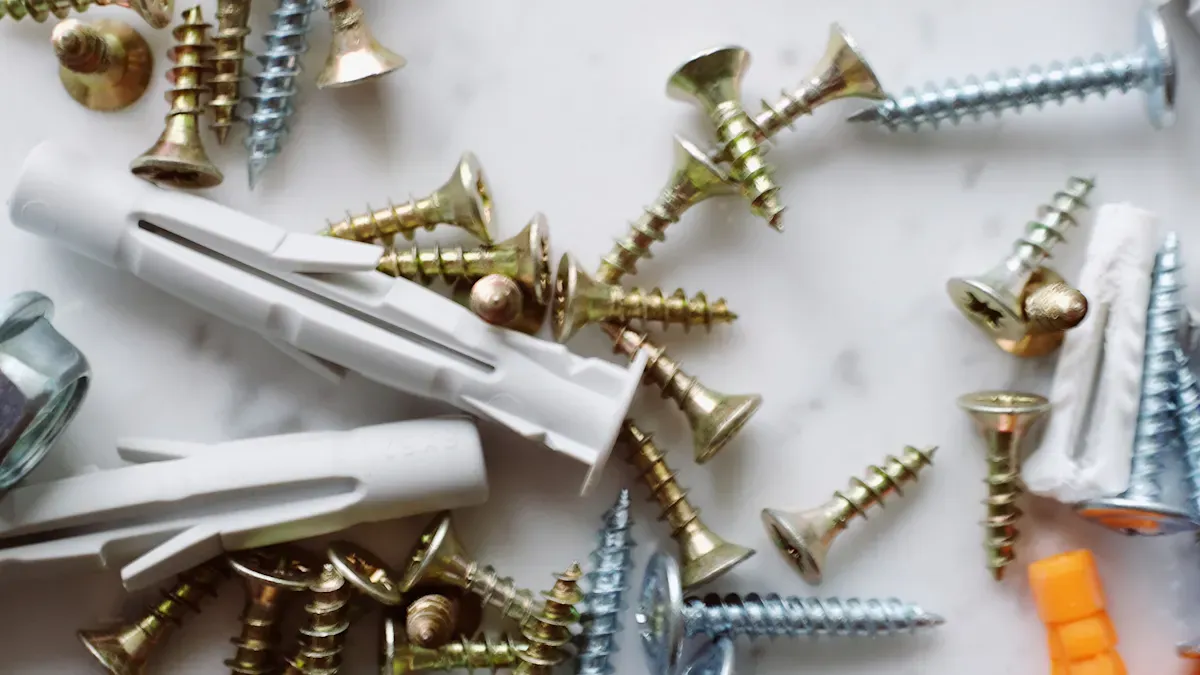
A successful rivet nut installation begins with the right tools and materials. Beginners benefit from preparing a complete checklist before starting any project. This approach ensures efficiency and safety throughout the process.
Essential Tools for Installation
Rivet nut tool
A rivet nut tool serves as the primary device for installing nut inserts. Market surveys highlight several models that cater to beginners, offering ease of use and reliable performance. The table below presents some of the most popular options:
| Rank | Tool Name | Overview Link |
|---|---|---|
| Top Shelf | AIUITIO 16″ Rivet Nut Tool, Rivnut Tool Kit | Overview |
| Next Best | AIUITIO 14” Rivet Nut Tool, Fast Loading and Unloading Nut, Rivnut Tool Kit | Overview |
| Editor’s Choice | NEXTACK Rivet Nut Tool Rivet Nut Kit with a Step Drill Bit | Overview |
| Consumer Favorite | WETOLS Rivet Nut Tool, Hand Rivet Nut Tool | Overview |
| Splurge Worthy | GIANTISAN 16-Inch Rivnut Tool Kit | Overview |
These tools feature ergonomic handles and interchangeable mandrels, making them suitable for various nut inserts and project requirements.
Drill and drill bits
A power drill, paired with the correct drill bit size, creates precise holes for nut inserts. Selecting the right bit ensures a snug fit and prevents damage to the workpiece.
Wrench or spanner
A wrench or spanner assists in tightening or loosening components during setup or removal. This tool helps maintain control and accuracy during installation.
Materials You Need
Rivet nuts (threaded inserts)
Rivet nuts, also known as nut inserts, provide strong threads in thin or soft materials. They come in different sizes and materials to match specific project needs.
Workpiece (metal, plastic, etc.)
The workpiece forms the base for installation. Common choices include steel, aluminum, plastic, and composites. The table below outlines the most frequently used materials in both DIY and professional settings:
| Material |
|---|
| Steel |
| Aluminum |
| Plastic |
| Composites |
Selecting the appropriate workpiece material ensures compatibility with the chosen nut inserts and the rivet nut tool.
Optional Safety and Marking Items
Marker or center punch
A marker or center punch helps identify the exact drilling location. Accurate marking reduces errors and improves the final result.
Safety glasses and gloves
Safety glasses protect eyes from flying debris, while gloves shield hands during drilling and installation. These items promote a safer working environment.
Tip: Always double-check the checklist before starting. Proper preparation saves time and prevents mistakes.
Understanding the Rivet Nut Tool
What Is a Rivet Nut?
Definition and uses
A rivet nut serves as a permanent mechanical fastener that creates strong, threaded connections in thin materials. Many refer to these fasteners as blind rivet nuts or nutserts. They feature internal threads for screws or bolts and an external body that expands during installation. This expansion secures the fastener in place without requiring heat or access to the backside of the material.
- Threaded rivet nuts provide reliable attachment points in sheet metal, plastic, and composite panels.
- Automotive manufacturers use them to attach panels and components, especially in areas where welding is not practical.
- Technicians rely on them for repairs and modifications in electronics, furniture, and machinery.
Types of rivet nuts
Several types of rivet nuts exist to suit different applications:
- Round body rivet nuts: Common for general-purpose fastening.
- Hexagonal body rivet nuts: Designed to prevent spinning in the hole.
- Small flange and large flange rivet nuts: Offer different levels of load distribution.
- Closed-end rivet nuts: Protect against moisture and debris entering the threads.
Selecting the right type depends on the material, load requirements, and installation environment.
How the Rivet Nut Tool Works
Tool mechanism
The rivet nut tool operates by pulling up on the rivet nut until it collapses and forms a secure bulge on the blind side of the workpiece. This process locks the fastener in place and prepares it for a bolt or screw. The following table outlines the main steps and results of the tool’s mechanism:
| Mechanism Description | Details |
|---|---|
| Tool Function | Pulls up on the rivet nut until it collapses |
| Force Application | Creates a bulge on the blind side |
| Final Step | Tool is removed, rivet nut is ready for a bolt |
| Compression | Deforms the nut on the blind side |
| Result | Permanent bulged flange locks it in place |
| Threading | Rivet nut is threaded onto the mandrel |
| Collapse | Walls of the rivet nut are collapsed |
| Tool Reversal | Tool reverses and separates from the installed nut |
Tip: Always match the tool’s mandrel size to the rivet nut for a secure installation.
Key parts of the tool
A rivet nut tool consists of several key parts that contribute to its operation. The table below summarizes these components and their roles:
| Key Part | Contribution |
|---|---|
| Rivet Nut | Creates a strong threaded connection in thin materials |
| Rivet Nut Tool | Installs the rivet nut into the base material |
| Mating Material | The base material where the rivet nut is installed |
| Attaching Component | The part connected using a bolt or screw inserted into the rivet nut |
| Bolt or Screw | Secures the attaching component to the rivet nut |
Each part plays a critical role in ensuring a reliable and durable threaded connection.
Preparing Your Workpiece for Rivet Nut Tool Use
Selecting the Right Rivet Nut
Sizing for your material
He must select the correct rivet nut size to ensure a secure and lasting connection. The thread size, material thickness, and hole diameter play critical roles in this decision. The table below outlines these factors:
| Factor | Description |
|---|---|
| Thread Size | The size of the thread needed for the application. |
| Material Thickness | The grip range, which is the thickness of the material the rivet nut can handle. |
| Hole Diameter | The required diameter of the hole for the rivet nut installation. |
He should measure the thickness of the workpiece and match it to the grip range specified by the manufacturer. Choosing the right thread size ensures compatibility with bolts or screws used in the project.
Material compatibility
Material compatibility affects the performance and durability of the installation. He can select from several options:
- Aluminum offers lightweight and corrosion-resistant properties, making it ideal for aerospace or electronics applications.
- Steel provides high strength and durability, suitable for automotive and construction uses.
- Stainless steel resists moisture and chemicals, preferred for marine or industrial environments.
He must consider the environment and load requirements before making a selection.
Marking and Drilling the Hole
Measuring and marking
Accurate placement of the rivet nut starts with careful measuring and marking. He should use a ruler or caliper to determine the exact location. A marker or center punch helps create a visible reference point. This step prevents misalignment and ensures the fastener sits where intended.
Drilling tips for clean holes
He must follow a systematic approach to prepare the hole:
- Select the right tools. He needs a rivet nut tool, drill, and appropriate drill bits. The drill bit should be slightly larger than the rivet nut size for a proper fit.
- Mark the hole location. He should mark the spot clearly to avoid errors.
- Drill the hole. He must drill straight and deep enough to accommodate the rivet nut’s body length.
- Clean the hole. He should remove debris and burrs to ensure a firm and square fit.
Tip: Cleaning the hole after drilling prevents installation issues and improves the final result.
Checking the Fit
Test fitting the rivet nut
He should test fit the rivet nut before final installation. The nut must slide in snugly without excessive force. He can thread a bolt or screw into the nut to check stability. If the nut spins or feels loose, the hole may be too large. If it requires too much force, the hole may be too small. An underset nut may spin during assembly, while an overset nut can damage threads or cause separation.
Note: Always verify the fit according to the manufacturer’s specifications to avoid costly mistakes.
He can achieve a reliable installation by selecting the right rivet nut, marking and drilling accurately, and checking the fit before proceeding.
Step-by-Step Guide to Using a Rivet Nut Tool
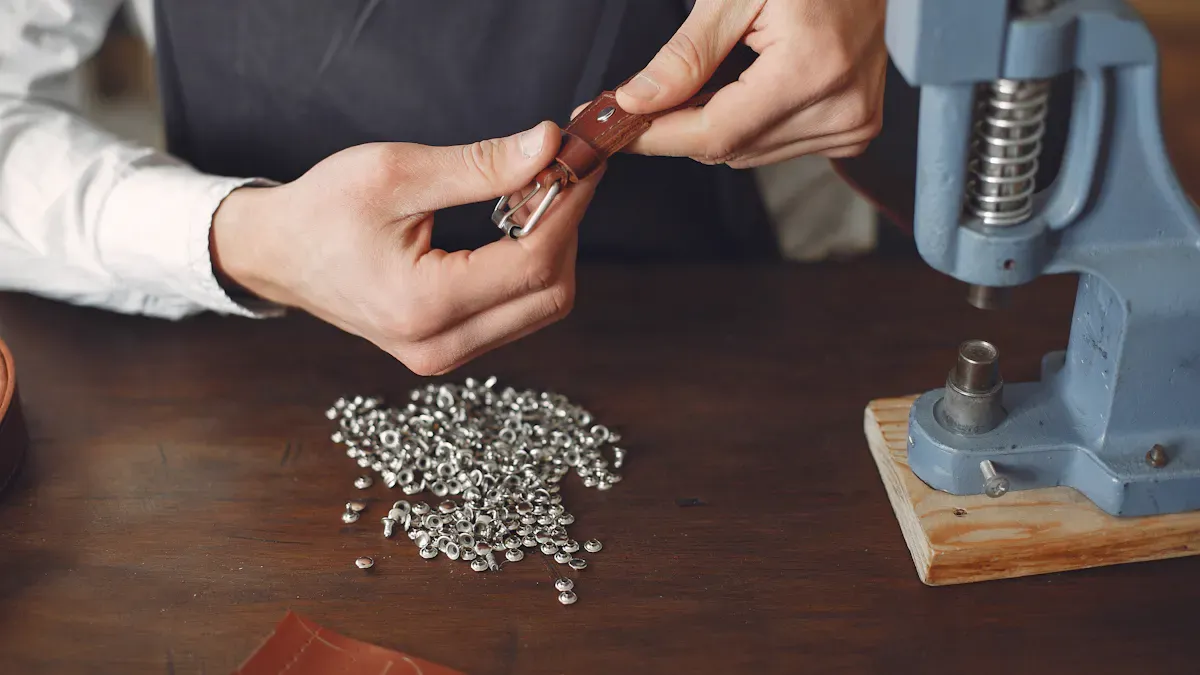
Setting Up the Rivet Nut Tool
Attaching the correct mandrel
He begins by selecting the correct size mandrel for the rivet nut. The mandrel must match the thread size of the nut to ensure a secure fit. Most rivet nut tools include several mandrels and nosepieces for different sizes. He connects the mandrel and nosepiece to the tool, making sure both parts are firmly attached. This step prevents thread damage and guarantees a smooth installation process.
Tip: Always check the manufacturer’s chart for the correct size mandrel before starting. Using the wrong mandrel can cause stripped threads or improper setting.
Threading the rivet nut onto the tool
He prepares to install rivet nuts by opening the handle of the rivet nut tool. He screws the rivet nut onto the nosepiece of the mandrel until the head of the nut sits flush against the tool. He pulls the end of the mandrel back and winds the adjuster to secure the nut in place. This method ensures the nut is properly seated and ready for installation.
Step-by-step instructions for threading:
- Connect the correct size mandrel and nosepiece to the rivet nut tool.
- Open the handle to allow access.
- Screw the rivet nut onto the nosepiece until it sits flush.
- Pull the mandrel back and wind the adjuster to lock the nut.
Installing the Rivet Nut
Placing the rivet nut in the hole
He inserts the rivet nut, now attached to the tool, into the pre-drilled hole. The hole must match the outer diameter of the nut for a snug fit. He keeps the tool perpendicular to the workpiece to avoid cross-threading or uneven flange formation. Clean holes free of debris and burrs help set rivet nuts securely.
Ensuring proper alignment
He ensures proper alignment by using the rivet nut tool straight and centered. Spin-spin tools thread the nut onto the mandrel and spin it to create clamping force, which helps maintain alignment. Spin-pull tools use hydropneumatic pressure to pull the mandrel back, setting the nut accurately. Pull-to-pressure tools operate based on achieving a set pressure, ensuring consistent installation in harder materials.
Note: Proper alignment prevents spinning and guarantees a strong connection. He should avoid tilting the tool or forcing the nut into the hole.
Securing the Rivet Nut
Squeezing the handles
He squeezes the handles of the rivet nut tool to set rivet nuts. This action pulls the mandrel, causing the unthreaded wall of the nut to collapse against the back side of the material. The nut forms a solid flange, anchoring it in place. Manual, cordless, and air-powered tools all use this principle to install rivet nuts.
Techniques for securing:
- Drill a hole matching the rivet nut’s specifications.
- Place the rivet nut into the drilled hole.
- Use the rivet nut tool to expand and secure the nut.
He must apply steady force and avoid over-tightening, which can damage the threads or deform the workpiece.
Knowing when the rivet nut is set
He determines when the rivet nut is fully set by checking several indicators. The nut should sit flat on the surface without movement or gaps. He ensures the nut does not rotate after setting. The flange must be visible and evenly formed on the blind side. He drills off the blind rivet nut from the threaded mandrel to complete the process.
Checklist for proper setting:
- Measure material thickness to match the grip range.
- Check the drill hole diameter for accuracy.
- Prepare the rivet nut tool and correct size mandrel.
- Drill and clean the hole.
- Screw the rivet nut onto the tool and insert it.
- Actuate the tool to compress and anchor the nut.
- Confirm the nut is straight and does not rotate.
- Remove the tool by reversing the mandrel.
Tip: He should always inspect the installed nut for stability before proceeding with assembly. A properly set rivet nut will accept a bolt or screw and provide a strong, reliable connection.
He can install rivet nuts confidently by following these steps, using the correct size mandrel, and maintaining proper alignment throughout the process.
Removing the Rivet Nut Tool
After securing the rivet nut, he must remove the tool carefully to avoid damaging the threads or the workpiece. This step ensures the fastener remains stable and ready for use.
Unscrewing the tool from the rivet nut
He begins by reversing the mandrel. Most rivet nut tools feature a mechanism that allows the mandrel to unscrew smoothly from the installed nut. He rotates the handle or knob counterclockwise, which disengages the mandrel from the internal threads. The nut stays firmly anchored in the material, while the tool separates without resistance.
He should avoid applying excessive force during removal. Gentle rotation prevents thread stripping and maintains the integrity of the fastener. If the tool feels stuck, he checks for misalignment or debris inside the nut. He cleans the area and tries again, ensuring the mandrel releases without damaging the threads.
Tip: He should always inspect the tool for wear or damage after removal. A well-maintained tool guarantees consistent performance and reduces the risk of installation errors.
Checking the installation
Quality assurance plays a vital role in rivet nut installation. He must verify that the fastener sits flush and remains stable. A clean, burr-free hole allows the rivet nut to align properly, which is essential for secure and lasting performance. Misalignment can cause poor load distribution and increase the risk of failure under stress.
He follows a checklist to confirm the installation:
- The rivet nut sits flat against the surface.
- The flange forms evenly on the blind side.
- The nut does not spin or move when touched.
- The threads remain intact and free from damage.
He checks for common issues, such as insufficient or excessive bulging, stripped threads, or spinning nuts. These problems indicate improper installation and require immediate correction.
He uses quality control tools to validate the installation. The table below summarizes key steps:
| Quality Control Step | Description |
|---|---|
| Go/No-Go Gauges | Used to verify proper thread engagement during installation. |
| Pull-Out Testing | Conducted on sample installations to validate the holding strength of the rivet nuts. |
He ensures correct installation the first time to avoid costly rework. Proper hole quality remains essential. Any burrs or blowouts can lead to misalignment, increasing the risk of spin out or pull out under stress.
Note: He should always perform a final inspection before proceeding with assembly. Reliable installation guarantees strong, lasting connections and prevents future failures.
Tips for Using a Rivet Nut Tool Successfully
Achieving a Secure Fit
Avoiding over-tightening
He must avoid over-tightening when using a rivet nut tool. Excessive force can deform the rivet nut, damage threads, or compromise the workpiece. To achieve a secure fit, he should follow a systematic approach:
- Drill the hole to the correct size and clean it thoroughly.
- Select the right mandrel and nosepiece for the rivet nut.
- Thread the rivet nut onto the mandrel until it sits flush.
- Insert the rivet nut into the workpiece, ensuring the flange is flush against the surface.
- Squeeze the tool handles until they stop, setting the nut without applying extra force.
- Release the tool by unscrewing the mandrel or using the auto-release feature.
- Inspect the fastener for stability and proper thread engagement.
Tip: He should stop squeezing the handles once resistance increases and the nut feels firmly set. Over-tightening often leads to thread stripping or material distortion.
Preventing spinning rivet nuts
Spinning rivet nuts pose a common challenge during installation. He can prevent this issue by focusing on several key factors:
- Use the correct installation tool and settings for the rivet nut’s size and material thickness.
- Prepare the hole to the exact diameter specified by the manufacturer. Holes that are too large or too small increase the risk of spinning.
- Select rivet nuts within their grip range to ensure complete deformation and secure anchoring.
- Choose rivet nuts with anti-spin features, such as knurled or hexagonal bodies, especially for softer or thinner materials.
Note: He should always verify the hole size and material thickness before installation. Anti-spin designs provide extra security in challenging applications.
Working with Different Materials
Metal vs. plastic
The installation process varies depending on the material. He must adapt his approach for metal and plastic workpieces.
| Material Type | Installation Process Details |
|---|---|
| Metal | Rivet nuts and clinch nuts are commonly used. He must clean the surface and select compatible materials to prevent corrosion. |
| Plastic | Specialty rivet nuts are suitable. Clinch nuts rarely apply because plastic lacks the ductility needed for proper installation. |
Tip: He should use corrosion-resistant rivet nuts for metal projects exposed to moisture. For plastic, he must select inserts designed for softer materials.
Thin vs. thick materials
Material thickness affects rivet nut selection and installation technique. He should consider the following adjustments:
- Choose rivet nuts designed for the specific thickness of the workpiece.
- Multi-grip rivet nuts work well for varying thicknesses.
- For very thin materials, self-clinching fasteners offer additional stability.
- Ensure the hole size matches manufacturer specifications.
- Use knurled body rivet nuts for thin or soft materials to enhance grip and prevent rotation.
- Employ a high-quality rivet nut tool to apply consistent pressure.
- Confirm the rivet nut is fully seated before setting.
Note: Knurled body rivet nuts provide extra grip in thin materials and reduce the risk of spinning. He should always check that the nut sits flush before compressing.
He can achieve reliable results by adjusting his technique for different materials and thicknesses. Careful preparation and tool selection ensure strong, lasting connections.
Common Mistakes with Rivet Nut Tool and How to Avoid Them
Drilling the Wrong Size Hole
Consequences and fixes
Many beginners make errors when drilling holes for rivet nut installation. These mistakes often lead to structural failure or poor joint quality. He must pay attention to the following common issues:
- Inappropriate hole sizing causes the fastener to lose grip and fail under load.
- Using the wrong drill bit produces holes that are either too large or too small, affecting the fit and strength.
- Burrs left on the hole edges prevent the fastener from sitting flush, which can result in joint failure.
He can address these problems by following manufacturer specifications and using precise tools. The table below outlines recommended fixes:
| Problem | Solution |
|---|---|
| Hole too large or too small | Ensure correct hole tolerance and choose appropriate knurled type for better grip |
| Incorrect drill bit | Follow the recommended hole diameter for each fastener size |
| Burrs or rough edges | Use a precise drill bit and clean, burr-free edges for a snug fit |
| Uncertainty about sizing | Always refer to manufacturer’s specifications for the correct hole size |
Tip: He should always clean the hole after drilling and check the diameter before proceeding with installation.
Cross-threading the Rivet Nut
How to prevent and correct
Cross-threading occurs when a bolt fails to engage properly with the threads of the fastener. This mistake often leads to spinning and weak connections. Excessive corrosion can also cause bolts to bind, increasing the risk of cross-threading. He can prevent this issue by aligning the bolt carefully and inspecting threads before assembly. If cross-threading happens, he should remove the bolt, inspect the threads, and replace damaged fasteners as needed.
Note: He should avoid forcing bolts into the fastener and always start threading by hand to ensure proper engagement.
Not Setting the Rivet Nut Fully
Signs and solutions
He must recognize signs that indicate incomplete installation. These signs include:
- Spinning during assembly or setting, which shows inadequate preload.
- Thread damage or separation of the threaded section from the unthreaded section, leading to a pull-out condition.
He can solve these issues by using tools that adjust to material thickness variations and applying the correct installation force. Monitoring the installation process helps validate the setup and prevents poor quality from advancing downstream.
Tip: He should inspect every fastener after installation and use process monitoring systems for consistent results.
Troubleshooting Rivet Nut Tool Problems
Rivet Nut Won’t Grip
Causes and fixes
A rivet nut that fails to grip the workpiece often signals a problem with the installation process or material compatibility. He must identify the root cause to ensure a secure connection. The table below outlines the most frequent issues and their explanations:
| Issue | Explanation |
|---|---|
| Slippage or Rotation | Insufficient grip between the nut and the base material can cause the fastener to fail in creating a firm connection. |
| Over-Compression | Excessive force during installation or using an incorrect rivet nut size can lead to deformation, damaging the fastener. |
| Misalignment | Improper handling or misaligned tools can cause uneven clamping pressure, resulting in poor performance. |
| Over-Tightening | Applying too much force can strip threads or cause the rivet nut to pull out, especially in thin materials. |
He should check the hole diameter and material thickness before installation. Selecting the correct rivet nut size and avoiding excessive force prevents deformation. Proper alignment of the tool ensures even clamping pressure. If the nut spins or slips, he can switch to a knurled or hexagonal body rivet nut for improved grip.
Tip: He should always inspect the installed nut for stability. A secure rivet nut will not rotate or move when touched.
Tool Gets Stuck
How to release it safely
A rivet nut tool may become stuck during installation due to improper alignment or lack of maintenance. He can follow these steps to release the tool safely:
1. Clean and lubricate the moving parts to restore smooth operation. 2. Ensure the rivet nut is properly aligned with the hole before installation. 3. Check that the work surface is clean and free of debris. 4. For persistent issues, consult the manufacturer’s instructions or seek professional repair.
He must avoid forcing the tool, which can damage both the fastener and the workpiece. Regular maintenance, including cleaning and lubrication, extends the tool’s lifespan and prevents sticking.
Note: He should always keep the tool’s moving parts free of dust and debris. Routine maintenance reduces downtime and improves performance.
Damaged Rivet Nut or Workpiece
What to do next
A damaged rivet nut or workpiece compromises the integrity of the connection. He must assess the extent of the damage before proceeding. If the rivet nut shows signs of deformation, stripped threads, or excessive bulging, he should remove it and replace it with a new fastener. For a damaged workpiece, he can re-drill the hole or use a larger rivet nut if the material allows.
He should avoid reusing damaged fasteners, as this increases the risk of failure. Careful inspection after each installation ensures long-term reliability. If the workpiece cannot support another installation, he may need to reinforce the area or select an alternative fastening method.
Callout: He should always prioritize safety and quality. Replacing damaged components prevents future failures and maintains the strength of the assembly.
He can achieve reliable results by following these essential steps:
- Prepare the hole to the exact diameter for the rivet nut.
- Insert the rivet nut onto the mandrel and place it in the hole.
- Set the rivet nut using the tool, ensuring a strong anchor.
- Check the installation for a secure fit and proper thread engagement.
Practicing on scrap material builds confidence and improves technique.
Anyone can master rivet nut installation with patience and attention to detail. Enjoy the satisfaction of a professional-quality connection.
FAQ
What size hole should he drill for a rivet nut?
He should always check the manufacturer’s chart for the correct hole diameter. The hole must match the outer diameter of the rivet nut for a secure fit. Using a caliper ensures accuracy.
Can he use a rivet nut tool on plastic materials?
Yes, he can use a rivet nut tool on plastic. He should select rivet nuts designed for softer materials and avoid over-tightening. Specialty inserts for plastic provide better grip and prevent cracking.
How does he prevent a rivet nut from spinning?
He can prevent spinning by drilling the correct hole size and using knurled or hexagonal body rivet nuts. Proper alignment during installation also helps. Anti-spin features work best in thin or soft materials.
What should he do if the rivet nut tool gets stuck?
He should stop and check for misalignment or debris. Cleaning and lubricating the tool often solves the problem. For persistent issues, he can consult the manufacturer’s instructions or seek professional repair.
Are rivet nuts reusable after removal?
No, most rivet nuts are not reusable once removed. The deformation during installation makes them unsuitable for reuse. He should always use a new rivet nut for each installation to ensure strength.
Which safety gear does he need when using a rivet nut tool?
He should wear safety glasses to protect his eyes from debris. Gloves help prevent hand injuries during drilling and installation. Proper safety gear reduces the risk of accidents.
Can he install rivet nuts without access to the back side of the material?
Yes, he can install rivet nuts “blindly” from one side. This feature makes them ideal for closed sections, tubes, or panels where the back side remains inaccessible.