
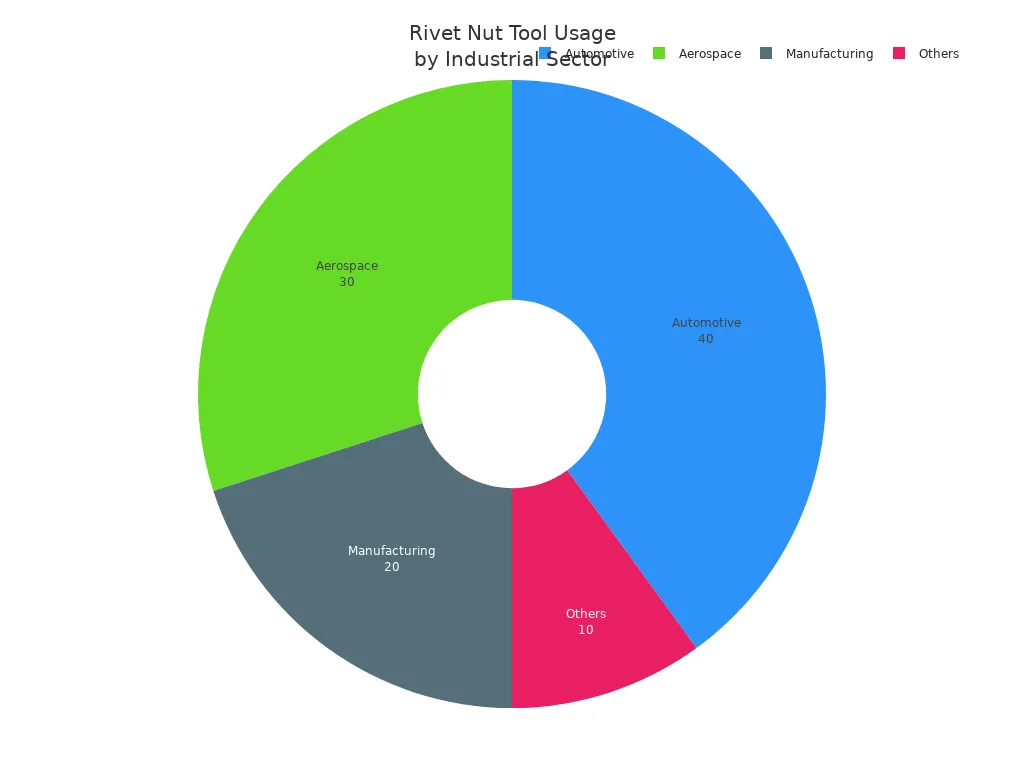
A rivet nut tool allows workers to install a rivnut quickly and securely into thin materials where traditional nuts and bolts cannot fit. Industries such as automotive, aerospace, and manufacturing rely on these products to create strong, reusable threads for custom fasteners. The table below highlights the main sectors using rivet nut tools:
| Sector | Market Share (%) |
|---|---|
| Automotive | 40 |
| Aerospace | 30 |
| Manufacturing | 20 |
| Others | 10 |
Rivet nut installation provides a high level of quality and reliability, especially when a custom fasteners manufacturer must meet strict requirements for safety and durability in demanding applications.
How Rivet Nut Tools Work
The Basic Mechanism of Rivnut Installation
Inserting the Rivnut
A successful installation begins with precise preparation. The user first drills a hole in the workpiece, ensuring the diameter matches the specifications for the chosen fastener. Next, the installer places the rivnut into the hole. The fit must be snug to prevent movement during the installation process. Proper alignment at this stage ensures the fastener will anchor securely and provide reliable threads for future use.
Expanding and Securing the Rivet Nut
Once the rivnut sits in the hole, the installer engages the rivet nut tool. The mandrel threads into the fastener. As the user operates the tool—typically by squeezing handles or activating a trigger—the mandrel pulls upward. This action causes the unthreaded portion of the rivet nut to expand behind the workpiece. The expansion creates a bulge that grips the material tightly. The mechanical advantage of the tool’s lever system amplifies the force applied by the user, ensuring a secure and permanent installation. This process allows rivet nut tools to deliver consistent results, even in thin or delicate materials.
Note: Manual installation can present challenges. Common issues include:
- Fasteners being dropped on the floor
- Time-consuming manual installation process
- Loose fasteners on the floor posing a safety hazard
Key Components of a Rivet Nut Tool
Mandrel and Nosepiece Functions
The mandrel serves as the core component that threads into the rivnut. It must match the size and thread pitch of the fastener. During installation, the mandrel pulls the rivet nut, causing it to deform and lock into place. The nosepiece guides the mandrel and supports the fastener, ensuring proper alignment and preventing damage to the workpiece. High-quality mandrels and nosepieces improve tool performance and extend service life.
Handle or Trigger Mechanism
The handle or trigger mechanism provides the user interface for operating rivet nut tools. Manual models use long handles to maximize leverage, reducing the physical effort required. Pneumatic and cordless versions feature triggers that activate internal mechanisms, delivering consistent force with minimal user fatigue. The design of these components directly affects ease of use, speed, and installation quality.
| Component | Contribution to Performance |
|---|---|
| Material and Build Quality | Ensures durability and reliability under high forces, preventing flexing or breaking. |
| Effort-Saving Design | Longer handles provide better leverage, reducing effort needed for operation. |
| Mandrel Sizes and Compatibility | A wide range of mandrels increases versatility for different rivet nut sizes and applications. |
| Tool-Free Mandrel Changes | Allows for quick changes between mandrels, saving time and enhancing convenience. |
Rivet nut tools combine these features to deliver reliable, repeatable installations across a range of materials and applications. Selecting the right tool and components ensures optimal performance and long-term value.
Types of Rivet Nut Tools
Selecting the right tool for installing rivet nuts depends on the application, material, and production volume. The market offers several types of rivnut tools, each designed to meet specific needs. Understanding the differences helps users achieve optimal results and efficiency.
Manual Rivet Nut Tools
Manual tools remain popular for their simplicity and affordability. They suit small-scale projects, repairs, and occasional use. Users can choose from several designs, each with unique features and ergonomic benefits.
Hand Squeeze Rivet Nut Tools
Hand squeeze tools operate with a scissor-like motion. They work best for installing smaller rivet nuts in thin materials. These tools require moderate hand force and suit occasional jobs. Many hand rivnut tools feature rubberized grips to reduce slippage and vibration, improving comfort during use. Single-action ratcheting tools fall into this category, offering straightforward operation for basic tasks.
Lever-Action Rivet Nut Tools
Lever-action tools use a dual-handle design with a compound leverage mechanism. This system reduces the hand force needed, making them ideal for larger rivet nuts or extended work sessions. The ergonomic design, including balanced weight and shaped handles, minimizes operator fatigue. Lever-action tools accommodate a range of mandrel sizes and often include tool-free mandrel changes for added convenience.
Tip: For larger jobs or frequent installations, lever-action tools provide better ergonomics and efficiency compared to basic hand squeeze models.
The table below compares some of the most popular manual rivet nut tools available:
| Tool Type | Description |
|---|---|
| Double Action Lever Tool | Ideal for larger rivet nuts and small custom production, features two handles for operation. |
| Plunger Double Action Lever Tool | Functions similarly to the double action lever but allows for quicker release with a central plunger. |
| Expendable Tool | Economical option for everyday consumers, uses a hex shaped head for installation. |
| Hi-Torquer Threaded Insert Tool | Requires less exertion, suitable for small-scale projects, uses a t-handle for operation. |
| Threaded Insert Hand Tool | Similar to the double action lever but allows for installation at a 90° angle. |
Pneumatic Rivet Nut Tools
Air-Powered Rivet Nut Tool Operation
Pneumatic rivet nut tools use compressed air to deliver consistent installation force. Operators activate the tool with a trigger, allowing for rapid and repeatable installation of rivet nuts. These tools excel in high-volume production environments where speed and uniformity are critical.
Pros and Cons of Pneumatic Rivet Nut Tools
- Provide consistent force for every installation.
- Greatly reduce operator fatigue during long shifts.
- Ideal for assembly lines and manufacturing plants.
- Require an air compressor and regular maintenance.
- Less portable than manual or cordless options.
Manual tools cost less and suit small thread sizes, but they can lead to fatigue and inconsistent results in large-scale settings. Cordless tools offer mobility but may not match the power of pneumatic models.
Cordless Rivet Nut Tools
Battery-Powered Rivet Nut Tool Features
Cordless rivet nut tools use rechargeable batteries, providing freedom from air hoses or power cords. These tools increase installation speed, allowing workers to install three to four times more rivet nuts per hour compared to manual tools. The battery-powered mechanism reduces fatigue, enabling longer productive periods.
Advantages and Limitations of Cordless Rivet Nut Tools
- Commonly used in roofing, vehicle repair, and field installation due to their mobility.
- A 4.0Ah lithium-ion battery can install 400-600 aluminum rivets, 200-300 steel rivets, or 150-200 stainless steel rivets per charge.
- Cordless tools may have less power than pneumatic models, especially for heavy-duty applications.
- Accessories such as extra batteries and quick-change mandrels enhance versatility.
Note: Cordless tools provide the best balance of speed, mobility, and ease of use for on-site work.
This overview of the main types of rivet nut tools helps users match the right tool to their project requirements, material types, and production needs.
Hydraulic Rivet Nut Tools
High-Force Applications for Hydraulic Rivet Nut Tools
Hydraulic rivet nut tools deliver exceptional force, making them the preferred choice for demanding industrial environments. These tools use hydraulic pressure to install large or heavy-duty rivet nuts with minimal operator effort. Operators often select hydraulic models when working with thick metals or high-strength materials that require consistent, high-torque installation. The robust design of hydraulic tools ensures reliable performance, even during continuous use on production lines.
Hydraulic rivet nut tools excel in industries where durability and efficiency are critical. The following table highlights key applications and features across several sectors:
| Industry/Application | Key Features |
|---|---|
| Trucking and Trailer Manufacturing | Reliable fastening, durability, efficiency, various applications for truck and trailer components. |
| Automotive Manufacturing and OEM | High-speed installation, consistent quality, durability, flexibility for various vehicle platforms. |
| Maintenance and Repair Operations | Portable solutions, reliable performance, quick setup, suitable for equipment repair and maintenance. |
| Aerospace and Aviation | Precise torque control, lightweight tools, reliable performance, compatibility with aerospace-grade fasteners. |
| Construction and HVAC | Weather-resistant, suitable for ductwork and structural connections, efficient operation. |
| General Manufacturing | Adaptable, consistent quality, reduced maintenance, scalable solutions for production. |
Hydraulic tools often include advanced accessories such as quick-change mandrels and adjustable stroke settings, which improve productivity and reduce downtime.
Typical Use Cases for Hydraulic Rivet Nut Tools
Hydraulic rivet nut tools handle a wide range of installation tasks. Technicians use them for assembling truck frames, attaching heavy brackets, and securing structural components in vehicles. In aerospace, these tools provide precise torque control, which is essential for safety-critical applications. Maintenance teams rely on hydraulic models for quick repairs and retrofits, especially when dealing with thick or layered materials. Construction professionals use hydraulic tools for HVAC ductwork and structural steel connections, where weather resistance and efficiency matter most.
Specialty Rivet Nut Tools
Spin-Spin Rivet Nut Tools
Spin-spin rivet nut tools use a unique mechanism that spins the mandrel inward to collapse the rivet nut. This design suits applications with consistent use of one part and size, such as assembly lines producing a single product. Spin-spin models work best with thin-walled steel, aluminum, or brass rivet nuts. Their lightweight construction and lower cost make them attractive for repetitive tasks. However, their installation range remains limited to specific thread sizes, such as #10, ¼”, M5, or M6.
Spin-Pull Rivet Nut Tools
Spin-pull rivet nut tools offer greater versatility. These tools pull the mandrel back to install the rivet nut, accommodating a wider range of thread sizes from M3 to M10 or #4-40 to 3/8”-24. Spin-pull models handle heavy-duty rivet nuts, including full-body hex-style and stainless steel types. Although heavier and more expensive, spin-pull tools adapt to varied applications and materials, making them valuable in industries that require frequent changes in fastener size or type.
The table below compares the main features of spin-spin and spin-pull tools:
| Feature | Spin-Spin Tool | Spin-Pull Tool |
|---|---|---|
| Mechanism | Uses torque to spin the mandrel inward to collapse the rivet nut | Pulls back the mandrel to install the rivet nut |
| Installation Range | Limited to specific thread sizes (#10, ¼”, M5, M6, etc.) | Wide range (M3 to M10, #4-40 to 3/8”-24) |
| Material Compatibility | Thin-walled steel, aluminum, brass | Heavy-duty rivet nuts, full-body hex-style, stainless steel |
| Cost | Generally less expensive and lightweight | More versatile but heavier and more expensive |
| Recommended Use | Best for consistent use of one part and size | Suitable for varied applications with different sizes |
When selecting among the types of rivnut tools, users should consider the types of rivet nuts required for their application and the available accessories to maximize efficiency and adaptability.
Choosing the Right Rivet Nut Tool for Your Application
Selecting the most suitable rivet nut tool requires careful consideration of the material, project size, and available features. Each application presents unique challenges, so understanding these factors ensures reliable fastening and long-term quality.
Matching Rivet Nut Tools to Material Types
Thin Sheet Metal Applications
Thin sheet metal demands precision and gentle force during installation. Pull-type (standard) blind rivet nuts offer a simple and cost-effective solution for these applications. Large flange and countersunk head styles distribute load efficiently, preventing pull-through and maintaining a low profile. Multi-grip rivet nuts provide flexibility for varying sheet thicknesses, making them a practical choice in environments where material thickness may change.
- Steel delivers maximum strength for structural sheet metal work.
- Aluminum provides corrosion resistance and reduces weight.
- Stainless steel resists harsh environments, such as marine or outdoor settings.
- Matching the rivet nut material to the substrate prevents galvanic corrosion, which can occur when dissimilar metals contact each other.
Plastics and Composite Applications
Plastics and composites require tools and products that minimize stress and avoid material damage. Drive-type rivet nuts work well in soft plastics because they do not require special tooling and reduce the risk of cracking. For composites, installers should use gentle, progressive compression to prevent delamination. Multi-grip rivet nuts also perform well, adapting to the variable thickness often found in composite panels.
- Brass rivet nuts offer excellent electrical conductivity, which benefits electronic enclosures.
- Careful force control is essential to avoid cracking or damaging the substrate.
- The coefficient of thermal expansion matters in temperature-sensitive applications, especially when combining aluminum rivet nuts with steel substrates.
Thick or Hard Material Applications
Thick or hard materials, such as structural steel or layered assemblies, require robust tools and specialized fasteners. Self-plugging (closed-end) rivet nuts provide fluid-tight seals, making them ideal for applications exposed to liquids or contaminants. Hydraulic or pneumatic rivet nut tools deliver the necessary force for full compression, ensuring a secure fit. Multi-grip rivet nuts add versatility, accommodating a range of material thicknesses.
- Steel rivet nuts require full compression for optimal strength.
- Galvanic corrosion becomes a concern in harsh environments, such as marine or road salt exposure.
- Large flange styles help distribute force and prevent substrate deformation.
Project Size and Frequency of Rivnut Installation
Occasional DIY Rivet Nut Tool Use
For small projects or occasional repairs, hand rivnut tools offer an affordable and practical solution. These tools handle up to 100 installations efficiently. Their simplicity and low cost make them ideal for home workshops, hobbyists, and maintenance tasks.
- Manual tools suit projects with fewer than 100 rivet nuts.
- Lightweight and portable designs enhance convenience for infrequent use.
Professional and Industrial Rivet Nut Tool Use
Large-scale or frequent installations demand more advanced solutions. Power tools, such as pneumatic or cordless models, increase productivity and reduce operator fatigue. In factory settings, air-powered rivet nut guns deliver rapid, consistent results. On job sites without compressed air, battery-operated tools provide flexibility and mobility. An extra battery ensures continuous operation during high-volume installations.
- Power tools are advisable for large projects or frequent use.
- Cordless tools excel in locations without access to compressed air.
- Air rivet nut guns offer speed and efficiency in industrial environments.
Budget and Features of Rivet Nut Tools
Essential Features to Consider in a Rivet Nut Tool
When choosing the right tool, buyers should evaluate essential features that impact performance and value. Durability, compatibility with various mandrel sizes, and ergonomic design all contribute to user satisfaction. Tool-free mandrel changes save time, while adjustable force settings ensure proper installation across different materials.
| Feature | Benefit |
|---|---|
| Durable construction | Extends tool life and reliability |
| Multiple mandrel compatibility | Increases versatility for various fasteners |
| Ergonomic handles | Reduces fatigue during extended use |
| Tool-free mandrel changes | Speeds up accessory swaps |
| Adjustable force settings | Improves installation quality |
Optional Upgrades for Rivet Nut Tools
Optional upgrades and accessories can further enhance tool performance. Quick-change mandrels, extra batteries, and carrying cases add convenience for professionals. Advanced models may include brushless motors or adjustable stroke settings for specialized applications.
| Product Name | Average Retail Price | Average Star Rating |
|---|---|---|
| Rivet Gun – 350 Rivets Kit | $30.18 | 4.6 |
| Cerycose Cordless Rivet Gun Kit | $82.50 | 4.2 |
| Proster Pneumatic Riveter | $60.61 | 4.6 |
| Minova RIVETER7 Brushless Rivet Gun | $243.69 | 4.5 |
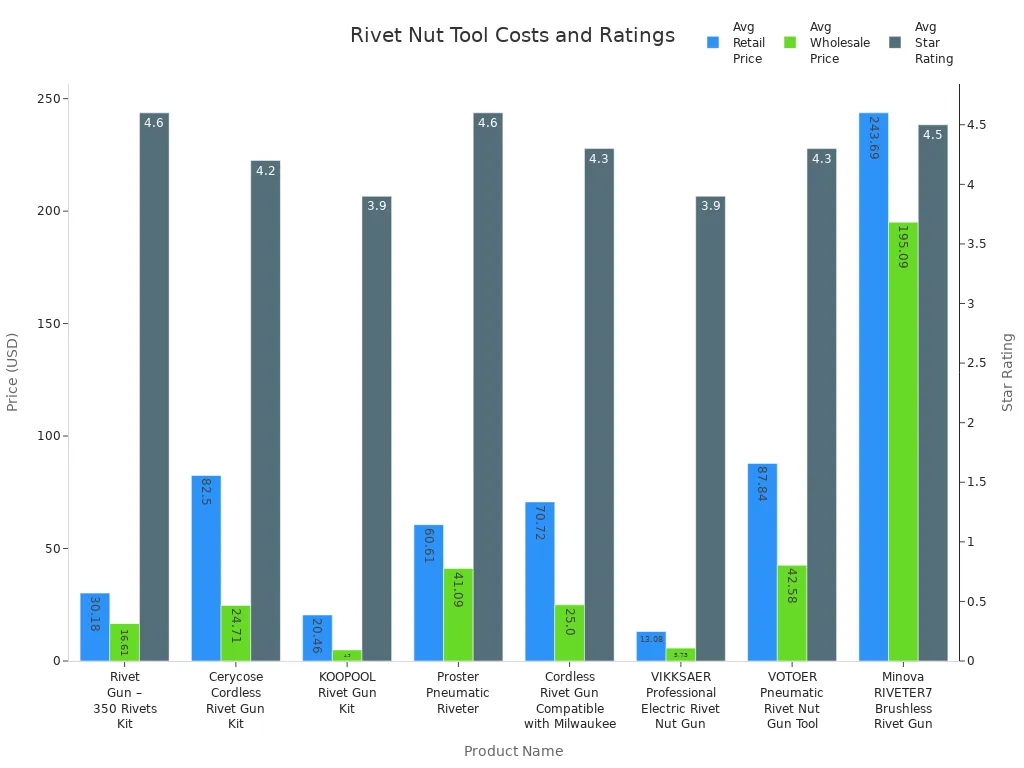
- Buyers can select from a wide range of products to match their budget and performance needs.
- High-end models offer advanced features for demanding environments, while entry-level kits provide excellent value for occasional use.
Tip: Investing in quality tools and accessories ensures consistent results and reduces downtime, especially in professional settings.
By considering material compatibility, project requirements, and available features, users can make informed decisions when choosing the right tool for their application. This approach guarantees reliable fastening, long-term durability, and optimal performance for every rivnut installation.
Step-by-Step Guide to Rivnut Installation
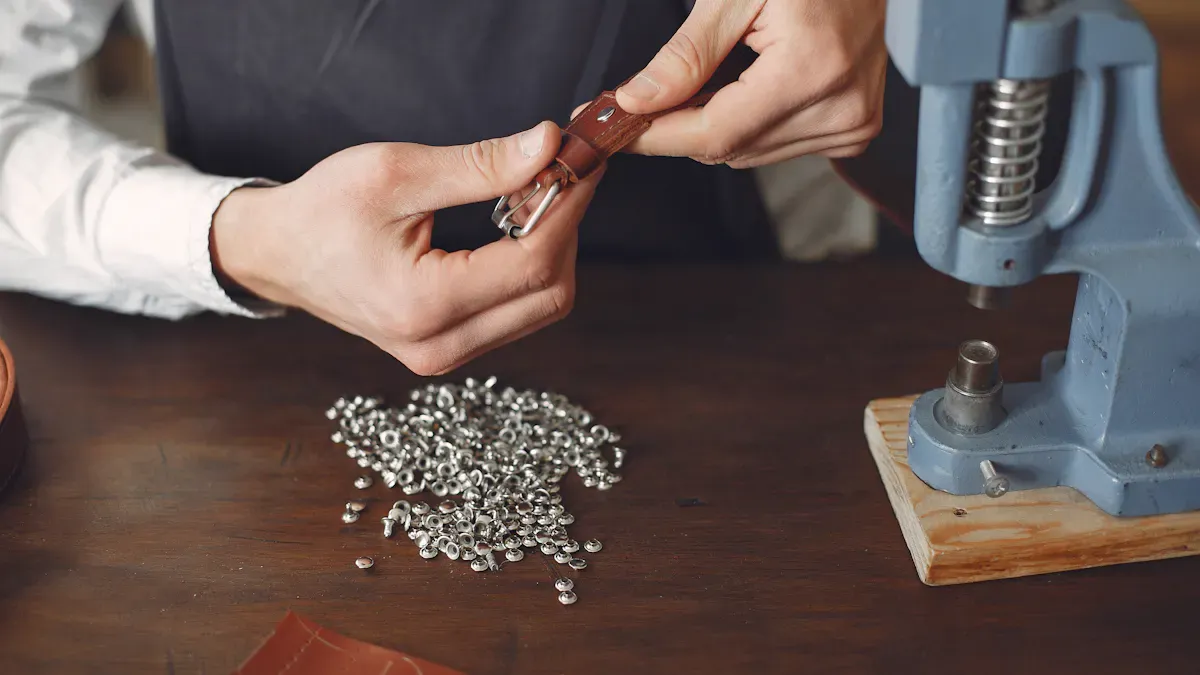
A successful rivnut installation begins with careful preparation and precise execution. This step-by-step guide outlines the essential procedures and best practices for achieving strong, reliable fastening results.
Preparing for Rivet Nut Tool Use
Marking and Drilling for Rivnut Installation
Accurate marking and drilling form the foundation of a secure rivnut installation. Technicians should follow these steps:
- Wear safety goggles and gloves to protect against debris and sharp edges.
- Mark the exact location for the rivnut using a center punch for accuracy.
- Select the correct drill bit size to match the rivet nut specifications.
- Drill the hole with steady, even pressure to avoid slips or damage.
- Double-check the hole diameter to ensure a snug fit for the rivet nut.
Tip: Always measure the grip range and material thickness before drilling. This ensures the rivet nut will seat properly and provide maximum holding strength.
Cleaning and Deburring the Work Area
A clean work area prevents installation issues and extends tool life. After drilling, remove any metal shavings or dust from the hole. Use a deburring tool or file to smooth the edges. This step helps the rivet nut fit flush and reduces the risk of spinning or stripping during installation. Working cleanly and precisely ensures the nut fits perfectly and maintains the integrity of the material.
Setting Up the Rivet Nut Tool
Selecting the Correct Mandrel for Rivnut Installation
Choosing the right mandrel is critical for proper tool function. The mandrel must match the thread size and pitch of the rivet nut. Before proceeding, check the material thickness, thread size, and load requirements. The table below highlights common mistakes during setup and strategies to avoid them:
| Mistake | Prevention Strategy |
|---|---|
| Choosing the wrong size | Always check material thickness, thread size, and load requirements before ordering. |
| Ignoring material considerations | Match the rivet nut material to your application to avoid cracking or failure. |
| Poor installation technique | Use quality tools and ensure correct hole size and installation angle to prevent installation errors. |
| Forgetting the torque | Follow manufacturer torque specifications and use calibrated tools to ensure proper tightening. |
| Ignoring maintenance and inspection | Make routine checks part of your workflow to catch potential issues early. |
Installing the Rivnut in the Tool
Thread the rivet nut onto the mandrel by hand until it seats against the nosepiece. Ensure the rivet nut sits straight and does not cross-thread. For manual tools, confirm the handles move freely and the tool operates smoothly. For pneumatic or cordless models, check battery charge or air pressure before use. Proper setup prevents tool jamming and ensures a smooth installation process.
Installing the Rivnut
Proper Rivet Nut Tool Operation
Position the tool with the rivet nut inserted into the prepared hole. Hold the tool perpendicular to the work surface. Squeeze the handles or activate the trigger to pull the mandrel, expanding the rivet nut behind the material. Release the tool and unthread the mandrel from the installed rivet nut.
- Ensure the hole size matches the rivet nut specifications.
- Use reputable products to avoid issues like spinning or stripping.
- Apply the correct pull force to prevent over-compression or distortion.
Ensuring a Secure Rivnut Fit
Inspect the installed rivet nut for tightness and alignment. The flange should sit flush with the material, and the threads should accept a bolt smoothly. If the rivet nut spins or feels loose, check for improper hole size or material mismatch. Regularly review and maintain tools to ensure consistent performance.
Note: Matching materials, such as pairing stainless steel rivet nuts with stainless parts, improves corrosion resistance and long-term reliability.
By following these steps, technicians can achieve secure, professional results with every installation.
Safety Tips for Rivet Nut Tool Use
Personal Protective Equipment for Rivnut Installation
Technicians must prioritize personal protective equipment when working with rivet nut tools. Safety glasses shield eyes from flying debris during drilling and installation. Gloves protect hands from sharp edges and metal shavings. Workers often encounter hazardous fragments while preparing holes or handling fasteners. Ear protection may be necessary in environments with pneumatic or hydraulic tools, which generate high noise levels. Steel-toed boots provide additional protection in industrial settings where heavy materials may fall. Wearing the correct gear reduces the risk of injury and ensures compliance with workplace regulations.
Tip: Always inspect protective equipment before use. Damaged gear may fail to provide adequate protection.
Safe Handling Practices for Rivet Nut Tools
Proper handling of rivet nut tools prevents accidents and maintains tool performance. Operators should select the appropriate tool for each task, whether manual, cordless, or pneumatic. They must follow the manufacturer’s instructions for installation and removal. Stable and secure materials reduce the chance of slips or misalignment. Over-tightening or under-tightening rivet nuts can damage both the tool and the workpiece. Workers should avoid distractions and maintain focus throughout the installation process.
The following list highlights common safety practices:
- Wear safety glasses and gloves to protect against debris and sharp edges.
- Use the correct rivet nut tool for the job.
- Follow all manufacturer guidelines for tool operation.
- Secure the material before starting installation.
- Set the rivet nut properly to prevent damage and ensure optimal performance.
Technicians should store tools in designated areas after use. Regular maintenance, including cleaning and inspection, extends tool life and reduces unexpected failures. Supervisors must provide training for new operators and reinforce safe practices during routine operations.
| Practice | Benefit |
|---|---|
| Using correct tool | Prevents tool and material damage |
| Securing material | Reduces risk of slips and injuries |
| Following instructions | Ensures proper installation and safety |
| Wearing protective gear | Minimizes exposure to hazards |
Note: Consistent adherence to safety protocols creates a safer work environment and improves productivity.
Common Applications of Rivet Nut Tools

Automotive Applications for Rivet Nut Tools
Body Panels and Frame Rivnut Installation
Automotive manufacturers rely on rivet nut tools to secure body panels and frames. Rivet nuts, also known as blind threaded rivets, anchor components in steel, fiberglass, and composite materials. Their one-piece design allows technicians to install permanent threads from a single side, which proves essential in areas with limited access. Rivet nuts provide strong, load-bearing threads without distorting the base structure. This advantage makes them superior to traditional fasteners, especially when working with thin or delicate materials. Vehicles experience constant vibration and stress during operation. Rivet nuts maintain their integrity under these conditions, ensuring panels and frames remain securely attached.
Interior Attachment Applications
Interior components such as trim, dashboards, and seat brackets require reliable fastening. Rivet nut tools enable installers to create permanent threads in various substrates, including plastics and lightweight alloys. Rivet nuts offer a secure solution for attaching interior features, even when technicians cannot access the opposite side of the material. Their ability to withstand vibration and repeated use enhances safety and durability inside vehicles. Automotive designers value rivet nuts for their versatility and ease of installation, which streamlines assembly processes and reduces labor costs.
Aerospace and Aviation Applications
Lightweight Fastening with Rivet Nut Tools
Aerospace engineers prioritize weight reduction and structural integrity. Rivet nut tools allow them to install rivet nuts in aluminum, titanium, and composite panels. These fasteners provide permanent threads without adding significant weight or compromising the base material. Rivet nuts support the assembly of fuselage sections, wing panels, and interior fixtures. Their compatibility with lightweight materials ensures aircraft meet strict performance and safety standards.
Vibration Resistance in Rivnut Applications
Aircraft endure intense vibration and fluctuating loads during flight. Rivet nuts resist loosening and maintain secure connections under these conditions. Technicians use rivet nut tools to install fasteners in critical areas, such as engine mounts and avionics enclosures. The consistent performance of rivet nuts enhances reliability and reduces maintenance requirements. Aerospace applications demand precision and durability, and rivet nut tools deliver both.
Construction and Metal Fabrication Applications
Structural Connections Using Rivet Nut Tools
Construction professionals use rivet nut tools for attaching metal sheets, panels, and fixtures in residential and commercial projects. Rivet nuts create strong, threaded connections in thin or hollow materials, which is essential for modern building techniques. Common applications include HVAC systems, electrical panels, and architectural elements. Rivet nuts ensure strength and reliability in structural connections.
- Weather-resistant construction suits outdoor environments.
- Advanced pneumatic pull installation enhances performance.
- Efficient operation reduces installation time and improves quality.
Equipment Assembly Applications
Metal fabricators depend on rivet nut tools for mounting equipment and assembling ductwork. Rivet nuts provide secure fastening in challenging environments, including outdoor and industrial settings. Their versatility supports the installation of machinery, brackets, and support frames. Rivet nut tools streamline assembly processes and improve overall build quality.
| Application Area | Typical Use Cases | Performance Requirements |
|---|---|---|
| Construction | Metal sheets, panels, fixtures, HVAC, electrical | Weather resistance, efficiency |
| Metal Fabrication | Ductwork, equipment mounting, structural elements | Strong threaded connections |
Rivet nut tools play a vital role in many industries. Their ability to provide permanent, reliable threads in a wide range of materials makes them indispensable for modern manufacturing and assembly.
DIY and Home Project Applications
Furniture and Fixture Rivnut Installation
Homeowners and hobbyists often use rivnut tools to assemble furniture and install fixtures. These tools create strong, reusable threads in materials such as wood, metal, and plastic. Manual RIVNUT® wrench style installation tools offer precision and control, making them ideal for tasks that require careful alignment. Their user-friendly design allows individuals to install rivet nuts in shelving units, cabinetry, and custom furniture projects. Many users appreciate the portability and cost-effectiveness of these tools. They can carry the tool from room to room and complete installations without specialized equipment.
Tip: When assembling furniture, always check the material thickness and choose the correct rivnut size to ensure a secure fit.
Repairs and Upgrades with Rivet Nut Tools
Rivet nut tools simplify repairs and upgrades around the house. Individuals use them to reinforce loose fixtures, repair damaged threads, and upgrade mounting points for appliances or electronics. The versatility of manual tools makes them suitable for a wide range of materials. Hobbyists report that rivnut tools help them fix garden equipment, install curtain rods, and upgrade garage storage systems. The ability to create strong threads in thin or soft materials extends the lifespan of household items and reduces the need for replacement parts.
| Project Type | Tool Benefit |
|---|---|
| Furniture assembly | Strong, reusable threads |
| Fixture installation | Precision and control |
| Repairs and upgrades | Versatility and portability |
Electronics and Appliance Applications
Mounting Components with Rivet Nut Tools
Manufacturers and technicians rely on rivet nut tools for mounting components in electronics and appliances. These tools provide reliable grounding and strong connections in thin or soft materials. Rivet nuts allow secure attachment of circuit boards, connectors, and brackets without damaging delicate substrates. The common applications of rivnut tools include appliances, electronics, office furniture, playground equipment, solar installations, and military equipment. Technicians value the efficiency and consistency these tools deliver during assembly.
- Appliances benefit from rivet nut tools when traditional methods are impractical.
- Electronics require strong connections in thin panels and enclosures.
- Solar installations and playground equipment use rivet nuts for durable mounting.
Enclosure Assembly Applications
Rivet nut tools play a critical role in enclosure assembly for electrical and electronic equipment. They enable technicians to install fasteners in panels, housings, and chassis with minimal risk of material distortion. The following table highlights the advantages of rivet nut tools in these applications:
| Application | Advantages |
|---|---|
| Electrical and electronic equipment | Provides reliable grounding and strong connections in thin or soft materials. |
| Appliances | Suitable for various applications where traditional methods are impractical. |
Manufacturers choose rivet nut tools for their ability to create secure, professional-grade assemblies. The tools ensure that enclosures remain accessible for maintenance and upgrades, supporting long-term reliability.
Note: Rivet nut tools offer a practical solution for mounting and assembly tasks in electronics and appliances, improving both performance and serviceability.
Troubleshooting and Maintenance for Rivet Nut Tools
Common Rivnut Installation Problems and Solutions
Rivnut Spinning in the Hole
Technicians often encounter rivet nuts that spin inside the hole during installation. This issue usually results from an oversized hole, a base material that is too thin or soft, or insufficient pulling force. Selecting knurled rivet nuts can improve anti-rotation performance, especially on smooth sheet metal. Adjusting the tool stroke ensures full deformation of the rivet nut, which helps prevent spinning. Following the recommended hole diameter for each rivet nut size remains essential for a secure fit.
| Problem Type | Possible Causes | Recommended Solutions |
|---|---|---|
| Rivet Nut Spinning | – Thin or soft base material | – Adjust tool stroke for full deformation |
| – Oversized or inaccurate hole | – Use knurled rivet nuts for better grip | |
| – Incomplete expansion | – Follow recommended hole diameter | |
| – Smooth-body rivet nuts on smooth sheet metal | – Avoid flat-body rivet nuts in thin or soft materials |
Rivet Nut Tool Jamming or Malfunction
Jamming or malfunction can disrupt workflow and damage products. Common causes include improper mandrel selection, lack of lubrication, or debris inside the tool. Regular cleaning and proper lubrication reduce friction and prevent jams. Operators should always check for worn or damaged accessories before installation. Using torque-controlled tools helps apply the correct force, minimizing the risk of tool failure.
Maintenance Tips for Rivet Nut Tools
Cleaning and Lubrication of Rivet Nut Tools
Routine cleaning and lubrication form the foundation of best practices for tool maintenance. Applying a few drops of light lubricating oil to the air inlet keeps pneumatic tools running smoothly. High-friction areas benefit from re-greasing with high-speed, high-temperature grease. Removing debris after each use prevents internal wear and extends tool life.
| Maintenance Practice | Description |
|---|---|
| Lubrication | Apply light oil to air inlet if not equipped with a lubricator |
| Re-greasing | Use high-speed, high-temperature grease on high-friction locations |
| O-ring Maintenance | Replace and lubricate O-rings with Molykote® 55M grease before assembly |
Inspecting and Replacing Rivet Nut Tool Parts
Regular inspection ensures reliable performance. Technicians should check the tool every 500,000 cycles and replace worn or damaged parts. O-rings require special attention, as they maintain air pressure and prevent leaks. Replacing these components at scheduled intervals reduces downtime and maintains consistent installation quality.
- Use a torque wrench or automatic setting tool to apply the exact force required.
- Incorporate sensors to measure pull force and distance for each rivet nut installation.
Extending the Life of Your Rivet Nut Tool
Proper Storage of Rivet Nut Tools
Proper storage protects rivet nut tools from dust, moisture, and accidental damage. Storing tools in designated cases or cabinets prevents exposure to harsh environments. Accessories such as quick-change mandrel systems should remain organized and clean to maintain workflow efficiency.
Regular Inspection of Rivet Nut Tools
Industry experts recommend ergonomic refinement and optimized weight distribution to reduce operator fatigue and extend tool service life. Adjustable handles and quick-change mandrel systems improve usability and efficiency. Some products, like the Bollhoff B2007, allow for repair by qualified technicians, making them a sustainable choice for high-volume environments.
Tip: Regular maintenance and inspection, combined with proper storage, ensure rivet nut tools deliver reliable performance and long-term value.
Rivet nut tools offer versatile fastening solutions for automotive, aerospace, and DIY projects. Experts recommend wearing safety glasses and gloves, inspecting tools before use, and considering material quality and compatibility. These tools install fasteners quickly without welding, suit thin or soft materials, and allow removal for rework. Users should evaluate project requirements, access, and production volume before choosing a tool. To begin, drill a hole, insert the rivet nut, and expand it with the appropriate tool.
FAQ
What is the difference between a rivet nut and a standard rivet?
A rivet nut creates a threaded insert for bolts or screws, allowing for removable connections. A standard rivet forms a permanent joint without threads. Rivet nuts suit applications that require future disassembly or maintenance.
Can rivet nut tools work with all material types?
Most rivet nut tools handle metals, plastics, and composites. Users should select the correct tool and rivet nut material for each application. Some tools perform better with specific substrates, such as thin sheet metal or soft plastics.
How does one prevent a rivet nut from spinning in the hole?
Technicians should ensure the hole size matches the rivet nut. Using knurled rivet nuts or increasing pull force can improve grip. Proper installation technique reduces the risk of spinning.
How often should a rivet nut tool receive maintenance?
Manufacturers recommend cleaning and lubricating after each use. Technicians should inspect tools every 500,000 cycles or as specified in the manual. Regular maintenance extends tool life and ensures consistent performance.
Are cordless rivet nut tools as powerful as pneumatic models?
Cordless tools offer excellent mobility and speed. Pneumatic models deliver higher force for heavy-duty applications. Users should choose based on project size, material, and required installation force.
What safety gear is necessary when using rivet nut tools?
| Safety Gear | Purpose |
|---|---|
| Safety Glasses | Protect eyes from debris |
| Gloves | Shield hands from sharp edges |
| Ear Protection | Reduce noise exposure |
Technicians should always wear appropriate gear during installation.
Can one remove a rivet nut after installation?
Yes, removal is possible. Technicians drill out the rivet nut or use extraction tools. The process may damage the base material, so careful technique is important.