تلعب صواميل «نايلوك» دورًا حاسمًا في منع الانفكاك تحت تأثير الاهتزازات والضغوط. وكثيرًا ما يتساءل المهندسون عن كيفية عمل صواميل التثبيت هذه، وتكمن الإجابة في الحشوة المصنوعة من النايلون التي تثبت خيوط المسامير والبراغي, ، مما يؤدي إلى ظهور مقاومة. وتقوم الشركات المصنعة بإنتاج العشرات من صامولة نيلوك الأحجام والمواصفات على الصعيد العالمي، لتلبية المتطلبات بدءًا من الأجهزة الإلكترونية الصغيرة وصولاً إلى الآلات الثقيلة. يوضح الجدول التالي الأحجام القياسية بالمتر والإنش المتوفرة لصامولة «نايلوك»:
| المقاسات المترية | المقاسات بالبوصة |
|---|---|
| M3–M75 | رقم 10 – 2 بوصة |
يضمن اختيار النوع المناسب من صامولة التثبيت السلامة والأداء. تعتمد العديد من الصناعات على المثبتات المخصصة, ، و مُصنِّع أدوات التثبيت المخصصة يجب فهم كيفية عمل الصواميل المقفلة لتقديم منتجات موثوقة.
أحجام ومواصفات صواميل «نايلوك»
أنظمة القياس القياسية لأحجام صواميل «نايلوك»
أحجام صواميل «نايلوك» يتم اتباع نظامين رئيسيين لتحديد المقاسات: النظام المتري ونظام البوصة (الإمبراطوري). ويستخدم كل نظام قواعده الخاصة لقياس القطر وخطوة الخيط. ويضمن اختيار النظام الصحيح التوافق مع البراغي ومثبتات التثبيت في أي تجميع.
المقاسات المترية (M2–M24، المقاسات الشائعة: M6، M8، M10)
تُستخدم في مقاسات صواميل “نايلوك” المترية الحرف «M» متبوعًا بالقطر الاسمي بالمليمترات. وتشمل المقاسات الشائعة M6 وM8 وM10، والتي تناسب مجموعة واسعة من التطبيقات الصناعية والاستهلاكية. تنتج الشركات المصنعة صواميل نايلوك المترية بأحجام تبدأ من M2 وصولاً إلى M24 للاستخدام القياسي، مع توفر أحجام أكبر لتلبية الاحتياجات المتخصصة. يوفر النظام المتري الاتساق وسهولة الاختيار للمهندسين في جميع أنحاء العالم.
المقاسات بالبوصة (النظام الإمبراطوري)
تستخدم مقاسات صواميل «نايلوك» الإمبراطورية التسميات الكسرية أو الرقمية، مثل 1/4″-20 أو رقم 10. وتُعد هذه المقاسات شائعة في أمريكا الشمالية وفي الصناعات التي تتبع «معايير الخيوط الموحدة». و يبدأ نطاق القطر من #4 (0.112 بوصة) ويصل حجمها إلى 4 بوصات وأكثر للاستخدامات الشاقة. وتتيح المقاسات بالبوصة التوافق الدقيق مع البراغي والقضبان الملولبة ذات المقاييس الإمبراطورية.
أنواع الخيوط وخطواتها
يلعب نوع الخيط وخطوة الخيط دورًا حاسمًا في أداء صواميل «نايلوك». وتشير «خطوة الخيط» إلى المسافة بين الخيوط، والتي تؤثر على كيفية ارتباط الصامولة بالمسمار.
يجب على المهندسين مطابقة نوع الخيط وخطوته لضمان التثبيت الصحيح ومنع تلف الخيط.
الخيوط الخشنة
تتميز الخيوط الخشنة بمسافة أكبر بين اللولبات، مما يجعلها مناسبة للتجميع والتفكيك السريعين. كما أنها تقاوم الانزلاق الجانبي للولب وتُظهر أداءً جيدًا في المواد الأكثر ليونة. في أحجام الصواميل المترية من نوع «نايلوك»، تُعد الخيوط الخشنة هي المعيار القياسي لمقاس M6 × 1.0 مم والأبعاد المماثلة. أما في الأحجام الإمبراطورية، فتشمل الأمثلة 1/4 بوصة-20 UNC و1 بوصة-8 UNC.
خيوط دقيقة
تتميز الخيوط الدقيقة بمسافة أصغر بين اللولبات، مما يزيد من عدد الخيوط في كل وحدة طول. ويوفر هذا التصميم مقاومة أكبر للاهتزازات ويتيح إجراء تعديلات أكثر دقة. وتنتشر الخيوط الدقيقة المترية في الأحجام من M8 إلى M24. أما الخيوط الدقيقة الإمبراطورية فتتبع معيار «الخيوط الدقيقة الوطنية الموحدة» (UNF).
| نوع الخيط | نطاق النغمة | أمثلة على الأحجام |
|---|---|---|
| متري | لا بأس | من M8 إلى M24 |
| خشن | M6 × 1.0 مم | |
| إمبراطوري | خشن | 1/4 بوصة - 20 UNC |
| 1 بوصة - 8 UNC | ||
| 2 بوصة - 4.5 بوصة UNC |
خيارات المواد المستخدمة في صناعة صواميل التثبيت
يؤثر اختيار المادة على القوة الميكانيكية ومقاومة التآكل ومتانة صواميل «نايلوك». ويضمن اختيار المادة المناسبة الأداء الأمثل في بيئات محددة.
الصلب
تتميز صواميل «نايلوك» الفولاذية بقوة ميكانيكية عالية وفعالية من حيث التكلفة. وغالبًا ما يلجأ المصنعون إلى الطلاء بالزنك أو غيره من الطلاءات لتحسين مقاومة التآكل. ولا يزال الفولاذ هو المادة الأكثر شيوعًا في صناعة صواميل «نايلوك» ذات الأحجام المخصصة للاستخدامات العامة.
الفولاذ المقاوم للصدأ
توفر صواميل «نايلوك» المصنوعة من الفولاذ المقاوم للصدأ مقاومة فائقة للتآكل، مما يجعلها مثالية للاستخدامات البحرية والكيميائية والخارجية. فهي تحافظ على قوتها في البيئات القاسية وتقاوم الصدأ مع مرور الوقت.
النحاس
تتميز صواميل «نايلوك» المصنوعة من النحاس بمقاومة جيدة للتآكل وموصلية كهربائية جيدة. وهي مناسبة للاستخدامات التي تتطلب خصائص غير مغناطيسية أو مقاومة لمواد كيميائية معينة. ومع ذلك، قد لا يضاهي النحاس القوة الميكانيكية للفولاذ أو الفولاذ المقاوم للصدأ في الظروف التي تتطلب تحمل ضغوط عالية.
مواد الحشوات المصنوعة من النايلون
تشكل الحشوة النايلونية آلية القفل الأساسية في صواميل «نايلوك». تزيد هذه الحشوة من مقاومة الانفكاك تحت تأثير الاهتزازات وتحافظ على القوة الميكانيكية. وتؤثر جودة الحشوة النايلونية بشكل مباشر على موثوقية أحجام صواميل «نايلوك» في التطبيقات الصعبة.
- تُعزز خيارات الفولاذ المقاوم للصدأ والنحاس مقاومة التآكل.
- الـ تضمن الحشوة المصنوعة من النايلون مقاومة الاهتزازات وأداء قفل ثابت.
- يؤثر اختيار المواد على كل من متانة أحجام صواميل «نايلوك» ومدى ملاءمتها لبيئات معينة.
درجات القوة والعلامات
تساعد درجات القوة والعلامات المستخدمين على تحديد الخصائص الميكانيكية لصواميل «نايلوك». وتشير هذه الدرجات إلى قدرة الصامولة على تحمل الإجهاد والحمل. ويقوم المصنعون بختم هذه العلامات على سطح الصامولة لتسهيل التعرف عليها.
الصفوف 2 و5 و8 (النظام الإمبراطوري)
تستخدم صواميل «إمبريال» من نوع «نايلوك» نظام تصنيف لتحديد درجة متانتها. توفر صواميل الدرجة 2 متانة أساسية للاستخدامات الخفيفة. أما صواميل الدرجة 5 فتوفر متانة متوسطة وتناسب الاستخدامات في صناعة السيارات والآلات. وتوفر صواميل الدرجة 8 متانة عالية للاستخدامات الشاقة والحرجة. وتتميز كل درجة بعلامات مميزة:
- الصف الثاني: لا توجد علامات محددة أو سطح أملس. تُستخدم في التجميعات ذات الأغراض العامة.
- الصف الخامس: ثلاثة خطوط نصف قطرية على سطح الصامولة. مناسبة لمتطلبات قطاع السيارات والأحمال المتوسطة.
- الصف الثامن: ستة خطوط شعاعية. مصممة للاستخدام في البيئات التي تتعرض لضغوط عالية، مثل المعدات الثقيلة.
يجب على المستخدمين دائمًا مطابقة درجة جودة الصامولة مع درجة جودة البرغي للحفاظ على سلامة الوصلة.
الصفوف 8 و10 و12 (النظام المتري)
تتبع صواميل «نايلوك» المترية نظامًا تصنيفيًّا. تُستخدم صواميل الفئة 8 في التطبيقات القياسية التي تتطلب قوة معتدلة. أما صواميل الفئة 10 والفئة 12 فتوفر قوة أعلى للاستخدامات التي تتطلب متطلبات أعلى. وعادةً ما تتضمن العلامات الموجودة على الصواميل المترية رقم الفئة:
- الدرس الثامن: يحمل الرقم “8” على الصامولة. يُستخدم في مجال البناء والآلات.
- الدرس العاشر: مُعلَّمة بـ “10”. مناسبة للمتطلبات التي تتطلب قوة عالية.
- الصف الثاني عشر: مُعلَّمة برقم “12”. تُستخدم في البيئات الحرجة وذات الأحمال العالية.
تساعد هذه العلامات المهندسين والفنيين على اختيار الصامولة المناسبة لكل استخدام.
المعايير والقواعد المشتركة
يجب أن تستوفي صواميل «نايلوك» معايير وقواعد محددة لضمان الجودة والتوافق. وتحدد هذه المعايير الأبعاد والمواد ومتطلبات الأداء.
ASTM
تضع الجمعية الأمريكية للاختبارات والمواد (ASTM) المعايير الخاصة بأدوات التثبيت في الولايات المتحدة. وتحدد معايير ASTM خصائص المواد والقوة الميكانيكية وطرق الاختبار. ومن بين معايير ASTM الشائعة الخاصة بصواميل «نايلوك» معيارا ASTM A194 و ASTM A563.
DIN (بما في ذلك DIN 985 من النوع P والنوع T)
يصدر المعهد الألماني للتقييس (DIN) معايير تُستخدم على نطاق واسع في أوروبا وعلى الصعيد الدولي. وتغطي المواصفة DIN 985 الصواميل السداسية من نوع عزم الدوران السائد المزودة ببطانة غير معدنية. ويشير النوع P والنوع T إلى اختلافات في ارتفاعات وأشكال الصامولة. يتميز النوع P بارتفاع منخفض، في حين يتميز النوع T بتصميم أطول لزيادة التداخل بين الخيوط.
ISO
توفر المنظمة الدولية لتوحيد المقاييس (ISO) معايير عالمية لمواد التثبيت. وتعد معيارا ISO 7040 وISO 10511 من المعايير الشائعة الخاصة بصواميل «نايلوك». وتضمن هذه المعايير الاتساق في الأبعاد وأنواع الخيوط والأداء بين مختلف الشركات المصنعة.
يضمن الالتزام بالمعايير المعترف بها أن صواميل «نايلوك» ستتناسب مع أي تجميع وستؤدي وظيفتها على النحو المتوقع.
جداول مرجعية لأحجام صواميل «نايلوك»
توفر الجداول المرجعية معلومات أساسية لاختيار الحجم الصحيح لصامولة «نايلوك». وتسرد هذه الجداول أحجام الخيوط، وقياسات المسافة بين الأسطح المستوية،, سماكة الصمولة, ، ونطاقات التفاوت. يمكن للمستخدمين مقارنة المواصفات بسرعة واختيار الصامولة المناسبة لاستخداماتهم.
جدول المقاسات المترية
| المواصفات | M6 | M8 | M10 | M12 | M16 | M20 |
|---|---|---|---|---|---|---|
| مقاس الخيط | M6 × 1.0 | M8 × 1.25 | M10 × 1.5 | M12 × 1.75 | M16 × 2.0 | M20 × 2.5 |
| عرض السداسي (مم) | 10 | 13 | 17 | 19 | 24 | 30 |
| سماكة الصامولة (مم) | 6 | 8 | 10 | 12 | 16 | 20 |
| نطاق التسامح | ±0.2 | ±0.2 | ±0.3 | ±0.3 | ±0.4 | ±0.5 |
جدول المقاسات بالبوصة
| المواصفات | #10-24 | 1/4 بوصة-20 | 5/16 بوصة - 18 | 3/8 بوصة-16 | 1/2 بوصة-13 | 3/4 بوصة-10 |
|---|---|---|---|---|---|---|
| مقاس الخيط | #10-24 | 1/4 بوصة-20 | 5/16 بوصة - 18 | 3/8 بوصة-16 | 1/2 بوصة-13 | 3/4 بوصة-10 |
| عرض السداسي (بوصة) | 0.375 | 0.437 | 0.5 | 0.562 | 0.75 | 1.125 |
| سماكة الصامولة (بوصة) | 0.187 | 0.218 | 0.25 | 0.312 | 0.375 | 0.625 |
| نطاق التسامح | ±0.008 | ±0.008 | ±0.010 | ±0.012 | ±0.015 | ±0.020 |
تساعد الجداول المرجعية المستخدمين على اتباع إجراءات واضحة عند اختيار صواميل «نايلوك»:
- حدد مقاس سنّ البرغي أو المسمار لتحديد مواصفات الصمولة المطابقة.
- تحقق من القياس عبر السطح للتأكد من ملاءمة مفتاح الربط، وتحقق من سماكة الصامولة لضمان التداخل الكافي للخيوط.
- اختر نوع الصامولة وفقًا لاحتياجات الاستخدام والمساحة المتاحة.
يضمن الاختيار الدقيق باستخدام الجداول المرجعية تجنب أخطاء التجميع ويضمن أداءً موثوقًا.
اختيار النوع المناسب من صامولة التثبيت
لا يقتصر اختيار الصامولة «نايلوك» المناسبة لمشروع ما على مجرد مطابقة الصامولة مع البرغي فحسب. بل يجب على المهندسين مراعاة حجم الخيط،, المواد, ، والقوة، والتوافق مع بيئة التطبيق. اختيار النوع المناسب يضمن صامولة التثبيت السلامة والموثوقية وسهولة التركيب.
تحديد الأحجام الصحيحة لصواميل «نايلوك»
قياس قطر الخيط
يُعد القياس الدقيق لقطر الخيط أساسًا لاختيار الصامولة المناسبة. يشير قطر الخيط إلى القطر الخارجي للمسمار أو البرغي. وباستخدام الفرجار أو مقياس الخيط، يمكن للفنيين قياس هذه القيمة بالمليمترات بالنسبة للمثبتات المترية أو بالبوصات بالنسبة للأحجام الإمبراطورية. ويؤدي مطابقة حجم الصمولة مع حجم المسمار إلى منع تآكل الخيط ويضمن ثبات التثبيت.
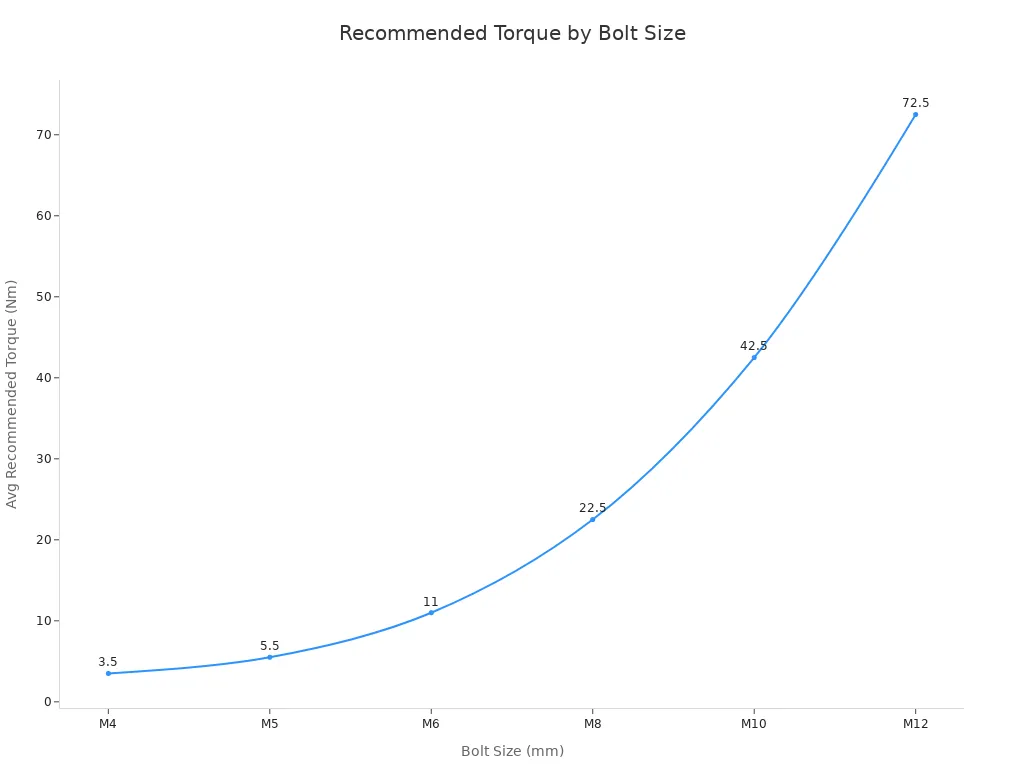
| حجم المسمار (مم) | حجم الصمولة (مم) | عزم الدوران الموصى به (نيوتن متر) |
|---|---|---|
| M4 | 7 | 3–4 |
| M5 | 8 | 5–6 |
| M6 | 10 | 10–12 |
| M8 | 13 | 20–25 |
| M10 | 17 | 40–45 |
| M12 | 19 | 70–75 |
الـ يوضح الجدول أعلاه التوليفات الشائعة أحجام البراغي والصواميل، إلى جانب قيم عزم الدوران الموصى بها للتركيب. ويؤدي استخدام عزم الدوران الصحيح أثناء التركيب إلى حماية الحشوة المصنوعة من النايلون والحفاظ على وظيفة القفل.
توافق خطوة الخيط
يصف خطوة الخيط المسافة بين الخيوط. يجب على المهندسين مطابقة خطوة الخيط في الصمولة مع تلك الموجودة في البرغي لتجنب انحراف الخيط وضمان تجميع سلس. تستخدم أدوات التثبيت المترية خطوة رقمية (مثل 1.0 مم)، بينما تستخدم أدوات التثبيت الإمبراطورية عدد الخيوط في البوصة (TPI). تحقق دائمًا من كل من القطر والخطوة قبل اختيار النوع المناسب من صامولة القفل.
| مقاس الخيط (مم) | العرض بين الأسطح المستوية (مم) | الارتفاع (مم) | سماكة الحشوة النايلونية (مم) |
|---|---|---|---|
| M4 | 7 | 4 | 1 |
| M5 | 8 | 5 | 1.5 |
| M6 | 10 | 6 | 1.5 |
| M8 | 13 | 8 | 2 |
| M10 | 17 | 10 | 2.5 |
| M12 | 19 | 12 | 3 |
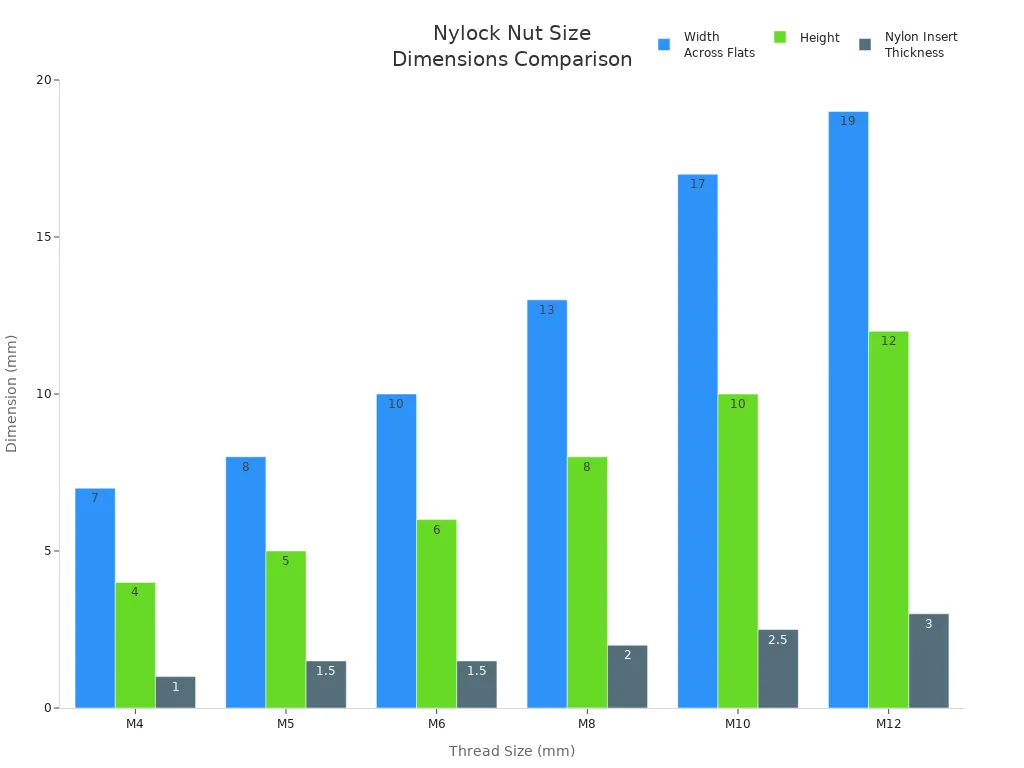
نصيحة: احرص دائمًا على مطابقة حجم الصامولة مع حجم البرغي، واستخدم مفتاح عزم الدوران في التطبيقات الحرجة. تمنع هذه الممارسة الإفراط في الشد، الذي قد يؤدي إلى إتلاف الحشوة النايلونية ويضعف ميزة التثبيت.
النظر في المواد والقوة
بيئة التطبيق
يلعب اختيار المواد دورًا حاسمًا دورها في أداء صواميل «نايلوك» وعمرها الافتراضي. يمكن أن تؤثر العوامل البيئية، مثل درجة الحرارة والرطوبة، على كل من المعدن والبطانة المصنوعة من النايلون. على سبيل المثال، تقاوم صواميل «نايلوك» المصنوعة من الفولاذ المقاوم للصدأ التآكل في البيئات البحرية أو الكيميائية، في حين أن الفولاذ منخفض الكربون مناسب للاستخدامات العامة.
| نوع المادة | قوة الشد (ميغا باسكال) | مقاومة التآكل | مدى ملاءمة التطبيق |
|---|---|---|---|
| فولاذ منخفض الكربون (درجة SAE 2) | 414–510 | معتدل | للأغراض العامة |
| فولاذ منخفض الكربون (درجة SAE 5) | 724–827 | معتدل | للأغراض العامة |
| الفولاذ المقاوم للصدأ A2 (304) | 700 | مرتفع | التعرض للمواد الكيميائية في البحر |
| الفولاذ المقاوم للصدأ A4 (316) | 800 | مرتفع جدًا | التعرض للمواد الكيميائية في البحر |
| حشوة من النايلون 6/6 | غير متوفر | مقاومة كيميائية عالية | مقاومة الاهتزاز، نطاق درجة الحرارة من -40 درجة مئوية إلى 120 درجة مئوية |
تُعد صواميل «نايلوك» الأفضل أداءً أقل من 120 درجة مئوية (250 درجة فهرنهايت) وفي ظروف رطوبة معتدلة. قد تؤدي الرطوبة العالية إلى انتفاخ أو تلف الحشوة المصنوعة من النايلون، مما يقلل من قدرة التثبيت. وفي درجات الحرارة القصوى، قد يلين النايلون أو يصبح هشاً، مما يؤثر على العمر الافتراضي للصامولة. وتقدم صواميل التثبيت المصنوعة بالكامل من المعدن أداءً أفضل في البيئات ذات درجات الحرارة المرتفعة أو شديدة البرودة.
ملاحظة: في البيئات التي تتسم بارتفاع درجة الحرارة أو الرطوبة، يُنصح باستخدام صواميل قفل معدنية بالكامل بدلاً من صواميل «نايلوك».
متطلبات التحميل
يجب أن تتوافق درجة متانة صامولة «نايلوك» مع متطلبات الاستخدام. تتطلب البيئات ذات الضغط العالي صواميل ذات قوة شد أعلى. على سبيل المثال، يوفر الفولاذ المقاوم للصدأ A4 (316) مقاومة عالية جدًا للتآكل وقوة عالية، مما يجعله مناسبًا للاستخدام في البيئات البحرية والتعرض للمواد الكيميائية. احرص دائمًا على مطابقة درجة الصامولة مع درجة البرغي لمنع تآكل الخيوط وضمان سلامة الوصلة.
التوافق مع البراغي ومواد التثبيت
ملاءمة الخيط
يحدد ملاءمة الخيط مدى جودة التثبيت بين الصامولة والمسمار. فالملاءمة الصحيحة تمنع الانفكاك وتضمن تركيبًا موثوقًا. ويجب على المهندسين التحقق من كل من قطر الخيط وخطوته للتأكد من توافقهما. وقد يؤدي عدم توافق الخيوط إلى تشابك الخيوط أو تآكلها أو فشلها تحت الحمل.
| الاعتبارات | الوصف |
|---|---|
| المواد | يُعد التوافق بين صامولة «نايلوك» والبرغي وسطح العمل أمرًا بالغ الأهمية لتجنب مشاكل مثل التآكل الجلفاني والتآكل الاحتكاكي. |
| الصف | يجب أن تتطابق درجات الصلابة بين الصواميل والمسامير لمنع تلف الخيوط والانهيار المحتمل تحت تأثير الحمل. |
| سهولة الاستخدام | قد لا تكون صواميل «نايلوك» مناسبة لجميع الاستخدامات، لا سيما في الحالات التي تتطلب عزم دوران عالٍ أثناء التجميع. |
| إعادة الاستخدام | يمكن إعادة استخدام «نيلوكس»، لكن لا يوجد يقين بشأن عدد المرات التي يمكن إعادة استخدامها فيها بأمان. |
الطول والارتفاع عن الأرض
يتضمن الاختيار الصحيح للصامولة أيضًا التحقق من المساحة المتاحة للتركيب. يجب أن يتناسب ارتفاع الصامولة وعرضها مع قيود تصميم المجموعة. فقد يؤدي عدم توفر مسافة كافية إلى صعوبة التركيب أو استحالته. كما يؤثر سمك الحشوة النايلونية على مدى إمكانية تشابك الخيوط.
احرص دائمًا على التحقق من أبعاد الصامولة والمساحة المتاحة قبل التركيب. تمنع هذه الخطوة حدوث أخطاء في التجميع وتضمن عمل ميزة القفل بالشكل المطلوب.
يتطلب اختيار النوع المناسب من صامولة التثبيت دراسة متأنية للحجم والمواد والقوة والتوافق. وتساعد ممارسات الاختيار والتركيب السليمة في الحفاظ على سلامة الوصلات وإطالة العمر التشغيلي للتركيبات المثبتة.
التصفية حسب نوع التطبيق
يعتمد اختيار صامولة «نايلوك» المناسبة على المتطلبات المحددة لكل قطاع صناعي. ويجب على المهندسين تقييم عدة عوامل قبل اختيار صامولة قفل لأي تطبيق. وتُعد الممارسات الفضلى التالية دليلاً إرشادياً لعملية الاختيار:
- بيئة العمل: تقييم درجة الحرارة والرطوبة والتعرض للمواد الكيميائية. تجنب استخدام صواميل القفل المزودة ببطانة من النايلون في البيئات ذات درجات الحرارة المرتفعة.
- مستوى الاهتزاز: اختر صواميل قفل معدنية بالكامل أو ذات حواف للتركيبات المعرضة للاهتزازات الشديدة.
- وتيرة التفكيك: اختر صواميل قفل معدنية بالكامل للمفاصل التي تتطلب الفك المتكرر.
- نوع الحمولة ومتطلبات القوة: يجب مطابقة قوة صامولة التثبيت مع درجة جودة البرغي لمنع حدوث عطل في الوصلة.
- التكلفة والمعايير والشهادات: ضمان الامتثال لمعايير الصناعة مثل DIN أو ISO أو ASTM.
يلخص الجدول أدناه الاختلافات في متطلبات صواميل «نايلوك» عبر القطاعات الصناعية الرئيسية:
| الصناعة | وصف التطبيق |
|---|---|
| السيارات | تُستخدم في تجميع المكونات الحيوية مثل المحركات والشاسيه، مما يضمن تثبيتًا آمنًا في ظل الاهتزازات. |
| Machinery | Employed in manufacturing to provide reliable fastening for components subjected to dynamic loads. |
| الفضاء الجوي | Critical for maintaining tight connections in aircraft engines and structural components. |
| الإلكترونيات | Used to secure connections in electrical equipment, preventing loosening of terminals and circuitry. |
السيارات
Automotive engineers rely on nylock nuts to secure vital components such as engines, suspensions, and chassis assemblies. These nuts must withstand constant vibration and dynamic loads. Selecting the correct size and grade ensures that fasteners do not loosen during vehicle operation. Stainless steel or zinc-plated steel nylock nuts offer corrosion resistance, which is essential for vehicles exposed to moisture and road salts. In high-vibration areas, all-metal lock nuts or flange lock nuts may provide better performance. Compliance with automotive standards like ISO or ASTM guarantees reliability and safety.
Tip: Always match the lock nut grade to the bolt grade in automotive assemblies to prevent premature failure.
Machinery
Machinery applications demand reliable fastening for moving parts and structural frames. Nylock nuts in this sector must resist loosening from dynamic loads and repeated motion. Engineers often select higher strength grades, such as Class 10 or Grade 8, for heavy-duty equipment. Stainless steel nylock nuts perform well in environments with exposure to lubricants or coolants. For machines that require frequent maintenance, all-metal lock nuts allow for repeated disassembly without degrading the locking feature.
- Use coarse threads for quick assembly and disassembly.
- Choose materials that resist corrosion from oils and chemicals.
الإلكترونيات
Electronics manufacturers use nylock nuts to secure terminals, circuit boards, and enclosures. These nuts prevent loosening caused by minor vibrations or thermal expansion. Brass nylock nuts offer good electrical conductivity and resist corrosion. Smaller metric sizes, such as M2 or M3, fit compact assemblies. The nylon insert protects delicate threads and maintains a secure connection without over-tightening. Engineers must ensure that the selected nut does not interfere with sensitive components or circuitry.
Note: Avoid over-tightening in electronics to protect both the nylon insert and the electronic components.
الفضاء الجوي
Aerospace applications require the highest standards for fastener reliability and safety. Nylock nuts secure critical connections in aircraft engines, airframes, and control systems. These nuts must withstand extreme temperature changes, vibration, and high loads. Aerospace engineers often specify stainless steel or high-grade alloy nylock nuts that meet strict certifications such as DIN or ISO. In areas exposed to high temperatures, all-metal lock nuts may replace nylon insert types to maintain locking performance.
- Select nuts with traceable certifications for aerospace use.
- Verify compatibility with both the bolt material and the application environment.
Selecting nylock nuts by application type ensures optimal performance, safety, and compliance with industry standards. Each sector presents unique challenges, and careful evaluation leads to reliable and long-lasting assemblies.
How to Use Locking Nuts Properly
Preparing for Installation
Inspecting Threads
Before starting any assembly, technicians should inspect both the bolt and nut threads. Clean, undamaged threads ensure a secure fit and prevent cross-threading. If the threads show signs of wear, corrosion, or deformation, replace the fasteners immediately. Proper inspection supports the longevity and reliability of nylock nut assemblies.
Cleaning and Lubrication
Clean threads allow for smooth installation and accurate torque application. Use a wire brush or compressed air to remove debris, oil, or old lubricant. In most cases, avoid excessive lubrication when working with nylock nuts, as it can reduce the friction needed for the nylon insert to lock effectively. However, a light application of anti-seize compound may help in environments prone to corrosion.
Step-by-Step Installation Guide for how to use locking nuts
A step-by-step guide helps ensure proper installation and maximizes the effectiveness of nylock nuts. The following process demonstrates how to use locking nuts in a typical assembly:
- Tighten the inner nut to 37 ft-lb while spinning the hub to seat the components.
- Back off the inner nut without disturbing the hub’s position.
- Retighten the inner nut to 7 ft-lb to achieve the correct preload.
- Place the tab washer on the stub axle to prepare for the outer nut.
- Tighten the outer nut to 37 ft-lb for final assembly.
- Bend the tab washer to lock both nuts securely in place.
This method ensures that each component seats correctly and that the locking mechanism functions as intended. Following these steps reduces the risk of premature loosening and extends the service life of the assembly.
Hand Tightening
Start by threading the nylock nut onto the bolt by hand. This approach helps detect cross-threading early and prevents damage to the nylon insert. Hand tightening also ensures that the nut aligns properly with the bolt threads.
Using Torque Wrenches
After hand tightening, use a calibrated torque wrench to achieve the recommended torque value. Applying the correct torque is essential for proper installation. Over-tightening can damage the nylon insert, while under-tightening may compromise the locking function. Always refer to manufacturer guidelines for specific torque values.
Recommended Torque Values
Metric Torque Chart
| Nut Size | عزم الدوران الموصى به (نيوتن متر) |
|---|---|
| M4 | 3–4 |
| M5 | 5–6 |
| M6 | 10–12 |
| M8 | 20–25 |
| M10 | 40–45 |
| M12 | 70–75 |
Inch Torque Chart
| Nut Size | Recommended Torque (ft-lb) |
|---|---|
| #10-24 | 2–3 |
| 1/4 بوصة-20 | 6–7 |
| 5/16 بوصة - 18 | 11–13 |
| 3/8 بوصة-16 | 19–22 |
| 1/2 بوصة-13 | 38–42 |
| 3/4 بوصة-10 | 100–110 |
Tip: Always use a torque wrench for critical applications. This practice ensures proper installation and maintains the locking feature of the nut.
Selecting the appropriate lock nut material is critical for performance under specific conditions. Nylon inserts must meet prevailing torque requirements and withstand operational temperatures. For high-strength applications, testing and characterization of the nylon material ensure reliability. All-metal lock nuts, made from materials like stainless steel or alloy steel, offer superior durability in high-temperature environments.
Reuse and Replacement Guidelines
When to Replace Nylock Nuts
Nylock nuts provide reliable locking performance, but their effectiveness decreases after repeated use. Engineers recommend replacing these nuts after each major assembly or disassembly cycle. The nylon insert loses its grip as the threads cut into it during installation and removal. This wear reduces the nut’s ability to resist vibration and maintain torque.
A technician should consider the following situations for replacement:
- After three or more cycles of removal and installation.
- When the nylon insert shows visible deformation or loss of material.
- If the nut fails to provide resistance during tightening.
Manufacturers often advise against reusing nylock nuts in critical applications, such as automotive or aerospace assemblies. Safety standards require new nuts after each removal to ensure consistent locking performance. In less demanding environments, such as home improvement projects, users may reuse nylock nuts once or twice, but only if the nylon insert remains intact.
Tip: Always keep spare nylock nuts available for quick replacement during maintenance. This practice prevents unexpected downtime and maintains safety.
Signs of Wear
Technicians must inspect nylock nuts for signs of wear before reinstallation. The most common indicators include:
- Flattened or cracked nylon inserts.
- Reduced friction when threading the nut onto the bolt.
- Discoloration or contamination of the nylon material.
- Metal deformation or corrosion on the nut body.
A worn nylon insert cannot provide the necessary locking force. If the nut spins freely without resistance, the locking feature has failed. Removal of the nut often reveals damage to the nylon, especially after exposure to high temperatures or harsh chemicals.
The table below summarizes key signs that indicate the need for replacement:
| Sign of Wear | Impact on Performance | Recommended Action |
|---|---|---|
| Cracked nylon insert | Loss of locking ability | Immediate replacement |
| Flattened insert | Reduced friction | Replacement advised |
| Metal corrosion | Structural weakness | Replacement required |
| Easy removal | No locking resistance | Replace nut |
Note: Regular inspection and timely removal of worn nylock nuts help prevent fastener failure and maintain assembly integrity.
Technicians should follow manufacturer guidelines for removal and replacement intervals. Proper maintenance extends the service life of fastened assemblies and ensures reliable performance in all environments.
Common Applications and Advantages of locking nuts
Where Nylock Nuts Are Used
Automotive and Transportation
Nylock nuts play a vital role in the automotive industry. Engineers use them to secure fasteners in vehicle assemblies, including engines, suspensions, and chassis components. These nuts prevent loosening caused by constant vibration and movement during vehicle operation. Their reliability helps maintain safety and reduces the risk of mechanical failure on the road.
Industrial Machinery
Manufacturers rely on nylock nuts to maintain equipment stability in industrial machinery. These nuts secure moving parts and structural elements, preventing downtime due to loose fasteners. In heavy machinery and construction equipment, nylock nuts withstand dynamic loads and external forces, ensuring the integrity of critical assemblies.
Home Improvement and DIY
Homeowners and DIY enthusiasts often choose nylock nuts for furniture assembly, shelving, and outdoor projects. The nylon insert provides a secure grip, reducing the need for frequent retightening. Nylock nuts offer a simple solution for projects that require reliable fastening without specialized tools.
Electronics and Appliances
Electronics manufacturers use nylock nuts to secure terminals, circuit boards, and enclosures. These nuts prevent loosening from minor vibrations and thermal expansion. Their compact sizes fit well in small assemblies, and the nylon insert protects delicate threads, ensuring long-term stability in electrical equipment and appliances.
الفضاء الجوي
Aerospace engineers specify nylock nuts for critical connections in aircraft engines, landing gear, and structural components. These nuts resist loosening under extreme vibration and temperature changes. Their use in aerospace applications helps maintain safety and reliability in high-stress environments.
Nylock nuts provide essential fastening solutions across industries, from automotive and aerospace to construction and electronics.
Key Benefits of Nylock Nuts
مقاومة الاهتزاز
The nylon insert in nylock nuts deforms when tightened, generating friction that prevents loosening. This feature makes them effective in applications exposed to vibration, dynamic loads, and thermal variations. Nylock nuts help ensure that joints remain secure over time, reducing the risk of spontaneous loosening.
Reusability
صواميل «نايلوك» offer limited reusability. The nylon insert can withstand a few installation cycles before losing its locking ability. While not as reusable as all-metal lock nuts, nylock nuts provide reliable performance for most general-purpose applications. Users should replace them after several uses to maintain optimal locking strength.
مقاومة التآكل
Manufacturers often coat nylock nuts with zinc or use stainless steel to enhance corrosion resistance. The nylon insert also offers slight protection against environmental factors. This combination helps maintain joint integrity in outdoor, marine, and chemical environments, extending the service life of assemblies.
| ميزة | Nylon Lock Nut | Metal Lock Nut |
|---|---|---|
| Locking Mechanism | Nylon insert grips the threads | Deformed metal sections create grip |
| مقاومة الاهتزاز | Good for moderate vibration | Excellent for high vibration |
| Corrosion Protection | Nylon and coatings offer resistance | Needs coating/alloy for resistance |
| Reusability | Limited | مرتفع |
Nylock nuts combine vibration resistance, moderate reusability, and corrosion protection, making them a preferred choice for many fastening applications.
Practical Tips for Best Results with nylock nut sizes
Storage and Handling
Avoiding Contamination
Proper storage keeps nylock nuts clean and ready for reliable fastening. They should remain in sealed containers or bins to prevent dust, oil, or moisture from reaching the nylon insert. Contaminants can reduce the locking ability and compromise the effectiveness of the fastening. Workers should always wear clean gloves when handling nylock nuts in critical applications. This practice prevents oils from hands from transferring to the nylon insert.
Preventing Damage to Nylon Inserts
Nylon inserts require protection from impact and deformation. Dropping nylock nuts onto hard surfaces can flatten or crack the nylon, which weakens the fastening. Storage bins should have soft linings or dividers to keep nuts separated. Workers should avoid using sharp tools to pick up or move nylock nuts. Damaged inserts cannot provide the necessary resistance for secure fastening.
Installation Best Practices
تجنب الشد المفرط
Over-tightening can destroy the nylon insert and reduce the effectiveness of the fastening. Technicians should always use a calibrated torque wrench and follow manufacturer recommendations for torque values. Applying too much force can strip threads or deform the nut. Proper torque ensures the nylon insert maintains its grip and the fastening remains secure.
Tip: Always check the torque chart before installation to prevent over-tightening and extend the life of the fastening.
Ensuring Proper Alignment
Misalignment during installation can cause cross-threading and damage both the nut and bolt. Workers should start threading nylock nuts by hand to ensure smooth engagement. If resistance occurs, they should remove the nut and inspect the threads. Proper alignment guarantees that the nylon insert engages evenly, which improves the reliability of the fastening.
Maintenance and Inspection
Periodic Checks
Regular inspection of nylock nuts in service helps maintain safe fastening. Technicians should schedule periodic checks, especially in assemblies exposed to vibration or harsh environments. They should look for signs of loosening, corrosion, or wear. Early detection of issues allows for timely replacement and prevents fastening failures.
Recognizing Failure Signs
A failed nylock nut can lead to dangerous fastening problems. Common signs include a loose fit, visible cracks in the nylon insert, or reduced resistance during tightening. If a nut spins freely without engaging the nylon, it should be replaced immediately. Keeping a checklist for inspection helps workers identify and address fastening issues before they cause equipment failure.
Note: Consistent maintenance and careful handling extend the service life of nylock nuts and improve the reliability of every fastening.
Common Mistakes to Avoid When Using Locking Nuts
Locking nuts, especially nylock nuts, provide reliable fastening solutions. However, improper selection or installation can lead to failures and safety risks. Engineers and technicians should recognize and avoid these common mistakes to ensure optimal performance.
Using the Wrong Size or Thread
Selecting the correct size and thread type remains essential for any fastening application. Many users mistakenly choose a nut that does not match the bolt’s diameter or thread pitch. This mismatch can cause cross-threading, stripped threads, or a loose fit. These issues compromise the locking function and may lead to joint failure.
Key problems caused by wrong size or thread:
- Cross-threading damages both nut and bolt.
- Loose fit reduces vibration resistance.
- Stripped threads weaken the assembly.
Tip: Always verify both the diameter and thread pitch before installation. Use a thread gauge or consult reference tables to confirm compatibility.
Over-Tightening or Under-Tightening
Applying the correct torque ensures that the nylon insert engages properly with the bolt threads. Over-tightening can crush or deform the nylon insert, reducing its locking ability. Under-tightening may not fully activate the locking feature, allowing the nut to loosen under vibration.
Common consequences:
| خطأ | Result |
|---|---|
| Over-tightening | Damaged nylon insert, reduced lock strength |
| Under-tightening | Incomplete locking, risk of loosening |
Technicians should always use a calibrated torque wrench and follow manufacturer recommendations for each nylock nut size.
Alert: Never guess the torque value. Refer to the recommended torque chart for each application.
Reusing Worn Nylock Nuts
Nylock nuts lose their locking effectiveness after repeated use. The nylon insert wears down each time the nut is installed or removed. Many users attempt to reuse nylock nuts beyond their service life, which increases the risk of fastener failure.
Signs a nylock nut should not be reused:
- The nylon insert appears cracked, flattened, or discolored.
- The nut spins freely with little resistance.
- The assembly loosens during operation.
ملاحظة: Replace nylock nuts after three uses or whenever the nylon insert shows visible wear. In critical applications, always use a new nut for maximum safety.
By avoiding these common mistakes, engineers and technicians can maintain the integrity of their assemblies and ensure long-term reliability.
Mixing Materials Inappropriately
Selecting compatible materials for nylock nuts and their mating fasteners is essential for long-term reliability. Many engineers overlook the risks of mixing different metals or combining incompatible materials. This mistake can lead to several problems that compromise the integrity of the assembly.
When a technician pairs a stainless steel nylock nut with a carbon steel bolt, galvanic corrosion may occur. This electrochemical reaction happens when two dissimilar metals contact each other in the presence of an electrolyte, such as moisture. Over time, the less noble metal corrodes faster, weakening the joint. In marine or outdoor environments, this process accelerates and can cause premature failure.
A mismatch between the nut and bolt grades also creates issues. For example, using a high-strength Grade 8 bolt with a lower-grade nut may result in thread stripping or deformation under load. The assembly loses its strength advantage, and the risk of failure increases.
The table below highlights common material combinations and their compatibility:
| Nut Material | Bolt Material | التوافق | Risk Level |
|---|---|---|---|
| الفولاذ المقاوم للصدأ | الفولاذ المقاوم للصدأ | ممتاز | منخفض |
| الفولاذ المقاوم للصدأ | الفولاذ الكربوني | Poor | High (corrosion) |
| النحاس | الصلب | معقول | معتدل |
| Steel (zinc-plated) | الصلب | جيد | منخفض |
Tip: Always match the nut and bolt materials whenever possible. If mixing is unavoidable, use protective coatings or isolators to reduce the risk of corrosion.
Nylon inserts also require attention. Exposure to certain chemicals or high temperatures can degrade the nylon, even if the metal components remain intact. Engineers should verify chemical compatibility for the entire assembly, not just the metal parts.
Ignoring Manufacturer Specifications
Manufacturers provide detailed specifications for nylock nuts, including recommended torque values, temperature limits, and reusability guidelines. Ignoring these instructions often leads to assembly failures and safety hazards.
Some users assume that all nylock nuts perform the same, regardless of brand or grade. This assumption can result in over-tightening, which damages the nylon insert, or under-tightening, which fails to activate the locking feature. Both mistakes reduce the effectiveness of the fastener.
Key manufacturer specifications to review include:
- Torque ratings: Exceeding these values can crush the nylon insert or deform the nut.
- Temperature range: Most nylon inserts function best below 120°C (250°F). Higher temperatures cause the nylon to soften or lose its locking ability.
- Reuse limits: Manufacturers often specify how many times a nylock nut can be safely reused. Exceeding this limit increases the risk of loosening.
Alert: Always consult the product datasheet or packaging for critical specifications before installation.
Ignoring these guidelines can void warranties and lead to costly repairs. Technicians who follow manufacturer recommendations ensure safer, more reliable assemblies and extend the service life of their fasteners.
Selecting the right nylock nut size and specification ensures safety and optimal performance in any assembly. Proper installation starts with accurate measurement and careful material selection. Technicians should always consult reference charts for compatibility. Regular inspection and timely replacement prevent failures.
Remember: Avoid common mistakes such as mismatched threads or over-tightening. Reliable fastening depends on following guidelines and using the correct lock nut for each application.
الأسئلة الشائعة
What are the main types of lock nuts?
Lock nuts come in several types, including prevailing torque, all-metal, and nylon insert varieties. Each type offers unique locking features. Engineers select types based on application needs, vibration resistance, and environmental factors. This guide explains how different types of locking nuts function in various assemblies.
How does a lock nut prevent loosening?
A lock nut uses a locking mechanism, such as a nylon insert or deformed threads, to create friction. This friction resists rotation and prevents loosening under vibration or stress. Locking nuts maintain joint integrity in demanding environments, making them essential for safety and performance.
How can someone choose the correct lock nut size?
Selecting the right lock nut size requires measuring the bolt’s diameter and matching the thread pitch. Reference a size chart or torque chart for guidance. This guide recommends verifying both thread fit and available clearance to ensure proper locking and reliable fastening.
Why is it important to match lock nut thread sizes?
Matching lock nut thread sizes to the bolt prevents cross-threading and ensures secure locking. Incorrect thread sizes can cause assembly failure. This guide emphasizes checking both diameter and pitch before installation. Always consult a size chart for compatibility.
What standards define lock nut types and specifications?
Lock nut types and specifications follow standards such as ASTM, DIN, and ISO. These standards define dimensions, material grades, and performance requirements. Engineers use these guidelines to select compatible locking nuts for each application. Reference the appropriate chart for industry compliance.
How often should technicians replace locking nuts?
Technicians should replace locking nuts after three uses or when the locking feature shows wear. Frequent inspection ensures reliable locking. This guide recommends following manufacturer guidelines for replacement intervals. Regular maintenance prevents unexpected failures in critical assemblies.
Where can someone find a lock nut size chart or torque chart?
A lock nut size chart or torque chart appears in this guide. These charts list thread sizes, across-flat measurements, and recommended torque values. Engineers use these resources to select the correct locking nuts and ensure proper installation in every application.
What are the advantages of using different locking nut types?
Different locking nut types offer benefits such as vibration resistance, corrosion protection, and ease of installation. This guide explains how to select types based on application requirements. The right type improves safety, reliability, and service life in any assembly.