Hex nuts serve as essential components in the world of nuts and bolts, offering varied designs to meet the demands of mechanical assemblies. Selection of the right hex nut impacts both safety and long-term reliability. For example, flange nuts distribute load and resist vibration, while nylon insert lock nuts prevent loosening in critical environments. The global market for hex nuts reached nearly USD 1.2 billion in 2024, with stainless steel options leading due to their durability. Many industries rely on custom fasteners, and a reputable custom fasteners manufacturer ensures each application receives the optimal solution.
- Different types provide unique benefits:
- Flange nuts enhance load distribution.
- Nylon insert nuts resist loosening under vibration.
- Castle nuts offer secure locking in heavy machinery.
What Are Hex Nuts?
Definition and Basic Function
Hex nuts represent a fundamental component in mechanical assemblies. Manufacturers design these fasteners with six sides, which allows easy gripping and turning using standard tools such as wrenches or sockets. The primary function of hex nuts involves securing bolts, screws, or threaded rods in place. This process creates a strong and reliable joint between two or more parts. Hex nuts provide versatility, making them suitable for a wide range of applications, from automotive manufacturing to construction projects.
Engineers rely on hex nuts to deliver mechanical strength and maintain proper alignment of components. The six-sided shape ensures uniform distribution of force when tightening. This design reduces the risk of slippage and damage to the fastener. Hex nuts also offer resistance to corrosion, which proves vital in industrial environments where exposure to moisture or chemicals can compromise the integrity of the assembly. The combination of strength, alignment, and corrosion resistance makes hex nuts indispensable in fastening systems.
Hex nuts serve crucial roles in fastening systems by providing mechanical strength, ensuring proper alignment of components, and offering resistance to corrosion, which is vital in various industrial applications.
Importance in Fastening Systems
Hex nuts play a pivotal role in the reliability and safety of fastening systems. Selecting the correct type and grade of hex nut determines the performance and longevity of the assembly. Engineers must consider factors such as material, strength, and environmental conditions when choosing hex nuts. Failure to match the right hex nut with the application can lead to costly consequences.
- A manufacturing facility faced repeated failures in a conveyor system due to using 4.8-grade bolts instead of the required 8.8-grade fasteners, leading to $240,000 in losses.
- A pedestrian bridge had to be closed for repairs after high-strength 10.9-grade bolts were incorrectly used, resulting in $180,000 in costs and a six-week delay.
- An automotive manufacturer found that 15% of its fasteners were over-graded, which led to unnecessary costs of $2.3 million annually.
These examples highlight the importance of proper hex nut selection. Engineers must evaluate the mechanical requirements and standards for each application. Hex nuts contribute to the structural integrity of machinery, vehicles, and infrastructure. The right choice prevents failures, reduces maintenance costs, and ensures safety for users and operators.
Main Types of Hex Nuts

Finished Hex Nuts
Features
Finished hex nuts represent the most widely used type among different types of nuts. Manufacturers design these nuts with a standard six-sided shape, which allows for easy installation and removal using common hand tools. Finished hex nuts provide a balance of strength and versatility, making them suitable for a broad range of fastening tasks. Their compact profile fits well in tight spaces, and their threads match standard bolts and threaded rods. Finished hex nuts offer reliable performance in both temporary and permanent assemblies.
Dimensions and Standards
Finished hex nuts follow precise dimensional standards to ensure compatibility with bolts and screws. The most common standards include SAE J995 and ISO 4032. These standards specify the width across flats, thickness, and thread pitch. Finished hex nuts typically have a more compact size compared to heavy hex nuts, which makes them ideal for general-purpose applications.
Tip: Always check the relevant standard before selecting finished hex nuts to ensure proper fit and performance.
Materials and Strengths
Manufacturers produce finished hex nuts from a variety of materials to meet different mechanical and environmental requirements. The most common materials include medium carbon steel, alloy steel, and stainless steel. Finished hex nuts come in several grades, each with specific mechanical properties. The table below summarizes the standard material grades and mechanical properties for finished hex nuts:
| Grade Marking | Specification | Material | Proof Load Stress (ksi) | Hardness Min | Hardness Max |
|---|---|---|---|---|---|
| ASTM A194 Grade 2 | Medium Carbon Steel | 150 | 159 | 352 | |
| ASTM A194 Grade 2H | Medium Carbon Steel, Quenched and Tempered | 175 | C24 | C38 | |
| ASTM A194 Grade 8 | Stainless AISI 304 | 80 | 126 | 300 | |
| ASTM A194 Grade 10.9 | Alloy Steel, Heat-Treated | 1000 | 900 | N/A |
Finished hex nuts must also comply with several industry standards, such as:
- ASTM A194: Covers various grades of hex nuts with specific mechanical properties.
- ASTM A563: Includes carbon and alloy steel nuts for structural use.
- ASTM F594: Specifies stainless steel nuts for engineering applications.
- ISO 898-2: Classifies nuts based on proof load capacity.
These standards ensure that finished hex nuts deliver consistent strength and durability in demanding environments.
Common Applications
Finished hex nuts serve as the default choice for many fastening needs. Their common applications include:
- Machinery assembly
- Automotive manufacturing
- Construction projects
- Electrical installations
- Home improvement and DIY tasks
Finished hex nuts provide reliable performance in both static and dynamic loads. Their versatility makes them a staple in the fastener industry.
Heavy Hex Nuts
Features
Heavy hex nuts feature a larger and thicker profile compared to finished hex nuts. This design increases their load-bearing capacity and provides greater resistance to deformation under high stress. Heavy hex nuts offer enhanced strength, which makes them suitable for structural and high-stress applications. The increased size also allows for better wrench grip, which improves installation efficiency.
Dimensions and Standards
The main difference between heavy hex nuts and finished hex nuts lies in their dimensions. Heavy hex nuts have a wider width across flats and greater thickness. The table below compares the key features of heavy hex nuts and finished hex nuts:
| Feature | Heavy Hex Nuts | Finished Hex Nuts |
|---|---|---|
| Dimensions | Larger and thicker | More compact |
| Load Capacity | Higher load-bearing capacity | Adequate for general-purpose uses |
| Standards | ASTM A563, ASTM A194, ASTM A1082 | SAE J995, ISO 4032 |
| Applications | Structural, high-stress applications | General-purpose applications |
Heavy hex nuts must meet standards such as ASTM A563, ASTM A194, and ASTM A1082. These standards specify the mechanical properties and dimensions required for structural use.
Materials and Strengths
Manufacturers use high-strength materials for heavy hex nuts, including medium carbon steel, alloy steel, and stainless steel. The higher material grades provide increased proof load and hardness, which ensures that heavy hex nuts can withstand extreme forces. Heavy hex nuts often receive heat treatment to further enhance their mechanical properties.
Common Applications
Heavy hex nuts play a critical role in applications where safety and structural integrity are paramount. Their common applications include:
- Steel construction and bridge building
- Heavy machinery assembly
- Wind turbine installations
- Oil and gas infrastructure
- Mining equipment
Heavy hex nuts provide the extra strength and durability required for these demanding environments.
Jam Nuts
Features
Jam nuts, also known as hex jam nuts, have a thinner profile than standard finished hex nuts. Their primary function involves locking another nut in place to prevent loosening due to vibration or movement. Jam nuts do not provide significant clamping force on their own but work in tandem with a standard nut. The hex jam nuts design allows for easy installation in tight spaces where a full-height nut may not fit.
Dimensions and Standards
Jam nuts feature reduced thickness, typically about half the height of finished hex nuts. This slim profile enables them to act as a locking device without adding significant bulk. Hex jam nuts must conform to standards such as SAE J995 and ISO 4035, which specify their dimensions and thread compatibility.
Materials and Strengths
Manufacturers produce jam nuts from materials such as medium carbon steel, stainless steel, and alloy steel. The choice of material depends on the application’s mechanical and environmental requirements. Jam nuts offer moderate strength, which is sufficient for their locking function but not intended for primary load-bearing.
Common Applications
Jam nuts excel in applications where vibration or movement could cause standard nuts to loosen. Their common applications include:
- Aerospace engineering: Used for high reliability in environments with constant vibration and stress.
- Automotive: Common in suspension systems, steering linkages, and brake assemblies to secure adjustment points.
- Construction and heavy machinery: Essential for securing bolts in equipment like cranes and excavators under mechanical strain.
- Electrical installations: Prevent loosening in terminal connections due to vibrations or thermal cycling.
- DIY projects: Provide safety by locking adjustable parts in place.
- Precision instrumentation: Stabilize settings for sensitive equipment.
Jam nuts provide an effective solution for locking fasteners in place, especially in assemblies subject to vibration or frequent adjustment.
Nylon Insert Lock Hex Nuts
Features
Nylon insert lock hex nuts, often called nyloc nuts, feature a unique design that sets them apart from other types of nuts. These hex nuts include a nylon insert located at the top of the nut. The insert creates friction against the bolt threads during installation. This friction secures the nut in place and prevents it from loosening under vibration or dynamic loads. Unlike metal lock nuts, the nylon component provides a non-metallic locking mechanism that does not damage the threads.
- The nylon insert increases resistance to vibration.
- These hex nuts maintain their locking ability even after repeated use.
- The design allows for easy installation using standard tools.
Nylon insert lock hex nuts offer a reliable solution for assemblies exposed to movement or vibration. Their locking mechanism ensures that critical connections remain secure.
Dimensions and Standards
Manufacturers produce nylon insert lock hex nuts in standard sizes to match common bolt diameters. These nuts typically conform to standards such as DIN 985, ISO 7040, and ASTM F594. The nylon insert slightly reduces the effective thread depth, so engineers must select the correct nut height for full engagement. The hexagonal shape allows for compatibility with standard wrenches and sockets.
Note: Always verify the thread pitch and nut height to ensure proper fit and locking performance.
Materials and Strengths
Nylon insert lock hex nuts use a combination of metallic and non-metallic materials. The main body consists of steel, stainless steel, or brass. The nylon insert provides the locking feature. Stainless steel versions offer high durability and corrosion resistance, making them suitable for outdoor or marine environments. The strength of these hex nuts depends on the grade of the metal used. Most manufacturers offer grades that meet or exceed ASTM and ISO standards for mechanical performance.
Common Applications
Nylon insert lock hex nuts excel in environments where vibration or movement could cause standard hex nuts to loosen. Typical applications include:
- Automotive assemblies, such as engine mounts and suspension systems
- Machinery subject to constant vibration
- Electrical equipment and appliances
- Aerospace components
- Agricultural machinery
These hex nuts provide a dependable locking solution for safety-critical and high-vibration applications.
Flange Hex Nuts
Features
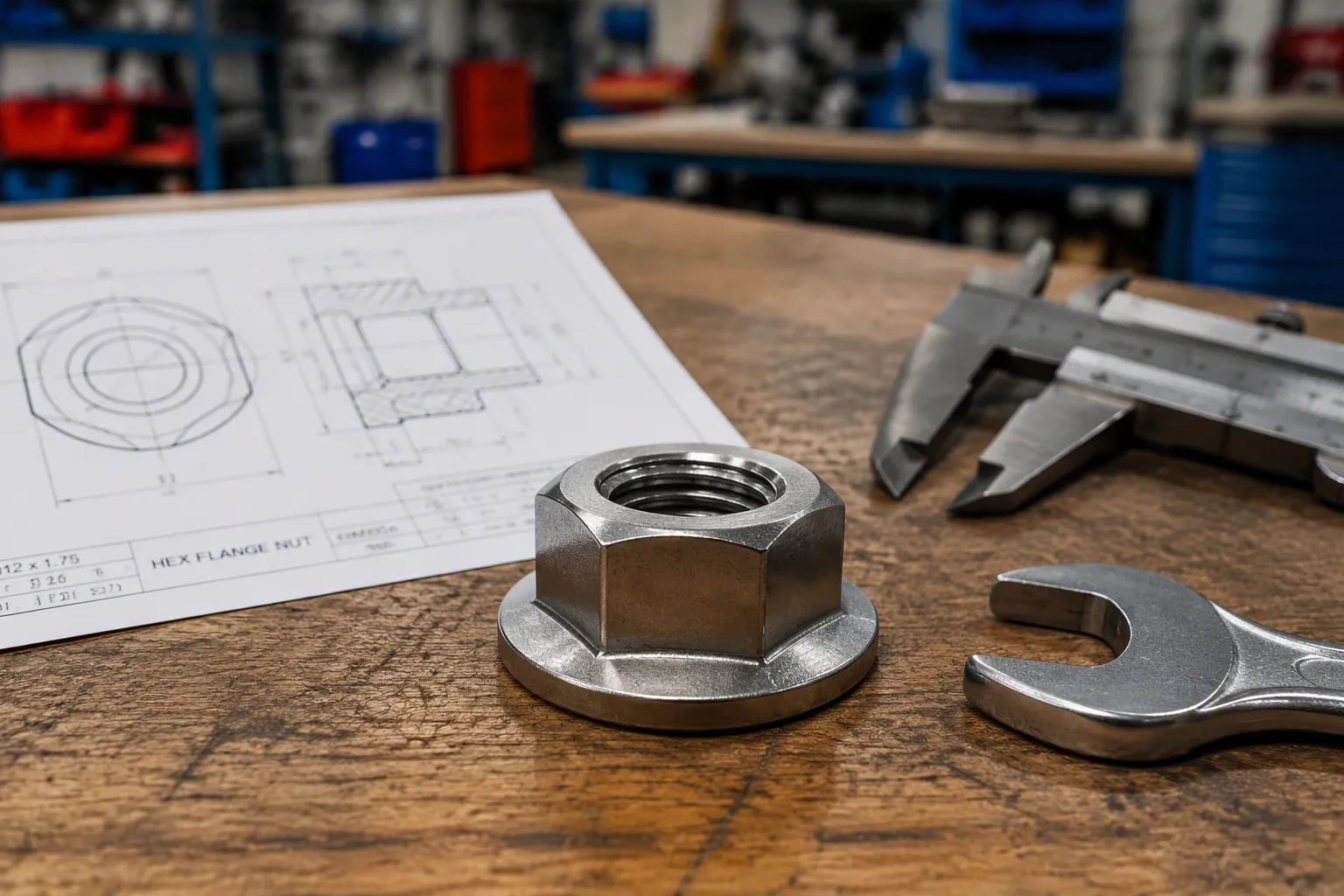
Flange hex nuts incorporate a wide flange at one end, which acts as an integrated washer. This design distributes the load over a larger surface area and reduces the risk of damage to the connected parts. The flange also helps prevent the nut from loosening due to vibration. Some flange hex nuts feature serrations on the bearing surface, which further enhance their locking ability.
Tip: The built-in flange eliminates the need for a separate washer, simplifying assembly and saving time.
Dimensions and Standards
Flange hex nuts follow standards such as DIN 6923 and ISO 4161. These standards specify the width across flats, flange diameter, and thread pitch. The flange diameter is typically larger than the nut body, providing increased bearing surface. Manufacturers offer both plain and serrated flange hex nuts to suit different assembly requirements.
| Advantage | Description |
|---|---|
| Eliminates need for a separate washer | The integrated flange acts as a built-in washer, simplifying assembly. |
| Improved load distribution | The flange distributes the load over a larger area, reducing the risk of damage to surfaces. |
| Enhanced resistance to loosening | A larger bearing surface improves resistance to loosening, especially under vibration. |
| Saves time during assembly | The built-in flange allows for quicker installation, making it efficient for production lines. |
Materials and Strengths
Manufacturers use a range of materials for flange hex nuts, including carbon steel, stainless steel, and alloy steel. Stainless steel flange hex nuts provide high durability and excellent corrosion resistance. The choice of material affects the nut’s strength and suitability for different environments. Serrated flange hex nuts offer additional grip, making them ideal for high-vibration applications.
Common Applications
Flange hex nuts are popular in industries that require fast and secure assembly. Common uses include:
- Automotive manufacturing, especially in engine and chassis assembly
- Machinery and equipment subjected to vibration
- Construction projects where load distribution is critical
- Electrical installations
These hex nuts streamline assembly processes and enhance joint reliability.
Slotted Hex Nuts (Castle Nuts)
Features
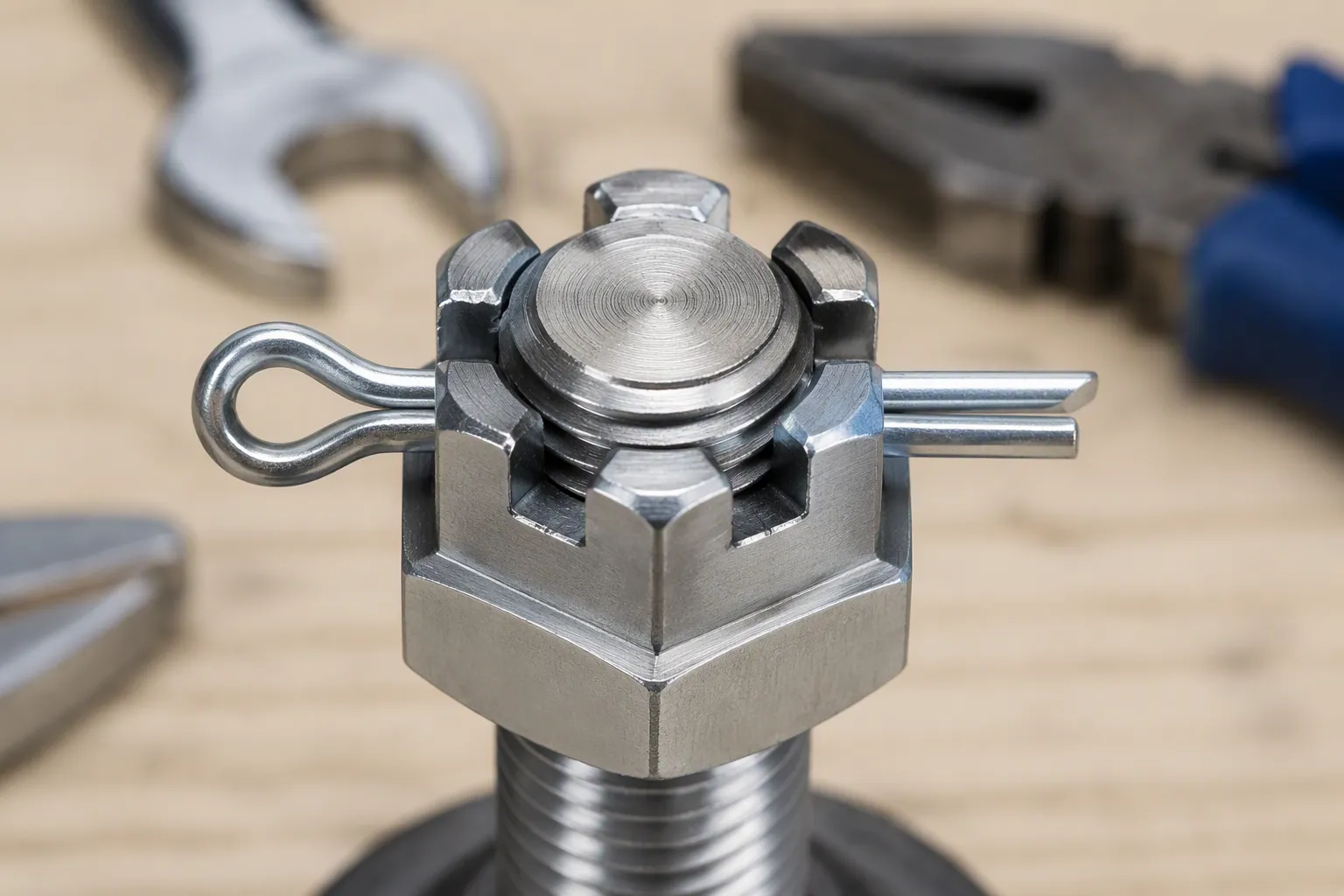
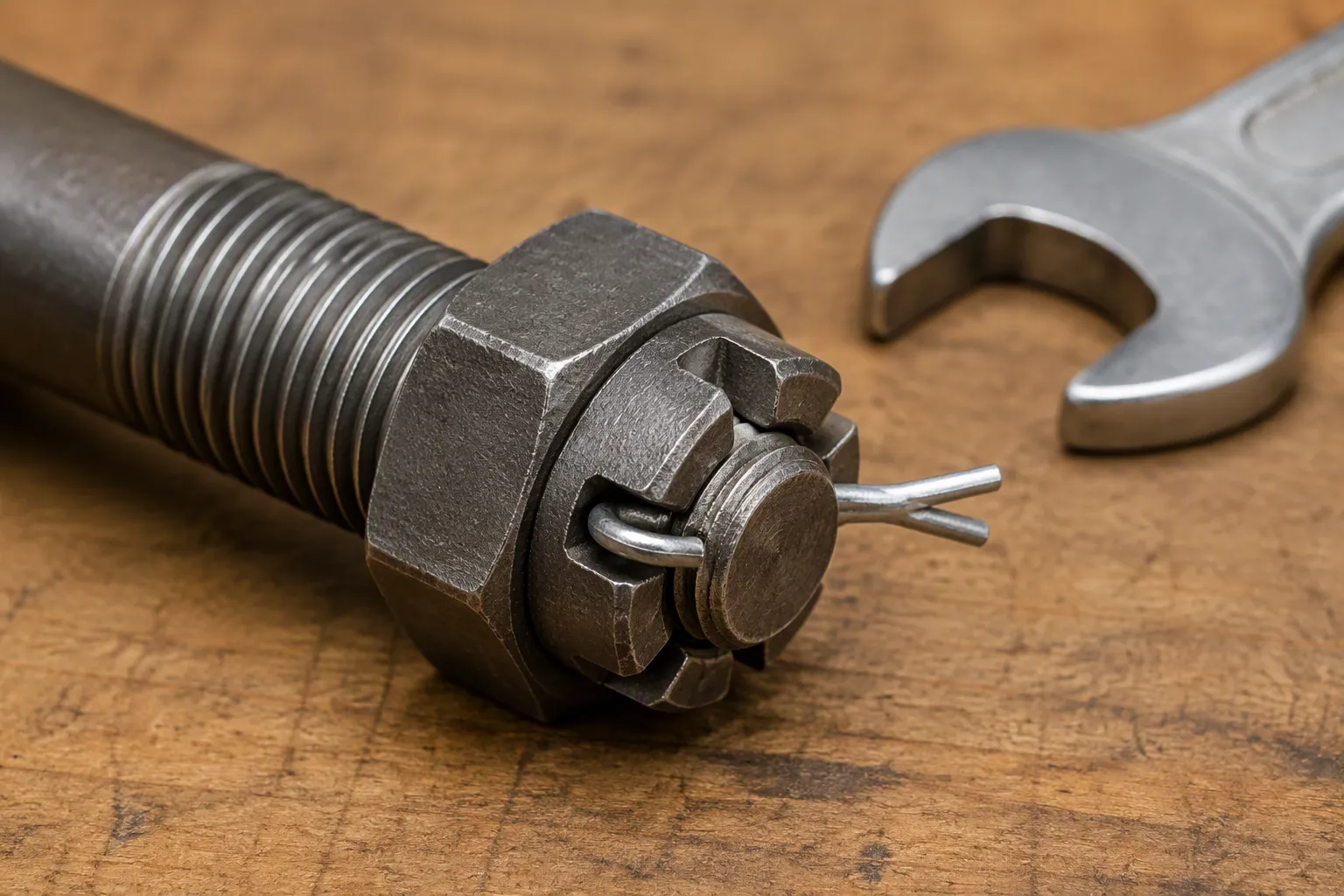
Slotted hex nuts, also known as castle nuts, feature a tall, notched top that resembles the battlements of a castle. The slots allow for the insertion of a cotter pin through the nut and a pre-drilled hole in the bolt. This locking method prevents the nut from rotating and ensures a secure connection in safety-critical applications.
- The slots align with the bolt hole for cotter pin insertion.
- The tall sides protect the cotter pin from accidental damage.
- The design provides both strength and enhanced security.
Castle nuts stand out among different types of nuts for their unique locking mechanism and suitability for high-stress environments.
Dimensions and Standards
Manufacturers produce slotted hex nuts according to standards such as DIN 935 and ANSI B18.2.2. These standards define the nut’s height, slot width, and spacing to ensure compatibility with cotter pins and bolts. The tall profile distinguishes castle nuts from standard hex nuts and heavy hex nuts.
| Feature | Castle Nut |
|---|---|
| Shape | Tall, notched top |
| Locking Method | Cotter pin |
| Best Use | Safety-critical |
Materials and Strengths
Slotted hex nuts use strong materials such as carbon steel, stainless steel, and alloy steel. These materials provide the necessary strength for demanding applications. Stainless steel versions offer high durability and resistance to corrosion. The robust construction ensures that castle nuts maintain integrity under heavy loads and repeated use.
Common Applications
Slotted hex nuts play a vital role in assemblies where safety and reliability are paramount. Typical applications include:
- Automotive steering and suspension systems
- Aircraft landing gear and control linkages
- Agricultural equipment
- Heavy machinery and construction vehicles
These hex nuts provide a secure locking solution for joints that must not loosen under vibration or dynamic forces.
Coupling Hex Nuts
Features
Coupling hex nuts extend the threaded connection between two rods or bolts. Their elongated shape allows technicians to join threaded components securely, creating a continuous thread for structural or mechanical assemblies. These nuts provide a practical solution when standard hex nuts cannot bridge the gap between two parts. The design ensures alignment and stability, making them indispensable in repair and extension tasks.
Coupling hex nuts simplify the process of connecting threaded rods, especially in situations where length adjustment or extension is necessary.
Dimensions and Standards
Manufacturers produce coupling hex nuts in various lengths and diameters to accommodate different thread sizes. The standards governing their use ensure compatibility and reliability across industries. The following table highlights the application areas and relevant standards:
| Application Area | Standards Governing Use |
|---|---|
| Automotive | DIN 6334, ISO 8767 |
| Mechanical Engineering | ASME B18.2.2, DIN EN ISO 8767 |
| Construction | DIN 6334 |
| Electronics | DIN 6334 |
| Aerospace | DIN 6334 |
| Railway | DIN 6334 |
These standards specify the dimensions, thread pitch, and tolerances required for coupling hex nuts. Engineers select the appropriate nut based on the thread size and the mechanical demands of the assembly.
Materials and Strengths
Coupling hex nuts come in a range of materials, including carbon steel, stainless steel, and brass. Stainless steel offers excellent durability and corrosion resistance, making it suitable for outdoor and harsh environments. Brass coupling nuts provide moderate strength and resist corrosion in electrical and plumbing applications. The choice of materials affects the nut’s mechanical properties and longevity.
Common Applications
Coupling hex nuts play a vital role in structural applications, especially when technicians need to extend threaded rods in construction or mechanical systems. Their common uses include:
- Joining threaded rods in building frameworks
- Repairing or extending machinery components
- Connecting electrical conduits
- Assembling furniture and fixtures
- Securing parts in automotive and railway systems
These nuts provide a reliable solution for creating strong, continuous connections in various industries.
Prevailing Torque Hex Nuts
Features
Prevailing torque hex nuts incorporate a self-locking mechanism that maintains preload in high-vibration environments. The design includes a deformed thread section or a nylon insert, which creates friction against the mating bolt. This friction prevents the nut from loosening, even under dynamic loads. The locking feature eliminates the need for additional lock devices, simplifying assembly and reducing component count.
Prevailing torque hex nuts ensure joint integrity in critical systems where vibration or movement could compromise safety.
Dimensions and Standards
Manufacturers produce prevailing torque hex nuts in standard sizes to match common bolts. These nuts conform to standards such as ISO 7042, DIN 980, and ASTM F594. The standards specify the nut’s dimensions, thread pitch, and locking mechanism. Engineers must verify compatibility with the bolt and the required preload for the application.
The following table summarizes the design features and benefits of prevailing torque hex nuts:
| Design Feature | Benefit |
|---|---|
| Deformed thread section | Creates friction against the mating bolt, preventing self-loosening in high-vibration environments. |
| Nylon insert | Provides constant friction, enhancing the nut’s ability to maintain preload. |
| Consistent locking force | Maintains joint integrity under dynamic loads, reducing the risk of fastener failure. |
| Multiple installations | Allows for repeated use while still maintaining effectiveness, simplifying assembly. |
| Eliminates need for lock devices | Reduces component count and simplifies assembly processes. |
Materials and Strengths
Prevailing torque hex nuts use materials such as carbon steel, stainless steel, and alloy steel. Stainless steel versions offer high durability and resist corrosion, making them ideal for marine and outdoor applications. The nylon insert enhances the locking ability without damaging the threads. Engineers select the material based on the environmental conditions and the mechanical requirements of the assembly.
Common Applications
Prevailing torque hex nuts excel in environments where vibration or movement threatens joint stability. Their typical applications include:
- Automotive engines and suspension systems
- Aerospace assemblies
- Heavy machinery and equipment
- Electrical installations
- Railway systems
These nuts provide a dependable locking solution for safety-critical connections.
Structural Hex Nuts
Features
Structural hex nuts are designed for high-strength connections in construction and heavy machinery. Their larger dimensions and robust geometry enable them to handle high torque and shear forces. Engineers use these nuts in structural applications where safety and stability are paramount. The nuts often feature a heavy hex profile, which increases their load-bearing capacity.
Structural hex nuts deliver exceptional performance in demanding environments, ensuring the integrity of buildings, bridges, and industrial equipment.
Dimensions and Standards
Manufacturers produce structural hex nuts according to standards such as ASTM A563, ASTM A194, and ASME B18.2.2. These standards define the nut’s dimensions, property class, and compatibility with structural bolts. Engineers match the nut’s strength grade to the bolt to avoid mismatched joint strength and premature failure.
In construction, heavy hex nuts join beams and machinery parts. Their larger size allows them to withstand high torque and shear forces, contributing to the stability and safety of structures.
Materials and Strengths
Structural hex nuts use materials such as carbon steel, alloy steel, stainless steel 304, stainless steel 316, and brass. The mechanical property requirements depend on the application and environmental exposure. The following table compares the tensile strength and corrosion resistance of different materials:
| Material Type | Tensile Strength (psi) | Corrosion Resistance | Common Applications |
|---|---|---|---|
| Carbon Steel (Grade 5) | 120,000 | Low (requires coating) | Automotive, general machinery |
| Alloy Steel (Grade 8) | 150,000 | Low (often zinc-plated) | Heavy-duty equipment, off-road vehicles |
| Stainless Steel 304 | 80,000–90,000 | High | Food processing, indoor structural |
| Stainless Steel 316 | 80,000–90,000 | Very High | Marine, chemical plants, coastal structures |
| Brass | 50,000–75,000 | Moderate to High | Electrical fittings, plumbing |

Engineers consider environmental exposure when selecting materials. Stainless steel and coated fasteners extend service life in corrosive environments. Locking features help prevent loosening in high-vibration settings. Regular inspection ensures the nuts maintain their integrity, especially in critical systems. Mixing dissimilar metals can cause galvanic corrosion, so technicians use insulating washers or compatible alloys when necessary.
Common Applications
Structural hex nuts are essential in structural applications, including:
- Joining beams in building frameworks
- Securing heavy machinery parts
- Assembling bridges and industrial equipment
- Marine and coastal structures
- Food processing facilities
These nuts provide the strength and durability required for the most demanding types of nuts used in construction and engineering.
Side-by-Side Comparison of Hex Nut Types

Comparison Table: Features, Strengths, Applications
A clear comparison helps engineers and technicians select the right fastener for each project. The table below outlines the main differences between standard hex nuts and lock nuts, focusing on their features, strengths, and typical applications.
| Feature | Hex Nut | Lock Nut |
|---|---|---|
| Core Purpose | Standard, non-permanent fastener joint | Secure bolted connection, resist loosening |
| Key Trait | Provides clamping force when torqued | Provides clamping force plus a locking action |
| Vibration Resistance | Poor; prone to loosening | Excellent; maintains hold in high-vibration environments |
| Temperature Range | Unlimited; suitable for all temperatures | Limited by locking element (e.g., nylon insert) |
Note: Lock nuts include types such as nylon insert lock nuts and prevailing torque hex nuts, which offer enhanced security in dynamic environments.
Common Applications:
- Hex nuts:
- Automotive powertrains (engine components, exhaust systems)
- Rotating machinery (engine pumps, motors)
- Electrical panels (fastening terminal blocks)
- Structural steelwork (beams, columns)
- Lock nuts:
- Automotive powertrains (shock absorbers, brake calipers)
- Rotating machinery (bearings, gears)
- Electrical panels (cable glands, mounting switches)
- Structural steelwork (turbine towers, building frames)
Summary of Key Differences
A direct comparison reveals that hex nuts serve as the standard choice for general fastening needs, while lock nuts address situations where vibration or movement could cause loosening. Lock nuts use special features, such as nylon inserts or deformed threads, to maintain joint integrity under stress.
Industry usage highlights further distinctions:
- Automotive manufacturers rely on stainless hex nuts for safety and performance. These nuts account for about 40% of all fasteners in vehicle assembly.
- Aerospace engineers select high-grade stainless nuts for lightweight structures, making up roughly 25% of fastening solutions in that sector.
- Construction projects use standard hex nuts for secure connections and easy disassembly.
Engineers should always match the nut type to the application’s mechanical and environmental demands. This approach ensures safety, reliability, and cost-effectiveness.
A well-informed comparison allows professionals to choose the optimal fastener for each scenario, reducing the risk of failure and improving overall system performance.
Difference Between Hex and Heavy Hex Jam Nuts
Size and Thickness Comparison
Engineers often encounter confusion when selecting between hex jam nuts and heavy hex jam nuts. The difference between hex and heavy hex jam nuts centers on their dimensions and intended purpose. Hex jam nuts feature a compact design with reduced height, making them suitable for locking applications where space is limited. Heavy hex jam nuts, on the other hand, possess a larger and more robust profile. Their greater thickness allows them to withstand higher mechanical stresses.
The following table illustrates the dimensional distinctions:
| Type | Dimensions | Thickness | Purpose |
|---|---|---|---|
| Heavy Hex Nut | Thicker and robust | Greater thickness | Main load-bearing nut |
| Heavy Hex Jam Nut | Shorter and thinner | Reduced height | Locking nut, used in pairs |
Heavy hex jam nuts serve as locking devices in assemblies that require additional security. Their shorter height enables technicians to pair them with a main heavy hex nut, creating a reliable locking mechanism. This combination prevents loosening caused by vibration or dynamic loads. The increased thickness of heavy hex nuts ensures they can handle the primary load, while heavy hex jam nuts provide supplementary locking.
Tip: Always verify the nut height and thickness before installation. Proper selection prevents assembly failures and ensures long-term reliability.
Strength and Application Differences
Strength remains a critical factor when comparing hex jam nuts and heavy hex jam nuts. Heavy hex jam nuts exhibit higher proof load values due to their larger size and robust construction. Hex jam nuts, with their smaller width and thickness, offer lower proof load and are not intended for structural applications.
The table below summarizes the differences in strength and typical uses:
| Feature | Hex Jam Nuts | Heavy Hex Jam Nuts |
|---|---|---|
| Size | Smaller width and thickness | Larger width and thickness |
| Strength | Lower proof load | Higher proof load |
| Typical Applications | Used as locking devices, not structural | Used as locking devices, not structural |
Heavy hex jam nuts find frequent use in heavy machinery, steel construction, and industrial equipment. Technicians install these nuts in pairs to secure critical joints, especially in environments subject to vibration. Hex jam nuts, while effective as locking devices, do not provide the same level of strength and durability. Engineers select heavy hex jam nuts when assemblies demand enhanced security and resistance to loosening.
Selecting the correct nut type ensures the integrity of the fastening system. Heavy hex jam nuts deliver superior performance in demanding applications, while hex jam nuts offer a practical solution for lighter locking needs.
Choosing the Right Hex Nut
Consider Application Requirements
Selecting the correct hex nut begins with a thorough understanding of the application’s demands. Engineers must evaluate the environment, mechanical stresses, and assembly methods. For high-stress applications, the nut’s design and compatibility with the bolt become critical. Assemblies exposed to vibration, movement, or frequent adjustments often require lock nuts or jam nuts to maintain joint integrity. When working in confined spaces, a compact nut profile may offer installation advantages.
Tip: Always assess the load and environmental conditions before specifying a hex nut. This approach reduces the risk of premature failure and ensures long-term reliability.
Material and Corrosion Resistance
Material selection directly impacts corrosion resistance and overall performance. Stainless steel, especially grades like 304 and 316, provides excellent protection against rust and chemical attack. In marine or chemical environments, A4-70 grade stainless steel stands out for its superior resistance to tarnish, crevice corrosion, and pitting. This material contains 18% chromium, 8% nickel, and 3% molybdenum, making it ideal for saltwater and harsh industrial settings.
| Property | Details |
|---|---|
| Material | A4-70 grade stainless steel (Austenitic stainless steel, Grade 316) |
| Corrosion Resistance | Superior resistance to tarnish, general corrosion, crevice corrosion, and pitting in harsh environments |
| Applications | Marine and offshore structures, chemical processing, and heavy-duty engineering |
A4-70 is often called ‘marine-grade’ due to its effectiveness in saltwater. High nickel alloys and specialty stainless steels are essential for subsea equipment and pipeline systems. Monel 400, another marine corrosion-resistant material, is specified for shipbuilding and offshore platforms. Choosing the right material at the outset prevents costly maintenance and downtime caused by corrosion. Carbon steel offers high tensile strength for general construction but may require coatings for adequate corrosion resistance.
Strength and Load Needs
Engineers must match the nut’s strength to the demands of the assembly. The load-bearing capacity depends on material, size, thread pitch, and surface finish. For structural engineering, strength grades provide guidance:
| Marking | Standard | Tensile Strength | Common Applications |
|---|---|---|---|
| Grade 2 | SAE J995 | 57–66 ksi | Light-duty fixtures, household appliances |
| Grade 5 | SAE J995 | 105–120 ksi | Automotive suspensions, machinery |
| Grade 8 | SAE J995 | 144–170 ksi | Heavy-duty trucks, high-performance engines |
| 8.8 | ISO 898-1 | 800 MPa | General industrial use |
| 10.9 | ISO 898-1 | 1040 MPa | Structural steel, automotive |
| 12.9 | ISO 898-1 | 1220 MPa | Racing, aerospace, high-stress joints |
Environmental factors such as extreme temperatures, humidity, and chemical exposure also influence the longevity of hex nuts. Engineers should always consider these variables when choosing the right hex nut for demanding projects.
Industry Standards and Specifications
Industry standards guide the selection of hex nuts for safety-critical assemblies. Engineers rely on these specifications to ensure compatibility, durability, and performance. Each industry sets its own requirements for fasteners, reflecting the unique demands of its applications.
| Industry/Application | Standards | Key Requirements |
|---|---|---|
| Construction & Infrastructure | ANSI B18.2.2, ASTM A563 | Dimensional tolerances, mechanical properties |
| Automotive & Machinery | SAE J995, ISO 4032 | Compatibility with bolts, resistance to vibration |
| Aerospace & Defense | AS/AMS | Heat treatment, traceability for critical components |
Construction projects demand hex nuts that meet ANSI B18.2.2 and ASTM A563. These standards specify dimensional tolerances and mechanical properties. Automotive and machinery manufacturers use SAE J995 and ISO 4032 to ensure compatibility with bolts and resistance to vibration. Aerospace and defense applications require AS/AMS standards, which focus on heat treatment and traceability.
- Engineers always verify that hex nuts meet recognized industry standards such as ANSI, ISO, or ASTM.
- Using non-compliant or substandard fasteners can lead to structural failure and safety hazards.
Note: Standards provide a benchmark for quality and safety. They help prevent accidents and ensure the reliability of assemblies.
Manufacturers mark hex nuts with grade and specification codes. These markings allow technicians to identify the nut’s properties quickly. Engineers check these codes before installation. They avoid mixing nuts from different standards in the same assembly. This practice maintains consistency and prevents mismatched joints.
Cost and Availability
Cost and availability influence the choice of hex nuts in every project. Engineers balance performance requirements with budget constraints. Stainless steel hex nuts cost more than carbon steel options. Specialty nuts, such as nylon insert lock nuts or structural hex nuts, command higher prices due to their unique features.
Manufacturers produce standard hex nuts in large volumes. This production ensures steady supply and competitive pricing. Specialty nuts may require custom orders, which increases lead times and costs. Engineers plan ahead when specifying rare or high-grade fasteners.
- Bulk purchasing reduces unit costs.
- Local suppliers offer faster delivery and lower shipping expenses.
- Custom fasteners require longer lead times and higher prices.
Tip: Engineers consult suppliers early in the design process. This step helps avoid delays and ensures the right fasteners are available when needed.
Availability varies by region and industry. Construction sites often source hex nuts locally to meet tight schedules. Aerospace projects rely on certified suppliers for traceable and high-grade fasteners. Automotive manufacturers negotiate contracts with large distributors to secure consistent supply.
Cost considerations extend beyond purchase price. Engineers factor in maintenance, replacement, and potential downtime. Choosing the right hex nut reduces long-term expenses and improves reliability.
Common Mistakes When Selecting Hex Nuts
Selecting hex nuts for engineering projects requires careful attention to detail. Many professionals encounter recurring mistakes that compromise safety, reliability, and performance. Understanding these pitfalls helps engineers and technicians avoid costly errors and ensures the longevity of mechanical assemblies.
Overlooking Material Compatibility
Material compatibility plays a crucial role in the performance of hex nuts. Engineers must match the nut grade and material to the bolt or stud. Mismatched fasteners often lead to premature failure. Uneven load distribution causes stress and strain, which weakens the connection. Galvanic corrosion develops when incompatible metals interact, especially in environments exposed to moisture or chemicals.
- Always match the hex nut grade and material to the bolt or stud it is securing.
- Mismatched fasteners can lead to premature failure due to uneven load distribution.
- Galvanic corrosion can occur when incompatible materials are used together.
Different materials expand and contract at varying rates. This difference in thermal expansion creates additional stress on the joint. Engineers must consider these factors during selection. Nearly 40% of failure cases in high corrosion areas result from poor material choices. Selecting compatible materials prevents corrosion, maintains structural integrity, and extends service life.
Note: Material compatibility ensures that hex nuts perform reliably under mechanical and environmental stresses.
Ignoring Load Ratings
Load ratings determine the strength and durability of hex nuts. Engineers must select nuts that meet or exceed the mechanical demands of the application. Using undersized or low-grade nuts increases the risk of joint failure. Incorrect sizing accounts for approximately 25% of installation failures. Improper torque settings also contribute to assembly issues. A survey found that 30% of users did not torque their rivet nuts to the specified settings.
| Mistake | Evidence |
|---|---|
| Incorrect sizing | Approximately 25% of installation failures are due to using the wrong size rivet nut. |
| Improper torque settings | 30% of users did not torque their rivet nuts to the specified settings. |
Engineers must verify the load ratings and torque requirements for each project. Overlooking these factors leads to mechanical breakdowns, increased maintenance, and potential safety hazards. Selecting the correct size and grade ensures that hex nuts withstand operational stresses.
Misunderstanding Standards
Industry standards provide guidelines for hex nut selection. Misunderstanding or ignoring these standards results in non-compliance and safety risks. Certifications such as ISO 9001 and ASTM standards demonstrate a commitment to quality and safety. Valid certifications confirm that fasteners meet industry requirements. Relying solely on documentation without verification exposes projects to compliance issues.
| Key Point | Explanation |
|---|---|
| Certifications | Valid certifications ensure that fasteners meet safety and quality requirements. |
| ISO 9001 and ASTM | These certifications illustrate a commitment to quality production and adherence to guidelines. |
| Verification of Documents | Relying solely on documentation without verification can lead to compliance issues and safety risks. |
Engineers must review certifications and verify the authenticity of documents. Proper understanding of standards ensures that hex nuts deliver consistent performance and meet regulatory requirements. Failure to comply with standards jeopardizes the safety and reliability of mechanical assemblies.
Tip: Always confirm that hex nuts meet recognized industry standards and certifications before installation.
Engineers and procurement specialists recognize clear distinctions between hex nuts and heavy hex nuts. The table below summarizes their features:
| Feature | Hex Nut | Heavy Hex Nut |
|---|---|---|
| Size | Smaller, standard | Larger, bulkier |
| Strength | Moderate loads | Higher strength |
| Applications | Light machinery | Structural projects |
| Tools | Common hand tools | Hydraulic tools |
| Cost | Affordable | Higher cost |
| Availability | Readily available | Longer lead times |
Selecting the right hex nut involves several steps:
- Choose materials for corrosion resistance or strength.
- Match size and thread pitch to bolts.
- Select surface finish for durability.
- Ensure functional compatibility for project demands.
- Balance cost and availability.
Professionals achieve reliable assemblies by evaluating application requirements and industry standards.
FAQ
What is the main difference between finished hex nuts and heavy hex nuts?
Finished hex nuts have a standard size and fit general applications. Heavy hex nuts feature a larger width and thickness, offering higher strength for structural and high-stress environments.
How does a nylon insert lock hex nut prevent loosening?
A nylon insert creates friction against the bolt threads. This friction holds the nut in place, resisting loosening caused by vibration or movement.
Which material offers the best corrosion resistance for hex nuts?
Stainless steel, especially grades 304 and 316, provides excellent corrosion resistance. Engineers select these materials for marine, chemical, and outdoor applications.
When should an engineer use a jam nut?
Engineers use jam nuts as locking devices. They pair jam nuts with another nut to prevent loosening in assemblies exposed to vibration or frequent adjustment.
What standards should engineers check when selecting hex nuts?
Engineers verify standards such as ASTM A563, SAE J995, ISO 4032, and DIN 6923. These standards ensure compatibility, strength, and safety for specific applications.
Can coupling hex nuts join two threaded rods securely?
Coupling hex nuts connect two threaded rods, creating a continuous thread. This solution works well for structural extensions and repairs.
Are flange hex nuts suitable for high-vibration environments?
Flange hex nuts, especially serrated types, distribute load and resist loosening. They perform well in automotive, machinery, and construction assemblies exposed to vibration.