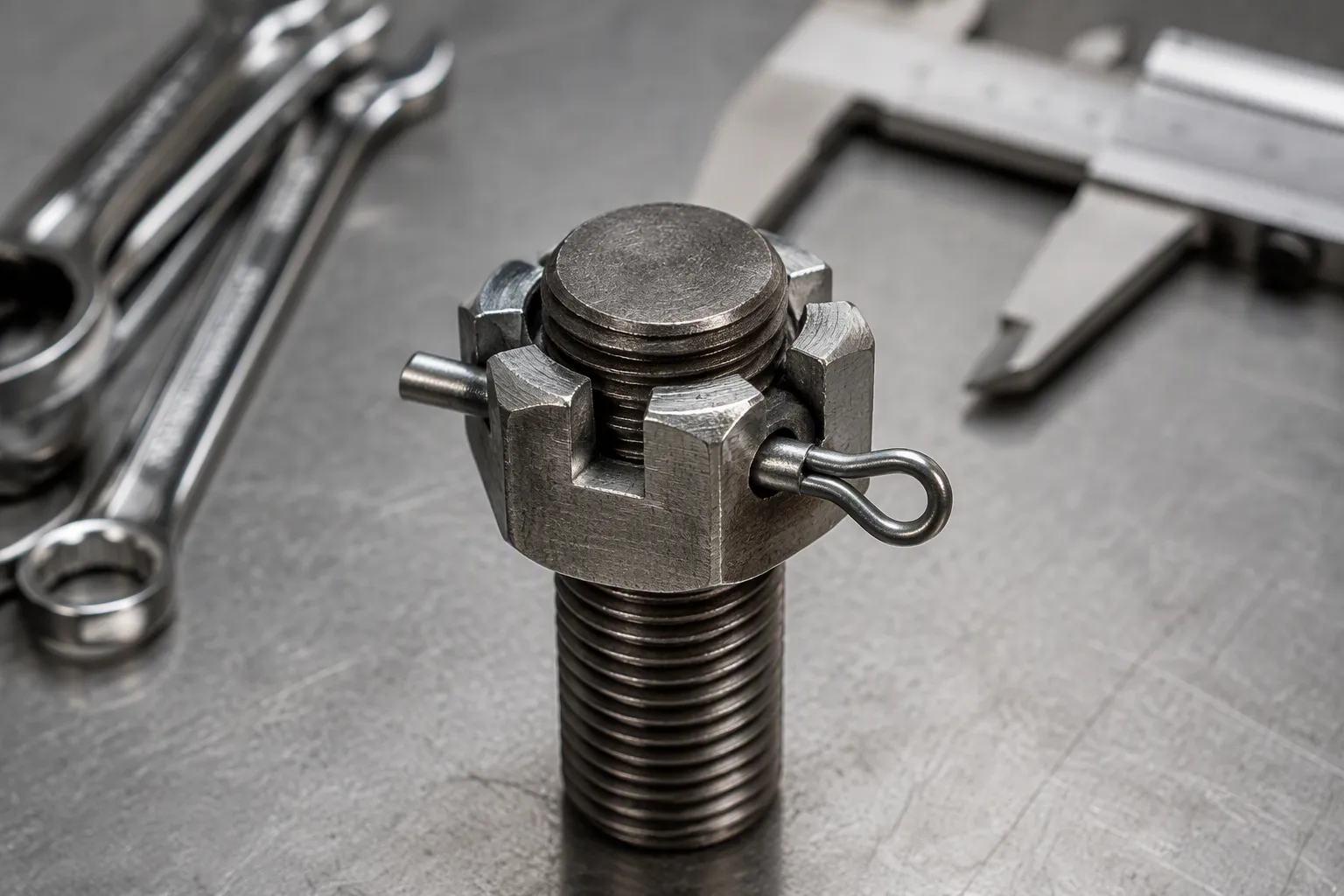
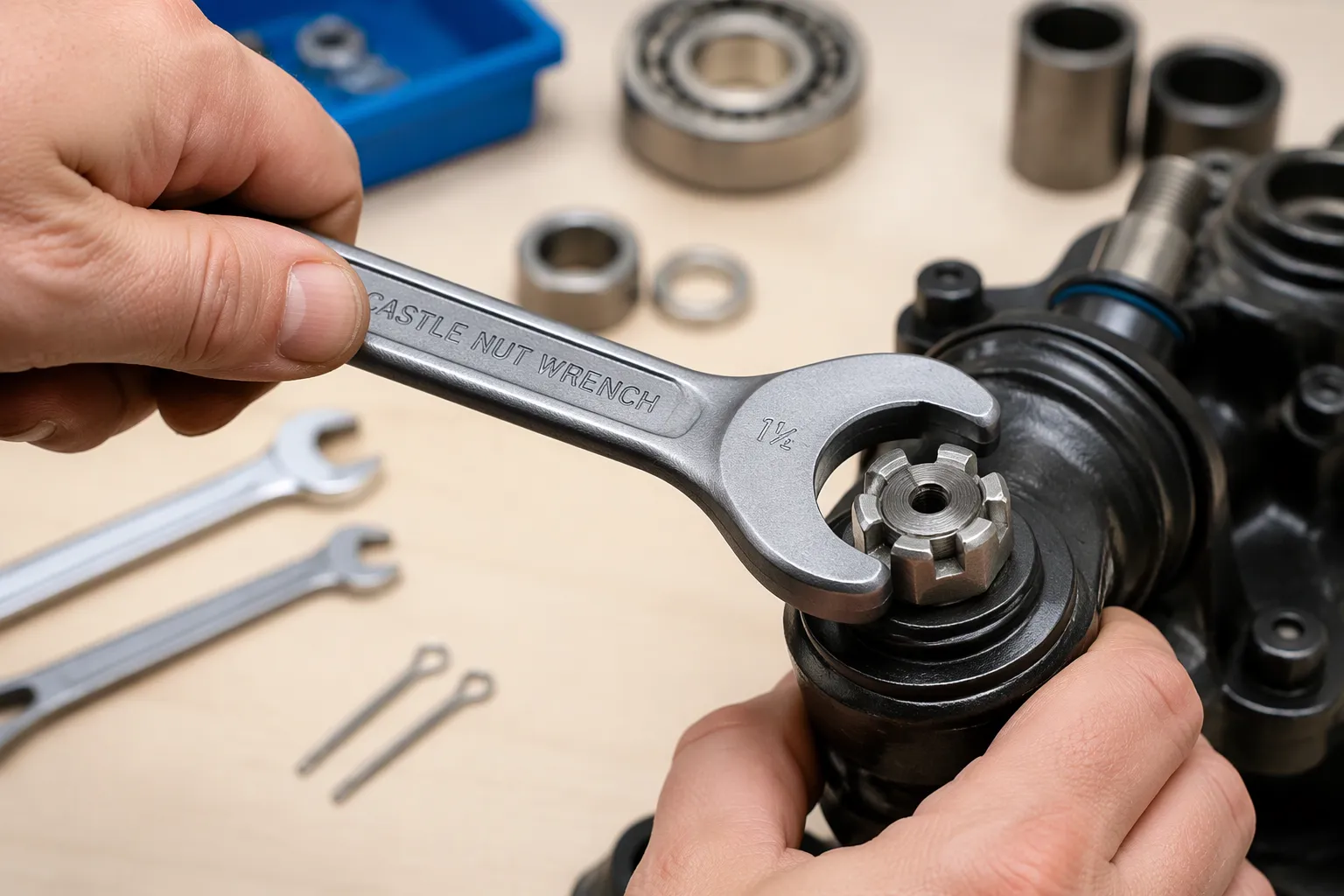
Choosing the right castle nut wrench starts with two measurements: the across-flats size and the notch count. A castle nut with the wrong fit wastes time and risks damage. Next, confirm the torque specification for the application. The castle nut wrench must handle that load without flexing or slipping.
Drive size matters too. A torque wrench in the common 3/8-inch or 1/2-inch range pairs well with most sockets. Finally, decide between a dedicated socket, a spanner-style tool, or a torque-compatible design. Even an armorer’s wrench or a general ar-15 tool deserves the same scrutiny as nuts and bolts from a custom fasteners manufacturer. Reliable custom fasteners begin with the right tool.
Start With Nut Size and Torque
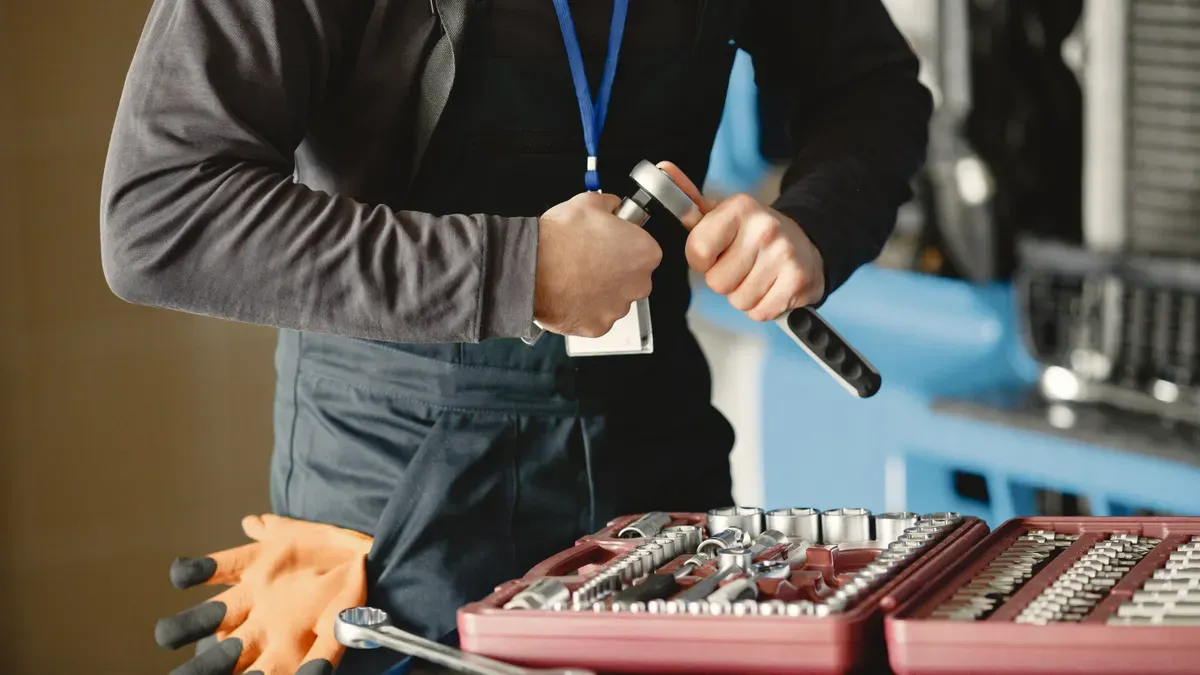
Two numbers drive every good buying decision: the nut’s physical size and the torque the joint requires. A wrench that fits the nut but fails under load creates a safety problem. A wrench that handles the load but grips the nut poorly damages hardware. Both measurements take only a few minutes to collect, and both prevent costly returns.
Measure the Nut Correctly
A caliper and a notepad cover this step completely. Measure the nut before opening any product listing. Castle nuts vary in size across applications, and a close guess rarely works.
Across-Flats vs. Across-Corners
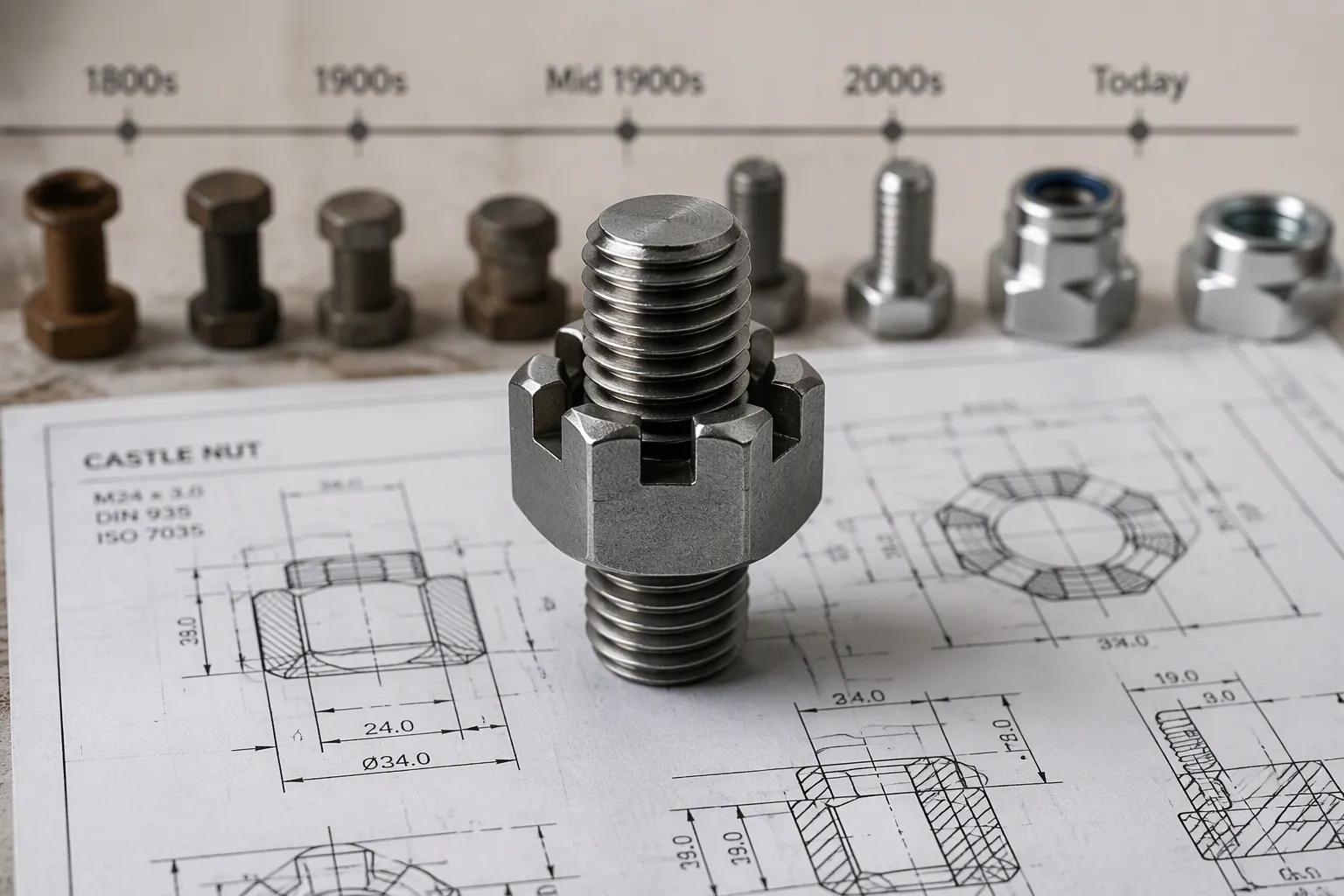
The across-flats measurement runs from the flat of one side to the flat of the opposite side. This number defines the socket or wrench size a buyer needs. The across-corners measurement runs from one corner point to the opposite corner point, and it always reads larger than the across-flats figure. Manufacturers list wrench sizes by across-flats dimension, so record that number first. A common mistake involves measuring across corners and then shopping for that size. The resulting tool will not fit.
Counting and Measuring the Notches
Notch count and notch dimensions determine whether a spanner-style tool engages properly. Count the notches around the full circumference and write the number down. Six notches and twelve notches are common configurations, and each requires a matching lug pattern. Measure the width of a single notch with the caliper. Measure the depth of the notch as well. A lug that is too wide will not enter the slot. A lug that is too shallow will slip out under load. These two measurements separate a secure fit from a loose one.
Confirm Your Torque Spec
Torque values for castle nuts range from light hand-tight values to heavy specifications on suspension and driveline hardware. The wrench must survive the upper end of that range without spreading, twisting, or rounding the lugs.
Where to Find the Spec
Vehicle service manuals list torque values by fastener and location. Factory service information and published repair guides are the most reliable sources. Parts manufacturers sometimes supply the number directly with the product. BCA, for example, includes an Axle Nut Torque Specification Booklet in the box with applicable wheel hub assemblies. That pocket-sized publication runs 68 pages of front and rear axle nut specifications and covers models from Acura to Yugo. It also contains nine pages of notes on model-specific torque procedures and on whether a nut can be reused. A specification booklet of this kind removes guesswork from the job. For firearm platforms, the manufacturer’s armorer manual serves the same role.
Matching Torque to Wrench Rating
Every wrench carries a maximum torque rating. Compare that rating to the specification with a safety margin. A wrench rated at exactly the required value leaves no room for error. Choose a tool rated above the target value so the metal stays rigid during torque wrench use. Flex in the tool absorbs energy and produces a false reading at the torque wrench. Slipping lugs cause a worse problem: rounded notches and a nut that will not come off. A rating with headroom protects both the tool and the hardware.
Match the Drive Size
Drive size links the wrench to the torque tool in the user’s cabinet. A mismatch here forces an adapter into the chain, and every adapter adds a weak point.
Common Drive Sizes and Their Ranges
Drive sizes follow a rough torque hierarchy. The table below shows typical ranges.
| Drive Size | Typical Torque Range | Common Applications |
|---|---|---|
| 1/4 inch | Up to about 20 ft-lb | Small fasteners, light assemblies |
| 3/8 inch | About 15 to 80 ft-lb | General automotive and equipment work |
| 1/2 inch | About 30 to 250 ft-lb | Suspension, driveline, heavy hardware |
| 3/4 inch | About 150 to 600 ft-lb | Large truck and industrial fasteners |
A buyer should pick the drive size that covers the target torque inside its midrange. The middle of a range is where a torque wrench performs most accurately.
Adapters and Their Limits
Adapters allow a 1/2-inch torque wrench to drive a 3/8-inch socket, and they work fine for light duty. Each adapter introduces stack height and a small amount of play. Under high torque, that play translates into lost accuracy and added stress on the joint. Step-up adapters, which drive a larger socket from a smaller drive, carry tighter limits still. Use an adapter as a convenience, not as a permanent solution. The better path is a wrench whose native drive size matches the torque tool already on the shelf.
Match the Wrench to the Nut
Size and torque set the boundaries of the search. The next decision concerns form. A castle nut wrench comes in two broad families, and each family suits different jobs. The right choice depends on the nut’s location, the available clearance, and the way the tool engages the notches.
Socket-Style vs. Spanner-Style
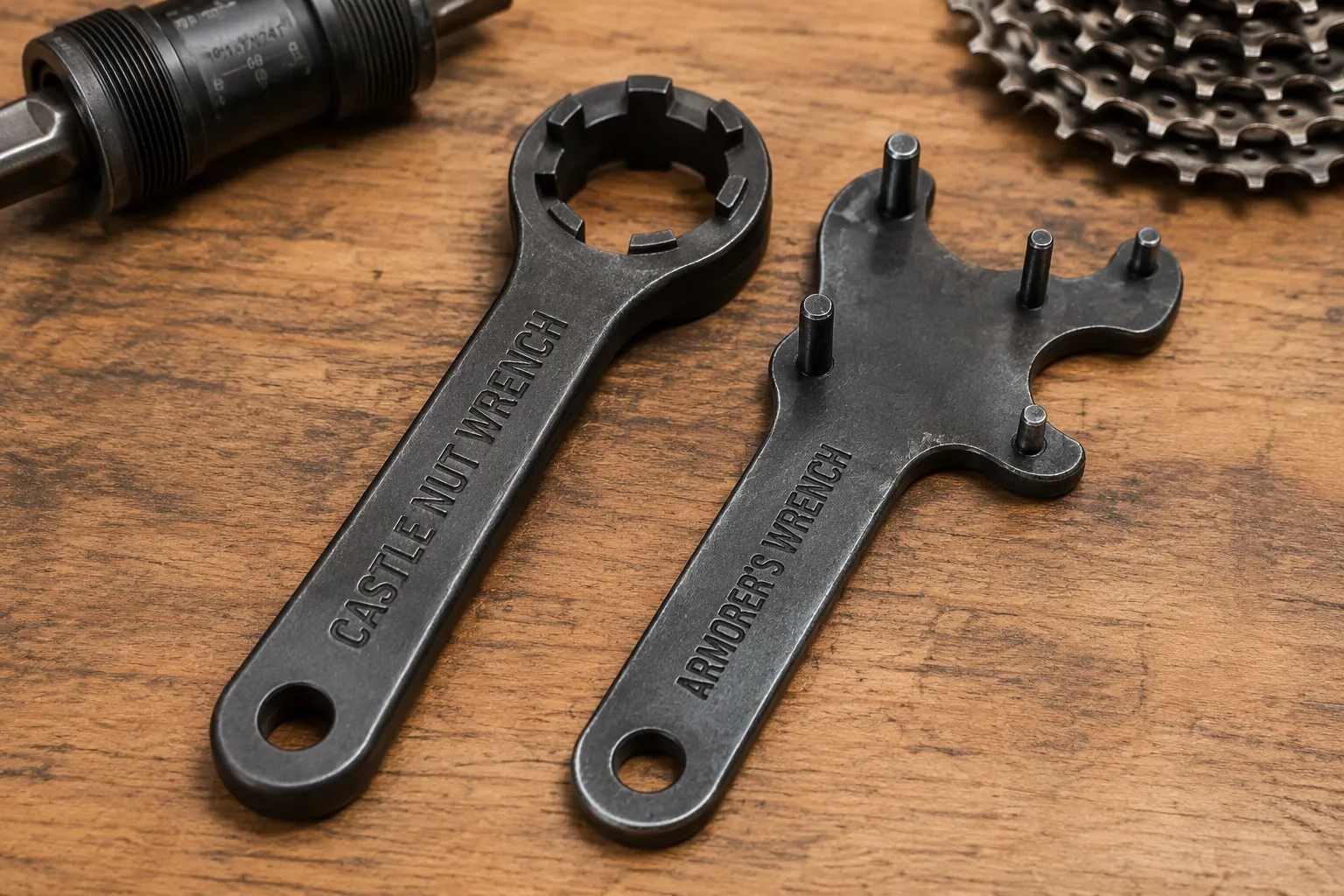
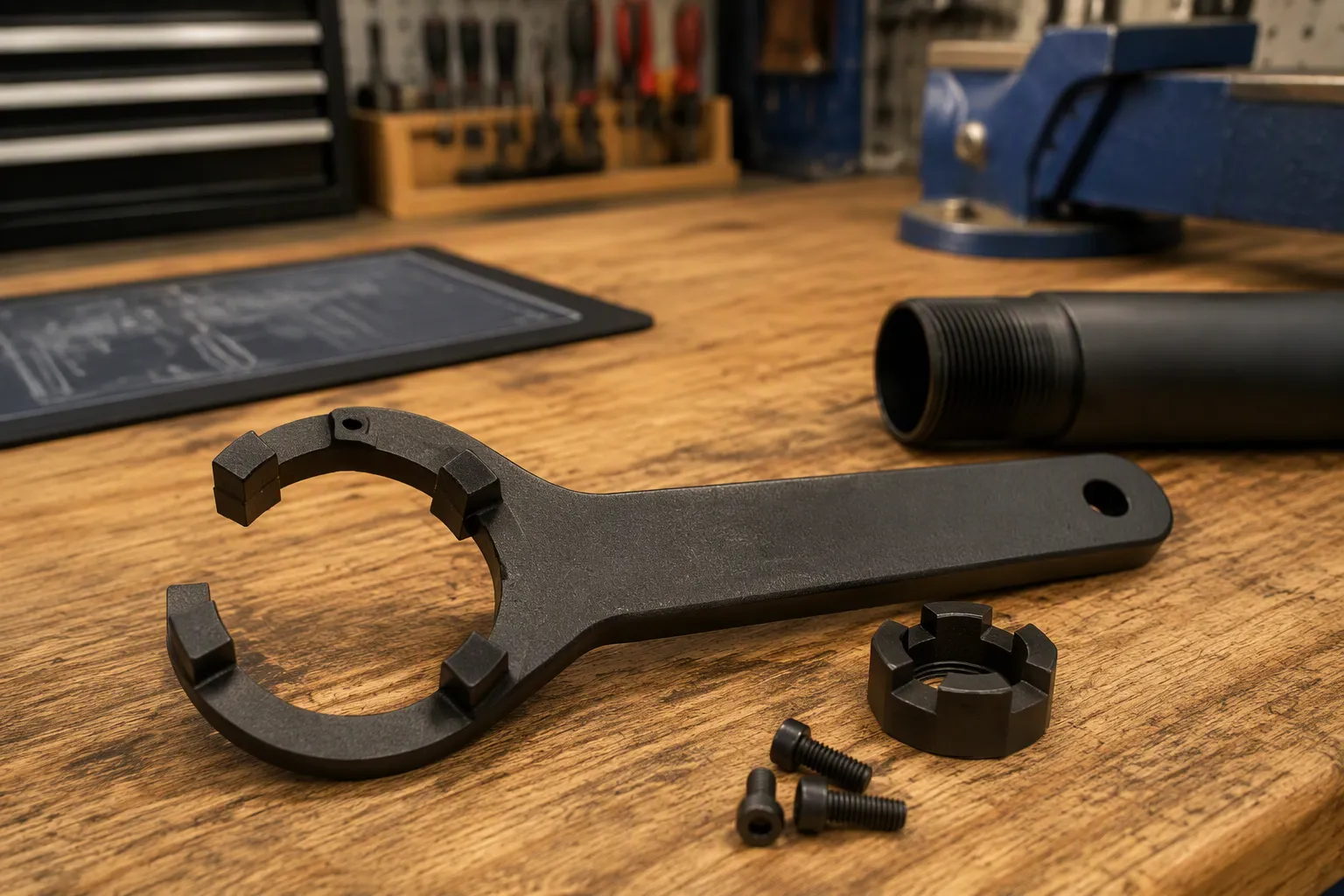
A socket-style wrench looks like a deep socket with lugs cut into its face. A spanner-style wrench resembles a flat bar with teeth or pins at one end. Both designs turn castle nuts, yet they solve different problems.
When a Socket Fits Best
A socket-style wrench shines on a nut with full access from above. The socket drops straight onto the nut and covers all notches at once. Torque spreads evenly across every lug, and the nut stays centered during the turn. This design pairs naturally with a torque wrench because the drive sits directly over the nut axis. Bench work, suspension hardware, and any joint with open overhead clearance favor the socket. A socket also resists cocking, so the lugs stay square in the notches through the full torque pull.
When a Spanner Wins
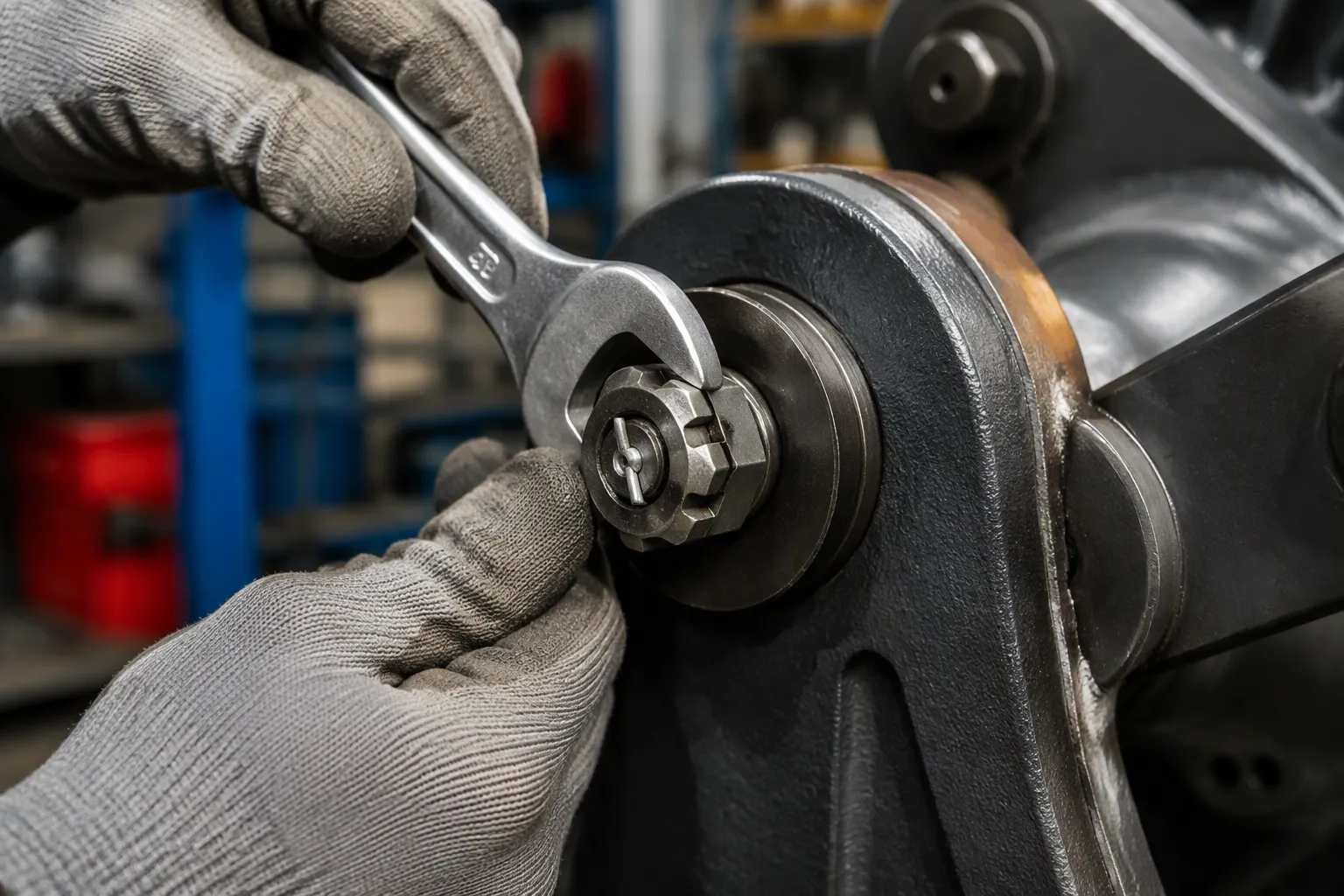
A spanner-style wrench earns its place where a socket cannot reach. The flat body slides in from the side, and the lugs engage only a few notches at a time. TangoDown describes its castle nut wrench design with teeth dimensioned for positive, non-slip engagement that also prevents damage. The same source notes that many competing designs scratched or deformed the castle nut drive notches, while the TD-CNW design avoids that outcome. Either direction forces the wrench down onto solid contact with the nut, which produces a no-mar, positive installation or removal. A breaker bar on the left side handles nut removal, and a torque wrench on the right side handles proper tightening.
The spanner form also suits hand-tight work. A forum contributor on The Armory Life notes that a spanner has three lugs to fit the A4-style castle nut and provides a non-slip fit for hand tightening the castle nut to the receiver. The same discussion cautions against improvised methods. A punch tapped against the notches can free or snug a nut in an emergency, yet the poster prefers the proper tool. That poster also asks whether the nut is staked, meaning a dimple locks the nut to the end plate. A staked nut needs attention before removal, and a proper wrench makes the job cleaner.
Notch Engagement and Fit
Engagement quality separates a safe turn from a damaged nut. The lugs must enter the notches fully, sit square, and stay put under load. A few checks before the first pull confirm the fit.
Checking Lug Depth and Width
Lug depth and width must match the notch dimensions recorded during measurement. Daytona Tactical advises buyers to look for a good wrench with multiple teeth that interface perfectly with the notches on the castle nut. The same guide describes the fit test in practical terms. A user slides the armorer’s wrench over the buffer tube and engages the teeth into the large notches of the castle nut. The wrench must sit deeply and squarely. Shallow engagement concentrates force on the lug tips, and those tips can shear or round the notch corners. Wide lugs bind on entry, and narrow lugs rattle and slip.
Avoiding a Loose or Binding Fit
The target sits between two failure modes. Venture Trailers frames the goal for bearing adjustment as no drag but no looseness. Too tight a fit invites overheating risk, and too loose a fit produces wobble and wear. The same logic applies to castle nut engagement. A binding wrench needs force to seat, and that force transfers to the notches. A loose wrench rocks on the nut and chews the lug edges. A quick spin test tells the story. The tool should rotate freely without binding once seated. Any drag or rattle signals a mismatch worth correcting before removing or replacing the nut.
Clearance and Access
Access decides which wrench shape can physically reach the nut. Castle nuts sit in recessed pockets, behind brackets, and close to surrounding structure. Measure the working envelope before buying.
Recessed Nuts and Tight Spaces
A recessed nut needs a tool with a slim outer profile. A socket with thick walls may not enter the pocket at all. A spanner with a thin head slides into gaps a socket cannot touch. Check the outer diameter of any socket candidate against the pocket opening. Check the head thickness of any spanner candidate against the gap behind the nut. A tool that fits the nut but not the space around it stays in the toolbox.
Offset and Angled Designs
Offset and angled wrenches solve reach problems that straight tools cannot. An offset head lifts the handle above nearby obstructions. An angled head lets the handle clear a frame rail or a bracket. These designs trade some rigidity for access, so confirm the torque rating still covers the job. A dedicated ar-15 tool often includes an offset castle nut feature for exactly this reason. The offset keeps knuckles clear and lets the handle swing through a full arc in cramped quarters.
Evaluate Material and Construction for Durability
A wrench that fits well still fails if the metal cannot take the load. Material and construction decide how many jobs a tool survives. Buyers should inspect steel grade, heat treatment, finish, and build features before they commit.
Steel Grades and Heat Treatment
Most castle nut wrenches use alloy steel or chrome vanadium steel. Both grades offer good strength when the maker heat-treats them properly. Heat treatment hardens the steel and relieves internal stress. A wrench without proper treatment may bend under load or crack at the lugs.
What Hardness Ratings Mean
Hardness ratings describe resistance to surface wear and deformation. A moderate hardness keeps the lugs tough rather than brittle. Extremely hard steel can chip at the notch edges. Extremely soft steel rounds off quickly. Buyers should look for a stated hardness range and compare it to the torque the tool must handle.
Signs of Quality Manufacturing
Clean machining marks, square lug faces, and consistent notch spacing all point to careful production. A wrench with rough edges or uneven lugs signals weak build quality. These are the things to look for on any tool, from a socket to a full armorer’s wrench.
Finish and Corrosion Resistance
Finish protects the steel from rust and wear. Each option suits a different working environment.
| Finish | Protection Level | Best For |
|---|---|---|
| Black oxide | Moderate, holds light oil well | Shop and bench use |
| Chrome | High, easy to clean | General automotive work |
| Coated (nitride, phosphate) | High, resists abrasion | Outdoor and humid settings |
Black Oxide vs. Chrome vs. Coated
Black oxide offers a thin layer that holds oil and resists light corrosion. Chrome plating adds a hard, smooth surface that cleans easily. Coated finishes add abrasion resistance for harsh conditions. Each finish serves a purpose, and none is universally superior.
Matching Finish to Environment
A dry shop favors black oxide. A wet or coastal environment rewards chrome or a coated surface. Buyers should match the finish to the conditions the tool will face.
Build Features That Matter
Small design details separate a durable wrench from a disposable one. Wall thickness and lug geometry carry the load. A thin wall may crack at high torque. Thick lugs resist spreading and hold their shape.
Wall Thickness and Lug Strength
Buyers should check the wall thickness of any socket-style tool. Reinforced lugs at the notch contact points add service life. A sturdy ar-15 tool shares these traits with any quality castle nut wrench.
Warranty and Replacement Policies
A clear warranty signals maker confidence. Buyers should read the terms and confirm the policy covers the intended use. A lifetime replacement policy adds long-term value.
Pick Application-Specific Features
Application details decide which features earn their place on the tool. A wrench for a bench job needs different traits than one for a cramped receiver or an impact driver. Buyers should weigh torque compatibility, reach, and power-tool use against the work ahead.
Torque Wrench Compatibility
A castle nut wrench does not measure torque. It only provides an interface for a calibrated tool. Magpul lists a 1/2-inch torque wrench and breaker bar interface on its armorer’s wrench, along with a USGI castle nut wrench that works with aftermarket end plates such as the ASAP and ASAP-QD. Mounts Plus explains the distinction clearly. A 1/2-inch or 3/8-inch square-drive opening does not mean the tool measures torque. It allows the user to attach a torque wrench or breaker bar and follow the component maker’s specification.
Drive Interface and Adapters
A square-drive opening is the standard torque wrench attachment point. Buyers should confirm the opening size matches their calibrated tool. Adapters add stack height and play, so a native match beats a conversion.
Holding Torque Without Slipping
Positive engagement keeps the reading honest. Mounts Plus advises multiple points of contact rather than a loose single contact point. A secure interface lets the torque wrench attachment transmit load without rocking.
Offset and Specialty Configurations
Reach problems call for specialty shapes. A Cape Fear Investigative review compares two options.
| Wrench | Benefits | Limitations |
|---|---|---|
| Offset Die Wrench (GRIPFORGE / Lee) | Offset design reduces knuckle impact and improves reach; durable 42CrMo steel resists bending and cracking; dual ends offer versatile access | Limited compatibility primarily with Lee-brand reloading dies |
| Armorers Wrench Carbon Steel Spanner (38-42mm Nut) | Durable 45 steel construction; secure 3/8-inch drive opening prevents slippage; multi-purpose function | Limited to nuts with 38-42mm diameter sizes |
Offset Wrenches for Clearance
An offset head lifts the handle above obstructions and protects knuckles. This shape suits recessed castle nuts on tight receivers.
Adjustable and Universal Options
Adjustable designs cover several sizes, yet each one trades some rigidity for range. Buyers should confirm the torque rating still covers the job.
Power Tool and Impact Use
Impact drivers speed up removal, but not every wrench survives the shock. Buyers should check the rating before spinning a socket under power.
Impact-Rated vs. Hand-Tool Only
Impact-rated tools use tougher steel and thicker walls. Hand-tool-only wrenches can crack or spread under repeated hammering. The label on the packaging settles the question.
Speed and Control Tradeoffs
Power speeds removal and slows careful installation. A hand tool gives better feel at the final torque pull. Many users run power for breakaway and switch to a hand tool for the ar-15 tool final snug.
Check Standards and Compliance
Standards give buyers a common language for comparing tools. A wrench that meets a published standard carries a verifiable promise about its dimensions and strength. Buyers should know which standards apply and how to confirm a product actually meets them.
Relevant Standards to Look For
Published standards remove much of the guesswork from a purchase. They define how a tool should fit and how much load it should survive.
Dimensional and Strength Standards
Dimensional standards fix the across-flats size, drive opening, and lug geometry within tolerances. Strength standards set minimum torque values before permanent deformation. A wrench built to a recognized standard will fit the nut it claims to fit. It will also hold its shape at the rated load. Buyers should ask which standard a product follows and check that the standard covers their application.
Markings and Certifications
Markings on the tool itself tell a buyer what the maker claims. The table below shows common markings and what each one signals.
| Marking | What It Signals |
|---|---|
Size stamp (e.g., 1/2") | Across-flats or drive size |
| Steel grade code | Base material identification |
| Standard number | Declared compliance with a published spec |
| Brand and model | Traceability to the maker |
Clear, deep stamps point to careful production. Shallow or missing marks raise questions.
Verifying a Reputable Product
A listing page rarely tells the whole story. Buyers should dig into the documentation and ask direct questions before they pay.
Reading Spec Sheets
A good spec sheet lists material, hardness, drive size, torque rating, and finish. Buyers should compare each value against their measured nut size and torque spec. Missing values are a warning sign. These are the things to look for on any spec sheet, whether the product is a socket or a full armorer’s wrench.
Questions to Ask Sellers
A short list of questions settles most doubts. What steel grade does the tool use? What is the maximum torque rating? Does the tool carry a stated standard? What does the warranty cover? A seller who answers clearly and quickly builds confidence. A seller who dodges these questions does not.
Compare Cost and Value
Price tags vary widely across castle nut wrenches. Value depends on where the money goes. A buyer who spends on fit, material, and torque compatibility gets a tool that lasts. A buyer who pays for extras rarely used gets a drawer filler.
Where Money Is Well Spent
American Firearms points to three areas that justify a higher price. The table below summarizes their findings.
| Criterion | What the Money Buys |
|---|---|
| Fit | Full compatibility with mil-spec components and a tight lock-up on the 1/2-inch torque slot, far better than cheaper tolerances |
| Material | Solid steel construction that protects the firearm from unnecessary wear |
| Torque compatibility | A secure interface for a torque wrench, so the user follows the manufacturer’s settings without stripping threads or leaving parts loose |
Fit and Material Quality
A tight lock-up on the drive slot keeps the torque reading honest. Loose tolerances let the tool rock, and the nut suffers. Solid steel resists flex under load. These two traits carry most of the value in any castle nut wrench.
Torque Compatibility
A wrench that accepts a torque wrench cleanly earns its price. Over-tightening strips threads, and under-tightening lets components work loose. A tool that holds the socket square protects both outcomes.
Features You Can Skip
Some features add cost without adding use. Buyers should recognize them before checkout.
Rarely Used Extras
Extra bits and adapters inflate the price. A buyer who performs one job repeatedly gains little from a crowded kit. Purpose driven tools cover the task at hand without clutter.
Over-Specified Ratings
A rating far above the application adds cost with no benefit. A wrench rated for 600 ft-lb does nothing extra on a 45 ft-lb castle nut. Match the rating to the job.
Building a Practical Buying Checklist
Daytona Tactical recommends a short list of checks before ordering. Steel grade matters most, because cast pot-metal bodies flex under load and throw off the torque reading. Fit comes next, since AR-10 and .308 pattern rifles use different dimensions than AR-15s. Torque capability follows, and a torque wrench reading to at least 45 ft-lb keeps an undertorqued castle nut from loosening under recoil. Budget kits suit punches and blocks, yet the armorer’s wrench and torque wrench deserve real investment.
Size, Torque, Drive, Material, Standards
Flybear Fastener notes that key dimensional characteristics include width across flats, nut height, crown diameter, slot width, slot depth, and thread geometry. These features govern wrench engagement and cotter pin clearance. Mounts Plus adds three checks to the list:
- Compatibility with the firearms on hand
- Build quality from hardened steel
- Additional features that add real value
Budget vs. Long-Term Value
A cheap wrench costs more over time through rounded notches and replacement purchases. A quality tool spreads its price across years of service. Choosing the right castle nut wrench comes down to fit and torque compatibility, not brand name.
Choosing the Right Castle Nut Wrench for AR-15 and Armorer’s Wrench Platforms
When an Armorer’s Wrench Makes Sense
An armorer’s wrench bundles several functions into one body. Small Arms Review describes the Luth-AR design as a three-in-one tool with these features:
- Castle Nut/Lock Ring Wrench
- A2 Buffer Tube Wrench
- Standard Mil-Spec AR15 Barrel Nut Wrench
That combination covers most of a typical build. A shooter who works on several rifles gains real value from one tool.
Multi-Tool Convenience vs. Dedicated Fit
Convenience comes with tradeoffs. A forum member on The HighRoad offers a blunt view:
mjsdwash said:
in general an armorers wrench is a gimmick, and won’t do anything as well as a dedicated tool. the only exception would be the castle nut wrench. Those seem to be okay.
I use automotive wrenches for everything but castle nuts and they work better.
The takeaway is clear. A combo armorer’s wrench earns its place mainly through its castle nut feature. A standalone castle nut wrench still wins for repeated, single-purpose work.
Castle Nut Features on Armorer’s Wrenches
The castle nut function deserves close inspection on any multi-tool. Monstrum Tactical notes that the castle nut wrench enables hassle-free adjustment of the receiver extension. That adjustment matters during swapping out buffer components or setting stock position. A general armorer’s wrench with a weak castle nut slot fails at its most-used task.
What a Quality AR Wrench Should Include
Fit and Finish on Castle Nut Slots
Slot geometry decides engagement. The lugs must seat fully and squarely in the notches. A quality ar wrench shows clean machining and consistent spacing. Loose tolerances let the tool rock, and carbine castle nuts suffer rounded notches as a result.
Ergonomics and Non-Slip Grips
Handle shape and surface texture affect control. American Firearms reports that the Magpul AR-15 tool is solid steel and has a bulletproof phosphate finish that makes it easier to grip even if you have a sweaty hand. A secure grip keeps the ar-15 tool square during the final torque pull.
Comparing Armorer’s Wrenches Across Brands
Dedicated vs. Multi-Function Designs
Brands split into two camps. American Firearms highlights these differences:
- The Magpul wrench’s closed end houses a castle nut wrench, which locks up nicely.
- The Real Avid heavy-duty wrench includes a castle nut wrench, along with a 1/2″ Torque Receiver, 5/8″ receiver extension wrench, 3/4″ muzzle device wrench, and spanner wrench.
- Any decent armorer’s wrench will be made of solid steel construction, and stainless is generally preferred since it’s less likely to rust over time; they also tend to be perfectly aligned, which is critical for getting tolerances just so.
Multi-tool wrenches suit shooters who want one case for everything. Dedicated ar-15 wrenches suit builders who repeat one job.
Matching the Tool to Your Build
Ar-15 builders should match the tool to the platform. A reliable armorer’s wrench covers the castle nut, the barrel nut wrench function, and the receiver extension wrench in one purchase. A dedicated ar wrench covers one task with tighter fit. Either path works when build quality and alignment stay high on the checklist.
A careful buyer follows a clear sequence. Measure the nut, confirm the torque spec, match the drive size and wrench style, then evaluate material and standards. This order prevents most wrong purchases.
Fit and torque compatibility matter more than brand name or extra features. A tool that grips the notches squarely and holds its rating under load delivers real value.
Before checkout, run a final check against the buying checklist. Choosing the right castle nut wrench takes minutes of verification. The same discipline applies to any armorer’s wrench purchase.
FAQ
How does a buyer measure a castle nut for wrench sizing?
A caliper reads the across-flats dimension from one flat to the opposite flat. That number defines the wrench size. The buyer then counts the notches and measures one notch’s width and depth. These figures confirm lug engagement before any purchase.
Can a standard socket remove a castle nut?
No. A standard socket grips the hex flats and leaves the notches untouched. A castle nut needs lugs or teeth that enter the notches. A socket-style castle nut wrench looks similar but carries machined lugs on its face.
Does a castle nut wrench measure torque?
No. The wrench only provides an interface. A calibrated torque wrench supplies the measurement. The buyer attaches the torque wrench to the wrench’s square drive and follows the manufacturer’s specification for the joint.
What drive size suits most castle nut jobs?
A 3/8-inch drive covers general automotive and equipment work in the 15 to 80 ft-lb range. A 1/2-inch drive handles suspension and driveline hardware up to about 250 ft-lb. The buyer should pick the drive that covers the target torque inside its midrange.
Is an armorer’s wrench as good as a dedicated castle nut wrench?
An armorer’s wrench adds convenience through multiple functions. Its castle nut feature often performs well. A dedicated wrench still wins for repeated single-purpose work, because the fit stays tighter and the tool carries no extra bulk.
What steel should a castle nut wrench use?
Alloy steel and chrome vanadium steel both offer good strength after proper heat treatment. The buyer should look for a stated hardness range and a torque rating above the target value. Solid steel resists flex better than cast pot metal.
How does a buyer spot a loose or binding fit?
A seated wrench should rotate freely without rocking. Binding forces the lugs into the notches and damages them. A loose tool rattles and rounds the lug edges. Either symptom signals a mismatch worth correcting before use.
Do impact drivers work with castle nut wrenches?
Only impact-rated tools survive the repeated shock of a power driver. Hand-tool-only wrenches can crack or spread under hammering. Many users run power for breakaway and switch to a hand tool for the final torque pull.