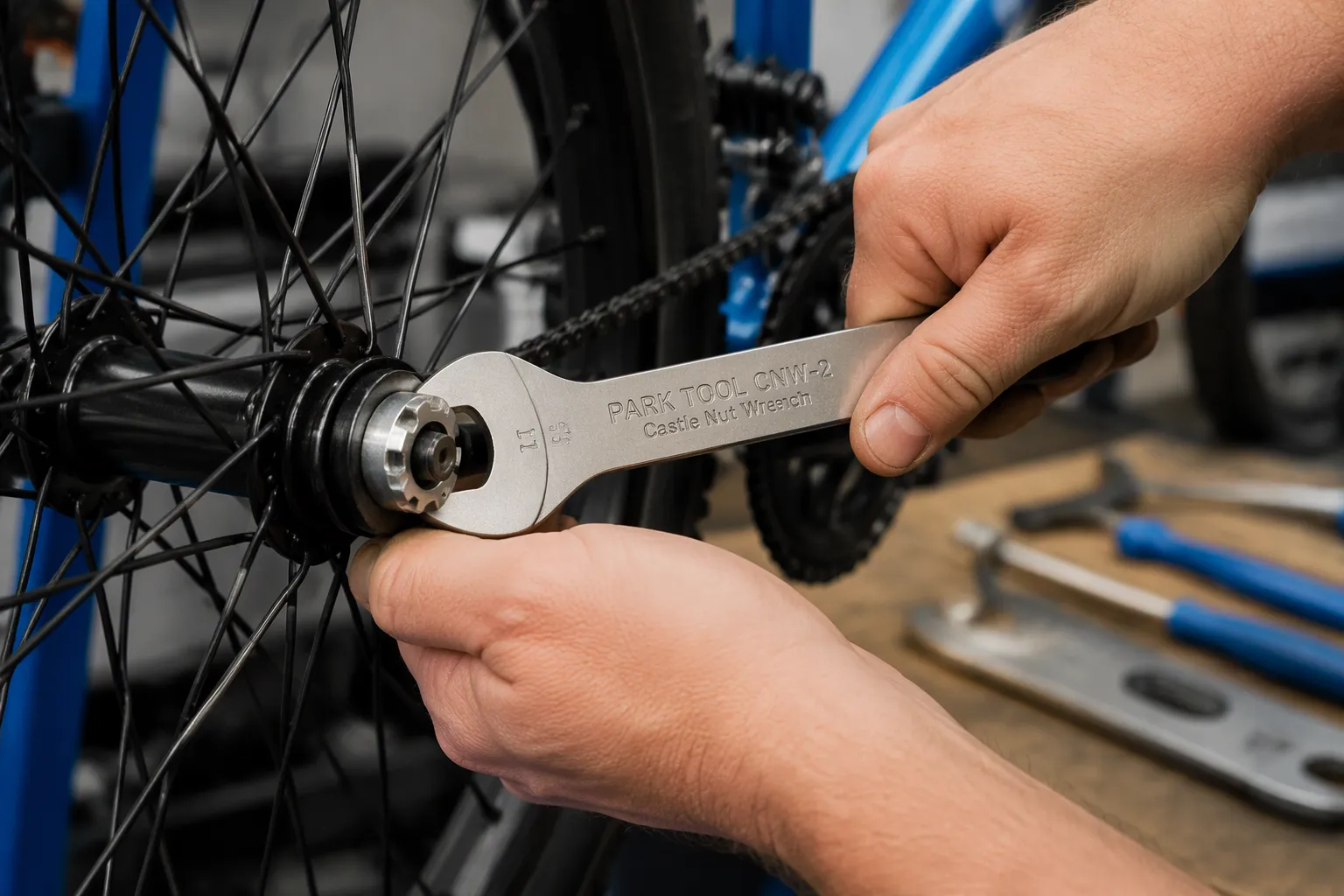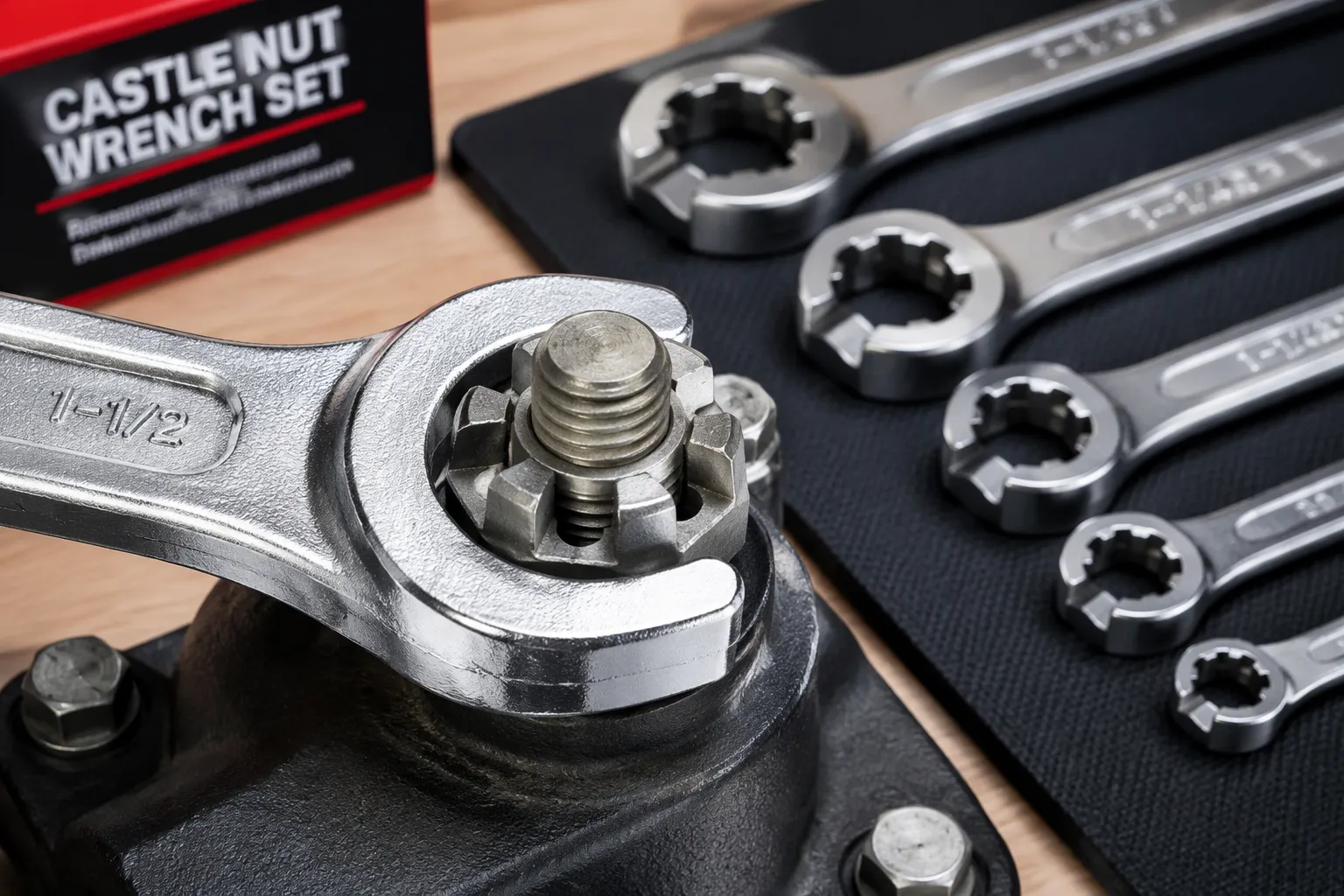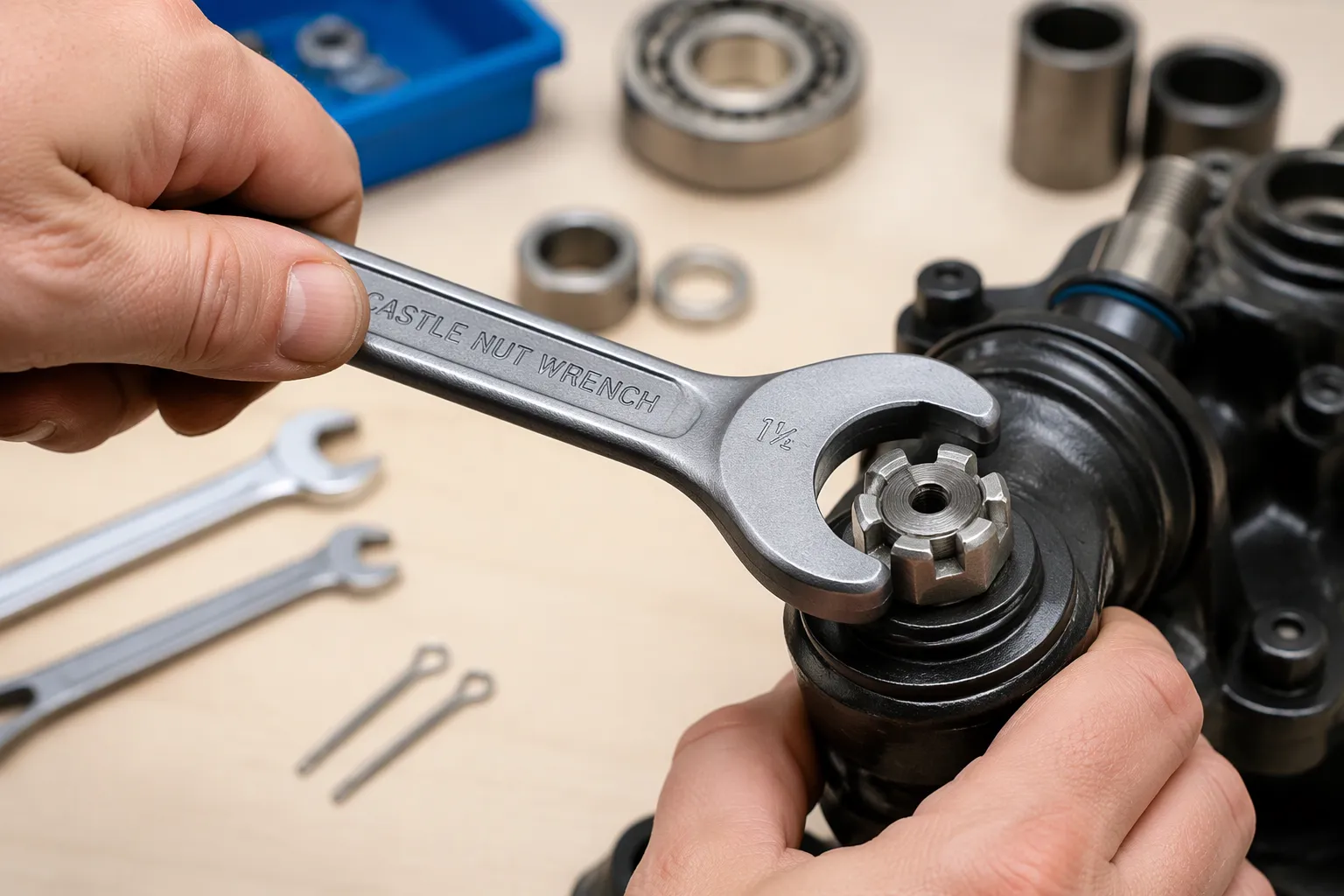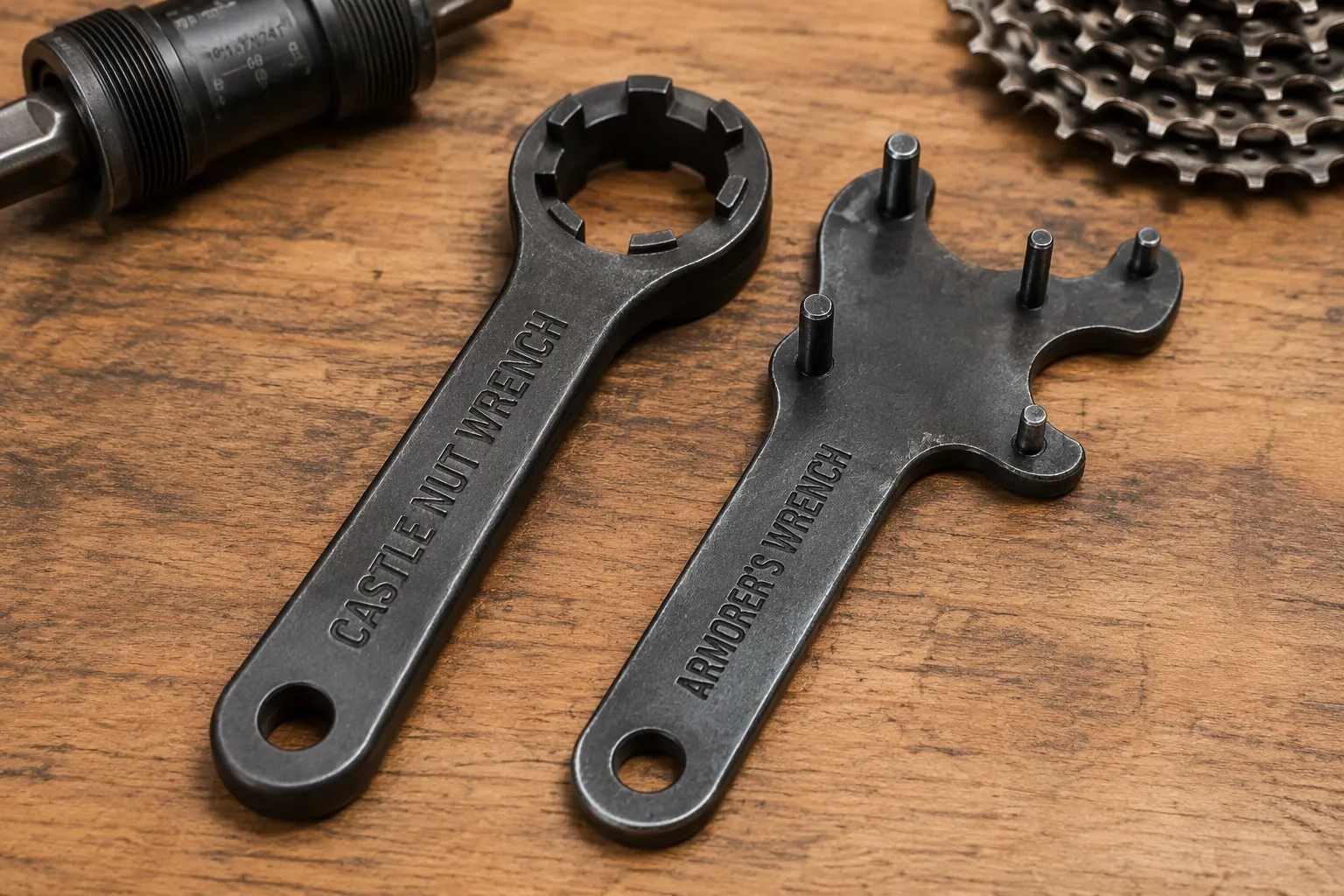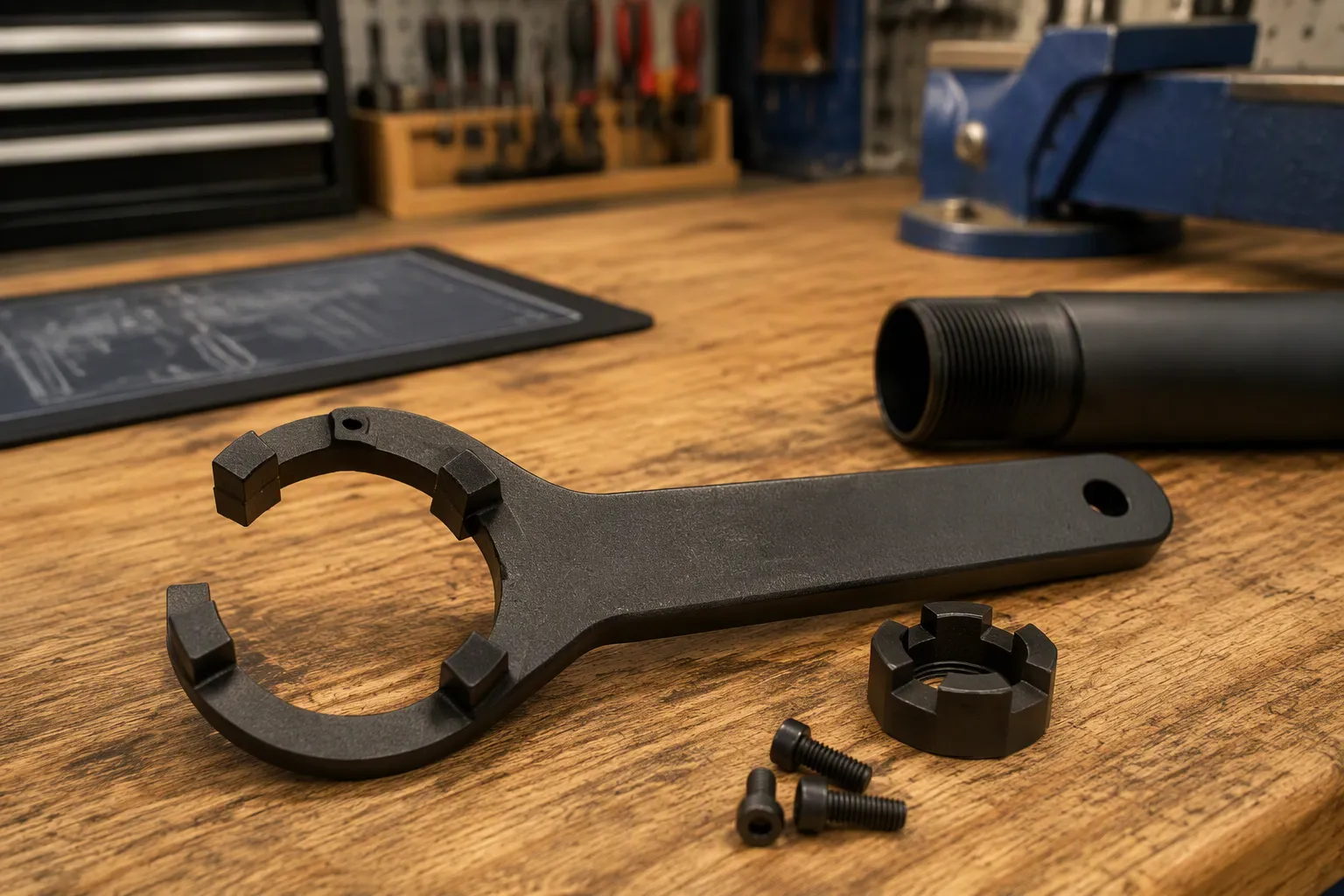
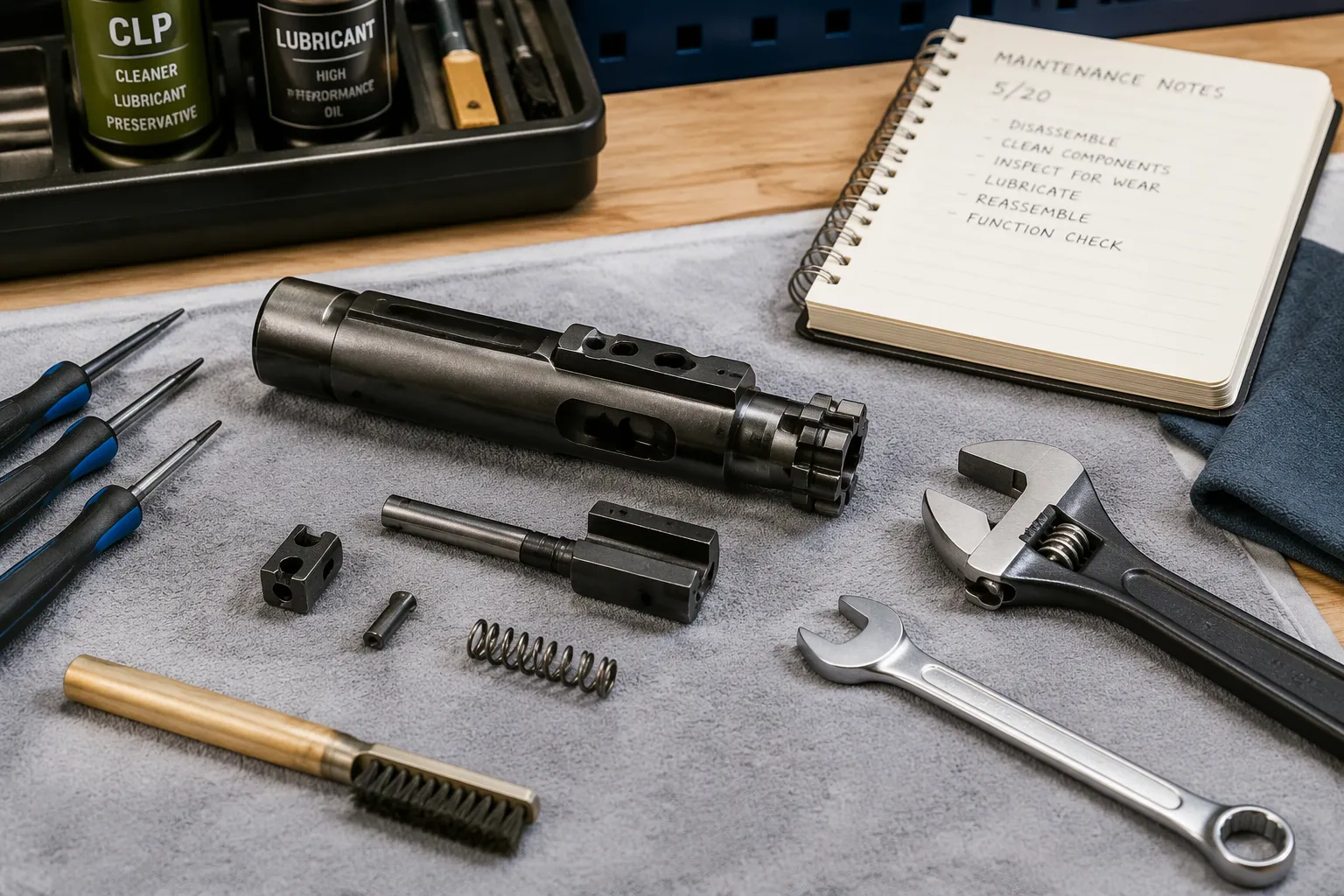
Six صامولة القلعة wrench alternatives cover armorer needs: a strap wrench grips finishes without marring; a spanner wrench engages notches affordably; an adjustable wrench with adapter reuses owned tools; a combo armorer’s wrench fits precisely; a crowfoot wrench pairs with a torque wrench; improvised options handle field fixes. These wrenches suit any gun owner, from a multi-tool carrier to a مُصنِّع أدوات التثبيت المخصصة handling المسامير والبراغي. Shoppers weigh notch fit, safety, availability, and cost. This nut wants roughly 40 ft-lbs. A loose nut lets the buffer tube spin; a slipped tool gouges the receiver. Pick the right tool.
Why You Might Need Castle Nut Wrench Alternatives
The Castle Nut’s Job on an AR-15
Buffer Tube and Stock Retention
The castle nut locks the buffer tube to the lower receiver. This small ring with notched edges holds the stock assembly in place. A properly tightened nut keeps the buffer tube from rotating during firing. The stock stays solid against the shoulder. A loose nut allows the tube to spin, and the stock wobbles with every shot.
Staking and Torque Requirements
Manufacturers stake the castle nut to prevent rotation. Staking deforms a small amount of metal into a notch on the end plate. This mechanical lock adds security beyond friction. Castle nut torque specs call for roughly 40 ft-lbs during installation. Owners must apply this torque before staking. An under-torqued nut defeats the staking process.
Common Reasons Owners Skip the Dedicated Wrench
Cost and Availability
A dedicated castle nut wrench costs money and takes up space in the toolbox. Many owners work on one rifle and cannot justify a single-purpose purchase. Local shops may not stock the tool. Online orders add shipping costs and waiting time.
Single-Purpose Tool Concerns
Some shooters dislike specialized tools that serve one task. A castle nut wrench does nothing else on the bench. Space-conscious owners prefer a multi-tool or a shared wrench that handles several jobs.
Emergency and Field Maintenance
A range trip or hunting trip can reveal a loose stock. Field repairs demand quick action with limited gear. A dedicated wrench rarely travels in a range bag. Owners improvise with whatever tool sits nearby.
What Makes a Good Alternative
Notch Engagement and Fit
A good alternative engages the castle nut notches fully. Partial contact concentrates force on a few points. The notches deform, and the nut becomes difficult to remove. Proper fit spreads the load across all notches.
Torque Capability
The substitute must handle the required torque without flexing or slipping. Thin metal or loose pins fail under load. A slipping tool damages the nut and the receiver threads.
Marring Risk to the Receiver
The lower receiver carries a finish that scratches easily. Steel tools can gouge aluminum near the nut. A good alternative controls contact and protects the surrounding surface. Owners of firearms value this protection during maintenance on any gun.
Strap Wrench

A strap wrench wraps a flexible band around a round object and turns it with friction. Shooters add this option to the alternative list for one reason: the band grips the nut body without steel jaws. It deserves a place in every armorer’s bag as a backup.
How a Strap Wrench Works on a Castle Nut
Friction-Based Turning
The band tightens around the castle nut as the handle rotates. Friction alone drives the nut. The notches stay untouched, and the band conforms to the round profile. A firm pull on the handle converts hand force into rotation. The strap self-tightens under load, so grip improves as the user pulls harder.
Compatible Strap Materials
Rubber straps grip best on smooth metal. Woven nylon straps suit lighter work and resist stretching. Some straps carry a leather facing for extra bite. Thin straps slip into tight spaces near the end plate. A clean strap matters; oil or grit kills friction fast. Users should wipe the nut and the band before each job.
Pros of the Strap Wrench
No Marring on Finished Surfaces
The band contacts only the nut’s outer ring. No steel jaw touches the gun’s receiver or the surrounding finish. Owners who value careful maintenance appreciate this protection. The strap leaves no scratches, gouges, or bright marks. Polymer and anodized surfaces survive the job intact.
Widely Available and Inexpensive
Hardware stores, auto parts shops, and online sellers stock these tools at low prices. Many households already own one for plumbing or oil filter work. This tool costs far less than a dedicated armorer’s set. A single strap handles several sizes. It also packs small, so it earns a spot in a range bag or multi-tool kit.
Cons of the Strap Wrench
Limited Torque for Staked Nuts
A staked nut needs a sharp breakaway force. The strap delivers steady pressure, not impact. Staked nuts often resist the band entirely. Owners may need a notch-engaging tool for removal. Impact-driven removal calls for a different approach.
Slippage on Tight Nuts
Friction fails when the nut sits at full torque. The band slides around the ring and polishes the surface. Users feel the band creep before the nut turns. Repeated slips heat the strap and reduce grip further. A slipping strap also risks a sudden release and a barked knuckle. This limitation makes the strap a poor choice for final tightening to spec.
Best Use Cases for a Strap Wrench
Light Tightening and Removal
A strap wrench shines during routine maintenance on a nut that already sits at low torque. The band grips the nut body and turns it free with steady hand pressure. Owners who remove a stock for cleaning or transport avoid the risk of a steel jaw slipping across the receiver. The strap also works well for snugging a nut back down before a final check. It cannot reach the full 40 ft-lbs spec, so users finish the job with a notch-engaging tool. This two-step approach keeps the strap in play for the gentle work and saves the heavier tool for the final pull.
Finished Receivers You Want to Protect
Custom builds and cerakoted lowers deserve extra care. A steel wrench can chip a fresh finish in one careless turn. The strap contacts only the nut ring and leaves the surrounding surface untouched. Owners of a prized gun appreciate this margin of safety during any stock swap. The band also suits polymer lowers, where sharp jaws risk gouging soft material. A clean strap and a firm pull deliver the needed turn without a single bright mark.
The strap wrench also earns a place in a range bag or multi-tool kit. It packs flat, weighs little, and handles light tasks in the field. Shooters who travel with limited tools value this flexibility. The strap covers gentle removal and finish-safe work, and a second tool covers the torque-heavy jobs. Together, the pair handles nearly every castle nut scenario an owner will face.
Spanner Wrench
A spanner wrench offers a second budget path to castle nut work. The design uses metal pins instead of a strap. Each pin drops into a notch and drives the nut with direct contact. Shooters who want firm engagement without a dedicated armorer’s tool find this option appealing.
How a Spanner Wrench Works on a Castle Nut
Pin Engagement with Notches
The pins seat inside the castle nut notches. Turning the handle pushes each pin against a notch wall. The load spreads across the engaged pins. A proper seat keeps the pins square to the nut face. Users align the pins by hand before applying force.
Adjustable vs. Fixed Spanners
Adjustable spanners slide a jaw along a rail to match nut diameter. One spanner covers several sizes. Fixed spanners carry pins at a set spacing. They fit one nut pattern only. Adjustable models suit a mixed collection of gun parts. Fixed models offer stiffer jaws and less flex under load.
Pros of the Spanner Wrench
Positive Notch Engagement
Pins sit inside the notches rather than pressing on the outer ring. This contact prevents the spin that plagues friction tools. The nut turns on the first pull in most cases. Users feel the pins lock before they apply force.
Good Torque Transfer
Steel pins carry load well. The handle converts hand force into rotation with little loss. A spanner reaches the 40 ft-lbs target on an unstaked nut. Owners can finish installation without a second tool. This torque capacity makes the spanner a practical primary choice for occasional maintenance.
Cons of the Spanner Wrench
Fit Variance Between Models
Pin spacing varies between brands. A spanner that fits one castle nut may miss the notches on another. Buyers must measure the nut diameter and notch count before purchase. A loose fit concentrates force on one or two pins. That imbalance raises the risk of a slipped pin.
Pin Wear and Notch Damage Risk
Pins wear down after repeated use. A worn pin sits deeper in the notch and contacts the corner. The corner deforms, and the nut grows harder to turn. Thin pins bend under heavy load. Users should inspect pin tips before each job and replace worn spanners. A multi-tool with a spanner head offers a compact backup for field work.
Best Use Cases for a Spanner Wrench
Occasional Maintenance
A shooter who services one rifle a few times a year fits the spanner wrench profile well. The pins drop into the notches and turn the nut without fuss. This wrench handles a stock swap or a buffer tube check in minutes. Owners who perform occasional maintenance avoid the cost of a full armorer’s kit. The spanner covers the job and then sits in the drawer until the next session.
The design also suits a gun owner who prefers simple tools. A spanner needs no adapter, no strap, and no special setup. The user aligns the pins and pulls the handle. That direct action keeps the learning curve short. A first-time user can complete a castle nut job after one practice run. The spanner also travels well in a range bag. It weighs little and takes up minimal space. A shooter who wants one compact tool for light work finds a solid match here.
Budget-Conscious Owners
Price drives many buying decisions, and the spanner wrench wins on cost. An adjustable model costs a fraction of a dedicated armorer’s wrench. One purchase covers several nut sizes. Budget-minded owners get notch engagement without a premium price tag. The savings leave room for other bench supplies.
A spanner also pairs well with a basic torque wrench. The owner applies the target torque and checks the result with a simple pull. This pairing delivers repeatable results at low cost. A multi-tool with a spanner head adds another budget path. The buyer gets several functions in one package. That value appeals to owners who count every dollar. A cheap spanner does carry limits. Thin pins wear faster, and loose pin spacing hurts fit. Buyers should inspect the pins and test the fit before trusting the tool under load. A careful buyer still gets strong value from a modest spanner. The tool covers occasional jobs, fits a tight budget, and leaves money for the supplies that matter.
Adjustable Wrench with a Castle Nut Adapter
An adapter sleeve turns a common adjustable wrench into a castle nut driver. This pairing gives owners a notch-engaging option without a dedicated purchase. The setup suits a basic toolbox and handles light maintenance work well.
How the Adapter Setup Works
Adapter Sleeve Design
The adapter is a short metal sleeve with pins or lugs on one face. These lugs match the castle nut notch pattern. The sleeve slides over the nut, and the lugs seat inside the notches. A hex profile on the outer face accepts a standard wrench jaw. The sleeve spreads force across every engaged lug.
Pairing with a Standard Wrench
The user clamps an adjustable wrench onto the sleeve’s hex body. Turning the wrench rotates the sleeve and drives the nut. The wrench jaw must fit snugly to prevent slippage. A firm grip on the handle delivers steady rotation. This pairing converts a general-purpose tool into a castle nut driver.
Pros of the Adapter Approach
Uses Tools You Already Own
Most households own an adjustable wrench. The adapter adds castle nut capability to that existing tool. Owners avoid buying a single-purpose wrench for one rifle task. This approach keeps the toolbox lean and the cost low. The same wrench still handles other jobs around the bench.
Consistent Notch Fit
A quality adapter matches the castle nut pattern precisely. All lugs engage at once, so force spreads evenly. This fit reduces the risk of deformed notches. The user gets repeatable results on every job. A proper seat also protects the nut for future removal.
Cons of the Adapter Approach
Adapter Availability
Adapters sell through specialty suppliers, not every hardware store. Local stock is often thin. Buyers may wait on shipping or pay a premium. A missing adapter stalls the whole job. Owners should confirm the notch pattern before ordering.
Clearance Around the Receiver
The sleeve adds bulk near the end plate. An adjustable wrench jaw needs room to swing. Tight receiver profiles can block the handle’s arc. Users may need a short-throw motion or a different tool for confined spaces. A multi-tool with a thin profile sometimes fits where the adapter cannot.
Best Use Cases for an Adapter
Home Armorers with a Basic Toolbox
A home armorer with a modest toolbox gets strong value from the adapter setup. Most workbenches already hold an adjustable wrench. The adapter sleeve adds castle nut capability to that existing wrench. The owner spends little and gains a notch-engaging option for routine gun work. This path suits a shooter who owns one or two rifles and handles basic tasks alone. The sleeve stores in a small drawer and takes up almost no space. A basic set of tools covers the job without a specialty purchase. The user clamps the wrench onto the sleeve, seats the lugs, and turns the nut with steady pressure. That simple sequence works well for a first-time user. The adapter also fits a standard socket set with the right drive size. Owners who already own sockets gain another path to the same result. A careful user checks the lug pattern against the nut before the first turn. This habit prevents a loose fit and protects the notches. The adapter approach rewards preparation and delivers solid results for the home armorer.
Low-Frequency Maintenance
An owner who services a rifle once or twice a year fits the low-frequency profile. The adapter handles those rare jobs without a large investment. A stock swap, a buffer tube check, or a deep clean covers most of this work. The user pulls the adapter from the drawer, completes the task, and stores it again. This pattern suits a shooter who prefers a lean bench and few single-purpose items. The adapter also pairs well with a multi-tool for light field work. A compact kit covers removal and light tightening away from the bench. The user still needs a torque wrench for final tightening to spec. The adapter carries the load during the turn, and the torque wrench confirms the result. This pairing delivers repeatable work at low cost. A low-frequency user avoids the price of a full armorer’s set and still meets the spec. The adapter earns its place as a practical, affordable option for occasional castle nut work.
Combo Armorer’s Wrench
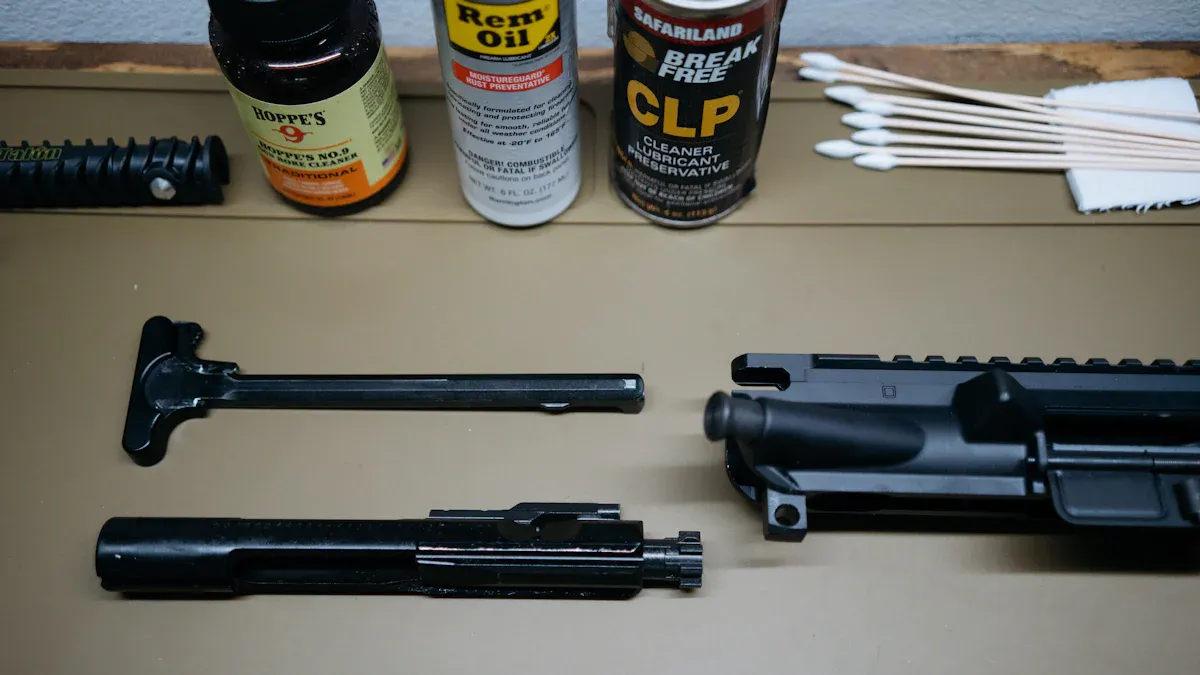
A combo armorer’s wrench bundles several functions into one steel body. This tool targets shooters who want a dedicated castle nut driver without buying a full kit. The design combines a castle nut spanner, a stock wrench, and often a bottle opener or bit driver socket. Owners who work on AR-15s regularly find strong value here.
How an Armorer’s Wrench Handles Castle Nuts
Multi-Function Design
The combo armorer’s wrench carries a castle nut spanner head on one end. Pins or lugs on that head match the standard notch pattern. The opposite end often holds a barrel nut wrench or a receiver extension tool. Some models add a wrench/bit driver socket for scope rings and other fasteners. This layout replaces several single-purpose tools with one compact unit. A shooter grabs one item from the bench and covers most stock and buffer tube work.
Fit and Finish Considerations
Quality matters with this tool. A machined head seats pins squarely in the notches. Stamped steel models sometimes flex under load. Buyers should check pin spacing against their castle nut before the first turn. A proper fit spreads force across every engaged notch. The finish should resist rust and stand up to repeated use. A coated body protects the gun during contact.
Pros of the Armorer’s Wrench
Purpose-Built Fit
The castle nut head matches the standard AR-15 pattern. Pins drop into the notches with minimal play. This fit reduces the risk of deformed notches and slipped tools. The user gets a confident seat on the first try. A purpose-built head also protects the receiver from stray contact.
Repeatable Torque
A solid steel body transfers force without flex. The user can reach the 40 ft-lbs target on an unstaked nut. Repeated jobs produce the same result. This torque capacity suits rifles that need precise installation. The tool also pairs well with a torque wrench for verified work.
Cons of the Armorer’s Wrench
Higher Cost
A combo armorer’s wrench costs more than a strap or spanner. The price reflects the multi-function design and machined parts. Owners who service one rifle rarely may not justify the spend. Budget buyers often choose a simpler option first.
Single-Platform Focus
Most combo armorer’s wrenches target the AR-15 platform. The heads fit that pattern and little else. Owners of other rifle designs gain less from the purchase. A gun maintenance multi-tool with swappable heads offers broader coverage. Shooters with mixed collections should weigh this limit before buying. A weapon-specific multi-tool solves one platform well, and a general gun maintenance multi-tools set covers the rest. Buyers who want one tool for many platforms should compare options before committing. The combo wrench still earns its place for the dedicated AR-15 owner. It delivers purpose-built fit and repeatable torque for routine maintenance. A shooter who values those traits accepts the higher cost and the narrow focus.
Best Use Cases for an Armorer’s Wrench
Frequent Builders and Armorers
A shooter who builds or rebuilds AR-15s several times a year gets the most from a combo armorer’s wrench. The multi-function head covers castle nut work, barrel nut installation, and receiver extension tasks in one pass. This builder pulls one tool from the bench and finishes a full lower assembly without hunting for a second wrench. The solid steel body holds up to repeated use, and the pins stay square after dozens of jobs. A professional armorer who services client rifles values the same traits. Consistent fit means fewer damaged nuts and fewer comebacks. The tool also stores flat in a range bag, so a builder can carry it to a match or a friend’s workbench. That portability suits anyone who works away from a fixed shop. Frequent users also gain from the multi-function layout. One purchase replaces three or four single-purpose tools, and the bench stays clear. A builder who tracks costs finds the price easier to justify across many jobs. The armorer’s wrench earns its keep through volume, and the owner feels that value on every build.
Rifles Requiring Precise Torque
Some builds demand exact torque values. A precision rifle with a free-float handguard and a match trigger leaves little room for error. The castle nut must reach roughly 40 ft-lbs before staking, and a slipped tool can ruin a fresh receiver. A combo armorer’s wrench pairs well with a torque wrench for this work. The user seats the pins, applies steady force, and watches the torque wrench click at the target value. This method delivers repeatable results on every rifle. A competition shooter who rebuilds between seasons relies on that consistency. The same approach suits a gun owner who wants a factory-spec build at home. Careful torque control protects the buffer tube threads and keeps the stock solid under recoil. A loose nut allows the tube to spin, and a match rifle cannot tolerate that movement. The combo tool also reduces marring risk during the final pull. Its purpose-built head stays seated, so the jaws never wander onto the receiver. Owners who prioritize precision accept the higher cost, and the tool repays that investment through clean, verified installations. Regular maintenance on a precision rifle becomes a simple, predictable task with the right tool in hand.
Crowfoot Wrench Options
A crowfoot wrench offers a compact path to castle nut work. This open-ended attachment fits onto a ratchet or torque wrench handle. The design gives armorers a low-profile option for tight spaces near the receiver.
How a Crowfoot Wrench Works on a Castle Nut
Torque Wrench Compatibility
The crowfoot attaches to a torque wrench drive with a square socket. This pairing lets the user apply a measured force to the castle nut. The attachment extends the lever arm slightly, so users adjust the torque setting to account for the offset. A steady pull delivers the target value with precision.
Size and Notch Matching
Crowfoot wrenches come in many sizes. The user must match the jaw opening to the castle nut diameter. Some models carry pins that seat inside the notches. Others grip the outer flats. A proper match spreads force across the contact points and protects the nut.
Pros of the Crowfoot Wrench
Precise Torque Control
This tool shines when the job demands exact torque. The crowfoot pairs with a torque wrench and delivers a verified pull every time. A user reaches the 40 ft-lbs target without guesswork. Repeatable results suit precision builds and professional maintenance work.
Compact Access
The low-profile head slips into tight spots near the end plate. A standard wrench often needs more swing room. The crowfoot clears the receiver and turns the nut with a short arc. This compact shape helps on rifles with bulky handguards or accessories.
Cons of the Crowfoot Wrench
Limited Notch Engagement
Many crowfoot models grip only two or three notches at once. This partial contact concentrates force on a small area. Heavy torque can deform the notches over time. Users should apply steady pressure and avoid sudden jerks.
Sourcing the Right Size
Not every hardware store stocks the correct size. Buyers often order online and wait for delivery. A wrong size wastes money and stalls the job. Owners should measure the nut and confirm the jaw opening before purchase.
Best Use Cases for a Crowfoot Wrench
Torque-Critical Installations
A crowfoot wrench earns its place on builds that demand exact torque values. Precision rifles, competition guns, and factory-spec builds all fall into this category. The castle nut must reach roughly 40 ft-lbs before staking. A slipped or under-torqued nut lets the buffer tube spin under recoil. The crowfoot pairs with a torque wrench and delivers a measured pull on every job. The user sets the target value, seats the jaw on the nut, and watches the handle click at spec. This method removes guesswork from the installation. A competition shooter who rebuilds between seasons relies on that repeatability. The same approach suits a home builder who wants a factory-spec result. Careful torque control protects the buffer tube threads and keeps the stock solid. The compact head also clears bulky handguards and accessories near the end plate. A standard wrench often needs more swing room in that space. The crowfoot turns the nut with a short arc and stays clear of the receiver finish. Owners who prioritize precision accept the limited notch engagement and the sourcing effort. The tool repays that investment through clean, verified installations on every rifle.
Armorers with a Torque Wrench Setup
و armorer who already owns a torque wrench gains an easy path with a crowfoot attachment. The square drive mates with the existing handle, so no new system is needed. This pairing covers castle nut work and other fasteners on the same bench. The armorer adds one compact piece to a kit that already handles most jobs. That efficiency appeals to anyone who values a lean bench. A professional who services client rifles appreciates the verified pull on each nut. Consistent results mean fewer damaged nuts and fewer comebacks. The attachment also stores flat in a range bag, so the armorer can carry it to a match or a friend’s workbench. Regular maintenance on a precision rifle becomes a simple, predictable task with this setup in hand. A shooter who tracks costs finds the price easy to justify across many jobs. The crowfoot works best as part of a broader kit. Owners should pair it with a notch-engaging tool for staked nuts and a mar-free option for finished receivers. That combination covers removal, installation, and finish-safe work. The armorer then handles nearly every castle nut scenario with confidence.
Specialty and Improvised Options
Padded Jaw Tools
Tape-Wrapped Adjustable Wrench
A tape-wrapped adjustable wrench gives owners a quick path to castle nut work. The user wraps electrical tape or masking tape around the jaw faces. This layer cushions the steel and reduces direct contact with the nut. The tape conforms to the jaw shape and grips the outer ring. A few wraps add enough thickness to soften the bite. The user then turns the nut with steady hand pressure. Fresh tape before each job keeps the cushion intact.
Jaw Protection Methods
Several materials protect the jaw faces. Rubber pads slip over the jaws and grip the nut body. Leather scraps offer a tougher barrier for stubborn nuts. Heat-shrink tubing shrinks onto the jaw and stays in place. Each method trades some grip for finish protection. Users should check the padding before each turn. Worn padding exposes bare steel and raises the marring risk.
Bench Vise Blocks and Receiver Supports
Stabilizing the Rifle
A vise block holds the lower receiver steady during castle nut work. The block clamps into a bench vise and cradles the receiver. This setup frees both hands for the wrench and the torque check. A stable rifle prevents sudden shifts under load. The user gains control over the pull and the tool’s arc.
Preventing Receiver Stress
A proper vise block spreads clamping force across the receiver body. This support protects the takedown pin holes and the buffer tube threads. Owners should never clamp the receiver directly in bare vise jaws. A dedicated block or a set of soft jaws absorbs the pressure. The right support keeps the lower receiver straight during heavy torque.
Pros of Improvised Options
Low Cost and Immediate Availability
Improvised tools cost little and need no order time. Tape, pads, and shop scraps sit in most garages already. A vise block often comes from a scrap of wood cut to fit. Owners solve the problem today without a shipping delay. This approach suits a tight budget and a sudden repair.
Useful in a Pinch
Field repairs demand fast action with limited gear. A padded wrench and a stable rest handle a loose nut at the range. The owner completes the fix and returns to shooting. These improvised setups also serve as a backup to a primary tool. A shooter who packs light still covers the job.
Cons of Improvised Options
Higher Marring Risk
Improvised setups carry a real risk to the firearm’s finish. Tape wears through after a few turns and exposes bare steel to the nut. A padded jaw can slip off the ring and drag across the receiver. Soft aluminum lowers show scratches fast, and a deep gouge costs money to repair. Owners who improvise should inspect the padding before every pull. A worn wrap offers little protection at full torque.
Inconsistent Torque
Hand pressure alone cannot confirm the 40 ft-lbs target. An improvised tool gives the user no feedback on the applied force. One pull may fall short, and the next may exceed spec. A loose nut lets the buffer tube spin, and an over-tightened nut stresses the threads. Owners who skip a torque wrench gamble on feel. That gamble rarely produces repeatable results across multiple jobs.
Best Use Cases for Improvised Tools
Emergency Field Fixes
A loose stock at the range demands a fast answer. A tape-wrapped wrench and a stable rest solve the problem on the spot. The shooter completes the fix and returns to the line. This approach works well for a nut that already sits at low torque. A field fix buys time until the owner reaches a proper bench. The user should plan a full torque check afterward.
Backup to a Primary Tool
Improvised options serve best as a backup. A shooter who packs a primary tool still gains value from a padded wrench in the bag. The backup covers a lost or borrowed primary tool. A vise block cut from scrap wood also supports the rifle during a roadside repair. These setups cost little and take up minimal space. Owners should treat them as a safety net, not a first choice. A careful user pairs the backup with a torque wrench for the final check.
How to Choose the Right Castle Nut Wrench Alternative
Match the Tool to the Job
Removal vs. Installation
Removal and installation place different demands on a castle nut wrench alternative. A staked nut often needs a sharp breakaway force, so a notch-engaging tool works best for removal. Installation calls for steady, measured pressure up to the torque spec. A strap wrench handles light removal well, while a spanner or crowfoot suits the final pull. Owners should pick the tool that matches the direction of the job.
Staked vs. Unstaked Nuts
A staked castle nut resists rotation with a deformed end plate. The owner must break that stake before the nut turns. A friction-based tool rarely manages this step. An unstaked nut turns with far less effort, so a strap or padded wrench covers the task. Owners should inspect the stake before choosing a tool. A pin punch helps clear a stubborn stake when needed.
Safety and Torque Checklist
Protecting the Receiver
Receiver protection starts with a stable platform. A vise block holds the lower receiver steady and frees both hands for the wrench. Soft jaws or a dedicated block spread the clamping force. The user should never clamp bare aluminum in steel jaws. Careful setup prevents gouges near the buffer tube threads.
Verifying Torque
A torque wrench confirms the final value on every installation. The user sets the target near 40 ft-lbs and watches for the click. This step removes guesswork from the job. Owners should recheck the nut after staking. A loose nut lets the buffer tube spin under recoil.
Cost vs. Frequency of Use
One-Time Maintenance
A shooter who services one rifle once fits a low-cost path. A spanner or an adapter sleeve covers the job without a large spend. These tools deliver solid results for a single session. The owner avoids the price of a full armorer’s kit.
Regular Builds and Upgrades
Frequent builders gain from a purpose-built tool. A combo armorer’s wrench handles repeated jobs with consistent fit. The higher price spreads across many builds. Owners who work on multiple firearms find this value easy to justify. A complete set of tools covers removal, installation, and finish-safe work.
Essential Armorer Tools to Pair with Any Alternative
مفتاح عزم الدوران
Why It Matters for Castle Nuts
A castle nut needs roughly 40 ft-lbs to hold the buffer tube secure. Hand feel cannot confirm that value. A torque wrench turns guesswork into a measured pull. The user sets the target, seats the tool, and waits for the click. This step protects the threads and keeps the stock solid under recoil. A loose nut lets the tube spin, and an over-tightened nut stresses the receiver. The torque wrench settles both risks in one motion.
Choosing the Right Range
A foot-pound model covers the castle nut spec with room to spare. An inch-pound torque wrench suits smaller fasteners on the same rifle, such as handguard screws and scope rings. Owners who work on several platforms benefit from both ranges. A single adjustable model with a wide scale also works well. Buyers should confirm the drive size matches their sockets and crowfoot attachments.
Vise Blocks and Receiver Supports
Keeping the Rifle Stable
A vise block cradles the lower receiver and clamps into a bench vise. This setup frees both hands for the wrench and the torque check. A stable rifle prevents sudden shifts during the final pull. The user gains control over the tool’s arc and the applied force.
Protecting the Lower Receiver
A proper block spreads clamping force across the receiver body. This support protects the takedown pin holes and the buffer tube threads. Owners should never clamp bare aluminum in steel jaws. Soft jaws or a dedicated block absorb the pressure and keep the lower straight.
Staking Tools and Punches
Proper Staking Technique
Staking deforms a small amount of metal into a notch on the end plate. A pin punch and a hammer handle this job. The user seats the pin punch on the end plate and strikes with a controlled blow. A punch set offers the right diameter for the task. Two or three light strikes beat one heavy blow. The stake should fill the notch without cracking the plate.
When to Restake
A nut that turns after staking needs a fresh stake. Owners should inspect the end plate after every removal. A worn or flattened stake offers little resistance. The user restakes at a new point on the plate. A pin punch and a steady hand restore the mechanical lock. Proper staking completes the job that the torque wrench started.
These castle nut wrench alternatives each fit a clear role. A strap wrench suits mar-free light work, a spanner wrench delivers budget notch engagement, and an adapter plus wrench serves toolbox owners. Frequent builders gain from a combo armorer’s wrench, and a crowfoot wrench covers torque-critical jobs. The decision rule stays simple: weigh frequency of use, whether the nut is staked, and how much receiver protection matters. Keep one notch-engaging tool and one mar-free tool on hand for full coverage. Add a pin punch and punch set to the maintenance kit, pair torque tools with an inch-pound torque wrench for smaller fasteners, and verify torque after every job. Inspect the nut and receiver, then store the armorer tools with the rest of the armorer’s wrench setup.
الأسئلة الشائعة
Can a strap wrench reach the 40 ft-lbs torque spec?
A strap wrench rarely reaches the full spec. Friction slips before the nut hits 40 ft-lbs. Owners use the strap for light removal and finish-safe work. A notch-engaging tool handles the final pull to spec.
Does a spanner wrench fit every castle nut?
Pin spacing varies between brands and models. A spanner that fits one nut may miss the notches on another. Buyers measure the nut diameter and notch count first. A loose fit concentrates force and risks a slipped pin.
Can an adjustable wrench with an adapter damage the castle nut?
A quality adapter spreads force across every engaged lug. This even contact protects the notches during the turn. A loose or worn adapter concentrates load on a few points. Users should confirm the lug pattern before the first turn.
Is a crowfoot wrench safe for staked castle nuts?
A crowfoot grips only two or three notches at once. This partial contact struggles against a staked nut. Owners break the stake with a pin punch first. A notch-engaging tool then handles removal and installation.
Why does a loose castle nut matter?
A loose nut lets the buffer tube spin during firing. The stock wobbles, and accuracy suffers. Roughly 40 ft-lbs of torque keeps the tube secure. Owners verify the value with a torque wrench after every job.
What does a punch set add to castle nut work?
Staking locks the nut against rotation. A punch set provides the right diameter for a clean stake. Two or three light strikes fill the notch without cracking the plate. Owners restake at a fresh point after removal.
Do castle nut wrench alternatives work on polymer lowers?
Polymer lowers need extra care during castle nut work. Sharp steel jaws risk gouging soft material. A strap wrench or padded jaw tool protects the surface. Owners apply steady pressure and avoid sudden jerks at full torque.
How often should an owner inspect the castle nut?
Owners inspect the nut and end plate after every removal. A worn or flattened stake offers little resistance. A loose nut signals a torque problem. Regular checks keep the buffer tube secure under recoil.