The best rivet nuts for thin materials include full-hex body, half-hex body, round body, open-end, closed-end, swage-type, micro, and pre-bulbed designs. These options deliver superior grip, torque resistance, and straightforward installation. Open-end rivet nuts dominate the market, accounting for around 60% of total revenue in automotive and industrial applications. Closed-end rivet nuts grow quickly, favored in moisture-prone environments such as marine construction. Professionals often select these нестандартные крепежные элементы for their performance and versatility. A производитель крепежных изделий на заказ recommends pairing заклёпочная гайка solutions with гаек и болтов to maximize durability.
- Open-end rivet nuts: versatile, easy to install, widely used in thin materials.
- Closed-end rivet nuts: ideal for moisture protection, popular in marine and EV sectors.
What Are Rivet Nuts?
Definition and Function
Rivet nuts serve as specialized fasteners that provide reliable threaded connections in challenging environments. Manufacturers designed rivet nuts to solve the problems associated with welding nuts onto thin materials. Welding often causes melting or deformation, which compromises the integrity of the substrate. Rivet nuts eliminate the need for welding or internal threading, offering a highly efficient solution for fastening in various manufacturing industries.
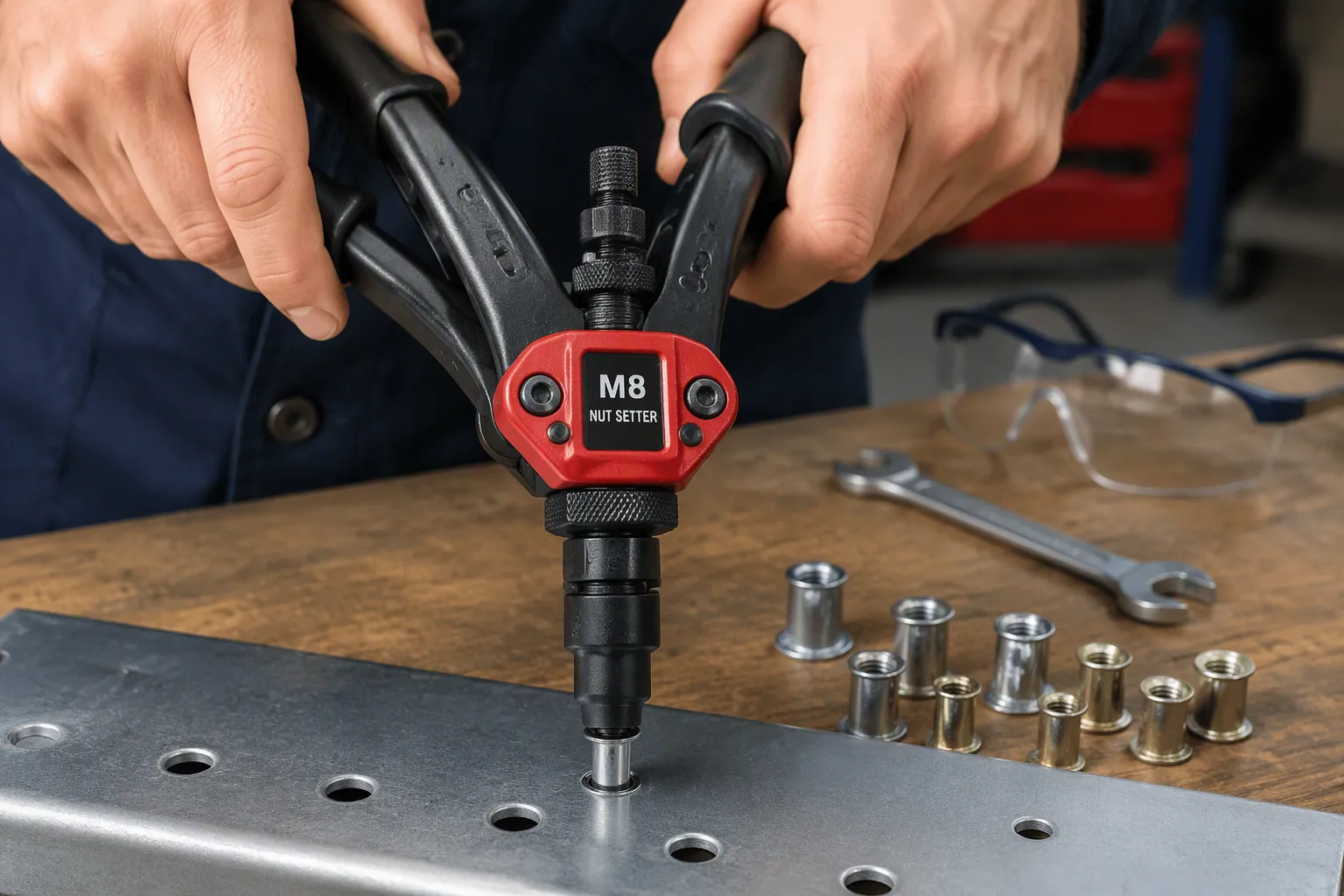
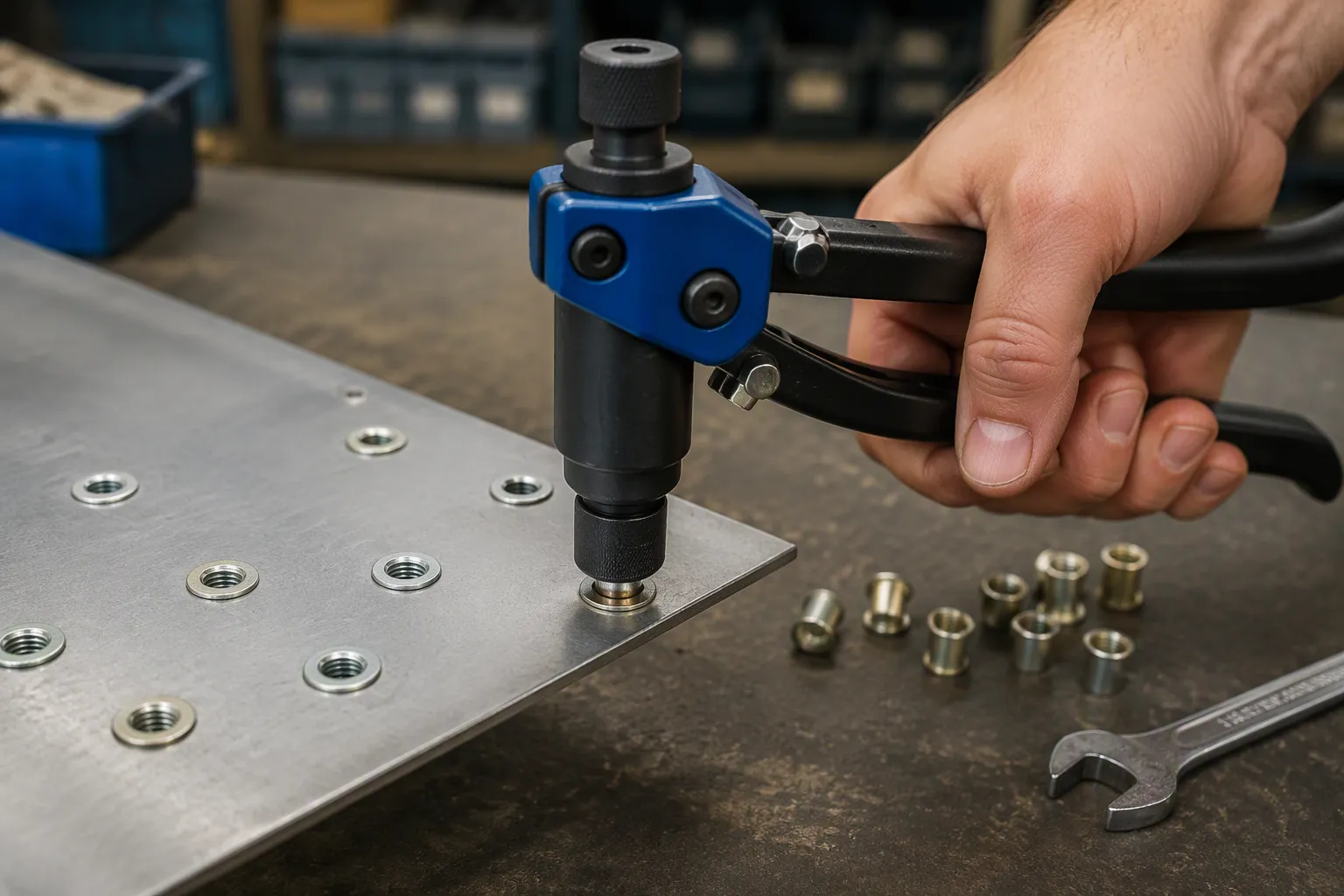
A rivet nut, sometimes called a blind rivet nut, consists of a metal sleeve with internal threads. This design allows installation from one side of the workpiece, making rivet nuts ideal for hard-to-reach areas. During installation, a tool expands the rivet nut inside the hole, anchoring it securely and creating a durable thread. This process ensures a strong and lasting connection, which is essential when working with thin materials that cannot support traditional nuts or bolts.
Tip: Rivet nuts provide a permanent, high-strength thread in thin materials without damaging the substrate.
Why Use Rivet Nuts for Thin Materials
Thin materials present unique challenges in fastening applications. Traditional nuts and bolts often fail to deliver adequate grip or may damage the substrate. Rivet nuts address these issues by offering a secure and efficient fastening method. Their ability to install from one side of the material increases convenience and reduces labor costs.
Industries rely on rivet nuts for several reasons:
- Automotive manufacturers use rivet nuts to fasten panels and components where access is limited.
- Electronics companies select rivet nuts for assembling devices with delicate or thin casings.
- Appliance makers benefit from rivet nuts when joining lightweight metal parts.
- Aerospace engineers depend on rivet nuts for fastening thin or fragile materials in aircraft interiors.
- Furniture designers incorporate rivet nuts to create strong joints in thin sheet metal or composite panels.
Rivet nuts excel in situations where welding is impractical or where the substrate cannot withstand high temperatures. Their versatility and efficiency make them the preferred choice for fastening thin materials across multiple sectors. The installation process does not require specialized skills, which further increases their appeal in high-volume manufacturing environments.
Best Rivet Nuts Types for Thin Materials
Full-Hex Body Rivet Nuts
Strength and Spin-Out Resistance
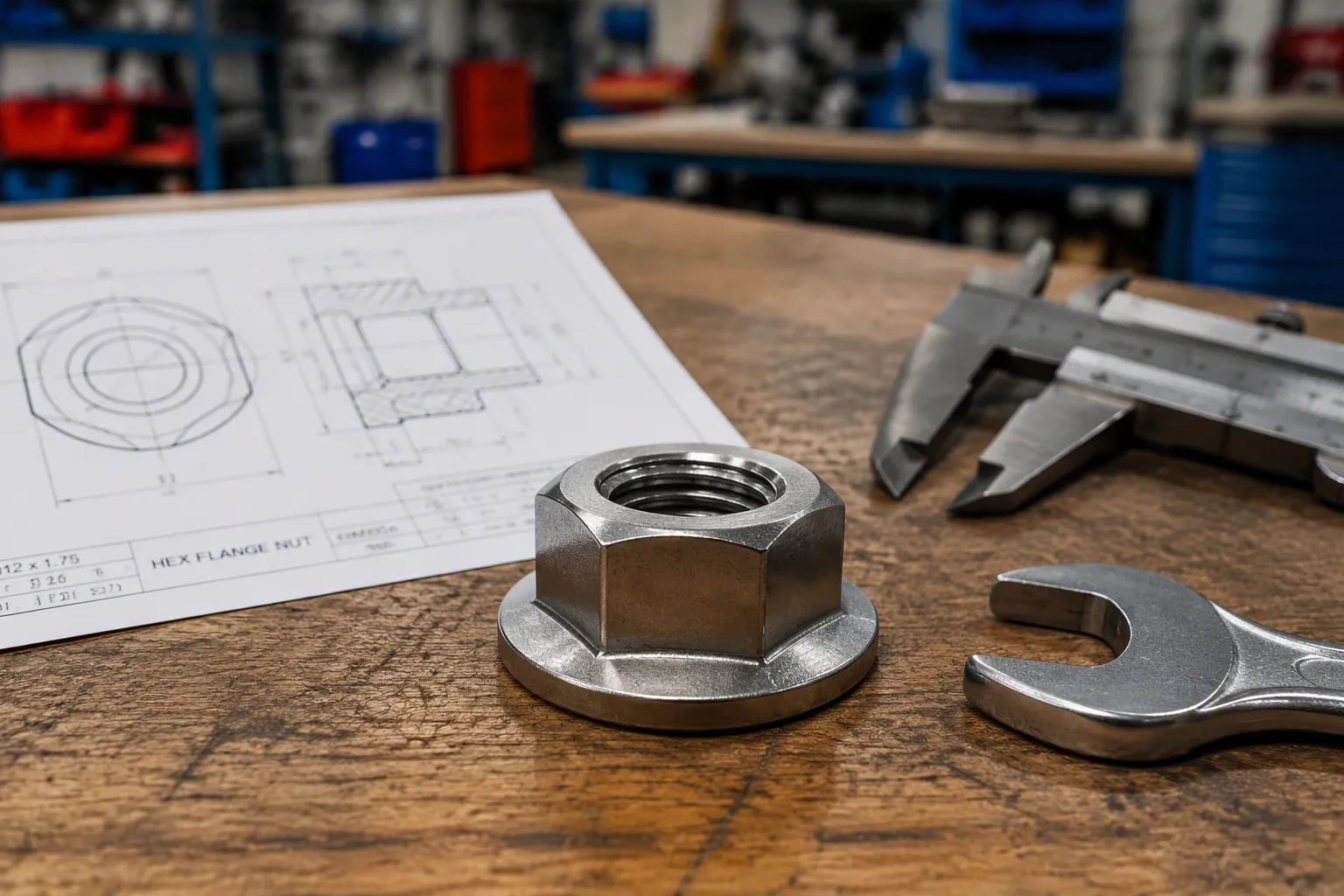
Full-hex body rivet nuts stand out as one of the best rivet nuts for thin materials due to their exceptional grip strength and torque resistance. The hexagonal shape maximizes surface contact with the substrate, which significantly reduces the risk of spin-out during use. This design ensures a secure fit, even in high-torque or high-vibration environments such as automotive panels and industrial machinery.
The following table highlights the performance differences between full-hex body and round body rivet nuts:
| Performance Metric | Full-Hex Body Rivet Nut | Round Body Rivet Nut |
|---|---|---|
| Grip Strength | Significantly Higher | Ниже |
| Сопротивление крутящему моменту | Almost 10 times stronger | Weaker |
| Pull-Out Resistance | Enhanced | Стандартный |
| Push-Out Resistance | Enhanced | Стандартный |
Engineers often select hex body rivet nuts when they require maximum anti-rotation performance. The enhanced grip and resistance to both pull-out and push-out forces make these fasteners ideal for demanding applications.
Installation Requirements
Proper installation of hex body rivet nuts requires attention to hole shape and size. These rivet nuts fit into pre-punched hexagonal holes, which prevents spinning and ensures a tight fit. The installation process remains straightforward, but the hole must match the rivet nut’s hex profile for optimal performance.
The table below summarizes key installation requirements and application areas:
| Применение | Основные характеристики |
|---|---|
| Sheet metal fabrication | Full hex body for maximum anti-rotation performance |
| Automotive panels and custom builds | Prevents spinning in pre-punched hex holes |
| Electrical enclosures and cabinets | Suitable for high torque and vibration applications |
| Industrial equipment and machinery assembly | Large flange options for improved load distribution |
| Available in steel zinc, stainless steel, and aluminum |
Note: Hex body rivet nuts are available in various materials, including steel, stainless steel, and aluminum, to match different substrate requirements.
Half-Hex Body Rivet Nuts
Показатели производительности
Half-hex body rivet nuts offer a balance between performance and cost. They provide good anti-rotation performance and moderate torque resistance, making them suitable for many applications involving thin materials. These rivet nuts weigh less than full-hex body types and typically cost less, which appeals to manufacturers working with softer materials or limited budgets.
The comparison below outlines the differences between half-hex and full-hex body rivet nuts:
| Характеристика | Half-Hex Body Rivet Nut | Full-Hex Body Rivet Nut |
|---|---|---|
| Сопротивление крутящему моменту | Умеренная | Превосходная |
| Anti-Rotation Performance | Хорошая | Максимальная |
| Вес | Lighter | Heavier |
| Стоимость | Ниже | Выше |
| Пригодность для применения | Limited space, softer materials | High-torque, high-vibration environments |
- Half-hex body rivet nuts enhance spin-out resistance.
- They work well in softer materials like aluminum or thin sheet metals.
- Their compact design fits environments with limited space.
Hole Shape Compatibility
Half-hex body rivet nuts require a hex-shaped hole for proper installation. This feature allows the nut to engage with the substrate, preventing rotation and simplifying the installation process.
| Rivet Nut Type | Hole Shape Required | Installation Notes |
|---|---|---|
| Half Hexagonal Body | Hex-shaped | Engages with the hole to prevent rotation, simplifies insertion. |
Tip: Using the correct hole shape ensures the best performance and reduces the risk of fastener failure.
Round Body Rivet Nuts
Простота монтажа
Round body rivet nuts remain popular among the types of threaded rivet nuts due to their simple and versatile installation process. Installers can use hand or power tools, and the nut can be set from one side of the workpiece. This feature makes round body rivet nuts ideal for applications where access is limited or where post-paint installation is necessary.
The table below summarizes the advantages and disadvantages of round body rivet nuts:
| Преимущества | Недостатки |
|---|---|
| Ease of installation | Lower load capacity than weld nuts |
| Versatile applications | Risk of spinning if not installed correctly |
| Installed from one side | |
| Can be installed post paint | |
| Removable for disassembly |
Pull-Out Resistance
While round body rivet nuts offer convenience, their pull-out resistance and load capacity do not match those of hex body rivet nuts. Improper installation can lead to spinning, especially in high-torque applications. However, when installed correctly, round body rivet nuts provide reliable performance in thin materials, particularly where welding is not feasible.
Note: Round body rivet nuts work best in low to moderate load applications and where quick, blind installation is required.
Open-End vs. Closed-End Rivet Nuts
Пригодность для применения
Manufacturers and engineers often compare open-end and closed-end rivet nuts when selecting the best rivet nuts for thin materials. Open-end rivet nuts feature a through-hole design, allowing the mating screw to pass completely through the fastener. This design suits general-purpose applications where moisture or debris is not a concern. Automotive, appliance, and industrial equipment sectors frequently use open-end rivet nuts for their versatility and ease of installation.
Closed-end rivet nuts, in contrast, have a sealed base. This feature prevents the mating screw from protruding through the fastener, which enhances both appearance and environmental protection. Many industries prefer closed-end rivet nuts for applications that demand a water-tight or air-tight seal. These include marine, automotive, and HVAC systems. Electronics manufacturers also select closed-end designs to protect sensitive components from dust and moisture.
The following table summarizes the preferred application scenarios and advantages for each type:
| Тип | Application Scenario | Преимущества |
|---|---|---|
| Closed-end | Vehicle exteriors, marine, HVAC, electronics, and sensitive equipment | Prevents water and dust ingress, provides clean finish |
| Open-end | General industrial, automotive interiors, appliances, and low-moisture environments | Versatile, easy to install, suitable for most uses |
Closed-end rivet nuts provide a cleaner look on the blind side of the joint, making them ideal for visible or finished surfaces.
Moisture and Corrosion Protection
Moisture and corrosion protection play a critical role in the selection of rivet nuts for thin materials. Closed-end rivet nuts offer high levels of moisture and corrosion resistance. Their sealed design blocks water, dust, and other contaminants from entering the assembly. This feature makes closed-end rivet nuts the preferred choice for outdoor, marine, and electrical enclosure applications.
Open-end rivet nuts, while easy to install, provide lower protection against moisture and corrosion. They work best in environments where exposure to water or chemicals is minimal.
The table below compares the moisture and corrosion protection of both types:
| Тип | Moisture Protection | Corrosion Protection | Применение |
|---|---|---|---|
| Closed-end | Высокая | Высокая | Outdoor, marine, electrical enclosures |
| Open-end | Низкая | Низкая | General applications with less moisture concern |
Tip: For environments with high humidity or exposure to water, closed-end rivet nuts deliver superior performance and longevity.
Specialty Rivet Nuts
Swage-Type Rivet Nuts
Swage-type rivet nuts address the need for strong, vibration-resistant connections in thin materials. These fasteners feature a partial hexagonal body, which provides superior resistance to rotation compared to round body designs. Manufacturers offer swage-type rivet nuts in aluminum, zinc-plated steel, and stainless steel to meet various environmental requirements.
Swage-type rivet nuts excel in applications where access to the backside of the material is limited. Their installation process creates a robust threaded connection without damaging the substrate. Engineers often specify swage-type rivet nuts for use in thin sheet metals, plastics, and lightweight alloys. The partial hex body design also minimizes loosening over time, even in high-vibration environments.
Micro Rivet Nuts
Micro rivet nuts serve applications that require compact, space-efficient fasteners. These specialty rivet nuts provide strong threads in extremely thin materials, such as delicate electronics housings or miniature assemblies. Their small size allows installation in tight spaces where standard rivet nuts cannot fit.
Manufacturers produce micro rivet nuts in a range of materials, including stainless steel and aluminum. These fasteners maintain high performance despite their reduced dimensions. Electronics, medical devices, and precision instruments often rely on micro rivet nuts for secure, reliable fastening.
Pre-Bulbed Rivet Nuts
Pre-bulbed rivet nuts offer a unique solution for fastening in soft or brittle thin materials. The pre-bulbed design allows the fastener to expand evenly during installation, distributing the load across a larger surface area. This feature reduces the risk of substrate deformation or cracking.
Pre-bulbed rivet nuts work well in plastics, composites, and thin sheet metals. Their compact form factor suits applications with limited space. The even expansion also enhances pull-out resistance, making pre-bulbed rivet nuts a top choice for demanding environments.
The table below highlights the unique features of specialty rivet nuts:
| Характеристика | Описание |
|---|---|
| Конструкция | Partial hexagonal body for superior resistance to rotation |
| Варианты материала | Aluminum, zinc-plated steel, stainless steel for various environments |
| Применение | Ideal for thin materials like aluminum, plastic, or thin sheet metals |
| Монтаж | Strong threaded connections without backside access |
| Устойчивость к вибрации | Minimizes loosening over time, even in high-vibration environments |
| Эффективность использования пространства | Compact form factor suitable for limited space applications |
Note: Specialty rivet nuts, including swage-type, micro, and pre-bulbed designs, expand the range of solutions available for engineers working with thin materials. These options complement hex body rivet nuts and other types of threaded rivet nuts, ensuring optimal performance in specialized applications.
Performance Comparison of Best Rivet Nuts
Strength Ratings
Грузоподъемность
Load capacity measures how much force a заклёпочная гайка can withstand before failure. The best performing rivet nuts for thin materials deliver high load ratings, even when the substrate offers minimal support. Full-hex body rivet nuts often provide the highest load capacity due to their increased surface contact. Closed-end and pre-bulbed designs also perform well, especially in soft or brittle substrates.
| Rivet Nut Type | Typical Load Capacity (lbs) | Application Example |
|---|---|---|
| Full-Hex Body | 1,200 – 1,800 | Automotive panels |
| Half-Hex Body | 900 – 1,400 | Sheet metal enclosures |
| Round Body | 700 – 1,200 | Electronics housings |
| Pre-Bulbed | 800 – 1,300 | Plastics, composites |
Engineers select rivet nuts based on the required load for each application. Proper installation ensures the fastener achieves its rated capacity.
Прочность на срез и растяжение
Shear strength refers to the force a rivet nut can resist parallel to the substrate, while tensile strength measures resistance to forces pulling directly away from the surface. Full-hex and swage-type rivet nuts excel in both categories. Stainless steel options provide superior ratings, maintaining integrity even after repeated installation cycles.
- Full-hex body rivet nuts: High shear and tensile strength, ideal for structural applications.
- Round body rivet nuts: Moderate ratings, suitable for lighter loads.
- Swage-type rivet nuts: Enhanced performance in vibration-prone environments.
Spin-Out and Pull-Out Resistance
Hex vs. Round Body
Spin-out resistance prevents the rivet nut from rotating during installation or use. Hex body rivet nuts outperform round body types because their shape locks into the substrate. This feature proves essential in high-torque applications.
| Характеристика | Hex Body Rivet Nut | Round Body Rivet Nut |
|---|---|---|
| Spin-Out Resistance | Отличная | Умеренная |
| Pull-Out Resistance | Высокая | Стандартный |
Round body rivet nuts require precise installation to avoid spinning. Hex body designs offer more forgiveness, especially in automated assembly lines.
Material Thickness Impact
Material thickness affects both spin-out and pull-out resistance. Thin materials demand careful hole preparation and correct installation technique. If the substrate is too thin, the rivet nut may deform or fail to anchor securely. Pre-bulbed and micro rivet nuts address this challenge by expanding evenly, distributing force over a larger area.
Tip: Always match the rivet nut design to the thickness of the material for optimal performance.
Durability and Longevity
Wear Resistance
Durability depends on both material selection and mechanical performance. Stainless steel rivet nuts stand out for their strength and corrosion resistance, which contribute to long-term durability. Mechanical performance testing, including pull-out strength and torque performance, ensures these fasteners maintain their integrity in thin materials.
- Stainless steel: Superior wear resistance, ideal for harsh environments.
- Aluminum: Lightweight, but less durable under heavy loads.
- Zinc-plated steel: Balanced cost and corrosion protection.
Maintenance Considerations
Proper installation reduces the need for maintenance. Rivet nuts that resist loosening and corrosion require less frequent inspection. Closed-end designs protect against moisture, extending service life. Regular checks for torque and tightness help prevent unexpected failures.
Note: Consistent installation practices and material selection play a key role in maximizing the lifespan of rivet nuts in demanding applications.
Material Compatibility and Corrosion Concerns
Common Rivet Nut Materials
Сталь
Steel rivet nuts offer high strength and reliability. Manufacturers often select steel for automotive and construction applications that demand robust performance. Steel requires a protective coating to resist corrosion, especially in humid or outdoor environments. Galvanized or zinc-plated steel options provide better protection but may still corrode over time.
Нержавеющая сталь
Stainless steel rivet nuts deliver excellent corrosion resistance and high strength. These fasteners perform well in harsh environments, including marine and chemical processing industries. Stainless steel maintains its integrity under exposure to moisture, making it a preferred choice for outdoor installations and applications where durability is critical.
Алюминий
Aluminum rivet nuts provide a lightweight solution with good corrosion resistance, especially when anodized. They suit aerospace, electronics, and applications where weight reduction matters. However, aluminum may not withstand highly corrosive conditions such as saltwater exposure. Their lower strength compared to steel and stainless steel limits their use in heavy-duty applications.
| Материал | Коррозионная стойкость | Прочность |
|---|---|---|
| Алюминий | Good, especially when anodized; not ideal for saltwater | Lower than steel and stainless steel |
| Нержавеющая сталь | Excellent, even in harsh environments | High, with superior durability |
| Сталь | Requires coating; less effective in humid settings | Strong and reliable |
Stainless steel rivet nuts remain the top choice for challenging environments due to their superior corrosion resistance and strength.
Коррозионная стойкость
Защитные покрытия
Protective coatings enhance the corrosion resistance of rivet nuts. Zinc plating, galvanization, and anodizing are common treatments. Zinc-plated steel offers improved resistance but can still corrode in aggressive environments. Anodized aluminum resists oxidation and surface wear. Stainless steel typically does not require additional coatings because of its inherent resistance.
| Type of Rivet Nut | Corrosion Resistance Characteristics |
|---|---|
| Нержавеющая сталь | Excellent, suitable for harsh environments |
| Aluminum (Anodized) | Good, but not for highly corrosive conditions |
| Steel (Galvanized) | Better than plain steel, but may corrode over time |
| Coated/Plated Nuts | Enhanced resistance through zinc or nickel coatings |
Факторы окружающей среды
Environmental conditions such as humidity, temperature, and vibration affect the long-term performance of rivet nuts. High humidity accelerates corrosion, especially in steel without proper coatings. Temperature fluctuations can cause expansion and contraction, impacting joint integrity. Vibration may loosen fasteners over time, so selecting the right material and coating is essential for reliability.
| Экологический фактор | Effect on Rivet Nuts Performance |
|---|---|
| Температура | Affects long-term performance |
| Humidity | Увеличивает риск коррозии |
| Vibration | May cause loosening |
Matching Rivet Nut to Substrate
Galvanic Corrosion Risks
Pairing dissimilar metals can lead to galvanic corrosion, especially in the presence of electrolytes like saltwater. For example, steel rivet nuts provide maximum strength but may corrode rapidly when installed in aluminum substrates. Aluminum rivet nuts resist corrosion but can deteriorate if paired with more noble metals. Stainless steel works well in harsh environments but may cause issues with aluminum panels. Brass and copper offer good conductivity but can also trigger galvanic reactions.
- The electrochemical potential difference between metals accelerates corrosion.
- This risk increases in marine or road salt environments.
- Selecting compatible materials minimizes these risks.
In marine settings, galvanic corrosion can shorten the lifespan of assemblies and compromise safety if not properly managed.
Application Examples
Selecting the right rivet nut material for the substrate ensures durability and reliability in thin materials. Aluminum rivet nuts suit aerospace and electronics for their light weight and corrosion resistance. Steel rivet nuts fit automotive and construction where strength is critical. Stainless steel excels in outdoor, marine, or chemical environments. Using rivet nuts with larger flanges or serrated bodies improves grip in thin applications. Proper alignment and clean surfaces during installation further enhance performance.
Installation Requirements and Challenges for Best Rivet Nuts
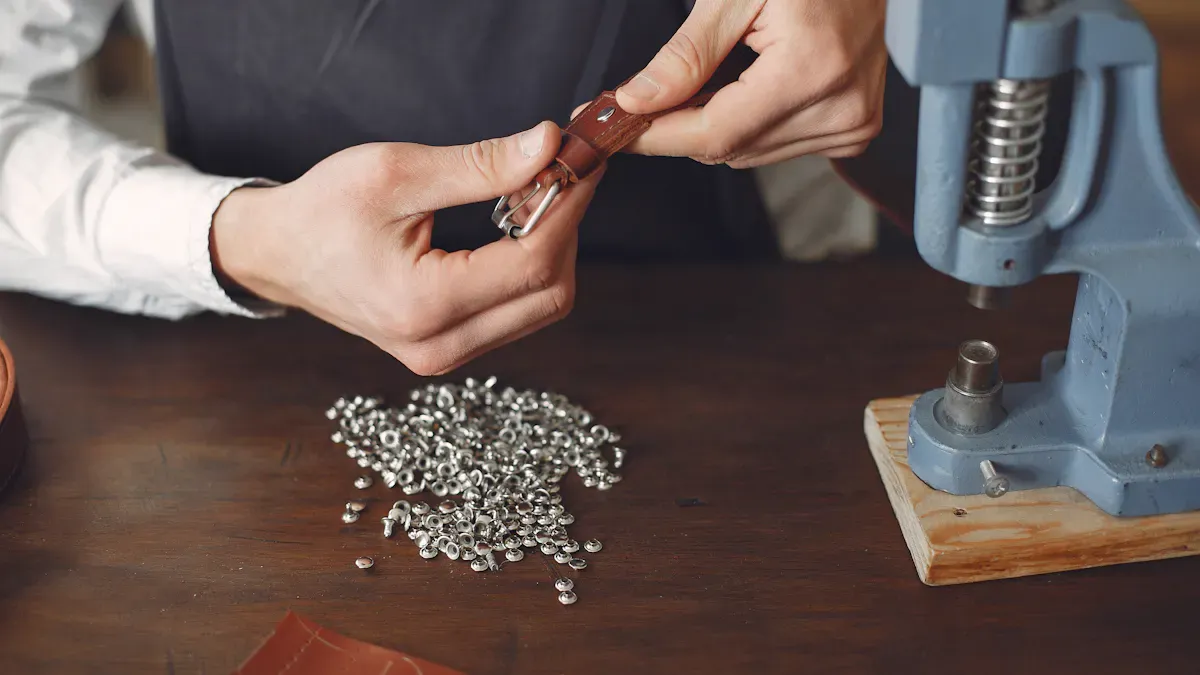
Подготовка отверстия
Hole Shape and Size
Proper hole preparation forms the foundation for successful installation of rivet nuts in thin materials. Clean, deburred holes allow the fastener to seat evenly and align correctly. Burrs or blowouts can cause misalignment, increasing the risk of failure under stress. Professionals recommend drilling a hole that matches the outer diameter of the rivet nut for a snug fit. This practice ensures secure performance and maximizes the operational lifespan of the fastener.
| Тип доказательства | Описание |
|---|---|
| Подготовка отверстия | Clean, deburred holes are essential for basic installations. |
| Hole Size Tolerance | Undersized holes increase installation force; oversized holes reduce holding strength. |
Tolerances for Thin Materials
Maintaining tight tolerances becomes critical when working with thin substrates. Undersized holes require excessive force during installation, which can deform the material. Oversized holes reduce the holding strength of the rivet nut, leading to potential pull-out under load. Statistical process control helps manufacturers maintain specifications and avoid costly errors. Minimum edge radii or chamfer requirements prevent stress risers, which can weaken the substrate.
Clean, burr-free surfaces enhance grip and reduce the risk of rivet nut spinning or disengagement.
Tooling and Equipment
Ручной инструмент vs Электроинструмент
Selecting the right tooling and equipment impacts both the quality and speed of installation. Manual tools offer good control and suit small batches or delicate materials. Pneumatic tools provide fast, consistent installations, making them ideal for high-volume production. Battery-powered tools deliver portability and convenience for on-the-go installation tasks.
| Тип инструмента | Область применения | Преимущества |
|---|---|---|
| Manual Tools | Occasional use, delicate materials | Good control, suitable for small batches |
| Pneumatic Tools | High-volume production | Fast, consistent installations |
| Battery-Powered Tools | Portable high-volume work | Convenient for on-the-go installations |
Installation Speed and Consistency
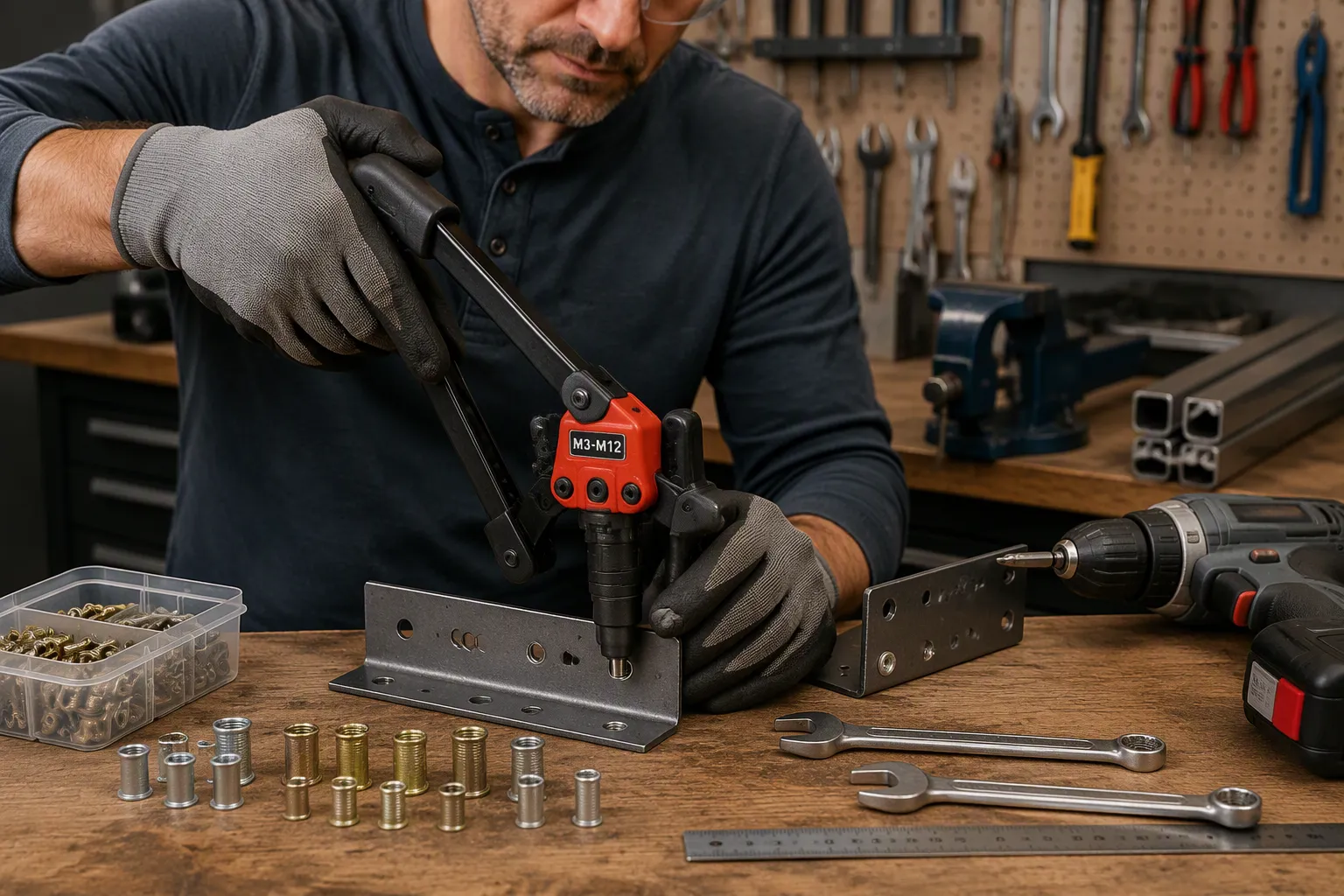
Installation speed and consistency improve with electric or pneumatic tools. Operators drill a hole matching the rivet nut’s diameter, insert the fastener into the tool’s mandrel, and activate the tool to expand the rivet nut inside the hole. The tool releases once the rivet nut is securely fixed. This process ensures efficient installation, especially in industrial settings.
- Manual rivet nut tools suit individual installations or smaller batches.
- Electric and pneumatic tools increase efficiency for high-volume applications.
Manufacturing Challenges
Deformation Risks
Thin materials present unique challenges during installation. Excessive force or improper hole sizing can deform the substrate, compromising the joint’s integrity. Rivet nut spinning occurs when the fastener does not grip securely, often due to an improperly sized hole or insufficient seating. Pull-out happens when the rivet nut disengages under stress, typically from incorrect installation or using the wrong type for the material thickness.
Контроль качества
Quality control measures help manufacturers address these challenges. Regular inspection of hole size, surface condition, and rivet nut seating ensures reliable installation. Using rivet nuts designed for specific material thickness ranges prevents poor performance. Statistical process control maintains consistency and reduces defects in production.
Manufacturers who prioritize precision and quality control achieve stronger, longer-lasting installations in thin materials.
Choosing the Best Rivet Nut for Your Application
Сценарии применения
Автомобилестроение
Automotive manufacturers rely on rivet nuts for joining body panels, chassis components, and dissimilar materials such as aluminum and steel. These fasteners deliver high strength and durability, making them suitable for areas exposed to vibration and fatigue. Structural blind rivets often appear in doors, roof rails, and other critical assemblies. The installation process in automotive settings demands precision to ensure long-term reliability and safety.
Электроника
Electronics industries frequently use rivet nuts in lightweight vehicles and electric vehicles. Components like doors and battery enclosures benefit from these fasteners due to their cost-effectiveness and rapid installation. Rivet nuts provide a secure thread in thin casings, supporting both assembly speed and product longevity. Their use in electronics extends to devices requiring compact, reliable fastening solutions.
Промышленное оборудование
Industrial equipment manufacturers choose rivet nuts for sheet-metal fabrication and HVAC systems. These applications require simple tools and efficient installation methods. Rivet nuts excel in thin materials, offering effective assembly without compromising structural integrity. Their versatility supports a wide range of equipment, from enclosures to machinery panels.
Rivet nuts enable efficient assembly across automotive, electronics, and industrial sectors, supporting both strength and speed in installation.
Summary Table: Best Rivet Nuts for Thin Materials
Comparison by Type, Performance, and Installation
| Rivet Nut Type | Performance Highlights | Installation Suitability | Типичные области применения |
|---|---|---|---|
| Full-Hex Body | Maximum torque and spin-out resistance | Requires hex hole, precise fit | Automotive panels, machinery |
| Half-Hex Body | Good anti-rotation, lighter weight | Hex hole, moderate precision | Sheet metal, electronics |
| Round Body | Easy, versatile, moderate load capacity | Standard round hole, quick set | Electronics housings, appliances |
| Closed-End | Moisture protection, clean finish | Similar to open-end, sealed base | Marine, HVAC, outdoor equipment |
| Pre-Bulbed | Even expansion, high pull-out resistance | Suitable for soft/brittle materials | Plastics, composites, thin metals |
| Micro | Compact, strong in very thin materials | Specialized tools, tight spaces | Miniature electronics, medical |
Expert Recommendations
Best Overall Choice
Full-hex body rivet nuts stand out as the best overall choice for thin materials. They offer superior grip, high torque resistance, and reliable installation in demanding environments. Automotive and industrial users benefit most from their robust performance and long-term durability.
Best for Specific Needs
- For moisture-prone or outdoor environments, closed-end rivet nuts provide the best protection and clean appearance.
- Electronics manufacturers should consider micro rivet nuts for compact assemblies where space is limited.
- Pre-bulbed rivet nuts work best in soft or brittle substrates, ensuring even load distribution and secure installation.
Selecting the right rivet nut depends on the application, material thickness, and installation requirements. Careful evaluation ensures optimal performance and longevity.
Selecting the best rivet nut for thin materials depends on application needs and material properties. Full-hex, closed-end, and pre-bulbed rivet nuts deliver strong, reliable fastening. Key factors include thread size, material thickness, and hole diameter:
| Фактор | Описание |
|---|---|
| Размер резьбы | The required thread size for the application must be determined. |
| Material Thickness | The rivet nut must accommodate the material thickness within its grip range. |
| Диаметр отверстия | The diameter of the hole must match the specifications of the rivet nut. |
Professionals and DIY users should measure material thickness precisely and select a rivet nut with a matching grip range for optimal performance.
Частые вопросы
What is the main advantage of using rivet nuts in thin materials?
Rivet nuts create strong, reusable threads in thin materials. They do not require access to both sides of the workpiece. This feature makes them ideal for automotive, electronics, and industrial applications.
How does a closed-end rivet nut differ from an open-end type?
A closed-end rivet nut has a sealed base. This design prevents moisture and debris from entering. Open-end types allow the screw to pass through, which suits general applications.
Can rivet nuts be installed without special tools?
Manual installation tools work for small projects. However, professionals recommend pneumatic or battery-powered tools for consistent results and higher production rates.
Which material offers the best corrosion resistance for rivet nuts?
Stainless steel provides the highest corrosion resistance. It performs well in marine, outdoor, and chemical environments. Aluminum also resists corrosion but is less durable under heavy loads.
How does hole shape affect rivet nut performance?
Hex-shaped holes prevent spinning for hex body rivet nuts. Round holes suit round body types. Proper hole shape ensures maximum grip and reduces the risk of fastener failure.
Are rivet nuts reusable after removal?
Most rivet nuts remain fixed in the material after installation. Users can remove and replace the screw multiple times, but the rivet nut itself usually stays in place.
What is the recommended grip range for thin materials?
Manufacturers specify a grip range for each rivet nut. Users should select a rivet nut with a grip range that matches the material thickness for secure fastening.
Do rivet nuts work in plastic or composite materials?
Yes, specialty rivet nuts like pre-bulbed or swage-type models perform well in plastics and composites. These designs distribute load evenly and reduce the risk of substrate damage.