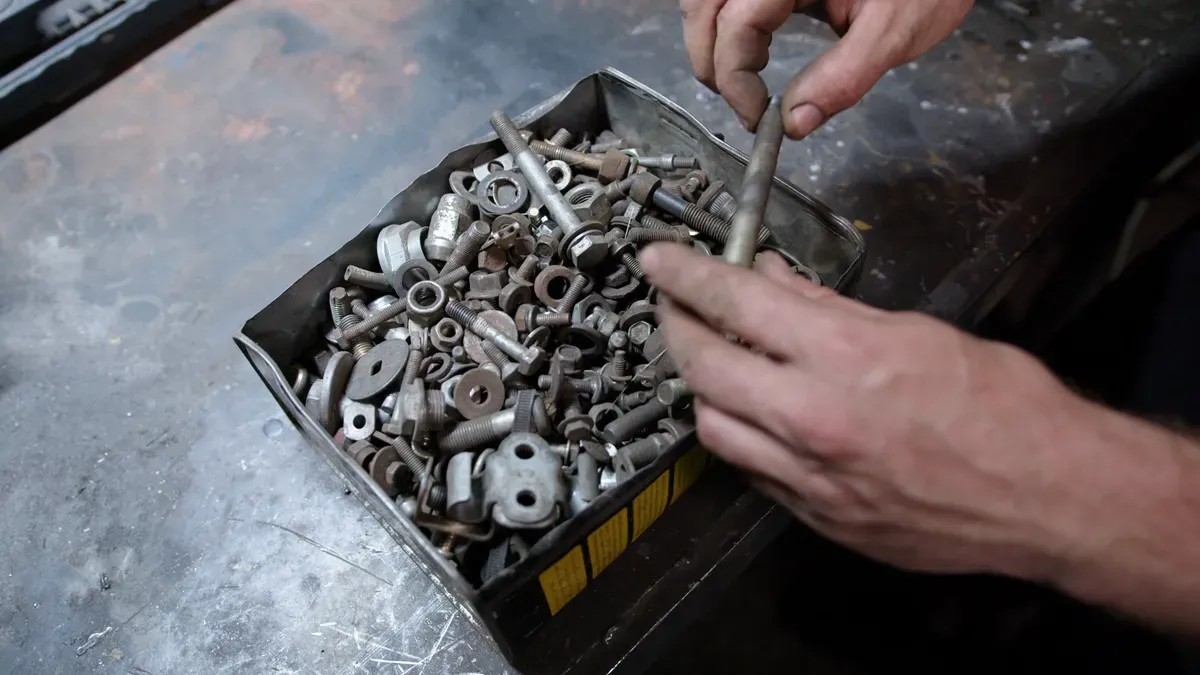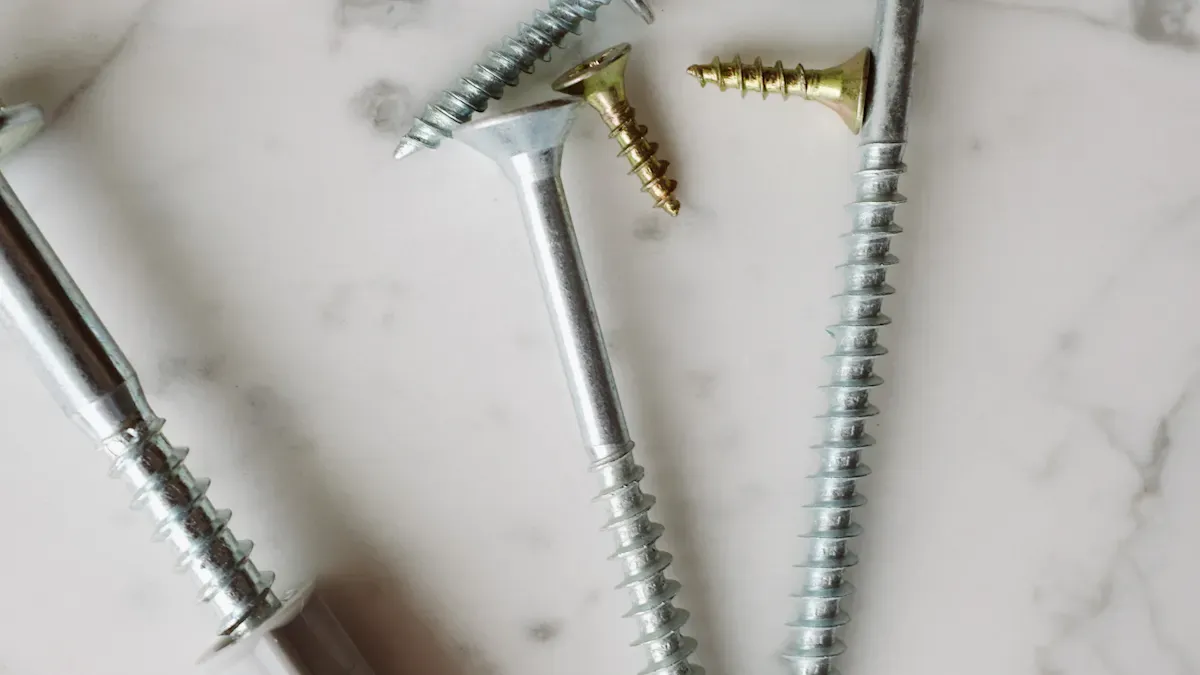

Der Weltmarkt für Ankerbolzen in Beton erreichte etwa 1,17 Milliarden USD im Jahr 2023, Dies spiegelt die breite Verwendung dieser wichtigen Schrauben wider. Ein erfolgreicher Einbau erfordert ein präzises Verfahren. Fachleute installieren Dehnungsbolzen durch Bohren eines korrekt bemessenen Lochs in den Beton. Eine unsachgemäße Technik ist jedoch ein erhebliches Problem, denn einige Studien zeigen eine 50% Durchfallquote bei Anker-Zertifizierungsprüfungen. Nach dem Bohren müssen die Bediener das Loch gründlich reinigen. Dann setzen sie den Anker ein und ziehen die Schrauben fest, um den Anker zu sichern. A Hersteller von kundenspezifischen Verbindungselementen kann liefern kundenspezifische Ankerbolzen für spezifische Betonanwendungen, um eine zuverlässige Verankerung zu gewährleisten.
Verständnis von Betonankern und ihrer Funktionsweise
Vor dem Einbau von Spreizdübeln müssen Fachleute den Aufbau und die Funktion des Beschlags verstehen. Diese Befestigungselemente bieten robuste Verbindungspunkte in festen Grundmaterialien. Ihre Zuverlässigkeit hängt ganz von der richtigen Auswahl und Installation ab.
Was sind Spreizdübel?
Spreizdübel sind eine Kategorie von mechanischen Befestigungselementen, die eine sichere Verbindung in Beton, Ziegeln oder Blöcken herstellen. Sie funktionieren, indem sie sich innerhalb eines vorgebohrten Lochs ausdehnen. Diese Ausdehnung erzeugt immenser Druck gegen die Innenwände des Lochs, und schaffen durch Reibung einen starken, tragfähigen Ankerpunkt. Diese Betonanker sind unverzichtbar für Projekte, die eine hohe Auszugsfestigkeit erfordern.
Gängige Typen von Dehnschrauben
Unterschiedliche Projekte erfordern spezifische Verankerungsarten. Jedes Design bietet einzigartige Vorteile und Tragfähigkeiten.
Keilverankerungen
Keildübel sind Schwerlastbolzen für den Einsatz in massivem Beton. Fachleute verwenden diese leistungsstarken Anker für Sicherung von Baustahl, schweren Maschinen und Sicherheitsgeländern. Wenn ein Installateur die Mutter anzieht, wird ein Clip an der Basis des Ankers erweitert sich, und verkeilt ihn fest im Beton.
Hülsenanker
Hülsenanker sind äußerst vielseitige Befestigungsmittel, die sich für Beton, Ziegel und Blöcke eignen. Ihre Anwendungen reichen von Befestigung von Regalen und Fensterrahmen an Haltegriffen. Im Gegensatz zu einem Keildübel spreizt sich die gesamte Hülse dieses Dübels über die gesamte Länge und sorgt so für einen sicheren Halt in verschiedenen Grundmaterialien.
Drop-In-Anker
Ein Einschlaganker ist ein Anker mit Innengewinde, der bündig mit der Betonoberfläche abschließt. Installateure verwenden ein spezielles Setzwerkzeug, um einen inneren Dübel nach unten zu treiben, der den Ankerkörper ausdehnt. Diese Anker sind ideal für Überkopfanwendungen wie die Aufhängung von Kabeltrassen, Rohren und Kanälen, da die Bolzen je nach Bedarf eingesetzt und entfernt werden können.
Streik-Anker
Schlagdübel, auch Hammerschlagdübel genannt, sind dauerhafte, manipulationssichere Befestigungselemente. Der Einbau ist einfach: Der Installateur setzt den Anker in das Loch ein und schlägt den inneren Bolzen mit einem Hammer ein. Dadurch spreizt sich der Ankerkörper und verankert sich im Beton.
Der Expansionsmechanismus: Wie sie den Beton festhalten
Die Haltekraft aller Betonanker beruht auf einer einfachen mechanisches Prinzip: kontrollierte Expansion. Dieser Vorgang erzeugt einen starken Reibschluss mit dem Grundmaterial. Der Mechanismus rastet ein, wenn die Bolzen angezogen werden.
Die Wissenschaft des Griffs: Ein Schritt-für-Schritt-Blick
- Ein Installateur zieht die Mutter auf der Schraube fest.
- Durch diesen Vorgang wird ein kegelförmiger Spreizdübel in die Ankerhülse hochgezogen.
- Die der Kegel zwingt die Hülse, sich nach außen auszudehnen gegen die Innenwand des Bohrlochs.
- Durch diese Spreizung entsteht eine starke Reibung zwischen dem Anker und dem Beton, wodurch die Bolzen sicher verankert werden.
Sammeln Sie Ihre wichtigsten Werkzeuge und Materialien

Der Erfolg eines Installateurs hängt von der richtigen Ausrüstung ab. Die Vorbereitung der richtigen Werkzeuge und Materialien im Vorfeld gewährleistet eine reibungslose und sichere Installation von Dehnungsbolzen. Diese Vorbereitung verhindert Verzögerungen und gewährleistet, dass der Dübel wie vorgesehen funktioniert.
Power Tools für die Arbeit
Elektrowerkzeuge sorgen für die nötige Kraft und Effizienz bei der Arbeit mit Beton. Sie sind für das Bohren und Reinigen der Ankerlöcher unverzichtbar.
Hammerbohrer
A Hammerbohrer ist ein wichtiges Werkzeug für diese Aufgabe. Es kombiniert Rotation mit einer schnellen Hammerwirkung, wodurch es sich effizient in harte Materialien wie Beton bohren kann. Dieses Werkzeug ist für die Herstellung der präzisen Löcher, die für die Dübel benötigt werden, unerlässlich.
Werkstattstaubsauger oder Gebläse
Für die Bohrlochreinigung ist ein leistungsstarker Werkstattsauger oder ein spezielles Gebläse erforderlich. Diese Geräte entfernen den feinen Siliziumdioxidstaub und die beim Bohren entstehenden Ablagerungen effektiv. Eine ordnungsgemäße Reinigung ist ein unverzichtbarer Schritt, um die maximale Haltekapazität des Dübels zu erreichen.
Unverzichtbare Handwerkzeuge
Für den korrekten Einbau und die Befestigung der Dehnschrauben sind neben Elektrowerkzeugen auch mehrere Handwerkzeuge erforderlich.
Hammer
Mit einem normalen Hammer wird der Dübel vorsichtig in das vorgebohrte Loch geschlagen. Dadurch wird sichergestellt, dass der Dübel in der richtigen Tiefe sitzt, ohne das Gewinde der Bolzen zu beschädigen.
Drehmomentschlüssel
Ein Drehmomentschlüssel ist das einzige Werkzeug, mit dem sichergestellt werden kann, dass die Schrauben genau nach den Vorgaben des Herstellers angezogen werden. Die Anwendung des richtigen Drehmoments ist entscheidend für die ordnungsgemäße Aktivierung des Spreizmechanismus und die sichere Befestigung der Dübel, ohne Schäden zu verursachen.
Steckschlüsselsatz oder verstellbarer Schraubenschlüssel
Zum Drehen der Mutter am Anker wird ein Steckschlüsselsatz oder ein verstellbarer Schraubenschlüssel benötigt. Ein verstellbarer Schraubenschlüssel funktioniert zwar, aber ein Steckschlüsselsatz in Verbindung mit einem Drehmomentschlüssel bietet eine genauere und zuverlässigere Methode zum Anziehen der Schrauben.
Drahtbürste
Eine schmale Drahtbürste mit steifen Borsten ist für die Reinigung der Innenseite des Bohrlochs unerlässlich. Die Bürste reinigt die Innenwände und entfernt Staub und Schutt, den ein Gebläse oder ein Staubsauger übersehen könnte, und sorgt für eine saubere Oberfläche, auf der die Dübel Halt finden.
Erforderliche Materialien und Schutzausrüstung
Die Auswahl der richtigen Materialien und das Tragen einer angemessenen Schutzausrüstung sind für eine erfolgreiche und sichere Installation von grundlegender Bedeutung.
Die richtigen Spreizbolzen
Der Installateur muss die richtigen Dehnschrauben für die jeweilige Anwendung auswählen. Die Auswahl hängt von den Belastungsanforderungen, den Umgebungsbedingungen und der Art des zu montierenden Geräts ab.
Hartmetall-Bohrer für Mauerwerk
Die Installateure müssen Hartmetallbohrer verwenden, die dem für den gewählten Dübel angegebenen Durchmesser entsprechen. Diese langlebigen Bohrer sind so konzipiert, dass sie den abrasiven Eigenschaften des Bohrens in Beton standhalten.
Schutzbrille und Handschuhe
Beim Bohren von Beton entstehen umherfliegende Trümmer und setzen die Arbeiter Gefahren aus. Sicherheit ist oberstes Gebot.
Sicherheit geht vor! 👷 Das Bohren in Beton kann gefährlich sein. Es erzeugt lungenschädigender Silikatstaub und können die Arbeitnehmer übermäßigem Lärm und Vibrationen aussetzen. Eine angemessene persönliche Schutzausrüstung (PSA) ist keine Option, sondern eine Voraussetzung für Sicherheit.
Installateure müssen tragen Schutzbrille um ihre Augen zu schützen. Sie sollten außerdem tragen wasserdichte, alkalibeständige Handschuhe um ihre Haut vor Abrieb und nassem Zement zu schützen.
Staubmaske oder Atemschutzmaske
Der Schutz der Atemwege ist entscheidend. Eine hochwertige Staubmaske oder ein Atemschutzgerät verhindert das Einatmen von schädlichem Quarzstaub. Die Gewährleistung einer guten Belüftung des Arbeitsbereichs minimiert das Expositionsrisiko zusätzlich.
Einbau von Dehnschrauben: Der 5-Schritte-Prozess

Eine erfolgreiche Installation hängt von einer methodischen und präzisen Vorgehensweise ab. Dieser fünfstufige Prozess zeigt auf, wie Profis Spreizbolzen einbauen, Dadurch wird sichergestellt, dass jeder Anker seine maximale Haltekraft erreicht. Die sorgfältige Einhaltung dieser Schritte ist der Schlüssel zu einem sicheren und zuverlässigen Ergebnis.
Schritt 1: Vorbereiten und Markieren der Einbaustelle
Eine ordnungsgemäße Vorbereitung ist die Grundlage für einen sicheren Dübel. Bevor mit dem Bohren begonnen wird, muss der Installateur die Installationspunkte auf der Betonoberfläche genau bestimmen und vorbereiten. Diese erste Phase verhindert kostspielige Fehler und gewährleistet die strukturelle Integrität.
Messen und Markieren der Ankerposition
Die Genauigkeit beginnt mit dem Layout. Ein Installateur muss sorgfältig messen und markieren wo jeder einzelne Bolzen platziert werden soll. Mithilfe von Projektplänen oder Schablonen können sie die korrekte Ausrichtung und den richtigen Abstand für alle Anker sicherstellen.
Bewährte Praktiken für die Markierung von Standorten 🎯
- Planen Sie das Layout: Ein Bediener zuerst macht einen Plan auf der Grundlage von Projektanweisungen unter Berücksichtigung der Lastverteilung.
- Verwenden Sie klare Marker: Sie verwenden einen Kreidestrich oder einen dauerhaften Marker, um gut sichtbare Linien und Punkte zu erstellen.
- Prüfen Sie die Abstände: Der Installateur stellt sicher, dass die Abstände zwischen den einzelnen Dübeln den erforderlichen Spezifikationen entsprechen.
- Double-Check Measurements: Before drilling, they double-check all measurements to prevent misplacement of the anchor.
Check for Rebar and Obstructions
Concrete often contains hidden elements like steel reinforcing bars (rebar), pipes, or electrical conduits. Drilling into these obstructions can compromise the structure and damage tools. Professionals use specialized equipment to scan the concrete and locate these hidden objects.
Common detection methods include:
- Ground Penetrating Radar (GPR): This advanced method transmits radio waves into the concrete. It can map the location and size of rebar up to two feet deep.
- Cover Meters: These devices locate steel by sensing changes in the concrete’s electrical or magnetic properties.
- Metal Detectors: A simpler tool, a metal detector can find rebar, wires, and pipes, often distinguishing between different metal types.
Identifying and avoiding these obstacles is a critical part of the preparation process.
Step 2: Drill the Hole in the Concrete
With the locations marked, the next step is to create a precise hole for the anchor. The quality of the drilled hole directly impacts the performance of the bolts. This part of the process demands the correct tools and technique.
Select the Correct Drill Bit Size
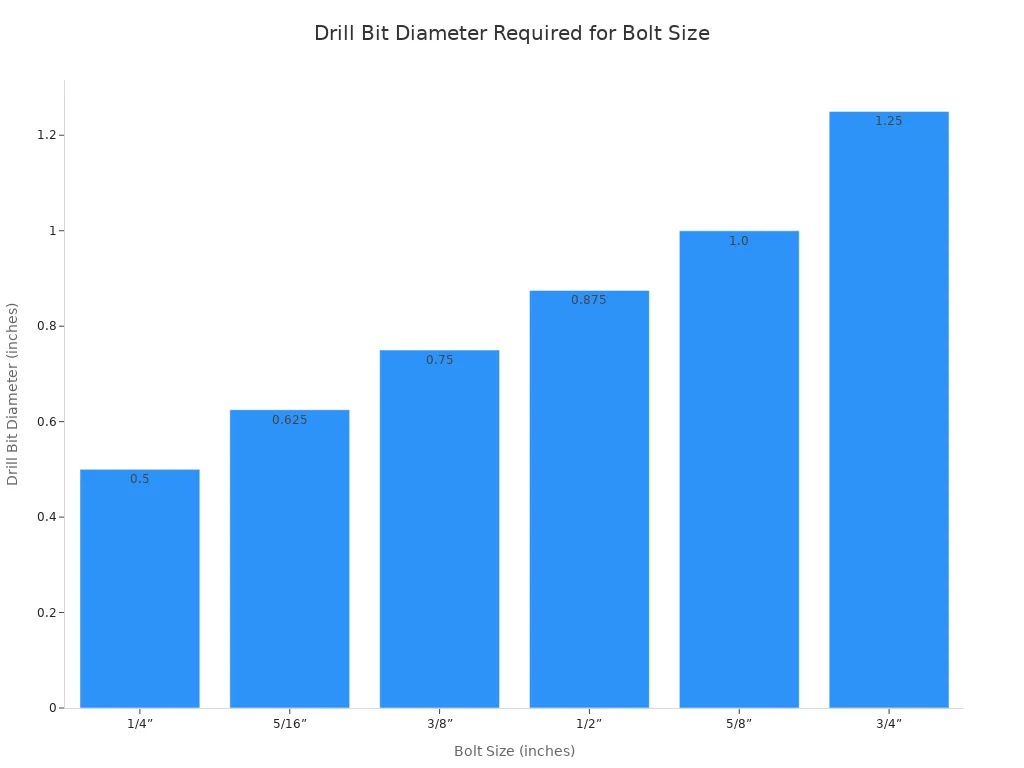
An installer must select a carbide-tipped masonry drill bit that matches the diameter specified by the anchor manufacturer. The hole diameter is non-negotiable; a hole that is too small will prevent the anchor from being inserted, while a hole that is too large will prevent the expansion mechanism from gripping the concrete. The anchor size determines the required drill bit size.
Set the Proper Drill Depth
The hole must be drilled to the correct depth to ensure the anchor has sufficient embedment. Most manufacturers require the hole to be deeper than the anchor’s length to provide space for dust and debris to settle. An installer can set the depth using the depth gauge on the hammer drill or by wrapping a piece of tape around the drill bit to serve as a visual guide.
Drill Perpendicular to the Concrete Surface
The installer must hold the hammer drill firmly and align the bit with the marked point. It is crucial to keep the drill perfectly perpendicular (at a 90-degree angle) to the surface throughout the drilling process. Drilling at an angle can compromise the holding strength of the anchors and create issues when mounting fixtures over the bolts.
Step 3: Thoroughly Clean the Drilled Hole
A clean hole is essential for a strong anchor. Concrete dust and debris left inside the hole act as a lubricant, severely reducing the friction the anchor needs to grip the surrounding material. This cleaning process must be thorough.
Use a Blower or Compressed Air
The first cleaning action involves forcefully blowing out all loose dust and debris. An installer uses a shop vacuum in reverse, a hand-held blower, or oil-free compressed air to evacuate the fine particles created during drilling.
Scrub with a Wire Brush
After the initial blow-out, the installer uses a narrow wire brush sized for the hole. They insert the brush and scrub the interior walls vigorously. This action dislodges any compacted dust that the air blast missed, ensuring the surface is completely raw.
Repeat the Blow-Brush-Blow Process
A single cleaning cycle is not enough. To achieve a truly clean hole, professionals repeat the cleaning sequence.
The Blow-Brush-Blow Method A professional will blow the hole out, brush the interior walls, and then blow the hole out a final time. This sequence ensures all loose and compacted debris is removed, preparing the hole to install the anchor for maximum performance.
Step 4: Install Anchor Bolts into the Hole
After preparing a perfectly clean hole, the installer begins the physical installation process. This step involves carefully placing the anchor assembly into the concrete. Precision here prevents damage to the anchor and ensures it is positioned correctly for the final tightening.
Insert the Bolt Assembly
An operator first prepares the anchor for insertion. The nut and washer should be threaded onto the top of the anchor. This simple action protects the threads from damage during the next part of the process.
Professional Insertion Technique
- Assemble the Anchor: An installer confirms the nut and washer are on the end of the bolts. The nut should be flush with the top of the anchor to shield the threads.
- Attach Fixtures: If the project involves a hanger or bracket, they attach it to the anchor before insertion.
- Position the Anchor: The operator aligns the tip of the anchor with the opening of the drilled hole.
This careful preparation ensures the anchor is ready to install without issue.
Tap the Anchor into Place with a Hammer
With the anchor assembly in position, the installer uses a hammer to drive it into the hole. They must use firm but controlled taps on the head of the nut, not directly on the threads of the bolts. The goal is to seat the anchor until the washer rests snugly against the concrete surface or the fixture. If the anchor becomes difficult to drive, the installer should stop. Forcing a tight anchor can damage the bolts or the concrete. This resistance often indicates the hole is too small or still contains debris. The operator must remove the anchor and re-verify the hole’s diameter and cleanliness.
Step 5: Tighten and Secure the Anchor
This final step is where the anchor develops its holding power. The tightening process activates the expansion mechanism, locking the anchor firmly into the concrete. Following the correct procedure is critical to install anchor bolts that meet their specified load capacity.
Hand-Tighten the Nut Initially
Before applying mechanical force, an installer hand-tightens the nut. They turn the nut clockwise until it is snug. This initial tightening engages the expansion clip at the bottom of the anchor against the concrete. It prevents the entire anchor assembly from spinning when the operator applies final torque. This small action is a key part of a successful installation process. These anchors depend on this initial grip.
Apply Final Torque with a Wrench
The operator now uses a calibrated torque wrench to secure the anchor. This is the only tool that guarantees the correct amount of rotational force is applied. Each anchor has a specific torque value provided by the manufacturer, which is often found on the packaging or a technical data sheet.
- Select the Right Socket: The installer chooses the correct socket size for the nut. For example, a 10mm anchor often requires a 17mm socket.
- Set the Torque Wrench: They set the torque wrench to the manufacturer’s specified value.
- Tighten Smoothly: The operator tightens the nut in a smooth, continuous motion until the wrench clicks, indicating the target torque has been reached.
This final action pulls the cone into the expansion sleeve, forcing the anchors to expand and grip the concrete with immense pressure. This completes the procedure to install expansion bolts, creating a strong and reliable fastening point for the bolts.
Critical Factors for a Secure Installation
Following the five-step process is essential, but several critical factors determine whether an installation is successful or destined for failure. An operator’s attention to detail regarding hole dimensions, cleanliness, and torque application directly impacts the safety and reliability of the final anchor point. A proper installation ensures the anchor performs to its engineered capacity.
Hole Diameter and Depth Accuracy
The dimensions of the drilled hole are the most critical element of the entire process. Even a minor deviation can severely compromise the performance of the anchor.
Why the Correct Diameter is Non-Negotiable
The anchor’s diameter specification is absolute. Using an incorrect drill bit size, often due to a worn bit or a simple mistake, makes a secure installation impossible. This error compromises the effectiveness of the anchor and can lead to structural issues.
- Hole Too Large: A hole that is oversized prevents the expansion mechanism from making firm contact with the concrete, drastically reducing the anchor’s holding strength.
- Hole Too Small: Forcing an anchor into an undersized hole can damage the anchor’s threads, preventing the nut from tightening. It can also deform the expansion sleeve, leading to anchor failure.
The Importance of Proper Embedment Depth
Embedment depth is the distance the anchor is installed into the concrete. A deeper embedment generally provides a higher load-bearing capacity for the anchors. Adhering to the manufacturer’s minimum embedment depth is crucial for proper anchor performance.
The shearing capacity of an anchor increases with anchorage depth. For an optimum embedment depth, the anchor shear capacity reaches its maximum. It then remains constant, unaffected by further increases in depth.
The Importance of a Debris-Free Hole
A clean hole is a strong hole. Concrete dust left inside the drilled hole can reduce an anchor’s holding power by over 50%. This is a common but avoidable mistake when installing expansion anchors.
Wie Trümmer die Haltekraft verringern
Dust and debris act as a lubricant. They create a barrier between the anchor and the raw concrete, preventing the expansion sleeve from generating the necessary friction to grip the hole walls. Failure to clean the hole properly can lead to insufficient expansion or premature failure of the anchors under load. This principle applies to all types of anchors, from mechanical to chemical.
Best Practices for Hole Cleaning
The only reliable method is the “blow-brush-blow” technique. An operator uses compressed air to blow out loose dust, scrubs the interior with a wire brush to dislodge compacted particles, and then blows the hole out a final time. This ensures the anchor makes direct contact with solid concrete.
Applying the Correct Torque
Torque is the final step that activates the anchor. Applying the right amount of force is a delicate balance that ensures a secure connection without damaging the components.
What is Torque and Why It Matters
Torque is the measurement of rotational force. When an operator tightens a nut, they are applying torque to stretch the bolt. This tension creates a clamping force that holds the fixture securely. Applying the correct torque ensures the anchor holds its intended load.
Finding the Manufacturer’s Torque Specifications
Every anchor has a specific torque value determined by the manufacturer. An installer can find this critical information on the product’s packaging or in its technical data sheet. Always refer to these specifications for a successful installation.
Risks of Over-Tightening vs. Under-Tightening
Improper torque application poses significant risks.
- Under-Tightening: An under-tightened anchor will not expand sufficiently, resulting in poor holding values and a loose connection.
- Over-Tightening: Excessive torque can strip the threads or even snap the bolt. It is not difficult to torque an anchor to its yield point, especially with less expensive hardware, creating a hidden failure point.
Common Mistakes When You Install Expansion Bolts (And How to Avoid Them)
Even seasoned professionals can make errors that compromise the integrity of an anchor installation. Understanding these common mistakes is the first step toward avoiding them. A few key areas require special attention to ensure a safe and secure result every time an operator needs to Spreizbolzen einbauen.
Drilling an Incorrectly Sized Hole
One of the most frequent and damaging mistakes is using the wrong drill bit. The anchor manufacturer provides precise diameter specifications for a reason. A hole that is even slightly too large prevents the expansion sleeve from making firm contact with the concrete, which severely reduces the holding power of the anchors. Conversely, a hole that is too small makes it impossible to install the anchor without force. This can damage the anchor’s threads or deform the expansion clip, leading to a failed installation.
Rule of Thumb 📏 Always double-check that the carbide-tipped masonry bit diameter matches the anchor’s required hole diameter. Worn bits can also create undersized holes, so operators should inspect their tools regularly.
Inadequate Hole Cleaning
A clean hole is a strong hole. Many installers underestimate the negative impact of concrete dust. When left in the hole, this fine debris acts as a lubricant, creating a barrier between the anchor and the base material. This prevents the expansion mechanism from generating the friction needed to grip the hole walls. The result is a significant loss of holding capacity, sometimes by more than 50%. This oversight turns reliable anchors into a potential failure point. The only way to guarantee a clean hole is to follow the blow-brush-blow method meticulously.
Installing Too Close to a Concrete Edge
Placing anchors too near an edge or corner is a critical structural error. When an anchor is tightened, it exerts immense outward pressure, creating a “cone” of stress in the material around it. If an operator places an anchor too close to an edge, this stress cone cannot fully form within the concrete. This makes the edge vulnerable to cracking or “spalling,” where a chunk of the surface breaks away.
A general rule is to maintain a minimum distance of at least 12 times the anchor’s diameter from any edge. However, professionals must always consult the manufacturer’s technical data.
- For example: A 5/8″ carbon steel Kwik Bolt TZ requires a minimum edge distance of 3.25 inches.
- Consequence: An attempt to install these anchors closer than the specified distance can easily cause the concrete to fracture during installation, ruining the anchor point.
Over-Torquing the Nut and Bolt
Applying excessive force when tightening the nut is a common and critical error. Some installers mistakenly believe that a tighter bolt equals a stronger hold. This assumption is incorrect and dangerous. Over-torquing stresses the anchor, the fixture, and the concrete beyond their design limits. This can lead to immediate or eventual failure. A calibrated torque wrench is the only tool that ensures the correct rotational force is applied.
An operator can identify an over-torqued bolt by looking for several warning signs. These indicators show that the material has been compromised.
- Deformed or stretched threads on the bolt
- Cracks appearing on the fixture’s flanges or the concrete surface
- The bolt head snapping off completely during tightening
- Damage to gaskets, leading to potential leaks
Exceeding the manufacturer’s torque specification introduces severe risks. The immense pressure can cause different types of failure, including concrete failure, where the base material itself breaks. It can also cause steel failure of the anchor, where the bolt yields or fractures. In other cases, it leads to anchor pullout failure, where the entire assembly loses its grip.
Hitting Rebar During Drilling
Reinforcing steel, or rebar, is a common component of structural concrete. Hitting rebar during drilling is a frequent problem that requires an immediate and correct response. An operator will feel the drill bit stop making progress and may hear a change in the sound of the drill. Continuing to drill can damage the bit, the drill, and, most importantly, the structural rebar.
Protocol: When You Hit Rebar 🛑 The correct procedure is to stop drilling immediately. The operator should not try to force the drill through the obstruction. The safest and most recommended solution is to relocate the anchor point.
The primary and preferred solution is to abandon the hole and move the fastening point. An installer should move the new hole several inches away to avoid the rebar completely. If project constraints make it impossible to move the anchor, the decision to cut the rebar rests solely with the Engineer of Record (EOR). An EOR must approve any modification to the reinforcing steel. If the EOR approves drilling through the rebar, they will likely require onsite testing after the anchor is installed to verify its performance and ensure it meets load requirements.
Choosing the Right Concrete Anchor Bolts for Your Project
Selecting the correct concrete anchor bolts is a critical decision that directly impacts project safety and longevity. An installer must evaluate load requirements, environmental factors, and the condition of the concrete itself. This ensures the chosen anchor performs reliably under its intended service conditions.
Evaluating Load Requirements
An operator must first understand the forces the anchor will need to resist. These forces are categorized into two primary types: tensile and shear loads.
Shear vs. Tensile Loads
The type of load an anchor must handle dictates its selection. Engineers use complex formulas to determine an anchor’s capacity, considering factors like anchor yielding and concrete breakout.
- Zugbelastung: This is a pulling force that tries to pull the anchor straight out of the concrete.
- Scherbelastung: This is a side-to-side force that runs parallel to the concrete surface.
When both forces are present, an interaction check is performed to ensure the combined loads do not exceed the anchor’s capacity.
Light, Medium, and Heavy-Duty Applications
Anchors are rated for different load capacities. Choosing the right duty rating prevents anchor failure. Lighter bolts are suitable for simple tasks, while heavy-duty anchors are necessary for structural connections.
| Duty Rating | Load Rating (lbs) | Example Anchor Types |
|---|---|---|
| Light-Duty | 5-25 | Plastic Expansion Anchors |
| Medium-Duty | 25-75 | Self-Drilling Anchors |
| Heavy-Duty | 75+ | Wedge & Sleeve Anchors |
Considering Environmental Conditions
The environment where the anchor is installed plays a major role in material selection. Moisture and chemicals are primary concerns that can compromise the integrity of the bolts.
Indoor vs. Outdoor Use
Outdoor installations expose anchors to moisture, which can cause rust and corrosion. High humidity levels accelerate this process, weakening the fasteners. Indoor applications are generally less harsh, but an installer must still consider potential moisture or chemical exposure.
Corrosion Resistance: Zinc-Plated vs. Galvanized vs. Stainless Steel
The material of the bolts determines their lifespan. Each coating or material offers a different level of protection.
| Material | Korrosionsbeständigkeit | Am besten für |
|---|---|---|
| verzinkt | Gut | Indoor or dry environments with low corrosion risk. |
| feuerverzinkt | Very Good | Outdoor and industrial applications with moderate moisture. |
| Rostfreier Stahl | Hervorragend | Marine, chemical, and high-moisture environments. |
Assessing the Concrete’s Condition
The state of the base material is as important as the anchor itself. The age and strength of the concrete are critical factors.
Cured vs. Green Concrete
Installers must never install expansion anchors in “green” or uncured concrete. Fresh concrete shrinks as it cures. This shrinkage loosens the anchor, rendering it weak and unreliable. An anchor installed in uncured concrete will not gain strength; it will only become weaker. The ultimate strength of all concrete anchor bolts depends on the compressive strength of fully cured concrete.
Factoring in Concrete Strength (PSI)
The compressive strength of concrete, measured in pounds per square inch (PSI), directly affects an anchor’s holding power. A higher PSI value means the concrete is stronger and can support a greater load. For example, an anchor’s rating can nearly double when moving from 2500 PSI concrete to 6000 PSI concrete. Manufacturers often base load capacities on a standard concrete strength, so an operator must verify the project’s specific PSI to select the appropriate anchors.
To successfully install expansion bolts, an installer must follow the core steps of drilling, cleaning, inserting, and tightening. This process ensures each anchor achieves its full potential. Professionals always consult the manufacturer’s specifications for the specific anchor to guide the installation.
A correctly installed anchor provides a strong and reliable fastening point. Operators install the anchor with precision to guarantee safety and performance.
FAQ
What should an operator do if an anchor spins in the hole?
A spinning anchor often indicates a problem with the hole. The operator should remove the anchor and check for two common issues:
- The hole contains excessive dust.
- The hole was drilled too large.
Cleaning the hole or drilling a new one correctly usually solves this problem.
Kann ein Installateur Dehnschrauben wiederverwenden?
No, an installer cannot reuse expansion bolts. The expansion mechanism permanently deforms during the initial installation to grip the concrete. Removing the anchor destroys its ability to create a secure connection again.
Safety Tip ⚠️ Always use a new anchor for every installation point.
How long must an installer wait to apply a load?
Mechanical expansion anchors are ready for immediate loading. Once an operator tightens the anchor to the specified torque, it achieves its full holding power. There is no cure time required, unlike chemical anchors. This allows for faster project completion.
Which expansion anchor is best for brick or block?
Hülsenanker are an excellent choice for brick and block applications. Their expansion mechanism distributes pressure along the length of the sleeve. This design reduces the risk of cracking these more brittle base materials, providing a secure hold without causing damage.
Warum ist ein Drehmomentschlüssel so wichtig?
A torque wrench guarantees the correct clamping force. It prevents the common mistakes of over-tightening or under-tightening the anchor. Proper torque application is essential for the anchor to perform as designed.
| Condition | Risk |
|---|---|
| Under-Tightened | Anchor may pull out under load. |
| Over-Tightened | Bolt may snap or concrete may crack. |
How does an operator fix a hole that was drilled too big?
The safest and most professional solution is to abandon the oversized hole. The operator should move over and drill a new, correctly sized hole. Attempting to use an expansion anchor in a large hole will result in a weak and unreliable connection.