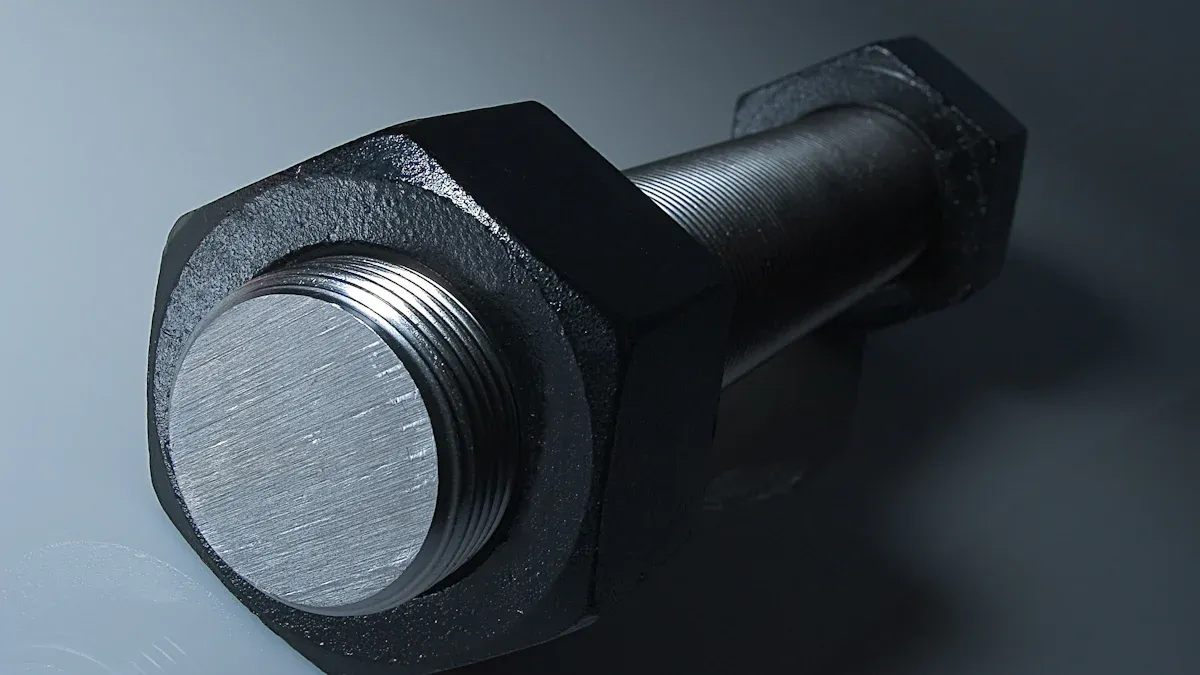
Les écrous hexagonaux à usage intensif offrent une résistance et une durabilité accrues par rapport aux écrous hexagonaux standard, ce qui les rend indispensables dans les applications exigeantes telles que le bâtiment ou lors de travaux avec fixations sur mesure. Si les écrous hexagonaux à usage intensif offrent des avantages considérables dans les environnements soumis à de fortes contraintes, les écrous hexagonaux standard constituent des solutions économiques pour un usage quotidien écrous et boulons projets. A fabricant de fixations sur mesure recommande de choisir le bon écrou hexagonal en fonction des exigences de charge et des impératifs de sécurité.
Écrous hexagonaux à usage intensif : définition, utilisations, avantages et inconvénients
Que sont les écrous hexagonaux à usage intensif ?
Les écrous hexagonaux à usage intensif constituent une catégorie spécifique de fixations conçues pour les environnements exigeants. Ces écrous se caractérisent par un profil plus large et plus épais que celui des écrous hexagonaux standard. Les fabricants produisent ces écrous hexagonaux à usage intensif conformément à des normes industrielles strictes afin de garantir leur compatibilité et leur sécurité. Le tableau suivant présente les normes les plus reconnues règles relatives aux écrous hexagonaux lourds :
| Standard | Description |
|---|---|
| ASTM A563 | Couvre les exigences relatives aux écrous hexagonaux lourds utilisés avec des boulons de structure. |
| ASTM A194 | Spécifie les propriétés mécaniques des écrous hexagonaux lourds destinés à des applications à haute température. |
| ASME B18.2.2 | Fournit des normes dimensionnelles pour les écrous hexagonaux lourds afin de garantir leur compatibilité avec les boulons. |
| ISO 4032 | Définit les normes internationales relatives aux dimensions et aux propriétés mécaniques des écrous hexagonaux. |
Les écrous hexagonaux à usage intensif s'utilisent avec des boulons à haute résistance pour offrir une force de serrage et une durabilité accrues. Leur conception robuste leur permet de supporter des charges et des contraintes importantes, ce qui les rend indispensables dans les applications structurelles et industrielles.
Utilisations courantes des écrous hexagonaux à usage intensif
Les écrous hexagonaux à usage intensif sont couramment utilisés dans les secteurs de la construction, de l'industrie manufacturière et des machines lourdes. Les ingénieurs s'appuient sur ces écrous pour assembler des charpentes métalliques, des ponts et des équipements de grande taille. Les applications à usage intensif exigent des éléments de fixation capables de conserver leur intégrité dans des conditions extrêmes. Les écrous hexagonaux à usage intensif sont également utilisés dans des environnements à haute température, tels que les centrales électriques et les raffineries, où les écrous standard risquent de céder. Leur compatibilité avec les fixations sur mesure et les boulons de structure en fait un choix privilégié pour les projets exigeant une résistance et une fiabilité maximales.
Conseil : les écrous hexagonaux à usage intensif offrent performances supérieures dans les situations où les vibrations, les facteurs environnementaux ou les charges importantes menacent la stabilité des assemblages.
Principaux avantages des écrous hexagonaux à usage intensif
Les écrous hexagonaux à usage intensif présentent plusieurs avantages majeurs qui les distinguent des modèles standard :
- Écrous hexagonaux à usage intensif préserver l'intégrité structurelle en créant des assemblages solides capables de résister à des charges et à des contraintes importantes.
- Ils renforcent la sécurité dans le secteur du bâtiment en empêchant tout desserrage au fil du temps dû aux vibrations ou à des facteurs environnementaux.
- Leur conception permet une bonne prise en main et une application aisée du couple, ce qui les rend polyvalents pour diverses applications.
- Les écrous à usage intensif offrent une durabilité accrue, ce qui réduit la nécessité d'un entretien ou d'un remplacement fréquent.
- Les fabricants produisent des écrous hexagonaux à usage intensif conformes à des normes rigoureuses en matière de sécurité et de compatibilité, garantissant ainsi des performances fiables dans des conditions d'utilisation critiques.
Les écrous hexagonaux robustes offrent aux ingénieurs et aux constructeurs une garantie de fiabilité lorsqu'ils travaillent sur des projets exigeant une résistance et une stabilité sans compromis.
Principaux inconvénients des écrous hexagonaux à usage intensif
Les écrous hexagonaux à usage intensif offrent une résistance impressionnante, mais ils présentent plusieurs inconvénients que les professionnels doivent prendre en compte avant de les choisir pour un projet. Les rapports sectoriels et les retours d'expérience des utilisateurs mettent en évidence ces inconvénients, qui peuvent avoir une incidence sur la pose, la conception et les performances à long terme.
Accès restreint dans les espaces exigus
Les écrous hexagonaux à usage intensif se caractérisent par un profil plus large et plus épais. Cette conception complique souvent leur montage ou leur démontage dans des espaces restreints. Les techniciens peuvent avoir du mal à manœuvrer leurs outils autour de l'écrou, en particulier lorsqu'ils interviennent à l'intérieur de machines ou d'ensembles structurels où l'espace disponible est limité. L'utilisation de clés ou de douilles spécialisées s'avère parfois nécessaire, ce qui accroît la complexité des opérations de maintenance.Taille imposante de la tête
La tête hexagonale surdimensionnée des écrous à usage intensif peut constituer un obstacle dans les conceptions compactes. Les ingénieurs qui ont besoin d’une fixation à profil bas peuvent constater que les écrous à usage intensif ne répondent pas à leurs spécifications. Leur encombrement peut gêner les composants adjacents ou limiter la flexibilité de l'assemblage. Les concepteurs doivent tenir compte de l'espace supplémentaire occupé par ces écrous, ce qui peut restreindre la créativité et l'efficacité lors du développement des produits.Problèmes liés à la corrosion
Le choix des matériaux et le revêtement jouent un rôle essentiel dans la durabilité des écrous hexagonaux à usage intensif. Certaines variantes sont sensibles à la corrosion, en particulier lorsqu’elles sont exposées à des environnements hostiles ou à des produits chimiques. Si l’écrou ne dispose pas de revêtements protecteurs adaptés, la rouille et la dégradation peuvent compromettre l’intégrité de l’assemblage. Les équipes de maintenance doivent surveiller ces écrous de près et les remplacer dès l’apparition de traces de corrosion, ce qui alourdit les coûts d’exploitation.
Remarque : Les écrous hexagonaux à usage intensif nécessitent une planification minutieuse dès la phase de conception. Les équipes doivent déterminer si leur taille et leur résistance accrues justifient les difficultés potentielles liées à leur installation et à leur entretien.
Les écrous hexagonaux à usage intensif ont également tendance à être plus lourds que les modèles standard. Ce surcroît de poids peut avoir une incidence sur la masse totale de l'ensemble, ce qui est important dans les applications où la réduction du poids est essentielle. Le transport et la manutention deviennent alors plus complexes, en particulier lorsque de grandes quantités sont en jeu.
Le coût est un autre facteur à prendre en compte. Les écrous hexagonaux à usage intensif sont généralement plus chers en raison de leur conception robuste et de leur conformité à des normes strictes. Les projets soumis à des contraintes budgétaires peuvent avoir du mal à justifier cette dépense, en particulier lorsque l'application ne nécessite pas une résistance extrême.
Écrous hexagonaux standard : définition, utilisations, avantages et inconvénients
Que sont les écrous hexagonaux standard ?
Écrous hexagonaux standard represent the most widely used type of nut in the fastener industry. Manufacturers design these nuts with a six-sided shape, which allows for easy gripping and turning with common tools such as wrenches and pliers. Standard hex nuts typically feature a uniform thickness and width, making them compatible with a broad range of bolts and threaded rods. Their design meets general-purpose requirements, providing reliable performance in both household and light industrial settings. Engineers and builders select standard hex nuts for projects that do not demand extreme strength or specialized features.
Typical Uses for Standard Hex Nuts
Standard hex nuts play a critical role in everyday construction and manufacturing tasks. Their versatility makes them suitable for a wide variety of applications. The following list highlights their most common uses:
- Securing furniture and fixtures in homes and offices
- Fastening components in light machinery and appliances
- Assembling shelving units, cabinets, and storage systems
- Attaching brackets, supports, and panels in construction projects
- Providing stability in plumbing and electrical installations
Standard hex nuts account for approximately 40% of all fasteners used in construction. Their hexagonal shape enables easy manipulation with tools, which simplifies assembly and maintenance. These nuts ensure stability and facilitate assembly in both household and light industrial contexts. They serve as foundational components that enhance the safety and reliability of mechanical and structural systems.
Tip: Standard hex nuts offer a practical solution for projects where ease of installation and accessibility matter most.
Main Advantages of Standard Hex Nuts
Standard hex nuts deliver several benefits that make them a preferred choice for many applications. Their advantages include:
- Cost-effectiveness: Standard hex nuts provide an affordable option for securing bolts and threaded rods. Their widespread availability reduces procurement costs and simplifies sourcing.
- Versatility: These nuts fit a broad range of bolt sizes and thread types. Builders and technicians can use them in various projects without needing specialized fasteners.
- Ease of installation: The hexagonal shape allows for quick tightening and loosening with standard tools. This feature speeds up assembly and reduces labor time.
- Reliability: Standard hex nuts maintain secure connections under typical loads. They support the integrity of mechanical and structural systems in everyday environments.
- Accessibility: Their compact design fits well in confined spaces, making them suitable for projects with limited clearance.
Standard hex nuts remain a staple in both household and light industrial applications. Their combination of affordability, versatility, and reliability ensures consistent performance across a wide range of tasks.
Main Disadvantages of Standard Hex Nuts
Standard hex nuts serve as reliable fasteners for many everyday applications. However, they present several disadvantages that engineers, builders, and technicians must consider before selecting them for critical projects.
Limited Strength and Load Capacity
Standard hex nuts do not provide the same level of strength as heavy duty hex nuts. Their thinner profile and smaller dimensions restrict the amount of force they can withstand. When exposed to high loads or extreme stress, these nuts may deform or fail. This limitation makes them unsuitable for structural applications or environments where safety is a primary concern.Reduced Resistance to Vibration
Standard hex nuts often loosen over time when subjected to constant vibration or movement. Machinery, vehicles, and equipment that generate frequent vibrations can cause these nuts to back off, leading to potential failures. Heavy duty hex nuts, in contrast, offer better resistance to loosening in such conditions.Susceptibility to Corrosion
Manufacturers typically produce standard hex nuts from carbon steel or similar materials. Without specialized coatings or treatments, these nuts can corrode quickly in harsh or outdoor environments. Corrosion weakens the nut and compromises the integrity of the connection. Maintenance teams must monitor and replace corroded nuts to prevent accidents or breakdowns.Limited Suitability for Specialized Applications
Standard hex nuts do not meet the requirements for high-temperature, high-pressure, or chemically aggressive environments. Industries such as oil and gas, power generation, and heavy construction demand fasteners that comply with strict standards. Standard hex nuts rarely satisfy these specifications, which restricts their use in specialized fields.
Remarque : Engineers should always review the technical requirements of a project before choosing standard hex nuts. Using the wrong type of nut can lead to costly repairs, safety hazards, or equipment downtime.
- Potential for Stripping Threads
The softer materials and thinner walls of standard hex nuts increase the risk of thread stripping during installation or removal. Over-tightening or repeated use can damage the threads, making the nut unusable. This issue can delay assembly and increase maintenance costs.
| Disadvantage | Impact on Application |
|---|---|
| Limited strength | Not suitable for heavy loads or structural projects |
| Vibration loosening | Risk of failure in machinery and vehicles |
| Corrosion susceptibility | Shorter lifespan in harsh environments |
| Application limitations | Cannot use in specialized or regulated industries |
| Thread stripping | Increased maintenance and replacement needs |
Standard hex nuts remain a practical choice for many general-purpose tasks. However, their disadvantages highlight the importance of matching the fastener to the demands of the application. Careful selection ensures safety, reliability, and long-term performance.
Hex Nuts Comparison: Heavy Duty vs Standard
Strength and Durability of Hex Nuts
Heavy duty hex nuts deliver exceptional strength and durability. Manufacturers often use ASTM A563 Grade DH or similar specifications to ensure these nuts withstand significant loads and forces. Engineers select heavy duty hex nuts for structural applications where failure is not an option. Many heavy duty hex nuts include anti-loosening features such as nylon inserts or serrated flanges. These additions prevent failure caused by vibrations in machinery or construction.
Standard hex nuts offer reliable performance for general-purpose applications. Their smaller and lighter design suits projects with lower stress requirements. However, standard hex nuts do not match the strength or durability of heavy duty options. They may deform or loosen under extreme conditions.
Le tableau suivant met en évidence the durability differences between heavy duty and standard hex nuts under extreme conditions:
| Fonctionnalité | Heavy Duty Hex Nuts | Standard Hex Nuts |
|---|---|---|
| Design | Wider and thicker for high-stress applications | Smaller and lighter for general use |
| Capacité de charge | Enhanced load capacity and resistance | Suitable for lower stress applications |
| Force | Designed for structural applications | Not ideal for extreme conditions |
| Applications courantes | Structural steel construction, heavy machinery | General-purpose applications |
Heavy duty hex nuts maintain their durability in harsh environments. Standard hex nuts provide adequate durability for everyday tasks but lack the resilience needed for demanding projects.
Cost and Availability of Hex Nuts
Cost and availability play a crucial role in fastener selection. Heavy duty hex nuts typically cost 10–25% more than standard hex nuts. The price difference results from increased material usage, larger size, and enhanced manufacturing standards. Protective coatings for corrosion resistance add to the expense. Heavy duty hex nuts also have lower availability and higher production costs compared to standard hex nuts.
Standard hex nuts remain widely available in hardware stores and online marketplaces. Their lower price makes them attractive for budget-conscious projects. Builders and technicians can source standard hex nuts quickly and efficiently. Heavy duty hex nuts require specialized suppliers and may involve longer lead times.
Heavy duty hex nuts cost more due to:
- Larger size and increased material usage
- Stricter manufacturing tolerances
- Protective coatings for durability
- Lower availability and higher production costs
Standard hex nuts offer:
- Lower price and widespread availability
- Quick sourcing for general-purpose projects
Note: Project managers should consider both cost and availability when choosing hex nuts for construction or machinery.
Application Suitability for Hex Nuts
Industry guidelines recommend specific applications for heavy duty and standard hex nuts. Heavy duty hex nuts excel in environments where durability and strength are essential. Construction professionals use them for structural steel, scaffolding, and concrete forms. Automotive engineers rely on heavy duty hex nuts when assembling engines, chassis, and suspensions. Machinery and equipment manufacturers select heavy duty hex nuts to ensure stability and functionality of critical components.
Standard hex nuts suit general-purpose applications. Electricians use them to secure electrical panels and control cabinets. Technicians install standard hex nuts in equipment enclosures and light machinery. Aerospace and aviation industries demand heavy duty hex nuts for critical aircraft components exposed to extreme conditions and vibrations.
The table below summarizes application suitability:
| Secteur | Applications |
|---|---|
| Construction | Structural steel, scaffolding, concrete forms |
| Automobile | Assembling engines, chassis, suspensions, exhaust systems |
| Machinery and equipment | Ensuring stability and functionality of critical components |
| Electrical and electronics | Securing electrical panels, control cabinets, and equipment enclosures |
| Aerospace and aviation | Withstanding extreme conditions and vibrations in critical aircraft components |
Heavy duty hex nuts provide unmatched durability and strength for high-stress environments. Standard hex nuts offer practical solutions for everyday tasks. Engineers and builders must evaluate the demands of each project to select the most suitable hex nuts.
Installation and Maintenance of Hex Nuts
Proper installation and maintenance of hex nuts play a critical role in the safety and longevity of mechanical assemblies. Heavy duty and standard hex nuts require different approaches due to their distinct designs and applications.
Installation Best Practices
Heavy duty hex nuts demand careful handling during installation. Their larger size and increased thickness require technicians to use appropriately sized wrenches or sockets. Heavy duty nuts often need higher torque values to achieve the necessary clamping force. Installers should always refer to manufacturer torque specifications to prevent over-tightening or under-tightening.
Standard hex nuts offer a more straightforward installation process. Their compact size allows for easy access in tight spaces. Most standard nuts can be installed using common hand tools such as adjustable wrenches or pliers. Installers should avoid excessive force to prevent thread stripping.
Key Installation Steps for Both Types:
- Inspect Threads: Check both the nut and bolt threads for damage or debris before assembly.
- Align Properly: Ensure the nut aligns squarely with the bolt to avoid cross-threading.
- Apply Lubricant: Use a suitable lubricant if recommended, especially for heavy duty applications.
- Tighten Gradually: Apply torque in stages, alternating between nuts in multi-bolt assemblies.
- Verify Torque: Use a calibrated torque wrench to confirm the correct tightness.
Conseil : Always follow the torque values specified by the fastener manufacturer. Incorrect torque can lead to premature failure or unsafe connections.
Maintenance Considerations
Maintenance requirements differ between heavy duty and standard hex nuts. Heavy duty hex nuts, often used in critical structures, require regular inspection for signs of loosening, corrosion, or wear. Maintenance teams should schedule periodic checks, especially in environments with vibration or exposure to harsh chemicals.
Standard hex nuts, commonly found in household and light industrial settings, need less frequent inspection. However, technicians should still check for corrosion, thread damage, or signs of loosening during routine maintenance.
The table below summarizes the main maintenance tasks for each type:
| Task | Heavy Duty Hex Nuts | Standard Hex Nuts |
|---|---|---|
| Inspection Frequency | Regular (monthly/quarterly) | Occasional (semi-annual/annual) |
| Corrosion Monitoring | Essential in harsh environments | Important in outdoor use |
| Retightening | After vibration or load changes | As needed |
| Replacement Criteria | Corrosion, deformation, thread wear | Thread stripping, rust |
Remarque : In high-stress or safety-critical applications, always replace hex nuts that show any sign of damage or corrosion.
Common Installation and Maintenance Challenges
- Heavy Duty Hex Nuts: Their bulk can make installation difficult in confined spaces. Specialized tools may be necessary. High torque requirements can increase the risk of over-tightening if installers do not use proper equipment.
- Standard Hex Nuts: These nuts are prone to thread stripping if over-tightened. They may loosen in vibrating machinery unless paired with lock washers or thread-locking compounds.
Best Practices for Longevity:
- Store hex nuts in dry, clean environments to prevent rust.
- Use protective coatings or stainless steel variants in corrosive settings.
- Train personnel on proper installation techniques and tool selection.
Technicians who follow these guidelines can maximize the performance and lifespan of both heavy duty and standard hex nuts. Proper installation and regular maintenance ensure safe, reliable connections in any application.
How to Choose the Right Hex Nut for Your Application
Key Factors to Consider When Selecting Hex Nuts
Selecting the right hex nut involves more than matching a nut to a bolt. Engineers and technicians must evaluate several critical factors to ensure safety, reliability, and performance in every application. The following considerations guide the selection process for all types of nuts and bolts.
Load Requirements for Hex Nuts
Load requirements determine the necessary load strength and durability of the hex nut. Écrous hexagonaux à usage intensif excel in applications where high load or structural integrity is essential. Standard hex nuts suit lighter assemblies with moderate load demands. Always assess the expected load and choose a nut that matches or exceeds these requirements. Using a nut with insufficient load capacity can result in joint failure or compromised reliability.
Environmental Conditions Affecting Hex Nuts
Environmental factors play a significant role in hex nut selection. Moisture, chemicals, temperature extremes, and exposure to the elements can degrade certain materials. Stainless steel nuts resist corrosion in outdoor or marine environments. Carbon steel nuts provide strength but may require protective coatings for harsh conditions. For electrical or electronic assemblies, select materials that prevent oxidation and ensure long-term performance. Matching the material to the environment extends the lifespan of all types of nuts and bolts.
Budget Constraints for Hex Nut Selection
Budget constraints influence the choice between heavy duty and standard hex nuts. Standard hex nuts offer a cost-effective solution for general-purpose projects. Heavy duty hex nuts, while more expensive, provide superior performance in demanding applications. Project managers must balance cost with safety and reliability. Sourcing from reputable suppliers ensures consistent quality and reduces the risk of using substandard fasteners. Consider both initial cost and long-term maintenance when evaluating different types of nuts and bolts.
Safety and Compliance with Hex Nut Standards
Safety and compliance remain non-negotiable in industrial and structural applications. Always verify that hex nuts meet relevant industry standards, such as ANSI/ASME B18.2.1 and B18.2.2. These standards specify torque values, material grades, and compatibility between nuts and bolts. Technicians should use a torque wrench during installation to prevent thread stripping or joint slippage. Matching nut grades with bolt grades eliminates weak points in assemblies. Compliance with standards ensures the reliability and safety of all types of nuts and bolts in critical environments.
Tip: Using incompatible or substandard hex nuts can lead to equipment failure, structural compromise, or safety hazards. Always confirm material compatibility, torque specifications, and environmental resistance before installation.
Common Scenarios and Recommendations for Hex Nuts
Choosing the right hex nut depends on the specific application. The following scenarios illustrate best practices for selecting different types of nuts and bolts.
Home DIY Projects Using Hex Nuts
Home improvement projects often require standard hex nuts. These nuts fit most household bolts and provide reliable fastening for furniture, shelving, and fixtures. Stainless steel nuts work well for outdoor projects due to their corrosion resistance. For assemblies exposed to vibration, nylon insert lock nuts prevent loosening. Always ensure the nut size matches the bolt for a secure fit. Homeowners benefit from the versatility and affordability of standard types of nuts and bolts.
Automotive and Machinery Applications for Hex Nuts
Automotive and machinery assemblies demand higher load strength and durability. Heavy duty hex nuts secure engines, chassis, and suspension components. These nuts withstand vibration, heat, and mechanical stress. Technicians should select materials like chromium vanadium or high-grade carbon steel for enhanced performance. Matching thread types and sizes prevents assembly failures. In critical systems, always follow manufacturer specifications for torque and compatibility. The right types of nuts and bolts ensure safety and reliability on the road and in the shop.
Construction and Structural Applications for Hex Nuts
Construction projects require hex nuts that deliver maximum load capacity and structural integrity. Heavy duty hex nuts anchor steel beams, scaffolding, and concrete forms. These nuts comply with strict industry standards for safety and performance. Engineers select materials and coatings based on environmental exposure and design requirements. Regular inspection and maintenance preserve the reliability of structural connections. Using the correct types of nuts and bolts prevents costly failures and supports long-term stability.
Industrial and Specialized Equipment Using Hex Nuts
Industrial and specialized equipment operate in challenging environments. Heavy duty hex nuts secure critical components in machinery, power plants, and refineries. Material selection depends on exposure to chemicals, temperature extremes, and mechanical loads. Stainless steel or coated carbon steel nuts resist corrosion and maintain performance. Compliance with industry standards ensures safe operation. Technicians must verify thread compatibility and use proper installation tools. The right types of nuts and bolts protect equipment and personnel in high-risk settings.
Note: Always consult application requirements, material compatibility, and industry standards before selecting hex nuts for any project. Proper selection and installation maximize safety, reliability, and performance.
Heavy duty hex nuts provide unmatched strength and reliability for demanding projects, while standard hex nuts offer cost-effective versatility for everyday tasks. Many users make mistakes by selecting general hardware for structural jobs or overlooking corrosion risks in harsh environments. For most home and light industrial needs, standard hex nuts perform well. Heavy duty hex nuts suit critical or high-load applications. Every project benefits when users match hex nut selection to load, environment, and safety requirements.
FAQ
What is the main difference between heavy duty and standard hex nuts?
Heavy duty hex nuts have a thicker and wider profile. They handle higher loads and offer greater durability. Standard hex nuts suit general-purpose applications and cost less. Heavy duty nuts meet stricter industry standards for strength.
Can standard hex nuts be used in structural applications?
Engineers do not recommend standard hex nuts for structural applications. These nuts lack the strength and durability required for critical connections. Heavy duty hex nuts provide the necessary load capacity and safety compliance.
How do I prevent hex nuts from loosening due to vibration?
Technicians often use lock washers, nylon insert lock nuts, or thread-locking compounds to prevent loosening. Heavy duty hex nuts with anti-loosening features also help maintain secure connections in vibrating environments.
Are stainless steel hex nuts better for outdoor use?
Yes. Stainless steel hex nuts resist corrosion and perform well outdoors. They maintain integrity in wet or humid conditions. Standard carbon steel nuts may rust without protective coatings.
What tools are needed to install heavy duty hex nuts?
Installers use larger wrenches or sockets to fit the thicker profile of heavy duty hex nuts. A calibrated torque wrench ensures proper tightness. Specialized tools may be necessary for confined spaces.
How can I identify if a hex nut meets industry standards?
Look for markings on the nut that indicate grade and standard compliance. Manufacturers often stamp codes such as ASTM or ISO numbers. Always verify documentation from reputable suppliers.
Do heavy duty hex nuts cost significantly more than standard ones?
Heavy duty hex nuts usually cost 10–25% more than standard hex nuts. The price reflects increased material, size, and manufacturing standards. Bulk purchasing may reduce costs for large projects.