Nylock nuts play a crucial role in preventing loosening under vibration and stress. Engineers often ask how do lock nuts work, and the answer lies in the nylon insert that grips the threads of nuts and bolts, creating resistance. Manufacturers produce dozens of nylock nut sizes and specifications globally, meeting demands from small electronics to heavy machinery. The following table shows standardized metric and inch sizes available for nylock nut:
| Metric Sizes | Inch Sizes |
|---|---|
| M3–M75 | No 10–2″ |
Selecting the right type of lock nut ensures safety and performance. Many industries rely on custom fasteners, and a custom fasteners manufacturer must understand how do lock nuts work to deliver reliable products.
Nylock Nut Sizes and Specifications
Standard Sizing Systems for nylock nut sizes
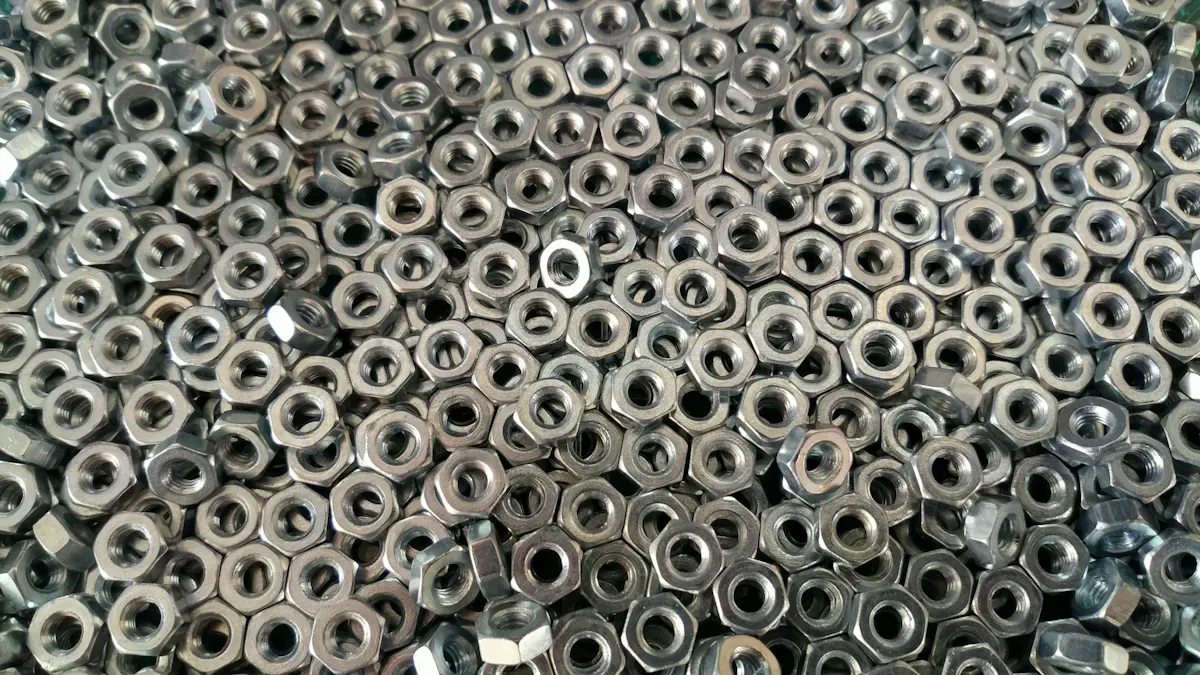
Nylock nut sizes follow two main sizing systems: metric and inch (imperial). Each system uses its own conventions for measuring diameter and thread pitch. Selecting the correct system ensures compatibility with bolts and fasteners in any assembly.
Metric Sizes (M2–M24, common sizes: M6, M8, M10)
Metric nylock nut sizes use the letter “M” followed by the nominal diameter in millimeters. Common sizes include M6, M8, and M10, which fit a wide range of industrial and consumer applications. Manufacturers produce metric nylock nuts from as small as M2 up to M24 for standard use, with larger sizes available for specialized needs. The metric system provides consistency and ease of selection for engineers worldwide.
Inch (Imperial) Sizes
Imperial nylock nut sizes use fractional or number designations, such as 1/4″-20 or No. 10. These sizes are common in North America and industries that follow Unified Thread Standards. The diameter range starts from #4 (0.112″) and extends to 4″ and larger for heavy-duty applications. Inch sizes allow for precise matching with imperial bolts and threaded rods.
Thread Types and Pitches
Thread type and pitch play a critical role in the performance of nylock nuts. The pitch refers to the distance between threads, which affects how the nut engages with the bolt.
Engineers must match thread type and pitch to ensure proper fit and prevent thread stripping.
Coarse Threads
Coarse threads feature a larger pitch, making them suitable for quick assembly and disassembly. They resist cross-threading and perform well in softer materials. In metric nylock nut sizes, coarse threads are standard for M6 x 1.0 mm and similar dimensions. In imperial sizes, examples include 1/4″-20 UNC and 1″-8 UNC.
Fine Threads
Fine threads have a smaller pitch, which increases the number of threads per unit length. This design provides greater resistance to vibration and allows for finer adjustments. Metric fine threads are common in sizes from M8 to M24. Imperial fine threads follow the Unified National Fine (UNF) standard.
| Thread Type | Pitch Range | Example Sizes |
|---|---|---|
| Metric | Fine | M8 to M24 |
| Coarse | M6 x 1.0 mm | |
| Imperial | Coarse | 1/4″-20 UNC |
| 1″-8 UNC | ||
| 2″-4.5 UNC |
Material Options for locking nuts
The choice of material impacts the mechanical strength, corrosion resistance, and durability of nylock nuts. Selecting the right material ensures optimal performance in specific environments.
Steel
Steel nylock nuts offer high mechanical strength and cost-effectiveness. Manufacturers often use zinc plating or other coatings to improve corrosion resistance. Steel remains the most common material for general-purpose nylock nut sizes.
Stainless Steel
Stainless steel nylock nuts provide superior corrosion resistance, making them ideal for marine, chemical, and outdoor applications. They maintain strength in harsh environments and resist rust over time.
Brass
Brass nylock nuts deliver good corrosion resistance and electrical conductivity. They suit applications where non-magnetic properties or resistance to certain chemicals is required. Brass, however, may not match the mechanical strength of steel or stainless steel in high-stress situations.
Nylon Insert Materials
The nylon insert forms the core locking mechanism in nylock nuts. This insert increases resistance to loosening under vibration and maintains mechanical strength. The quality of the nylon insert directly affects the reliability of nylock nut sizes in demanding applications.
- Stainless steel and brass options enhance corrosion resistance.
- The nylon insert ensures vibration resistance and consistent locking performance.
- Material selection influences both the durability and the suitability of nylock nut sizes for specific environments.
Strength Grades and Markings
Strength grades and markings help users identify the mechanical properties of nylock nuts. These grades indicate the nut’s ability to withstand stress and load. Manufacturers stamp these markings on the nut’s surface for easy identification.
Grade 2, 5, 8 (Imperial)
Imperial nylock nuts use a grading system to classify their strength. Grade 2 nuts offer basic strength for light-duty applications. Grade 5 nuts provide medium strength and suit automotive and machinery uses. Grade 8 nuts deliver high strength for heavy-duty and critical applications. Each grade features unique markings:
- Grade 2: No specific marking or a plain surface. Used in general-purpose assemblies.
- Grade 5: Three radial lines on the nut face. Suitable for automotive and moderate load requirements.
- Grade 8: Six radial lines. Designed for high-stress environments such as heavy equipment.
Users should always match the nut grade with the bolt grade to maintain joint integrity.
Class 8, 10, 12 (Metric)
Metric nylock nuts follow a class system. Class 8 nuts serve standard applications with moderate strength. Class 10 and Class 12 nuts provide higher strength for demanding uses. Markings on metric nuts usually include the class number:
- Class 8: Marked with “8” on the nut. Used in construction and machinery.
- Class 10: Marked with “10.” Suitable for high-strength requirements.
- Class 12: Marked with “12.” Used in critical and high-load environments.
These markings help engineers and technicians select the correct nut for each application.
Common Standards and Codes
Nylock nuts must meet specific standards and codes to ensure quality and compatibility. These standards define dimensions, materials, and performance requirements.
ASTM
The American Society for Testing and Materials (ASTM) sets standards for fasteners in the United States. ASTM standards specify material properties, mechanical strength, and testing methods. Common ASTM standards for nylock nuts include ASTM A194 and ASTM A563.
DIN (including DIN 985 Type P and Type T)
The Deutsches Institut für Normung (DIN) issues standards widely used in Europe and internationally. DIN 985 covers prevailing torque type hexagon nuts with a non-metallic insert. Type P and Type T refer to different heights and shapes of the nut. Type P features a low profile, while Type T has a taller design for increased thread engagement.
ISO
The International Organization for Standardization (ISO) provides global standards for fasteners. ISO 7040 and ISO 10511 are common standards for nylock nuts. These standards ensure consistency in dimensions, thread types, and performance across different manufacturers.
Following recognized standards guarantees that nylock nuts will fit and perform as expected in any assembly.
Nylock Nut Size Reference Tables
Reference tables provide essential information for selecting the correct nylock nut size. These tables list thread sizes, across-flat measurements, nut thickness, and tolerance ranges. Users can quickly compare specifications and choose the right nut for their application.
Metric Size Chart
| Specification | M6 | M8 | M10 | M12 | M16 | M20 |
|---|---|---|---|---|---|---|
| Thread Size | M6 x 1.0 | M8 x 1.25 | M10 x 1.5 | M12 x 1.75 | M16 x 2.0 | M20 x 2.5 |
| Hex Width (mm) | 10 | 13 | 17 | 19 | 24 | 30 |
| Nut Thickness (mm) | 6 | 8 | 10 | 12 | 16 | 20 |
| Tolerance Range | ±0.2 | ±0.2 | ±0.3 | ±0.3 | ±0.4 | ±0.5 |
Inch Size Chart
| Specification | #10-24 | 1/4″-20 | 5/16″-18 | 3/8″-16 | 1/2″-13 | 3/4″-10 |
|---|---|---|---|---|---|---|
| Thread Size | #10-24 | 1/4″-20 | 5/16″-18 | 3/8″-16 | 1/2″-13 | 3/4″-10 |
| Hex Width (in) | 0.375 | 0.437 | 0.5 | 0.562 | 0.75 | 1.125 |
| Nut Thickness (in) | 0.187 | 0.218 | 0.25 | 0.312 | 0.375 | 0.625 |
| Tolerance Range | ±0.008 | ±0.008 | ±0.010 | ±0.012 | ±0.015 | ±0.020 |
Reference tables help users follow a clear process when selecting nylock nuts:
- Identify the bolt or screw thread size to find the matching nut specification.
- Verify the across-flat measurement for proper wrench fit and check nut thickness for adequate thread engagement.
- Choose the nut type based on application needs and available space.
Accurate selection using reference tables prevents assembly errors and ensures reliable performance.
Selecting the Right Type of Lock Nut
Choosing the correct nylock nut for a project involves more than matching a nut to a bolt. Engineers must consider thread size, material, strength, and compatibility with the application environment. Selecting the right type of lock nut ensures safety, reliability, and ease of installation.
Determining the Correct nylock nut sizes
Measuring Thread Diameter
Accurate measurement of thread diameter forms the foundation for proper nut selection. The thread diameter refers to the outside diameter of the bolt or screw. Using calipers or a thread gauge, technicians can measure this value in millimeters for metric fasteners or inches for imperial sizes. Matching the nut size to the bolt size prevents thread stripping and ensures a secure fit.
| Bolt Size (mm) | Nut Size (mm) | Recommended Torque (Nm) |
|---|---|---|
| M4 | 7 | 3–4 |
| M5 | 8 | 5–6 |
| M6 | 10 | 10–12 |
| M8 | 13 | 20–25 |
| M10 | 17 | 40–45 |
| M12 | 19 | 70–75 |
The table above shows common pairings of bolt and nut sizes, along with recommended torque values for installation. Using the correct torque during installation protects the nylon insert and maintains the locking function.
Matching Thread Pitch
Thread pitch describes the distance between threads. Engineers must match the thread pitch of the nut to the bolt to avoid cross-threading and ensure smooth assembly. Metric fasteners use a numerical pitch (such as 1.0 mm), while imperial fasteners use threads per inch (TPI). Always verify both diameter and pitch before selecting the right type of lock nut.
| Thread Size (mm) | Width Across Flats (mm) | Height (mm) | Nylon Insert Thickness (mm) |
|---|---|---|---|
| M4 | 7 | 4 | 1 |
| M5 | 8 | 5 | 1.5 |
| M6 | 10 | 6 | 1.5 |
| M8 | 13 | 8 | 2 |
| M10 | 17 | 10 | 2.5 |
| M12 | 19 | 12 | 3 |
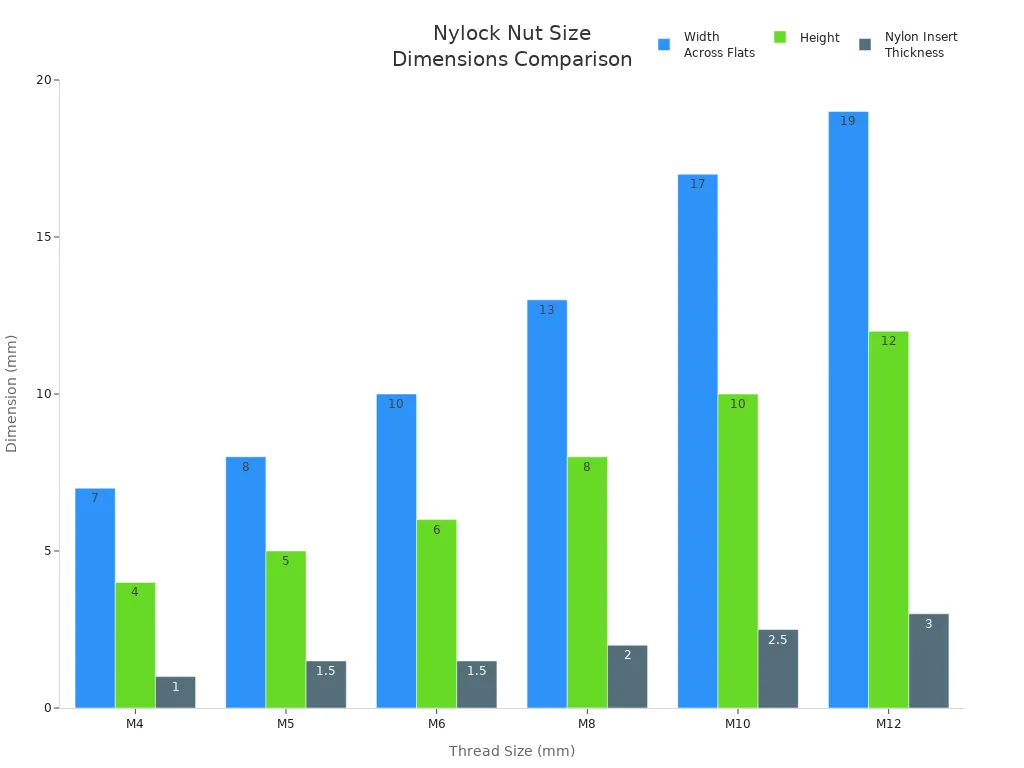
Tip: Always match the nut size to the bolt size and use a torque wrench for critical applications. This practice prevents over-tightening, which can damage the nylon insert and compromise the locking feature.
Considering Material and Strength
Application Environment
Material selection plays a critical role in the performance and longevity of nylock nuts. Environmental factors such as temperature and humidity can affect both the metal and the nylon insert. For example, stainless steel nylock nuts resist corrosion in marine or chemical environments, while low-carbon steel suits general-purpose use.
| Material Type | Tensile Strength (MPa) | Corrosion Resistance | Application Suitability |
|---|---|---|---|
| Low-carbon steel (SAE Grade 2) | 414–510 | Moderate | General-purpose |
| Low-carbon steel (SAE Grade 5) | 724–827 | Moderate | General-purpose |
| Stainless steel A2 (304) | 700 | High | Marine, chemical exposure |
| Stainless steel A4 (316) | 800 | Very High | Marine, chemical exposure |
| Nylon 6/6 insert | N/A | Strong chemical resistance | Vibration resistance, temperature range -40°C to 120°C |
Nylock nuts perform best below 120°C (250°F) and in moderate humidity. High humidity can cause the nylon insert to swell or degrade, reducing locking ability. In extreme temperatures, the nylon may soften or become brittle, affecting the nut’s lifespan. All-metal lock nuts offer better performance in high-temperature or very cold environments.
Note: For high-temperature or high-humidity environments, consider all-metal lock nuts instead of nylock nuts.
Load Requirements
The strength grade of a nylock nut must match the demands of the application. High-stress environments require nuts with higher tensile strength. For example, stainless steel A4 (316) provides very high corrosion resistance and strength, making it suitable for marine and chemical exposure. Always match the nut’s grade to the bolt’s grade to prevent thread stripping and ensure joint integrity.
Compatibility with Bolts and Fasteners
Thread Fit
Thread fit determines how well the nut engages with the bolt. A proper fit prevents loosening and ensures reliable installation. Engineers must check both the thread diameter and pitch for compatibility. Mismatched threads can lead to cross-threading, galling, or failure under load.
| Consideration | Description |
|---|---|
| Material | Compatibility between nyloc, bolt, and work surface is crucial to avoid issues like galvanic corrosion and galling. |
| Grade | Nuts and bolts should match in grade to prevent thread stripping and potential failure under load. |
| Ease of Use | Nylocs may not be suitable for all applications, especially where high torque is required for assembly. |
| Reuse | Nylocs can be reused, but there is uncertainty about how many times they can be safely reused. |
Length and Clearance
Proper nut selection also involves checking the available space for installation. The nut’s height and width must fit within the assembly’s design constraints. Insufficient clearance can make installation difficult or impossible. The nylon insert thickness also affects how much thread engagement is possible.
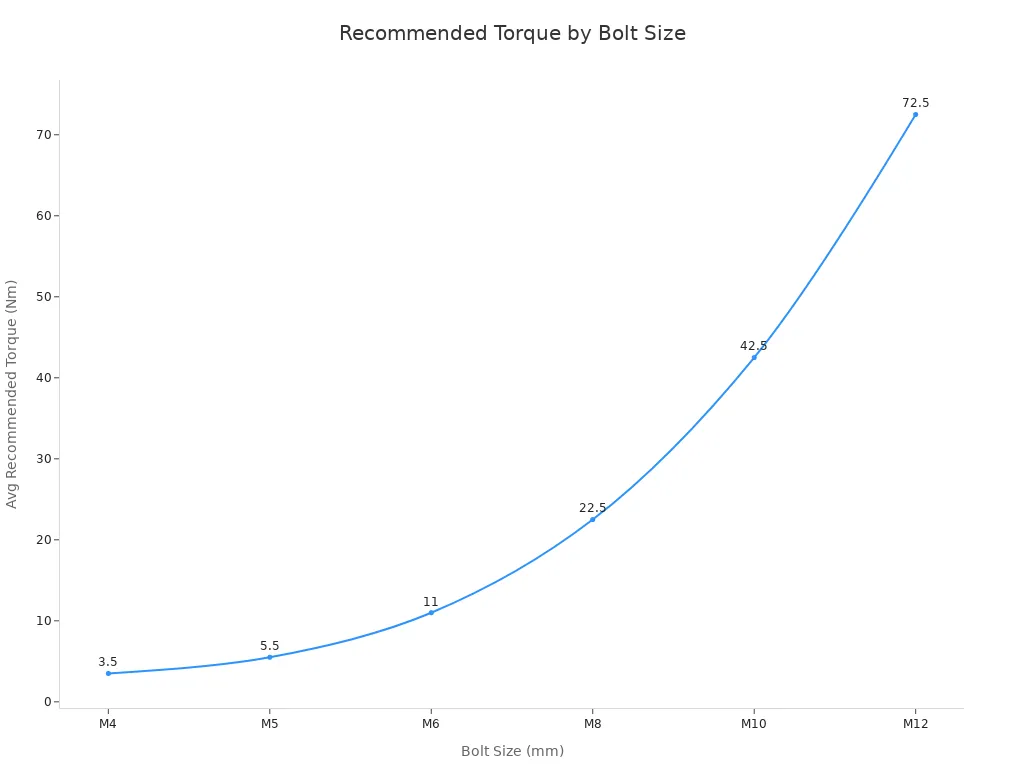
Always verify the nut’s dimensions and the available space before installation. This step prevents assembly errors and ensures the locking feature works as intended.
Selecting the right type of lock nut involves careful consideration of size, material, strength, and compatibility. Proper selection and installation practices help maintain joint integrity and extend the service life of fastened assemblies.
Selecting by Application Type
Selecting the right nylock nut depends on the specific requirements of each industry. Engineers must evaluate several factors before choosing a lock nut for any application. The following best practices guide the selection process:
- Working Environment: Assess temperature, moisture, and chemical exposure. Avoid nylon insert lock nuts in high-temperature environments.
- Vibration Level: Choose all-metal or flange lock nuts for assemblies exposed to high vibration.
- Disassembly Frequency: Select all-metal lock nuts for joints that require frequent removal.
- Load Type and Strength Requirements: Match the lock nut strength to the bolt grade to prevent joint failure.
- Cost, Standards, and Certification: Ensure compliance with industry standards such as DIN, ISO, or ASTM.
The table below summarizes how nylock nut requirements differ across major industries:
| Industry | Application Description |
|---|---|
| Automotive | Used in assembly for critical components like engines and chassis, ensuring secure fastening under vibration. |
| Machinery | Employed in manufacturing to provide reliable fastening for components subjected to dynamic loads. |
| Aerospace | Critical for maintaining tight connections in aircraft engines and structural components. |
| Electronics | Used to secure connections in electrical equipment, preventing loosening of terminals and circuitry. |
Automotive
Automotive engineers rely on nylock nuts to secure vital components such as engines, suspensions, and chassis assemblies. These nuts must withstand constant vibration and dynamic loads. Selecting the correct size and grade ensures that fasteners do not loosen during vehicle operation. Stainless steel or zinc-plated steel nylock nuts offer corrosion resistance, which is essential for vehicles exposed to moisture and road salts. In high-vibration areas, all-metal lock nuts or flange lock nuts may provide better performance. Compliance with automotive standards like ISO or ASTM guarantees reliability and safety.
Tip: Always match the lock nut grade to the bolt grade in automotive assemblies to prevent premature failure.
Machinery
Machinery applications demand reliable fastening for moving parts and structural frames. Nylock nuts in this sector must resist loosening from dynamic loads and repeated motion. Engineers often select higher strength grades, such as Class 10 or Grade 8, for heavy-duty equipment. Stainless steel nylock nuts perform well in environments with exposure to lubricants or coolants. For machines that require frequent maintenance, all-metal lock nuts allow for repeated disassembly without degrading the locking feature.
- Use coarse threads for quick assembly and disassembly.
- Choose materials that resist corrosion from oils and chemicals.
Electronics
Electronics manufacturers use nylock nuts to secure terminals, circuit boards, and enclosures. These nuts prevent loosening caused by minor vibrations or thermal expansion. Brass nylock nuts offer good electrical conductivity and resist corrosion. Smaller metric sizes, such as M2 or M3, fit compact assemblies. The nylon insert protects delicate threads and maintains a secure connection without over-tightening. Engineers must ensure that the selected nut does not interfere with sensitive components or circuitry.
Note: Avoid over-tightening in electronics to protect both the nylon insert and the electronic components.
Aerospace
Aerospace applications require the highest standards for fastener reliability and safety. Nylock nuts secure critical connections in aircraft engines, airframes, and control systems. These nuts must withstand extreme temperature changes, vibration, and high loads. Aerospace engineers often specify stainless steel or high-grade alloy nylock nuts that meet strict certifications such as DIN or ISO. In areas exposed to high temperatures, all-metal lock nuts may replace nylon insert types to maintain locking performance.
- Select nuts with traceable certifications for aerospace use.
- Verify compatibility with both the bolt material and the application environment.
Selecting nylock nuts by application type ensures optimal performance, safety, and compliance with industry standards. Each sector presents unique challenges, and careful evaluation leads to reliable and long-lasting assemblies.
How to Use Locking Nuts Properly
Preparing for Installation
Inspecting Threads
Before starting any assembly, technicians should inspect both the bolt and nut threads. Clean, undamaged threads ensure a secure fit and prevent cross-threading. If the threads show signs of wear, corrosion, or deformation, replace the fasteners immediately. Proper inspection supports the longevity and reliability of nylock nut assemblies.
Cleaning and Lubrication
Clean threads allow for smooth installation and accurate torque application. Use a wire brush or compressed air to remove debris, oil, or old lubricant. In most cases, avoid excessive lubrication when working with nylock nuts, as it can reduce the friction needed for the nylon insert to lock effectively. However, a light application of anti-seize compound may help in environments prone to corrosion.
Step-by-Step Installation Guide for how to use locking nuts
A step-by-step guide helps ensure proper installation and maximizes the effectiveness of nylock nuts. The following process demonstrates how to use locking nuts in a typical assembly:
- Tighten the inner nut to 37 ft-lb while spinning the hub to seat the components.
- Back off the inner nut without disturbing the hub’s position.
- Retighten the inner nut to 7 ft-lb to achieve the correct preload.
- Place the tab washer on the stub axle to prepare for the outer nut.
- Tighten the outer nut to 37 ft-lb for final assembly.
- Bend the tab washer to lock both nuts securely in place.
This method ensures that each component seats correctly and that the locking mechanism functions as intended. Following these steps reduces the risk of premature loosening and extends the service life of the assembly.
Hand Tightening
Start by threading the nylock nut onto the bolt by hand. This approach helps detect cross-threading early and prevents damage to the nylon insert. Hand tightening also ensures that the nut aligns properly with the bolt threads.
Using Torque Wrenches
After hand tightening, use a calibrated torque wrench to achieve the recommended torque value. Applying the correct torque is essential for proper installation. Over-tightening can damage the nylon insert, while under-tightening may compromise the locking function. Always refer to manufacturer guidelines for specific torque values.
Recommended Torque Values
Metric Torque Chart
| Nut Size | Recommended Torque (Nm) |
|---|---|
| M4 | 3–4 |
| M5 | 5–6 |
| M6 | 10–12 |
| M8 | 20–25 |
| M10 | 40–45 |
| M12 | 70–75 |
Inch Torque Chart
| Nut Size | Recommended Torque (ft-lb) |
|---|---|
| #10-24 | 2–3 |
| 1/4″-20 | 6–7 |
| 5/16″-18 | 11–13 |
| 3/8″-16 | 19–22 |
| 1/2″-13 | 38–42 |
| 3/4″-10 | 100–110 |
Tip: Always use a torque wrench for critical applications. This practice ensures proper installation and maintains the locking feature of the nut.
Selecting the appropriate lock nut material is critical for performance under specific conditions. Nylon inserts must meet prevailing torque requirements and withstand operational temperatures. For high-strength applications, testing and characterization of the nylon material ensure reliability. All-metal lock nuts, made from materials like stainless steel or alloy steel, offer superior durability in high-temperature environments.
Reuse and Replacement Guidelines
When to Replace Nylock Nuts
Nylock nuts provide reliable locking performance, but their effectiveness decreases after repeated use. Engineers recommend replacing these nuts after each major assembly or disassembly cycle. The nylon insert loses its grip as the threads cut into it during installation and removal. This wear reduces the nut’s ability to resist vibration and maintain torque.
A technician should consider the following situations for replacement:
- After three or more cycles of removal and installation.
- When the nylon insert shows visible deformation or loss of material.
- If the nut fails to provide resistance during tightening.
Manufacturers often advise against reusing nylock nuts in critical applications, such as automotive or aerospace assemblies. Safety standards require new nuts after each removal to ensure consistent locking performance. In less demanding environments, such as home improvement projects, users may reuse nylock nuts once or twice, but only if the nylon insert remains intact.
Tip: Always keep spare nylock nuts available for quick replacement during maintenance. This practice prevents unexpected downtime and maintains safety.
Signs of Wear
Technicians must inspect nylock nuts for signs of wear before reinstallation. The most common indicators include:
- Flattened or cracked nylon inserts.
- Reduced friction when threading the nut onto the bolt.
- Discoloration or contamination of the nylon material.
- Metal deformation or corrosion on the nut body.
A worn nylon insert cannot provide the necessary locking force. If the nut spins freely without resistance, the locking feature has failed. Removal of the nut often reveals damage to the nylon, especially after exposure to high temperatures or harsh chemicals.
The table below summarizes key signs that indicate the need for replacement:
| Sign of Wear | Impact on Performance | Recommended Action |
|---|---|---|
| Cracked nylon insert | Loss of locking ability | Immediate replacement |
| Flattened insert | Reduced friction | Replacement advised |
| Metal corrosion | Structural weakness | Replacement required |
| Easy removal | No locking resistance | Replace nut |
Note: Regular inspection and timely removal of worn nylock nuts help prevent fastener failure and maintain assembly integrity.
Technicians should follow manufacturer guidelines for removal and replacement intervals. Proper maintenance extends the service life of fastened assemblies and ensures reliable performance in all environments.
Common Applications and Advantages of locking nuts
Where Nylock Nuts Are Used
Automotive and Transportation
Nylock nuts play a vital role in the automotive industry. Engineers use them to secure fasteners in vehicle assemblies, including engines, suspensions, and chassis components. These nuts prevent loosening caused by constant vibration and movement during vehicle operation. Their reliability helps maintain safety and reduces the risk of mechanical failure on the road.
Industrial Machinery
Manufacturers rely on nylock nuts to maintain equipment stability in industrial machinery. These nuts secure moving parts and structural elements, preventing downtime due to loose fasteners. In heavy machinery and construction equipment, nylock nuts withstand dynamic loads and external forces, ensuring the integrity of critical assemblies.
Home Improvement and DIY
Homeowners and DIY enthusiasts often choose nylock nuts for furniture assembly, shelving, and outdoor projects. The nylon insert provides a secure grip, reducing the need for frequent retightening. Nylock nuts offer a simple solution for projects that require reliable fastening without specialized tools.
Electronics and Appliances
Electronics manufacturers use nylock nuts to secure terminals, circuit boards, and enclosures. These nuts prevent loosening from minor vibrations and thermal expansion. Their compact sizes fit well in small assemblies, and the nylon insert protects delicate threads, ensuring long-term stability in electrical equipment and appliances.
Aerospace
Aerospace engineers specify nylock nuts for critical connections in aircraft engines, landing gear, and structural components. These nuts resist loosening under extreme vibration and temperature changes. Their use in aerospace applications helps maintain safety and reliability in high-stress environments.
Nylock nuts provide essential fastening solutions across industries, from automotive and aerospace to construction and electronics.
Key Benefits of Nylock Nuts
Vibration Resistance
The nylon insert in nylock nuts deforms when tightened, generating friction that prevents loosening. This feature makes them effective in applications exposed to vibration, dynamic loads, and thermal variations. Nylock nuts help ensure that joints remain secure over time, reducing the risk of spontaneous loosening.
Reusability
Nylock nuts offer limited reusability. The nylon insert can withstand a few installation cycles before losing its locking ability. While not as reusable as all-metal lock nuts, nylock nuts provide reliable performance for most general-purpose applications. Users should replace them after several uses to maintain optimal locking strength.
Corrosion Resistance
Manufacturers often coat nylock nuts with zinc or use stainless steel to enhance corrosion resistance. The nylon insert also offers slight protection against environmental factors. This combination helps maintain joint integrity in outdoor, marine, and chemical environments, extending the service life of assemblies.
| Feature | Nylon Lock Nut | Metal Lock Nut |
|---|---|---|
| Locking Mechanism | Nylon insert grips the threads | Deformed metal sections create grip |
| Vibration Resistance | Good for moderate vibration | Excellent for high vibration |
| Corrosion Protection | Nylon and coatings offer resistance | Needs coating/alloy for resistance |
| Reusability | Limited | High |
Nylock nuts combine vibration resistance, moderate reusability, and corrosion protection, making them a preferred choice for many fastening applications.
Practical Tips for Best Results with nylock nut sizes
Storage and Handling
Avoiding Contamination
Proper storage keeps nylock nuts clean and ready for reliable fastening. They should remain in sealed containers or bins to prevent dust, oil, or moisture from reaching the nylon insert. Contaminants can reduce the locking ability and compromise the effectiveness of the fastening. Workers should always wear clean gloves when handling nylock nuts in critical applications. This practice prevents oils from hands from transferring to the nylon insert.
Preventing Damage to Nylon Inserts
Nylon inserts require protection from impact and deformation. Dropping nylock nuts onto hard surfaces can flatten or crack the nylon, which weakens the fastening. Storage bins should have soft linings or dividers to keep nuts separated. Workers should avoid using sharp tools to pick up or move nylock nuts. Damaged inserts cannot provide the necessary resistance for secure fastening.
Installation Best Practices
Avoiding Over-Tightening
Over-tightening can destroy the nylon insert and reduce the effectiveness of the fastening. Technicians should always use a calibrated torque wrench and follow manufacturer recommendations for torque values. Applying too much force can strip threads or deform the nut. Proper torque ensures the nylon insert maintains its grip and the fastening remains secure.
Tip: Always check the torque chart before installation to prevent over-tightening and extend the life of the fastening.
Ensuring Proper Alignment
Misalignment during installation can cause cross-threading and damage both the nut and bolt. Workers should start threading nylock nuts by hand to ensure smooth engagement. If resistance occurs, they should remove the nut and inspect the threads. Proper alignment guarantees that the nylon insert engages evenly, which improves the reliability of the fastening.
Maintenance and Inspection
Periodic Checks
Regular inspection of nylock nuts in service helps maintain safe fastening. Technicians should schedule periodic checks, especially in assemblies exposed to vibration or harsh environments. They should look for signs of loosening, corrosion, or wear. Early detection of issues allows for timely replacement and prevents fastening failures.
Recognizing Failure Signs
A failed nylock nut can lead to dangerous fastening problems. Common signs include a loose fit, visible cracks in the nylon insert, or reduced resistance during tightening. If a nut spins freely without engaging the nylon, it should be replaced immediately. Keeping a checklist for inspection helps workers identify and address fastening issues before they cause equipment failure.
Note: Consistent maintenance and careful handling extend the service life of nylock nuts and improve the reliability of every fastening.
Common Mistakes to Avoid When Using Locking Nuts
Locking nuts, especially nylock nuts, provide reliable fastening solutions. However, improper selection or installation can lead to failures and safety risks. Engineers and technicians should recognize and avoid these common mistakes to ensure optimal performance.
Using the Wrong Size or Thread
Selecting the correct size and thread type remains essential for any fastening application. Many users mistakenly choose a nut that does not match the bolt’s diameter or thread pitch. This mismatch can cause cross-threading, stripped threads, or a loose fit. These issues compromise the locking function and may lead to joint failure.
Key problems caused by wrong size or thread:
- Cross-threading damages both nut and bolt.
- Loose fit reduces vibration resistance.
- Stripped threads weaken the assembly.
Tip: Always verify both the diameter and thread pitch before installation. Use a thread gauge or consult reference tables to confirm compatibility.
Over-Tightening or Under-Tightening
Applying the correct torque ensures that the nylon insert engages properly with the bolt threads. Over-tightening can crush or deform the nylon insert, reducing its locking ability. Under-tightening may not fully activate the locking feature, allowing the nut to loosen under vibration.
Common consequences:
| Mistake | Result |
|---|---|
| Over-tightening | Damaged nylon insert, reduced lock strength |
| Under-tightening | Incomplete locking, risk of loosening |
Technicians should always use a calibrated torque wrench and follow manufacturer recommendations for each nylock nut size.
Alert: Never guess the torque value. Refer to the recommended torque chart for each application.
Reusing Worn Nylock Nuts
Nylock nuts lose their locking effectiveness after repeated use. The nylon insert wears down each time the nut is installed or removed. Many users attempt to reuse nylock nuts beyond their service life, which increases the risk of fastener failure.
Signs a nylock nut should not be reused:
- The nylon insert appears cracked, flattened, or discolored.
- The nut spins freely with little resistance.
- The assembly loosens during operation.
Note: Replace nylock nuts after three uses or whenever the nylon insert shows visible wear. In critical applications, always use a new nut for maximum safety.
By avoiding these common mistakes, engineers and technicians can maintain the integrity of their assemblies and ensure long-term reliability.
Mixing Materials Inappropriately
Selecting compatible materials for nylock nuts and their mating fasteners is essential for long-term reliability. Many engineers overlook the risks of mixing different metals or combining incompatible materials. This mistake can lead to several problems that compromise the integrity of the assembly.
When a technician pairs a stainless steel nylock nut with a carbon steel bolt, galvanic corrosion may occur. This electrochemical reaction happens when two dissimilar metals contact each other in the presence of an electrolyte, such as moisture. Over time, the less noble metal corrodes faster, weakening the joint. In marine or outdoor environments, this process accelerates and can cause premature failure.
A mismatch between the nut and bolt grades also creates issues. For example, using a high-strength Grade 8 bolt with a lower-grade nut may result in thread stripping or deformation under load. The assembly loses its strength advantage, and the risk of failure increases.
The table below highlights common material combinations and their compatibility:
| Nut Material | Bolt Material | Compatibility | Risk Level |
|---|---|---|---|
| Stainless Steel | Stainless Steel | Excellent | Low |
| Stainless Steel | Carbon Steel | Poor | High (corrosion) |
| Brass | Steel | Fair | Moderate |
| Steel (zinc-plated) | Steel | Good | Low |
Tip: Always match the nut and bolt materials whenever possible. If mixing is unavoidable, use protective coatings or isolators to reduce the risk of corrosion.
Nylon inserts also require attention. Exposure to certain chemicals or high temperatures can degrade the nylon, even if the metal components remain intact. Engineers should verify chemical compatibility for the entire assembly, not just the metal parts.
Ignoring Manufacturer Specifications
Manufacturers provide detailed specifications for nylock nuts, including recommended torque values, temperature limits, and reusability guidelines. Ignoring these instructions often leads to assembly failures and safety hazards.
Some users assume that all nylock nuts perform the same, regardless of brand or grade. This assumption can result in over-tightening, which damages the nylon insert, or under-tightening, which fails to activate the locking feature. Both mistakes reduce the effectiveness of the fastener.
Key manufacturer specifications to review include:
- Torque ratings: Exceeding these values can crush the nylon insert or deform the nut.
- Temperature range: Most nylon inserts function best below 120°C (250°F). Higher temperatures cause the nylon to soften or lose its locking ability.
- Reuse limits: Manufacturers often specify how many times a nylock nut can be safely reused. Exceeding this limit increases the risk of loosening.
Alert: Always consult the product datasheet or packaging for critical specifications before installation.
Ignoring these guidelines can void warranties and lead to costly repairs. Technicians who follow manufacturer recommendations ensure safer, more reliable assemblies and extend the service life of their fasteners.
Selecting the right nylock nut size and specification ensures safety and optimal performance in any assembly. Proper installation starts with accurate measurement and careful material selection. Technicians should always consult reference charts for compatibility. Regular inspection and timely replacement prevent failures.
Remember: Avoid common mistakes such as mismatched threads or over-tightening. Reliable fastening depends on following guidelines and using the correct lock nut for each application.
FAQ
What are the main types of lock nuts?
Lock nuts come in several types, including prevailing torque, all-metal, and nylon insert varieties. Each type offers unique locking features. Engineers select types based on application needs, vibration resistance, and environmental factors. This guide explains how different types of locking nuts function in various assemblies.
How does a lock nut prevent loosening?
A lock nut uses a locking mechanism, such as a nylon insert or deformed threads, to create friction. This friction resists rotation and prevents loosening under vibration or stress. Locking nuts maintain joint integrity in demanding environments, making them essential for safety and performance.
How can someone choose the correct lock nut size?
Selecting the right lock nut size requires measuring the bolt’s diameter and matching the thread pitch. Reference a size chart or torque chart for guidance. This guide recommends verifying both thread fit and available clearance to ensure proper locking and reliable fastening.
Why is it important to match lock nut thread sizes?
Matching lock nut thread sizes to the bolt prevents cross-threading and ensures secure locking. Incorrect thread sizes can cause assembly failure. This guide emphasizes checking both diameter and pitch before installation. Always consult a size chart for compatibility.
What standards define lock nut types and specifications?
Lock nut types and specifications follow standards such as ASTM, DIN, and ISO. These standards define dimensions, material grades, and performance requirements. Engineers use these guidelines to select compatible locking nuts for each application. Reference the appropriate chart for industry compliance.
How often should technicians replace locking nuts?
Technicians should replace locking nuts after three uses or when the locking feature shows wear. Frequent inspection ensures reliable locking. This guide recommends following manufacturer guidelines for replacement intervals. Regular maintenance prevents unexpected failures in critical assemblies.
Where can someone find a lock nut size chart or torque chart?
A lock nut size chart or torque chart appears in this guide. These charts list thread sizes, across-flat measurements, and recommended torque values. Engineers use these resources to select the correct locking nuts and ensure proper installation in every application.
What are the advantages of using different locking nut types?
Different locking nut types offer benefits such as vibration resistance, corrosion protection, and ease of installation. This guide explains how to select types based on application requirements. The right type improves safety, reliability, and service life in any assembly.