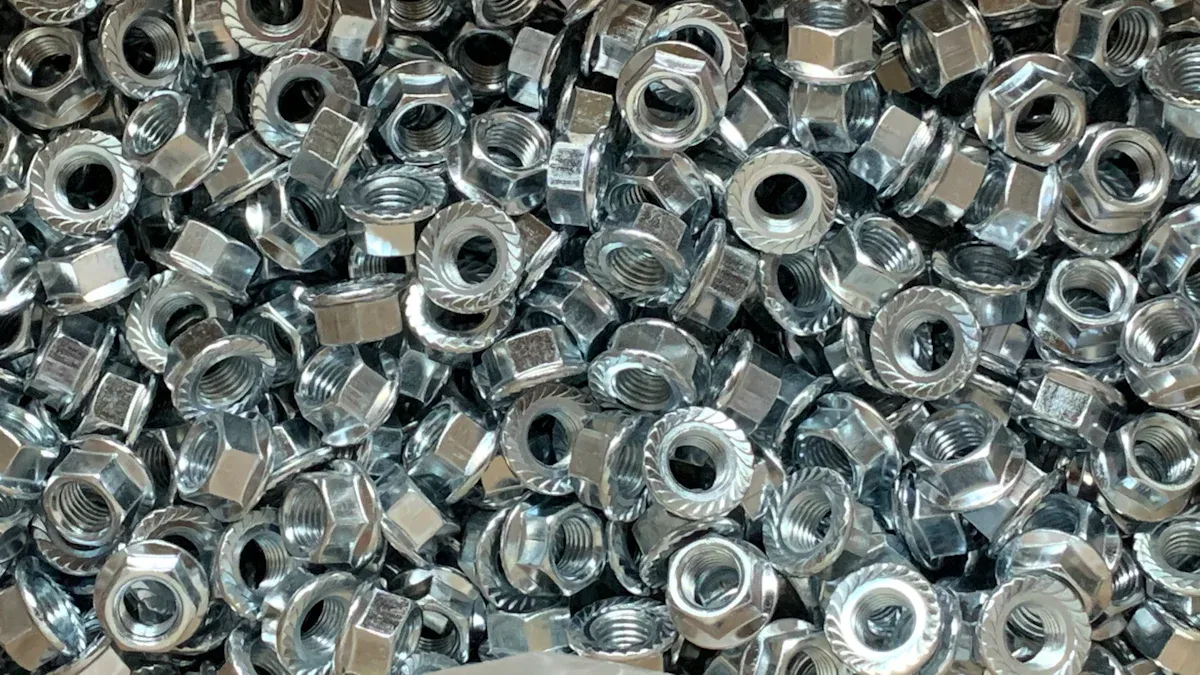
Hex nut sizes and specifications serve as critical factors in selecting the right hardware for any assembly. Users often encounter a wide range of options when searching for nuts and bolts, from standard hex nut to specialized custom fasteners. A quick inspection of the hardware reveals many types, such as:
- Flange nuts
- Jam nuts
- Lock nuts
- Wing nuts
- Tee nuts
Accurate identification ensures compatibility and safety, especially when working with a custom fasteners manufacturer. Knowledge of these specifications helps prevent costly errors and supports successful project outcomes.
Hex Nut Sizing Systems
US (Imperial) Hex Nut Sizes
Common US hex nut sizes chart
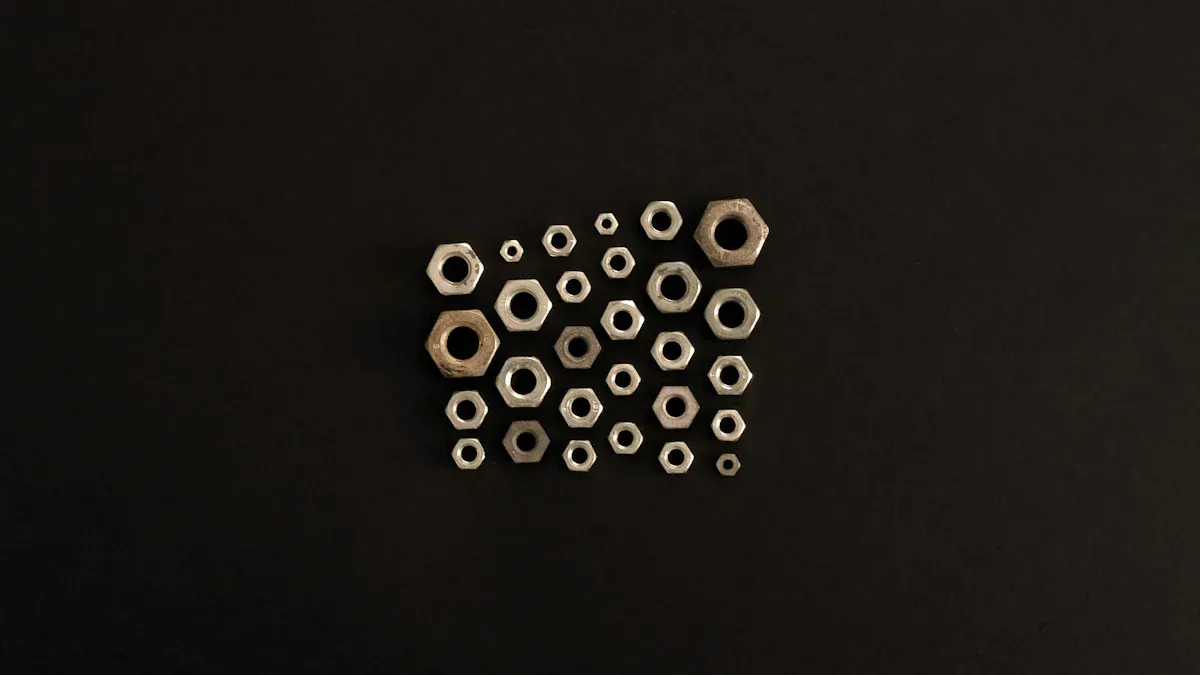
Manufacturers and engineers in the United States rely on standardized hex nut sizes for consistency and compatibility. The us hex nut chart below highlights the most frequently used sizes in manufacturing and construction. These sizes cover a wide range of applications, from delicate electronics to heavy structural connections.
| Size | Description | Common Applications |
|---|---|---|
| 1/4″ | Small size, used in electronics and machinery | Delicate projects requiring secure fit |
| 3/8″ | Medium size, used in furniture and metalwork | Bicycle parts, small brackets |
| 1/2″ | Medium size, used for larger connections | Beams and columns in construction |
| 5/8″ | Large size, for heavy-duty applications | Large machinery, bridge construction |
Tip: Always refer to a us hex nut chart when selecting hardware for critical projects. This ensures the correct fit and prevents mismatches.
How to read US hex nut dimensions
US hex nut dimensions follow the Imperial system, which measures sizes in inches. The primary measurement refers to the nominal diameter of the bolt or screw that the nut will fit. For example, a 1/2″ hex nut fits a 1/2″ diameter bolt. The width across flats (WAF) indicates the distance between two parallel sides of the nut, which determines the wrench size required. Thickness, or height, also plays a role in strength and application.
Standardization in the United States comes from several organizations. The table below outlines the main bodies responsible for defining hex nut dimensions and tolerances:
| Organization | Description |
|---|---|
| ANSI | Sets standards for hex nuts in the US, ensuring compatibility and quality. |
| ASTM | Works with ANSI to define dimensions and tolerances for hex nuts. |
| ASME | Provides specifications for various types of hex nuts through ASME B18.2.2. |
Metric Hex Nut Sizes
Common metric hex nut sizes chart
Metric hex nut sizes dominate in international and modern engineering projects. The metric hex nut chart below lists the most common sizes found in automotive, machinery, and construction applications.
| Size | Description | Common Applications |
|---|---|---|
| M3 | Small size, used in electronics and precision machinery | Delicate projects requiring secure fit |
| M4 | Small size, used in furniture assembly and metalwork | Bicycle parts, small brackets |
| M5 | Small size, similar to M4 | Furniture assembly, small projects |
| M6 | Very popular size | Automotive parts, home appliances |
| M8 | Medium size, used in heavy-duty applications | Securing metal framing in construction |
| M10 | Medium size, used for larger structural connections | Beams and columns in construction |
| M12 | Medium size, similar to M10 | Larger structural connections |
| M16 | Large size, used in heavy-duty industrial applications | Large machinery, bridge construction |
The following list summarizes the most common metric hex nut sizes in practical use:
- M3: Electronics or small precision machinery
- M4 and M5: Furniture assembly and small metalwork projects
- M6: Automotive parts and home appliances
- M8, M10, M12: Heavy-duty construction
- M16: Heavy-duty industrial applications
How to read metric hex nut dimensions
Metric hex nut dimensions use millimeters as the unit of measurement. The “M” designation indicates the nominal diameter of the bolt or screw. For example, an M8 hex nut fits an 8 mm diameter bolt. The width across flats (WAF) specifies the distance between two parallel sides, while the thickness determines the nut’s load-bearing capacity.
International standards ensure consistency in metric hex nut dimensions. The table below lists the main organizations and standards governing metric hex nuts:
| Standard Organization | Standard Name | Description |
|---|---|---|
| ISO | ISO 4032 | Specifies dimensions and mechanical properties for general engineering hex nuts. |
| ANSI | ASME B18.2.2 | Covers dimensions and tolerances for industrial hex nuts, including heavy hex and jam nuts. |
| DIN | DIN 934 | Provides specifications for metric coarse thread hex nuts commonly used in Europe. |
| ASTM | ASTM A194 | Covers heavy hex nuts for high-pressure or high-temperature service, including heat treatment and chemical composition. |
Comparing US and Metric Hex Nut Sizes
Key differences between US and metric hex nut sizes
US and metric hex nut sizing systems differ in both measurement units and designation methods. The US system uses inches and fractions, while the metric system uses millimeters and the “M” prefix. The table below compares common metric and Imperial sizes:
| Metric Sizes | Imperial Sizes |
|---|---|
| M6 | 1/4″ |
| M8 | 3/8″ |
| M10 | 1/2″ |
Metric hex nut chart and us hex nut chart both provide quick reference for matching nuts to bolts, but users must pay close attention to the measurement system to avoid errors.
When to use US vs. metric hex nuts
Engineers and technicians select between US and metric hex nut sizes based on project requirements, regional standards, and equipment specifications. US hex nuts remain common in North American construction and legacy machinery. Metric hex nuts dominate in international projects, automotive manufacturing, and modern machinery. Always match the nut to the bolt’s thread type and diameter to ensure proper fit and performance.
Note: Mixing US and metric hex nut sizes can lead to stripped threads, poor fit, and potential safety hazards. Always verify the measurement system before installation.
Understanding Hex Nut Specifications
Hex nut specifications define the essential characteristics that determine performance, compatibility, and safety in mechanical assemblies. Engineers and technicians must understand these specifications to select the right hardware for each application. The following sections explain the most critical aspects: diameter, width across flats, and hex nut thickness.
Hex Nut Diameter
Major diameter explained
The major diameter of a hex nut refers to the largest outside measurement of the internal thread. This value matches the nominal diameter of the bolt or screw that the nut will secure. For example, a nut with a major diameter of 8 mm fits an M8 bolt. Accurate measurement of the major diameter ensures proper fit and prevents thread stripping or loosening during use.
The table below summarizes common measurement methods and the tools used for each:
| Measurement Method | Tool Used |
|---|---|
| Width Across Flats (WAF) | Calipers, Micrometer |
| Width Across Corners (WAC) | Calipers, Nut-measuring gauge |
| Height (H) | Calipers, Micrometer |
| Thread Pitch | Thread pitch gauge, Calipers |
How diameter relates to bolt size
The relationship between hex nut diameter and bolt size is direct. Each nut is designed to fit a specific bolt diameter and thread pitch. Selecting the correct diameter ensures the nut threads smoothly onto the bolt and provides the necessary clamping force. The following table shows how nominal diameter and thread pitch correspond to other key dimensions:
| Nominal Diameter and Thread Pitch | Width Across Flats (Min [mm]) | Width Across Flats (Max [mm]) | Thickness (Min [mm]) | Thickness (Max [mm]) |
|---|---|---|---|---|
| M1.6 x 0.35 | 3.02 | 3.20 | 1.05 | 1.30 |
| M2 x 0.4 | 3.82 | 4.00 | 1.35 | 1.60 |
| M2.5 x 0.45 | 4.82 | 5.00 | 1.75 | 2.00 |
| M3 x 0.5 | 5.32 | 5.50 | 2.15 | 2.40 |
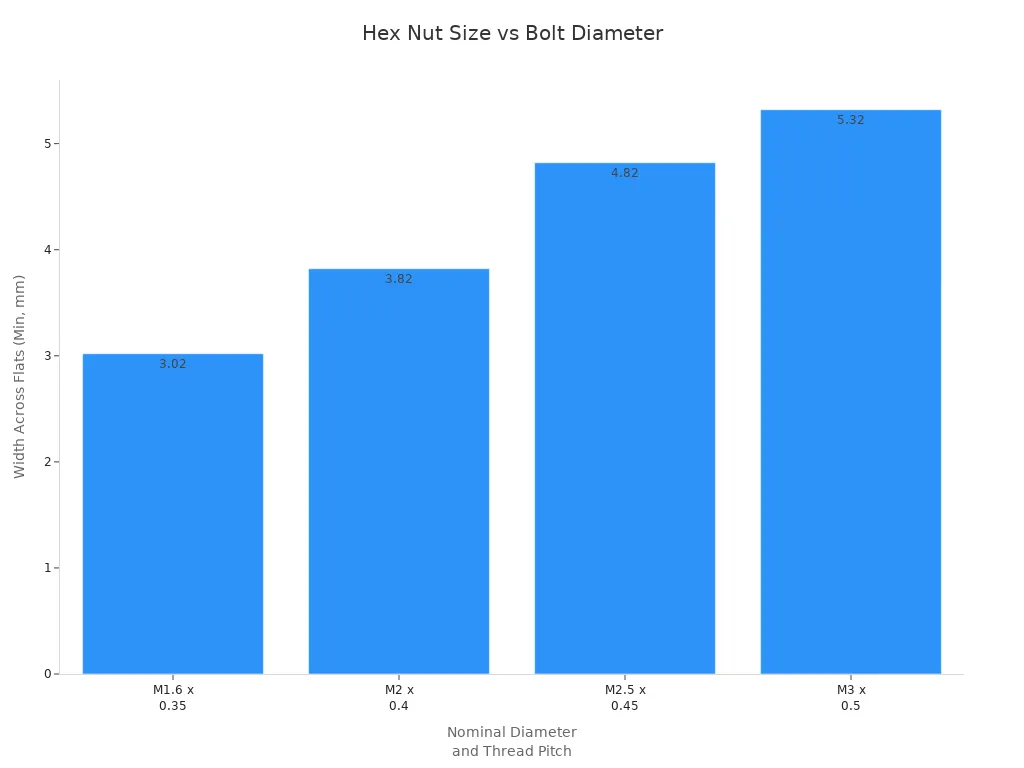
Matching the nut diameter to the bolt size is a fundamental part of meeting engineering specifications and ensuring reliable assemblies.
Width Across Flats (WAF) in Hex Nut Dimensions
What is width across flats?
Width across flats, often abbreviated as WAF, measures the distance between two parallel sides of a hex nut. This value determines the wrench or spanner size required for installation or removal. A precise WAF measurement guarantees that the tool fits securely, reducing the risk of rounding the nut or damaging the bolt.
The width across flats plays a critical role in tool compatibility. When the wrench matches the WAF, the user can apply proper torque without slippage. Using the wrong tool size can lead to ineffective tightening or loosening, which may compromise the assembly.
Measuring WAF correctly
Technicians use calipers or micrometers to measure the width across flats accurately. These tools provide precise readings, which are essential for quality control and compliance with engineering standards. The WAF value appears in technical drawings and product specifications, helping users select the correct hardware for their needs.
Tip: Always verify the width across flats before selecting a wrench or spanner. This practice prevents damage and ensures efficient assembly.
Hex Nut Thickness
Standard vs. heavy hex nut thickness
Hex nut thickness refers to the distance from one face of the nut to the opposite face. This measurement affects the nut’s strength and its ability to withstand high loads. Standard hex nuts have thinner dimensions, making them suitable for general applications. Heavy hex nuts feature increased thickness and width, which provide greater strength for demanding environments.
| Type of Nut | Thickness Characteristics |
|---|---|
| Standard Hex Nut | Thinner dimensions suitable for general applications. |
| Heavy Hex Nut | Thicker and wider dimensions designed for high-stress use. |
A heavy hex nut is a reinforced version of the standard hex nut, manufactured to thicker dimensions and increased weight according to recognized standards such as ASTM A563 Grade D, ASTM A194, or ISO 4035.
Heavy hex nuts are common in structural steel assemblies and heavy machinery. Their design reduces deformation under heavy loads and improves safety in critical applications.
Why thickness matters
Hex nut thickness directly impacts load-bearing capacity and application suitability. Thicker nuts can handle higher stress and resist deformation, making them ideal for structural frameworks and heavy-duty machinery. The table below compares the load-bearing capacity of standard and heavy hex nuts:
| Type of Hex Nut | Thickness | Load-Bearing Capacity | Application Suitability |
|---|---|---|---|
| Heavy Hex Nut | Thicker | High | Structural frameworks |
| Standard Hex Nut | Standard | Moderate | General applications |
Selecting the appropriate hex nut thickness ensures that the assembly meets safety and performance specifications. Engineers must consider the application’s load requirements and environmental conditions when choosing between standard and heavy hex nuts.
Thread Pitch and Series in Hex Nut Specifications
Coarse vs. fine threads
Thread pitch plays a critical role in hex nut performance and compatibility. Engineers classify threads as either coarse or fine, based on the distance between adjacent threads. Coarse threads feature larger spacing, which allows for quick installation and removal. Fine threads have smaller spacing, providing greater clamping force and stability in high-load or precision applications.
The table below outlines the main characteristics and typical uses for each thread type:
| Thread Type | Characteristics | Applications |
|---|---|---|
| Coarse | Quick installations, less critical applications | General use |
| Fine | Superior clamping force, stability in precision/high-load scenarios | Precision applications |
Selecting the correct thread pitch ensures that the hex nut meets the required specifications for the intended application. Coarse threads suit general construction, while fine threads excel in automotive, aerospace, and machinery assemblies.
How to identify thread pitch
Technicians measure thread pitch by counting the number of threads per unit length. In the US system, this value appears as threads per inch (TPI). In the metric system, it is the distance in millimeters between threads. Thread pitch gauges and calipers help users determine the correct value. Accurate identification prevents mismatches and ensures that the nut fits the bolt according to the required specifications.
Tip: Always verify thread pitch before assembly. This practice reduces the risk of stripped threads and improves safety.
Hex Nut Grades and Property Classes
US hex nut grades (Grade 2, 5, 8)
US hex nuts come in several grades, each with unique markings, material types, and strength characteristics. Grade 2 nuts have no markings and suit general-purpose, low-stress applications. Grade 5 nuts display three radial lines and work well in automotive and machinery settings. Grade 8 nuts, marked with six radial lines, provide the highest strength for high-stress structural applications.
| Grade | Markings | Application Type |
|---|---|---|
| Grade 2 | No markings | General purpose, low-stress applications |
| Grade 5 | 3 radial lines | Automotive and machinery |
| Grade 8 | 6 radial lines | High-stress structural applications |
| Grade | Material Type | Strength Characteristics |
|---|---|---|
| Grade 2 | Low carbon steel | General-purpose, low-stress applications |
| Grade 5 | Medium carbon steel | Medium-strength, commonly used in automotive |
| Grade 8 | Alloy steel | High-strength, essential for heavy machinery |
- Grade 2: Suitable for general-purpose applications with low stress requirements.
- Grade 5: Represents medium-strength fasteners commonly used in automotive applications.
- Grade 8: Offers the highest strength among standard grades, essential for heavy machinery and high-stress applications.
Metric property classes (8, 10, 12)
Metric hex nuts use property classes to indicate mechanical strength. Class 8.8 nuts, made from medium carbon steel, provide proof loads between 580 and 600 MPa. Class 10.9 and 12.9 nuts, manufactured from alloy steel, offer higher proof loads and tensile strengths. These specifications help engineers select the right nut for demanding environments.
| Class | Material | Proof Load (MPa) | Minimum Yield Strength (MPa) | Minimum Tensile Strength (MPa) |
|---|---|---|---|---|
| 8.8 | Medium carbon steel | 580-600 | 640-660 | 800-830 |
| 10.9 | Alloy steel | 830 | 940 | 1040 |
| 12.9 | Alloy steel | 970 | 1100 | 1220 |

How grade affects strength and application
Hex nut grade or property class directly impacts the nut’s strength and suitability for specific tasks. Lower grades or classes fit general use, while higher grades withstand greater loads and harsh conditions. Engineers must match the grade to the application’s requirements to ensure safety and compliance with specifications.
Hex Nut Materials and Finishes
Common materials (steel, stainless steel, brass)
Manufacturers produce hex nuts from a variety of materials to meet different specifications. Steel remains the most common choice due to its strength and versatility. Stainless steel resists corrosion, making it ideal for outdoor or marine environments. Brass offers excellent conductivity and corrosion resistance, often used in electrical and plumbing applications.
Plating and coatings
Plating and coatings enhance the durability and corrosion resistance of hex nuts. The table below summarizes the most effective methods and their typical uses:
| Method | Description | Applications |
|---|---|---|
| Zinc Plating | Provides basic corrosion resistance with a shiny finish; suitable for indoor or dry environments. | Indoor or dry environments |
| Hot-Dip Galvanizing | Offers robust protection for outdoor and construction applications, forming a thick zinc layer that resists rust and abrasion. | Outdoor and construction applications |
| Xylan or Dacromet Coatings | Used in marine and chemical processing industries for superior resistance to saltwater, acids, and alkalis. | Marine and chemical processing industries |
| Black Oxide | Adds mild corrosion resistance and reduces glare; often used in precision machinery and automotive components. | Precision machinery and automotive components |
Selecting the right material and finish ensures that the hex nut meets the required specifications for the environment and application. Proper selection extends the service life of the assembly and reduces maintenance costs.
Main Types of Hex Nuts and Their Specifications
Standard Hex Nuts
Features and uses
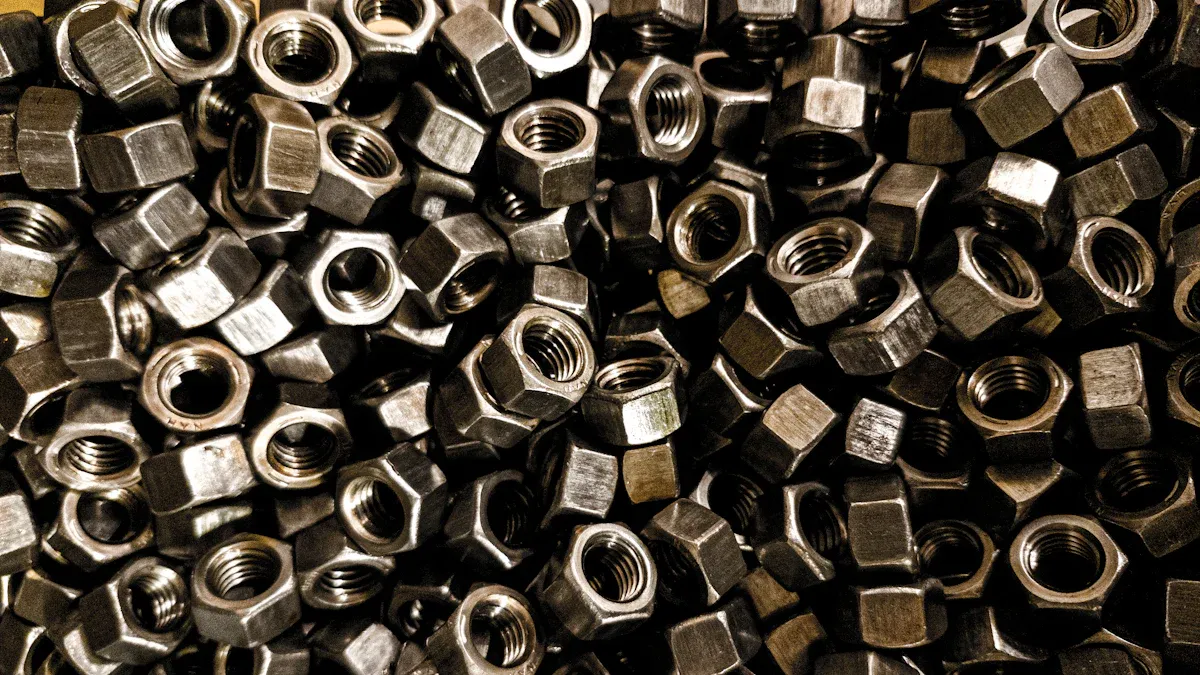
Standard hex nuts represent the most common choice in the nut types guide. Manufacturers design these nuts with six flat sides, which allow for easy engagement with wrenches and sockets. This shape provides reliable grip and torque during installation and removal. Standard hex nuts fit a wide range of applications, from household repairs to industrial machinery.
The table below outlines the defining features of standard hex nuts:
| Feature | Description |
|---|---|
| Shape | Six-sided, general purpose |
| Common Type | Most common nut type |
| Engagement | Six flat sides for wrench engagement |
| Availability | Available in all grades and materials |
| Variations | Finish nuts (thinner) and heavy hex nuts (thicker) available |
| Best For | General fastening, all applications |
Standard hex nuts come in all hex nut sizes and materials, including steel, stainless steel, and brass. Users can find these nuts in both coarse and fine thread pitches. The nut types guide recommends standard hex nuts for general fastening tasks, where strength and versatility matter most.
Tip: Standard hex nuts offer the best balance of strength, availability, and cost for most projects.
Heavy Hex Nuts
When to use heavy hex nuts
Heavy hex nuts feature thicker and wider dimensions compared to standard hex nuts. Engineers select these nuts for applications that demand higher strength and load-bearing capacity. The increased thickness helps distribute stress more evenly, which reduces the risk of deformation under heavy loads.
Heavy hex nuts work best in structural steel connections, heavy machinery, and critical infrastructure. Construction crews often use them in bridges, buildings, and equipment that must withstand vibration or dynamic forces. These nuts also provide extra thread engagement, which improves joint reliability.
Note: Heavy hex nuts require more clearance due to their larger size. Always check the available space before selecting this option.
Jam Nuts
What is a jam nut?
Jam nuts serve as a specialized option in the nut types guide. Manufacturers produce these nuts with about half the thickness of a standard hex nut. This design allows users to lock two nuts together on the same bolt, which prevents loosening from vibration or movement.
The primary uses of jam nuts include:
- Securing nuts in vibration-prone environments, often with thread-locking solutions.
- Locking a primary nut in place by tightening the jam nut against it.
- Fastening in tight spaces where a full-size nut would not fit.
The table below compares jam nuts to standard hex nuts:
| Feature | Jam Nut | Standard Hex Nut |
|---|---|---|
| Thickness | Thin (about 50% of standard nut) | Full height |
| Primary Purpose | Locking and securing | Load-bearing |
| Strength | Lower load capacity | Higher load capacity |
| Typical Use | Used with another nut | Used alone |
| Space Requirement | Minimal | More clearance needed |
Common applications for jam nuts include automotive suspension systems, industrial machinery, and electrical assemblies. Their thin profile makes them ideal for space-restricted fastening tasks.
Jam nuts do not replace standard nuts for load-bearing purposes. Always use them in combination with a primary nut for best results.
Lock Nuts
Types of lock nuts (nylon insert, all-metal)
Lock nuts play a critical role in assemblies that experience vibration or movement. These nuts feature specialized designs that prevent loosening, ensuring the integrity of the connection over time. Two main types dominate the market: nylon-insert lock nuts and all-metal lock nuts.
- Nylon-Insert Lock Nuts (Nyloc): These nuts contain a nylon ring that grips the bolt threads. The nylon insert increases friction, which prevents rotation and resists loosening from moderate vibration. This feature provides superior locking capabilities in many general-purpose applications.
- All-Metal Lock Nuts: These nuts use deformed threads or other mechanical features to create a secure fit. All-metal lock nuts excel in high-vibration environments and high-temperature applications, where nylon inserts might degrade. Their robust construction maintains locking ability without deformation.
Lock nuts come in various materials and grades, which affect their load capacity and suitability for specific environments. For example, stainless steel lock nuts resist corrosion, while alloy steel options offer higher strength.
| Type of Lock Nut | Key Features | Suitable Applications |
|---|---|---|
| Nylon-Insert Lock Nut | Nylon insert grips threads, resists vibration | Automotive, machinery, moderate vibration |
| All-Metal Lock Nut | Deformed threads, withstands high temperatures and vibration | Heavy equipment, high-temperature settings |
| Jam Nut | Thin, used with another nut for added security | General fastening |
Lock nuts provide reliable security in assemblies exposed to vibration or thermal cycling. They help prevent costly failures in automotive, industrial, and construction projects.
Flange Hex Nuts
Flange nut applications
Flange hex nuts feature a wide, integrated flange at one end. This flange acts as a built-in washer, distributing the load over a larger area. The design minimizes damage to connected surfaces and reduces the risk of the nut embedding into softer materials.
- The circular flange increases the surface area for load distribution.
- Flange nuts help maintain structural integrity under stress, especially when used with heavier construction materials.
- These nuts resist loosening from vibration, making them ideal for automotive and machinery applications.
Flange hex nuts have become increasingly popular as industries demand fasteners that can handle higher loads and protect delicate surfaces. Their use reduces the need for separate washers, streamlining assembly and improving reliability.
Flange hex nuts offer a practical solution for engineers seeking both strength and surface protection in demanding environments.
Specialized Hex Nuts
Coupling hex nuts
Coupling hex nuts connect or extend threaded rods. These nuts have a long body, typically three times the diameter of the rod, which provides ample thread engagement for secure joining. Coupling nuts see frequent use in construction, electrical installations, and machinery maintenance, where they join two rods to span greater distances or adjust assembly length.
Slotted hex nuts (castle nuts)
Slotted hex nuts, also known as castle nuts, feature slots cut into one end. These slots allow the use of a cotter pin, which passes through the nut and a drilled bolt to lock the assembly in place. This design prevents rotation and loosening, even under vibration. Castle nuts are essential in automotive suspensions, machinery pivots, and other safety-critical joints.
Cap nuts
Cap nuts, sometimes called acorn nuts, have a domed top that covers the exposed end of the bolt or stud. This feature protects threads from damage and corrosion, while also improving safety by eliminating sharp edges. Cap nuts often appear in decorative applications, playground equipment, and assemblies where aesthetics and safety matter.
| Type of Nut | Primary Function | Length | Application |
|---|---|---|---|
| Coupling Nut | Connecting or extending rods | Long (typically 3x diameter) | Joining two threaded rods together |
| Slotted Hex Nut | Securing with cotter pin | Standard | Automotive, machinery pivots |
| Cap Nut | Protecting threads and improving safety | Standard | Decorative, safety-focused assemblies |
Specialized hex nuts address unique engineering challenges, from extending threaded connections to securing critical joints and enhancing safety.
How to Select the Right Hex Nut Size and Specifications
Matching Hex Nuts to Bolts
Ensuring correct thread and size
Selecting the correct hex nut for a bolt requires attention to several key factors. Engineers and technicians follow these best practices to ensure compatibility:
- Choose the appropriate thread type. Coarse threads (UNC) allow for easier assembly and resist stripping. Fine threads (UNF) provide greater clamping force and resist vibration.
- Confirm the thread standard. Metric fasteners use designations like M6 or M8, while imperial fasteners use sizes such as 1/4″ or 5/16″.
- Verify nut dimensions. Check the width across flats, height, and hole diameter to ensure proper wrench fit and bolt engagement.
- Select the right thread fit. General-purpose applications benefit from Class 2A/2B or 6g/6H tolerances.
Technicians also measure the width across flats to determine the correct wrench or socket size. They consider height specifications, especially in restricted spaces. Matching thread pitch and internal diameter to the bolt or threaded rod prevents installation issues.
Avoiding common mismatches
Mismatches between hex nuts and bolts can lead to assembly failures. To avoid these problems, users should:
- Match hex nut and bolt materials. For example, pair stainless steel bolts with stainless steel nuts and carbon steel bolts with carbon steel nuts. This practice prevents galvanic corrosion and maintains the integrity of the connection.
- Prioritize material compatibility. Using similar materials extends the lifespan of the assembly.
- Ensure thread pitch and diameter match exactly. Even small differences can cause cross-threading or stripped threads.
Tip: Always double-check the fasteners’ specifications before installation to prevent costly errors.
Choosing the Right Grade and Material
Factors to consider (strength, corrosion, environment)
Selecting the right grade and material for hex nuts depends on the demands of the application. Engineers evaluate several factors:
- Required strength. High-stress environments, such as structural steelwork, need higher-grade fasteners.
- Corrosion resistance. Outdoor or marine environments require stainless steel or coated fasteners to prevent rust.
- Environmental exposure. Chemical processing or high-temperature settings may need specialized coatings or materials.
A table helps summarize these considerations:
| Application Environment | Recommended Material | Reason |
|---|---|---|
| Outdoor/Marine | Stainless steel | Corrosion resistance |
| High-stress/Structural | Alloy or high-grade steel | Increased strength |
| Chemical/Industrial | Coated or specialty steel | Chemical resistance |
Choosing the correct grade and material ensures the fasteners perform reliably and safely throughout their service life.
Selecting by Application
Structural vs. general use
Structural applications demand hex nuts with higher strength and durability. Heavy hex nuts and high-grade materials suit these environments. General use, such as household repairs or light machinery, allows for standard hex nuts and lower grades.
Automotive, plumbing, electrical, and more
Different industries require specific fasteners:
- Automotive: Fine-thread hex nuts resist vibration and provide secure clamping.
- Plumbing: Brass or stainless steel nuts prevent corrosion from water exposure.
- Electrical: Brass nuts offer excellent conductivity and resist oxidation.
Selecting hex nuts based on the application ensures safety, reliability, and compliance with industry standards.
Installation Best Practices for Hex Nuts
Proper tightening and torque
Correct installation of hex nuts ensures the safety and reliability of any assembly. Technicians must apply the right amount of torque to achieve optimal clamping force. Under-tightening can cause joints to loosen during operation. Over-tightening can strip threads or deform the fastener.
A torque wrench provides the most accurate method for tightening hex nuts. This tool allows users to set a specific torque value based on the nut size, grade, and application. Manufacturers often publish recommended torque values in technical datasheets. The table below shows typical torque values for common hex nut sizes:
| Hex Nut Size | Grade 5 Torque (ft-lb) | Grade 8 Torque (ft-lb) |
|---|---|---|
| 1/4″-20 | 6 | 9 |
| 3/8″-16 | 31 | 44 |
| 1/2″-13 | 75 | 110 |
| 5/8″-11 | 150 | 210 |
Tip: Always clean threads before installation. Dirt or debris can affect torque readings and lead to improper tightening.
Technicians should tighten nuts in a crisscross or star pattern when working with flanges or multiple fasteners. This method distributes the load evenly and prevents warping. They should also check torque values after initial tightening, especially in critical assemblies.
Preventing loosening and failure
Vibration, thermal cycling, and improper installation can cause hex nuts to loosen over time. Engineers use several strategies to prevent failures in bolted joints:
- Select lock nuts or use thread-locking compounds for assemblies exposed to vibration.
- Pair jam nuts with standard nuts to create a locking effect.
- Use flange nuts to increase surface area and reduce the risk of embedment in softer materials.
- Re-torque fasteners after the first period of use, especially in machinery or vehicles.
Note: Regular inspection of fastened joints helps detect early signs of loosening or wear.
Technicians should avoid mixing different grades or materials in the same assembly. This practice prevents uneven loading and corrosion. They should also replace damaged nuts or bolts immediately. Stripped threads or deformed nuts compromise the integrity of the connection.
A checklist for reliable hex nut installation includes:
- Verify nut and bolt compatibility.
- Clean and inspect all threads.
- Apply the correct torque using a calibrated wrench.
- Use locking features or compounds when necessary.
- Inspect and re-torque as part of routine maintenance.
Following these best practices ensures that hex nuts perform as intended, providing long-lasting and safe connections in any application.
Hex Nut Size and Specification Reference Charts
US hex nut sizes chart
Engineers and technicians often reference standard charts to ensure proper selection of US hex nuts. The chart below lists common US hex nut sizes, including nominal diameter, threads per inch (TPI), width across flats (WAF), and thickness. These values help users match nuts to bolts and select the correct tools for installation.
| Nominal Size | Threads Per Inch (TPI) | Width Across Flats (in) | Thickness (in) |
|---|---|---|---|
| 1/4″-20 | 20 | 7/16 | 7/32 |
| 5/16″-18 | 18 | 1/2 | 17/64 |
| 3/8″-16 | 16 | 9/16 | 21/64 |
| 7/16″-14 | 14 | 11/16 | 3/8 |
| 1/2″-13 | 13 | 3/4 | 7/16 |
| 5/8″-11 | 11 | 15/16 | 35/64 |
| 3/4″-10 | 10 | 1-1/8 | 23/32 |
| 1″-8 | 8 | 1-1/2 | 63/64 |
Tip: Always check both the nominal size and TPI before selecting a US hex nut. This practice prevents mismatches and ensures a secure fit.
Metric hex nut sizes chart
Metric hex nuts follow international standards. The chart below provides the most common metric sizes, including nominal diameter, thread pitch, width across flats (WAF), and thickness. These dimensions help users identify the correct nut for metric bolts and ensure compliance with ISO and DIN standards.
| Size (M) | Thread Pitch (mm) | Width Across Flats (mm) | Thickness (mm) |
|---|---|---|---|
| M3 | 0.5 | 5.5 | 2.4 |
| M4 | 0.7 | 7 | 3.2 |
| M5 | 0.8 | 8 | 4.7 |
| M6 | 1.0 | 10 | 5.2 |
| M8 | 1.25 | 13 | 6.8 |
| M10 | 1.5 | 17 | 8.4 |
| M12 | 1.75 | 19 | 10.8 |
| M16 | 2.0 | 24 | 14.8 |
Note: Metric hex nuts use the “M” designation to indicate nominal diameter. Always confirm both diameter and pitch for accurate selection.
Grade and property class comparison table
Hex nut strength depends on grade (US) or property class (metric). The table below compares common US grades and metric property classes, including material, proof load, and typical applications. This reference helps users select the right nut for the required strength and environment.
| US Grade | Metric Class | Material Type | Proof Load (MPa) | Typical Application |
|---|---|---|---|---|
| Grade 2 | Class 5 | Low carbon steel | 400 | General purpose, light duty |
| Grade 5 | Class 8 | Medium carbon steel | 600 | Automotive, machinery |
| Grade 8 | Class 10 | Alloy steel | 830 | Structural, heavy machinery |
| — | Class 12 | Alloy steel | 970 | High-stress, critical joints |
- Grade 2 and Class 5 suit low-stress, general applications.
- Grade 5 and Class 8 provide moderate strength for automotive and equipment use.
- Grade 8 and Classes 10/12 deliver high strength for demanding environments.
Selecting the correct grade or property class ensures safety and compliance with engineering standards.
Common Mistakes and Troubleshooting Hex Nut Specifications
Misreading hex nut size or thread pitch
Many technicians and engineers encounter issues when they misread hex nut sizes or thread pitches. Selecting the wrong size nut often leads to improper threading and a loose connection. This mistake can compromise the stability of the entire assembly. For example, a nut that appears to fit may actually have a slightly different diameter or thread pitch, resulting in a weak joint.
Mixing up thread pitches remains a frequent problem. A coarse-thread nut will not properly engage with a fine-thread bolt. This mismatch can strip threads and weaken the connection. To avoid these errors, professionals always verify both the diameter and thread pitch before installation. They use thread gauges and calipers to confirm specifications. Reference charts also help ensure accuracy.
Tip: Always double-check the nut and bolt specifications before assembly. This practice prevents costly rework and potential safety hazards.
Using the wrong grade or material
Choosing the wrong grade or material for a hex nut can lead to premature failure. Lower-grade nuts may not withstand the required load, especially in structural or high-stress applications. For instance, using a Grade 2 nut in a heavy machinery assembly can result in deformation or breakage under stress.
Material selection also plays a critical role. Stainless steel nuts resist corrosion, while brass nuts offer electrical conductivity. Using incompatible materials can cause galvanic corrosion or reduce the lifespan of the assembly. Technicians match the nut grade and material to the application’s demands. They consult engineering standards and manufacturer recommendations to ensure proper selection.
A quick reference table helps clarify the importance of matching grade and material:
| Application | Recommended Grade/Material |
|---|---|
| Structural Steel | Grade 8 / Alloy Steel |
| Outdoor/Marine | Stainless Steel |
| Electrical | Brass |
Note: Always select hex nuts that meet or exceed the strength and environmental requirements of the project.
Stripped threads and how to avoid them
Stripped threads represent a common failure in hex nut assemblies. This issue often results from over-tightening, which places excessive stress on the threads. When threads strip, the nut loses its ability to hold tension, leading to joint failure.
Mixing thread pitches or using the wrong size nut also causes thread damage. Technicians avoid this by carefully matching nuts and bolts and using the correct tools. They apply torque according to manufacturer guidelines, using a calibrated torque wrench when possible.
A few best practices help prevent stripped threads:
- Confirm thread pitch and diameter before assembly.
- Use proper installation tools and techniques.
- Avoid over-tightening by following recommended torque values.
- Inspect threads for damage before reuse.
Callout: Neglecting to use a washer can result in uneven pressure distribution, causing the joint to loosen or fail over time. Washers help protect both the nut and the assembly.
By following these guidelines, engineers and technicians maintain the integrity and safety of their assemblies.
- Engineers and technicians benefit from understanding hex nut sizes and specifications.
- Selecting the correct sizes ensures safety and reliability in every project.
- Matching the right hex nut to each application prevents costly errors and improves performance.
Readers can access downloadable hex nut size charts and further resources from reputable industry websites and manufacturers.
FAQ
What does “M” mean in metric hex nut sizes?
The “M” stands for metric. It indicates the nominal diameter of the nut in millimeters. For example, M8 fits an 8 mm bolt.
How can someone measure a hex nut accurately?
A technician uses a caliper or micrometer to measure the width across flats and the thickness. These tools provide precise readings for proper identification.
Can US and metric hex nuts be used interchangeably?
No. US and metric hex nuts have different thread pitches and diameters. Mixing them can cause stripped threads or loose connections.
Why do some hex nuts have nylon inserts?
Nylon inserts prevent loosening from vibration. They increase friction on the bolt threads, making the connection more secure.
What grade hex nut should someone use for structural steel?
Grade 8 (US) or Class 10 (metric) hex nuts provide the strength needed for structural steel applications. These grades resist high loads and stress.
How does a flange nut differ from a standard hex nut?
A flange nut has a built-in washer-like base. This design spreads the load over a larger area and protects surfaces from damage.
Are stainless steel hex nuts rustproof?
Stainless steel hex nuts resist rust and corrosion. They work well in outdoor, marine, or chemical environments.