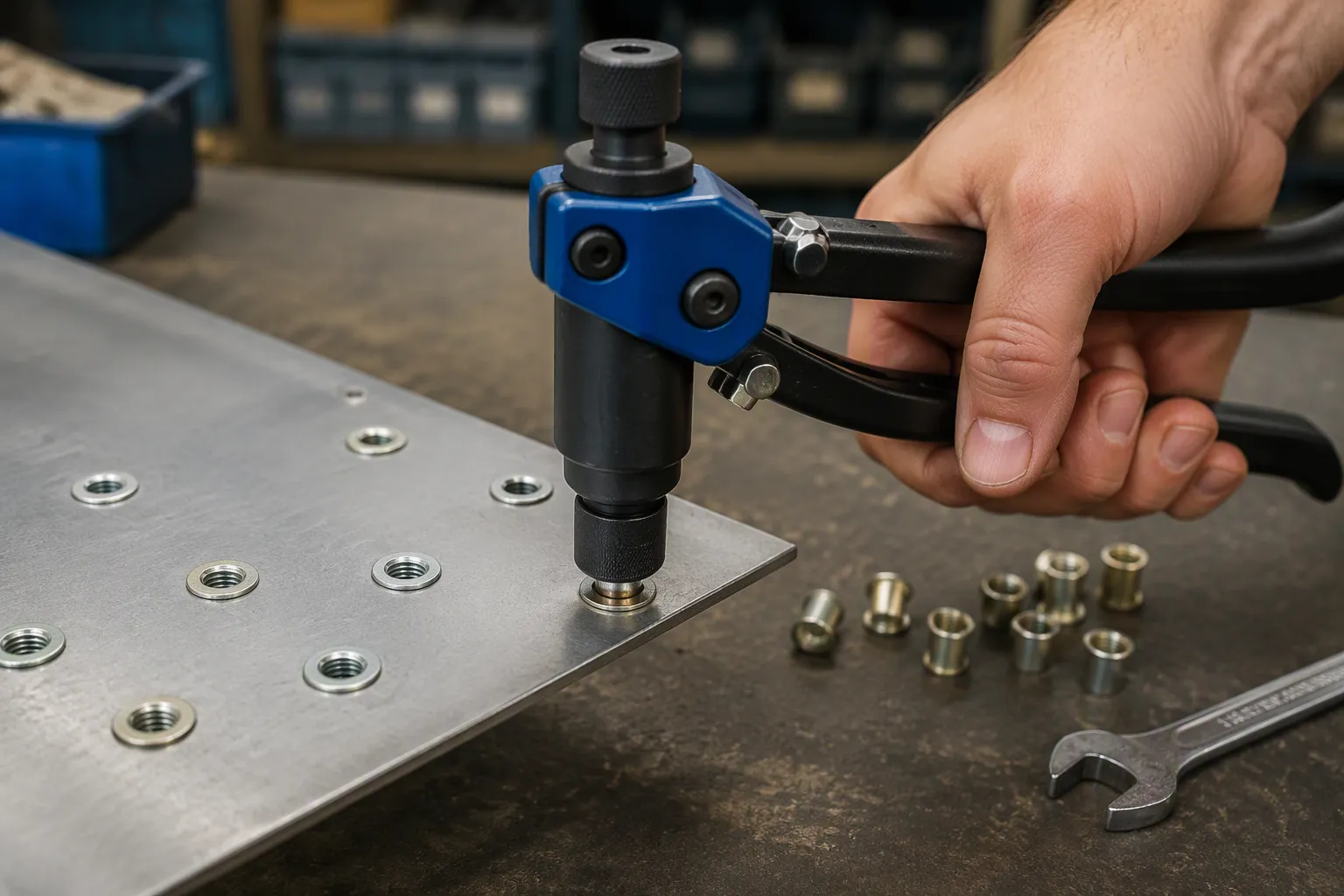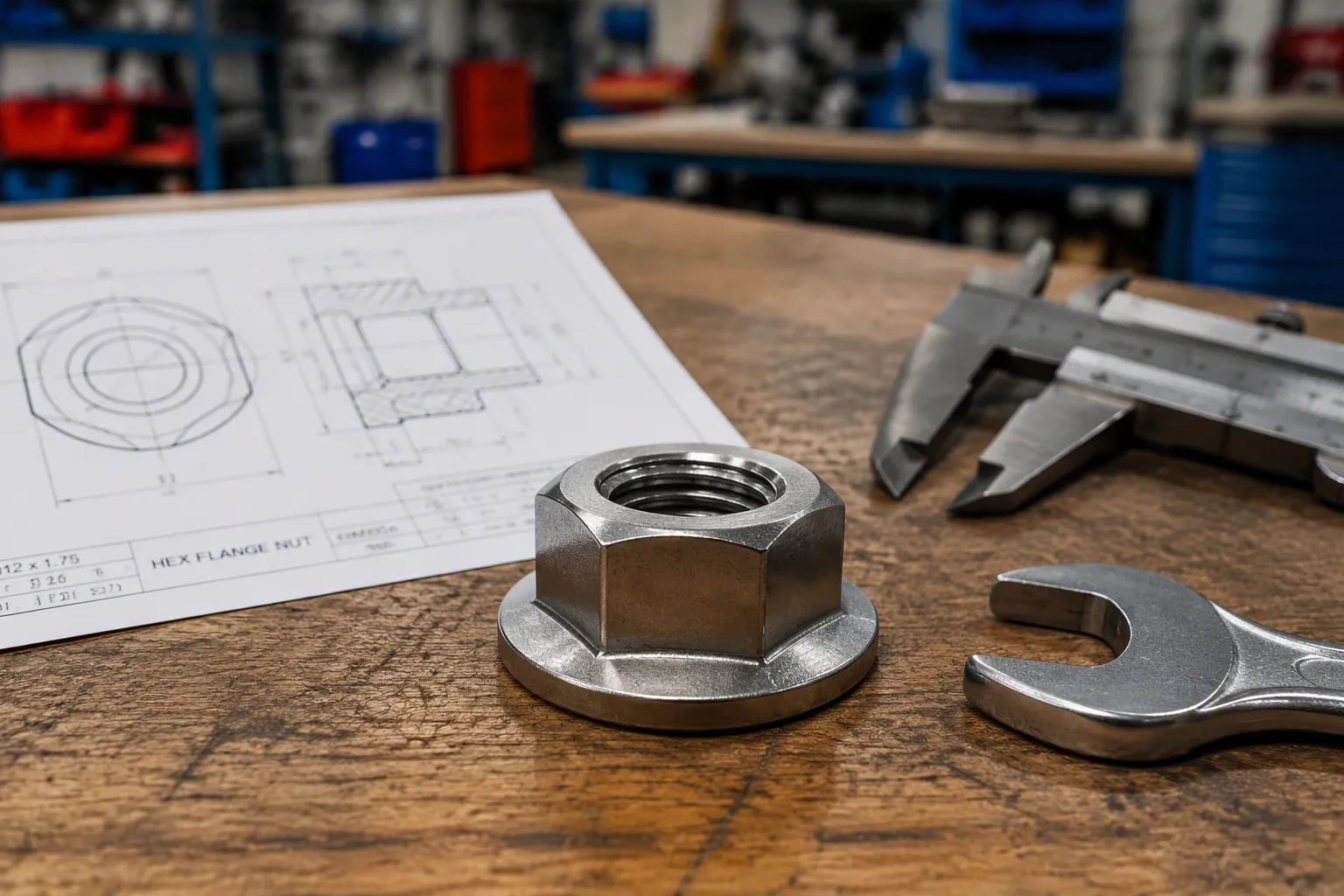
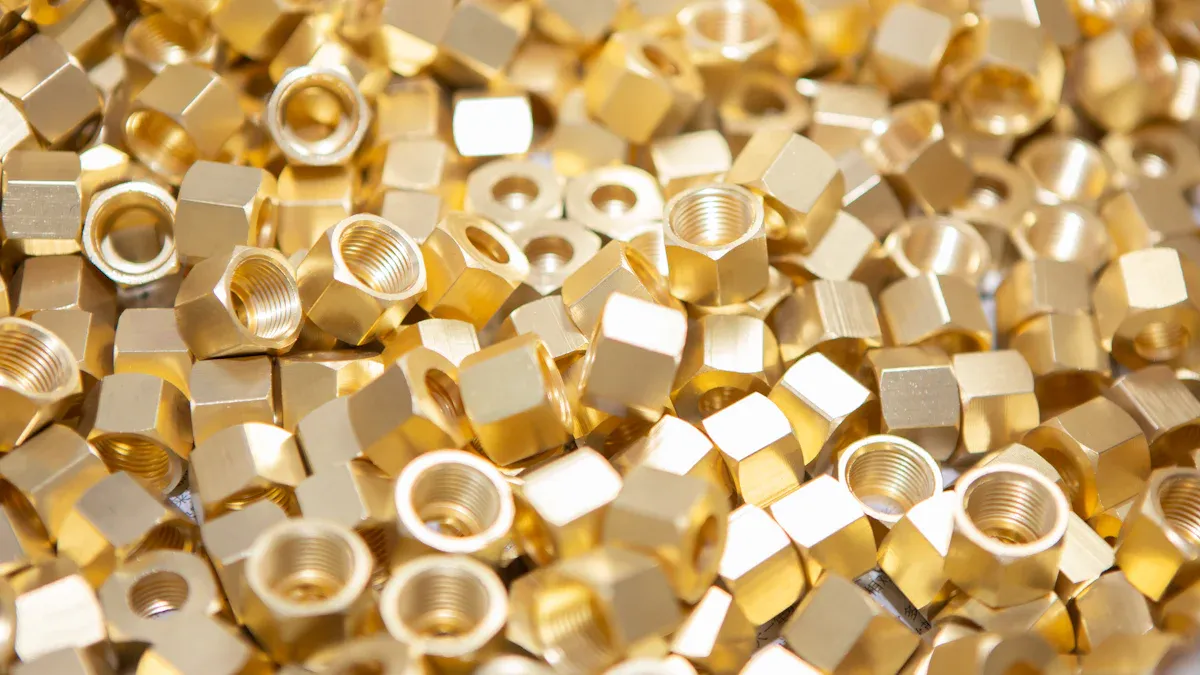
Hex nuts play a vital role in industrial assemblies, connecting nuts and bolts to ensure structural integrity. The selection of different types and materials affects size, strength, and suitability for various applications. Industry data shows a wide range of market forecasts for global industrial fasteners, including custom fasteners, highlighting the importance of choosing the right hex nut for performance and safety. A custom fasteners manufacturer must consider factors such as load requirements and environmental conditions. The choice of material impacts durability and corrosion resistance, which remains critical for long-term reliability.
| Nut Type | Performance Metric | Impact on Safety and Performance |
|---|---|---|
| Hex Nuts | Can handle shear forces up to 120,000 psi | Essential for stability under pressure in automotive applications |
What Is a Hex Nut?
Basic Definition
A hex nut serves as a fundamental component in mechanical fastening systems. Engineers recognize this fastener by its six-sided shape and central hole. The hexagonal design allows for easy gripping with standard tools, such as wrenches and sockets. This feature ensures quick installation and removal, even in tight spaces.
- Hex nuts feature precision-engineered internal threading. This threading matches specific bolt patterns, creating a secure and reliable connection.
- The six-sided profile provides multiple points of contact for tools, reducing the risk of rounding off corners during tightening.
- Hex nuts deliver strong clamping force when paired with compatible bolts.
Technical standards define a hex nut as a six-sided, internally threaded fastener. The thickness of a standard hex nut typically measures 0.875 times the nominal nut size (D). The width across the flats usually equals 1.5 times the nominal nut size (D). These proportions ensure compatibility with a wide range of bolts and washers.
Tip: The six-sided shape of a hex nut is not just for aesthetics. It maximizes tool accessibility and torque application, making it the preferred choice for most industrial and construction projects.
Common Uses
Hex nuts appear in nearly every industry that relies on mechanical assemblies. Their versatility and strength make them indispensable for both heavy-duty and everyday applications.
| Industry | Common Uses |
|---|---|
| Construction & Structural | Used in steel frameworks, scaffolding, beams, and bridges for structural integrity. |
| Automotive | Holds together components like chassis frames, engine blocks, and brake assemblies. |
| Oil & Gas | Endures extreme conditions in refineries and offshore platforms, used in pipelines and pressure vessels. |
| Marine | Provides corrosion protection in ship decks and underwater pipelines. |
| Aerospace & Defense | Used in aircraft structures and engines, meeting strict safety standards. |
| Renewable Energy | Secures solar panel mounts and wind turbine towers against outdoor conditions. |
| Machinery Manufacturing | Found in industrial machinery like motors and pumps, designed for high tensile strength. |
| Railways & Transportation | Used in rail tracks and signal poles, ensuring rust-free performance. |
| Electrical & Telecom | Secures electrical enclosures and junction boxes, ensuring safety in installations. |
| Domestic and DIY | Found in furniture and general home maintenance tools, meeting IS standards for durability. |
Hex nuts support critical infrastructure in construction, automotive, and energy sectors. They also provide reliable fastening solutions for household projects and DIY repairs. Their widespread use stems from their ability to maintain joint integrity under vibration, load, and environmental stress.
Note: Selecting the correct hex nut type and material ensures optimal performance and safety, regardless of the application.
Exploring Different Types of Hex Nuts
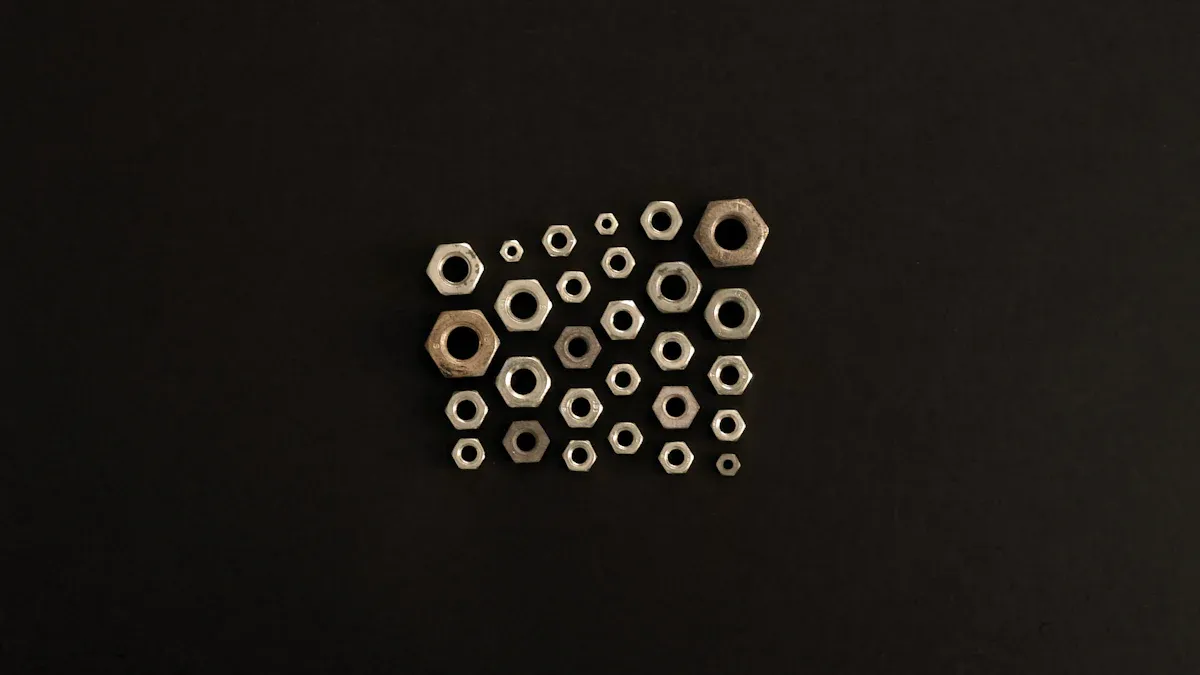
Hex nuts come in many forms, each designed for specific engineering needs. Understanding the different types helps engineers and technicians select the right fastener for every application.
Finished Hex Nuts
Dimensions and Profile
Finished hex nuts represent the most common choice among the different types of hex nuts. They feature a six-sided shape with a compact, lightweight design. The standard thickness and width across flats allow for easy installation with wrenches or sockets. Finished hex nuts follow general industry standards, such as SAE J995, which ensures compatibility with a wide range of bolts and washers.
Typical Applications
Manufacturers use finished hex nuts in automotive assemblies, light industrial equipment, and structural frameworks. These nuts suit general-purpose fastening tasks, making them ideal for machinery, furniture, and household repairs. Finished hex nuts also appear in electrical enclosures and renewable energy systems. Their versatility supports both indoor and outdoor projects.
Strength and Standards
Finished hex nuts provide adequate strength for most general applications. They meet standard proof load requirements and offer reliable performance under moderate stress. Industry standards, including SAE J995, govern their dimensions and mechanical properties. Finished hex nuts are widely available and cost-effective, making them a preferred option for many projects.
Finished hex nuts deliver a balance of strength, accessibility, and affordability. Their widespread use in different types of assemblies highlights their importance in the fastener industry.
Heavy Hex Nuts
Dimensions and Profile
Heavy hex nuts differ from finished hex nuts by their larger size and increased thickness. The width across flats measures 1/8 inch larger than standard hex nuts. This robust profile allows heavy hex nuts to handle higher loads and resist deformation under stress.
Typical Applications
Engineers specify heavy hex nuts for structural steel connections, flange assemblies, and heavy machinery. These nuts excel in environments where high strength and durability are critical. Heavy hex nuts often appear in construction, oil and gas, and industrial equipment.
Strength and Standards
Heavy hex nuts offer higher proof load strength compared to finished hex nuts. They adhere to stricter standards, such as ASTM A194, which ensures performance in demanding conditions. The increased material volume provides greater resistance to vibration and loosening.
| Feature | Finished Hex Nuts | Heavy Hex Nuts |
|---|---|---|
| Size and Dimensions | Smaller and lighter, compact design | Larger and thicker, higher load capacity |
| Strength | Adequate for general-purpose uses | Designed for structural, high-stress applications |
| Applications | Suitable for a broad range, including automotive and light industrial | Used in construction and heavy machinery |
| Material Availability | More readily available, lower costs | Available in various materials, but often more expensive |
| Standards and Specifications | Follows general standards like SAE J995 | Adheres to stricter standards like ASTM A194 |
Other Hex Nut Types
Jam Nuts
Jam nuts have a thin profile and work as a locknut when paired with a standard nut. They save space and prevent loosening in vibrating assemblies.
Flange Hex Nuts
Flange hex nuts feature a wide flange at one end. This design distributes the load over a larger area, reducing the need for a separate washer. Flange hex nuts are common in automotive engines and electrical housings.
Lock Nuts
Lock nuts include features such as nylon inserts or deformed threads. These elements prevent loosening from vibration. Nylock hex nuts, for example, use a nylon insert to maintain tension in automotive and aerospace components.
Specialty Hex Nuts
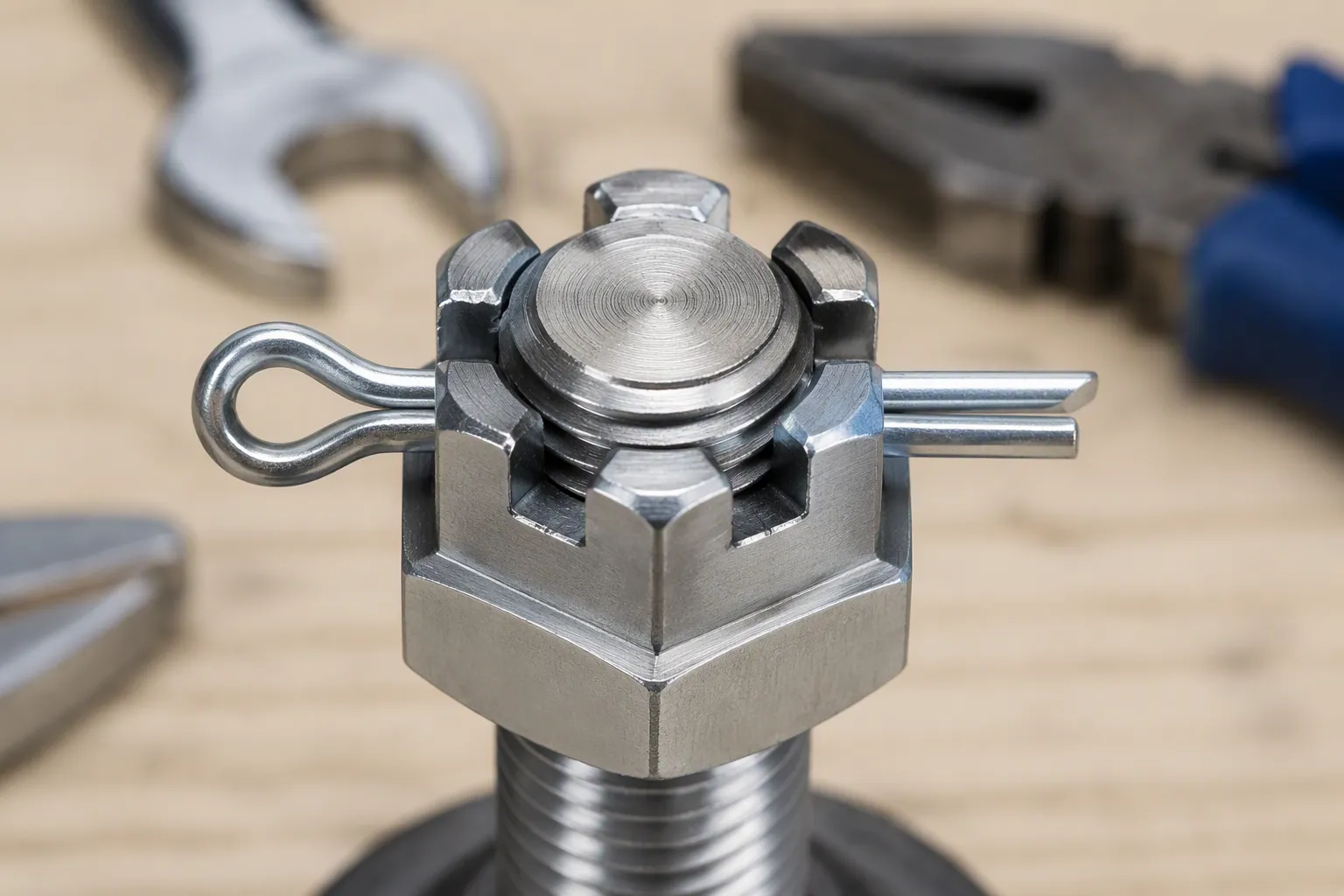
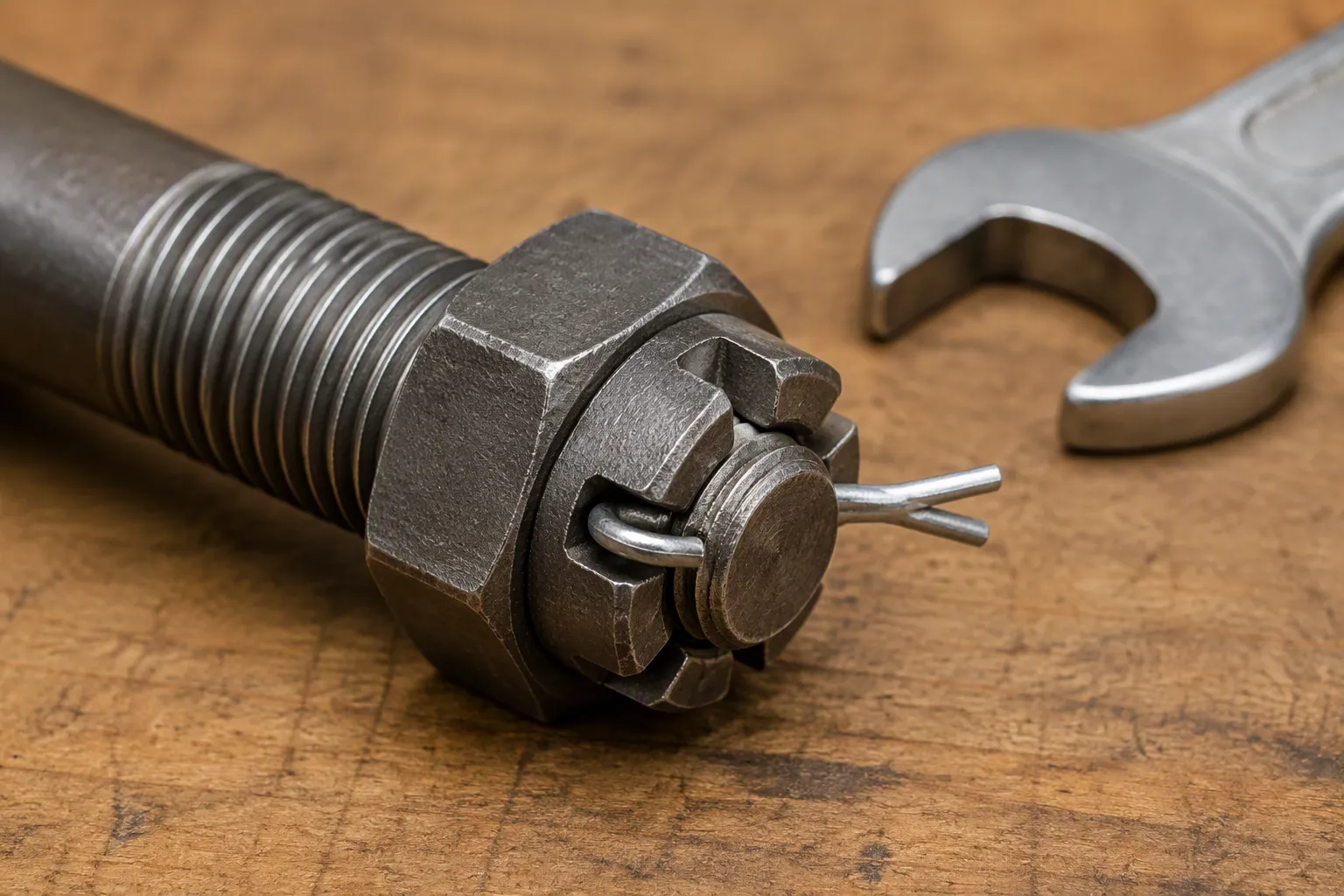
Specialty hex nuts address unique requirements. Acorn (cap) nuts protect bolt threads and provide a finished appearance. Coupling nuts join two threaded rods for extended connections. T-nuts embed into wood for strong inserts. Wing nuts allow for hand tightening, while castle nuts use a cotter pin for security in critical assemblies.
| Type of Hex Nut | Key Features | Common Applications |
|---|---|---|
| Standard Hex Nuts | Six-sided shape, general-purpose fastening | Structural assemblies, automotive components |
| Heavy Hex Nuts | Thicker body, high load capacity | Flange connections, industrial equipment |
| Nylock Hex Nuts | Nylon insert for anti-vibration | Automotive assemblies, aerospace components |
| Flange Hex Nuts | Wide flange for load distribution | Automotive engines, electrical housings |
| Lock Hex Nuts | Inbuilt lock to prevent slackness | Construction machinery, heavy-duty tools |
Selecting the right hex nut from the different types ensures safety, reliability, and long-term performance in every application.
Comparing Finished Hex Nuts vs. Heavy Hex Nuts
Size and Dimension Differences
Finished hex nuts and heavy hex nuts differ significantly in their physical characteristics. Finished hex nuts feature a compact, lightweight design. Their reduced thickness and smaller width across the flats make them suitable for general-purpose applications where space and weight matter. Heavy hex nuts, on the other hand, have a larger and thicker profile. The increased width across the flats and added material provide extra strength and durability, especially in demanding environments.
| Type | Size & Dimensions |
|---|---|
| Finished Hex Nuts | Smaller, lighter, compact design with reduced thickness and smaller across-the-flats dimension. Suitable for general-purpose applications. |
| Heavy Hex Nuts | Larger, thicker, wider across-the-flats dimension, designed to withstand higher torque stresses and greater loads. Provides extra strength and durability. |
Note: The larger size of heavy hex nuts allows them to handle higher torque during installation, which helps prevent rounding or stripping under stress.
Strength and Load Capacity
Strength and load-bearing capacity set these two nut types apart. Finished hex nuts meet the needs of most standard fastening tasks. They provide reliable performance in moderate load situations, such as machinery, furniture, and automotive assemblies. Heavy hex nuts excel in high-stress environments. Their robust construction enables them to withstand greater forces and resist deformation under heavy loads.
Engineers often select heavy hex nuts for structural steel connections, flange assemblies, and heavy machinery. These nuts maintain joint integrity even when exposed to vibration, impact, or extreme pressure. The increased material volume in heavy hex nuts directly contributes to their superior load-bearing capacity, making them the preferred choice for critical applications in construction and industrial settings.
- Finished hex nuts: Suitable for moderate loads and general-purpose fastening.
- Heavy hex nuts: Designed for high-strength, load-critical applications.
Standards and Specifications
Industry standards ensure that both finished and heavy hex nuts meet strict requirements for safety and performance. Finished hex nuts typically follow standards such as SAE J995, which define their dimensions, mechanical properties, and material composition. Heavy hex nuts adhere to more demanding specifications, including ASTM A194, which covers higher proof load stress and material quality for use in severe environments.
| Property | Specification |
|---|---|
| Diameter | 1/4″ thru 4″ |
| Proof Load Stress (Non-Zinc-Coated) | 100 ksi |
| Proof Load Stress (Zinc-Coated) | 75 ksi |
| Core Hardness (Rockwell) | B68 (Min) / C32 (Max) |
| Carbon Content | 0.55% max |
| Manganese Content | – |
| Phosphorus Content | 0.12% |
| Sulfur Content | 0.15% (0.23% max with approval) |
Engineers should always verify that the selected hex nut meets the relevant standards for their application. Adhering to these specifications ensures consistent quality, safety, and performance in every project.
Application Suitability
Engineers and technicians must evaluate the suitability of hex nut types based on the demands of each application. Finished hex nuts and heavy hex nuts serve distinct roles in mechanical assemblies, and their selection impacts safety, performance, and longevity.
Finished hex nuts excel in environments where space, weight, and ease of installation matter. Their compact profile allows for use in assemblies with limited clearance or where protrusion must be minimized. Common applications include:
- Automotive and transportation systems, such as brake assemblies, engine components, and suspension systems, where vibration resistance remains essential.
- Manufacturing machinery, especially in adjustable components or locking mechanisms on conveyor systems.
- Electrical systems, where they secure threaded connectors and conduits in control panels and junction boxes.
- Furniture and fixtures, particularly in knock-down or modular designs that require a slim fastener profile.
- Aerospace and defense components, where weight reduction and vibration-resistant fastening are critical under extreme conditions.
These scenarios benefit from the versatility and accessibility of finished hex nuts. Their design supports frequent assembly and disassembly, making them ideal for maintenance-intensive environments.
In contrast, heavy hex nuts provide enhanced strength and durability for demanding structural applications. Their larger bearing surface distributes load more effectively, which improves joint performance and reduces the risk of localized stress failures. Engineers specify heavy hex nuts when:
- Load distribution is critical to the integrity of the assembly.
- Structural integrity must be maintained under high stress or vibration.
- Larger bearing surfaces are required to enhance joint reliability.
Construction projects, industrial equipment, and flange connections often rely on heavy hex nuts to ensure robust performance. These nuts withstand higher torque during installation and resist deformation under heavy loads, making them indispensable for critical infrastructure and heavy machinery.
Selecting the appropriate hex nut type ensures that each assembly meets its intended performance and safety requirements. Proper matching of nut type to application prevents premature failure and supports long-term reliability.
Materials Used for Hex Nuts
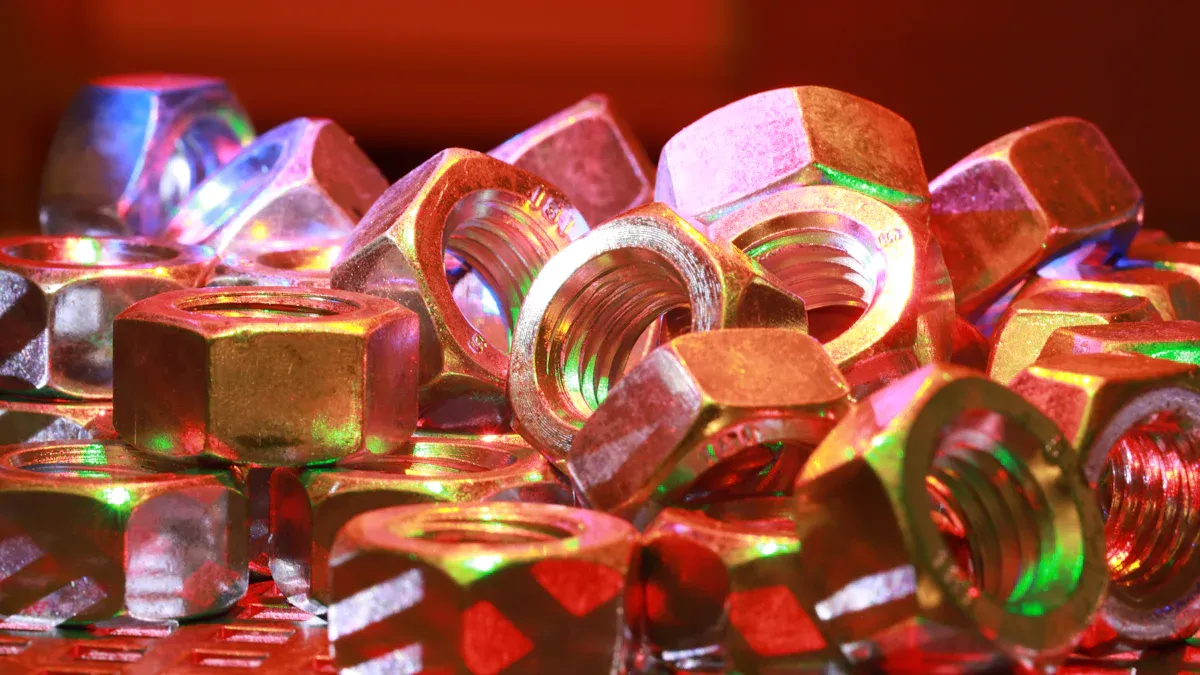
Hex nuts rely on a variety of materials to deliver performance, durability, and corrosion resistance. Engineers select materials based on application requirements, environmental conditions, and industry standards. The most commonly used materials include steel, stainless steel, brass, bronze, aluminum, and titanium. Each material offers unique properties and advantages.
| Material Type | Description | Common Applications |
|---|---|---|
| Steel | Versatile and cost-effective, offers strength and durability. | Construction, machinery, automotive |
| Stainless Steel | Corrosion-resistant, contains chromium for protection. | Food processing, chemical, marine industries |
| Brass | Alloy of copper and zinc, known for corrosion resistance and conductivity. | Electrical, plumbing systems, decorative |
| Aluminum | Lightweight and corrosion-resistant, suitable for low-stress applications. | Aerospace, automotive, marine industries |
| Titanium | High strength-to-weight ratio, corrosion-resistant, used in demanding fields. | Aerospace, medical, high-end automotive |
| Other Materials | Includes nylon, bronze, and cast iron for specific applications. | Electronics, plumbing, general-purpose |
Carbon Steel
Grades and Properties
Carbon steel remains the most popular choice for hex nuts due to its strength and affordability. Manufacturers produce hex nuts in several grades, each offering specific mechanical properties. Grade 2H nuts use medium carbon steel and undergo quenching and tempering to enhance strength. These nuts typically feature UNC or UNF threads. The proof load stress reaches 175,000 psi, and core hardness ranges from Rockwell C24 to C35. Tempering occurs at a minimum temperature of 850°F (455°C).
| Property | Value |
|---|---|
| Proof Load Stress | 175,000 psi |
| Core Hardness | Rockwell C24 to C35 |
| Tempering Temperature | Minimum 850°F (455°C) |
Engineers select grades based on load requirements and environmental factors. Higher grades provide increased strength and durability for demanding applications.
Pros and Cons
Carbon steel hex nuts offer several advantages:
- High strength and durability
- Cost-effective production
- Wide availability in multiple grades
However, carbon steel materials lack natural corrosion resistance. They require protective coatings or finishes for use in harsh environments. Lower grades may not withstand extreme conditions.
Carbon steel hex nuts suit construction, automotive, and machinery applications where strength matters more than corrosion resistance.
Stainless Steel
Grades and Corrosion Resistance
Stainless steel materials provide excellent corrosion resistance. The most common grades include 304 and 316. Grade 304 offers general atmospheric corrosion resistance but remains vulnerable to pitting in high-chloride environments. Grade 316 contains 2-3% molybdenum, which enhances resistance to chloride-driven pitting and crevice corrosion. This grade performs well in marine and chemical applications.
| Stainless Steel Grade | Molybdenum Content | Corrosion Resistance Characteristics |
|---|---|---|
| 304 | 0% | Susceptible to pitting and crevice corrosion in saline environments |
| 316 | 2-3% | Enhanced resistance to chloride-driven pitting and crevice corrosion, suitable for marine and chemical applications |
Engineers choose grades based on exposure to moisture, chemicals, and saltwater. Higher grades deliver superior performance in aggressive environments.
Pros and Cons
Stainless steel hex nuts offer:
- Outstanding corrosion resistance
- Attractive appearance
- Availability in multiple grades
Drawbacks include higher cost compared to carbon steel materials and reduced strength in some grades. Stainless steel grades may not match the tensile strength of high-grade carbon steel.
Stainless steel hex nuts excel in food processing, marine, and chemical industries where corrosion resistance is essential.
Brass and Bronze
Properties and Applications
Brass and bronze materials provide unique benefits for hex nuts. Brass, an alloy of copper and zinc, offers corrosion resistance and conductivity. Bronze, an alloy of copper and tin, delivers hardness and durability. Both materials resist galling and remain non-magnetic. Engineers use brass and bronze hex nuts in electrical, plumbing, and decorative applications.
Pros and Cons
| Material | Advantages | Disadvantages |
|---|---|---|
| Brass | Good workability and machinability |
Good corrosion resistance
Galling resistance
Cost-effective
Non-magnetic
Aesthetic appeal | Softness compared to steel and bronze
Vulnerable to ammonia and certain alkalis and acids |
| Bronze | Hardness and durability
Good corrosion resistance
Galling resistance
Excellent workability
Non-sparking and non-magnetic
Good conductivity
Aesthetic appeal | Vulnerable to ammonia and certain alkalis and acids |
Brass hex nuts provide cost-effective solutions for low-stress applications. Bronze hex nuts deliver greater hardness and durability. Both materials suit environments where conductivity and corrosion resistance matter.
Engineers select brass and bronze hex nuts for specialized applications requiring non-magnetic properties and aesthetic appeal.
Exotic Alloys
Alloy Steel
Alloy steel hex nuts offer enhanced mechanical properties compared to standard carbon steel. Manufacturers add elements such as chromium, molybdenum, or nickel to improve strength, toughness, and wear resistance. These alloys perform well in high-stress environments, including heavy machinery and structural applications. Engineers often select alloy steel hex nuts for their ability to maintain integrity under repeated loading and vibration. The increased hardness and fatigue resistance make them suitable for critical connections in construction and industrial equipment.
Titanium
Titanium hex nuts stand out for their exceptional strength-to-weight ratio. This material weighs about half as much as steel but provides comparable strength. Titanium alloys resist corrosion in both oxidizing and non-oxidizing environments. They maintain stability at temperatures ranging from cryogenic levels up to 2200°F (982°C). These properties make titanium hex nuts ideal for aerospace, marine, and chemical processing industries. Their non-magnetic nature and biocompatibility also support use in medical devices and sensitive electronic assemblies.
Inconel and Other High-Performance Alloys
Inconel and similar high-performance alloys deliver outstanding performance in extreme conditions. Inconel, a nickel-chromium-based alloy, resists oxidation and maintains mechanical strength at elevated temperatures. These alloys withstand severe corrosive environments, including chemical plants and offshore platforms. Hex nuts made from Inconel and related alloys resist loosening from vibrations and torque. They are available in both hexagonal and 12-point configurations, offering flexibility for specialized applications.
| Property | Description |
|---|---|
| Corrosion Resistance | High protection against corrosion fatigue in harsh environments |
| Temperature Stability | Serviceable from cryogenic to 2200°F (982°C) |
| Mechanical Strength | Maintains high strength at elevated temperatures and under severe conditions |
Benefits and Use Cases
Exotic alloys provide several advantages for hex nuts:
- High resistance to corrosion and chemical attack
- Stability across a wide temperature range
- Superior mechanical strength for demanding applications
- Reduced risk of loosening under vibration
Engineers rely on these alloys in industries such as aerospace, oil and gas, and power generation. They choose these materials when standard options cannot meet the requirements for safety and durability.
Coatings and Finishes
Zinc Plating
Zinc plating adds a thin layer of zinc to the surface of hex nuts. This coating protects the underlying metal from corrosion by acting as a sacrificial barrier. Zinc-plated hex nuts perform well in indoor environments and moderate outdoor conditions. Even if the coating gets scratched, zinc continues to slow the spread of corrosion. This finish offers a cost-effective way to extend the service life of steel fasteners.
Hot-Dip Galvanizing
Hot-dip galvanizing involves immersing hex nuts in molten zinc. This process creates a thicker, more durable coating compared to standard zinc plating. Galvanized hex nuts resist corrosion in harsh outdoor and marine environments. Hot-dipped coatings provide better protection than mechanically galvanized finishes. Engineers specify hot-dip galvanized hex nuts for construction, infrastructure, and utility projects where long-term durability is essential.
Black Oxide and Other Finishes
Black oxide gives hex nuts a dark appearance and slight improvement in corrosion resistance. This finish suits indoor applications where minimal exposure to moisture occurs. Other finishes, such as PTFE coatings, offer excellent chemical resistance and enhance fastener life. PTFE-coated hex nuts can withstand tensile strengths up to 4,000 psi and operating pressures up to 100,000 psi. These specialized coatings support use in chemical processing and high-pressure systems.
Selecting the right coating or finish increases the durability and reliability of hex nuts in challenging environments.
- Black or plain finishes provide minimal corrosion resistance.
- Galvanized and plated coatings offer superior protection.
- PTFE coatings deliver outstanding chemical resistance and extend fastener service life.
ASTM A194 Nuts and Their Benefits
What Is ASTM A194?
ASTM A194 defines a standard specification for nuts made from carbon steel, alloy steel, and stainless steel. ASTM International developed this specification to ensure that nuts meet the demands of high-pressure and high-temperature service. Manufacturers design astm a194 nuts to pair with high-strength bolts, such as those conforming to ASTM A193. These nuts must withstand extreme conditions found in power plants, refineries, and heavy industry.
The specification outlines several key requirements for astm a194 nuts:
- Material types include carbon steel, alloy steel, and stainless steel.
- Strength ratings ensure suitability for high tensile loads.
- Temperature resistance allows use in elevated temperature environments.
- Stainless steel grades provide enhanced corrosion resistance.
- Certain grades require heat treatment, such as quenching and tempering, to achieve the necessary mechanical properties.
ASTM A194 nuts must pass rigorous testing to verify their performance under stress. This standardization guarantees reliability and safety in critical applications.
Typical Applications for A194 Nuts
Engineers specify astm a194 nuts for a wide range of demanding environments. These nuts appear in assemblies where high strength and durability are essential. The following table highlights common types of astm a194 nuts and their typical applications:
| Type of Nut | Application Description |
|---|---|
| Coupling Nuts | Used in high temperature rod hanging applications, joining B7 and B16 long length rods. |
| Castle (Castellated) Nuts | Utilized in standard locking applications for spinning/rotating high temperature equipment in heavy industry. |
| Cap Nuts | Found in high-temperature applications in refineries, designed to enclose threads. |
| Jam Nuts | Commonly used as a locknut or in space-limited applications, often found on pumping and rotating equipment. |
Astm a194 nuts play a crucial role in petrochemical plants, power generation facilities, and heavy machinery. These nuts secure flanges, valves, and pressure vessels exposed to high temperatures and pressures. Their robust construction ensures joint integrity in environments where failure is not an option.
Engineers rely on astm a194 nuts for critical connections in piping systems, rotating equipment, and structural assemblies.
Benefits of Using ASTM A194 Nuts
Astm a194 nuts offer several advantages for industrial applications. Their design and material selection provide superior performance in harsh conditions. The benefits of using astm a194 nuts include:
- High strength for demanding load requirements
- Reliable performance at elevated temperatures
- Enhanced corrosion resistance, especially in stainless steel grades
- Consistent quality due to strict manufacturing and testing standards
- Compatibility with high-strength bolts and fasteners
These features make astm a194 nuts the preferred choice for engineers who prioritize safety and durability. The nuts maintain their mechanical properties even after exposure to thermal cycling and corrosive environments. Their versatility supports use in a variety of industries, from oil and gas to power generation.
Astm a194 nuts help prevent joint failure, reduce maintenance needs, and extend the service life of critical assemblies. Their proven reliability under extreme conditions underscores the importance of selecting the right fastener for each application.
Material Grades and Performance
Material grades under the a194 specification play a critical role in determining the performance of hex nuts in demanding environments. Each grade offers unique mechanical properties, which engineers must evaluate before selecting the right fastener for their application. The a194 standard covers a wide range of grades, including carbon steel, alloy steel, and stainless steel options.
The most common a194 grades include 2H, 2HM, 4, 7, 7M, 8, and 8M. Each grade receives specific heat treatments and chemical compositions to meet industry requirements. For example, a194 Grade 2H nuts undergo quenching and tempering, which increases their strength and hardness. These nuts perform well in high-pressure and high-temperature service. Grade 2HM, another a194 grade, provides similar strength but with improved ductility for applications that require more flexibility.
Stainless steel grades under the a194 specification, such as 8 and 8M, offer excellent corrosion resistance. Grade 8 contains chromium and nickel, which protect against rust and oxidation. Grade 8M includes molybdenum, enhancing resistance to chlorides and harsh chemicals. These a194 grades suit marine, chemical, and food processing industries where exposure to moisture and corrosive agents is common.
The following table summarizes key a194 grades and their performance characteristics:
| A194 Grade | Material Type | Heat Treatment | Key Performance Features |
|---|---|---|---|
| 2H | Carbon Steel | Quenched & Tempered | High strength, high temperature service |
| 2HM | Carbon Steel | Quenched & Tempered | High strength, improved ductility |
| 7 | Alloy Steel | Quenched & Tempered | Low temperature toughness |
| 8 | Stainless Steel | Solution Annealed | Corrosion resistance, general use |
| 8M | Stainless Steel | Solution Annealed | Superior corrosion resistance |
Engineers should always match the a194 grade to the application’s mechanical and environmental demands. This practice ensures safety and long-term reliability.
Performance also depends on the nut’s ability to maintain integrity under stress. The a194 specification sets minimum proof load and hardness values for each grade. For instance, a194 Grade 2H nuts must achieve a proof load of 175,000 psi. Stainless steel a194 nuts, such as Grade 8, offer lower proof loads but compensate with corrosion resistance.
Temperature resistance varies by grade. Alloy steel a194 nuts, like Grade 7, maintain toughness at subzero temperatures. Carbon steel a194 nuts excel in elevated temperature service. Stainless steel a194 nuts resist scaling and maintain strength in both hot and cold environments.
How Material Choice Affects Performance
Strength and Durability
Material selection directly impacts the strength and durability of hex nuts. Each material offers a unique balance of mechanical properties, which determines its suitability for specific applications. For example, carbon steel provides high strength and supports heavy loads in industrial settings. Stainless steel delivers moderate strength but excels in environments where both mechanical performance and corrosion resistance are necessary. Brass and aluminum offer moderate to low strength, making them suitable for lightweight assemblies or electrical applications.
The following table summarizes how common materials compare in terms of strength, durability, and best use cases:
| Material | Strength | Corrosion Resistance | Best Use Case |
|---|---|---|---|
| Carbon Steel | High | Moderate | Industrial applications with minimal corrosion exposure |
| Stainless Steel | Moderate | High | Environments exposed to moisture and chemicals |
| Brass | Moderate | High | Electrical applications and lightweight needs |
| Aluminum | Low | Moderate | Aerospace applications and lightweight needs |
Engineers must consider the expected load and environmental factors when choosing a hex nut material. Selecting a material with insufficient strength can lead to premature failure, while over-specifying may increase costs without added benefit. Durability also depends on the material’s ability to resist wear, fatigue, and deformation over time.
Corrosion Resistance
Corrosion resistance plays a critical role in the long-term performance of hex nuts. Materials with high resistance to rust and chemical attack extend the service life of fasteners, especially in harsh or outdoor environments. Stainless steel stands out for its excellent corrosion resistance, with A4 grade being ideal for marine applications. Duplex stainless steel combines the benefits of ferritic and austenitic grades, offering superior resistance in aggressive conditions. Titanium and Inconel provide outstanding corrosion resistance, even in chemical processing or high-temperature settings. Hastelloy, a nickel-molybdenum alloy, delivers unmatched resistance in highly aggressive environments.
- Stainless steel resists rust and corrosion, making it suitable for moisture-rich or chemical-laden environments.
- Duplex stainless steel offers enhanced resistance for aggressive industrial settings.
- Titanium provides lightweight strength and exceptional corrosion resistance in marine and chemical industries.
- Inconel and Hastelloy excel in extreme chemical and high-temperature environments.
Choosing a material with the right corrosion resistance prevents frequent replacements and reduces maintenance costs. Engineers should match the material to the specific environmental risks present in each application.
Temperature and Environmental Suitability
Temperature extremes and environmental factors influence the performance of hex nuts. Carbon steel maintains strength and durability in high-heat applications, while alloy steel, aluminum, stainless steel, bronze, and brass each offer unique advantages under different conditions. High temperatures can cause connections to loosen, and saltwater or extreme cold can impact the resistance and integrity of the assembly.
- Plastics withstand temperatures up to 572°F, while A-268 handles up to 1300°F.
- Certain nickel alloys perform at temperatures as high as 2000°F.
- Ceramics offer high-temperature resistance but may crack under stress.
- Humidity and chemical exposure require materials with high corrosion resistance.
Corrosion behavior depends on alloying content, microstructure, and surface finishing. For example, 40Cr steel bolts perform poorly in marine environments due to limited corrosion resistance. Engineers must evaluate all environmental factors, including humidity, temperature, and chemical exposure, to ensure the chosen material maintains strength and resistance throughout the product’s service life.
Selecting the right hex nut material ensures optimal strength, durability, and resistance to environmental challenges, supporting safe and reliable assemblies in every industry.
Cost Considerations
Cost plays a significant role in selecting hex nuts for any project. Engineers and procurement teams must evaluate the total expense, not just the initial purchase price. Several factors influence the cost of hex nuts, including material, manufacturing process, coatings, and compliance with industry standards.
Material Selection and Price Impact
Material choice has the greatest effect on cost. Carbon steel hex nuts offer the lowest price due to their abundance and simple manufacturing process. Stainless steel, brass, and bronze cost more because they require higher-quality raw materials and specialized production. Exotic alloys like titanium and Inconel command premium prices. These materials provide advanced properties, but their cost can exceed standard options by several times.
| Material Type | Relative Cost | Typical Use Case |
|---|---|---|
| Carbon Steel | $ | General construction, machinery |
| Stainless Steel | $$ | Marine, food, chemical |
| Brass/Bronze | $$$ | Electrical, decorative |
| Titanium/Inconel | $$$$+ | Aerospace, extreme environments |
Type and Size Influence
Nut type and size also affect cost. Heavy hex nuts require more raw material and machining, which increases their price compared to finished hex nuts. Specialty nuts, such as lock nuts or flange nuts, often cost more due to added features or complex shapes.
Tip: Bulk purchasing can reduce the unit price, especially for standard sizes and materials.
Coatings and Finishes
Protective coatings add to the overall cost. Zinc plating and black oxide finishes offer affordable corrosion resistance. Hot-dip galvanizing and PTFE coatings cost more but provide superior protection in harsh environments. The choice of coating should match the expected service conditions to avoid unnecessary expense.
Standards and Certification
Compliance with standards like ASTM A194 can increase costs. Certified nuts undergo additional testing and quality control. These steps ensure safety and reliability but add to the final price. For critical applications, the extra investment in certified fasteners prevents costly failures and downtime.
Balancing Cost and Performance
Engineers must balance cost with performance requirements. Selecting the cheapest option may lead to premature failure, increased maintenance, or safety risks. Investing in higher-grade materials or certified nuts can reduce long-term costs by extending service life and minimizing replacements.
- Evaluate the application’s load, environment, and safety needs.
- Compare the total cost of ownership, not just the initial price.
- Consult with suppliers to find cost-effective solutions that meet technical requirements.
Wise material and type selection ensures both budget control and reliable performance.
Choosing the Right Hex Nut for Your Application
Assessing Load and Strength Requirements
Engineers begin the selection process by evaluating the load and strength requirements for their applications. Hex nuts must withstand the forces present in each assembly. Heavy-duty applications demand nuts with high tensile strength and robust profiles. Finished hex nuts suit lighter applications where moderate loads occur. The size and grade of the nut determine its ability to resist shear and tension. Applications in structural steel, machinery, and transportation often require heavy hex nuts to maintain joint integrity. Technicians measure the expected load and match it to the nut’s proof load rating. This approach prevents premature failure and ensures safety in critical applications.
Proper assessment of load and strength requirements guarantees reliable performance in all applications.
Considering Environmental Factors
Environmental conditions influence the choice of hex nut material and finish. Applications exposed to moisture, chemicals, or extreme temperatures need nuts with enhanced corrosion resistance. Stainless steel hex nuts perform well in marine and chemical applications. Brass and bronze resist corrosion in electrical and plumbing applications. Hot-dip galvanized nuts protect assemblies in outdoor applications. Technicians consider operating temperature and exposure to weather when selecting materials. Applications in oil and gas, power generation, and renewable energy often face harsh environments. Material compatibility also matters, as mixing metals can cause galvanic corrosion. Maintenance accessibility affects the choice, especially in applications requiring frequent inspection or replacement.
- Load requirements
- Environmental conditions
- Material compatibility
- Thread size and type
- Industry standards or regulations
- Operating temperature
- Exposure to chemicals or weather
- Maintenance accessibility
Applications in food processing, marine, and outdoor installations benefit from nuts with specialized coatings or finishes. Engineers select materials that match the environmental risks present in each application.
Matching Standards and Specifications
Industry standards and specifications guide the selection of hex nuts for various applications. Engineers reference standards such as ASTM A194, SAE J995, and ISO metrics to ensure compatibility and performance. Applications in construction, aerospace, and automotive sectors require nuts that meet strict regulatory requirements. Technicians verify thread size and type to match bolts used in each assembly. Applications with high safety demands rely on certified nuts tested for proof load and hardness. Compliance with standards prevents mismatches and supports long-term reliability. Engineers consult technical documentation and supplier catalogs to confirm that selected nuts meet the needs of their applications.
Matching standards and specifications ensures that hex nuts deliver consistent performance across all applications.
Applications in critical infrastructure, machinery, and specialty equipment depend on precise adherence to industry standards. This practice supports safety, durability, and ease of maintenance in every application.
Balancing Cost and Performance
Engineers often face the challenge of balancing cost and performance when selecting hex nuts. They must evaluate the demands of each project and determine which material and type offer the best value. Carbon steel nuts provide affordability and strength for many common applications. Stainless steel nuts deliver corrosion resistance, which suits environments exposed to moisture or chemicals. Exotic alloys, such as titanium or Inconel, excel in high-temperature environments but increase project costs.
Procurement teams analyze the total cost of ownership. They consider not only the purchase price but also maintenance, replacement frequency, and potential downtime. Heavy hex nuts require more material and machining, which raises their price. Specialty nuts, including lock nuts or flange nuts, add features that improve reliability but also increase expenses.
The following table helps engineers compare cost and performance for different materials:
| Material | Cost | Performance | Typical Use Case |
|---|---|---|---|
| Carbon Steel | Low | High Strength | Construction, machinery |
| Stainless Steel | Medium | Corrosion Resistance | Marine, food, chemical |
| Exotic Alloys | High | Extreme Conditions | Aerospace, high-temperature environments |
Engineers should prioritize safety and reliability over initial savings. Investing in higher-grade materials can reduce maintenance and extend service life.
Bulk purchasing and standardization help control costs. Teams select nuts that meet technical requirements without overspending. They avoid unnecessary upgrades unless the application demands advanced properties.
Common Mistakes to Avoid
Mistakes in hex nut selection can compromise safety and performance. Engineers sometimes overlook environmental factors, which leads to premature corrosion or failure. They may choose nuts based solely on price, ignoring the demands of high-temperature environments or exposure to chemicals.
The following list highlights frequent errors:
- Selecting the wrong material for corrosive or high-temperature environments.
- Ignoring industry standards and specifications.
- Mismatching nut and bolt thread types.
- Overlooking the need for coatings or finishes in outdoor or marine settings.
- Using undersized nuts for heavy loads.
Teams should always review application requirements and consult technical documentation. They must verify compatibility and ensure compliance with relevant standards.
Engineers avoid mistakes by assessing load, environment, and maintenance needs. They select nuts that match the demands of common applications and prioritize long-term reliability. Proper training and supplier consultation reduce errors and support safe assemblies.
Industry-Specific Recommendations
Construction and Structural Applications
Construction projects demand hex nuts that deliver maximum strength and reliability. Engineers often specify structural nuts for these environments. These nuts feature a larger base, which improves load distribution and enhances resistance to vibration. Manufacturers produce structural nuts from high-strength materials, ensuring they meet specifications such as ASTM A563 and ASTM A194. Heavy hex nuts also play a vital role in structural connections. Their increased width provides better wrench contact and greater load capacity.
- Structural nuts support beams, columns, and trusses in bridges and buildings.
- Heavy hex nuts secure steel frameworks and critical joints in large-scale projects.
- Both types offer enhanced durability, making them essential for long-term stability.
Structural applications require fasteners that can withstand dynamic loads and harsh conditions. The design of these nuts ensures that structures remain safe and stable over time.
Tip: Always verify that selected nuts meet the required standards for structural assemblies to prevent premature failure.
Automotive and Machinery
Automotive and machinery industries rely on hex nuts for both safety and performance. Finished hex nuts serve as the standard choice for most vehicle components and equipment. Their compact design allows for easy installation in tight spaces. Lock nuts, including those with nylon inserts, prevent loosening caused by vibration in engines and moving parts. Flange hex nuts distribute pressure evenly, reducing the risk of damage to sensitive surfaces.
- Finished hex nuts fasten engine blocks, suspension systems, and brake assemblies.
- Lock nuts maintain tension in high-vibration environments, such as transmissions and pumps.
- Flange nuts protect painted or machined surfaces in precision assemblies.
Engineers select materials based on exposure to heat, chemicals, and mechanical stress. Stainless steel and alloy steel nuts provide added strength and corrosion resistance for critical automotive and machinery applications.
Marine and Outdoor Use
Marine and outdoor environments expose fasteners to moisture, salt, and extreme weather. Hex nuts for these settings must resist corrosion and maintain integrity under constant stress. Stainless steel nuts, especially grades 316 and duplex, offer superior protection against rust and pitting. Hot-dip galvanized nuts provide an economical solution for outdoor structures, such as docks and fences. Brass and bronze nuts resist corrosion in electrical and plumbing systems exposed to water.
- Stainless steel nuts secure boat fittings, railings, and marine hardware.
- Galvanized nuts fasten outdoor equipment, utility poles, and playground structures.
- Brass and bronze nuts support electrical connections in wet or humid locations.
Proper material selection extends the service life of assemblies in harsh environments. Engineers should consider both the mechanical demands and the potential for corrosion when choosing hex nuts for marine and outdoor use.
Note: Regular inspection and maintenance help prevent failures in marine and outdoor structural assemblies.
Electrical and Specialty Uses
Hex nuts play a critical role in electrical systems and specialty applications. Engineers and technicians rely on these fasteners to ensure safety, conductivity, and long-term reliability in sensitive environments. The selection of hex nuts for electrical and specialty uses requires careful consideration of material properties, standards, and unique operational demands.
Key Requirements in Electrical Applications:
- Conductivity: Electrical assemblies often require hex nuts made from materials with excellent electrical conductivity. Brass and copper alloys provide low resistance and minimize energy loss.
- Corrosion Resistance: Moisture, chemicals, and temperature fluctuations can cause corrosion. Stainless steel, brass, and bronze resist oxidation and maintain performance in harsh environments.
- Non-Magnetic Properties: Sensitive electronic equipment demands non-magnetic fasteners. Brass, bronze, and certain stainless steel grades prevent interference with electromagnetic fields.
Tip: Engineers should avoid using carbon steel hex nuts in high-voltage or moisture-prone electrical systems due to the risk of rust and conductivity loss.
Common Electrical and Specialty Hex Nut Types:
| Nut Type | Material | Key Feature | Typical Use Case |
|---|---|---|---|
| Brass Hex Nut | Brass | High conductivity | Busbars, switchgear, grounding systems |
| Stainless Hex Nut | Stainless Steel | Corrosion resistance | Outdoor enclosures, control panels |
| Nylon Insert Nut | Nylon/Steel | Vibration resistance | Circuit boards, vibration-prone setups |
| Non-Metallic Nut | Nylon/Plastic | Insulation, lightweight | Electronics, PCB mounting |
Specialty Uses and Industry Examples:
- Telecommunications: Hex nuts secure antenna mounts, cable trays, and signal equipment. Non-magnetic and corrosion-resistant materials prevent signal disruption and extend service life.
- Medical Devices: Titanium and non-magnetic stainless steel hex nuts appear in imaging equipment and surgical tools. These materials ensure biocompatibility and prevent interference with sensitive electronics.
- Instrumentation: Precision instruments require miniature hex nuts with tight tolerances. Engineers select materials that resist galling and maintain calibration accuracy.
- Hazardous Environments: Chemical plants and refineries use hex nuts with PTFE coatings or exotic alloys. These fasteners withstand aggressive chemicals and extreme temperatures.
Best Practices for Electrical and Specialty Applications:
- Match the nut material to the conductor or terminal to prevent galvanic corrosion.
- Verify compliance with industry standards such as UL, IEC, or RoHS.
- Use lock nuts or nylon insert nuts in assemblies subject to vibration.
- Select non-magnetic or insulated nuts for sensitive electronic equipment.
Note: Proper selection and installation of hex nuts in electrical and specialty applications reduce downtime, enhance safety, and ensure regulatory compliance.
Engineers who understand the unique requirements of these environments can optimize performance and reliability. The right hex nut choice supports the integrity of electrical systems and specialty equipment across industries.
Selecting the right hex nut type and material ensures safety, performance, and longevity. Engineers must evaluate durability, strength, thread accuracy, and material selection for each application. The table below highlights essential attributes:
| Attribute | Description |
|---|---|
| Durability | Strong materials like stainless steel, alloy steel, or brass extend service life. |
| Strength | Grades indicate resistance to stress and heavy loads. |
| Thread Accuracy | Precise threads prevent loosening and maintain joint integrity. |
| Material Selection | Application-specific materials impact performance and longevity. |
Assess application needs, consult standards such as ASTM A194, and select finishes for corrosion resistance. When uncertain, engineers should seek technical support to ensure optimal results.
FAQ
What is the main difference between finished hex nuts and heavy hex nuts?
Finished hex nuts have a smaller, lighter profile. Heavy hex nuts feature a thicker, wider design for higher load capacity. Engineers select heavy hex nuts for structural and high-stress applications.
Which material offers the best corrosion resistance for hex nuts?
Stainless steel, especially grade 316, provides excellent corrosion resistance. Titanium and Inconel also perform well in harsh environments. These materials suit marine, chemical, and outdoor applications.
How do coatings like zinc plating and hot-dip galvanizing protect hex nuts?
Zinc plating and hot-dip galvanizing create a protective barrier. Zinc plating suits indoor or mild outdoor use. Hot-dip galvanizing offers thicker, more durable protection for outdoor and marine environments.
When should engineers use lock nuts?
Engineers use lock nuts in assemblies exposed to vibration or movement. Lock nuts prevent loosening and maintain joint integrity in automotive, machinery, and aerospace applications.
Are ASTM A194 nuts required for all structural applications?
No, ASTM A194 nuts are not required for every structural application. They are essential for high-pressure, high-temperature, or critical environments. Always check project specifications and industry standards.
Can brass or bronze hex nuts be used outdoors?
Brass and bronze hex nuts resist corrosion and suit outdoor use in non-structural applications. They work well in electrical, plumbing, and decorative assemblies but lack the strength of steel or stainless steel.
How can someone avoid common mistakes when selecting hex nuts?
- Assess load and environmental requirements.
- Match nut material to application.
- Verify standards and thread compatibility.
- Consult technical documentation or suppliers for guidance.
What is the best way to ensure hex nut compatibility with bolts?
Check thread size, pitch, and material compatibility. Refer to industry standards such as SAE J995 or ASTM A194. Use manufacturer charts or tables for precise matching.