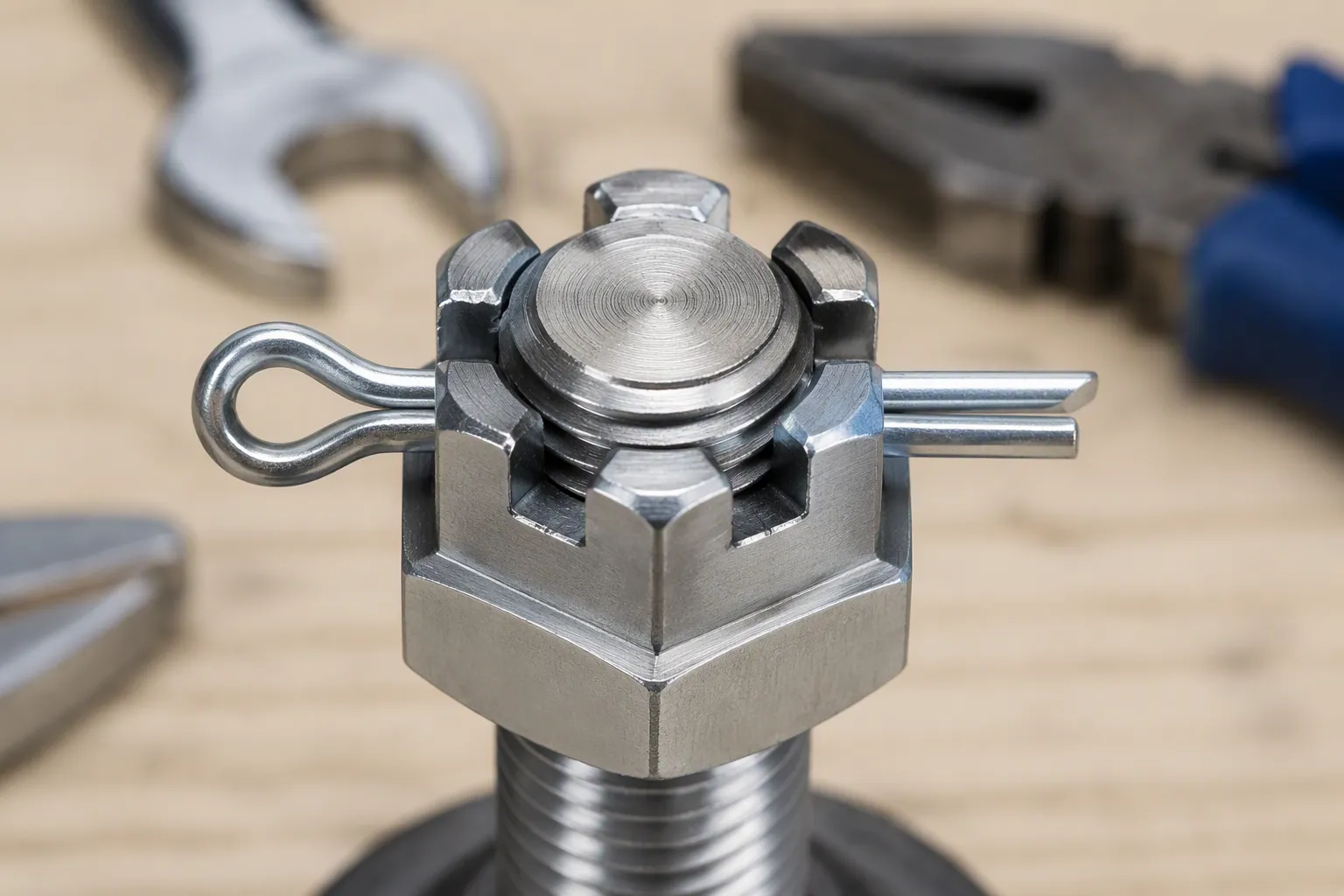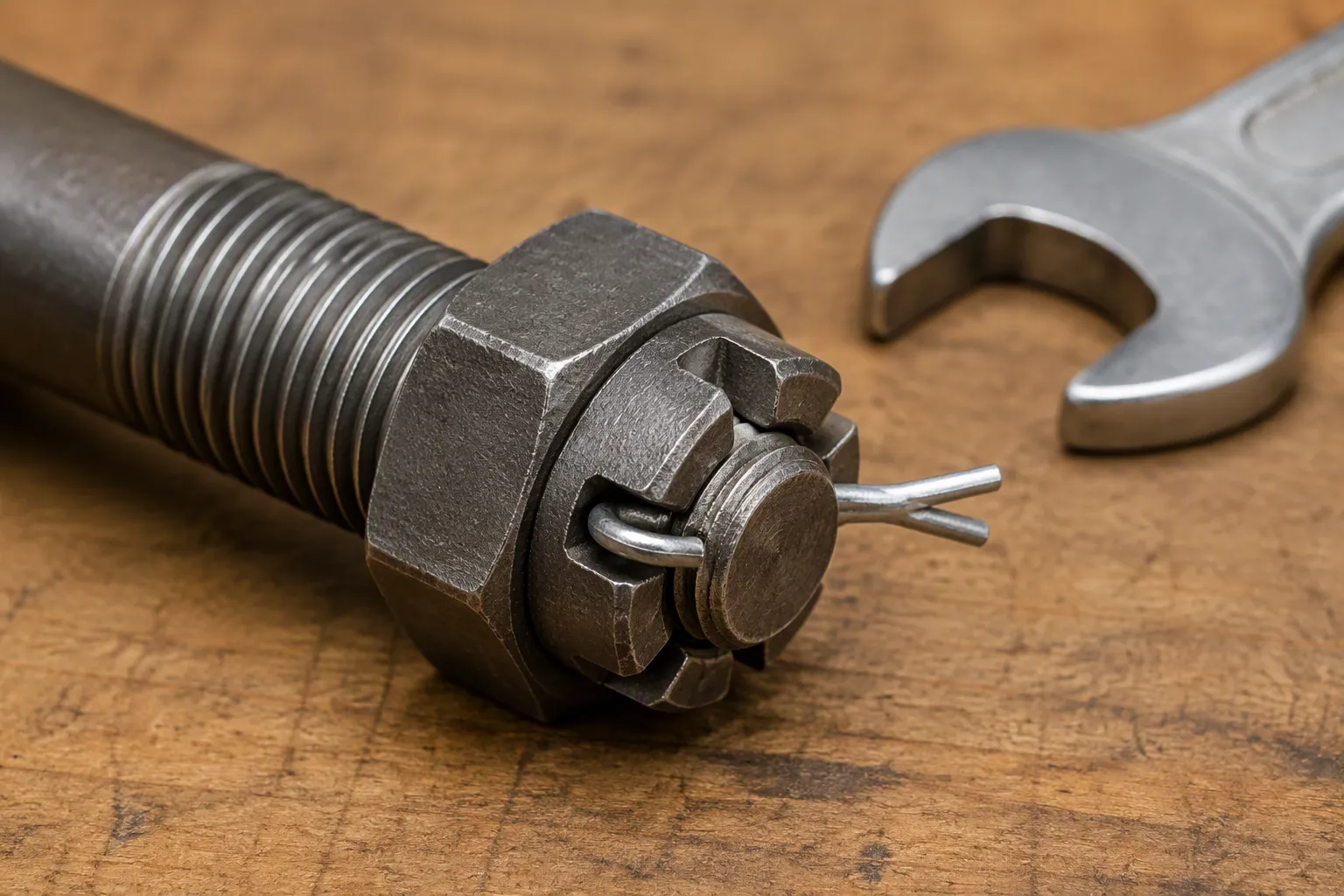

Selecting the correct length for carriage bolts uses a straightforward calculation. Builders determine the minimum required size with a simple formula.
Formula: (Total Wood Thickness) + (Hardware Thickness) + (Extra Thread)
A common project involves securing two 4×4 posts. This specific job typically requires an 8-inch carriage bolt. The quality of the carriage hardware, often determined by its bolt casting, ensures a secure connection for each post. For non-standard dimensions, a custom fasteners manufacturer can supply custom fasteners to complete the work.
The Core Formula for Selecting Carriage Bolts
A builder calculates the ideal bolt length by combining three critical measurements. This method ensures a structurally sound and professional connection for any project involving 4×4 posts. The formula provides a minimum length, which is then rounded up to the next available standard size.
Part 1: Measuring Total Wood Thickness
The largest variable in the equation is the wood itself. Accurate measurement of all lumber is the foundation of a correct calculation.
Understanding Nominal vs. Actual Dimensions
Lumberyards sell wood using “nominal” dimensions, which refer to the size of the rough-sawn board before it is planed smooth. The “actual” dimension is the finished size, which is always smaller. A builder must always use the actual dimensions for calculations. For example, a 4×4 post is not actually 4 inches by 4 inches.
| Nominal Size | Actual Size |
|---|---|
| 2×4 | 1-1/2″ x 3-1/2″ |
| 4×4 | 3-1/2″ x 3-1/2″ |
| 6×6 | 5-1/2″ x 5-1/2″ |
Accounting for All Layers in Your Project
A project often involves bolting more than just one post. A person must measure the actual thickness of every piece of material the bolt will pass through. This includes the main posts, any attached joists, rim joists, or decorative plates. Summing these individual measurements provides the “Total Wood Thickness” for the formula.
Part 2: Factoring in Hardware Thickness
The nut and washer add to the required bolt length. Forgetting this small but essential detail can lead to bolts that are too short to secure properly.
Standard Washer and Nut Allowances
A standard flat washer and a hex nut have a combined thickness. This thickness must be added to the total wood dimension. While it varies slightly by manufacturer, a reliable allowance prevents installation issues. These components ensure the carriage bolt distributes pressure evenly and stays tight.
The 1/2-Inch Rule of Thumb
A widely accepted best practice simplifies the hardware calculation.
Pro Tip: Add a standard 1/2 inch to your total wood measurement. This allowance comfortably accounts for the thickness of a standard washer and nut, with a small amount of extra thread.
Part 3: Adding Extra Thread for a Secure Fit
The final component of the formula ensures the connection can be fully tightened. A bolt that is too short is unusable.
Why a Little Extra Length is Crucial
A small amount of extra thread extending past the tightened nut is critical. This extra length guarantees the nut’s threads are fully engaged with the threads on the bolts. It also provides a margin for slight variations in wood thickness or for wood that may swell. The square neck of the carriage bolt pulls into the wood, which also affects the final fit.
How Much Extra Thread is Enough
The 1/2-inch allowance mentioned earlier typically provides sufficient extra thread. This small buffer ensures the nut can be tightened completely without bottoming out against the unthreaded shank of the bolt. This simple step is key to achieving a secure and lasting connection with your carriage hardware.
Step-by-Step Guide to Measuring for Your Bolts
Following a systematic process guarantees the correct bolt selection. A builder can confidently determine the right length by breaking the measurement down into three simple steps. This approach eliminates guesswork and ensures a secure, professional-grade connection.
Step 1: Measure the Actual Thickness of Your Posts
The first and most critical measurement is the wood itself. A builder should never rely on labeled dimensions. Direct measurement is the only way to guarantee accuracy for your project.
Using a Tape Measure for Accuracy
A tape measure is an essential tool for this task. A person must physically measure the wood because its dimensions can vary. Several factors influence the final thickness of a piece of lumber.
- Lumberyards use nominal sizes (e.g., 4×4) for labeling, not for true measurement.
- A nominal 4×4 post actually measures closer to 3.5″ x 3.5″ after the wood is dried and planed smooth.
- The actual dimensions of wooden posts can change slightly due to moisture content and variations in the milling process.
Confirming a 4×4 is Actually 3.5 Inches
Understanding lumber terminology is key to avoiding common errors. The difference between nominal and actual dimensions is a fundamental concept in construction. A simple rule helps: if the inch symbol (“) is present, the measurement is actual. Otherwise, it is likely nominal.
Key Lumber Terms
| Term | Definition |
| :— | :— |
| Actual Dimensions | The precise, true measurements of a piece of lumber. |
| Nominal Dimensions | The standard name for a piece of lumber; these are larger than the actual dimensions. |
| Treated Lumber | Wood that has been infused with preservatives to resist rot and insects. |
Step 2: Add the Thickness of All Additional Materials
A bolt often passes through more than just two posts. A builder must account for every single layer in the connection to calculate the total material thickness accurately.
Measuring Attached Boards (e.g., 2x4s, 2x6s)
Many projects involve attaching other boards, such as joists or beams, to a main support post. Each of these additional wooden components must be measured. A builder applies the same principle of using actual dimensions. For example, a 2×6 board has an actual thickness of 1.5 inches, not 2 inches. Summing the actual thickness of all wood layers provides the total wood measurement.
Including Metal Brackets or Plates
Structural connections sometimes require metal hardware like T-plates or L-brackets for added rigidity. These plates add to the total thickness and must be included in the calculation. Standard metal brackets used with a 4×4 post are commonly made from 12 gauge steel. This material is approximately 1/8 inch thick, a small but important addition to the overall length requirement.
Step 3: Calculate and Round Up
The final step involves simple arithmetic. A builder combines the measurements and then selects the appropriate commercial bolt size. This ensures the chosen carriage bolts will fit perfectly.
Putting the Numbers into the Formula
A person can now insert the collected measurements into the core formula. Imagine a project where a builder is attaching a 2×8 joist (actual thickness 1.5″) to a 4×4 support post (actual thickness 3.5″).
- Total Wood Thickness: 3.5″ (post) + 1.5″ (joist) = 5.0″
- Add Hardware Allowance: 5.0″ + 0.5″ (for washer and nut) = 5.5″
- Minimum Bolt Length: 5.5 inches
Choosing the Next Standard Bolt Size
Manufacturers produce bolts in standard length increments, such as every half-inch or inch. A calculated minimum length of 5.5 inches means a 5.5-inch bolt is the shortest possible option.
Pro Tip: Always round your calculation up to the next available standard size. For a 5.5-inch requirement, a builder should select a 6-inch bolt. This provides ample thread for secure tightening and a margin of safety.
Recommended Bolt Lengths for Common 4×4 Deck Posts Projects

Applying the core formula to real-world projects simplifies bolt selection. The following examples cover frequent construction scenarios involving 4×4 deck posts, providing clear calculations and recommendations. These guidelines help a builder choose the correct hardware for a strong and durable structure.
Bolting Two 4×4 Posts Together
A common task in deck and fence construction is laminating two posts together for increased strength. This creates a thicker, more robust support column.
The Calculation: 3.5″ + 3.5″ + 0.5″ = 7.5″
A builder first measures the actual thickness of each 4×4 post, which is 3.5 inches. The total wood thickness is the sum of both posts.
Calculation Breakdown
- Post 1 Thickness: 3.5 inches
- Post 2 Thickness: 3.5 inches
- Hardware Allowance: 0.5 inches
The minimum required bolt length is 7.5 inches.
The Recommended Bolt: 8-inch
Manufacturers typically produce carriage bolts in half-inch or one-inch increments. Since 7.5 inches is the minimum requirement, a builder must round up. An 8-inch bolt provides the necessary length for the washer and nut, plus a small amount of extra thread for secure tightening.
Attaching a 2x Joist to a 4×4 Post
Deck framing often requires attaching horizontal joists to vertical 4×4 deck posts. This connection is critical for the stability of the deck surface. The joist is usually a 2x board (e.g., 2×8, 2×10).
The Calculation: 3.5″ + 1.5″ + 0.5″ = 5.5″
The calculation combines the actual thickness of the support post and the attached joist. A nominal 2x board has an actual thickness of 1.5 inches. The 4×4 post has an actual thickness of 3.5 inches. Adding the 0.5-inch hardware allowance results in a 5.5-inch minimum requirement.
The Recommended Bolt: 6-inch
A 5.5-inch bolt would leave no room for error. A builder should select the next standard size up, which is a 6-inch bolt. This choice ensures the nut engages fully with the bolt threads, creating a solid connection between the joist and the post.
Securing a 6×6 Post to a 4×4 Post
Some designs involve connecting different-sized posts, such as joining a larger 6×6 post to a smaller 4×4. This might occur when transitioning from a main support to a secondary element.
The Calculation: 5.5″ + 3.5″ + 0.5″ = 9.5″
A builder must use the actual dimensions for both pieces of lumber. A 6×6 post has an actual thickness of 5.5 inches, while the 4×4 post is 3.5 inches thick. The combined wood thickness is 9.0 inches. Adding the 0.5-inch hardware allowance gives a minimum bolt length of 9.5 inches.
The Recommended Bolt: 10-inch
For a 9.5-inch minimum requirement, a 10-inch bolt is the correct choice. This provides sufficient length for a secure fit. For these non-standard connections between different sized posts, specialized hardware can offer additional support.
- PostHugger™ adapter brackets, made from 1/8″ thick steel, are designed for this purpose.
- Bracket styles include Straight, Flat L, Flat T, and Corner options for various configurations.
- A builder can install these brackets with 1/2″ lag screws or thru-bolts for enhanced structural integrity.
Choosing the Right Bolt Diameter for 4x4s
Selecting the correct bolt length is only half the battle; the bolt’s diameter is equally critical for structural integrity. The diameter determines the bolt’s shear strength, which is its ability to resist forces that could slice it in half. For 4×4 posts, the choice typically comes down to two standard sizes, each suited for different load requirements.
1/2-Inch vs. 5/8-Inch Bolts
The diameter of the bolt directly impacts the strength of the connection. A builder must match the bolt size to the structural demands of the project.
1/2-Inch for General Construction
A 1/2-inch diameter bolt is the industry standard for most residential deck and fence construction. This size provides ample strength for common applications, including:
- Attaching joists to posts
- Securing railing posts
- Laminating two 4×4 posts together
For the majority of DIY and general construction projects, a 1/2-inch diameter carriage bolt offers a reliable and code-compliant solution.
5/8-Inch for Heavy-Duty Structural Loads
A builder should select 5/8-inch diameter bolts for connections that bear significant weight or are subject to high stress. These heavy-duty applications require superior shear strength.
Use 5/8-Inch Bolts For:
- Supporting primary beams that carry the main deck load.
- Connections in multi-level decks.
- Structures like pergolas or pavilions with large, heavy roof systems.
Using a larger diameter bolt ensures the connection can safely handle the increased structural demands.
Matching Drill Bit Size to Bolt Diameter
Drilling the correct size hole is essential for a strong connection. The hole must allow the bolt to pass through without being too loose or too tight.
Why the Hole Size Matters
The fit between the bolt and the wood is crucial for load transfer. An improperly sized hole compromises the joint’s integrity. Research shows that when a hole’s diameter is larger than the bolt’s, the connection’s initial stiffness and ultimate load capacity decrease. This clearance prevents uniform loading, especially in joints with multiple bolts, and changes how stress is distributed through the wood. A hole that is too small can damage the wood fibers during installation.
Drilling for a Snug, Not Tight, Fit
The goal is to create a hole that provides a snug fit, allowing the bolt to be inserted with light taps from a hammer.
Drill Bit Guide
| Bolt Diameter | Recommended Drill Bit |
| :— | :— |
| 1/2-inch | 1/2-inch bit |
| 5/8-inch | 5/8-inch bit |
A builder should use a drill bit that matches the bolt’s diameter exactly. This practice ensures the bolt’s threads and shank make full contact with the wood, maximizing the connection’s strength without causing unnecessary damage during installation.
Securing a 4×4 Corner Post for a Fence
A corner post is the anchor of a fence line, bearing tension from two different directions. Proper bolting is essential for the long-term stability and strength of the entire fence structure. Securing a 4×4 corner post requires more planning than a standard line post because of the dual forces it must handle. A strong fence depends on a well-secured corner.
Special Considerations for Corner Connections
Corner connections present unique structural challenges. A builder must account for fence rails meeting at a 90-degree angle. This configuration demands a thoughtful approach to bolt placement to avoid compromising the wood’s strength.
Planning Bolt Placement for Two Directions
A corner post connects to fence rails from two perpendicular lines. A builder must plan the bolt holes so they do not intersect inside the wood. Drilling two long bolts through the same horizontal plane can create a weak point. Careful measurement and marking ensure that bolts for the north-south fence run do not interfere with bolts for the east-west fence run. This planning is vital for a durable fence.
Staggering Bolts to Maintain Wood Integrity
Staggering the bolts is a critical technique for preserving the structural integrity of the wood. This practice involves offsetting the vertical positions of the bolts.
Pro Tip: Never drill bolt holes directly across from each other on adjacent faces of a post. Staggering them vertically distributes the stress and prevents the creation of a “perforated line” that could cause the wood to split under load. This is especially important for a high-tension fence.
This simple step ensures the post remains strong for the life of the fence.
Recommended Bolt Strategy for Corners
A professional strategy for corner connections ensures a robust and lasting fence. This involves using an adequate number of bolts and confirming each one is the correct length for its specific connection. The integrity of the entire fence relies on these corner posts.
Using Two Bolts Per Connection
For maximum stability, a builder should use two carriage bolts to attach each incoming fence rail to the post.
- A single bolt acts as a pivot point, allowing the rail to twist or rotate over time.
- Two bolts, installed one above the other, lock the rail firmly in place.
This two-bolt method creates a rigid joint that can withstand pressure and prevent the fence from sagging.
Ensuring Proper Length for Each Bolt
A builder must calculate the bolt length for each rail-to-post connection individually. The standard formula applies: the actual thickness of the post (3.5 inches) plus the actual thickness of the fence rail (e.g., 1.5 inches for a 2×4), plus the 0.5-inch hardware allowance. For this common scenario, a 6-inch bolt is the recommended choice. Using the correct length ensures a secure connection, which is the foundation of a reliable fence.
Best Practices for Installing Carriage Bolts
Proper installation is just as important as selecting the right hardware. Following best practices ensures that each carriage bolt provides maximum structural integrity. A successful installation begins with careful preparation and ends with precise tightening. This process protects both the wood and the hardware for a long-lasting connection.
Preparing the Wood for Installation
A builder must prepare the wood correctly before drilling. This initial phase of the installation sets the foundation for a secure and professional-looking result.
Marking Your Drill Points Clearly
Accurate marks are the first step to a successful installation. A builder should use a combination square and a sharp pencil to mark the exact center for each hole. The marks should be clear and precise. This simple action guarantees the bolt will pass through the post exactly where intended, ensuring proper alignment and load distribution.
How to Drill a Straight and Clean Hole
A straight hole is critical for a strong connection. A bolt installed at an angle will not distribute pressure evenly.
- A builder can create a simple drill bit guide from a short piece of square steel tubing. This homemade tool helps maintain a perfectly perpendicular angle during drilling, which is essential for a proper installation.
- Drilling exposes untreated wood inside a pressure-treated post. The American Wood Protection Association (AWPA) requires treating these new holes with a wood preservative. This step is a critical part of the installation, as it restores the protective envelope and prevents future rot and insect damage.
Setting and Tightening the Bolt
The final steps of the installation involve seating the bolt and applying the correct amount of torque. These actions lock the connection in place.
Seating the Square Neck into the Wood
The square neck under the rounded head of a carriage bolt is its key feature. This part bites into the wood to prevent the bolt from turning during tightening.
Installation Tip: After inserting the bolt, a builder should give the head a few gentle taps with a hammer. This action seats the square neck firmly into the wood fibers. A builder must avoid using excessive force to prevent splitting the wood.
How Tight is “Tight Enough”?
Over-tightening is a common mistake that compromises the entire installation. Applying too much force can cause significant damage. Excessive torque crushes wood fibers, strips the bolt’s threads, and can even permanently stretch the bolt, reducing its load-carrying capacity. This makes the connection weaker and prone to failure. A builder should tighten the nut until the washer is flat and snug against the wood. A final quarter-turn is typically sufficient for a secure installation.
A builder ensures a successful project by following a simple process for selecting carriage bolts. The key is applying the core formula: Total Actual Wood Thickness plus a hardware allowance equals the minimum bolt length. A person must always measure the actual lumber dimensions and round the final calculation up to the next available standard size. Proper carriage hardware selection is the first step; ongoing maintenance is crucial for safety.
Annual Safety Checklist
- Conduct annual inspections to identify wear from weather.
- Look for corroded fasteners, loose connections, or cracked wood.
- Test the stability of railings and ensure the connection to the structure is solid.
FAQ
Can a builder reuse old carriage bolts for a new fence?
A builder should avoid reusing old bolts for a new fence. Corrosion and stress can weaken hardware over time. New bolts ensure the structural integrity of the fence. A strong fence depends on quality hardware.
What is the best bolt for a privacy fence gate?
A builder should use at least two 1/2-inch diameter thru-bolts for a heavy privacy fence gate. This provides superior strength and prevents sagging. A secure gate is essential for a functional fence.
Why did the wood split when tightening the bolt on my fence?
Over-tightening is the most common cause. Excessive force crushes wood fibers, leading to splits. A builder should tighten the nut until it is snug, then add a final quarter-turn. This protects the fence post.
Do galvanized bolts work for a treated wood fence?
Yes, a builder must use hot-dip galvanized or stainless steel bolts for a treated wood fence. The chemicals in treated wood will corrode standard steel, compromising the strength of the fence connection over time.
How many bolts are needed for a 4×4 fence corner post?
A builder should use two bolts for each rail connecting to the corner post. This prevents the fence rails from twisting. A stable corner post is the foundation of a durable fence structure.