Properly selecting carriage bolts is a critical step for ensuring a project’s structural integrity and longevity. A builder must evaluate three primary factors. The project’s environment determines the needed corrosion resistance. The expected load dictates the required strength. Finally, the budget shapes the balance between upfront cost and long-term performance. The choice of carriage bolt material impacts everything from safety to aesthetics.
The industrial bolt fastener market was valued at approximately USD 34 billion in 2023. This growth reflects a rising demand for durable solutions and custom fasteners to meet specific project needs. A custom fasteners manufacturer often adjusts the bolt casting process for unique applications. This makes a single carriage bolt a vital component.
Step 1: Assess the Project Environment
A project’s location is the single most important factor in material selection. The surrounding air, moisture, and chemical agents will constantly attack a fastener. A builder must first analyze the environment to choose a carriage bolt that can withstand these long-term threats. This ensures the connection remains secure for the life of the structure.
For Indoor and Dry Conditions
Indoor projects exist in a controlled climate. They are protected from rain, snow, and significant temperature swings. However, humidity levels can still affect a fastener’s integrity over time. A comfortable indoor environment typically has a relative humidity (RH) between 30% and 60%.
Understanding Indoor Humidity
- Indoor RH often falls below 40% in winter and stays between 40%-60% in summer.
- Humidity above 55% can encourage mold growth.
- Low humidity can increase static electricity and dry out materials.
For these stable, low-moisture settings, a builder has two primary cost-effective options.
Standard Carbon Steel
Plain, unfinished carbon steel carriage bolts are the most basic and affordable choice. They possess good strength but have no inherent protection against corrosion. Their use should be limited to completely dry, climate-controlled interior applications like furniture assembly or decorative trim, where moisture exposure is nonexistent.
Zinc-Plated Steel
Zinc-plated steel bolts are coated with a thin layer of zinc. This plating acts as a sacrificial barrier, providing minimal protection against rust. It is sufficient for most indoor applications, including garage shelving, indoor framing, and projects where occasional condensation or temporary dampness might occur. The zinc finish offers a clean, bright appearance suitable for visible connections.
For Outdoor and Damp Conditions
Outdoor projects face direct exposure to weather. Rain, dew, and high humidity create an environment where corrosion is a constant threat. Atmospheric pollutants significantly accelerate this process. In many industrial or urban areas, sulfur dioxide (SO2) is a primary corrosive agent that attacks metals when combined with moisture.
Hot-Dip Galvanized Steel
Hot-dip galvanized (HDG) steel is the standard for durable outdoor construction. In this process, a bolt is submerged in molten zinc, creating a thick, tough, and metallurgically bonded coating. This heavy layer provides excellent corrosion protection, making HDG bolts ideal for decks, fences, pergolas, and playground equipment. The coating is durable enough to withstand abrasion during installation.
Mechanically Galvanized Steel
Mechanical galvanization offers a comparable level of protection to hot-dip galvanization. This process cold-welds zinc dust onto the bolt through tumbling with glass beads. The resulting coating is more uniform and smoother than an HDG finish. This makes it a preferred choice for applications where a consistent appearance is important or where the thicker, uneven coating of HDG might interfere with assembly.
For Marine and High-Corrosion Zones
The most aggressive environments involve direct and constant exposure to corrosive elements. These zones include coastal areas with salt spray, structures in or near saltwater, and locations exposed to industrial chemicals. A high-corrosion environment is often defined by the presence of chlorides. For example, coastal groundwater and soil with chloride levels over 2000 parts per million (ppm) will rapidly degrade most metals. For these applications, stainless steel is essential.
304 Stainless Steel
304 stainless steel is a common choice that offers good corrosion resistance in many environments. It contains chromium and nickel, which protect it from general rusting. However, it is vulnerable to a specific type of corrosion called pitting, especially when exposed to chlorides (salt). It is suitable for outdoor applications away from the coast or for freshwater environments but is not recommended for marine or coastal projects.
316 Stainless Steel
For marine applications, 316 stainless steel is the superior material. Its key advantage is the addition of molybdenum, an element that significantly enhances its resistance to chlorides and pitting. This property is measured by the Pitting Resistance Equivalent Number (PREN). A higher PREN indicates better corrosion resistance.
The formula PREN = %Cr + 3.3(%Mo) + 16(%N) shows why 316 excels. The molybdenum content gives it a much higher PREN value than 304 stainless steel.
| Steel Grade | PREN Range | Recommended Use |
|---|---|---|
| SS304 | 18.0 – 20.0 | Freshwater, inland outdoor, non-saline zones |
| SS316 | 22.6 – 27.9 | Marine hardware, coastal construction, docks |
This enhanced resistance makes 316 stainless steel carriage bolts the necessary choice for boat docks, piers, and any structural connection within several miles of a coastline.
For Aesthetic or Unique Applications
Sometimes, a project’s success depends as much on its appearance as its structural soundness. In these cases, builders select fasteners that contribute to the overall design. Architects and designers often choose specific materials for their unique color, finish, and ability to complement other building elements.
Silicon Bronze
Silicon bronze is an alloy of copper, silicon, and other elements. It offers excellent corrosion resistance, comparable to stainless steel, but its primary appeal is aesthetic. Architects and builders often specify silicon bronze carriage bolts for high-end projects where visual details are paramount.
- The material possesses a warm, reddish-gold hue that provides a distinctive and attractive finish.
- Its unique appearance makes it a fantastic choice for visible fastenings in historical restoration projects or high-end architectural designs.
- Over time, silicon bronze develops a beautiful blue-green patina, a natural protective layer that enhances its classic look without compromising its integrity.
This combination of durability and evolving beauty makes silicon bronze a premium choice for decorative hardware, sculptures, and custom marine applications where both performance and appearance are essential.
Black Oxide Coated Steel
Black oxide is not a plating but a chemical conversion coating. This process transforms the surface of a steel bolt into magnetite, creating a deep black finish. This finish offers mild corrosion resistance, primarily intended for indoor or dry environments. Its main purpose is aesthetic.
A Note on Black Oxide The black oxide finish is very thin and can be scratched off. It provides its best corrosion protection when treated with a supplementary oil or wax, which also enhances its dark, matte appearance.
Builders use black oxide coated carriage bolts for projects requiring a non-reflective, dark, or industrial look. Common applications include custom furniture, indoor railings, and decorative metalwork where the bolt heads are visible and part of the design. The sleek black color provides a sharp contrast against light-colored woods or metals, creating a modern and sophisticated visual effect.
Step 2: Determine Strength Requirements for Your Carriage Bolt Material
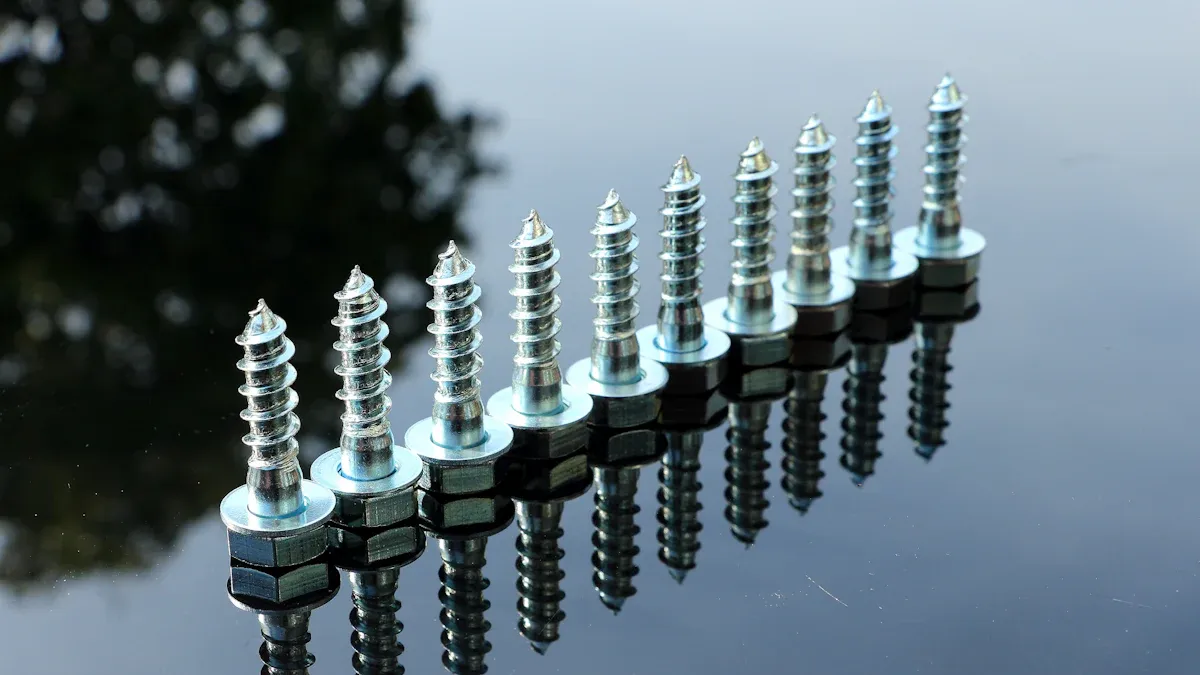
After assessing the environment, a builder must determine the strength needed for the connection. The forces acting on a bolt—tension, shear, and vibration—can compromise a project’s safety if the fastener is not strong enough. Choosing the correct strength grade ensures the joint remains secure under its expected load for its entire service life.
Understanding Bolt Grades and Strength
Bolt strength is not a vague concept; it is a standardized, measurable property. Organizations like the Society of Automotive Engineers (SAE) and ASTM International create specifications that define a bolt’s mechanical properties. These properties tell a builder how much force a bolt can handle before it stretches permanently or breaks.
What Bolt Grades Signify
A bolt’s grade signifies its material composition and strength characteristics. The three most important metrics are tensile strength, yield strength, and proof load.
- Tensile Strength: The maximum pulling force a bolt can withstand before breaking.
- Yield Strength: The point at which a bolt begins to stretch and deform permanently.
- Proof Load: The maximum load a bolt can handle without any permanent deformation. This is the practical limit for safe design.
The following table, based on SAE and ASTM specifications, outlines the minimum strength values for common bolt grades. All values are shown in pounds per square inch (psi).
| Grade/Specification | Material | Proof Load (psi) | Tensile Strength min (psi) | Yield Strength Min (psi) |
|---|---|---|---|---|
| SAE J429 Grade 2 | Low or medium carbon steel | 55,000 (≤3/4″) | 74,000 (≤3/4″) | 57,000 (≤3/4″) |
| SAE J429 Grade 5 | Medium carbon steel, quenched & tempered | 85,000 (≤1″) | 120,000 (≤1″) | 92,000 (≤1″) |
| SAE J429 Grade 8 | Medium carbon alloy steel, quenched & tempered | 120,000 | 150,000 | 130,000 |
| ASTM A307 Grade A | Low or medium carbon steel | 33,000 | 60,000 | 36,000 |
| ASTM A325 Type 1 | Medium carbon steel, quenched & tempered | 85,000 (≤1″) | 120,000 (≤1″) | 92,000 (≤1″) |
| ASTM A490 Type 1 | Medium carbon alloy steel, quenched & tempered | 120,000 | 150,000 | 130,000 |
How to Identify Grade Markings
Manufacturers use standardized marking systems to make bolt identification simple. These markings are stamped directly onto the head of the bolt.
Quick Tip: Reading Bolt Heads 🔎
SAE bolts use a system of radial lines. The number of lines indicates the grade. ASTM structural bolts are marked with the specification number.
- SAE Grade 2: No markings on the head. This is the baseline for common hardware store bolts.
- SAE Grade 5: Three radial lines on the head. These bolts are significantly stronger than Grade 2.
- SAE Grade 8: Six radial lines on the head. This indicates a high-strength bolt for heavy-duty applications.
- ASTM Bolts: Structural bolts like the ASTM A325 or A490 have their grade designation, such as
A325, stamped on the head to show they have passed rigorous testing.
Low-Strength Needs
Many projects do not require high-strength fasteners. For light-duty and decorative applications, the focus shifts from extreme load capacity to cost, appearance, and ease of use.
Low Carbon Steel Bolts
Low carbon steel bolts, often corresponding to SAE Grade 2 or ASTM A307, are the most common and affordable option. They are manufactured from basic steel without undergoing intensive heat treatment processes. This makes them relatively soft but perfectly adequate for applications where the primary force is static weight.
Uses in Decorative and Light-Duty Projects
Decorative and light-duty projects include furniture assembly, attaching trim, and building indoor shelving. These applications primarily face a “dead load,” which is the constant downward pull of gravity.
In these cases, the bolt’s job is simply to hold an object in place. The builder’s priorities often include:
- Pleasing aesthetics: The bolt head is visible and part of the design.
- Fast assembly: The connection needs to be made quickly and easily.
- Removability: The item may need to be disassembled later.
Low-strength bolts meet these needs effectively without the unnecessary cost of high-performance alloys.
Medium-Strength General Purpose Needs
When a project involves moderate stress, vibration, or shear forces, a builder must upgrade from low-carbon steel. Medium-strength bolts provide a crucial balance of performance, reliability, and cost for a wide range of construction and repair jobs.
SAE Grade 2 Steel
SAE Grade 2 bolts are the workhorses of the hardware world. Made from low to medium carbon steel, they are a step up from unmarked, generic bolts. A Grade 2 carriage bolt is suitable for general wood-to-wood connections in projects like garden beds or simple fences where structural loads are minimal. Their defined strength provides more reliability than ungraded fasteners.
SAE Grade 5 Steel
SAE Grade 5 bolts represent a significant increase in strength and durability. Manufacturers produce this grade from medium carbon steel that is quenched and tempered. This heat-treating process hardens the steel, dramatically increasing its tensile and yield strength. A builder chooses this carriage bolt material for applications requiring higher clamp loads and resistance to shear forces, such as playground equipment, deck framing, and light automotive repairs. The three radial lines on the head provide clear confirmation of its superior capability.
High-Strength Structural Needs
Certain projects demand fasteners that can withstand extreme forces, intense vibration, and critical safety loads. In these scenarios, standard bolts are insufficient. Engineers and builders turn to high-strength bolts for applications where connection failure could lead to catastrophic results. These bolts are manufactured through precise alloying and heat-treatment processes to achieve superior mechanical properties.
SAE Grade 8 Steel
SAE Grade 8 bolts represent the pinnacle of strength in common fasteners. Manufacturers create them from a medium carbon alloy steel. The steel then undergoes a rigorous quench and temper heat treatment. This process creates a highly hardened and durable fastener with exceptional strength.
- Superior Strength: A Grade 8 bolt has a minimum tensile strength of 150,000 psi. This is significantly higher than the 120,000 psi of a Grade 5 bolt.
- Clear Identification: A builder can easily identify a Grade 8 bolt by the six raised radial lines on its head.
- Critical Applications: Their immense strength makes them essential for the most demanding jobs.
Engineers specify Grade 8 bolts for securing heavy equipment, vehicle frame and suspension components, and structural steel connections that bear immense loads. They provide the highest level of clamping force and shear resistance available in a standard SAE-graded bolt.
Hardened Alloy Steel
Hardened alloy steel is a category of materials that includes Grade 8 and other specialized formulations. Manufacturers add alloying elements like chromium, molybdenum, and nickel to the steel. These elements give the bolt specific properties beyond simple strength. This type of carriage bolt material is chosen when a project has unique environmental or mechanical challenges.
Matching Alloy to Application The specific alloy composition determines a bolt’s performance. For example, chromium enhances hardness and corrosion resistance, while molybdenum improves strength at high temperatures. A builder must select an alloy that directly counters the primary stresses of the project.
Hardened alloy steels offer tailored solutions for specialized structural needs.
- Vibration Resistance: Their superior hardness and strength help maintain clamp load in high-vibration environments, like on industrial machinery.
- Temperature Extremes: Certain alloys retain their strength under high heat or in cryogenic conditions where standard carbon steel would fail.
- Toughness: These bolts possess excellent toughness, meaning they can absorb energy and resist fracturing under sudden impact loads.
Builders use these advanced bolts in critical infrastructure, aerospace assemblies, and high-performance engine components where reliability is non-negotiable.
Understanding Carriage Bolt Coatings and Finishes
The base metal of a bolt provides strength, but a coating or finish provides crucial protection against corrosion. Manufacturers apply these surface layers to extend a fastener’s lifespan and, in some cases, to enhance its appearance. The type of coating directly impacts where a bolt can be safely used.
Plating for Basic Protection
Plating involves applying a thin metallic layer to a bolt’s surface through an electrochemical process. This method offers a baseline defense against rust for indoor or dry environments.
Zinc Plating (Electro-Galvanizing)
Zinc plating is a common and cost-effective finish. The process deposits a thin, bright layer of zinc onto the steel. This coating provides minimal corrosion resistance, making it suitable for indoor applications with little moisture exposure. The thickness of the zinc plating typically ranges from 5 to 25 microns. A thinner 5-micron coating is adequate for indoor parts, while a thicker 12-micron layer offers moderate protection for more demanding uses.
Yellow Zinc Chromate
Yellow zinc chromate is not a plating itself but a post-treatment applied over standard zinc plating. This chromate conversion process adds a distinctive yellowish-gold, iridescent film. This film is hard and non-porous, significantly improving the underlying zinc’s corrosion resistance. Generally, darker chromate colors indicate a higher level of protection.
Galvanization for Superior Outdoor Use
For outdoor projects exposed to rain, humidity, and atmospheric chemicals, a more robust coating is necessary. Galvanization creates a thick, durable barrier against the elements.
Hot-Dip Galvanization (HDG)
Hot-dip galvanization involves submerging the entire fastener in a bath of molten zinc. This creates a thick, metallurgically bonded alloy coating that is highly resistant to corrosion and abrasion. This makes an HDG carriage bolt the standard for outdoor structures like decks and fences. The process is governed by strict standards to ensure quality.
| Standard | Description | Key Features |
|---|---|---|
| ASTM A153 | Specification for Zinc Coating on Iron and Steel Hardware | The traditional standard for most hardware, offering reliable protection. |
| ASTM F2329 | Specification for Zinc Coating on Steel Fasteners | An enhanced standard with stricter quality control, mandatory adhesion testing, and higher thickness minimums for critical fasteners. |
Comparing HDG to Zinc Plating
A builder must understand the fundamental differences between these two zinc coatings.
HDG vs. Zinc Plating: Key Distinctions
- Thickness: HDG coatings are significantly thicker (often over 45 microns) than zinc plating (5-25 microns).
- Bond: HDG creates a tough, interlocked metallurgical bond, while zinc plating is a thinner, electrochemically deposited layer.
- Application: HDG is designed for long-term outdoor and harsh environment exposure. Zinc plating is intended for indoor or dry-condition use.
Finishes for Appearance and Minor Protection
Some coatings prioritize aesthetics over maximum corrosion resistance. These finishes are typically used indoors where the fastener head is a visible part of the design.
Black Oxide Finish
Black oxide is a conversion coating that turns the steel’s surface a deep black color. It offers only mild corrosion resistance and performs best when treated with a supplementary oil or wax. Its primary purpose is to provide a non-reflective, decorative finish for furniture and indoor metalwork.
Phosphate Coating
A phosphate coating is another conversion process that creates a crystalline layer on the steel’s surface. This finish, typically gray or black, offers modest corrosion protection. Its porous texture makes it an excellent primer that improves paint adhesion, making it a good choice for parts that will be painted after assembly.
Step 3: How to Choose the Right Carriage Bolt for Your Budget
A project manager must balance performance requirements with financial constraints. The budget often dictates the final material selection, creating a trade-off between upfront cost and long-term durability. To choose the right carriage bolt, a builder must understand where to spend more for longevity and where to save money on less critical applications.
Most Cost-Effective Options
For indoor projects with no exposure to moisture, the most affordable fasteners are often sufficient. These bolts prioritize low cost over high performance.
Plain and Zinc-Plated Steel
Plain, unfinished steel and zinc-plated steel are the most economical choices. A plain steel carriage bolt offers basic strength with no corrosion protection. Zinc-plated bolts provide a minimal barrier against rust for dry, indoor use. Their low price makes them ideal for bulk purchases in controlled manufacturing or assembly environments. For example, a standard zinc-plated bolt can be very inexpensive when bought in quantity.
| Quantity | Unit Price (1/4-20 x 5/8 Grade 5 Zinc) |
|---|---|
| 1 to 999 | $0.19 |
| 1,000+ | $0.09 |
The Cost vs. Lifespan Trade-off
The low initial cost of a zinc-plated bolt comes with a significant compromise in lifespan, especially outdoors. The thin plating is susceptible to damage and will quickly fail when exposed to weather. In contrast, a hot-dip galvanized coating provides decades of protection.
Projected Lifespan of Galvanized Coatings According to the American Galvanizers Association, a hot-dip galvanized fastener can last for many years before needing maintenance:
- Suburban: 60+ years
- Temperate Marine: 55+ years
- Industrial: 45+ years
This data shows that paying more upfront for a better coating prevents costly future repairs and replacements.
Mid-Range for Enhanced Durability
For most outdoor construction, a mid-range fastener offers the best balance of cost and performance. These bolts provide reliable, long-term protection without the premium price of specialty alloys.
The Value of Hot-Dip Galvanized
Hot-dip galvanized (HDG) steel provides exceptional value for its cost. The thick zinc coating metallurgically bonds to the steel, creating a tough barrier that resists chipping and abrasion. While an HDG carriage bolt material costs more than zinc-plated steel, its vastly superior lifespan makes it the more economical choice for decks, fences, and other outdoor structures.
Cost Comparison: Galvanized vs. Stainless
Stainless steel represents the next step up in both cost and performance from HDG. A builder typically specifies galvanized bolts for general outdoor use. However, they will select stainless steel for environments where even a galvanized coating will eventually fail, such as in or near saltwater.
Premium Investment for Maximum Life
For critical applications or projects demanding the highest level of performance and aesthetics, premium materials are a necessary investment. Their high cost is justified by unparalleled durability and appearance.
Justifying the Cost of Stainless Steel
The high price of stainless steel carriage bolts comes from their complex alloy composition, which includes elements like chromium, nickel, and molybdenum. This investment is essential for projects in marine or highly corrosive environments. In these settings, stainless steel’s ability to resist rust and pitting prevents catastrophic failure and ensures the structure’s safety and longevity.
The Niche Price of Silicon Bronze
Silicon bronze is a specialty material priced for its unique combination of beauty and durability. Its cost is driven by its copper alloy base and its appeal in high-end architectural and marine projects. Builders use it when the fastener’s appearance is a key design element, and its warm, golden hue provides a visual quality that no other material can match.
Special Considerations for Wood Types
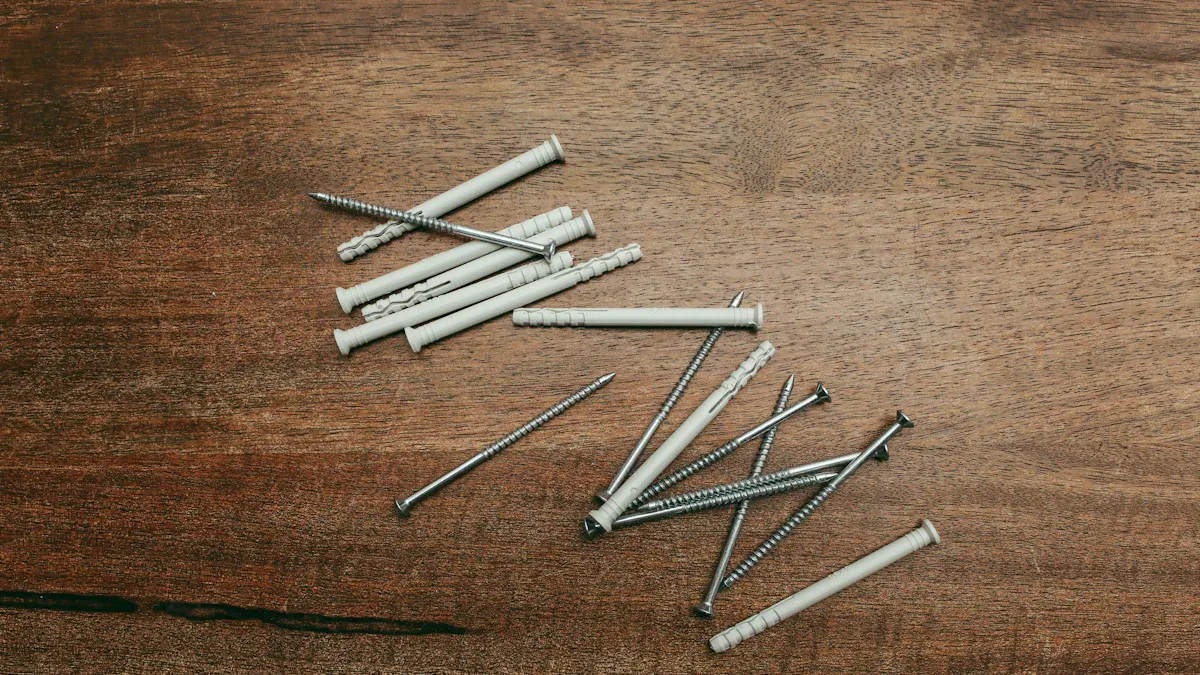
The type of wood used in a project introduces another critical variable in fastener selection. Different woods have unique chemical properties and densities. A builder must match the bolt material not only to the environment but also to the wood itself to prevent staining, corrosion, and structural failure.
Fastening Standard, Untreated Wood
Untreated woods are common in indoor furniture, framing, and decorative projects. Their chemical makeup is generally neutral, posing little risk to common fasteners.
Pine, Fir, and Indoor Woods
Pine, fir, and similar softwoods are non-corrosive. For indoor applications using these woods, a standard zinc-plated steel bolt provides adequate performance. The dry, controlled environment minimizes any risk of rust, and the wood itself does not contain aggressive chemicals.
Cedar and Redwood
Cedar and redwood are popular for their natural resistance to rot and insects. However, these woods present a unique challenge for fasteners. Some woods, such as cedars, redwood, and oak, contain water-soluble tannins. These natural acids will cause unsightly black staining and accelerate corrosion when they come into contact with unprotected metal connectors. For these woods, a builder must use hot-dip galvanized or stainless steel bolts to prevent this chemical reaction.
Choosing the Right Carriage Bolt for Treated Lumber
Modern pressure-treated lumber offers excellent protection against decay, but its chemical composition is highly corrosive to many metals.
ACQ and Modern Preservatives
Today’s treated lumber commonly uses preservatives like Alkaline Copper Quaternary (ACQ). ACQ is a water-based wood preservative composed mainly of copper oxide. This formula contains a significantly higher concentration of copper than older treatments. This high copper content creates a serious risk of galvanic corrosion when the wood touches a less noble metal, like plain steel.
Why Hot-Dip Galvanized is Essential
The copper in ACQ-treated wood acts as a cathode, aggressively corroding unprotected steel fasteners, which act as an anode. This electrochemical reaction can destroy a bolt in a surprisingly short time.
Warning: Galvanic Corrosion Risk The high copper content in ACQ lumber will rapidly attack and erode plain steel or improperly coated fasteners. Using the wrong bolt can lead to connection failure and compromise the safety of a structure.
To prevent this, building codes and manufacturers mandate the use of specific materials. Hot-dip galvanized (HDG) steel, with its thick, protective zinc coating, is the minimum requirement. Stainless steel offers even greater protection. A builder must always use fasteners rated for direct contact with ACQ lumber.
Working with Hardwoods
Hardwoods like oak, maple, and ipe are dense and strong, placing different demands on fasteners.
Oak, Maple, and Ipe
Oak, like cedar, is rich in corrosive tannins that will stain and degrade steel. Maple and ipe are incredibly dense, requiring a strong carriage bolt that can be drawn tight without breaking. These woods are often used in high-end furniture, flooring, and outdoor decking.
Strength vs. Corrosion Needs
Fastening hardwoods often requires balancing two needs: strength and corrosion resistance. The bolt must be strong enough to clamp the dense wood fibers securely. It must also resist corrosion from either the wood’s natural chemistry (oak) or its outdoor environment (ipe). For these applications, a builder often selects Grade 5 or Grade 8 bolts with a hot-dip galvanized or stainless steel finish.
Common Mistakes in Choosing the Right Carriage Bolt
Even experienced builders can make errors when selecting fasteners. Avoiding a few common pitfalls is essential for a successful project. Proper material selection prevents premature failure and ensures long-term structural integrity. Making an informed decision is the most critical step in choosing the right carriage bolt.
Underestimating Environmental Factors
A project’s environment is a relentless force acting against a fastener. Many builders misjudge its impact, leading to rapid deterioration and costly repairs.
Using Indoor-Rated Bolts Outdoors
A frequent mistake is using zinc-plated bolts for outdoor projects. These fasteners are designed for dry, indoor conditions. When exposed to rain and humidity, their thin zinc coating quickly breaks down.
Consequences of Improper Use 🌧️
- The steel bolt begins to rust, leaving unsightly orange and black stains on the wood.
- Corrosion weakens the fastener, compromising the connection’s strength.
- The joint becomes loose, creating a potential safety hazard over time.
Ignoring Local Salinity or Pollution
Builders sometimes fail to account for specific local conditions. A standard hot-dip galvanized carriage bolt, while excellent for general outdoor use, may not be sufficient in aggressive environments. Coastal areas with salt spray or industrial zones with chemical pollutants dramatically accelerate corrosion. In these high-risk zones, a builder must specify a more resistant material like 316 stainless steel to prevent premature failure.
Mismatching Fastener Materials
Combining incompatible metals creates a hidden vulnerability within a connection. This oversight can cause one of the metals to self-destruct.
The Dangers of Galvanic Corrosion
Galvanic corrosion is a destructive process that occurs when different metals are in electrical contact within an electrolyte like rainwater. A galvanic series chart ranks metals by their potential for corrosion. The metal higher on the chart (the anode) will corrode to protect the metal lower on the chart (the cathode). The greater the distance between two metals on the series, the faster the corrosion occurs. For example, using a steel fastener on an aluminum plate creates a galvanic cell where the less noble metal will degrade rapidly.
Using Mismatched Nuts and Washers
A fastener assembly is a system. A builder must ensure the bolt, nut, and washers are all made of compatible materials. Using a stainless steel bolt with a zinc-plated nut is a critical error. The less noble zinc coating on the nut will quickly corrode, leaving the connection compromised. The entire assembly should always share the same material and coating specification.
Prioritizing Upfront Cost Over Safety
The temptation to save money on hardware is strong, but it often leads to greater expenses and risks down the line.
The Hidden Costs of Bolt Failure
Choosing a cheaper, inadequate bolt to save a few dollars upfront is poor economy. When that bolt fails, the costs multiply.
- Replacement Labor: The cost to access and replace the failed fastener.
- Material Damage: The cost of repairing or replacing wood or metal damaged by rust stains or structural failure.
- Project Downtime: The time and money lost while making repairs.
The Safety Risks of Underspecified Bolts
The most serious consequence of using the wrong bolt is the risk to safety. A fastener that is too weak or corrodes prematurely can lead to catastrophic failure. A deck collapsing, a playground structure breaking, or a structural beam shifting can cause severe injury or worse. Safety should always be the primary consideration over minor cost savings.
Quick Guide: Matching Carriage Bolt Material to Common Projects
Applying the principles of environment, strength, and budget to real-world scenarios simplifies selection. This guide matches the right carriage bolt material to common construction and assembly tasks.
Wood-to-Wood Connections
Indoor Furniture Assembly
For indoor furniture, a builder’s primary concerns are appearance and cost. The environment is dry and controlled.
- Recommended Bolt: Zinc-plated steel
- Reasoning: This option is inexpensive and provides a clean finish. Its minimal corrosion resistance is sufficient for indoor use where moisture is not a concern.
Outdoor Decks and Pergolas
Decks and pergolas face constant exposure to weather. The lumber is also typically pressure-treated, which is highly corrosive.
- Recommended Bolt: Hot-dip galvanized (HDG) or stainless steel
- Reasoning: HDG steel provides the essential, thick zinc coating needed to resist weather and chemicals in treated wood. A builder should upgrade to stainless steel in coastal areas or for maximum longevity.
Fences and Garden Gates
Fences and gates must withstand year-round moisture and temperature changes.
- Recommended Bolt: Hot-dip galvanized (HDG) steel
- Reasoning: HDG offers the best balance of cost and long-term durability for these common outdoor projects. It prevents rust and staining on the wood.
Wood-to-Metal Connections
Attaching Metal Brackets to Posts
Connecting metal hardware to pressure-treated wood posts creates a high risk for galvanic corrosion. A builder must choose fasteners compatible with the wood’s chemical treatment.
For wood with high chemical retention levels (like ACQ or MCA), a builder should use one of the following:
- Stainless steel fasteners
- Copper or silicon bronze fasteners
For less corrosive treated woods like SBX/DOT, standard G90 galvanized connectors are acceptable.
Assembling Playground Equipment
Safety is the top priority for playground equipment. These structures endure vibration, high loads, and outdoor exposure.
- Recommended Bolt: SAE Grade 5 Hot-Dip Galvanized (HDG)
- Reasoning: A Grade 5 carriage bolt provides the necessary strength to handle dynamic loads. The HDG coating ensures long-term protection against rust.
Specialty and High-Stress Projects
Building Boat Docks and Piers
Marine environments are extremely corrosive. The choice between freshwater and saltwater exposure is critical.
| Environment Type | Recommended Material | Specific Grade/Coating |
|---|---|---|
| Freshwater | Galvanized Steel | Hot-Dip Galvanizing (HDG) |
| Saltwater | Stainless Steel | A4 (316) for superior corrosion resistance |
Securing Structural Beams
Connections for structural beams are safety-critical and must handle immense loads without failure.
- Recommended Bolt: SAE Grade 8 or ASTM A325/A490
- Reasoning: These high-strength bolts provide the necessary tensile and shear strength. The coating (e.g., HDG) must match the project’s environment.
Projects Near Pools or Chemical Storage
Areas near swimming pools or chemical storage facilities have aggressive, corrosive atmospheres due to chlorine and other fumes.
- Recommended Bolt: 316 Stainless Steel
- Reasoning: The molybdenum in 316 stainless steel provides superior resistance to chlorides and other harsh chemicals, preventing premature failure.
Successfully selecting carriage bolts is a critical final step that ensures a project’s safety and durability. A builder guarantees a secure and lasting result by following a methodical approach. Here are some final tips on choosing carriage bolts:
- A builder must first assess the project environment to define the necessary corrosion resistance.
- They should then determine the strength grade required to handle the expected load safely.
- Finally, a builder balances the budget with the material’s long-term performance and value.
Making an informed choice protects the investment and ensures the project’s success.
FAQ
What is the purpose of the square neck on a carriage bolt?
The square neck under the head is a key design feature. A builder hammers it into a pre-drilled hole in wood. This action locks the bolt in place. It prevents the bolt from spinning while a worker tightens the nut from the other side.
Can a builder reuse old carriage bolts?
A builder should avoid reusing old carriage bolts, especially from structural applications. Removal and re-tightening can stretch the bolt, reducing its strength. Corrosion or thread damage also compromises its integrity. Using new fasteners ensures maximum safety and clamping force for a new project.
Why are some carriage bolts not fully threaded?
Partially threaded bolts offer superior shear strength. The unthreaded portion, or shank, has a larger diameter than the threaded section. This solid shank provides greater resistance against sideways forces. A builder chooses them for joints where shear load is a primary concern.
Do I need a washer with a carriage bolt?
Yes, a builder should always use a washer under the nut. A washer distributes the clamping force over a wider area. This prevents the nut from digging into the wood or metal surface. It also protects the surface during tightening and creates a more secure connection.
What is the difference between SAE Grade 5 and ASTM A325?
Both have nearly identical strength properties. However, they serve different purposes.
- SAE Grade 5: A general-purpose automotive and industrial fastener.
- ASTM A325: A heavy hex structural bolt with stricter quality control, intended specifically for steel-to-steel structural connections.
How do you properly install a carriage bolt in wood?
A builder first drills a hole matching the bolt’s diameter. They then tap the bolt head with a hammer. This seats the square neck firmly into the wood. Finally, they install a washer and nut on the other side and tighten it to the required specification.
Can you paint carriage bolts for a custom look?
Yes, a builder can paint carriage bolts. For best results, they should choose a bolt with a phosphate coating, which acts as an excellent primer. Proper surface preparation and a durable, exterior-grade paint will ensure the finish lasts and provides additional corrosion protection.