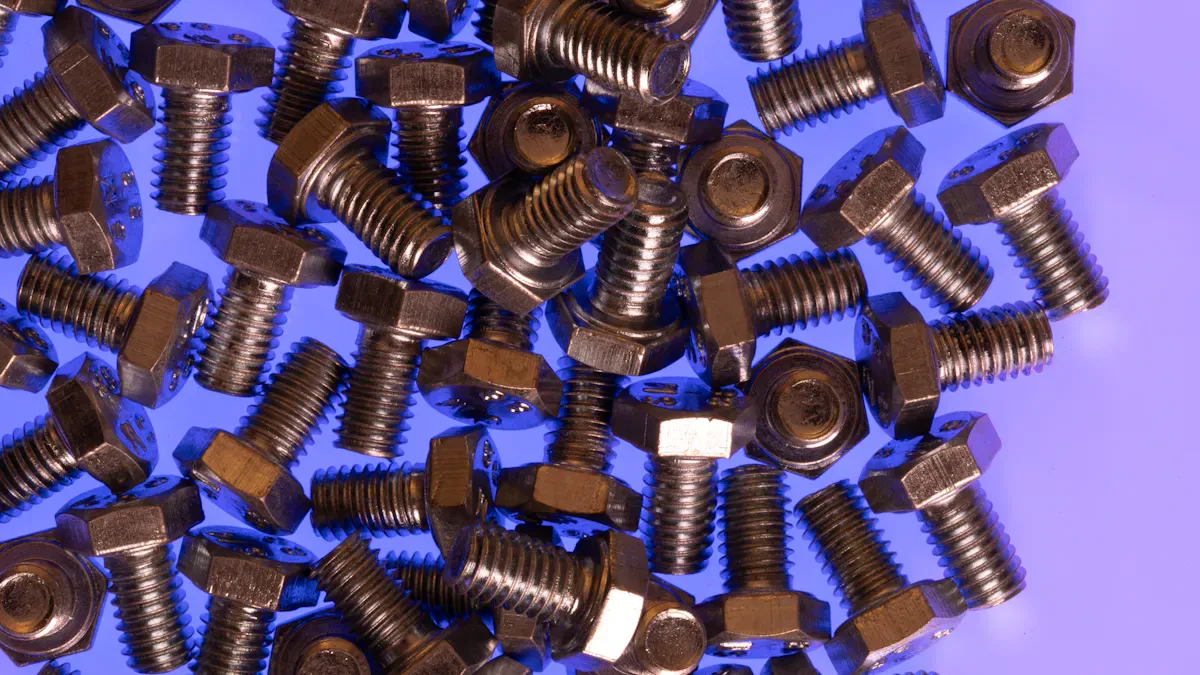
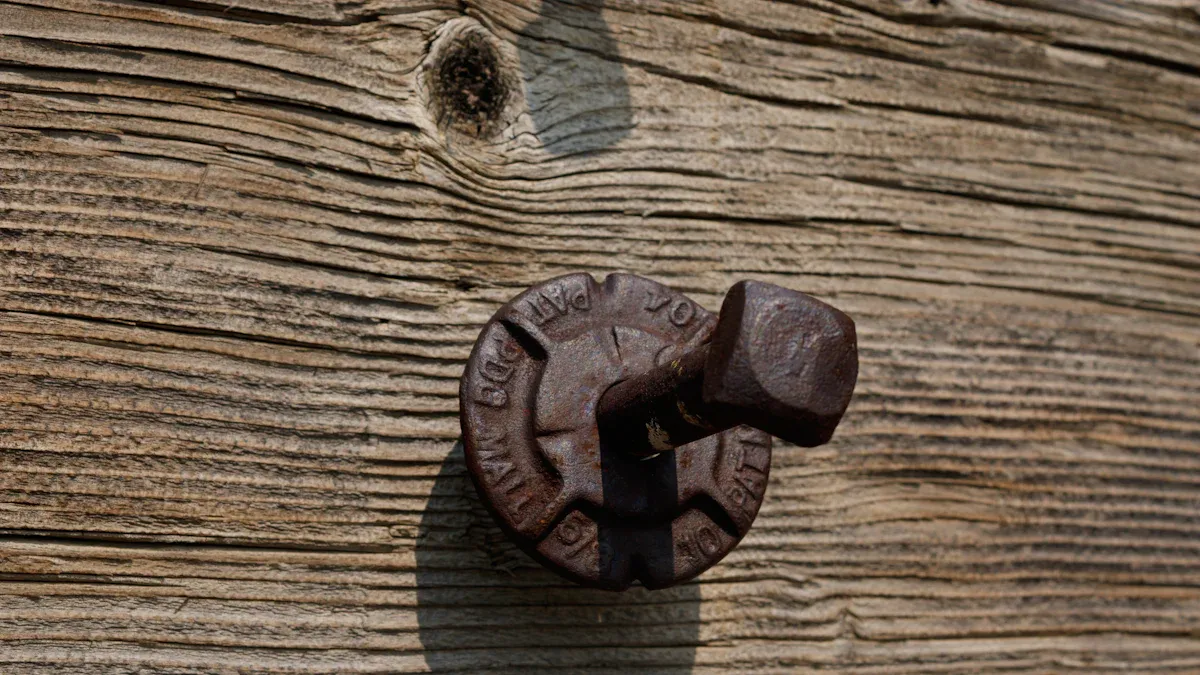
Selecting the correct hardware is crucial for structural integrity. For a standard connection between a 2x board and 4×4 posts, a 6-inch long carriage bolt is the professional choice. The most common diameter is 1/2 inch. This size ensures a secure fit through both pieces of wood, leaving adequate room for a washer and nut. The quality of the bolt casting is important, and a reputable custom fasteners manufacturer will produce reliable carriage bolts and other custom fasteners for any project need.
The Simple Formula for Carriage Bolt Length
Determining the correct bolt length is not a guessing game. A builder can use a simple addition formula to find the precise length needed for a secure and professional connection. This calculation ensures the bolt passes completely through all lumber and leaves enough thread for the necessary hardware.
Understanding the Calculation
The formula combines the actual thickness of the wood with the space required for hardware. Each component is critical for an accurate result.
Post Actual Width (3.5 inches)
A standard 4×4 post is not actually 4 inches by 4 inches. After the milling and drying process, its true dimension is 3.5 inches by 3.5 inches. A builder must always use this “actual” measurement in the calculation.
Attached Lumber Actual Width (1.5 inches)
Similarly, dimensional lumber like a 2×4 or 2×6 is not 2 inches thick. Its actual thickness is 1.5 inches. This measurement applies to any “2x” board a person attaches to the post.
Hardware Thickness (approx. 0.5 inches)
This part of the formula accounts for the hardware on the end of the bolt. It includes the thickness of a flat washer and a hex nut. A builder should allocate approximately 0.5 inches for these components to ensure they fit properly.
Extra Thread Length (approx. 0.5 inches)
A professional installation requires a small amount of threaded bolt to extend past the tightened nut. This extra length, typically around 0.5 inches, guarantees full thread engagement within the nut, creating a stronger connection.
Putting the Formula to Work
Applying the formula to real-world scenarios demonstrates its utility. The math is straightforward once a builder understands the components.
Example: 4×4 Post to 2x Joist
This is the most common connection for decks and fences. The calculation combines the actual dimensions of the materials.
Calculation Breakdown:
- 4×4 Post Actual Width:
3.5 inches- 2x Joist Actual Width:
1.5 inches- Washer & Nut Thickness:
0.5 inches- Extra Thread Length:
0.5 inchesTotal:
3.5 + 1.5 + 0.5 + 0.5 = 6.0 inchesA 6-inch bolt is the correct choice for this application.
Example: 4×4 Post to 4×4 Beam
When connecting two 4x4s, such as a support post to a horizontal beam, the formula adapts easily.
Calculation Breakdown:
- 4×4 Post Actual Width:
3.5 inches- 4×4 Beam Actual Width:
3.5 inches- Washer & Nut Thickness:
0.5 inches- Extra Thread Length:
0.5 inchesTotal:
3.5 + 3.5 + 0.5 + 0.5 = 8.0 inchesAn 8-inch bolt is required for a 4×4-to-4×4 connection.
Why “Nominal” vs. “Actual” Size Matters
Using the wrong lumber dimension is a frequent mistake that leads to incorrect hardware selection. Understanding the difference between nominal and actual sizes is essential for any construction project.
What is Nominal Lumber Size?
The “nominal” size (e.g., 4×4) is the name for the lumber. It refers to the rough-cut dimensions of the green wood before it is dried and planed smooth at the mill. The final product, or “actual” size, is always smaller. Using nominal dimensions in a calculation will result in purchasing carriage bolts that are too short.
Chart of Common Actual Lumber Dimensions
A builder should always reference the actual dimensions of the lumber for accurate measurements. This chart provides a quick reference for the most common sizes used in post and beam construction.
| NOMINAL SIZE (INCHES) | ACTUAL SIZE (INCHES) |
|---|---|
| 2 x 4 | 1.5 x 3.5 |
| 2 x 6 | 1.5 x 5.5 |
| 2 x 8 | 1.5 x 7.25 |
| 2 x 10 | 1.5 x 9.25 |
| 4 x 4 | 3.5 x 3.5 |
| 6 x 6 | 5.5 x 5.5 |
Choosing the Right Bolt Diameter
Selecting the correct bolt length is only half the battle; the bolt’s diameter is equally vital for a connection’s strength and stability. While various sizes are available, a professional standard exists for most structural applications involving 4×4 posts.
Why 1/2-Inch is the Standard
For most deck, fence, and pergola projects, the 1/2-inch diameter carriage bolt is the industry-recommended choice. This size offers an ideal balance of strength, availability, and ease of use.
Superior Strength and Shear Value
A 1/2-inch bolt provides excellent shear strength. Shear strength is the bolt’s ability to resist forces that could cause it to snap when pressure is applied perpendicular to its shaft. This robust construction ensures the connection can safely support heavy loads and withstand lateral forces from wind or use, which is critical for deck joists and guardrail posts.
Wide Availability and Tooling
Hardware stores and lumberyards universally stock 1/2-inch carriage bolts, washers, and nuts. The corresponding tools, such as 1/2-inch drill bits and wrenches for the 3/4-inch nut, are standard in any toolkit. This wide availability simplifies material purchasing and on-site work.
When to Consider Other Diameters
While 1/2-inch is the default, certain situations may call for a different bolt diameter. A builder assesses the load requirements of the connection to make the right choice.
Using 3/8-Inch Bolts for Lighter Loads
For non-structural or lightweight applications, a 3/8-inch bolt is often sufficient. Common uses include:
- Attaching lattice panels
- Building a simple garden gate
- Securing decorative railing infill
These bolts are not recommended for supporting joists, beams, or safety guardrails.
Using 5/8-Inch Bolts for Heavy-Duty Beams
When a project involves immense loads, a builder should upgrade to a 5/8-inch bolt. These larger bolts provide significantly more strength for connecting multi-ply beams or attaching primary support beams to oversized posts (like 6×6 or 8×8).
Matching Drill Bit to Bolt Diameter
Drilling a clean, correctly sized hole is essential for a strong connection. A hole that is too small makes installation difficult, while a hole that is too large creates a sloppy fit that compromises structural integrity.
The Rule of Drilling “Slightly Larger”
A builder should always drill a hole that is slightly larger than the bolt itself. This small clearance allows the bolt to slide through without damaging its protective coating or the wood fibers.
Pro Tip: For a 1/2-inch bolt, drilling a hole that is 1/16-inch larger is a common practice. This provides enough room for easy insertion without creating a loose connection.
Recommended Drill Bit Sizes for Bolts
Using the correct drill bit ensures a proper fit. A builder can reference a simple chart to match the drill bit to the bolt.
| BOLT DIAMETER | RECOMMENDED DRILL BIT |
|---|---|
| 3/8 inch | 7/16 inch |
| 1/2 inch | 9/16 inch |
| 5/8 inch | 11/16 inch |
How Many Bolts Do You Need Per Connection?
Determining the correct number of bolts is a critical decision for structural safety. While it may seem like a minor detail, the quantity and placement of bolts directly impact the strength and longevity of a connection. For any load-bearing application, a professional follows established rules to guarantee a secure assembly.
The Two-Bolt Rule for Beams and Joists
For structural connections, such as attaching a joist or beam to a 4×4 post, using two bolts is the non-negotiable standard. A single bolt is never sufficient for supporting a load.
Preventing Twisting and Rotation
A single bolt creates a pivot point. Under load or from the natural movement of wood, a joist secured with one bolt can twist and rotate. This movement weakens the connection over time and can lead to catastrophic failure. A second bolt, spaced correctly, locks the board in place and prevents this dangerous rotation, creating a rigid and stable joint.
Ensuring Code Compliance
Nearly all building codes mandate a minimum of two through-bolts for connecting structural members like deck joists and beams to posts. Adhering to the two-bolt rule ensures the project is not only safe but also meets legal and inspection requirements. This practice is a hallmark of professional construction.
Proper Spacing Requirements for Bolts
Proper bolt placement is just as important as using the right number of bolts. Building code requirements for bolt spacing are based on the physical properties of wood to prevent splitting.
Minimum Distance from a Board’s Edge
A bolt placed too close to the edge of a board can cause the wood to split out under pressure. The load direction relative to the wood grain is a key consideration. For a bolt loaded perpendicular to the grain (like a joist resting on it), a minimum edge distance is required.
Spacing Guideline: The minimum distance from the loaded edge of a board to the center of the bolt hole should be 4 times the bolt diameter. For a standard 1/2-inch bolt, this means the center of the hole must be at least 2 inches from the edge.
Minimum Vertical Distance Between Bolts
The two bolts must have adequate vertical space between them to maintain the wood’s integrity. Placing them too close together creates a weak point where the wood could shear and split along a straight line between the holes. A good rule of thumb is to maintain 2.5 to 4 inches of separation between bolts on a 2×8 or wider board.
When is a Single Bolt Connection Acceptable?
While the two-bolt rule is firm for structural work, some scenarios allow for a single carriage bolt. These are exclusively non-load-bearing situations where rotation is not a safety concern.
Non-Structural Applications
A single carriage bolt works well when the primary goal is simply to hold two pieces of wood together without supporting a significant weight. Examples include:
- Assembling raised garden beds
- Constructing a simple wooden gate
- General woodworking projects and furniture assembly
- Securing decorative fixtures or railing infill
Risks of Using a Single Bolt for Support
Using a single bolt for a structural connection is a serious mistake. The connection lacks stability and cannot resist twisting forces. Over time, the single pivot point will cause the bolt hole to elongate, making the joint loose and unsafe. This significantly compromises the structural integrity of a deck, fence, or pergola.
Step-by-Step Installation Guide
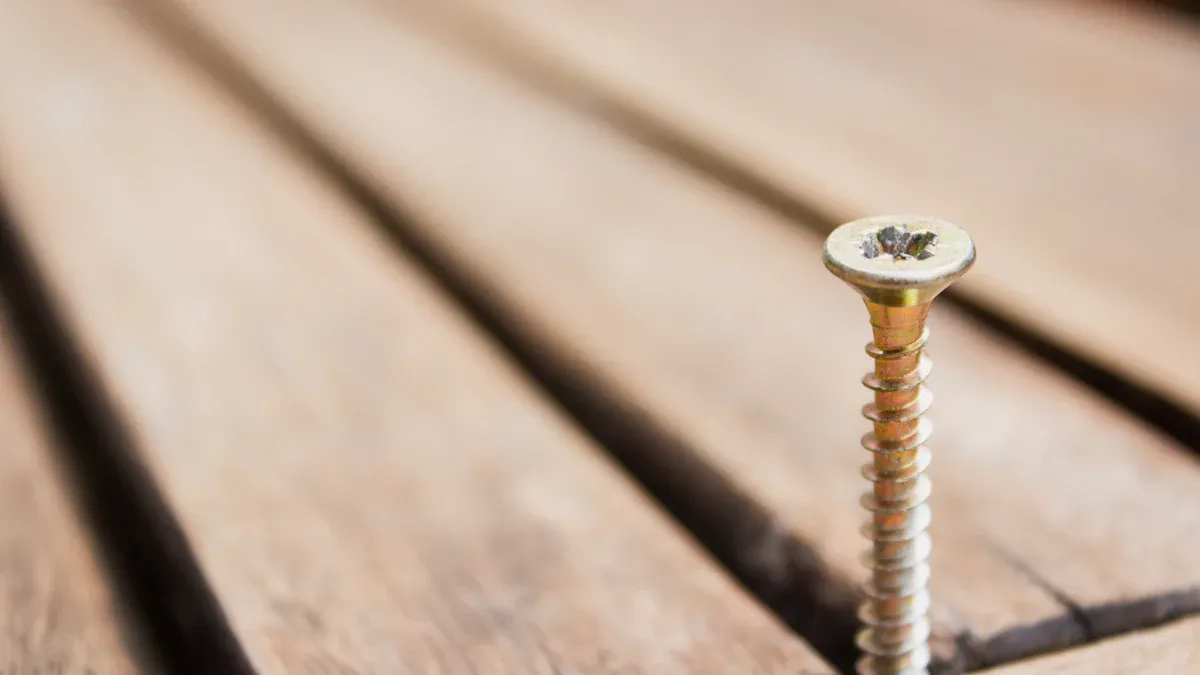
Proper installation is key to leveraging the full strength of your hardware. A builder follows a systematic process from gathering tools to final tightening. This ensures each connection is secure, professional, and built to last.
Tools and Materials Checklist
A builder gathers all necessary items before beginning work. This preparation prevents delays and ensures a smooth workflow. A well-organized project starts with a complete toolkit.
Power Tools (Drill, Impact Driver)
- Drill: A powerful corded or cordless drill is essential for boring holes through the post and joist.
- Impact Driver or Wrench: This tool makes tightening nuts quick and efficient, though hand tools also work.
- Drill Bits: A builder needs a 9/16-inch auger or spade bit for a 1/2-inch bolt.
Hand Tools (Wrenches, Sockets, Hammer)
- Wrenches/Socket Set: A builder needs a wrench or socket (typically 3/4-inch for a 1/2-inch bolt) to hold and tighten the nut.
- Hammer or Mallet: This is used to gently tap the carriage bolt head, setting its square neck into the wood.
- Clamps: Strong C-clamps or F-clamps hold the joist firmly against the post during drilling.
Measurement and Safety Gear
- Tape Measure: For accurate placement of all holes.
- Combination Square: This tool helps a builder draw perfectly straight and square lines.
- Safety Glasses: Protects eyes from wood chips and debris.
- Work Gloves: Provides a better grip and protects hands.
Prepping the Wood for Drilling
Accurate marking is the foundation of a strong connection. A builder takes care to measure precisely before drilling. This step prevents misaligned holes that can weaken the joint.
Measuring and Marking Your Hole Locations
A builder first temporarily secures the joist to the post using clamps or a few exterior wood screws. He then measures and marks the center points for each bolt hole according to the project plans. He must respect the minimum edge distance and spacing rules to prevent splitting the wood.
Using a Combination Square for Accuracy
After marking the points, a builder uses a combination square to draw a level line across the face of the joist. He then extends this line down the side. This provides a clear visual guide, helping to keep the drill bit perfectly straight as it passes through both pieces of wood.
Drilling the Hole
A clean, straight hole is critical for the integrity of the connection. A crooked hole can compromise the joint’s strength and make installing the carriage bolts difficult.
Keeping the Drill Perfectly Level and Straight
A builder drills with steady pressure, keeping the drill body level and perpendicular to the wood surface. He uses the lines drawn with the combination square as a reference.
Pro Tip: To guarantee a straight hole without a drill press, a builder can create a simple guide. He can drill a perfectly straight hole through a scrap piece of 4×4. By clamping this guide block over the mark, he creates a channel that directs the drill bit perfectly.
Clearing Wood Debris for a Clean Hole
During drilling, a builder should periodically pull the drill bit out of the hole. This action clears wood chips and prevents the bit from overheating or getting stuck. A clean hole allows the bolt to slide through smoothly without damaging its protective coating.
Inserting and Securing the Bolt
With a straight hole drilled, the builder can now install the hardware. Properly installing carriage bolts involves three distinct actions: seating the head, installing the hardware, and applying the correct amount of torque. This process ensures a strong, lasting connection.
Tapping the Carriage Bolt Head into Place
A builder first slides the bolt through the pre-drilled hole. He may need to use a hammer or rubber mallet to gently tap the rounded head. This initial tapping is not meant to drive the bolt home; its purpose is to engage the square neck just enough to prevent it from spinning freely. Aggressive force at this stage can damage the wood or the bolt’s protective coating. The final seating of the bolt head will occur during the tightening phase.
Installing the Washer and Nut
Once the bolt is through both pieces of wood, the builder installs the hardware on the threaded end. The sequence is crucial for a professional result.
- Place the Flat Washer: He first slides a flat washer over the bolt’s threads. The washer is essential because it distributes the clamping force over a larger surface area. This prevents the nut from crushing the wood fibers or pulling through the hole under load.
- Thread the Nut: Next, he threads the hex nut onto the bolt by hand until it is snug against the washer.
Proper Tightening Technique
The final step creates the clamping force that makes the joint strong. A builder uses a socket wrench or spanner to tighten the nut. This action does two things simultaneously: it applies clamping pressure and pulls the square neck of the bolt head deep into the wood on the other side, locking it permanently in place.
Warning: The Dangers of Overtightening Excessive tension is a common and costly mistake. A builder must tighten the nut until the connection is stiff and secure, but avoid going too far. Overtightening can:
- Crush and split the wood fibers, severely weakening the joint.
- Cause the bolt head or washer to sink too deep into the wood.
- Strip the threads on the nut or bolt, making the connection useless.
The goal is a bolt head that sits flush against the wood surface and a connection that feels completely rigid.
Essential Hardware: Washers and Nuts
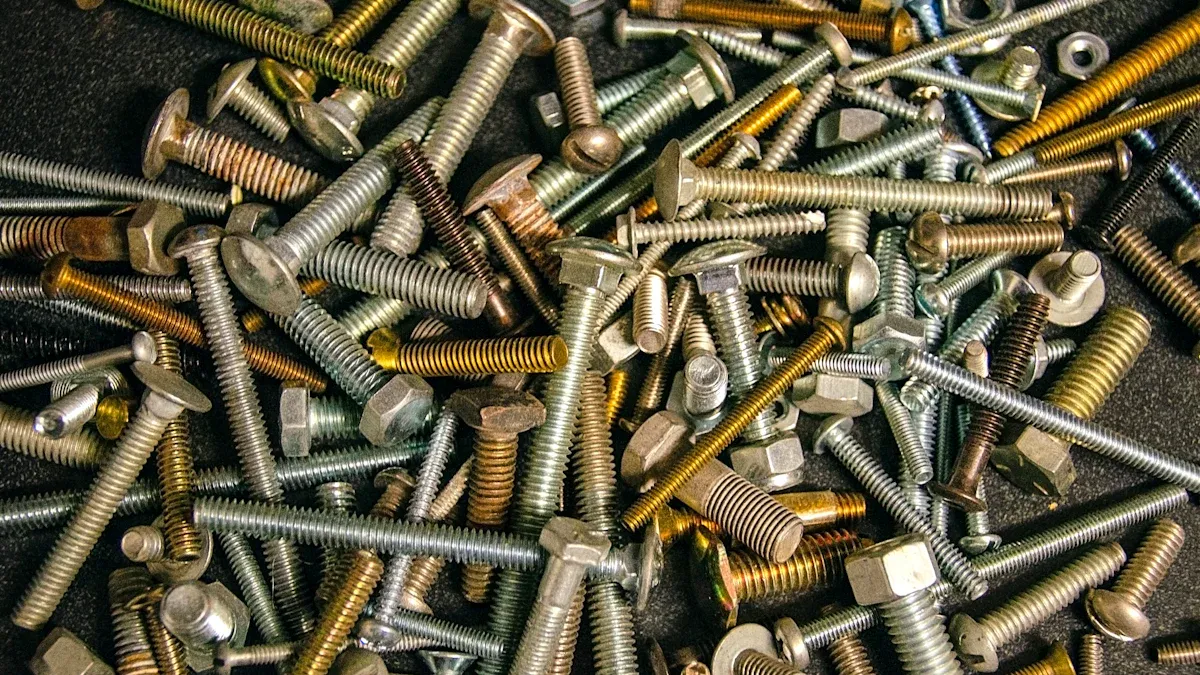
A carriage bolt is only as strong as the hardware that secures it. The washer and nut are not mere accessories; they are essential components that complete the connection. A builder must select the correct type and size to ensure the joint is safe, secure, and durable.
The Critical Role of a Flat Washer
A flat washer is a thin, circular piece of metal that is absolutely critical for any bolted wood connection. Its primary job is to protect the wood and maximize the strength of the joint.
Preventing Nut Pull-Through
A builder always places a washer under the nut. The washer provides a larger bearing surface for the nut. This increased surface area distributes the fastener’s load, preventing the nut from sinking into the wood or pulling completely through the hole as it is tightened. This is especially important when working with softer materials like pressure-treated pine.
Distributing the Clamping Force Evenly
Without a washer, the pressure from a tightening nut concentrates on a very small area. This intense pressure can crush and damage the wood fibers, weakening the connection. A flat washer solves this problem.
- It spreads the clamping force across a wider area.
- This even distribution protects the wood’s structural integrity.
- It creates a smooth surface for the nut to turn against during tightening.
Choosing the Correct Nut
The nut provides the clamping force that holds the entire assembly together. While a standard nut is sufficient for most jobs, certain conditions demand a more specialized solution.
Standard Hex Nuts for Most Applications
A standard hexagonal (hex) nut is the go-to choice for the vast majority of construction projects. When properly tightened against a flat washer, it creates a strong and reliable connection for static loads, such as those found in most deck and fence framing.
When to Use a Lock Washer or Nylon Lock Nut
A builder should upgrade to a locking nut in any situation involving movement or vibration. Standard nuts can loosen over time under these conditions. Lock nuts are essential for projects where:
- Vibration is a factor: Connections near heavy machinery, gates that swing, or structures exposed to constant rattling require them.
- Dynamic loads are present: A playset or a deck supporting a hot tub will experience shifting forces that can loosen hardware.
- Structural integrity is critical: For connections where failure is not an option, a nylon insert lock nut provides extra security against loosening.
Sizing Your Hardware Correctly
Using mismatched hardware is a common mistake that compromises a connection. The washer and nut must be sized specifically for the bolt’s diameter.
Matching Washer and Nut to Bolt Diameter
The rule is simple: the hardware must match the bolt. A 1/2-inch diameter carriage bolt requires a 1/2-inch flat washer and a 1/2-inch nut. This ensures a proper fit and correct thread engagement.
Standard vs. Oversized (Fender) Washers
For a 1/2-inch bolt, a builder will typically encounter two standard flat washer types: USS and SAE.
USS (United States Standard): These washers have a larger outside diameter (around 1-3/8 inches). Their wider surface area is ideal for softwoods, as it provides maximum load distribution.
SAE (Society of Automotive Engineers): These washers have a smaller outside diameter (around 1-1/16 inches). They provide a tighter fit in more confined spaces.
For most outdoor wood projects, the wider USS washer is the superior choice. In cases where maximum surface coverage is needed, a builder might even use an oversized “fender” washer.
Material and Coating: Galvanized vs. Stainless Steel
The material and coating of a carriage bolt determine its lifespan and suitability for an outdoor project. A builder must choose a fastener that can withstand moisture, chemical exposure, and environmental pollutants. The wrong choice can lead to premature rust, structural weakness, and project failure.
Hot-Dipped Galvanized (HDG) Bolts
For the majority of outdoor wood construction, hot-dipped galvanized bolts are the industry standard. They offer a robust and cost-effective solution for long-term durability.
The Best Choice for Pressure-Treated Lumber
Modern pressure-treated lumber contains chemicals like alkaline copper quaternary (ACQ) and copper azole (CA). These chemicals are highly corrosive to unprotected steel. A hot-dipped galvanized coating provides a thick, protective layer of zinc that effectively resists this chemical attack.
Important: Thinner coatings like electro-galvanizing or zinc plating do not provide sufficient protection. A builder must use hot-dipped galvanized fasteners for any connection involving pressure-treated wood to prevent rapid corrosion and ensure structural safety.
How Galvanization Prevents Corrosion
The hot-dipping process creates a metallurgical bond between the steel bolt and a thick layer of zinc. This zinc coating acts as a sacrificial barrier. It corrodes first, protecting the steel core from rust. This process significantly extends the service life of the fastener in typical outdoor conditions.
Stainless Steel Bolts
When a project demands the highest level of corrosion resistance, a builder turns to stainless steel. While more expensive, its performance in harsh environments is unmatched.
Superior Corrosion Resistance for Harsh Environments
Stainless steel contains chromium, which forms a passive, self-healing film on the bolt’s surface. If this layer is scratched, it instantly reforms, providing continuous protection against rust. This makes it inherently more durable than a coated bolt.
| Feature | Galvanized Steel Fasteners | Stainless Steel Fasteners |
|---|---|---|
| Lifespan in Harsh Environments | 5-20 years | 50-100 years |
| Best for… | Most outdoor projects | Coastal, industrial, and high-humidity areas |
| Corrosion Resistance | Relies on a finite zinc coating | Superior, inherent passive layer |
Use in Coastal and High-Salinity Areas
In coastal zones, airborne salt spray aggressively attacks and degrades galvanized coatings. Stainless steel, particularly Grade 316 with its added molybdenum, is the superior choice for these high-salinity environments. It effectively resists the chloride pitting that destroys lesser fasteners.
Zinc-Plated and Other Coatings
A builder may find shiny, zinc-plated carriage bolts at the hardware store. These are easily mistaken for outdoor-rated hardware, but they are completely unsuitable for exterior use.
Why These Are for Interior Use Only
Zinc-plated and electro-galvanized bolts have only a microscopically thin layer of zinc. This coating provides minimal rust protection, sufficient only for dry, indoor applications like furniture assembly or indoor shelving.
The Risk of Rapid Rust in Outdoor Projects
When used outdoors, the thin zinc plating fails quickly. Several environmental factors accelerate this process:
- Humidity and Rain: Water acts as an electrolyte, creating a chemical reaction that consumes the thin zinc coating.
- Chlorides: Salt from coastal air or de-icing products aggressively breaks down the protective layer.
- Pollutants: Chemicals like sulfur dioxide in the air can form acid rain, which is highly corrosive to zinc.
Once this thin coating is breached, the steel bolt underneath is exposed and will begin to rust almost immediately.
Common Scenarios and Required Bolt Lengths
Applying the bolt length formula to real-world construction scenarios solidifies a builder’s understanding. Different connections require different bolt lengths, and knowing the standard for each is a mark of professionalism. A builder can confidently select the correct hardware by analyzing the most common joints found in deck, fence, and pergola construction.
Attaching a 2×4 to a 4×4 Post
This connection is a fundamental building block for many structures, often used for railing systems or light-duty framing. The calculation is straightforward and serves as the basis for most post-to-joist attachments.
Calculating the 6-Inch Bolt Length
A builder uses the standard formula, combining the actual dimensions of the lumber and hardware. The calculation confirms the most common bolt length used in outdoor projects.
Calculation for a 2×4 to a 4×4:
- Actual 4×4 Post Width:
3.5 inches- Actual 2×4 Thickness:
1.5 inches- Washer & Nut Allowance:
0.5 inches- Extra Thread Allowance:
0.5 inchesTotal Required Length:
3.5 + 1.5 + 0.5 + 0.5 = 6.0 inches
This simple math demonstrates why a 6-inch carriage bolt is the correct and standard choice for this application.
Recommended Diameter (1/2-Inch)
For any structural connection, including attaching a 2×4 as part of a guardrail system, a builder must use a 1/2-inch diameter bolt. This diameter provides the necessary shear strength to meet building codes and ensure the joint can resist lateral forces without failure.
Attaching a 2×6, 2×8, or 2×10 to a 4×4 Post
Deck construction frequently involves attaching wider joists or rim joists to 4×4 posts. A common point of confusion is whether these wider boards require longer bolts. The answer lies in understanding which dimension the bolt passes through.
Why the 6-Inch Bolt Length Remains the Same
The width of a joist (e.g., 5.5 inches for a 2×6, 9.25 inches for a 2×10) does not influence the bolt length calculation. The bolt only passes through the thickness of the board, which remains constant.
- A 2×6 is 1.5 inches thick.
- A 2×8 is 1.5 inches thick.
- A 2×10 is 1.5 inches thick.
Since the thickness is always 1.5 inches, the calculation remains 3.5 + 1.5 + 0.5 + 0.5 = 6.0 inches. A 6-inch carriage bolt is the correct length for attaching any 2x dimensional lumber to a 4×4 post.
Considerations for Proper Bolt Spacing on Wider Boards
While the bolt length does not change, the bolt placement becomes more critical on wider boards. The two mandatory bolts must be spaced correctly to maximize stability and prevent the board from splitting.
| Board Size | Recommended Vertical Spacing (Center-to-Center) |
|---|---|
| 2×6 | 2.5 to 3 inches |
| 2×8 | 4 to 5 inches |
| 2×10 | 5 to 6 inches |
Proper spacing ensures the bolts work together effectively to create a rigid joint that resists twisting and meets structural requirements.
Attaching a 4×4 Beam to a 4×4 Post
Connecting a horizontal 4×4 beam to a vertical 4×4 support post is a common scenario in pergola and post-and-beam construction. This joint requires a longer bolt because the builder is connecting two thicker pieces of wood.
Calculating the 8-Inch Bolt Length
The formula adapts easily to the new dimensions. A builder simply substitutes the thickness of the 2x board with the thickness of another 4×4.
Calculation for a 4×4 to a 4×4:
- Actual 4×4 Post Width:
3.5 inches- Actual 4×4 Beam Width:
3.5 inches- Washer & Nut Allowance:
0.5 inches- Extra Thread Allowance:
0.5 inchesTotal Required Length:
3.5 + 3.5 + 0.5 + 0.5 = 8.0 inches
An 8-inch carriage bolt is necessary to securely fasten two 4x4s together.
Why a Notched Connection is Structurally Superior
While through-bolting a 4×4 beam to the side of a 4×4 post is possible, it is not the strongest method. A professional builder will almost always create a notched connection for load-bearing beams.
Pro Tip: The Power of a Notch ⚙️
A notched connection involves cutting a seat out of the vertical post for the horizontal beam to rest on. This design transfers the vertical load directly from the beam to the post through wood-on-wood compression. The bolts then serve primarily to hold the beam in place and prevent lateral movement. This is vastly superior to a side-bolted joint, which relies entirely on the shear strength of the bolts to carry the entire load.
Attaching Double 2x Beams to a 4×4 Post
A double 2x beam is a common structural component in deck and pergola construction. A builder creates it by fastening two pieces of dimensional lumber (like 2x8s or 2x10s) together. This laminated beam offers significantly more strength and span capability than a single board. Securing this heavier beam to a 4×4 post requires a precise bolt length and adherence to professional installation practices.
Calculating the 7-Inch Bolt Length
The bolt length calculation for a double beam follows the same trusted formula. The key difference is the total thickness of the attached lumber. A builder must account for two boards, not just one.
A double 2x beam consists of two boards, each with an actual thickness of 1.5 inches. This creates a total beam thickness of 3.0 inches.
Calculation for a Double 2x Beam to a 4×4:
- Actual 4×4 Post Width:
3.5 inches- Double 2x Beam Thickness:
3.0 inches- Washer & Nut Allowance:
0.5 inches- Extra Thread Allowance:
0.5 inchesTotal Required Length:
3.5 + 3.0 + 0.5 + 0.5 = 7.5 inches
Since 7.5-inch bolts are not a standard size, a builder has two professional options. He can select the next size up, an 8-inch bolt, and trim the excess length after tightening. Alternatively, if the post is notched for the beam, a 7-inch bolt becomes the perfect fit. Notching the post for the beam reduces the material thickness the bolt must pass through, making a shorter bolt ideal.
Through-Bolting Best Practices
Proper installation technique is essential for a safe and durable connection. A builder follows a specific sequence to ensure the joint achieves maximum strength and stability. When splicing two beams together on top of a single post, a builder must use four bolts to secure the connection properly.
The standard installation procedure involves several key steps:
- A builder first drills the correctly sized holes through the beam and post.
- He then inserts the 1/2-inch diameter hot-dipped galvanized bolts, each with a washer under the head.
- On the threaded end, he attaches another flat washer and a hex nut.
- Finally, he tightens the nuts. A builder often uses two wrenches, one on each side, to prevent the bolt head from spinning. The goal is to tighten until the washer on the nut side slightly compresses and indents the wood surface.
Alternative Method: Metal Connectors ⛓️
An excellent alternative to through-bolting involves using specialized metal hardware. For a double beam resting on top of a 4×4 post, a builder can use post-to-beam connectors like the Simpson Strong-Tie AC4Z or LPC4Z. These connectors are fastened with code-compliant exterior-rated connector screws. A builder always consults the manufacturer’s guide, such as the Simpson Strong-Tie catalog, to ensure he uses the correct fastener type and size for the specific connector.
Advanced Techniques with Carriage Bolts
A builder can elevate the strength and appearance of a project by employing advanced installation techniques. These methods go beyond a simple through-bolt connection. They create stronger joints, provide a cleaner finish, and ensure compliance with modern safety codes.
Notching Posts for Beams
Notching is a professional technique for creating a superior load-bearing connection between a vertical post and a horizontal beam. It is the preferred method for any structural beam.
Creating a Stronger Load-Bearing Surface
A builder creates a notch by cutting a “seat” out of the support post. The beam then rests directly on this wooden shelf. This design transfers the vertical load from the beam to the post through direct wood-on-wood compression. The bolts primarily serve to hold the beam in place, rather than carrying the entire vertical load on their own.
How Notching Affects Bolt Length Choice
Notching reduces the total thickness of wood the bolt must pass through. For example, when a double 2x beam sits in a 1.5-inch deep notch on a 4×4 post, the total material thickness becomes 2.0" (post) + 3.0" (beam) = 5.0". Adding 1 inch for hardware and extra thread results in a 6-inch bolt requirement, not the 7.5-inch or 8-inch bolt needed for a surface-mounted connection.
Counterboring the Bolt Head or Nut
Counterboring is a finishing technique that recesses hardware below the surface of the wood. It provides a clean, professional look and eliminates potential snag hazards.
Creating a Flush Hardware Surface
A builder uses this method to sink the bolt head or the washer and nut into the wood. The result is a perfectly flat surface, which is ideal for furniture, playsets, or any area where exposed hardware is undesirable.
Tools Needed for Counterboring
Creating a counterbore requires a specific drill bit.
- Forstner Bit: This is the best tool. It drills a clean, flat-bottomed hole perfect for a washer and nut.
- Spade Bit: A spade bit can also work. A builder chooses a bit with a diameter slightly larger than the washer or bolt head being recessed.
Using Bolts for Guardrail Post Connections
Properly securing guardrail posts is one of the most critical safety aspects of deck building. Modern codes reflect a deeper understanding of the forces involved.
Attaching Posts to Rim Joists
A guardrail post acts as a powerful lever. Research shows that a 200-pound horizontal force at the top of a 36-inch post translates to roughly 1,400 pounds of force at the connection point. This leverage can easily pry a rim joist away from the deck frame if not properly reinforced.
Meeting Safety and Code Requirements
Building codes now mandate that the guard post connection has a continuous load path to the deck joists, not just the rim joist. Simply using carriage bolts through the post and rim joist is no longer sufficient. A builder must use one of these approved methods:
Reinforcement Methods:
- Blocking: Install solid wood blocking between the joists to help resist rotation.
- Tension Hardware: Use specialized metal connectors like the Simpson Strong-Tie DTT2Z or MiTek DTB-TZ. These ties are installed with a bolt through the post and are then fastened to the side of an adjacent joist, effectively transferring the load into the deck’s structure.
Common Mistakes to Avoid
Even with the correct hardware, improper installation can compromise a project’s safety and longevity. A professional builder avoids several common errors to ensure every connection is strong and secure. These mistakes are easy to make but also simple to prevent with the right knowledge.
Using Bolts That Are Too Short
Selecting a bolt that is too short is a critical structural error. This mistake directly impacts the strength and reliability of the entire joint.
The Danger of Insufficient Thread Engagement
A secure connection depends on the nut fully engaging with the bolt’s threads. A bolt that is too short does not provide enough threaded length for the nut to grab onto. This leads to a weak joint that can fail under load.
Professional Standard for Steel Bolts:
- To achieve full strength, the nut must engage a length of thread at least equal to the bolt’s diameter.
- Many building codes and engineering standards require at least one to two full threads to extend past the outer face of the nut.
Failure to meet this minimum engagement can cause the threads to strip, rendering the connection useless.
Signs of a Bolt Being Too Short
A builder can spot this mistake with a quick visual inspection. The most obvious signs include:
- The end of the bolt does not reach the outer face of the nut.
- The nut is only holding on by a few threads.
- No threads are visible extending past the tightened nut.
Using Bolts That Are Too Long
While less dangerous than a short bolt, a bolt that is too long creates other problems. It results in an unprofessional finish and can introduce safety hazards.
Creating Snag Hazards and a Poor Finish
Excessive thread extending past the nut looks sloppy and unfinished. On a deck, fence, or playset, these long ends can easily catch on clothing or scrape skin, creating a significant snag hazard. A professional builder always aims for a clean and safe final product.
How to Safely Trim Excess Bolt Length
A builder can safely trim an overly long bolt with the correct technique.
- First, he threads a hex nut onto the bolt, past the point where he will make the cut.
- Next, he uses a hacksaw or an angle grinder with a metal-cutting wheel to trim the excess bolt length.
- Finally, he unscrews the nut. This action cleans and reforms the threads at the cut end, allowing another nut to be threaded on easily in the future.
Over-Tightening the Nuts
Applying too much force when tightening a nut is a common but damaging mistake. The goal is a snug connection, not a crushed one.
Crushing Wood Fibers and Reducing Strength
Excessive torque from a wrench crushes the wood fibers underneath the washer and bolt head. This damage creates a weak point in the wood and reduces the connection’s overall strength. A severely over-tightened bolt can cause the wood to split, leading to immediate failure.
Using a Torque Wrench for Precision
For critical structural connections, a professional uses a torque wrench. This tool allows a builder to apply a precise, specified amount of rotational force (torque). Using a torque wrench ensures the connection is perfectly tight without over-compressing and damaging the wood, guaranteeing optimal strength and safety.
Drilling a Crooked or Angled Hole
A builder’s precision during drilling directly impacts the strength of a bolted connection. A hole drilled at an angle, even a slight one, introduces multiple points of failure. This seemingly small error can significantly undermine the structural integrity of the entire joint. A professional builder takes deliberate steps to ensure every hole is perfectly straight and perpendicular to the wood surface.
How it Weakens the Connection Integrity
A crooked hole compromises a connection in several critical ways. The primary issue is the loss of even clamping force. The bolt head on one side and the washer and nut on the other will not sit flush against the wood. This misalignment creates uneven pressure points.
- Stress Concentration: Instead of distributing the load over the entire surface of the bolt head and washer, the force concentrates on the high edges. This focused pressure can crush wood fibers and lead to premature splitting.
- Reduced Clamping Force: An angled bolt cannot achieve proper tension across the joint. The connection will feel less rigid and can loosen over time as the wood fibers compress unevenly.
- Bolt Bending: Tightening a nut on an angled bolt can bend the bolt shaft. A bent bolt has a significantly lower shear strength, making it more susceptible to snapping under lateral loads.
- Elongated Holes: The angled pressure can cause the bolt to slowly enlarge the hole, creating a sloppy fit. This movement further weakens the joint and reduces its ability to resist rotation and shear forces.
Tips and Jigs for Drilling Straight Holes
A builder can use several techniques to guarantee straight, accurate holes every time. These methods range from careful marking to using simple, effective guides. Consistent results come from a disciplined approach to the drilling process.
Pro Tip: The Scrap Block Jig 🧰
A builder can create a perfect drilling guide using a scrap piece of 4×4. He first uses a drill press to bore a perfectly straight 9/16-inch hole through the block. He then clamps this guide block firmly over his mark on the workpiece. The block forces the drill bit to travel in a perfectly straight line, eliminating any chance of drilling at an angle.
Beyond using a jig, a builder can improve accuracy with fundamental techniques.
- Mark Two Faces: Use a combination square to draw a guide line across the face of the board and continue it down the side. These two lines provide a visual reference to keep the drill aligned in both planes.
- Use an Auger Bit: An auger bit has a screw tip that helps pull the bit straight into the wood, reducing the tendency for it to wander off course.
- Stable Stance: A builder plants his feet firmly and uses both hands on the drill. This stable posture gives him maximum control to keep the drill level and steady throughout the process.
A builder ensures a project’s success by mastering the fundamentals of hardware selection and installation. The key takeaways for any structural connection to a 4×4 post are straightforward.
- A 1/2″ x 6″ carriage bolt is the standard, reliable choice for attaching any 2x board.
- A builder must use two bolts per structural connection to prevent rotation and ensure stability.
- A hot-dipped galvanized flat washer under the nut is essential to protect pressure-treated wood.
- The formula is simple:
Post Width + Lumber Width + Hardware + Extra Thread.
Taking the time to measure correctly, drill straight, and tighten properly is the key to a strong, safe, and long-lasting structure.
FAQ
Can a builder reuse old carriage bolts?
A builder should not reuse old carriage bolts for structural projects. The removal process can damage the threads and protective coating. New, certified hardware ensures maximum strength and corrosion resistance for a safe, long-lasting connection. Old bolts are only suitable for non-structural, temporary applications.
What happens if the bolt hole is too big?
A hole that is too large creates a sloppy connection. It allows the joint to shift and move under load. This movement reduces the bolt’s shear strength and compromises the structural integrity of the entire assembly. A builder must always drill the correct size hole.
Is a washer needed under the carriage bolt head?
No, a washer is not used under the head of a carriage bolt. The square neck under the head is designed to bite directly into the wood. This action prevents the bolt from spinning during tightening. A builder only places a washer under the nut.
Why use two bolts instead of one stronger bolt?
A single bolt, regardless of its strength, creates a pivot point. This allows a joist or beam to twist and rotate. A builder uses two bolts to lock the board in place, creating a rigid joint that effectively resists these dangerous rotational forces.
How tight should a builder make the nut?
A builder tightens the nut until the washer on the nut side begins to compress the wood fibers slightly. The connection should feel completely rigid. Overtightening can crush the wood and weaken the joint, so a builder must avoid excessive force.
Quick Tip 💡
For critical connections, a professional uses a torque wrench to apply a specific, manufacturer-recommended amount of force. This guarantees optimal tightness without damaging the wood.
What is the best drill bit for making the hole?
An auger bit is the superior choice for drilling deep, straight holes for carriage bolts. Its screw tip pulls the bit through the wood, reducing wander. A sharp spade bit is also an acceptable alternative for this task.