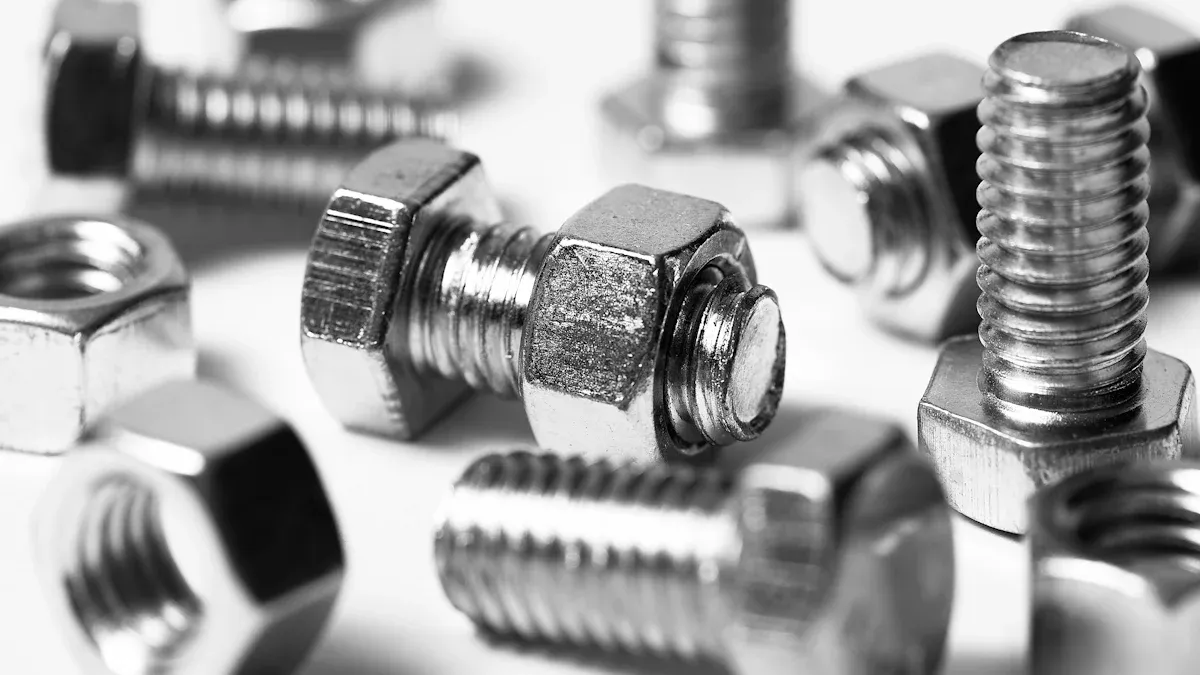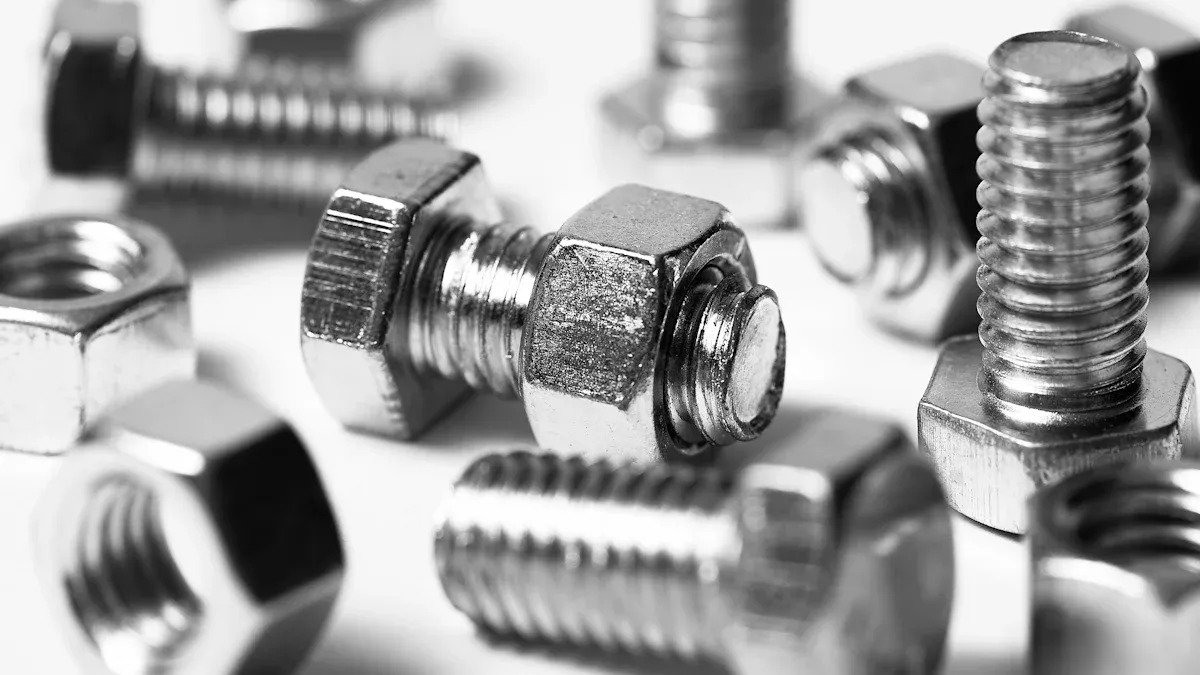
A flange bolt chart is a critical reference tool for any piping project. This chart specifies the correct number, diameter, and length for each bolt. Its primary function is to ensure proper assembly, gasket compression, and safety within industrial piping systems. Using the correct Flange Bolt specifications creates a secure, leak-free flange connection.
Note: A custom fasteners manufacturer uses these standards for bolt casting. Procuring the specified bolt for your flange is non-negotiable, even when dealing with custom fasteners for a unique flange.
What is a Flange Bolt Chart?
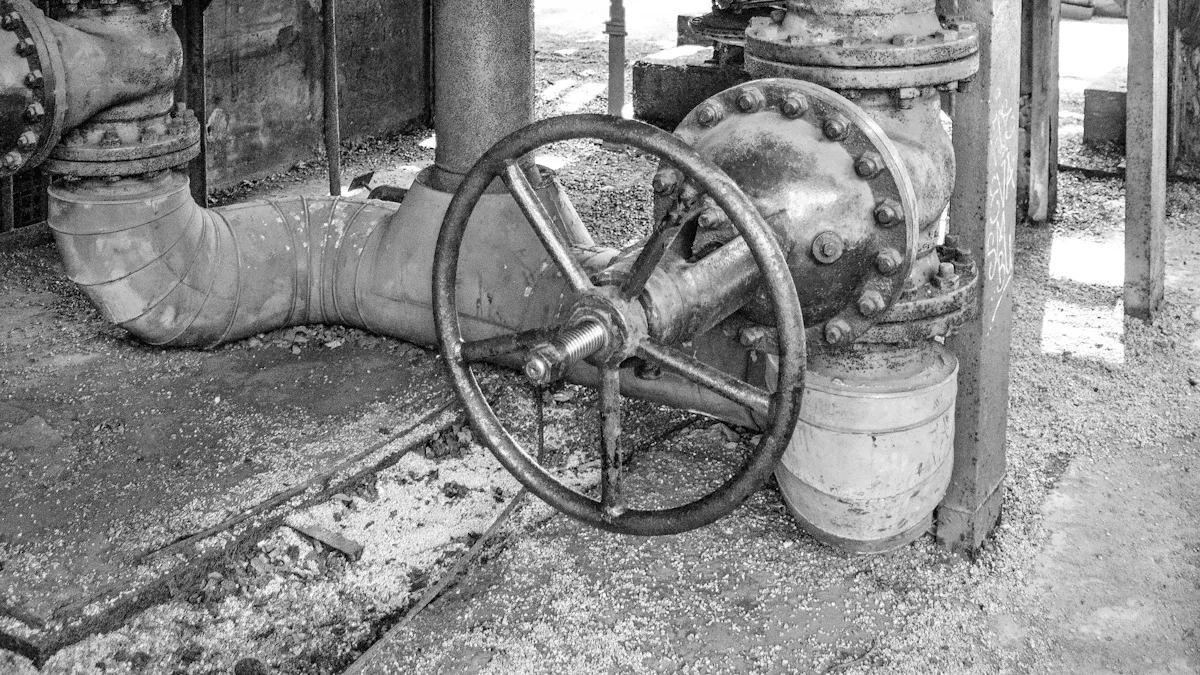
A flange bolt chart is an essential engineering document. It provides a standardized reference for the fasteners required to connect a specific flange. This tool removes guesswork and ensures every connection is assembled according to proven specifications. The chart details all critical data points for a given joint.
Key information found on a typical chart includes:
- Flange size and pressure class
- The total number of bolts required
- The diameter of each bolt
- The size of the bolt holes on the flange
- Recommended bolt torque values
The Purpose of a Standardized Chart
Ensuring Interchangeability and Safety
Standardization is the cornerstone of modern industry. A standardized chart ensures that a 6-inch Class 150 flange from one manufacturer will use the same fasteners as one from another manufacturer anywhere in the world. This global consistency improves operational efficiency and system compatibility. It eliminates the need for costly and time-consuming custom engineering. Most importantly, it enhances safety by guaranteeing that components are compatible and reliable.
The Role of Standards like ASME B16.5
Organizations like the American Society of Mechanical Engineers (ASME) develop and maintain these critical standards. The ASME B16.5 standard, for example, governs pipe flanges and flanged fittings for sizes NPS ½ through NPS 24. It dictates the dimensions, tolerances, and materials, including the bolt patterns. Adhering to these specifications ensures the proper distribution of forces and load-carrying capacity, which is fundamental to preventing structural failures in industrial operations.
Why You Can’t Guess Flange Bolt Sizes
Attempting to select a flange bolt based on visual estimation or assumption is a dangerous practice. The specifications are precise for critical reasons related to mechanical engineering and safety principles.
Risks of Incorrect Bolt Selection
Using the wrong bolt introduces significant risk. An undersized bolt lacks the strength to handle the operational pressure, while an oversized bolt will not fit. Even a bolt that is slightly too short or too long can cause a connection failure.
Critical Alert: Incorrect flange bolt selection can lead to flange distortion, gasket damage, dangerous leaks of hazardous materials, and catastrophic system failure. There is no substitute for consulting the correct chart.
How It Guarantees Proper Gasket Sealing
A secure, leak-free seal depends on achieving correct and even gasket compression. The flange bolt chart specifies the exact number and diameter of bolts needed to apply a uniform clamping force around the entire flange face. This ensures the gasket is compressed enough to create a tight seal without being crushed or damaged. Using the specified bolt length also guarantees proper nut engagement without the risk of the bolt bottoming out or not having enough thread.
Decoding the Flange Bolt Chart: Key Data Columns
A flange bolt chart presents critical data in a structured table format. Technicians must understand each column to select the correct fasteners. The primary columns organize information by flange size, pressure capability, and the corresponding bolt specifications.
Nominal Pipe Size (NPS) and Flange Diameter
Identifying Your Flange Size
The first step in using the chart is identifying the correct flange size. This information is typically stamped directly onto the flange’s outer rim. The Nominal Pipe Size (NPS) is the North American standard for designating pipe sizes. It is crucial to locate this value to find the correct row in the data table.
How NPS Relates to the Chart
The NPS value serves as the primary identifier in the flange bolt chart. Each row in the chart corresponds to a specific NPS. For example, a technician working with a 6-inch pipe system would look for the row labeled “NPS 6” or “6”” to find the associated flange bolt requirements. This ensures the selected bolt specifications match the physical dimensions of the flange.
Flange Pressure Class Rating
Understanding Class 150, 300, 600, and Higher
The flange pressure class rating is a dimensionless number indicating a flange’s ability to withstand pressure at various temperatures. It is not a direct measurement in psi or bar. Within the ASME B16.5 standard, the terms ‘class’, ‘lb’, and ‘#’ are used interchangeably. A “Class 150” flange may also be referred to as “150 lb” or “150#”.
Key Concept: A pressure class rating represents the Maximum Allowable Working Pressure (MAWP) for a flange made of a specific material at a reference temperature. This pressure-handling capability decreases as the operating temperature of the system increases.
Key points about pressure class include:
- It is often designated by ‘#’, ‘Lb’, or ‘lbs’ (e.g., Class 300#).
- The rating does not directly equate to a pressure value (e.g., 150 lb does not mean 150 psi).
- Pressure-temperature ratings are material-specific. A Class 300 carbon steel flange has different ratings than a Class 300 stainless steel flange.
How Pressure Class Impacts Bolt Requirements
Pressure class directly influences the required flange bolt specifications. As the pressure class increases, the flange must contain greater forces. This requires a more robust connection. Consequently, a higher pressure class demands more bolts, a larger bolt diameter, and an increased bolt hole diameter. For instance, an NPS 12 flange in a 900# pressure class will have a greater number of bolt holes and a larger bolt hole diameter than a 600# flange of the same size. An NPS 12 2500# flange will have an even greater number of bolt holes and a larger bolt hole diameter to accommodate extreme pressures. This ensures the connection has the necessary strength and stability.
Number of Bolts Required
Ensuring Even Clamping Force
The specified number of bolts is essential for creating a secure, leak-free seal. Using the correct quantity of fasteners ensures the clamping force is distributed evenly across the gasket surface. This uniform pressure prevents gasket crushing and flange distortion. The number of required bolts is always a multiple of four (e.g., 4, 8, 12) to facilitate a symmetrical tightening pattern. This design principle ensures a balanced load on the flange connection.
Locating the Bolt Count on the Chart
Engineers can easily find the required bolt count on the chart. After locating the row for the correct NPS and the column for the specific pressure class, the intersecting cell will show the total number of bolts needed. For example, cross-referencing an NPS 8 flange with a Class 150 rating will reveal that it requires 8 bolts. This value is non-negotiable for a safe and reliable assembly.
Diameter of Flange Bolts
The flange bolt chart provides the precise nominal diameter for the bolts required for a specific connection. This dimension is fundamental to the joint’s integrity, as it determines the fastener’s strength and its fit within the flange.
Reading Imperial and Metric Dimensions
Flange bolt charts present dimensions in either Imperial (inches) or Metric (millimeters) units. The ASME B16.5 standard, which is prevalent in North America, primarily uses the Imperial system. A technician must pay close attention to the chart’s units to avoid procurement errors. For example, a chart might specify a ¾” bolt, which corresponds to a specific metric equivalent. Always verify the unit of measure before proceeding.
Matching Bolt Diameter to Flange Hole
A common point of confusion is the relationship between the bolt diameter and the bolt hole diameter. The bolt hole diameter on a flange is always slightly larger than the nominal diameter of the bolt itself. This intentional clearance, typically 1/8 inch (3 mm) for larger bolts and 1/16 inch (1.5 mm) for smaller ones, is critical.
Design Insight: The clearance provided by the larger bolt hole diameter facilitates easier alignment and installation of the flange bolt. It accommodates minor manufacturing tolerances without requiring force, which could damage the bolt threads or flange face.
The chart specifies the correct bolt diameter designed to fit the standardized bolt hole diameter for a given flange size and class. The bolt hole diameter is a fixed dimensional property of the flange. Engineers determine the bolt hole diameter during the flange design process. The specified bolt hole diameter ensures that the correct flange bolt can be inserted easily. A technician must never try to force an oversized bolt into a flange, as this indicates a mismatch with the intended bolt hole diameter. The integrity of the connection depends on using the correct bolt for the specified bolt hole diameter. The bolt hole diameter is a critical parameter for a secure fit. The bolt hole diameter is not a value to be guessed. The bolt hole diameter dictates the maximum size of the fastener. The bolt hole diameter is a non-negotiable dimension.
Required Length of Stud Bolts
The chart also specifies the required length for stud bolts. A stud bolt is a threaded rod with nuts on both ends, and it is the preferred fastener for most flanged connections. Using the correct length is just as important as using the correct diameter. A bolt that is too short will not allow for proper nut engagement, while one that is too long can create a safety hazard or interfere with other equipment.
Raised Face (RF) vs. Flat Face (FF) Flanges
The type of flange face significantly impacts the required bolt length.
- Flat Face (FF): These flanges have a uniform, flat surface. The two flanges make direct contact across their entire face.
- Raised Face (RF): These flanges feature a small, raised surface around the bore where the gasket sits. When bolted together, the main bodies of the flanges do not touch, creating a gap.
This gap means that RF flanges require a longer bolt than FF flanges of the same size and class. The theoretical stud bolt length (L) for a raised face connection can be determined with a specific formula. The calculation is L = 2 (s + n + h + rf) + g. Each variable represents a critical dimension:
s= Free threads (allowance for thread protrusion, often 1/3 of the bolt diameter)n= Nut height (typically equal to the nominal bolt diameter)h= Flange thicknessrf= Height of the raised faceg= Gasket thickness
How Gasket Thickness Affects Bolt Length
Gasket thickness is a direct and critical component in determining the final stud bolt length. The total length of the bolt must account for the “grip length,” which is the distance between the inner faces of the two nuts when the joint is fully assembled. This distance includes the thickness of both flanges plus the thickness of the gasket.
The required bolt length calculation must therefore include several key components:
- Thickness of the first flange
- Thickness of the second flange
- Compressed gasket thickness
- Height of two nuts
- A small allowance for thread protrusion beyond each nut
For instance, a technician assembling a joint with two 18 mm thick flanges, a 3 mm gasket, and two 16 mm nuts would need a bolt longer than the sum of these parts. Adding a 5 mm protrusion allowance, the calculation becomes 18 + 18 + 3 + 16 + 16 + 5, resulting in a required bolt length of 76 mm. This example clearly shows how the gasket contributes directly to the final length calculation.
How to Use a Flange Bolt Chart: A Step-by-Step Guide
Using a flange bolt chart is a straightforward process that ensures accuracy and safety. A technician can confidently select the correct fasteners for any standard connection by following a systematic approach. This guide breaks the process down into three essential steps.
Step 1: Identify Your Flange Specifications
Before a technician can even look at a chart, they must gather all the critical specifications of the flange in question. This information is the key to unlocking the correct data. The required specifications are typically stamped on the flange itself.
Determine the Flange Standard (e.g., ASME B16.5)
The first piece of information is the governing standard. While ASME B16.5 is the most common standard for pipe flanges up to NPS 24, other standards exist for different applications. A technician must verify the correct one.
Other Common Flange Standards 📝
- ASME B16.47: This standard covers large diameter steel flanges from 26″ to 60″. It includes Series A and Series B types, which have different dimensions, including the bolt hole diameter and number of bolt holes.
- ASME B16.1: This standard applies to cast iron flanges and fittings. Its dimensions often align with other standards but are specific to lower-pressure cast iron systems. The bolt hole diameter is a critical dimension here.
- AWWA: These flanges are designed specifically for waterworks service and have their own set of dimensional standards, including a unique bolt hole diameter for each size.
Confirm the Nominal Pipe Size (NPS)
The Nominal Pipe Size (NPS) identifies the flange’s size. This value, such as “NPS 6” or “10””, is the primary row identifier in most charts. A technician must correctly identify the NPS to find the right data set. The NPS directly relates to the flange’s dimensions, including its bolt hole diameter.
Verify the Flange Pressure Class
The pressure class (e.g., 150#, 300#, 600#) indicates the flange’s pressure-temperature rating. A higher class means a more robust flange designed for greater pressure, which requires more or larger bolts. This is because the bolt hole diameter is larger on higher-class flanges to accommodate stronger fasteners. The bolt hole diameter is a fixed property for a given NPS and class.
Identify the Flange Face Type (RF or FF)
Finally, a technician must identify the flange face type. A Raised Face (RF) flange requires a longer bolt than a Flat Face (FF) flange to accommodate the gap between the flange bodies. This detail is crucial for determining the correct bolt length. The bolt hole diameter itself does not change between RF and FF types of the same size and class, but the required fastener length does.
Step 2: Locate the Correct Row in the Chart
With the flange specifications in hand, the technician can now turn to the data table. Finding the correct information is a simple matter of cross-referencing the known values.
Cross-Referencing Pipe Size and Class
A technician uses the chart by first finding the row that corresponds to the flange’s NPS. Next, they scan across that row to the columns that represent the different pressure classes. The intersection of the correct NPS row and the correct pressure class column contains all the necessary bolt data. This ensures the selected bolt is appropriate for the flange’s specific bolt hole diameter.
Example: Finding a 10″ Class 300 Flange
Imagine a technician needs to assemble a 10-inch Class 300 Raised Face (RF) flange. They would perform the following actions:
- Open the ASME B16.5 flange bolt chart.
- Navigate down the “Nominal Pipe Size” column to find the row for 10″.
- Move across that row to the data under the Class 300 heading.
The chart will provide the exact specifications, as shown in the table below. The specified bolt diameter is designed to fit perfectly within the flange’s bolt hole diameter.
| Nominal Pipe Size | Number of Studs | Diameter of Studs (inches) | Length of Stud – RF (inches) |
|---|---|---|---|
| 10″ | 16 | 1″ | 6.25″ |
This tells the technician they need 16 studs, each with a 1-inch diameter and a 6.25-inch length. The 1″ bolt is the correct size for the bolt hole diameter on this specific flange.
Step 3: Extract the Flange Bolt Data
The final step is to carefully note all the required fastener details from the chart. This information is critical for procurement and installation. The bolt hole diameter of the flange dictates the bolt size.
Note the Required Number of Bolts
The technician first records the total number of bolts required. For the 10″ Class 300 flange example, this is 16. Using fewer bolts than specified will result in uneven gasket compression and a potential leak path. The number of bolts corresponds to the number of holes, and the bolt hole diameter is standardized.
Note the Required Diameter of Bolts
Next, the technician notes the specified bolt diameter. In the example, this is 1 inch. This dimension ensures the flange bolt has the necessary strength and fits correctly through the flange’s bolt hole diameter. The clearance between the bolt and the bolt hole diameter is intentional for ease of assembly.
Note the Required Length for Stud Bolts
Finally, the technician records the required length, paying close attention to the flange face type (RF or FF). The 10″ Class 300 RF flange requires a 6.25-inch long stud bolt. This length ensures proper thread engagement on both nuts without the bolt being too short or too long. Extracting these three key data points—number, diameter, and length—is the primary purpose of using the chart for safe assembly. The bolt hole diameter is a key design feature that leads to these specifications.
Step 4: Procure the Correct Fasteners
After extracting the dimensional data, a technician’s final task is to procure the correct fasteners. This step moves from reading the chart to creating a precise specification for purchasing. Accuracy in this phase is essential for ensuring the components that arrive on-site are the exact ones required for a safe and reliable installation.
Specifying Bolts, Nuts, and Washers
A complete fastener assembly consists of more than just the stud bolt. A proper procurement order must specify the stud, two nuts, and often two washers. Each component plays a vital role in the integrity of the flanged joint.
A clear specification prevents costly errors and project delays. A technician should list the following details for a complete order:
- Fastener Type: Stud Bolt
- Quantity: The number of studs required (from the chart)
- Diameter: The nominal diameter (e.g., 1″)
- Length: The required length for the flange face type (e.g., 6.25″ for RF)
- Nut Specification: The quantity (twice the number of studs), material, and grade.
- Washer Specification: The quantity (twice the number of studs) and material.
Professional Tip ⚙️ Hardened washers are highly recommended for most industrial applications. They prevent galling (wear caused by friction) on the nut and flange surface. They also help distribute the clamping load more evenly during torquing.
Considering Material and Grade Requirements
The flange bolt chart provides the dimensions, but it does not specify the material. The material grade is a separate, equally critical decision. The choice depends entirely on the service conditions of the piping system, including its operating temperature, pressure, and the potential for corrosion.
Engineers rely on standardized specifications to select the appropriate materials.
- ASTM A193 covers alloy steel and stainless steel bolting materials for high-temperature service.
- ASTM A194 specifies carbon and alloy steel nuts for bolts used in high-pressure and high-temperature service.
Using the correct combination of bolt and nut materials is fundamental. The nut must be strong enough to handle the tension applied to the bolt without stripping its threads. The ASTM A194 standard provides various grades of nuts designed to match different bolt materials and service conditions.
| Grade | Material | Common Use Case |
|---|---|---|
| 2H | Carbon Steel | General high-temperature/pressure service |
| 2HM | Carbon Steel | Similar to 2H, but with mandatory 100% hardness testing |
| 4 | Carbon Molybdenum Steel | Matches molybdenum alloy steel bolts |
| 7 | Chromium Molybdenum Steel | Matches Cr-Mo bolts like A193 B7 |
| 8/8M | Stainless Steel (304/316) | Corrosion resistance and cryogenic applications |
For example, a common pairing in refinery service is an ASTM A193 Grade B7 bolt with an ASTM A194 Grade 2H nut. This combination offers excellent strength for high-temperature applications. A technician must always verify the material requirements from the project’s engineering specifications before placing an order.
Common ASME B16.5 Flange Bolt Charts
The ASME B16.5 standard provides detailed specifications for various pressure classes. Technicians most frequently encounter Classes 150, 300, and 600 in general industrial applications. Each class has a unique set of requirements for its fasteners, which are detailed in corresponding tables.
Class 150 Flange Bolt Chart
Class 150 flanges are designed for low-pressure and low-temperature services. They are common in applications like water distribution and cooling systems. The bolting requirements are the least stringent among the standard pressure classes.
Data for Small Bore Pipes (NPS ½” to 2″)
For small diameter piping, the number of bolts is minimal. A small flange requires fewer fasteners to achieve a proper seal due to the smaller surface area. For example, a 2-inch Class 150 flange requires only four bolts.
Example: 2-inch Class 150 RF Flange A technician working with this common size would find the following specifications in the chart.
Nominal Pipe Size Number of Studs Diameter of Studs (inches) Length of Stud – RF (inches) 2″ 4 5/8″ 3.25″
Data for Medium Bore Pipes (NPS 2½” to 12″)
As the pipe size increases, the number and diameter of the required bolts also increase. This change ensures that the clamping force remains evenly distributed across the larger gasket area. An 8-inch Class 150 flange, for instance, requires 8 bolts, while a 12-inch flange needs 12 bolts.
Data for Large Bore Pipes (NPS 14″ to 24″)
Large bore pipes in Class 150 service demand a significant number of fasteners. A 24-inch flange requires 20 bolts to secure the connection properly. The flange bolt diameter also increases to handle the greater loads associated with these large connections.
Class 300 Flange Bolt Chart
Class 300 flanges are more robust than Class 150. They are built for applications with higher temperatures and pressures. This increased capability requires more substantial bolting.
Data for Small Bore Pipes (NPS ½” to 2″)
Even at small sizes, a Class 300 flange requires more or larger bolts than its Class 150 counterpart. A 2-inch Class 300 flange uses 8 bolts, double the quantity needed for a Class 150 of the same size.
Data for Medium Bore Pipes (NPS 2½” to 12″)
The trend of increased bolting continues in the medium bore range. A 12-inch Class 300 flange uses 12 bolts, but their diameter is larger than those used on a Class 150 flange, providing greater clamping force.
Data for Large Bore Pipes (NPS 14″ to 24″)
For large diameter pipes, the specifications become even more demanding. A 24-inch Class 300 flange requires 24 bolts, each with a larger diameter to contain the higher operational pressures safely.
Class 600 Flange Bolt Chart
Class 600 flanges are intended for severe service conditions. The physical dimensions of the flange are thicker, and the bolting requirements are significantly more rigorous to ensure joint integrity under high stress.
Data for Small Bore Pipes (NPS ½” to 2″)
The bolting for a small Class 600 flange is comparable to that of a much larger Class 150 flange. A 2-inch Class 600 flange uses 8 bolts, each with a substantial diameter.
Data for Medium Bore Pipes (NPS 2½” to 12″)
In this range, the number of bolts increases dramatically. A 12-inch Class 600 flange requires 20 bolts, a significant jump from the 12 bolts needed for a Class 300 of the same size.
Data for Large Bore Pipes (NPS 14″ to 24″)
Large bore Class 600 connections are heavily reinforced. A 24-inch Class 600 flange uses 24 bolts, but they are much larger in diameter and require significantly higher torque values to achieve a proper seal.
High-Pressure Charts (Class 900, 1500, 2500)
Engineers reserve ASME Class 900, 1500, and 2500 flanges for the most severe service conditions. These components operate under extreme pressures and temperatures where failure is not an option. The bolting specifications for these classes are far more rigorous than those for lower-pressure systems. A technician must consult specialized charts to ensure the integrity of these critical connections.
Key Differences in High-Pressure Flanges
High-pressure flanges differ significantly from their lower-class counterparts in both design and material. The increased pressure rating demands a much more robust construction to prevent leaks and catastrophic failure. These differences directly impact the fastener requirements.
Key distinctions include:
- Greater Mass and Thickness: A high-pressure flange is considerably thicker and heavier. This added mass provides the strength needed to withstand immense internal forces without distortion.
- Larger Bolt Circles and Diameters: The bolt circle diameter is larger to accommodate more and bigger bolts. This design ensures a higher, more evenly distributed clamping force.
- Increased Fastener Requirements: The number and diameter of the required flange bolt fasteners increase substantially. For example, a 12-inch Class 1500 flange requires 20 bolts, each with a very large diameter, compared to the 12 smaller bolts on a Class 300 flange.
- Ring Type Joint (RTJ) Faces: Many high-pressure flanges use an RTJ face instead of a Raised Face (RF). An RTJ flange has a specially machined groove that holds a solid metal ring gasket. This design creates an extremely reliable metal-to-metal seal capable of handling the highest pressures.
When to Use These Specialized Charts
Technicians use these high-pressure charts in industries where operational conditions are exceptionally demanding. Standard piping systems do not require this level of reinforcement. The use of Class 900 or higher flanges indicates a critical, high-risk application.
Critical Application Alert ⚠️ Using the correct chart for high-pressure systems is a matter of operational safety. The immense stored energy in these systems means a joint failure can have devastating consequences. There is no room for estimation.
Engineers specify these components in sectors such as:
- Oil and Gas Production: Wellhead equipment, high-pressure pipelines, and offshore platforms.
- Power Generation: High-pressure steam lines and boiler feedwater systems.
- Petrochemical and Refining: High-pressure reactor vessels and processing units.
- Subsea Systems: Deepwater pipelines and equipment subjected to extreme external and internal pressures.
In these environments, a technician must precisely follow the specifications for bolt material, grade, diameter, and length to guarantee a secure and lasting connection.
Advanced Considerations for Flange Bolt Selection
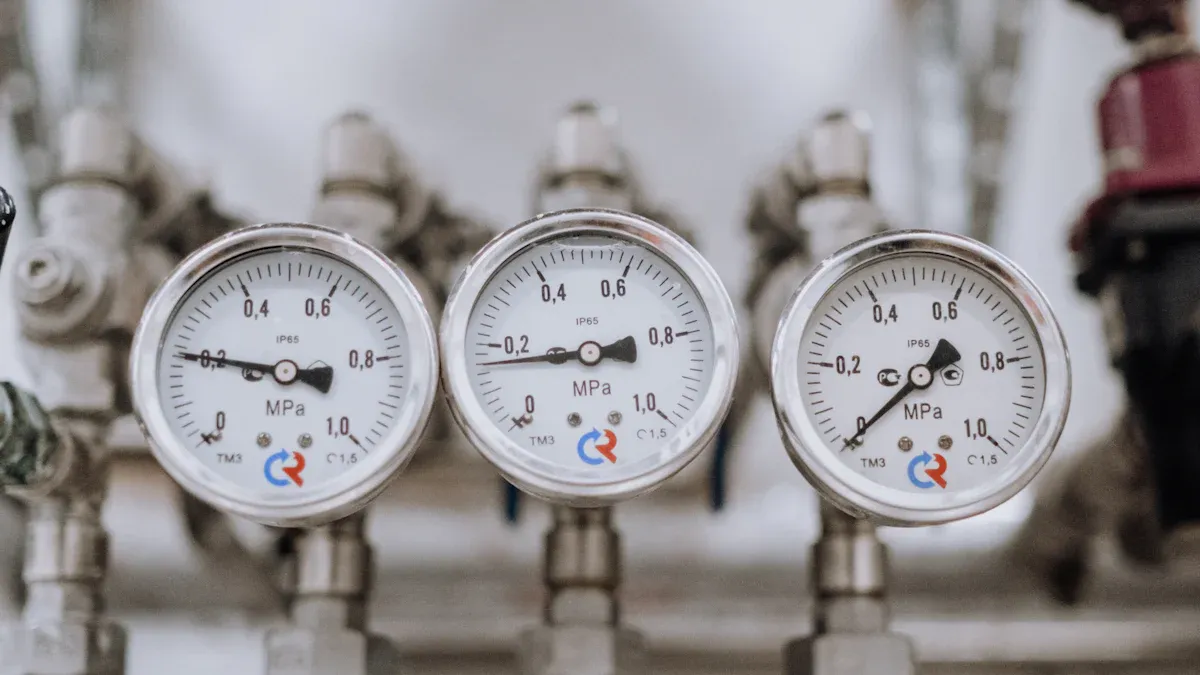
Selecting the correct flange bolt dimensions from a chart is only part of the process. Engineers must also consider several advanced factors to ensure a joint’s long-term safety and reliability. These considerations include material science, gasket interactions, and fastener design choices.
Bolt and Nut Materials
The material composition of a bolt and nut assembly is critical for performance under specific service conditions. The choice directly impacts the joint’s strength, corrosion resistance, and temperature limits.
Common Bolt Materials: ASTM A193 B7, B8, B8M
ASTM A193 is the governing specification for alloy and stainless steel bolting for high-temperature or high-pressure service.
- Grade B7: This is a heat-treated chromium-molybdenum steel. It is the most common grade for industrial plant applications due to its high tensile strength and excellent performance at moderate temperatures. A Grade B7 bolt has a minimum tensile strength of 125 ksi (860 MPa).
- Grade B8/B8M: These are stainless steel grades. Grade B8 (Type 304) and B8M (Type 316) offer superior corrosion resistance. Technicians use them in chemical processing and marine environments where carbon steel would quickly degrade.

Matching Nut Materials: ASTM A194 2H
A bolt is only as strong as its nut. The ASTM A194 standard specifies nuts designed to match the strength of high-performance bolts.
Key Pairing ⚙️ ASTM A194 Grade 2H nuts are the standard choice for pairing with ASTM A193 B7 bolts. These carbon steel nuts are quenched and tempered to achieve high hardness and strength, ensuring they can handle the high tensile loads applied to a B7 bolt without stripping.
Importance of Coatings for Corrosion Resistance
For carbon steel bolts in corrosive environments, a protective coating is essential. Coatings act as a barrier to prevent moisture and chemicals from reaching the steel surface. For marine environments, fluoropolymer coatings like PTFE or Xylan offer the most effective protection, especially for submerged components. Hot-dip galvanizing is a cost-effective alternative for atmospheric exposure.
Gasket Selection Impact
The gasket is the component that creates the actual seal. Its type and thickness directly influence the entire bolted joint assembly, including the required bolt length.
How Gasket Type Affects Sealing
Different gasket types use distinct sealing mechanisms. A spiral wound gasket relies on the compression of a soft filler material, while a Ring Type Joint (RTJ) gasket creates a high-integrity seal through metal-to-metal contact. The choice depends on the flange type, pressure, and temperature.
Common Types: Spiral Wound and Ring Type Joint (RTJ)
The two most common gasket types in industrial piping have different applications.
| Feature | Spiral Wound Gasket | Ring Type Joint (RTJ) Gasket |
|---|---|---|
| Design | Metal winding with a soft filler (e.g., graphite) | Solid metal ring (e.g., oval, octagonal) |
| Flange Type | Raised Face (RF) and Flat Face (FF) | Requires specialized RTJ flanges with grooves |
| Pressure | Good for a wide range of pressures | Excellent for extreme high-pressure service |
| Sealing | Filler compression creates a seal | Metal-to-metal contact in a groove |
Adjusting Bolt Length for Gasket Thickness
Gasket thickness is a critical variable in the bolt length calculation. A thicker gasket increases the distance between the two flanges, requiring a longer bolt to ensure proper nut engagement. Technicians must always account for the compressed gasket thickness when determining the final fastener length.
Stud Bolts vs. Machine Bolts
For most flanged connections in industrial piping, stud bolts are the preferred fastener over traditional machine bolts (a bolt with a hexagonal head).
Why Stud Bolts are Preferred for Flange Connections
Stud bolts offer several advantages for flange assembly. A stud bolt is a fully threaded rod, which allows for tensioning from either side. This feature is invaluable when obstructions limit access. Their design also ensures more accurate and even load distribution during torquing, which is critical for achieving a reliable seal. This versatility simplifies inventory and installation.
The Role of Hardened Washers
Hardened washers are essential components in high-pressure bolted joints. Made from high-strength, heat-treated steel, they serve a critical function.
Function of Hardened Washers: A hardened washer distributes the nut’s clamping load over a wider area of the flange surface. This prevents the nut from digging into the softer flange material, a problem known as galling. It also provides a smooth, consistent surface for torquing, leading to more accurate preload and a safer connection.
Bolt Tension and Torque Application
Applying the correct amount of rotational force, or torque, is the final and most critical step in flange assembly. Proper torque stretches the bolt, creating the clamping force (tension) that holds the joint together and compresses the gasket. This process requires precision and an understanding of the relationship between torque, bolt specifications, and lubrication.
The Link Between Bolt Size and Torque Value
The required torque for a fastener is directly linked to its size, material, and the friction present in the assembly. Engineers calculate the target torque using the formula T = kDP, where ‘T’ is the torque, ‘k’ is the friction coefficient (K Factor), ‘D’ is the bolt diameter, and ‘P’ is the desired tension. The K Factor is a crucial variable that accounts for friction between the threads and the nut face.
Key Insight 💡 The K Factor is not a universal constant. It changes based on the fastener material, surface finish, and the presence of lubricants. A lubricated bolt requires less torque to achieve the same tension as a dry one.

The table below shows how different surface conditions affect the K Factor, which in turn alters the required torque.
| Condition | K Factor |
|---|---|
| Typical Steel Bolt | 0.20 |
| Zinc-Plated | 0.20 |
| Lubricated | 0.18 |
| Cadmium-Plated | 0.16 |
Using a Torque Chart with the Flange Bolt Chart
A technician uses a flange bolt chart to identify the fastener dimensions and a separate torque chart to find the correct torque value. The torque chart provides specific values based on bolt diameter, material grade (like A193 B7), and lubricant type. After setting the torque wrench, the technician applies the torque in a specific pattern. A proper flange bolt torque sequence, often a star or crisscross pattern, ensures the load is applied evenly. This flange bolt torque sequence prevents gasket damage and flange warping. Following the correct flange bolt torque sequence is essential for a leak-free seal.
Dangers of Improper Torquing
Applying incorrect torque introduces significant risks to the joint’s integrity and overall system safety. Both under-torquing and over-torquing can lead to catastrophic failure. A precise flange bolt torque sequence helps mitigate these dangers, but only if the torque value is correct.
The consequences of improper torque include:
- Under-torquing: This results in insufficient clamping force, leaving the connection loose. The joint becomes vulnerable to vibrations and pressure fluctuations, which can lead to leaks or fastener failure.
- Over-torquing: Applying excessive torque can stretch a bolt beyond its elastic limit, causing permanent damage or breakage. It can also strip threads, crack the flange, or crush the gasket, creating a guaranteed leak path.
Ultimately, incorrect torque compromises the entire connection, leading to costly downtime and serious safety hazards.
A flange bolt chart is an indispensable tool for safe piping projects. A technician first identifies the flange size, class, and face type to use the chart effectively. Adhering to the specified bolt number, diameter, and length is fundamental for preventing leaks in piping systems. A successful flange installation always pairs the correct bolt data with proper material selection and precise torque application.
FAQ
Can a technician reuse flange bolts?
No, a technician must always use new bolts for flange assembly. Used bolts may have unseen damage or stretching from previous torquing. This fatigue compromises their strength and creates a significant safety risk for the new connection.
What does the ‘#’ symbol mean on a flange?
The ‘#’ symbol is interchangeable with ‘Class’ or ‘lb’. For example, a 150# flange is the same as a Class 150 flange. It indicates the flange’s pressure-temperature rating according to standards like ASME B16.5.
Why do flanges have bolt holes in multiples of four?
Flanges have bolt holes in multiples of four to ensure symmetrical tightening. This design allows a technician to use a star or crisscross pattern. The pattern distributes clamping force evenly across the gasket for a reliable, leak-free seal.
Do technicians need to lubricate flange bolts?
Yes, lubrication is a critical step. A technician applies lubricant to bolt threads and nut faces before torquing. It reduces friction, prevents galling, and ensures the applied torque achieves the correct bolt tension for a secure joint.
What happens if the wrong bolt length is used?
Using the wrong bolt length creates a dangerous connection. A bolt that is too short prevents proper nut engagement. A bolt that is too long can be a snag hazard or interfere with equipment. Both errors compromise joint integrity.
Which is better for flanges: a stud bolt or a machine bolt?
Technicians prefer stud bolts for most flange connections. A stud bolt is a threaded rod that allows for more accurate tensioning from either end. This design simplifies installation and ensures a more even load distribution during torquing.