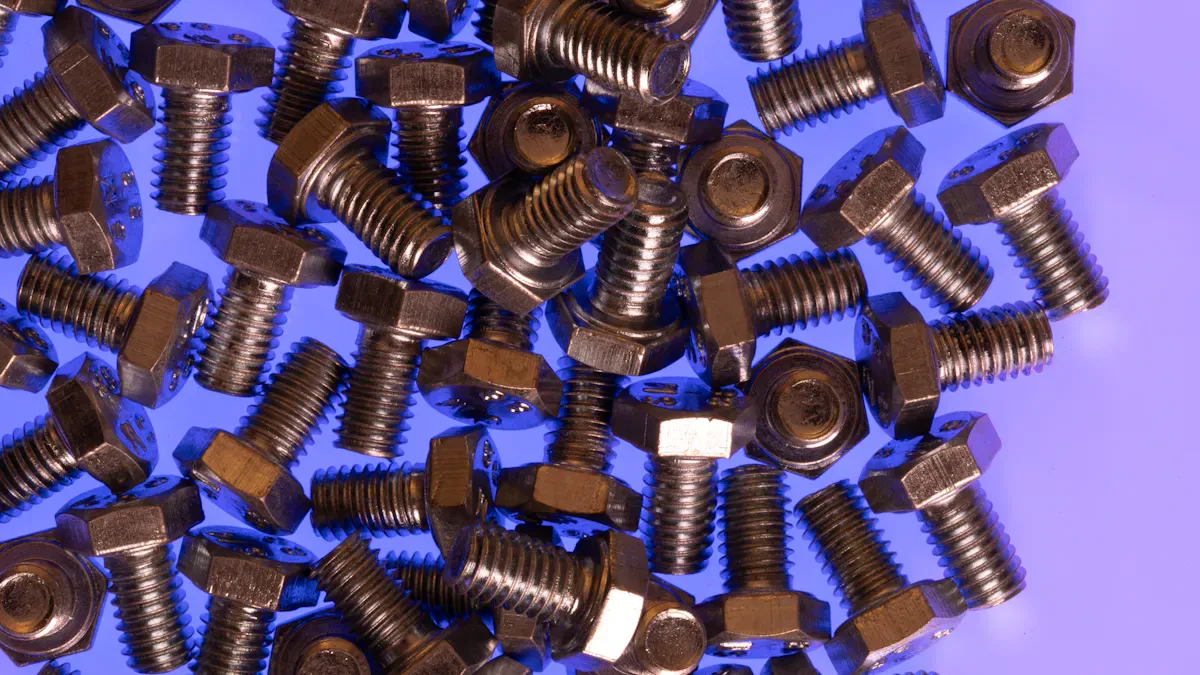

A brass swivel eye bolt is a fastener featuring a threaded shank and a 360-degree rotating loop. This specific eye bolt provides a secure anchor point for ropes or cables, allowing them to rotate freely. Its key function prevents attached lines from twisting or kinking under shifting loads, a common issue with static eye bolts. A custom fasteners manufacturer often uses a quality bolt casting process to produce these durable eye bolts. The brass material gives these eye bolts superior corrosion resistance.
Note: This quality makes them excellent custom fasteners for marine environments, outperforming many other types of eye bolts. These are truly versatile eye bolts.
What Are the Components of a Brass Swivel Eye Bolt?
A brass swivel eye bolt is an assembly of distinct parts working together to provide a secure and rotating anchor point. Understanding each component helps clarify its function and proper application. These specialized eye bolts are engineered for performance in dynamic conditions.
The 360-Degree Swivel Eye
The swivel eye is the defining feature of these versatile eye bolts. It allows for full rotation, which is critical for many applications.
The Rotating Loop Mechanism
The swivel mechanism consists of two main parts: the eye loop and the body it sits in. The loop’s base is designed to rotate freely within the main body of the eye bolt. This construction allows the eye to turn a full 360 degrees without unscrewing the shank from its mounting surface.
How It Prevents Line Twisting
This rotational capability is essential for preventing damage to attached lines. When a load shifts or moves, the swivel eye turns with the force. This action stops ropes, cables, or chains from twisting, kinking, and weakening over time. Standard eye bolts lack this feature, making them unsuitable for loads that change direction.
The Threaded Shank
The threaded shank is the portion of the eye bolt that secures it to a surface. The type of thread determines its best use.
Coarse Threads (UNC) for General Use
Most eye bolts feature Unified National Coarse (UNC) threads. These threads are deeper and have a wider pitch. This design makes them more durable, less prone to cross-threading during installation, and faster to screw in. They are ideal for general-purpose anchoring in wood or other common materials.
Fine Threads (UNF) for Precision
Unified National Fine (UNF) threads are shallower and spaced closer together. This gives them greater tensile strength and better resistance to loosening from vibration. Fine-threaded eye bolts are chosen for precision machinery or applications where constant movement could cause other eye bolts to back out.
The Body and Shoulder
The body and shoulder form the main structure of the eye bolt, providing strength and stability.
Distributing Loads with the Shoulder
The shoulder is the flat surface located where the shank meets the body. When the eye bolt is installed correctly, this shoulder sits flush against the mounting surface. It plays a crucial role in supporting angular loads by distributing the force over a wider area, which prevents the shank from bending.
Forged vs. Cast Construction Methods
Manufacturers produce eye bolts through forging or casting. Forged eye bolts are typically stronger due to the grain structure of the metal. High-quality eye bolts are made from solid brass, which offers excellent durability for marine and outdoor use. The specific brass alloy affects performance.
Note: The material composition is key to the fastener’s strength and corrosion resistance. Common alloys for these eye bolts include:
- Free Cutting Brass IS 319 Type (I)
- Brass CDA-360
- CuZn39Pb3 (CW614N)
- CZ-360 High Grade Brass
Different manufacturing processes call for specific brass types. For example, turned machine eye bolts often use Free Cutting Brass, while cold-forged eye bolts may use Brass IS 4413.
Why Choose Brass for a Swivel Eye Bolt?
The material of an eye bolt directly impacts its performance, longevity, and suitability for a specific job. While many materials are available, brass offers a unique combination of properties that make it an excellent choice for certain applications. A brass swivel eye bolt provides functional advantages beyond what standard steel eye bolts can offer. Understanding these benefits helps in selecting the right hardware.
Unmatched Corrosion Resistance
One of the primary reasons for choosing brass eye bolts is their exceptional ability to resist corrosion. This characteristic is crucial for outdoor and marine applications where hardware is constantly exposed to moisture.
Ideal for Marine and Saltwater Environments
Brass demonstrates high resistance to corrosion in saltwater. This makes these eye bolts a reliable option for many boating and coastal applications. However, it is important to understand its performance relative to other materials.
- Stainless Steel (316 Grade): This material offers superior resistance in harsh saltwater environments and is often the preferred choice for applications below the waterline.
- Brass: These eye bolts provide excellent performance in general marine conditions. They resist tarnishing and degradation from salt spray and moisture, making them ideal for rigging, canopies, and other above-the-waterline uses.
For most marine projects, brass eye bolts deliver the necessary corrosion resistance for a long service life.
Resisting Weather, Rain, and Humidity
Beyond saltwater, brass eye bolts excel in environments with high humidity, rain, and fluctuating weather conditions. Unlike standard carbon steel eye bolts that can rust quickly, brass maintains its structural integrity and appearance. This makes the eye bolts a dependable choice for outdoor architectural rigging, garden structures, and any project exposed to the elements.
Durability and Reliable Strength
Brass is an alloy of copper and zinc, creating a material that is both durable and strong. High-quality brass eye bolts are manufactured to handle significant loads safely.
Understanding Brass Load Ratings
Manufacturers provide a Working Load Limit (WLL) for their eye bolts. This rating specifies the maximum force the eye bolt can safely handle without risk of failure. Always select eye bolts with a WLL that exceeds the expected load of your application. Forged brass eye bolts generally offer higher strength than cast versions.
Longevity Compared to Steel and Zinc
When comparing longevity, brass eye bolts often outperform zinc-plated steel eye bolts in corrosive settings. While zinc plating provides a protective layer, it can wear away or get scratched, exposing the steel underneath to rust. Solid brass does not have this vulnerability. Its inherent corrosion resistance ensures a longer functional lifespan in wet or humid conditions.
The Aesthetic Appeal of Brass
Beyond its functional benefits, brass provides a distinct and classic appearance. Its warm, golden hue adds a touch of elegance to any project.
Classic Golden Finish for Design
The natural finish of brass is highly valued in design. It can complement both traditional and modern aesthetics. Over time, it can develop a rich tarnish, adding character to the installation. This visual appeal makes these eye bolts a popular choice where hardware is visible.
Use in Architectural and Decorative Projects
Architects and designers often specify brass hardware for its beauty. These eye bolts are used to suspend lighting fixtures, hang decorative signage, and create elegant cable railing systems. The material’s ability to pair with rich woods like walnut and teak makes it a staple in Mid-Century modern design for items like cabinet handles, mirror frames, and door furniture.
Common Uses for a Brass Swivel Eye Bolt

The unique combination of rotation, strength, and corrosion resistance gives the brass swivel eye bolt a wide range of applications. Its functionality makes it a superior choice over standard hardware in many situations. The most common uses for these fasteners fall into three main categories: marine, architectural, and recreational.
Marine and Boating Applications
The marine environment is where these eye bolts truly excel. Constant exposure to moisture, salt spray, and dynamic forces makes their specific properties invaluable for safety and durability.
Securing Anchor and Mooring Lines
When a boat is anchored or moored, it constantly shifts with the wind, tide, and currents. A swivel eye bolt provides a secure attachment point on a dock or buoy that allows the mooring line to rotate freely. This prevents the line from twisting and weakening, ensuring the vessel remains secure. These eye bolts are essential for reliable anchoring systems.
Rigging for Sails, Biminis, and Canopies
Sailboat rigging involves complex systems of lines and pulleys that must operate smoothly. Swivel eye bolts serve as excellent termination points for sheets, halyards, or control lines that may twist under load. Similarly, they are used to attach the support straps for bimini tops and boat canopies. The swivel action allows the fabric top to move slightly with wind and motion, reducing stress on the mounting points and rigging.
Attaching Safety Tethers and Fenders
Safety is paramount on the water. Swivel eye bolts provide strong, reliable attachment points for safety harness tethers. The swivel allows a crew member to move around the deck without the tether becoming tangled. They are also ideal for securing boat fenders, as the eye bolts let the fenders pivot and roll between the hull and a dock, providing consistent protection.
Architectural and Decorative Rigging
Beyond purely functional roles, the aesthetic appeal of brass makes these eye bolts a favorite among architects and designers for visible rigging and suspension projects.
Hanging Signs, Banners, and Displays
Businesses often use swivel eye bolts to hang exterior signs and banners. The swivel mechanism allows the sign to turn with the wind rather than fighting against it. This rotational movement significantly reduces the strain on the sign and its mounting hardware, preventing damage over time. The classic look of brass also adds a professional finish.
Suspending Lighting Fixtures and Chandeliers
For interior design, these eye bolts offer a secure and elegant method for suspending heavy light fixtures, chandeliers, or other ceiling-mounted decor. The swivel simplifies the installation process by allowing the fixture to be rotated for final positioning without twisting the electrical wiring. The brass finish provides a decorative touch that complements many design styles.
Creating Decorative Cable Railing Systems
Modern architecture frequently incorporates cable railing systems for stairs, lofts, and decks. Brass eye bolts are used as anchor points for the cables, often threaded into wood or metal posts. The rigging is tensioned using these sturdy eye bolts to create a safe and visually unobtrusive barrier. Their strength ensures the railing system meets safety codes, while the brass material adds a warm, high-end detail.
Outdoor, Recreational, and Home Uses
The versatility of these fasteners extends to many common uses around the home and for recreational activities. Their durability and resistance to the elements make them a reliable choice for various DIY projects.
Anchoring Tarps, Tents, and Awnings
When setting up temporary shelters like tarps or event tents, swivel eye bolts can serve as robust anchor points. Attached to a wall, post, or vehicle, they provide a secure connection for ropes or bungee cords. The swivel action helps manage tension from wind gusts, reducing the risk of the material tearing at the grommets.
Hammock and Porch Swing Suspension
Swivel eye bolts are perfect for hanging hammocks and porch swings. The rotational movement accommodates the gentle swinging and shifting that occurs during use. This prevents the suspension ropes from twisting and fraying, which enhances both the safety and lifespan of the swing. Using strong eye bolts ensures a secure connection to a ceiling joist or sturdy tree branch.
Creating Reliable Pet Leash Tie-Outs
A brass swivel eye bolt installed on a post or wall creates an excellent tie-out for a pet. The 360-degree rotation allows the animal to move in a full circle without the leash becoming tangled or kinked. This simple setup provides freedom of movement for the pet and peace of mind for the owner. Many other common uses in home projects highlight their adaptability.
Creative DIY Home Projects
Many homeowners find creative applications for these versatile eye bolts. Some popular projects include:
- Punching Bags: The swivel is essential for safely securing a heavy punching bag, as it absorbs the multi-directional forces from strikes without twisting the chain or mount.
- Hanging Shelves: For a unique, floating look, eye bolts can be installed in the ceiling to suspend shelves with rope or cable, adding a stylish storage solution.
Swivel Eye Bolts vs. Standard Eye Bolts
Choosing the correct hardware is critical for safety and performance. While swivel eye bolts and standard eye bolts may look similar, their functional differences determine their proper application. Understanding these distinctions ensures the selection of the right eye bolt for the job.
Key Functional Differences
The primary difference between these two fasteners lies in how they handle loads, especially those that are not perfectly vertical. Their design dictates their capabilities for static and dynamic applications.
Static vs. Dynamic Loading Capabilities
Standard eye bolts are designed for static, in-line vertical lifts. They provide a simple, fixed anchor point. In contrast, swivel eye bolts are engineered for dynamic loads that may shift or pull from various directions. The rotating and pivoting head accommodates movement, making them far more versatile.
| Feature | Swivel Eye Bolts | Standard Eye Bolts |
|---|---|---|
| Angle of Lift | Safely handles angular lifts up to 90°. | Designed for vertical (0°) lifts only. |
| Rotation | The eye pivots 180° and swivels 360°. | The eye is fixed and does not rotate. |
| Load Capacity | Maintains 100% of its WLL during angular lifts. | WLL is severely reduced with angular loads. |
| Safety Risk | Lower risk of failure from binding or bending. | Higher risk of bending or breaking if used at an angle. |
The Critical Role of Rotation
The ability of a swivel eye bolt to rotate is its most important safety feature. When a load shifts, the eye turns to align with the force. This prevents the attached line from twisting and eliminates dangerous side-loading on the shank of the eye bolt. Standard eye bolts lack this feature, making them prone to binding and material fatigue when the load is not perfectly aligned.
When to Use Swivel Eye Bolts
Specific situations demand the advanced capabilities of swivel eye bolts. Using them in these scenarios is not just a matter of convenience but a critical safety measure.
For Loads at an Angle
A standard eye bolt loses a significant portion of its strength when pulled from an angle. Swivel eye bolts, however, are designed to maintain their full Working Load Limit (WLL) even at a 90-degree angle.
Warning: Pulling a standard eye bolt from the side can cause it to bend or break. The reduction in capacity is dramatic:
- 45-Degree Pull: The capacity drops to just 30% of its vertical WLL.
- 90-Degree Pull: The capacity plummets to 25% of its vertical WLL.
To Prevent Material Fatigue from Twisting
Swivel eye bolts are essential for complex rigging, lifting heavy equipment, or working in confined spaces where perfect alignment is impossible. The swivel action prevents the repeated twisting that causes metal fatigue in both the fastener and the attached rigging, ensuring a longer and safer service life for all components.
When a Standard Eye Bolt is Sufficient
Despite their limitations, standard eye bolts remain a valuable and widely used piece of hardware. For many applications, their simplicity and low cost make them the ideal choice.
For Straight, In-Line Pulls Only
If the application involves a simple, straight-line vertical lift with no side-loading, a standard eye bolt is perfectly suitable. These eye bolts provide a secure and economical solution for static loads where the force is applied directly in line with the threaded shank.
For Simple Static Hanging
For basic tasks like suspending a lightweight sign, a plant, or other static objects, a standard eye bolt offers a cost-effective solution. Because these loads do not shift or rotate, the advanced features of a swivel eye bolt are unnecessary. In these straightforward scenarios, standard eye bolts deliver reliable performance without the higher upfront cost.
How to Select the Right Brass Swivel Eye Bolt
Selecting the proper brass swivel eye bolt is a critical step for ensuring the safety and longevity of any project. A user must evaluate load capacity, dimensions, and the installation environment to make an informed choice. The right eye bolt provides a secure anchor; the wrong one can lead to failure. This selection process protects both the rigging and the load it supports.
Determining the Correct Load Capacity
The first consideration for any application is the weight the eye bolt must support. This involves understanding manufacturer specifications and applying appropriate safety margins.
Understanding Working Load Limit (WLL)
Every eye bolt has a Working Load Limit (WLL). The WLL is the maximum mass or force the eye bolt can safely support without fear of failure. Manufacturers determine this rating through rigorous testing. Users must always choose eye bolts with a WLL that exceeds the maximum anticipated load. Overloading an eye bolt compromises its structural integrity and creates a significant safety hazard for any rigging setup.
Applying Safety Factors for Lifting
For lifting and dynamic rigging, applying a safety factor is standard practice. This factor provides an additional margin of safety beyond the WLL. Different standards dictate different safety factors for eye bolts.
| Eye Bolt Type | Safety Factor |
|---|---|
| RUD Lifting Points | 4:1 |
| BS 4278 Collar Eyebolts | 5:1 |
A 5:1 safety factor means the Minimum Breaking Load (MBL) of the eye bolts is five times greater than the stated WLL.
Matching Thread Size and Shank Length
A secure fit depends on matching the eye bolt’s threads and length to the mounting surface. An improper fit can drastically reduce the strength of the connection.
How to Measure the Pilot Hole
Correctly measuring the eye bolt ensures the pilot hole is the right size. Professionals use specific tools for accuracy.
- A bolt gauge helps determine the thread size. The eye bolt should thread smoothly into the gauge without binding or excessive looseness.
- Calipers measure the shank length. The measurement is taken from the base of the eye to the tip of the threads.
These measurements guide the drilling of a perfectly sized pilot hole for the rigging hardware.
Ensuring Full Thread Engagement
For maximum strength, the shank of the eye bolt must be fully threaded into the material. Partial engagement concentrates stress on a small number of threads, increasing the risk of the eye bolts pulling out under load. The shoulder of the eye bolt should sit flush against the surface to properly distribute angular forces.
Considering the Installation Environment
The surrounding environment directly impacts the performance and lifespan of brass swivel eye bolts. Moisture, salt, and chemicals are key factors to consider.
Saltwater vs. Freshwater Exposure
Brass offers excellent corrosion resistance, making it suitable for many marine applications. In freshwater environments, brass swivel eye bolts perform exceptionally well. In saltwater, they provide reliable service for above-the-waterline rigging. However, for components constantly submerged in saltwater, a material like 316 stainless steel or bronze may offer superior longevity.
Contact with Chemicals or Pollutants
Industrial environments often expose hardware to corrosive chemicals and pollutants. In these settings, the specific brass alloy matters.
- Brass alloys with higher copper content, such as naval brass, offer enhanced corrosion resistance.
- For extreme chemical exposure, nickel-plated brass fittings provide a protective barrier. This coating increases surface hardness and delivers superior protection against chemical corrosion, making these eye bolts ideal for harsh industrial rigging.
Proper Installation of Your Eye Bolt
Proper installation is essential for the safety and performance of any brass swivel eye bolt. A correctly installed fastener provides a secure anchor, while an incorrect installation can lead to catastrophic failure. Following a precise process ensures the eye bolt functions as intended and supports its rated load. This guide covers the fundamental steps and best practices for a secure mount.
Step-by-Step Installation Guide
A successful installation begins with careful preparation and execution. Each step contributes to the overall strength of the connection for all eye bolts.
Drilling the Correct Pilot Hole
The first step is to drill a pilot hole into the mounting surface. The drill bit diameter should match the root diameter of the eye bolt threads, not the outer diameter. A hole that is too large will prevent the threads from engaging securely, compromising the holding power of the eye bolts. A hole that is too small can damage the threads or the mounting material.
Securing the Bolt into the Surface
An installer should thread the eye bolt into the prepared hole. It is best to turn the eye bolt by hand until it is snug. If more torque is needed, a user can insert a rod or screwdriver through the eye for leverage. This method prevents damage to the eye itself. The goal is to tighten the eye bolt until its shoulder sits firmly against the surface.
Using Washers and Nuts for Through-Bolting
For installations in thin materials like metal plates or fiberglass, a through-bolting technique offers superior strength. This involves drilling a hole completely through the surface. The eye bolt is inserted through the hole, and a washer and nut are secured on the opposite side. This method distributes the load over a wider area and prevents the eye bolts from pulling out.
Best Practices for Secure Mounting
Beyond the basic steps, certain best practices guarantee a safe and durable installation. These practices help avoid common mistakes that weaken the connection of eye bolts.
Ensuring the Shoulder is Flush
The shoulder of a swivel eye bolt must sit completely flush against the mounting surface. Any gap between the shoulder and the surface is dangerous. This gap allows angular loads to put bending force on the threads instead of the shoulder, which can cause the shank of the eye bolt to shear off. A flush fit is non-negotiable for all shouldered eye bolts.
Aligning the Load Correctly
Swivel eye bolts are designed to handle angular loads, but installers must still avoid critical errors. Proper alignment and inspection are key to safety. Many failures occur from simple oversights during the installation of eye bolts.
Common Installation Mistakes to Avoid
- Insufficient Thread Engagement: Using eye bolts that are too short for the hole prevents the threads from fully gripping the material.
- Failing to Seat the Shoulder: A gap between the shoulder and the surface transfers side loads directly to the threads, leading to failure.
- Using Damaged Hardware: Never install eye bolts with visible cracks, bends, or significant corrosion. Damaged hardware has an unreliable load capacity.
Maintenance and Inspection Checklist
Regular maintenance and inspection are critical for ensuring the safety and reliability of a brass swivel eye bolt. A consistent check-up schedule helps identify potential issues before they lead to failure. Proper care extends the service life of all eye bolts and protects the loads they support. This checklist provides a framework for effective routine procedures.
Routine Inspection Procedures
A user should perform visual inspections on a regular basis, especially for eye bolts used in critical or high-load applications. This proactive approach is the best defense against hardware failure.
Checking for Signs of Wear and Deformation
Inspectors must carefully examine each eye bolt for any physical damage. Any sign of deformation indicates the eye bolt has been overloaded and is no longer safe. Key signs of wear include:
- Bending or twisting in the shank or body.
- Stretching or an obvious change in the shape of the eye loop.
- Visible cracks, nicks, or gouges on any part of the eye bolt.
- Damaged or stripped threads on the shank.
Finding any of these issues on the eye bolts means they require immediate replacement.
Inspecting for Corrosion or Discoloration
While brass resists corrosion well, harsh environments can still affect it. A user should inspect the eye bolts for excessive discoloration. A heavy, dark tarnish or pitting can signal advanced corrosion that weakens the metal. It is also important to check that the swivel mechanism has not seized due to internal corrosion. A functional swivel is essential for the proper performance of these specialized eye bolts.
Maintenance Tips for Longevity
Simple maintenance tasks can significantly prolong the life of brass swivel eye bolts. These tips help maintain both the structural integrity and the aesthetic appearance of the hardware.
Cleaning the Brass and Swivel Mechanism
An operator should periodically clean the eye bolts to remove salt, dirt, and grime. A simple wash with mild soap and fresh water is usually sufficient. This cleaning prevents buildup that could impede the swivel action or accelerate corrosion. Regular cleaning keeps the eye bolts functioning smoothly.
Lubricating the Swivel for Smooth Rotation
The swivel is the most important mechanical part of this type of eye bolt. To ensure it rotates freely, a user should apply a marine-grade lubricant to the swivel joint. This lubrication protects the internal components from friction and corrosion, guaranteeing the eye bolt can align with shifting loads as designed.
Knowing When to Replace the Eye Bolt
Safety depends on knowing when to retire an eye bolt from service. A damaged fastener is a liability that should never be ignored.
Immediate Replacement Required
A user must replace any eye bolt that shows signs of bending, cracking, or significant stretching. Additionally, if the swivel mechanism is seized and cannot be freed with cleaning and lubrication, the entire eye bolt must be replaced. Never attempt to repair or reuse damaged eye bolts.
A brass swivel eye bolt is a specialized fastener designed for applications needing a secure, rotating anchor point. Its primary advantages are clear. The fastener prevents line twisting, offers excellent corrosion resistance, and provides a durable, aesthetically pleasing finish. Users ensure safety and longevity by choosing the correct size for marine, architectural, or outdoor projects. This hardware proves indispensable in any application where movement and weather resistance are critical factors for success.
FAQ
Can a user use a brass swivel eye bolt for lifting people?
No. A user must never use standard brass swivel eye bolts for lifting or suspending people. These applications require specialized fall protection equipment and hardware rated specifically for human loads. Using standard hardware for this purpose creates extreme danger.
Is brass better than stainless steel for marine use?
Brass offers excellent corrosion resistance for most marine applications above the waterline. For hardware constantly submerged in saltwater, 316-grade stainless steel provides superior longevity. The choice depends on the specific location and exposure level of the eye bolts.
Why can a swivel eye bolt handle angular loads?
The swivel eye bolt’s head pivots and rotates. This design allows the eye to align with the direction of force. It transfers the load to the shoulder instead of bending the shank. This feature makes it safe for angular pulls.
How often should an installer lubricate the swivel?
An installer should lubricate the swivel mechanism periodically. For high-use or marine applications, a quarterly check is a good practice. The goal is to ensure smooth rotation. A marine-grade lubricant works best for this task.
What happens if the shoulder is not flush?
A gap between the shoulder and the surface is a critical failure point. Angular loads will apply bending force directly to the threads. This can cause the shank to bend or shear off, leading to a sudden and dangerous failure.
How does a user determine the correct pilot hole size?
A user should drill a pilot hole that matches the root diameter of the threads.
Tip: A hole that is too large prevents the threads from gripping. A hole that is too small can damage the threads or the mounting material during installation.