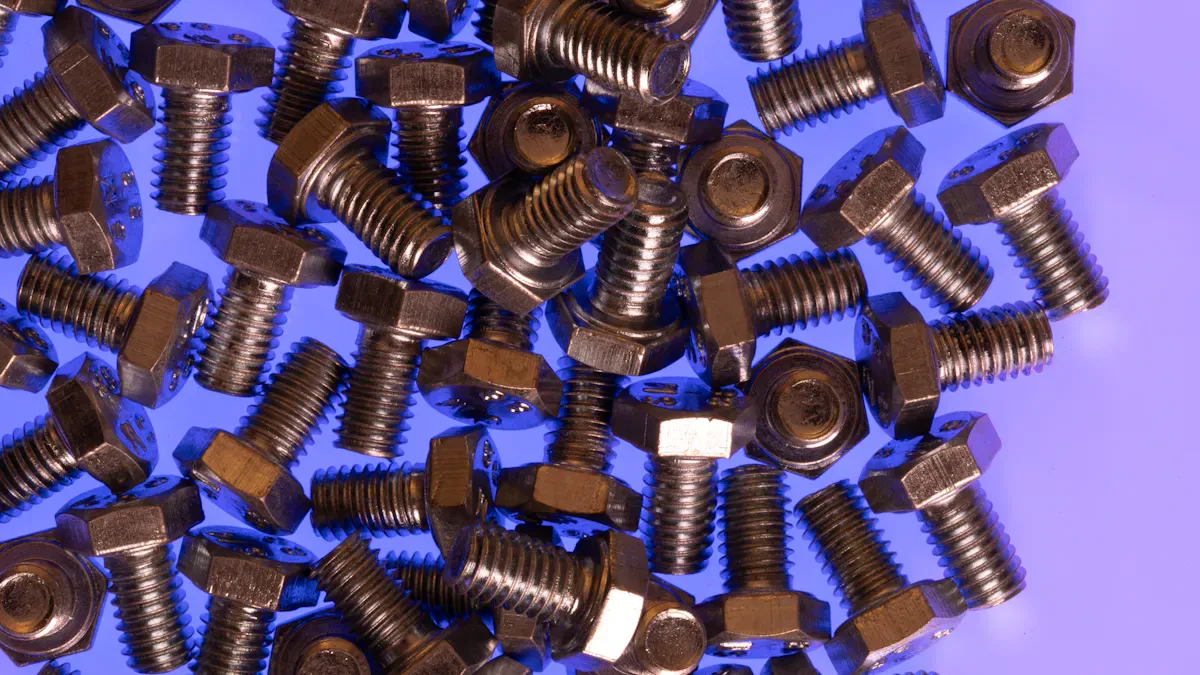

The 2 inch 3-bolt exhaust flange is a flat metal plate, typically triangular, designed to join two sections of an exhaust. This specific exhaust flange creates a strong, leak-proof connection between components. The integrity of this flange connection depends heavily on using quality hardware.
Pro Tip: The flange requires a precise bolt casting and the correct Flange Bolt for optimal performance. A custom fasteners manufacturer often supplies custom fasteners for specialized exhaust builds that use this type of exhaust flange.
What Defines a 2 Inch 3-Bolt Exhaust Flange?
A 2 inch 3-bolt exhaust flange is more than just a piece of metal; its specific dimensions, bolt pattern, and material composition dictate its performance and suitability for various applications. Understanding these defining characteristics is essential for selecting the correct component for a repair or custom build. Each element plays a critical role in creating a durable, leak-free seal that can withstand the harsh environment of an exhaust system.
The “2-Inch” Dimension
The “2-inch” measurement is a primary identifier, but it often causes confusion. It directly relates to the diameter of the exhaust tubing the flange is designed to connect.
Pipe Inner Diameter
Contrary to what the name might imply, the “2-inch” specification almost always refers to the Outer Diameter (OD) of the pipe it mates with. The automotive exhaust industry predominantly uses tubing, which is measured by its OD. Therefore, a 2-inch flange is designed to fit over or butt up against a pipe with an outside diameter of two inches. The flange itself will have an opening that is slightly larger than two inches to accommodate the pipe for welding.
Why Size Is Critical
Matching the flange size to the pipe diameter is crucial for performance. An incorrectly sized flange can create a “step” inside the exhaust path, disrupting the smooth flow of gases exiting the engine.
Performance Note: A properly matched flange and pipe combination ensures laminar flow, which is essential for achieving optimal gas flow. Any obstruction or turbulence reduces engine efficiency and can negatively impact horsepower. Maintaining a consistent diameter through the connection point is key to preserving exhaust gas flow characteristics.
The “3-Bolt” Configuration
The number and arrangement of bolts determine the flange’s clamping ability and stability. The 3-bolt design is a popular standard for good reason.
Triangular Bolt Pattern
The three bolt holes are arranged in a triangular pattern. This geometric shape provides inherent stability and rigidity. Unlike a 2-bolt flange that can pivot, 3-bolt flanges resist twisting and flexing under load. This stable platform is fundamental to maintaining a consistent seal, especially in systems that experience significant vibration from the engine.
Clamping Force Advantage
The triangular layout allows for even distribution of clamping force around the entire sealing surface. As the bolts are tightened, they pull the two flanges together uniformly. This balanced pressure compresses the gasket evenly, creating a robust, leak-proof seal that can withstand the high pressures found in an exhaust system.
Common Flange Materials
The material used to construct an exhaust flange dictates its durability, corrosion resistance, and cost. The choice often depends on the specific applications, from standard passenger cars to high-performance turbo builds. The welding process is a major factor in material performance.
Mild Steel
Mild steel is a low-cost, carbon steel alloy that is easy to form and weld. It is a common choice for budget-friendly aftermarket exhaust systems. However, its primary drawback is poor corrosion resistance. When welding a mild steel flange, any protective coating is burned away, leaving the raw steel at the weld joint exposed and highly susceptible to rust. This makes it a poor choice for a high-heat turbo flange, as the welding process creates a significant weak point. A turbo flange made of this material would fail quickly.
Stainless Steel
Stainless steel offers superior strength and corrosion resistance, making it ideal for performance and long-lasting exhaust applications. Different grades offer varying levels of performance, especially for a turbo flange where heat is extreme. The welding process for a turbo flange must be done carefully to preserve these properties.
- 409 Stainless: Often used by OEMs, this grade is durable and resists corrosion better than mild steel, though it may develop a light surface rust over time. It is a good mid-range option.
- 304 Stainless: This grade contains more chromium and nickel, providing excellent corrosion resistance and a bright finish. It is a popular choice for high-quality aftermarket systems and a capable turbo flange material for a turbo engine.
- 321/347 Stainless: These are high-temperature, stabilized grades perfect for a demanding turbo flange. When standard stainless steel is heated during welding, it can suffer from “carbide precipitation,” which reduces corrosion resistance near the weld. Grades like 321 and 347 are stabilized to prevent this, making them the ultimate choice for a turbo flange on a high-output turbo engine where both heat and welding integrity are critical. The welding on a turbo flange must be flawless.
Aluminized Steel
Aluminized steel is mild steel coated with an aluminum-silicon alloy. This coating provides good corrosion resistance at a lower cost than stainless steel. However, like mild steel, its weak point is the weld. The welding process vaporizes the protective coating, exposing the underlying steel to moisture and heat. This makes it a less-than-ideal material for a turbo flange, as the integrity of the welding is paramount for any turbo component. For a turbo, the material of the turbo flange must withstand intense conditions, and compromised welding is not an option.
Common Uses in Vehicle Exhaust Systems

The 2 inch 3-bolt exhaust flange is a versatile component found in a wide range of automotive applications. Its simple, robust design makes it a go-to solution for both original equipment manufacturers (OEMs) and custom fabricators. These applications range from standard passenger cars to high-performance vehicles with a turbo. The integrity of the welding on a turbo flange is paramount for any turbo engine.
Factory and OEM Applications
Automakers favor this flange for its reliability and serviceability. The welding process for a factory turbo flange must be perfect. A quality turbo flange ensures a long service life for the turbo engine.
Catalytic Converter Connections
Manufacturers frequently use this exhaust flange to connect the catalytic converter to the rest of the exhaust system. This secure connection prevents leaks of harmful emissions. The welding on a turbo flange near a converter must withstand extreme heat from the turbo.
Mid-Pipe and Resonator Joints
The flange provides a strong connection point between the front pipe and the mid-pipe or resonator. This allows for individual component replacement without needing to replace the entire exhaust. The welding of a turbo flange in these applications must be precise.
Muffler Inlets and Outlets
This flange is commonly found at the inlet and outlet of the muffler. It creates a durable, sealed joint that can withstand constant vibration from the engine. The welding of a turbo flange here ensures the turbo system remains sealed.
Custom and Performance Builds
Custom builders and performance enthusiasts rely on this flange for its modularity and strength. These performance applications often involve a turbo, making the turbo flange a critical part. The welding of a turbo flange is a skill every fabricator must master.
Fabricating Modular Exhaust Systems
A flanged connection is superior for creating modular exhaust sections. This approach offers significant benefits over simple slip-fit clamps, especially in performance applications. The welding of a turbo flange must be flawless for a high-power turbo.
- Durability and Precision: Flanged joints offer superior durability, making them ideal for long-term vehicle performance.
- Serviceability: Technicians can easily remove and reinstall sections for maintenance without cutting or re-welding.
- Reliability: The flange provides excellent structural integrity against heat cycles and vibration.
Axle-Back and Cat-Back Setups
Many popular aftermarket upgrades, like axle-back and cat-back systems, use this flange for a bolt-on installation. The choice between them affects sound, cost, and performance. The welding of a turbo flange is not typically required for these bolt-on kits.
| Feature | Cat-Back System | Axle-Back System |
|---|---|---|
| Performance Gains | Improves throttle response (5-15 hp) | Minimal improvement (1-5 hp) |
| Sound Modification | Deeper, sportier exhaust note | Enhances stock exhaust note |
| Installation | More involved, may require a lift | Simple bolt-on installation |
These systems demonstrate the flange’s role in making modifications accessible to enthusiasts.
How to Choose the Right Exhaust Flange
Selecting the correct exhaust flange is a critical step for any repair or custom build. A technician must consider measurements, style, and material to guarantee a perfect fit and a durable, leak-free seal. Making the right choice prevents future headaches and ensures the exhaust system performs as intended.
Measuring Your Exhaust System
Accurate measurements are the foundation of a successful installation. Taking the time to measure correctly eliminates guesswork and prevents the need for returns or modifications.
Confirming Pipe Diameter
A technician must first confirm the pipe’s Outer Diameter (OD). For a 2-inch flange, the corresponding pipe should measure two inches on the outside. Use a digital caliper for the most precise reading. This simple check ensures proper fitment before any welding occurs.
Measuring Bolt Hole Spacing
The spacing between the bolt holes is equally important. This is measured as the “bolt circle,” which is the diameter of an imaginary circle running through the center of all three bolt holes. While you can measure from the center of one hole to the center of another, referencing standard dimensions is often easier.
| Flange I.D. | Bolt Circle Diameter |
|---|---|
| 2.00″ | 3.13″ / 79.5mm |
This standardized measurement ensures that a replacement flange will align perfectly with an existing component.
Matching Flange Styles
Exhaust flanges come in several styles, each designed to work with a specific type of gasket. Using the wrong style of flange will result in a poor seal.
Flat Face Flanges
This is the most common style. A flat face flange has a completely level surface that seals against a flat, flexible gasket. The two flanges press the gasket between them to create the seal.
Recessed/Donut Gasket Flanges
This design features a circular groove or recess on the flange face. It is designed to hold a thick, crush-style “donut” gasket. One flange typically has the recess, while the mating flange is flat to compress the gasket.
Pro Tip: Always inspect the existing system to identify the flange style. A recessed flange cannot be properly replaced with a flat face flange, as the gasket will not seal correctly.
Selecting the Correct Material
The material of the flange impacts its longevity, cost, and suitability for specific applications, especially for a high-performance turbo setup.
Matching Your Pipe Material
For a lasting repair, the flange material must match the pipe material. Mismatched materials can cause issues during the welding process and lead to galvanic corrosion over time. A stainless steel exhaust pipe requires a stainless steel exhaust flange. This is even more critical for a turbo system, where the integrity of the welding is paramount. A turbo requires the best possible connection.
Factoring in Climate and Corrosion
Climate plays a significant role. In regions with heavy road salt use, a stainless steel exhaust flange offers superior corrosion resistance compared to mild steel. While aluminized steel offers a middle ground, its protective coating is compromised during welding. This is a major concern for any turbo application. The extreme heat from a turbo will quickly destroy a weak flange. The material for a turbo flange must withstand intense thermal cycles. A cheap flange is not an option for a turbo. The best flange for a turbo is always a high-grade stainless alloy. A turbo engine’s reliability depends on every component, including the turbo flange.
Installation Guide for Your Exhaust Flange
A proper installation is crucial for the performance and longevity of an exhaust flange connection. Whether a technician is replacing a damaged component or performing a custom fabrication, following a systematic process ensures a secure, leak-free result. This guide covers both bolt-on replacement and new welding installation procedures.
Essential Tools and Hardware
Gathering the correct tools and hardware beforehand makes the installation process smooth and efficient. Working with the right equipment prevents delays and ensures a professional-quality repair.
Required Hand Tools
A technician needs a specific set of tools for this job. A well-prepared toolkit is the first step toward a successful installation.
- Jack and Jack Stands
- Socket Set and Ratchet (with extensions)
- Combination Wrench Set
- Torque Wrench
- Wire Brush or Abrasive Pad
- Safety Glasses and Gloves
- Penetrating Oil (for rusted bolts)
Gaskets, Bolts, Nuts, and Washers
Reusing old hardware is a common mistake that leads to leaks. A technician should always use new components for every installation. High-temperature gaskets, properly graded bolts, and new nuts ensure the flange can be torqued correctly and maintain its seal through countless heat cycles.
Step-by-Step Replacement
Replacing a pre-existing flange is a common repair. This process involves removing the old parts and carefully installing the new ones.
Safely Accessing the Exhaust
Safety is the top priority. A technician must lift the vehicle on a level surface using a floor jack. They should then securely support the vehicle with appropriately rated jack stands before working underneath it. Never work under a vehicle supported only by a jack.
Removing Old Hardware
Old exhaust hardware is often seized with rust. A liberal application of penetrating oil can help loosen stubborn bolts. In difficult cases, a long breaker bar may be necessary for extra leverage. A technician must take care not to damage surrounding components during removal.
Aligning and Bolting the New Flange
Proper alignment is key to a leak-free seal. A technician should first clean both mating flange surfaces with a wire brush. They can then position the new gasket and align the bolt holes. The bolts should be tightened in a star or crisscross pattern to distribute pressure evenly.
Torque is Critical: Applying the correct torque prevents warping the flange and ensures the gasket compresses properly. Over-tightening can damage the flange, while under-tightening will cause leaks.
When applying torque, a technician should do so in increments. They should stop tightening when the gasket extends past the outer diameter of the flange by 1/4″ to 3/8″.
| Nominal Pipe Size (in) | # of Bolt Holes | Minimum Torque (ft. lbs.) | Preferred Torque (<70 durometer Shore A) (ft. lbs.) | Preferred Torque (>70 durometer Shore A) (ft. lbs.) |
|---|---|---|---|---|
| 2.00 | 4 | 33 | 49 | 66 |
Note: The table provides a general guideline for a 4-bolt configuration; 3-bolt flanges follow similar principles of incremental and even tightening.
Welding a New Flange
Fabricating a new connection requires welding. The quality of the welding directly impacts the strength and reliability of the entire exhaust system. The process of welding exhaust flanges demands precision and attention to safety.
Preparing the Pipe Surface
A strong weld begins with a clean surface. A technician must use a wire brush or grinder to remove all rust, paint, and contaminants from the pipe end. The metal should be bare and bright before any welding begins. This preparation ensures proper fusion during the welding process.
Tacking the Flange
A technician should slide the new flange onto the prepared pipe. They must then place small “tack” welds at three or four opposing points around the joint. This temporary welding step holds the flange in the correct position and orientation, preventing it from shifting during the final welding.
Completing the Weld Seam
With the flange tacked securely, the technician can complete the final weld. They should create a continuous bead around the entire circumference of the joint. This final welding pass permanently fuses the flange to the pipe. Proper welding technique is essential for a strong, non-porous seal.
Safety First 🚨: Welding produces intense heat, bright light, and hazardous fumes. Adhering to strict safety protocols is non-negotiable.
- Essential Safety Gear: A technician must wear a welding helmet, protective clothing, respiratory protection, safety glasses, and ear protection.
- Fire and Explosion Prevention: The work area must be clear of all flammable materials. Fire safety equipment should be readily available.
- Controlling Fume Inhalation: Proper ventilation is critical. A technician should use fans or fume extractors to control fume inhalation during welding.
- Post-Welding Safety: Welded components remain extremely hot. They must be allowed to cool completely before handling. After the welding is done, the technician should inspect the weld for defects.
The Role of Gaskets and Hardware
The flange itself is only one part of a successful connection. The gasket and hardware are equally critical components that work together to create a durable, leak-free seal. A technician who overlooks the importance of these small parts risks compromising the entire exhaust system’s integrity and performance.
Why a Gasket is Non-Negotiable
A gasket is not an optional accessory; it is an essential component for any flange joint. Even two perfectly machined metal surfaces have microscopic imperfections that prevent them from forming a perfect seal. The gasket fills these gaps.
Creating an Airtight Seal
The primary function of a gasket is to create an airtight seal between two flange faces. When compressed, the gasket conforms to surface irregularities, preventing exhaust gases from escaping. Without a gasket, a technician invites several problems:
- Loud hissing or ticking noises will emerge from the joint.
- The uneven mating of the flange surfaces can lead to cracking under stress.
- Engine performance can drop due to poor exhaust gas flow and backpressure issues.
- Internal components, like pressed metal donuts, may shatter and clog the muffler.
Preventing Harmful Leaks
A leaking exhaust is more than just a noisy annoyance; it is a serious safety hazard. Exhaust fumes contain carbon monoxide (CO), a colorless and odorless gas that is highly toxic.
Health Alert ⚠️: Prolonged exposure to carbon monoxide can cause headaches, dizziness, confusion, and even unconsciousness. A technician must ensure every flange connection is perfectly sealed to protect vehicle occupants from these dangerous fumes.
Types of 3-Bolt Gaskets
Different gaskets offer varying levels of durability and sealing capability. The two most common types for a 3-bolt flange are composite and multi-layer steel (MLS).
Composite Gaskets
Composite gaskets are a cost-effective and reliable choice for many standard applications.
- They typically consist of a metal core, often steel, covered on both sides with a flexible graphite-based material.
- This construction allows the gasket to conform well to minor flange imperfections, ensuring a good seal with moderate clamping force.
Multi-Layer Steel (MLS) Gaskets
MLS gaskets are the premium option, designed for high-performance and high-temperature environments.
- These gaskets are constructed from two to seven thin layers of embossed stainless steel.
- The layers are often coated with a heat-resistant polymer that helps create a superior seal. Their robust design provides excellent strength and durability, making them ideal for maintaining smooth gas flow under extreme pressure.
Choosing the Right Bolts
The bolts are responsible for providing the clamping force that compresses the gasket and holds the joint together. Using the correct grade and size is crucial for a lasting repair.
High-Temperature Grade Bolts
Exhaust hardware must withstand extreme heat cycles and vibration. A technician should always use bolts specifically rated for high-temperature use. SAE Grade 8 bolts are superior to Grade 5 bolts for this application due to their higher strength.
| Grade | Minimum Tensile Strength |
|---|---|
| SAE Grade 5 | 120,000 PSI |
| SAE Grade 8 | 150,000 PSI |
The higher tensile strength of Grade 8 bolts allows for greater torque and clamping force, ensuring the flange remains sealed.
Correct Length and Thread Pitch
A technician must verify the bolt’s length and thread pitch. A bolt that is too short will not engage enough threads to be secure. A bolt that is too long may bottom out before properly tightening the flange. Using the correct size ensures a secure and reliable connection.
Turbo Flange vs. Standard Exhaust Flange
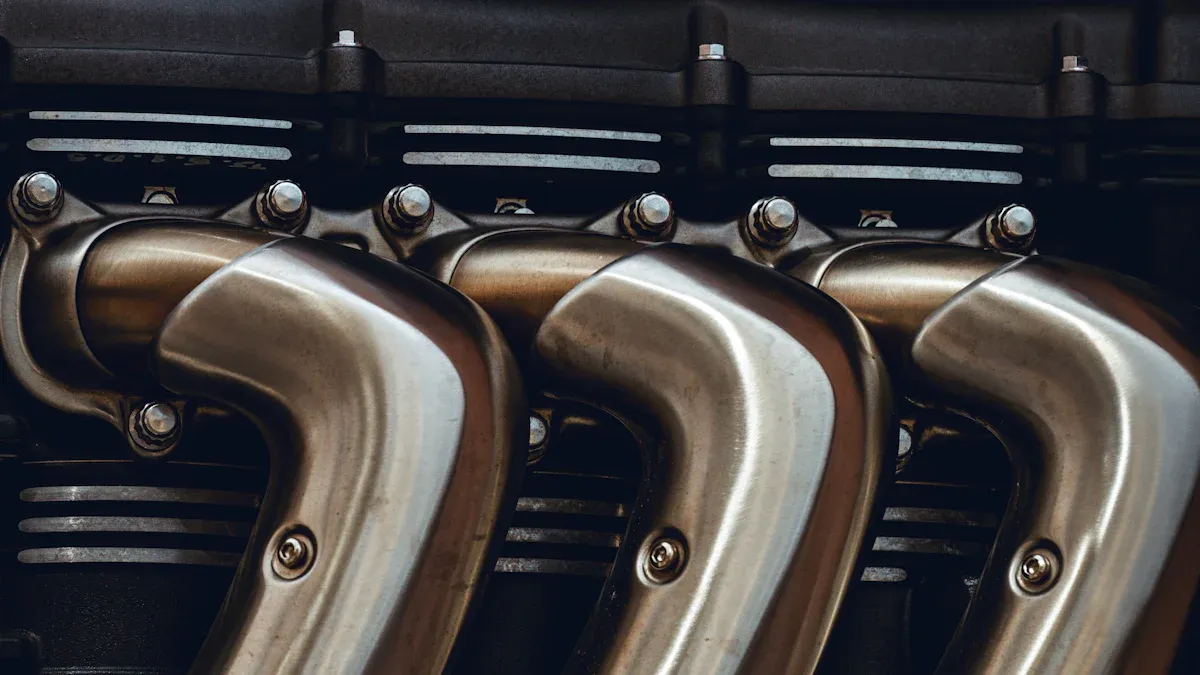
While a standard exhaust flange and a turbo flange may appear similar, they are engineered for vastly different environments. A technician must understand that a turbo flange is a highly specialized component designed to withstand the extreme conditions of a turbocharger system. Using a standard flange in a turbo application will lead to catastrophic failure. The design of a turbo flange prioritizes strength and heat resistance above all else.
Key Differences in Design
The fundamental differences between a standard flange and a turbo flange lie in their construction and material properties. These enhancements are necessary to handle the intense demands of a turbo.
Material Thickness and Durability
A turbo flange features significantly thicker material, often 1/2 inch or more, compared to a standard flange. This added mass prevents the flange from warping under extreme heat cycles. A standard, thinner flange would quickly distort, causing severe exhaust leaks at the turbo connection. The robust build of a turbo flange ensures it remains flat and maintains a perfect seal.
Heat and Pressure Tolerance
Turbocharged engines generate immense heat and exhaust pressure right at the turbocharger outlet. A turbo flange is made from high-grade materials like 304 or 321 stainless steel to tolerate these temperatures without degrading. A standard flange, often made of mild steel, cannot handle this environment.
Performance Insight: The material of a turbo flange must resist thermal expansion and contraction. This stability is critical for the turbo to function correctly and for the engine to maintain performance. A failing flange compromises the entire turbo system.
Common Turbo Flange Applications
A technician will find a turbo flange used in several critical locations within a turbocharger system. These applications demand a secure, leak-proof connection to manage high-pressure exhaust gases.
Connecting a Downpipe
The most common application for a turbo flange is connecting the turbocharger’s turbine housing to the downpipe. This connection is the first point of contact for hot, high-velocity exhaust gases leaving the turbo. The turbo exhaust flange here must create a perfect seal. A technician will encounter several common turbo flange designs for these applications:
- T3/T4/T6 Flange: These are rectangular 4-bolt designs of increasing size, corresponding to the flow requirements of the turbo and engine.
- V-band Flange: A circular design that uses a single clamp for a secure, easy-to-service connection.
- 5-Bolt Flange: A unique pattern often found on Garrett-style turbo housings.
Wastegate Flange Connections
A wastegate regulates the boost pressure of a turbo by diverting excess exhaust gas. This component requires its own specialized flange for attachment to the exhaust manifold or turbine housing. A 3-bolt turbo flange is a common choice for these applications due to its compact and stable design. In some high-performance applications, a technician may use a divorced flange to separate wastegate flow from the main turbine flow, improving turbo efficiency.
Troubleshooting Common Flange Problems
Even a well-installed exhaust flange can develop issues over time. A technician must know how to diagnose and address common problems like leaks, rusted hardware, and warping. Swift and accurate troubleshooting ensures the system’s safety and performance.
Diagnosing an Exhaust Leak
Identifying a leak early prevents more significant problems. A technician can use both audible and visual cues to pinpoint the source of the leak.
Audible Signs (Hissing, Ticking)
A leaking flange often produces distinct sounds. A technician may hear a hissing or puffing noise, especially when the engine is under load. A rhythmic ticking sound that is most prominent when the engine is cold and diminishes as it warms up is another classic symptom of a leak at the flange.
Visual Signs (Soot Stains)
A visual inspection provides clear evidence of a leak. A technician should look for black, sooty streaks around the flange connection. These stains are created by escaping exhaust gases depositing carbon onto the pipe and surrounding components.
Dealing with Rusted Bolts
Rust is the primary enemy of exhaust hardware. Seized bolts can turn a simple repair into a major challenge.
Using Penetrating Oil
A quality penetrating oil is the first line of defense. Some technicians create a highly effective mixture using a 50/50 blend of acetone and automatic transmission fluid. Commercial products like Gasoila Free All® contain a “rust eating agent” that dissolves corrosion, allowing a technician to loosen bolts with less force and reduce the risk of breakage.
Applying Heat Safely
When penetrating oil is not enough, applying heat can work wonders. A technician can use a propane or oxy-acetylene torch to heat the flange area around the bolt. The heat causes the metal to expand, helping to break the rust’s grip.
Safety Warning ⚠️: Extreme caution is necessary when using a torch. A technician must ensure no flammable materials, such as fuel lines or undercoating, are nearby.
Fixing a Warped Flange
A warped flange will never seal correctly, no matter how tight the bolts are. Understanding the cause is key to a permanent fix.
Causes of Warping
Improper bolting practices are a primary cause of damage. Uneven torque creates localized stress that bends the flange. Another major factor is thermal stress; repeated heating and cooling cycles from the engine cause the metal to expand and contract, which can relax bolt tension and lead to warping over time. Some warping originates from internal stresses left over from the casting process itself.
When to Resurface vs. Replace
A technician has two options for a warped flange. If the warping is minor, a machine shop may be able to resurface the flange, grinding it perfectly flat again. However, for a severely warped or thin flange, replacement is the only reliable solution. A new flange guarantees a flat sealing surface and restores the integrity of the exhaust connection.
The 2 inch 3-bolt exhaust flange is a vital component for creating a strong, sealed connection in any 2-inch exhaust. The simple yet effective design of this exhaust flange makes it a standard for factory repairs and custom performance applications. A technician ensures a leak-free and reliable exhaust system by properly identifying, selecting, and installing this flange.
FAQ
Can a technician reuse old exhaust bolts and gaskets?
No, a technician should never reuse old hardware. Bolts stretch and weaken from heat cycles, and gaskets compress permanently. Using new, high-temperature bolts and a fresh gasket is essential for a reliable, leak-free seal and prevents future failures.
What happens if the wrong gasket type is used?
Using the wrong gasket creates an improper seal. A flat gasket in a recessed flange will not compress correctly, causing loud exhaust leaks and poor engine performance. A technician must always match the gasket type to the specific flange design.
Why is a 3-bolt flange better than a 2-bolt flange?
The 3-bolt flange’s triangular pattern provides superior stability and resists twisting. This design distributes clamping force more evenly across the gasket surface. The result is a stronger, more durable seal compared to a 2-bolt flange, which can pivot and leak.
Does a 2-inch flange have a 2-inch opening?
The “2-inch” name refers to the Outer Diameter (OD) of the exhaust pipe it connects to. The flange’s actual opening is slightly larger than two inches. This small gap allows the flange to slide over the pipe for proper positioning before welding.
Can a technician weld a stainless steel flange to a mild steel pipe?
A technician can weld these materials together, but it is not ideal. The process requires a special stainless steel filler wire (like 309L). Mismatched metals can accelerate corrosion at the weld joint, creating a future point of failure.
How tight should the flange bolts be?
A technician must tighten the bolts to a specific torque value.
- Tighten bolts incrementally in a star or crisscross pattern.
- This ensures even pressure and prevents the flange from warping.
Pro Tip: Over-tightening is as bad as under-tightening. It can crush the gasket or damage the flange, leading to leaks. Always follow the manufacturer’s torque specifications.
Is a turbo flange the same as a standard exhaust flange?
No, they are very different. A turbo flange is much thicker and made from higher-grade stainless steel to withstand extreme heat and pressure. A technician must never use a standard flange in a turbo application, as it will quickly warp and fail.