
A hollow wall anchor is a specialized fastener. It securely mounts objects to walls with an empty space behind them, such as drywall or plaster. Its primary purpose is to create a reliable anchor point where a standard screw fails to grip. While many types of hollow wall anchors exist, a custom fasteners manufacturer can also produce specialized Anchor Bolts. These custom anchor bolts address unique structural requirements beyond the scope of standard hardware.
The Basic Mechanics of a Hollow Wall Anchor
Understanding how a hollow wall anchor works begins with understanding why a simple screw does not. The unique mechanics of an anchor transform a fragile surface like drywall into a reliable mounting point.
Why a Regular Screw Fails in Drywall
Lack of Material to Grip
Drywall consists of a soft gypsum core pressed between two sheets of paper. A standard screw’s threads are designed to bite into dense material like wood. When driven into drywall, the threads have nothing substantial to grip. They simply cut through the chalky gypsum, offering almost no holding power.
The Risk of Crumbling
The force exerted by a screw, especially one bearing weight, easily pulverizes the brittle gypsum core. This action enlarges the hole and destroys any minimal grip the screw might have had. The result is a loose screw that can be pulled out with little effort, leaving behind a crumbled, unusable hole.
How an Anchor Creates Support
An anchor overcomes these limitations through a three-phase process that creates a secure brace inside the wall.
The Insertion Phase
First, a user drills a pilot hole into the drywall. The anchor is then inserted into this hole until its head is flush with the wall surface. This initial step simply positions the device for activation.
The Expansion Phase
This is the critical stage where the anchor creates its support structure. When a screw is driven into the anchor, it triggers a mechanical change. The body of the anchor, hidden behind the wall, expands and deforms.
- Expansion Anchors: The screw forces the anchor’s split shank to flare outwards.
- Toggle Bolts: These use spring-loaded ‘wings’ that pass through the hole and spring open inside the wall cavity. Tightening the bolt draws these wings firmly against the interior wall surface.
This expansion creates a solid brace locked against the back of the drywall.
The Load-Bearing Phase
Once fully expanded, the anchor is set. It provides a secure, threaded receptacle that can bear a significant load. The screw can now be removed and reinserted to hang an object without compromising the anchor’s integrity.
Distributing Weight Across the Wall Surface
The true genius of hollow wall anchors is their ability to distribute weight. Instead of concentrating all the force at the small entry point, the expanded portion presses against a wide area on the back of the wall. This mechanism creates a rigid, weight-distributing truss inside the hollow wall. A properly installed drywall anchor disburses the load so effectively that it prevents the fastener from ripping through the fragile wall material. This even distribution of force is what allows a thin sheet of drywall to support heavy items like mirrors and shelves securely.
Common Types of Hollow Wall Anchors Explained
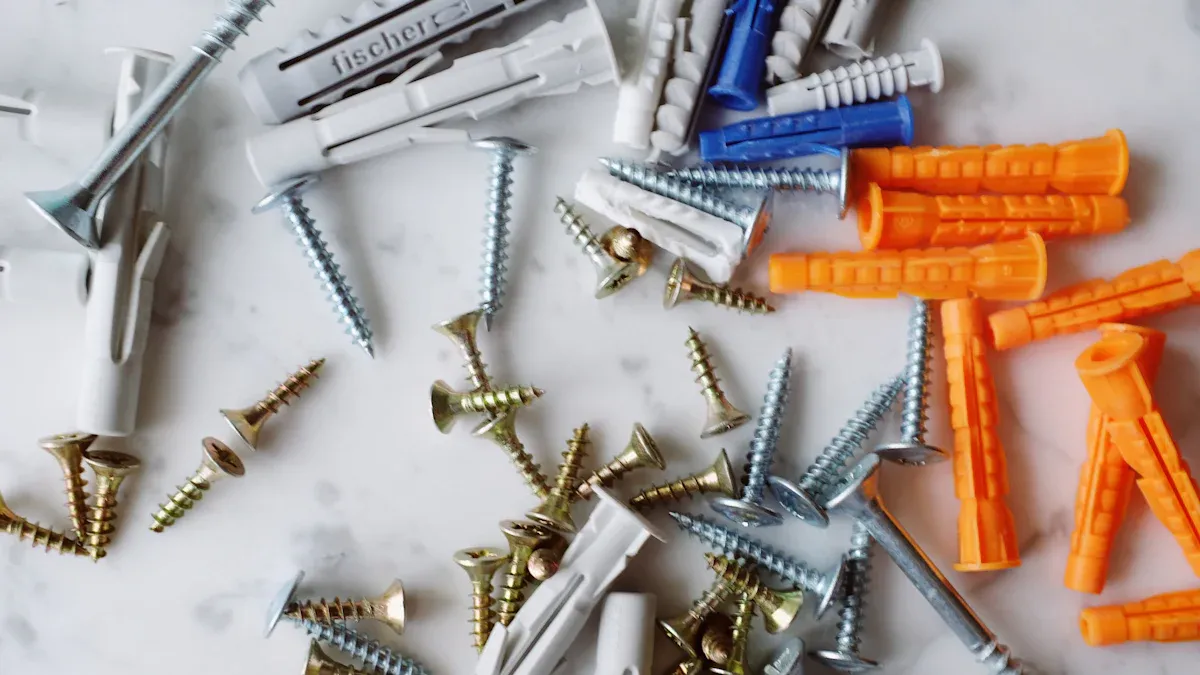
Choosing the right hardware is critical for a successful project. The world of hollow wall anchors offers several designs, each engineered for specific materials and load requirements. Understanding the differences between them ensures a secure and lasting installation.
Expansion Anchors (Plastic Hollow Wall Plug)
The plastic hollow wall plug is one of the most common fasteners for home use. This type of expansion anchor is inexpensive and simple to install, making it a go-to for many DIY tasks.
How They Expand When a Screw is Inserted
An installer first drills a pilot hole and taps the plastic sleeve into the wall until it is flush. Driving a screw into the sleeve forces the anchor’s hidden end to split and flare out. This expansion presses firmly against the back of the drywall, creating a secure brace.
Best Uses and Weight Limits
A plastic hollow wall plug is designed for lighter loads. It provides reliable support for lightweight items that do not experience frequent movement or heavy stress. Common residential applications include:
- Hanging picture frames and small art
- Mounting smoke detectors and thermostats
- Securing small decorative objects on drywall or plasterboard
Note: These anchors typically support between 10 to 25 pounds. Always check the manufacturer’s packaging for specific weight ratings before installation.
Ribbed Designs for Anti-Rotation
Many plastic anchors feature external ribs running along the body. These ribs bite into the surrounding drywall as the anchor is inserted. This design prevents the entire anchor from spinning in the hole when the user drives the screw, ensuring the expansion mechanism engages correctly.
Winged Designs for Added Grip
A variation of this fastener is the wing-style anchor. This design includes flexible wings that fold flat during insertion and then spring open behind the wall. When the screw is tightened, it pulls these wings tight against the interior wall surface, providing a larger contact area and superior grip compared to standard ribbed designs.
Threaded Drywall Anchors (Self-Drilling Anchors)
Threaded anchors, also known as self-drilling anchors, offer a faster installation process by eliminating the need for a pilot hole in many cases. Their aggressive design makes them a popular choice for both professionals and DIYers.
How Their Deep Threads Grip the Drywall
These anchors feature a sharp, pointed tip and wide, deep threads. An installer can drive the anchor directly into the drywall using a screwdriver or drill. The coarse threads cut into the gypsum and paper, creating a very tight fit that resists being pulled out. This makes it a robust drywall anchor solution.
Best Uses and Weight Limits
Threaded anchors are suitable for light to medium-duty applications, generally holding between 25 and 75 pounds. They are excellent for hanging curtain rods, medium-sized mirrors, and lightweight shelving. Some contractors prefer using metal self-drilling anchors for plaster walls. The sturdy metal construction can penetrate tough plaster, and the design is less likely to cause crumbling compared to other anchor types.
Plastic Versions for Light-Duty Use
Plastic threaded anchors are widely available and cost-effective. They are perfect for quickly hanging items where speed is a priority. Their holding power is sufficient for most common household decor and fixtures.
Metal Versions for Increased Strength
Metal versions, often made from a zinc alloy, provide significantly more strength and durability. They can be driven into denser materials like tough plaster without breaking. Their superior holding power makes them a better choice for heavier objects or when a more reliable, long-term hold is necessary.
Molly Bolts (Sleeve-Type Hollow Wall Anchors)
Molly bolts, or “Mollies,” are a type of sleeve-style anchor known for their exceptional strength. They consist of a metal sleeve and a machine screw, providing a very secure mounting point for medium to heavy loads.
How Their Metal Sleeves Collapse and Flare
When the screw of a Molly bolt is tightened, it pulls the tip of the sleeve back toward the wall. This action causes the slotted metal sleeve to collapse and flare outwards, forming a spider-like set of legs that brace against the interior of the wall. Once set, the screw can be removed and reinserted as needed without losing any holding power.
Best Uses and Weight Limits
Molly bolts are ideal for securing heavier items that require robust support, such as towel bars, heavy mirrors, and small wall-mounted cabinets. Their load capacity varies with size and wall thickness.
| Bolt Size | Wall Thickness | Load Capacity (lbs) |
|---|---|---|
| 1/8-inch | 3/8-inch | 30 |
| 1/8-inch | 3/4-inch | 55 |
| 1/2-inch | 3/4-inch | 100-105 |
Pointed Tips for Self-Starting
Some Molly bolts come with a sharp, pointed tip. An installer can hammer this type directly into the drywall, creating its own hole. This feature streamlines the installation process by removing the need to pre-drill.
Non-Pointed Tips for Pre-Drilled Holes
Other Molly bolts have a flat, non-pointed tip. These require the user to drill a pilot hole of a specific diameter before inserting the anchor. This method offers more precision and is often preferred for plaster or when a very clean installation is desired.
Toggle Bolts
For heavy-duty applications, the toggle bolt is a classic and powerful solution. This type of anchor provides one of the strongest holds available in hollow walls, making it a trusted choice for securing substantial weight.
How the Spring-Loaded Wings Open Inside the Wall
A toggle bolt consists of two parts: a machine bolt and a set of spring-loaded metal wings. Installation requires drilling a hole large enough for the folded wings to pass through. An installer pushes the wings through the hole into the wall cavity. Once clear of the drywall, the springs force the wings to pop open. Tightening the bolt then pulls the open wings firmly against the back of the wall, creating an exceptionally strong brace that distributes the load over a wide surface area.
Best Uses and Weight Limits
A toggle bolt is the go-to fastener for heavier items that other anchors cannot support. Its superior strength makes it perfect for mounting objects that carry significant weight or are subject to pulling forces. Common uses include:
- Hanging heavy shelving units
- Securing TV wall mounts
- Installing grab bars and handrails
The holding power of a toggle bolt depends on its diameter and the wall’s thickness. Larger bolts provide a more substantial grip.
| Toggle Bolt Size | Minimum Weight Limit (lbs) | Maximum Weight Limit (lbs) |
|---|---|---|
| 1/8-inch | 30 | 55 |
| 3/16-inch | 90 | 265 |
| 1/4-inch | 85 | 265 |
Pro Tip: Always select a toggle bolt rated well above the object’s actual weight to ensure a safe and secure installation.
Traditional Spring-Wing Toggles
The traditional spring-wing design is the most common form of this anchor. Its main drawback is that the wings are not attached to the bolt. If a user removes the bolt from the wall, the wings will fall down inside the wall cavity, making re-installation impossible without a new anchor. This design can also be tricky to install, as the user must hold the object and the bolt in place while tightening.
Modern Strap-Type Toggles
Modern strap-type toggles improve upon the traditional design. This variation features a metal toggle bar connected to two plastic straps. The user pushes the bar through the hole, pulls the straps to set the bar against the wall, and then slides a plastic cap down to hold it in place. The excess straps snap off, leaving a threaded anchor point. This design is a significant improvement over the classic wing-style anchor.
| Feature | Traditional Spring-Wing Toggles | Modern Strap-Type Toggles |
|---|---|---|
| Installation Ease | Can be tricky and requires coordination | Much easier and faster |
| Hole Size | Requires a larger hole for the wings | Requires a smaller hole |
| Spinning | Bolt can spin during tightening | Anchor bar will not spin |
| Reusability | Not reusable; wings fall if bolt is removed | Reusable; anchor stays in the wall |
| Overhead Use | Difficult to manage | Recommended for overhead use |
Snap Toggles (Advanced Strap-Type Toggles)
Snap Toggles, like the SNAPTOGGLE® anchor, represent the next evolution in toggle technology. They combine immense strength with a user-friendly design, making them a top choice for the most demanding projects.
How the T-Bar Flips and Secures
A Snap Toggle anchor features a solid metal channel (T-bar) connected to plastic setting straps. The user inserts the metal channel through a small pre-drilled hole. A simple pull on the straps causes the T-bar to pivot and lock into place vertically behind the wall. The user then slides the plastic cap flush with the wall and snaps off the straps. This process leaves a permanent, high-strength threaded fixture ready for a bolt.
Best Uses and Weight Limits
Snap Toggles are engineered for maximum load capacity, far exceeding what is needed for lightweight items. They are the premier choice for critical applications where failure is not an option. Certified load ratings demonstrate their impressive strength in standard drywall. For example, a SNAPTOGGLE® anchor can support up to 238 lbs in 1/2-inch drywall.
| Drywall Thickness | Ultimate Tensile Pull-Out Value | Ultimate Shear Test Results |
|---|---|---|
| 1/2-inch | 238 lbs. | 247 lbs. |
| 5/8-inch | 356 lbs. | 298 lbs. |
Advantages Over Traditional Toggle Bolts
Snap Toggles offer several key advantages that make them superior to traditional designs for securing heavier items.
- Smaller Hole: They require a much smaller installation hole (often just ½-inch), which preserves the structural integrity of the wall.
- Pre-Assembled Design: The anchor comes pre-assembled, simplifying and speeding up the installation process.
- Reusable Fixture: Unlike a traditional toggle bolt, the anchor stays fixed in the wall if the bolt is removed. This allows the user to remove and re-hang the object as needed.
- Positive Locking System: The T-bar locks firmly in place and will not spin, eliminating a common frustration associated with older toggle designs.
These features combine to create a more robust, reliable, and user-friendly anchor for heavy-duty mounting tasks.
How to Choose the Right Anchor for Your Project
Selecting the correct fastener is the most important step for a secure installation. A user must evaluate the object’s weight, the wall material, and the screw size. Making the right choice prevents wall damage and ensures the mounted item remains safely in place. Learning how to choose the right anchor is a critical skill for any project.
Assessing the Object’s Weight
The first step is to determine the weight of the object an installer intends to hang. Anchors are rated for specific load capacities, which fall into three main categories.

Light-Duty Applications (Pictures, Small Decor)
Light-duty anchors support objects up to 25 pounds. Plastic expansion anchors and self-drilling anchors are excellent for these lightweight items. They provide sufficient hold for hanging small picture frames, clocks, and other simple decor.
Medium-Duty Applications (Shelves, Mirrors)
Medium-duty anchors handle loads between 25 and 75 pounds. Molly bolts are a great option in this range, typically holding 25 to 50 pounds. For an object like a 40-pound mirror, a Molly bolt or a strong screw-in anchor provides a reliable hold. These are also suitable for curtain rods and small shelves.
Heavy-Duty Applications (TV Mounts, Cabinets)
Heavy-duty applications involve significant weight and require maximum support. Toggle bolts are the standard for heavier items, as they can support 100 pounds or more. Installers should use these powerful anchors for mounting TV brackets, large cabinets, and safety grab bars.
Considering Your Wall Material
The wall itself plays a huge role in an anchor’s performance. Different types of wall substrates have unique properties that affect an anchor’s grip.
Drywall (Gypsum Board)
Drywall is the most common wall material in modern homes. It is compatible with nearly all hollow wall anchors, from simple plastic plugs to heavy-duty snap toggles. The key is matching the anchor’s strength to the object’s weight.
Plaster and Lath
Plaster is harder and more brittle than drywall. It can easily crack or crumble if the wrong anchor is used. For plaster walls, installers should choose anchors that expand behind the wall to distribute the load.
- Molly Bolts: These metal anchors expand behind the plaster, creating a very strong hold for significant weight.
- Toggle Bolts: The wings on a toggle bolt open inside the wall cavity, providing excellent support and preventing stress on the brittle plaster surface.
Hollow-Core Doors and Paneling
Hollow-core doors and thin wall paneling have very little structural material. Using wall anchors is necessary because a screw alone will not hold. Specialized hollow-core door anchors, like small toggle bolts or self-drilling anchors, create a grip in the thin veneer. However, the door itself has a low weight capacity, so these surfaces are only suitable for very light objects.
Matching the Anchor to the Screw Size
Most anchor kits come with the correct screw. If an installer must supply their own, they need to match the screw to the anchor. A screw that is too thin will not properly expand the anchor, resulting in a weak hold. A screw that is too thick can split a plastic anchor or strip the threads of a metal one. Always check the anchor’s packaging for the recommended screw diameter and length.
Step-by-Step Guide to Installing a Drywall Anchor

Proper installation is the key to unlocking the full strength of any hollow wall anchor. Following a systematic process ensures a secure mount and prevents damage to the wall. This guide breaks down the installation into simple, manageable steps.
Step 1: Gather Your Tools and Materials
An installer should begin by collecting all necessary tools and materials. Having everything on hand prevents interruptions and streamlines the workflow. The specific tools depend on the type of anchor selected.
Drill and Drill Bits
A power drill is essential for creating a clean pilot hole. An installer needs a complete set of drill bits. This allows them to select the precise size required for the anchor.
Hammer and Screwdriver
A hammer is useful for gently tapping flush-mount anchors into place. A screwdriver, either a Phillips or a flathead, is necessary for driving the screw that activates the anchor. For self-drilling anchors, a screwdriver may be the only tool needed for insertion.
Level and Pencil
A level ensures the final object hangs straight. A pencil is used for marking the precise hanging point on the wall. For items with multiple mounting points, a laser level can provide exceptional accuracy.
A basic toolkit for most anchor installations includes:
- The selected hollow wall anchors and their corresponding screws
- Power drill with a full set of drill bits
- Hammer and a small nail (for starting a hole without a drill)
- Phillips and flathead screwdrivers
- Level (standard or laser) and a pencil
- Painter’s tape (optional, but highly recommended)
Step 2: Mark Your Hanging Point
Accurate marking is a critical step for a professional-looking result. An installer should use a light pencil mark or a small piece of painter’s tape to identify the exact spot for the anchor.
For an object that requires two or more anchors, precision is paramount.
- First, measure the distance between the hangers on the back of the object.
- Next, transfer this measurement to the wall, making two light marks.
- Place a level across these two marks to confirm they are perfectly horizontal.
Important: An installer must not measure down from the ceiling or up from the floor to create a level line. These surfaces are often uneven. Always trust the bubble on a level for true horizontal alignment.
A useful technique for frames is the painter’s tape method. An installer can place a strip of tape across the back of the frame, poke holes where the hangers are, and then transfer the tape to the wall. After leveling the tape, they can mark the wall through the holes for perfect placement.
Step 3: Drill the Pilot Hole
Most hollow wall anchors require a pilot hole. This hole allows the anchor to be inserted without damaging the drywall. The size and quality of this hole directly impact the anchor’s holding power.
Selecting the Correct Drill Bit Size
Choosing the right drill bit is not a guessing game. An anchor’s packaging will specify the exact drill bit diameter needed. A hole that is too small will prevent the anchor from fitting, while a hole that is too large will result in a loose, unreliable hold.
For many anchors, like sleeve and wedge anchors, the rule is simple: the drill bit diameter matches the anchor diameter. However, many other types are exceptions. For example, a 1/4″ drop-in anchor requires a much larger 3/8″ drill bit. The table below shows common anchor types and their required drill bit sizes.
| Anchor Type | Anchor Size | Drill Bit Size |
|---|---|---|
| Same-Size Rule | ||
| Sleeve Anchors | Anchor Ø | Drill Bit Ø |
| Hammer Drive Anchors | Anchor Ø | Drill Bit Ø |
| Exceptions | ||
| Drop-In Anchors | 1/4″ | 3/8″ |
| 3/8″ | 1/2″ | |
| Lag Screw Expansion Shields | 1/4″ | 1/2″ |
| 3/8″ | 5/8″ | |
| Machine Screw Anchors | #10-24 | 3/8″ |
| 1/4″ | 1/2″ |

Drilling Technique for a Clean Hole
A clean hole ensures the drywall anchor fits snugly. To achieve this, an installer should hold the drill perpendicular to the wall. They should apply steady, gentle pressure and let the drill bit do the work. Running the drill at a medium speed prevents the paper on the drywall from tearing and keeps the gypsum core from crumbling. Once the bit passes through the wall, reversing the drill while pulling it out helps clear debris and leaves a clean opening.
Step 4: Insert the Hollow Wall Anchor
With the pilot hole prepared, the next action is inserting the anchor. The technique varies depending on the anchor’s design. The goal is to position the anchor correctly for activation.
Tapping the Anchor Flush with the Wall
Most anchors, such as plastic expansion types and Molly bolts, are designed to sit flush with the wall. An installer should align the anchor with the hole and push it in by hand as far as it will go.
- The user can gently tap the anchor’s collar with a hammer or a rubber mallet.
- They should continue tapping until the head of the anchor is perfectly flush with the wall surface.
Note: A flush fit is critical. An anchor that protrudes will prevent the mounted object from sitting flat against the wall. An anchor that is recessed too far may not engage correctly.
For a screw-in type plastic drywall anchor, the installer drives it into the wall with a screwdriver until it is flush. A small starter hole can make this process easier.
Inserting a Toggle Bolt Through the Hole
A toggle bolt requires a different approach due to its spring-loaded wings. The installer must first thread the bolt through the item being hung, then through the toggle mechanism.
- The user then pinches the wings flat against the bolt.
- They push the folded wings completely through the hole into the wall cavity.
- A distinct “snap” sound confirms the wings have sprung open behind the drywall.
This process prepares the heavy-duty anchor for the final tightening phase.
Step 5: Set the Anchor
Setting the anchor is the most important step. This is where the anchor expands or braces itself against the interior wall, creating its holding power. The method for setting the anchor is unique to its type.
Driving the Screw to Expand the Anchor
For a standard plastic expansion anchor, the installer drives the provided screw into the anchor sleeve. As the screw advances, it forces the split end of the anchor to flare out. The user should continue turning the screw until they feel a firm resistance. This indicates the anchor has fully expanded and is secure.
Caution: The installer must avoid over-tightening the screw. Excessive force can strip the plastic threads or damage the drywall, compromising the anchor’s grip.
Activating a Molly Bolt with a Screwdriver
A Molly bolt is set before the object is mounted. After tapping the sleeve flush, the installer inserts the bolt and begins turning it with a screwdriver. This action pulls the tip of the anchor toward the wall, causing the metal sleeve to collapse and form legs. The user continues tightening until the bolt is very snug. Once set, the bolt can be removed to hang the object, and then reinserted.
Tightening a Toggle Bolt Until Secure
Setting a traditional toggle bolt requires coordination. The installer must pull the bolt outward, away from the wall. This action keeps the wings braced against the interior surface. While maintaining this tension, the user tightens the bolt with a screwdriver until the object’s bracket is firm against the wall. Without this outward pull, the entire mechanism will just spin inside the wall cavity.
Step 6: Mount Your Object
The final step is to attach the object to the now-secure anchor. With the hard work done, this part is straightforward. For anchors like Molly bolts and Snap Toggles, the installer simply removes the setting screw, positions the object’s mounting bracket over the hole, and drives the screw back in to secure it.
For a traditional toggle bolt, the object must be positioned on the bolt before the anchor is inserted into the wall. Once the anchor is set, the object is already in place and simply needs to be snugged against the wall. After confirming the object is level one last time, the project is complete.
Common Mistakes to Avoid with Hollow Wall Anchors
Even the best hardware can fail if installed incorrectly. When using wall anchors, avoiding a few common pitfalls is essential for ensuring a strong, reliable mount. Understanding these errors helps an installer achieve a professional and secure result every time.
Using the Wrong Size Pilot Hole
One of the most frequent mistakes is drilling an incorrectly sized pilot hole. An anchor’s holding power depends on a snug fit. Drilling a pilot hole that is either too small or too large can lead to adverse effects on the anchor’s capacity. A hole that is too large prevents the anchor from gripping the drywall, causing it to spin or pull out under load. A hole that is too small can damage the anchor during insertion or crack the wall.
In professional settings, if the hole size is wrong, it becomes the responsibility of the design engineer of record to assess and determine if the anchor system remains suitable for its intended application. For a DIYer, it means the installation is compromised.
Over-tightening the Screw and Stripping the Anchor
More force is not always better. An installer can easily over-tighten the screw, which strips the anchor’s internal threads or damages the surrounding drywall. This is especially true for a plastic drywall anchor. Once stripped, the anchor loses its ability to hold the screw securely. The user should stop tightening as soon as they feel firm resistance.
Key signs of an over-tightened or stripped anchor include:
- The screw just spins in place and will not tighten further or come out.
- The screw has been pushed in too far, past the threaded section, causing it to spin freely.
- The threads on the screw itself appear damaged or flattened.
Choosing an Undersized Anchor for the Load
Every anchor has a specific weight rating, and ignoring it is a recipe for failure. Using an anchor with an insufficient load capacity can lead to instability and potential failure of the structure. An installer must always choose an anchor rated to hold significantly more than the object’s actual weight. This creates a crucial safety margin.
For example, the Occupational Safety and Health Administration (OSHA) has strict rules for safety equipment. Anchorages for personal fall arrest systems must support at least 5,000 pounds per person. This high standard accounts for dynamic forces and provides a safety factor far beyond a person’s weight. While hanging a shelf is less critical, the principle is the same: always over-engineer for safety.
Reusing an Old or Damaged Anchor Hole
An installer should never reuse an old anchor hole. The drywall around the original hole is already compromised. It has been compressed, crumbled, or stressed from the previous installation. Attempting to insert a new anchor into the same spot almost guarantees a weak hold. The new anchor will not be able to grip the damaged material effectively. This creates a significant safety risk, as the anchor could easily pull free under a much lighter load than it is rated for.
Professional Tip: The best practice is to patch the old hole with spackling compound. Once the patch is dry and sanded smooth, the installer can drill a new pilot hole at least one inch away from the original location. This ensures the new anchor is set in fresh, undamaged drywall.
A damaged hole presents an even greater problem. A hole that has been enlarged, torn, or stripped offers no structural integrity. Placing an anchor in such a compromised spot is futile.
- The anchor will spin freely during installation.
- It will not expand or set correctly.
- It will offer virtually no load-bearing capacity.
Ignoring this rule leads to failed projects and potential damage to both the wall and the object being hung.
Ignoring the Anchor’s Official Weight Rating
Every hollow wall anchor is engineered and tested to support a specific maximum weight. This official weight rating, or load capacity, is the most critical piece of information for ensuring a safe installation. An installer who ignores this rating is gambling with safety and structural integrity. The manufacturer determines these ratings through rigorous testing, and they represent the anchor’s reliable limit.
Installers can find this information directly on the product’s packaging. For example, the E-Z ANCOR® brand provides clear ratings for its product line.
| Product Name | Weight Rating |
|---|---|
| E-Z ANCOR® LITE | 25 lb |
| E-Z ANCOR® MINI | 30 lb |
| E-Z STUD SOLVER™ | 50 lb |
| E-Z ANCOR® ZINC | 50 lb |
| E-Z ANCOR® PLASTIC PLUS | 50 lb |
| E-Z TOGGLE® | 85 lb |
These ratings show the significant performance differences between anchor types.

Some independent tests reveal that certain anchors can exceed their claimed ratings, while others meet them exactly.
- Cobra DrillerToggle: This anchor has a claimed rating of 90 lbs but tested up to 140 lbs.
- WallClaw Anchors: This product performed precisely as advertised, with a claimed and tested rating of 90 lbs.
Despite these variations, an installer must always adhere to the manufacturer’s official rating. This figure provides the guaranteed safe load limit. Choosing an anchor based on its official rating is the only way to ensure a secure and dependable mount.
Hollow wall anchors are essential tools for modern construction and DIY tasks. They function by expanding or flipping open behind a wall. This creates a secure brace that distributes an object’s weight over a wide surface area. This unique mechanism allows a user to safely hang items where no solid wood stud is available. Understanding the different types of hollow wall anchors and following the correct installation steps ensures a strong, reliable hold for any project.
FAQ
What should an installer do if they hit a wood stud?
Hitting a wood stud is a good thing! An installer should abandon the anchor. They can drive a standard wood screw directly into the stud for a much stronger hold. This provides the most secure mounting point possible, far superior to any hollow wall anchor.
Can you reuse a hollow wall anchor?
No, an installer should never reuse a hollow wall anchor. The removal process damages the anchor and the surrounding drywall. Reusing it creates a weak, unreliable hold. For safety, always use a new anchor in a fresh hole for every installation.
Why is my new anchor spinning in the hole?
An anchor spins when the pilot hole is too large. This prevents the anchor from gripping the drywall during installation. The user must ensure they drill the exact hole size specified by the anchor’s manufacturer to achieve a snug, secure fit. ⚙️
How do you remove a hollow wall anchor?
Removing an anchor depends on its type.
- Plastic Anchors: A user can often back the screw out and pull the anchor out with pliers.
- Molly/Toggle Bolts: It is best to tap the anchor flush with the wall and spackle over it.
Can you use hollow wall anchors in a ceiling?
Yes, but with extreme caution. Ceilings experience a direct downward pulling force (tensile load). An installer must use a heavy-duty anchor, like a Snap Toggle, and strictly follow its weight rating. Never hang very heavy objects like ceiling fans from a drywall anchor.
Safety Tip: For ceiling applications, always choose an anchor rated for significantly more weight than the object itself to ensure a strong safety margin.
Are there specific anchors for plaster walls?
Yes. Plaster is more brittle than drywall. Metal anchors like Molly bolts or toggle bolts work best. Their expansion mechanism braces against the back of the wall, distributing weight effectively. This design prevents the brittle plaster from cracking or crumbling under load.