U bolt fasteners serve as essential components in securing pipes, tubes, and cylindrical objects. Their U-shaped design wraps securely around these items, holding them firmly in place and ensuring precise alignment. Industries such as automotive, construction, marine, agriculture, and telecommunications rely on u bolt fasteners for robust pipe and tube support. The typical load capacity of a u bolt depends on factors like size, material grade, and installation torque, making them suitable for demanding applications. Custom fasteners and bolt casting options from a custom fasteners manufacturer address unique project needs.
What is a U-Bolt Fastener?
Definition and Structure
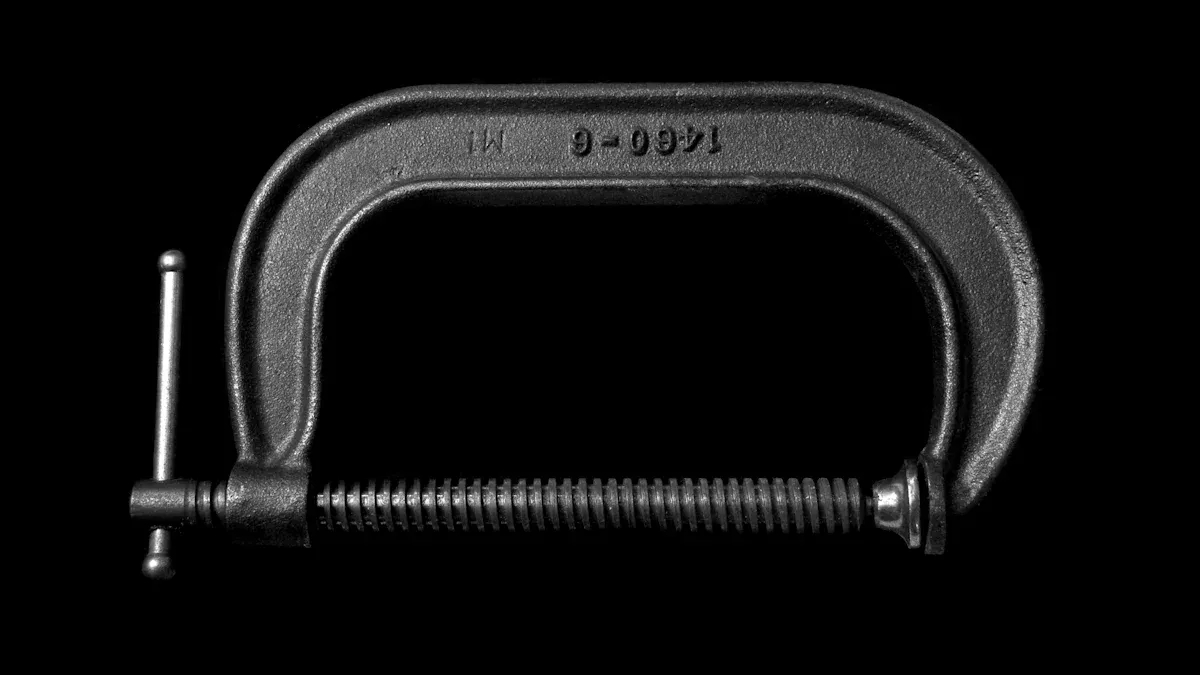
A u-bolt is a type of fastener shaped like the letter “U” with threaded ends on both arms. This design allows the u-bolt to wrap around pipes, tubes, or rods, securing them to a supporting structure. The structure of a u-bolt includes a curved or square base and two parallel legs. Each leg features threads that accommodate nuts and washers, which clamp the fastener tightly in place.
Industry standards define u-bolts by rod diameter, inside width, and inside length. The following table outlines common dimensions and their typical uses:
| Rod Diameter (in) | Inside Width (in) | Inside Length (in) | Typical Use |
|---|---|---|---|
| 3/8″ | 1.5″ – 3″ | 4″ – 6″ | Plumbing, light-duty pipe clamps |
| 1/2″ | 2″ – 4.5″ | 5″ – 7″ | U bolt pipe clamps, trailer frames |
| 5/8″ | 3″ – 5″ | 6″ – 9″ | Leaf spring U bolts, off-road axles |
| 3/4″ | 4″ – 6″ | 7″ – 10″ | Axle U bolts, industrial suspension |
| 1″ | 5″ – 8″ | 8″ – 12″ | Custom machinery, custom U bolts |
U-bolts come in two main shapes: round and square. The table below compares their features:
| Feature | Square U Bolts | Round U Bolts |
|---|---|---|
| Shape | Flat-bottom with 90-degree angles | Smooth curve (U shape) |
| Common Use | Beams, channels, equipment frames | Pipes, trailer axle U bolts, tubes |
| Torque Distribution | Even along flat edges | Concentrated at contact curve |
How U-Bolts Work
The u-bolt fastener operates by wrapping its curved or square base around a cylindrical or square object. The installer places the threaded ends through holes in a mounting plate or structural support. Nuts and washers then secure the u-bolt, clamping the object tightly.
The U-shaped design provides several mechanical advantages:
- Strong and secure hold: U-bolts grip cylindrical objects firmly, preventing slippage.
- Easy alignment: The shape allows for precise positioning of pipes or tubes.
- Even load distribution: U-bolts distribute force across the object’s surface, reducing stress points.
Tip: U-bolts prevent lateral movement and restrict unwanted shifts, which is essential for maintaining the integrity of piping systems.
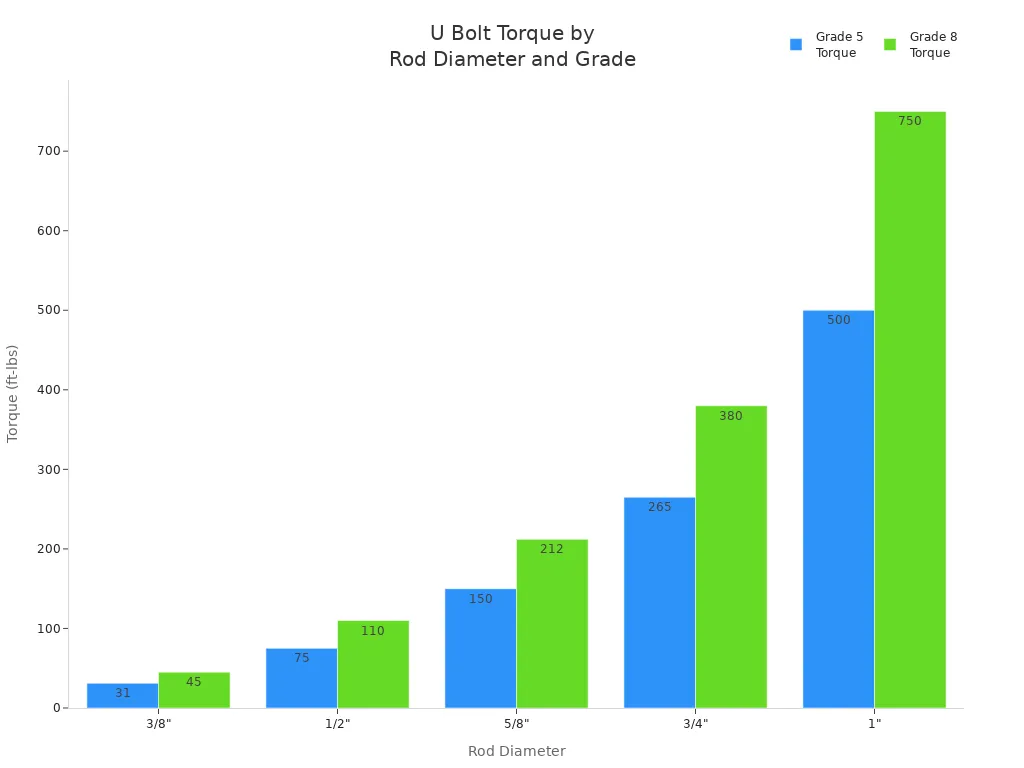
The following chart illustrates the torque values required for different rod diameters and grades, which ensures proper clamping force and safety:
Key Functions
U-bolt fasteners serve multiple roles across industries. Their primary functions include:
- Structural strength: U-bolts grasp cylindrical objects tightly, reinforcing beams and frameworks.
- Load distribution: U-bolts spread the load evenly, enhancing stability and reducing the risk of deformation.
- Vibration absorption: U-bolts help maintain alignment in dynamic environments, such as automotive or industrial settings.
- Stabilization: U-bolts stabilize piping systems and cable trays during construction or operation.
- Resistance to movement: U-bolts restrict pipe or tube movement, providing reliable anchoring.
- Versatility: U-bolts secure beams, pipes, cables, and machinery in construction, automotive, marine, and DIY projects.
Common applications include:
- Securing pipes and conduit to walls or beams in construction.
- Attaching leaf springs to vehicle axles for support and stability.
- Mounting fencing posts and antenna brackets in DIY projects.
- Providing corrosion resistance in marine environments.
U bolt fasteners remain a preferred choice for professionals who require a reliable, adaptable, and easy-to-install fastener for pipe and tube support.
Main Features of U-Bolt Fasteners
Materials and Durability
U bolts come in a range of materials, each offering unique benefits for different environments and applications. The choice of material impacts both the strength and the corrosion resistance of the u-bolt.
Stainless Steel
Stainless steel u bolts provide excellent resistance to rust and chemicals. Grade 304 stainless steel offers moderate corrosion resistance, making it suitable for indoor and mildly corrosive environments. Grade 316 stainless steel delivers very high corrosion resistance, especially in marine or chemical processing settings.
Carbon Steel
Carbon steel u bolts deliver high tensile strength, making them ideal for heavy-duty applications. High-strength u-bolts made from alloy steel can withstand significant loads, but they offer lower corrosion resistance. These fasteners often require protective coatings to extend their service life.
Galvanized U-Bolts
Galvanized u bolts feature a zinc coating that protects the steel from moisture and corrosion. Hot-dip galvanizing creates a thick, durable layer, making these u bolts suitable for outdoor and industrial environments.
Other Materials
Manufacturers also produce u bolts from materials such as brass, copper, and specialty alloys. These options address specific needs, such as electrical conductivity or resistance to extreme temperatures.
Note: The table below compares common u-bolt materials, their durability ratings, and corrosion resistance levels.
| Material Type | Durability Rating (Tensile Strength PSI) | Corrosion Resistance Level |
|---|---|---|
| High-strength alloy steel | 150,000 | Low |
| Hot-dip galvanized steel | N/A | High |
| Stainless steel (304) | N/A | Moderate |
| Stainless steel (316) | N/A | Very High |
Shapes and Sizes
U bolts are available in a variety of shapes and sizes to suit different applications. The design of the u-bolt affects its performance and suitability for specific tasks.
Standard U-Bolts
Standard u bolts feature a smooth, rounded curve. They secure pipes and tubes, ensuring proper alignment and preventing movement in plumbing and mechanical systems.
Square U-Bolts
Square u bolts have a flat-bottomed shape with 90-degree angles. They attach beams, channels, and equipment frames, providing even torque distribution along flat surfaces.
Custom U-Bolts
Custom u bolts can be fabricated to meet unique requirements. They adapt to specialized machinery, non-standard pipe sizes, or challenging installation conditions.
- Heavy machinery and equipment: U bolts secure components, providing stability and preventing movement.
- Structural support: They secure beams and columns, contributing to the stability of structures.
- Pipe and tube fastening: U bolts ensure proper alignment and prevent shifting in plumbing systems.
- Vibration damping: They absorb vibrations, enhancing safety and reducing noise.
- Custom fabrication: U bolts can be tailored for specific requirements, ensuring adaptability.
Coatings and Finishes
The right coating or finish extends the life of a u-bolt, especially in harsh or corrosive environments.
| Coating Type | Description | Corrosion Resistance Impact |
|---|---|---|
| Zinc Plating | A thin layer of zinc for moderate protection. | Provides basic corrosion resistance. |
| Hot-Dip Galvanizing | A thick zinc layer, ideal for outdoor use. | Superior corrosion resistance, especially in coastal areas. |
| Nickel Plating | A shiny finish with some corrosion resistance. | Moderate corrosion resistance. |
| Phosphate Coatings | Improves adhesion for paint and other finishes. | Limited corrosion resistance on its own. |
| Stainless Steel | Not a coating, but offers excellent corrosion resistance. | Highly resistant to corrosion and chemicals. |
- Hot dip galvanizing offers a thick zinc layer for superior protection outdoors.
- Electro galvanized coatings provide moderate resistance for less corrosive settings.
- Mechanical plating uses cold welding to apply zinc powder, creating a uniform finish.
- Zinc flake coatings combine zinc and aluminum flakes for reliable corrosion resistance.
Tip: Selecting the right coating ensures the u-bolt maintains its integrity and performance, even in demanding environments.
Types of U-Bolt Fasteners
U bolts come in several distinct types, each designed for specific shapes and support requirements. The selection of the right type ensures secure fastening and optimal performance in various industrial and structural applications.
| Type of U-Bolt | Shape | Typical Application |
|---|---|---|
| Round bend u-bolts | U-shaped | Attaching to round poles or pipes |
| Square bend u-bolts | Square-shaped | Going around square or rectangular objects like beams |
Standard U-Bolts
Standard u bolts represent the most common form used in industrial and commercial settings. Their classic U-shape allows them to wrap around pipes, tubes, or rods, providing a reliable grip. These fasteners play a vital role in restraining movement, securing items during shipping, and elevating pipes to prevent corrosion or accidental falls.
| Use Case | Description |
|---|---|
| As a Restraint | U-bolts keep pipes from moving and prevent wear by controlling their movement. |
| For Shipping | They secure pipes during transport, preventing damage from movement. |
| For Elevating Pipes | U-bolts are used to hang pipes, reducing the risk of corrosion and falling due to gravity. |
Note: Standard u bolts offer versatility and strength, making them suitable for plumbing, HVAC, and general construction projects.
Square U-Bolts
Square u bolts feature a flat-bottomed, angular design. This shape fits snugly around square or rectangular tubing, beams, and flat surfaces. In construction and structural engineering, square u-bolts secure steel frameworks, channel framing, and racking systems. Their geometry distributes force evenly along flat edges, reducing the risk of deformation.
Square bend u-bolts provide a tailored solution for applications where round fasteners would not offer adequate support or alignment. Engineers often select these fasteners for projects involving structural steel or modular assemblies.
Round U-Bolts
Round u bolts, also known as round bend u-bolts, are engineered for cylindrical objects. Their curved profile delivers a snug fit without creating pressure points, which helps protect pipes and tubes from damage. Manufacturers produce these fasteners in materials such as low carbon steel for general use, A193 B7 for heavy-duty needs, and 304 or 316 stainless steel for marine environments.
- Round u bolts support and clamp pipes in construction and plumbing.
- Marine industries rely on them for corrosion resistance.
- Industrial machinery uses them to mount cylindrical components.
- Automotive systems employ them in exhaust and suspension assemblies.
Tip: Selecting the correct type of u bolt ensures long-term stability and safety for both structural and mechanical systems.
Custom and Specialty U-Bolts
Custom and specialty u bolts address unique challenges in industrial and commercial environments. Engineers often encounter situations where standard fasteners do not fit the requirements of complex projects. Custom u bolts provide solutions for unconventional shapes, unusual load demands, and harsh environmental conditions.
Manufacturers design custom u bolts for a wide range of industries. These sectors frequently require specialized fasteners to ensure safety, durability, and performance. The following industries rely on custom and specialty u bolts:
- Plumbing, HVAC, and Oil and Gas
- Automotive and Heavy Equipment
- Marine Applications
- Construction and Infrastructure
- Agricultural Equipment
- Utility and Telecommunications
- Outdoor and Recreational Equipment
Each industry presents distinct demands. For example, marine applications require u bolts with enhanced corrosion resistance. Automotive and heavy equipment sectors need fasteners that withstand high stress and vibration. Utility and telecommunications companies depend on custom u bolts to secure cables and conduits in challenging environments.
Customization options allow manufacturers to tailor u bolts for specific tasks. Engineers select custom sizing to fit unconventional shapes or non-standard pipe diameters. Material choices include galvanized steel, stainless steel, and titanium. These materials offer varying levels of strength and corrosion resistance. Enhanced coatings improve durability and protect against moisture, chemicals, and saltwater exposure. Precision engineering ensures easy installation and reliable performance.
Specialty u bolts include designs such as round bend u-bolts and square bend u-bolts. These fasteners adapt to unique mounting surfaces and provide secure attachment for both cylindrical and rectangular objects. Specialty designs also feature threaded extensions, integrated brackets, or reinforced bends for added strength.
Tip: Custom u bolts often solve problems that standard fasteners cannot address. Engineers should consult with manufacturers to determine the best combination of material, coating, and sizing for their application.
The table below summarizes common customization features for specialty u bolts:
| Custom Feature | Benefit |
|---|---|
| Custom sizing | Fits non-standard shapes and dimensions |
| Material variety | Matches environmental and load requirements |
| Enhanced coatings | Extends service life in corrosive settings |
| Precision engineering | Simplifies installation and maintenance |
Custom and specialty u bolts play a critical role in supporting infrastructure, machinery, and equipment. Their adaptability ensures that engineers can meet the demands of modern industry with confidence.
U-Bolt Uses and Applications by Industry
U-bolt fasteners play a critical role across a wide range of industries. Their versatility and strength make them indispensable for securing, supporting, and aligning pipes, tubes, and structural elements. The following sections highlight essential applications and common uses of u bolts in plumbing, automotive, and construction sectors.
Pipe and Tube Support in Plumbing
U-bolts provide reliable solutions for pipe and tube support in both residential and industrial plumbing systems. Their design allows installers to attach pipes securely to walls, ceilings, and other structural supports.
Securing Pipes to Structures
Plumbers and engineers use u-bolts to fasten water, gas, and waste pipes in buildings. These fasteners ensure that pipes remain stable and aligned, reducing the risk of leaks or mechanical failure. In industrial settings, u-bolts support process and utility piping, maintaining system integrity under varying loads and vibrations. HVAC installations also rely on u-bolts to hold ductwork, refrigerant lines, and chilled water pipes in place.
- U-bolts secure pipes in residential and commercial plumbing.
- Industrial facilities use them for process piping and utility lines.
- HVAC systems depend on u-bolts for duct and pipe stability.
Note: U-bolts withstand harsh conditions in marine and offshore projects, where vibration and corrosion resistance are crucial.
Supporting Conduits
Supporting electrical conduits and cable trays represents another vital application. U-bolts clamp conduits to beams or walls, preventing sagging and ensuring proper routing. This method protects wiring from mechanical damage and maintains compliance with safety codes.
- U-bolts support cable trays in utility installations.
- They maintain alignment for electrical conduits in commercial buildings.
- Installers use cushioned u-bolts to reduce vibration and noise in sensitive environments.
Automotive and Transportation Applications
The vehicle and automotive industry depends on u-bolts for critical suspension and exhaust system functions. These fasteners deliver strength, durability, and ease of installation, making them a preferred choice for manufacturers and mechanics.
Vehicle Suspension Systems
U-bolts serve as primary fasteners in leaf spring suspension assemblies. They clamp the axle to the leaf springs, providing stability and distributing loads evenly. High-strength materials such as steel or specialty alloys ensure that u-bolts withstand the stresses of road conditions and heavy loads.
| Specification | Description |
|---|---|
| Material | High-strength materials such as steel or alloys |
| Design | U-shaped with threaded ends and two arms for secure fastening |
| Applications | Used in leaf spring suspension, axle fastening, and various suspension components |
| Benefits | Strength, durability, stability, easy installation, corrosion resistance |
Automotive engineers select u-bolts for their ability to maintain alignment and absorb vibration. These features contribute to safer, more reliable vehicle operation.
Exhaust Systems
U-bolts also play a key role in securing exhaust pipes to vehicle frames and components. They prevent leaks by maintaining a tight seal, even under high temperatures and constant vibration. U-bolts must handle thermal expansion and contraction, ensuring performance from -94°F to 750°F.
- U-bolts secure exhaust pipes and prevent leaks.
- They withstand extreme temperatures and maintain clamping force.
- Lightweight materials help reduce overall vehicle weight and improve fuel efficiency.
Copper locking bolts may be used alongside u-bolts to manage thermal changes, further enhancing system reliability.
Construction and Structural Engineering Applications
Construction and structural support projects rely on u-bolts for their ability to attach pipes, cables, and cylindrical objects to beams and frameworks. Their design enables distributed load application, which is essential for infrastructure stability.
Attaching Beams and Columns
Engineers use u-bolts to clamp beams and columns in place during building assembly. This method ensures precise alignment and secure connections, which are vital for structural integrity. U-bolts also facilitate the attachment of temporary supports during construction phases.
- U-bolts clamp beams and columns in steel frameworks.
- They secure temporary supports and scaffolding.
- Their shape distributes loads evenly, reducing stress concentrations.
Supporting Frameworks
Supporting frameworks for bridges, tunnels, and large facilities often involves u-bolts. These fasteners anchor pipes, cables, and other cylindrical elements to structural supports, enhancing overall stability.
- U-bolts secure pipes and cables in infrastructure projects.
- They reinforce frameworks in bridges and tunnels.
- Their versatility allows use in both permanent and temporary installations.
Tip: U-bolt uses in construction and structural engineering extend to clamping, load distribution, and reinforcement, making them essential applications for modern infrastructure.
Marine and Offshore Applications
U bolts play a vital role in marine and offshore environments. These settings expose fasteners to saltwater, humidity, and constant mechanical stress. Engineers select u bolts made from materials with exceptional corrosion resistance to ensure long-term performance and safety.
Securing Boat Hardware
Boat builders and marine technicians rely on u bolts to secure items such as deck fittings, lifelines, and rigging. The fasteners must withstand harsh marine conditions, including salt spray and vibration from waves. Duplex stainless steel bolts offer high tensile strength and resist corrosion, making them suitable for offshore platforms and critical marine hardware. For less demanding areas, 316 stainless steel u bolts provide adequate protection against marine atmospheric corrosion.
- U bolts attach cleats, rails, and ladders to boat decks.
- They anchor rigging and lifelines, ensuring safety for crew and passengers.
- Marine hardware installations depend on u bolts for stability and durability.
Note: Corrosion-resistant u bolts with advanced surface treatments are essential for offshore wind farms and oil platforms, where vibration and moisture levels remain high.
Dock and Pier Installations
Dock and pier construction requires fasteners that can handle exposure to water, changing tides, and heavy loads. U bolts secure pilings, fenders, and mooring hardware to wooden or metal structures. Their design allows for quick installation and reliable performance, even in challenging coastal environments.
- U bolts fasten dock bumpers and fenders to protect boats during mooring.
- They secure cables and chains for floating docks and piers.
- Offshore oil and gas platforms use u bolts to anchor pipelines and structural components.
A table below summarizes the corrosion resistance requirements for marine and offshore u bolt uses:
| Application Area | Preferred Material | Corrosion Resistance Level |
|---|---|---|
| Boat hardware | Duplex/316 stainless steel | High |
| Offshore platforms | Duplex stainless steel | Very High |
| Dock installations | 316 stainless steel | High |
| Offshore wind farms | Coated alloy steel | Superior |
Electrical and Utility Applications
U bolts serve as essential components in electrical and utility installations. Their ability to support and secure cables and conduits ensures safe and organized infrastructure.
Supporting Cable Trays
Electricians use u bolts to mount cable trays to beams, walls, or ceilings. These trays carry multiple cables, providing a neat and accessible routing system. U bolts prevent sagging and maintain alignment, which protects cables from mechanical damage and ensures compliance with safety standards.
- U bolts support cable trays in commercial and industrial facilities.
- They help organize power, data, and control cables in utility installations.
- Installers select corrosion-resistant u bolts for outdoor or damp environments.
Mounting Electrical Conduits
Mounting conduit represents another common application for u bolts in the utility sector. U bolts clamp electrical conduits to structural supports, preventing movement and vibration. This method keeps wiring secure and reduces the risk of electrical faults.
- U bolts mount service entrance masts and grounding electrodes.
- Utility companies use them to secure antenna and tower guy wires.
- U bolts provide reliable support for electrical conduits in both indoor and outdoor settings.
Tip: Properly installed u bolts help maintain the integrity of electrical systems by keeping cables and conduits firmly in place.
DIY and Home Improvement Applications
Homeowners and DIY enthusiasts value the versatility of u bolts for a wide range of projects. Their simple installation and strong grip make them a practical choice for both indoor and outdoor tasks.
Garden and Outdoor Projects
Gardeners and landscapers use u bolts to secure items such as trellises, fencing, and outdoor lighting poles. U bolts anchor posts to concrete or wooden bases, providing stability in all weather conditions. They also support cables for climbing plants or outdoor decorations.
- U bolts fasten garden arches and pergolas.
- They secure cables for string lights or shade sails.
- Outdoor furniture assemblies often use u bolts for added strength.
Furniture and Shelving
U bolts offer practical solutions for building and reinforcing furniture or shelving units. DIY builders use them to attach pipes or rods to wooden or metal frames, creating custom storage or display solutions.
- U bolts connect shelves to wall brackets.
- They reinforce joints in workbenches and utility tables.
- Homeowners use u bolts to secure items in garages, sheds, or workshops.
Callout: U-bolt uses in home improvement projects demonstrate their adaptability and reliability for both structural and decorative applications.
Why U-Bolt Fasteners Are Suitable for These Applications
Strength and Reliability
U-bolt fasteners deliver exceptional strength and reliability, making them a trusted choice for demanding industrial and structural applications. Their robust design ensures secure clamping of pipes, tubes, and beams, even under heavy loads or constant vibration. The following table highlights the key factors that contribute to their performance:
| Factor | Description |
|---|---|
| Material | Corrosion-resistant materials like stainless steel are essential for outdoor or marine use. |
| Size | Proper sizing ensures the U-bolt can securely hold the object. |
| Load Capacity | Selecting a U-bolt that can handle the required load is crucial for safety. |
| Coating | Galvanized or coated U-bolts enhance durability in harsh environments. |
Engineers value the high tensile strength, yield strength, and hardness of these fasteners. Tensile strength defines the maximum load a u-bolt can bear before fracturing, while yield strength marks the point where deformation becomes permanent. Hardness measures resistance to indentation or deformation, which is vital for maintaining consistent clamping force. Different industries set standards for minimum u-bolt grades to ensure safety and compliance.
Note: Proper clamping force prevents slippage and maintains alignment, which is essential for the integrity of piping systems and structural frameworks.
Versatility and Adaptability
U bolts stand out for their versatility and adaptability across a wide range of applications. Their unique shape and simple construction allow them to provide strong, stable support while accommodating minor movement and vibration. The table below compares their features with other fasteners:
| Feature | U-Bolts | Other Fasteners |
|---|---|---|
| Versatility | High, suitable for various applications | Varies, often specific to use case |
| Adaptability | Allows for minor movement and vibration | Limited adaptability in some cases |
| Installation Ease | Easy to install with nuts and washers | Varies, screws may be easier in some contexts |
| Material Options | Carbon steel, stainless steel available | Varies widely among fasteners |
| Common Applications | Plumbing, HVAC, automotive, construction | Woodworking, metalworking, etc. |
Their design excels in clamping round or square objects, aligning piping systems, and supporting frameworks. U bolts often serve in areas with limited space or where maintenance access is important. They adapt to different materials and environments, making them a go-to solution for engineers and builders.
Tip: U bolts offer reliable clamping in both temporary and permanent installations, which increases their value in construction and repair projects.
Ease of Installation
U-bolt fasteners feature a straightforward design that simplifies installation. Workers can quickly position the fastener, apply nuts and washers, and achieve the desired clamping force with basic hand tools. This process reduces labor time and minimizes the risk of installation errors.
- U-bolts can be installed quickly due to their simple design.
- They are a cost-effective solution for securing pipes and structures.
- Installation typically requires only basic hand tools such as a wrench or socket set.
- A drill may be necessary if mounting holes need to be created.
Their user-friendly nature means that even less experienced installers can achieve secure clamping without specialized training. This ease of use makes u-bolt fasteners a practical choice for both professionals and DIY enthusiasts.
Callout: The combination of strong clamping force, adaptability, and simple installation ensures that u-bolt fasteners remain a top choice for a wide range of applications.
How to Choose the Right U-Bolt Fastener
Selecting the correct u-bolt fastener ensures safety, longevity, and optimal performance in any application. Several critical factors influence the decision-making process, from load requirements to environmental conditions and material compatibility.
Factors to Consider
Load Requirements
Engineers must match the fastener’s grade and strength rating to the expected load and stress levels. Underestimating load capacity can lead to premature failure or safety hazards. Always check the manufacturer’s specifications for maximum allowable loads. For dynamic or off-road applications, calculate the maximum expected load by multiplying the static weight by a safety factor (such as 2.5 for on-road or 4 for off-road use).
Environmental Conditions
Environmental exposure plays a significant role in fastener selection. Corrosive environments, such as marine or chemical processing facilities, require materials with high resistance to rust and degradation. Stainless steel or hot-dip galvanized finishes offer superior protection in harsh settings. Temperature fluctuations and exposure to chemicals also affect material performance and longevity.
Material Compatibility
Material compatibility between the u-bolt and the object it secures prevents galvanic corrosion and ensures structural integrity. For example, pairing stainless steel fasteners with aluminum structures minimizes the risk of corrosion. Always verify that the chosen material aligns with both the application and the surrounding environment.
Tip: Consider the following when selecting a u-bolt fastener:
- Material: Choose carbon steel or stainless steel based on corrosion resistance needs.
- Size and Dimensions: Select the correct thread size, diameter, and length for proper fit.
- Load Capacity: Ensure the fastener matches the expected load and stress levels.
Sizing and Measurement Tips
Accurate sizing guarantees a secure fit and reliable performance. Follow these best practices:
- Measure the original fastener using digital calipers to record leg diameter, center-to-center distance, leg length, and bend radius.
- Determine the load class by consulting service manuals or calculating the maximum dynamic load.
- Select the appropriate grade and finish for the environment, such as A4-80 for marine or Grade 8 for heavy-duty applications.
- Confirm thread specifications, including pitch, class, and direction, and ensure compatibility with nuts.
- Request supplier documentation, such as mill test reports, to verify actual tensile and yield values.
| Measurement Step | Purpose |
|---|---|
| Leg diameter | Ensures strength and fit |
| Center-to-center (C-C) | Aligns with mounting holes |
| Leg length | Matches required clamping depth |
| Bend radius | Prevents stress concentration on the object |
Note: Never downgrade the grade for cost savings. Lower grades can significantly reduce fatigue life and compromise safety.
Safety Considerations
- Assess load capacity based on material strength and thread engagement.
- Use installation methods that distribute load evenly to prevent fatigue.
- Consider environmental factors, such as corrosion and temperature changes.
- Schedule regular maintenance and inspections to detect early signs of wear or failure.
Proper selection and installation of u-bolt fasteners protect both equipment and personnel. Regular checks and adherence to manufacturer guidelines help maintain system integrity and extend service life.
Installation Tips for U-Bolt Fasteners
Tools Needed
Installers require the right tools to achieve a secure and reliable u-bolt installation. The most common tools include:
- Torque wrench: Ensures precise tightening and prevents over-torquing.
- Socket set or spanner: Fits the nuts and bolts for easy assembly.
- Measuring tape or calipers: Confirms accurate sizing and alignment.
- Drill with appropriate bits: Creates mounting holes in structural supports.
- Level: Maintains proper alignment during installation.
- Safety gear: Protects hands and eyes from debris and sharp edges.
Tip: Always check the manufacturer’s recommendations for tool compatibility and torque values before starting the installation.
Step-by-Step Installation Guide
A systematic approach helps installers achieve a strong and stable connection. Follow these steps for optimal results:
- Measure and Mark: Use a measuring tape to determine the exact location for the u-bolt. Mark the spots for drilling holes.
- Drill Holes: Select the correct drill bit size. Drill holes in the mounting surface, ensuring alignment with the u-bolt legs.
- Position the U-Bolt: Place the u-bolt around the pipe, tube, or object. Insert the threaded ends through the drilled holes.
- Add Washers and Nuts: Slide washers onto the threaded ends. Thread nuts onto each leg by hand.
- Tighten Nuts: Use a torque wrench to tighten the nuts evenly. Follow the manufacturer’s torque specifications to avoid over-tightening or under-tightening.
- Check Alignment: Use a level to confirm that the object remains properly aligned. Adjust as needed before final tightening.
- Inspect the Installation: Examine the assembly for gaps, misalignment, or loose components. Make corrections if necessary.
Note: Proper installation prevents movement and ensures long-term reliability in demanding environments.
Common Mistakes to Avoid
Installers often encounter issues that compromise the integrity of u-bolt fasteners. Avoid these mistakes to ensure a safe and effective installation:
- Using the wrong tools for installation can damage fasteners or result in incomplete assemblies. Always select the correct tools, such as torque wrenches and driver bits.
- Over-tightening or under-tightening fasteners leads to weak joints or damaged hardware. Follow manufacturer specifications and use a torque wrench for proper tightness.
- Ignoring environmental factors, such as moisture or temperature, increases the risk of fastener failure. Choose materials that resist corrosion and withstand temperature extremes.
- Choosing the wrong fastener for the job results in poor performance. Match the fastener type to the application requirements.
- Mixing different types of fasteners, such as imperial and metric, causes misalignment and potential failure. Maintain consistency in the fastener system used.
Callout: Careful planning and attention to detail during installation help prevent costly repairs and ensure the safety of both equipment and personnel.
U bolt fasteners secure pipes, tubes, and components in countless settings. Their versatility supports critical needs in industrial, commercial, and residential sectors. Key points for choosing and installing u bolt fasteners include matching load requirements, selecting proper materials, and ensuring correct sizing.
- U bolt fasteners address unique challenges across industries.
- Different types meet specific project demands.
- Quality manufacturing ensures safety and longevity.
Selecting the right fastener helps maintain structural integrity as industries evolve.
FAQ
What is the main purpose of a U-bolt fastener?
A U-bolt fastener secures pipes, tubes, or rods to a supporting structure. It provides stability, alignment, and prevents unwanted movement in various industrial and construction applications.
How do you measure a U-bolt for replacement?
Measure the diameter of the rod, the inside width between the legs, and the inside length from the curve to the threaded ends. Accurate measurements ensure a proper fit and safe installation.
Which materials offer the best corrosion resistance for U-bolts?
Stainless steel, especially grade 316, offers the highest corrosion resistance. Hot-dip galvanized steel also performs well in outdoor or marine environments. Material choice depends on exposure to moisture, chemicals, or saltwater.
Can U-bolts be reused after removal?
Engineers recommend replacing U-bolts after removal, especially if they show signs of wear, corrosion, or deformation. Reusing damaged fasteners can compromise safety and structural integrity.
What tools are required for U-bolt installation?
Installers typically use a torque wrench, socket set, measuring tape, and a drill for mounting holes. Proper tools ensure correct torque and alignment during installation.
Are custom U-bolts available for unique applications?
Manufacturers offer custom U-bolts in various sizes, shapes, and materials. Customization addresses non-standard dimensions, special load requirements, or challenging environmental conditions.
How do you prevent U-bolt loosening due to vibration?
Installers use lock washers, double nuts, or thread-locking compounds to prevent loosening. Regular inspections and maintenance also help maintain secure clamping in high-vibration environments.
What safety precautions should be followed during installation?
Wear safety gear, follow manufacturer torque specifications, and inspect all components for defects. Proper installation and regular checks help prevent accidents and equipment failure.