Selecting the right u bolt fastener depends on factors such as strength, corrosion resistance, and stability. Each material and finish offers unique properties. For example:
- Carbon steel provides dependable strength but lacks corrosion resistance.
- Zinc-plated and hot-dip galvanized fasteners add protection for outdoor use.
- Stainless steel, especially 316 grade, excels in marine environments.
- High-strength alloy steel supports extreme loads in bolt casting and custom fasteners.
| Factor | Influence on U-Bolt Selection |
|---|---|
| Material hardness | Affects reliability and performance |
| Tightening torque | Impacts load distribution and stability |
A custom fasteners manufacturer considers these variables to ensure each u-bolt matches its application.
U-bolt materials: Types and properties
Plain carbon steel u-bolts
Strength and load capacity
Plain carbon steel u-bolts deliver reliable strength for general-purpose applications. This material offers a balance between affordability and mechanical performance. Carbon steel u-bolts handle moderate to heavy loads, making them suitable for projects that require dependable support. Their mechanical properties ensure stability in non-corrosive environments, where exposure to moisture or chemicals remains minimal.
Corrosion resistance
While carbon steel provides notable strength, its corrosion resistance remains limited. Without protective coatings, these u-bolts can rust quickly when exposed to moisture or harsh chemicals. The absence of a barrier against environmental factors restricts their use to dry, indoor settings. Over time, corrosion can compromise both the strength and stability of the fastener.
Typical applications
Manufacturers often select plain carbon steel u-bolts for indoor construction, machinery, and equipment mounting. These fasteners perform well in environments where corrosion is not a concern. Their cost-effectiveness and strength make them a popular choice for temporary structures, non-critical supports, and general hardware needs.
Comparison Table: Mechanical Properties and Corrosion Resistance of U-bolt Materials
| Material Type | Mechanical Properties | Corrosion Resistance Rating |
|---|---|---|
| Carbon Steel U-bolts | Strong and affordable, ideal for general-purpose use in non-corrosive settings | Moderate, suitable for non-corrosive environments |
| Zinc-plated U-bolts | Enhanced corrosion resistance | Suitable for indoor environments with occasional moisture |
| Hot-dip Galvanized U-bolts | Superior corrosion resistance | Perfect for outdoor, marine, and industrial applications |
| Stainless Steel U-bolts | High corrosion resistance and strength | Best for marine, pharmaceutical, and food processing industries |
| Galvanized Steel U-bolts | Zinc coating for improved corrosion resistance | Commonly used in outdoor and industrial settings |
| Alloy Steel U-bolts | Higher strength and toughness | Suitable for heavy-duty and high-stress environments |
Zinc-plated steel u-bolt fastener
Protective coating benefits
Zinc-plated steel u-bolts feature a thin zinc layer that shields the underlying steel from moisture and oxygen. This protective coating acts as a sacrificial barrier, corroding before the steel does. As a result, zinc-plated fasteners last up to 30% longer than uncoated alternatives in similar conditions. The zinc layer helps maintain the strength and stability of the u-bolt by delaying the onset of rust.
- Zinc plating prevents direct contact between steel and corrosive elements.
- The sacrificial nature of zinc extends the lifespan of the fastener.
- These u-bolts offer a cost-effective solution for environments with occasional moisture.
Limitations in harsh environments
Despite the benefits, zinc-plated steel u-bolts face limitations in demanding settings. The thin zinc coating can degrade quickly in marine or industrial environments. When used with dissimilar metals, the risk of galvanic corrosion increases, which can compromise the integrity of the fastener. Zinc-plated u-bolts are not recommended for outdoor or high-salinity applications.
- Zinc coatings deteriorate rapidly in marine conditions.
- Galvanic corrosion may occur when paired with other metals.
- Not suitable for continuous outdoor exposure.
Common uses
Zinc-plated steel u-bolts serve well in indoor applications where humidity or moisture exposure is occasional. These fasteners are common in HVAC systems, light-duty pipe supports, and electrical installations. Their affordability and moderate corrosion resistance make them a practical choice for non-critical environments.
Hot-dip galvanized u-bolt fastener
Enhanced corrosion resistance
Hot-dip galvanized u-bolts undergo a process that immerses the steel in molten zinc, creating a thick, durable coating. This layer forms a strong bond with the steel, offering exceptional corrosion resistance. The coating reacts with the steel to form protective layers that shield the fastener from harsh elements. Hot-dip galvanized u-bolts outperform zinc-plated options, especially in outdoor and industrial settings.
- The thick zinc coating provides long-term protection.
- These u-bolts resist rust and corrosion in challenging environments.
- The process ensures the fastener maintains its strength and stability over time.
Suitability for outdoor and industrial use
Hot-dip galvanized u-bolts excel in outdoor, marine, and industrial applications. Their robust coating withstands exposure to rain, salt, and chemicals. These fasteners are ideal for securing structural supports, pipelines, and equipment in environments where corrosion poses a significant risk. The combination of strength and corrosion resistance ensures reliable performance in demanding conditions.
Tip: Hot-dip galvanized u-bolts are suitable for high-stress outdoor applications and can provide 20–30 years of corrosion resistance in moderate environments.
Cost considerations
Hot-dip galvanized u-bolts offer a cost-effective alternative to stainless steel fasteners. The thicker coating delivers decades of protection at a lower price point. While specialized coatings like Magni or DURA-CON provide even higher corrosion resistance, they come with increased costs. For most outdoor and industrial projects, hot-dip galvanized u-bolts balance performance and budget effectively.
- More affordable than stainless steel options.
- Coating is 5–12 times thicker than standard zinc plating.
- Galvanized fasteners are generally more economical than premium coatings.
Stainless steel u-bolts
Grades (304 vs 316)
Stainless steel u-bolts offer a combination of strength and corrosion resistance that makes them a top choice for demanding environments. Manufacturers commonly use two grades: 304 and 316. Grade 304 provides excellent strength and durability for most indoor and outdoor applications. Grade 316 contains added molybdenum, which increases resistance to chlorides and harsh chemicals. This difference in material composition gives 316-grade u-bolts an edge in marine and chemical processing settings. Engineers select the grade based on the specific requirements for strength and environmental exposure.
Superior corrosion resistance
Stainless steel u-bolts excel in environments where corrosion poses a significant threat. The chromium content in the material forms a passive oxide layer, which protects the fastener from rust and chemical attack. This feature ensures long-term stability and reduces maintenance needs. Users rely on stainless steel u-bolts for their ability to maintain strength and appearance even after years of exposure to moisture, salt, and industrial chemicals. The material’s inherent corrosion resistance makes it a preferred option for critical infrastructure.
Marine and chemical applications
Marine and chemical industries demand fasteners that can withstand aggressive conditions. Stainless steel u-bolts, especially those made from 316-grade material, perform reliably in saltwater and chemical processing plants. These u-bolts secure pipes, cables, and equipment on ships, docks, and offshore platforms. Their strength and stability prevent failures in environments where safety is paramount. Facility managers also choose stainless steel u-bolts for food processing and pharmaceutical plants, where hygiene and resistance to cleaning agents are essential.
Alloy steel u-bolt fastener
High strength applications
Alloy steel u-bolt fasteners deliver superior strength for heavy-duty applications. Manufacturers enhance the base material with elements such as chromium, molybdenum, or vanadium. This process increases tensile strength and toughness, making these u-bolts suitable for supporting large loads and withstanding high stress. Construction crews and engineers use alloy steel u-bolts in bridges, heavy machinery, and structural supports where failure is not an option.
Corrosion protection needs
While alloy steel provides unmatched strength, it requires additional protection against corrosion. The material’s composition does not naturally resist rust or chemical attack. To address this, manufacturers often apply coatings such as zinc plating or hot-dip galvanizing. These treatments extend the service life of the u-bolt and preserve its mechanical properties. Regular inspection and maintenance ensure continued stability and performance in challenging environments.
Specialized uses
Specialized industries benefit from the unique properties of alloy steel u-bolt fasteners. The oil and gas sector, mining operations, and transportation infrastructure projects rely on these fasteners for their combination of strength and adaptability. Engineers specify alloy steel u-bolts when standard materials cannot meet the demands of extreme loads or harsh conditions. Custom fabrication allows for tailored solutions that address unique project requirements.
Chrome and nickel u-bolt materials
Material-specific properties
Chrome and nickel u-bolt materials provide distinct advantages for niche applications. Chrome-plated u-bolts offer a bright, attractive finish and moderate corrosion resistance. The plating process enhances the surface hardness of the material, which increases wear resistance and maintains appearance. Nickel u-bolts deliver improved resistance to certain chemicals and maintain strength at elevated temperatures. These properties make chrome and nickel options suitable for specialized environments.
Niche applications
Industries with unique requirements turn to chrome and nickel u-bolt materials for specific solutions. Automotive manufacturers use chrome-plated u-bolts for exhaust systems and decorative hardware. Chemical processing plants and high-temperature equipment benefit from nickel u-bolts due to their stability and resistance to aggressive substances. These materials fill gaps where standard u-bolts cannot provide the necessary combination of strength, appearance, and durability.
Specialty u-bolt materials and alloys
Titanium, brass, and other alloys
Specialty u-bolts made from titanium, brass, and other advanced alloys address the most challenging requirements in engineering and construction. Each material brings unique properties that standard u-bolt options cannot match. Titanium specialty u-bolts offer an exceptional combination of strength, low weight, and outstanding corrosion resistance. Engineers often select titanium when they need a u-bolt that can withstand aggressive chemicals or extreme temperatures. This material resists both seawater and industrial acids, making it a top choice for specialty u-bolts in marine, aerospace, and chemical processing applications.
Brass specialty u-bolts provide a different set of advantages. Brass, as a material, resists corrosion from water and many mild chemicals. It also offers excellent electrical conductivity. Specialty u-bolts made from brass often appear in plumbing, electrical, and decorative applications. The non-magnetic nature of brass makes these specialty u-bolts suitable for sensitive electronic equipment and environments where magnetic interference must be minimized.
Other specialty u-bolts use alloys such as Monel, Inconel, or Hastelloy. These materials deliver high performance in environments where standard u-bolt materials would fail. Specialty u-bolts made from these alloys resist both high temperatures and aggressive chemicals. For example, Monel specialty u-bolts perform well in saltwater and hydrocarbon processing. Inconel specialty u-bolts maintain their strength at elevated temperatures, which is critical in power generation and exhaust systems. Hastelloy specialty u-bolts provide unmatched resistance to acids and oxidizing agents, making them essential in specialty u-bolt applications for chemical reactors and pharmaceutical manufacturing.
Note: Specialty u-bolts made from advanced alloys often require custom manufacturing. Engineers must specify the exact material, dimensions, and performance requirements to ensure the specialty u-bolts deliver the desired results.
Custom and demanding environments
Specialty u-bolts play a vital role in custom and demanding environments where standard fasteners cannot provide the required performance. These environments often expose specialty u-bolts to extreme temperatures, high pressures, or aggressive chemicals. Engineers rely on specialty u-bolts to maintain stability and safety in mission-critical systems.
In the oil and gas industry, specialty u-bolts secure pipelines and equipment exposed to corrosive fluids and high mechanical loads. Power plants use specialty u-bolts made from heat-resistant alloys to fasten components in boilers and turbines. The marine sector depends on specialty u-bolts crafted from titanium or Monel to resist saltwater corrosion and biofouling.
Aerospace engineers specify specialty u-bolts for airframes and propulsion systems, where weight reduction and material performance are crucial. Specialty u-bolts in this sector must meet strict standards for fatigue resistance and dimensional accuracy. In the medical field, specialty u-bolts made from biocompatible materials support surgical equipment and implants.
Custom specialty u-bolts often require unique coatings or finishes to enhance their performance. For example, PTFE-coated specialty u-bolts resist both chemical attack and galling. Some specialty u-bolts feature custom thread designs or integrated locking mechanisms to prevent loosening under vibration.
| Application Area | Preferred Specialty U-bolt Material | Key Performance Requirement |
|---|---|---|
| Marine | Titanium, Monel | Corrosion resistance |
| Chemical Processing | Hastelloy, Inconel | Chemical and heat resistance |
| Aerospace | Titanium, Custom Alloys | Low weight, high strength |
| Oil & Gas | Alloy Steel, Monel | High load, corrosion resistance |
| Medical | Biocompatible Alloys | Non-reactivity, precision |
Engineers should always consult with a specialty u-bolts manufacturer when specifying fasteners for custom or demanding environments. The right specialty u-bolts ensure long-term reliability and safety.
U-bolt finishes: Options and performance
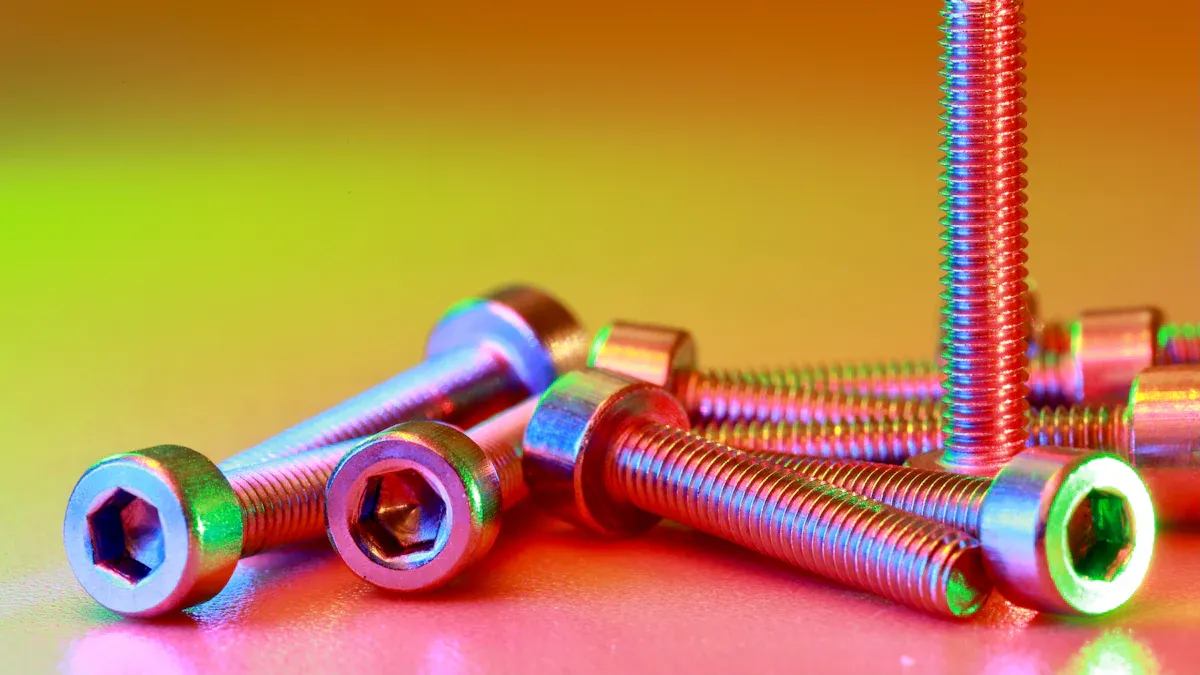
Plain (uncoated) u-bolts
When to use
Plain u-bolt fasteners consist of bare carbon steel or other base material without any protective finish. Manufacturers often select these for indoor environments where exposure to moisture or chemicals remains minimal. These u-bolts offer a cost-effective solution for temporary fixtures, non-critical supports, or applications where corrosion is not a concern. Their use in dry, climate-controlled spaces helps maintain the stability of the structure without incurring additional finishing costs.
Risks and limitations
Uncoated u-bolts present significant risks when used in outdoor or corrosive environments. The absence of a protective layer leaves the material vulnerable to rapid rust formation. This can compromise the mechanical integrity of the fastener and lead to premature failure. The following table highlights the protection level and corrosion risk associated with uncoated carbon steel:
| Material Type | Protection Level | Corrosion Risk |
|---|---|---|
| Uncoated Carbon Steel | Minimal | Develops rust quickly in moisture |
Engineers must avoid using plain u-bolts in settings where water, humidity, or chemicals are present. The lack of corrosion resistance can threaten the stability of the entire assembly.
Zinc plating on u-bolt fastener
How it works
Zinc plating involves applying a thin layer of zinc to the surface of the u-bolt. This process, known as electroplating, creates a sacrificial barrier that shields the underlying material from environmental factors. The zinc layer corrodes preferentially, protecting the steel beneath from rust and degradation. This method improves the functionality and reliability of mechanical fasteners, which is crucial for maintaining the stability of assembled structures.
- Zinc plating provides a protective layer that prevents rust and degradation, significantly enhancing the durability of u-bolt fasteners.
- The process extends the lifespan of fasteners, making them suitable for various industries.
- Electroplating steel or iron components with zinc improves functionality and reliability, crucial for mechanical fasteners like u-bolts.
- Zinc plating protects against corrosion, particularly oxidation, which can weaken the fasteners when exposed to moisture and oxygen.
Durability in different environments
Zinc-plated u-bolts perform well in indoor or mildly corrosive environments. The protective layer delays the onset of rust, allowing the fastener to maintain its strength and appearance over time. However, the thin zinc coating may not withstand prolonged exposure to harsh outdoor conditions or high-salinity areas. In such cases, the zinc layer can deteriorate, exposing the base material to corrosion. For environments with moderate moisture or occasional humidity, zinc-plated u-bolts offer a practical balance between cost and performance.
Hot-dip galvanizing for u-bolts
Process overview
Hot-dip galvanizing involves immersing the u-bolt in molten zinc, resulting in a thick, durable coating that bonds tightly to the material. This process creates a robust barrier that shields the fastener from environmental hazards. The zinc layer not only covers the surface but also forms a metallurgical bond with the steel, providing both physical and chemical protection. This method ensures that the u-bolt maintains its mechanical properties and stability even in challenging conditions.
Long-term protection
Hot-dip galvanizing offers long-term, maintenance-free corrosion protection across a wide range of environments, including atmospheric and aquatic conditions. The zinc coating forms a strong bond with the steel, creating a barrier that prevents corrosion and provides cathodic protection. This means the zinc will corrode preferentially, safeguarding the underlying material. Unlike paint or thin zinc plating, hot-dip galvanizing delivers superior durability and performance. The process ensures that u-bolts retain their strength and stability, even after years of exposure to moisture, chemicals, or saltwater. This level of protection makes hot-dip galvanized u-bolts the preferred choice for outdoor, marine, and industrial applications where reliability is critical.
Black oxide u-bolt finish
Appearance and protection
Black oxide provides a unique finish for u-bolt fasteners. This treatment creates a dark, matte surface that reduces glare and enhances the visual appeal of the material. The process involves a chemical reaction that forms a thin layer of magnetite on the steel. This layer offers mild corrosion resistance and helps prevent light surface rust. Black oxide does not add significant thickness to the u-bolt, so the original dimensions remain unchanged. The finish also improves lubricity, which can make installation easier and reduce the risk of galling during tightening.
Black oxide finishes deliver a professional look and a subtle level of protection. However, they do not match the corrosion resistance of zinc or galvanized coatings.
Application suitability
Engineers often select black oxide u-bolts for indoor applications where appearance matters and exposure to moisture is limited. These fasteners work well in electronics, automotive interiors, and machinery that operates in controlled environments. Black oxide finishes suit projects that require a non-reflective surface and moderate protection. They do not perform well in outdoor or high-humidity settings. When stability and long-term durability are critical, other finishes may offer better performance.
Chrome and nickel finishes for u-bolts
Specialized finishes
Chrome and nickel finishes provide specialized solutions for u-bolt applications. Chrome plating creates a bright, mirror-like surface that resists tarnishing and adds a decorative touch. This finish increases surface hardness and offers some protection against wear and corrosion. Nickel plating delivers a smooth, silvery appearance and enhances the material’s resistance to certain chemicals. Both finishes form a barrier that helps maintain the integrity of the u-bolt in demanding environments.
| Finish Type | Appearance | Corrosion Resistance | Surface Hardness | Typical Use Cases |
|---|---|---|---|---|
| Chrome | Bright, reflective | Moderate | High | Automotive, decorative |
| Nickel | Silvery, smooth | Good (chemical) | Moderate | Chemical, high-temp |
Industry-specific uses
Automotive manufacturers often use chrome-plated u-bolts for exhaust systems and visible hardware. The finish provides a clean look and resists minor corrosion from road debris. Chemical processing plants rely on nickel-plated u-bolts for equipment exposed to aggressive substances. Nickel finishes help maintain the stability of the fastener when the material faces high temperatures or chemical attack. These specialized finishes address the needs of industries that demand both performance and appearance.
Powder coating and PTFE coatings for u-bolt fastener
Enhanced corrosion and chemical resistance
Powder coating and PTFE coatings offer advanced protection for u-bolt fasteners. Powder coating involves applying a dry powder to the material and curing it under heat. This process creates a thick, durable layer that shields the u-bolt from moisture, chemicals, and abrasion. PTFE (polytetrafluoroethylene) coatings, known for their non-stick properties, provide exceptional chemical resistance and reduce friction. Both coatings extend the service life of the fastener in harsh environments.
- Powder coating delivers a wide range of color options and a tough, chip-resistant surface.
- PTFE coatings resist acids, bases, and solvents, making them ideal for chemical plants and food processing.
Custom solutions
Engineers specify powder-coated or PTFE-coated u-bolts for custom applications where standard finishes fall short. These coatings allow for tailored solutions that address unique environmental challenges. For example, a facility may require a specific color for identification or safety. PTFE coatings help maintain the stability of the u-bolt in systems exposed to aggressive chemicals or extreme temperatures. Custom coatings ensure the material meets the exact requirements of the project, providing both protection and performance.
Tip: Consult with a fastener specialist to select the right coating for your application. Custom finishes can significantly improve the durability and reliability of u-bolt fasteners in demanding settings.
Matching u-bolt materials and finishes to applications
Automotive and trucking u-bolts
Vibration and load considerations
Automotive and trucking systems demand u-bolt solutions that deliver both strength and stability. Vehicles experience constant vibration and must support heavy loads, especially in suspension and chassis assemblies. Engineers often select alloy steel u-bolts, such as Grade 5 or Grade 8, for their high tensile strength. These materials withstand the dynamic forces and shocks encountered on the road. The U-shaped design of the fastener provides robust clamping force, while a radius-optimized bend helps minimize stress concentration and metal fatigue. Customization options for diameter and length allow the u-bolt to match specific vehicle requirements, ensuring secure fastening and long-term reliability.
Exposure to road salts and chemicals
Road salts and chemicals present a significant corrosion risk for automotive fasteners. To combat this, manufacturers apply surface treatments like zinc plating, Dacromet, or zinc-nickel coatings. Zinc-nickel plating, in particular, offers over 1,000 hours of salt-spray protection, which extends the lifespan of the u-bolt in harsh environments. The combination of strong material and advanced finish ensures the fastener maintains its integrity and performance, even after prolonged exposure to corrosive substances.
Tip: For trucking applications, always verify that the selected u-bolt material and finish meet the specific load and environmental requirements of the vehicle.
| Feature | Description |
|---|---|
| Material | Carbon steel or alloy steel for strength and durability |
| Surface Treatment | Zinc plating, Dacromet, or zinc-nickel for corrosion resistance |
| Design | U-shaped with optimized radius for stability under vibration and heavy loads |
Marine and coastal environment u-bolt fastener
Saltwater corrosion risks
Marine and coastal environments expose u-bolts to constant moisture and salt, which accelerates corrosion. Saltwater attacks standard materials quickly, leading to premature fastener failure and potential safety hazards. The stability of marine structures depends on selecting the right material for each u-bolt.
Recommended materials and finishes
Grade 316 stainless steel stands out as the preferred material for marine u-bolts. Its high molybdenum content provides superior corrosion resistance in saltwater. Silicon bronze also performs well in these settings, offering both strength and durability. For freshwater environments, 304 stainless steel may suffice, but it does not match the performance of 316 in saline conditions. Mixing aluminum with stainless steel should be avoided, as it can cause galvanic corrosion and reduce the lifespan of the fastener. When selecting a u-bolt for marine use, prioritize materials that resist both saltwater and chemical exposure.
- 316 stainless steel: Essential for saltwater and coastal applications
- Silicon bronze: Recommended for marine hardware
- Avoid mixing aluminum with stainless steel to prevent galvanic corrosion
Construction and structural u-bolts
Outdoor exposure
Construction and structural projects often require u-bolts that can withstand outdoor exposure. Environmental factors such as moisture, temperature changes, and vibration influence the choice of material and finish. Hot-dip galvanized u-bolts provide a heavy-duty zinc coating, delivering strong protection against corrosion in harsh outdoor conditions. Stainless steel u-bolts offer long-term durability and an attractive appearance, making them suitable for visible or architectural applications.
Load-bearing requirements
Engineers must consider the type of load—tension, shear, or a combination—when selecting a u-bolt for structural use. The material must support heavy loads without compromising stability. Hot-dip galvanized and stainless steel u-bolts both excel in load-bearing roles, ensuring the fastener maintains joint integrity over time. Proper selection based on environmental and mechanical demands prevents premature failure and supports the safety of the entire structure.
| Material Type | Key Properties | Applications |
|---|---|---|
| Stainless Steel | Corrosion resistance, durability, aesthetics | Outdoor, marine, food processing, medical |
| Hot-Dip Galvanizing | Strong corrosion protection | Construction, infrastructure, outdoor use |
Plumbing and HVAC u-bolt fastener
Moisture and chemical exposure
Plumbing and HVAC systems often operate in environments with high humidity, condensation, and exposure to cleaning agents. Engineers select the right u-bolt material to ensure long-term performance in these conditions. Stainless steel u-bolts provide excellent resistance to moisture and many chemicals found in plumbing systems. Galvanized steel u-bolts also offer protection against rust, making them suitable for HVAC ductwork and pipe supports. The choice of material directly affects the stability of the installation. When a fastener faces constant dampness or chemical splashes, corrosion can weaken the connection and lead to costly repairs. Facility managers often inspect u-bolts in these systems to prevent unexpected failures.
Compatibility with pipes and equipment
Compatibility between the u-bolt material and the pipe or equipment is essential. Using dissimilar metals can cause galvanic corrosion, which reduces the lifespan of both the fastener and the pipe. For copper pipes, brass or copper-plated u-bolts prevent unwanted reactions. Stainless steel u-bolts pair well with stainless steel or plastic pipes. Engineers check the material of both the u-bolt and the equipment before installation. Proper selection ensures the fastener maintains a secure grip and prevents leaks or movement in the system.
Industrial and chemical processing u-bolts
Chemical resistance needs
Industrial and chemical processing plants require u-bolts that withstand aggressive chemicals and solvents. The material choice plays a critical role in these environments. Hastelloy, Inconel, and PTFE-coated u-bolts resist acids, bases, and other corrosive substances. Stainless steel u-bolts, especially those made from 316 grade, perform well in many chemical applications. The fastener must maintain its mechanical properties and resist degradation over time. Engineers evaluate the specific chemicals present before selecting the appropriate material for each u-bolt.
High-temperature applications
High-temperature operations demand u-bolts that retain strength and stability under thermal stress. Alloy steel and specialty materials like Inconel provide reliable performance in furnaces, reactors, and exhaust systems. The fastener must not deform or lose tension when exposed to heat. Material selection ensures the u-bolt continues to support pipes and equipment, even during temperature fluctuations. Regular inspection helps identify signs of fatigue or material breakdown in these demanding settings.
Specialized u-bolt applications
Unique environmental factors
Some projects present unique challenges that standard u-bolts cannot address. Environments with extreme cold, vibration, or exposure to seawater require custom solutions. Engineers analyze the specific risks, such as rapid temperature changes or high-pressure conditions, before choosing the material. Titanium and Monel u-bolts offer superior resistance to both corrosion and mechanical stress in these cases. The fastener must adapt to the environment while maintaining stability and safety.
Custom solutions
Custom u-bolt fasteners meet the needs of specialized industries. Aerospace, medical, and marine sectors often require unique shapes, coatings, or thread designs. Manufacturers work with engineers to select the right material and finish for each application. PTFE coatings, color-coded powder coatings, and integrated locking features enhance performance. Custom u-bolts ensure that the fastener fits perfectly and delivers reliable results in mission-critical systems.
Advanced selection criteria for u-bolt fastener
Thread types and compatibility
Coarse vs fine threads
Selecting the right thread type for a u-bolt impacts both strength and stability. Coarse threads, known as UNC, provide good preload and standard adjustment. Fine threads, or UNF, deliver higher preload and allow for more precise tension control. Fine threads also resist loosening from vibration due to their smaller helix angle. This makes them ideal for applications where the fastener faces constant movement or shock.
| Feature | UNC (Coarse) | UNF (Fine) | Impact on Clamping Force |
|---|---|---|---|
| Preload | Good | Higher | A higher preload creates a tighter, more secure joint. |
| Adjustment | Standard | Finer | Allows for more precise tension control. |
| Vibration Resistance | Lower | Superior | The smaller helix angle resists loosening from vibration. |
Manufacturers produce threads by either cutting or rolling. Rolled threads increase the strength of the u-bolt by up to 75%. This process aligns the metal grains along the thread contour and induces compressive stresses, which significantly improves resistance to fatigue cracking. Rolled threads also enhance the overall durability of the fastener.
Matching nuts and washers
Compatibility between the u-bolt, nuts, and washers ensures reliable performance. Using mismatched threads can cause stripping or uneven load distribution. Always pair the correct thread pitch and diameter for both the nut and the u-bolt. Washers help distribute the load and protect the surface of the connected material. Selecting the right combination maintains the strength and stability of the assembly.
Sizing and load ratings for u-bolts
Calculating required strength
Accurate sizing of a u-bolt starts with precise measurement. Calipers or micrometers provide the necessary accuracy for diameter and length. Selecting the correct dimensions ensures the u-bolt fits the application and delivers the required strength. Referencing a reliable torque chart helps apply the correct force during installation. Avoid mixing sizes or torque values across assemblies, as this can compromise safety and performance.
- Measure u-bolt dimensions with precision tools.
- Choose the correct size for application compatibility.
- Use a torque chart to apply proper force.
- Do not mix sizes or torque values in one assembly.
- Consult experts for custom u-bolts if standard options do not meet requirements.
Safety margins
Structural tests show that u-bolts often exceed their design load under horizontal force. However, relying solely on linear elastic analysis may not provide an accurate safety margin. New methodologies for estimating the Safe Working Load (SWL) consider both test results and nonlinear analysis. Current standards may define SWL too conservatively, as failure loads in tests have proven significantly higher than design loads. Engineers should evaluate the specific application and consider updated load standards to ensure both safety and efficiency.
Regulatory and industry standards for u-bolt materials
ASTM and SAE specifications
Industry standards such as ASTM and SAE provide guidelines for u-bolt material selection, strength, and performance. ASTM standards specify the chemical composition, mechanical properties, and testing methods for fasteners. SAE standards focus on dimensions, thread types, and material grades. Compliance with these standards ensures that the u-bolt meets the required strength and durability for its intended use.
Compliance considerations
Meeting regulatory requirements protects both the integrity of the fastener and the safety of the structure. Engineers must verify that each u-bolt complies with relevant ASTM or SAE specifications before installation. Documentation and traceability support quality assurance and help prevent failures. In critical applications, always select u-bolts that carry certification from recognized standards organizations. This approach guarantees that the material, strength, and performance align with industry expectations and project demands.
Cost vs performance trade-offs for u-bolt fastener
When to invest in premium materials
Engineers often face decisions about selecting the right u-bolt for a project. Premium materials deliver higher strength and improved stability. These materials include stainless steel, titanium, and specialty alloys. Investing in premium options becomes essential when the environment exposes the fastener to corrosive elements or extreme temperatures. For example, marine applications require u-bolts made from 316 stainless steel. This material resists saltwater corrosion and maintains strength over time. Chemical processing plants use Hastelloy or Inconel u-bolts because these materials withstand aggressive chemicals and high heat.
Projects that demand long-term reliability benefit from premium materials. Safety-critical structures, such as bridges or industrial machinery, rely on u-bolts with superior strength. Engineers select these fasteners to prevent failures and ensure stability. The initial cost may be higher, but the reduction in maintenance and replacement expenses justifies the investment.
Tip: Premium u-bolt materials offer unmatched strength and stability in demanding environments. Investing in these fasteners protects both equipment and personnel.
Balancing budget and longevity
Balancing budget and longevity requires careful evaluation of material and finish options. Not every application needs the highest grade u-bolt. For indoor installations with minimal moisture, carbon steel u-bolts provide adequate strength at a lower cost. Zinc-plated u-bolts suit environments with occasional humidity. These fasteners deliver moderate corrosion resistance and maintain stability for non-critical uses.
The following table compares common u-bolt materials and their cost-performance balance:
| Material | Strength | Corrosion Resistance | Typical Cost | Recommended Use |
|---|---|---|---|---|
| Carbon Steel | Moderate | Low | Low | Indoor, dry environments |
| Zinc-Plated | Moderate | Moderate | Low-Medium | Indoor, light moisture |
| Hot-Dip Galvanized | High | High | Medium | Outdoor, industrial |
| Stainless Steel | High | Very High | High | Marine, chemical plants |
| Specialty Alloys | Very High | Extreme | Very High | Critical, custom projects |
Engineers must weigh the cost of each u-bolt against the expected lifespan and maintenance needs. Choosing a material with higher strength and corrosion resistance reduces the risk of premature failure. For projects with tight budgets, selecting a fastener that meets minimum requirements without over-specifying material helps control costs. However, underestimating the importance of strength and stability can lead to expensive repairs or safety hazards.
Note: Always match the u-bolt material and finish to the environment and load requirements. Investing in the right fastener ensures stability and long-term performance.
Installation and maintenance best practices for u-bolts
Proper installation techniques for u-bolt fastener
Torque specifications
Engineers must follow precise torque specifications when installing a u-bolt. Applying the correct torque ensures the fastener maintains optimal clamping force. Manufacturers provide torque values based on the material and thread size. Using a calibrated torque wrench helps achieve consistent results. Overlooking torque guidelines can lead to uneven load distribution and reduced stability. The table below shows typical torque values for common u-bolt materials:
| U-bolt Material | Thread Size | Recommended Torque (ft-lbs) |
|---|---|---|
| Carbon Steel | 1/2″-13 | 55 |
| Stainless Steel | 1/2″-13 | 50 |
| Alloy Steel | 5/8″-11 | 90 |
Tip: Always check the manufacturer’s torque chart before installation. Proper torque prevents loosening and protects the fastener from premature failure.
Avoiding over-tightening
Over-tightening a u-bolt can damage the material and compromise the fastener’s performance. Excessive force may cause thread stripping or deformation. Installers should tighten the fastener gradually and stop once the specified torque is reached. Using a torque wrench reduces the risk of over-tightening. If the u-bolt shows signs of distortion, replace it immediately to maintain stability.
Inspection and replacement of u-bolts
Signs of wear or corrosion
Routine inspection helps identify issues before they threaten the structure. Engineers look for rust, pitting, or discoloration on the u-bolt material. They check for cracks, bends, or thread damage. If the fastener shows any of these signs, it may no longer provide adequate support. Early detection allows for timely replacement and prevents costly repairs.
- Rust or corrosion on the material surface
- Visible cracks or bends in the u-bolt
- Damaged or stripped threads
Maintenance schedules
Establishing a maintenance schedule ensures the fastener remains reliable. Inspect u-bolts every six months in harsh environments. For indoor applications, annual checks may suffice. Replace any fastener that fails inspection. Document each maintenance activity to track the condition of the material and fasteners over time.
Environmental protection measures for u-bolt fastener
Use of anti-seize compounds
Applying anti-seize compounds to the threads of a u-bolt prevents galling and makes future removal easier. These compounds protect the material from moisture and chemical exposure. They also reduce friction during installation. Engineers select anti-seize products compatible with the fastener material to avoid unwanted reactions.
Protective covers and shields
Protective covers and shields guard the u-bolt against environmental hazards. Covers block moisture, dirt, and chemicals from reaching the fastener. Shields provide an extra layer of defense in outdoor or industrial settings. Using these accessories extends the lifespan of the material and maintains the stability of the assembly.
Note: Combining proper installation, regular inspection, and environmental protection maximizes the performance and reliability of u-bolt fasteners.
Selecting the right u bolt fastener ensures safety, durability, and cost-effectiveness. Every application requires careful consideration of environment, load, and exposure risks. Regular inspection and proper installation extend the life of each u bolt fastener. They also help prevent failures. A u bolt fastener with the correct material and finish performs reliably in demanding conditions. For unique or challenging projects, consult a fastener expert to choose the best u bolt fastener.
Tip: The right u-bolt and material selection protect both equipment and personnel.
FAQ
What is the main difference between zinc-plated and hot-dip galvanized u-bolts?
Zinc-plated u-bolts have a thin protective layer, which suits indoor or mild environments. Hot-dip galvanized u-bolts feature a much thicker coating, providing superior corrosion resistance for outdoor or industrial use.
Can stainless steel u-bolts rust?
Stainless steel u-bolts resist rust due to their chromium content. However, exposure to harsh chemicals or saltwater over long periods can cause surface discoloration or minor corrosion, especially in lower grades like 304.
Which u-bolt material works best for marine applications?
Grade 316 stainless steel offers the best performance in marine environments. Its high molybdenum content provides excellent resistance to saltwater corrosion, making it the preferred choice for docks, boats, and coastal structures.
How often should u-bolts be inspected or replaced?
Engineers recommend inspecting u-bolts every six months in harsh environments. For indoor or low-risk settings, annual checks usually suffice. Replace any u-bolt showing signs of rust, deformation, or thread damage.
Are specialty coatings like PTFE necessary for all applications?
PTFE coatings provide advanced chemical and corrosion resistance. Most standard applications do not require them. Industries such as chemical processing or food production benefit most from these specialty coatings.
Can you mix different metals for u-bolts and pipes?
Mixing metals can cause galvanic corrosion, which shortens the lifespan of both the u-bolt and the pipe. Always match compatible materials, such as stainless steel with stainless steel or brass with copper, to prevent unwanted reactions.
What is the typical lifespan of a hot-dip galvanized u-bolt?
A hot-dip galvanized u-bolt can last 20 to 30 years in moderate outdoor environments. Lifespan depends on exposure to moisture, chemicals, and mechanical stress. Regular inspection helps maximize service life.
Do u-bolt finishes affect installation torque?
Yes, finishes like PTFE or zinc plating can reduce friction, which changes the required installation torque. Always consult the manufacturer’s torque chart for the specific material and finish to ensure proper clamping force.