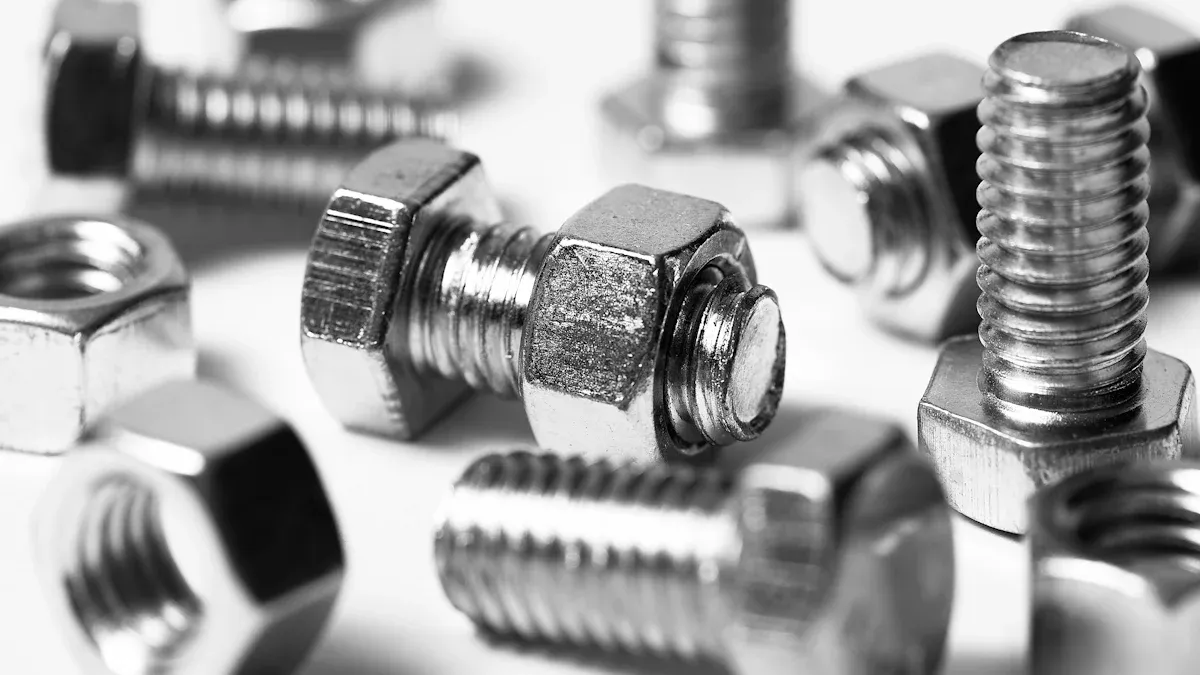
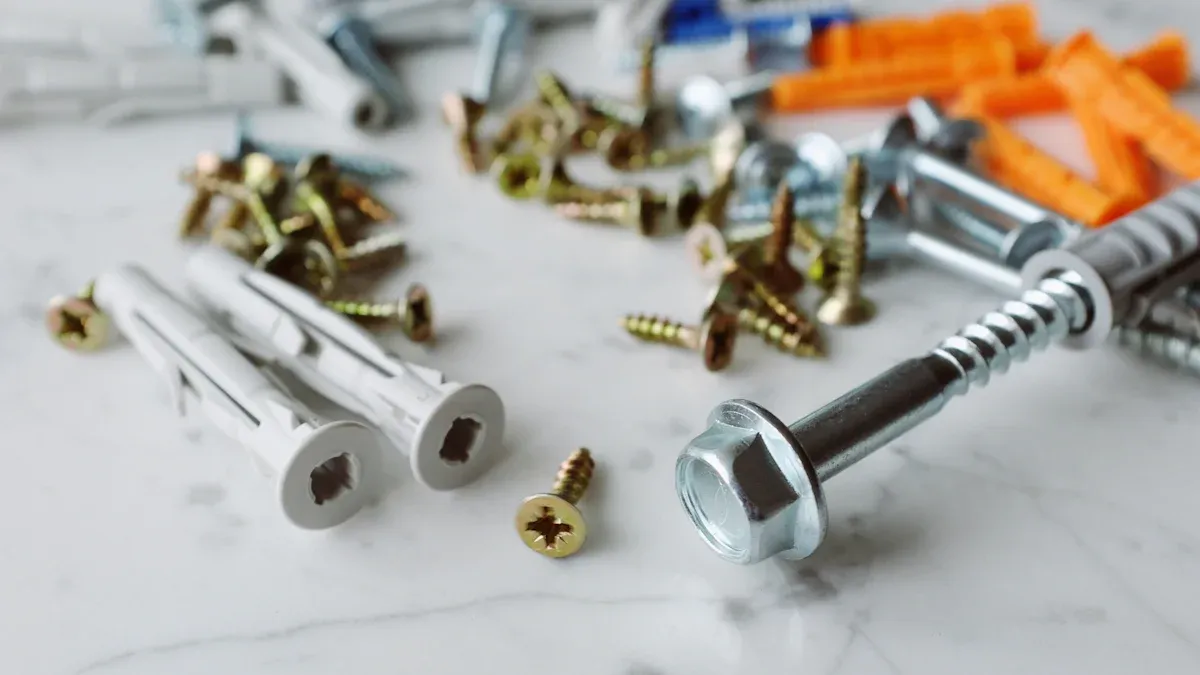
An expansion bolt is a mechanical anchor. It creates a secure fastening in concrete or masonry. This anchor works by expanding against the base material. The expansion generates strong frictional force to resist pull-out loads. The core principle involves a wedge, sleeve, or plug. The bolt or screw is tightened or set, forcing the mechanism outward. This action secures the anchor firmly in place.
Industry Insight: The demand for reliable fasteners like expansion bolts is growing. The Global Concrete Fasteners Market illustrates this trend, with significant projected growth.
Metric Value Market Revenue (2024) USD 248.9 Million Market Revenue (2032) USD 327.8 Million CAGR (2025–2032) 3.5 %
Many projects require specific Anchor Bolts, and sometimes even custom anchor bolts are necessary. A reliable custom fasteners manufacturer can supply these specialized components for unique structural needs.
What Are Expansion Bolts and How Do They Work?

Expansion bolts achieve a secure connection through precise mechanical principles. They are engineered to transfer loads from a fastened object directly into the base material, ensuring stability for demanding applications. The entire system relies on controlled expansion to create a powerful and reliable hold.
The Fundamental Principle of Expansion
The effectiveness of an expansion anchor comes from its ability to turn rotational force into a powerful outward pressure. This process creates an anchor point that is stronger than the fastener itself.
Creating Frictional Hold in Concrete
An anchor achieves its hold through a simple yet effective mechanical action. When installed, the bolt exerts a significant outward force against the concrete inside the drilled hole. This action generates immense friction and compression. These forces are crucial for holding the bolt firmly in place and resisting pull-out loads. The anchor essentially becomes one with the concrete, creating a solid, immovable point of connection.
The Role of the Expansion Mechanism
The expansion mechanism is the heart of the anchor. Different expansion bolts use unique designs to achieve the same goal.
- Wedge anchors use a cone-shaped end. Tightening the nut pulls the bolt up, forcing an expansion clip over the cone and wedging it against the concrete.
- Sleeve anchors feature a full-length sleeve. Tightening the bolt expands the entire sleeve, creating a grip along the length of the hole.
This fundamental mechanism involves transferring loads from the fastened object to the concrete, which guarantees stability.
Key Components of an Expansion Bolt Assembly
A typical expansion anchor consists of several key parts working together. The interaction between these components generates the necessary expansion force.
When the nut and bolt are tightened, they push the expanding part of the sleeve outwards. This outward force causes the sleeve to grip the surrounding material, such as concrete, creating a secure connection.
The primary components include:
The Threaded Bolt or Stud
The threaded bolt or stud is the main structural body of the anchor. It provides the threads for the nut to tighten against. It also transfers the tensile and shear loads from the attached fixture through the anchor and into the concrete base material.
The Expansion Sleeve or Clip
This is the component that directly engages with the concrete. It can be a full-length sleeve, a short clip, or a malleable shield. As the bolt is tightened or set, this part is forced to expand, pressing firmly against the walls of the drilled hole to create the frictional hold.
The Nut and Washer
The nut and washer complete the assembly. The nut is threaded onto the bolt to apply the necessary torque, which activates the expansion mechanism. The washer sits between the nut and the fixture, distributing the clamping force evenly and preventing the fixture from being damaged during tightening.
Key Types of Expansion Bolts for Concrete

Different projects demand different fastening solutions. The world of expansion bolts offers a variety of designs, each engineered for specific applications, load requirements, and base materials. Understanding the primary types is the first step toward selecting the correct anchor for a safe and durable installation.
Wedge Anchors
Wedge anchors are the workhorses of heavy-duty concrete fastening. They provide exceptional tensile (pull-out) strength, making them the go-to choice for securing structural elements and heavy equipment in solid concrete.
Mechanism and Installation
A wedge anchor’s strength comes from a simple, powerful design. The anchor body has a tapered cone at its embedded end. A metal expansion clip wraps around this cone. Installation follows a precise procedure:
- Drill a hole into the concrete that matches the anchor’s diameter.
- Clean all dust and debris from the hole using compressed air or a brush.
- Tap the anchor through the fixture and into the hole until the nut and washer are snug against the surface.
- Tighten the nut. This action pulls the anchor’s cone-shaped end upward, forcing the expansion clip outward. The clip wedges firmly against the walls of the concrete hole, creating immense frictional force.
Pro Tip: Always use a torque wrench to tighten the nut to the manufacturer’s specified value. This ensures the anchor achieves its optimal holding power without over-stressing the concrete.
Key Features and Material Options
Wedge anchors are known for their high load-bearing capacities in both tension and shear. Their performance is directly related to the anchor diameter, embedment depth, and the compressive strength of the concrete. For example, a larger anchor can handle significantly more stress.
| Anchor Type | Concrete PSI | Allowable Tension (lbs.) | Allowable Shear (lbs.) |
|---|---|---|---|
| 3/4″ dia Simpson Strong-Tie® Wedge-All® | 2000 | 1690 | 2840 |
| 3/4″ dia Simpson Strong-Tie® Wedge-All® | 4000 | 2490 | 2840 |
The material composition is another critical feature, determining the anchor’s suitability for different environments.
- Zinc-Plated Carbon Steel: This is the most common and cost-effective option. It provides good strength and is ideal for dry, indoor applications where corrosion is not a concern.
- Hot-Dipped Galvanized Steel: These anchors have a thicker protective coating than zinc-plated versions. They offer superior corrosion resistance for outdoor use in moist or humid environments.
- Stainless Steel: This material provides the highest level of corrosion resistance. Installers choose stainless steel for harsh conditions, such as coastal areas, chemical plants, or wastewater treatment facilities.
Sleeve Anchors
Sleeve anchors are highly versatile medium-duty fasteners. Their unique design allows them to work effectively in a wider range of base materials, including solid concrete, brick, and concrete block (CMU).
Mechanism and Installation
A sleeve anchor consists of a threaded bolt pre-assembled inside a full-length metal sleeve. As the bolt’s head is tightened, it pulls a flared cone-shaped expander into the sleeve. This action causes the entire sleeve to expand outward along its length, creating a secure grip inside the hole. This full-length expansion distributes the load over a larger surface area, making it suitable for softer or hollow base materials.
Key Features and Head Styles
Sleeve anchors offer reliable performance for a variety of common applications. A 1/2-inch sleeve anchor installed in 2,200 PSI concrete can achieve an ultimate pullout strength of 2,000 pounds and an ultimate shear strength of 4,000 pounds. Their versatility is a key advantage.
| Anchor Size | Minimum Embedment | Pull-Out (lbs.) | Shear (lbs.) |
|---|---|---|---|
| 3/8″ x 1-7/8″ | 1-1/4″ | 1406 | 3082 |
One of the most practical features of sleeve anchors is the availability of different head styles to suit various aesthetic and functional needs:
- Hex Head: The most common style, tightened with a standard wrench.
- Flat Head: A countersunk design that sits flush with the surface for a clean finish.
- Round Head: A low-profile, dome-shaped head for a finished appearance.
- Acorn Nut: Provides a decorative, rounded cap over the threaded stud.
Drop-In Anchors
Drop-in anchors are female anchors designed for light to medium-duty applications, particularly for overhead fastening. They are installed flush with the concrete surface, creating a threaded socket to accept a bolt or threaded rod.
Mechanism and Installation
A drop-in anchor is a cylindrical shell with an internal expander plug at its base. Proper installation requires a specialized setting tool.
- Drill a hole to the specified depth.
- Clean the hole thoroughly.
- Drop the anchor into the hole.
- Insert the correct size setting tool into the anchor.
- Strike the setting tool firmly with a hammer. This drives the internal plug downward, expanding the anchor’s base and locking it into the concrete.
Installation Critical: Using the correct setting tool is not optional; it is essential. The tool ensures the internal plug is driven to the precise depth needed for full expansion and a secure fit. Modern setting tools can even attach to a hammer drill, combining the drilling and setting steps for maximum efficiency.
Key Features and Thread Design
The primary feature of a drop-in anchor is its internal thread design. After setting the anchor, a user can insert and remove a threaded bolt or rod as needed. This makes them ideal for suspending items like HVAC ductwork, fire sprinkler pipes, and cable trays from a concrete ceiling. They are available in lipped and non-lipped versions; the lip prevents the anchor from falling too deep into the hole, ensuring proper embedment.
Strike Anchors (Hammer-Set Anchors)
Strike anchors, also known as hammer-set anchors, are one-piece expansion bolts designed for fast, permanent installations in solid concrete. Their simplicity and speed make them a popular choice for light to medium-duty static load applications where efficiency is paramount.
Mechanism and Installation
A strike anchor features a cylindrical body with an internal, pre-installed pin. The anchor body is designed to expand when this pin is driven into it. The installation process is exceptionally straightforward and quick.
- Drill the Hole: An installer drills a hole in the concrete to the specified diameter and depth.
- Clean the Hole: All dust and debris are removed from the hole to ensure proper anchor function.
- Drive the Anchor: The installer places the anchor through the fixture and into the hole, then strikes the head of the internal pin with a hammer. This driving action forces the pin down, expanding the anchor body and wedging it securely against the concrete.
Key Features and Tamper-Resistance
The primary advantage of a strike anchor is its speed of installation. Since it is a single unit, there are no separate nuts or washers to handle. Its performance is reliable for static loads, such as securing electrical boxes, conduit straps, or wall furring strips.
A key feature of certain strike anchors is their tamper-resistant design. The anchor’s distinctive ‘mushroom head‘ sits flush against the fixture and cannot be unscrewed or easily removed once set. This makes it an excellent choice for securing items in public or accessible areas where tampering is a concern.
| Anchor Size | Minimum Embedment | Ultimate Load (2000 PSI Concrete) | Allowable Load (2000 PSI Concrete) |
|---|---|---|---|
| 3/8″ | 1-1/8″ | 2180 lbs Tension / 4585 lbs Shear | 545 lbs Tension / 1145 lbs Shear |
| 1/2″ x 4-3/4″ | 2″ | 2700 lbs Tension / 5400 lbs Shear | 675 lbs Tension / 1350 lbs Shear |
Lag Shield Anchors
Lag shield anchors are two-piece expansion anchors used with a corresponding lag screw. They are designed for light to medium-duty fastening in a variety of masonry materials, including concrete, brick, and block.
Mechanism and Installation
A lag shield anchor consists of a two-part cylindrical shield made from a zinc alloy (zinc alloy). The shield is ribbed on the outside to increase its grip. The anchor works when a lag screw is threaded into it.
- Drill and Clean: Drill a hole to the correct diameter and depth, then clean it of all debris.
- Insert the Shield: Tap the lag shield anchor into the hole until it is flush with the surface.
- Drive the Screw: Place the fixture over the hole, insert the lag screw through the fixture, and drive it into the shield. As the screw advances, its tapered threads force the two halves of the shield apart, compressing them firmly against the base material.
Key Features and Vibration Resistance
Lag shield anchors are valued for their performance in materials like brick and mortar joints. The anchor itself is made from a relatively soft zinc alloy alloy. This material composition helps the anchor absorb vibrations, making it a suitable choice for fastening objects that may experience minor shaking or movement, such as garage door tracks or small machinery.
A 1/2″ x 2″ lag shield anchor can achieve a pull-out value of 600 pounds when embedded 2 inches deep. However, installers must always consider the material and apply a safety factor.
Safety Note: The load values provided for lag shield anchors are typically average ultimate values. A safety factor of 4:1 (or 25% of the ultimate load) is the generally accepted standard for determining a safe working load. Always consult manufacturer data for your specific application.
Heavy-Duty Applications: When to Use Wedge Anchors
For projects demanding the highest levels of strength and reliability, professionals turn to wedge anchors. These fasteners are the industry standard for securing heavy loads in solid concrete, providing unparalleled holding power for critical structural connections.
How Wedge Anchors Provide Maximum Strength
The exceptional performance of a wedge anchor originates from its straightforward yet powerful mechanical design. This design ensures a permanent, high-strength connection that can withstand significant forces.
The Expansion Clip and Cone Design
A wedge anchor’s strength comes from the interaction between its two key components: a tapered cone at the base and a movable expansion clip. When an installer tightens the nut, the bolt stud pulls upward. This action forces the expansion clip to ride up the cone, expanding it outward with immense force. The clip bites into the surrounding concrete, creating a powerful frictional lock that resists pull-out.
Through-Fixing Installation Process
Wedge anchors are designed for a “through-fixing” installation. This method allows installers to drill a hole through the fixture and directly into the concrete base. The anchor is then hammered through the fixture and into the hole before tightening. This process offers two main advantages:
- It guarantees perfect alignment between the fixture and the anchor.
- It saves significant time on the job site.
Ideal Use Cases
Wedge anchors are essential tools in structural engineering and heavy construction. Their reliability makes them the preferred choice for applications where safety and structural integrity are paramount.
Securing Structural Steel Beams and Columns
Engineers frequently specify wedge anchors to secure structural steel to concrete foundations. They provide a stable foundation for building structures, playing a crucial role in modern construction. The anchor’s expanding wedge creates a hold strong enough to bear the significant loads transferred from steel beams and columns.
Anchoring Heavy Machinery and Equipment
Factories and industrial sites use wedge anchors to provide a dependable solution for anchoring heavy machinery to concrete floors. Their high strength prevents equipment from shifting due to vibration or operational forces. The threaded stud design also facilitates easier removal if a machine needs to be relocated.
Racking and Mezzanine Installation
In warehouses and distribution centers, wedge anchors secure the base plates of tall pallet racking systems and mezzanine structures. This application is critical for preventing catastrophic failure under heavy loads.
Suitable Base Materials
A wedge anchor’s performance is directly tied to the quality of the base material it is installed into. It is designed specifically for dense, solid materials.
Important Note: Wedge anchors are not suitable for hollow materials like brick or unfilled concrete block (CMU), as they require a solid mass to expand against.
Solid Concrete
Solid concrete is the ideal base material for wedge anchors. For high-strength anchors, the concrete must have a minimum compressive strength, typically ranging from 2500 PSI to 8500 PSI. These anchors are engineered to perform in both uncracked and cracked concrete under static, wind, and seismic loads.
Grout-Filled Concrete Masonry Units (CMU)
Installers can also use wedge anchors in fully grouted concrete blocks. The grout fills the voids in the block, creating a solid base that mimics solid concrete. This allows the anchor to expand properly and achieve a secure hold.
Medium-Duty Versatility: The Role of Sleeve Anchors
When a project requires reliable fastening across different masonry types, professionals often select sleeve anchors. These anchors provide a versatile, medium-duty solution that adapts to solid concrete, brick, and even hollow block, where other anchors might fail.
How Sleeve Anchors Adapt to Different Materials
The unique design of a sleeve anchor allows it to create a secure hold in materials with varying densities. Its strength comes from a principle of full-length expansion.
The Full-Length Expanding Sleeve Principle
A sleeve anchor functions by expanding its entire body against the base material. This 360-degree expansion distributes the load over a wider surface area, which is critical for performance in softer or hollow materials. The mechanism is straightforward yet effective:
- An installer tightens the anchor’s head.
- This action pulls the anchor’s conical end up into the sleeve.
- The sleeve is forced to expand outward, gripping the inside of the drilled hole.
This design allows the anchor to be used effectively in both solid and hollow masonry, including cinder block and brick.
Installation into Concrete, Brick, and Block
Installers find the process for setting a sleeve anchor to be quick and efficient. They first drill a hole to the correct diameter and depth, then clean it of all debris. The anchor is tapped into place through the fixture. Tightening the head completes the installation by expanding the sleeve and locking the fastener securely.
Common Applications
Sleeve anchors are a staple on job sites for a wide range of non-structural, medium-duty tasks. Their availability in different head styles makes them suitable for both functional and aesthetic applications.
Fastening Handrails, Guardrails, and Fencing
Installers use sleeve anchors to secure safety features like handrails and guardrails.
- Acorn nut sleeve anchors are recommended for handrails and other visible areas. Their rounded cap provides a neat appearance and protects against snagging on sharp threads.
Securing Window Frames and Door Jambs
These anchors are also ideal for mounting frames and jambs.
- Flat head sleeve anchors provide a smooth, flush finish. This makes them perfect for installing door frames, window frames, and metal plates where a countersunk head is needed.
Mounting Brackets, Shelving, and Fixtures
Sleeve anchors reliably secure items like shelving, light fixtures, and electrical boxes. Their versatility makes them a go-to choice for many general construction and maintenance tasks.
Key Features
Sleeve anchors offer several distinct advantages that make them a valuable component in any toolkit. Their adaptability and ease of use set them apart.
Versatility Across Multiple Base Materials
The primary benefit of a sleeve anchor is its effectiveness in a variety of base materials. This contrasts with wedge anchors, which perform best in solid concrete. For projects involving brick, block, and concrete, sleeve anchors provide a consistent and reliable solution.
| Benefit | Sleeve Anchors |
|---|---|
| Material Suitability | Excellent for hollow materials (brick, block) and solid concrete |
| Installation | Easy and fast to install with fewer steps |
| Cost-Effectiveness | Generally less expensive for medium-duty applications |
Available in Hex, Round, and Flat Head Styles
Sleeve anchors come in multiple head styles to meet different project needs. Installers can choose a standard hex head for utility, a flat head for a flush finish, or a round or acorn head for a more decorative look.
Can Be Removed After Installation
Unlike some permanent anchors, a sleeve anchor can be removed after installation. This feature provides flexibility if a fixture needs to be relocated or replaced.
Overhead and Flush-Mounting: Drop-In & Strike Anchors
For applications requiring a flush surface or overhead suspension, installers rely on specialized fasteners like drop-in and strike anchors. These anchors offer unique installation methods and features tailored for efficiency and specific project demands.
Drop-In Anchors for Overhead Work
Drop-in anchors are female, internally threaded anchors designed to sit flush within solid concrete. Their design makes them a superior choice for suspending fixtures from ceilings.
How the Internal Expander Plug Works
The security of a drop-in anchor comes from its internal expander plug. The anchor consists of a slotted outer shield with a pre-assembled plug at its base.
- An installer uses a setting tool to strike the plug firmly.
- This action drives the plug deeper into the anchor body.
- The plug forces the four slots on the shield to expand outward, creating a powerful lock against the concrete.
Critical Design: The internal plug is engineered to remain in position, even when installed in a ceiling. This feature prevents it from dislodging during overhead installation, ensuring a reliable and secure set every time.
Ideal for Suspending Threaded Rod and Cable Trays
The internal threads of a drop-in anchor make it perfect for overhead applications where threaded rods are used. Installers commonly use them to suspend:
- HVAC ductwork and strut channels
- Electrical cable trays and conduits
- Fire sprinkler pipes and systems
These anchors are code-compliant for use in cracked and uncracked concrete. Many are UL Listed and FM Approved, making them suitable for pipe hanger components and use in air handling spaces (air handling spaces).
Lipped vs. Non-Lipped Versions
Drop-in anchors are available in two main styles to accommodate different installation needs.
- Lipped: This version has a small flange at the top that acts as a stop. It ensures the anchor is set at the correct depth and remains flush with the concrete surface.
- Non-Lipped: This style can be set to any depth in the drilled hole, allowing it to be installed below the surface if required.
Strike Anchors for Quick, Permanent Fastening
Strike anchors, or hammer-set anchors, provide a fast and permanent fastening solution for light-duty static loads in solid concrete. Their all-in-one design streamlines installation.
The Hammer-Driven Pin Mechanism
A strike anchor’s effectiveness lies in its simple expansion principle. The installation process is exceptionally rapid.
- An installer drills a hole of the correct size.
- The anchor is inserted through the fixture and into the hole.
- The installer strikes the exposed head of the internal drive pin with a hammer.
This force drives the pin into the anchor body, expanding the sleeve outward. The anchor grips the sides of the hole, locking it securely and permanently in place without needing any further tightening.
Best for Light-Duty Static Loads
The speed of installation makes strike anchors ideal for repetitive, light-duty tasks. They are best suited for static loads, where the attached object does not move or vibrate. Common uses include fastening wall furring strips, electrical conduit straps, and lightweight signage.
Tamper-Resistant for Securing Electrical Boxes
Once set, a strike anchor is permanent. Its low-profile mushroom head cannot be unscrewed or easily removed, offering a high degree of tamper resistance. This feature makes it an excellent choice for securing fixtures like electrical boxes and junction boxes in public or accessible areas.
How to Choose the Right Expansion Bolt for Your Project
Selecting the correct fastener is a critical decision that directly impacts the safety and longevity of an installation. A professional evaluates three key factors: load requirements, the base material, and the surrounding environment.
Step 1: Evaluate Load Requirements
An installer must first understand the forces the anchor will need to resist. Loads are categorized by their direction and nature, determining which anchor type is most suitable for the job.
Understanding Shear vs. Tensile Loads
Loads act on an anchor in two primary ways.
- Tensile Load: This is a pull-out force that tries to pull the anchor straight out of the hole. Hanging a heavy light fixture from a ceiling creates a tensile load.
- Shear Load: This is a sideways force that acts perpendicular to the anchor. A sign mounted to the side of a wall exerts a shear load.
Engineers use complex formulas from building codes like ACI 318-19 to calculate an anchor’s capacity for these loads, ensuring a significant safety margin.
| Standard | Tensile Capacity Formula | Shear Capacity Formula (Hooked/Post-installed) |
|---|---|---|
| ACI 318-19 | 0.75 * Ase * Futa | 0.39 * Ase * Futa |
| CSA A23.3 | 0.68 * Ase * Futa | 0.3825 * Ase * Futa |
| British ‘Steel Building Design Data’ | 0.72 * Fu * As | 0.48 * Fu * As |
Differentiating Between Static and Dynamic Loads
The nature of the load is also important.
- Static Loads are constant and unchanging. A bookshelf mounted to a wall is a static load.
- Dynamic Loads involve vibration, shock, or movement. Heavy machinery or garage door tracks create dynamic loads that require anchors with superior holding power.
Step 2: Identify the Base Material
The material an anchor is installed into dictates which expansion bolts will work. An anchor designed for solid concrete will fail in hollow brick.
Solid Concrete vs. Hollow Block vs. Brick
- Solid Concrete: This dense material is ideal for heavy-duty anchors like wedge anchors.
- Hollow Block (CMU) and Brick: These materials have voids and are less dense. They require anchors like sleeve anchors that distribute the load over a larger surface area.
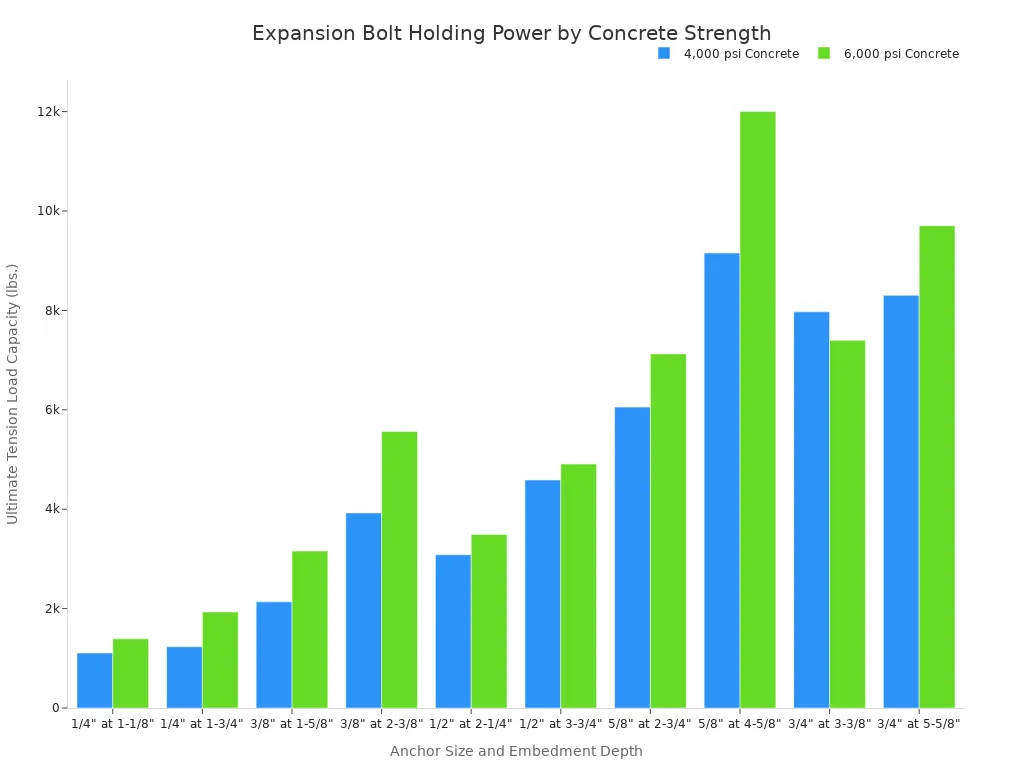
The Importance of Concrete Compressive Strength (PSI)
Concrete strength is measured in pounds per square inch (PSI). The holding power of an anchor is directly related to the concrete’s PSI. Stronger concrete provides a more secure base, allowing an anchor to resist higher loads. As the chart shows, a higher PSI value generally increases an anchor’s ultimate tension capacity.
Step 3: Consider Environmental Conditions
The project’s environment determines the necessary level of corrosion resistance. An anchor used indoors has different material requirements than one exposed to rain and salt.
Interior Dry vs. Exterior Wet Environments
Indoor, dry locations are the least corrosive environments. Exterior applications, especially in coastal or industrial areas, expose fasteners to moisture and chemicals that can cause rust and failure.
Choosing the Right Material: Zinc, Galvanized, or Stainless Steel
The anchor’s material and coating provide protection against corrosion.
| Finish | Corrosion Resistance | Best Use |
|---|---|---|
| Zinc Plated (Clear) | Moderate | Light-duty indoor |
| Hot-Dip Galvanized | High | Outdoor, construction, structural |
| Stainless Steel (304) | Excellent | Outdoor, food-grade, general use |
| Stainless Steel (316) | Superior | Coastal, saltwater, chemical use |
- Zinc-Plated Steel: This is a cost-effective choice for dry, indoor applications like furniture assembly.
- Hot-Dip Galvanized Steel: A thick zinc coating offers high corrosion resistance for outdoor structures, roofing, and general construction.
- Stainless Steel: This material offers the best protection. Type 304 is for general outdoor use, while Type 316 provides superior resistance in marine and chemical environments.
Step 4: Check Installation Parameters
Following the manufacturer’s installation instructions is not just a recommendation; it is a requirement for a safe and effective anchor installation. These parameters ensure the anchor and the surrounding concrete can handle the intended loads without failure.
Minimum Edge and Spacing Distances
Installers must maintain specific distances between anchors and from any concrete edge. Placing anchors too close together or too near an edge creates overlapping stress zones in the concrete. This can cause the concrete to crack or break out, a condition known as chipping or flaking.
⚠️ Critical Safety Alert: Failure to maintain minimum edge and spacing distances is a primary cause of anchor failure. The forces exerted by the anchor can easily fracture the concrete if it lacks sufficient mass to resist the expansion pressure.
Manufacturers provide clear guidelines for these distances, which are typically expressed as a multiple of the anchor’s diameter. For example, a wedge anchor often requires a minimum spacing of 10 anchor diameters between fasteners.
| Anchor Type | Minimum Edge Distance (General) | Minimum Edge Distance (Specific) | Minimum Spacing (General) | Minimum Spacing (Specific) |
|---|---|---|---|---|
| Wedge Anchors | 5 anchor diameters | 1-7/8″ | 10 anchor diameters | 3-3/4″ |
Adhering to these distances ensures each anchor has enough surrounding concrete to develop its full load-bearing capacity.
Required Hole Diameter and Embedment Depth
The performance of an anchor depends heavily on a properly prepared hole. The hole’s diameter and depth must match the anchor’s specifications precisely.
- Hole Diameter: An installer must use a carbide-tipped drill bit that meets ANSI standards and matches the anchor’s required diameter. A hole that is too small will prevent the anchor from being installed. A hole that is too large will prevent the expansion mechanism from engaging the concrete, resulting in zero holding power.
- Embedment Depth: This refers to how deep the anchor is installed into the concrete. Deeper embedment allows the anchor to engage more base material, which generally increases its pull-out strength. An installer must drill the hole deep enough to accommodate both the anchor’s minimum embedment and any dust that may settle at the bottom.
Pro Tip: Always drill the hole at least one anchor diameter deeper than the required embedment. This extra space ensures the anchor can be installed to the correct depth without being obstructed by leftover drilling debris.
Common Installation Mistakes and How to Avoid Them
An expansion bolt’s performance depends entirely on correct installation. Even the highest quality fastener will fail if an installer makes a critical error. Professionals avoid common mistakes by following a precise process, ensuring every anchor achieves its maximum holding power for a safe and durable connection.
Improper Hole Preparation
The first step, preparing the hole, is the foundation for a successful installation. Errors at this stage will compromise the entire fastening.
Using the Wrong Drill Bit Diameter
An installer must use a masonry bit that precisely matches the anchor’s required diameter. A seemingly minor deviation can lead to complete failure.
- A hole drilled with a bit that is too small will prevent the anchor from being driven in.
- A hole drilled with a bit that is too large will leave a gap, preventing the anchor from gripping the concrete securely.
- Wobbling the drill during the process can also widen the hole, leading to a loose fit and reduced holding power.
⚠️ Caution: Always use an ANSI-standard carbide-tipped drill bit specified by the anchor manufacturer. This ensures the hole diameter is within the required tolerance for proper expansion.
Failing to Clean Debris from the Hole
Drilling creates a significant amount of concrete dust and debris. An installer must clean this material from the hole before inserting the anchor. Failing to do so can prevent the anchor from reaching its required embedment depth. The debris can also interfere with the expansion mechanism, significantly reducing the anchor’s pull-out strength and creating an unsafe connection. A wire brush and compressed air are essential tools for this critical step.
Incorrect Tightening and Setting
Applying the correct amount of torque is crucial for activating the expansion mechanism properly. Both too little and too much force can lead to failure.
The Dangers of Under-Torquing
Under-torquing an anchor is a common mistake. It occurs when an installer does not tighten the nut enough to fully expand the anchor. This results in insufficient clamping force and a drastically reduced load capacity. Over time, an under-torqued anchor can become loose, especially when subjected to vibration, leading to a hazardous situation.
The Risk of Over-Torquing and Concrete Failure
Applying excessive force is equally dangerous. Over-torquing can cause several types of failure:
- It can strip the threads on the bolt or nut.
- It can break the anchor itself.
- Most critically, it can generate too much expansion force, crushing the base material and causing the concrete to crack or split.
This type of damage can be difficult to detect, especially internal splitting within a concrete block, but it severely compromises the anchor’s integrity.
Disregarding Spacing and Edge Distance
Concrete needs sufficient mass around an anchor to resist the expansion forces. Ignoring manufacturer-specified spacing and edge distances is a primary cause of catastrophic failure.
Placing Anchors Too Close to a Concrete Edge
Installing an anchor too close to an edge can cause the concrete to break out. The outward pressure from the anchor has nowhere to go, leading to chipping or flaking damage and cracking. This breakout failure compromises the concrete’s integrity and dramatically reduces the anchor’s holding capacity. Installers must adhere to the minimum edge distance, often a multiple of the anchor diameter, to prevent this.
Installing Anchors Too Close to Each Other
When anchors are installed too close together, their stress zones in the concrete overlap. This combined pressure can cause a large, cone-shaped section of concrete to fail and pull out, a phenomenon known as concrete breakout failure. Manufacturers specify minimum spacing requirements to ensure each anchor has an independent zone of concrete to support its load. For example, some anchors may lose capability if placed less than 9-1/2 inches apart.
A successful project hinges on selecting the correct expansion bolts for the job. An installer must match the fastener to the specific load, base material, and environment.
- Wedge anchors excel in heavy-duty concrete applications.
- Sleeve anchors provide medium-duty versatility across materials.
- Drop-in anchors are the standard for overhead suspension.
Final Check ✅: Professionals always consult the manufacturer’s technical data for torque values and spacing requirements. This critical step guarantees a safe, secure, and durable installation.
FAQ
Can you reuse an expansion bolt?
Installers should not reuse most expansion bolts. The expansion mechanism deforms permanently during the initial set. Reusing the anchor compromises its holding power and creates a safety risk. The anchor body itself is a one-time-use fastener.
What happens if the hole is too deep?
A hole that is too deep is generally not a problem. An installer must ensure the anchor reaches its specified minimum embedment depth. The extra space can even help accommodate drilling dust, preventing obstruction during installation.
Why is cleaning the hole so important? 🧹
An installer must clean the hole of all dust and debris. This debris can prevent the anchor from reaching its required embedment depth. It also interferes with the expansion mechanism, severely reducing the anchor’s load capacity and creating an unsafe connection.
Which anchor is best for cracked concrete?
Installers must use anchors specifically rated for cracked concrete in such applications. Many modern wedge anchors and drop-in anchors carry this rating. These fasteners are engineered to maintain load capacity even if cracks form in the base material.
How long do expansion bolts last?
The lifespan of an expansion bolt depends on its material and the environment. A zinc-plated anchor may last for decades indoors. A stainless steel anchor provides the longest service life in corrosive outdoor or chemical environments, resisting rust and degradation.
Can you use an impact wrench to tighten expansion bolts?
⚠️ Professional Advice: Professionals avoid using impact wrenches for final tightening. These tools make it very easy to over-torque the anchor, which can strip threads or fracture the concrete. An installer should always use a calibrated torque wrench for accuracy.