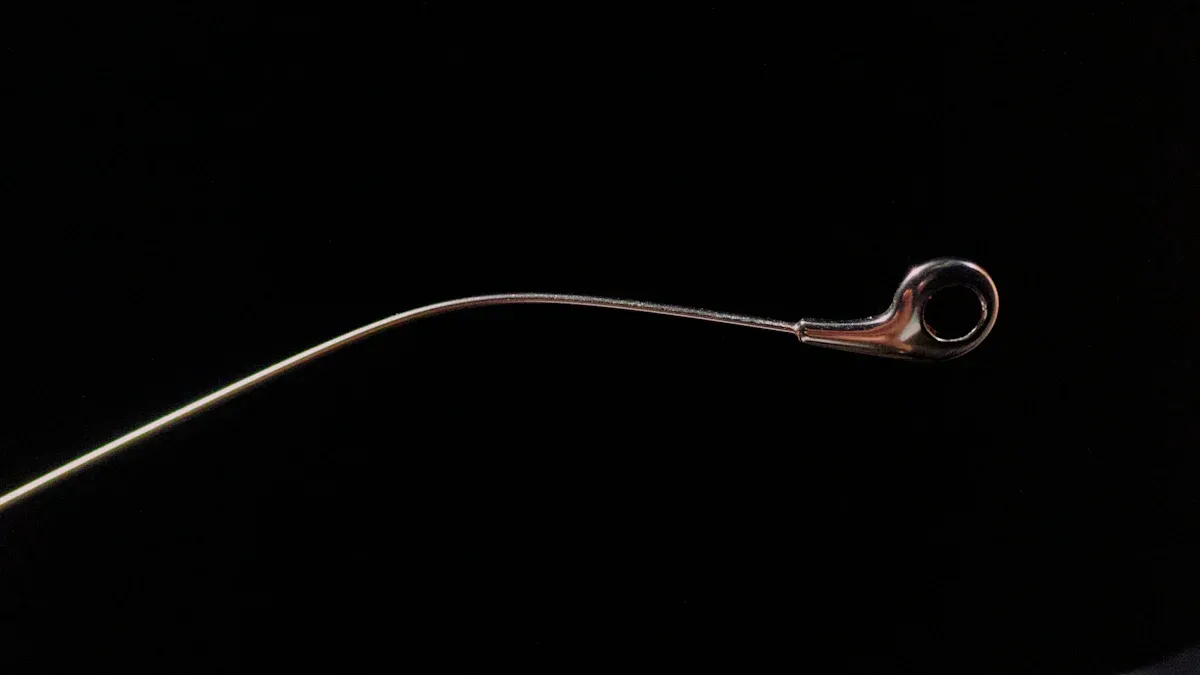
An eye bolt is a simple yet crucial component in countless applications. It provides a secure anchoring point for lifting, pulling, and securing loads. The market for industrial fasteners, including eye bolts, is expanding rapidly. Projections show a significant rise, driven by growth in construction and manufacturing. Selecting the correct eyebolts is vital for safety and performance. This guide explores the top eyebolts for various jobs. It covers everything from heavy-duty lifting to delicate craft projects. Each application demands a specific type of Eye Bolt.
| Metric | Value |
|---|---|
| Forecast Period | 2025-2032 |
| CAGR (2025-2032) | 14.4% |
| Projected Market Size (by 2028) | ~$300 million |
The right choice ensures your project’s success and safety. The industry sees advancements in bolt casting and a rise in demand for custom fasteners. A custom fasteners manufacturer can create specialized eyebolts for unique needs. This ensures perfect anchoring and securing for any task.
- Heavy-Duty Lifting: Forged Shoulder Machinery Eye Bolt
- Marine Environments: 316 Stainless Steel Shoulder Eye Bolt
- General Outdoor Use: 304 Stainless Steel Regular Eye Bolt
- Indoor/Dry Applications: Zinc-Plated Steel Shoulder Eye Bolt
- Wood Anchoring: Forged Lag Screw Eye Bolt
- Light-Duty Hanging: Zinc-Plated Regular Eye Bolt
- Angled Lifting: Swivel Hoist Ring Eye Bolt
- Securing Tarps: Vinyl-Coated Lag Eye Bolt
- DIY & Crafts: Small Screw Eye Bolt
- Through-Hole Fastening: Nut Eye Bolt with Nut & Washer
Detailed Review: Top 10 Eye Bolts for Every Job
Choosing the right hardware is the first step toward a successful and secure project. This detailed review explores the top eyebolts, breaking down their specifications, strengths, and limitations. Each type serves a distinct purpose, from industrial lifting to general fastening.
1. Forged Shoulder Machinery Eye Bolt
Best For Heavy-Duty Lifting
Forged shoulder machinery eye bolts are the undisputed champions of heavy-duty applications. Manufacturers create these heavy-duty eye bolts by drop-forging a single piece of steel. This process aligns the metal’s internal grain structure, resulting in exceptional strength and fatigue resistance. The integrated “shoulder” provides a large bearing surface. This feature allows the bolt to handle angular loads safely, a critical function that plain pattern eye bolts cannot perform.
Key Specifications
- Material: Typically forged from quenched and tempered carbon steel (e.g., C1030 or C1045).
- Design: Features a fully-formed shoulder that must sit flush against the mounting surface.
- Threading: Machine screw threads for tapping into metal or securing with a nut.
- Compliance: Production often follows strict industry standards for safety and reliability.
- ASME B18.15: This standard governs the dimensions and threaded nature of forged eyebolts intended for lifting.
- ASME B30.26: This standard outlines requirements for identification, design factor, and proof loading for rigging hardware.
Safety Note: Always consult the manufacturer’s specifications to determine an eye bolt’s capacity. Manufacturer guidance supersedes general standards. Failure to follow these specific instructions can result in component failure and liability.
Pros
- ✅ Highest strength and load capacity.
- ✅ Rated for both vertical and angled lifting (up to 45°).
- ✅ Extremely durable and resistant to shock loads.
Cons
- ❌ More expensive than other types.
- ❌ Prone to corrosion unless properly coated (e.g., zinc-plated or galvanized).
- ❌ Requires precise installation for the shoulder to be effective.
2. 316 Stainless Steel Shoulder Eye Bolt
Best For Marine Environments
When corrosion is the primary enemy, the 316 stainless steel shoulder eye bolt is the ideal solution. Its material composition makes it uniquely suited for saltwater, chemical, and other harsh environments. These stainless steel eyebolts provide excellent longevity where other materials would quickly fail. The inclusion of a shoulder also makes these eye bolts versatile for various rigging applications.
Key Specifications
- Material: Grade 316 Stainless Steel, containing molybdenum for superior corrosion resistance.
- Design: Shoulder pattern allows for safe angular loading.
- Applications: Its resistance makes it perfect for a wide range of industries.
- Coastal and offshore marine applications
- Chemical and pharmaceutical processing
- Petroleum and mining industries
- Paper manufacturing plants
- Corrosion Resistance: The key difference between 316 and 304 stainless steel is the addition of molybdenum, which specifically combats chloride-induced corrosion.
| Feature | 304 Stainless Steel | 316 Stainless Steel |
|---|---|---|
| Composition | Chromium (18-20%), Nickel (8-10.5%) | Chromium (16-18%), Nickel (10-14%), Molybdenum (2-3%) |
| Corrosion Resistance | Good, but vulnerable in chloride environments. | Excellent, especially against chlorides and saltwater. |
| Marine Applications | Suitable for freshwater. | Ideal for saltwater and harsh marine settings. |
| Cost | Less expensive. | More expensive. |
Pros
- ✅ Superior resistance to rust and corrosion, especially from chlorides.
- ✅ Long service life in harsh conditions.
- ✅ Shoulder design permits angled loads.
Cons
- ❌ Higher initial cost than 304 stainless steel and carbon steel eyebolts.
- ❌ May have a lower Working Load Limit (WLL) than a forged carbon steel bolt of the same size.
3. 304 Stainless Steel Regular Eye Bolt
Best For General Outdoor Use
The 304 stainless steel regular eye bolt offers a balanced blend of performance and value. It is a popular choice for general outdoor applications where the hardware faces rain and humidity but not constant saltwater exposure. This type of eye bolt lacks a shoulder, a design known as a “regular” or “plain pattern.” This structural difference is critical; these eyebolts are designed exclusively for straight, in-line tension.
Key Specifications
- Material: Grade 304 Stainless Steel (also known as 18-8 stainless).
- Design: Plain pattern (no shoulder). For vertical, in-line loads only.
- Strength: The material properties provide reliable performance for non-critical tasks.
- Material standards often reference ASTM A276 for stainless steel bars.
- This standard specifies a minimum tensile strength of 75 ksi (75,000 pounds per square inch).
- It also specifies a minimum yield strength of 30 ksi.
- Common Uses: Attaching guy wires, suspending signs, anchoring shade sails, and general-purpose fastening.
Pros
- ✅ Good corrosion resistance for most non-marine outdoor environments.
- ✅ More affordable than 316 stainless steel options.
- ✅ Widely available for various projects.
Cons
- ❌ Cannot be used for angled lifting. The shank will bend or break under side load.
- ❌ Will corrode in saltwater or high-chloride environments.
- ❌ Lower strength compared to forged carbon steel lifting eye bolts.
4. Zinc-Plated Steel Shoulder Eye Bolt
Best For Indoor/Dry Applications
The zinc-plated steel shoulder eye bolt is a cost-effective workhorse for indoor environments. Manufacturers make these eyebolts from strong carbon steel and then apply a thin layer of zinc. This zinc coating acts as a sacrificial barrier, providing moderate protection against rust in dry or low-humidity conditions. The presence of a shoulder means these eye bolts can handle angular loads, adding a layer of versatility for indoor rigging and mounting tasks.
Key Specifications
Zinc-plated steel offers a much more inexpensive option for projects requiring little to moderate corrosion resistance. This generally favors indoor applications or short-term projects. Stainless steel is more expensive upfront. However, the long-term benefit of stainless steel is its superior durability, corrosion resistance, and low maintenance needs.
| Feature | Zinc-Plated Steel | Stainless Steel |
|---|---|---|
| Initial Cost | Lower | Higher (2-3 times that of carbon steel) |
| Long-term Value | Lower (due to potential maintenance/replacement) | Higher (due to durability and low maintenance) |
| Best Use Case | Indoor, dry, short-term, or budget-sensitive projects | Harsh environments, long service life, critical reliability |
- Material: Carbon Steel
- Finish: Zinc Plating (electroplated)
- Design: Shoulder pattern for vertical and angled loads.
- Common Uses: Securing machinery to factory floors, creating tie-down points in workshops, suspending light fixtures or signage indoors.
Pros
- ✅ Excellent strength-to-cost ratio.
- ✅ Shoulder allows for safe handling of angled loads.
- ✅ More affordable than stainless steel alternatives.
Cons
- ❌ Poor corrosion resistance in wet or outdoor environments.
- ❌ Zinc coating can be scratched, compromising its protective layer.
- ❌ Not suitable for marine or chemical exposure.
5. Forged Lag Screw Eye Bolt
Best For Wood & Masonry
When a project requires a strong anchoring point in wood or concrete, the forged lag screw eye bolt is the premier choice. These robust eyebolts feature aggressive, tapered threads designed to bite firmly into wood fibers. The forged construction provides superior strength compared to bent or welded alternatives, making them suitable for substantial loads. For masonry applications, they pair with a lag shield anchor to create a secure connection in concrete or brick.
Key Specifications
- Material: Typically forged from carbon steel; available in plain, zinc-plated, or hot-dip galvanized finishes.
- Threading: Lag screw threads (gimlet point).
- Design: Usually a plain pattern eye, intended for in-line loads.
- Installation: Requires a pre-drilled pilot hole to prevent wood from splitting and to ensure maximum holding power.
Pro Tip: Always drill a pilot hole before installing a lag screw eye bolt. The hole’s diameter should match the root diameter of the screw (the shank minus the threads). This allows the threads to grip effectively without damaging the wood.
Pros
- ✅ Provides exceptional pull-out strength in wood.
- ✅ Versatile for use in wood, concrete, and other masonry (with a lag shield).
- ✅ Forged head offers high tensile strength.
Cons
- ❌ Not suitable for fastening into metal.
- ❌ Plain pattern design is not rated for angled loads.
- ❌ Incorrect pilot hole size can compromise holding strength or split the wood.
6. Zinc-Plated Regular Eye Bolt
Best For Light-Duty Hanging
For simple, non-critical hanging tasks, the zinc-plated regular eye bolt is an economical and widely available solution. These eyebolts are formed from bent steel wire rather than forged, resulting in a lower load capacity. Their plain pattern design, without a shoulder, makes them strictly suitable for vertical, in-line loads only. They are a staple in hardware stores for countless household and workshop applications.
Key Specifications
- Material: Carbon Steel, typically bent into shape.
- Finish: Zinc Plating.
- Design: Plain pattern (no shoulder). For vertical (0°) loads only.
- Load Capacity: Varies significantly by manufacturer and size. For example, one 1/4-inch zinc eye bolt may be rated to support 80 pounds, while another of the same diameter could have a working load limit of 160 pounds. Always verify the specific product’s rating.
- Common Uses:
- Hanging potted plants from a ceiling joist.
- Suspending shop lights or extension cords.
- Creating tie-off points for clotheslines or guide wires.
Pros
- ✅ Very inexpensive and easy to find.
- ✅ Simple to install for general-purpose tasks.
- ✅ Available in a wide range of small sizes.
Cons
- ❌ CRITICAL: Cannot be used for any angled load. Side loading will bend or break the bolt.
- ❌ Low Working Load Limit (WLL).
- ❌ Not intended for lifting or critical safety applications.
7. Swivel Hoist Ring Eye Bolt
Best For Angled Lifting & Rigging
The swivel hoist ring represents the pinnacle of safety and versatility in modern rigging. Unlike fixed eye bolts, these advanced components can safely handle loads from any direction. This makes them the undisputed choice for complex lifting operations where the load angle is variable or not perfectly vertical. Their design eliminates dangerous side-loading, a primary cause of failure in standard eyebolts.
Key Specifications
Engineers design swivel hoist rings with a base that bolts down and an eye that has a full range of motion. This construction is key to their superior performance in dynamic rigging applications.
- Material: High-strength alloy steel, quenched and tempered for maximum durability.
- Design: Features a 360-degree swivel and a 180-degree pivot action. This dual movement allows the ring to automatically align with the load’s force vector. It maintains 100% of its Working Load Limit (WLL) even at a 90-degree angle, preventing the side-loading stress that would break fixed eyebolts.
- Compliance: Leading manufacturers produce these components to meet or exceed global certifications like ISO9001, TUV Rheinland, and OSHA standards. International regulations mandate specific markings for safety and traceability.
- Manufacturer’s identification mark
- Rated load (WLL)
- Alloy grade
- Required torque value for installation
Pros
- ✅ Safely handles angled loads up to 90° without capacity reduction.
- ✅ Eliminates the risk of bending or breaking from side-loading.
- ✅ Ideal for complex, multi-directional lifting and rigging tasks.
Cons
- ❌ Significantly more expensive than all other types of eye bolts.
- ❌ Requires a torque wrench for proper installation to the specified value.
- ❌ Heavier and bulkier than traditional eyebolts.
8. Vinyl-Coated Lag Eye Bolt
Best For Securing Covers & Tarps
The vinyl-coated lag eye bolt is a specialty fastener designed for securing items without damaging them. The soft vinyl coating provides a protective buffer between the steel eye and the material it holds. This makes it perfect for tasks like fastening boat covers, tarps, and awnings where abrasion could cause wear and tear.
Key Specifications
These eyebolts combine the holding power of a lag screw with a protective finish, making them useful for specific outdoor and marine-adjacent applications.
- Material: Carbon steel with a lag screw thread.
- Finish: A thick layer of vinyl coating over a base of zinc plating or hot-dip galvanization.
- Design: Plain pattern eye with a wood-style lag thread.
| Feature | Benefit of Vinyl Coating |
|---|---|
| Protection | Prevents the steel eye from scratching or tearing tarps, covers, and other fabrics. |
| Weather Resistance | Adds an extra layer of protection against moisture and corrosion. |
| Color Coding | Often available in different colors (e.g., white, black, blue) for aesthetic matching. |
Pros
- ✅ Protects secured materials from abrasion and damage.
- ✅ Provides good grip in wood structures.
- ✅ Offers an additional layer of weather resistance.
Cons
- ❌ Not intended for lifting or heavy loads.
- ❌ The vinyl coating can degrade or become brittle over time with sun exposure.
- ❌ Limited to plain pattern designs, so it cannot handle angled loads.
9. Small Screw Eye Bolt
Best For DIY & Craft Projects
Small screw eye bolts, often called “screw eyes,” are lightweight fasteners for countless DIY, craft, and household projects. Manufacturers form these from a simple piece of bent wire with a screw thread at the end. They are the go-to solution for hanging pictures, running guide wires for small plants, or creating attachment points in woodworking crafts.
Key Specifications
These small eyebolts are valued for their simplicity and low cost, not their strength. Users should never mistake them for load-bearing hardware.
- Material: Typically bent from steel wire.
- Finish: Available in many finishes, including zinc, brass, and nickel plating.
- Design: A simple formed eye with a sharp-pointed wood screw thread.
DIY Tip: When installing screw eyes into hardwood, always pre-drill a small pilot hole. This prevents the wood from splitting and makes it much easier to screw the eye bolt in straight.
Pros
- ✅ Extremely inexpensive and widely available in hardware and craft stores.
- ✅ Very easy to install by hand or with pliers.
- ✅ Perfect for a wide variety of light-duty hanging and decorative tasks.
Cons
- ❌ CRITICAL: Have a very low load capacity and must never be used for lifting.
- ❌ The eye can be bent open under a relatively light load.
- ❌ Not suitable for any application where failure could cause injury or property damage.
10. Nut Eye Bolt with Nut & Washer
Best For Through-Hole Fastening
The nut eye bolt provides one of the most secure anchoring methods available. It is the definitive choice for through-hole applications. This design requires access to both sides of the mounting surface. Users pass the bolt’s threaded shank completely through a pre-drilled hole. A nut and washer on the opposite side create a powerful clamping force, making these eyebolts exceptionally reliable.
Key Specifications
These components work together as a system to create a robust connection. The design leverages mechanical advantage for superior security in various applications.
- Material: Typically made from carbon steel or stainless steel.
- Threading: Features continuous machine screw threads along the shank.
- Components: Sold as a kit including the eye bolt, a hex nut, and a washer.
- Installation: Requires drilling a hole through the substrate and tightening the nut from the back side.
The Role of the Washer A washer is a critical component of this assembly. It distributes the load from the nut across a wider surface area. This action prevents the force from concentrating in one small spot, which could damage the material or cause the bolt to pull through. This load distribution makes the entire joint stronger, especially in softer materials like wood or aluminum. For heavy-duty tasks, square washers offer an even larger surface area than round ones, providing maximum resistance against pull-through in timber construction and machinery fastening.
Pros
- ✅ Creates an extremely strong and secure fastening point.
- ✅ The clamping force from the nut and washer assembly offers superior pull-out resistance.
- ✅ Versatile for use in metal, wood, fiberglass, and composite materials.
- ✅ Many nut-style eye bolts are forged, giving them high load ratings.
Cons
- ❌ Installation requires access to both sides of the mounting surface.
- ❌ The installation process is more involved than for simple screw-in eyebolts.
- ❌ The protruding nut and thread on the backside may be undesirable in some situations.
How to Choose the Right Eyebolts: A Buyer’s Guide
Selecting the appropriate hardware is fundamental to project safety and success. Choosing the right eye bolt involves evaluating the material, load requirements, and design type for your specific application. This guide breaks down the essential factors for making an informed decision.
Material and Finish Selection
The material of an eye bolt dictates its strength and resistance to environmental factors. The right choice prevents premature failure and ensures long-term reliability for all types of eyebolts.
Stainless Steel for Corrosion Resistance
Stainless steel is the premier material for fighting corrosion. For marine and high-humidity applications, 316 stainless steel provides superior resistance compared to other grades. Its composition includes molybdenum, making it the ideal choice for saltwater exposure. For these demanding environments, silicon bronze is another excellent rust-proof option. High-quality stainless steel eyebolts form a protective oxide layer, ensuring durability in harsh conditions.
Carbon Steel for Strength
Carbon steel offers exceptional strength at a lower cost. This material is the top choice for heavy lifting applications where maximum load capacity is the priority. However, carbon steel lacks natural corrosion resistance. It requires a protective finish for use in anything other than dry, indoor environments. Its primary advantage is its high tensile strength.
Protective Finishes Explained
A finish protects carbon steel eyebolts from rust. Each coating offers a different level of protection and is suited for different applications.
| Feature | Galvanized Steel Eye Bolts | Stainless Steel Eye Bolts | Zinc-Plated Steel Eye Bolts |
|---|---|---|---|
| Corrosion Resistance | Excellent; thick zinc barrier | Superior; inherent alloy property | Good; thin zinc barrier |
| Durability | High, but coating can wear | High, maintains integrity | High, but coating can scratch |
| Cost | Lower | Higher | Lowest |
| Best Use | Outdoor construction, marine | Harsh chemicals, high heat | General indoor or dry use |
Understanding Load Capacity and WLL
The most critical factor for any load-bearing hardware is its capacity. Misunderstanding this can lead to catastrophic failure.
What is Working Load Limit (WLL)?
The Working Load Limit (WLL) is the maximum load an eye bolt can safely handle without risk of failure. Manufacturers determine this value, which includes a significant safety factor. The WLL is always much lower than the bolt’s ultimate breaking strength.
Why WLL is Critical for Safe Lifting
Exceeding the WLL is extremely dangerous. The capacity of lifting eye bolts also decreases dramatically when the load is applied at an angle. A shoulder eye bolt is required for any angled lifting.
Safety Alert: Angled loads significantly reduce an eye bolt’s strength. When a shoulder eye bolt is used at a 45° horizontal angle, its capacity drops to just 30% of its vertical lifting rating. Always consult manufacturer charts for specific reduction factors.
Finding the WLL Rating
Manufacturers typically stamp the WLL directly onto forged eyebolts. For other types, the rating is found on the packaging or in the product’s technical data sheet. Never use an eye bolt for lifting if its WLL is unknown.
Key Types of Eye Bolts
The design of an eye bolt determines how it can be used. The main distinctions relate to the shoulder, manufacturing process, and movement capability.
Shoulder vs. Regular (Plain Pattern)
Shoulder eye bolts have a flange that braces the bolt against the mounting surface, allowing them to handle angled loads. Regular (plain pattern) eyebolts lack this shoulder. They are suitable only for perfectly vertical, in-line loads.
Forged vs. Bent (Formed) Eyebolts
Forged eyebolts are made from a single piece of heated steel, creating a continuous grain structure for maximum strength. Bent or formed eye bolts are made from wire, making them weaker and suitable only for light-duty, non-critical tasks.
Swivel Hoist Rings for Flexibility
For complex lifting, swivel hoist rings offer the highest level of safety. They can pivot and rotate to always align with the load’s direction. This design eliminates dangerous side-loading and maintains 100% of the WLL at any angle.
Matching Thread Type to Surface
An eye bolt’s effectiveness depends entirely on its connection to the mounting surface. The threads are the critical interface that transfers the load from the eye to the structure. Using the wrong thread type for a given material is a common mistake that severely compromises the connection’s strength and safety. A secure installation requires matching the thread design to the surface material. This ensures the eyebolts achieve their maximum holding power.
Machine Threads for Metal
Machine threads are designed for fastening into metal surfaces. These threads are fine and uniform, intended to engage with a pre-tapped hole or a nut. They create a strong, precise connection by mating with identical threads in the metal substrate.
- Installation Process:
- Drill a hole with a specific diameter.
- Use a tap to cut matching threads into the hole.
- Screw the eye bolt into the newly tapped hole.
- Key Feature: Machine threads provide high clamping force and excellent resistance to vibration when properly installed. They are the standard for all heavy-duty lifting eyebolts used in machinery and steel structures.
Technical Note: The thread specification, such as UNC (Unified National Coarse) or UNF (Unified National Fine), determines the thread pitch. Coarse threads are more common and offer faster installation, while fine threads provide slightly higher tensile strength and better resistance to loosening.
Lag Threads for Wood
Lag threads are essentially large wood screws. They feature a coarse, tapered design with a sharp point. These aggressive threads are engineered to displace and grip wood fibers, creating a powerful anchor point.
- Best Practice: Always drill a pilot hole before installing lag screw eyebolts. This prevents the wood from splitting and allows the threads to bite in securely.
- For softwoods, the pilot hole should match the root diameter of the screw.
- For hardwoods, the pilot hole should be slightly larger to reduce installation torque.
These eyebolts are ideal for residential construction, such as creating attachment points in wooden beams or posts. Their design maximizes pull-out resistance in wood and similar fibrous materials.
Nut Eye Bolts for Through-Bolting
Through-bolting with a nut eye bolt offers the most secure fastening method. This approach does not rely on the strength of threads cut into the base material. Instead, it clamps the material between the eye bolt’s shoulder (or a washer) and a nut on the opposite side.
This method is exceptionally versatile and strong. It works well in wood, metal, fiberglass, and composite materials. The clamping force distributes the load over a wide area, preventing pull-through failure. These eyebolts are the top choice when access to both sides of the surface is possible and maximum security is non-negotiable. The reliability of these eyebolts makes them a staple in demanding applications.
Safety Guide for Lifting and Rigging Applications
Adhering to strict safety protocols is non-negotiable for all lifting and rigging applications. The integrity of every component, especially the eye bolts, directly impacts the security of the entire operation. This guide outlines the essential checks and procedures for safe rigging.
Pre-Installation Safety Checks
Operators must perform thorough checks before any eye bolt is put into service. This initial diligence prevents equipment failure and enhances workplace safety.
Inspecting Eye Bolts for Defects
A competent person should examine all eyebolts before each use. A routine inspection ensures the hardware is free from any condition that could compromise its strength. Damaged eyebolts must be removed from service immediately.
- Inspect the eye and shank for any bends, distortions, or stretching.
- Look for cracks, nicks, gouges, or signs of excessive wear.
- Check for heavy corrosion that could weaken the material.
- Verify that threads are clean and free from damage or distortion.
Verifying Surface Integrity
The mounting surface must be capable of supporting the intended load. Operators should inspect the material for cracks, decay, or other weaknesses. The surface must be flat and clean to ensure a secure fit, especially for shoulder eye bolts.
Proper Installation Techniques
Proper installation is as critical as selecting the right hardware. Incorrect installation techniques can drastically reduce the capacity of even the strongest eyebolts.
Achieving Full Thread Engagement
For maximum holding power, the bolt’s threads must fully engage with the tapped hole or nut. Insufficient engagement creates a weak point in the rigging assembly. Proper installation ensures the load is transferred effectively.
Correctly Seating Shoulder Eye Bolts
The shoulder on an eye bolt must sit completely flush against the mounting surface. Any gap between the shoulder and the surface prevents the bolt from safely handling an angular load and can lead to bending or failure. This step is vital for proper installation.
Aligning the Eye for Load Direction
When using shoulder eye bolts for angled lifting, users must align the plane of the eye with the direction of the pull. This alignment minimizes stress on the bolt and is a key part of a safe rigging setup.
Safe Usage and Maintenance
Ongoing vigilance and care ensure the long-term reliability of rigging hardware. Safe usage and routine maintenance are fundamental to preventing accidents in all applications.
Applying Loads Correctly
Operators should always apply the load to eyebolts smoothly and without jerking. Shock loading can create forces that far exceed the hardware’s rated Working Load Limit (WLL), leading to sudden failure.
How Load Angle Reduces Capacity
Users must understand that applying a load at an angle significantly reduces an eye bolt’s capacity. Plain pattern eyebolts are only for vertical (0°) lifting. Shoulder eye bolts can handle angled loads, but their capacity decreases as the angle increases.
Routine Inspection and Care
Proper maintenance extends the life of rigging equipment and is essential for safety.
Maintenance Best Practices: Cleaning: Clean eyebolts after use to remove dirt and grime. Use a soft brush and dry the hardware thoroughly to prevent rust. Lubrication: Apply a light coat of machine oil to threads. This reduces friction and wear during installation and removal. Storage: Store all eye bolts in a clean, dry, and well-ventilated area. Keeping them off the floor and away from chemicals prevents corrosion and damage.
Selecting the correct eye bolts is paramount for the safety of any lifting or securing application. The integrity of all rigging operations depends on matching the hardware to the task.
Key Takeaways for Safe Rigging:
- Always match the eyebolts’ Working Load Limit to the intended load.
- Use shoulder eyebolts for an angled load; this is vital for versatile rigging.
- Proper installation of all eye bolts is fundamental to safe rigging and the foundation of every rigging setup.
- Routine inspection of eyebolts maintains rigging safety and prevents load failure.
FAQ
What is the main difference between shoulder and regular eye bolts?
Shoulder eye bolts possess a flange that supports angled loads. Regular eye bolts lack this feature. Operators must use regular eye bolts only for straight, in-line lifting. An angular pull will bend or break a regular eye bolt.
Can operators reuse lifting eye bolts?
Yes, operators can reuse lifting eye bolts following a strict inspection. A competent person must check for any signs of damage before each use.
- Look for bends, cracks, or stretching.
- Examine threads for distortion.
- Discard any compromised hardware immediately. ⚠️
Why is a forged eye bolt stronger than a bent one?
Forging creates a continuous internal grain structure within the steel, maximizing strength. Bent eye bolts are simply formed from wire. This results in a significantly weaker component suitable only for very light, non-critical tasks.
When should someone choose a swivel hoist ring?
A swivel hoist ring is the safest choice for complex or angled lifting. Its ability to pivot 180° and rotate 360° allows it to align perfectly with the load’s direction. This design eliminates dangerous side-loading stresses.
How does one determine the correct pilot hole size?
The pilot hole for a lag eye bolt should match the screw’s root diameter (the solid shank without threads). This allows the threads to grip the wood fibers securely without splitting the material, ensuring maximum holding power.
What does WLL mean on an eye bolt?
WLL stands for Working Load Limit. It is the maximum mass or force the hardware can safely support. Manufacturers determine this rating, which includes a safety factor. Exceeding the WLL is extremely dangerous and can lead to equipment failure.