Properly installing wedge anchors is a critical task. A 2023 ASCE survey revealed that 34% of Anchor Bolts failures stem directly from installation errors. This highlights the importance of correct technique, even when using high-quality products like custom anchor bolts from a reputable custom fasteners manufacturer. The global market for these components is significant and growing.

Note: A successful wedge anchor installation requires specific tools and mandatory safety gear to ensure both structural integrity and personal safety.
Pre-Installation: Selecting the Right Wedge Anchor

Before any drilling begins, the crucial first step is choosing the correct anchor for the job. The safety and longevity of the fixture depend heavily on this initial decision. Factors like load requirements, environmental conditions, and fixture design all influence the ideal anchor. Making an informed choice here is fundamental to proper selection and installation.
Understanding Anchor Diameter and Length
Matching Diameter to Load Requirements
The anchor’s diameter directly correlates to its holding power. A larger diameter generally provides greater tensile (pull-out) and shear (side-to-side) load capacity. Engineers must match the anchor’s diameter to the specific load demands of the application. The strength of the concrete base material also plays a significant role in the anchor’s ultimate performance.
The allowable load capacities increase with anchor diameter, embedment depth, and concrete strength.
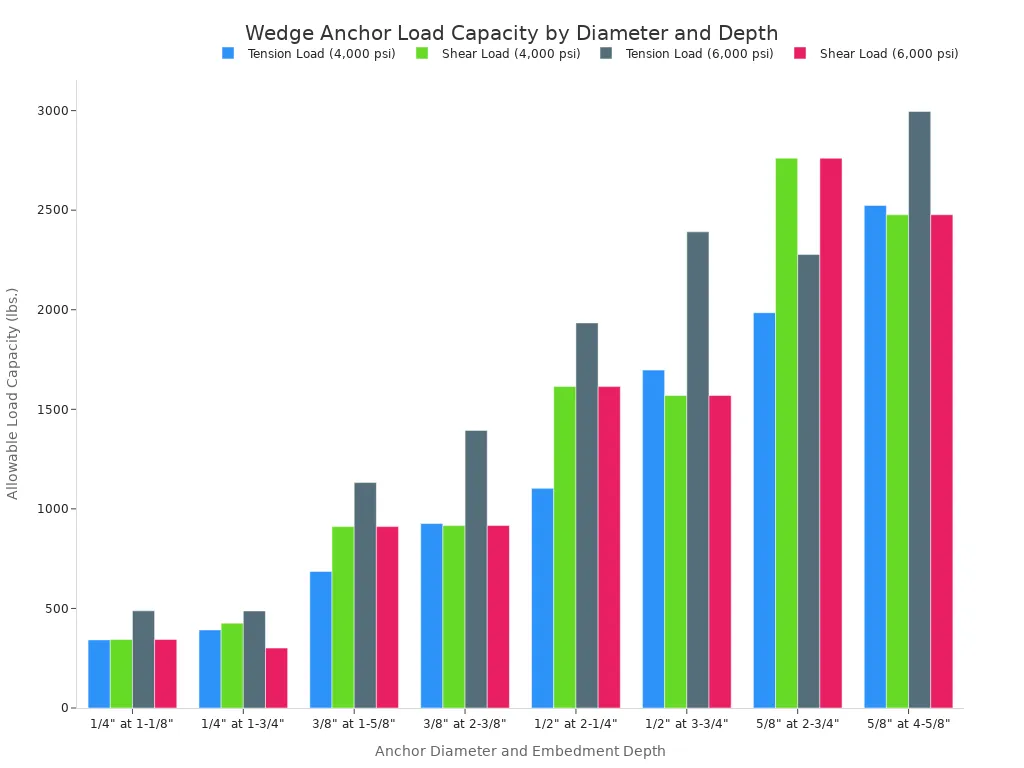
The table below provides a general guide to allowable loads in different concrete strengths.
| Nominal Anchor Diameter (in.) | Minimum Embedment Depth (in.) | Concrete Compressive Strength (psi) | Allowable Tension Load Capacity (lbs.) | Allowable Shear Load Capacity (lbs.) |
|---|---|---|---|---|
| 1/4″ | 1-1/8″ | 4,000 | 342 | 344 |
| 3/8″ | 1-5/8″ | 4,000 | 686 | 911 |
| 1/2″ | 2-1/4″ | 4,000 | 1,103 | 1,614 |
| 5/8″ | 2-3/4″ | 4,000 | 1,985 | 2,761 |
| 1/4″ | 1-1/8″ | 6,000 | 488 | 344 |
| 3/8″ | 1-5/8″ | 6,000 | 1,132 | 911 |
| 1/2″ | 2-1/4″ | 6,000 | 1,934 | 1,614 |
| 5/8″ | 2-3/4″ | 6,000 | 2,277 | 2,761 |
Calculating the Correct Anchor Length
To ensure adequate holding power, the wedge anchor must be long enough to pass through the fixture and achieve the required embedment depth in the concrete.
Pro Tip: Use this simple formula to find the minimum anchor length:
Fixture Thickness + Minimum Embedment Depth + Nut & Washer Height = Minimum Anchor Length
Performing this calculation before purchasing anchors prevents installation failures due to insufficient length.
Choosing the Right Material and Coating
The anchor’s material determines its resistance to corrosion. Selecting the right one is vital for ensuring durability in different environments.
| Anchor Type | Corrosion Resistance | Suitable Environmental Conditions |
|---|---|---|
| Zinc Plated | Least | Dry, indoor locations without moisture |
| Hot-Dipped Galvanized | Medium | Outdoor use, humid environments |
| 304 Stainless Steel | Excellent | Most corrosive environments |
| 316 Stainless Steel | Greatest | Submerged or marine environments |
Carbon Steel Zinc Plated
These anchors are designed for dry, indoor applications only. The zinc plating offers minimal protection against moisture, and exposure to humidity can cause rust and oxidation.
Hot-Dipped Galvanized (HDG)
With a thicker protective coating, HDG anchors are suitable for outdoor use in humid or damp environments. They provide a significant upgrade in corrosion resistance over standard zinc plating.
304 Stainless Steel
This material offers excellent corrosion resistance for most outdoor and corrosive applications. It is a reliable choice for long-term installations where moisture is a constant factor.
316 Stainless Steel
For the highest level of corrosion protection, 316 stainless steel is the premium choice. It is ideal for the most demanding environments, including submerged applications and areas exposed to chlorides like de-icing salts or marine air.
Decoding Head Styles and Certifications
Standard Nut and Washer
The most common wedge anchor style features a threaded stud with a nut and washer. This design is intended for permanent, heavy-duty fastening of items like machinery, guard rails, and dock bumpers where the anchor head will remain exposed.
Flat Head/Countersunk Styles
For applications requiring a smooth, flush surface, a flat head or countersunk anchor is the ideal choice. This design allows the anchor head to sit level with the fixture material, preventing tripping hazards and creating a clean, finished look. They are often used for installing door frames and metal plates.
Understanding ICC-ES Approvals
An ICC-ES (International Code Council Evaluation Service) approval on an anchor is a mark of quality and reliability. It signifies that the product has undergone rigorous, independent testing to verify its performance and compliance with building codes, such as the IBC and IRC. These evaluation reports provide engineers with the data needed to specify anchors for structural applications, including use in cracked concrete and seismic zones. Choosing an anchor with an ICC-ES approval ensures it meets established safety and performance standards.
Gathering Your Tools and Safety Gear

A successful and safe wedge anchor project depends on having the right equipment. Before beginning, an installer must assemble the necessary tools and personal protective equipment (PPE). This preparation prevents delays and minimizes safety risks.
Essential Installation Tools
Having the correct tools on hand streamlines the installation process and ensures the anchor performs to its specifications. Each tool serves a specific, critical function.
Hammer Drill
A hammer drill is essential for drilling into concrete. Unlike a standard drill, it combines rotation with a rapid hammering action. This mechanism efficiently pulverizes the concrete, allowing the bit to advance. A standard drill is not powerful enough for this task.
ANSI-Standard Carbide Drill Bit
Installers must use a carbide-tipped drill bit designed for masonry. The bit must meet ANSI B212.15 standards to ensure proper hole tolerance. A hole drilled with a non-compliant bit may be too large or too small, compromising the anchor’s holding power.
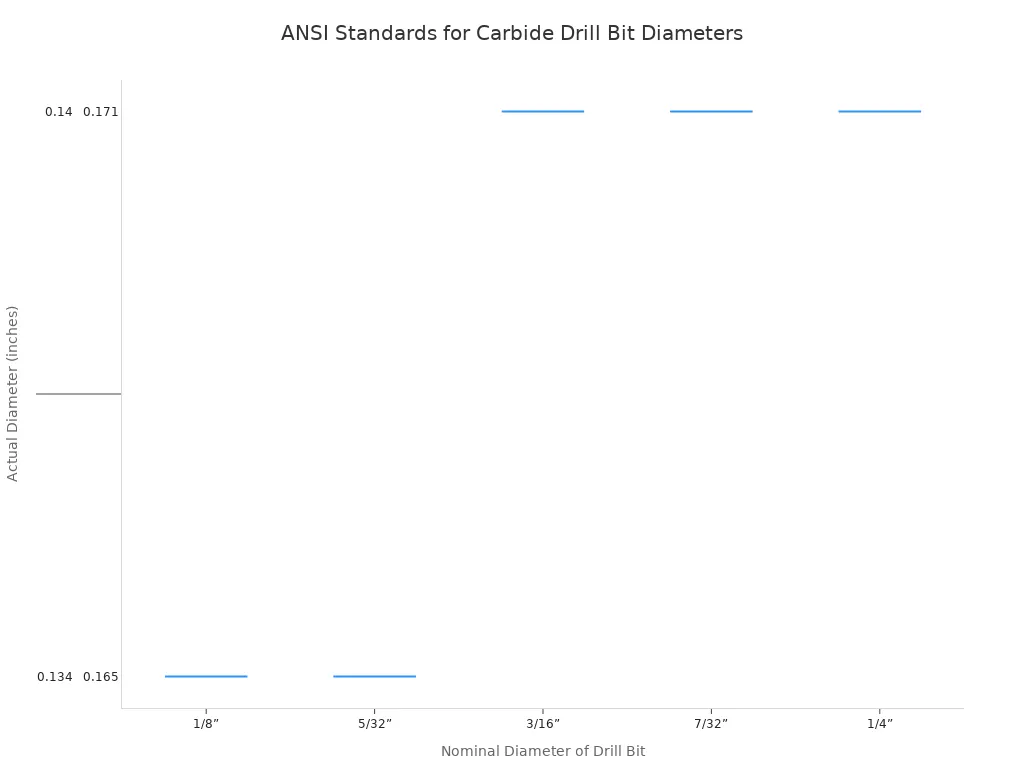
The diameter of the hole is critical. Even for other anchor types, such as specific Tapcon® sizes, specially engineered bits are required because their tolerances are even tighter than standard ANSI bits. Always match the bit to the anchor manufacturer’s specifications.
Torque Wrench
A torque wrench is a non-negotiable tool for the final tightening step. It allows the installer to apply the precise amount of rotational force specified by the anchor manufacturer. This prevents both under-tightening, which creates a loose connection, and over-tightening, which can damage the concrete or the anchor itself.
Wire Brush and Compressed Air/Blower
These tools are used to clean the drilled hole of all dust and debris. A narrow wire brush scrapes dust from the sides of the hole. A compressed air source or a manual blower then removes all loose particles. A clean hole is mandatory for achieving the anchor’s rated load capacity.
Hammer and Wrench
A standard hammer is needed to gently tap the wedge anchor into the cleaned hole to the correct depth. A basic wrench is used to hand-tighten the nut before applying the final torque.
Personal Protective Equipment (PPE)
Safety is paramount when working with concrete and power tools. The following PPE must be worn at all times.
Safety Glasses or Goggles
Drilling concrete creates flying chips and fine dust. Safety glasses or goggles provide essential protection against eye injuries.
Dust Mask or Respirator
Concrete dust contains crystalline silica, which is hazardous when inhaled. A dust mask or, preferably, a respirator protects the installer’s lungs from this harmful material.
Work Gloves
Heavy-duty work gloves protect hands from abrasions and cuts. They also provide a better grip on tools and materials.
Hearing Protection
A hammer drill produces significant noise. Earmuffs or earplugs are essential to prevent temporary or permanent hearing damage.
Wedge Anchor Installation Instructions: A 5-Step Guide
Following precise installation instructions is the most important part of installing wedge anchors. These step by step instructions detail the correct procedure from drilling the hole to setting the anchor. Each of the five steps is critical for a safe and secure installation.
Step 1: Drill the Hole
The first action is creating a proper hole in the concrete. The dimensions and quality of this hole establish the foundation for the anchor’s performance.
Selecting the Correct Drill Bit Size
An installer must use an ANSI-standard carbide-tipped drill bit. The diameter of the drill bit must exactly match the diameter of the wedge anchor. For example, a 1/2″ anchor requires a 1/2″ bit. Using an incorrect bit size will create a hole that is either too loose or too tight, both of which will compromise the anchor’s holding capacity.
Determining Proper Hole Depth
The hole must be drilled to a specific depth to allow the anchor to reach its required embedment. The manufacturer specifies a minimum embedment depth for each anchor size to achieve its published load values.
| Anchor Size | Minimum Embedment |
|---|---|
| 1/4” | 1-1/8” |
| 5/16” | 1-1/8” |
| 3/8” | 1-1/2” |
| 1/2” | 2-1/4” |
| 5/8” | 2-3/4” |
| 3/4” | 3-1/4” |
| 7/8” | 3-7/8” |
| 1” | 4-1/2” |
| 1-1/4” | 5-1/2” |
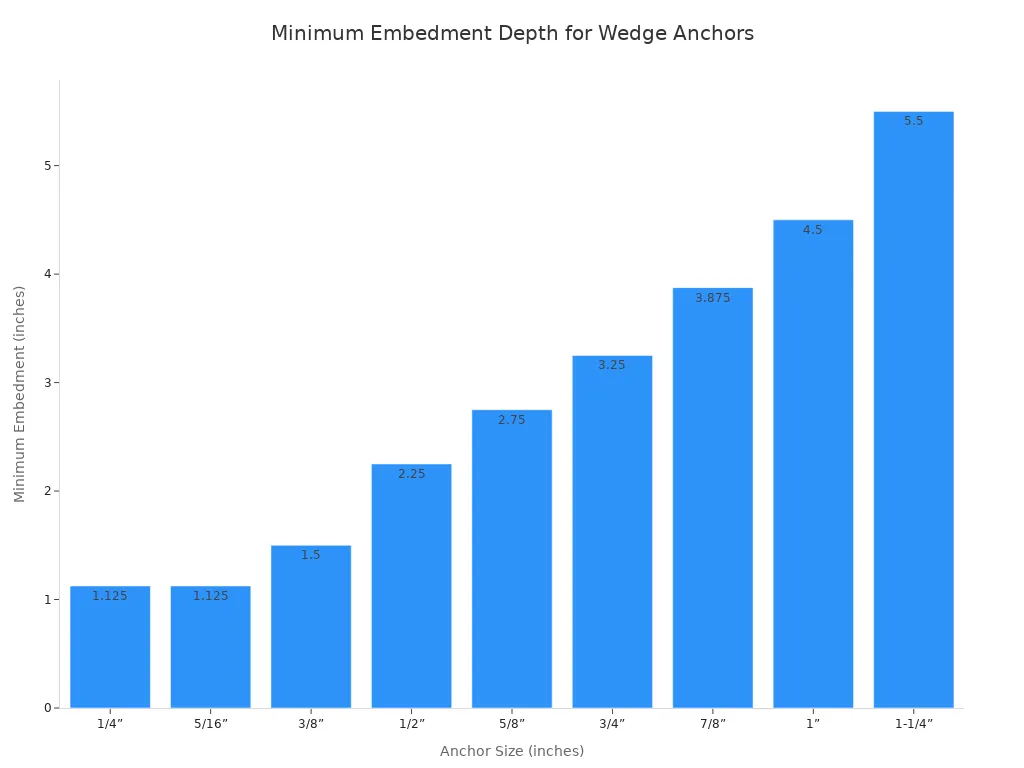
Pro Tip: Always drill the hole deeper than the minimum embedment. A common rule is to drill the hole at least 1/2″ deeper than the anchor will be embedded. This extra space, or sump, provides a pocket for dust and debris to fall into, ensuring the anchor can be inserted to the correct depth.
Techniques for Drilling a Straight Hole
A perpendicular hole is essential for proper anchor function.
- Use the depth gauge rod on the hammer drill to ensure consistent depth.
- Hold the drill firmly with both hands, keeping it perpendicular to the concrete surface.
- Apply steady, even pressure. Let the hammer drill do the work without forcing it.
- Periodically pull the bit out of the hole as you drill to help clear dust and prevent the bit from binding.
Step 2: Clean the Hole
A clean hole is not optional; it is mandatory for a safe connection. This is one of the most overlooked yet critical parts of the process.
Why Hole Cleaning is Non-Negotiable
Concrete dust and debris left in the hole act as a barrier. This debris prevents the anchor’s expansion clip from making full contact with the solid concrete walls. If dust obstructs the anchor’s full expansion, the wedge anchor can rotate in the hole during tightening, leading to a significant reduction in its holding capacity.
The Wire Brush Method
After drilling, an installer should use a wire brush with a diameter matching the hole size. Insert the brush to the bottom of the hole and twist and scrub vigorously. This action scrapes dust that is compacted against the sides of the hole.
The Compressed Air or Blower Method
Following the brushing, all loose particles must be removed. Use a can of compressed air with an extension nozzle or a manual blower bulb. Place the nozzle at the bottom of the hole and blow outwards. This forces all dust and debris up and out of the hole.
Safety First: OSHA Regulations OSHA standard 1910.242(b) states that compressed air used for cleaning must be regulated to less than 30 psi for safety. This refers to the static pressure when the nozzle is blocked. Installers must use commercially available, safety-compliant nozzles and never modify them, as this can defeat the safety mechanism and create a hazard.
The “Brush and Blow” Combination
The most effective cleaning method is a sequence of brushing and blowing. The professional standard is a “brush, blow, brush, blow” cycle.
- Brush the hole thoroughly.
- Blow the hole out completely.
- Brush the hole a second time to remove any remaining stubborn particles.
- Blow the hole out one final time to ensure it is perfectly clean.
Step 3: Insert the Wedge Anchor
With a clean, properly dimensioned hole, the anchor is ready for placement. This step involves setting the anchor to the correct depth before applying torque.
Driving the Anchor into the Hole
Place the nut on the top of the anchor, leaving it threaded on a few turns to protect the threads. Gently tap the top of the anchor with a hammer. Drive it through the fixture and into the concrete hole until the washer and nut are snug against the surface of the material being fastened.
Setting the Correct Embedment Depth
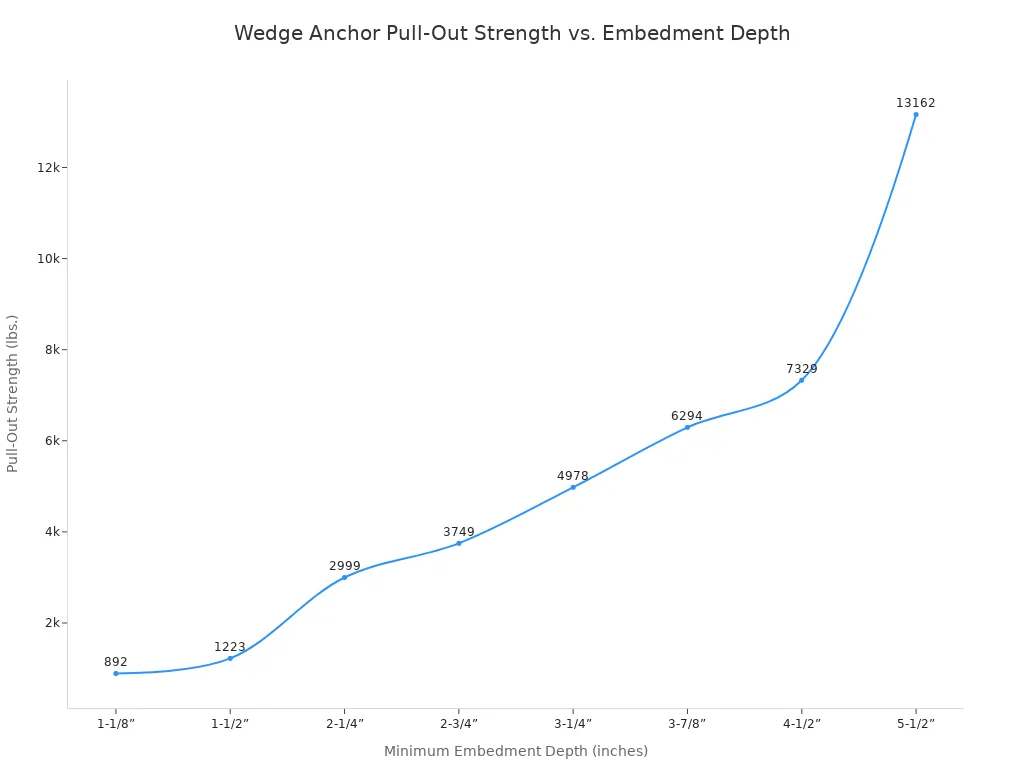
The anchor must be installed to its minimum embedment depth to achieve its rated pull-out strength. Deeper embedment generally results in higher holding values. The relationship between embedment and strength is direct and significant.
| Anchor Size | Minimum Embedment Depth | Pull-Out Strength (lbs.) |
|---|---|---|
| 1/4” | 1-1/8” | 877 |
| 5/16” | 1-1/8” | 892 |
| 3/8” | 1-1/2” | 1223 |
| 1/2” | 2-1/4” | 2999 |
| 5/8” | 2-3/4” | 3749 |
| 3/4” | 3-1/4” | 4978 |
| 7/8” | 3-7/8” | 6294 |
| 1” | 4-1/2” | 7329 |
| 1-1/4” | 5-1/2” | 13162 |
To achieve the published holding values, the anchor must be embedded into the concrete at least to this specified depth.
Placing Your Fixture Over the Anchor
Wedge anchors are designed for “through-the-fixture” installation. This means the installer drills the hole through the pre-positioned fixture and into the concrete. The anchor is then inserted through the fixture and into the hole in one continuous motion. This method ensures perfect alignment between the fixture and the anchor.
Step 4: Set the Anchor
After inserting the anchor, the next procedure is to “set” it. This action engages the anchor’s expansion mechanism, creating the initial friction against the concrete that is fundamental to its holding power. This phase prepares the anchor for final tightening.
Hand-Tightening the Nut
Using a standard wrench, an installer should tighten the nut three to four full turns past the hand-tight position. This initial tightening draws the anchor stud upward, removing any slack between the fixture, the anchor, and the concrete. The goal is to make the assembly snug, ensuring all components are in firm contact before applying the final, measured force.
How the Wedging Mechanism Works
The genius of the wedge anchor lies in its simple yet powerful mechanical design. Tightening the nut initiates a sequence of events that locks the anchor into the concrete.
- The installer tightens the nut on the threaded stud.
- This rotational force pulls the entire stud assembly upward, toward the surface.
- As the stud moves up, it forces the expansion clip at the bottom to ride up the anchor’s tapered cone.
- The clip expands outward, becoming tightly wedged between the cone and the walls of the concrete hole. This action generates immense frictional force, which is the source of the anchor’s holding capacity.
Confirming the Anchor is Set
A properly set anchor will feel solid. As the installer hand-tightens the nut, the resistance should increase steadily. The anchor should not spin in the hole. If the entire anchor assembly turns while tightening the nut, it is a clear sign of a problem. This spinning usually indicates an oversized or improperly cleaned hole, which prevents the clip from gripping the concrete. The installer must stop and diagnose the issue before proceeding.
Step 5: Apply Final Torque
Applying the correct final torque is one of the most critical steps in the entire process. This precision measurement ensures the anchor achieves its full, engineered load capacity and creates a secure, long-lasting connection. These final steps in the installation instructions must not be overlooked.
Why Using a Torque Wrench is Critical
A torque wrench is the only tool that can apply a specific, measurable amount of rotational force. Using a standard impact wrench or guessing the tightness by “feel” is a recipe for failure.
- Under-tightening leaves the connection loose. The expansion clip will not generate enough frictional force, severely reducing the anchor’s holding power and allowing the fixture to shift under load.
- Over-tightening is equally dangerous. Excessive force can crack the surrounding concrete, a failure known as cone breakout. It can also stretch the anchor’s steel stud beyond its yield point, permanently damaging the wedge anchor and compromising its integrity.
Professional Standard: A calibrated torque wrench is not optional; it is a mandatory tool for any professional installing mechanical anchors. It is the only way to guarantee the installation meets manufacturer specifications and building code requirements.
Finding the Manufacturer’s Torque Value
Torque values are not universal. They are specified by the manufacturer for each anchor diameter. An installer must always consult the manufacturer’s documentation or the ICC-ES report for the specific product being used. Using the wrong value can lead to the problems described above.
The table below shows a sample of typical installation torque values.
| Diameter (inches) | Length (inches) | Torque (Ft/Lbs) |
|---|---|---|
| 1/4 | 1-3/4 | 5-10 |
| 1/4 | 2-1/4 | 5-10 |
| 1/4 | 3 | 5-10 |
| 1/4 | 3-1/4 | 5-10 |
| 5/16 | 2-3/4 | 5-10 |
Note: Always verify the required torque for your specific anchor. These values are for illustrative purposes only.
How to Use a Torque Wrench Correctly
Using a click-style torque wrench is a straightforward process.
- Set the Torque: Adjust the handle on the wrench to the manufacturer’s specified torque value (e.g., 10 ft-lbs).
- Apply Force: Place the wrench’s socket over the anchor nut. Apply smooth, steady pressure to the handle in a single, continuous motion. Do not use jerky movements.
- Listen for the Click: Continue applying pressure until the wrench makes an audible “click” and the handle momentarily gives way.
- Stop Immediately: The click signifies that the target torque has been reached. The installer must stop tightening immediately. Applying more force after the click will over-torque the anchor.
The Science of Installing Wedge Anchors: Spacing and Edge Distance
Properly installing wedge anchors involves more than just drilling and tightening. An installer must understand the science behind anchor placement. The distance between anchors and their proximity to a concrete edge are critical factors that directly impact the safety and load-bearing capacity of the entire connection.
Minimum Anchor Spacing Requirements
Why Spacing Matters for Concrete Integrity
Each wedge anchor creates a cone-shaped zone of stress within the concrete as it bears a load. Placing anchors too close together causes these stress cones to overlap. This overlap concentrates force in a small area, which can compromise the concrete’s structural integrity and significantly reduce the holding power of the entire anchor group.
General Rules for Anchor-to-Anchor Distance
A widely accepted guideline is to maintain a minimum spacing of ten anchor diameters between anchors. For example, two 1/2″ anchors should be installed at least 5″ apart.
| Anchor Diameter | Minimum Spacing (10x Diameter) |
|---|---|
| 1/4″ | 2-1/2″ |
| 3/8″ | 3-3/4″ |
| 1/2″ | 5″ |
| 5/8″ | 6-1/4″ |
Important: This is a general rule. An installer must always consult the manufacturer’s specifications, as requirements can vary based on the anchor design, load, and the specified
minimum embedment depth.
How Load Affects Spacing
Heavier loads require greater spacing. Increased distance allows the stress from each anchor to be distributed over a larger, non-overlapping area of concrete. For critical applications, an engineer will calculate the precise spacing needed to ensure the concrete can handle the combined forces without failure.
Minimum Edge Distance Requirements
The Risk of Concrete Breakout
Placing an anchor too close to an unsupported edge of a concrete slab or wall is extremely dangerous. The expansion force of the anchor can cause a “blowout” or “breakout,” where a cone-shaped piece of concrete breaks away from the edge. This results in a complete and catastrophic failure of the anchor connection.
Calculating Safe Edge Distance
The expansion anchor industry has established a minimum standard to prevent this failure. A reliable rule of thumb for edge distance is to maintain a distance of at least five anchor diameters from any unsupported edge. Following this guideline helps ensure the anchor is surrounded by enough concrete mass to resist the expansion forces during tightening and the service loads afterward. This distance is just as important as achieving the correct minimum embedment depth.
Adjustments for Cracked vs. Uncracked Concrete
Engineers must consider whether the concrete is cracked or uncracked. Designing for uncracked concrete is only permissible if a detailed stress analysis confirms the area will remain free of tensile-induced cracks. For most situations, assuming the concrete is or will be cracked is the safer approach.
Modern fasteners, such as the SD1 concrete wedge anchor, are specifically engineered to perform reliably in both cracked and uncracked concrete conditions. Design methodologies like Strength Design use different strength reduction factors for each condition, evaluating multiple failure modes to create an optimized design. The inclusion of cracked masonry data in anchor testing criteria further shows the industry’s focus on safety. This provides engineers with the necessary data for a secure installation, as a wedge anchor can be negatively impacted by cracks. The minimum embedment depth is a key parameter in these calculations.
Common Mistakes When Installing a Wedge Anchor
Even with the right tools and materials, simple errors during installation can lead to catastrophic failure. An installer must avoid these common pitfalls to ensure a secure and reliable connection. Understanding these mistakes is a key part of properly installing wedge anchors.
Mistake 1: Incorrect Hole Dimensions
The hole is the foundation of the connection. Incorrect dimensions will compromise the entire installation.
The Problem with an Oversized Hole
A hole drilled with a worn or incorrect bit will be too large. This creates a radial gap between the anchor’s expansion clip and the concrete wall. The clip cannot expand enough to create the necessary friction. Studies show this can lead to localized concrete crushing or micro-cracking around the anchor head, which precedes a larger failure. The anchor will spin in the hole and will never achieve its rated load.
The Danger of a Shallow Hole
A hole that is not deep enough prevents the anchor from reaching its specified minimum embedment. This drastically reduces its pull-out strength. For larger anchors (5/8″ and up), installing in a shallow hole can reduce shear force resistance by approximately 20% compared to published values. The anchor’s wedging mechanism will not engage deep enough within the solid base material.
Mistake 2: Inadequate Hole Cleaning
A clean hole is non-negotiable for a safe installation. Many installers underestimate the importance of this step.
How Debris Reduces Holding Power
Concrete dust left in the hole acts like a layer of fine ball bearings. This debris prevents the expansion clip from making direct, solid contact with the concrete. The clip presses against the dust instead of the hole wall, severely limiting the frictional force the anchor can generate.
The Consequences of a Dirty Hole
When an installer is installing a wedge anchor in a dirty hole, the anchor will often spin during tightening. This is a clear sign that the clip is not gripping. The result is a connection with a dangerously low holding value, making it susceptible to failure under even light loads.
Mistake 3: Improper Torque Application
Applying the correct torque is a precision step. Both too much and too little force will cause the connection to fail.
The Signs of an Over-Torqued Anchor
Over-tightening an anchor with an impact wrench or by “feel” can destroy the connection. The excessive force can cause several types of failure:
- Concrete Cone Failure: The stress exceeds the concrete’s strength, causing a cone-shaped piece of the base material to break away.
- Steel Failure (Tensile): The anchor stud itself fractures, often at its smallest cross-section, leaving part of the anchor stuck in the hole.
- Steel Failure (Shear): The anchor bolt snaps at the surface of the concrete when subjected to extreme side loads.
The Risk of an Under-Torqued Anchor
An under-torqued anchor is a loose anchor. Insufficient tightening means the expansion clip is not fully engaged against the concrete. The connection will have significantly reduced holding power and may loosen further over time, especially when subjected to vibration.
Mistake 4: Hitting Rebar During Drilling
Drilling into reinforced concrete presents a common challenge: hitting steel rebar. This obstruction is not just an inconvenience; it is a critical structural component of the concrete. An installer’s response to hitting rebar determines the safety of the installation and the integrity of the base material. Attempting to force a standard carbide bit through steel is a significant error that can lead to bit failure and potential structural damage.
How to Identify and Handle Rebar Hits
An operator can easily identify a rebar strike through several distinct signs. Recognizing these signals immediately is the first step in proper handling.
- Sudden Stop: The hammer drill will abruptly stop advancing into the concrete, despite the motor running.
- Change in Sound: The grinding noise of drilling concrete will change to a high-pitched metallic ringing or screeching sound.
- Lack of Dust: The creation of concrete dust will cease, as the bit is no longer pulverizing the base material.
Immediate Action: The moment an installer suspects a rebar hit, they must stop drilling immediately. Continuing to apply force will overheat and destroy the carbide tip of the drill bit. It will not cut the rebar and only risks damaging the tool and the structural steel.
Relocating the Hole vs. Specialized Drilling
Once drilling has stopped, the installer has two primary options. The correct choice depends on the project’s engineering requirements and flexibility.
1. Relocate the Hole (Recommended Method) For most applications, the safest and simplest solution is to abandon the obstructed hole and drill a new one. The installer must move the anchor location according to established spacing guidelines. A new hole must be drilled at a sufficient distance from the original hole to avoid overlapping stress zones.
Pro Tip: A new hole should be located at least two times the embedment depth away from the abandoned hole. This ensures each location maintains its own structural integrity. Always check project specifications for precise requirements.
2. Use a Specialized Rebar-Cutting Bit (Expert Use Only) In rare cases where the anchor location is absolutely fixed, an installer may need to drill through the rebar. This requires a specialized drill bit designed to cut through steel.
| Action | When to Use | Key Consideration |
|---|---|---|
| Relocate Hole | Most situations; flexible fixture placement. | Easiest, safest, and preserves structural integrity. |
| Drill Through Rebar | Fixed anchor points; no other option. | ⚠️ Requires explicit approval from a structural engineer. |
Cutting rebar is a serious structural modification. It can weaken the concrete’s tensile strength and should never be done without an engineer’s direct approval. The engineer will determine if cutting a specific piece of rebar is acceptable for the structure’s overall design. Unauthorized cutting can compromise the safety of the entire concrete element.
A successful wedge anchor installation depends on precision at every stage. An installer can achieve a perfect result by following a final checklist for the installation process:
- Drill a correctly sized and dimensioned hole.
- Clean all dust and debris from the hole.
- Set the anchor to the required embedment depth.
- Apply the specified torque with a calibrated wrench.
The golden rule remains constant: Always follow the manufacturer’s specifications for the specific anchor being used.
Properly installing wedge anchors is the only way to guarantee a safe and reliable connection.
FAQ
Can an installer reuse a wedge anchor?
No. An installer must never reuse a wedge anchor. The removal process damages the expansion clip and can stretch the anchor’s threads. Reusing a compromised anchor creates a significant safety risk and will lead to connection failure.
What happens if an anchor spins in the hole?
Spinning indicates a problem. The hole is likely oversized or contains debris. This prevents the expansion clip from gripping the concrete. The installer must abandon the hole, diagnose the cause, and drill a new hole in a different location.
Is a torque wrench really necessary?
Yes. A torque wrench is mandatory for a safe installation. It is the only tool that ensures the installer applies the precise force required by the manufacturer. Guessing tightness leads to under-torqued or over-torqued anchors, both of which are unsafe.
Can wedge anchors be used in brick or block?
No. Wedge anchors are designed exclusively for solid concrete. The high expansion forces they generate will crack or break weaker base materials like brick, cinder block, or hollow concrete block. An installer should use sleeve anchors for these materials.
How long should an installer wait to install anchors in new concrete?
An installer must wait for new concrete to cure fully. Concrete typically requires a minimum of 28 days to reach its designed compressive strength. Installing an anchor in “green” or uncured concrete will result in a failed connection.
What is the difference between a wedge anchor and a sleeve anchor?
A wedge anchor provides superior holding power in solid concrete through a small, powerful expansion clip. A sleeve anchor uses a larger expansion sleeve, making it suitable for softer or more brittle materials like brick and block where lower stress is required.
Why did the concrete crack around the anchor?
Concrete cracking usually results from two errors:
- The anchor was installed too close to an edge.
- The installer applied excessive torque.
Both mistakes create stress that exceeds the concrete’s strength, causing it to fail.