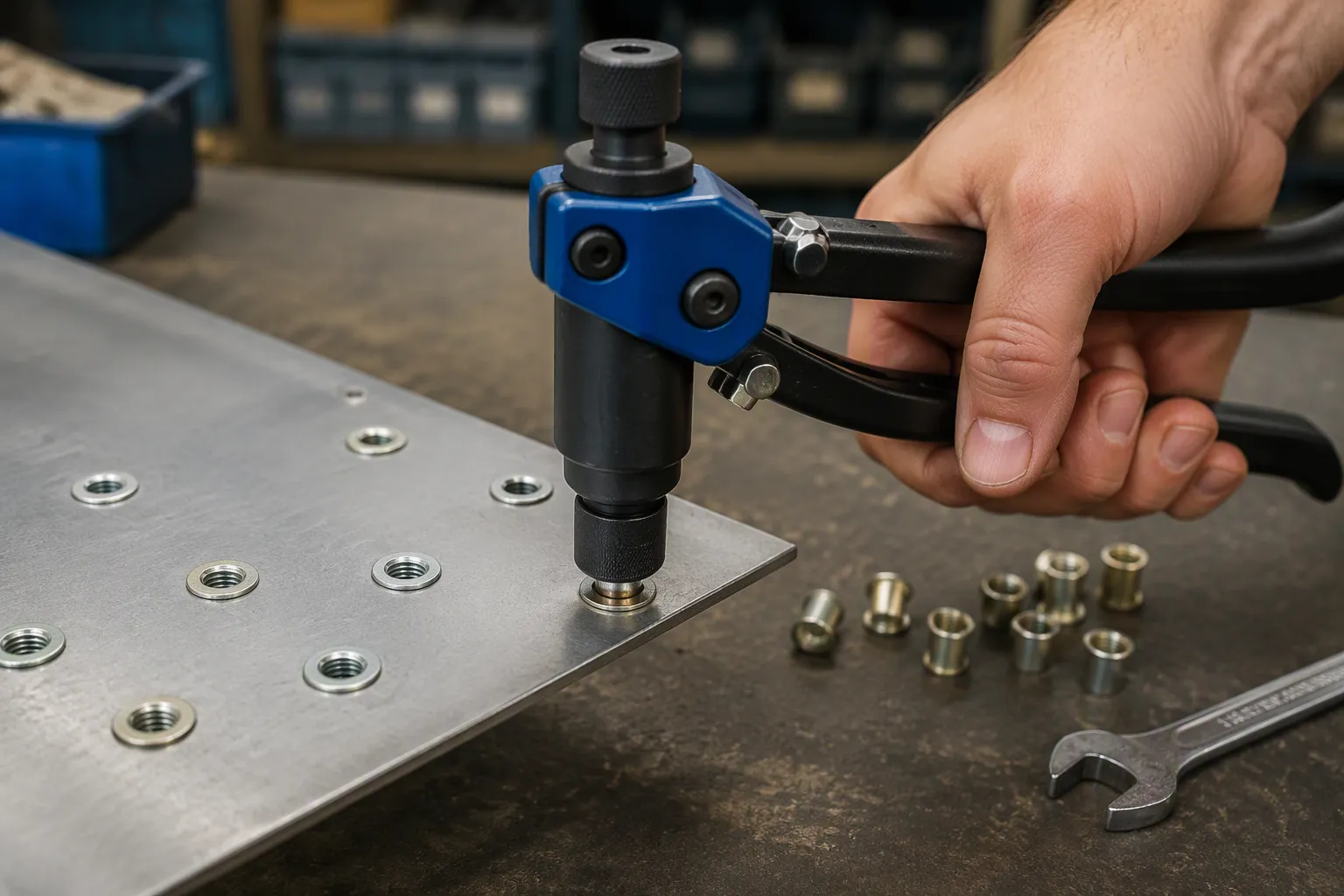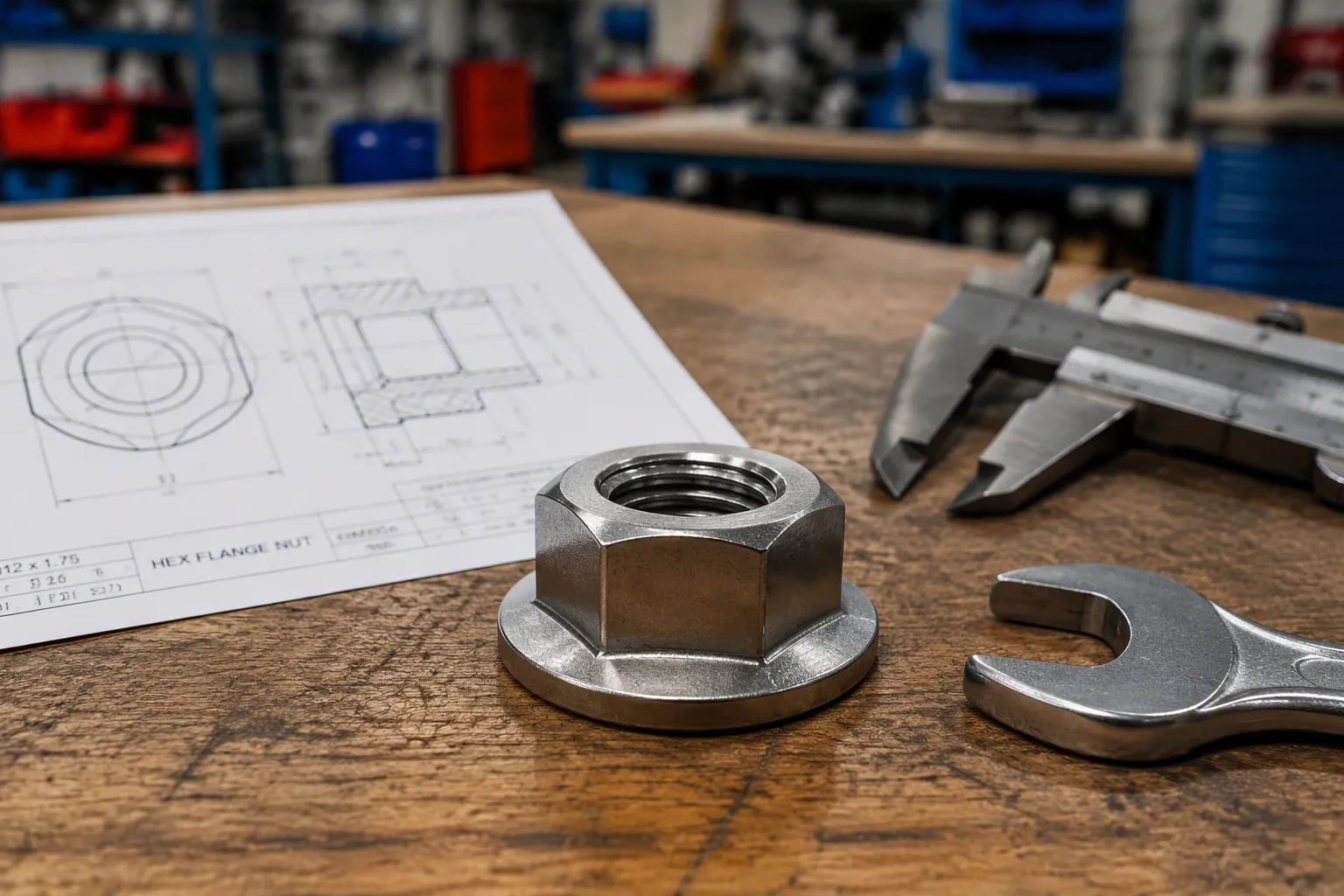
Selecting the proper заклёпочная гайка for any project improves reliability and strength compared to гаек и болтов or other fastening methods. Rivet nuts offer secure attachment in thin or soft materials, making them essential when traditional fasteners cannot perform. Many производитель крепежных изделий на заказ options exist for нестандартные крепежные элементы, but choosing the right rivnut requires attention to grip range, hole size, body type, head style, and material compatibility. The table below shows key advantages of rivet nuts:
| Преимущество | Описание |
|---|---|
| No Welding Required | Ideal for projects lacking access to welding equipment. |
| Простота монтажа | Can be quickly installed using hand or power tools. |
| Versatile Applications | Effective in thin or soft materials where traditional threading is not possible. |
| Installed Blind | Only requires access from one side of the workpiece for installation. |
| Съёмные | Allows for disassembly and reassembly without damaging surrounding material. |
| Small Footprint | Installation requires minimal space compared to welding setups. |
| Can be Installed Post Paint | Prevents issues with paint chipping or discoloration after installation. |
Understanding Rivet Nuts and Choosing the Right Rivnut
What Are Rivet Nuts?
Definition and Function
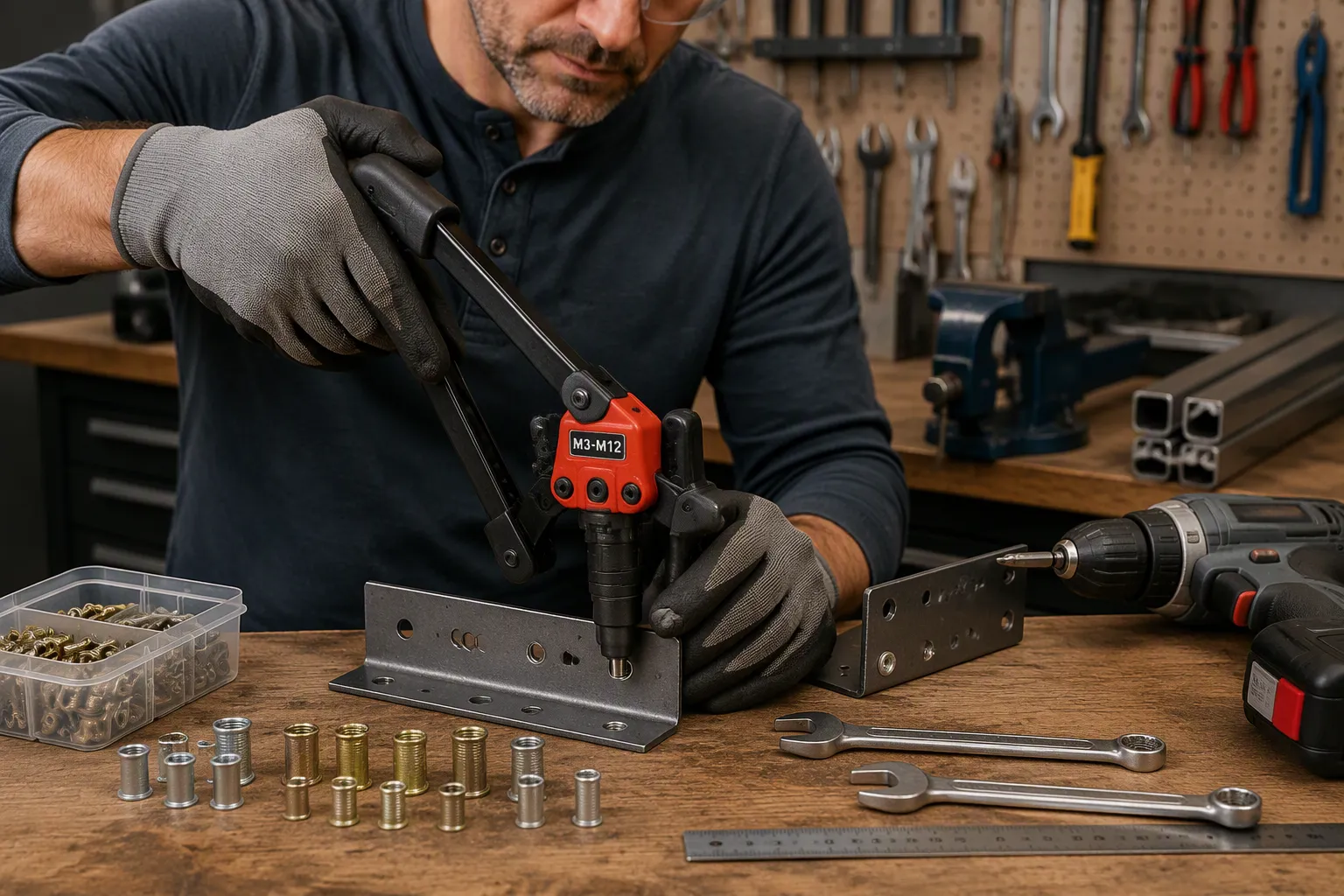
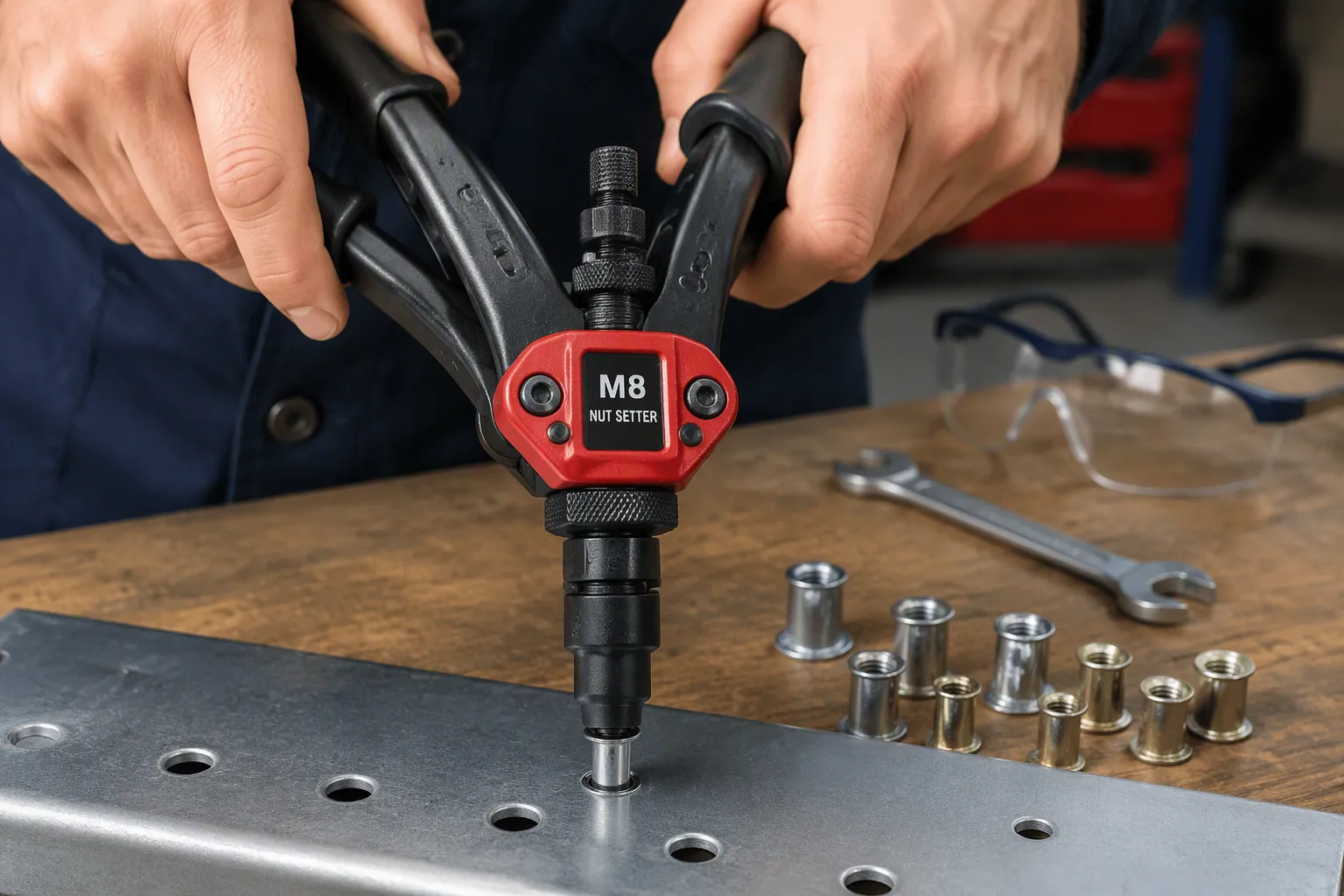
Rivet nuts, also known as blind threaded inserts, serve as fasteners that create strong, reusable threads in thin or soft materials. They install from one side of the workpiece, making them ideal for situations where access is limited. The installer places the rivet nut into a pre-drilled hole and uses a tool to collapse the body, forming a secure anchor. This process transforms the cylindrical body into a compressed bulb, distributing load across a larger surface area. Such load distribution prevents tear-out and distortion, especially in thin materials.
Типовое применение
Rivet nuts appear in a wide range of industries and applications. They fasten electrical boxes, HVAC components, and panels in infrastructure projects. Automotive manufacturers use rivet nuts for body assembly, mounting accessories, and chassis components. Aerospace engineers rely on them to secure instrument panels and ducting, valuing their strength and lightweight properties. Other industries include:
- Construction equipment
- Oil and gas applications
- Marine equipment manufacturing
- Medical equipment manufacturing
- Military equipment manufacturing
- Restaurant equipment manufacturing
- Window manufacturing
Why Choosing the Right Rivnut Matters
Performance and Safety
Choosing the right rivnut directly impacts the safety and performance of an assembly. Professional engineers analyze the complete load path when specifying rivet nuts. The joint efficiency depends on the fastener’s ultimate strength and how loads transfer through the connection. Eccentric loading conditions require careful consideration of both tensile and shear forces. Pull-through failures often result from inadequate material thickness or excessive load. Stress concentration around the hole edge can reduce apparent material strength. Selecting the correct rivet nut prevents these issues and ensures reliable fastening.
The installation process transforms the cylindrical body into a compressed bulb. This distributes load across a larger surface area compared to the original hole diameter. Such load distribution is critical in thin materials, where point loads could lead to tear-out or distortion.
Application Versatility
Rivet nuts offer versatility across many applications. Manufacturers produce several types, each with unique features. The table below highlights the main types and their differences:
| Тип | Описание |
|---|---|
| Thick wall inserts | Developed for airplane manufacturing, available in various sizes and materials. |
| Thin wall inserts | Lighter and thinner, available in closed-end designs with weather-resistant coatings. |
| Slotted body inserts | Feature slots that collapse on the blind side when installed. |
| Euro-style inserts | Use metric measurements, available in round and hexagonal bodies. |
| Stud-style inserts | Designed for applications requiring a nut instead of a bolt, featuring a solid threaded stud. |
| Well Nut | Creates a waterproof, vibration-resistant seal as it expands when tightened. |
| Molly Jack | Collapses on the blind side to form a reusable threaded insert, ideal for soft materials. |
Choosing the right rivnut ensures the fastener matches the demands of the specific application, whether the project requires vibration resistance, waterproofing, or compatibility with soft materials.
Rivnut Types and Their Applications
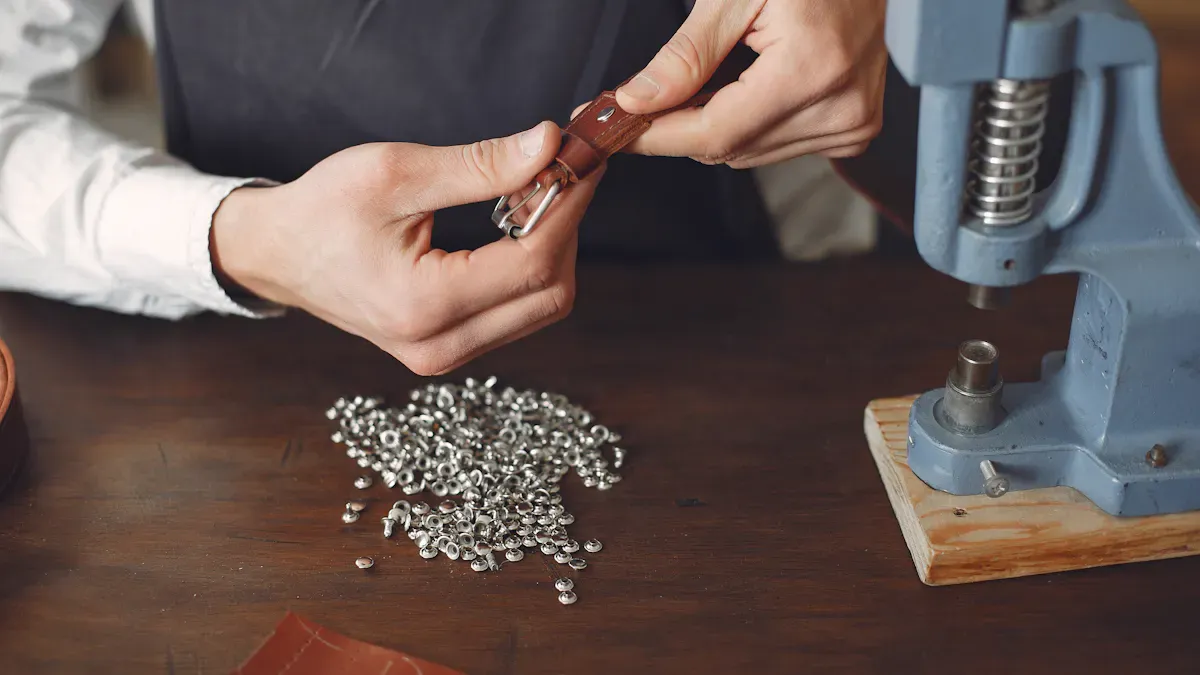
Body Shapes
Rivet nuts come in several body shapes, each designed for specific installation needs and material types. Selecting the right body shape ensures optimal grip and performance in the intended application.
Round Body Rivet Nuts
Round body rivet nuts provide a versatile solution for many projects. Manufacturers often recommend these for use in tubes and panels. The round shape allows easy installation in pre-drilled holes and offers reliable performance in thin materials. These rivet nuts work well in general-purpose applications where high torque resistance is not critical.
Hex Body Rivet Nuts
Hex body rivet nuts feature a hexagonal exterior that fits into a matching hex hole. This design prevents the fastener from spinning during installation or use. Hex body styles are ideal for enclosures and thicker materials, especially when the application requires high torque resistance. Many engineers choose this type for electrical cabinets and heavy-duty panels.
Knurled Body Rivet Nuts
Knurled body rivet nuts include ridges or knurls along the body. These ridges grip the material and prevent rotation, even in softer substrates. Knurled designs suit applications where vibration or movement could loosen a standard round body. Installers often use them in automotive and machinery assemblies.
Tip: Choosing the correct body shape improves installation speed and reduces the risk of fastener failure.
| Body Shape | Применение |
|---|---|
| Round body | Suitable for tubes and panels |
| Hex body | Used in enclosures and thicker materials |
| Knurled body | Ideal for vibration-prone or soft materials |
Типы головок
Стандарт DIN 933: объяснение head style of a rivet nut affects both the installation process and the finished appearance. Selecting the right head style ensures the fastener sits correctly and meets the visual or structural requirements of the project.
Flat Head Rivet Nuts
Flat head rivet nuts sit flush with the work surface. This design provides a stable bearing surface and distributes load evenly. Flat head styles are common in automotive interiors, appliance panels, and enclosures.
Countersunk Head Rivet Nuts
Countersunk head rivet nuts fit into a pre-drilled chamfer, creating a completely flat appearance. This style is popular in furniture, machine panels, and decorative surfaces where a smooth finish is important.
Low Profile Head Rivet Nuts
Low profile head rivet nuts, sometimes called reduced head, have a smaller flange diameter. They fit tight spaces and minimize protrusion above the surface. Electronics housings and light machinery components often use this style.
| Тип головки | Описание | Типичное применение |
|---|---|---|
| Flat Head Rivet Nut | Sits flush with the work surface, providing a stable bearing surface. | Automotive interiors, appliance panels, enclosures |
| Reduced Head Rivet Nut | Smaller flange diameter, ideal for tight spaces. | Electronics housings, light machinery components |
| Countersunk Head Rivet Nut | Fits into a pre-drilled chamfer for a completely flat appearance. | Furniture, machine panels, decorative surfaces |
Open vs. Closed End Rivet Nuts
Blind rivet nuts are available in both open and closed end designs. The choice between these two affects environmental protection and application flexibility.
Open End Rivet Nuts
Open end rivet nuts allow the fastener or bolt to pass completely through the center. This design offers flexibility for various lengths of fasteners and is suitable for most general applications. However, open end styles provide less protection against moisture or debris.
Closed End Rivet Nuts
Closed end rivet nuts seal the bottom of the insert. This feature prevents fluid or debris from entering the assembly, making them ideal for water control or environments exposed to contaminants. The closed end design offers enhanced environmental protection but may limit the length of the fastener used.
| Тип | Преимущества | Недостатки |
|---|---|---|
| Closed-End | Seals the bottom, preventing fluid or debris ingress | Less flexibility in applications |
| Open-End | Allows full passage through the center | Offers less environmental protection |
Note: Always match the rivet nut type to the specific needs of the project for best results.
Determining the Correct Size and Grip Range for Rivet Nuts
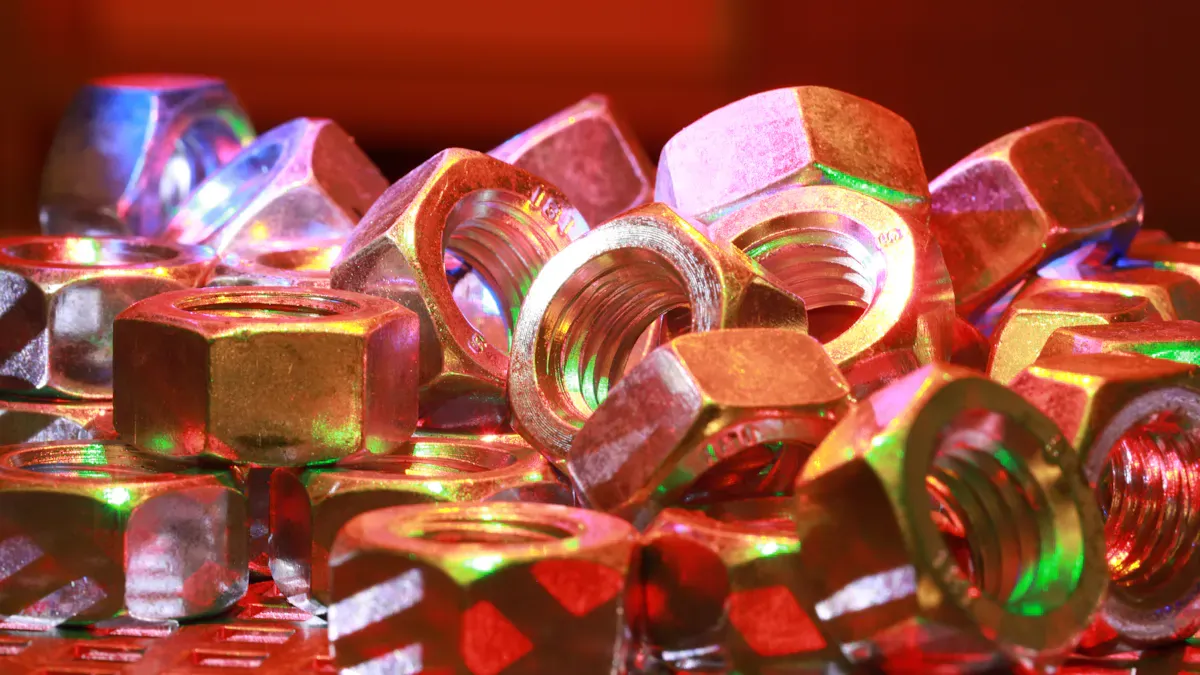
Выбор correct size and grip range for rivet nuts ensures a secure and reliable connection. Proper sizing prevents installation issues and extends the lifespan of the assembly. This section explains how to measure hole size, determine grip range, and select the right thread size for your application.
Measuring Hole Size
How to Measure the Hole
Accurate hole measurement forms the foundation of successful rivet nut installation. Installers should use a caliper or precision gauge to measure the diameter of the pre-drilled hole. The hole must accommodate the rivet nut body without excessive play or tightness.
- The hole should be slightly larger than the diameter of the rivet body.
- For example, a 4.8mm rivet may require a 5.0mm hole.
- Always consult the manufacturer’s datasheet for specific hole size recommendations.
Tip: A properly sized hole reduces the risk of rotation and ensures the rivet nut forms a strong anchor during installation.
Matching Rivet Nut Diameter to Hole Size
Matching the rivet nut diameter to the hole size is critical for meeting installation requirements. If the hole is too small, the rivet nut will not fit or may deform during insertion. If the hole is too large, the rivet nut may spin or fail to grip the material. Manufacturers provide recommended hole diameters for each rivet nut size. Always verify these values before drilling.
Understanding Grip Range
Measuring Material Thickness
Grip range refers to the total thickness of the material stack that the rivet nut will fasten. Installers should measure the combined thickness of all layers, including any coatings or finishes. Use a micrometer or caliper for precise measurement. Accurate measurement ensures the rivet nut will deform correctly and provide maximum holding power.
Selecting the Right Grip Range
Choosing the correct grip range is essential for proper installation and long-term performance. The grip range must match the material thickness to avoid joint failure. Consider the following points:
- The grip range is defined as the total thickness of the joined parts, which is essential for proper installation and performance.
- If the grip range is too low, the rivet will not hold correctly, leading to potential failures.
- If the grip range is too high, the rivet will not fit, which can also result in installation issues.
- Accurate calculations of the grip range help avoid defects and reduce repair costs.
- Factors such as surface coatings and manufacturing tolerances must be considered when determining the grip range.
The risks of selecting an incorrect grip range include:
| Risk Description | Evidence |
|---|---|
| Reduced Locking Power | Insufficient deformation can lead to gaps between the nut and hole, causing instability and potential failure of the joint. |
| Loosening Under Vibration | Micro-movement in the hole can cause loosening, leading to unreliable joints that may fail under load. |
| Decreased Structural Reliability | When the grip range is exceeded, tensile strength can drop by 30%-50%, increasing the risk of rotation or detachment. |
Note: Always account for any paint, plating, or gasket thickness when calculating the total grip range.
Thread Size Selection
Standard Thread Sizes
Thread size selection determines compatibility with the fastener or bolt used in the assembly. Rivet nuts come in both Unified (inch) and metric thread sizes. Common sizes include:
- Standard/Unified Rivet Nut Thread Sizes: 4-40, 6-32, 8-32, 10-32, 10-24, 1/4-20, 1/4-28, 5/16-18, 5/16-24, 3/8-16, 3/8-24, 1/2-13, 1/2-20
- Metric Rivnut Thread Sizes: M3, M4, M5, M6, M8, M10, M12
Selecting the correct thread size ensures the fastener will engage properly and provide the required strength.
Matching Thread Size to Fastener
Installers should match the thread size of the rivet nut to the bolt or screw used in the application. Using mismatched threads can cause stripping, cross-threading, or joint failure. Always verify thread compatibility before installation. A rivet nut tool can help ensure proper alignment and engagement during installation.
Proper thread selection and sizing contribute to the overall strength and reliability of the finished assembly.
Choosing the Right Material for Rivet Nuts
Common Rivet Nut Materials
Выбор correct material for rivet nuts determines the durability and performance of the fastening solution. Engineers evaluate mechanical properties, corrosion resistance, and application requirements before making a choice.
Steel Rivet Nuts
Steel rivet nuts deliver high mechanical strength and reliability. Manufacturers often use them in construction, automotive, and oil and gas industries. Galvanized steel provides moderate corrosion resistance, but harsh environments may require additional coatings. Steel distributes load efficiently through controlled plastic deformation, which prevents point load failures in thin materials.
Нержавеющие заклёпочные гайки
Stainless steel rivet nuts offer excellent corrosion resistance and very high mechanical load capacity. These fasteners perform well in outdoor, marine, and food industry applications. Stainless steel maintains its geometry under stress, ensuring consistent torque and reliable clamping force. Engineers select stainless steel for environments exposed to moisture or chemicals.
Aluminum Rivet Nuts
Aluminum rivet nuts weigh less than steel or stainless steel. Their good corrosion resistance makes them suitable for lightweight constructions and e-mobility projects. Aluminum fasteners provide moderate strength and resist environmental deterioration. Designers choose aluminum when weight reduction is critical.
Brass Rivet Nuts
Brass rivet nuts combine moderate strength with good corrosion resistance. They appear in decorative applications and plumbing. Brass offers a visually appealing finish and resists tarnishing. Installers use brass in projects where aesthetics and durability matter.
Tip: Always match the rivet nut material to the demands of the application for optimal performance.
| Материал | Прочность | Коррозионная стойкость | Применение |
|---|---|---|---|
| Сталь | Высокая | Moderate (with coatings) | Construction, automotive, oil and gas |
| Нержавеющая сталь | Очень высокий | Отличная | Outdoor, food industry, shipbuilding |
| Алюминий | Умеренная | Хорошая | Lightweight constructions, e-mobility |
| Латунь | Умеренная | Хорошая | Decorative applications, plumbing |
Совместимость материалов
Material compatibility affects the long-term reliability of rivet nuts in assemblies. Engineers consider both mechanical and chemical interactions between fastener and substrate.
Preventing Galvanic Corrosion
Galvanic corrosion occurs when dissimilar metals contact each other in the presence of moisture. This process leads to deterioration of one metal. Best practices include:
- Electrical insulation: Use plastic or nylon washers, rubber gaskets, or insulating sleeves to break the electrical path.
- Moisture management: Apply water-repellent paints, oils, or coatings to prevent moisture from acting as an electrolyte.
- Design considerations: Position anodic metals downstream of cathodic metals and ensure proper drainage to avoid water accumulation.
Matching Strength Requirements
Engineers match rivet nut material to the strength requirements of the assembly. Steel provides high strength for load-bearing applications. Stainless steel offers superior performance in harsh environments. Aluminum suits lightweight projects but has lower strength. Brass works well for decorative or plumbing uses.
| Тип материала | Ключевые соображения |
|---|---|
| Сталь | General use, good strength, may require coating for corrosion resistance. |
| Нержавеющая сталь | Preferred for harsh environments due to высокую коррозионную стойкость. |
| Алюминий | Lightweight, good for applications where weight is a concern, but lower strength. |
Экологические соображения
Environmental factors influence material selection for rivet nuts. Moisture, chemicals, and temperature affect fastener performance.
Коррозионные среды
Wet or corrosive environments demand rivet nuts made from stainless steel or coated carbon steel. These materials resist deterioration and maintain structural integrity. Designers avoid using uncoated steel in such conditions.
Применение в условиях высоких температур
High-temperature applications require rivet nuts that retain mechanical properties under heat. Stainless steel performs well in elevated temperatures. Aluminum may lose strength when exposed to extreme heat. Brass maintains stability in moderate temperature ranges.
Note: Engineers evaluate local climate and fabrication processes to ensure rivet nuts withstand environmental challenges.
Application-Specific Considerations When Choosing the Right Rivnut
Industry Requirements
Automotive Applications
Automotive engineers rely on rivet nuts for assembling body panels, mounting brackets, and securing interior components. These fasteners provide strong threads in thin sheet metal, which is common in vehicle construction. High vibration environments demand secure fastening, so selecting the correct body shape and material is essential. Hex or knurled body styles often prevent rotation under stress. Stainless steel or coated steel options resist corrosion from road salt and moisture.
Aerospace Applications
Aerospace projects require lightweight and high-strength solutions. Rivet nuts made from aluminum or stainless steel meet strict weight and durability standards. Engineers select closed-end designs to prevent fluid ingress in sensitive areas. Precision in installation ensures safety and compliance with industry regulations. Aerospace assemblies often use metric threads for compatibility with international standards.
Electronics and Enclosures
Electronics manufacturers use rivet nuts to create strong threads in enclosures and panels. These fasteners allow for repeated access during maintenance without damaging the housing. Low profile or countersunk head styles maintain a flush finish, which is important for compact devices. Brass or stainless steel materials resist corrosion and provide electrical conductivity when needed.
DIY and Home Projects
DIY enthusiasts and home repair professionals value rivet nuts for their versatility. These fasteners enable secure mounting in furniture, shelving, and fixtures where access is limited. Simple installation with hand tools makes them accessible for non-industrial users. Aluminum or steel options suit most household applications.
Факторы окружающей среды
Использование внутри и снаружи помещений
Outdoor installations expose fasteners to moisture, temperature changes, and UV radiation. Stainless steel or coated steel rivet nuts offer superior resistance to rust and degradation. Indoor environments present fewer challenges, so aluminum or brass may suffice for light-duty tasks.
Exposure to Chemicals or Moisture
Industrial settings often involve exposure to chemicals, oils, or water. Stainless steel provides the best resistance in these conditions. Closed-end designs further protect the threads from contamination. Selecting the right material prevents premature failure and ensures long-term reliability.
Load and Performance Needs
Прочность на срез и растяжение
Engineers assess both shear and tensile loads when specifying rivet nuts. Shear strength measures resistance to forces parallel to the surface, while tensile strength measures resistance to forces pulling away from the surface. Steel and stainless steel options deliver the highest performance in demanding applications. Proper sizing and grip range selection maximize load capacity.
Устойчивость к вибрации
Vibration can loosen fasteners over time. To address this, professionals follow several best practices:
| Recommended Practice | Описание |
|---|---|
| Select the right rivet nut | Ensure the rivet nut matches the material’s thickness and load requirements to prevent pull-out. |
| Use appropriate tools | Invest in a high-quality rivet nut tool and ensure the mandrel is the correct size to avoid breakage and ensure proper installation. |
| Avoid common installation issues | Ensure the hole size matches specifications, use a knurled body for soft materials, and lubricate the mandrel to prevent stripping and spinning. |
Knurled body styles and correct hole sizing help prevent rotation and loosening in high-vibration environments.
Возможность повторного использования и обслуживание
Some applications require frequent disassembly for inspection or repair. Rivet nuts allow for repeated use without damaging the base material. Selecting the correct thread size and material ensures the fastener maintains integrity through multiple cycles. Proper installation with quality tools further extends the lifespan of the assembly.
Tip: Always match the rivet nut type and material to the specific demands of the application for optimal performance and longevity.
Selecting Quality and Reliable Suppliers for Rivet Nuts
Choosing a supplier for rivet nuts requires careful evaluation of certifications, product quality assurance, and supply chain reliability. Reliable suppliers help ensure consistent performance and safety in every project.
Supplier Certifications
Сертификация ISO
Suppliers with ISO certifications demonstrate commitment to quality management and compliance. ISO 9001 focuses on quality management systems, risk management, and continuous improvement. ISO 14001 addresses environmental policy and monitoring. ISO 45001 covers hazard identification and worker participation. These certifications indicate that a supplier follows international standards and maintains high-quality processes.
Industry-Specific Standards
Industry-specific standards such as ISO 898, ISO 10683, and ISO 4042 ensure material specifications, coating thickness, and corrosion protection. These standards guarantee that rivet nuts meet the requirements for hardness, dimensional accuracy, and durability. The table below summarizes key certifications and their requirements:
| Сертификация | Key Requirements |
|---|---|
| ISO 9001 | Quality management systems, risk management, customer focus, continuous improvement |
| ISO 14001 | Environmental policy, compliance obligations, monitoring and measurement |
| ISO 45001 | Hazard identification, legal compliance, worker participation |
| ISO 898 | Material specifications, hardness testing, dimensional accuracy |
| ISO 10683 | Coating thickness, adhesion testing, corrosion resistance |
| ISO 4042 | Coating uniformity, hydrogen embrittlement, corrosion protection |
Product Quality Assurance
Material Traceability
Material traceability plays a crucial role in quality-critical industries. Suppliers must provide complete documentation for fasteners, ensuring that each rivet nut can be traced back to its source. This practice helps maintain quality and supports compliance with industry regulations.
Consistent Manufacturing Standards
Consistent manufacturing standards guarantee that rivet nuts perform reliably in every application. Suppliers invest in quality control measures and select materials that match the demands of the project. The right tool for installation must meet quality requirements. Tools with integrated process monitoring detect assembly errors and support quality assurance.
- Complete documentation of fasteners is essential in quality-critical industries.
- The right tool must meet quality requirements.
- Tools with integrated setting process monitoring can detect assembly errors and ensure quality assurance.
Надежность цепочки поставок
Lead Times and Availability
Supply chain reliability depends on production capacity, timely deliveries, and consistent quality. Suppliers with robust production capabilities can meet project deadlines and avoid delays. Material selection and investment in quality also impact supply chain performance.
Customer Support and Technical Assistance
Customer support and technical assistance help resolve issues quickly and ensure smooth project execution. Reliable suppliers offer guidance on material selection, tool compatibility, and installation procedures. Quality control measures and timely deliveries contribute to overall supply chain reliability.
Tip: Evaluate suppliers based on certifications, product quality assurance, and supply chain reliability to ensure the best results for your project.
Common Mistakes to Avoid When Choosing the Right Rivnut
Selecting rivet nuts for a project requires careful attention to detail. Many installers and engineers encounter issues that compromise the integrity and safety of their assemblies. Understanding these common mistakes helps prevent costly errors and ensures reliable performance.
Incorrect Sizing
Incorrect sizing stands as one of the most frequent mistakes in rivet nut selection. When the hole diameter does not match the rivet nut dimensions, several problems can arise. The nut may turn with the workpiece, or it may pull crooked during installation. These issues often result from miscalculating grip range or disregarding manufacturer recommendations. Installers must measure the hole accurately and verify the nut size before proceeding.
Tip: Always use a caliper or precision gauge to check hole diameter. Position the installation tool perpendicularly to the workpiece to avoid crooked pulls.
Improper sizing can lead to premature failure. Low-strength fasteners may not withstand the loads required in demanding applications. Joint loosening, fractures, and fatigue failures can occur, especially when the grip range is miscalculated. These failures may cause catastrophic accidents and significant financial liabilities.
Material Mismatch
Material mismatch poses another risk in rivet nut installations. Selecting a fastener with insufficient strength can compromise the entire assembly. For example, using a low-grade bolt instead of a high-grade one may result in structural failures. The consequences include joint loosening and fractures, particularly in high-demand environments.
Installers must consider material compatibility and strength requirements. Neglecting these factors can damage the workpiece or reduce the lifespan of the fastener. Engineers recommend matching the rivet nut material to the substrate and application needs.
- Not considering material strength
- Neglecting load requirements
- Disregarding manufacturer recommendations
Note: Always verify the mechanical properties of both the rivet nut and the substrate to prevent material mismatch.
Overlooking Application Requirements
Overlooking application requirements often leads to unreliable installations. Each project presents unique demands, such as vibration resistance, environmental exposure, or repeated maintenance. Failing to account for these factors can result in damaged materials or ineffective fastening.
Installers should seek professional guidance and review manufacturer specifications. Lacking this information increases the risk of errors. Engineers recommend evaluating the load path, environmental conditions, and maintenance needs before selecting rivet nuts.
- Miscalculating grip range
- Lacking professional guidance
- Disregarding hole size
Callout: Review all project requirements and consult with experts to ensure the rivet nut matches the application.
By avoiding these common mistakes, installers and engineers can achieve secure, durable, and safe assemblies.
Ignoring Supplier Reputation
Many engineers and procurement specialists overlook supplier reputation when selecting rivnuts. This oversight can lead to significant project risks. Supplier reputation reflects a company’s history of quality, reliability, and customer service. A reputable supplier consistently delivers products that meet specifications and deadlines. Ignoring this factor exposes projects to delays, inconsistent quality, and even safety hazards.
A supplier with a poor reputation may cut corners during manufacturing. They might use substandard materials or skip essential quality checks. These shortcuts can result in rivnuts that fail under load or corrode prematurely. In critical applications, such as automotive or aerospace, a single faulty fastener can compromise the entire assembly.
Совет: Always research a supplier’s track record before placing an order. Look for customer reviews, industry awards, and case studies that demonstrate reliability.
Procurement teams should consider several key indicators of supplier reputation:
- Customer Feedback: Positive reviews and testimonials indicate consistent satisfaction. Negative feedback often signals recurring issues.
- Industry Certifications: Reputable suppliers maintain certifications like ISO 9001 or industry-specific standards. These credentials show commitment to quality.
- Longevity in the Market: Suppliers with many years in business have proven their ability to meet customer needs over time.
- After-Sales Support: Reliable suppliers offer technical assistance and resolve issues quickly.
The table below summarizes the risks of ignoring supplier reputation:
| Риск | Impact on Project |
|---|---|
| Inconsistent Product Quality | Increased failure rates and rework costs |
| Delayed Deliveries | Missed deadlines and project overruns |
| Poor Communication | Difficulty resolving technical or logistical issues |
| Lack of Traceability | Challenges in meeting regulatory requirements |
A project manager who ignores supplier reputation may face unexpected costs. These can include replacing defective rivnuts, halting production lines, or addressing warranty claims. In regulated industries, using non-compliant fasteners can result in legal penalties or product recalls.
Selecting a reputable supplier protects the project’s timeline, budget, and safety. Teams should verify supplier credentials, request product samples, and consult industry peers. By prioritizing supplier reputation, organizations ensure that every rivnut meets the highest standards.
Примечание: A strong supplier relationship supports long-term success and reduces risk across all future projects.
Quick Reference Checklist for Choosing the Right Rivnut
Step-by-Step Selection Guide
A quick reference checklist streamlines the process of selecting rivet nuts for any project. Engineers and installers benefit from following a structured approach to ensure reliable fastening and efficient installation. The following steps guide professionals through the selection process:
Choose the Right Type
Decide between round body or hex body rivet nuts. The material of the workpiece influences this choice. Round body rivet nuts suit tubes and panels, while hex body options prevent rotation in thicker materials.Select the Material
Evaluate the environment and strength requirements. Stainless steel resists rust, carbon steel offers high strength, and aluminum works best with softer base materials.Check Standards and Sizing
Confirm that rivet nuts meet relevant standards such as DIN, AS, EN, or BS. Match thread sizes to project specifications, ranging from M3 to M10.Evaluate Supplier Reliability
Research suppliers with proven quality and consistent availability. Reliable suppliers reduce the risk of project delays and ensure fastener performance.Assess Manufacturer Certifications
Look for ISO 9001 certification and compliance with industry standards. Certifications guarantee quality assurance and traceability.Consider Supply Chain and Availability
Verify that the supplier can meet lead times and maintain adequate stock. Supply chain reliability supports uninterrupted project progress.
Tip: Following this checklist helps prevent common mistakes and ensures the rivet nut matches the demands of the application.
Key Questions to Ask Before Buying
Before purchasing rivet nuts, professionals should ask targeted questions to confirm suitability and avoid costly errors. The following table summarizes essential questions:
| Question | Назначение |
|---|---|
| What is the material thickness and grip range? | Ensures proper fit and secure fastening |
| Which rivet nut type suits the application? | Matches fastener to project requirements |
| Does the supplier offer certified products? | Confirms quality and compliance |
| Are thread sizes compatible with fasteners? | Prevents installation issues |
| Is the tool compatible with the rivet nut? | Guarantees efficient and accurate installation |
| Can the supplier meet project deadlines? | Supports timely completion |
Selecting rivet nuts requires careful evaluation of these factors. Engineers who address these questions achieve strong, reliable assemblies and minimize risks during installation. Using the right tool further improves accuracy and reduces the chance of fastener failure.
Note: A thorough checklist and targeted questions empower professionals to make informed decisions and optimize project outcomes.
Choosing the right rivnut requires attention to type, size, material, application, and supplier. Rivet nuts improve safety and durability in every project. A structured selection process helps match grip range, tensile strength, and head retention to project needs. The table below shows how careful selection enhances outcomes:
| Критерий: Сертификаты | Важность |
|---|---|
| Tensile and Shear Strength | Exceeds expected loads for reliability |
| Диапазон захвата | Prevents undergrip and failure |
| Head and Mandrel Retention | Ensures stability in vibration-prone environments |
| Sealed or Closed-End Versions | Enhances durability against moisture |
| Test-Backed Variants | Supports certification and structural guarantees |
Using the checklist and the right tool ensures that choosing the right rivnut delivers optimal performance for every application.
Частые вопросы
What is the difference between open-end and closed-end rivet nuts?
Open-end rivet nuts allow bolts to pass through, while closed-end rivet nuts seal the insert. Closed-end designs protect against moisture and contaminants. Engineers select closed-end types for environments requiring extra protection.
How does grip range affect rivet nut performance?
Grip range determines the material thickness a rivet nut can secure. If the grip range does not match the application, the fastener may loosen or fail. Accurate measurement ensures reliable performance and safety.
Can rivet nuts be installed without specialized tools?
Hand tools can install rivet nuts in small projects. Large-scale or industrial applications require dedicated rivet nut tools for consistent results. Proper tool selection improves installation quality and reduces risk of failure.
Which material should be chosen for outdoor applications?
Stainless steel rivet nuts resist corrosion and perform well outdoors. Aluminum offers lightweight properties but less durability. Engineers recommend stainless steel for environments exposed to moisture or chemicals.
How can installers prevent rivet nut rotation during use?
Hex body or knurled body rivet nuts prevent rotation. Hex bodies fit into hex holes, while knurled bodies grip soft materials. Proper hole sizing and tool alignment also reduce the risk of spinning.
What are common signs of incorrect rivet nut installation?
Signs include loose fasteners, crooked pulls, and visible gaps. The nut may spin or detach under load. Installers should check hole size, grip range, and tool alignment to avoid these issues.
Are rivet nuts reusable after removal?
Rivet nuts allow repeated assembly and disassembly. However, removal may damage the insert or surrounding material. Engineers recommend inspecting the rivet nut and workpiece before reuse.