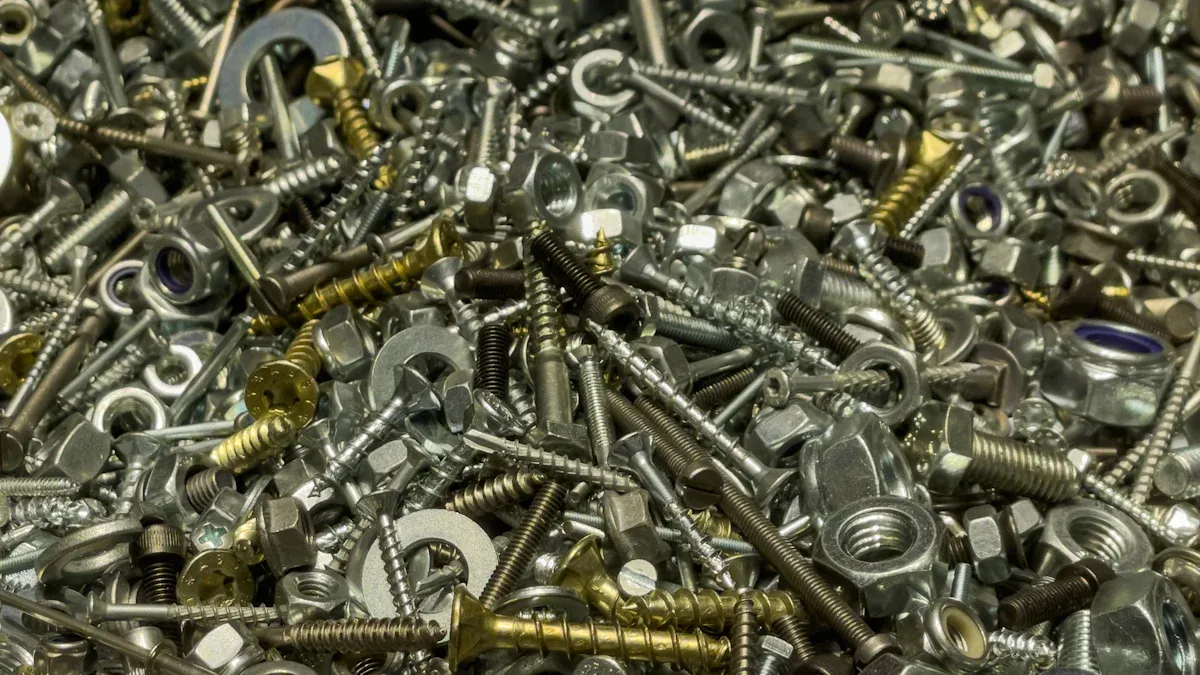
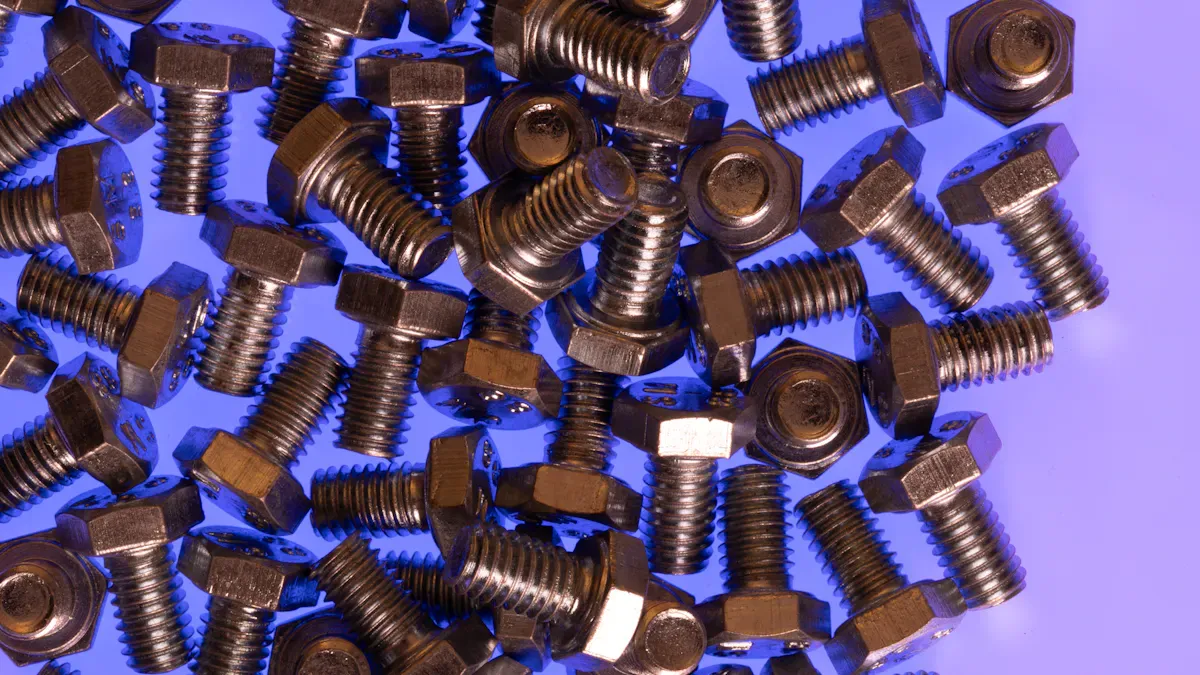
Квадратные гайки play a vital role in many types of гаек и болтов assemblies across industrial fasteners. Material selection impacts performance, durability, and cost. Common materials include carbon steel, stainless steel, brass, and aluminum. Key factors influence the choice of fastener materials:
- Operating environment: Temperature, pressure, moisture, and corrosion exposure affect durability.
- Strength requirements: Testing for yield and tensile strength ensures reliable nuts and bolts connections.
- Manufacturing and installation: Some нестандартные крепежные элементы require specific production or installation processes.
Selecting the right materials helps производитель крепежных изделий на заказ meet demanding industrial applications.
Overview of Square Nut Materials and Material Selection
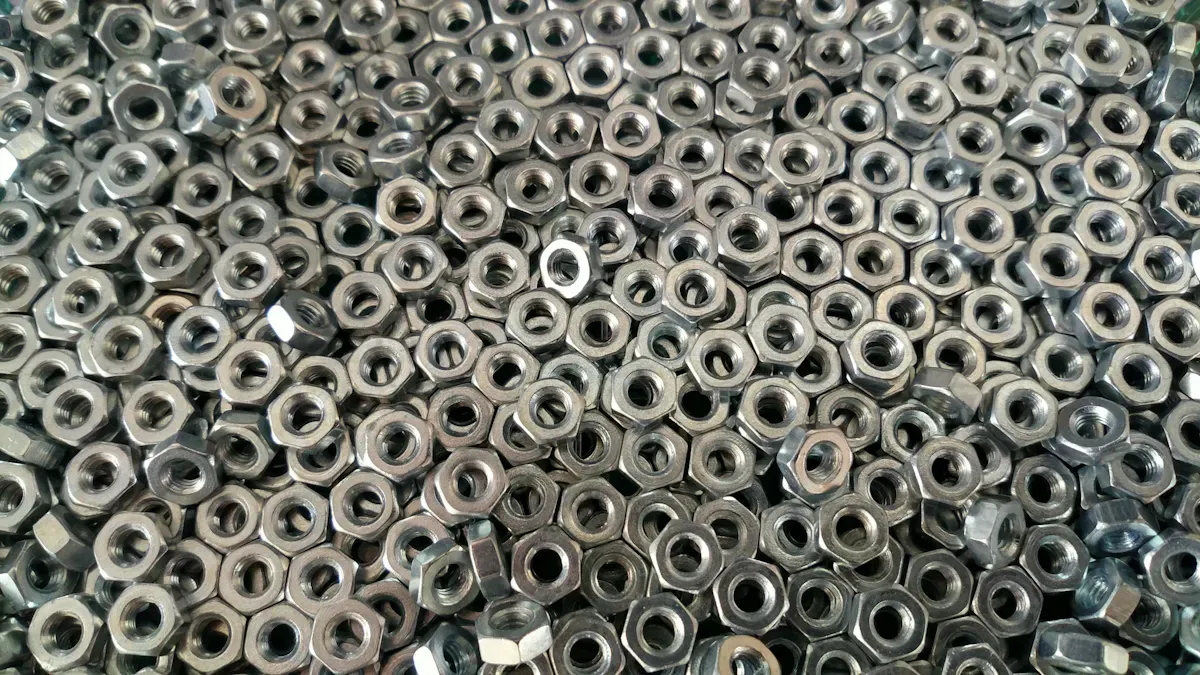
Выбор подходящего square nut materials ensures reliable performance in industrial environments. Engineers and procurement specialists consider several criteria when choosing fasteners for demanding applications. These criteria include material compatibility, environmental resistance, load requirements, and compliance with torque specifications. Structural integrity, durability, and long-term performance also play a role in the selection process. Square nuts offer greater surface contact, which makes them less likely to loosen under vibration. This feature makes them ideal for high-torque and industrial environments.
Carbon Steel Square Nuts
Carbon steel square nuts remain a popular choice for many industries. Their balance of strength, toughness, and affordability appeals to manufacturers and contractors. Different carbon content levels allow customization for specific mechanical requirements. ANSI square nuts see frequent use in automotive chassis assembly, suspension systems, exhaust mounts, and engine components. Their resistance to loosening under vibration suits dynamic environments with constant movement. Carbon steel (Grade 5) square nuts are common in промышленном оборудовании and automotive sectors. These nuts often require a protective coating to improve corrosion resistance. General industrial applications, infrastructure projects, and machinery assembly also rely on carbon steel square nuts for their versatility and cost-effectiveness.
Tip: When selecting carbon steel square nuts, consider the need for coatings or platings to enhance corrosion resistance in harsh environments.
Stainless Steel Square Nuts
Stainless steel square nuts provide exceptional corrosion resistance and high tensile strength. These properties make them suitable for corrosive or high-moisture environments. The following table summarizes the main advantages and disadvantages:
| Преимущества | Disadvantages |
|---|---|
| Exceptional corrosion resistance | Slightly larger footprint |
| High tensile strength | May not fit in confined spaces |
| Ideal for corrosive environments | Higher cost than carbon steel |
Industries such as construction, aerospace, automotive, machinery, marine, and furniture manufacturing prefer stainless steel square nuts for their durability and reliability. For example, construction projects use them in high-rise buildings and bridges to ensure joint integrity. Aerospace engineers rely on them for airframe assemblies and engine components due to their fatigue resistance. Marine applications benefit from their resistance to saltwater corrosion. Stainless steel square nuts also appear in premium furniture for both strength and aesthetic appeal.
Brass Square Nuts
Brass square nuts offer unique benefits in specialized applications. Their corrosion resistance, non-sparking nature, and machinability make them valuable in manufacturing, electronics, automotive, furniture, construction, and marine industries. The table below highlights common uses and benefits:
| Industry/Application | Common Uses of Brass Square Nuts | Benefits Offered |
|---|---|---|
| Manufacturing and Machinery | Assembly of machinery, conveyor systems, pumps, valves | Corrosion resistance, durability, non-sparking |
| Electronics and Electrical | Securing PCBs, grounding hardware, control panels | Non-magnetic, conductive, reliable grounding |
| Automotive | Securing sensors, wiring harnesses, connectors, vintage vehicles | Spark resistance, longevity, withstands temperature changes |
| Производстве мебели и | Flat-pack and outdoor furniture, marine-grade pieces | Tarnish resistance, humidity endurance, aesthetic appeal |
| Construction and Architecture | Fastening window frames, door hardware, curtain walls | Handles thermal expansion, reduces maintenance needs |
| Marine and Offshore | Fastening railings, deck fittings, navigation lights | Exceptional saltwater corrosion resistance |
Brass square nuts excel in environments where electrical conductivity, corrosion resistance, and non-magnetic properties are essential.
Alloy Steel Square Nuts
Alloy steel square nuts deliver exceptional strength and durability in demanding industrial environments. Engineers often select these nuts for applications that require resistance to high stress, heavy loads, and dynamic forces. Alloy steel contains elements such as chromium, molybdenum, or nickel, which enhance its mechanical properties. These nuts perform reliably in heavy machinery, construction equipment, and structural assemblies.
The following table summarizes the main advantages and limitations of alloy steel square nuts:
| Преимущества | Ограничения |
|---|---|
| Extremely high tensile and yield strength | Prone to rust without protective coating |
| Superior performance under dynamic loads | Heavier than stainless or aluminum alternatives |
| Excellent resistance to deformation and shearing | Requires precise torque control during installation |
Alloy steel square nuts resist deformation and shearing, making them suitable for high-torque applications. However, they require protective coatings to prevent rust, especially in humid or corrosive environments. Their weight can pose challenges in applications where minimizing mass is critical. Installers must also apply precise torque to avoid damaging the threads or compromising joint integrity.
Note: Alloy steel square nuts excel in environments where strength and reliability outweigh concerns about weight or corrosion.
Nylon Square Nuts
Nylon square nuts offer a unique combination of lightweight construction, chemical resistance, and vibration damping. Manufacturers use these nuts in industries where reducing weight and preventing corrosion are priorities. The square shape provides excellent resistance to rotation, especially in high-vibration settings.
Key properties of nylon square nuts include:
| Свойство | Описание |
|---|---|
| Форма | Square shape provides superior resistance to rotation, especially in high-vibration environments. |
| Friction Lock | Nylon insert creates a friction lock against bolt threads, preventing self-loosening. |
| Mechanical Strength | Heavy-duty nuts built for extreme stress using reinforced materials, offering high tensile strength. |
| Chemical Resistance | Manufactured from stainless steel or coated alloys, providing excellent resistance to moisture and chemicals. |
| Temperature Limit | Nylon can degrade at high temperatures, affecting performance in extreme environments. |
Nylon square nuts are favored in several scenarios:
- Automotive and aerospace industries use them for weight reduction, which improves fuel efficiency.
- Chemical processing plants benefit from their corrosion resistance, which can extend machinery lifespan and reduce maintenance costs.
- Equipment manufacturers rely on their vibration resistance to prevent failures caused by loose fasteners.
Tip: Nylon square nuts maintain integrity in harsh environments but may not suit applications with extreme heat.
Aluminum Square Nuts
Aluminum square nuts provide a lightweight and corrosion-resistant option for many industrial applications. Their low mass makes them ideal for assemblies where weight reduction is essential. Aluminum also resists oxidation, which helps maintain performance in moist or outdoor environments.
The table below compares aluminum square nuts with brass and steel alternatives:
| Материал | Weight | Коррозионная стойкость | Стоимость |
|---|---|---|---|
| Алюминий | Лёгкий вес | Высокая | Умеренная |
| Латунь | Умеренная | Высокая | Выше |
| Сталь | Heavy | Умеренная | Низкая |
Common industrial uses for aluminum square nuts include:
| Область применения | Преимущества |
|---|---|
| Automotive Manufacturing | Provides stable and strong fastening points due to precise alignment. |
| Appliance Assembly | Flat surfaces are ideal for robotic welding lines and automated production. |
| Heavy Machinery Frames | Helps evenly distribute the load on thin sheet metals. |
Aluminum square nuts offer a balance of strength, corrosion resistance, and cost-effectiveness. Their lightweight nature reduces overall assembly weight, which benefits automotive and aerospace manufacturers. In automated production lines, their flat surfaces and precise dimensions support efficient assembly and reliable performance.
Phosphor Bronze Square Nuts
Phosphor bronze square nuts stand out in industrial fastener applications that demand a blend of mechanical strength, corrosion resistance, and electrical conductivity. Manufacturers create these nuts from an alloy of copper, tin, and a small amount of phosphorus. This composition gives phosphor bronze unique properties that set it apart from other common nut materials.
Engineers often select phosphor bronze square nuts for environments where both durability and resistance to harsh conditions are essential. The alloy’s structure provides excellent wear resistance, making these nuts suitable for assemblies exposed to constant friction or movement. Unlike many other metals, phosphor bronze maintains its integrity even after repeated cycles of tightening and loosening.
The following table highlights how phosphor bronze compares to brass and steel square nuts in terms of corrosion resistance and mechanical properties:
| Материал | Коррозионная стойкость | Механические свойства |
|---|---|---|
| Фосфористая бронза | Превосходная | Отличная |
| Латунь | Ниже | Умеренная |
| Сталь | Significantly Lower | Higher Strength |
Phosphor bronze offers superior corrosion resistance compared to both brass and steel. While steel provides higher overall strength, it lacks the corrosion protection that phosphor bronze delivers. Brass, on the other hand, falls short in both mechanical performance and resistance to corrosive environments. This makes phosphor bronze a preferred choice for applications where exposure to moisture, chemicals, or saltwater is likely.
Industrial users value phosphor bronze square nuts for their reliability in demanding sectors. The alloy’s non-sparking nature and electrical conductivity make it ideal for electrical and marine applications. In addition, its excellent spring properties help maintain secure fastening even under vibration or thermal expansion.
Key application areas for phosphor bronze square nuts include:
| Область применения | Key Properties Supporting Use |
|---|---|
| Marine | High corrosion resistance |
| Электротехника | Good electrical conductivity and spark erosion resistance |
| Heavy Machinery | Mechanical strength and wear resistance |
| Valves and Switches | Excellent spring properties and durability |
| Heat Exchangers | Corrosion resistance and thermal conductivity |
- Marine engineers use phosphor bronze square nuts to secure fittings and assemblies exposed to saltwater.
- Electrical equipment manufacturers rely on these nuts for their conductivity and resistance to spark erosion.
- Heavy machinery designers choose phosphor bronze for its ability to withstand wear and maintain fastening integrity under stress.
Tip: When selecting square nuts for environments with high humidity, chemical exposure, or electrical requirements, phosphor bronze provides a reliable and long-lasting solution.
Phosphor bronze square nuts combine mechanical excellence with outstanding corrosion resistance. Their versatility and durability make them a trusted component in critical industrial assemblies.
Detailed Comparison of Square Nut Materials
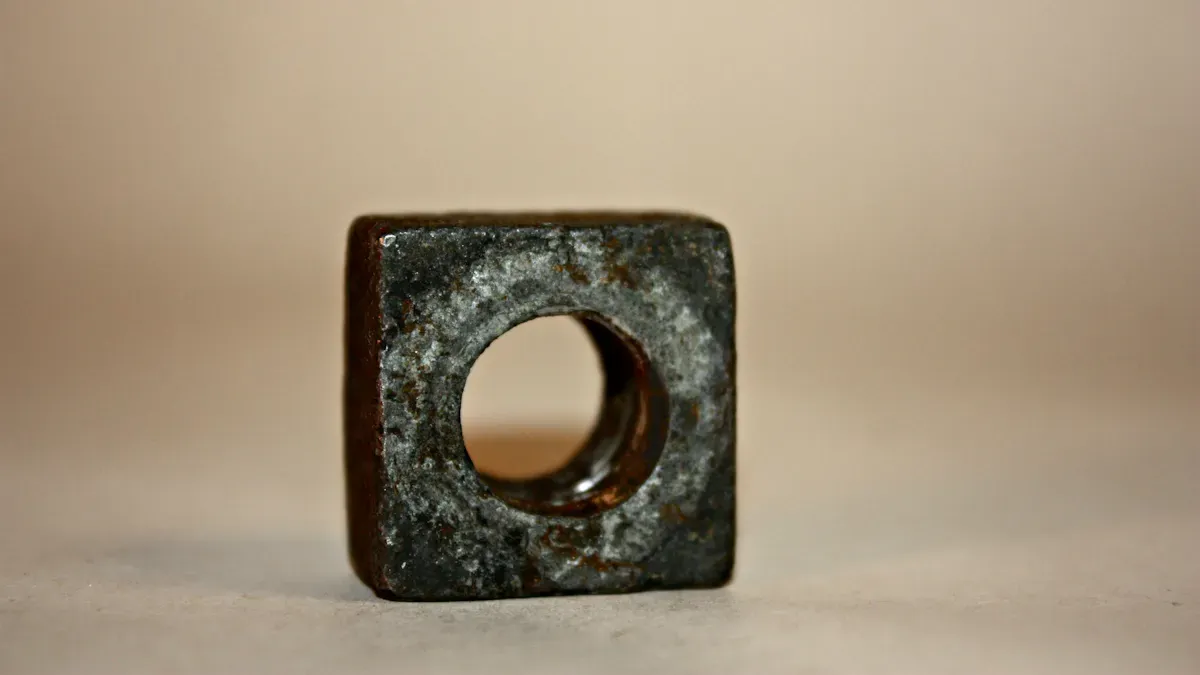
Carbon Steel Square Nuts
Механические свойства
Carbon steel square nuts deliver reliable strength for many industrial applications. These nuts show high tensile and yield strength, which supports heavy loads and resists deformation. Manufacturers often choose carbon steel for its balance of hardness and ductility. The material allows for secure fastening in machinery and infrastructure projects. Engineers value the consistent performance of these fasteners under mechanical stress.
Коррозионная стойкость
Carbon steel nuts require protective coatings to resist corrosion. Without plating or galvanization, exposure to moisture or chemicals can lead to rust. In neutral or mildly corrosive environments, these coatings help maintain durability. However, aggressive chemicals or saltwater can compromise the protective layer. Regular inspection and maintenance extend the service life of carbon steel fasteners.
Temperature Tolerance
These nuts perform well at temperatures up to 300°C. Industry testing shows that higher temperatures may weaken the protective oxide layer, especially in aggressive chemical settings. For most general industrial uses, carbon steel maintains its mechanical properties within standard temperature ranges.
Cost and Availability
Carbon steel square nuts offer a cost-effective solution for large-scale projects. Their widespread availability makes them a popular choice for contractors and manufacturers. The low cost supports use in applications where budget constraints exist.
Typical Industrial Applications
Industries use carbon steel nuts in automotive assemblies, construction frameworks, and heavy machinery. These fasteners support infrastructure projects, equipment manufacturing, and general-purpose fastening where high strength and affordability are required.
Stainless Steel Square Nuts
Механические свойства
Stainless steel square nuts provide excellent mechanical strength and toughness. The alloy composition resists deformation and maintains integrity under repeated loading. These nuts handle vibration and dynamic forces without loosening. Stainless steel fasteners also retain their shape and function after multiple tightening cycles.
Коррозионная стойкость
Stainless steel nuts excel in corrosion resistance. The chromium content forms a passive oxide layer that protects against rust and chemical attack. In environments with high humidity, saltwater, or exposure to chemicals, these nuts maintain their appearance and function. Testing data confirms that stainless steel resists rapid degradation, even in aggressive conditions with chlorides or reducing acids. However, some acids, such as hydrochloric or sulfuric, can cause rapid corrosion, so engineers recommend material compatibility checks for critical applications.
Temperature Tolerance
These nuts withstand temperatures up to 300°C without losing mechanical strength. The protective oxide layer remains stable in most industrial environments. At extreme temperatures or in the presence of aggressive chemicals, the layer may degrade, so regular inspection is necessary.
Cost and Availability
Stainless steel square nuts cost more than carbon steel alternatives. The higher price reflects the superior corrosion resistance and durability. These nuts remain widely available from industrial suppliers, supporting use in specialized and general applications.
Typical Industrial Applications
Manufacturers use stainless steel nuts in marine, chemical processing, and food production industries. These fasteners secure assemblies in outdoor structures, bridges, and high-rise buildings. Aerospace and automotive engineers rely on stainless steel for critical joints exposed to vibration and harsh environments.
Brass Square Nuts
Механические свойства
Brass square nuts offer moderate strength and good machinability. The copper-zinc alloy provides enough hardness for light to medium-duty fastening. These nuts resist galling and seizing, which supports repeated assembly and disassembly. Brass fasteners also maintain their shape under moderate loads.
Коррозионная стойкость
Brass nuts show high corrosion resistance in neutral and mildly corrosive environments. The material resists tarnish and oxidation, making it suitable for humid or marine settings. In aggressive chemical environments, such as those with strong acids, brass may corrode more quickly. Testing indicates that brass performs well in nitric acid but degrades rapidly in hydrochloric or sulfuric acids.
Temperature Tolerance
Brass square nuts tolerate moderate temperatures. The material remains stable up to 300°C, but prolonged exposure to high heat can reduce mechanical strength. For most electrical and marine applications, brass maintains its properties within safe limits.
Cost and Availability
Brass nuts cost more than carbon steel but less than some specialty alloys. The material’s machinability supports custom fastener production. Brass square nuts are readily available for electrical, marine, and decorative uses.
Typical Industrial Applications
Engineers specify brass nuts for electrical equipment, marine hardware, and decorative fixtures. These fasteners support assemblies in humid environments, control panels, and vintage automotive restoration. The non-magnetic and conductive properties of brass make it ideal for specialized electrical and electronic applications.
Alloy Steel Square Nuts
Механические свойства
Alloy steel square nuts deliver exceptional strength and toughness. Engineers select these fastener materials for heavy-duty applications that demand high tensile and yield strength. The addition of elements such as chromium, molybdenum, or nickel enhances the mechanical performance. These nuts resist deformation under extreme loads. Testing confirms that alloy steel square nuts maintain their structural integrity during repeated tightening and loosening cycles. This reliability supports critical assemblies in construction and manufacturing.
Коррозионная стойкость
Alloy steel square nuts offer moderate corrosion resistance. The base steel material can corrode in humid or chemical-rich environments. Manufacturers often apply protective coatings like zinc plating or black oxide to improve corrosion resistance. These treatments extend the service life of the nuts in challenging conditions. However, alloy steel does not match the corrosion resistance of stainless steel or non-metallic materials. Regular inspection and maintenance help prevent premature failure in aggressive settings.
Temperature Tolerance
These nuts perform well across a wide temperature range. Alloy steel maintains its mechanical properties at both low and high temperatures. Industrial users rely on these nuts for applications exposed to thermal cycling or elevated heat. The material resists softening and retains strength up to 400°C. This temperature tolerance makes alloy steel square nuts suitable for power generation, heavy machinery, and automotive systems.
Cost and Availability
Alloy steel square nuts cost more than standard carbon steel options but less than many specialty alloys. The price reflects the enhanced strength and durability. Suppliers offer a broad range of sizes and grades, making these nuts readily available for industrial projects. The balance of performance and cost appeals to engineers who require reliable fastener materials without exceeding budget constraints.
Typical Industrial Applications
Industries use alloy steel square nuts in construction equipment, mining machinery, and transportation infrastructure. These nuts secure joints in bridges, cranes, and heavy vehicles. The combination of strength and durability supports assemblies that experience vibration, shock, or dynamic loads. Maintenance teams value the long service life and consistent performance in demanding environments.
Note: Alloy steel square nuts provide a dependable solution for projects where mechanical strength and durability are top priorities.
Nylon Square Nuts
Механические свойства
Nylon square nuts offer a lightweight alternative to metal fasteners. The material provides moderate strength and excellent flexibility. Engineers use nylon nuts in assemblies where weight reduction is essential. These nuts absorb vibration and reduce noise in mechanical systems. The square shape prevents rotation, ensuring a secure fit even in high-vibration environments. Nylon fasteners resist wear and maintain their shape under normal operating loads.
Коррозионная стойкость
Nylon square nuts excel in corrosion resistance. The non-metallic material does not rust or degrade in the presence of moisture, chemicals, or saltwater. This property makes nylon nuts ideal for outdoor, marine, and chemical processing applications. Unlike steel or stainless steel, nylon does not require coatings or treatments to maintain corrosion resistance. The material remains stable in harsh environments, reducing maintenance needs.
Temperature Tolerance
Nylon square nuts tolerate a moderate temperature range. The material performs well from -40°C to 120°C. Exposure to higher temperatures can cause softening or deformation. Engineers avoid using nylon nuts in assemblies that experience extreme heat. For most indoor and outdoor applications, nylon provides reliable performance within its temperature limits.
Cost and Availability
Nylon square nuts offer a cost-effective solution for many industries. The manufacturing process allows for high-volume production at low cost. Suppliers stock a variety of sizes and colors to meet different application needs. The lightweight nature of nylon reduces shipping costs and simplifies installation.
Typical Industrial Applications
Manufacturers use nylon square nuts in electronics, automotive interiors, and consumer products. These nuts secure panels, covers, and lightweight assemblies. The material’s corrosion resistance and vibration damping properties benefit equipment in chemical plants and marine environments. Nylon fasteners also appear in food processing and medical devices where metal contamination must be avoided.
Tip: Nylon square nuts provide excellent corrosion resistance and vibration control for lightweight assemblies.
Aluminum Square Nuts
Механические свойства
Aluminum square nuts combine low weight with moderate strength. The material supports assemblies where reducing mass is critical. Aluminum resists deformation under normal loads but does not match the strength of steel or stainless steel. Engineers value the ease of machining and installation. The square shape distributes force evenly, reducing the risk of thread stripping.
Коррозионная стойкость
Aluminum square nuts demonstrate high corrosion resistance. The material forms a natural oxide layer that protects against rust and chemical attack. This property makes aluminum suitable for outdoor, marine, and humid environments. While not as resistant as stainless steel, aluminum outperforms carbon steel in most corrosive settings. The material does not require additional coatings for basic protection.
Temperature Tolerance
Aluminum square nuts perform reliably from -50°C to 150°C. The material maintains its mechanical properties in both cold and warm environments. Prolonged exposure to very high temperatures can reduce strength. Engineers avoid using aluminum nuts in assemblies that experience sustained heat above 150°C.
Cost and Availability
Aluminum square nuts offer a moderate price point. The material costs more than carbon steel but less than brass or stainless steel. Suppliers provide a wide selection of sizes and grades. The lightweight nature of aluminum reduces transportation and handling costs, supporting efficient assembly in large-scale projects.
Typical Industrial Applications
Industries use aluminum square nuts in automotive, aerospace, and electronics manufacturing. These nuts secure lightweight panels, frames, and enclosures. The combination of corrosion resistance and low weight benefits outdoor equipment, solar installations, and marine hardware. Aluminum fasteners also appear in consumer products where appearance and ease of use matter.
Note: Aluminum square nuts deliver a balance of corrosion resistance, weight savings, and cost efficiency for modern industrial assemblies.
Phosphor Bronze Square Nuts
Механические свойства
Phosphor bronze square nuts deliver a unique combination of strength, ductility, and wear resistance. The alloy contains copper, tin, and a small amount of phosphorus, which improves toughness and fatigue resistance. Engineers value these nuts for their ability to maintain structural integrity under repeated tightening and loosening. The material resists galling and seizing, even in assemblies that experience frequent movement. Phosphor bronze also provides excellent spring properties, which help maintain a secure fit in dynamic environments. This makes the nuts suitable for applications that require both mechanical reliability and long service life.
Коррозионная стойкость
Phosphor bronze square nuts stand out for their superior corrosion resistance. The alloy’s composition protects against oxidation, moisture, and many industrial chemicals. Unlike carbon steel, phosphor bronze does not require additional coatings to prevent rust. This natural resistance extends the service life of fasteners in marine, chemical, and outdoor environments. Engineers often select phosphor bronze when assemblies face exposure to saltwater or acidic conditions. The nuts maintain their appearance and function, even after years of service in harsh settings. In comparison to brass or steel, phosphor bronze consistently delivers higher corrosion resistance, making it a preferred choice for demanding applications.
Note: Phosphor bronze square nuts offer reliable corrosion resistance without the need for frequent maintenance or protective treatments.
Temperature Tolerance
Phosphor bronze square nuts perform reliably across a wide temperature range. The alloy retains its mechanical properties in both low and high-temperature environments. Most industrial applications see stable performance from -50°C up to 250°C. The nuts do not become brittle in cold conditions and resist softening at elevated temperatures. This temperature tolerance supports use in power generation, marine, and heavy machinery sectors. Assemblies that experience thermal cycling benefit from the consistent behavior of phosphor bronze fasteners.
Cost and Availability
Phosphor bronze square nuts typically cost more than carbon steel or aluminum alternatives. The higher price reflects the alloy’s enhanced mechanical properties and corrosion resistance. Suppliers offer a range of sizes and thread types, but availability may be more limited compared to standard steel or stainless steel nuts. Procurement teams should plan for longer lead times when sourcing large quantities. Despite the higher cost, many industries justify the investment due to the nuts’ durability and reduced maintenance needs over time.
Typical Industrial Applications
Engineers specify phosphor bronze square nuts for applications that demand both mechanical strength and corrosion resistance. Common uses include:
- Marine hardware and shipbuilding, where exposure to saltwater is constant.
- Electrical equipment, due to the alloy’s conductivity and resistance to spark erosion.
- Heavy machinery, where wear resistance and secure fastening are critical.
- Valves, pumps, and heat exchangers, which require reliable performance in corrosive or high-temperature environments.
A table below summarizes key application areas and the properties that support their use:
| Область применения | Supporting Properties |
|---|---|
| Marine | Corrosion resistance, durability |
| Электротехника | Conductivity, spark resistance |
| Heavy Machinery | Wear resistance, mechanical strength |
| Valves & Pumps | Corrosion resistance, temperature stability |
Phosphor bronze square nuts provide a dependable solution for industries that cannot compromise on corrosion resistance or mechanical reliability.
Pros and Cons Table for Square Nut Material Selection
Comparative Summary of Square Nut Materials
Selecting the right material for square nuts can determine the success and longevity of industrial assemblies. Engineers and technicians often rely on comparative tables to evaluate the strengths and weaknesses of different fasteners. These tables present essential data on mechanical properties, corrosion resistance, cost, and application suitability. By reviewing this information, decision-makers can match the right material to the specific demands of their projects.
The table below summarizes the key pros and cons of common square nut materials:
| Материал | Прочность | Коррозионная стойкость | Стоимость | Пригодность для применения |
|---|---|---|---|---|
| Standard Steel | Умеренная | Prone to rust | Cost-effective | Indoor applications where corrosion is not a concern |
| Цинкование (гальваническое) | Умеренная | Basic rust protection | Affordable | General-purpose use in dry environments |
| Горячее цинкование | Высокая | Превосходная коррозионная стойкость | Умеренная | Outdoor structures, bridges, marine applications |
| Черное оксидное покрытие. | Умеренная | Mild corrosion protection | Умеренная | Automotive, firearms, industrial applications |
| Никелирование | Умеренная | Moderate corrosion resistance | Умеренная | Decorative and light-duty applications |
| Chrome Plating | Умеренная | Rust-resistant | Умеренная | Decorative hardware, motorcycles, classic cars |
| Нержавеющая сталь | Высокая | Excellent corrosion resistance | Высокая | Marine environments, food processing, outdoor projects |
| Фосфатное покрытие | Умеренная | Moderate corrosion resistance | Низкая | Military, automotive, industrial applications |
| Кадмирование | Высокая | Excellent corrosion resistance | Высокая | Aerospace, vintage machinery |
Note: This table helps users quickly compare fasteners based on their most important properties, making it easier to select the right option for each application.
A comparative summary table offers several advantages for material selection:
- It outlines differences in material properties such as tensile strength and corrosion resistance.
- It highlights common applications for each material type, helping match materials to specific industrial environments.
- Engineers and technicians use this summarized data to make informed decisions tailored to mechanical and environmental requirements.
- This approach ensures the selected square nut material is appropriate for the intended industrial use, optimizing performance and durability.
When reviewing fasteners for a project, teams should consider not only the immediate cost but also the long-term benefits of durability and reduced maintenance. For example, stainless steel and hot-dip galvanized options may require a higher initial investment but offer superior performance in harsh environments. On the other hand, standard steel or zinc-plated fasteners may suit indoor or low-risk applications where cost control is a priority.
The comparative summary table serves as a practical tool for anyone involved in specifying or sourcing square nuts. By referencing this information, professionals can ensure that their assemblies remain secure, reliable, and cost-effective throughout their service life.
Guidelines for Choosing Nuts and Bolts Materials
Environmental Considerations for Square Nuts
Selecting the right nuts and bolts for industrial fasteners starts with understanding the environment where they will operate. Humidity, temperature, and air composition all impact the performance and durability of different materials. For example, high humidity can accelerate corrosion, especially in steel fasteners. Temperature fluctuations may cause expansion or contraction, affecting the fit and strength of the assembly. The table below summarizes how environmental factors influence the longevity and corrosion resistance of various materials:
| Environmental Factor | Effect on Fasteners | Impact on Durability |
|---|---|---|
| High Humidity | Increases risk of corrosion | Reduces service life |
| Low Temperature | May increase brittleness | Can affect mechanical strength |
| Воздействие химических веществ | Promotes material degradation | Requires enhanced corrosion resistance |
Engineers must consider these factors during material selection to ensure the nuts and bolts maintain their integrity over time. Proper packaging and storage also help preserve the quality of fasteners before installation.
Load and Mechanical Requirements in Material Selection
Mechanical strength requirements play a critical role in choosing the right types of nuts and bolts. Each application demands a specific load-bearing capability, which depends on the material, thread engagement, and heat treatment. The following points highlight essential considerations:
- Compatibility between nut and bolt threads ensures proper clamping force and prevents joint failure.
- Mismatched threads can reduce the overall strength of the assembly.
- Carbon steel nuts provide high tensile and shear load resistance, especially when heat-treated to higher grades.
- Alloy steel nuts exceed standard strength ratings, making them suitable for heavy-duty industrial fasteners.
- Proof load testing verifies that nuts can withstand specified loads without deformation.
- Certified mechanical data sheets offer valuable information for safety-critical systems.
- Compliance with standards such as ANSI, ASTM, ISO, or SAE guarantees reliability and durability.
Engineers must match the strength requirements of the application with the appropriate materials to prevent premature failure and ensure long-term performance.
Exposure to Chemicals and Moisture
Exposure to chemicals and moisture significantly affects the performance and longevity of nuts and bolts. Коррозионная стойкость becomes a top priority in environments where fasteners face cycles of wetting and drying or contact with aggressive chemicals. Corrosive agents like oxygen, moisture, and ions can initiate electrochemical reactions on steel surfaces, leading to rapid degradation. Without effective protective coatings, materials such as carbon steel are prone to rust and loss of strength.
Stainless steel nuts offer superior corrosion resistance, making them ideal for outdoor, marine, and chemical processing environments. Grades 304 and 316 provide varying levels of protection, with 316 preferred for coastal and high-chemical exposure. Regular inspection and maintenance help detect early signs of corrosion, preserving the durability of the assembly.
Tip: Always select nuts and bolts with proven corrosion resistance for environments with high moisture or chemical exposure to maximize service life and safety.
Budget and Availability Factors
Budget and availability play a significant role in material selection for industrial nuts and bolts. Procurement teams often face tight project budgets. They must balance performance requirements with cost constraints. Some materials, such as stainless steel or phosphor bronze, offer superior corrosion resistance but come at a higher price. Carbon steel and aluminum provide cost-effective solutions for many applications. These options support large-scale projects where affordability matters.
Availability also influences the selection process. Standard fasteners like carbon steel nuts and bolts remain widely available from most suppliers. Specialty materials, such as titanium or silicon bronze, may require longer lead times. Limited availability can delay production schedules and increase overall costs. Engineers should confirm supply chain reliability before specifying less common materials.
A table below summarizes typical cost and availability considerations for common square nut materials:
| Материал | Cost Level | Availability |
|---|---|---|
| Углеродистая сталь | Низкая | Высокая |
| Нержавеющая сталь | Высокая | Высокая |
| Латунь | Умеренная | Умеренная |
| Легированная сталь | Умеренная | Высокая |
| Алюминий | Умеренная | Высокая |
| Фосфористая бронза | Высокая | Ограниченный |
| Нейлон | Низкая | Высокая |
Tip: Early coordination with suppliers helps prevent delays and ensures that the selected nuts and bolts meet both budget and timeline requirements.
Application-Specific Recommendations for Choosing Nuts and Bolts
Selecting the right fasteners for each industrial application requires careful evaluation of several factors. The following best practices guide engineers and procurement specialists in choosing nuts and bolts for optimal performance:
- Assess the load requirements. Ensure that the nuts and bolts can withstand the expected weight or force in the assembly.
- Match the material to the operating environment. Stainless steel or hot-dip galvanized nuts and bolts work best for outdoor or water-exposed installations to prevent rust.
- For high-temperature environments, select titanium nuts and bolts. These materials offer both lightweight construction and excellent heat resistance.
- In corrosive settings, such as chemical plants or marine environments, use silicon bronze or brass nuts and bolts. These materials resist degradation from harsh chemicals and saltwater.
- Choose the appropriate finish for the application. Zinc-plated fasteners provide mild corrosion protection, black oxide suits indoor uses, and hot-dip galvanized coatings offer maximum durability outdoors.
Engineers should always consider the specific demands of each project. For example, automotive manufacturers often select alloy steel fasteners for their strength and reliability. Construction teams prefer hot-dip galvanized nuts and bolts for structural steelwork exposed to the elements. Marine engineers rely on stainless steel or silicon bronze to ensure long-term resistance to saltwater corrosion.
Note: Following these recommendations when choosing nuts and bolts helps maximize safety, reliability, and cost-effectiveness in every industrial application.
Engineers compare materials for square nuts to optimize performance and durability. They select nuts and bolts based on environmental conditions, mechanical strength, and cost. Stainless steel nuts resist corrosion in marine settings. Alloy steel nuts support heavy loads in construction. Brass nuts and bolts suit electrical assemblies. Aluminum nuts reduce weight in automotive applications. Nylon nuts and bolts prevent rust in chemical plants. Phosphor bronze nuts ensure reliability in harsh environments.
Teams should evaluate each material’s properties before choosing nuts and bolts for industrial projects.
Частые вопросы
What is the most corrosion-resistant material for square nuts?
Stainless steel and phosphor bronze provide the highest corrosion resistance. Stainless steel resists rust in marine and chemical environments. Phosphor bronze withstands saltwater and industrial chemicals. Both materials suit harsh conditions where long-term durability matters.
Can nylon square nuts replace metal nuts in heavy-duty applications?
Nylon square nuts work best in light-duty or non-structural assemblies. They lack the mechanical strength of steel or alloy nuts. Engineers use nylon for vibration damping and corrosion resistance, not for high-load connections.
Why do engineers choose alloy steel square nuts?
Alloy steel square nuts offer superior tensile strength and toughness. They perform well under heavy loads and dynamic forces. Construction and heavy machinery industries rely on alloy steel for critical joints that require maximum reliability.
Are aluminum square nuts suitable for outdoor use?
Aluminum square nuts resist corrosion and perform well outdoors. Their natural oxide layer protects against rust. They fit applications where weight reduction and moderate strength are important, such as automotive and solar installations.
How does cost compare among common square nut materials?
| Материал | Cost Level |
|---|---|
| Углеродистая сталь | Низкая |
| Нержавеющая сталь | Высокая |
| Латунь | Умеренная |
| Легированная сталь | Умеренная |
| Алюминий | Умеренная |
| Фосфористая бронза | Высокая |
| Нейлон | Низкая |
Note: Carbon steel and nylon offer the most cost-effective options.
What coatings improve corrosion resistance for steel square nuts?
Engineers often specify zinc plating, hot-dip galvanizing, or black oxide coatings. These treatments protect steel nuts from rust and extend service life. The choice depends on the environment and required durability.
Which industries use brass or phosphor bronze square nuts?
Electrical, marine, and chemical processing industries use brass and phosphor bronze square nuts. These materials provide electrical conductivity, spark resistance, and corrosion protection. They suit environments with moisture, chemicals, or electrical requirements.