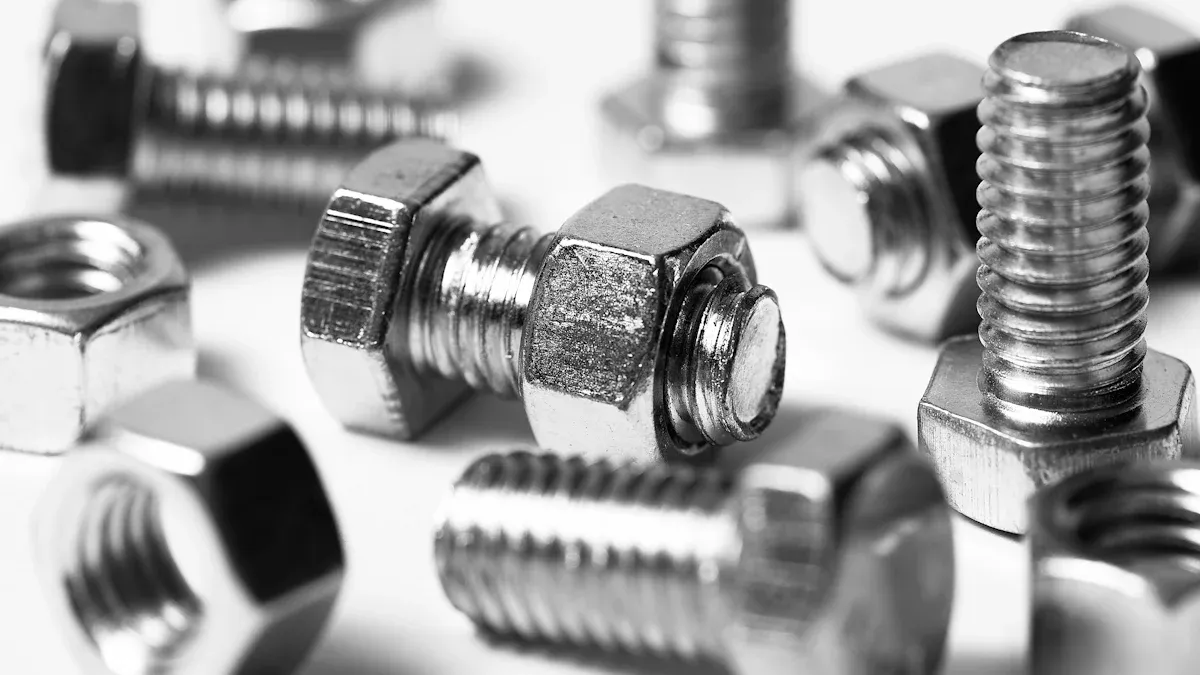

The global industrial fasteners market shows significant growth, encompassing products from a custom fasteners manufacturer to specialized Anchor Bolts.
| Metric | Details |
|---|---|
| Market Size in 2024 | USD 103.46 Billion |
| CAGR (2025-2033) | 4.6% |
Choosing the right sleeve anchors from top sleeve anchor brands is critical for project success. These masonry anchors provide reliable fastening in various materials. Red Head sets the standard for heavy-duty concrete anchors. Hilti offers premium performance for critical connections. Simpson Strong-Tie provides versatile, code-compliant masonry anchors. Powers Fasteners delivers accessible performance for general contractors, distinct from custom anchor bolts.
How to Choose the Right Sleeve Anchor for Your Project
Selecting the correct sleeve anchor involves more than just matching a bolt to a hole. A project’s success depends on a careful evaluation of performance metrics and application demands. This ensures a secure and lasting installation.
Understanding Key Performance Metrics
Professionals assess several key factors before choosing masonry anchors. These metrics determine the anchor’s suitability for a specific job.
Load Capacity: Tensile vs. Shear Strength
Load capacity is the most critical metric. It is divided into two types:
- Tensile Strength: This measures the anchor’s resistance to being pulled straight out of the base material.
- Shear Strength: This measures the anchor’s resistance to forces applied parallel to the surface, which could snap the bolt.
Manufacturers provide specific load data for their products.
Base Material Compatibility: Concrete, Brick, and Block
Sleeve anchors are versatile mechanical expansion anchors. Their design allows them to work effectively in a variety of base materials. The expansion sleeve provides a reliable grip in softer materials like brick or hollow block. In solid concrete, the sleeve expands to create a powerful friction hold. This adaptability makes them a popular choice for many fastening tasks.
Corrosion Resistance: Zinc vs. Stainless Steel
The anchor’s material dictates its lifespan, especially outdoors.
| Material | Environment | Description |
|---|---|---|
| Zinc-Plated Steel | Dry, Indoor | Offers basic rust protection for interior applications. |
| Stainless Steel | Wet, Corrosive | Provides superior corrosion resistance for outdoor or chemical exposure. |
Installation Requirements: Drill Size and Torque
Proper installation is non-negotiable for safety and performance. Using the correct diameter drill bit creates the right-sized hole for the anchor. Applying the manufacturer-specified torque ensures the anchor is tight enough to hold but not so tight that it damages the base material or the anchor itself.
Matching Anchor Type to Your Application
Different jobs require different levels of holding power. These expansion anchors are generally ideal for light to medium-duty applications.
Light-Duty Fastening (e.g., Conduit Straps)
For light-duty tasks, a smaller diameter sleeve anchor provides sufficient strength. Common applications include securing:
- Electrical boxes
- Junction boxes
- Lightweight signage
- Shelving
Medium-Duty Fastening (e.g., Handrails)
Medium-duty jobs require masonry anchors with greater load capacity. A 1/2″ diameter anchor, for example, is well-suited for permanently fastening items like handrails, door frames, and window frames to concrete or block.
Heavy-Duty and Structural Loads (e.g., Ledger Boards)
While some large sleeve anchors can handle heavy equipment, they are not typically the first choice for critical structural loads. For most heavy-duty concrete anchoring, professionals often recommend wedge anchors or drop-in anchors instead of sleeve anchors.
Note: Always consult an engineer for structural applications. The wrong choice of masonry anchors can compromise the integrity of the entire structure.
Outdoor and Corrosive Environments
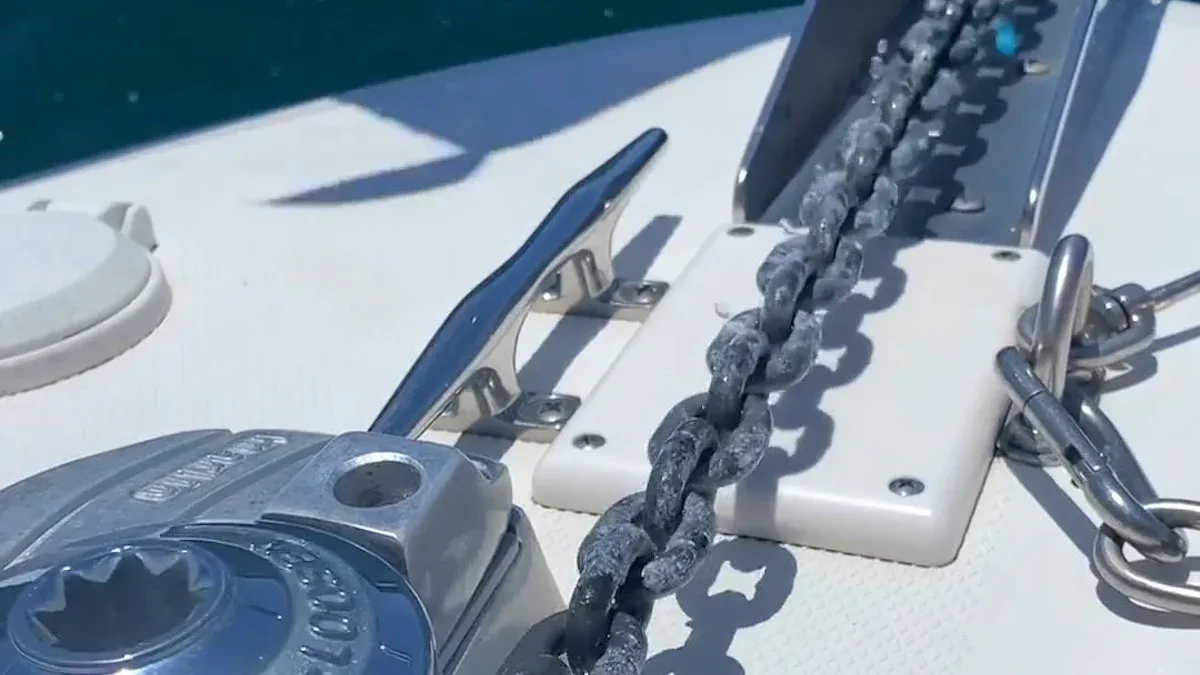
Projects exposed to weather, moisture, or chemicals demand stainless steel sleeve anchors. The material prevents rust and degradation, ensuring a long-term, secure connection in harsh conditions.
Exploring Different Types of Sleeve Anchors
The versatility of sleeve anchors comes from their wide range of configurations. Choosing the right head style and material is essential for both the anchor’s performance and the project’s final appearance. These expansion anchors offer options to meet most application requirements.
Head Styles and Their Uses
The head style determines how the anchor is installed and what the finished connection looks like. Different styles suit different functional and aesthetic needs.
Hex Nut Head
The hex nut head is the most common and versatile style. It allows for high torque application with a standard wrench or socket. This makes it a go-to choice for a wide variety of industrial and commercial applications, from securing machinery to mounting support brackets.
Flat Countersunk Head
A flat countersunk head provides a clean, flush finish with the surface of the fixture. Installers use this style when a protruding head is undesirable. It is particularly useful for anchoring door frames and window frames, where a smooth surface is necessary.
Acorn Nut Head
The acorn nut head offers a finished, decorative appearance. The domed nut covers the threaded end of the bolt, providing a safe and aesthetically pleasing look. This makes it ideal for visible applications like installing handrails or public fixtures.
Round Slotted Head
A round head anchor with a slot is designed for lighter-duty fastening. It allows for installation with a standard flat-head screwdriver. This style is often used for applications where high torque is not required, such as securing signage or electrical components.
Material and Finish Options
The material of an anchor dictates its durability and resistance to corrosion. The environment of the project determines the best choice among these types of masonry anchors.
Zinc-Plated Carbon Steel
Zinc-plated steel is the standard for most indoor, dry applications. An electroplating process applies a thin layer of zinc to the carbon steel. This finish provides basic protection against rust and is a cost-effective choice for controlled environments. These masonry anchors are not suitable for outdoor use.
Hot-Dipped Galvanized Steel
Hot-dipped galvanized (HDG) expansion anchors offer superior corrosion resistance compared to zinc plating. The process, often following the ASTM A153 standard, involves dipping the anchor in molten zinc. This creates a much thicker, more durable coating suitable for outdoor applications and high-humidity areas.
304 & 316 Stainless Steel
For maximum corrosion resistance, stainless steel masonry anchors are the premier choice. The key difference between the two common grades lies in their composition and performance in harsh environments.
| Stainless Steel Grade | Key Feature | Best Use Case |
|---|---|---|
| 304 Stainless Steel | Standard corrosion resistance | General outdoor use, freshwater environments |
| 316 Stainless Steel | Contains molybdenum for enhanced protection | Marine environments, saltwater exposure, chemical plants |
The addition of molybdenum makes 316 stainless steel the “marine-grade” option. It offers significantly better protection against chloride pitting, making it essential for projects near the coast or in other highly corrosive settings.
In-Depth Review: Red Head Sleeve Anchors
Brand Overview: The Heavy-Duty Standard
Red Head has cemented its position as a cornerstone of the fastening industry. Its products are synonymous with reliability and strength in demanding environments.
Company History and Reputation
For decades, Red Head, now part of the ITW (Illinois Tool Works) family, has built an unwavering reputation for producing tough, dependable anchoring solutions. Professionals trust the brand for consistent performance on the job site. This long history has made Red Head a default choice for many contractors who value proven results over time. The brand is a recognized leader in the field of masonry anchors.
Target Audience and Market Position
Red Head primarily targets professional contractors, electricians, plumbers, and serious DIY enthusiasts. The company positions itself as the industry standard for heavy-duty applications where reliability is crucial but the cost of a premium engineered system is not justified. It offers a perfect balance of robust performance and practical value, making it a staple in supply houses and hardware stores.
Featured Product: Red Head Multi-Set Sleeve Anchor
The Multi-Set is the brand’s flagship product, known for its versatility and straightforward installation. It is a workhorse for a wide range of fastening tasks.
Technical Specifications
- Material: Zinc-Plated Carbon Steel
- Head Styles: Hex Nut, Flat Head, Round Head, Acorn Nut
- Sizes: Diameters from 1/4″ to 3/4″
- Application: For use in concrete, block, and brick
Performance in Concrete
In solid concrete, the Multi-Set anchor delivers excellent holding power. The sleeve expands uniformly against the walls of the drilled hole, creating a secure friction hold. This makes it a top choice for medium-duty concrete anchors, capable of supporting significant loads like machinery, racking, and support brackets.
Performance in Brick and Block
The anchor performs reliably in solid brick and grout-filled block. Its performance in hollow block or soft brick can be less predictable. The expansion sleeve provides a good grip, but installers must be careful not to overtighten and damage the weaker base material. These masonry anchors are adaptable but require careful installation in softer substrates.
Installation Process and Tips
Proper installation ensures maximum performance from these masonry anchors.
- Drill a hole to the specified diameter and depth.
- Clean the hole thoroughly of all dust and debris.
- Insert the anchor through the fixture and into the hole until the washer and nut are snug against the fixture.
- Tighten the nut 3 to 5 turns past the hand-tight position to set the anchor.
Pro Tip: Avoid over-torquing the anchor, especially in brick or block. Overtightening can crush the base material, compromising the anchor’s holding power. Always follow the manufacturer’s recommended torque values.
Analysis and Verdict
Red Head sleeve anchors offer a compelling mix of strength, value, and trustworthiness.
Pros: Strengths and Advantages
- Proven Reliability: A long track record of dependable performance.
- Excellent Value: Offers professional-grade strength at a competitive price point.
- Wide Availability: Easily found at most construction suppliers and hardware stores.
- Versatility: Multiple head styles and sizes suit many applications.
Cons: Weaknesses and Limitations
- Limited Corrosion Resistance: Standard zinc plating is for indoor use only.
- Not for Critical Loads: Not typically specified for life-safety or critical structural connections.
Best Use Cases for Red Head
Red Head anchors excel in medium-duty fastening applications. They are ideal for securing handrails, conduit, machinery, and shelving in concrete and solid masonry. They represent the professional’s choice for everyday reliability.
In-Depth Review: Hilti Sleeve Anchors
Brand Overview: The Premium Performance Choice
Hilti operates in a class of its own, prioritizing engineered performance and system reliability above all else. The brand is not just a product manufacturer; it is a solutions provider for the most demanding construction challenges. This focus makes Hilti the definitive choice for projects where failure is not an option.
Engineering and Quality Control
Hilti’s reputation is built on a foundation of intensive research, development, and stringent quality control. Their anchoring philosophy often goes beyond simple friction.
- Hilti anchors transfer tensile loads to the base material through immense friction, generated by precise tightening torque.
- Many designs also incorporate a “keying action.” The expansion force permanently deforms the base material on a micro-level, creating a mechanical interlock that significantly boosts holding power.
- Quality control extends to the design phase. Engineers use the Hilti PROFIS Engineering Suite to model and verify anchor capacities, ensuring every specification meets rigorous safety and performance standards.
The Hilti System-Based Approach
Hilti sells a complete system, not just individual masonry anchors. This approach integrates the fastener, the installation tool, and the engineering software. The company provides extensive technical data, on-site support, and training. This ensures that installers use the products correctly to achieve their maximum engineered potential, guaranteeing performance from design to execution.
Featured Product: Hilti HSL-3 Sleeve Anchor
The HSL-3 is a heavy-duty expansion anchor, representing the pinnacle of Hilti’s engineering for this product category. It is one of the most robust sleeve anchors available on the market.
Technical Specifications
| Attribute | Specification |
|---|---|
| Material | Carbon Steel (Zinc Plated, HDG), Stainless Steel (A4) |
| Approvals | ICC-ES for Cracked and Uncracked Concrete, Seismic |
| Head Styles | Hex Head, Countersunk |
| Application | Heavy-duty structural fastening in concrete |
Unmatched Load Capacities
The HSL-3 delivers exceptional tensile and shear load values, even in cracked concrete and seismic zones. Its performance often rivals that of adhesive anchoring systems. These high-strength concrete anchors are specified for securing structural steel columns, heavy machinery, and safety-critical equipment.
Advanced Features and Design
The HSL-3 features a triple-expanding sleeve for uniform load distribution and maximum contact with the base material. A standout feature is the black plastic ring on the bolt, which serves as a visual torque indicator. It shears off when the correct installation torque is reached, providing immediate confirmation of a proper installation.
Installation and Required Tooling
Installation of the HSL-3 is precise and requires specific tooling.
- Drill a hole using a Hilti hammer drill and bit.
- Clean the hole to Hilti’s specifications.
- Hammer the anchor into place.
- Tighten with a calibrated torque wrench until the black indicator ring shears off.
Pro Tip: ⚠️ Using a standard impact wrench is not recommended. Proper installation requires a calibrated torque wrench to ensure the visual torque indicator functions correctly and the anchor’s load capacity is achieved.
Analysis and Verdict
Hilti’s HSL-3 is an engineered solution for professionals who require guaranteed performance.
Pros: Strengths and Advantages
- Unrivaled Strength: Highest-in-class load capacities for critical applications.
- System Reliability: Integrated tools, software, and support ensure correct installation.
- Advanced Safety Features: Visual torque indicator confirms proper tightening.
- Extensive Approvals: Certified for use in cracked concrete and seismic conditions.
Cons: Weaknesses and Limitations
- High Cost: The premium performance comes with a significantly higher price tag.
- Limited Accessibility: Primarily available through Hilti stores or representatives, not big-box retailers.
- Proprietary System: Best performance requires using Hilti-specific tools and procedures.
Best Use Cases for Hilti
Hilti masonry anchors are the go-to choice for engineers and contractors working on critical structural applications. They are ideal for stadium construction, industrial plants, high-rise buildings, and any project where load-bearing integrity and life safety are the primary concerns.
In-Depth Review: Simpson Strong-Tie Sleeve Anchors
Brand Overview: The Versatile Innovator
Simpson Strong-Tie has earned its place as a trusted name in the construction industry by focusing on engineered solutions and rigorous testing. The brand is a favorite among engineers, architects, and contractors who require proven, code-compliant products.
Focus on Code Compliance (ICC-ES Reports)
A key differentiator for Simpson Strong-Tie is its unwavering commitment to code compliance. The company invests heavily in testing and provides comprehensive International Code Council Evaluation Service (ICC-ES) reports for many of its products. This documentation gives inspectors and specifiers the data they need to approve these masonry anchors for use in permitted projects, ensuring safety and adherence to building standards.
Product Range and Innovation
Simpson Strong-Tie offers an extensive portfolio of fastening solutions that goes far beyond a single product type. The company is known for continuous innovation, developing products that solve real-world job site challenges. This broad range ensures that professionals can find a reliable Simpson product for nearly any connection, from residential decks to commercial framing.
Featured Product: Simpson Strong-Tie Sleeve-All® Anchor
The Sleeve-All® anchor embodies the brand’s philosophy of versatility and reliable performance. It is designed to work effectively across a spectrum of common base materials.
Technical Specifications
The Sleeve-All® comes in a wide array of sizes. The specifications for a common heavy-duty model illustrate its robust design.
| Specification | Detail |
|---|---|
| Manufacturer Part # | SL75414H |
| Head Style | Hex Nut |
| Diameter | 3/4″ |
| Length | 4-1/4″ |
| Drill Diameter | 3/4″ |
| Material | Carbon steel or stainless steel |
| Finish | Zinc plated (for carbon steel) |
Head Styles and Versatility
Versatility is a major strength of the Sleeve-All® anchor. It is available with multiple head styles to suit different functional and aesthetic needs.
- Hex Head: For standard, high-torque applications.
- Flat Head: For a flush, countersunk finish.
- Acorn Head: For a finished, decorative appearance.
- Rod Coupler: To connect threaded rods.
Performance Across Materials
The Sleeve-All® provides dependable medium-duty holding power in solid concrete, hollow block (CMU), and brick. Its expandable sleeve creates a secure grip when tightened, making these masonry anchors an excellent choice for projects where substrate conditions may vary from one location to another.
Availability and Documentation
Simpson Strong-Tie products are widely available through construction supply distributors and home improvement retailers. The company also provides some of the best technical documentation in the industry, which is easily accessible on its website.
Analysis and Verdict
The Simpson Strong-Tie Sleeve-All® offers a balanced and reliable solution for a wide range of projects.
Pros: Strengths and Advantages
- Code-Compliant: Backed by extensive testing and ICC-ES reports.
- Highly Versatile: Performs well in concrete, block, and brick with multiple head styles available.
- Excellent Documentation: Clear and comprehensive technical data is readily available.
- Wide Availability: Easy to source from professional suppliers and retailers.
Cons: Weaknesses and Limitations
- Not for Extreme Loads: While strong, these sleeve anchors are not intended for the most critical structural connections that demand specialized high-performance anchors.
- Moderate Price Point: Generally more expensive than generic or big-box store brands.
Best Use Cases for Simpson Strong-Tie
These anchors are ideal for contractors and builders working on permitted residential and commercial projects. They excel in applications like installing handrails, mounting electrical equipment, and securing light framing where code compliance and versatility are top priorities.
In-Depth Review: Powers Fasteners (DeWalt)
Brand Overview: The Contractor’s Go-To
Powers Fasteners, now a part of the DeWalt family, represents the accessible and reliable choice for the everyday contractor. The brand leverages DeWalt’s massive distribution network to put dependable fasteners into the hands of professionals and DIYers everywhere.
DeWalt Acquisition and Market Reach
DeWalt’s acquisition of Powers Fasteners significantly expanded its footprint in the anchoring market. This strategic move combined Powers’ fastening expertise with DeWalt’s powerful brand recognition and extensive retail presence. The result is a product line that is readily available in big-box stores and construction supply houses across the country, making it incredibly convenient for contractors to purchase.
Balance of Price and Reliability
Powers Fasteners strikes an effective balance between affordability and performance. The brand does not compete with the premium, engineered solutions from Hilti. Instead, it offers a dependable, no-frills product that gets the job done for most general construction tasks. Contractors trust Powers for consistent quality without the high cost, making it a practical choice for high-volume work.
Featured Product: Powers Sleeve-Tite Anchor
The Sleeve-Tite is the workhorse of the Powers lineup. It is a straightforward, effective sleeve anchor designed for a wide range of common fastening applications in concrete and masonry.
Technical Specifications
The Sleeve-Tite is available in various configurations. A typical example includes:
| Specification | Detail |
|---|---|
| Material | Carbon Steel, Stainless Steel |
| Finish | Zinc Plated |
| Head Styles | Hex Nut, Flat Head, Round Head |
| Base Materials | Concrete, Block, Brick |
Common Sizes and Applications
Powers focuses on the most frequently used sizes, from 1/4″ to 3/4″ diameters. These anchors are perfect for many general-purpose jobs.
- Securing 2×4 lumber to concrete slabs
- Mounting electrical boxes and conduit
- Anchoring lightweight machinery
- Fastening brackets and supports
Big-Box Store Availability
A major advantage of the Sleeve-Tite is its widespread availability. You can easily find these anchors on the shelves of major home improvement retailers like The Home Depot and Lowe’s. This accessibility makes them a go-to option for quick project needs and for DIYers who want a professional-grade fastener.
Performance for General Construction
In general construction, the Sleeve-Tite performs reliably. It provides solid holding power in concrete and masonry for light to medium-duty loads. While it lacks the extensive technical approvals of its premium competitors, it offers more than enough strength for the vast majority of non-structural fastening tasks.
Analysis and Verdict
Powers Fasteners delivers a practical solution for the modern job site.
Pros: Strengths and Advantages
- Excellent Accessibility: Widely available at major retailers.
- Great Value: Offers reliable performance at a very competitive price.
- Trusted Brand Name: Backed by the DeWalt reputation for quality tools.
- Simplicity: Easy to install without special tools or procedures.
Cons: Weaknesses and Limitations
- Limited Technical Data: Lacks the extensive engineering reports of other brands.
- Not for Critical Loads: Unsuitable for structural or life-safety applications.
- Basic Corrosion Protection: Standard zinc plating is for dry, interior use only.
Best Use Cases for Powers Fasteners
Powers Sleeve-Tite anchors are the ideal choice for general contractors, electricians, plumbers, and DIY enthusiasts. They excel in high-volume, non-structural applications where cost and convenience are primary factors. They are perfect for everyday tasks on the job site.
Comparing the Top Sleeve Anchor Brands Head-to-Head
Choosing between the top sleeve anchor brands depends on the specific demands of your project. Each brand offers a unique combination of strength, value, and features. This head-to-head comparison clarifies which anchor is best suited for your application.
Sleeve Anchor Performance Table
This table provides a high-level overview of the four featured products, highlighting their primary strengths and intended uses.
| Anchor Model | Key Feature | Primary Use Case | Approvals / Data |
|---|---|---|---|
| Red Head Multi-Set | Proven reliability and value | Medium-duty general fastening | Manufacturer specifications |
| Hilti HSL-3 | Unmatched strength and safety | Critical structural connections | ICC-ES report (concrete), ETA, Fire |
| Simpson Sleeve-All® | Versatility and code compliance | Permitted residential/commercial | ICC-ES reports available |
| Powers Sleeve-Tite | Accessibility and affordability | High-volume, non-structural tasks | Manufacturer specifications |
Red Head Multi-Set
The Red Head Multi-Set stands as the industry workhorse. It provides excellent strength for its cost, making it a go-to for professionals who need dependable performance for everyday medium-duty jobs like securing machinery or support brackets.
Hilti HSL-3
The Hilti HSL-3 is an engineered fastening solution. It offers exceptionally high tension and shear load resistance, excelling in cracked concrete. With extensive ICC-ES and ETA approvals, it is designed for safety-critical applications like structural steel and curtain walls where performance is non-negotiable.
Simpson Strong-Tie Sleeve-All®
The Simpson Strong-Tie Sleeve-All® is the versatile problem-solver. Its reliable performance in concrete, block, and brick, combined with comprehensive ICC-ES documentation, makes it a favorite for contractors working on permitted projects that require verified, code-compliant connections.
Powers Sleeve-Tite
The Powers Sleeve-Tite, backed by DeWalt, prioritizes convenience and cost-effectiveness. It is the ideal choice for general contractors performing high-volume, non-structural tasks. Its wide availability in retail stores makes it the most accessible option for quick and simple fastening needs.
Winner by Category
While all are quality products, each brand leads in a specific area.
Best for Raw Strength: Hilti
- Hilti wins this category without contest. The HSL-3 anchor is engineered for the most demanding structural loads. Its advanced design provides superior holding power, especially in challenging conditions like cracked concrete and seismic zones. For applications where life safety is paramount and failure is not an option, Hilti provides unmatched performance and peace of mind.
Best for Value and DIY: Red Head
- Red Head secures the top spot for value. It delivers professional-grade holding power at a price point that is accessible to both contractors and serious DIY enthusiasts. This combination of proven strength and affordability makes it the best all-around choice for a wide range of heavy-duty projects that do not require the specialized engineering of a premium system.
Best for Versatility: Simpson Strong-Tie
- Simpson Strong-Tie is the champion of versatility. The Sleeve-All® anchor performs reliably across various base materials, from solid concrete to hollow block. With multiple head styles and a strong focus on code-compliant documentation, it gives professionals the flexibility and confidence to tackle diverse applications on a single job site.
Best for Accessibility: Powers Fasteners
- Powers Fasteners, as part of the DeWalt family, is the undisputed winner for accessibility. The Sleeve-Tite anchor is readily available at major big-box retailers nationwide. This convenience, paired with a reliable performance for general-purpose tasks, makes it the most practical choice among sleeve anchor brands for quick pickups and high-volume work.
Common Mistakes to Avoid When Installing Sleeve Anchors
Even the highest quality masonry anchors will fail if installed incorrectly. Proper installation is a non-negotiable step for ensuring safety and achieving the anchor’s specified load capacity. Professionals can avoid catastrophic failures by recognizing and preventing several common installation errors.
Installation Errors
Most installation failures stem from a few critical, yet avoidable, mistakes made during the setup process. Adhering to manufacturer guidelines is the first line of defense against these issues.
Drilling an Incorrect Hole Size
The relationship between the drill bit and the anchor diameter is fundamental to a secure connection. Using a drill bit that is too large creates a loose hole. The sleeve anchor will not be able to expand sufficiently to create the necessary friction, resulting in a weak hold and drastically reduced pull-out strength. Conversely, a hole that is too small prevents the anchor from being inserted properly, risking damage to the anchor or the base material during installation.
Insufficient Hole Cleaning
Drilling into concrete or masonry generates a significant amount of dust and debris. Installers who fail to clean the hole properly commit a serious error. This leftover debris acts as a barrier, preventing the anchor’s sleeve from making full contact with the base material. This directly inhibits the expansion mechanism and compromises the anchor’s ability to secure itself.
Important: A wire brush and compressed air are essential tools. Professionals scrub the inside of the hole and blow it clean to ensure a pristine surface for maximum friction and holding power.
Over-Tightening or Under-Tightening
Applying the correct torque is a balancing act. Pre-tightening torque is a critical factor that directly influences the load-bearing performance of anchors.
- Under-tightening leaves the anchor loose in the hole. This can cause the fixture to slip or vibrate under load.
- Over-tightening is equally dangerous. Excessive torque can cause the anchor’s steel bolt to rupture during the fastening phase. It can also create immense pressure that cracks the surrounding concrete or masonry, leading to a complete failure of the connection.
Installing Too Close to an Edge
Every anchor has a required minimum edge distance and spacing between other anchors. Ignoring these safety standards is a frequent and hazardous mistake. Placing an anchor too close to an edge or another fastener concentrates stress in a small area of the concrete. This can cause the concrete to crack and break away, a failure known as spalling. This completely compromises the integrity of the installation and can lead to the entire fixture pulling out.
Choosing between the leading sleeve anchor brands depends entirely on project requirements. A clear winner emerges for every specific need, as these sleeve anchor brands each serve a distinct purpose for professionals.
- For Maximum Strength: Hilti is the definitive choice for critical structural applications where failure is not an option.
- For Best Value: Red Head remains the trusted standard for heavy-duty DIY and professional projects.
- For Versatility: Simpson Strong-Tie offers an excellent balance for general construction and code-required projects.
- For Accessibility: Powers Fasteners (DeWalt) is the practical go-to for everyday tasks and high-volume work.
FAQ
Can you reuse sleeve anchors?
No, installers should not reuse a sleeve anchor. The expansion sleeve deforms permanently during the initial installation. Removing and reinstalling it compromises its holding power and creates an unsafe connection. It is a single-use fastener.
What is the difference between a sleeve anchor and a wedge anchor?
Sleeve anchors work well in various materials like concrete, brick, and block for medium-duty loads. Wedge anchors are for heavy-duty applications exclusively in solid concrete. They provide superior strength but lack the versatility of sleeve anchors.
Can you use sleeve anchors in hollow block?
Yes, professionals can use them in hollow block (CMU). However, they must exercise caution. Over-tightening the anchor can easily crack or crush the thin walls of the block, which significantly reduces the anchor’s holding capacity.
How deep should you drill the hole for a sleeve anchor?
Installers should drill the hole at least 1/2 inch deeper than the anchor’s embedment length. This extra space accommodates any dust that remains after cleaning. It ensures the anchor can be installed to its full, required depth.
What happens if the anchor hole is too big?
A hole drilled too large is a critical error. The anchor’s sleeve cannot expand enough to create the necessary friction against the base material. This results in extremely low holding power and a high risk of pull-out failure.
Are sleeve anchors waterproof?
The anchors themselves do not create a waterproof seal. For wet or outdoor environments, professionals must choose a stainless steel anchor to prevent rust. They may also apply a separate silicone or epoxy sealant around the fixture.