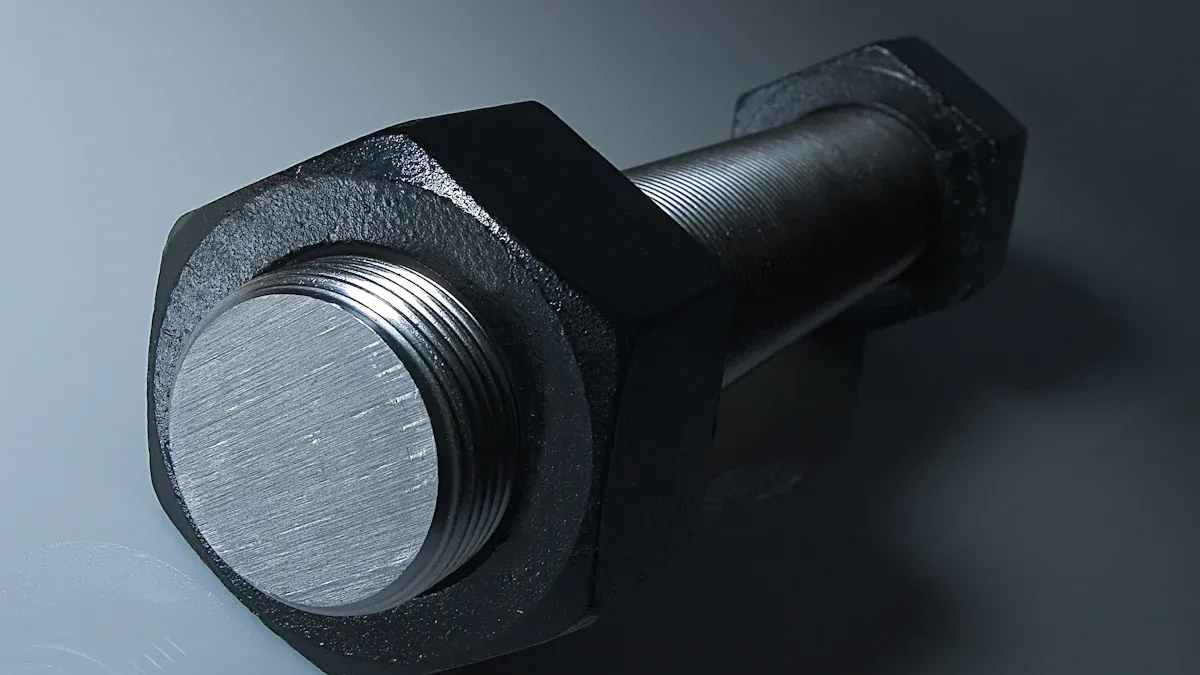
Industrial professionals select heavy duty hex nuts for demanding applications that require maximum reliability and strength. Leading companies such as Acument Global Technologies, Big Bolt Nut, and Portland Bolt consistently supply high-performance nuts and bolts. The following table shows key manufacturers trusted by industries for custom fasteners and hex nut solutions:
| Company Name |
|---|
| Acument Global Technologies |
| Big Bolt Nut |
| Canco Fastener |
| Dokka Fasteners |
| IGC Fastners |
| Infasco |
| LISI Group |
| MW Industries |
| Nucor Fastener |
| Oglaend System |
| Penn Engineering |
| Portland Bolt |
Each custom fasteners manufacturer focuses on compliance with industry standards. Professionals rely on these products for their proven durability and performance.
Key Criteria for Heavy Duty Hex Nuts in Industrial Use
Strength and Load Ratings
Tensile Strength
Tensile strength defines the maximum load a hex nut can withstand before breaking. Industrial sectors demand high tensile strength to ensure safety and performance. Construction projects use heavy duty hex nuts to secure high-tensile bolts in steel frameworks and bridges. The automotive industry relies on these nuts for fastening axles and suspension systems, where constant vibration occurs. Oil and gas operations require nuts that maintain integrity under extreme pressure and temperature. Marine and renewable energy sectors also depend on high tensile strength to withstand harsh environments and cyclic loading. This broad application demonstrates the critical role of tensile strength in maintaining structural integrity and operational safety.
Proof Load
Proof load measures the maximum force a hex nut can handle without permanent deformation. Manufacturers test each nut to ensure it meets or exceeds industry requirements. In heavy machinery and infrastructure, proof load ratings guarantee that fasteners will not fail under expected service loads. This property becomes essential in applications where safety and reliability cannot be compromised. By selecting nuts with appropriate proof load ratings, engineers prevent costly failures and downtime.
Tip: Always verify tensile strength and proof load ratings before selecting hex nuts for critical applications.
Material Quality and Industry Standards
ASTM and ISO Certifications
Industry standards such as ASTM A194 and ASTM A563 govern the quality of heavy duty hex nuts. These certifications ensure that each nut meets strict criteria for strength, durability, and performance. Manufacturers use alloy steel and carbon steel to produce nuts that comply with these standards. Stainless steel options provide additional corrosion resistance for specialized environments. The following table summarizes common materials and their corresponding standards:
| Material Type | Available Strength Grades | Industry Standards |
|---|---|---|
| Alloy Steel (Quenched & Tempered) | Grade 2H | ASTM A194 |
| Carbon Steel (High-Strength Applications) | Grade 2H | ASTM A194 |
| Stainless Steel (Corrosion Resistant Option) | Custom Grades | ASTM A194 (optional) |
Corrosion Resistance
Corrosion resistance remains a top priority in many industrial settings. Marine applications require nuts made from marine-grade stainless steel to prevent rust and degradation. Oil and gas equipment faces exposure to chemicals and moisture, making corrosion-resistant materials essential. Stainless steel and specially coated carbon steel nuts extend service life and reduce maintenance costs. By choosing the right material, industries protect their investments and ensure long-term reliability.
Thread Precision and Fit
Tolerance Grades
Thread precision directly impacts the performance and reliability of heavy duty hex nuts. Manufacturers machine threads to tight tolerances, ensuring a secure fit with bolts. This precision allows for optimal load distribution and reduces the risk of loosening under vibration or heavy loads. Each nut undergoes processes such as hot forging, CNC machining, and heat treatment to achieve the required thread quality.
Compatibility with Industrial Bolts
Compatibility between nuts and bolts ensures proper engagement and clamping force. Heavy hex nuts are designed for high-load applications, providing superior tensile strength and enhanced clamping force. Engineers select nuts that match the thread pitch and diameter of industrial bolts, guaranteeing secure fastening in construction, heavy machinery, and steel structures. Proper fit prevents failures and maintains safety in demanding environments.
- Threads machined to precise tolerances
- Enhanced vibration resistance through tight thread fit
- Secure engagement with industrial-grade bolts
By focusing on these key criteria, industries maximize the performance and safety of their fastening systems. Heavy duty hex nuts play a vital role in supporting critical infrastructure and equipment across multiple sectors.
Surface Treatments and Coatings
Surface treatments and coatings play a crucial role in extending the lifespan and performance of heavy duty hex nuts. Engineers select coatings based on environmental conditions, expected loads, and maintenance requirements. The right treatment protects against corrosion, chemical exposure, and mechanical wear.
| Treatment Type | Description | Best Use Case |
|---|---|---|
| Zinc Plating | Basic corrosion resistance with a shiny finish. | Indoor or dry environments |
| Hot-Dip Galvanizing | Robust protection against rust, ideal for outdoor and marine applications. | Outdoor, marine, and structural applications |
| Passivation (Stainless Steel) | Enhances natural corrosion resistance by removing free iron from the surface. | Stainless steel applications |
| Xylan, Dacromet, Geomet | Superior chemical and salt-spray resistance for harsh environments. | Harsh industrial or coastal environments |
Zinc Plating
Zinc plating provides a cost-effective solution for protecting hex nuts from corrosion. Manufacturers apply a thin layer of zinc to the surface, creating a shiny finish that resists oxidation. This treatment works best in indoor or dry environments where moisture exposure remains minimal. Zinc-plated nuts offer basic protection and maintain their appearance over time. Maintenance teams often choose zinc plating for applications in electrical cabinets, machinery housings, and warehouse installations.
Note: Zinc plating does not withstand prolonged exposure to water or chemicals. For outdoor or marine projects, engineers recommend more robust coatings.
Hot-Dip Galvanizing
Hot-dip galvanizing delivers superior rust protection for heavy duty hex nuts. The process involves immersing the nuts in molten zinc, forming a thick, durable coating. This treatment excels in outdoor, marine, and structural applications. Construction crews rely on galvanized nuts for bridges, towers, and steel frameworks. The coating resists abrasion and shields against harsh weather conditions. Hot-dip galvanizing extends service life and reduces maintenance costs in demanding environments.
- Provides robust corrosion resistance
- Ideal for infrastructure exposed to rain, salt, and chemicals
- Maintains structural integrity in marine and coastal installations
Black Oxide and Other Finishes
Black oxide coatings enhance the appearance and provide moderate corrosion resistance. The process creates a dark, matte finish that reduces glare and improves grip. Black oxide suits indoor machinery, automotive components, and tools. Other advanced finishes, such as Xylan, Dacromet, and Geomet, offer exceptional protection against chemicals and salt spray. These coatings serve harsh industrial or coastal environments where standard treatments fail. Engineers select specialty coatings for equipment in oil refineries, chemical plants, and offshore platforms.
Tip: Always match the surface treatment to the operating environment. Specialty coatings may increase initial costs but deliver long-term savings through reduced maintenance and extended service life.
Heavy duty hex nuts benefit from tailored surface treatments that address specific industrial challenges. Selecting the right coating ensures reliable performance and maximizes durability in every application.
Types and Materials of Heavy Duty Hex Nuts
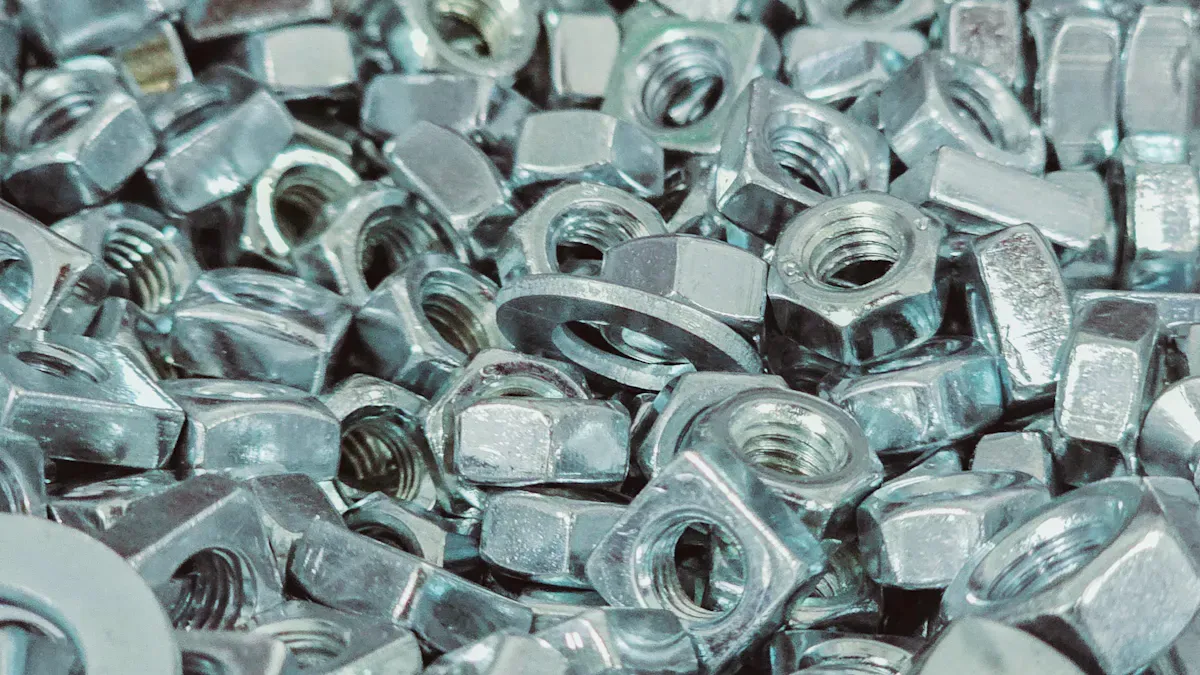
Common Types of Heavy Duty Hex Nuts
Industrial applications require a range of hex nut types, each designed for specific performance needs. The following table summarizes the most common types, their key features, and typical uses:
| Type of Hex Nut | Key Features | Common Applications |
|---|---|---|
| Heavy Hex Nuts | Thicker body, better strength, high-quality bearing surface | Flange connections, industrial equipment, pipeline construction, hot and high-pressure environments |
| Standard Hex Nuts | Six-sided shape, general-purpose fastening | Structural assemblies, machinery, automotive components, general construction |
| Nylock Hex Nuts | Incorporates nylon insert for anti-vibration | Automotive assemblies, moving machinery, aerospace components |
| Flange Hex Nuts | Wide flange for even pressure distribution | Automotive engines, electrical housings, metal frameworks |
| Lock Hex Nuts | Inbuilt lock to prevent slackness | Construction machinery, railway components, heavy-duty industrial tools |
Standard Hex Nuts
Standard hex nuts feature a classic six-sided design. They serve as the go-to choice for general fastening in structural assemblies, machinery, and automotive components. Their widespread availability and compatibility with various bolt types make them a staple in most industrial settings.
Flange Hex Nuts
Flange hex nuts include a wide flange at the base. This design distributes pressure evenly across the fastening surface, reducing the risk of damage to connected materials. Automotive engines and metal frameworks often use flange nuts to ensure secure, stable connections.
Lock Hex Nuts
Lock hex nuts incorporate features that prevent loosening under vibration or dynamic loads. These nuts often appear in construction machinery and railway components, where safety and reliability are critical. The locking mechanism maintains tension and reduces the need for frequent retightening.
Jam Hex Nuts
Jam hex nuts have a thinner profile than standard nuts. They fit into tight spaces and often pair with another nut to lock assemblies in place. Their compact size makes them suitable for applications with limited clearance, such as electrical housings or compact machinery.
Nylon Insert Lock Nuts
Nylon insert lock nuts, also known as Nylock nuts, contain a nylon ring that grips the bolt threads. This feature provides excellent resistance to vibration and prevents accidental loosening. Industries such as automotive, aerospace, and construction rely on these nuts for joints exposed to constant movement.
Tip: Selecting the right type of hex nut ensures optimal performance and safety in each application.
Material Comparisons for Heavy Duty Hex Nuts
Material selection plays a crucial role in the performance and longevity of hex nuts. The table below compares the most common materials used in industrial environments:
| Material | Strength | Corrosion Resistance | Cost Comparison |
|---|---|---|---|
| Stainless Steel | High | Excellent | 2-3 times higher than carbon steel |
| Carbon Steel | Moderate | Poor | Lower cost, cost-effective |
| Brass | Moderate | Good | Relatively expensive compared to carbon steel |
| Alloy Steel | High | Good | Higher than carbon steel, less than stainless steel |
Stainless Steel
Stainless steel hex nuts offer high strength and outstanding corrosion resistance. These nuts perform well in harsh environments, including marine and chemical processing industries. Their higher cost reflects their durability and low maintenance requirements.
Alloy Steel
Alloy steel nuts provide enhanced durability and strength. Manufacturers often use them in high-stress applications where reliability is essential. Alloy steel resists wear and deformation, making it suitable for heavy machinery and structural connections.
Carbon Steel
Carbon steel remains the most widely used material for heavy duty hex nuts. It delivers a balance of strength and affordability. While carbon steel nuts lack strong corrosion resistance, they excel in dry or controlled environments where cost-effectiveness is a priority.
Brass and Other Alloys
Brass hex nuts offer moderate strength and good corrosion resistance. Their use is common in niche applications where appearance and resistance to certain chemicals matter. Other specialty alloys may address unique requirements in electrical or high-temperature settings.
Note: Market data shows carbon steel leads in usage due to its cost-effectiveness, followed by stainless steel for its corrosion resistance and alloy steel for its durability.
Pros and Cons by Type and Material
Selecting the right hex nut involves weighing the advantages and disadvantages of each type and material. The following table highlights key points for common types:
| Type | Advantages | Disadvantages |
|---|---|---|
| Standard Hex Nut | Commonly used, available in various sizes | May loosen in high vibration environments |
| Heavy Hex Nut | Increased strength for higher load capacities | Heavier and bulkier than standard nuts |
| Heavy Hex Flange Nut | Stability when connecting components | Heavier and bulkier than standard nuts |
| Jam Nut | Fits in tight spaces, added vibration resistance | Thinner wall may not support high loads |
| Nylon Insert Lock Nut | Excellent anti-vibration, prevents loosening | Not suitable for high-temperature environments |
Strength vs. Corrosion Resistance
- Stainless steel and alloy steel nuts provide high strength and resist corrosion, making them ideal for demanding environments.
- Carbon steel offers good strength at a lower cost but lacks corrosion resistance.
- Brass nuts resist corrosion but do not match the strength of steel options.
Cost vs. Performance
- Heavy hex nuts and specialty materials increase initial costs but deliver superior performance and longevity.
- Standard hex nuts and carbon steel options offer cost savings for general applications.
- Proper selection based on project requirements ensures safety and cost-effectiveness.
🛠️ Proper evaluation of type and material helps engineers optimize safety, durability, and budget for every industrial project.
Performance and Durability of Heavy Duty Hex Nuts in Industrial Environments
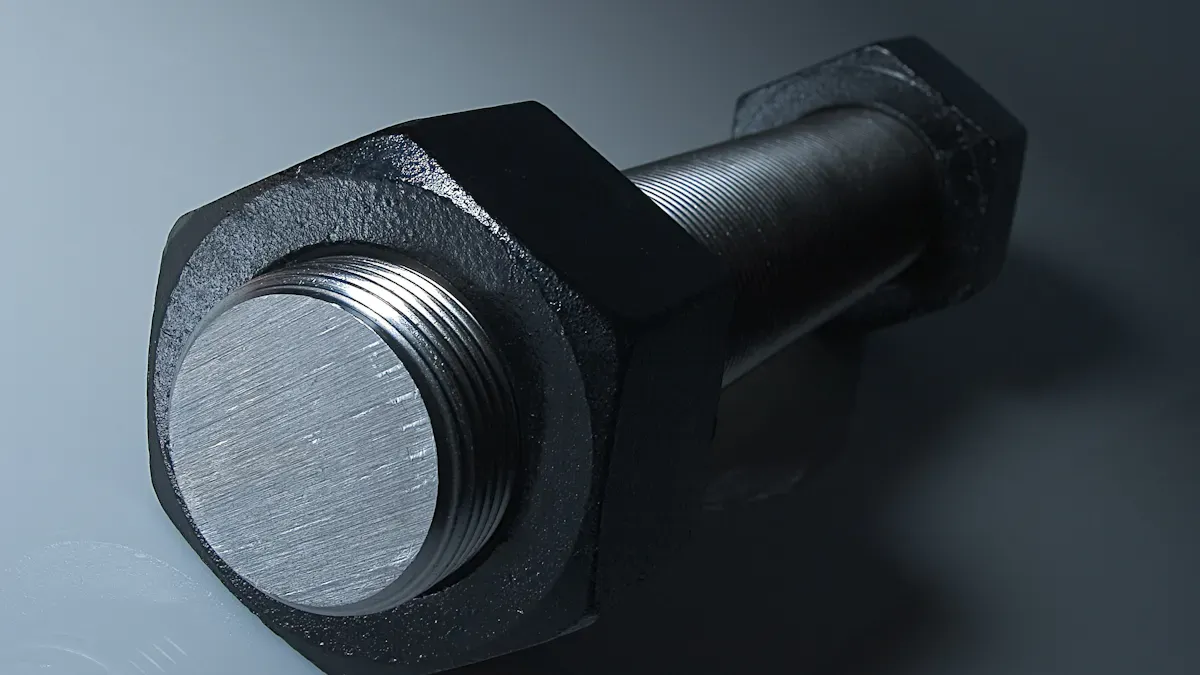
Stress and Load Testing
High-Load Applications
Heavy duty hex nuts demonstrate exceptional performance in high-load applications. Engineers select these nuts for their larger contact area, which distributes stress evenly across the joint. This feature proves vital in environments where machinery and structural components face intense forces. The nuts maintain integrity under high torque, ensuring safety and reliability.
- Larger contact area distributes stress evenly.
- High torque tolerance supports demanding environments.
- Reduces risk of material fatigue and loosening.
Vibration and Fatigue Resistance
Industrial machinery often operates under constant vibration. Heavy duty hex nuts resist loosening and material fatigue, even when exposed to repeated stress cycles. Their robust design and precise thread fit help maintain secure connections. Manufacturers report improved durability and reduced maintenance needs when using these nuts in equipment subject to vibration.
Engineers recommend heavy duty hex nuts for applications where vibration and fatigue pose significant risks to fastener integrity.
Corrosion and Environmental Resistance
Exposure to Chemicals
Industrial environments expose fasteners to chemicals that can cause corrosion and degradation. Material selection plays a critical role in resisting these challenges. Stainless steel and alloy steel nuts offer superior protection against chemical exposure, while carbon steel provides moderate resistance for general use.
| Material Type | Corrosion Resistance | Applications |
|---|---|---|
| Carbon Steel | Moderate | General industrial use |
| Stainless Steel | Excellent | Marine, food processing industries |
| Alloy Steel | High | High strength applications |
High Humidity and Outdoor Use
Outdoor installations and humid environments demand fasteners that withstand moisture and weather extremes. Stainless steel nuts excel in marine and coastal settings, providing excellent resistance to rust and corrosion. Alloy steel nuts deliver high strength and durability, making them suitable for infrastructure exposed to fluctuating temperatures and humidity.
Selecting the right material ensures long-term performance and reduces maintenance costs in challenging environments.
Real-World Case Studies
Heavy Machinery Installations
Manufacturers in heavy machinery industries have documented significant improvements after switching to heavy duty hex nuts. One machinery producer eliminated fastener failures in high-vibration environments by using grade 8.8 and 10.9 bolts with self-locking nuts and specialized coatings. They reported zero failures during field testing. In a textile mill, replacing standard nuts with heavy hex nuts reduced breakdowns and enhanced production efficiency. The machinery manufacturer observed better corrosion and vibration resistance, which extended service life.
- Machinery manufacturer eliminated fastener failures in high-vibration environments.
- Textile mill reduced breakdowns and improved efficiency with heavy hex nuts.
- Enhanced corrosion and vibration resistance extended machinery service life.
Construction and Infrastructure Projects
Construction and infrastructure projects rely on heavy duty hex nuts for their durability and reliability. These nuts provide necessary clamping force to withstand seismic activity and wind loads in steel structures. In bridge and tunnel engineering, they ensure joints remain secure under dynamic stress from heavy traffic and rail. Energy and petrochemical industries use engineered nuts to resist extreme heat and chemical exposure. Heavy machinery and automotive sectors benefit from precision fastening for complex mechanical movements.
| Application | Contribution |
|---|---|
| Steel Structure Construction | Withstands seismic activity and wind loads in warehouses and skyscrapers. |
| Bridge and Tunnel Engineering | Secures joints under dynamic stress and constant vibration. |
| Energy and Petrochemicals | Resists extreme heat and chemical exposure in refineries and power plants. |
| Heavy Machinery and Automotive | Offers precision for complex mechanical movements. |
| Middle Eastern Infrastructure | Addresses extreme heat and coastal humidity in utility projects. |
| European Distribution | Maintains loyalty through consistent mechanical test results. |
| Southeast Asian Industrial Parks | Provides cost-effective, high-performance alternatives for factory construction. |
Heavy duty hex nuts continue to deliver reliable performance and durability across diverse industrial environments.
Top Brands and Product Comparisons for Heavy Duty Hex Nuts
Leading Brands Overview
Industrial buyers often turn to established brands for consistent quality and reliable supply. The following brands lead the market for heavy-duty fastening solutions:
Fastenal
Fastenal supplies a broad range of industrial fasteners. They maintain extensive inventory and offer quick delivery. Their catalog includes hex nuts in multiple grades and finishes. Fastenal supports customers with technical resources and product traceability.
Grainger
Grainger stands out for its comprehensive selection and nationwide distribution network. They provide hex nuts that meet ASTM and ISO standards. Grainger’s online platform simplifies sourcing for maintenance and construction teams.
McMaster-Carr
McMaster-Carr is known for its vast inventory and detailed product specifications. They offer hex nuts in specialty materials and uncommon sizes. Their technical documentation helps engineers select the right fastener for each application.
Hillman
Hillman focuses on value and accessibility. Their products appear in hardware stores and industrial supply chains. Hillman’s hex nuts suit general-purpose and light industrial use, with options for both standard and specialty applications.
Simpson Strong-Tie
Simpson Strong-Tie specializes in fastening solutions for construction and infrastructure. Their hex nuts meet rigorous testing standards. The company invests in research and development to address evolving industry needs.
Leading brands invest in quality assurance, technical support, and supply chain reliability to meet the demands of industrial customers.
Side-by-Side Product Comparison Table
The table below compares key specifications, certifications, and application areas for top brands:
| Brand | Material Types & Grades | Standards & Certifications | Common Applications |
|---|---|---|---|
| Fastenal | Carbon steel, alloy steel, stainless steel (Grades 4.8–12.9, B7, L7) | ASTM A194, DIN934, ISO 4032 | Machinery, construction, automotive |
| Grainger | 35#, 45#, 40Cr, stainless steel, 8.8, 10.9, 12.9 | ASTM A325, DIN931, DIN558, ISO 4032 | Bridge, electrical, petrochemical |
| McMaster-Carr | 42CrMoA, 25Cr2MoVA, stainless steel, B7M | ASTM A194 2H, DIN985, DIN6923 | Aerospace, electronics, specialty builds |
| Hillman | Carbon steel, stainless steel, brass | Meets general ASTM and DIN standards | General construction, light industry |
| Simpson Strong-Tie | Alloy steel, stainless steel, high-strength grades | ASTM A194, ISO 4032, regional codes | Structural, seismic, infrastructure |
- All brands comply with relevant safety and quality standards.
- Product grades range from 4.8 to 12.9, including B7 and L7 for high-stress applications.
- Applications cover machinery, construction, bridge building, petrochemical, and more.
Product selection should match the required material, grade, and certification for each project.
Brand-Specific Strengths and Weaknesses
Availability and Distribution
- Fastenal and Grainger maintain large inventories and fast shipping across North America.
- McMaster-Carr excels in specialty items and technical support, though some rare items may have longer lead times.
- Hillman products are widely available in retail and industrial channels, making them accessible for smaller projects.
- Simpson Strong-Tie focuses on construction supply chains, ensuring availability for large infrastructure projects.
Customer Support
- Fastenal and Grainger offer robust technical assistance and after-sales service.
- McMaster-Carr provides detailed documentation and responsive customer service.
- Hillman’s support suits general inquiries and retail customers.
- Simpson Strong-Tie invests in engineering support for complex construction needs.
Proper pairing of hex nuts and bolts ensures reliability. Matching thread size, pitch, and grade prevents installation issues and supports balanced load distribution.
Carbon steel offers excellent tensile strength and cost-effectiveness but may require surface treatment for corrosion resistance.
Alloy steel provides superior strength and heat resistance, ideal for demanding environments, though it comes at a higher cost.
Stainless steel delivers exceptional corrosion resistance and durability, making it suitable for harsh conditions, but it is generally more expensive.
Zinc plating suits dry environments, hot-dip galvanizing protects outdoor installations, and Dacromet or Geomet coatings resist chemicals and salt spray.
Industry standards such as ISO 4032 and ASTM A194 define dimensions, properties, and testing protocols for heavy duty hex nuts.
Value and Cost Considerations for Heavy Duty Hex Nuts
Pricing by Material and Type
Industrial buyers evaluate pricing based on material and nut type. The cost varies significantly between standard and specialty nuts. The following table illustrates typical price ranges for common heavy duty hex nuts:
| Type of Nut | Price per Piece (FOB) | Price per Ton (FOB) |
|---|---|---|
| ASTM A453 GR 660 CLASS B Heavy Hex | $0.015 – $0.68 | $800 – $1600 |
| Standard Nuts | $0.015 – $0.68 | N/A |
| Lock Nuts | N/A | N/A |
| Self-Locking Nuts | N/A | N/A |
Manufacturers set prices according to grade, finish, and order volume. Specialty nuts often command higher prices due to advanced materials or coatings.
Bulk Purchase Discounts
Bulk purchasing offers substantial savings for industrial projects. Suppliers provide tiered discounts based on order volume:
| Order Volume | Discount Rate |
|---|---|
| Small Orders (< 1,000 units) | Higher per-unit cost due to fixed fees |
| Mid-Volume (1,000–10,000 units) | 5–15% off standard pricing |
| High-Volume (10,000+ units) | 15–30% off; potential for additional programs |
- Buyers leverage economies of scale to reduce per-unit costs by up to 30%.
- Negotiating tiered pricing at higher volumes increases cost efficiency.
- Comparing total landed cost, including shipping and tariffs, ensures accurate budgeting.
Cost per Unit Analysis
Cost per unit decreases as order size increases. Small orders incur higher costs due to fixed fees and logistics. Mid- and high-volume orders benefit from lower unit prices and additional supplier programs. Project managers analyze landed costs to optimize procurement strategies.
Availability and Lead Times
Domestic vs. Imported Products
Domestic products offer shorter lead times and local availability. Imported products, especially from China, face longer lead times due to international logistics and compliance requirements. China produces over 80% of the world’s hex nuts, but shipping and customs extend delivery times.
| Product Type | Lead Time | Availability |
|---|---|---|
| Domestic | Shorter | Local |
| Imported | Longer | International |
- Local sourcing reduces shipping and transportation costs.
- International sourcing may provide broader selection but increases wait times.
Supply Chain Reliability
Supply chain reliability impacts project timelines and costs. Domestic suppliers maintain inventory and respond quickly to demand changes. Imported products depend on global logistics, which can introduce delays. Reliable sourcing ensures consistent supply and minimizes downtime.
Cost-Effectiveness for Industrial Projects
Total Cost of Ownership
Total cost of ownership includes purchase price, installation, and maintenance. Heavy duty hex nuts remain economical to produce at scale. Minimal tool investment is required for installation. Sourcing from reputable suppliers guarantees high quality and performance.
- Product Quality: Material standards, durability, and compliance with industry certifications.
- Pricing & Cost Efficiency: Competitive rates, bulk discounts, and value for money.
- Supply Chain Reliability: Lead times, inventory management, and logistics capabilities.
Maintenance and Replacement Costs
Maintenance teams consider replacement costs when selecting fasteners. High-quality nuts reduce the frequency of replacements and lower long-term expenses. Choosing the right material and supplier minimizes maintenance needs and supports project budgets.
Project managers prioritize cost-effectiveness by balancing upfront pricing, supply chain reliability, and long-term maintenance savings.
Recommendations for Specific Industrial Needs Using Heavy Duty Hex Nuts
High Temperature Applications
Suitable Materials and Coatings
Industrial operations in refineries, power plants, and steam systems often expose fasteners to extreme heat. Selecting the right material ensures safety and longevity. Alloy steel hex nuts, such as those conforming to ASTM A194 Grade 2H, perform reliably up to 800°F (427°C). Stainless steel grades 304 and 316 withstand temperatures as high as 1500°F (815°C), making them suitable for general industrial and high-temperature environments. For the most demanding conditions, Inconel and Monel nuts exceed 1000°F (538°C) and offer exceptional resistance to both heat and corrosion. Creep resistant alloys also provide stability under prolonged thermal stress.
The following table summarizes recommended materials for high temperature applications:
| Material Type | Temperature Resistance | Corrosion Resistance | Typical Applications |
|---|---|---|---|
| Alloy Steel (ASTM A194 2H) | Up to 800°F (427°C) | Moderate | Refineries, power plants, steam systems |
| Stainless Steel (304/316) | Up to 1500°F (815°C) | High | General industrial, food processing |
| Inconel or Monel | Exceeds 1000°F (538°C) | Very High | Aerospace, extreme industrial settings |
| Creep Resistant Alloys | High | Varies | High-temperature, continuous operation |
For high temperature environments, engineers should prioritize nuts with proven heat resistance and stable mechanical properties. Specialty coatings, such as ceramic or phosphate, can further enhance performance by reducing oxidation and galling.
Corrosive Environments
Best Choices for Chemical Exposure
Chemical plants, marine installations, and wastewater facilities present unique challenges due to constant exposure to corrosive agents. Stainless steel hex nuts, particularly grades 304 and 316, deliver excellent resistance to most acids, alkalis, and chlorides. Inconel and Monel nuts provide even greater protection, especially in environments with aggressive chemicals or saltwater. These materials maintain structural integrity and resist pitting, even after prolonged exposure.
- Stainless steel 316 resists chlorides and marine atmospheres.
- Inconel and Monel excel in chemical processing and offshore platforms.
- Specialty coatings, such as Xylan or Dacromet, add another layer of defense against harsh chemicals.
Heavy hex nuts outperform standard nuts in these settings. Their robust construction and thicker walls minimize stress concentration and reduce the risk of failure. Maintenance teams can reuse these nuts without compromising safety, which is critical in facilities with frequent equipment servicing.
When selecting fasteners for corrosive environments, prioritize materials and coatings that match the specific chemical exposures present in the application.
Heavy Machinery and High-Load Uses
Top Picks for Maximum Strength
Heavy machinery, construction equipment, and infrastructure projects demand fasteners that can handle intense loads and constant vibration. Alloy steel heavy hex nuts, especially those rated to ASTM A194 Grade 2H, provide the strength required for these applications. Their thicker walls and wider flats distribute load more evenly, reducing the risk of loosening and fatigue.
- Heavy hex nuts offer superior vibration resistance, minimizing the chance of joint failure.
- The robust design supports high torque and repeated assembly or disassembly.
- These nuts maintain performance in harsh conditions, including exposure to saltwater and chemicals.
Reusable heavy hex nuts help maintenance teams reduce downtime and replacement costs. Their enhanced load distribution ensures safety in critical joints, such as those found in cranes, presses, and structural steel frameworks.
For maximum strength and reliability in heavy machinery, always select nuts with appropriate grade markings and certifications. Proper pairing with high-strength bolts further increases joint integrity.
General Purpose Industrial Use
Balanced Options for Versatility
Industrial environments often require fasteners that can adapt to a wide range of tasks. General purpose applications include assembly lines, maintenance operations, facility upgrades, and equipment repairs. In these settings, engineers and maintenance teams prioritize flexibility, reliability, and cost-effectiveness. They seek solutions that perform well across different load requirements, environmental conditions, and installation methods.
Balanced options for versatility combine several important characteristics:
- Material Adaptability: Carbon steel and stainless steel remain the most popular choices. Carbon steel offers a cost-effective solution for indoor or controlled environments. Stainless steel provides added corrosion resistance for areas exposed to moisture or chemicals.
- Standardization: Standard hex nuts and heavy hex nuts with common thread sizes and grades simplify inventory management. Teams can use the same fasteners across multiple projects, reducing confusion and streamlining procurement.
- Surface Treatments: Zinc plating and hot-dip galvanizing extend the service life of fasteners in general industrial settings. These coatings protect against rust and moderate chemical exposure, making them suitable for warehouses, production floors, and outdoor installations.
- Ease of Installation: Products with precise thread tolerances and consistent sizing reduce installation errors. Workers can quickly assemble or disassemble components, minimizing downtime during maintenance or upgrades.
The following table summarizes recommended options for general purpose industrial use:
| Nut Type | Material | Surface Treatment | Typical Application | Advantages |
|---|---|---|---|---|
| Standard Hex Nut | Carbon Steel | Zinc Plated | Indoor machinery, assembly lines | Cost-effective, easy to source |
| Heavy Hex Nut | Stainless Steel | Passivated | Outdoor equipment, humid areas | Corrosion resistant, durable |
| Flange Hex Nut | Carbon Steel | Hot-Dip Galvanized | Structural frames, outdoor racks | Even load distribution |
| Nylon Insert Nut | Carbon Steel | Zinc Plated | Moving parts, vibration-prone areas | Vibration resistance |
Tip: For most general industrial projects, a mix of standard and heavy hex nuts in carbon steel and stainless steel covers the majority of fastening needs. Teams should keep a range of sizes and finishes in stock to handle unexpected repairs or modifications.
Balanced options allow facilities to respond quickly to changing requirements. By standardizing on a core set of fasteners, companies reduce training time for new staff and simplify quality control. Heavy duty hex nuts provide the strength and reliability needed for both routine and critical tasks, ensuring safety and performance across diverse applications.
Maintenance managers recommend periodic reviews of fastener inventory. They assess which types and materials see the most use and adjust purchasing strategies accordingly. This proactive approach prevents shortages and supports continuous operation.
Note: Selecting versatile fasteners does not mean sacrificing quality. Always verify that chosen products meet relevant ASTM or ISO standards for industrial use.
Heavy duty hex nuts from brands like Fastenal, Grainger, and McMaster-Carr deliver proven strength and reliability for industrial use. Key selection criteria include tensile strength, material quality, and compliance with ASTM or ISO standards. Engineers achieve the best results by matching nut type and material to each environment. Professionals should always prioritize certified quality and long-term value.
Choosing the right hex nut protects equipment, ensures safety, and supports efficient operations in every industrial project.
FAQ
What defines a heavy duty hex nut?
Heavy duty hex nuts feature thicker walls and larger flats. They provide higher load capacity and improved durability. Engineers use these nuts in demanding industrial applications where strength and reliability matter most.
Which materials offer the best corrosion resistance?
Stainless steel and specialty alloys, such as Inconel and Monel, deliver excellent corrosion resistance. These materials withstand harsh chemicals and moisture. Maintenance teams prefer them for marine, chemical, and outdoor environments.
How do industry standards impact hex nut selection?
Industry standards, including ASTM and ISO, ensure consistent quality and performance. Manufacturers test hex nuts to meet these standards. Engineers select certified products to guarantee safety and compliance in industrial projects.
Can heavy duty hex nuts be reused?
Heavy duty hex nuts often allow reuse if they show no visible damage or wear. Maintenance teams inspect threads and surfaces before reinstallation. Reusing nuts saves costs and reduces waste in routine maintenance.
What surface treatments extend hex nut lifespan?
Zinc plating, hot-dip galvanizing, and specialty coatings like Xylan or Dacromet protect hex nuts from corrosion and wear. These treatments increase service life and reduce maintenance needs in challenging environments.
Are nylon insert lock nuts suitable for high temperatures?
Nylon insert lock nuts resist vibration but do not perform well in high-temperature settings. The nylon ring can degrade under heat. Engineers recommend metal lock nuts for applications involving elevated temperatures.
How should buyers compare brands for industrial hex nuts?
Buyers evaluate brands based on material quality, certifications, inventory availability, and customer support. Comparing specifications and user feedback helps identify the best option for each industrial requirement.
What is the most cost-effective option for general industrial use?
Carbon steel hex nuts with zinc plating offer a balance of strength and affordability. These nuts suit indoor and controlled environments. Facilities often stock them for routine repairs and assembly tasks.