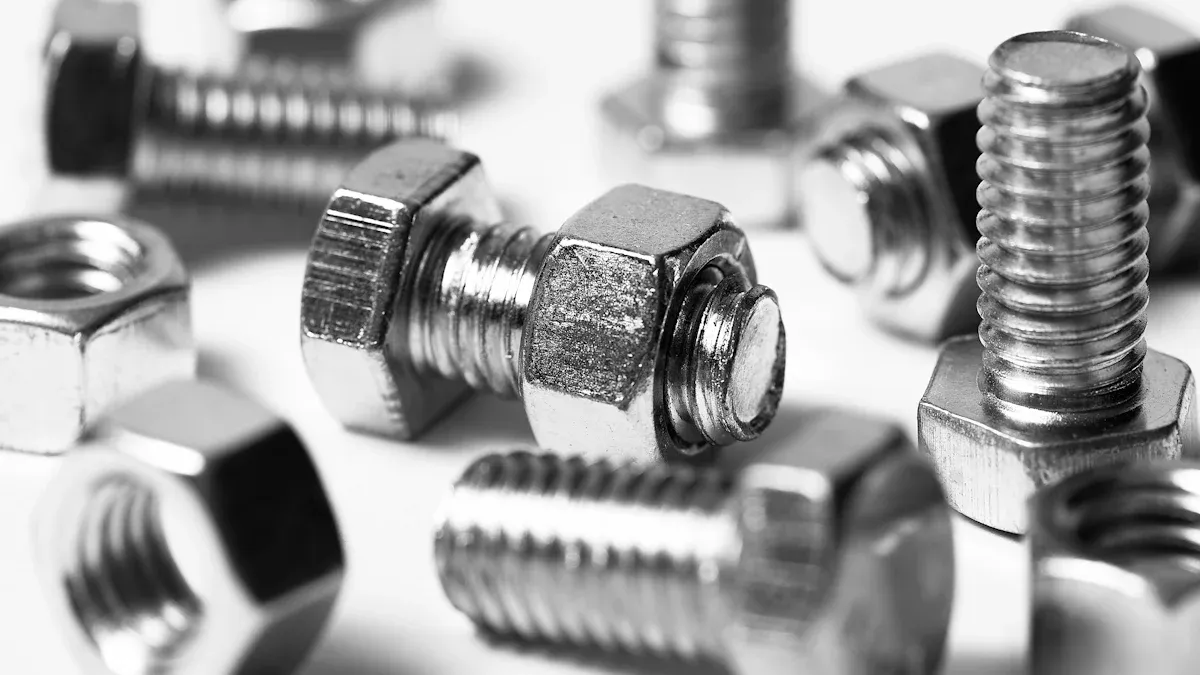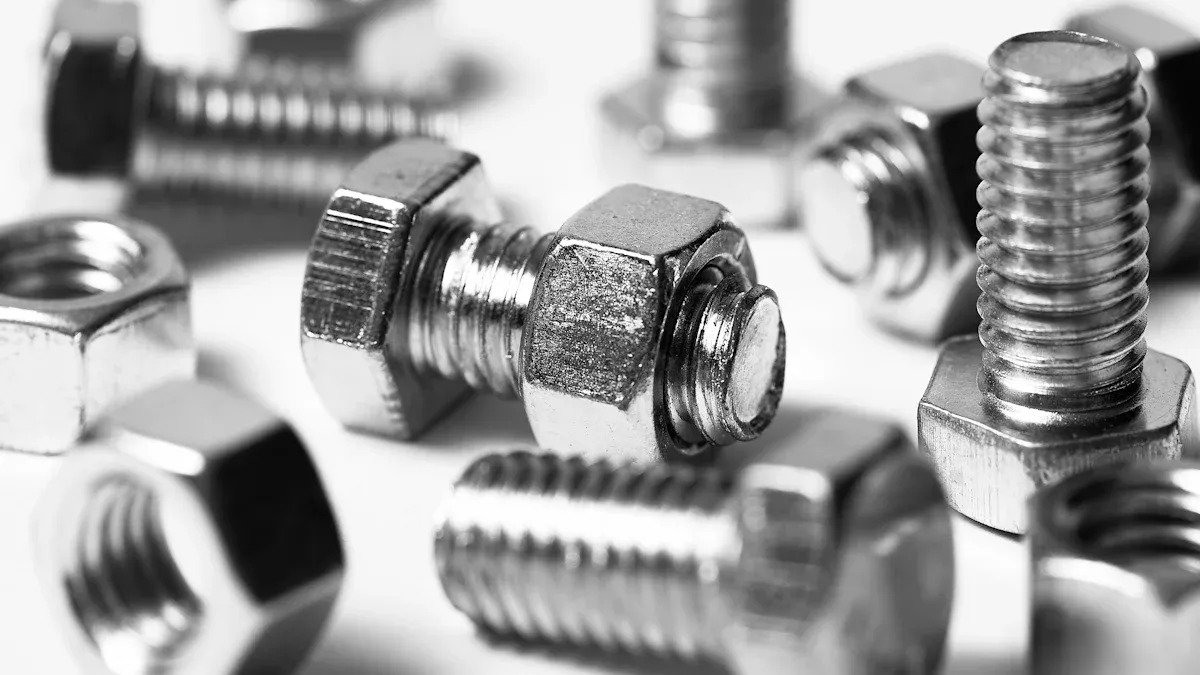

Expansion bolts in concrete provide immediate, high-strength anchoring. These mechanical anchors, also known as expansion anchors, are a cost-effective choice. The primary risk involves high expansion force, which can crack the base material. This makes stress-free chemical anchors a safer alternative near edges or in weaker concrete.
The global market for Anchor Bolts, including both standard expansion bolts and custom anchor bolts from a custom fasteners manufacturer, shows steady growth:
Metric Value Market Size in 2024 USD 3.11 billion Projected Revenue in 2030 USD 3.90 billion Growth Rate (2024-2030) CAGR of 3.9%
The Pros: Why Expansion Bolts Are a Go-To Choice

Professionals in construction and engineering frequently select expansion bolts for their compelling advantages in speed, cost, and simplicity. These mechanical anchors offer a reliable solution for many applications, making them a staple in the industry. Understanding their benefits clarifies why they remain a go-to choice for anchoring into solid concrete.
Unmatched Speed and Efficiency
Time is a critical resource on any job site. Expansion anchors excel at optimizing project schedules through their rapid installation and immediate functionality.
Immediate Load-Bearing Capacity
One of the most significant advantages of expansion bolts is their ability to bear a load immediately after installation. Once the anchor is set and torqued to the specified value, it is ready for use.
No Curing Time Required
Unlike chemical adhesives that require a specific curing period, which can vary based on temperature and humidity, mechanical anchors have no such waiting time. This eliminates a major bottleneck in the construction workflow. Installers can move on to the next task right away, maintaining project momentum.
Streamlining Project Timelines
The combination of immediate load capacity and no curing time directly translates to shorter project timelines. For an average-sized office building, efficient anchoring methods can save between 80 and 100 man-hours. This reduction can shorten a construction schedule by two to three weeks, a crucial benefit for meeting tight deadlines.
Cost-Effectiveness for Any Budget
Budgetary constraints are a reality for nearly every project. The use of expansion bolts in concrete provides a financially sound solution without compromising strength in appropriate applications.
Lower Upfront Material Costs
Expansion bolts generally have a lower per-unit cost compared to their chemical counterparts. This cost advantage becomes substantial on large-scale projects requiring hundreds or thousands of fastening points. The table below illustrates typical pricing for various sizes of a common wedge-type anchor, highlighting their affordability.
| DESCRIPTION | SIZE | LENGTH (mm) | UNIT PRICE (USD) |
|---|---|---|---|
| Wedge Type | M8 | 85 | $0.52 |
| Wedge Type | M10 | 95 | $1.61 |
| Wedge Type | M12 | 115 | $4.00 |
| Wedge Type | M16 | 130 | $2.70 |
| Wedge Type | M20 | 170 | $15.72 |
Note: Prices are illustrative and can vary significantly based on manufacturer, material (e.g., zinc-plated vs. stainless steel), and supplier.
Reduced Labor and Tooling Expenses
The quick and simple installation process reduces labor costs. Faster installations mean fewer man-hours are billed to the project. Furthermore, the required tooling is standard for most job sites, eliminating the need to purchase or rent specialized and expensive dispensing tools often required for chemical anchoring systems.
Comparing Costs to Chemical Anchors
When evaluating total project costs, mechanical anchors consistently present a more economical option in many scenarios. The higher material cost of chemical anchors, combined with potential needs for specialized applicators and longer installation times due to curing, makes them a more premium choice.
| Criteria | Mechanical Anchors | Chemical Anchors |
|---|---|---|
| Material Cost | Lower per unit | Higher per unit |
| Labor Cost | Lower (fast installation) | Higher (curing time) |
| Tooling Cost | Minimal (standard tools) | Higher (specialized dispensers) |
Simplicity in Installation
The straightforward installation process for expansion bolts reduces the potential for complex errors and makes them accessible to a wide range of trade professionals.
The Drill, Clean, Insert, Tighten Process
The installation sequence is elegantly simple and easy to master. It follows four basic steps:
- Drill: Drill a hole to the specified diameter and depth.
- Clean: Thoroughly clean all dust and debris from the hole.
- Insert: Tap the anchor into the cleaned hole.
- Tighten: Use a wrench to tighten the nut to the required torque value, which sets the anchor.
Minimal Specialized Tools Needed
Installation requires only basic, commonly available tools:
- A hammer drill with the correct size carbide bit
- A wire brush and compressed air for cleaning the hole
- A hammer or mallet
- A torque wrench
This accessibility ensures that crews can perform installations without needing extensive specialized training or equipment.
Reducing the Margin for Complex Errors
While proper installation is always critical, the process for expansion bolts is less prone to the types of errors associated with chemical anchors, such as improper nozzle mixing, temperature-sensitive curing, or incorrect resin injection. The mechanical nature of the anchor provides clear, physical feedback when it is set correctly.
High Strength and Reliability
Beyond speed and cost, expansion bolts deliver impressive strength and dependable performance in the right conditions. Their design creates a powerful connection capable of supporting significant loads. These mechanical anchors are engineered to provide reliability through fundamental physical principles, making them a trusted choice for structural and non-structural applications.
Understanding Tensile (Pull-Out) Force
Tensile force is the primary load that an anchor must resist. It is the “pull-out” force that tries to extract the bolt straight out of the hole. Expansion bolts counter this force with exceptional effectiveness.
- Friction is Key: When an installer tightens the nut, the anchor’s expansion clip or sleeve is forced outward. This action presses the anchor firmly against the walls of the concrete hole.
- Creating a Lock: This immense pressure generates a high degree of friction. The anchor essentially becomes locked into the concrete, creating a powerful mechanical interlock that resists being pulled out.
Think of it this way: Imagine trying to pull a rubber wedge out of a tight wooden slot. The harder you pull, the more the wedge grips the sides. An expansion bolt works on a similar principle, but with the immense strength of steel against concrete.
Understanding Shear (Sideways) Force
Shear force acts perpendicular to the anchor. It is a sideways or lateral force that tries to slice the bolt in half. This occurs when fastening items like wall plates or support brackets that are subject to horizontal pressure.
The anchor’s resistance to shear force depends almost entirely on the strength of the bolt’s steel body itself. The diameter and the grade of the steel determine its shear capacity. A larger diameter, higher-grade steel bolt can withstand much greater sideways forces than a smaller, lower-grade one. In most applications, anchors must resist a combination of both tensile and shear forces.
Dependability in High-Strength Concrete
The performance of an expansion bolt is directly linked to the quality of the base material. They achieve their maximum load capacity and reliability in solid, high-strength concrete.
Concrete strength is measured in Pounds per Square Inch (PSI). Standard concrete might be 3,000 PSI, while high-performance concrete can exceed 5,000 PSI.
- A Stronger Grip: High-strength concrete provides a dense, solid base. This allows the anchor’s expansion mechanism to grip securely without crushing or fracturing the surrounding material.
- Predictable Performance: In well-cured, high-PSI concrete, the load values provided by the manufacturer are highly reliable. Engineers can confidently specify these anchors knowing they will perform as expected, ensuring the safety and integrity of the structure.
Conversely, using these anchors in low-strength, cracked, or lightweight concrete dramatically reduces their holding power and introduces significant risk.
The Cons: Critical Risks and Limitations
While expansion bolts in concrete offer many benefits, their use comes with significant risks and limitations. The very mechanism that gives them strength is also their greatest weakness. Understanding these disadvantages is crucial for any engineer or installer to prevent catastrophic failures and ensure structural integrity. These drawbacks primarily revolve around the intense stress the mechanical anchors exert on the base material and their strict installation requirements. For certain applications, these risks make expansion anchors an unsuitable choice.
The Primary Drawback: High Expansion Stress
The fundamental principle of an expansion anchor is to create a secure connection by force. This internally generated force, while necessary for holding power, places the surrounding concrete under immense and constant stress.
How Expansion Force Works
When an installer tightens the nut on an expansion bolt, it pulls a tapered cone into an expansion sleeve or clip. This action forces the sleeve to flare outwards, pressing against the inner walls of the drilled hole with tremendous pressure. This creates a friction-based lock, but it also introduces a powerful outward force that the concrete must continuously resist.
The Risk of Cracking and Spalling
If the expansion force exceeds the concrete’s tensile strength, the material will fail. This can manifest in two ways:
- Cracking: Visible cracks can radiate from the anchor point, compromising the structural integrity of the concrete slab or wall.
- Spalling: The concrete surface around the anchor may chip or break away. This is particularly common when anchors are installed too close to an edge.
⚠️ Warning: A cracked or spalled area around an anchor is a clear sign of impending failure. The anchor’s load capacity in this state is severely compromised and unpredictable.
Why Low-Strength Concrete is Vulnerable
The reliability of an expansion anchor depends on a strong, dense base material. In low-strength, porous, or poor-quality concrete, the material lacks the internal cohesion to withstand high localized stress. The expansion force can easily crush the weak material inside the hole, preventing the anchor from achieving a secure grip and potentially causing a complete pull-out failure under a much lower load than specified.
Long-Term Effects of Constant Stress
The stress from an expansion anchor does not disappear after installation; it is a constant force. Over months and years, this sustained pressure can lead to material fatigue, a phenomenon known as creep. Micro-cracks can form and slowly propagate through the concrete, weakening the connection over time. This is a hidden danger that may not become apparent until the anchor is subjected to a sudden or heavy load.
Strict Placement Requirements
The high stress generated by expansion anchors dictates rigid rules for their placement. Ignoring these guidelines drastically reduces the anchor’s performance and increases the risk of concrete failure.
The Importance of Edge Distance
Edge distance is the measurement from the center of the anchor to the nearest free edge of the concrete. Installing an anchor too close to an edge is a common cause of failure. The expansion force has nowhere to go but outward, leading to a “blow-out” where the side of the concrete breaks off completely. American Concrete Institute (ACI) standards, such as ACI 318-14, provide strict guidelines for this. Tests are performed to establish a manufacturer’s minimum edge distance (cmin) to ensure the concrete does not split. If manufacturer data is unavailable, ACI dictates a minimum edge distance of at least 8 anchor diameters.
Minimum Spacing Between Anchors
When multiple anchors are installed in a group, they must be spaced far enough apart. Placing them too close together causes their individual stress zones to overlap. This creates a concentrated area of extreme stress, significantly weakening the concrete between the anchors and reducing the holding power of the entire group. ACI test protocols also define a minimum spacing (smin) to prevent this interaction. As a general rule, the industry recommends a minimum spacing of ten anchor diameters between fasteners.
How Placement Affects Load Capacity
Failing to meet minimum spacing and edge distance requirements directly reduces an anchor’s load capacity. The overlapping stress zones mean that each anchor cannot develop its full holding power. The reduction can be significant, and engineers must account for it in their calculations. For wedge and sleeve anchors, a 50% reduction in spacing can require a 40% reduction in load values.
The impact of improper spacing on load capacity is predictable and severe:
| Anchor Spacing | Approximate Load Capacity Reduction |
|---|---|
| 10x Anchor Diameter | No Reduction |
| 5x Anchor Diameter | -20% |
| 3x Anchor Diameter | -40% |
These reduction factors are cumulative, meaning the effect is even greater in groups of three or more closely spaced anchors.
Planning Your Anchor Layout
Because of these strict requirements, installers cannot place anchors arbitrarily. A successful installation requires careful pre-planning. The layout of anchor points must be mapped out in advance to ensure all spacing and edge distance minimums are met without compromising the design.
Unsuitability for Certain Base Materials
Expansion anchors are designed almost exclusively for solid, dense concrete. Using them in other common construction materials can lead to poor performance or outright failure.
Failures in Hollow Block or Brick
Using expansion anchors in hollow base materials like concrete block (CMU) or hollow brick is a critical mistake. The expansion mechanism exerts force against the thin inner walls of the material’s voids. These walls are not strong enough to resist the pressure and will simply crack and break away, leaving the anchor with nothing to grip.
Issues with Lightweight or Cracked Concrete
As previously mentioned, lightweight concrete and concrete with pre-existing cracks are poor candidates for expansion anchors.
- Lightweight Concrete: Its lower density and compressive strength mean it cannot provide the solid resistance needed for the anchor to grip securely.
- Cracked Concrete: Installing an anchor in or near an existing crack is extremely dangerous. The expansion force will act to widen the crack, leading to a rapid failure of the connection.
Performance in Green (Uncured) Concrete
Concrete requires time to cure and reach its specified compressive strength. Installing mechanical anchors into “green” or uncured concrete is a recipe for failure. The material is still relatively soft and pliable, and it cannot resist the anchor’s expansion force.
- It is never permissible to install and load structural anchors before the concrete has cured for a full 28 days.
- For non-structural applications, installers must wait a minimum of 7 days, by which time the concrete has reached about 75% of its final strength.
- Installing an anchor just a day or two after a pour, when the concrete is at only 25-30% strength, risks fracturing the material and creating a permanently weakened connection point.
Installation Sensitivity
The performance of expansion bolts is highly dependent on precise installation. Unlike more forgiving systems, small deviations from the manufacturer’s instructions can lead to a dramatic loss of holding power or complete failure. These installation-related disadvantages require careful attention from every installer to mitigate risk.
The Critical Need for a Clean Hole
Drilling into concrete creates a significant amount of fine dust and debris. The removal of this material from the hole is not an optional step; it is absolutely essential for achieving the anchor’s specified load capacity.
When an installer fails to clean the hole properly, a layer of dust remains on the interior walls. This dust acts as a lubricant between the anchor’s expansion mechanism and the concrete. Instead of gripping the solid base material, the anchor presses against a loose, compressible layer of powder. This severely reduces the friction needed for a secure connection, significantly lowering the anchor’s pull-out strength and making it much easier for the anchor to dislodge under load.
Professional Tip: The industry-standard cleaning procedure is “brush, blow, brush, blow.”
- Use a stiff wire brush, sized to the hole diameter, to scrub the interior walls.
- Use high-pressure air to blow all loose debris out of the hole.
- Repeat the brushing step.
- Repeat the blowing step to ensure the hole is completely free of dust.
Dangers of Over-Torquing the Bolt
Every expansion bolt has a manufacturer-specified installation torque. Applying the correct amount of rotational force is critical for setting the anchor properly. Using a calibrated torque wrench is the only way to ensure this precision.
Over-tightening an expansion bolt creates excessive stress and can lead to two distinct types of failure. First, the extreme tension can stretch the steel of the bolt beyond its yield point, causing it to weaken or fracture. Second, the immense outward pressure can damage the surrounding concrete. This excessive stress can cause the concrete to crack and fail, a dangerous phenomenon known as ‘Concrete Breakout‘, where a cone-shaped piece of concrete breaks away from the surface, resulting in a total loss of connection.
| Torque Level | Result | Risk Level |
|---|---|---|
| Under-Torqued | Anchor is not fully expanded; low holding power. | ⚠️ High |
| Correctly Torqued | Anchor achieves specified holding power. | ✅ Safe |
| Over-Torqued | Risk of bolt fracture or concrete breakout. | ☠️ Critical |
Consequences of an Incorrect Hole Size
The relationship between the anchor and the hole diameter is precise. Using a drill bit that is even slightly the wrong size will render the installation useless. Installers must always use the specific ANSI-standard carbide drill bit recommended by the manufacturer for their chosen mechanical anchors.
- Hole Too Large: If the hole is oversized, the anchor’s expansion sleeve or clip cannot make firm contact with the concrete walls. When the installer attempts to tighten the nut, the entire anchor assembly will spin in the hole, unable to expand or create any holding power.
- Hole Too Small: If the hole is undersized, the installer will be unable to hammer the anchor to its required embedment depth. Attempting to force the anchor into a tight hole can damage the anchor’s threads or expansion mechanism, preventing it from functioning correctly even if it is partially inserted.
A correctly sized hole ensures the anchor fits snugly before tightening, allowing the expansion mechanism to work exactly as designed.
Exploring the Main Types of Expansion Bolts
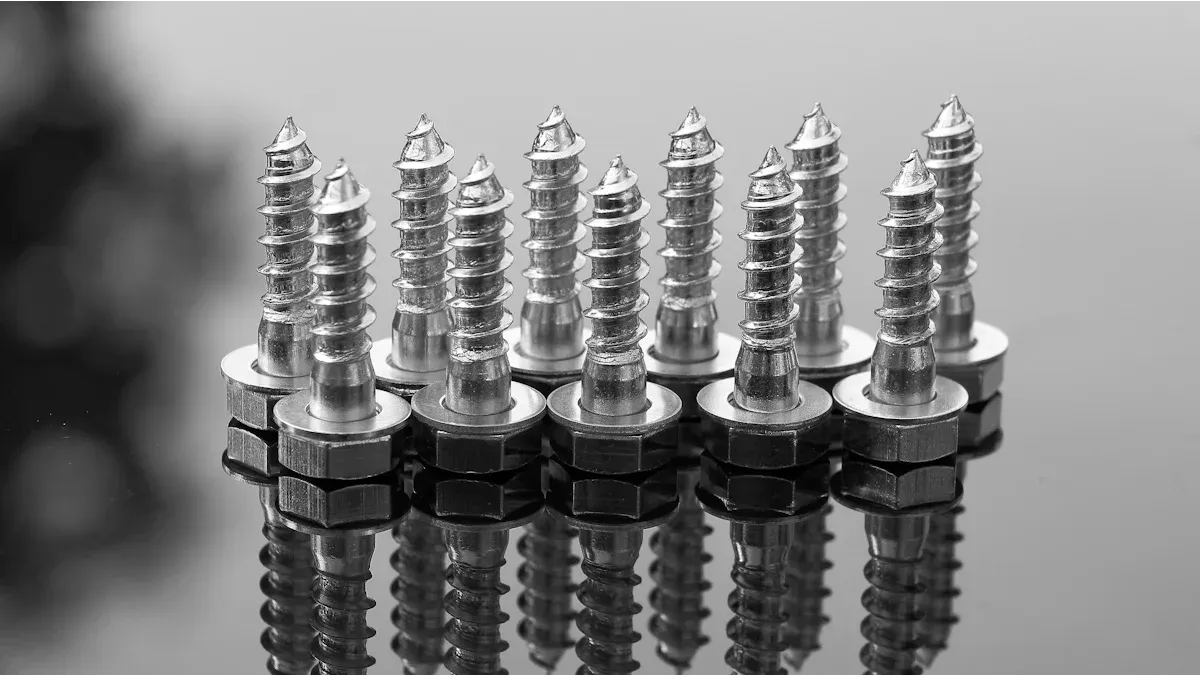
Not all expansion bolts are created equal. Different designs offer unique advantages for specific applications and base materials. Understanding the main types of anchors helps professionals select the right fastener for the job, ensuring both safety and efficiency. This section explores the mechanics and best uses for three common expansion bolts: wedge, sleeve, and drop-in anchors.
Wedge Anchors
Wedge anchors are the workhorses of heavy-duty fastening in solid concrete. Their design provides some of the highest holding values among all mechanical anchors.
How They Work
Installers insert the anchor into a pre-drilled hole and tighten the nut. This action pulls the bolt’s tapered cone-shaped end up through an expansion clip. The clip is forced outward, wedging it tightly against the walls of the concrete hole and creating an incredibly strong frictional grip.
Best for Heavy-Duty Structural Connections
The immense holding power of wedge anchors makes them ideal for critical structural applications. Common uses include:
- Attaching steel beams and columns to concrete footings.
- Securing heavy machinery to factory floors.
- Hanging large pipes and ductwork from concrete ceilings.
Professional Note: For projects in high-wind regions or areas with seismic activity, a structural engineer must specify the appropriate wedge anchors. Consultation is essential to meet project-specific load requirements and safety codes.

Specific Pros and Cons
- Pro: Unmatched tensile and shear strength in solid concrete.
- Pro: Available in a wide range of diameters and lengths.
- Con: Unsuitable for any hollow material like brick or block.
- Con: Generates very high stress, requiring strict edge distance and spacing.
Sleeve Anchors
Sleeve anchors offer greater versatility than wedge anchors, making them a popular choice for medium-duty applications across various base materials.
How They Work
A sleeve anchor consists of a bolt, a flared cone-shaped nut, and a full-length expansion sleeve. As the bolt is tightened, it draws the cone into the sleeve. This causes the entire sleeve to expand along its length, distributing the expansion force over a much larger surface area.
Best for Medium-Duty Use in Block and Brick
The distributed pressure makes sleeve anchors effective in less-dense or hollow materials where the focused stress of wedge anchors would cause failure. They are a reliable choice for fastening items to concrete block (CMU), brick, and porous concrete.
Specific Pros and Cons
The table below compares key features of sleeve anchors against other types of anchors.
| Feature | Sleeve Anchors |
|---|---|
| Material Suitability | Good for concrete, brick, and block. |
| Effectiveness | More effective in hollow materials. |
| Versatility | Versatile for diverse construction tasks. |
- Pro: Can be used in a wide range of solid and hollow base materials.
- Pro: The larger bearing surface reduces the risk of cracking weaker materials.
- Con: Offers lower ultimate load capacity compared to wedge anchors in solid concrete.
Drop-In Anchors
Drop-in anchors are female anchors designed for flush-mount applications, particularly for overhead work where a threaded rod is needed.
How They Work
An installer first drops the anchor body into a pre-drilled hole. Then, they use a special setting tool to drive an internal expansion plug downward. This action flares the base of the anchor, locking it into the concrete. The internal threads are then ready to accept a bolt or threaded rod.
Best for Overhead and Flush-Mount Needs
The flush-mount design of drop-in anchors makes them perfect for suspending items from a ceiling, such as pipe hangers, fire sprinkler systems, and cable trays. Because the anchor sits entirely inside the concrete, it leaves no protruding stud.
Specific Pros and Cons
- Pro: Creates a flush surface, allowing for easy fixture removal.
- Pro: Internal threads allow for the use of bolts or threaded rods of any length.
- Con: Requires a specific setting tool for proper installation.
- Con: Lower holding power than wedge anchors of a similar diameter.
Strike Anchors (Hammer-Set)
Strike anchors, also known as hammer-set anchors, represent one of the simplest and fastest-installing types of anchors available. Their design prioritizes speed and ease of use for light-duty, permanent fastening. Unlike anchors that require tightening with a wrench, a strike anchor sets with a few sharp blows from a hammer, making it a unique solution for specific tasks.
How They Work
The installation process for a strike anchor is exceptionally straightforward. An installer first drills a hole to the correct diameter and depth. After cleaning the hole, they insert the anchor assembly. The anchor consists of a body and a pre-inserted internal pin or nail. The installer then uses a hammer to drive the pin flush with the anchor’s head. This driving action forces the anchor body to expand at its base, securely locking it into the concrete.
Best for Light-Duty, Tamper-Proof Fastening
Strike anchors are the preferred fastening solution in scenarios demanding a permanent, non-removable attachment. Their design makes them inherently tamper-proof, as they cannot be uninstalled once set. This feature is critical in situations requiring high security and resistance to unauthorized removal. They are suitable for light-duty applications in solid concrete, brick, and even hollow block.
Common uses include:
- Securing electrical junction boxes and conduit straps.
- Fastening roof flashing and termination bars.
- Attaching lightweight signage or fixtures in public areas.
- Anchoring wood furring strips to concrete walls.
Different head styles, such as TORX® Tamper Resistant, Hex-Pin, and Spyke-Pins®, offer varying levels of security and aesthetic finish for these applications.
Specific Pros and Cons
The primary benefit of a strike anchor is its installation speed, but this comes with the trade-off of lower strength and permanence. Professionals must weigh these factors before selecting this fastener.
| Pros 👍 | Cons 👎 |
|---|---|
| Extremely Fast Installation: The hammer-in method is the quickest of all mechanical anchors. | Lower Load Capacity: Only suitable for light-duty static loads. |
| Tamper-Proof: Once set, the anchor cannot be removed, providing excellent security. | Permanent Installation: Cannot be removed without destroying the anchor and damaging the concrete. |
| Simple to Use: Requires only a drill and a hammer, with minimal room for error. | Not for Structural Use: Lacks the strength for heavy or critical connections. |
The permanence of strike anchors is a double-edged sword. While it provides security, it also means that any fixture attached with them cannot be easily relocated or adjusted.
Key Considerations for Using Expansion Bolts in Concrete
Selecting the correct anchor requires a thorough evaluation of the project’s specific conditions. Professionals must analyze the concrete base material, understand the load demands, and consider the surrounding environment to ensure a safe and durable installation.
Assessing Your Concrete’s Condition
The performance of an expansion anchor is entirely dependent on the quality of the concrete it is set in. A careful assessment of the base material is the first step in any successful anchoring project.
Identifying Concrete Strength (PSI)
Concrete strength, measured in Pounds per Square Inch (PSI), dictates an anchor’s ultimate holding power. Higher PSI concrete provides a stronger grip. When the concrete’s strength is unknown, professionals use several on-site testing methods to get an accurate estimate.
| Method | Description | ASTM Standard |
|---|---|---|
| Rebound Hammer | A hammer impacts a plunger on the concrete, and the rebound is correlated to strength. | C805 |
| Penetration Resistance | A device drives a pin into the concrete; the force or depth is correlated to strength. | C803 |
| Ultrasonic Pulse Velocity | Measures the speed of sound waves through the concrete to estimate density and strength. | C597 |
| Drilled Core | A core sample is extracted and tested in a lab for a direct PSI measurement. | C42 |
Checking for Cracks and Reinforcement
Installers must visually inspect the concrete surface for any existing cracks. Placing an anchor in or near a crack will compromise its integrity. It is also crucial to locate internal reinforcement (rebar) before drilling to avoid damaging the structure or the drill bit.
Age and Curing Status of the Concrete
Concrete must be fully cured to achieve its designed strength. Installers should never place anchors in “green” concrete. A minimum curing time of 28 days is standard practice for any structural application to ensure the material can withstand the anchor’s expansion forces.
Understanding Load Requirements
An anchor must be strong enough to support the object it is fastening. This requires a clear understanding of the forces that will act upon it throughout its service life.
Static vs. Dynamic Loads
- Static Loads are constant and unchanging, such as the weight of a stationary piece of equipment.
- Dynamic Loads involve movement, vibration, or shock, like the forces from a running motor or wind pressure on a sign. Dynamic loads place significantly more stress on an anchor.
Calculating Tensile and Shear Loads
Engineers calculate the specific tensile (pull-out) and shear (sideways) forces the anchor must resist. This calculation ensures the selected anchor has a published load capacity that exceeds the demands of the application.
The Importance of Safety Factors
Professionals never design an anchor to its maximum ultimate load. Instead, they apply a safety factor to establish a lower, allowable working load.
A common safety factor is 4:1, meaning an anchor with a 4,000-pound ultimate capacity is only rated for a 1,000-pound working load. For critical applications like fall protection, OSHA requires anchors to either support 5,000 pounds or maintain a safety factor of at least two.
Environmental Factors
The location of the anchor determines its exposure to elements that can degrade its performance and lifespan.
Interior vs. Exterior Applications
Interior applications are generally dry and climate-controlled. Exterior installations expose anchors to moisture, temperature fluctuations, and UV radiation, all of which accelerate wear and corrosion.
Corrosion Resistance (Zinc-Plated vs. Stainless Steel)
Choosing the right material is critical for longevity, especially for expansion bolts in concrete used outdoors. Zinc-plated steel has a sacrificial coating that corrodes first, but it offers limited protection. Stainless steel forms a self-healing protective layer, making it far superior for corrosive environments.
| Comparison Parameter | Stainless Steel | Zinc-Plated |
|---|---|---|
| Corrosion Resistance | Excellent; ideal for wet or coastal areas. | Limited; best for dry, indoor use. |
| Lifespan | Very long, providing decades of service. | Shorter, especially when the coating is scratched. |
Performance in High-Vibration Areas
Constant vibration can cause mechanical anchors to loosen over time, reducing their holding power. In environments with heavy machinery or significant traffic, these anchors require regular inspection or the selection of a more vibration-resistant alternative.
Best Practices for Safe Installation
A successful anchor installation depends on careful preparation and precise execution. Following established best practices minimizes risk and ensures the anchor achieves its full load-bearing capacity. Professionals adhere to a strict workflow from selection to final inspection.
Pre-Installation Checklist
Proper planning before drilling the first hole is the foundation of a safe and secure connection. This checklist covers the critical preliminary steps.
Selecting the Right Anchor Type and Size
An installer must first match the anchor to the specific demands of the application. This selection process involves several key factors:
- Fixture Weight and Size: The object’s weight determines the required safe working load. A 100-pound fixture, for example, needs anchors with a combined capacity well above that weight.
- Fixture Location: The environment dictates the anchor’s material. An installer uses zinc-plated anchors for dry indoor use and stainless steel for outdoor or corrosive settings.
- Applied Stresses: The forces on the fixture determine which types of anchors are suitable. An anchor must resist tension (pull-out), shear (sideways), and potential vibration forces.
Installers choose anchor sizes like M6-M10 for light fixtures. They select larger M12-M16 anchors for heavy structural supports. Consulting engineering charts is essential for precise calculations.
Gathering the Correct Tools and PPE
An installer gathers all necessary equipment before beginning work. This includes a hammer drill, the correct ANSI-standard carbide bit, a wire brush, a blow-out pump, and a calibrated torque wrench. Personal Protective Equipment (PPE) is mandatory and includes safety glasses, gloves, and hearing protection.
Verifying Hole Diameter and Depth Specs
Installers must consult the anchor manufacturer’s technical data sheet. This document specifies the exact hole diameter and minimum embedment depth required for the chosen anchor. Using the wrong bit size or drilling to an incorrect depth will compromise the entire installation.
The Step-by-Step Installation Guide
With preparation complete, the installation process follows a precise sequence. Each step is critical to creating a reliable connection.
Drilling the Hole to the Correct Depth
An installer uses a hammer drill to create a hole perpendicular to the concrete surface. Using the drill’s depth stop or marking the bit with tape ensures the hole is drilled to the exact required depth and no further.
The Proper Way to Clean Debris
A clean hole is essential for maximum friction. Dust and debris act as a lubricant, severely reducing an anchor’s holding power.
The standard procedure is to use a blow-out pump and a stiff wire brush. The installer blows compressed air into the hole, scrubs the walls with the brush, and blows it out again to remove all loose particles.
Setting the Anchor and Applying Torque
The installer gently taps the anchor into the cleaned hole until it is seated at the correct depth. They then use a calibrated torque wrench to tighten the nut. Applying the manufacturer-specified torque is crucial; over-tightening can crack the concrete, while under-tightening leaves the anchor loose.
Inspecting the Final Installation
A final visual and physical check confirms a successful installation. The installer ensures the anchor is snug and the attached fixture is secure. They also inspect the concrete surface around the anchor head for any signs of cracking or spalling that may have occurred during tightening.
When to Choose an Alternative: Chemical vs. Expansion Anchors
Expansion bolts are not a universal solution. Certain project conditions, particularly those involving questionable base materials or strict placement constraints, demand a safer alternative. In these scenarios, professionals turn to chemical (adhesive) anchors for their unique bonding mechanism and superior performance.
Understanding Chemical (Adhesive) Anchors
Adhesive anchors operate on a completely different principle than their mechanical counterparts. They form a bond with the concrete instead of relying on expansion force.
How Epoxy and Acrylic Anchors Work
Chemical anchoring systems typically use a two-part formula consisting of a resin and a hardener. These components remain separate until they are mixed in a dispensing nozzle during injection into the drilled hole. The adhesive, often an epoxy acrylate or hybrid mortar, then fills the space between the anchor rod and the concrete.
Many modern formulations, such as the Sika® AnchorFix-2 system, are solvent and styrene-free. The market offers a range of chemical types to suit different cure times and load requirements.
Product Example Chemical Type HIT-RE 500 V3 Injectable epoxy (slow-cure) HIT-HY 200-A V3 Injectable hybrid mortar (fast-cure)
The Concept of a Stress-Free Bond
Unlike an expansion bolt that creates immense outward pressure, an adhesive anchor forms a bond through adhesion. The resin chemically locks onto the microscopic pores of the concrete and the threads of the anchor rod. This creates a solid, monolithic connection that introduces virtually no stress into the base material, eliminating the primary risk associated with mechanical anchors.
Scenarios Favoring Chemical Anchors
The stress-free nature of chemical anchors makes them the ideal choice in several critical situations.
Anchoring Near Edges or in Groups
Because they do not exert expansion force, adhesive anchors can be installed much closer to concrete edges and spaced nearer to each other without risking cracks or breakout.
Use in Weaker or Hollow Materials
In hollow block or lower-strength concrete, the adhesive fills voids and spreads the load over a much larger surface area. This prevents the localized failure that expansion bolts would cause.
Applications Requiring a Watertight Seal
The injected resin completely fills and seals the drilled hole. This creates a waterproof barrier that protects the anchor rod from corrosion and prevents moisture from penetrating the concrete structure.
When Maximum Vibration Resistance is Key
The solid bond created by epoxy anchors is highly resistant to dynamic loads and vibration. The connection will not loosen over time, making it a safer choice for securing heavy machinery or for installations in high-traffic areas.
A Direct Comparison
Choosing between mechanical and chemical anchors involves a trade-off between cost, time, and application-specific reliability.
Cost: Initial vs. Long-Term
Chemical anchors have a higher upfront material cost. The resin cartridges and specialized dispensing tools are more expensive than expansion bolts. However, this initial expense can prevent costly long-term repairs associated with concrete failure from expansion stress.
Installation: Time and Complexity
Mechanical anchors offer immediate load capacity. Adhesive systems require a curing period that can range from minutes to hours, depending on the formula and ambient temperature. This waiting time can slow down project timelines.
Strength and Reliability in Different Conditions
In perfect, high-strength concrete, both anchor types perform well. However, the reliability of chemical anchors is far superior in less-than-ideal conditions. For cracked concrete, applications near edges, or where vibration is a concern, epoxy anchors provide a more dependable and safer connection.
Expansion bolts in concrete excel in projects needing fast, high-strength anchoring. These mechanical anchors offer immediate load capacity and simple installation, saving significant time and labor. The primary disadvantage is the high stress from expansion anchors, making them unsuitable near edges or in weak materials. For these sensitive applications, stress-free chemical anchors provide a superior and safer solution. Professionals must always evaluate the base material, load requirements, and placement constraints before selecting an anchor.
FAQ
Can you reuse expansion bolts?
❌ No. Installers should never reuse expansion bolts. The removal process damages the anchor’s expansion mechanism, and reinstalling it compromises its holding power. A new anchor must be used for every new installation to ensure safety and reliability.
What happens if you don’t use a torque wrench?
Using a standard wrench risks improper installation. Under-tightening leaves the anchor loose with low holding power. Over-tightening can break the bolt or crack the concrete, leading to catastrophic failure. A calibrated torque wrench ensures the correct setting force is applied.
How important is cleaning the drilled hole?
Cleaning the hole is absolutely critical. Dust and debris act as a lubricant, preventing the anchor from gripping the concrete. This can reduce the anchor’s pull-out strength by over 50%.
Pro Tip: Always follow the “brush, blow, brush, blow” method for a secure connection.
Can you use expansion bolts in brick?
It depends on the anchor type.
- Wedge Anchors: No, their high stress will crack the brick.
- Sleeve Anchors: Yes, they are designed for this. Their expansion force is distributed over a larger area, making them suitable for medium-duty use in solid brick.
How long must concrete cure before installing anchors?
Professionals must wait for the concrete to gain sufficient strength. For any structural load, a full 28-day cure time is required. For light, non-structural loads, a minimum of 7 days is acceptable. Installing anchors in “green” concrete will cause failure.
Which expansion bolt is the strongest?
👍 Wedge anchors provide the highest tensile and shear strength in solid, high-PSI concrete. Their focused expansion mechanism creates an incredibly powerful frictional grip, making them the top choice for heavy-duty structural connections and securing heavy machinery.