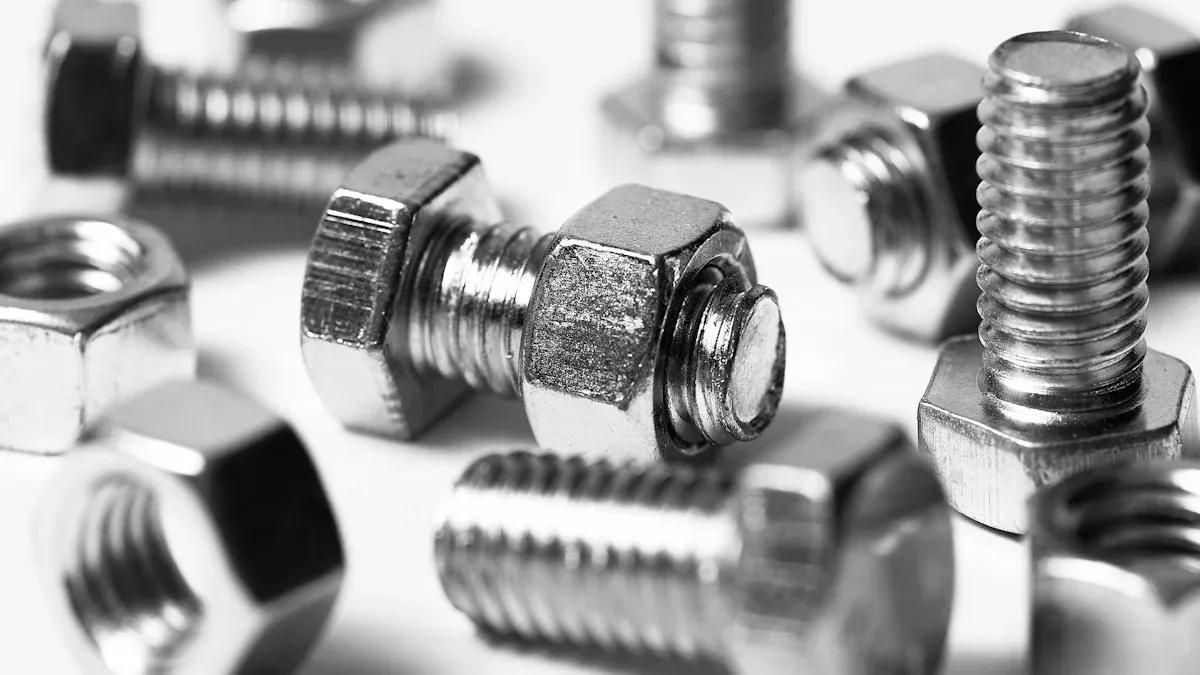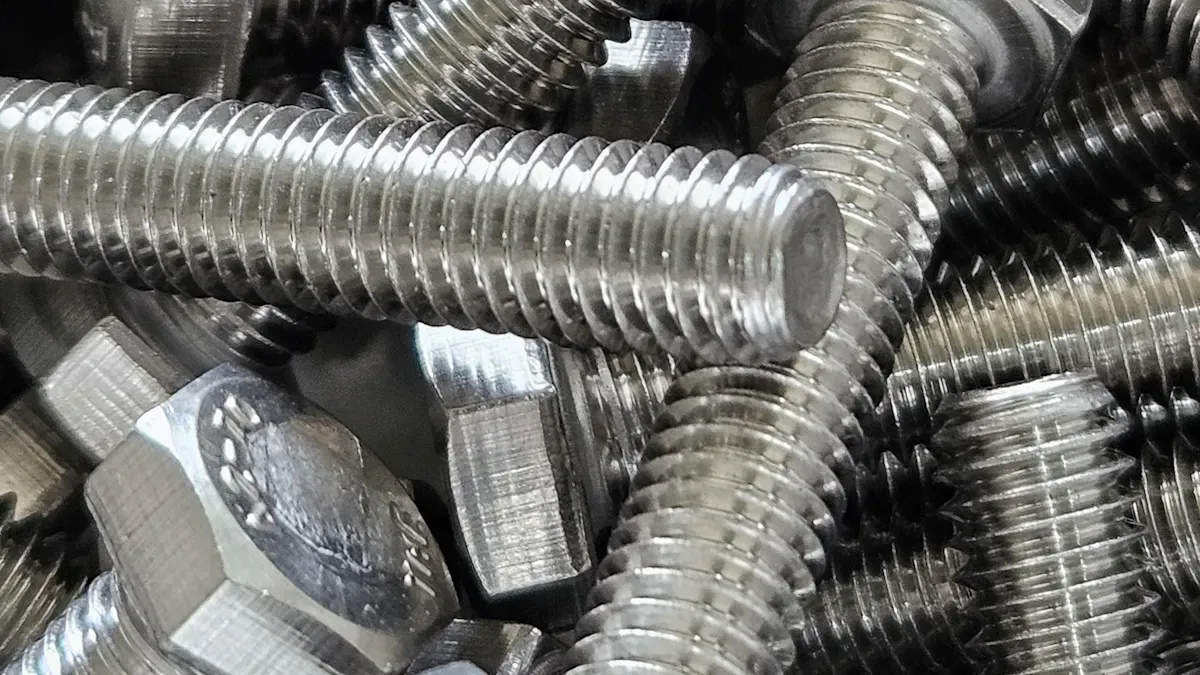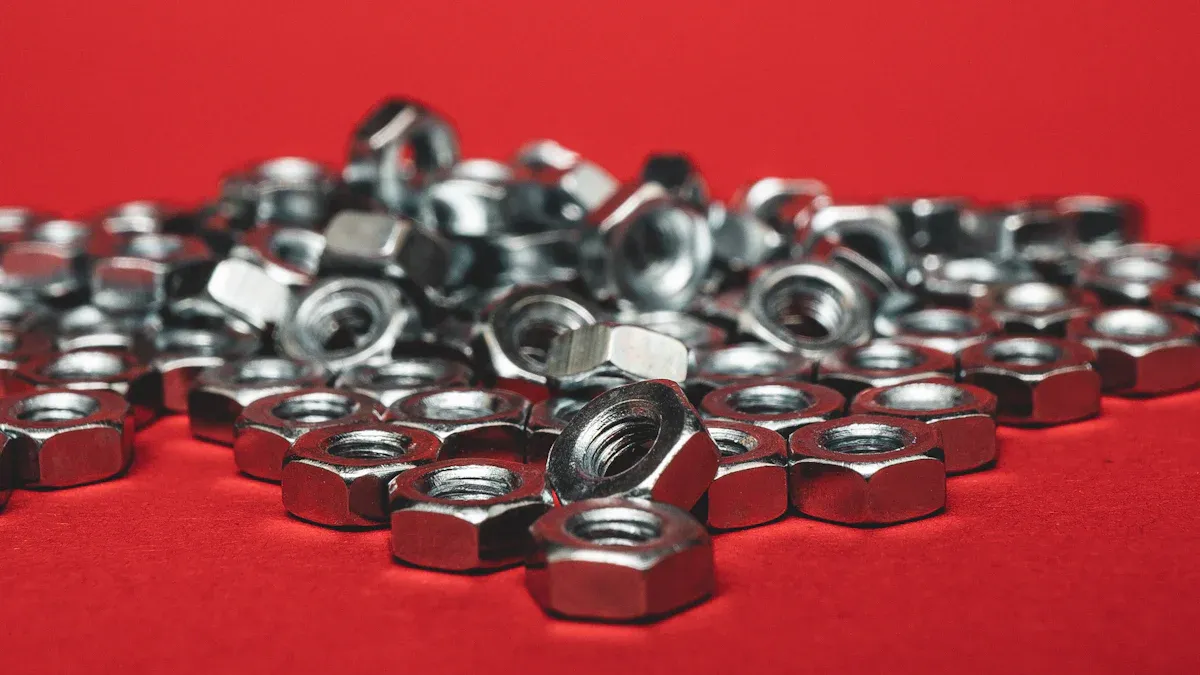
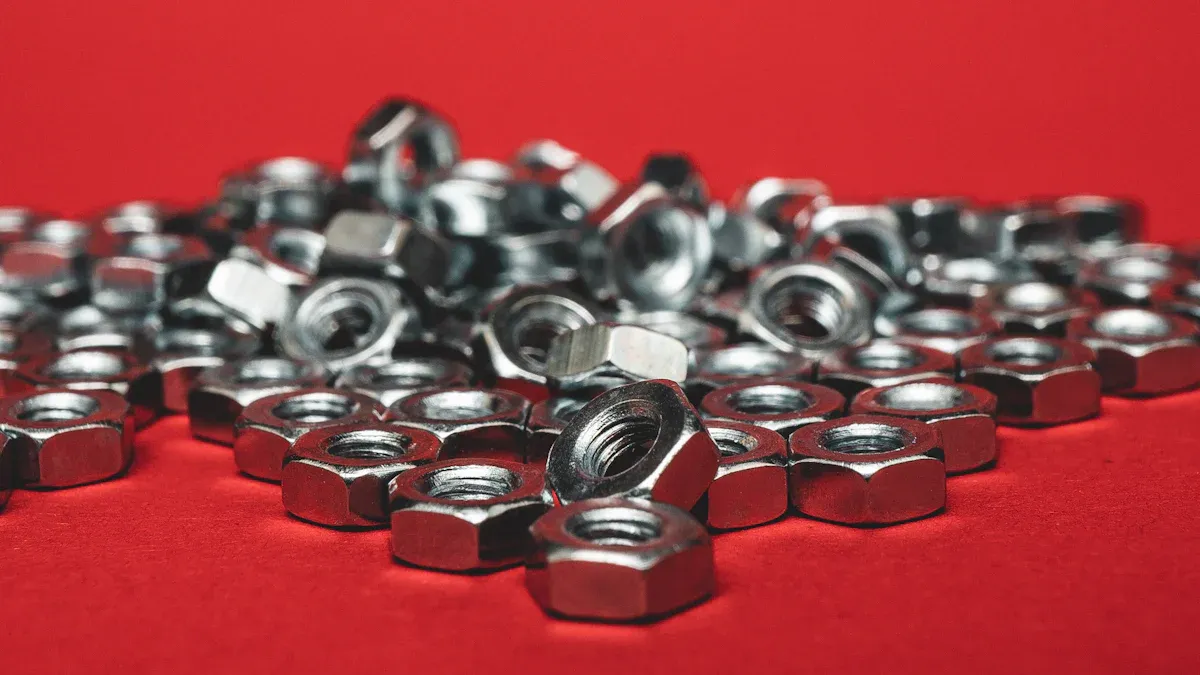
Selecting the right hex nut materials can greatly influence the performance and longevity of nuts and bolts in any assembly. Stainless steel leads the market with a 41% share, valued for its high corrosion resistance and strength. The table below highlights the primary differences in properties among common options:
| Material | Strength | Corrosion Resistance | Cost | Weight | Suitability |
|---|---|---|---|---|---|
| Carbon Steel | Moderate | Low | Low | Moderate | General applications |
| Stainless Steel | High | High | Moderate | Moderate | Harsh environments, construction |
| Brass | Moderate | Moderate | High | Low | Decorative applications, plumbing |
| Titanium Alloy | Very High | Very High | Very High | Low | Aerospace, high-performance applications |
A custom fasteners manufacturer considers factors like application environment, load requirements, and cost efficiency. Heavy hex nut designs use higher-grade alloys for demanding tasks, while brass and titanium serve specialized needs. Choosing the right material ensures reliable custom fasteners for every project.
Steel Hex Nut Materials: Pros and Cons
Plain Steel Hex Nuts
Strength
Plain steel hex nuts offer moderate strength, making them suitable for many general-purpose applications. Manufacturers often select these nuts for assemblies that do not require high tensile strength or resistance to extreme forces.
Cost
Plain steel hex nuts remain one of the most cost-effective options among hex nut materials. The following table compares the price levels of plain, zinc-plated, and stainless steel hex nuts:
| Type of Hex Nut | Price |
|---|---|
| Plain Hex Nuts | Available prices found |
| Zinc-Plated Hex Nuts | Available prices found |
| Stainless Steel Hex Nuts | No specific prices mentioned |
Their affordability makes them ideal for bulk use in non-critical projects.
Corrosion Resistance
These nuts have low corrosion resistance. Exposure to moisture or chemicals can cause rust and degradation over time. For this reason, plain steel hex nuts do not perform well in outdoor or humid environments.
Suitability for Indoor Use
Plain steel hex nuts work best in dry, indoor settings where corrosion is not a concern. They serve well in furniture assembly, machinery housed indoors, and other controlled environments.
Zinc-Plated Steel Hex Nuts
Enhanced Corrosion Resistance
Zinc-plated steel hex nuts feature a protective zinc coating that improves their resistance to rust. This coating extends the lifespan of the nut in environments where occasional moisture or humidity may occur.
Cost Comparison
Zinc-plated steel hex nuts cost slightly more than plain steel nuts but remain more affordable than stainless steel options. Their price-to-performance ratio appeals to many industries seeking moderate corrosion protection without a significant increase in cost.
Common Applications
- Automotive assemblies: Secure engine components and resist rust.
- Construction and building projects: Anchor structural framing and withstand weather.
- Industrial machinery: Provide durability in harsh conditions.
- Home and light-duty hardware: Offer rust resistance for household tasks.
- Electrical enclosures and control systems: Prevent short circuits by securing components.
Stainless Steel Hex Nuts (SS 304, SS 316)
Superior Corrosion Resistance
Stainless steel hex nuts, especially SS 316, deliver exceptional corrosion resistance. SS 316 outperforms SS 304 in marine and chemical environments, making it the preferred choice for saltwater and harsh chemical exposure.
| Environment | Best Grade |
|---|---|
| Marine / Saltwater | A4-316 |
| Food & Beverage | A2-304 / A4-316 |
| Chemical Industry | A4-316 / Duplex 2205 |
| Outdoor / Urban | A2-304 |
SS 316 stands out for marine applications, while SS 304 suits most outdoor and urban uses.
Strength
Both SS 304 and SS 316 provide high strength, supporting demanding loads in construction, infrastructure, and industrial machinery.
Cost
Stainless steel hex nuts cost more than plain or zinc-plated steel nuts. Their higher price reflects the superior corrosion resistance and durability they offer.
Suitability for Outdoor and Marine Environments
Stainless steel hex nuts excel in outdoor, marine, and chemical settings. Their resistance to rust and corrosion ensures long-term reliability in challenging environments, making them a top choice for critical applications.
Duplex Steel Hex Nuts
Enhanced Strength
Duplex steel hex nuts provide a unique combination of high strength and durability. The duplex structure, which blends austenitic and ferritic stainless steel, results in superior mechanical properties. These nuts resist deformation under heavy loads. Engineers often select duplex steel when standard stainless steel does not meet the strength requirements of a project.
Advanced Corrosion Resistance
Duplex steel hex nuts offer advanced corrosion resistance. The dual-phase microstructure protects against stress corrosion cracking and pitting, especially in chloride-rich environments. This makes them a preferred choice for offshore platforms, chemical processing plants, and desalination facilities. Duplex steel outperforms many other hex nut materials in environments with aggressive chemicals or saltwater exposure.
Cost
Duplex steel hex nuts cost more than standard stainless steel or carbon steel options. The higher price reflects the advanced alloy composition and manufacturing process. However, the long-term savings from reduced maintenance and replacement often justify the initial investment. Companies that require reliability in harsh conditions consider this cost worthwhile.
Industrial Applications
Industries that demand both strength and corrosion resistance rely on duplex steel hex nuts. Common applications include:
- Oil and gas extraction equipment
- Marine hardware and shipbuilding
- Chemical processing systems
- Water treatment and desalination plants
These nuts ensure safety and performance in critical infrastructure.
Grade 2, Grade 5, and Heavy Hex Nuts
Strength Ratings
Grade 2, Grade 5, and heavy hex nuts differ in their strength ratings. Grade 2 nuts, made from low or medium carbon steel, provide basic strength for light-duty applications. Grade 5 nuts, produced from medium carbon steel and heat-treated, deliver higher tensile strength. Heavy hex nuts feature a larger profile and increased thickness, which boosts their load-bearing capacity.
| Type | Material | Typical Use | Strength Level |
|---|---|---|---|
| Grade 2 | Low carbon steel | General hardware | Low |
| Grade 5 | Medium carbon steel | Automotive, machinery | Medium |
| Heavy Hex | Alloy/Carbon steel | Structural, heavy-duty | High |
Application Suitability
Grade 2 nuts suit non-critical, indoor applications such as furniture assembly and light fixtures. Grade 5 nuts fit automotive, agricultural, and machinery uses where moderate strength is necessary. Heavy hex nuts serve in structural steel construction, bridges, and heavy equipment, where high strength and reliability are essential.
Cost Differences
Grade 2 nuts remain the most affordable. Grade 5 nuts cost slightly more due to additional processing. Heavy hex nuts, with their larger size and higher-grade material, command the highest price among these types. Buyers must balance cost with the required performance for each project.
High-Load and High-Stress Uses
Heavy hex nuts excel in high-load and high-stress environments. Their increased thickness distributes force more evenly, reducing the risk of failure. Engineers specify these nuts for bolted connections in steel frameworks, wind turbines, and mining equipment. Grade 5 nuts also perform well in demanding automotive and industrial settings.
Tip: Always match the nut grade to the bolt grade to ensure optimal joint performance and safety.
Brass Hex Nut Materials: Pros and Cons
Strength and Durability
Mechanical Properties
Brass hex nuts offer moderate mechanical strength. They perform well in assemblies that do not require high tensile loads. Compared to steel and aluminum, brass is softer and less impact-resistant. The following table highlights the differences:
| Material | Impact Resistance | Strength | Applications |
|---|---|---|---|
| Brass | Lower | Softer | Electrical conductivity, light-duty |
| Steel | Higher | Stronger | High strength, impact resistance |
| Aluminum | Lower | Lightweight | Aerospace, low-stress applications |
Brass hex nuts suit light-duty applications where conductivity and corrosion resistance matter more than raw strength.
Wear Resistance
Brass resists wear better than many non-ferrous metals. It maintains its shape under repeated tightening and loosening. This property makes brass hex nuts reliable for fixtures that require frequent maintenance or adjustment.
Corrosion Resistance
Brass hex nuts excel in environments where moisture and humidity are present. The copper-zinc alloy resists corrosion, especially in water service. This resistance ensures long service life in plumbing and marine hardware.
- Brass hex nuts remain stable in humid environments.
- They perform well in marine hardware, where exposure to moisture is common.
- The non-magnetic properties of brass prevent interference in sensitive electrical applications.
Suitability for Electrical Applications
Brass conducts electricity efficiently. Electricians use brass hex nuts in enclosures and panels because they do not create magnetic fields. This property protects sensitive equipment from interference.
Suitability for Plumbing
Plumbers prefer brass hex nuts for water supply lines and fixtures. The material resists corrosion from water and prevents leaks. The locking features of brass nuts help prevent loosening caused by water hammer or thermal cycling.
Note: Brass hex nuts provide a balance of corrosion resistance and conductivity, making them a top choice for both electrical and plumbing systems.
Cost and Weight
Price Comparison
Brass hex nuts cost more than plain steel or aluminum nuts. The higher price reflects the value of corrosion resistance and electrical properties. For decorative or specialty applications, the investment in brass often pays off through reduced maintenance.
Lightweight Benefits
Brass weighs less than steel but more than aluminum. This moderate weight makes handling and installation easier, especially in overhead or confined spaces. Installers benefit from the combination of manageable weight and reliable performance.
Brass hex nut materials offer a unique blend of properties. They fill a vital role in applications where corrosion resistance, electrical conductivity, and moderate strength are required.
Aluminum Hex Nut Materials: Pros and Cons
Weight Advantages
Aluminum hex nuts stand out for their lightweight properties. They weigh about one-third as much as steel nuts. This significant reduction in weight benefits industries that prioritize efficiency and performance.
| Application Area | Weight Advantage | Impact on Performance |
|---|---|---|
| Aerospace | High strength-to-weight ratio | Improved fuel efficiency and payload capacity |
| Automotive | Approximately one-third the weight of steel | Enhanced fuel economy and handling |
Engineers in aerospace select aluminum hex nuts to reduce the overall mass of aircraft. Lower weight means better fuel efficiency and increased payload capacity. Automotive manufacturers also favor aluminum for similar reasons. Vehicles with lighter fasteners accelerate faster and handle better. These advantages make aluminum hex nuts a preferred choice in applications where every gram counts.
Applications Requiring Lightweight Fasteners
Many industries require lightweight fasteners to optimize performance. Aluminum hex nuts serve well in:
- Aerospace assemblies, where reducing weight improves flight range and efficiency.
- Automotive components, especially in racing and electric vehicles.
- Electronics, where lightweight parts prevent stress on delicate circuits.
- Portable equipment, such as camera rigs and sports gear.
Tip: Choosing lightweight hex nut materials can lead to cost savings in transportation and improved product performance.
Corrosion Resistance
Aluminum naturally forms a thin oxide layer that protects it from corrosion. This property allows aluminum hex nuts to perform well in outdoor environments. They resist rust in most climates, including coastal areas with high humidity.
Suitability for Outdoor Use
Outdoor structures often face moisture and changing weather. Aluminum hex nuts maintain their integrity in these conditions. Builders use them in outdoor furniture, signage, and lightweight frameworks. However, they may not withstand highly acidic or alkaline environments as well as stainless steel.
Strength Limitations
Aluminum hex nuts offer moderate strength but cannot match the load-bearing capacity of steel or stainless steel nuts. Their lower tensile strength limits their use in high-stress applications.
| Limitation | Description |
|---|---|
| Load Capacity | Lower load capacity compared to standard nuts |
| High-Stress Applications | Not suitable for high-stress applications alone |
| Vibration Resistance | Prone to loosening under vibration |
| Locking Mechanism | No integrated locking mechanism |
| Additional Requirements | May require additional lock washers |
Load-Bearing Capacity
Aluminum hex nuts perform best in assemblies with light to moderate loads. They may loosen under vibration or heavy stress. For critical joints, engineers often pair them with lock washers or use them only in non-structural roles. Heavy machinery, bridges, and structural steelwork require stronger hex nut materials.
Note: Always assess the load requirements before selecting aluminum hex nuts for a project.
Cost Considerations
Price Comparison
Aluminum hex nuts attract buyers with their competitive pricing. Manufacturers often select aluminum for projects that require lightweight fasteners without a premium price tag. The cost of aluminum hex nuts sits between steel and brass options. Stainless steel and titanium nuts command higher prices due to their advanced properties.
| Material | Relative Cost | Typical Price Range (per 100 pcs) |
|---|---|---|
| Plain Steel | Low | $5 – $10 |
| Zinc-Plated Steel | Low-Medium | $7 – $12 |
| Aluminum | Medium | $10 – $18 |
| Stainless Steel | Medium-High | $15 – $25 |
| Brass | High | $20 – $35 |
| Titanium | Very High | $50+ |
Aluminum hex nuts offer a balance between affordability and performance. Buyers often choose aluminum when weight reduction matters more than maximum strength or corrosion resistance.
Several factors influence the price of aluminum hex nuts:
- Raw Material Costs: Aluminum prices fluctuate based on global supply and demand. Manufacturers adjust pricing to reflect these changes.
- Manufacturing Process: Precision machining and finishing increase production costs. Nuts with special coatings or anodizing cost more.
- Quantity Ordered: Bulk purchases reduce unit price. Small orders incur higher costs per piece.
- Size and Grade: Larger nuts or those with higher grades cost more. Specialty sizes require custom tooling, which raises prices.
- Market Application: Aerospace and automotive industries pay a premium for certified fasteners. General hardware stores offer standard nuts at lower prices.
Tip: Buyers should compare prices from multiple suppliers. They must check for certifications and quality standards before making a purchase.
Aluminum hex nuts deliver cost savings in transportation and installation. Their lightweight nature reduces shipping expenses. Workers install aluminum nuts faster due to easier handling. These advantages offset the slightly higher material cost compared to plain steel.
Engineers must weigh the price against performance requirements. Aluminum hex nuts suit projects with moderate loads and minimal exposure to harsh environments. For high-stress or corrosive applications, stainless steel or titanium may justify the extra expense.
Aluminum hex nuts provide a practical solution for many industries. Their price reflects the value of reduced weight and adequate corrosion resistance. Buyers seeking efficiency and reliability often select aluminum as the material of choice.
Nylon Hex Nut Materials: Pros and Cons
Weight and Non-Metallic Properties
Nylon hex nuts offer unique advantages due to their non-metallic composition. They weigh much less than metal nuts, which makes them ideal for assemblies where reducing mass is important. Many engineers choose nylon nuts for electronics, consumer products, and lightweight structures.
| Property | Nylon Hex Nuts | Metal Hex Nuts |
|---|---|---|
| Corrosion Resistance | Resistant to rust and corrosion | Prone to rust and corrosion |
| Weight | Significantly lighter | Heavier than nylon |
| Cost | More cost-effective | Generally more expensive |
| Vibration Resistance | Absorbs vibrations | Less effective at absorbing vibrations |
| Insulation Properties | Good electrical insulation | Conductive |
Electrical Insulation
Nylon hex nuts do not conduct electricity. This property makes them a preferred choice for electrical and electronic assemblies. Installers use nylon nuts to prevent accidental short circuits and to protect sensitive components from electrical interference. Their insulating ability also helps in environments where safety from electric shock is a concern.
Lightweight Applications
Many industries benefit from the low weight of nylon nuts. Aerospace, automotive, and consumer electronics manufacturers use these fasteners to reduce overall product weight. Lightweight fasteners can improve fuel efficiency, ease handling, and lower shipping costs. Nylon hex nuts also absorb vibrations, which helps keep assemblies secure in applications exposed to movement or shaking.
- Nylon nuts are lightweight, making them advantageous in weight-sensitive applications.
- They can absorb vibrations, helping to keep fasteners secure.
- Their non-metallic nature prevents interference with electronic signals.
Corrosion and Chemical Resistance
Nylon hex nuts resist rust and corrosion, even in harsh environments. Unlike metal nuts, they do not degrade when exposed to moisture, salt, or many chemicals. This resistance makes them suitable for outdoor, marine, and chemical processing applications. Maintenance teams often select nylon nuts for equipment that operates in wet or corrosive conditions.
Suitability for Harsh Environments
Nylon nuts maintain their integrity in environments where metal fasteners might fail. They perform well in marine hardware, outdoor fixtures, and laboratory equipment. Their chemical resistance extends the service life of assemblies exposed to cleaning agents, fuels, or solvents.
Strength and Durability
Nylon hex nuts provide adequate strength for many light-duty applications. However, they cannot match the load-bearing capacity of metal nuts. Their mechanical properties limit their use in high-stress or structural assemblies.
| Limitation Description | Details |
|---|---|
| Footprint Size | Larger footprint may limit use in tight spaces |
| Cost | Slightly more expensive than standard nuts |
| Torque Resistance | Flange can crack under excessive torque |
| Disassembly | Not recommended for applications requiring frequent disassembly |
| Structural Loads | Should not be used in applications involving critical structural loads without proper engineering evaluation |
Load Limitations
Nylon nuts should not be used in assemblies that require high torque or support critical structural loads. Excessive tightening can crack the flange, and repeated disassembly may weaken the nut. Engineers must evaluate the application before selecting nylon hex nut materials for load-bearing roles.
Cost and Application Suitability
Price Comparison
Nylon hex nuts offer a cost-effective solution for many industries. Manufacturers produce these nuts using injection molding, which reduces production costs compared to metal fasteners. The price of nylon hex nuts typically falls below that of stainless steel, brass, or titanium options. However, they may cost slightly more than basic carbon steel nuts due to the specialized manufacturing process and the benefits of non-metallic properties.
| Material | Average Cost (per 100 pcs) | Relative Cost Level |
|---|---|---|
| Carbon Steel | $5 – $10 | Low |
| Nylon | $8 – $15 | Low-Medium |
| Aluminum | $10 – $18 | Medium |
| Stainless Steel | $15 – $25 | Medium-High |
| Brass | $20 – $35 | High |
Nylon hex nuts provide excellent value for applications that do not require high mechanical strength. Their resistance to corrosion and chemicals can also reduce long-term maintenance costs. Bulk purchasing further lowers the unit price, making nylon nuts attractive for large-scale projects.
Tip: Buyers should compare prices from multiple suppliers and check for quality certifications. This ensures that the selected nylon hex nuts meet performance and safety standards.
Common Uses
Nylon hex nuts serve a wide range of industries due to their unique properties. Their lightweight, non-conductive, and corrosion-resistant nature makes them suitable for specialized applications where metal fasteners may not perform as well.
Typical applications include:
- Electronics: Nylon nuts secure circuit boards and components without causing electrical shorts. Their insulating properties protect sensitive devices.
- Automotive: Manufacturers use nylon hex nuts in interior trim, dashboards, and lightweight assemblies. These nuts help reduce vehicle weight and improve fuel efficiency.
- Aerospace: Engineers select nylon nuts for non-structural components in aircraft cabins and equipment panels. The low weight supports strict weight requirements.
- Consumer Products: Nylon nuts appear in furniture, toys, appliances, and sporting goods. Their smooth finish and resistance to rust enhance product longevity.
- Chemical Processing: Nylon fasteners withstand exposure to many chemicals, making them ideal for laboratory equipment and chemical storage systems.
- Marine Applications: Nylon nuts resist saltwater corrosion, so they perform well in boating accessories and dock hardware.
Note: Nylon hex nuts should not be used in high-load or high-temperature environments. Engineers must evaluate the application requirements before selecting nylon fasteners for critical assemblies.
Nylon hex nuts fill a vital role in modern manufacturing. Their affordability, versatility, and unique material properties make them a preferred choice for many non-structural and specialty uses.
Other Specialty Hex Nut Materials: Pros and Cons
Titanium Hex Nuts
Strength-to-Weight Ratio
Titanium hex nuts deliver an outstanding strength-to-weight ratio. Engineers often select titanium when they need high strength without adding unnecessary mass. The following table compares titanium with steel and aluminum:
| Material | Strength-to-Weight Ratio | Weight Comparison |
|---|---|---|
| Titanium | Higher | 45% lighter than steel |
| Aluminum | Lower | 2-3 times weaker than titanium |
Titanium hex nuts weigh much less than steel but provide superior strength. This property makes them ideal for industries where every gram counts.
Corrosion Resistance
Titanium resists corrosion better than most metals. Its natural oxide layer protects it from rust, even in saltwater or harsh chemical environments. The table below highlights corrosion resistance among common materials:
| Material | Corrosion Resistance | Notes |
|---|---|---|
| Titanium | Superior | Naturally resists corrosion, ideal for marine use |
| Stainless Steel | High | Grade-dependent, A4-316 best for marine environments |
| Bronze | Excellent | Good in marine settings, lower strength than titanium |
Titanium hex nuts perform reliably in marine, chemical, and outdoor applications.
Cost
Titanium hex nuts cost significantly more than steel or aluminum options. The high price reflects the advanced manufacturing process and the premium properties of titanium. Buyers must weigh the benefits of strength and corrosion resistance against the higher investment.
Specialized Applications
Titanium hex nuts serve specialized roles in demanding industries. In aerospace, they secure airframes, jet engines, and landing gear assemblies. The medical field uses titanium for surgical instruments, implants, and imaging equipment. Titanium’s compatibility with human tissue and non-toxic nature make it a top choice for medical devices.
Key applications include:
- Airframes and jet engines
- Landing gear assemblies
- Surgical instruments and implants
- Medical imaging equipment
Titanium hex nuts offer unmatched performance where strength, weight, and corrosion resistance are critical.
Bronze Hex Nuts
Corrosion Resistance
Bronze hex nuts provide excellent resistance to corrosion, especially in marine environments. The copper-tin alloy withstands saltwater exposure and prevents rust. Bronze remains stable in wet or humid conditions, making it a reliable choice for boats and docks.
Electrical Conductivity
Bronze conducts electricity well. Electricians use bronze hex nuts in electrical panels and grounding systems. The material’s conductivity ensures efficient current flow and reduces the risk of overheating.
Cost
Bronze hex nuts generally cost more than steel but less than titanium. The price reflects the alloy’s durability and specialized properties. For marine and electrical projects, the investment in bronze often pays off through reduced maintenance and longer service life.
Suitability for Marine and Electrical Uses
Bronze hex nuts excel in marine hardware, shipbuilding, and electrical installations. Their corrosion resistance and conductivity make them a preferred option for underwater fastenings and electrical connections.
- Marine hardware and boat fittings
- Electrical panels and grounding systems
- Plumbing fixtures exposed to water
Bronze hex nuts combine durability and conductivity for specialized environments.
Heavy Hex Nuts
Increased Thickness and Strength
Heavy hex nuts feature a thicker body and wider flats than standard hex nuts. This design increases their strength and load-bearing capacity. Heavy hex nuts distribute force more evenly, reducing the risk of thread stripping or nut failure.
Stress Resistance
Engineers choose heavy hex nuts for high-stress applications. The increased thickness helps these nuts withstand vibration, heavy loads, and repeated tightening. Heavy hex nuts maintain joint integrity in demanding structural assemblies.
Cost Comparison
Heavy hex nuts cost more than standard hex nuts due to their larger size and higher material content. The price difference becomes more noticeable in large-scale projects or when using high-grade alloys.
High-Load Applications
Heavy hex nuts play a vital role in construction, bridge building, and heavy machinery. Their robust design ensures safety and reliability in critical connections.
- Structural steel frameworks
- Wind turbines and mining equipment
- Bridge and infrastructure projects
Heavy hex nuts provide the extra strength needed for the most demanding jobs.
Comparison Table: Hex Nut Materials Side-by-Side
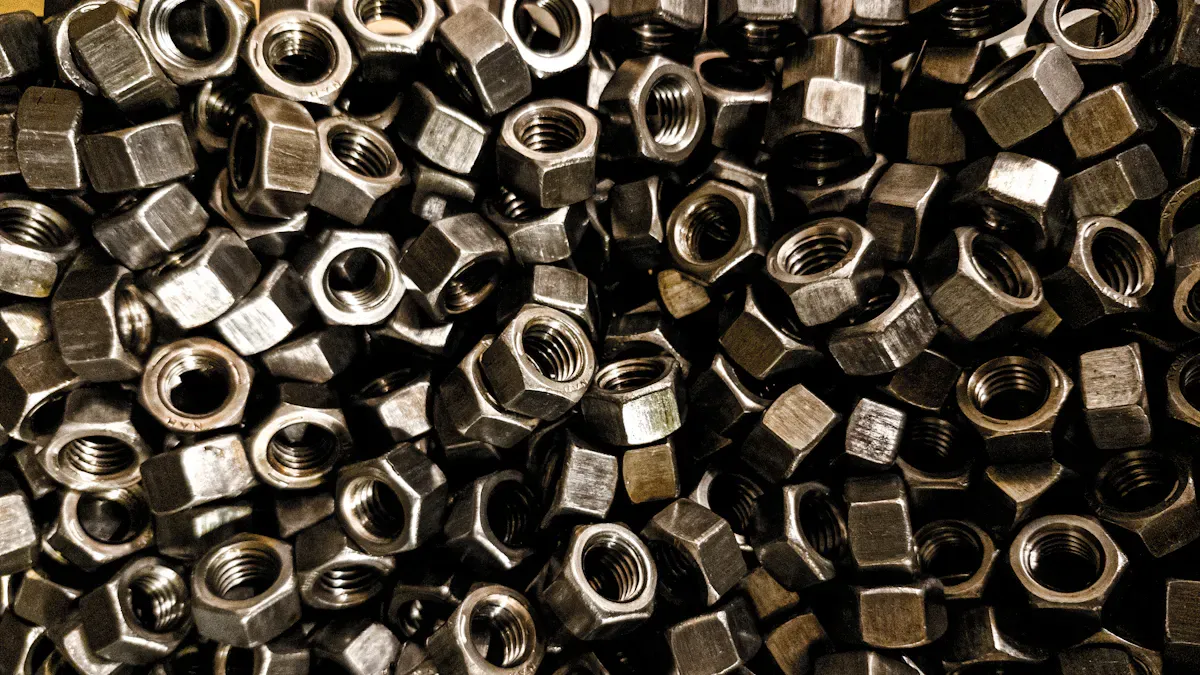
Strength
Hex nut materials differ significantly in their strength levels. Engineers select materials based on the mechanical demands of each application. The table below summarizes typical strength ratings for common hex nut materials:
| Material Type | Strength Level | Typical Use |
|---|---|---|
| Carbon Steel (Class 6) | Low | Light-duty assemblies |
| Carbon Steel (Class 8) | Medium | General engineering |
| Carbon Steel (Class 10) | High | High tensile applications |
| Stainless Steel A2 | Good | General-purpose applications |
| Stainless Steel A4 | Superior | Marine and chemical processes |
| Brass | Moderate | Electrical, plumbing |
| Aluminum | Moderate | Lightweight assemblies |
| Titanium | Very High | Aerospace, medical |
| Nylon | Low | Electronics, consumer products |
| Bronze | Moderate | Marine, electrical |
Engineers often match the nut grade to the bolt grade to ensure optimal joint performance.
Corrosion Resistance
Corrosion resistance plays a critical role in material selection, especially for outdoor or marine environments. Stainless steel A4 and titanium offer superior protection against rust and chemical attack. Brass and bronze also perform well in humid or wet conditions. The table below compares corrosion resistance across materials:
| Material Type | Corrosion Resistance | Typical Environment |
|---|---|---|
| Carbon Steel | Moderate | Indoor, dry |
| Stainless Steel A2 | Standard | Outdoor, urban |
| Stainless Steel A4 | Superior | Marine, chemical |
| Brass | Good | Plumbing, electrical |
| Aluminum | Good | Outdoor, lightweight |
| Titanium | Excellent | Marine, medical |
| Nylon | Excellent | Chemical, marine |
| Bronze | Excellent | Marine, electrical |
Stainless steel A4 and titanium hex nuts excel in marine and chemical environments, while nylon and bronze resist corrosion in specialized applications.
Cost
Cost influences material choice for many projects. Carbon steel remains the most affordable, while titanium commands a premium price due to its advanced properties. The table below outlines typical cost levels for each material:
| Material Type | Relative Cost | Typical Price Range (per 100 pcs) |
|---|---|---|
| Carbon Steel | Low | $5 – $10 |
| Zinc-Plated Steel | Low-Medium | $7 – $12 |
| Aluminum | Medium | $10 – $18 |
| Stainless Steel | Medium-High | $15 – $25 |
| Brass | High | $20 – $35 |
| Titanium | Very High | $50+ |
| Nylon | Low-Medium | $8 – $15 |
| Bronze | High | $25 – $40 |
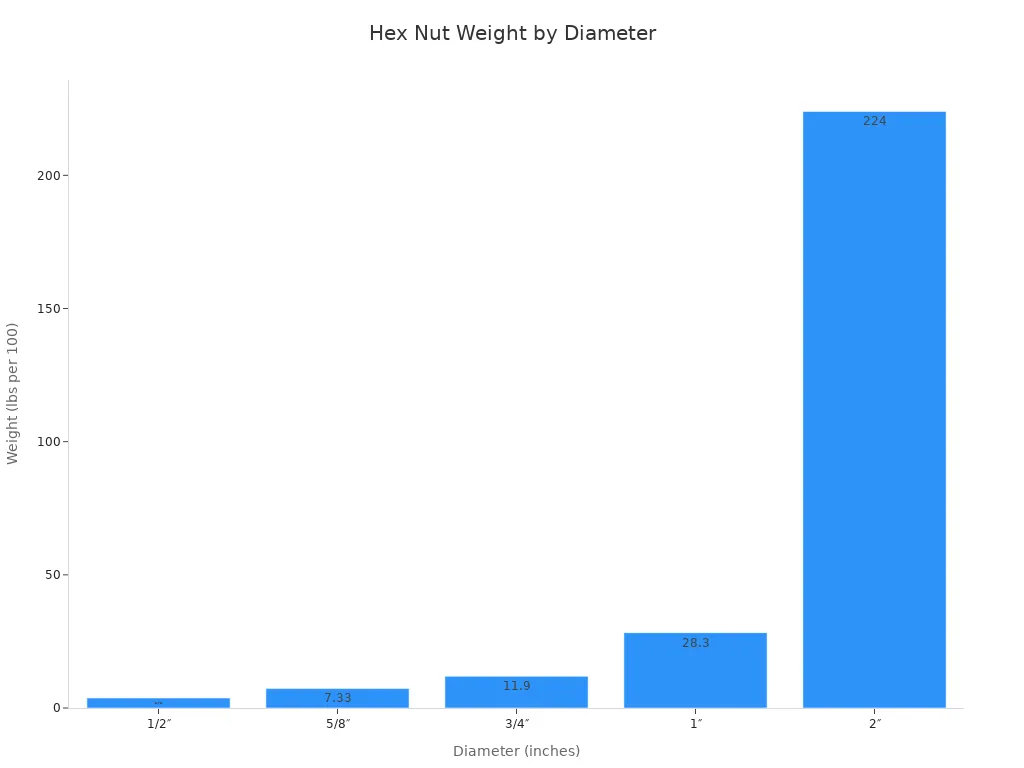
Buyers must balance performance requirements with budget constraints. Titanium and stainless steel offer premium features at higher prices, while carbon steel and nylon provide cost-effective solutions for less demanding applications.
Weight
Weight plays a crucial role in selecting hex nut materials for engineering and construction projects. Each material offers a distinct balance between mass and mechanical performance. Engineers often prioritize lightweight fasteners in industries such as aerospace, automotive, and electronics.
| Material | Relative Weight | Typical Use Cases |
|---|---|---|
| Titanium | Very Light | Aerospace, medical devices |
| Aluminum | Light | Automotive, electronics |
| Nylon | Extremely Light | Consumer products, electronics |
| Stainless Steel | Moderate | Construction, marine hardware |
| Brass | Moderate | Plumbing, decorative hardware |
| Bronze | Moderate-Heavy | Marine, electrical |
| Carbon Steel | Heavy | Structural, industrial |
| Heavy Hex (Alloy) | Heaviest | Bridges, heavy machinery |
Nylon hex nuts weigh the least among common options. Aluminum also provides significant weight savings. Titanium offers high strength with low mass, making it ideal for weight-sensitive applications. Stainless steel, brass, and bronze fall in the moderate range. Carbon steel and heavy hex nuts add substantial mass, which can impact transportation costs and handling.
Tip: Lighter hex nuts can improve fuel efficiency and reduce worker fatigue during installation.
Suitability for Environments
Hex nut materials respond differently to environmental challenges. The right choice depends on exposure to moisture, chemicals, temperature extremes, and mechanical stress.
Outdoor and Marine Environments:
Stainless steel (especially A4-316), titanium, and bronze resist corrosion from saltwater and humidity. These materials maintain integrity in harsh weather and marine settings.Chemical Processing:
Duplex stainless steel, titanium, and nylon withstand aggressive chemicals. They perform well in laboratories, chemical plants, and wastewater facilities.High-Temperature Applications:
Stainless steel and titanium retain strength at elevated temperatures. Aluminum and nylon may lose mechanical properties when exposed to heat.Electrical and Plumbing:
Brass and bronze provide excellent conductivity and corrosion resistance. Nylon offers electrical insulation for sensitive electronic assemblies.Indoor, Dry Environments:
Carbon steel and zinc-plated steel suit indoor use where moisture is minimal. These options offer cost savings for non-critical applications.
Note: Always match the hex nut material to the specific environmental demands of the project. This ensures safety, reliability, and long service life.
Engineers must evaluate all environmental factors before finalizing material selection. The right hex nut material prevents premature failure and reduces maintenance costs.
Choosing the Right Hex Nut Material
Application-Based Recommendations
Indoor vs. Outdoor Use
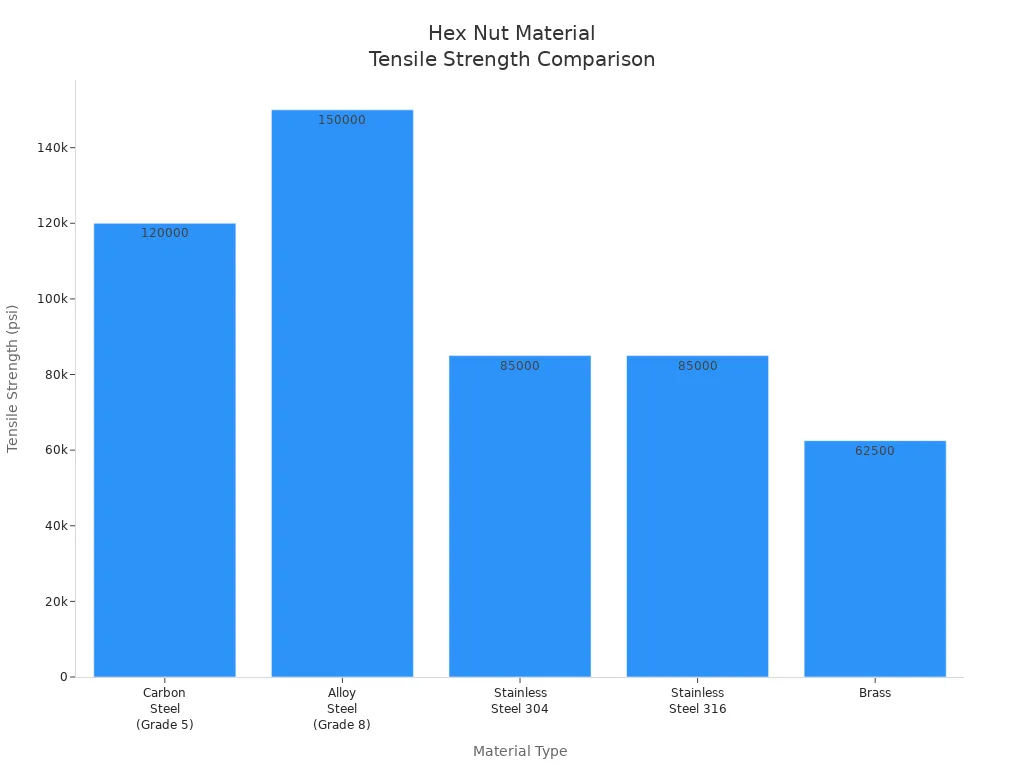
Selecting the right hex nut materials depends on the environment. For indoor use, carbon steel and stainless steel 304 provide reliable performance. These materials offer sufficient strength for most indoor assemblies. Outdoor environments require higher corrosion resistance. Stainless steel 316 stands out for marine and coastal structures due to its superior resistance to rust and tarnish. Brass also performs well in outdoor settings, especially in plumbing and electrical installations.
| Material Type | Tensile Strength (psi) | Corrosion Resistance | Common Applications |
|---|---|---|---|
| Carbon Steel (Grade 5) | 120,000 | Low (requires coating) | Automotive, general machinery |
| Stainless Steel 304 | 80,000–90,000 | High | Food processing, indoor structural |
| Stainless Steel 316 | 80,000–90,000 | Very High | Marine, chemical plants, coastal |
| Brass | 50,000–75,000 | Moderate to High | Electrical fittings, plumbing |
High-Strength Requirements
Projects that demand high strength benefit from alloy steel (Grade 8) and carbon steel (Grade 5) nuts. These materials deliver tensile strengths up to 150,000 psi, making them suitable for heavy-duty equipment and off-road vehicles. Stainless steel also provides good strength, but alloy steel remains the preferred choice for maximum load-bearing capacity.
Electrical and Plumbing Applications
Brass hex nuts excel in electrical and plumbing systems. Their moderate to high corrosion resistance and good conductivity make them ideal for electrical fittings and water supply lines. Stainless steel also serves well in plumbing, especially where exposure to moisture is frequent.
Environmental Considerations
Exposure to Moisture or Chemicals
Engineers consider environmental exposure when selecting materials. Stainless steel and coated fasteners extend service life in corrosive environments. A4-70 grade stainless steel resists tarnish and corrosion, making it a top choice for marine and chemical applications. Brass and bronze also perform well in wet or chemically aggressive settings.
Temperature Extremes
High temperatures can weaken some materials. Stainless steel and titanium retain their mechanical properties at elevated temperatures. Aluminum and nylon may lose strength when exposed to heat. For assemblies near engines or industrial ovens, stainless steel or titanium ensures safety and durability.
Budget and Cost Factors
Balancing Performance and Price
Cost plays a significant role in material selection. Higher-grade materials such as titanium and duplex stainless steel increase project expenses. The following table outlines key cost factors:
| Factor | Description |
|---|---|
| Material Quality | Higher-grade materials cost more due to improved properties. |
| Size and Dimensions | Larger or custom nuts require more material and complex manufacturing. |
| Manufacturing Methods | Advanced processes raise production costs. |
- Common materials for hex nuts include:
- Steel
- Stainless Steel
- Brass
- Aluminum
Project managers must balance performance requirements with budget constraints. For non-critical indoor applications, carbon steel offers cost savings. For harsh environments, investing in stainless steel or brass reduces long-term maintenance costs.
Tip: Always match the material to the application and environment for optimal safety and value.
Choosing the right hex nut materials depends on strength, corrosion resistance, cost, and application. Steel offers affordability and strength. Stainless steel resists corrosion in harsh settings. Brass and bronze suit plumbing and electrical work. Aluminum and nylon provide lightweight options. Titanium excels in demanding environments.
Always match the material to the project’s needs. Careful selection ensures safety, durability, and value.
FAQ
What is the strongest hex nut material?
Titanium offers the highest strength-to-weight ratio. Engineers often select titanium for aerospace and high-performance applications. Alloy steel and duplex stainless steel also provide excellent strength for heavy-duty uses.
Which hex nut material resists corrosion best?
Stainless steel 316 and titanium resist corrosion extremely well. These materials perform reliably in marine, chemical, and outdoor environments. Bronze and nylon also offer strong resistance in specialized settings.
Are nylon hex nuts suitable for high-temperature applications?
Nylon hex nuts do not perform well at high temperatures. Heat can weaken nylon, causing deformation or failure. Stainless steel or titanium nuts work better for assemblies exposed to elevated temperatures.
When should someone use brass hex nuts?
Brass hex nuts work best in electrical and plumbing systems. They provide good conductivity and resist corrosion from water. Electricians and plumbers often choose brass for these reasons.
How does cost compare among hex nut materials?
Carbon steel and zinc-plated steel cost the least. Stainless steel and aluminum fall in the mid-range. Brass, bronze, and titanium command higher prices due to their specialized properties.
Can aluminum hex nuts handle heavy loads?
Aluminum hex nuts support only moderate loads. They suit lightweight assemblies in aerospace, automotive, and electronics. For high-stress or structural applications, steel or stainless steel nuts provide better performance.
What factors matter most when choosing a hex nut material?
Engineers consider strength, corrosion resistance, weight, cost, and environmental suitability. The application’s requirements guide the final material selection. Matching the nut to the bolt grade ensures optimal joint performance.