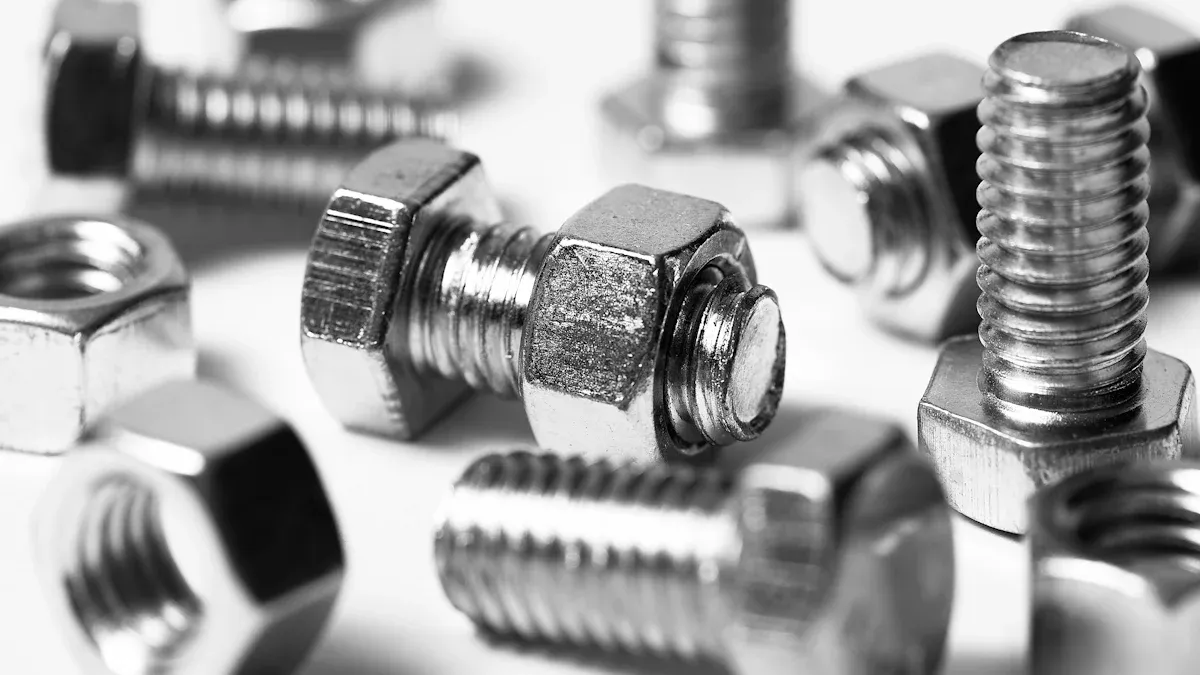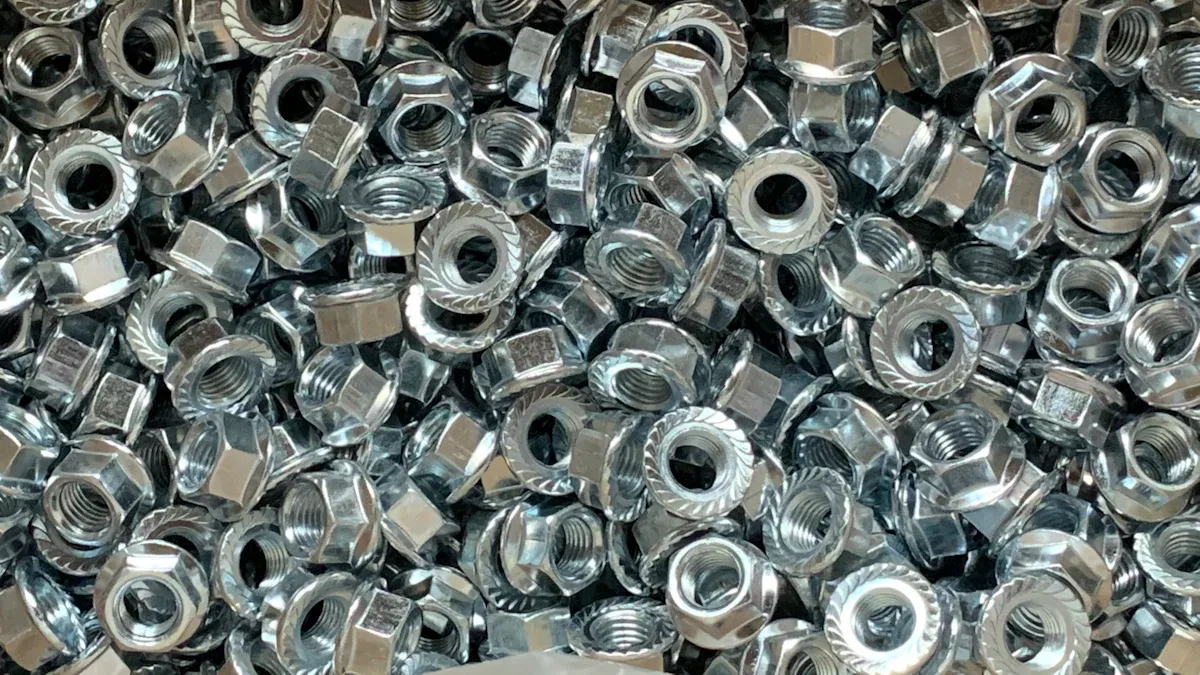

A proper Flange Bolt installation ensures the integrity and safety of piping systems in construction. This installation process demands precision. Technicians must first verify all components. They check the bolt, nuts, and gaskets against project specifications. All parts must be clean and undamaged. Next, they ensure the flange faces are perfectly aligned. The flanges must be parallel and concentric. Forcing them into position is not an option. A specified lubricant is then applied. It covers the bolt threads and nut-bearing surfaces. Finally, technicians install the custom fasteners. They hand-tighten the nuts in a star pattern. They then use a calibrated torque wrench for tightening. This involves at least three passes (e.g., 30%, 60%, 100% of final torque). A final rotational check completes the procedure. This meticulous approach ensures a secure and leak-free joint.
Here is a summary of the key steps to install flange bolts:
- Verify Components: Confirm bolts, nuts, and gaskets match specifications. Inspect for damage.
- Align Flanges: Ensure flanges are parallel and concentric without force.
- Lubricate: Apply specified lubricant to threads and nut surfaces.
- Tighten Systematically:
- Hand-tighten in a star pattern.
- Use a calibrated torque wrench for multiple passes (e.g., 30%, 60%, 100%).
- Perform a final rotational check.
Note: Following these steps is critical for joint integrity, operational reliability, and personnel safety in all piping applications. Always consult project-specific engineering documents from a custom fasteners manufacturer for materials like bolt casting, lubricants, and torque values.
Pre-Installation: Verifying Materials and Preparing Surfaces

A successful flange bolt installation begins long before a wrench is turned. Proper preparation is a non-negotiable phase in professional construction that guarantees the integrity of the final joint. Crews must meticulously verify all components and prepare every surface to meet stringent project standards. This foundational work prevents leaks, equipment failure, and safety hazards in high-pressure piping systems.
Confirming Correct Components
Matching Bolts, Nuts, and Gaskets to Specifications
Technicians first confirm that all components match the project’s engineering specifications or Bill of Materials (BOM). They check that the bolt, nuts, and gaskets are the correct size, material grade, and type for the application. This step prevents the accidental use of incorrect parts that could compromise the joint’s mechanical strength and corrosion resistance.
Inspecting Components for Defects or Damage
Each component undergoes a thorough visual inspection. Technicians look for any signs of damage, such as cracks, burrs, or corrosion. They pay close attention to bolt threads and nut faces, ensuring they are free from imperfections that could interfere with proper tightening. A damaged gasket or flange sealing surface will prevent a proper seal.
Cleaning and Preparing Flange Faces
Removing Residue from Sealing Surfaces
A clean flange face is critical for a leak-free seal. Crews remove all dirt, grease, rust, and old gasket material. For general cleaning, a mild detergent and water solution is effective. For more severe corrosion or scale, technicians may use specialized agents.
- Diluted sulfuric acid
- Hydrochloric acid
- Phosphoric acid
Solvents can also be used for removing stubborn deposits from flange surfaces. The goal is a smooth, clean surface that allows the gasket to seat perfectly.
Cleaning Bolt and Nut Threads
Clean threads are essential for achieving the correct bolt tension. Technicians use a wire brush to remove any dirt, debris, or excess coating from the threads of the bolt and nut. This ensures that the applied torque translates into clamping force without being wasted on overcoming friction.
Ensuring Proper Flange Alignment
Techniques for Parallel and Concentric Alignment
Proper flange alignment is mandatory for an effective seal. Crews use a straightedge or taper gauge at multiple points around the flange perimeter to check for parallel alignment. The gap must be consistent. They also measure the internal pipe alignment to ensure the two sections are concentric. This prevents uneven gasket compression and stress on the piping.
Pro Tip: Never use the bolts to pull a misaligned flange into place. This practice introduces dangerous stress into the piping system and will lead to premature joint failure.
How to Correct Pipe Misalignment Before Bolting
Correcting misalignment is a fundamental task in piping construction. If a flange is out of alignment, crews must address the root cause. This may involve adjusting pipe supports, applying controlled heat to relieve stress, or cutting and re-fitting a section of the piping. The joint must be brought into acceptable alignment before the bolting procedure begins.
Selecting the Right Tools and Lubricants for the Job
An excellent flange bolt installation depends on using the correct equipment and materials. Selecting the right tools and lubricants is a critical step in any professional construction project. This choice directly impacts the accuracy of bolt tensioning and the long-term reliability of the piping system. Technicians must use calibrated instruments and specified lubricants to ensure every joint meets rigorous safety and performance standards.
Essential Tools for Flange Assembly
Calibrated Torque Wrenches
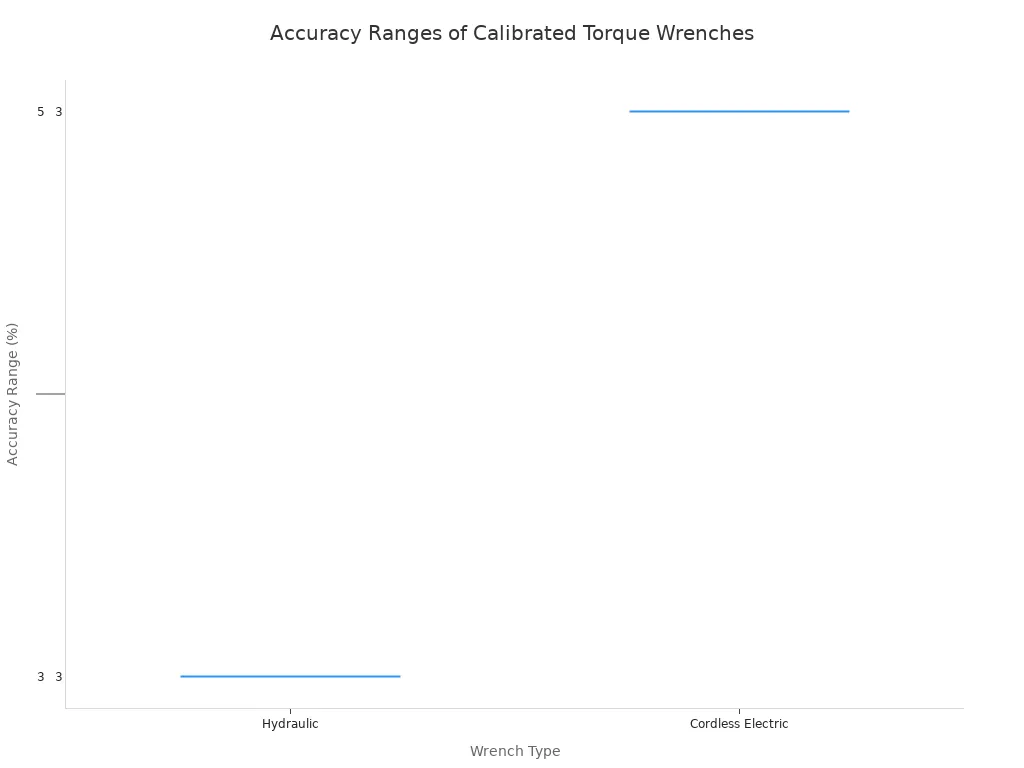
A calibrated torque wrench is the primary tool for achieving precise bolt load. Technicians use these tools to apply a specific amount of rotational force, which translates into the clamping force needed to seal the flange. Different types of wrenches offer varying levels of accuracy, making the selection dependent on the project’s requirements. For instance, hydraulic torque wrenches provide high torque output with an accuracy of ±3–5%, making them suitable for critical applications in high-pressure piping.
| Type | Accuracy |
|---|---|
| Hydraulic | ±3–5% |
| Cordless Electric | ±3% |
| Pneumatic | ±10–25% |
| Click-Type | ±3–4% |
| Beam-Type | ±4–6% |
| Digital Manual | ±1–2% |
Hydraulic Tensioners and Wrenches
For large-diameter bolts or critical joints in high-pressure piping, hydraulic tensioners are often preferred over torque wrenches. Tensioners stretch the bolt axially, and the nut is then turned down to secure the load. This method eliminates frictional variables and provides a more accurate and uniform bolt load across the flange. It is the standard method for critical joints in the nuclear power sector and for large pressure vessels where uniform compression is paramount.
Flange Alignment Tools and Spreader
Crews use specialized tools to achieve and verify correct alignment. Flange alignment tools help bring the flange faces into parallel and concentric alignment before bolting begins. A flange spreader may be used to create a safe and uniform gap for gasket installation or removal without damaging the flange faces. These tools are essential for preparing the joint correctly and avoiding stress on the piping system.
Wire Brushes and Cleaning Solvents
Proper surface preparation requires basic but essential tools. Technicians use wire brushes to meticulously clean bolt and nut threads, removing any dirt, rust, or debris. They also use cleaning solvents to wipe down flange sealing surfaces, ensuring they are free of grease, oil, and old gasket material. This cleaning process is fundamental to achieving a reliable, leak-free seal.
Choosing and Applying the Correct Lubricant
Understanding Lubricant Specifications
Lubricants, or anti-seize compounds, are critical for controlling friction during tightening. The project specifications will define the required lubricant type. For high-temperature applications, compounds containing nickel, copper, or aluminum are common. For example, a copper-based anti-seize is effective up to 1800°F (982°C), while non-metallic compounds can perform at temperatures up to 2400°F (1316°C). Selecting the correct lubricant ensures predictable performance and allows for easier disassembly in the future.
The Role of the Friction Factor (k-factor)
The friction factor, or k-factor, is a crucial variable in torque calculations. It represents the relationship between the applied torque and the resulting bolt tension. The formula T = K × D × F (Torque = K-factor x Bolt Diameter x Tension) shows this relationship. A lower k-factor, achieved with proper lubrication, means less torque is needed to achieve the desired tension. An unlubricated bolt might have a k-factor of 0.25, while a lubricated one could be 0.16. Using the correct, experimentally determined k-factor is essential for accurate bolt loading in any construction or piping project.
Proper Application on Threads and Bearing Surfaces
Important: Proper lubricant application is as important as its selection. Technicians must apply a liberal and even coat of the specified lubricant to the bolt threads and the bearing surface of the nut. Inconsistent or insufficient application can increase the k-factor, leading to inaccurate and uneven bolt loads across the joint. This step ensures that the applied torque is efficiently converted into clamping force.
The Step-by-Step Process to Install Flange Bolts
With surfaces prepared and tools selected, the hands-on installation process begins. This phase demands a systematic approach to ensure the gasket, bolts, and flange form a single, leak-proof unit. Each action, from placing the gasket to the initial tightening pass, is a critical step in the overall construction of a reliable piping system. Following this procedure meticulously is essential to install flange bolts correctly.
Gasket Handling and Placement
Inspecting the Gasket Before Use
Before installation, every gasket requires a careful inspection. Technicians must handle gaskets with care to prevent damage that could compromise the seal. Proper handling and storage are paramount.
- Gaskets should be stored flat in a cool, dry environment, ideally in their original packaging.
- Technicians must wear gloves and handle spiral wound gaskets by their outer edge, never by the inner winding, to prevent distortion.
- They visually check the gasket for any defects, such as cracks, dents, or contamination. A damaged gasket must be discarded and replaced.
Caution: Never reuse a gasket. Most industrial gaskets are designed for single use. They compress and conform to the flange surfaces during tightening, and their ability to create a reliable seal degrades after this initial compression.
How to Center the Gasket Perfectly
Proper gasket placement is fundamental to the integrity of the entire flange assembly. The gasket must be perfectly centered on the flange face to ensure uniform compression. Its inner diameter should never be smaller than the flange’s inner diameter. Technicians carefully place the gasket between the two aligned flange faces. The gasket must not overhang or be pinched. This precise positioning ensures that when the bolts are tightened, pressure is distributed evenly across the sealing surface, which is a key part of the installation process.
Bolt Insertion and Initial Tightening
Inserting All Bolts and Washers
Once the gasket is centered, technicians can insert the lubricated bolts and any specified washers. They insert one bolt at a time through the matching holes in both flanges. This step secures the gasket’s position and maintains the alignment of the piping. It is important to ensure that the bolt threads do not damage the gasket or the flange sealing surfaces during insertion. Using the correct bolt and washer materials, as defined by project specifications, is crucial for the long-term performance of the joint.
Hand-Tightening the Nuts to Secure Position
After inserting all bolts, technicians thread the nuts onto each bolt. They then hand-tighten all the nuts. This initial tightening brings the flange faces into contact with the gasket and secures the assembly in place. This step also provides a final opportunity to check the flange alignment before applying mechanical torque. The goal is to achieve a “snug-tight” condition where the nuts are firm but not under significant load. This prepares the joint for the controlled, sequential tightening that follows.
The Initial Snugging Pass
Numbering Bolts for the Sequence
To ensure a uniform load, technicians must follow a specific tightening sequence. The first step in this sequence is to number the bolts consecutively around the flange, similar to the numbers on a clock face. This numbering system provides a clear and repeatable path for the tightening pattern. For any construction project involving critical piping, this systematic approach removes guesswork from the installation process.
Applying Light Torque to Set the Gasket
The initial snugging pass, also known as the gasket setting pass, seats the gasket properly. Technicians use a calibrated torque wrench to apply a light, uniform torque to each bolt. This pass typically involves tightening the bolts to approximately 20% to 30% of the final target torque value. They follow the numbered, cross-bolt (star) pattern established in the previous step. This low-torque pass gently compresses the gasket, closes any gaps, and ensures the flange remains parallel before the main tightening passes begin.
Mastering the Tightening Sequence to Install Flange Bolts
The mechanical tightening sequence is the most critical phase to install flange bolts correctly. This methodical procedure ensures the clamping force is applied evenly across the gasket, creating a secure and durable seal. A disciplined, multi-pass approach is standard practice in professional construction for all high-pressure piping applications. It prevents joint failure by systematically achieving the target bolt load.
The Star Pattern Tightening Method
The star pattern, or cross-bolt sequence, is the industry-accepted method for tightening a circular flange. Technicians follow this pattern to apply torque incrementally, moving to the bolt directly opposite the one just tightened. This technique is essential for achieving uniform gasket compression.
The star pattern is fundamental to the integrity of the installation process. Its primary benefits include:
- It distributes the clamping load evenly across the gasket surface.
- It prevents the gasket from being crushed on one side while leaving gaps on the other.
- It significantly reduces the risk of leaks in the piping system during pressurization.
Applying force to one bolt can cause an interaction called “crosstalk,” where the opposite side of the flange experiences upward pressure. The star pattern’s systematic tightening eliminates this effect, preventing localized stress and ensuring the gasket seats perfectly.
Pass 1: Applying 30% of Final Torque
The first pass builds upon the initial snugging pass. Technicians use a calibrated torque wrench to tighten each bolt in the star pattern to approximately 30% of the final specified torque value. This step begins to compress the gasket uniformly and brings the flange faces into even contact. It establishes the foundation for the subsequent, higher-torque passes.
Pass 2: Applying 60% of Final Torque
Following the same star pattern, technicians increase the torque to approximately 60% of the final target. This intermediate pass is crucial for managing a phenomenon known as bolt load relaxation. When a bolt is tightened, the joint components, especially soft gaskets, begin to settle and deform slightly. This “elastic interaction” can reduce the initial clamping force. The multi-pass method allows the joint to settle incrementally, achieving a more stable and uniform preload across the entire connection. This is especially important for the reliability of critical piping.
Pass 3: Applying 100% of Final Torque
The third pass brings the assembly to its final clamping force. Technicians again follow the star pattern, this time applying 100% of the specified torque to each bolt. This pass counteracts the final stages of joint relaxation, which occurs from factors like the embedment of threads and localized deformation of metal surfaces. Completing this pass ensures that the desired tension is achieved and maintained, which is vital for the long-term safety and performance of the piping. This is the final step to properly install flange bolts before verification.
The Final Rotational Pass
After completing the three star-pattern passes, a final verification pass is necessary. This is not intended to add significant torque but to confirm the uniformity of the clamping force across all bolts. It serves as a quality control check for the entire tightening procedure.
Purpose of the Circular Pass for Uniformity
The primary objective of this final pass is to ensure the joint has stabilized and the load is evenly distributed. As previous bolts are tightened, they can slightly reduce the preload on bolts tightened earlier in the sequence. This circular pass identifies and corrects any such variations. Technicians continue this pass until the nuts stop moving at the specified torque, which confirms that the joint has reached equilibrium.
Executing the Final Clockwise Check
For this final check, technicians use a calibrated torque tool set to 100% of the target torque. They move from one bolt to the next in a clockwise (circular) direction, applying the torque to each nut. If a nut turns, it indicates that the bolt had lost some of its preload. The technician continues this circular pass until all nuts can hold the full target torque without any further rotation. This final step in the construction of a flange joint provides the ultimate assurance of a secure, leak-free connection.
Post-Installation Verification and Documentation
The installation process does not end when the wrench stops turning. Verification and documentation are the final, critical steps that validate the quality of the work. This phase provides tangible proof that the joint is secure, compliant with project standards, and ready for service. It is an essential part of any professional construction project involving pressurized piping systems.
How to Confirm Uniform Compression
Technicians must confirm that the clamping force is distributed evenly across the gasket. This uniformity is the key to a long-lasting, leak-free seal. Two simple, effective checks provide this confirmation.
Measuring the Flange Gap at Multiple Points
A primary method for verifying even compression is to measure the gap between the two flange faces.
- Technicians use a feeler gauge or calipers for this task.
- They take measurements at a minimum of four points around the flange perimeter (e.g., 12, 3, 6, and 9 o’clock positions).
- The gap measurements should be consistent and fall within the project’s specified tolerance.
Note: Significant variation in the gap indicates uneven gasket compression. This issue requires the joint to be loosened and the tightening sequence repeated to prevent potential leaks in the piping.
Checking for Uniform Bolt Stick-Out
Another visual check involves inspecting the bolt length extending past each nut. Uniform stick-out, or thread protrusion, is a good indicator that each fastener has been tightened to a similar degree. Technicians measure the length of the threads visible beyond the nut on every bolt. Consistent measurements across the assembly suggest that the load is evenly distributed, validating the success of the tightening procedure.
Final Inspection and Record Keeping
A final inspection and meticulous record-keeping create an auditable trail of the installation. This documentation is invaluable for quality control, future maintenance, and safety compliance.
Performing a Post-Assembly Torque Check
Joints can relax over time, especially those with soft gaskets. After a specified period, typically 4 to 24 hours, technicians perform a post-assembly check. They use a calibrated torque wrench to verify the torque on a representative sample of fasteners, often 10% of the bolts. If any bolt turns before reaching the target torque, it indicates relaxation has occurred. This check confirms the long-term stability of the joint.
Documenting Torque Values and Personnel
Proper documentation provides a permanent record of the completed work. Technicians complete a flange joint data sheet or log for each assembly. This record typically includes:
- Joint identification number and location in the piping system
- Date and time of the installation
- Final torque values applied
- Lubricant type used
- Identification of the technicians who performed the work
This formal record ensures accountability and provides critical data for asset management and safety audits.
How to Install Anchor Bolts vs. Flange Bolts
In the world of construction, fasteners are fundamental, but not all bolts are interchangeable. Technicians must understand the distinct roles and procedures for different types. The methods to install anchor bolts for structural support are vastly different from those for flange bolts used in pressurized piping. This distinction is critical for ensuring both structural integrity and operational safety.
Understanding the Functional Differences
Anchor Bolts for Structural Foundations
Anchor bolts serve a foundational purpose. They secure structural elements, such as steel columns or heavy machinery, directly to concrete foundations. Their primary function is to resist forces like tension and shear, ensuring the stability of the entire structure. The materials for these bolts are chosen for strength and durability.
| Bolt Type/Coating | Specification | Description |
|---|---|---|
| Anchor Bolts | ASTM A193 | Alloy and stainless steel for high-temperature and high-pressure applications. |
| ASTM A354 | Quenched and tempered alloy steel for high strength and impact resistance. | |
| ASTM A449 | Similar to A354, for general structural and mechanical applications with enhanced durability. | |
| ASTM A706 | Weldable rebar for reinforced concrete structures. | |
| Protective Coatings | ASTM A153 | Hot-dip galvanizing for zinc coating against rust and corrosion. |
| ASTM B695 | Mechanically deposited zinc coatings on iron and steel fasteners. |
Flange Bolts for Pressurized Pipe Joints
Flange bolts perform a different, highly specialized task. They generate the clamping force needed to compress a gasket between two flange faces. This creates a tight seal capable of containing high-pressure fluids or gases within a piping system. For high-pressure applications, such as those with Inconel 625 flanges, technicians often use bolting material like ASTM A193 Gr B7. However, they must always verify material suitability for the specific service environment to prevent corrosion in the piping.
Contrasting Installation Procedures
The functional differences between these fasteners dictate their unique installation methods. One process involves chemical bonding and curing, while the other relies on precise mechanical tension. This is a key differentiator in piping construction.
Grouting and Curing for Anchor Bolts
The procedure to install anchor bolts focuses on creating a permanent bond with concrete. This process involves either setting the bolt in wet concrete or drilling a hole in cured concrete. The step of inserting and securing the anchor often requires an epoxy or grout to fill the void.
Key Step: After inserting and securing the anchor, the grout must cure for a specified period. This curing time is non-negotiable, as it allows the bond to achieve its full design strength before any load is applied.
Gasket Compression for Flange Bolts
The flange bolt installation is centered on achieving a leak-proof seal. Unlike the static curing process for an anchor bolt, this procedure is dynamic and mechanical. The entire focus is on applying a precise, uniform clamping force to compress a gasket evenly. Technicians achieve this through controlled, multi-pass tightening sequences using calibrated tools. This meticulous process ensures the integrity of the pressurized piping.
Correctly installing flange bolts in any construction project involves a disciplined, multi-step process. Technicians ensure success by following these critical actions:
- Prepare all components and Align flange faces.
- Lubricate bolt threads and nut surfaces.
- Tighten using a multi-pass star pattern.
- Verify the final assembly for uniform compression.
Adhering to this procedure is non-negotiable for joint integrity, operational reliability, and improved safety. This commitment to process enhances overall site safety. The result is a secure system that protects personnel and promotes workplace safety.
Reminder: Always consult project-specific engineering specifications for materials, lubricants, and torque values.
FAQ
Why is the star tightening pattern so important?
Technicians use the star pattern to apply clamping force evenly across the gasket. This method prevents one side from being crushed while the other remains loose. It is the professional standard for achieving a reliable, leak-free seal in any piping system.
Can technicians reuse flange bolts and nuts?
Technicians must always inspect bolts and nuts for damage before considering reuse. However, many project specifications prohibit reusing fasteners in critical applications. Gaskets must never be reused.
Tip: Always consult the project’s engineering documents for specific rules on component reuse. ♻️
What happens if you do not use lubricant?
Lubricant is essential for accurate bolt tension. Without it, friction consumes a large portion of the applied torque. This means the bolt will not achieve the required clamping force, leading to an unreliable joint that is prone to leaks.
Why are multiple torque passes necessary?
Multiple passes counteract a phenomenon called “bolt load relaxation.” As technicians tighten bolts, the gasket and metal surfaces compress and settle. Applying torque in stages (e.g., 30%, 60%, 100%) ensures the joint stabilizes and maintains the correct final clamping force.
What are the risks of improper installation?
Improper installation creates significant safety hazards. A failed joint can lead to leaks of high-pressure or dangerous materials. These events cause equipment damage, environmental contamination, and serious injury to personnel. Following correct procedures mitigates these preventable hazards.
How often should a torque wrench be calibrated?
Calibration frequency depends on manufacturer guidelines and company policy. As a general rule, technicians should have their torque wrenches calibrated at least once a year or after a specific number of uses. A calibrated tool is essential for accuracy.
Can an impact wrench be used for final tightening?
No. Technicians should never use an impact wrench for final tightening. These tools lack the precision needed for applying a specific torque value. Their use can easily damage the gasket, threads, or flange, compromising the integrity of the joint.