Selecting the optimal nylock nut for a project requires careful attention to several critical factors. A custom fasteners manufacturer recommends evaluating material compatibility, thread size, load-bearing capacity, and environmental conditions. These considerations ensure that nuts and bolts perform reliably and meet safety standards. Engineers often consult experts when choosing custom fasteners to match project-specific requirements.
| Factor | Considerations for Nylock Nuts |
|---|---|
| Material | Stainless steel or zinc-plated steel; nylon insert provides locking by friction. |
| Thread Size | Must match project requirements for compatibility. |
| Load-bearing Capacity | Should meet the mechanical strength needed for the application. |
| Operating Temperature | Suitable below ~250°F (120°C); nylon insert limits high-temperature use. |
| Vibration Conditions | Effective in moderate vibration environments; nylon insert provides high friction to resist loosening. |
| Frequency of Disassembly | Limited reusability; nylon insert wears after a few uses, often replaced after disassembly in critical joints. |
| Environmental Exposure | Nylon can degrade under harsh chemicals, UV, or extreme heat; not ideal for severe chemical or high-temp use. |
| Cost | Generally cost-effective; slight premium due to nylon insert manufacturing. |
| Procurement Factors | Must verify specification compliance, availability, and regulatory requirements; ensure correct type is ordered. |
These guidelines help professionals choose the right nylock nut for their application.
Understanding Nylon Insert Lock Nuts
What Is a Nylock Nut?
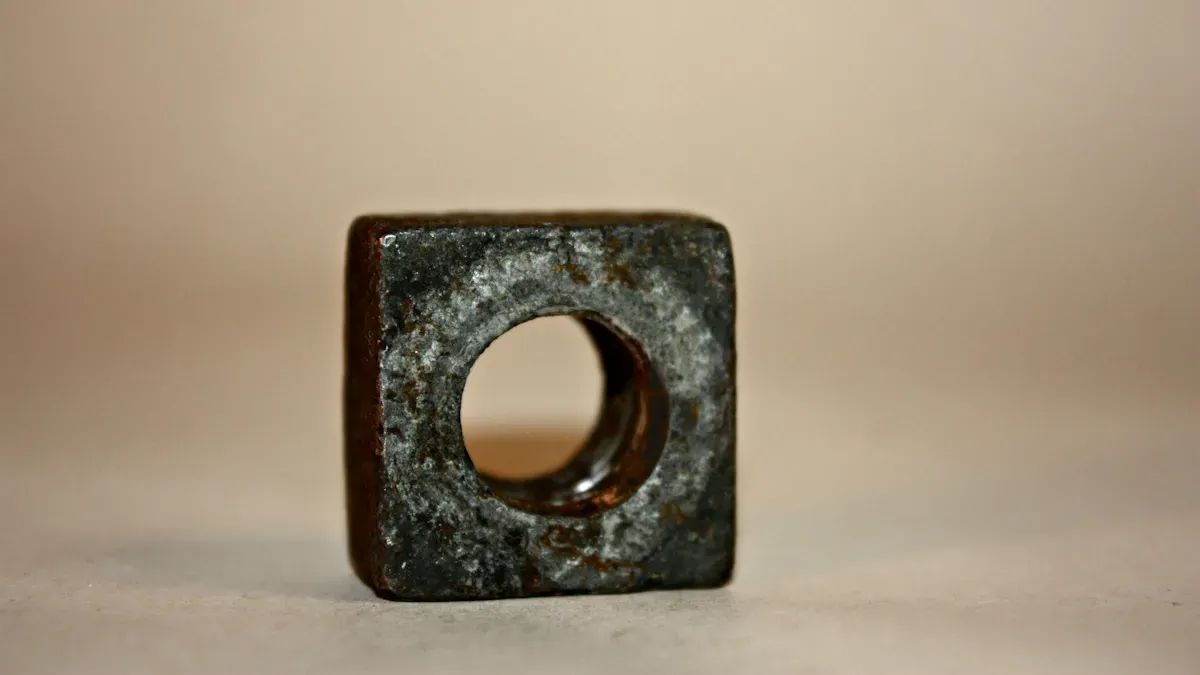
A nylock nut belongs to the family of locking nuts designed to prevent accidental loosening. Engineers often refer to these as nylon insert lock nuts because they feature a non-metallic nylon insert embedded within the nut. This insert distinguishes nylock nuts from other self-locking nuts. Manufacturers produce these nuts in various materials, including steel and stainless steel, to suit different applications. The nylon insert provides a unique locking mechanism that enhances reliability in assemblies subject to vibration or movement.
How Nylon Insert Lock Nuts Work
The nylon insert plays a crucial role in the performance of locking nuts. When a technician threads the nut onto a bolt, the nylon insert, slightly oversized, ensures a tight fit. The process involves several steps:
- The nylon insert compresses as the nut advances along the bolt threads.
- The material deforms, creating high-friction contact between the nut and bolt.
- This frictional resistance keeps the nut securely in place, even when exposed to vibration.
- The self-locking feature of the nylon insert maintains stability and prevents loosening.
This mechanism allows locking nuts to outperform standard nuts in environments where movement or vibration poses a risk. The nylon insert also prevents damage to bolt threads, extending the lifespan of the fastener assembly.
Main Advantages of Nylock Nuts
Nylock nuts offer several advantages compared to other locking nuts. The following table summarizes key benefits:
| Advantage | Description |
|---|---|
| Excellent Anti-Loosening Performance | Built-in nylon rings create friction, preventing loosening from vibrations and shocks. |
| Lightweight Design | Lighter than metal nuts, aiding in vehicle weight reduction for better fuel efficiency. |
| Corrosion Resistance | Nylon withstands harsh environments, preventing rust and extending service life. |
| Easy Installation | No need for additional washers or adhesives, simplifying assembly and reducing labor costs. |
| Cost-Effective | Long-term savings on repairs and replacements due to durability and resistance to corrosion. |
Additional benefits include:
- Straightforward installation process.
- Repeated assembly and disassembly without loss of performance.
- The nylon insert prevents thread damage, preserving bolt integrity.
Nylock nuts remain a preferred choice for engineers seeking reliable locking nuts in automotive, aerospace, and industrial applications. Their combination of anti-loosening performance, corrosion resistance, and ease of use makes them suitable for a wide range of projects.
Key Steps to Choose the Right Nylock Nut
Identify Thread Type
Selecting the correct thread type forms the foundation of nut selection. Engineers must distinguish between metric and imperial threads to ensure compatibility. Thread type impacts the locking performance and reliability of self-locking nuts.
Metric vs. Imperial Threads
Metric threads use millimeters for measurement, while imperial threads rely on inches. Each system features unique pitch and diameter specifications. Engineers often encounter metric threads in European and Asian projects. Imperial threads dominate North American applications. Matching the thread system to the bolt prevents improper fastening and ensures optimal locking.
| Thread System | Measurement Unit | Common Applications |
|---|---|---|
| Metric | Millimeters | Automotive, machinery, global manufacturing |
| Imperial | Inches | Construction, aerospace, U.S. manufacturing |
Matching Threads to Bolts
Thread compatibility remains essential for locking nuts. Engineers must verify that the nut matches the bolt’s thread pitch and diameter. Using a mismatched thread can compromise the locking mechanism and lead to assembly failure. They should consult a nylon insert lock nut size chart if uncertain. Measuring the bolt diameter and confirming thread pitch before final assembly ensures proper fit and reliable self-locking performance.
Tip: Always use a torque wrench for critical applications to achieve the correct torque and prevent damage to the nylon insert.
Select the Correct Nut Size
Nut size directly affects the locking capability and structural integrity of the assembly. Engineers must match the nut size to the bolt size for effective locking nuts performance.
Measuring Diameter and Pitch
Accurate measurement of diameter and pitch guarantees proper nut selection. The diameter should be 1.5 to 2.5 times the thickness of the thinner material being joined. The bolt must pass through all materials, allowing a few threads to protrude beyond the nut. Matching the thread pitch for both metric and imperial fasteners prevents improper locking.
Ordered Steps for Nut Size Selection:
- Ensure the nut size matches the bolt size.
- Consult the nylon insert lock nut size chart if unsure.
- Match the thread pitch for compatibility.
- Measure the bolt diameter and confirm thread pitch before final assembly.
Height and Width Considerations
Height and width influence the locking nuts’ load-bearing capacity. Taller nuts provide greater thread engagement, enhancing self-locking performance. Wider nuts distribute force more evenly, reducing the risk of loosening. Engineers must ensure the hex nut size aligns with project requirements and corresponding fasteners.
Note: Avoid over-tightening to prevent damage to the nylon insert. Replace nuts if the nylon insert shows wear.
Choose the Right Material
Material selection impacts the durability, corrosion resistance, and locking performance of self-locking nuts. Engineers must consider environmental conditions and material compatibility during nut selection.
Steel, Stainless Steel, Brass, and Others
Steel offers high strength for locking nuts in demanding applications. Stainless steel provides corrosion resistance, making it ideal for outdoor or marine environments. Brass and aluminum suit projects requiring electrical conductivity or lightweight assemblies. Non-metallic materials, such as nylon, increase resistance to vibration and prevent loosening over time.
Common Materials and Their Performance Impact:
| Material Type | Performance Impact |
|---|---|
| Steel | High strength, suitable for high-load applications |
| Stainless Steel | Corrosion resistance, ideal for outdoor and marine environments |
| Brass | Electrical conductivity, moderate strength |
| Aluminum | Lightweight, suitable for weight-sensitive applications |
| Nylon | Vibration resistance, prevents loosening, lightweight |
Corrosion Resistance Factors
Corrosion resistance remains vital for locking nuts exposed to moisture or chemicals. Stainless steel and non-metallic materials resist rust and corrosion, extending service life. Engineers must assess environmental conditions to choose the right nylock nut for each project. Material compatibility with the bolt prevents corrosion and ensures reliable locking.
Engineers should replace nuts if the nylon insert shows wear or deformation. Wear and tear may reduce self-locking effectiveness.
Determine Strength Grade
Selecting the correct strength grade for locking nuts ensures safety and reliability in mechanical assemblies. Engineers must evaluate the mechanical properties of each grade to match the demands of their project.
Common Grades Explained
Manufacturers classify locking nuts by strength grades, which indicate their load-bearing capacity and durability. The most common grades include:
- Grade 2: Suitable for light-duty applications. These nuts offer basic strength and are often used in household projects.
- Grade 5: Designed for medium-duty assemblies. Grade 5 nuts provide improved tensile strength and are common in automotive and machinery applications.
- Grade 8: Intended for heavy-duty use. Grade 8 locking nuts deliver high strength and withstand significant mechanical stress. Engineers select these for industrial equipment and critical joints.
| Grade | Typical Use | Tensile Strength (psi) |
|---|---|---|
| 2 | Furniture, light fixtures | 74,000 |
| 5 | Automotive, machinery | 120,000 |
| 8 | Industrial, heavy machinery | 150,000 |
Tip: Always check the grade marking on the nut. This ensures the locking nut matches the bolt and meets project requirements.
Matching Grade to Application
Engineers must align the strength grade with the application of nuts. For example, Grade 2 locking nuts suit non-critical joints, while Grade 8 nuts are essential for high-load connections. Matching the grade prevents premature failure and maintains the self-locking feature. The correct grade supports the mechanical loads and extends the service life of the assembly.
Assess Working Environment
Environmental conditions directly affect the performance and longevity of locking nuts. Engineers must consider temperature, chemical exposure, moisture, and outdoor factors when selecting self-locking nuts.
Temperature and Chemical Exposure
Nylon inserts in locking nuts limit their use in high-temperature environments. Most nylon inserts function reliably below 250°F (120°C). Exposure to chemicals can degrade standard nylon, reducing locking effectiveness. Engineers must select specialized nylon types for chemically aggressive environments. Stainless steel bodies resist corrosion, but the nylon insert must also withstand the chemicals present.
Note: Avoid using standard nylon locking nuts in environments with strong acids, solvents, or extreme heat. Specialized materials may be required.
Moisture and Outdoor Use
Moisture and outdoor exposure can cause corrosion and degrade the nylon insert. Engineers must choose locking nuts with stainless steel or coated carbon steel bodies for enhanced moisture resistance. UV-stabilized nylon inserts prevent degradation from sunlight. The following table summarizes key environmental factors and considerations:
| Environmental Factor | Considerations |
|---|---|
| UV Resistance | Use UV-stabilized nylon inserts for outdoor applications. |
| Moisture Resistance | Select stainless steel or coated carbon steel bodies for enhanced moisture resistance. |
| Chemical Resistance | Avoid standard nylon nuts in chemically aggressive environments unless the nylon type is resistant. |
Engineers should inspect locking nuts regularly in outdoor or wet environments. Replace nuts if the nylon insert shows signs of wear or UV damage.
Consider Vibration and Movement
Mechanical assemblies often experience vibration and movement, which can loosen standard nuts. Locking nuts with nylon inserts provide a self-locking mechanism that resists these forces.
How Nylon Insert Lock Nuts Handle Vibration
High-quality locking nuts feature a precisely molded nylon insert. This insert compresses against bolt threads, creating strong frictional force. The friction resists rotational movement caused by vibration and dynamic loads. This self-locking mechanism ensures long-term reliability in environments with constant motion. Engineers use locking nuts in engines, suspension systems, and heavy machinery. These nuts improve safety and reduce maintenance by preventing loosening.
Locking nuts incorporate a nylon insert that creates a friction fit with bolt threads. This fit resists loosening caused by vibration and dynamic loads. Different types of locking nuts, such as locking steel nylock nuts with enhanced locking features and jaw steel nylock nuts with mechanical jaws, handle varying levels of vibration and movement. The nylon insert acts as a dampener, making these nuts ideal for automotive, aerospace, and machinery applications where vibration and movement are critical. Selecting the appropriate nut type, material, and design based on vibration and dynamic load requirements ensures long-term reliability and safety.
When to Use Alternatives
Engineers must assess the level of vibration and movement in the application of nuts. If the assembly experiences extreme vibration or requires frequent disassembly, alternatives such as all-metal locking nuts or prevailing torque nuts may offer better performance. These alternatives withstand higher temperatures and repeated use without losing their locking capability. For assemblies exposed to severe vibration, engineers should consider the specific requirements and select the most suitable locking nut type.
Callout: Always evaluate the vibration and movement conditions before choosing locking nuts. This ensures the self-locking feature remains effective throughout the service life.
Evaluate Disassembly Frequency
Engineers often assess how frequently a joint will require disassembly before selecting locking nuts. The nylon insert in these nuts provides a self-locking feature, but repeated use can degrade its effectiveness. Projects that demand frequent maintenance or adjustments benefit from understanding the reusability of locking nuts.
Reusability of Nylock Nuts
Nylock nuts offer limited reusability. The nylon insert creates a tight friction fit during installation, which ensures reliable locking. However, each time the nut is removed and reinstalled, the nylon insert loses some of its grip. After several cycles, the self-locking mechanism weakens, and the nut may no longer resist loosening.
Tip: Replace nylock nuts after three to five disassembly cycles in critical applications. This practice maintains the integrity of the locking feature and prevents unexpected failures.
The table below summarizes the typical reusability guidelines for locking nuts:
| Application Type | Recommended Reuse Cycles | Reason for Replacement |
|---|---|---|
| Critical Joints | 1-2 | Safety and reliability concerns |
| Non-Critical Joints | 3-5 | Reduced locking effectiveness |
| Temporary Assemblies | Unlimited | Not recommended for self-locking |
Single-Use vs. Reusable Options
Some locking nuts are designed for single-use only. These nuts provide maximum locking strength during the first installation. Engineers select single-use locking nuts for safety-critical assemblies, such as automotive suspension or aerospace components. Reusable options exist for less demanding applications, but they may not deliver the same level of locking performance.
- Single-use locking nuts: Offer superior self-locking action but require replacement after removal.
- Reusable locking nuts: Allow multiple installations but may lose effectiveness over time.
Note: Always check manufacturer specifications for recommended reuse limits. Using worn locking nuts can compromise joint security.
Calculate Load Requirements
Engineers must calculate the mechanical loads that locking nuts will encounter. Proper load assessment ensures that the selected nut can withstand both tensile and shear forces without failure. This step is essential for maintaining the performance and safety of the assembly.
Tensile and Shear Loads
Tensile load refers to the force that pulls the nut away from the bolt. Shear load describes the force that acts perpendicular to the bolt axis. Locking nuts must resist both types of loads to prevent loosening or structural failure.
Steps for Load Calculation:
- Identify the maximum tensile force expected in the application.
- Determine the maximum shear force based on the joint design.
- Select locking nuts with a rated capacity that exceeds these forces.
The table below illustrates typical load requirements for locking nuts:
| Load Type | Description | Minimum Capacity Needed |
|---|---|---|
| Tensile | Pulls nut along bolt axis | Exceeds maximum applied force |
| Shear | Acts perpendicular to bolt axis | Exceeds maximum applied force |
Engineers should always use locking nuts with a load rating higher than the calculated forces. This practice prevents premature failure and maintains self-locking performance.
Safety Margins
Safety margins provide an extra layer of protection in mechanical assemblies. Engineers add a margin to the calculated load to account for unexpected stresses or variations in material quality. Locking nuts with adequate safety margins ensure reliable operation even under extreme conditions.
- Recommended safety margin: 25% to 50% above calculated load.
- Higher margins for critical or high-vibration applications.
Callout: Never underestimate the importance of safety margins. Proper selection of locking nuts with sufficient capacity preserves the self-locking feature and protects the assembly from unforeseen stresses.
Engineers who follow these guidelines achieve optimal locking performance and extend the service life of their projects.
Nylock Nuts vs. Other Lock Nut Types

When selecting fasteners, engineers must understand the differences between various lock nut types and applications. Each type offers unique advantages for specific environments and mechanical demands.
All-Metal Lock Nuts
All-metal lock nuts use mechanical deformation to create a secure grip on the bolt. Unlike nylock nuts, which rely on a nylon insert, these nuts maintain their locking ability even in high-temperature environments. The following table highlights key differences between nylon insert nuts and all-metal lock nuts:
| Feature | Nylon Insert Nut | All-Metal Lock Nut |
|---|---|---|
| Heat Resistance | Poor (Low melting point) | Excellent (High melting point) |
| Reusability | Limited (Single use recommended) | Moderate (Multi-use possible) |
| Vibration Resistance | Good for moderate vibration | Excellent for high vibration |
Nylon insert nuts work well in automotive interiors and low-heat areas. All-metal lock nuts perform best in high-stress locations, such as suspension systems or aerospace assemblies, where heat and vibration are significant factors. Nylon lock nuts provide reliable performance for moderate vibration, but all-metal options deliver superior durability and reusability in demanding types and applications.
Note: All-metal lock nuts suit projects where temperature extremes or repeated assembly and disassembly occur.
Serrated Flange Nuts
Serrated flange nuts represent another important category among lock nut types and applications. These nuts feature a built-in flange with serrations that bite into the mating surface. This design prevents loosening by increasing friction and resisting rotation.
- Nylock nuts use a nylon insert that deforms to grip the bolt threads, providing resistance to loosening.
- Serrated flange nuts rely on their serrated base to lock against the surface, making them effective in high-vibration settings.
Serrated flange nuts excel in applications where surface damage is not a concern and where rapid assembly is required. They offer a strong hold without the need for additional washers.
Prevailing Torque Nuts
Prevailing torque nuts, such as K Lock nuts, use a deformed thread or top section to create resistance during installation. This design allows them to maintain consistent locking performance over multiple uses.
- The nylon insert in nylock nuts compresses and deforms permanently when tightened. This limits their effectiveness if reused.
- Prevailing torque nuts can be reused several times, as their locking mechanism does not degrade after each use.
Engineers often choose prevailing torque nuts for types and applications that require frequent maintenance or adjustments. These nuts provide reliable locking action and withstand repeated installations, making them ideal for machinery and equipment that undergo regular servicing.
Tip: For assemblies that require both high reusability and strong vibration resistance, prevailing torque nuts offer a practical solution.
By understanding the strengths and limitations of each lock nut type, engineers can select the most suitable option for their specific types and applications.
Pros and Cons of Nylon Insert Lock Nuts
Nylon insert lock nuts, often called nylock nuts, offer a unique combination of features that make them a popular choice in many engineering applications. Engineers select these nuts for their ability to maintain secure connections under vibration and movement. However, every fastener type presents both advantages and limitations. Understanding these characteristics helps professionals make informed decisions for their projects.
The following table summarizes the main pros and cons of nylon insert lock nuts compared to other lock nut types:
| Pros | Cons |
|---|---|
| Prevents fasteners from loosening due to vibrations or rotation | Must be replaced after removal as the nylon insert loses effectiveness |
| Dampens vibrations, keeping connections secure | Not suitable for environments above 121°C (250°F) |
| Simple to use without specialized tools | Limited to light or medium load applications |
| Works with various materials like metal, plastic, and composites | Can seize onto bolts if over-tightened or installed without lubrication |
| Durable in harsh environments and resistant to many chemicals | Prolonged exposure to UV light or chemicals can weaken the nylon insert |
| Provides insulation, suitable for electronic applications | Loses locking ability after repeated use |
Engineers appreciate the anti-loosening performance of nylon insert lock nuts. The nylon insert creates friction that resists rotation, which keeps assemblies secure even when exposed to vibration. This feature proves valuable in automotive, aerospace, and machinery projects. The nuts also dampen vibration, reducing the risk of fastener failure.
Installation remains straightforward. Technicians do not require specialized tools or adhesives. The nuts work with a variety of materials, including metal, plastic, and composites. This versatility allows engineers to use them in diverse environments. The nylon insert also provides electrical insulation, which benefits electronic assemblies.
Note: Nylon insert lock nuts perform well in harsh environments. They resist many chemicals and offer durability in moderate outdoor conditions.
Despite these advantages, nylon insert lock nuts have limitations. The nylon insert loses effectiveness after removal, so engineers must replace the nut to maintain locking performance. High-temperature environments pose a challenge. The nylon material cannot withstand temperatures above 121°C (250°F), which restricts their use in engines or industrial ovens.
Load capacity also limits their application. Nylon insert lock nuts suit light or medium loads. Heavy-duty assemblies require all-metal lock nuts or other alternatives. Over-tightening can cause the nut to seize onto the bolt, especially if technicians do not use lubrication. Prolonged exposure to UV light or aggressive chemicals weakens the nylon insert, reducing reliability.
Tip: Engineers should inspect nylon insert lock nuts regularly and replace them after repeated use or exposure to harsh conditions.
Common Mistakes When You Choose the Right Nylock Nut
Selecting the right nylock nut requires careful attention to detail. Engineers often encounter several pitfalls during the selection process. These mistakes can compromise the integrity of mechanical assemblies and reduce the effectiveness of locking nuts.
Using the Wrong Thread Type
Many engineers mistakenly choose a nylock nut with an incompatible thread type. The nylon insert lock nuts rely on the bolt threads cutting into the nylon ring, which creates the necessary pressure to prevent loosening from vibration. When the thread type does not match, the bolt fails to engage the nylon properly. This mismatch reduces the locking function and can cause the nut to loosen unexpectedly. Improper threading may also damage or deform the nylon insert, further impairing performance. Engineers must always verify thread compatibility before installation.
Overlooking Material Compatibility
Material compatibility plays a critical role in the durability and reliability of locking nuts. Engineers sometimes select a nut material that does not match the bolt or the environmental conditions. For example, pairing a steel nut with a stainless steel bolt can lead to galvanic corrosion. Choosing a nut without considering exposure to chemicals or moisture may result in premature failure. Different types of lock nuts offer varying performance characteristics, so engineers must evaluate the materials used in both the nut and the bolt. Over-tightening or under-tightening can also damage the nylon insert or compromise the joint, making proper torque application essential.
Tip: Always consult manufacturer specifications for material compatibility and recommended torque values.
Ignoring Environmental Factors
Environmental conditions significantly affect the longevity and effectiveness of nylon insert lock nuts. Engineers sometimes overlook factors such as temperature, moisture, and UV exposure. The table below outlines how these conditions impact the nylon insert and provides recommendations for optimal selection:
| Temperature Condition | Effect on Nylon Insert | Recommendations |
|---|---|---|
| High Temperatures | Softens nylon, losing locking capability | Use high-temp nylon (up to 350°F) |
| Low Temperatures | Makes nylon brittle | Avoid extreme cold conditions |
| Moisture Exposure | Causes corrosion of metal components | Use stainless steel or coated materials |
| UV Radiation | Degrades nylon over time | Choose UV-stabilized nylon for outdoor use |
Engineers must assess the working environment before choosing locking nuts. Selecting the wrong nut for harsh conditions can lead to rapid degradation of the nylon insert and metal components. Lock nuts are not foolproof and can loosen under certain conditions, especially when environmental factors are ignored.
Common mistakes engineers make when selecting nylock nuts:
- Assuming lock nuts will never loosen.
- Applying excessive torque or insufficient torque.
- Failing to recognize differences in lock nut types and their performance.
Careful evaluation of thread type, material compatibility, and environmental factors ensures reliable performance and extends the service life of mechanical assemblies.
Reusing Worn Nylon Insert Lock Nuts
Many engineers overlook the risks associated with reusing worn nylon insert lock nuts. The nylon insert inside the nut provides the locking mechanism. When technicians remove the nut, the nylon often suffers damage or deformation. This wear reduces the locking force and reliability. If the nylon insert cannot grip the bolt threads tightly, the nut may loosen during operation. Safety hazards increase, especially in critical assemblies such as automotive suspension or machinery joints.
The condition of the screw and mating threads also affects performance. Corrosion or wear on these surfaces further undermines the effectiveness of the lock nut. Engineers must inspect both the nut and bolt before reuse. If either shows signs of damage, replacement becomes necessary. Using a worn lock nut in high-stress applications can lead to unexpected failures.
Tip: Replace nylon insert lock nuts after each removal in safety-critical assemblies. This practice maintains the integrity of the locking mechanism and prevents accidents.
A simple checklist helps engineers decide when to replace a nylock nut:
- Check the nylon insert for visible wear or deformation.
- Inspect bolt threads for corrosion or damage.
- Evaluate the importance of the joint in the overall assembly.
- Replace the nut if any component shows signs of wear.
Ignoring these steps compromises the reliability of the fastener and increases the risk of loosening.
Underestimating Load Requirements
Engineers sometimes underestimate the load requirements for nylock nuts. This mistake leads to several types of failures. The nut may strip threads, suffer fatigue failure, or loosen prematurely. Selecting the correct grade and size ensures the nut withstands the forces present in the application.
The following table summarizes the consequences of underestimating load requirements:
| Evidence Type | Description |
|---|---|
| Load Underestimation | Can lead to thread stripping, fatigue failure, or premature loosening of nylock nuts. |
| Nut Grade Importance | High-grade nuts (e.g., Grade 8 or higher) are essential for high-stress applications to ensure sufficient tensile strength and load capacity. |
| Consequences of Using Standard-Grade Nuts | In high-load or vibration-prone environments, standard-grade nuts may fail to maintain clamping force, leading to failure. |
Engineers must calculate both tensile and shear loads before selecting a nylock nut. High-grade nuts provide greater strength and durability. Standard-grade nuts suit light-duty applications but fail under heavy loads or constant vibration.
Note: Always select a nylock nut with a load rating higher than the maximum expected force. This approach prevents premature failure and maintains the safety of the assembly.
A careful assessment of load requirements protects the integrity of mechanical joints and extends the service life of the fastener.
Quick Checklist to Choose the Right Nylock Nut
Step-by-Step Selection Guide
A systematic approach helps engineers select the correct nylock nut for any application. The following checklist outlines the essential steps:
- Confirm the thread system. Metric and imperial threads differ in pitch and diameter. Always verify the thread type and pitch before selecting a locking nut.
- Check for minimum thread engagement. Ensure at least three full threads extend beyond the nut face after tightening. This practice guarantees proper locking performance.
- Match the bolt grade to the required clamping load. Do not rely on appearance alone. The bolt and nut must work together to handle the expected forces.
- Select a nut grade equal to or higher than the bolt grade. This step prevents premature failure and maintains the integrity of the locking feature.
- Choose the material based on the environment. Stainless steel or coated steel resists corrosion in outdoor or wet conditions. Avoid selecting material based solely on price or appearance.
- Ensure the head style allows proper tool access. The nut must accommodate the correct wrench or socket for accurate torque application and effective locking.
- Specify lubrication if required. Dry, waxed, or molybdenum-disulfide coatings affect the torque-to-tension ratio and the locking action.
Tip: A thorough checklist reduces the risk of assembly errors and improves the reliability of locking fasteners in critical joints.
Final Checks Before Purchase
Before finalizing the purchase, engineers should perform several important checks. These steps help confirm that the selected nylock nut meets all project requirements:
- Review the locking nut’s technical datasheet. Confirm the temperature range, chemical resistance, and load ratings.
- Inspect the nylon insert for uniformity and proper placement. A damaged or misaligned insert can compromise the locking function.
- Verify that the supplier meets industry standards and provides traceable certification for the locking nuts.
- Double-check the quantity and packaging. Ensure enough locking nuts are available for the entire project, including spares for future maintenance.
- Test a sample nut on the actual bolt. Confirm smooth installation and effective locking before committing to a large order.
Note: Careful inspection and testing prevent costly delays and ensure the locking nuts perform as expected in the field.
A disciplined selection and review process helps engineers avoid common pitfalls. By following this checklist, they can confidently specify the right locking nut for any mechanical assembly.
Troubleshooting and Tips for Nylon Insert Lock Nuts
What to Do If a Nylock Nut Fails
When a nylock nut fails, engineers must act quickly to maintain assembly integrity. Failure often appears as a loose connection, stripped threads, or a deformed nylon insert. The first step involves removing the compromised nut from the assembly. Technicians should inspect the bolt for damage before proceeding with a new installation. If the bolt threads show signs of wear or corrosion, replacement becomes necessary to ensure a secure fit during the next installation.
In many cases, failure results from improper installation. Over-torquing can deform the nylon insert, while under-torquing may not provide enough friction to lock the nut. Technicians should always use a calibrated torque wrench during installation to achieve the recommended torque value. If the nut loosens repeatedly, consider switching to a higher-grade nut or an alternative locking mechanism for future installation.
Tip: Replace nylock nuts after removal, especially in high-vibration or safety-critical applications. Reusing a worn nut increases the risk of failure during subsequent installation.
Maintenance and Inspection Tips
Proper maintenance and regular inspection extend the service life of nylon insert lock nuts. Engineers should establish a routine inspection schedule, especially for assemblies exposed to vibration or harsh environments. The following best practices help maintain optimal performance:
- Inspect nuts regularly for visible signs of wear, such as cracked or extruded nylon, stripped threads, or corrosion. Replace any compromised nuts immediately to prevent failure during installation.
- Avoid over-torquing by adhering to the recommended torque specifications. Excessive force during installation can deform the nylon insert and reduce locking effectiveness.
- Do not lubricate the threads before installation. Lubricants can reduce the friction that the nylon insert provides, weakening the locking action.
- Protect nuts from chemical exposure. If exposed to strong acids or solvents, rinse the nuts with clean water and avoid prolonged contact with harmful chemicals. This practice preserves the nylon insert for future installation.
- Store unused nuts in a cool, dry place away from direct sunlight. UV exposure can degrade the nylon insert, making it less effective during installation.
- Replace nylon insert nuts after one use in high-vibration or safety-critical systems. Always check for stripped threads, cracked nylon, or loss of tension before considering reuse for another installation.
Note: Consistent inspection and adherence to best practices during installation help prevent unexpected failures and extend the lifespan of both the nut and the assembly.
A proactive approach to maintenance and careful attention during installation ensure that nylon insert lock nuts deliver reliable performance throughout their service life.
Engineers who follow a structured process can confidently choose the right nylock nut for any application. Matching nylon insert lock nuts to project needs offers several benefits:
- Ensures secure fastening
- Provides vibration resistance
- Prevents loosening from dynamic loads
- Considers material compatibility
- Evaluates mechanical load and operating temperature
- Adheres to industry standards
A step-by-step checklist helps professionals choose the right nylock nut every time, supporting safety and long-term performance.
FAQ
What is the main purpose of a nylock nut?
A nylock nut prevents loosening caused by vibration or movement. The nylon insert creates friction with the bolt threads, ensuring a secure connection in mechanical assemblies.
Can nylock nuts be reused?
Engineers recommend replacing nylock nuts after removal, especially in critical joints. The nylon insert loses effectiveness with each use, reducing the locking performance.
Are nylock nuts suitable for high-temperature environments?
Standard nylock nuts perform reliably below 250°F (120°C). For higher temperatures, engineers select all-metal lock nuts or specialized high-temperature nylon inserts.
How do you identify the correct thread type for a nylock nut?
Technicians measure the bolt diameter and pitch. They compare these values to the nut specifications. Metric and imperial threads differ, so matching the system is essential.
What materials are available for nylock nuts?
Manufacturers offer nylock nuts in steel, stainless steel, brass, aluminum, and nylon. Engineers select materials based on strength, corrosion resistance, and environmental conditions.
Do nylock nuts work in outdoor or wet environments?
Stainless steel nylock nuts resist corrosion and moisture. UV-stabilized nylon inserts prevent degradation from sunlight. Engineers inspect nuts regularly for signs of wear.
How do you know if a nylock nut needs replacement?
Technicians check the nylon insert for visible wear, cracks, or deformation. They replace the nut if the locking feature weakens or after repeated disassembly.
What alternatives exist for applications with extreme vibration?
All-metal lock nuts and prevailing torque nuts withstand higher vibration and temperature. Engineers choose these alternatives when frequent disassembly or severe conditions occur.