Choosing the right anchor involves a critical initial assessment for any project. Key factors to consider include the project’s load requirements, the concrete’s condition, and the installation environment. This evaluation determines the necessary type, material, and size for all concrete anchor bolts. For unique specifications, a custom fasteners manufacturer can produce custom anchor bolts or other custom fasteners when standard Anchor Bolts are unsuitable. This initial analysis is the most critical step for a safe and secure installation.
Step 1: Assess Your Project’s Load Requirements
The first step in selecting an anchor is a thorough evaluation of the project’s load requirements. This analysis ensures the chosen fastener can safely support the forces it will encounter. Professionals must identify the types of loads and accurately calculate the total weight the anchor must bear. These are critical factors to consider for a secure and lasting installation.
Understanding Load Types
Forces act on an anchor in different directions. Understanding these load types is fundamental to choosing an anchor with the correct performance characteristics.
Defining Tensile Loads (Pull-Out Force)
Tensile strength measures an anchor’s capacity to resist a direct pull-out force along its length. This force tries to stretch the anchor and pull it straight out of the concrete. A common failure mode under tensile load is the formation of a concrete “shear cone,” where a cone-shaped piece of concrete breaks away with the anchor.
Defining Shear Loads (Parallel Force)
Shear strength is an anchor’s ability to resist forces applied parallel to the concrete surface. This force attempts to cut or slice the anchor across its body. An anchor’s unthreaded shank typically offers greater shear resistance than its threaded portion because threads can create stress points.
Identifying Combined and Dynamic Loads
Many applications involve a combination of tensile and shear forces acting simultaneously. Dynamic loads, caused by vibrations from machinery or environmental factors like wind, add further complexity. These changing forces require anchors specifically rated for such conditions.
| Load Type | Primary Failure Modes |
|---|---|
| Tensile | Masonry breakout, Anchor yielding |
| Shear | Masonry crushing, Anchor pryout, Anchor yielding |
Calculating Total Load Weight
After identifying the load types, the next task is to calculate the total weight the anchor must support. This calculation involves both static and variable weights.
Determining the Dead Load
The dead load is the constant, unchanging weight of the object being fastened. This includes the fixture itself and any permanent attachments. It is the baseline for all load calculations.
Accounting for the Live Load
The live load represents temporary or variable forces. Examples include the weight of snow on a roof-mounted unit, wind pressure on a sign, or the operational forces of a piece of equipment. These forces must be added to the dead load.
Applying the Correct Safety Factor
Professionals never design an anchor to support only the calculated total load. They apply a safety factor, typically multiplying the total load by a factor of four, to account for unforeseen stresses and ensure a safe margin. This step is essential for meeting the project’s load requirements.
Pro Tip: For complex projects, structural engineers use specialized software to perform precise calculations. These tools help ensure compliance with industry codes like ACI 318. Popular options include:
Step 2: Evaluate the Concrete Base Material
After assessing the loads, professionals must evaluate the concrete base material itself. The condition, strength, and dimensions of the concrete are critical factors to consider for a successful installation. An anchor’s performance is directly tied to the quality of the material it is set into.
Cracked vs. Uncracked Concrete
Concrete can develop cracks over time due to tension, shrinkage, or settling. The presence of these cracks significantly impacts an anchor’s holding power.
How to Identify Cracked Concrete Zones
Professionals inspect concrete surfaces for visible hairline fractures, especially in areas under tension. These zones often occur on the bottom of beams or slabs supported at both ends. In new construction, engineers assume all concrete in tension zones is cracked unless analysis proves otherwise.
Why Anchor Choice Depends on Concrete State
Cracks in concrete disrupt the ideal distribution of stress around an anchor. This disruption directly influences the anchor’s failure load. The impact varies depending on the anchor’s specific design. An anchor placed in a crack has less sound material to grip, which can severely compromise its capacity.
Selecting Anchors Rated for Cracked Concrete
Anchors must undergo rigorous testing to earn a “cracked concrete” rating. These tests involve setting the anchor into pre-formed cracks of specific widths, such as 0.012 inches, to verify performance. The following table highlights the key differences.
| Feature | Uncracked Concrete | Cracked Concrete |
|---|---|---|
| Load Capacity | Higher load-bearing capacity | Reduced load capacity |
| Edge/Spacing | Smaller edge and spacing distances allowed | Stricter minimum edge distances and spacing |
| Anchor Type | Standard anchors often permitted | Must be tested and approved for cracked concrete |
| Safety Factors | Standard safety factors | Higher safety factors required |
Concrete Strength, Age, and Thickness
The compressive strength, age, and thickness of the concrete slab or wall are fundamental properties that dictate anchor performance.
Understanding Concrete PSI Ratings
Concrete strength is measured in pounds per square inch (PSI). Higher PSI concrete generally provides greater holding power for anchors. As the chart below shows, an anchor’s ultimate tension capacity typically increases as the concrete’s compressive strength rises from 4,000 to 6,000 PSI.

Minimum Curing Time Before Installation
Fresh concrete needs time to cure and reach its designed compressive strength. Most manufacturers specify a minimum curing period, typically 28 days, before installers can drill holes and set anchors. Installing anchors too early can lead to failure.
Verifying Minimum Concrete Thickness
The concrete must be thick enough to accommodate the anchor’s required embedment depth. A general rule is that the concrete thickness should be at least 1.5 times the embedment depth to prevent blowout.
Spacing and Edge Distance Rules
Installers must follow strict rules for anchor spacing and distance from edges to prevent concrete failure.
Calculating Minimum Edge Distance
Edge distance is the measurement from the center of the anchor to the nearest concrete edge. Placing an anchor too close to an edge can cause a “side-face blowout.” ACI 318 guidelines provide formulas for calculating this minimum distance. Using a smaller distance than recommended will reduce the anchor’s capacity.
Calculating Minimum Anchor Spacing
Anchors installed too close together can cause their stress zones to overlap. This overlap can lead to a large, cone-shaped breakout failure under load. Proper spacing ensures each anchor can develop its full holding power independently.
The Role of Embedment Depth
Embedment depth is directly related to spacing and edge distance. According to ACI 318-19, if spacing requirements cannot be met, the embedment depth must increase to compensate. A deeper embedment helps transfer the load over a larger area of concrete, preventing breakout.
Step 3: Match the Anchor to the Environment
The installation environment directly impacts an anchor‘s longevity and safety. An anchor’s material must withstand environmental factors like moisture and chemicals to prevent failure. Professionals select a material based on its ability to resist degradation over the project’s lifespan.
For Indoor, Dry Conditions
Zinc-Plated Carbon Steel Anchors
Zinc-plated carbon steel anchors are the standard choice for indoor applications. These anchors are ideal for dry settings where moisture is not a concern. The zinc plating provides a thin, protective layer over the carbon steel. This offers an economical solution with sufficient load capacity for most indoor projects. However, installers should not use them outdoors because the thin coating can degrade, exposing the steel to rust.
- Pros:
- Affordable and widely available.
- Easy to install.
- Good for dry, low-corrosion risk environments.
- Cons:
- Limited corrosion resistance.
- Not suitable for outdoor or damp locations.
- The coating can wear off over time.
| Diameter | Length | Typical Load Capacity (lbs) |
|---|---|---|
| 1/4 inch | 1-3/4 inches | 500 |
| 3/8 inch | 3 inches | 1200 |
| 1/2 inch | 3-3/4 inches | 2000 |
For Outdoor or Damp Environments
Hot-Dipped Galvanized Steel Anchors
For outdoor projects or areas exposed to moisture, hot-dipped galvanized (HDG) anchors provide a significant upgrade in protection. The galvanizing process involves immersing the steel anchor in molten zinc. This creates a thick, durable, and metallurgically bonded coating. This coating is much thicker than standard zinc plating and offers superior longevity. HDG anchors can even “self-heal” minor scratches, as the surrounding zinc coating forms a protective oxide layer over the damaged area.
| Feature | Hot-Dipped Galvanizing | Zinc Plating |
|---|---|---|
| Coating Thickness | Thicker (2.0+ mils) | Thinner (0.2-0.5 mils) |
| Bonding | Metallurgical bond | Weaker electro-plated bond |
| Durability | Superior, longer service life | Less durable, primarily aesthetic |
For Corrosive or Submerged Applications
When projects face harsh chemicals, saltwater, or constant submersion, stainless steel is the required material. The two most common types are 304 and 316.
Type 304 Stainless Steel
Type 304 stainless steel offers good general protection against rust. It is a common choice for food processing facilities and chemical plants where sanitation is key. While effective in many settings, Type 304 is vulnerable to corrosion from chlorides, making it unsuitable for marine or coastal applications.
Type 316 Stainless Steel
Type 316 stainless steel is the premium choice for maximum corrosion resistance. Its key advantage comes from the addition of molybdenum to its chemical composition.
Molybdenum significantly enhances Type 316’s ability to resist pitting and corrosion from saltwater and other chlorides. This makes it the only suitable option for marine environments, wastewater treatment plants, and submerged applications.
Choosing Type 316 provides the highest level of protection in the most demanding conditions, ensuring long-term structural integrity.
Step 4: A Guide to Mechanical Types of Concrete Anchors
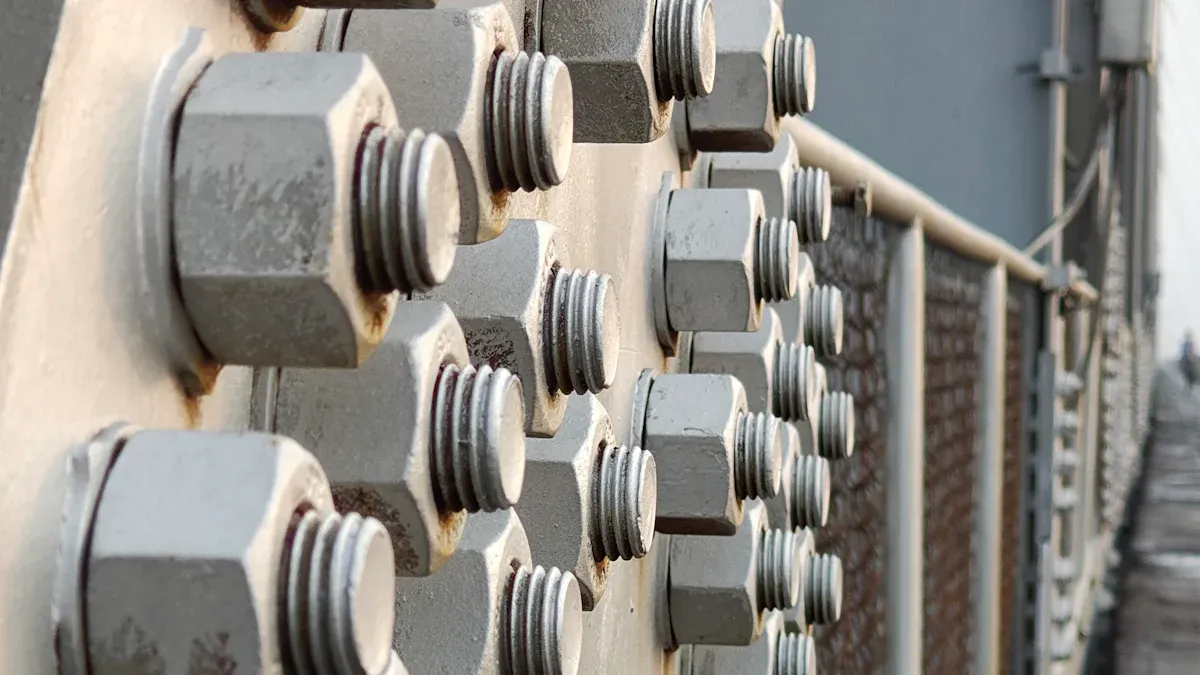
Mechanical anchors are a popular choice for their reliability and straightforward installation. These fasteners create a secure connection by expanding and generating friction against the walls of a pre-drilled hole. Understanding the different types of concrete anchors is essential for selecting the right one for the job. This guide explores three common mechanical types of anchors: wedge, sleeve, and drop-in. The selection process involves matching the anchor’s design to the project’s specific load and base material, which helps professionals identify suitable concrete anchor types.
Wedge Anchors
Wedge anchors are a top choice for fastening into solid concrete. They are renowned for their exceptional holding power, making them a go-to for demanding structural applications.
How They Create Friction
The design of wedge anchors is simple yet effective. Each anchor consists of a threaded stud with a tapered cone at one end and an expansion clip wrapped around it. An installer drills a hole, inserts the anchor, and tightens the nut. This action pulls the tapered cone up through the clip. The clip expands outward, pressing firmly against the concrete and creating immense friction. This friction is what provides the anchor’s powerful pull-out resistance.
Best for Heavy-Duty Static Loads
Professionals frequently specify wedge anchors for heavy-duty static load applications. Their high load-bearing capacity makes them ideal for securing critical structural elements.
- Common Applications:
- Securing structural steel columns and beams to foundations.
- Attaching heavy machinery and equipment to concrete floors.
- Installing pallet racking, guardrails, and barriers.
- Mounting large electrical panels and HVAC components.
These heavy-duty anchors offer consistent performance in solid concrete. The ultimate load capacity increases significantly with both anchor diameter and embedment depth, as shown in the data below for 4,000 PSI concrete.
| Anchor Diameter (in.) | Embedment Depth (in.) | Ultimate Tension (LB) | Ultimate Shear (LB) |
|---|---|---|---|
| 1/4 | 1-3/4 | 2408 | 1813 |
| 3/8 | 3 | 5653 | 5121 |
| 1/2 | 4 | 8942 | 9377 |
| 5/8 | 5 | 15590 | 12928 |
| 3/4 | 6 | 18408 | 17050 |
| 1 | 7-1/2 | 26726 | 27605 |
| 1-1/4 | 10 | 34788 | 42690 |
Calculating Safe Working Load: The values above are ultimate loads. Professionals apply a safety factor to determine a safe working load. A standard 4:1 safety factor is common. For example, a 1/2″ wedge anchor with an ultimate shear load of 9,377 lbs has a safe working load of 2,344 lbs (9,377 ÷ 4).
Installation in Solid Concrete
Wedge anchors are designed exclusively for use in solid concrete. They should not be used in softer base materials like brick or block, as these materials may not withstand the expansion forces. The installation is a through-fixture process, meaning the installer drills through the fixture’s hole directly into the concrete before inserting the anchor. The material of the wedge anchors also affects load capacity, with carbon steel generally offering higher strength than stainless steel variants.

Sleeve Anchors
Sleeve anchors are versatile fasteners known for their adaptability to various base materials, including concrete, brick, and hollow block.
How Expansion Sleeves Work
A sleeve anchor consists of a threaded bolt enclosed by a metal sleeve. As the installer tightens the bolt or nut, the tapered end of the bolt is drawn into the sleeve. This action forces the sleeve to expand outward, creating a secure grip against the inside of the hole. The full-length expansion provides a large contact area, distributing the load effectively.
Best for Brick, Block, and Concrete
The primary advantage of sleeve anchors is their versatility. Unlike wedge anchors, they perform well in a range of materials.
- Solid Concrete: They offer reliable holding values.
- Brick and Block: The expansion sleeve provides a secure grip without exerting the intense point pressure that could crack these softer materials.
- Mortar Joints: They can even be installed in mortar joints, although holding values will depend on the mortar’s quality.
While versatile, sleeve anchors generally provide more consistent and stronger pull-out values in solid concrete compared to brick or block. The quality of the base material directly influences their performance.
Understanding Different Head Styles
Sleeve anchors come in numerous head styles to suit different aesthetic and functional requirements. This variety makes them a flexible choice for many light to medium-duty projects.
| Head Style | Description | Common Applications |
|---|---|---|
| Hex Nut Head | A standard hex nut for easy tightening with a wrench. | Securing machinery, brackets, and structural supports. |
| Flat Head | Sits flush with the material surface for a clean finish. | Attaching door frames, window frames, and signage. |
| Acorn Nut Head | A dome-shaped nut that provides a finished look and protects threads. | Installing handrails, public fixtures, and playground equipment. |
| Round Head | A low-profile, rounded head for a neat appearance. | Fastening light fixtures, brackets, and decorative items. |
| Rod Coupler | An internally threaded head for connecting threaded rods. | Suspending pipes, ductwork, and electrical conduit from ceilings. |
Drop-In Anchors
Drop-in anchors are female anchors designed for flush-mount applications, particularly overhead. They require a setting tool for proper installation.
How They Function
A drop-in anchor is a metal shell with internal threads and a pre-inserted expansion plug at its base. After an installer places the anchor in a pre-drilled hole, they use a setting tool to drive the internal plug downward. This action expands the base of the anchor, wedging it securely inside the concrete. The internal threads are then ready to accept a bolt or threaded rod.
Best for Overhead Applications
Because they sit flush with the concrete surface, drop-in anchors are an excellent choice for overhead work. They are commonly used for:
- Suspending conduit and cable trays.
- Hanging HVAC ductwork and fire sprinkler pipes.
- Attaching light fixtures and suspended ceilings.
Once set, the anchor provides a permanent threaded socket in the concrete, allowing for easy removal and re-installation of the fixture bolt.
Requirement for a Setting Tool
Proper installation of a drop-in anchor is impossible without the correct setting tool. Each anchor diameter requires a matching tool to ensure the plug is driven to the correct depth for full expansion.
Installation Steps: Installation Steps:
- Drill the Hole: Drill a hole to the specified diameter and depth using a carbide-tipped bit.
- Clean the Hole: Thoroughly remove all dust and debris from the hole with a wire brush and compressed air or a vacuum. This step is critical for achieving full holding power.
- Insert the Anchor: Drop the anchor into the hole with the threaded end facing up.
- Set the Anchor: Insert the correct setting tool into the anchor. Strike the tool firmly with a hammer until its shoulder meets the top lip of the anchor. This confirms the anchor is fully expanded.
- Install the Fixture: Position the fixture over the anchor and fasten it in place using a threaded bolt or rod.
Strike Anchors (Hammer-Set)
Strike anchors, also known as hammer-set anchors, are one of the simplest types of concrete anchors to install. They provide a permanent, tamper-proof fastening for light-duty applications in concrete, block, or brick. Their design prioritizes speed and security over high load capacity.
How They Are Installed
The installation of a strike anchor is exceptionally straightforward and relies on impact rather than torque. The anchor body is a single piece with an expansion slot and an internal nail. An installer drills a hole, places the anchor through the fixture, and then drives the nail into the anchor body with a hammer. The nail forces the anchor body to expand, creating a secure friction fit against the walls of the hole.
Installation Process: Installation Process:
- An installer drills a hole through the fixture and into the base material.
- The hole is cleaned of all dust and debris.
- The installer inserts the strike anchor through the fixture and into the hole.
- They strike the head of the nail with a hammer until it sits flush with the anchor head.
Best for Light-Duty Tamper-Proof Fastening
The primary advantage of a strike anchor is its tamper-proof nature. Once the nail is driven flush, it cannot be easily backed out or removed without destroying the anchor or the surrounding material. This feature makes it an excellent choice for securing items in public areas where tampering is a concern. These are single-use fasteners intended for permanent installations.
Common Applications
Professionals use strike anchors in a variety of light-duty scenarios where a quick, secure, and tamper-resistant fastening is needed. Common uses include:
- Fastening electrical boxes and conduit clips
- Mounting lightweight signage and brackets
- Securing furring strips to concrete or masonry walls
- Attaching roof flashing and termination bars
Step 5: Exploring Adhesive Anchoring Systems
When a project demands the highest possible load capacity or must endure challenging conditions, professionals turn to adhesive anchoring systems. These systems, also known as chemical anchors, use a two-part epoxy or resin to create a powerful bond between a threaded rod or rebar and the concrete. This technology offers a robust alternative to traditional mechanical fasteners.
How Adhesive Anchors Work
Adhesive anchors function by bonding a steel element to the concrete, creating a stress-free connection that is often stronger than the base material itself. This method differs fundamentally from the friction-based principle of mechanical anchors.
Understanding Two-Part Epoxy Systems
Most adhesive systems consist of a two-part cartridge containing a resin and a hardener. These components remain separate until an installer dispenses them through a special mixing nozzle. As the compounds travel through the nozzle, they combine and initiate a chemical reaction. The installer injects this liquid epoxy into a clean, pre-drilled hole before inserting the threaded rod or rebar. The epoxy then cures, forming a solid, monolithic bond.
Key Benefits Over Mechanical Anchors
Adhesive anchors provide several distinct advantages over their mechanical counterparts. They achieve superior load capacity by distributing the load evenly along the full length of the anchor. This bonding process avoids the high expansion stress that mechanical anchors create.
Key Advantage: Because they do not exert expansion forces, adhesive anchors are the preferred choice for applications with limited edge distance. Installers can place them closer to edges and closer to each other without risking concrete breakout.
Other benefits include:
- Higher Load Capacity: They resist the highest static loads and are a better choice for dynamic applications.
- Waterproof Seal: The cured epoxy creates an airtight and waterproof seal, protecting the anchor and hole from moisture intrusion.
- Versatility: They work in a wide range of base materials, including hollow block (with a screen tube) and cracked concrete.
When to Choose Adhesive Anchors
Professionals select adhesive anchors for the most demanding and critical applications where mechanical fasteners may not suffice.
For Maximum Strength in Cracked Concrete
Adhesive anchors excel in cracked concrete. The liquid epoxy flows into and fills hairline fractures within the hole, creating a continuous, high-strength bond. This makes them exceptionally reliable in tension zones where the integrity of the concrete is compromised.
For Rebar Doweling and Deep Embedment
These systems are the industry standard for rebar doweling, which involves connecting new concrete structures to existing ones. The ability to set threaded rods or rebar at virtually any embedment depth gives engineers immense design flexibility for achieving specific load requirements.
For Areas with Heavy Vibration
Adhesive anchors offer superior resistance to vibrations and pull-out failures under dynamic loads. The solid epoxy bond absorbs and dampens vibrations from machinery or traffic. This prevents the anchor from loosening over time, a common failure point for some mechanical types of concrete anchors in high-vibration environments.
Step 6: The Process of Choosing Concrete Anchors and Sizes
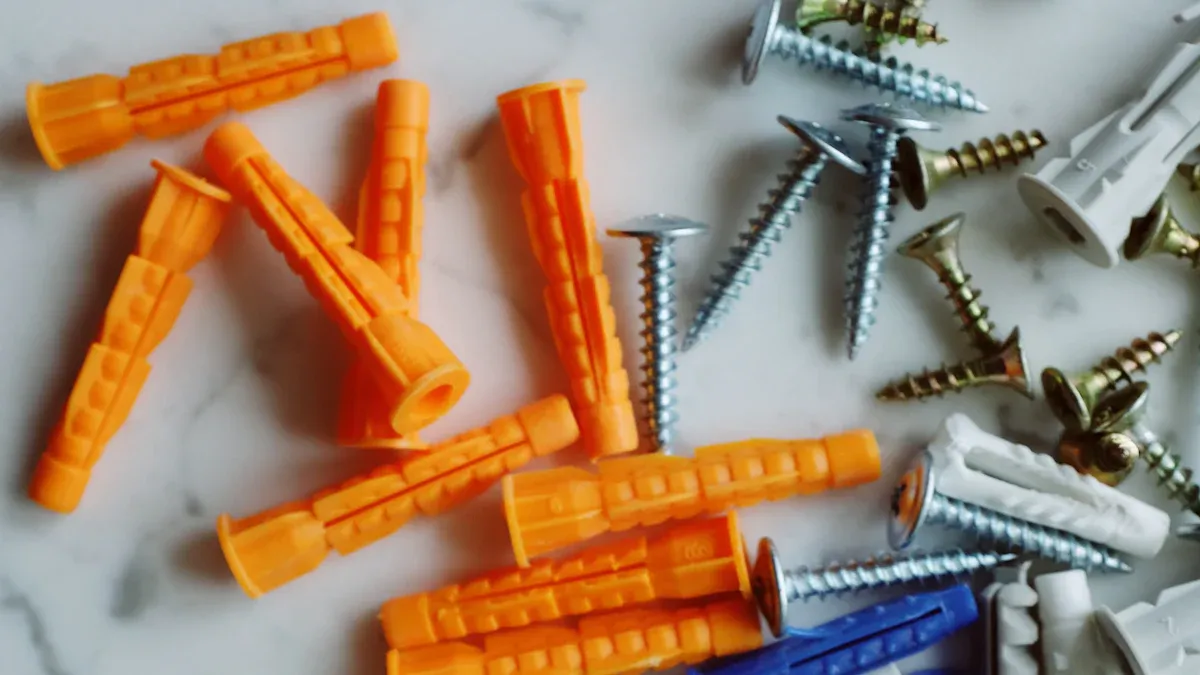
The process of choosing concrete anchors involves more than just selecting a type; it requires determining the correct physical dimensions. The anchor’s diameter and length are critical for ensuring a secure connection. Professionals follow a systematic approach to select the right size for both the load and the fixture.
Selecting the Right Anchor Diameter
The diameter of an anchor directly influences its strength and compatibility with the object being fastened. Installers must consider both load capacity and the fixture’s pre-drilled holes.
Matching Diameter to Load Capacity
An anchor’s diameter is a primary factor in its load-bearing capacity. As a general rule, a larger diameter results in greater tensile and shear strength. Manufacturers provide technical data sheets that list the ultimate load values for each anchor diameter. Professionals consult these charts, apply the necessary safety factor, and select a diameter that safely exceeds the project’s calculated load requirements. A thicker anchor provides a larger cross-sectional area to resist shear forces and a wider expansion area to resist pull-out.
Matching Diameter to the Fixture’s Hole
The anchor must fit through the hole in the object being fastened. The fixture’s hole size sets the maximum diameter for the anchor.
Important Note: The hole in the fixture should be slightly larger than the anchor’s diameter to allow for easy installation. For example, a 1/2-inch anchor typically requires a 9/16-inch hole in the fixture. An installer must verify this clearance before drilling into the concrete.
Calculating the Required Anchor Length
Calculating the correct anchor length is a straightforward, three-step process. An anchor that is too short will not achieve proper embedment, while one that is too long can be wasteful and may bottom out in the hole. The final length of the concrete anchor bolts is the sum of three key measurements.
Step 1: Measure Fixture Thickness
The first step is to measure the thickness of the material being fastened. This measurement is the portion of the anchor that will pass through the fixture before entering the concrete.
Step 2: Add Minimum Embedment Depth
Next, an installer must add the minimum embedment depth required for the chosen anchor. This is the length of the anchor that must be embedded into the concrete to achieve its specified holding power. This depth varies significantly based on the anchor type, its diameter, and the base material. For instance, heavy-duty wedge anchors used for structural steel have specific embedment requirements based on their nominal diameter.
- Wedge Anchors: The required hole depth must be deep enough to accommodate the anchor’s full embedment plus the length of its skirt.
- Sleeve Anchors: The hole depth for sleeve anchors follows manufacturer guidelines, which account for the sleeve’s diameter and the density of the base material.
Step 3: Add Space for Nut and Washer
Finally, an installer must account for the space needed for the nut and washer. This ensures there is enough exposed thread above the fixture to properly tighten the anchor. A good rule of thumb is to add a length equal to the anchor’s diameter to provide sufficient room.
Formula for Anchor Length: Formula for Anchor Length:
Fixture Thickness + Minimum Embedment Depth + Nut/Washer Space = Required Anchor Length
Following this formula ensures the selected anchor is long enough to meet embedment requirements while leaving adequate thread for secure fastening.
Step 7: Pre-Installation Checks for Concrete Anchor Bolts
A successful fastening project depends on careful preparation before the anchor ever enters the concrete. Following best practices for installation at this stage prevents common failures and ensures the anchor performs as designed. These pre-installation checks are just as important as selecting the right anchor itself.
Selecting the Correct Drill Bit
The first step in preparing the hole is choosing the right tool for the job. The drill bit’s quality and size are critical for creating a hole that meets the anchor’s specifications.
ANSI-Standard Carbide Bits
Professionals use carbide-tipped drill bits that meet American National Standards Institute (ANSI) specifications. These bits are manufactured to precise tolerances, ensuring the hole diameter is accurate. A non-ANSI bit may create a hole that is slightly too large or too small, which can compromise the anchor’s performance.
Matching Bit Diameter to Anchor Diameter
Installers must match the drill bit diameter to the anchor diameter as specified by the manufacturer. Using a bit that is too large will prevent a mechanical anchor from expanding correctly. A bit that is too small will make it impossible to insert the anchor without damaging it or the concrete.
Pro Tip: Pro Tip: The required drill bit diameter is almost always stamped on the anchor itself or listed in the manufacturer’s technical data. Always verify this before drilling.
Drilling the Hole Correctly
The technique used to drill the hole directly impacts the quality of the final connection. Precision is key to achieving the anchor’s full load capacity.
Ensuring Proper Hole Depth
Drilling a hole to the wrong depth can severely reduce an anchor’s holding strength. A hole that is too shallow prevents the anchor from reaching its required embedment. An installer might then continue driving the anchor, which can strip the concrete threads and compromise its load capacity. A hole that is too deep can also cause issues, particularly with drop-in anchors that may fall too far into the hole.
Maintaining a Perpendicular Angle
The hole must be drilled perpendicular to the concrete surface. Drilling at an angle can create uneven stress on the anchor, especially under shear loads. This can lead to premature failure of the anchor or the concrete. Using a drill guide can help maintain a perfect 90-degree angle.
The Importance of Cleaning the Hole
One of the most overlooked yet critical steps is thoroughly cleaning the drilled hole. Debris left inside the hole can drastically reduce the holding power of all concrete anchor bolts.
Why Debris Reduces Holding Power
Concrete dust and debris act as a barrier. For mechanical anchors, this debris prevents the expansion mechanism from making full contact with the solid concrete wall. For adhesive anchors, dust prevents the epoxy from forming a strong molecular bond with the base material. This makes proper installation impossible.
Proper Cleaning Methods and Tools
The cleaning process ensures the anchor can achieve its full potential.
- Drill the hole to the correct size and depth.
- Use compressed air or a hand pump to blow out all loose dust.
- Scrub the hole with a nylon or wire brush to dislodge any remaining particles.
- Blow the hole out a final time to ensure it is completely clean before inserting the anchor.
This simple four-step process is essential for both mechanical and chemical anchor systems to lock everything together securely.
Step 8: Final Installation and Inspection
The final steps of installation and inspection are where precision and diligence pay off. Following the correct procedures ensures the anchor performs safely and reliably over its service life. These best practices for installation transform a well-chosen anchor into a secure, long-lasting connection.
Following Manufacturer Specifications
Every anchor is part of a system designed and tested by its manufacturer. Adhering to their specific guidelines is not optional; it is essential for safety and compliance.
Reading the Technical Data Sheet
The Technical Data Sheet (TDS) is the most important document for any anchor. It contains all critical information, including required drill bit size, hole depth, cleaning procedures, and torque values. Professionals always consult the TDS before beginning work to understand the anchor’s specific requirements.
Adhering to Installation Instructions
Manufacturers provide step-by-step installation instructions based on extensive testing. Installers must follow these directions precisely. Deviating from the prescribed method, such as skipping the hole cleaning step or using the wrong tool, can lead to a significant reduction in the anchor’s load capacity and potential failure.
Proper Anchor Torquing
Applying the correct amount of torque is a critical step for mechanical anchors like wedge and sleeve anchors. This action sets the anchor and creates the necessary expansion force.
Using a Calibrated Torque Wrench
Professionals use a calibrated torque wrench to tighten the anchor’s nut. This tool allows them to apply a precise rotational force, ensuring the anchor is set according to its design specifications. Guessing the torque by feel is unreliable and can lead to unsafe installations.
The Dangers of Over-Torquing
It is essential to familiarize yourself with the manufacturer-recommended torque values. Using a torque wrench to tighten the nut to the specified value is critical for ensuring stability and proper embedment. Manufacturers provide these values, sometimes as an average and sometimes as a range. Installing anchors with either less or more than the recommended torque will cause the holding and shear values to differ from the published ratings.
Warning: Warning: Over-torquing can damage the anchor, strip the threads, or crack the concrete. Under-torquing prevents the anchor from expanding fully, resulting in poor holding power.
Post-Installation Inspection
After installation, a final inspection verifies that the work was completed correctly. This quality control check provides confidence in the connection’s integrity.
Visual Checks for Correct Installation
A visual inspection can reveal common installation errors. An installer should check for the following signs of a proper installation:
- The anchor is installed at the correct embedment depth.
- The nut and washer are securely tightened.
- There are no cracks or spalling in the concrete around the anchor.
On-Site Proof Loading for Critical Lifts
For critical applications, such as overhead lifting or supporting heavy machinery, engineers may require on-site proof loading. This test involves applying a specific tensile load to the installed anchor to confirm its real-world holding capacity. It serves as the ultimate verification of a secure installation.
Following a systematic process removes the guesswork from selecting concrete anchor bolts, ensuring project safety and durability. Professionals use this final checklist to confirm their choice:
- What is the load type (tensile, shear) and total calculated weight?
- Is the concrete cracked or uncracked, and what is its thickness and strength?
- What is the installation environment (indoor, outdoor, corrosive)?
- Based on these factors, what is the correct anchor type, material, and size?
Answering these questions guarantees the selection of effective concrete anchor bolts that provide long-term, reliable performance.
FAQ
Can professionals reuse mechanical concrete anchors?
Professionals should not reuse mechanical anchors. The installation process permanently deforms the anchor’s expansion mechanism. Removing and reinstalling it compromises its holding power and creates a significant safety risk. Always use a new anchor for each installation to ensure reliability and meet safety standards.
What is the main difference between mechanical and adhesive anchors?
Mechanical anchors create a connection through friction and expansion forces. Adhesive anchors use a chemical epoxy to bond a steel element to the concrete. This bonding process creates a stress-free connection, often resulting in higher load capacities and better performance in cracked concrete.
Why is cleaning the drilled hole so critical?
Cleaning the hole is essential for achieving full load capacity. Debris prevents mechanical anchors from making full contact with the concrete. For adhesive anchors, dust inhibits the epoxy from bonding properly to the base material. A clean hole ensures a secure and reliable installation.
What happens if an installer uses a zinc-plated anchor outdoors?
Zinc-plated anchors are for dry, indoor use only. Outdoor moisture and humidity will quickly corrode the thin zinc coating. This exposes the carbon steel to rust, severely weakening the anchor over time. This corrosion can lead to premature failure of the fastening.
Which anchor type works best in hollow block or brick?
Sleeve anchors are a versatile choice for hollow base materials like brick or block. Their expansion sleeve distributes the load over a larger surface area. This design prevents the intense point pressure that could crack or damage these softer materials during installation.
What is a safety factor in anchor selection?
A safety factor is a multiplier professionals apply to the calculated load. For example, a 4:1 safety factor means the anchor’s ultimate capacity is four times the expected working load. This creates a crucial safety margin to account for unforeseen stresses and material variations.