
Choosing the correct hollow wall anchors is critical for successfully hanging items. The item’s weight and the wall’s thickness determine the proper anchor selection. Research shows a high failure rate for anchors, often due to incorrect choices. A project’s success depends on matching the anchor’s weight capacity to the object. This guide simplifies selecting hollow wall anchor sizes.
Quick Reference Guide
- Light-Duty (5-25 lbs): Plastic Expansion Anchors for picture frames, smoke detectors.
- Medium-Duty (25-75 lbs): Self-Drilling Anchors & Molly Bolts for curtain rods, mirrors.
- Heavy-Duty (75+ lbs): Toggle Bolts & Pop Toggles for TV mounts, cabinets.
A custom fasteners manufacturer can also provide specialized Anchor Bolts or custom anchor bolts for unique capacity needs.
Matching Anchor Type to Weight Capacity
Selecting the correct anchor requires a clear understanding of its design and intended load. Anchors are engineered for specific weight ranges, from light decorative items to heavy functional fixtures. Matching the anchor type to the object’s weight is the most critical step for a secure and lasting installation. This section breaks down common hollow wall anchors by their duty rating.
Light-Duty Anchors (5-25 lbs)
Light-duty anchors are designed for simple, low-force applications. They are typically made of plastic and rely on expansion or friction to hold. Exceeding their load limits can lead to various failure modes, including the anchor pulling out, the screw stripping the plastic, or the drywall itself breaking around the anchor.
Plastic Expansion Anchors
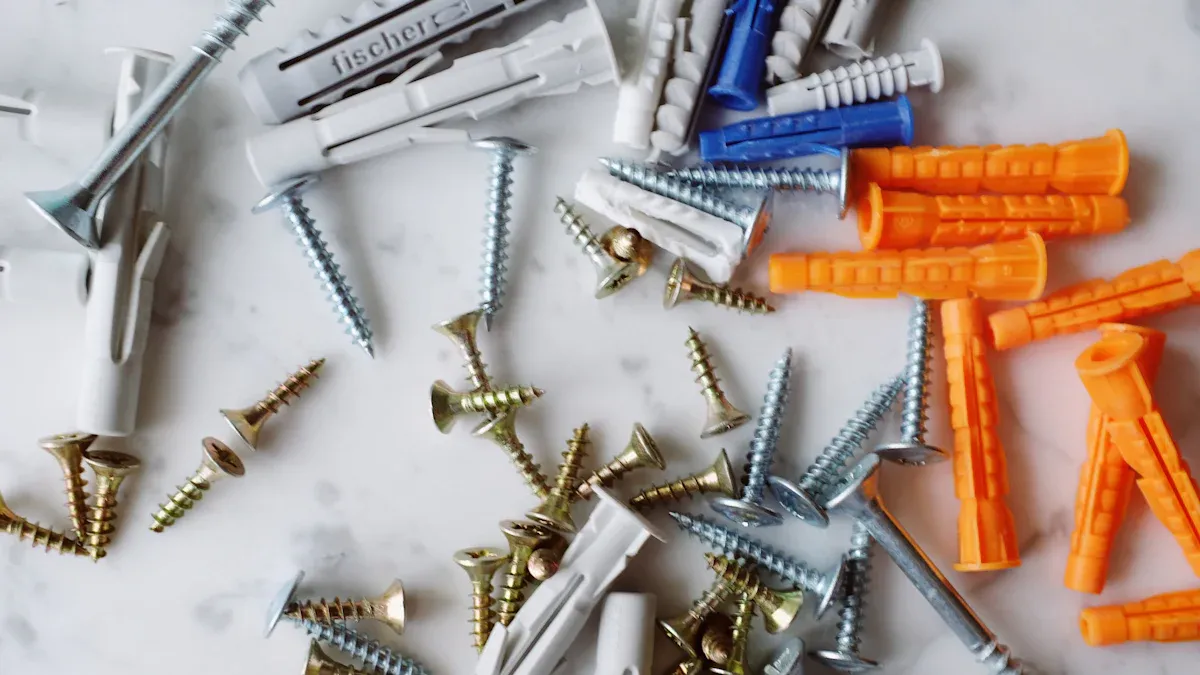
Plastic expansion anchors are the most common type for very light items. A user drills a pilot hole, inserts the plastic sleeve, and drives a screw into it. The screw’s threads force the anchor’s ribbed sides to expand, creating friction against the inside of the drywall. Their pull-out strength is modest, typically around 10 pounds in drywall, though this can increase to 30 pounds in a solid material like concrete. Threaded plastic drywall anchors offer a slight improvement, holding between 15 and 25 pounds.
Winged Plastic Anchors
Winged plastic anchors provide a stronger hold than standard expansion types. When a user drives the screw, it collapses the anchor body and pulls two “wings” flat against the back of the drywall. This action distributes the load over a wider surface area, preventing pull-out. These anchors can reliably support between 25 and 35 pounds each in standard drywall, making them a significant upgrade for items that are slightly heavier.
Best Uses for Light-Duty Anchors
These anchors are ideal for objects that exert a minimal, static downward force. Their low capacity makes them unsuitable for anything that will be pulled, moved, or subjected to dynamic loads.
Ideal Projects for Light-Duty Anchors:
- Small picture frames and art
- Smoke detectors and carbon monoxide alarms
- Wall clocks
- Small, lightweight decorative shelves
Medium-Duty Anchors (25-75 lbs)
Medium-duty anchors offer a substantial increase in holding power. They often incorporate metal components and more robust designs to handle greater stress. These are the go-to choice for many common household items that require a secure mount.
Self-Drilling Drywall Anchors
Self-drilling drywall anchors simplify installation by eliminating the need for a pilot hole. Their sharp, auger-like tip drills directly into the wallboard. The wide, aggressive threads then grip the gypsum core securely. This design provides a reliable hold, with some nylon models supporting up to 50 pounds. The anchor’s ability to create its own precisely sized hole is key to achieving its full weight capacity.
Molly Bolts (Pointed vs. Non-Pointed)
Molly bolts, or sleeve-type anchors, are a classic medium-duty solution. They consist of a metal sleeve and a machine screw.
- Pointed Molly Bolts: These have a sharp tip and can be hammered directly into drywall, creating their own hole.
- Non-Pointed Molly Bolts: These require a pre-drilled pilot hole for insertion.
Once inserted, turning the screw causes the metal sleeve to collapse and flare out behind the wall, creating a very strong, load-bearing flange. This mechanism provides excellent holding power for common household fixtures.
Best Uses for Medium-Duty Anchors
These anchors are versatile and suitable for a wide range of common household items that are too heavy for plastic anchors. They provide a secure mounting point for fixtures that see regular use.
Ideal Projects for Medium-Duty Anchors:
- Curtain rods and drapery
- Large mirrors and heavy pictures
- Towel bars and bathroom fixtures
- Wall-mounted shelving units
Heavy-Duty Anchors (75+ lbs)
For the heaviest and most critical applications, heavy-duty anchors are essential. These anchors are engineered to distribute significant loads across a large area of the wall’s interior surface, providing maximum holding strength and safety. Industry standards from organizations like A.S.T.M. and A.N.S.I. guide the testing protocols for these robust fasteners.
Spring Toggle Bolts
Spring toggle bolts feature a pair of spring-loaded wings attached to a long machine screw. A user drills a hole large enough for the folded wings to pass through. Once inside the wall cavity, the wings spring open. Tightening the screw clamps the wings firmly against the interior wall surface. This design spreads the object’s weight over a wide area, allowing the anchor to hold substantial loads, often ranging from 25 to over 100 pounds depending on the bolt size and wall thickness.
Strap-Style Pop Toggles
Strap-style toggles are a modern evolution of the toggle bolt and are among the strongest wall anchors available. A user drills a hole, inserts a metal channel connected to plastic straps, and then slides a cap along the straps to lock the channel against the back of the wall. The excess strap is then snapped off. This design provides immense holding power, with some models rated for over 200 pounds in 1/2-inch drywall. Their shear load capacity can even exceed 300 pounds, making them suitable for the most demanding jobs.
Best Uses for Heavy-Duty Anchors
These anchors are the only safe choice for mounting heavy, valuable, or safety-critical items to a hollow wall. Their superior strength provides peace of mind and prevents catastrophic failure.
| Anchor Type | Common Applications |
|---|---|
| Toggle Bolts | TV mounts, heavy shelving, small cabinets |
| Strap Toggles | Large flat-screen TVs, kitchen cabinets, grab bars, wall-mounted sinks |
When selecting any of these anchors, it is crucial to consider the safe working load, which industry standards recommend as 1/4 of the ultimate load capacity listed by the manufacturer. This 4:1 safety ratio accounts for variations in wall conditions and installation quality.
Understanding Hollow Wall Anchor Sizes and Materials
Beyond weight capacity, an anchor’s size and material composition are fundamental to its performance. A mismatched size can compromise holding power, while the wrong material can lead to premature failure, especially in certain environments. Understanding these details ensures a secure and durable installation.
Decoding Hollow Wall Anchor Sizes
Manufacturers use specific measurements to classify hollow wall anchor sizes. These numbers on the packaging are not arbitrary; they provide critical information for selecting the right fastener for a specific wall.
Grip Range and Wall Thickness
Grip range is the most important measurement. It defines the wall thickness an anchor is designed to work with. If the grip range is too short, the anchor will not expand properly behind the wall. If it is too long, it will not tighten securely. Hollow wall anchors are available in extra short, short, long, and extra-long measurements to match different wall materials.
Tip: Always measure your wall’s thickness before purchasing anchors. Standard drywall is 1/2-inch or 5/8-inch thick, but plaster walls can vary significantly.
The following table shows common sizing conventions for sleeve-type anchors.
| Anchor Size | Reach Category | Hole Size | Grip Range |
|---|---|---|---|
| 1/8″ | Short Reach (SR) | 1/4″ | 1/8″ – 1/2″ |
| 1/8″ | Long Reach (LR) | N/A | 5/8″ – 7/8″ |
| 3/16″ | Short Reach (SR) | 3/8″ | 1/8″ – 5/8″ |
| 3/16″ | Long Reach (LR) | N/A | 5/8″ – 1-3/16″ |
| 1/4″ | Short Reach (SR) | 1/2″ | 1/8″ – 5/8″ |
| 1/4″ | Long Reach (LR) | N/A | 5/8″ – 1-3/16″ |
Diameter and Pilot Hole Size
An anchor’s diameter determines the size of the pilot hole a user must drill. This information is always printed on the product packaging. Using the exact drill bit size specified is essential. A hole that is too large will prevent the anchor from gripping the wall, while a hole that is too small can damage the wall or the anchor during insertion.
Screw Size Compatibility
Most wall anchors come packaged with the correct screws. If a screw is not included, the packaging will specify the required screw diameter (gauge) and length. Using a screw that is too thin will not expand the anchor correctly. A screw that is too thick can split the anchor.
Choosing the Right Anchor Material
The material of an anchor affects its strength, durability, and suitability for different environments. The main choices are plastic or metal.
Plastic and Nylon Anchors
Plastic anchors are inexpensive and common for light-duty tasks. For better performance, nylon is a superior material. Nylon anchors are corrosion-proof, making them a better choice than many metals in humid environments. Certain types, like PA 12 nylon, show excellent durability in moisture-rich and UV-exposed conditions, outperforming other polymers.
Zinc and Steel Metal Anchors
Metal anchors, typically made from zinc alloy or steel, provide superior strength for medium and heavy-duty applications. However, standard zinc alloy anchors have limited corrosion resistance. They are not recommended for outdoor or high-moisture areas where they can degrade and fail. For environments with high humidity or corrosive elements, stainless steel anchors are necessary to prevent rust and ensure long-term safety.
When to Choose Plastic vs. Metal
The choice depends on load and environment.
- Plastic/Nylon: Best for light-duty items in dry or moderately damp indoor locations.
- Zinc/Steel: The standard for medium-to-heavy loads in dry, stable indoor environments.
- Stainless Steel: Essential for heavy loads in humid, corrosive, or outdoor settings like bathrooms, basements, or exterior walls.
Key Factors for Selecting the Right Wall Anchors
A successful installation goes beyond just picking an anchor from a weight chart. Factors like wall material, precise measurements, and a deep understanding of safety ratings are critical. Paying attention to these details, including specific hollow wall anchor sizes, prevents wall damage and ensures the mounted object remains secure for years.
Identifying Your Wall Type and Thickness
The first step in any project is to know the surface. Different wall materials have vastly different structural properties, which dictates the type of hollow wall anchors that can be used.
Drywall vs. Plaster vs. Concrete Block
- Drywall (Gypsum Board): This is the most common residential wall material. It consists of a gypsum core pressed between two sheets of paper. Standard thicknesses are 1/2-inch for interior walls and 5/8-inch for ceilings or fire-rated walls. A less common 1/4-inch thickness is used for covering existing surfaces.
- Plaster: Found in older homes, plaster is harder and more brittle than drywall. It is applied over a lath base (wood strips or metal mesh). Its thickness can vary significantly, making anchor selection more complex. Drilling into plaster can sometimes cause cracking.
- Concrete Block (CMU): These walls are common in basements, garages, and commercial buildings. The blocks can be hollow or solid. Commercial projects involving masonry often have strict requirements. Building codes may reference standards like ACI 318 or require anchors qualified under ACI 355.2 to ensure performance.
How to Measure Wall Thickness
Accurate measurement is essential for choosing an anchor with the correct grip range.
Simple Measurement Technique:
- Drill a small pilot hole where the anchor will go.
- Unbend a paperclip, leaving a small hook at the end.
- Insert the paperclip through the hole until the hook catches on the back of the wall material.
- Pinch the paperclip where it enters the wall.
- Pull it out and measure from your pinch point to the hook. This is your wall’s thickness.
Why Thickness Dictates Anchor Choice
Every sleeve-type and toggle-style anchor has a specified “grip range.” This is the range of wall thicknesses the anchor is designed to work with. If the wall is too thin for the anchor’s grip range, the anchor will not tighten properly. If the wall is too thick, the anchor’s expansion mechanism will not be able to deploy behind the wall surface, resulting in zero holding power.
Matching Drill Bits and Screws
Using the correct hardware is just as important as choosing the right wall anchors. The packaging provides all the necessary information for a successful installation.
How to Read Anchor Packaging
The manufacturer’s packaging is your primary guide. It will clearly state:
- The required drill bit diameter.
- The anchor’s grip range (wall thickness).
- The compatible screw sizes (gauge and length).
- The anchor’s maximum load capacity.
Selecting the Correct Drill Bit Size
Using the exact drill bit size specified on the packaging is non-negotiable.
- A hole that is too large will not allow the anchor to grip the wall material, causing it to spin in place or pull out easily.
- A hole that is too small will make it difficult to insert the anchor, potentially damaging the wallboard or the anchor itself.
Choosing the Right Screw Length and Gauge
Most anchors come with the correct screw. If not, the packaging will specify what to use. The screw’s gauge (diameter) and length are critical. A heavier gauge screw is stronger and better suited for heavier loads. The screw’s length must be sufficient to pass through the item being mounted and fully engage the anchor’s expansion mechanism. A screw that is too short will not create a secure hold, compromising the entire installation.
Understanding Weight Ratings for Safety
Anchor packaging lists a weight rating, but this number requires careful interpretation to ensure safety. There is a significant difference between the absolute failure point and a safe, everyday load.
Ultimate Strength vs. Safe Working Load
Manufacturers determine an anchor’s strength through controlled testing.
- Ultimate Strength: This is the absolute maximum load an anchor can hold before it fails or breaks. It is a figure determined in a lab under ideal conditions.
- Safe Working Load (WLL): This is the maximum weight an anchor can safely support in a real-world application. The WLL is a fraction of the ultimate strength, creating a crucial safety buffer. Relying on the ultimate strength for a project can lead to overloading and catastrophic failure.
Applying the 4:1 Safety Ratio
Industry best practice recommends a 4:1 safety ratio for wall anchors. This means the safe working load is only 25% of the anchor’s listed ultimate strength.
Example Calculation: If an anchor package states a 100 lb. ultimate load, its Safe Working Load is:
100 lbs / 4 = 25 lbsYou should not hang an item heavier than 25 pounds on this single anchor. This ratio accounts for variations in wall quality, installation imperfections, and dynamic forces. For critical commercial jobs, installers must consult building codes, which may specify different ratios or require field tests to verify anchor strength.
Special Rules for Ceiling Applications
Mounting items to a ceiling is fundamentally different from a wall. A ceiling-mounted object exerts a constant downward pull (tensile force) on the anchor, with gravity as a relentless opponent.
- Increase the Safety Factor: For ceiling applications, it is wise to double the safety factor to at least 8:1.
- Use Appropriate Anchors: Never use simple friction anchors in a ceiling. Always use toggle bolts or strap-style toggles that distribute the weight over a large area.
- Verify the Installation: For any significant weight, it is critical to test the strength of the installation before applying the full load. This ensures the anchors are properly set and the ceiling material can handle the stress.
Step-by-Step Installation Guides
Proper installation is just as important as selecting the right anchor. Following the correct procedure ensures the anchor achieves its maximum holding power and prevents damage to the wall. These guides cover the installation of common light and medium-duty wall anchors.
How to Install a Plastic Expansion Anchor
Plastic expansion anchors are a common choice for lightweight items. Correct installation is key to their performance, especially in older, more fragile wall materials.
Tools and Materials
- Drill with appropriate bit
- Hammer
- Screwdriver
- Plastic expansion anchors with screws
Step 1: Drill the Pilot Hole
A user first drills a pilot hole at the marked location. The drill bit size must match the manufacturer’s specification on the anchor packaging. The hole should be deep enough to accommodate the full length of the anchor.
Step 2: Insert the Anchor
Next, the user pushes the plastic anchor into the hole. It should fit snugly. If needed, a gentle tap with a hammer can seat the anchor flush with the wall surface.
Pro Tip for Brittle Walls 📝 When working with older drywall or plaster, extra care is necessary.
- Clean all dust from the drilled hole for a better fit.
- Push the anchor in by hand whenever possible. Avoid forceful hammering.
- Do not over-tighten the screw, as this can crack the wall or strip the anchor.
Step 3: Drive the Screw
Finally, the user places the item over the anchor and drives the screw. The screw expands the anchor’s fins behind the wall, creating a secure friction hold.
How to Install a Self-Drilling Anchor
These anchors are designed for speed and convenience in standard drywall. However, they are not suitable for all wall types.
Tools and Materials
- Screwdriver (manual or electric)
- Self-drilling anchors with screws
Step 1: Position and Drive the Anchor
The user presses the sharp tip of the anchor against the wall and applies firm pressure. Using a screwdriver, they drive the anchor clockwise until its head is flush with the wall. The aggressive threads cut directly into the drywall. Using self-drilling anchors in hard plaster is a recipe for failure, as their action shatters the brittle material, creating a weak, oversized hole where the threads cannot grip.
Step 2: Set the Screw
The user drives the provided screw into the anchor until it feels snug. This step is often done after the item is positioned.
Step 3: Mount Your Item
The user can now hang the object by driving the screw through the fixture and into the anchor.
How to Install a Molly Bolt
Molly bolts provide excellent medium-duty strength by creating a mechanical flange behind the wall.
Tools and Materials
- Drill with appropriate bit
- Hammer (for pointed types)
- Screwdriver
Step 1: Drill the Pilot Hole
For non-pointed Molly bolts, a user drills a pilot hole matching the anchor’s specified diameter. Pointed types can be gently hammered into the drywall to create their own hole.
Step 2: Insert and Set the Anchor
The user inserts the Molly bolt into the hole until the head is flush. They then turn the screw clockwise. This action causes the metal sleeve to collapse and flare out, forming a strong clamp against the back of the wall.
Step 3: Back Out the Screw and Mount
Once the anchor is set, the user removes the screw. They then position the item over the anchor, re-insert the screw through the fixture, and tighten it to secure the object.
How to Install a Toggle Bolt
Toggle bolts are a classic heavy-duty solution for hollow walls. Their design provides exceptional strength by distributing weight over a large area behind the wallboard. Proper installation of these wall anchors is crucial to achieving their maximum load capacity.
Tools and Materials
- Drill and appropriate drill bit
- Screwdriver
- Tape measure
- Toggle bolt assembly (bolt and spring-loaded wings)
Step 1: Drill the Hole
A user first marks the desired location for the anchor. They must then drill a hole through the wall. The size of this hole is critical. It needs to be large enough for the folded toggle wings to pass through completely. The anchor’s packaging will specify the exact drill bit diameter required for the job. A hole that is too small will prevent insertion, while an oversized hole can compromise the anchor’s stability.
Step 2: Assemble and Insert the Toggle
Next, the user prepares the toggle bolt for insertion. They remove the spring-loaded wings from the screw. The screw is then passed through the mounting bracket of the object being hung. After that, the user threads the wings back onto the end of the screw.
Installation Best Practices 📝 To ensure the toggle wings open correctly inside the wall cavity and do not get stuck, a user should:
- Screw the bolt just enough so its tip protrudes a few threads past the toggle.
- Fold the wings completely flat against the screw before insertion.
With the toggle assembled, the user pinches the wings together and pushes them through the drilled hole. They should hear or feel a distinct “snap” as the wings spring open inside the wall cavity.
Step 3: Tighten and Secure
The user gently pulls the screw outward. This action seats the expanded wings firmly against the interior wall surface. While maintaining this outward tension, they use a screwdriver to tighten the screw. The screw should be turned until the head is snug against the fixture, securing the item tightly to the wall. It is important to remember that once these anchors are installed, the bolt cannot be removed without the toggle falling inside the wall.
Common Mistakes to Avoid When Installing Wall Anchors
Even with the correct hardware, simple installation errors can lead to failure. Professional contractors report that mistakes in technique and tooling are a primary cause of problems. Avoiding these common pitfalls is essential for a secure and lasting mount.
Using the Incorrect Drill Bit Size
The relationship between the drill bit and the anchor is fundamental. Using the wrong size pilot hole is one of the most frequent installation errors.
The Problem with a Hole Too Big
A hole that is too large for the anchor is a recipe for failure. The anchor has nothing to grip, causing it to spin in place or pull out with minimal force. This completely compromises its holding power.
If you’re using a wall anchor that relies on a tight fit within the hole you drilled, you just lost much of your holding power.
This issue is especially problematic with core-drilled holes, which can become oversized and create a smooth surface that reduces an anchor’s ability to bond.
The Problem with a Hole Too Small
Forcing an anchor into a pilot hole that is too small can cause significant damage. A user might deform or break the anchor itself during insertion. The excessive force can also crack brittle plaster or cause the face paper and gypsum core of drywall to bulge and weaken.
Over-Tightening the Screw
Applying excessive force when driving the screw is another critical error. There is a fine line between snug and stripped.
How It Strips the Anchor
Every anchor has a torque limit. Exceeding this limit with a power drill or a heavy hand strips the internal threads. This is especially common with plastic or nylon anchors. Once stripped, the screw can no longer tighten, and the anchor loses all its holding capability.
How It Damages the Wall
Over-tightening also puts immense pressure on the wall material itself. The anchor’s flange can pull into the drywall, crushing the gypsum core and creating a weak, recessed area. In plaster, this action can cause spiderweb cracks to radiate from the hole, compromising the wall’s integrity.
Misunderstanding the Weight Limit
The weight rating on the package is a guideline, not an absolute guarantee. A user must interpret this number correctly to ensure safety.
The Risk of Anchor Failure
Relying on the “ultimate strength” listed on the packaging is dangerous. Installers must always use the “safe working load,” which is typically 25% of that ultimate value. Ignoring this 4:1 safety ratio can overload the anchors, leading to sudden and catastrophic failure.
How to Calculate Total Load
The total load is more than just an object’s static weight. Installers must also consider dynamic loads, which involve movement or vibration. A swinging gate or a shelf that is frequently accessed introduces forces that significantly increase the stress on the wall anchors. For these applications, a user should select anchors with higher load capacities and anti-vibration features. When in doubt, it is always wise to test the strength of the installation before applying the full load.
Reusing Old or Failed Pilot Holes
It is tempting to reuse an existing hole in the wall, but this is a critical mistake that compromises safety. An old pilot hole, especially one from a failed anchor, is a point of weakness that cannot support a new installation.
Why It Compromises Holding Power
A failed pilot hole is more than just an opening; it is a zone of compromised wall material. The original installation and subsequent failure have enlarged the hole and crushed the surrounding gypsum core. The drywall in this area is fractured and loose. When a user installs new anchors in this damaged spot, the threads have no solid material to grip. The anchor will either spin in place or pull out under a fraction of its rated load. Reusing a hole essentially guarantees a weak hold, putting the mounted object and anyone nearby at risk. The integrity of the wall is gone, making a secure mount impossible.
How to Properly Patch and Redrill
A user must restore the wall’s integrity before attempting to drill again. Proper patching creates a solid foundation for new wall anchors. The first step is to deal with the old hardware. A user should remove the old anchor if possible or push it completely through into the wall cavity.
Next, the user prepares the hole for patching by pressing a thumb into it to create a slight “dimple” or crater. This recess allows the patching compound to sit flush with the wall once dry. Several products can effectively fill the hole:
- Quick-Setting Compounds: Products like “hot mud” or Plaster of Paris set rapidly and have minimal shrinkage. A 20-minute mix is a popular choice, allowing for a heavy fill that can be sanded the next day.
- Spackling Paste: Standard spackle is good for small holes. For deeper holes that go through the wall, it may require two or more applications to prevent a recess from forming as it dries.
- Convenience Products: Formulations like DAP DryDex are convenient as they require no mixing. However, they are more expensive and often need several coats to fill a hole completely.
Patching for a Flawless Finish 📝 For a professional result, a user should apply thin coats and allow each to dry. After the final coat, light sanding creates a smooth surface. On textured walls, a user can practice with a can of spray texture on cardboard before applying it to the patch to blend it perfectly.
Once the patch has fully cured and hardened, the area is structurally sound again. A user can then confidently drill a new pilot hole and install the anchor securely.
A successful project depends on correctly matching hollow wall anchor sizes to the job. The key is ensuring the anchor’s safe working load can support the item’s weight and is compatible with the wall’s thickness. Installers should always prioritize safety and durability by following a few core principles.
Final Checklist for a Secure Mount 📝
- A user must always verify the anchor’s capacity against the object’s load.
- The manufacturer’s installation instructions are the primary guide for a safe setup.
- When uncertain, selecting a stronger anchor provides greater peace of mind.
FAQ
What should a user do if they hit a wall stud?
A user should stop drilling immediately. Wall studs provide a superior mounting point. They can switch to a standard wood screw driven directly into the stud’s center. This method offers far more strength than any hollow wall anchor. A stud finder helps locate the stud’s edges for precise placement.
Can a user reuse a wall anchor?
No, a user should never reuse a wall anchor. Removing an anchor damages its structure and compromises its holding power. The surrounding wall material also becomes weakened. For safety and security, a user must always use a new anchor for every installation.
How many anchors are needed for a heavy item?
A user should consult the item’s installation manual for specific guidance. Generally, they divide the object’s total weight by the anchor’s safe working load. This calculation determines the minimum number of anchors required. Using more anchors than needed provides an extra margin of safety.
What is the strongest type of hollow wall anchor?
Strap-style pop toggles are among the strongest anchors available for hollow walls. Their design features a metal channel that braces against a large area of the interior wall. This mechanism provides immense holding power, often exceeding 200 pounds for a single anchor in standard drywall.
Why did an anchor spin in the hole? 😵
An anchor spins when the pilot hole is too large. The anchor’s threads or fins cannot grip the wall material. A user must ensure they use the exact drill bit size specified on the anchor’s packaging to prevent this common installation failure.
Can a user install drywall anchors in a plaster wall?
Some anchors work in plaster, but a user must choose carefully. Plaster is brittle and can crack easily.
Best choices for plaster:
- Sleeve-type anchors like Molly bolts.
- Toggle bolts for heavier items. A user should avoid self-drilling anchors, which can shatter the plaster.
What happens if a user loses the screw for an anchor?
A user must find a replacement screw with the correct specifications. The anchor’s packaging lists the required screw gauge (diameter) and length. Using a screw that is too thin or too short will prevent the anchor from expanding correctly, resulting in a failed installation.