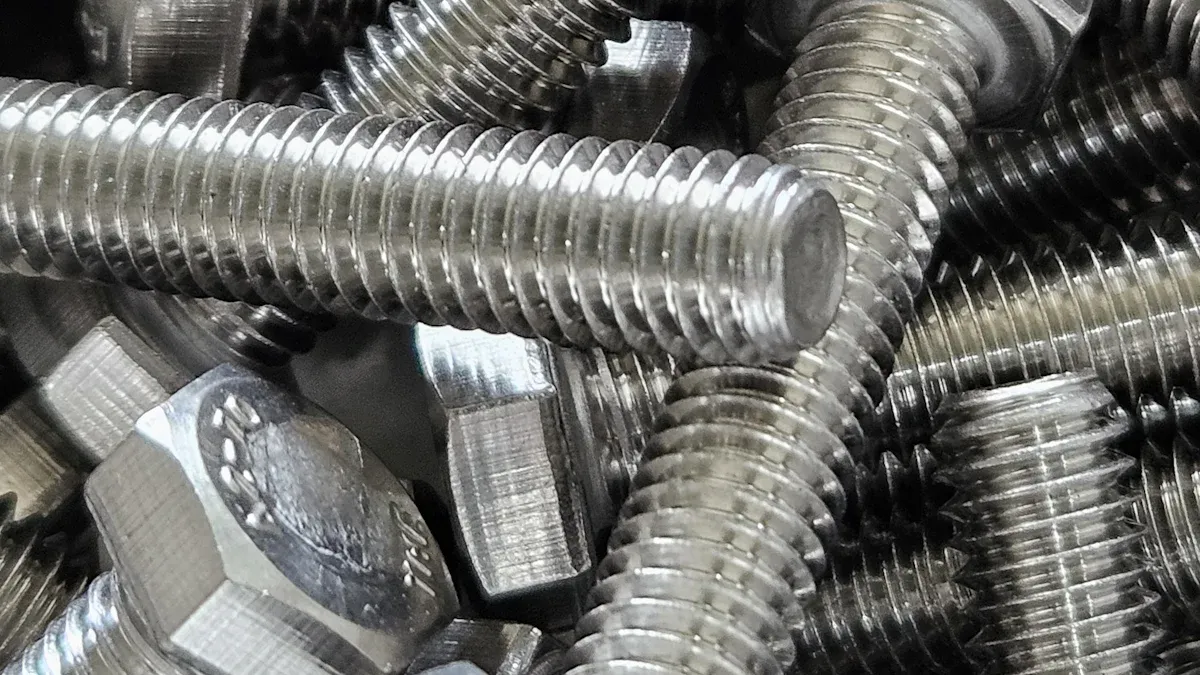
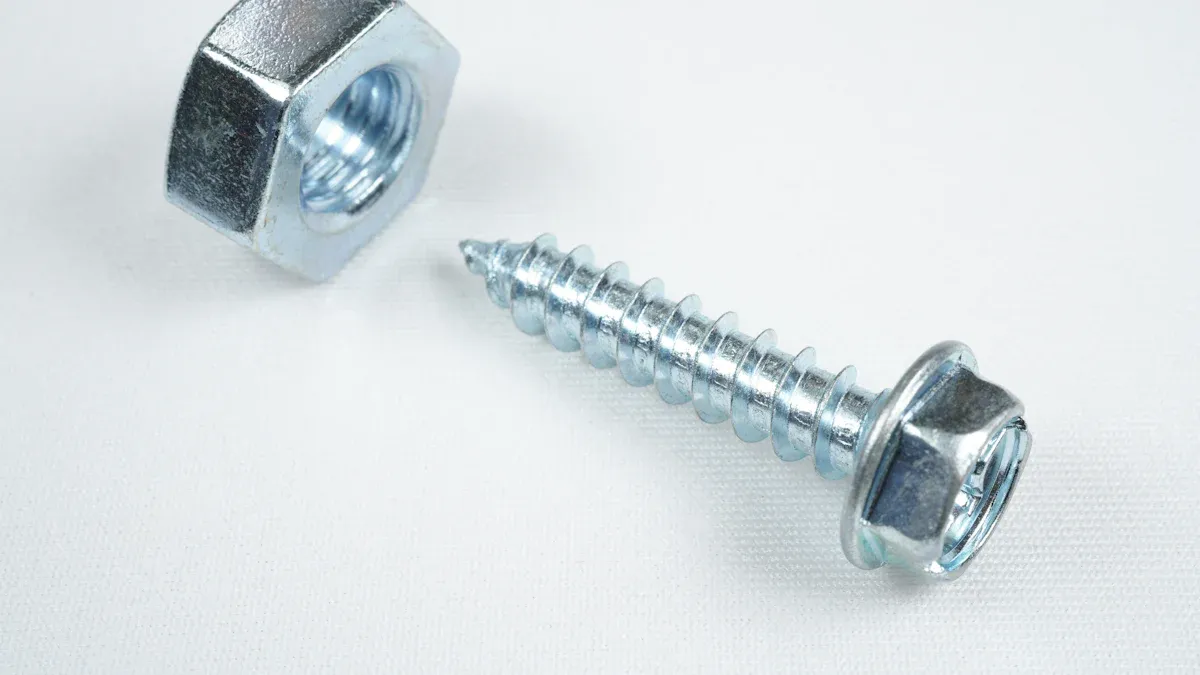
A hex nut serves as a six-sided fastener featuring internal threads. This component secures parts by pairing with bolts or screws, forming strong connections in construction and infrastructure. Builders rely on nuts and bolts to assemble frameworks and reinforce stability. Custom fasteners from a reputable custom fasteners manufacturer help meet unique project demands. Hex nuts contribute to structural integrity in several ways:
- They offer reliable fastening for critical structural elements.
- Their shape allows easy gripping and torque application.
- Strong connections withstand heavy loads and stresses.
- Proper installation prevents loosening from vibration or environmental conditions.
Key Features of Hex Nuts
Six-Sided Design
Shape and Grip
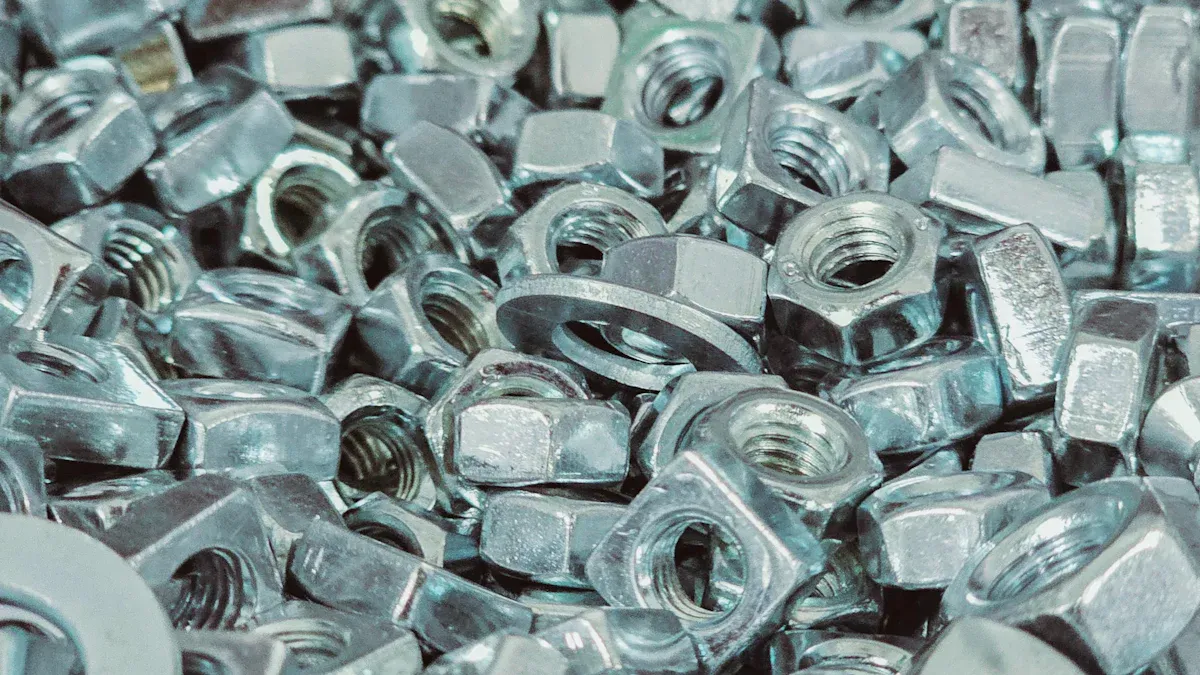
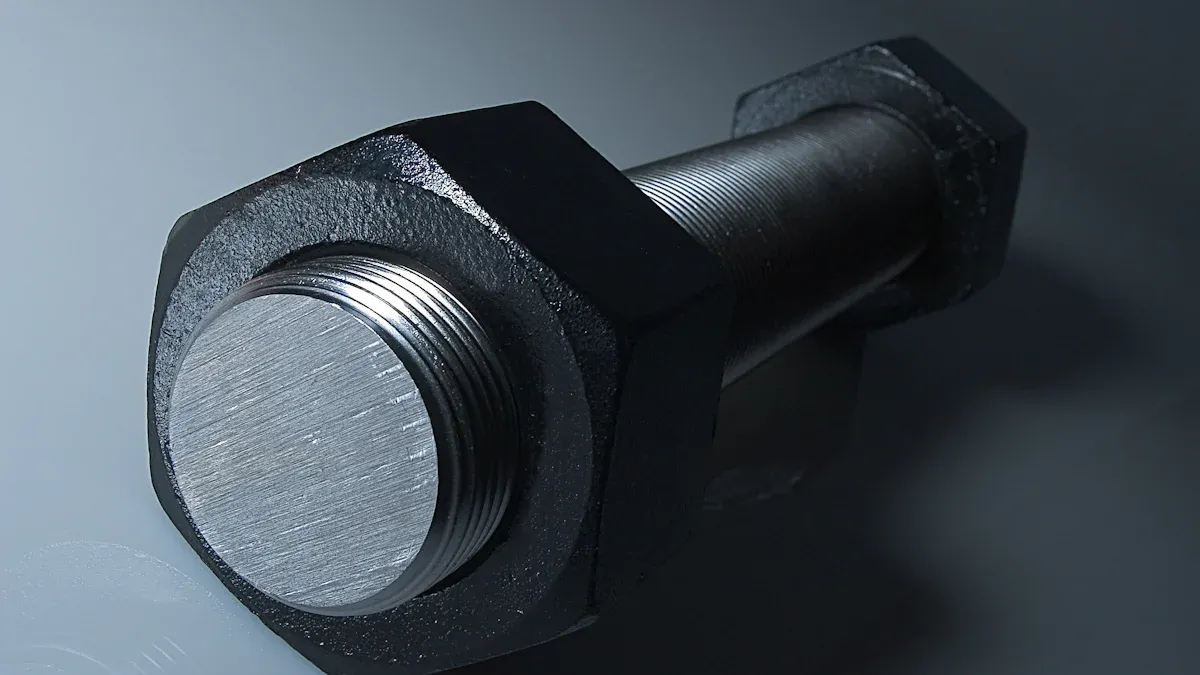
Hex nuts feature a hexagonal shape that provides several mechanical advantages. The six-sided design allows workers to grip the nut easily from multiple angles. This shape simplifies installation and removal, especially in tight spaces. Construction professionals benefit from the enhanced load distribution that the hex geometry offers. Compared to other fastener shapes, hex nuts distribute force more evenly, which helps maintain structural stability.
The hexagonal form enables efficient torque application, reducing the risk of slippage during tightening.
Compatibility with Tools
The six-sided profile matches standard tools such as wrenches and sockets. Workers can use these tools to apply precise torque, ensuring secure fastening. The compatibility with common tools streamlines assembly processes on construction sites. Hex nuts fit snugly with both manual and power tools, which increases productivity and reduces installation errors.
Threading and Fit
Internal Threads
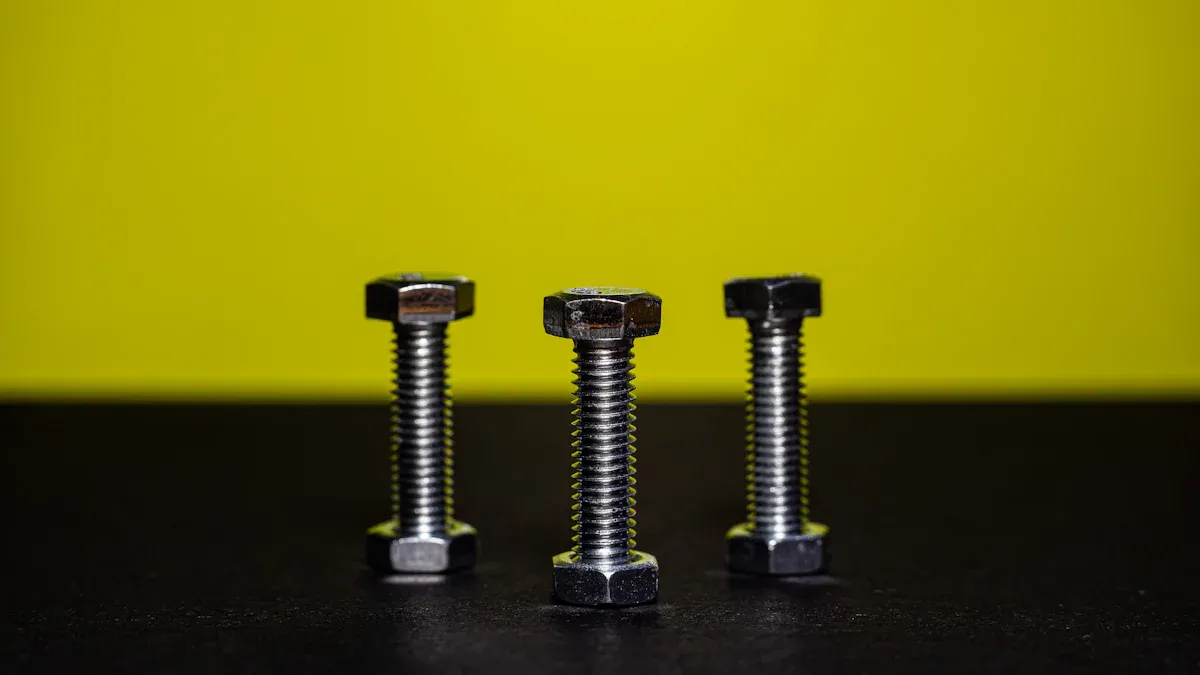
Hex nuts contain internal threads engineered to match the patterns of corresponding bolts and screws. This precise threading ensures a strong and secure connection. When paired with a bolt, the nut forms a tight fit that resists loosening under stress. Construction teams rely on this secure fit to maintain the integrity of structural joints.
Matching with Bolts and Screws
The threading inside hex nuts aligns perfectly with bolts and screws used in construction. This alignment creates a reliable fastening system. The secure connection prevents movement and vibration from compromising the joint. Hex nuts play a critical role in keeping components firmly attached, which is essential for safety and durability.
Materials and Finishes
Common Materials Used in Hex Nuts
Manufacturers produce hex nuts from a variety of materials to suit different construction needs. The table below summarizes the most common materials and their market share rankings:
| Material Type | Description | Market Share Rank |
|---|---|---|
| Steel | Most widely used due to strength and cost-effectiveness in construction. | 1 |
| Stainless Steel | Gaining popularity for corrosion resistance in harsh environments. | 2 |
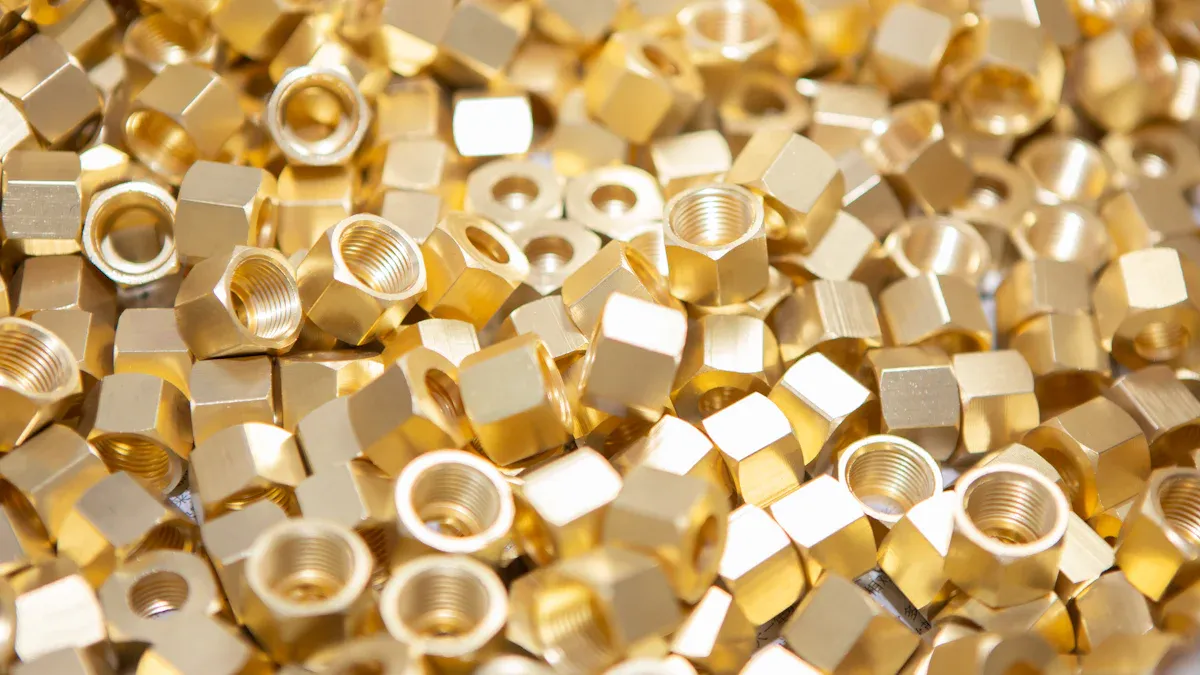
| Brass | Valued for electrical conductivity and used in plumbing applications. | 3 |
| Aluminum | Preferred for lightweight applications in aerospace and automotive. | 4 |
| Plastic | Used for non-conductivity and chemical resistance in electronics. | 5 |
Protective Coatings and Treatments
Surface coatings and treatments significantly impact the performance of hex nuts. Material choice and surface treatment enhance durability and corrosion resistance. Hex nuts often feature finishes such as zinc plating, which provides sacrificial protection against rust. Electroplating and hot-dip galvanizing offer varying levels of durability. Coatings improve torque consistency during installation and facilitate easier disassembly at the end of service. These protective measures ensure hex nuts withstand harsh environmental conditions and maintain their structural role over time.
Construction professionals select hex nuts with appropriate coatings to maximize longevity and reliability in demanding environments.
Types of Hex Nuts Used in Construction
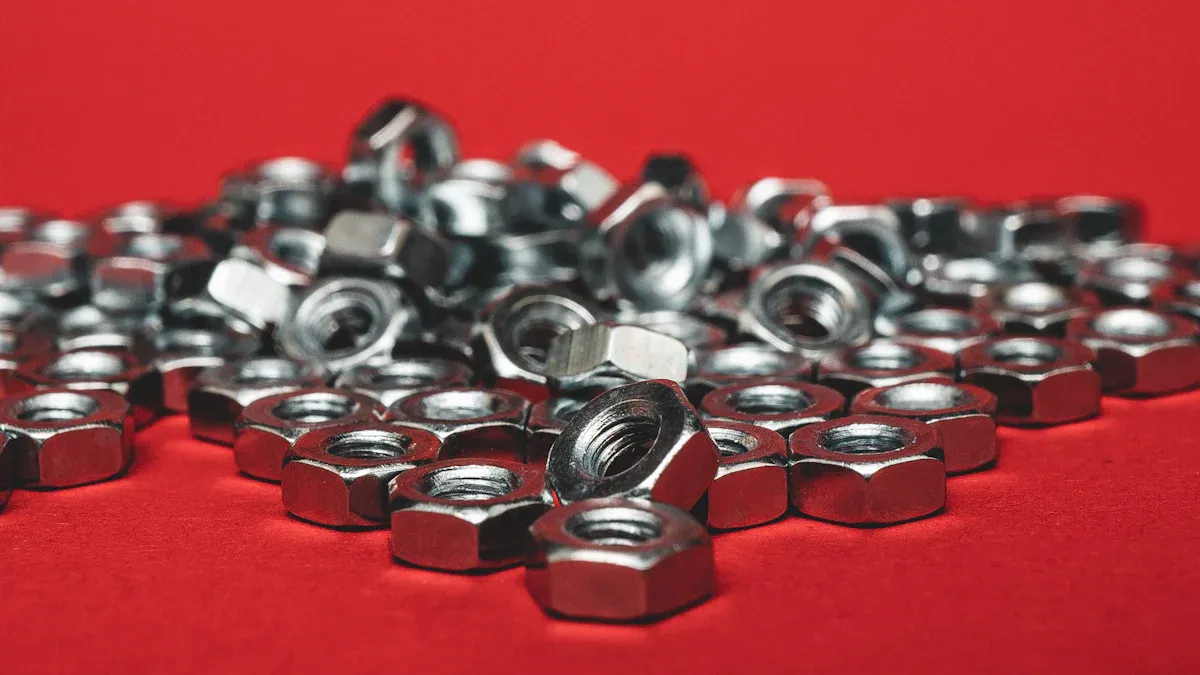
Construction professionals rely on several types of hex nuts to meet the demands of different projects. Each type offers unique features that suit specific applications, from general fastening to high-stress structural connections.
Standard Hex Nuts
General Applications in Construction
Standard hex nuts represent the most common choice for everyday fastening tasks. Workers use these nuts in a wide range of construction activities, including assembling frameworks, attaching fixtures, and securing light machinery. Their compact size and moderate strength make them suitable for general-purpose applications where extreme loads or stresses are not present. Standard hex nuts provide reliable performance in household, automotive, and light industrial settings.
Heavy Hex Nuts
Structural Uses and High-Stress Environments
Heavy hex nuts feature a larger and bulkier design compared to standard versions. Engineers select these nuts for structural applications that demand higher load-bearing capacity and greater resistance to deformation. Heavy hex nuts often use higher-grade steel alloys, which enhances their strength and durability. The table below highlights the key differences between standard and heavy hex nuts in structural applications:
| Feature | Standard Hex Nuts | Heavy Hex Nuts |
|---|---|---|
| Size | Smaller, more compact | Larger, bulkier |
| Torque Application | Moderate torque | Greater torque application |
| Load-Bearing Capacity | Suitable for general-purpose applications | Higher load-bearing capacity |
| Resistance to Deformation | Moderate resistance | Better resistance to deformation |
| Material Strength | Typically lower-grade materials | Often made from higher-grade steel alloys |
| Typical Applications | Household, automotive, light machinery | Heavy-duty applications, structural uses |
Heavy hex nuts play a critical role in steel construction, bridge building, and other high-stress environments. Their robust design ensures connections remain secure under significant loads.
Locking Hex Nuts
Locking hex nuts address the challenge of loosening caused by vibration or movement. Construction sites often experience heavy machinery operation and dynamic loads, making secure fastening essential.
Nylon Insert Lock Nuts
Nylon insert lock nuts use a nylon ring to create friction against the bolt threads. This friction helps maintain bolt tension and prevents the nut from backing off, even in high-vibration environments. Self-locking nuts like these can reduce bolt loosening by over 50%, which greatly improves safety and reliability.
All-Metal Lock Nuts
All-metal lock nuts rely on mechanical deformation to achieve a secure fit. These nuts do not use any non-metallic components, making them suitable for high-temperature or chemically aggressive environments. The Crushlock Permanent Nut, for example, can hold up to 525% more torque than standard nuts, demonstrating exceptional resistance to loosening.
Lock nuts maintain secure connections by increasing friction or creating a mechanical interlock. Their effectiveness in high-vibration scenarios makes them indispensable for critical construction assemblies.
Construction teams select from these types of hex nuts based on project requirements, environmental conditions, and the need for vibration resistance.
Flange Hex Nuts
Built-In Washer Feature for Secure Fastening
Flange hex nuts stand out among the types of hex nuts used in construction. Their design includes a wide flange at the base, which acts as a built-in washer. This feature offers several advantages for securing construction components. The flange distributes the load over a larger area, reducing pressure and minimizing the risk of damage to materials. Many flange nuts incorporate serrated bases, which enhance grip and provide resistance to vibration. These characteristics make flange hex nuts ideal for environments where movement and vibration threaten joint stability.
Construction crews often select flange nuts for applications where quick installation is necessary. The integrated washer eliminates the need for a separate component, saving time and simplifying assembly in tight spaces. The larger bearing surface ensures even distribution of clamping loads, preventing material deformation. Flange nuts also create a locking effect, which helps maintain fastening integrity over time. This locking action proves essential in high-vibration settings, such as machinery mounts or steel frameworks.
Flange hex nuts combine efficiency and reliability, making them a preferred choice for secure fastening in demanding construction projects.
- Flange nuts distribute load, reducing material damage.
- Serrated bases improve grip and vibration resistance.
- Built-in washer speeds up installation in confined areas.
- Larger bearing surface prevents deformation.
- Locking effect minimizes loosening in high-vibration environments.
Specialty Hex Nuts
Slotted Hex Nuts for Cotter Pin Use
Slotted hex nuts feature slots cut into their top surface. Workers use these slots to insert cotter pins, which lock the nut in place and prevent rotation. This design proves valuable in applications where safety and security are paramount. Slotted nuts often appear in bridge construction, heavy machinery, and structural assemblies. The cotter pin ensures the nut remains tight, even under dynamic loads or shifting conditions.
Prevailing Torque Hex Nuts for Vibration Resistance
Prevailing torque hex nuts address the challenge of vibration and thermal cycling. These nuts use deformed threads or inserts to create resistance against loosening. They maintain clamping force in environments subject to movement or temperature changes. Construction teams rely on prevailing torque nuts for critical joints in heavy equipment, steel structures, and areas exposed to harsh conditions.
| Application Area | Description |
|---|---|
| High-Load Structural Integrity | Specialty hex nuts secure components in heavy machinery, preventing joint slippage. |
| Vibration and Thermal Resistance | These nuts maintain clamping force under vibration and thermal cycling. |
| Environmental Durability | Many specialty nuts receive treatments for corrosion resistance, ensuring reliability in harsh environments. |
Specialty hex nuts address unique construction challenges. Their designs enhance safety, durability, and performance in demanding settings. Construction professionals evaluate project requirements to select the most suitable types of hex nuts for each application.
How Hex Nuts Are Used in Construction
Securing Structural Elements
Steel Beams and Columns
Construction teams depend on hex nuts to join steel beams and columns. These fasteners create a secure connection that supports the weight of the structure. Workers align steel components and insert bolts through pre-drilled holes. They then tighten hex nuts to lock the beams and columns together. This process ensures stability and prevents movement during heavy loads. Hex nuts resist loosening caused by vibration or shifting, which protects the structural framework.
Hex nuts play a vital role in maintaining the integrity of steel frameworks. Their strength and durability help prevent failures in critical load-bearing areas.
Framing Connections
Hex nuts also serve as essential fasteners in framing connections. Builders use them to attach wood or metal frames for walls, floors, and ceilings. The six-sided design allows easy access with tools, even in confined spaces. Hex nuts distribute force evenly across the joint, reducing the risk of material damage. Construction crews rely on these fasteners to create strong and stable frames that support the overall structure.
Mechanical Assemblies
Equipment Installation
Hex nuts provide reliable fastening for mechanical assemblies during equipment installation in commercial construction. Their design enables workers to grip and tighten them efficiently, which is crucial for high-precision tasks. Hex nuts form strong and reusable connections, allowing for adjustments or maintenance when needed. They come in various materials and finishes, enhancing durability and corrosion resistance in demanding environments.
- Hex nuts create strong and reusable connections for mechanical assemblies.
- Their shape allows easy gripping and efficient fastening.
- Different materials and finishes improve durability and corrosion resistance.
Machinery Mounting
Machinery mounting requires secure and stable joints. Hex nuts help anchor heavy equipment to floors or platforms. Workers use these fasteners to ensure machines remain fixed during operation. The internal threads of hex nuts match bolts, forming a tight fit that resists loosening. This stability protects machinery from vibration and movement, reducing maintenance needs and improving safety.
Temporary and Permanent Fastening
Removable Joints
Hex nuts enable temporary fastening in construction projects. Workers use them for joints that require disassembly for maintenance or upgrades. The removable nature of these fasteners allows easy access to internal components. Hex nuts make it possible to replace parts without damaging the surrounding structure.
Permanent Fixtures
Permanent fastening involves creating lasting joints that are not intended to be removed. Hex nuts secure fixtures such as support brackets, anchors, and structural plates. Builders select these fasteners for applications where long-term stability is essential. The tight fit and resistance to loosening ensure the fixture remains in place throughout the life of the structure.
| Type of Fastening | Description |
|---|---|
| Temporary Fastening | Can be easily removed after use; used for parts that require disassembly for maintenance. |
| Permanent Fastening | Designed for single use; creates a lasting joint that is not intended to be removed. |
Choosing the right fastening method depends on the project requirements. Hex nuts offer flexibility for both temporary and permanent applications.
Installation and Maintenance of Hex Nuts
Proper Installation Techniques
Hand Tools vs. Power Tools
Construction professionals select between hand tools and power tools based on the project requirements. Hand tools, such as wrenches, allow for controlled tightening and reduce the risk of over-tightening. Power tools, including impact drivers, speed up the process but require careful monitoring to avoid damaging threads or applying excessive force. Workers inspect tools before use to ensure they are in good condition. Safety glasses and gloves protect against injury during installation and maintenance.
Tip: Use hand tools for precision and power tools for efficiency, but always check torque settings to prevent damage.
Torque Specifications for Hex Nuts
Engineers calculate torque specifications to guarantee structural integrity. The maximum torque for hex nuts depends on size and material. Larger nuts handle more torque due to greater material strength. Steel nuts withstand higher torque than softer materials like PVC. Construction teams follow specified torque values to prevent damage and ensure safety.
- Torque values maintain the performance and safety of hex nuts.
- Material and size influence torque capacity.
- Proper torque prevents loosening and structural failure.
| Nut Size | Material | Max Torque (Nm) | Application |
|---|---|---|---|
| M12 | Steel | 70 | Structural joints |
| M12 | PVC | 20 | Light fixtures |
| M20 | Steel | 250 | Bridge connections |
Inspection and Tightening
Checking for Looseness
Routine inspection forms a critical part of installation and maintenance. Workers perform visual checks for surface finish, thread quality, and markings. Measuring tools confirm that dimensions meet specified tolerances. Thread gauging and optical inspection assess thread quality. These steps help identify defects before they compromise safety.
- Visual inspection detects cracks or damaged threads.
- Dimensional inspection ensures proper fit.
- Thread inspection maintains fastening reliability.
Re-Tightening Procedures
Construction crews follow a systematic approach when tightening hex nuts. They align components before tightening. Workers start by hand-tightening to avoid cross-threading. A wrench applies the correct torque. Teams use a cross or star pattern for even pressure distribution. Periodic checks ensure nuts remain tight, especially in high-vibration environments.
- Position components for alignment.
- Hand-tighten the nut to prevent cross-threading.
- Use a wrench to apply specified torque.
- Tighten in a cross pattern for even load.
- Recheck tightness during routine maintenance.
Common Installation Mistakes
Cross-Threading
Cross-threading occurs when the nut does not align with the bolt threads. This mistake weakens the connection and can damage both components. Workers prevent cross-threading by starting the nut by hand and checking alignment before using tools.
Over-Tightening
Over-tightening leads to thread damage and reduces the lifespan of the fastener. Teams avoid this mistake by following torque specifications and using calibrated tools. Regular inspection and maintenance help detect signs of over-tightening early.
- Inspect for visible defects before installation.
- Match nut and bolt thread size and pitch.
- Select the right material for the application.
- Use proper tools to avoid damage.
- Apply correct torque to prevent failure.
- Follow tightening sequence for even load.
- Check for loosening or damage after installation.
- Clean and lubricate nuts for longevity.
Note: Understanding how to properly install a hex nut reduces the risk of common mistakes and improves the reliability of construction assemblies.
Advantages of Using Hex Nuts in Construction
Strength and Durability
Load-Bearing Capacity
Hex nuts deliver impressive load-bearing capacity, making them essential for structural connections. Engineers select hex nuts for steel beams, columns, and concrete forms because these fasteners maintain stability under heavy loads. The table below compares the strength and durability of hex nuts with other fasteners commonly used in construction:
| Fastener Type | Strength | Durability | Reusability |
|---|---|---|---|
| Hex Nuts | Varies by grade | High | Yes (if threads intact) |
| Lock Nuts | High (for vibration) | Moderate | Often single-use |
| Heavy Hex Nuts | Higher than standard | High | Yes (if threads intact) |
Heavy hex nuts, with their thicker profile and broader bearing surface, withstand higher torque and resist deformation. Construction teams rely on these nuts for high-strength applications, such as bridge building and heavy machinery installation.
Resistance to Vibration and Stress
Hex nuts excel in environments exposed to vibration and stress. Heavy hex nuts distribute load more effectively, reducing stress concentrations and preventing premature fatigue. Carbon steel and alloy steel nuts provide high tensile strength, which is necessary for heavy machinery. Stainless steel nuts offer corrosion resistance, making them ideal for outdoor use. Heavy hex jam nuts, used in pairs, create a locking effect that restricts axial movement and increases friction on bolt threads.
The heavy hex shape allows for a broader bearing surface, which can withstand higher torque during assembly and resist deformation under stress.
Versatility and Compatibility
Use with Various Bolts and Screws
Hex nuts demonstrate compatibility with a wide range of bolts and screws. Their six-sided shape ensures excellent grip and torque strength. Construction professionals use hex nuts with ASTM A307A and ASTM F1554-36 hex bolts and rods. The table below highlights key compatibility features:
| Feature | Description |
|---|---|
| Shape | Six-sided (hexagon) for grip and torque strength |
| Material | Low carbon steel |
| Compatibility | Works with ASTM A307A, ASTM F1554-36 bolts and rods |
| Applications | Construction, automotive, machinery, general-purpose fastening |
| Thread Sizes | Various sizes for different bolting applications |
Hex nuts provide a comprehensive overview of nut compatibility, helping teams select the right fastener for specific construction needs.
Adaptability to Different Materials
Hex nuts adapt to various materials, including structural steel, scaffolding, and concrete forms. Their versatility ensures secure fastening in diverse construction projects. Hexagon nuts play a critical role in fastening steel beams and columns, maintaining structural stability in buildings and bridges.
- Hex nuts are utilized in structural steel, scaffolding, and concrete forms.
- Hexagon nuts are critical for fastening steel beams and columns.
Ease of Use and Maintenance
Simple Installation Process
Hex nuts allow for quick tool engagement, which significantly reduces assembly time. Workers benefit from the standardized design, making installation straightforward and efficient. The lighter profile of standard hex nuts suits general-purpose applications, while heavy hex nuts serve high-strength needs.
Accessibility for Repairs and Adjustments
Maintenance teams find hex nuts easy to access for periodic inspections and adjustments. The standardized design ensures replacement parts are readily available, minimizing downtime. Hex nuts facilitate repairs and adjustments, supporting long-term reliability in construction assemblies.
The advantages of using hex nuts include strength, versatility, and ease of maintenance, making them indispensable for construction professionals.
Choosing the Right Hex Nut for Your Project
Assessing Load Requirements
Selecting the appropriate hex nut begins with evaluating the load requirements of the project. Engineers consider whether the application is structural or non-structural. Structural connections demand nuts with higher strength and durability. Non-structural uses, such as attaching fixtures, require less robust fasteners.
Structural vs. Non-Structural Applications
A structural application involves supporting significant weight or resisting dynamic forces. Non-structural applications focus on lighter loads and less critical connections. The following table outlines key factors that influence the selection process:
| Factor | Description |
|---|---|
| Material Grades | Different grades of stainless steel provide varied performances in different environments. |
| Strength | The tensile strength of the material affects the overall durability of the project. |
| Environmental Conditions | Exposure to chemicals or extreme weather can influence the choice of nut material. |
| Proper Sizing | Ensuring the correct size of the nut is crucial for load-bearing capacity. |
| Thread Types | The type of thread can impact the nut’s ability to handle loads effectively. |
| Safety Factor | A safety factor of at least 1.5 times is recommended to prevent unexpected failures. |
Engineers recommend using a safety factor to ensure reliability in structural applications.
Material and Environmental Considerations
Material selection plays a crucial role in the performance and longevity of hex nuts. Environmental conditions, such as moisture, chemicals, and temperature extremes, affect the choice of material.
Corrosion Resistance
Stainless steel hex nuts resist rust and corrosion, making them ideal for outdoor and exposed environments. Carbon steel offers high strength but requires protective coatings to prevent deterioration. Brass provides corrosion resistance in specific conditions, often used in plumbing or electrical applications. Nylon hex nuts deliver insulation and chemical resistance, suitable for specialized needs.
- Stainless steel ensures durability in harsh weather.
- Carbon steel needs coatings for protection.
- Brass suits environments with moderate corrosion risks.
- Nylon works well for insulation and chemical exposure.
Temperature Tolerance
Temperature extremes impact the performance of hex nuts. Stainless steel maintains strength at high temperatures. Nylon loses integrity when exposed to heat. Carbon steel performs well in moderate conditions but may require additional treatments for extreme environments. Brass remains stable across a range of temperatures, supporting reliable connections.
Construction professionals assess environmental factors to maximize the lifespan of fasteners.
Sizing and Standards
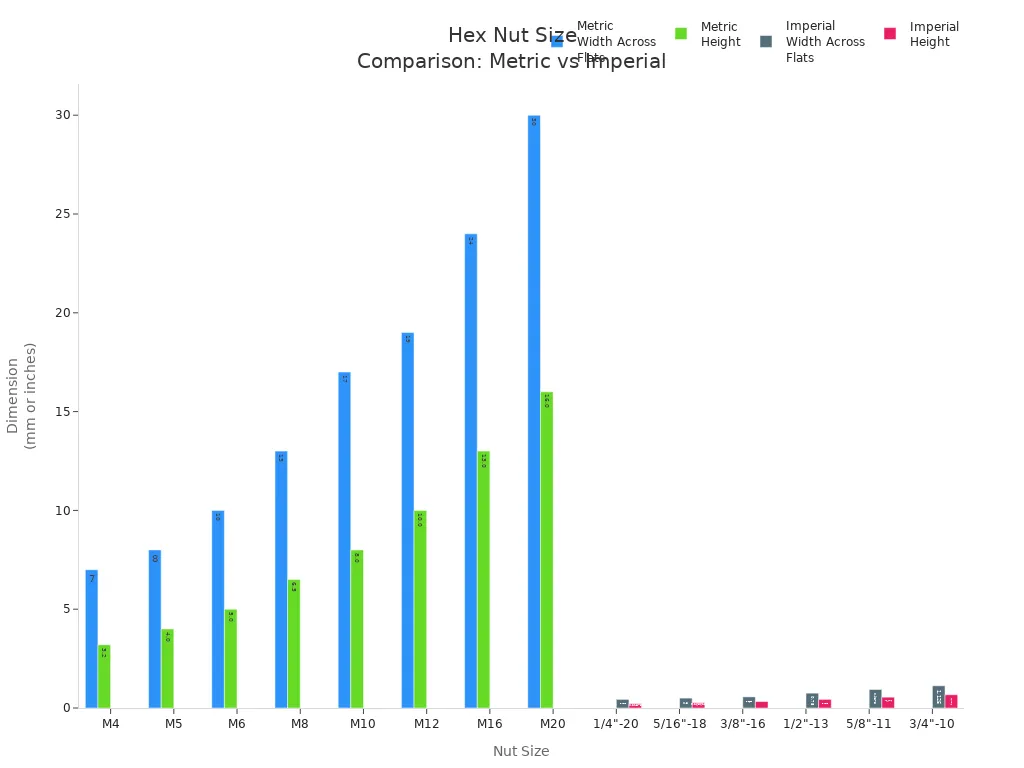
Proper sizing ensures compatibility and safety in construction assemblies. Hex nuts come in both metric and imperial sizes, each with specific dimensions.
Metric vs. Imperial Sizes
Metric sizes use millimeters for measurement, while imperial sizes rely on inches. The table below compares common sizes:
| Type | Size | Width Across Flats | Height |
|---|---|---|---|
| Metric | M4 | 7 mm | 3.2 mm |
| Metric | M5 | 8 mm | 4.0 mm |
| Metric | M6 | 10 mm | 5.0 mm |
| Metric | M8 | 13 mm | 6.5 mm |
| Metric | M10 | 17 mm | 8.0 mm |
| Metric | M12 | 19 mm | 10.0 mm |
| Metric | M16 | 24 mm | 13.0 mm |
| Metric | M20 | 30 mm | 16.0 mm |
| Imperial | 1/4″-20 | 7/16″ | 7/32″ |
| Imperial | 5/16″-18 | 1/2″ | 17/64″ |
| Imperial | 3/8″-16 | 9/16″ | 21/64″ |
| Imperial | 1/2″-13 | 3/4″ | 7/16″ |
| Imperial | 5/8″-11 | 15/16″ | 35/64″ |
| Imperial | 3/4″-10 | 1-1/8″ | 43/64″ |
Industry Standards for Hex Nuts
Industry standards ensure consistency and safety in construction. Metric nuts follow ISO and DIN specifications. Imperial nuts adhere to ANSI and ASTM standards. These standards define dimensions, thread types, and material requirements. Builders reference these guidelines to guarantee compatibility and performance.
Choosing the right hex nut involves evaluating load requirements, material properties, environmental conditions, and sizing standards. Construction professionals rely on these criteria to achieve strong, reliable, and durable connections.
Practical Tips for Using Hex Nuts on Site
Storage and Handling
Preventing Rust and Physical Damage
Construction teams must protect hex nuts from environmental hazards to maintain their performance. Moisture exposure leads to rust, while improper handling causes physical damage. Workers store hex nuts in clean, dry environments to prevent oxidation. Sealed containers shield nuts from moisture and corrosion during long-term storage. Dust and chemicals accelerate corrosion, so teams keep nuts away from these contaminants. Loose stacking damages threads and deforms hex faces. Organizing nuts by size and material ensures quick access and reduces mix-ups. Rotating stock prevents aging and degradation.
| Best Practice | Description |
|---|---|
| Store in a clean, dry environment | Prevents rust and oxidation by reducing moisture exposure. |
| Use sealed containers | Protects nuts from moisture and corrosion during long-term storage. |
| Keep away from dust and chemicals | Reduces the risk of contamination and corrosion. |
| Avoid loose stacking | Prevents thread damage and deformation of hex faces. |
| Organize by size and material | Ensures quick access and prevents mix-ups. |
| Rotate stock | Prevents aging and degradation of stored nuts. |
Workers also use airtight containers and desiccants to absorb moisture. Storing fasteners off the ground avoids contact with water. Controlling humidity and temperature in storage areas preserves the integrity of hex nuts.
Safety Precautions
Personal Protective Equipment
Safety remains a priority during hex nut installation. Workers conduct pre-installation safety checks by inspecting bolts for damage and verifying size and grade. Clean and flat installation surfaces ensure proper fit. Teams always wear safety glasses, gloves, and ear protection. Fall protection becomes necessary when working at heights. Proper installation techniques include using torque wrenches for correct tightening and following a specific sequence for even stress distribution. Regular visual inspections and non-destructive testing methods help detect internal defects. Compatibility between nuts, washers, and bolts prevents loose connections.
Safety glasses and gloves protect workers from sharp edges and debris. Ear protection reduces noise exposure during power tool use.
Troubleshooting Common Issues
Stripped Threads
Stripped threads occur when insufficient torque, low-grade screws, or excessive vibration compromise the connection. Workers use torque-controlled tools and select high-quality screws to prevent this issue. Anti-vibration measures maintain the security of the joint. Proper torque application ensures the nut stays tight without over-tightening. When removing a stripped hex nut, workers often use specialized extraction tools or apply penetrating oil to loosen the nut.
Stuck or Seized Hex Nuts
Stuck or seized hex nuts result from corrosion or overtightening. Workers apply penetrating oil to loosen the nut and use heat to expand the metal if necessary. Impact tools help break the bond. Preventing this issue involves using corrosion-resistant materials and maintaining proper storage conditions. Environmental control remains key to avoiding seized nuts.
| Issue | Cause(s) | Solution(s) |
|---|---|---|
| Stripped Threads | Insufficient torque, low-grade screws, excessive vibration | Use torque-controlled tools, select high-quality screws, implement anti-vibration measures. Proper torque application ensures security without over-tightening. |
| Corrosion | Moisture exposure, improper storage, low-quality materials | Apply protective coatings, use corrosion-resistant materials, maintain proper storage conditions. Environmental control is key to preventing corrosion. |
| Misalignment | Rough surfaces, insufficient space, poor installation techniques | Prepare the installation area, use guides or templates, employ the right tools. Checking surfaces and using correct installation methods can prevent this issue. |
Teams address common issues by following best practices for installation, storage, and maintenance. These steps ensure hex nuts perform reliably throughout the project lifecycle.
A hex nut serves as a vital fastener in construction, securing components and supporting structural integrity. Hex nuts offer strength, reliability, and versatility across a range of building applications. Selecting the correct type and ensuring proper installation directly influence the durability and performance of connections. Compatibility of materials, accurate sizing, and correct techniques help maintain the integrity and longevity of every project. Construction professionals achieve optimal results by prioritizing regular inspection and maintenance.
FAQ
What is the main purpose of a hex nut in construction?
A hex nut secures bolts or screws, creating strong joints in structural assemblies. Construction teams use hex nuts to maintain stability and prevent movement in frameworks, machinery, and fixtures.
How do workers choose the correct size hex nut?
Workers match the nut size to the bolt diameter and thread pitch. They consult sizing charts or manufacturer specifications to ensure compatibility and proper fit.
Can hex nuts be reused after removal?
Yes, workers can reuse hex nuts if the threads remain undamaged and free from corrosion. Inspection before reuse ensures safety and reliability in new assemblies.
What materials offer the best corrosion resistance for hex nuts?
Stainless steel and brass provide excellent corrosion resistance. Stainless steel suits outdoor or wet environments, while brass works well in plumbing and electrical applications.
Why do some hex nuts have a nylon insert?
A nylon insert creates friction against bolt threads. This feature prevents loosening from vibration or movement, making nylon insert lock nuts ideal for high-vibration environments.
How do workers prevent hex nuts from loosening over time?
Workers use lock nuts, apply thread-locking compounds, or select nuts with serrated flanges. Regular inspection and re-tightening also help maintain secure connections.
What tools do professionals use to install hex nuts?
Professionals use wrenches, sockets, and torque wrenches for installation. Power tools speed up the process, but hand tools allow for precise torque control.