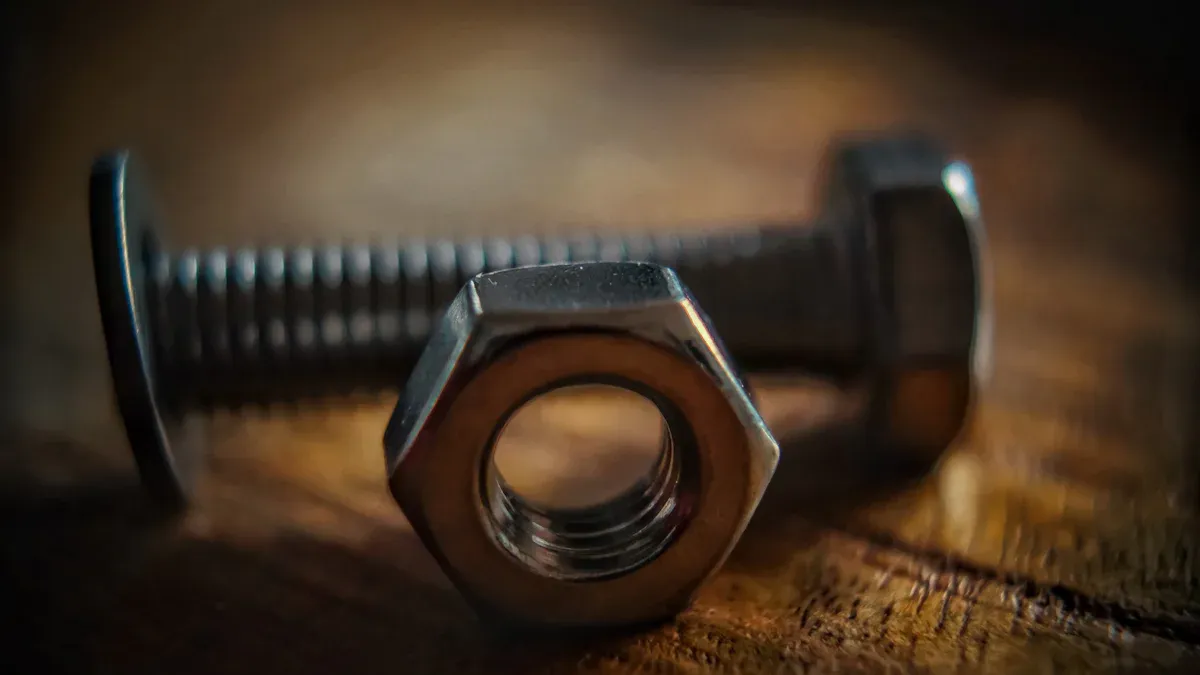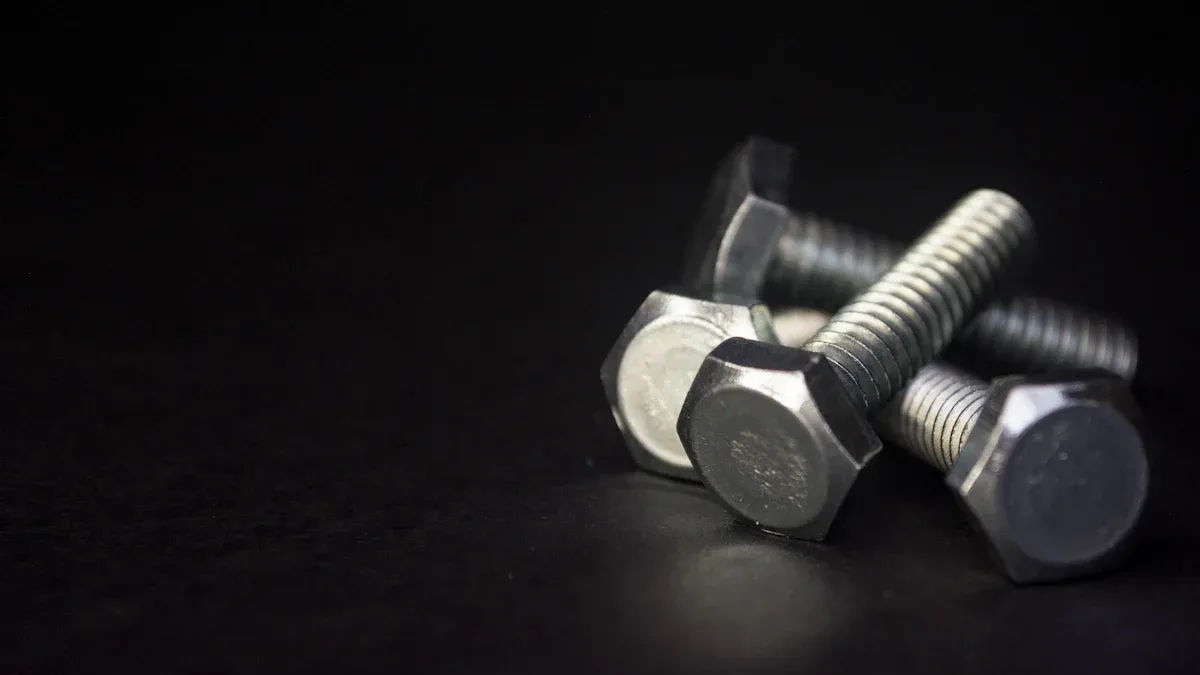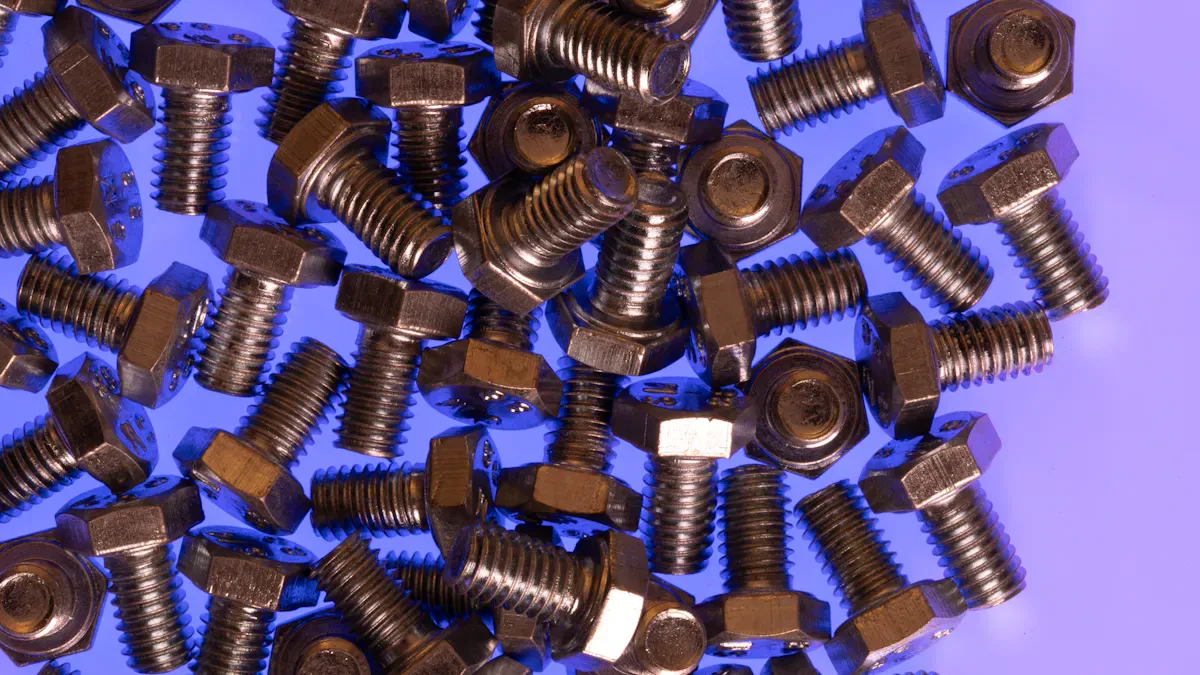
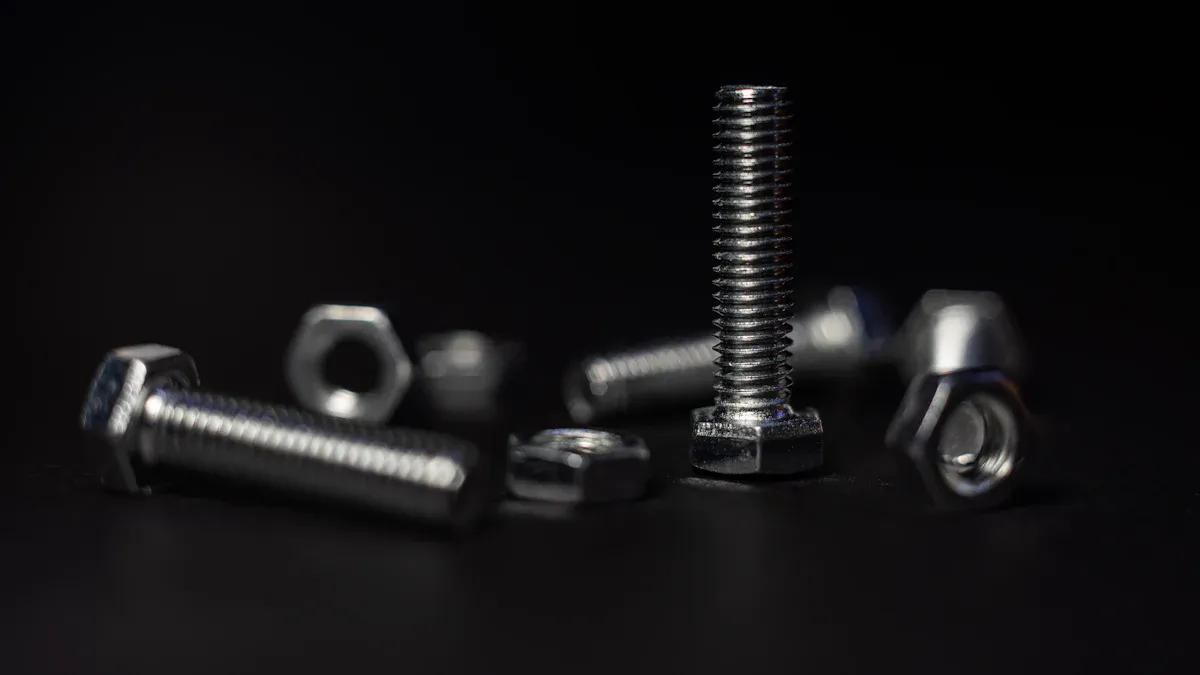
The key differences between hex bolts and hex head cap screws center on manufacturing precision and installation. A custom fasteners manufacturer produces hex cap screws with tighter tolerances. This specific screw installs by turning its hex head into a pre-tapped hole. In contrast, a hex bolt is a general-use bolt made with looser tolerances from the bolt casting process. These bolts pass through unthreaded holes and require a nut. While these screws are distinct, market analysis often groups these custom fasteners. The cap on hex head cap screws is a defining feature, yet the entire hex fastener market, including this cap screw and other cap screws, is a significant industry.
The global market for these fasteners, valued at US$ 1.5 Billion in 2022, is projected to grow to US$ 2.0 Billion by 2031.
The Core Distinction: Installation Method and Intended Use
The most fundamental difference between these two fasteners lies in their engineering design and intended installation process. One is a precision screw for threading into a component, while the other is part of a two-piece system for clamping materials together. Understanding this distinction is crucial for correct application and assembly integrity.
Hex Cap Screws: Designed for Tapped Holes
Hex head cap screws are engineered for applications where a nut is impractical or undesirable. These screws thread directly into a hole that has matching internal threads, a feature known as a “tapped hole.” This design makes the cap screw a self-contained fastener for securing a component to a larger assembly.
The Role of Head-Turning in Installation
The installation of a cap screw involves turning the head to drive the fastener into a tapped hole. The hexagonal head is not just a shape; it is a critical functional element.
- The hex design allows for easy installation and removal using common tools like wrenches and sockets.
- It enables the application of higher torque compared to many other screw head types. This ensures a secure, tight fit, which is vital in applications requiring high clamping force.
The ability to apply significant torque with a standard hex tool makes these screws highly efficient for assembly and disassembly.
Precision Fit in Machinery and Engines
Engineers specify hex head cap screws for precision assemblies like engines, pumps, and industrial machinery. The tighter manufacturing tolerances of these cap screws ensure a consistent and reliable fit. Their direct installation into tapped holes offers several advantages:
- They can thread directly into a part, which eliminates the need for nuts and washers. This simplifies the assembly process and reduces the total component count.
- The hex head design allows for easy access with standard tools, even in tight spaces. This is a major benefit during the assembly of complex machinery.
This method creates a strong, secure connection that saves space and simplifies maintenance procedures.
Hex Bolts: The Classic Nut and Bolt System
Hex bolts are the foundation of the traditional nut-and-bolt fastening system. Unlike cap screws, these bolts are not designed to thread into a component. Instead, they pass through unthreaded holes in two or more materials and are secured on the opposite end with a hex nut.
Passing Through Clearance Holes
Hex bolts are designed to pass through “clearance holes,” which are holes drilled slightly larger than the bolt’s diameter. This design facilitates easy alignment of multiple structural layers. The construction industry makes extensive use of hex bolts for creating robust structural connections. Common applications include:
- Joining steel beams, columns, and other structural elements in buildings and bridges.
- Anchoring large structures to concrete foundations using specialized anchor bolts.
- Securing tracks, guardrails, and other critical components in railway and highway infrastructure.
These applications demand fasteners that can endure decades of use under heavy loads and harsh environmental conditions.
Securing with a Nut for Clamping Force
The primary function of a nut and bolt combination is to create clamping force. Torquing is the most common method to achieve this. An operator applies a rotational force to the nut or bolt head, which stretches the bolt and creates tension. This tension pulls the joined materials together, generating the clamp.
However, achieving the correct clamping force requires precision. Different tightening methods offer varying levels of accuracy.
| Tightening Method | Accuracy |
|---|---|
| By feel | ±35% |
| Torque wrench | ±25% |
| Turn-of-the-nut | ±15% |
| Load indicating washer | ±10% |
| Bolt elongation | ±3-5% |
| Strain gages | ±1% |
| Ultrasonic sensing | ±1% |

Note: Clamping force can decrease over time due to factors like vibration or temperature changes. Professionals often account for a preload loss of around 10% and may use thread-locking adhesives or lock nuts to maintain joint integrity.
Ultimately, the goal is to create a secure joint where the tension in the bolts holds the components together firmly, preventing movement or failure.
Key Differences in Physical and Geometric Features
Beyond their installation methods, hex bolts and hex cap screws exhibit distinct physical differences. These variations in geometry are not accidental; they are intentional design choices that optimize each fastener for its specific role. Examining the area under the head and the design of the point reveals some of the most important key differences.
Under-Head Characteristics
The small area directly beneath the fastener’s head is a critical surface. Its design dictates how the fastener distributes clamping load and interacts with the material it secures. The presence or absence of a specific feature here is a primary identifier.
The Washer Face on Hex Head Cap Screws
Hex head cap screws are distinguished by a circular, flat, smooth surface directly under the hex head. This feature is known as a washer face. This integrated washer face is a primary difference when comparing these cap screws to hex bolts. Its purpose is twofold:
- Load Distribution: It provides a larger, more uniform bearing surface. This distributes the clamping force from the tightened cap over a wider area, reducing stress on the mating component.
- Surface Protection: The smooth face prevents the corners of the hex head from digging into and damaging the surface of the part during tightening.
Pro Tip: The washer face ensures a secure and non-damaging connection, which is vital for precision machinery where surface integrity is paramount. The cap screw provides a clean, finished appearance without needing a separate washer.
The Lack of a Washer Face on Hex Bolts
In contrast, most hex bolts do not have a built-in washer face. The underside of the hex head transitions directly to the shank. This design is intentional and practical for their intended application.
- Hex bolts are part of a system that almost always includes a nut and often a separate washer.
- The separate washer performs the function of load distribution and surface protection.
- Omitting the integrated washer face simplifies the manufacturing of these bolts and reduces cost, which is suitable for large-scale construction and general-purpose use.
Point Design and Its Purpose
The tip of a fastener, known as its point, is engineered for a specific task. The point on hex cap screws is designed for guidance, while the point on hex bolts is a simple result of their manufacturing process.
Chamfered Point on Hex Cap Screws
These screws feature a distinct chamfered point at the tip of the shank. A chamfer is a small, angled cut made on the end of the threads. This design is crucial for its function. The chamfered point helps align the threads of the cap screw with the threads of the mating tapped hole. This guidance facilitates faster, easier assembly and significantly reduces the risk of cross-threading during installation. This precision is essential when threading screws into valuable components like engine blocks or machine housings.
The Sheared or Flat Point of Hex Bolts
Hex bolts typically have an unfinished point. The manufacturing process often shears the rod stock to length, leaving a flat or slightly rough tip. Since these bolts are designed to pass through oversized clearance holes, a precision point for thread alignment is unnecessary. The bolt simply needs to fit through the hole before being secured by a nut. This functional simplicity makes the manufacturing of hex bolts more efficient and cost-effective.
Manufacturing Tolerances: A Tale of Two Fasteners
The manufacturing process creates some of the most critical key differences between hex bolts and hex head cap screws. These differences in dimensional precision and production methods directly influence each fastener’s performance and ideal application. A cap screw is a precision component, while a bolt is a general-purpose connector.
Body Diameter and Dimensional Precision
Dimensional tolerance refers to the acceptable variation in a part’s size. For hex fasteners, the tolerance of the body or shank diameter is a defining characteristic that separates precision screws from general-use bolts.
Tighter Tolerances of Hex Cap Screws
Manufacturers produce hex head cap screws to a higher standard of dimensional accuracy. Under specifications like ASME B18.2.1, these cap screws have a much tighter tolerance for their body diameter. This precision ensures a snug and consistent fit when threading the cap screw into a tapped hole, which is essential for machinery and engine assembly where exact alignment is critical.
Looser Tolerances of Hex Bolts
Hex bolts, in contrast, are manufactured with looser or wider tolerances. Their body diameter can vary more significantly from the nominal size. This design is practical because the bolts are intended to pass through clearance holes, which are intentionally oversized. The slight imprecision does not affect their function in a nut-and-bolt system and helps keep production costs down for large-scale use.
A 1 1/2-inch hex cap has a body diameter that is true to size or slightly undersized. A hex bolt of the same nominal size can be significantly oversized, highlighting the difference in precision.
| Fastener Type | Nominal Diameter | Diameter Tolerance (inches) |
|---|---|---|
| Hex Cap Screw | 1 1/2 inches | 1.488 to 1.500 |
| Hex Bolt | 1 1/2 inches | 1.470 to 1.531 |
The Impact of Manufacturing Processes
The methods used to form the hex head and shank—primarily forging and machining—impart distinct properties to the final product.
Forging vs. Machining
Most hex bolts and cap screws are forged. Forging shapes the metal using compressive force, which can be done hot or cold. This process creates a continuous grain flow that follows the contour of the hex head and shank, significantly increasing fatigue strength. Machining, conversely, cuts material away from a bar stock to create the desired shape. While machining achieves very high dimensional accuracy, it cuts through the metal’s grain structure. This can make the part more susceptible to cracking under stress compared to a forged equivalent. Forged parts are generally stronger and more cost-effective for mass production.
Die Seams and Surface Finish Quality
The surface finish of a fastener affects friction, torque application, and corrosion resistance. Forged parts often have visible lines, or die seams, where the tooling came together. The surface finish on many bolts is also rougher. This increased friction can be beneficial for grip strength. In contrast, many cap screws receive secondary finishing to create a smoother surface. A smoother finish on the threads of these screws reduces friction, allowing for more accurate and consistent torque application. This precision is vital for achieving the correct clamping force without damaging the threads in a valuable component.
The Role of Threads: Fully Threaded vs. Partially Threaded

The extent of threading along a fastener’s body is another critical design distinction. A hex fastener can be either fully threaded from the point to the head or partially threaded with a smooth, unthreaded shank. This choice directly impacts the fastener’s grip, strength, and suitability for different mechanical loads.
Fully Threaded Hex Fasteners
Fully threaded hex fasteners have threads running their entire length. This design maximizes the surface area for thread engagement, which is ideal for creating a strong grip within a tapped hole.
Tap Bolts: A Type of Hex Cap Screw
A tap bolt is a common name for a fully threaded hex cap screw. Unlike other cap screws that may have a shank, these screws are designed for full insertion into a tapped hole. The continuous threading ensures that clamping force is distributed evenly along the entire length of engagement, making the connection secure. The hex cap provides a robust surface for applying torque.
Applications for Full Thread Engagement
Engineers specify fully threaded screws for specific jobs where maximum grip is the priority. The design is not intended to handle significant shear loads. Common applications include:
- Securing components in drilled and tapped holes that are threaded for their full length.
- Mounting motors and other equipment directly to machinery frames.
- Performing automotive and truck repairs where high tensile strength is required.
Partially Threaded Hex Fasteners
Partially threaded hex bolts and cap screws feature an unthreaded portion of the shank between the head and the start of the threads. This design offers distinct mechanical advantages in applications involving shear forces and precise alignment.
The Unthreaded Shank (Shoulder)
The smooth, unthreaded section of the fastener is known as the shank or shoulder. The diameter of this shank is more precise than the threaded portion. This solid cylinder is the key to the fastener’s enhanced performance in specific structural roles. The hex cap head allows for high torque, while the shank provides unique benefits.
Benefits for Shear Strength and Alignment
The unthreaded shank provides superior performance against shear forces, which are forces that act perpendicular to the fastener’s length. It also serves as a precise alignment pin.
The solid shank fits snugly into a hole, allowing it to bear shear loads directly. This makes it much stronger against side-to-side stress than threads, which can be damaged under such forces. The shank’s smooth, consistent diameter also acts as a pivot or guide, ensuring precise and repeatable alignment of components.
This dual-purpose design makes partially threaded fasteners essential for creating robust and accurately aligned joints in machinery and structural assemblies.
Material Specifications and Grade Standards for Hex Fasteners
The material and grade of a hex fastener determine its mechanical properties, including strength and durability. Industry standards provide a clear system for identifying and specifying these properties. This ensures engineers select the correct fastener for an application’s load requirements.
Understanding Fastener Grades and Strength
What Grades Signify
Fastener grades provide critical information about a bolt’s material composition and mechanical capabilities. A higher grade number generally indicates a stronger material. Key properties defined by a grade include tensile strength (the maximum pulling force it can withstand), yield strength (the point at which it begins to deform permanently), and overall hardness. This system ensures reliability and safety in mechanical and structural assemblies.
How to Identify Grade Markings on the Head
Manufacturers stamp grade markings directly onto the hex head for easy identification. The marking system varies between imperial and metric standards.
- SAE (Imperial): Radial lines on the hex cap indicate the grade. A Grade 2 bolt has no lines, a Grade 5 has three lines, and a high-strength Grade 8 has six lines.
- ISO (Metric): Two numbers separated by a dot (e.g., 8.8, 10.9) identify the grade. The first number relates to tensile strength, and the second indicates yield strength as a percentage of tensile strength.
- Stainless Steel: Markings like A2-70 or A4-70 identify the material. A2 signifies 304 stainless steel, while A4 denotes 316 stainless steel (marine grade). The number “70” represents a tensile strength of 700 MPa. Different numbers indicate different strengths for the stainless steel.
Common Standards for Hex Cap Screws
Hex head cap screws are manufactured to precise standards that govern their material and performance for machinery and OEM applications.
SAE J429 (Grades 2, 5, 8)
The SAE J429 standard is common for imperial hex head cap screws. Grade 2 cap screws are made from low-carbon steel. Grade 5 cap screws use quenched and tempered medium-carbon steel for medium strength. Grade 8 cap screws are made from quenched and tempered medium-carbon alloy steel, offering the highest strength in this system.
ASTM A449
The ASTM A449 standard covers quenched and tempered hex cap screws for general engineering use. These cap screws are chemically similar to SAE Grade 5 bolts but cover a larger diameter range (1/4 inch to 3 inches).
- Material: Type 1 (carbon or alloy steel) or Type 3 (weathering steel).
- Tensile Strength: Varies by diameter, from 120 ksi for smaller sizes to 90 ksi for the largest.
- Intended Use: Ideal for machinery and equipment where a strong, reliable cap screw is needed.
Common Standards for Hex Bolts
Hex bolts are typically specified under ASTM standards, which are tailored for construction and general-purpose applications.
ASTM A307 (Grade A)
ASTM A307 covers carbon steel bolts and studs. Grade A hex bolts are intended for general-purpose applications. They are low-strength fasteners often used in basic structural and anchoring jobs.
| Property | Grade A |
|---|---|
| Material | Carbon Steel |
| Tensile Strength | 60,000 psi min |
| Hardness | Rockwell B69-100 |
| Elongation | 18% min |
ASTM A325 and F3125 (Structural Bolts)
ASTM A325 bolts, now part of the F3125 specification, are high-strength structural bolts. Engineers specify these heavy hex bolts for steel-to-steel connections in buildings, bridges, and other infrastructure. Their design is critical for creating rigid joints that resist shear and tensile forces, preventing any slippage between structural members. These fasteners are essential for the safety and integrity of heavy construction projects.
Application Scenarios: Choosing Between Hex Bolts and Hex Cap Screws
Choosing the right fastener is critical for the safety and performance of any project. The distinct designs of hex bolts and hex head cap screws make them suitable for very different applications. Understanding these scenarios ensures the selection of the correct component for the job.
Automotive and OEM Machinery
Precision and reliability are paramount in automotive and original equipment manufacturer (OEM) assemblies. This environment demands fasteners that fit perfectly and perform consistently under high stress.
Why Hex Cap Screws are the Standard
Engineers specify hex head cap screws for their superior manufacturing tolerances and design features. The hex cap allows for high torque transfer without slippage, which is essential for structural integrity.
- Their robust grip and resistance to loosening make them ideal for heavy-duty and high-torque jobs.
- The hex design is easy to work with using standard wrenches and sockets in assembly lines.
- The versatility of these cap screws in various lengths, diameters, and materials suits a broad range of machine assembly needs.
Examples in Engine and Equipment Assembly
The precision of hex cap screws makes them indispensable in complex machinery. They provide secure, load-bearing connections and strong clamping force. Common uses include securing drivetrain assemblies, suspension brackets, and engine mounts where durability under constant stress is non-negotiable. The hex cap provides a reliable surface for tightening these critical screws.
Construction and Structural Engineering
The construction industry relies on creating massive, stable structures that can withstand immense forces. Here, raw strength and clamping power take precedence over fine precision.
The Dominance of Hex Bolts
Hex bolts are the workhorses of the construction world. Their design is optimized for creating powerful, lasting connections in large-scale projects.
- These bolts are designed to handle significant torque, providing the clamping force needed for secure structural joints.
- They offer high tensile strength and excellent resistance to dynamic forces like vibration and shear stress.
- The hex head allows for 360° wrench access, simplifying installation even in tight spaces.
Examples in Steel Framing and Infrastructure
Structural engineers use heavy hex bolts for critical steel-to-steel connections in buildings, bridges, and other infrastructure. When secured with a nut, these bolts create rigid joints that prevent slippage between structural members, ensuring the long-term safety and integrity of the entire structure.
General Repair and DIY Projects
For general repairs or do-it-yourself projects, choosing the right fastener depends on the specific task. A practical approach is necessary.
Making the Practical Choice
The decision between a bolt and a screw often comes down to the materials and the type of connection needed. The following table offers a simple guide.
| Scenario | Best Choice | Reason |
|---|---|---|
| Requires precise alignment | Hex Cap Screw | Tighter tolerances and washer face |
| Fastening into a tapped hole | Hex Cap Screw | No nut needed; provides better seating |
| Joining soft materials (e.g., aluminum) | Hex Cap Screw | Washer face protects the surface |
| General clamping with a nut | Hex Bolt | Cost-effective and strong |
When Interchangeability is Possible (and When It’s Not)
In low-stress, non-critical situations, these fasteners may seem interchangeable. However, their core differences matter. A cap screw’s washer face is vital for protecting a surface, while a hex bolt’s looser fit is designed for clearance holes. Using the wrong one can lead to improper fit, reduced performance, or damage. For any application involving high stress, vibration, or precision, the correct fastener must be used.
Historical Context and The Evolution of Terminology
The long-standing confusion between bolts and screws stems from decades of evolving definitions and overlapping industry jargon. Understanding this history clarifies why precise terminology is so important today. Modern standards have brought much-needed clarity, defining each fastener by its specific design and intended function.
The Origins of the Bolt vs. Screw Confusion
Historically, the line between a bolt and a screw was not always clear, leading to inconsistent usage that persists in some workshops today.
Legacy IFI Standards and Definitions
The Industrial Fasteners Institute (IFI) once provided foundational definitions that organizations like ASME and ANSI adopted. According to the IFI, a bolt was an externally threaded fastener designed for use with a nut. It featured a uniform thread specification that allowed it to accept a non-tapered nut. In contrast, the term screws applied to other fasteners like wood screws and tapping screws. This simple definition focused entirely on the presence of a nut.
How Industry Usage Blurred the Lines
Despite official definitions, practical usage in the field created ambiguity. Mechanics and builders often referred to any fastener with a hex head as a “bolt,” regardless of whether it threaded into a tapped hole or was secured with a nut. This common practice blurred the technical distinctions, making the terms seem interchangeable even when they described functionally different parts. This widespread habit is the primary source of the ongoing confusion.
Modern Standardization and Why It Matters
To ensure safety and reliability in engineering, modern standards provide clear, detailed specifications. These standards eliminate ambiguity and guide proper fastener selection.
The Role of ASME B18.2.1
The American Society of Mechanical Engineers (ASME) B18.2.1 standard is now the definitive guide in North America. It establishes clear differences based on physical features and tolerances.
According to ASME B18.2.1, hex cap screws are distinguished by a washer face under the head, a chamfered point, and significantly tighter dimensional tolerances. Hex bolts, on the other hand, lack a washer face and are made with looser tolerances for passing through clearance holes.
This standard ensures that engineers get the precision component they need when specifying a cap screw.
International Standards (ISO 4014/4017)
On a global scale, the International Organization for Standardization (ISO) provides its own classifications. Standards like ISO 4014 and ISO 4017 define hexagon head fasteners for international use.
- ISO 4017 classifies hexagon head screws into product grades A and B.
- Grade A (higher precision) applies to smaller threads and lengths.
- Grade B (standard precision) applies to larger threads and longer fasteners.
This system helps standardize components across global supply chains, ensuring that a fastener specified in one country meets the same performance criteria as its counterpart made in another.
A Visual Guide to Hex Head Differences
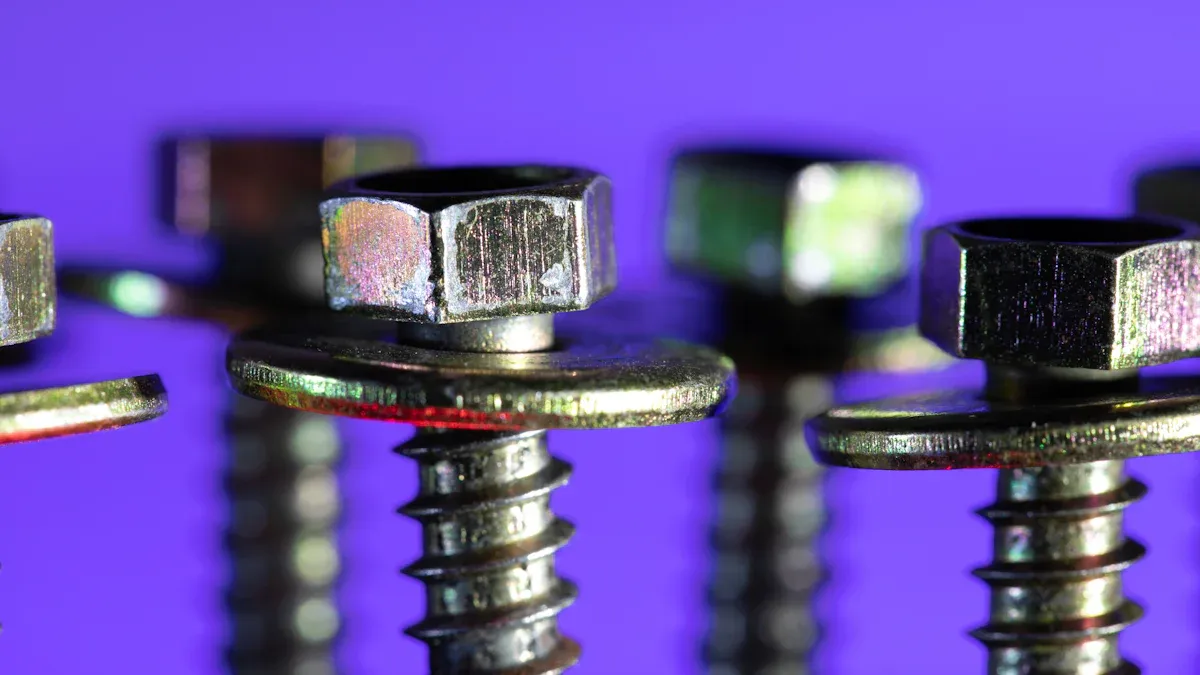
Distinguishing between these two components becomes simple with a trained eye. The key differences are visible in their geometry, from the head down to the point. A direct comparison reveals the design intent behind each fastener.
Side-by-Side Feature Comparison
Placing a hex bolt and a hex head cap screw next to each other highlights their distinct manufacturing standards. The following table summarizes the most important visual cues.
| Feature | Hex Cap Screw | Hex Bolt |
|---|---|---|
| Under Head | Features a flat, circular washer face. | Lacks a washer face; a die seam is permissible. |
| Body Diameter | Manufactured to a tight tolerance. | Has a looser tolerance and may be oversized. |
| Point | Has a chamfered (beveled) point for guidance. | Typically has a flat or sheared, unfinished point. |
Head and Washer Face
The most immediate identifier is the area directly under the hex head. Hex head cap screws feature a distinct, smooth, circular surface known as a washer face. This integrated feature provides a clean bearing surface to distribute load and protect the mating part. In contrast, most bolts lack this feature, and the underside of the head is often rougher.
Body and Point
The body and point of the fasteners also show clear distinctions. A cap screw has a body diameter manufactured to a tight tolerance, ensuring a precise fit in a tapped hole. Its point is chamfered, or beveled, to help guide the threads and prevent cross-threading. Bolts have a looser body tolerance since they pass through oversized clearance holes. Their point is typically unfinished, appearing flat or sheared as a result of the manufacturing process.
Identifying Fasteners in the Wild
With a little practice, anyone can confidently identify these components in a hardware bin or on a job site. Focusing on a few specific features makes the process quick and accurate.
Quick Identification Tips
Use this simple checklist to make a fast and accurate identification:
- Look Under the Head: Is there a smooth, built-in washer face? If yes, it is a hex head cap screw. If no, it is likely a bolt.
- Examine the Point: Does the tip have a neat, angled chamfer? This indicates a cap screw. A flat or rough tip points to a bolt.
- Assess the Finish: Cap screws generally have a higher-quality, smoother surface finish compared to the often rougher finish of general-purpose bolts.
Reading Head Markings
The markings on top of the hex cap provide crucial information about the fastener’s strength and material grade.
- SAE Markings: Radial lines indicate the grade (e.g., 3 lines for Grade 5, 6 lines for Grade 8).
- Metric Markings: Numbers like 8.8 or 10.9 denote the strength class.
Reading these markings ensures the selection of a component that meets the engineering requirements for a specific application.
Choosing the right fastener is critical for project integrity. The key differences in tolerance and design are not minor details.
- For precision applications requiring threading into a part, always select a hex cap screw.
- For general construction where a nut is used, the correct choice is hex bolts.
Selecting the wrong screw or bolt can lead to improper fit and assembly failure. The specific design of cap screws makes them distinct from other cap screws.
FAQ
Can I use a hex bolt in a tapped hole?
Using a hex bolt in a tapped hole is not recommended. Its looser manufacturing tolerances can lead to a poor fit, improper seating, and potential thread damage. A hex cap screw provides the necessary precision for tapped holes.
Why do hex cap screws have a washer face?
The washer face on a hex cap screw serves two key functions.
- It distributes the clamping load over a wider area.
- It protects the mating surface from being damaged by the hex head during tightening.
What does “fully threaded” mean for a hex fastener?
A fully threaded fastener has threads running its entire length from the point to the underside of the head. This design maximizes thread engagement and grip strength, making it ideal for applications where the fastener is fully inserted into a tapped hole.
Are hex bolts stronger than hex cap screws?
Strength is determined by the material grade, not the fastener type. A Grade 8 hex cap screw is stronger than a Grade 2 hex bolt. Always compare fasteners of the same grade to assess strength.
What is a heavy hex bolt?
A heavy hex bolt has a larger and thicker head than a standard hex fastener. Engineers specify this design for high-strength structural applications, as the larger head provides a greater bearing surface and accommodates higher torque levels.
How do I measure a hex fastener?
Professionals measure three key dimensions to specify a hex fastener.
| Measurement | How to Measure |
|---|---|
| Diameter | Measure the width of the shank (body). |
| Length | Measure from under the head to the point. |
| Thread Pitch | Count threads per inch or measure distance between threads (mm). |