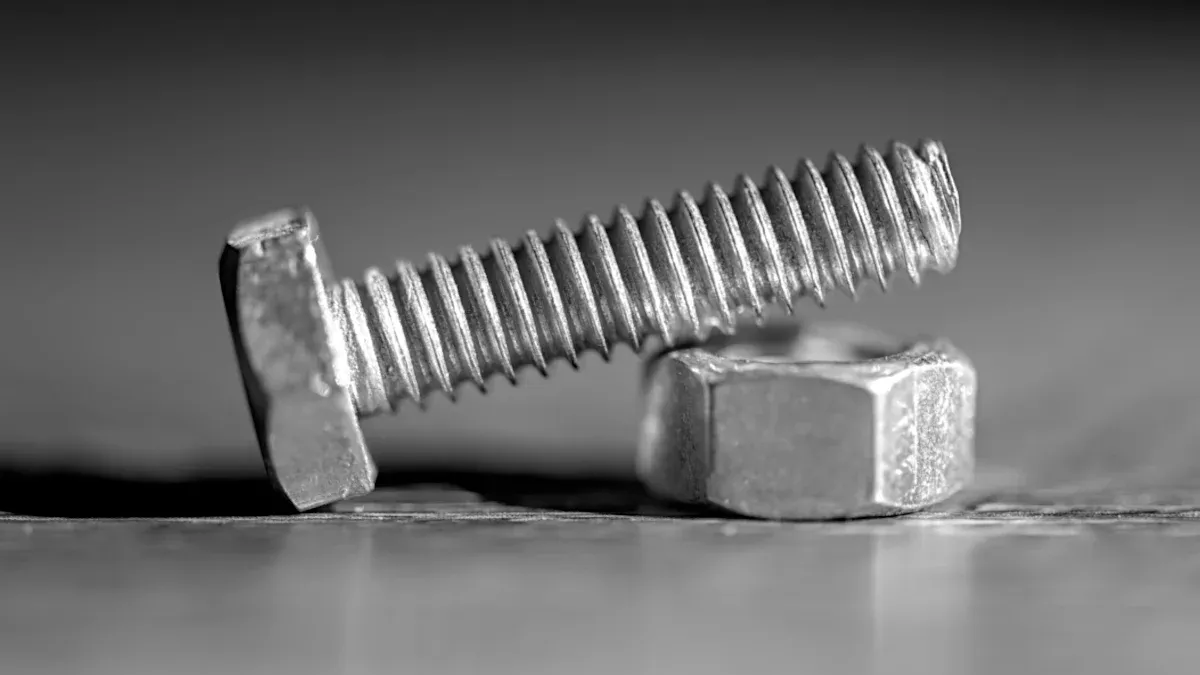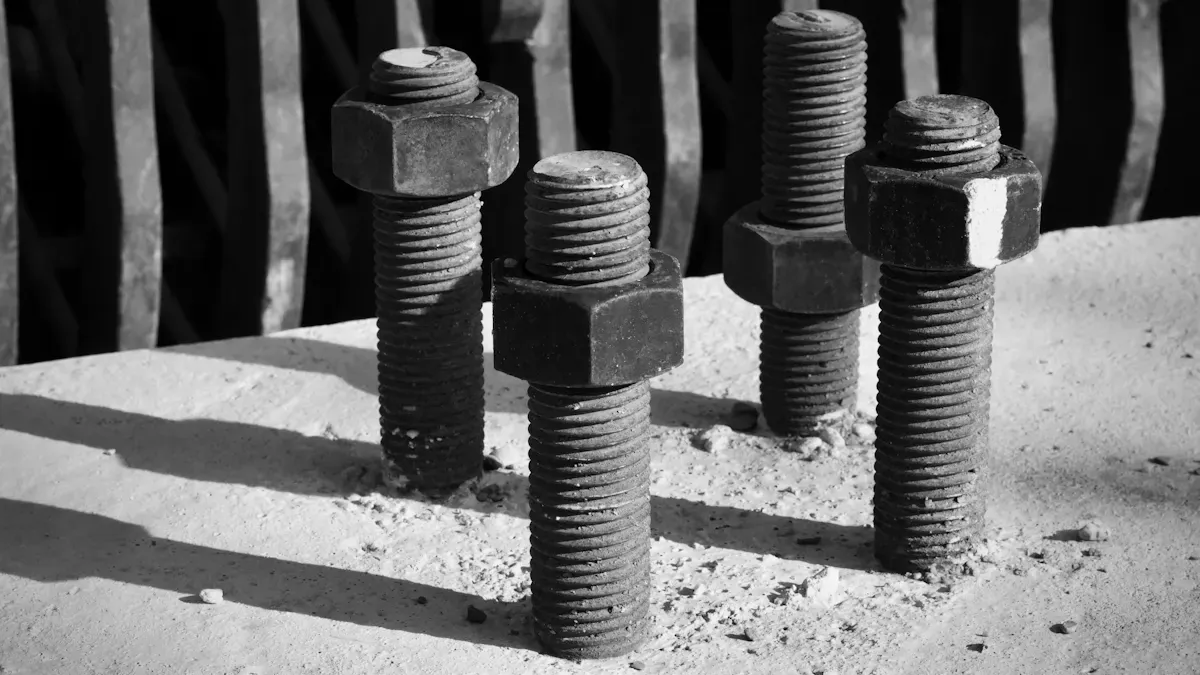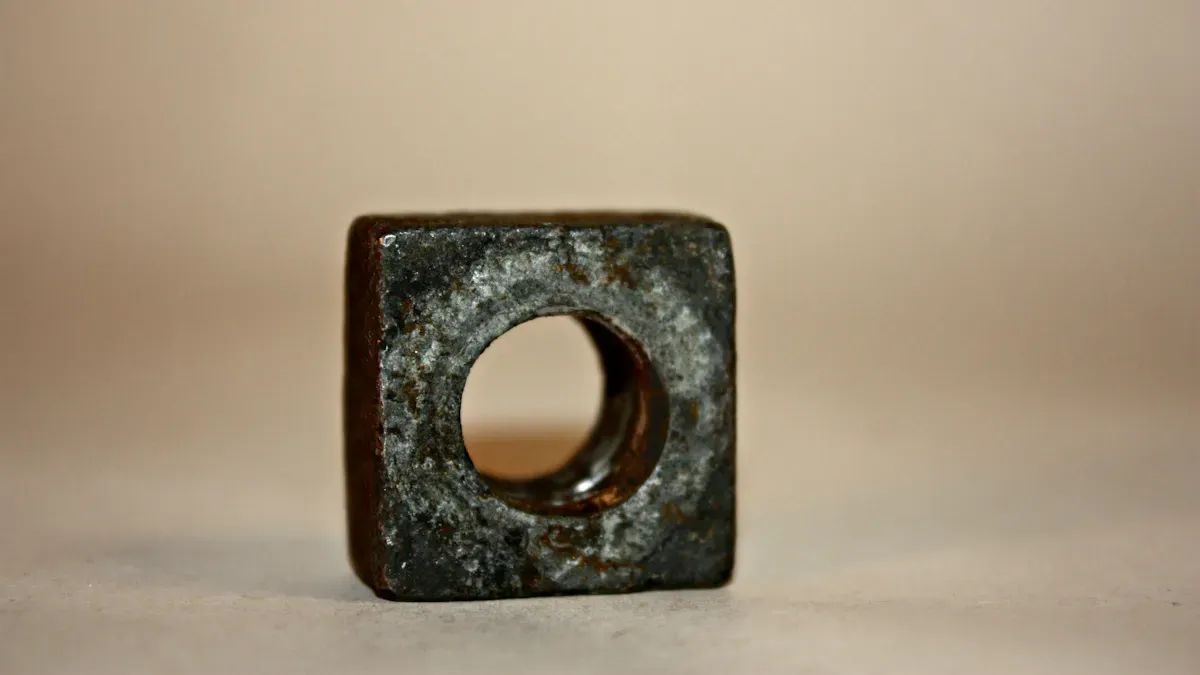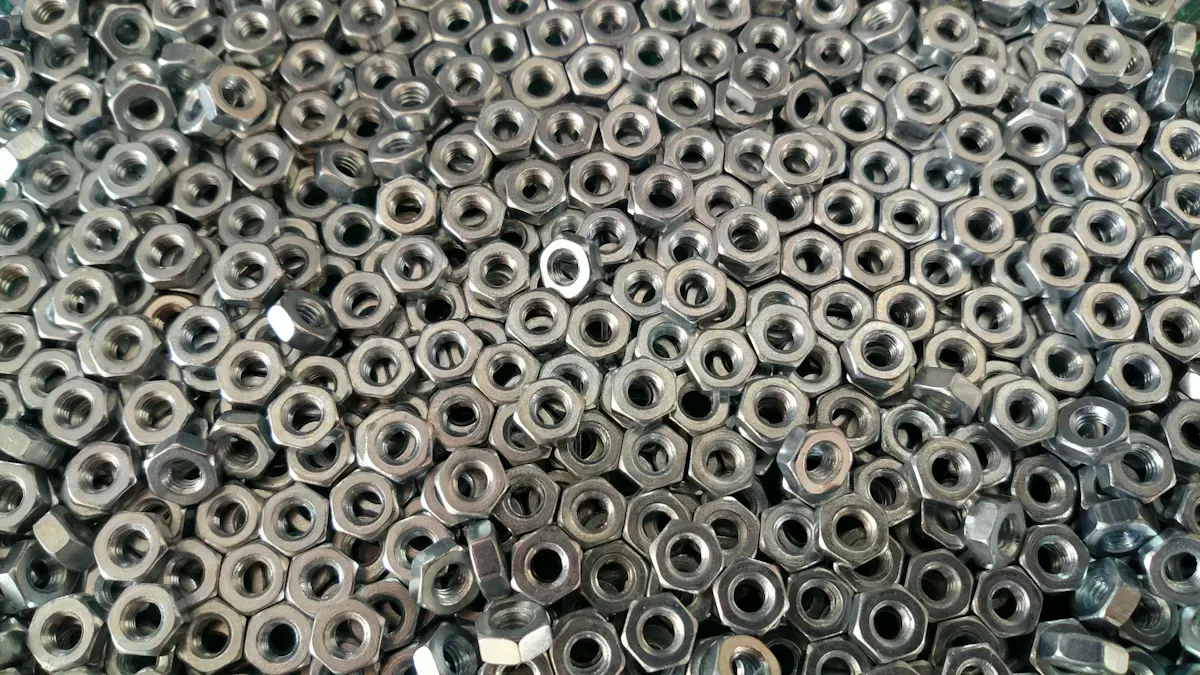
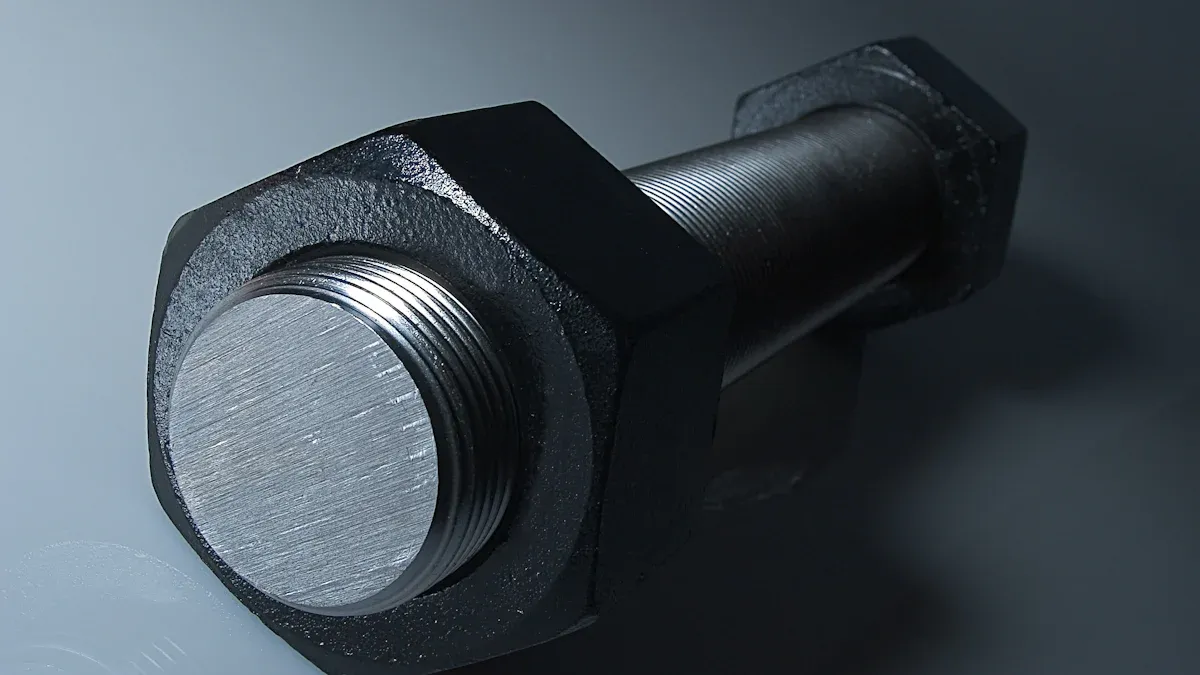
Heavy duty hex nuts offer increased strength and durability compared to standard hex nuts, making them essential in demanding applications like construction or when working with custom fasteners. While heavy duty hex nuts provide significant advantages in high-stress environments, standard hex nuts deliver cost-effective solutions for everyday nuts and bolts projects. A custom fasteners manufacturer recommends selecting the appropriate hex nut based on load requirements and safety needs.
Heavy Duty Hex Nuts: Definition, Uses, Pros, and Cons
What Are Heavy Duty Hex Nuts?
Heavy duty hex nuts represent a specialized category of fasteners designed for demanding environments. These nuts feature a wider and thicker profile compared to standard hex nuts. Manufacturers produce heavy duty hex nuts according to strict industry standards to ensure compatibility and safety. The following table outlines the most recognized standards governing heavy hex nuts:
| Standard | Description |
|---|---|
| ASTM A563 | Covers requirements for heavy hex nuts used with structural bolts. |
| ASTM A194 | Specifies mechanical properties for heavy hex nuts in high-temperature applications. |
| ASME B18.2.2 | Provides dimensional standards for heavy hex nuts to ensure compatibility with bolts. |
| ISO 4032 | Sets international standards for dimensions and mechanical properties of hex nuts. |
Heavy duty hex nuts work with high-strength bolts to deliver enhanced clamping force and durability. Their robust design allows them to withstand significant loads and stresses, making them essential in structural and industrial applications.
Typical Uses for Heavy Duty Hex Nuts
Heavy duty hex nuts find frequent use in construction, manufacturing, and heavy machinery. Engineers rely on these nuts when assembling steel frameworks, bridges, and large equipment. Heavy-duty applications demand fasteners that maintain integrity under extreme conditions. Heavy duty hex nuts also appear in high-temperature environments, such as power plants and refineries, where standard nuts may fail. Their compatibility with custom fasteners and structural bolts makes them a preferred choice for projects requiring maximum strength and reliability.
Tip: Heavy duty hex nuts provide superior performance in situations where vibration, environmental factors, or heavy loads threaten the stability of connections.
Main Advantages of Heavy Duty Hex Nuts
Heavy duty hex nuts offer several key benefits that set them apart from standard options:
- Heavy duty hex nuts maintain structural integrity by creating strong connections that withstand significant loads and stresses.
- They enhance security in construction by preventing loosening over time due to vibration or environmental factors.
- Their design allows for easy gripping and torque application, making them versatile for various applications.
- Heavy-duty nuts deliver enhanced durability, reducing the need for frequent maintenance or replacement.
- Manufacturers produce heavy duty hex nuts to meet rigorous safety and compatibility standards, ensuring reliable performance in critical settings.
Heavy hex nuts provide engineers and builders with confidence when working on projects that demand uncompromising strength and stability.
Main Disadvantages of Heavy Duty Hex Nuts
Heavy duty hex nuts deliver impressive strength, but they introduce several drawbacks that professionals must consider before selecting them for a project. Industry reports and user feedback highlight these disadvantages, which can impact installation, design, and long-term performance.
Limited Access in Tight Spaces
Heavy duty hex nuts feature a larger and thicker profile. This design often complicates installation or removal in confined areas. Technicians may struggle to maneuver tools around the nut, especially when working inside machinery or structural assemblies with restricted clearance. Specialized wrenches or sockets sometimes become necessary, increasing the complexity of maintenance tasks.Bulky Head Size
The oversized hexagonal head of heavy duty nuts can interfere with compact designs. Engineers who require a low-profile fastener may find that heavy duty nuts do not fit within their specifications. The bulkiness may obstruct adjacent components or limit the flexibility of the assembly. Designers must account for the extra space these nuts occupy, which can restrict creativity and efficiency in product development.Corrosion Concerns
Material selection and coating play a critical role in the durability of heavy duty hex nuts. Some variants exhibit susceptibility to corrosion, especially when exposed to harsh environments or chemicals. If the nut lacks proper protective coatings, rust and degradation may compromise the integrity of the connection. Maintenance teams must monitor these nuts closely and replace them when corrosion appears, adding to operational costs.
Note: Heavy duty hex nuts require careful planning during the design phase. Teams must evaluate whether the increased size and strength justify the potential challenges in installation and maintenance.
Heavy duty hex nuts also tend to weigh more than standard options. This added weight can affect the overall mass of the assembly, which matters in applications where minimizing weight is crucial. Transportation and handling become more demanding, especially when large quantities are involved.
Cost represents another consideration. Heavy duty hex nuts usually command a higher price due to their robust construction and compliance with strict standards. Budget-conscious projects may struggle to justify the expense, particularly when the application does not demand extreme strength.
Standard Hex Nuts: Definition, Uses, Pros, and Cons
What Are Standard Hex Nuts?
Standard hex nuts represent the most widely used type of nut in the fastener industry. Manufacturers design these nuts with a six-sided shape, which allows for easy gripping and turning with common tools such as wrenches and pliers. Standard hex nuts typically feature a uniform thickness and width, making them compatible with a broad range of bolts and threaded rods. Their design meets general-purpose requirements, providing reliable performance in both household and light industrial settings. Engineers and builders select standard hex nuts for projects that do not demand extreme strength or specialized features.
Typical Uses for Standard Hex Nuts
Standard hex nuts play a critical role in everyday construction and manufacturing tasks. Their versatility makes them suitable for a wide variety of applications. The following list highlights their most common uses:
- Securing furniture and fixtures in homes and offices
- Fastening components in light machinery and appliances
- Assembling shelving units, cabinets, and storage systems
- Attaching brackets, supports, and panels in construction projects
- Providing stability in plumbing and electrical installations
Standard hex nuts account for approximately 40% of all fasteners used in construction. Their hexagonal shape enables easy manipulation with tools, which simplifies assembly and maintenance. These nuts ensure stability and facilitate assembly in both household and light industrial contexts. They serve as foundational components that enhance the safety and reliability of mechanical and structural systems.
Tip: Standard hex nuts offer a practical solution for projects where ease of installation and accessibility matter most.
Main Advantages of Standard Hex Nuts
Standard hex nuts deliver several benefits that make them a preferred choice for many applications. Their advantages include:
- Cost-effectiveness: Standard hex nuts provide an affordable option for securing bolts and threaded rods. Their widespread availability reduces procurement costs and simplifies sourcing.
- Versatility: These nuts fit a broad range of bolt sizes and thread types. Builders and technicians can use them in various projects without needing specialized fasteners.
- Ease of installation: The hexagonal shape allows for quick tightening and loosening with standard tools. This feature speeds up assembly and reduces labor time.
- Reliability: Standard hex nuts maintain secure connections under typical loads. They support the integrity of mechanical and structural systems in everyday environments.
- Accessibility: Their compact design fits well in confined spaces, making them suitable for projects with limited clearance.
Standard hex nuts remain a staple in both household and light industrial applications. Their combination of affordability, versatility, and reliability ensures consistent performance across a wide range of tasks.
Main Disadvantages of Standard Hex Nuts
Standard hex nuts serve as reliable fasteners for many everyday applications. However, they present several disadvantages that engineers, builders, and technicians must consider before selecting them for critical projects.
Limited Strength and Load Capacity
Standard hex nuts do not provide the same level of strength as heavy duty hex nuts. Their thinner profile and smaller dimensions restrict the amount of force they can withstand. When exposed to high loads or extreme stress, these nuts may deform or fail. This limitation makes them unsuitable for structural applications or environments where safety is a primary concern.Reduced Resistance to Vibration
Standard hex nuts often loosen over time when subjected to constant vibration or movement. Machinery, vehicles, and equipment that generate frequent vibrations can cause these nuts to back off, leading to potential failures. Heavy duty hex nuts, in contrast, offer better resistance to loosening in such conditions.Susceptibility to Corrosion
Manufacturers typically produce standard hex nuts from carbon steel or similar materials. Without specialized coatings or treatments, these nuts can corrode quickly in harsh or outdoor environments. Corrosion weakens the nut and compromises the integrity of the connection. Maintenance teams must monitor and replace corroded nuts to prevent accidents or breakdowns.Limited Suitability for Specialized Applications
Standard hex nuts do not meet the requirements for high-temperature, high-pressure, or chemically aggressive environments. Industries such as oil and gas, power generation, and heavy construction demand fasteners that comply with strict standards. Standard hex nuts rarely satisfy these specifications, which restricts their use in specialized fields.
Note: Engineers should always review the technical requirements of a project before choosing standard hex nuts. Using the wrong type of nut can lead to costly repairs, safety hazards, or equipment downtime.
- Potential for Stripping Threads
The softer materials and thinner walls of standard hex nuts increase the risk of thread stripping during installation or removal. Over-tightening or repeated use can damage the threads, making the nut unusable. This issue can delay assembly and increase maintenance costs.
| Disadvantage | Impact on Application |
|---|---|
| Limited strength | Not suitable for heavy loads or structural projects |
| Vibration loosening | Risk of failure in machinery and vehicles |
| Corrosion susceptibility | Shorter lifespan in harsh environments |
| Application limitations | Cannot use in specialized or regulated industries |
| Thread stripping | Increased maintenance and replacement needs |
Standard hex nuts remain a practical choice for many general-purpose tasks. However, their disadvantages highlight the importance of matching the fastener to the demands of the application. Careful selection ensures safety, reliability, and long-term performance.
Hex Nuts Comparison: Heavy Duty vs Standard
Strength and Durability of Hex Nuts
Heavy duty hex nuts deliver exceptional strength and durability. Manufacturers often use ASTM A563 Grade DH or similar specifications to ensure these nuts withstand significant loads and forces. Engineers select heavy duty hex nuts for structural applications where failure is not an option. Many heavy duty hex nuts include anti-loosening features such as nylon inserts or serrated flanges. These additions prevent failure caused by vibrations in machinery or construction.
Standard hex nuts offer reliable performance for general-purpose applications. Their smaller and lighter design suits projects with lower stress requirements. However, standard hex nuts do not match the strength or durability of heavy duty options. They may deform or loosen under extreme conditions.
The following table highlights the durability differences between heavy duty and standard hex nuts under extreme conditions:
| Feature | Heavy Duty Hex Nuts | Standard Hex Nuts |
|---|---|---|
| Design | Wider and thicker for high-stress applications | Smaller and lighter for general use |
| Load Capacity | Enhanced load capacity and resistance | Suitable for lower stress applications |
| Strength | Designed for structural applications | Not ideal for extreme conditions |
| Common Applications | Structural steel construction, heavy machinery | General-purpose applications |
Heavy duty hex nuts maintain their durability in harsh environments. Standard hex nuts provide adequate durability for everyday tasks but lack the resilience needed for demanding projects.
Cost and Availability of Hex Nuts
Cost and availability play a crucial role in fastener selection. Heavy duty hex nuts typically cost 10–25% more than standard hex nuts. The price difference results from increased material usage, larger size, and enhanced manufacturing standards. Protective coatings for corrosion resistance add to the expense. Heavy duty hex nuts also have lower availability and higher production costs compared to standard hex nuts.
Standard hex nuts remain widely available in hardware stores and online marketplaces. Their lower price makes them attractive for budget-conscious projects. Builders and technicians can source standard hex nuts quickly and efficiently. Heavy duty hex nuts require specialized suppliers and may involve longer lead times.
Heavy duty hex nuts cost more due to:
- Larger size and increased material usage
- Stricter manufacturing tolerances
- Protective coatings for durability
- Lower availability and higher production costs
Standard hex nuts offer:
- Lower price and widespread availability
- Quick sourcing for general-purpose projects
Note: Project managers should consider both cost and availability when choosing hex nuts for construction or machinery.
Application Suitability for Hex Nuts
Industry guidelines recommend specific applications for heavy duty and standard hex nuts. Heavy duty hex nuts excel in environments where durability and strength are essential. Construction professionals use them for structural steel, scaffolding, and concrete forms. Automotive engineers rely on heavy duty hex nuts when assembling engines, chassis, and suspensions. Machinery and equipment manufacturers select heavy duty hex nuts to ensure stability and functionality of critical components.
Standard hex nuts suit general-purpose applications. Electricians use them to secure electrical panels and control cabinets. Technicians install standard hex nuts in equipment enclosures and light machinery. Aerospace and aviation industries demand heavy duty hex nuts for critical aircraft components exposed to extreme conditions and vibrations.
The table below summarizes application suitability:
| Industry | Applications |
|---|---|
| Construction | Structural steel, scaffolding, concrete forms |
| Automotive | Assembling engines, chassis, suspensions, exhaust systems |
| Machinery and equipment | Ensuring stability and functionality of critical components |
| Electrical and electronics | Securing electrical panels, control cabinets, and equipment enclosures |
| Aerospace and aviation | Withstanding extreme conditions and vibrations in critical aircraft components |
Heavy duty hex nuts provide unmatched durability and strength for high-stress environments. Standard hex nuts offer practical solutions for everyday tasks. Engineers and builders must evaluate the demands of each project to select the most suitable hex nuts.
Installation and Maintenance of Hex Nuts
Proper installation and maintenance of hex nuts play a critical role in the safety and longevity of mechanical assemblies. Heavy duty and standard hex nuts require different approaches due to their distinct designs and applications.
Installation Best Practices
Heavy duty hex nuts demand careful handling during installation. Their larger size and increased thickness require technicians to use appropriately sized wrenches or sockets. Heavy duty nuts often need higher torque values to achieve the necessary clamping force. Installers should always refer to manufacturer torque specifications to prevent over-tightening or under-tightening.
Standard hex nuts offer a more straightforward installation process. Their compact size allows for easy access in tight spaces. Most standard nuts can be installed using common hand tools such as adjustable wrenches or pliers. Installers should avoid excessive force to prevent thread stripping.
Key Installation Steps for Both Types:
- Inspect Threads: Check both the nut and bolt threads for damage or debris before assembly.
- Align Properly: Ensure the nut aligns squarely with the bolt to avoid cross-threading.
- Apply Lubricant: Use a suitable lubricant if recommended, especially for heavy duty applications.
- Tighten Gradually: Apply torque in stages, alternating between nuts in multi-bolt assemblies.
- Verify Torque: Use a calibrated torque wrench to confirm the correct tightness.
Tip: Always follow the torque values specified by the fastener manufacturer. Incorrect torque can lead to premature failure or unsafe connections.
Maintenance Considerations
Maintenance requirements differ between heavy duty and standard hex nuts. Heavy duty hex nuts, often used in critical structures, require regular inspection for signs of loosening, corrosion, or wear. Maintenance teams should schedule periodic checks, especially in environments with vibration or exposure to harsh chemicals.
Standard hex nuts, commonly found in household and light industrial settings, need less frequent inspection. However, technicians should still check for corrosion, thread damage, or signs of loosening during routine maintenance.
The table below summarizes the main maintenance tasks for each type:
| Task | Heavy Duty Hex Nuts | Standard Hex Nuts |
|---|---|---|
| Inspection Frequency | Regular (monthly/quarterly) | Occasional (semi-annual/annual) |
| Corrosion Monitoring | Essential in harsh environments | Important in outdoor use |
| Retightening | After vibration or load changes | As needed |
| Replacement Criteria | Corrosion, deformation, thread wear | Thread stripping, rust |
Note: In high-stress or safety-critical applications, always replace hex nuts that show any sign of damage or corrosion.
Common Installation and Maintenance Challenges
- Heavy Duty Hex Nuts: Their bulk can make installation difficult in confined spaces. Specialized tools may be necessary. High torque requirements can increase the risk of over-tightening if installers do not use proper equipment.
- Standard Hex Nuts: These nuts are prone to thread stripping if over-tightened. They may loosen in vibrating machinery unless paired with lock washers or thread-locking compounds.
Best Practices for Longevity:
- Store hex nuts in dry, clean environments to prevent rust.
- Use protective coatings or stainless steel variants in corrosive settings.
- Train personnel on proper installation techniques and tool selection.
Technicians who follow these guidelines can maximize the performance and lifespan of both heavy duty and standard hex nuts. Proper installation and regular maintenance ensure safe, reliable connections in any application.
How to Choose the Right Hex Nut for Your Application
Key Factors to Consider When Selecting Hex Nuts
Selecting the right hex nut involves more than matching a nut to a bolt. Engineers and technicians must evaluate several critical factors to ensure safety, reliability, and performance in every application. The following considerations guide the selection process for all types of nuts and bolts.
Load Requirements for Hex Nuts
Load requirements determine the necessary load strength and durability of the hex nut. Heavy duty hex nuts excel in applications where high load or structural integrity is essential. Standard hex nuts suit lighter assemblies with moderate load demands. Always assess the expected load and choose a nut that matches or exceeds these requirements. Using a nut with insufficient load capacity can result in joint failure or compromised reliability.
Environmental Conditions Affecting Hex Nuts
Environmental factors play a significant role in hex nut selection. Moisture, chemicals, temperature extremes, and exposure to the elements can degrade certain materials. Stainless steel nuts resist corrosion in outdoor or marine environments. Carbon steel nuts provide strength but may require protective coatings for harsh conditions. For electrical or electronic assemblies, select materials that prevent oxidation and ensure long-term performance. Matching the material to the environment extends the lifespan of all types of nuts and bolts.
Budget Constraints for Hex Nut Selection
Budget constraints influence the choice between heavy duty and standard hex nuts. Standard hex nuts offer a cost-effective solution for general-purpose projects. Heavy duty hex nuts, while more expensive, provide superior performance in demanding applications. Project managers must balance cost with safety and reliability. Sourcing from reputable suppliers ensures consistent quality and reduces the risk of using substandard fasteners. Consider both initial cost and long-term maintenance when evaluating different types of nuts and bolts.
Safety and Compliance with Hex Nut Standards
Safety and compliance remain non-negotiable in industrial and structural applications. Always verify that hex nuts meet relevant industry standards, such as ANSI/ASME B18.2.1 and B18.2.2. These standards specify torque values, material grades, and compatibility between nuts and bolts. Technicians should use a torque wrench during installation to prevent thread stripping or joint slippage. Matching nut grades with bolt grades eliminates weak points in assemblies. Compliance with standards ensures the reliability and safety of all types of nuts and bolts in critical environments.
Tip: Using incompatible or substandard hex nuts can lead to equipment failure, structural compromise, or safety hazards. Always confirm material compatibility, torque specifications, and environmental resistance before installation.
Common Scenarios and Recommendations for Hex Nuts
Choosing the right hex nut depends on the specific application. The following scenarios illustrate best practices for selecting different types of nuts and bolts.
Home DIY Projects Using Hex Nuts
Home improvement projects often require standard hex nuts. These nuts fit most household bolts and provide reliable fastening for furniture, shelving, and fixtures. Stainless steel nuts work well for outdoor projects due to their corrosion resistance. For assemblies exposed to vibration, nylon insert lock nuts prevent loosening. Always ensure the nut size matches the bolt for a secure fit. Homeowners benefit from the versatility and affordability of standard types of nuts and bolts.
Automotive and Machinery Applications for Hex Nuts
Automotive and machinery assemblies demand higher load strength and durability. Heavy duty hex nuts secure engines, chassis, and suspension components. These nuts withstand vibration, heat, and mechanical stress. Technicians should select materials like chromium vanadium or high-grade carbon steel for enhanced performance. Matching thread types and sizes prevents assembly failures. In critical systems, always follow manufacturer specifications for torque and compatibility. The right types of nuts and bolts ensure safety and reliability on the road and in the shop.
Construction and Structural Applications for Hex Nuts
Construction projects require hex nuts that deliver maximum load capacity and structural integrity. Heavy duty hex nuts anchor steel beams, scaffolding, and concrete forms. These nuts comply with strict industry standards for safety and performance. Engineers select materials and coatings based on environmental exposure and design requirements. Regular inspection and maintenance preserve the reliability of structural connections. Using the correct types of nuts and bolts prevents costly failures and supports long-term stability.
Industrial and Specialized Equipment Using Hex Nuts
Industrial and specialized equipment operate in challenging environments. Heavy duty hex nuts secure critical components in machinery, power plants, and refineries. Material selection depends on exposure to chemicals, temperature extremes, and mechanical loads. Stainless steel or coated carbon steel nuts resist corrosion and maintain performance. Compliance with industry standards ensures safe operation. Technicians must verify thread compatibility and use proper installation tools. The right types of nuts and bolts protect equipment and personnel in high-risk settings.
Note: Always consult application requirements, material compatibility, and industry standards before selecting hex nuts for any project. Proper selection and installation maximize safety, reliability, and performance.
Heavy duty hex nuts provide unmatched strength and reliability for demanding projects, while standard hex nuts offer cost-effective versatility for everyday tasks. Many users make mistakes by selecting general hardware for structural jobs or overlooking corrosion risks in harsh environments. For most home and light industrial needs, standard hex nuts perform well. Heavy duty hex nuts suit critical or high-load applications. Every project benefits when users match hex nut selection to load, environment, and safety requirements.
FAQ
What is the main difference between heavy duty and standard hex nuts?
Heavy duty hex nuts have a thicker and wider profile. They handle higher loads and offer greater durability. Standard hex nuts suit general-purpose applications and cost less. Heavy duty nuts meet stricter industry standards for strength.
Can standard hex nuts be used in structural applications?
Engineers do not recommend standard hex nuts for structural applications. These nuts lack the strength and durability required for critical connections. Heavy duty hex nuts provide the necessary load capacity and safety compliance.
How do I prevent hex nuts from loosening due to vibration?
Technicians often use lock washers, nylon insert lock nuts, or thread-locking compounds to prevent loosening. Heavy duty hex nuts with anti-loosening features also help maintain secure connections in vibrating environments.
Are stainless steel hex nuts better for outdoor use?
Yes. Stainless steel hex nuts resist corrosion and perform well outdoors. They maintain integrity in wet or humid conditions. Standard carbon steel nuts may rust without protective coatings.
What tools are needed to install heavy duty hex nuts?
Installers use larger wrenches or sockets to fit the thicker profile of heavy duty hex nuts. A calibrated torque wrench ensures proper tightness. Specialized tools may be necessary for confined spaces.
How can I identify if a hex nut meets industry standards?
Look for markings on the nut that indicate grade and standard compliance. Manufacturers often stamp codes such as ASTM or ISO numbers. Always verify documentation from reputable suppliers.
Do heavy duty hex nuts cost significantly more than standard ones?
Heavy duty hex nuts usually cost 10–25% more than standard hex nuts. The price reflects increased material, size, and manufacturing standards. Bulk purchasing may reduce costs for large projects.