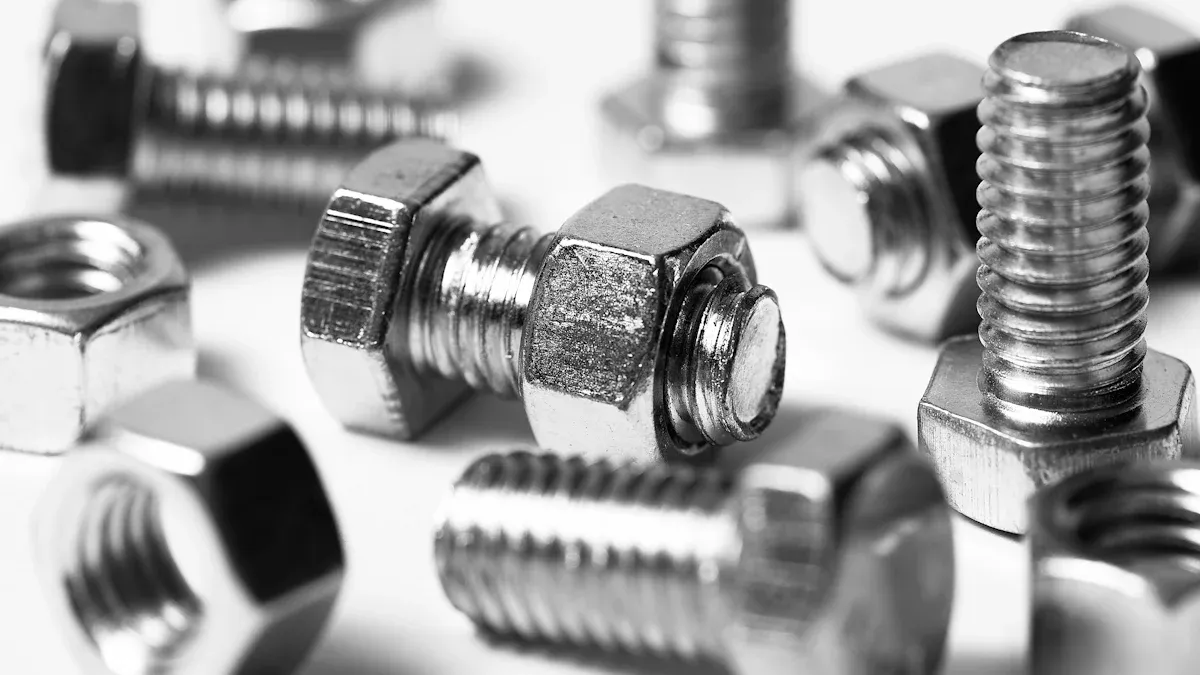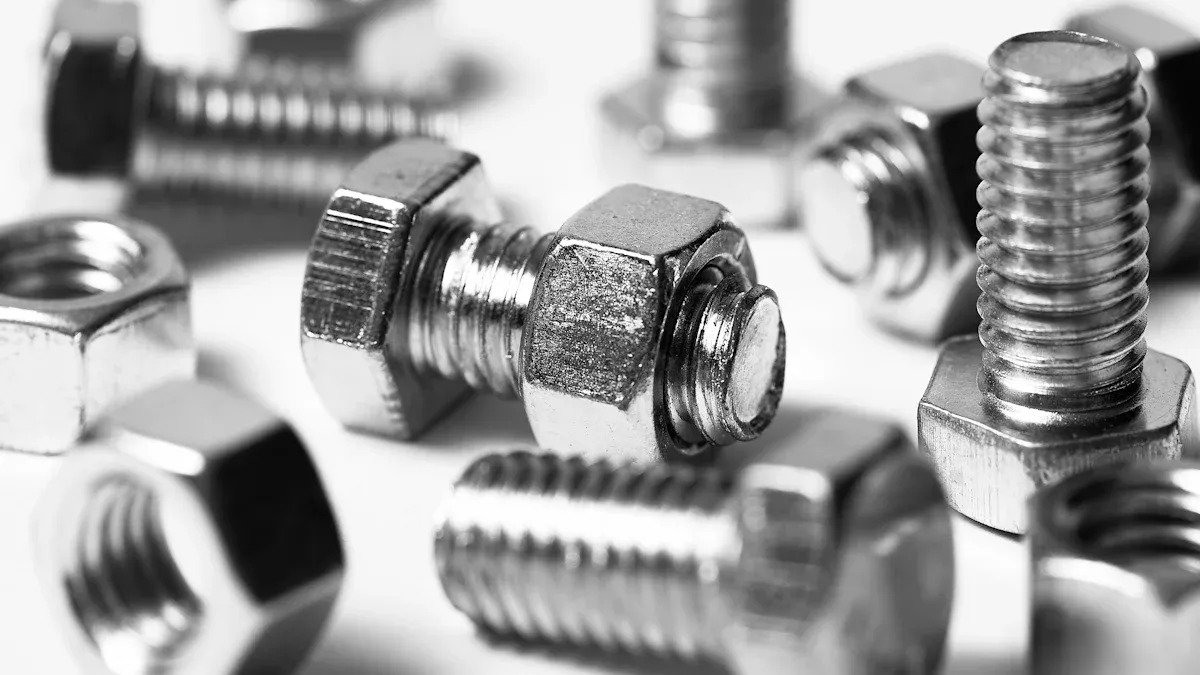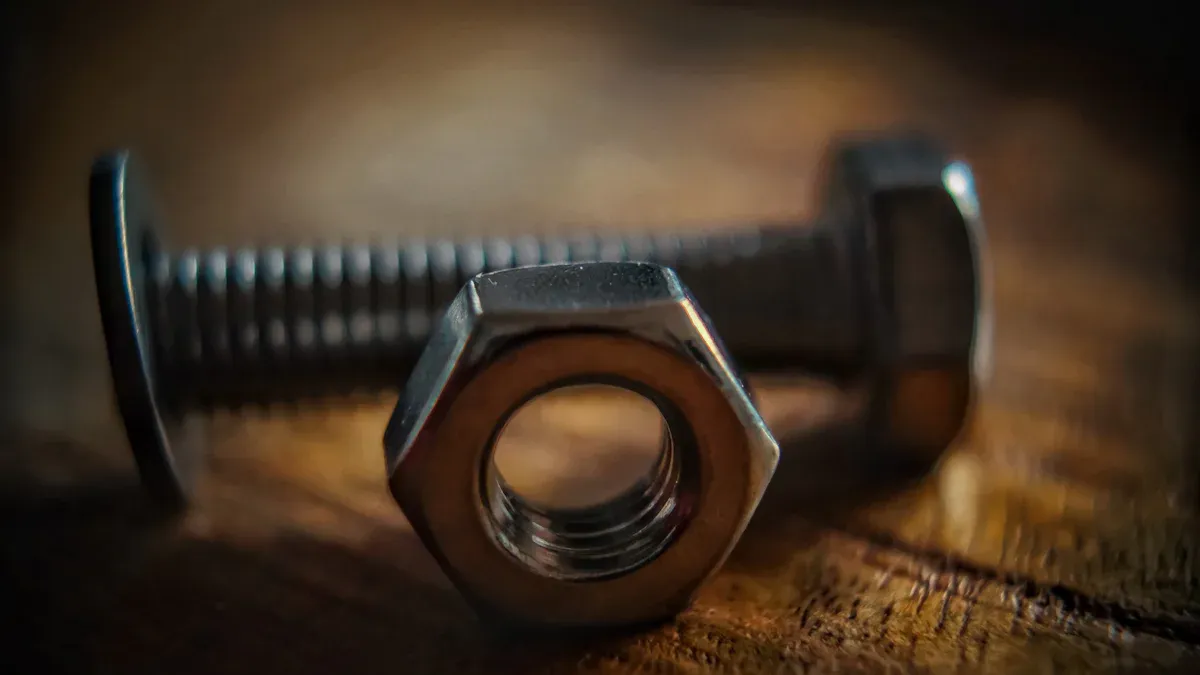
Properly securing the posts is fundamental to a safe deck. The correct carriage bolt for attaching a standard 4×4 post to a double 2x rim joist is 1/2-inch in diameter and 8 inches long. This length perfectly joins the posts and deck framing, accommodating the hardware with enough thread for a secure connection. The integrity of the entire deck structure depends on quality bolt casting. While a custom fasteners manufacturer can create custom fasteners, this standard size serves most deck projects.
Safety Tip: Always use hot-dip galvanized (HDG) or stainless steel carriage bolts with pressure-treated lumber. This prevents corrosion and ensures the long-term safety of your deck.
Understanding the Anatomy of Carriage Bolts
Selecting the right fastener requires understanding its design. The unique features of carriage bolts make them ideal for wood-to-wood connections in structures like decks. Each part of the bolt—the head, neck, and shank—serves a specific purpose that contributes to a strong and lasting assembly.
The Domed Head
The head is the most recognizable feature of this fastener. Its distinct shape provides both functional and aesthetic advantages.
A Smooth, Snag-Free Finish
The bolt’s head has a shallow, circular, and domed profile. This design offers a clean, finished look that is visually appealing on exposed deck posts and railings. More importantly, the smooth surface enhances safety. It eliminates sharp edges, reducing the risk of snagging clothes or causing scrapes, a crucial benefit for high-traffic areas. The head’s wide, mushroom-like shape also distributes pressure and prevents the bolt from pulling through the wood under load.
How It Resists Tampering
A key security feature is the absence of a drive recess. Unlike hex or screw heads, the domed head cannot be gripped or turned with a tool. Once installed, the bolt can only be loosened by turning the nut. This design makes it tamper-resistant, adding a layer of security to the deck structure.
The Square Neck
Directly beneath the head is a short, square section. This small feature is the key to the bolt’s functionality and ease of installation.
The Key to One-Tool Tightening
The square neck provides a self-locking mechanism. This allows a builder to tighten the fastener using only a single wrench on the nut. Since the bolt cannot spin, there is no need to hold the head, which is especially useful in tight spaces where access is limited to one side of the assembly.
How It Grips the Wood to Prevent Turning
When a builder tightens the nut, the square neck pulls into the wood fibers. The softer wood deforms around the square shape, creating a tight fit that locks the bolt in place and prevents it from rotating. This bite provides exceptional grip and ensures the connection remains secure.
Did You Know? This design originated for use with iron plates on wooden beams, where the square neck fit into a matching square hole in the metalwork. The same principle allows it to embed securely into wood.
The Threaded Shank
The shank is the body of the bolt, containing the threads that engage with the nut to create clamping force.
Understanding Coarse vs. Fine Threads
Threads come in two primary types: coarse (UNC) and fine (UNF). For deck building, coarse threads are the industry standard.
- Coarse Threads (UNC): These threads are deeper and spaced farther apart. They assemble more quickly and are less susceptible to cross-threading or damage from debris. Their robust nature also makes them better suited for thick coatings like hot-dip galvanization.
- Fine Threads (UNF): These are more resistant to loosening from vibration but are less common in construction. They are more easily damaged and harder to find commercially.
Fully Threaded vs. Partially Threaded Bolts
Bolts can be fully threaded or partially threaded. A partially threaded bolt has a smooth, unthreaded shank section below the neck. This smooth section provides slightly more shear strength than a threaded section of the same diameter, making it an excellent choice for structural connections like deck posts.
Why Bolt Diameter is Critical for Your Deck’s Safety
The diameter of a bolt directly determines its strength and the overall safety of your deck. A bolt’s thickness is not a detail to overlook; it is a primary factor in the structural integrity of the entire deck. Choosing the correct diameter ensures the connection between the posts and the deck framing can withstand immense forces for years. A safe deck relies on this fundamental choice.
The Standard: 1/2-Inch Diameter Carriage Bolts
For securing posts to the deck framing, building codes and industry best practices specify 1/2-inch diameter carriage bolts. This size provides the necessary strength for standard residential deck construction. It represents the minimum requirement for a safe and durable deck.
Shear Strength Explained Simply
Shear strength is a bolt’s ability to resist forces that try to slice it in half. Imagine two pieces of wood bolted together, with one piece being pushed up and the other down. This creates a shearing force on the bolt.
Think of it like this: A thick rope is much harder for scissors to cut than a thin string. Similarly, a 1/2-inch bolt has significantly more material to resist being “sheared” than a smaller 3/8-inch bolt. This strength is essential for a secure deck.
Resisting Lateral Forces from Wind and Use
A deck must endure lateral (sideways) forces from various sources. These include strong winds, people leaning against railings, and the simple swaying motion from foot traffic. The posts bear the brunt of these loads. A 1/2-inch bolt provides the robust shear strength needed to transfer these forces safely from the posts into the deck framing, preventing dangerous movement and ensuring a stable deck.
When to Consider a Larger Diameter
While 1/2-inch is the standard, certain situations demand an even larger bolt for a safe deck.
Connections with Oversized Posts and Beams
Builders working with larger dimensional lumber, such as 6×6 posts or heavy triple-laminated beams, should consider upgrading to 5/8-inch or even 3/4-inch diameter bolts. The larger hardware maintains a proportional strength ratio relative to the heavier wood members, ensuring the connection is not the weak link in the structure.
Following Specific Engineering Specifications
If your deck project involves an architect or structural engineer, their plans are the ultimate authority. These professionals may specify larger diameter bolts based on unique design loads, soil conditions, or local building code amendments. Always follow the engineering specifications provided for your deck.
Why Smaller Bolts Are Unsafe for Deck Posts
Using bolts smaller than 1/2-inch in diameter for structural post connections is extremely dangerous and unprofessional.
The High Risk of Bolt Failure
A 3/8-inch bolt has substantially less shear strength than a 1/2-inch bolt. Under the normal stresses a deck experiences, these smaller bolts can bend or snap. A failed connection can lead to the catastrophic collapse of a section of the deck, posing a severe risk of injury.
Code Violations and Failed Inspections
Nearly all modern building codes mandate 1/2-inch bolts for post-to-joist connections. Using smaller hardware will result in a failed inspection. A building inspector will require the builder to remove the incorrect bolts and replace them, causing costly delays and rework. Building a deck correctly the first time saves time and ensures safety.
Calculating the Perfect Length for Your Carriage Bolts
Selecting the correct bolt length is just as important as choosing the right diameter. A bolt that is too short will not create a secure connection, while one that is too long creates a safety hazard. A precise calculation ensures the structural integrity of the deck and a professional finish. The right length guarantees the posts and deck framing are joined with optimal clamping force for a long-lasting deck.
The Fundamental Bolt Length Formula
A builder can determine the necessary bolt length with a simple formula. This calculation accounts for all the materials the bolt must pass through, plus the hardware needed to secure it.
Post Width + Joist Width + Hardware Thickness
The core of the calculation involves adding the actual thickness of all wood members being joined. A builder then adds the thickness of the hardware.
Total Lumber Thickness + Hardware Allowance = Minimum Bolt Length
This simple addition provides the minimum length required for the bolt to pass completely through the assembly.
Adding a Buffer for Extra Thread
The calculated minimum length is not the final answer. A bolt must be long enough for the nut to engage fully with the threads. A good rule of thumb is to have at least two full threads showing past the tightened nut. This buffer ensures a strong, reliable connection for the deck. Therefore, one always rounds up to the next commercially available bolt length.
Standard Calculation: 4×4 Post to Double Rim Joist
The most common connection on a deck is a 4×4 post attached to a double 2x rim joist. This scenario provides a perfect example of the formula in action.
The Math: 3.5″ (Post) + 3″ (Joists) + 0.5″ (Hardware)
A builder starts by using the actual dimensions of the lumber, not the nominal names. A standard 4×4 post is 3.5 inches wide. A double 2x joist assembly is 3 inches thick (1.5″ + 1.5″). The hardware allowance of 0.5 inches provides ample space.
- A 1/2-inch AN flat steel washer has a thickness of 0.063 inches.
- A standard 1/2-inch hex nut is approximately 0.44 inches thick.
- The remaining space allows for a clean, un-threaded portion of the bolt and extra thread past the nut.
The total required length is 3.5″ + 3″ + 0.5″ = 7.0 inches.
Why 8 Inches is the Correct Answer
Carriage bolts are typically sold in full-inch or half-inch increments. Since the minimum required length is 7.0 inches, a 7-inch bolt would leave no room for error or wood variance. A builder selects the next standard size up, which is an 8-inch bolt. This length provides the necessary buffer for a secure connection, making it the industry-standard choice for this common deck application.
Common Deck Scenarios and Required Bolt Lengths
The same basic formula applies to all wood connections on a deck. A builder simply substitutes the dimensions for the specific posts and deck framing used in the project.
4×4 Post to a Single Joist
When attaching posts to a single joist, such as for a small landing or internal railing support, the calculation changes. The single 2x joist is 1.5 inches thick. The math becomes 3.5″ (post) + 1.5″ (joist) + 0.5″ (hardware) = 5.5 inches. In this case, a 6-inch bolt is the standard choice.
- For a tighter fit on a deck, some builders may opt for a 5-inch bolt, which still provides sufficient thread engagement.
4×4 Post to a Triple Beam or Joist
A deck design may call for posts to support a heavier triple-laminated beam. A triple 2x beam is 4.5 inches thick (1.5″ x 3). The calculation is 3.5″ (post) + 4.5″ (beam) + 0.5″ (hardware) = 8.5 inches. The correct fastener for this robust deck framing connection is a 9-inch long bolt.
Attaching to a Larger 6×6 Post
For larger structures or for aesthetic reasons, a deck may use 6×6 posts. A 6×6 post has an actual width of 5.5 inches. When attaching it to a standard double rim joist, the formula is 5.5″ (post) + 3″ (joists) + 0.5″ (hardware) = 9.0 inches. A 10-inch bolt provides the ideal length, ensuring a safe and secure deck.
Choosing the Right Material for Outdoor Durability
A bolt’s material is the primary defense against the outdoor elements. The wrong choice can lead to rapid corrosion, compromising the strength of your connections and the safety of the entire structure. Selecting the right material is critical for the longevity of a deck and protection against environmental and chemical attacks.
The Enemy: Corrosion and Wood Treatment Chemicals
Outdoor structures face a constant battle with moisture and the chemicals used to treat the wood for a deck. These two factors work together to create a highly corrosive environment that can destroy improperly specified fasteners.
Understanding Modern Pressure-Treated Lumber
Modern pressure-treated lumber no longer contains arsenic (CCA). Instead, it uses copper-based preservatives to protect against rot and insects. These formulations are highly effective for preserving wood but are also more corrosive to common steel. The two most prevalent types are:
- ACQ (Alkaline Copper Quaternary): This treatment uses copper oxide and quaternary ammonium compounds.
- MCA (Micronized Copper Azole): This treatment uses particulate copper combined with tebuconazole and sometimes propiconazole.
The high copper content in these treatments is a key factor in fastener corrosion.
Galvanic Corrosion Explained
Galvanic corrosion is an electrochemical process that occurs when two dissimilar metals are in contact within an electrolyte. In deck construction, the fastener is one metal, and the copper particles in the treated wood act as the second metal. Moisture absorbed by the wood becomes the electrolyte, creating a battery-like effect that sacrifices the less noble metal—in this case, an unprotected steel bolt.
How it Works: Moisture in the wood allows electrons to flow between the steel bolt and the copper in the wood treatment chemicals. This process corrodes the steel bolt, weakening it over time and jeopardizing the structural integrity of the deck. High humidity and warm temperatures significantly accelerate this destructive process.
Hot-Dip Galvanized (HDG): The Industry Standard
For most residential deck projects, hot-dip galvanized (HDG) fasteners are the standard choice for building a durable deck. They offer an excellent balance of corrosion resistance, strength, and cost-effectiveness.
The Protective Hot-Dipping Process
The hot-dip galvanizing process involves submerging the steel bolt in a bath of molten zinc. This creates a thick, metallurgically bonded coating of zinc that completely covers the fastener. According to the ASTM A153 standard, this coating must be continuous, uniform, and adhere strongly to the steel. This robust layer acts as a barrier, preventing moisture and wood treatment chemicals from reaching the steel. It also provides cathodic protection, meaning the zinc coating will corrode sacrificially before the steel bolt does.
How to Identify HDG Bolts
A builder must be able to distinguish HDG bolts from inferior alternatives like electro-galvanized bolts. Electro-galvanizing provides only a thin, cosmetic layer of zinc that offers minimal protection and will fail quickly on a deck.
| Characteristic | Hot-Dip Galvanized (HDG) | Electro-Galvanized (Zinc-Plated) |
|---|---|---|
| Surface Texture | Rough, sometimes uneven or lumpy | Smooth and uniform |
| Color & Shine | Dull, matte gray finish | Bright, shiny, and reflective |
| Spangle Pattern | Often has visible crystalline patterns (spangles) | No spangle pattern |
| Threads | Thicker coating can make threads appear coarse | Clean, sharp threads |
By recognizing these visual cues, a builder can be confident in their deck hardware selection.
Stainless Steel: The Ultimate Protection
While HDG is the standard, stainless steel offers the highest level of corrosion resistance. It is the premium choice for builders seeking maximum longevity, especially in harsh environments.
Grade 304 for General Outdoor Use
Grade 304 is the most common type of stainless steel. It contains chromium and nickel, which provide excellent corrosion resistance in most atmospheric conditions. It is a suitable and long-lasting option for a deck in a non-coastal, dry climate. While more expensive than HDG, it offers a clean, rust-free appearance that will not stain the surrounding wood.
Grade 316 for Coastal and High-Humidity Areas
For a deck located near the ocean, in a region with high humidity, or where de-icing salts are used, Grade 316 stainless steel is essential. Known as “marine-grade” stainless steel, it contains an important additional element: molybdenum. This addition gives it superior resistance to chlorides, which are found in salt spray and de-icing products.
| Feature | Grade 304 Stainless Steel | Grade 316 “Marine-Grade” Stainless Steel |
|---|---|---|
| Best For | Inland areas, dry climates | Coastal regions, high-humidity zones |
| Chloride Resistance | Good | Excellent |
| Cost | Lower initial cost | Higher initial cost |
| Long-Term Value | Good | Superior in harsh environments |
Although Grade 316 has a higher upfront cost, its ability to resist pitting and rust in salty air makes it the best investment for a coastal deck. This choice ensures the deck remains safe and beautiful for many years with minimal maintenance.
Materials to Absolutely Avoid for Your Deck
Choosing the wrong fastener material is a critical mistake that can lead to the premature failure of a deck. Certain bolts look strong on the shelf but are completely unsuitable for outdoor construction. A builder must know which materials to avoid to protect the structural integrity of their deck and ensure its long-term safety. Using incorrect hardware will compromise the entire deck project.
The Dangers of Electro-Galvanized Bolts
Electro-galvanized bolts, often labeled simply as “zinc-plated,” are a common source of confusion and a significant risk. The galvanization process for these fasteners is fundamentally different from hot-dipping. Electro-galvanizing applies a very thin, shiny layer of zinc using an electrical current. This coating is primarily for cosmetic appearance and minor rust prevention in dry, interior environments.
This thin plating offers almost no meaningful protection against the harsh conditions a deck endures. The combination of outdoor moisture and the high copper content in modern pressure-treated lumber will strip away the zinc coating in a very short time. Once the underlying steel is exposed, aggressive corrosion begins immediately. This process severely weakens the bolt, jeopardizing the safety of the deck.
Warning: Electro-galvanized bolts are not code-compliant for structural connections on an exterior deck. Their use will cause a failed inspection and create a dangerous structural liability. A builder should never use them for any part of a deck frame.
Why Zinc-Plated and Uncoated Bolts Will Fail
Zinc-plated is another term for electro-galvanized, and these bolts will fail for the reasons described above. Uncoated steel bolts, sometimes called “plain” or “black” bolts, offer zero corrosion resistance. They are raw steel and will begin to rust almost immediately upon exposure to humidity or rain. Using either of these fasteners on a deck is a guarantee of failure.
The failure process is predictable and swift:
- Initial Exposure: Moisture activates the galvanic reaction with treated wood or simply oxidizes the uncoated steel.
- Visible Rust: Unsightly orange and black rust stains will appear on the wood around the bolt heads and nuts. These stains ruin the appearance of a new deck.
- Accelerated Corrosion: The bolt rapidly loses its mass and strength. The connection loosens as the fastener deteriorates.
- Structural Failure: The bolt’s diameter shrinks until it can no longer handle the shear forces. It will eventually bend or snap, potentially leading to the collapse of the deck.
A properly constructed deck relies on every component performing as expected. Choosing a fastener that is guaranteed to corrode undermines the entire structure from day one. A safe deck demands the correct materials.
Proper Installation of Carriage Bolts for a Rock-Solid Deck
Proper installation technique is as crucial as selecting the right hardware. A builder ensures the long-term safety and stability of a deck by following precise installation procedures. Every step, from drilling the pilot hole to tightening the nut, contributes to a rock-solid connection between the posts and the deck framing. A well-built deck depends on this attention to detail.
Drilling the Pilot Hole Correctly
The first step in creating a strong bolted connection is drilling a clean and accurate pilot hole. This preparation is essential for the performance of the carriage bolts and the integrity of the deck structure.
Use a 1/2-Inch Bit for a 1/2-Inch Bolt
A builder must use a drill bit that matches the exact diameter of the bolt. For a 1/2-inch diameter bolt, the recommended drill bit size is also 1/2-inch. This precise sizing creates a snug fit. The hole is just large enough for the bolt shank to pass through but tight enough for the square neck to bite into the wood fibers and lock itself in place, preventing rotation during tightening.
The Importance of a Straight, Perpendicular Hole
Drilling a straight hole is critical for a secure deck. A hole drilled at an angle will cause the bolt head and nut to sit unevenly on the wood surfaces. This misalignment concentrates clamping force on small areas, which can crush wood fibers and compromise the connection’s strength. A portable drill guide can help a builder achieve a perfectly perpendicular hole every time, ensuring a professional and safe deck.
Bolt Placement and Spacing Rules
Where a builder places the bolts is governed by building codes and best practices. Correct spacing prevents wood from splitting and ensures the connection can handle structural loads for the deck.
The “2-Inch Rule” from Edges and Ends
A fundamental guideline is to maintain proper edge and end distance. Bolts should be placed at least 2 inches from the top or bottom edge of a joist and at least 2 inches from the end of any board. This spacing ensures there is enough wood mass around the bolt to prevent splitting or “tear-out” under stress, a vital rule for the posts and deck framing.
Vertical Staggering to Prevent Wood Splitting
When installing two bolts in a single post, a builder must not align them vertically along the same wood grain. Instead, the bolts should be staggered. This practice distributes the clamping forces across different grain lines, significantly reducing the risk of creating a weak point that could lead to a long split in the wood. This simple technique preserves the strength of the posts for a more durable deck.
The Correct Order of Assembly
Following a specific assembly sequence guarantees a secure and properly seated connection. This methodical approach is key to building a safe deck.
Inserting the Bolt Through the Post and Joists
A builder should always insert the bolt from the outside of the deck inward. This means the smooth, domed head of the bolt is on the exterior face of the post, providing a clean look and tamper resistance. The bolt passes through the post first and then through the deck framing members.
Placing the Washer and Threading the Nut
Once the bolt is in place, the final assembly follows a clear order to properly secure the connection for the deck.
- Pound the bolt completely through the post and joists.
- Place a correctly sized washer over the threaded end of the bolt on the interior side.
- Thread the nut onto the bolt until it is hand-tight.
- Use a wrench to tighten the nut until it is snug against the washer.
Tightening to the Right Torque
Properly tightening a carriage bolt is a balancing act. A builder must apply enough force to create a strong, rigid connection for the deck without damaging the wood. Unlike working with metal, there is no single torque specification for wood construction. The goal is to achieve a “snug-tight” connection that holds the deck framing securely.
What “Snug-Tight” Means for Wood
“Snug-tight” is the point where the hardware is fully seated against the wood, creating a firm connection. A builder achieves this by tightening the nut until the washer on the nut side begins to slightly compress the wood fibers. The connection should feel solid with no movement between the post and the joists. This visual cue is more reliable than a specific torque value for a deck.
- There is no universal torque specification for bolts in softwood due to variables like wood moisture content and density.
- Some builders report that torque values as low as 10-15 ft-lbs can cause washers to sink into the wood.
- The best practice is to tighten until the washer makes a slight indentation, then stop. This ensures a secure deck without causing damage.
Pro Tip: Wood shrinks as it dries. A builder should plan to re-tighten the bolts on a new deck after the first season. This simple maintenance step ensures the connections on the deck remain secure for years.
The Risk of Overtightening and Crushing Wood
Applying too much force with a wrench is a common mistake that can severely compromise the structural integrity of a deck. Overtightening a bolt crushes the wood fibers beneath the washer and the bolt head. This damage creates a weak point in the connection.
Crushed wood loses its ability to resist loads, effectively loosening the connection. The bolt can no longer provide the necessary clamping force to keep the deck stable. This damage is irreversible and can weaken the entire deck structure. A builder using an impact wrench must be especially careful, using the tool to speed up the initial tightening but switching to a hand wrench for the final, precise snugging. This careful approach protects the wood and ensures a safe, long-lasting deck. A properly built deck relies on these strong, but not over-stressed, connections. The long-term safety of the deck depends on this crucial step.
Essential Hardware: Don’t Forget Washers and Nuts
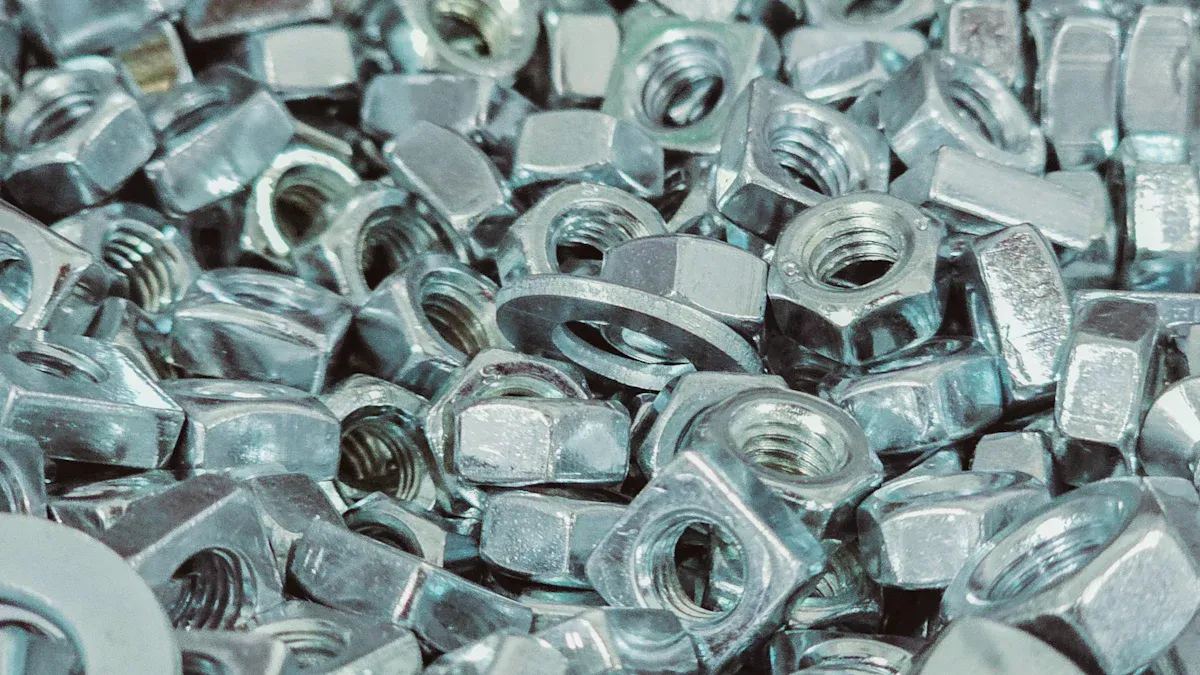
A carriage bolt is only one part of a complete fastening system. The washers and nuts that accompany it are not mere accessories; they are essential components for a safe and durable deck. A builder must select these pieces with the same care as the bolts themselves to ensure the structural integrity of the entire deck.
Why a Washer is Not Optional
A flat washer is a mandatory component in any structural wood connection. Its simple design performs two critical functions that protect the wood and secure the joint for a long-lasting deck.
Distributing the Clamping Force Evenly
A washer’s primary job is to distribute the intense pressure from the nut over a much broader area. It acts as a small bridge between the nut and the wood surface. This load-spreading action prevents the concentrated force of the tightening nut from crushing the soft wood fibers. Without a washer, the nut would create localized stress, damaging the wood and weakening the connection on the deck.
Preventing Nut Pull-Through
By increasing the bearing surface, a washer also prevents the nut from pulling into or through the wood under load. This is especially important as a deck ages and the wood is subjected to cycles of expansion and contraction. A washer ensures the clamping force remains consistent, maintaining the joint’s integrity and preventing a catastrophic failure where the nut pulls through the joist.
Matching Hardware Materials is Crucial
A builder must never mix fastener materials. The bolt, washer, and nut must all be made of the same material to prevent a destructive chemical reaction that can compromise the safety of your deck.
Critical Safety Rule: The rule is simple: use HDG washers and nuts with HDG bolts, and use stainless steel washers and nuts with stainless steel bolts. There are no exceptions for a properly built deck.
An HDG Bolt Requires an HDG Washer and Nut
Mixing a galvanized nut with a stainless steel bolt creates a dangerous bimetallic couple. When moisture is present, it acts as an electrolyte, creating a battery-like effect. This process, known as galvanic corrosion, causes the less noble metal (the zinc coating on the galvanized nut) to corrode at an accelerated rate. The small surface area of the nut compared to the larger bolt concentrates this corrosive current, causing the nut to fail rapidly and jeopardizing the entire deck connection.
A Stainless Bolt Requires a Stainless Washer and Nut
Similarly, all components in a stainless steel assembly must be stainless steel. This uniformity eliminates the risk of galvanic corrosion. Using matching materials ensures that every part of the fastener system has the same corrosion resistance, guaranteeing a secure and reliable connection for the life of the deck. This is the only way to build a safe and low-maintenance deck.
Choosing the Right Nut for the Job
The final piece of the puzzle is the nut. While several types exist, two are most common for deck construction.
Standard Hex Nuts for Most Applications
The standard hexagonal nut is the workhorse for most deck projects. It is cost-effective, widely available, and provides excellent clamping force when tightened correctly. For the majority of connections on a deck, a standard hex nut is a perfectly suitable choice.
Nylon Lock Nuts (Nyloc) for Vibration Resistance
For superior security, a builder can use a nylon lock nut, or nyloc. This nut features a small nylon insert at its top. As the bolt threads through, the nylon grips the threads tightly, preventing the nut from loosening due to vibrations from foot traffic or wind. This feature makes them an excellent upgrade for any critical structural connection on a deck.
Common Mistakes to Avoid When Bolting Deck Posts
A builder can select the perfect hardware but still compromise a deck’s safety through simple installation errors. Avoiding common mistakes when bolting deck posts is essential for creating a structure that is secure and built to last. These errors can undermine the strength of the entire deck.
Using Bolts That Are Too Short
Using a carriage bolt that is too short is one of the most dangerous mistakes in deck construction. A short bolt prevents the nut from fully engaging with the threads, creating a weak connection that is destined to fail.
Insufficient Thread Engagement with the Nut
A secure connection depends on the nut gripping an adequate number of threads. If the bolt is too short, the nut may only catch one or two threads, or it may not even pass completely through the nut. This minimal engagement cannot provide the necessary clamping force to hold the deck framing together. Industry standards vary, but all emphasize the need for sufficient engagement.
- The Industrial Fasteners Institute (IFI) recommends a minimum of two full threads extending past the nut.
- The Research Council for Structural Connections (RCSC) states the bolt end should be at least flush with the outer face of the nut.
- ASME standards consider engagement acceptable if the lack of complete engagement is no more than one thread.
A Leading Cause of Connection Failure
Insufficient thread engagement is a primary cause of connection failure on a deck. The limited contact area cannot withstand the shear and tension forces a deck experiences. Over time, vibrations and loads can easily strip the few engaged threads, causing the nut to loosen or fall off completely. This can lead to a catastrophic collapse of the deck, making it a critical safety issue for the posts and the entire deck structure.
Using Bolts That Are Too Long
While less dangerous than short bolts, fasteners that are too long create other problems for a deck. They introduce safety hazards and detract from the professional appearance of the finished deck.
Creating Snagging Hazards
Excessive thread extending past the nut creates a significant snagging hazard. The sharp threads can easily catch clothing or scrape skin, posing a risk to anyone using the deck. This is especially problematic on visible posts or near high-traffic areas like stairs. A properly sized bolt results in a safer deck.
Unprofessional Aesthetic Issues
Long, protruding bolts give a deck an unfinished and unprofessional look. They disrupt the clean lines of the structure and suggest a lack of attention to detail. A quality deck build requires precise measurements and hardware selection, resulting in a clean and polished final appearance.
Forgetting the Washer
A builder must never install a carriage bolt without a washer under the nut. This small, inexpensive component plays a vital role in protecting the wood and ensuring the long-term strength of the connection for the deck posts.
Crushing and Damaging Wood Fibers
Without a washer, the concentrated force of the tightening nut digs directly into the soft wood. This action crushes and deforms the wood fibers, creating a weak point in the material.
This damage is irreversible and significantly reduces the wood’s ability to resist structural loads.
Compromising the Connection’s Strength
When a builder omits the washer, the connection’s integrity is immediately compromised. The consequences are severe:
- The nut can pull into or even through the wood over time, especially under load.
- The uneven pressure distribution creates stress points that can lead to cracks in the joist.
- The connection will loosen as the crushed wood fibers compress further, weakening the entire deck.
Using the Wrong Material
A builder’s choice of fastener material directly impacts the safety and lifespan of a deck. Selecting the wrong material is a critical error. It guarantees premature failure and undermines the entire deck project from the very beginning. This mistake compromises the structural integrity of the deck.
Inviting Rapid Corrosion and Structural Failure
Using an incorrect fastener, such as an electro-galvanized or uncoated steel bolt, initiates a destructive chemical process. Modern pressure-treated wood contains high levels of copper. When an unprotected steel bolt contacts this wood in the presence of moisture, it creates a galvanic cell. This reaction aggressively corrodes the steel bolt, not the copper in the wood. The bolt essentially sacrifices itself, rapidly losing its mass and strength.
This corrosion process has severe structural consequences for the deck.
- The bolt’s diameter shrinks, drastically reducing its shear strength.
- The connection between the posts and the deck framing loosens.
- Eventually, the weakened bolt can bend or snap under normal loads.
A single failed connection can trigger a chain reaction, leading to the catastrophic collapse of the deck. The safety of the entire deck depends on preventing this corrosion. A builder protects the posts and the whole structure by using only hot-dip galvanized or stainless steel hardware.
Warning: The failure of an improperly specified bolt is not a matter of if, but when. This is a non-negotiable safety rule for any deck.
Unsightly Rust Stains on Your Wood
Beyond the severe structural risks, using the wrong material creates an immediate aesthetic problem. Uncoated or poorly plated bolts will begin to rust almost instantly when exposed to the elements. This rust then leaches out and runs down the wood, creating long, ugly orange and black streaks. These stains are very difficult to remove and permanently mar the appearance of a new deck.
These rust stains are a clear visual indicator of a much deeper problem. They signal that the fastener is actively corroding and that the connection’s strength is deteriorating. A professional-looking deck is free of such blemishes. The clean finish of a properly built deck reflects the quality of the materials used, including the hardware securing the posts. A beautiful deck is also a safe deck.
Tools and Supplies for Installing Carriage Bolts
A builder’s success depends on having the right tools for the job. Proper installation of carriage bolts requires a specific set of tools to ensure precision, efficiency, and safety. Assembling this toolkit before starting work guarantees a smooth workflow and a professionally constructed deck. The right equipment helps create a strong and durable deck.
Essential Power Tools
Power tools provide the necessary force and speed for working with the large lumber used in a deck frame. A builder needs reliable tools to handle the demands of the project.
Corded or Cordless Drill with Sufficient Power
A powerful drill is non-negotiable. A builder must bore clean, 1/2-inch holes through several inches of dense, treated wood. A standard drill may lack the torque required, leading to slow work and ragged holes. A high-torque drill, whether corded for consistent power or a modern high-voltage cordless model, ensures a builder can create precise holes for a secure deck.
Impact Wrench or Ratchet with Socket Set
An impact wrench or a powered ratchet dramatically speeds up the process of tightening nuts. These tools make quick work of drawing the bolt’s square neck into the wood and seating the hardware.
Professional Tip: A builder should use the power tool to snug the nut, then switch to a manual socket wrench for the final tightening. This practice prevents over-tightening and crushing the wood fibers, which is critical for the long-term health of the deck.
Measuring and Marking Tools
Accuracy is paramount in deck construction. Every measurement and mark contributes to the final strength and appearance of the structure. These simple tools are essential for a well-built deck.
Tape Measure
A reliable tape measure is fundamental for any construction project. A builder uses it to accurately mark the locations for each bolt. Correct placement is essential for complying with spacing codes and ensuring the structural integrity of the deck.
Carpenter’s Square or Combination Square
A carpenter’s square ensures that all layout lines are perfectly perpendicular to the edge of the lumber. This simple check guarantees that the builder drills a straight hole. A straight hole is vital for the bolt to apply even clamping pressure, a key factor in a safe deck.
Drilling Accessories for Precision
The quality of the drilled hole directly impacts the strength of the bolted connection. Specialized accessories help a builder achieve perfect results every time.
1/2-Inch Auger or Spade Bit
A builder needs a 1/2-inch bit to match the 1/2-inch bolts. Two common options exist:
- Spade Bit: A cost-effective choice for drilling holes.
- Auger Bit: The preferred option for a professional deck. Its screw tip pulls the bit through the wood, and its deep flutes clear chips efficiently, resulting in a cleaner hole with less effort.
Portable Drill Guide for Perfectly Straight Holes
A portable drill guide is an invaluable accessory for ensuring every hole is perfectly perpendicular to the wood surface. This jig attaches to the drill and holds it at a precise 90-degree angle during operation. Using a drill guide eliminates guesswork and prevents angled holes, which can compromise the strength of a connection. This tool is a secret to building a truly professional-grade deck.
A safe deck depends on strong connections for the posts. A builder ensures a durable deck by following key principles.
- Use 1/2-inch bolts for all structural deck framing connections.
- Calculate bolt length for the specific posts and deck framing.
- Use only HDG or stainless steel hardware for the entire deck.
- Install two bolts per post with washers for the deck framing.
Getting these details right ensures a builder creates a secure deck. A well-built deck is a safe deck.
FAQ
Can a builder reuse old carriage bolts?
A builder should never reuse old structural bolts. The bolts may have unseen corrosion or metal fatigue from previous stress. Using new, properly rated hardware is the only way to guarantee the safety and integrity of a new deck structure.
Why must a builder use two bolts per post?
Using two bolts per post prevents the post from twisting or rotating. This creates a rigid connection that can withstand lateral forces from wind and use. A single bolt acts as a pivot point, which is unsafe for a structural post on a deck.
What if a bolt is slightly too long?
A bolt that is too long creates a snagging hazard. A builder can cut the excess length with a reciprocating saw or angle grinder. They should leave at least two full threads showing past the nut for a secure connection and a professional finish.
Can a builder use lag screws instead of carriage bolts?
While some codes permit specific lag screw installations, through-bolting with carriage bolts is superior. Bolts provide greater shear strength and clamping force. A builder should always prefer carriage bolts for critical post-to-joist connections to ensure maximum safety for the deck.
What is the most important rule for bolt materials?
A builder must match all hardware components. This is the most critical rule.
- An HDG bolt requires an HDG washer and nut.
- A stainless steel bolt requires a stainless washer and nut.
Mixing materials causes galvanic corrosion, which will rapidly destroy the connection and compromise the deck’s safety.
How often should a builder check the deck bolts?
A builder should advise the homeowner to inspect and re-tighten all bolts after the first year. Wood shrinks as it dries, which can loosen connections. An annual checkup thereafter ensures the deck remains safe and secure for its entire service life.