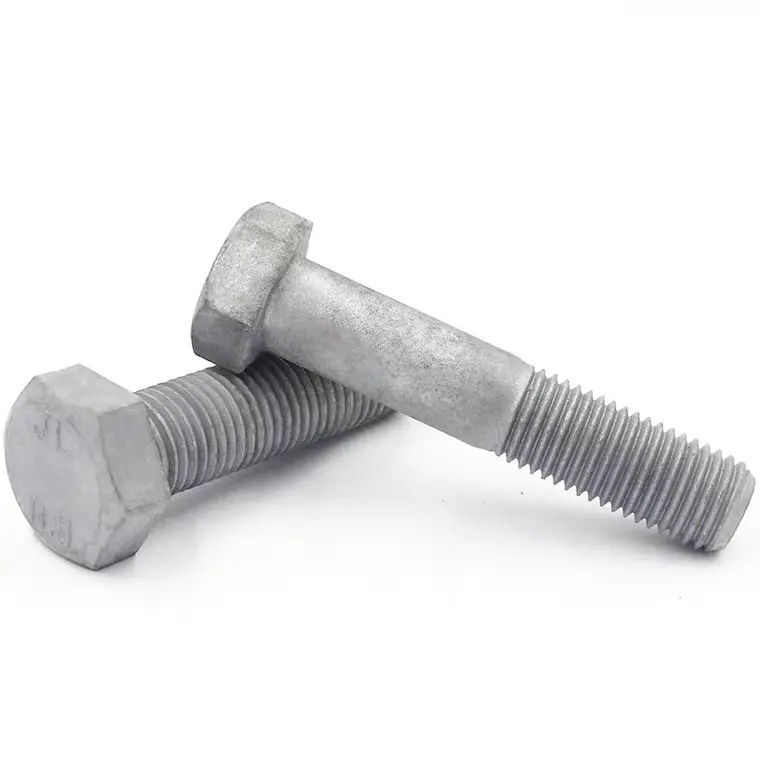
vis hexagonales galvanisées à chaud

vis hexagonales galvanisées à chaud

The Duojia Hot-Dip Galvanized (HDG) Hex Bolt is a robust, heavy-duty fastener specifically engineered for superior, long-term corrosion resistance in harsh and demanding environments. Manufactured from high-strength carbon steel, this product is available in two common standards: DIN 933 (filetage complet) et DIN 931 (filetage partiel). The hot-dip galvanizing process provides a thick, metallurgically bonded zinc coating, making these bolts the premier choice for outdoor construction, infrastructure projects, marine applications, and any setting where rust prevention is a primary concern.

Clarifications cruciales sur les spécifications des produits

The product page contains several generic or conflicting data points. The following clarifications provide a precise and accurate understanding of this product line:

  • DIN 933 contre DIN 931 : The product title correctly indicates that both standards are available. This is a key feature, as they serve different purposes.
    • DIN 933 : A entièrement fileté boulon hexagonal.
    • DIN 931 : A partiellement fileté hex bolt with a plain, unthreaded shank under the head.
  • Finish Clarification: The page lists the surface treatment as “Hot-Dip Galvanized” and the finish as “Zinc Plated.” The correct and specific term is Galvanisé à chaud (HDG). This is a fundamentally different and far more protective process than standard zinc plating (electroplating), resulting in a much thicker coating suitable for severe environments.
  • Material Inconsistency: The material is listed as “Stainless Steel/Carbon Steel.” Hot-dip galvanizing is a process applied to Acier au carbone. Stainless steel is inherently corrosion-resistant and is not galvanized. Therefore, this product is made from Carbon Steel.
  • Incohérence des notes : The grade list includes both carbon steel property classes (4.8, 8.8, 10.9, 12.9) and stainless steel grades (A2-70, etc.). Only the carbon steel grades are applicable. Grade 8.8 is the most common high-strength grade for HDG bolts. Higher strength grades (10.9, 12.9) require special processing to avoid hydrogen embrittlement and should be specified with care.
  • Nut and Washer Compatibility: A critical detail for all HDG bolts is that they require specialized HDG nuts and washers. Due to the thick zinc coating, the matching nuts must be tapped oversize after galvanizing to ensure they can be threaded onto the bolt. Standard nuts will not fit.

Paramètres des produits (corrigés et clarifiés)

Paramètre PosteDescription des spécifications
Nom du produitBoulon hexagonal
NormesDIN 933 (filetage complet) / DIN 931 (filetage partiel)
Nom de la marqueDuojia
Lieu d'origineHebei, Chine
MatériauAcier au carbone
Grade (Strength)4.8, 8.8 (Common), 10.9 (Available with special processing)
Traitement de surfaceGalvanisé à chaud (HDG)
Gamme de taillesM6 to M24
Système de mesureMétrique
ApplicationHeavy Industry, Outdoor Construction, Marine, Infrastructure
CertificationsISO9001, ISO14001, ISO45001, SGS
Options d'emballagePetit paquet+carton+palette ; sac/boîte avec palette

Understanding the Standards: DIN 933 vs. DIN 931

Choosing between these two standards depends on the application:

  • DIN 933 (Full Thread):
    • The bolt is threaded along its entire shank.
    • Best for: Applications where the bolt is threaded into a tapped hole or when clamping force needs to be distributed over the full length with a nut. It offers maximum adjustment flexibility.
  • DIN 931 (Partial Thread):
    • The bolt has an unthreaded portion of the shank (the “grip length”) under the head.
    • Best for: Shear load applications. The solid, unthreaded shank provides superior resistance to shearing forces compared to the weaker threaded section. It is ideal for aligning and fastening structural plates.

Hot-Dip Galvanizing (HDG) Explained

This process involves immersing the carbon steel bolt in a bath of molten zinc. This creates a thick, durable coating that offers two forms of protection:

  1. Barrier Protection: The thick zinc layer physically shields the steel from the environment.
  2. Sacrificial Protection: If the coating is scratched, the zinc corrodes first (acting as a “sacrificial anode”), protecting the exposed steel from rusting.

Caractéristiques principales

  • Résistance ultime à la corrosion : The HDG finish is the industry standard for long-term rust prevention in outdoor and corrosive settings.
  • Heavy-Duty and Abrasion-Resistant: The metallurgically bonded coating is tough and can withstand handling and installation in demanding construction environments.
  • Application Flexibility: Available in both fully threaded (DIN 933) and partially threaded (DIN 931) versions to suit various fastening needs.
  • Options de haute résistance : Commonly available in Grade 8.8 for structural applications requiring significant load-bearing capacity.

Applications appropriées

  • Structural Steel Erection: Connecting beams, columns, and trusses in buildings, bridges, and stadiums.
  • Infrastructure Projects: Assembling highway guardrails, telecommunication towers, and utility poles.
  • Coastal and Marine Construction: Building docks, piers, and fastening equipment exposed to salt water and spray.
  • Outdoor Machinery and Agricultural Equipment: Assembling heavy equipment that will be used and stored outdoors.

Lignes directrices pour l'installation

  1. Use Matching HDG Components: It is essential to use hot-dip galvanized nuts and washers with HDG bolts. The nuts are tapped oversize to fit the thick zinc coating on the bolt threads. Standard nuts will seize and will not work.
  2. Align the holes of the components being fastened.
  3. Insert the HDG bolt. For DIN 931 bolts, ensure the unthreaded shank is located at the shear plane between the components.
  4. Place the HDG washer and thread the HDG nut onto the bolt.
  5. Use a correctly sized wrench or socket to tighten the nut to the torque specified by the project engineer. Do not over-tighten, as this can damage the threads.