Choosing between flange nuts and standard nuts influences the performance and reliability of nuts and bolts in any project. A flange nut offers built-in washer function, improved load distribution, and resistance to vibration, but it comes with a higher price and bulkier shape. Standard nuts provide versatility and affordability, though they often require washers and lack vibration protection. Selecting the right option matters for engineers, technicians, and anyone working with custom fasteners or partnering with a custom fasteners manufacturer.
- Flange nuts deliver unique advantages for demanding applications.
- Standard nuts remain a practical choice in many situations.
Flange Nuts vs. Standard Nuts: Definitions and Key Differences
What Are Flange Nuts?
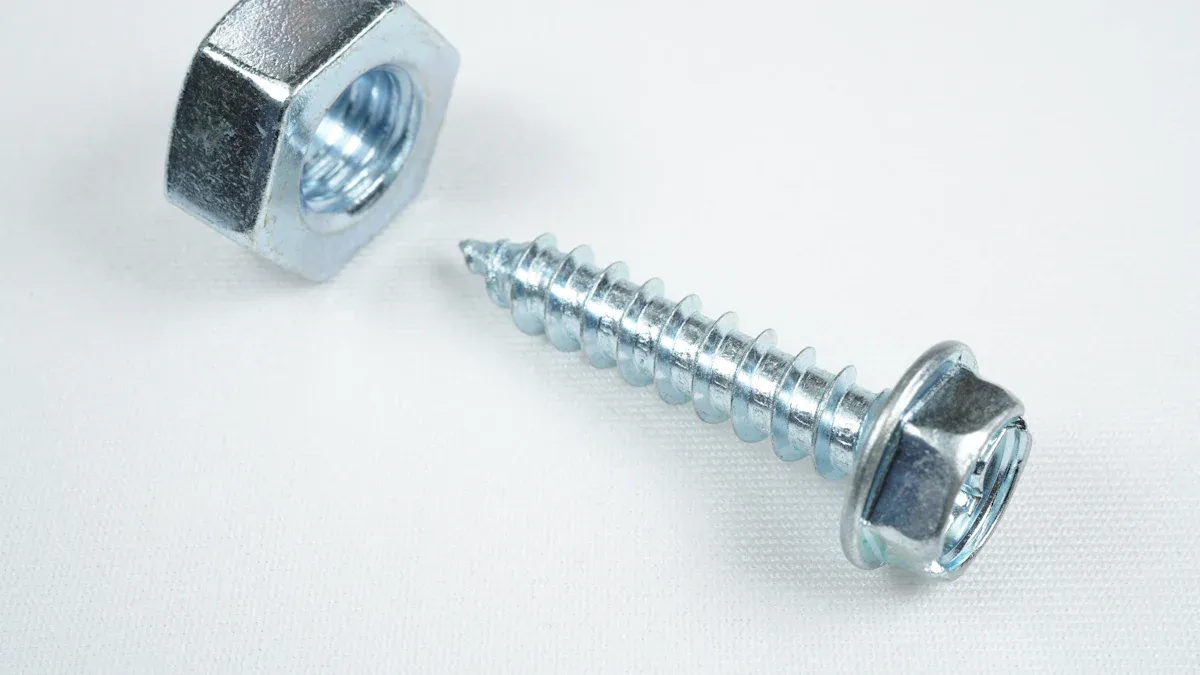
A flange nut features a wide, flat base that extends beyond the diameter of the nut body. This built-in flange acts like a washer, spreading the load over a larger area and reducing the risk of damage to the connected surfaces. Engineers often select flange nuts for applications where vibration or shifting could loosen a fastener. The flange design also helps maintain consistent clamping force, which is critical in high-stress environments.
Industry standards provide clear definitions for these fasteners. The following table outlines several relevant standards:
| Standard | Description |
|---|---|
| ASTM A193 | Covers alloy and stainless steel bolting material for pressure vessels, valves, flanges, and fittings for high temperature or high pressure service. |
| ASTM A194 | Covers a variety of carbon, alloy, and martensitic and austenitic stainless steel nuts intended for high-pressure or high-temperature service. |
| ASME B18.2.2 | Defines hex nuts dimensional data. |
Manufacturers produce flange nuts in various materials and finishes to suit different environments. Many automotive and machinery assemblies rely on these nuts for their reliability and ease of installation.
What Is a Serrated Flange Nut?
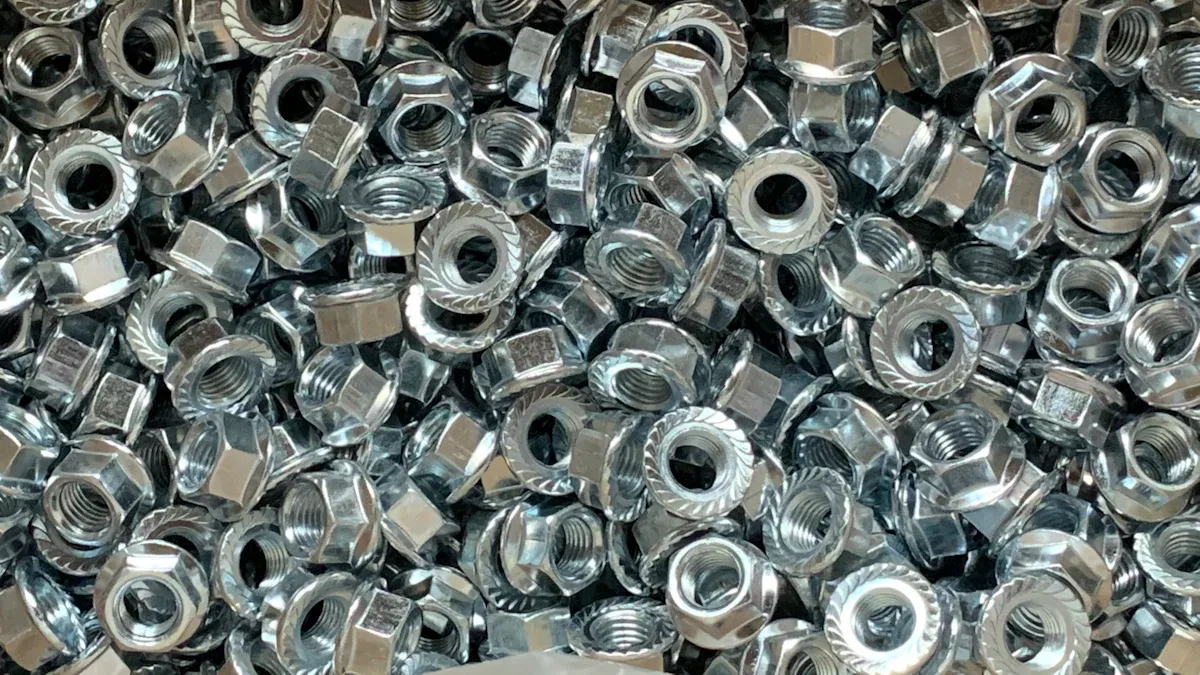
A serrated flange nut includes angled grooves, or serrations, on the underside of the flange. These serrations bite into the mating surface as the nut tightens. This design offers several advantages:
- The serrated bearing surface scores the mating surface, creating a locking fit.
- The design enhances resistance to vibration, which prevents loosening.
- Pressure distributes more evenly across the joint, reducing the chances of the nut loosening compared to non-serrated flange nuts.
- Serrated flange nuts have grooves that grip the surface strongly, maintaining tightness.
- These grooves also help distribute pressure properly, preventing damage and loosening due to vibrations.
Technicians often choose a serrated flange nut for high-vibration environments, such as automotive suspensions or industrial machinery. The locking action reduces the need for additional locking washers or adhesives.
Tip: Serrated flange nuts should not be used on surfaces that require protection from scoring or where rotation of the nut could damage the material.
What Are Standard Nuts?
A standard nut refers to a basic fastener with internal threads that mate with a bolt or screw. The most common type is the standard hex nut, which has six sides for easy wrenching. Standard nuts come in many forms, each designed for specific applications. The table below highlights several types used in construction and automotive industries:
| Type of Nut | Description | Common Applications |
|---|---|---|
| Hex Nuts | Six-sided nuts used with bolts and screws, available in various materials. | Construction, machinery, automotive |
| Lock Nuts | Prevent loosening due to vibration, featuring a nylon insert for grip. | Automotive, aerospace |
| Flange Nuts | Wide base for better grip and pressure distribution. | Automotive, machinery |
Standard nuts offer versatility and compatibility with a wide range of bolts and washers. They remain a staple in general-purpose fastening, especially when space is limited or when custom washers are required.
Key Differences Between Flange Nuts and Standard Nuts
Flange nuts and standard nuts serve similar purposes, but their designs and features create distinct differences that impact performance and suitability for specific applications. Engineers and technicians must understand these differences to select the right fastener for each project.
Design and Structure
- Flange nuts feature an integrated flange at the base, which acts as a washer and distributes pressure across a wider area. This design reduces the risk of surface damage and provides a more stable connection.
- Standard nuts lack this flange, so they often require a separate washer to achieve similar load distribution and surface protection.
Installation and Efficiency
- Flange nuts allow faster installation because the built-in flange eliminates the need for a separate washer. Workers can save time during assembly, especially in mass production environments.
- Standard nuts require additional components, such as washers, which can slow down the installation process and increase the number of parts needed.
Vibration Resistance
- Flange nuts, especially serrated flange nuts, offer enhanced resistance to vibration. The serrated flange nut uses angled grooves on the flange to grip the mating surface, preventing loosening caused by movement or vibration.
- Standard nuts do not provide inherent vibration resistance. Technicians often add lock washers or adhesives to improve security in high-vibration settings.
Compatibility and Surface Requirements
- Flange nuts work best on hard, flat surfaces. The flange distributes force evenly, but it may not perform well on soft or uneven materials. Serrated flange nuts can damage delicate surfaces due to their aggressive grip.
- Standard nuts offer greater compatibility with a variety of surfaces and materials. They suit projects where space is limited or where custom washers are required.
Cost and Sourcing
- Flange nuts typically cost more than standard nuts because of their specialized design. However, they may offer long-term savings by reducing the need for extra washers and minimizing maintenance.
- Standard nuts remain affordable and easy to source. Their simple design makes them a staple in general-purpose fastening.
Note: Serrated flange nuts provide superior vibration resistance, but users must avoid them on surfaces that require protection from scoring.
Comparison Table
| Feature | Flange Nuts | Standard Nuts |
|---|---|---|
| Built-in Washer | Yes | No |
| Load Distribution | Improved | Requires washer |
| Vibration Resistance | High (serrated flange nut) | Low |
| Installation Speed | Faster | Slower |
| Cost | Higher | Lower |
| Surface Compatibility | Limited (flange, serrated flange nuts) | Broad |
Understanding these key differences helps engineers and technicians make informed decisions. The choice between a flange nut and a standard nut depends on the demands of the application, the materials involved, and the need for vibration resistance.
Pros and Cons of Flange Nuts
Advantages of Flange Nuts
Built-in Washer Function
One of the primary benefits of flange nuts lies in their built-in washer function. Unlike standard nuts that require separate washers, flange nuts feature an integrated flange at the base. This flange acts as a washer, spreading the load over a larger surface area. As a result, flange nuts improve load distribution, reducing the risk of damage to the material being fastened. This design enhances stability, especially under vibration, by maintaining consistent clamping force. The benefits of this feature become evident in applications where surface integrity and joint security are critical.
Improved Load Distribution
The flange’s broad surface ensures that pressure distributes evenly across the contact area. This feature minimizes localized stress, which can cause material deformation or damage. The flange’s ability to spread load effectively makes flange nuts ideal for securing components in high-stress environments. The benefits extend to reducing the likelihood of fastener loosening over time, especially when combined with serrated flange nuts that grip the surface more firmly. This load distribution capability is a key advantage in automotive, machinery, and aerospace applications, where maintaining tight connections is essential.
Enhanced Vibration Resistance
Flange nuts, particularly serrated flange nuts, offer superior resistance to vibration-induced loosening. The serrations on the flange bite into the mating surface, creating a locking effect that prevents the nut from turning or coming loose. This feature is especially valuable in high-vibration settings such as automotive suspensions or industrial machinery. The benefits of vibration resistance reduce maintenance needs and improve safety by ensuring joints remain secure during operation.
Faster Installation
The integrated flange simplifies assembly processes. Workers do not need to search for or install separate washers, saving time during installation. This efficiency is especially advantageous in mass production or assembly line environments, where speed and consistency matter. The benefits include reduced labor costs and streamlined workflows, making flange nuts a practical choice for large-scale manufacturing.
Long-Term Cost Savings
Although flange nuts typically cost more upfront, their benefits can lead to long-term savings. The built-in washer reduces the need for additional components, decreasing inventory and assembly time. Moreover, their superior load distribution and vibration resistance lower maintenance and re-tightening requirements over the lifespan of the assembly. These factors contribute to overall cost efficiency, especially in applications demanding high reliability.
Disadvantages of Flange Nuts
Higher Initial Cost
One notable drawback of flange nuts is their higher purchase price compared to standard nuts. The manufacturing process involves additional features, such as the integrated flange and serrations, which increase production costs. For projects with tight budgets or where large quantities are needed, this higher initial expense can be a limiting factor.
Bulkier Design
The wide flange adds to the overall size of the nut, making flange nuts bulkier than standard counterparts. This design can pose challenges in space-constrained environments. For example, in applications like medical devices or furniture assembly, where space is limited, the bulkier flange may hinder proper fit or complicate installation. The evidence shows that flange nuts are often used in automotive and aerospace sectors, where load distribution outweighs space considerations.
Limited Compatibility with Some Surfaces
While the flange provides benefits in many contexts, it may not perform well on soft or uneven surfaces. The serrated flange, in particular, can damage delicate materials or surfaces that require protection from scoring. In such cases, the aggressive grip of the serrations might cause surface deformation or scratches, reducing the component’s integrity or aesthetic appeal.
Potential for Surface Damage
The serrations on serrated flange nuts are designed to grip firmly, but this feature can also lead to surface damage if used improperly. When tightened onto soft materials or sensitive surfaces, the serrations may gouge or scratch, compromising the surface finish or functionality. Therefore, users must consider surface compatibility before choosing flange nuts with serrations.
Pros and Cons of Standard Nuts
Advantages of Standard Nuts
Versatility and Compatibility
Standard nuts offer unmatched versatility in fastening applications. Their simple hexagonal design allows them to pair with a wide range of bolts and washers. Stainless steel hex nuts, for example, provide strength, durability, and corrosion resistance. These qualities make them suitable for construction, marine environments, and automotive assembly. Industries rely on standard nuts to create secure connections that withstand demanding conditions.
- Used across multiple industries, including construction, automotive, and machinery.
- The hex shape enables efficient tightening from various angles.
- Reusable without significant performance loss.
Standard nuts adapt to different materials and surface types. Unlike flange nuts, they do not require a specific surface profile. This flexibility supports engineers and technicians who need reliable fasteners for diverse projects.
Lower Cost
Cost efficiency remains a primary advantage of standard nuts. Manufacturers produce these nuts in large quantities, which keeps prices low. Their straightforward design reduces production complexity. This affordability makes standard nuts ideal for bulk usage in large-scale projects or maintenance operations.
Note: Standard nuts help organizations manage budgets without sacrificing reliability.
Compact Size
Standard nuts feature a compact profile. The absence of a flange allows them to fit into tight spaces where larger fasteners would not work. This characteristic proves valuable in electronics, furniture assembly, and other applications with limited clearance. The small size also simplifies storage and handling on job sites.
Easy to Source
Standard nuts are widely available in global markets. The nuts market includes established processors and emerging brands, which compete based on sourcing capabilities and innovation. In regions like Asia Pacific, nut-based innovation continues to grow, while Europe focuses on mature, sustainable sourcing. Leading companies expand their supply chains to stabilize availability, even during volatile periods. This widespread sourcing ensures that technicians can obtain standard nuts quickly, regardless of location.
Disadvantages of Standard Nuts
Requires Separate Washer for Load Distribution
Standard nuts do not include an integrated flange. As a result, they often require a separate washer to distribute load and protect surfaces. The need for additional components can slow down installation and increase the risk of missing parts during assembly. In critical applications, the effectiveness of lock washers may diminish if the joint loosens. Historical experiments, such as those by Gerhard Junker, show that split washers do not always prevent loosening under vibration. This limitation can compromise joint reliability.
Less Effective Against Vibration
Standard nuts lack the vibration resistance found in flange nuts, especially serrated flange types. Without a built-in locking mechanism, standard nuts may loosen in high-vibration environments. Technicians often add lock washers or adhesives to improve security, but these solutions do not always match the performance of a serrated flange. Applications that experience frequent movement or shock loads may require more advanced fastening solutions.
Slower Installation in Some Cases
The installation process for standard nuts can take longer than for flange nuts. Workers must select and position separate washers before tightening the nut. This extra step increases assembly time, especially in mass production or repetitive tasks. The need for multiple components also raises the chance of errors or delays during installation.
Tip: For projects that prioritize speed and efficiency, consider whether the benefits of a built-in flange outweigh the simplicity of standard nuts.
Typical Applications and Best Use Cases for Flange Nuts and Standard Nuts
When to Use Flange Nuts
Automotive and Machinery Applications
Engineers often select flange nuts for automotive and machinery assemblies. These nuts secure components in engines and suspension systems, where vibration and shifting forces are common. The flange increases the contact area, which helps prevent damage to softer materials and maintains joint integrity. Automotive manufacturers rely on this fastener to ensure safety and durability in vehicles exposed to constant movement.
In machinery, flange nuts provide reliable connections for moving parts. The built-in flange distributes pressure evenly, reducing the risk of surface deformation. This feature proves essential in heavy equipment and industrial machines that operate under dynamic loads.
High-Vibration Environments
Flange nuts excel in environments with frequent vibration. The design of the flange, especially in serrated versions, resists loosening by gripping the mating surface. Industries such as construction, automotive, and aerospace use these nuts to secure critical components. For example, suspension systems and engine mounts benefit from the locking fastener properties of flange nuts, which help maintain tightness even under constant motion.
Aerospace and marine sectors also favor flange nuts for their durability and performance. The following table highlights industries where flange nuts outperform standard nuts:
| Industry | Application Description |
|---|---|
| Aerospace | Used in motor mounting frameworks, providing weight savings and improved fuel efficiency. |
| Marine | Reduces maintenance costs and downtime for seawater-exposed equipment, enhancing operational reliability. |
| Medical Devices | Essential for spinal fusion and joint replacement systems due to biocompatibility and strength for load-bearing. |
Assembly Line and Mass Production
Manufacturers choose flange nuts for assembly lines and mass production settings. The integrated flange eliminates the need for separate washers, which speeds up installation and reduces the risk of missing parts. This efficiency lowers labor costs and increases consistency across large batches. Construction and electronics industries also use flange nuts to secure beams, panels, connectors, and circuit boards, ensuring stable and reliable connections.
Tip: Flange nuts offer enhanced load distribution and vibration resistance, making them ideal for mechanical and structural applications.
When to Use Standard Nuts
General Purpose Fastening
Standard nuts remain the preferred choice for general fastening tasks. Their simple design allows for use in a wide range of applications, from automotive assembly to construction hardware manufacturing. These nuts provide reliable performance in projects that do not require specialized features like built-in washers or vibration resistance.
- Automotive: Standard nuts ensure reliable assembly and safety in various vehicle components.
- Aerospace: Lightweight aluminum nuts support weight-sensitive applications, while high-strength versions maintain structural integrity.
- Construction: Heavy-duty fasteners made from standard nuts play a vital role in bridges and skyscrapers.
Space-Constrained Installations
The compact size of standard nuts makes them suitable for installations with limited space. Technicians use these nuts in electronics, furniture, and other applications where a bulky flange would hinder assembly. The smaller profile allows for easier handling and storage, especially in environments where every millimeter counts.
Projects Requiring Custom Washers
Some projects demand custom washers for specific load distribution or surface protection needs. Standard nuts provide flexibility in these situations, as they can pair with washers tailored to the application. This adaptability benefits engineers working with unique materials or surfaces that require extra care.
Note: Standard nuts offer versatility and compatibility, making them a staple in construction, automotive, and manufacturing industries.
Practical Considerations for Flange Nuts and Standard Nuts
Installation and Handling
Tools Required
Both flange nuts and standard nuts typically require basic hand tools for installation. A wrench or socket set is essential for tightening these fasteners securely. For flange nuts, the protruding rim acts as a built-in washer, which simplifies handling during installation. This design allows technicians to tighten the nut directly onto the bolt without needing additional components. Conversely, standard nuts often demand the use of separate washers to achieve similar load distribution and a tight fit. The absence of a built-in locking feature in standard nuts means that proper torque application becomes even more critical to prevent loosening over time.
Ease of Use
Flange nuts are generally easier to handle during assembly because their integrated flange reduces the number of parts involved. They are especially advantageous when working with oversized holes or in applications where quick installation is necessary. The larger surface area of the flange distributes load evenly, which enhances stability and minimizes the risk of surface damage. This feature also makes flange nuts suitable for fastening in environments where a tight fit is essential. In contrast, standard nuts require additional steps, such as selecting and installing washers, which can slow down the process and increase the chance of errors. The need for extra components makes handling slightly more complex, especially in tight spaces or when working with multiple fasteners.
Performance Factors
Load Bearing Capacity
The load bearing capacity of a fastener depends heavily on its contact surface area. Flange nuts, with their larger bearing surface, distribute stress more effectively under high loads. Evidence shows that flange fasteners can significantly improve load distribution compared to standard nuts. Tests indicate that standard nuts only reduce peak stress by about 30% at 5,000 pounds, whereas flange nuts provide a broader contact area that helps prevent localized stress concentrations. However, the contact area of flange nuts can sometimes be unpredictable, especially with serrated flange types, which may lead to higher contact stress and potential compressive yield. This variability underscores the importance of selecting the appropriate flange nut for specific load conditions.
Vibration Resistance
Vibration resistance remains a critical factor in many applications. Flange nuts, particularly serrated flange variants, incorporate a locking feature that enhances their ability to resist loosening caused by movement or vibration. The serrations bite into the mating surface, creating a tight fit that maintains joint integrity over time. This locking feature reduces the need for additional locking devices, streamlining assembly and maintenance. Standard nuts lack this inherent locking capability, making them more susceptible to loosening under dynamic conditions. Technicians often add lock washers or adhesives to compensate, but these solutions may not match the reliability of a serrated flange nut.
Compatibility and Surface Requirements
Surface Materials
The effectiveness of flange nuts depends on the surface material they are used with. Flange nuts work best on hard, flat surfaces where the serrations can grip securely without causing damage. When used on softer or uneven surfaces, serrated flange nuts may gouge or scratch the material, leading to surface damage or compromised integrity. For applications involving delicate materials, non-serrated flange nuts or standard nuts with appropriate washers are preferable. Standard nuts offer greater flexibility across various surface types because they do not rely on serrations for locking, reducing the risk of surface damage.
Thread Types
Both flange and standard nuts are available in various thread types, including coarse and fine threads. Compatibility with the bolt’s thread type is essential for ensuring a tight fit and optimal performance. When selecting a nut, it is crucial to match the thread pitch and diameter precisely. Flange nuts are often manufactured with the same thread standards as standard nuts, but their unique design may influence the choice depending on the application’s specific requirements. Proper matching ensures that the locking feature functions correctly and that the fastener maintains a tight fit under operational stresses.
Proper installation and handling of both flange nuts and standard nuts are vital for achieving optimal performance. The built-in locking feature of flange nuts simplifies assembly, especially in high-vibration environments, while their load distribution capabilities enhance joint stability. Conversely, standard nuts require additional components and careful torque application but remain versatile across many applications.
Cost Comparison
Price Differences
Flange nuts usually cost more than standard nuts at the point of purchase. Manufacturers design flange nuts with an integrated washer and, in some cases, serrations for added vibration resistance. These features require more material and a more complex manufacturing process. As a result, the unit price for flange nuts often exceeds that of standard hex nuts.
Standard nuts, by contrast, have a simple design. Their widespread use and straightforward production keep costs low. Companies can buy standard nuts in bulk at a lower price per unit. This affordability makes them a popular choice for projects with tight budgets or where large quantities are needed.
However, the initial price does not always reflect the total cost of using each type. Standard nuts often require additional components, such as washers or lock washers, to achieve the same level of performance as flange nuts. These extra parts add to the overall cost of assembly and inventory management.
Note: When comparing prices, buyers should consider not only the nut itself but also the cost of any required washers or locking devices.
Long-Term Value
The long-term value of a fastener depends on more than just the purchase price. Flange nuts offer several advantages that can reduce costs over the lifespan of an assembly. Their built-in washer function streamlines installation and reduces the number of parts needed. This efficiency can lower labor costs and minimize the risk of missing components during assembly.
A comparison of key features highlights the differences in long-term value:
| Feature | Flange Nuts | Standard Nuts |
|---|---|---|
| Installation Efficiency | Reduces steps by 30% | Requires additional gaskets |
| Anti-Loosening Performance | Better performance in vibration | Prone to loosening |
| Cost-Effectiveness | Lower overall cost of ownership | Higher maintenance costs |
Flange nuts excel in environments where vibration is a concern. Their anti-loosening performance reduces the need for frequent maintenance and re-tightening. Over time, this reliability leads to lower maintenance costs and less downtime. Standard nuts, while cheaper upfront, may loosen in high-vibration settings. This can result in more frequent inspections, repairs, and even replacement of fasteners.
Making the Right Choice: Flange Nuts or Standard Nuts?
Decision Factors
Application Needs
Engineers and technicians must evaluate the demands of each project before selecting a fastener. Some assemblies require resistance to vibration, while others prioritize weight savings or corrosion protection. Flange nuts integrate a washer into their design, which streamlines assembly and reduces the number of parts. This feature benefits high-vibration environments, such as automotive or machinery applications, where anti-rotation and joint security matter most. In contrast, standard nuts with separate washers offer flexibility for unique shapes and sizes. These options suit projects that involve odd-shaped components or require custom load distribution.
Budget Constraints
Project budgets often influence the choice between fasteners. Flange nuts generally cost more than standard nuts and washers. Their specialized design and manufacturing process increase the initial investment. However, they can reduce labor costs by simplifying installation and minimizing the risk of missing parts. Standard nuts remain the preferred option for cost-sensitive projects, especially when purchased in bulk. The lower price per unit makes them suitable for large-scale construction or maintenance tasks. Teams must weigh the upfront cost against potential long-term savings from reduced maintenance and faster assembly.
Installation Environment
The installation environment plays a critical role in fastener selection. Flange nuts perform best on hard, flat surfaces where their flange can distribute load evenly. They also allow for full-surface coatings, which enhance corrosion resistance in harsh conditions. Standard nuts with washers adapt to a wider range of surfaces, including those with limited clearance or irregular shapes. In environments where reusability is important, standard nuts may offer an advantage, as they can often be reused if removed carefully. Teams should consider factors such as vibration, exposure to moisture, and available space when making a decision.
Summary Table: Flange Nuts vs. Standard Nuts
| Factor | Flange Nuts | Standard Nuts with Washers |
|---|---|---|
| Assembly Speed | Faster (all-in-one component) | Slower (separate components) |
| Vibration Resistance | High (integrated anti-rotation) | Low (requires additional locking devices) |
| Weight | Lower (no extra washer needed) | Higher (additional washer adds weight) |
| Corrosion Protection | Full-surface coating possible | May not cover all surfaces |
| Flexibility | Limited to specific designs | High (variety of shapes and sizes) |
| Cost | Higher initial investment | Lower upfront cost |
| Reusability | May not be reusable if damaged | Often reusable |
| Best Use Case | High-vibration, weight-sensitive, corrosive settings | Low clearance, cost-sensitive, custom applications |
Tip: Teams should match the fastener to the application’s unique requirements for optimal performance and value.
Flange nuts deliver speed, vibration resistance, and built-in load distribution, while standard nuts offer versatility and lower cost. Engineers should assess project needs, budget, and installation environment before selecting a fastener. For assemblies requiring vibration control or surface protection, flange nuts often provide the best solution. Standard nuts remain ideal for general fastening and space-limited applications. Careful selection ensures reliable performance and cost efficiency.
FAQ
What is the main advantage of using flange nuts?
Flange nuts provide a built-in washer. This feature improves load distribution and reduces installation time. Engineers prefer flange nuts in high-vibration environments.
Can flange nuts replace standard nuts in all applications?
Flange nuts do not suit every project. Their bulkier design limits use in tight spaces. Standard nuts offer greater flexibility for custom washers and unique surfaces.
Are serrated flange nuts safe for delicate materials?
Serrated flange nuts may damage soft or sensitive surfaces. Technicians should avoid using them on materials that require protection from scoring or scratches.
How does vibration resistance compare between flange and standard nuts?
Flange nuts, especially serrated types, resist vibration better than standard nuts. Standard nuts often require additional locking devices to maintain tightness.
Do flange nuts cost more than standard nuts?
Flange nuts usually cost more due to their integrated features. However, they can reduce long-term maintenance and assembly costs.
What tools are needed to install flange nuts?
A wrench or socket set works for both flange and standard nuts. Flange nuts simplify installation by eliminating the need for separate washers.
Can standard nuts be reused after removal?
Standard nuts often allow reuse if removed carefully. Flange nuts with serrations may not be reusable if they damage the surface during installation.
Which nut type suits mass production best?
Manufacturers choose flange nuts for mass production. Their built-in washer speeds up assembly and reduces the risk of missing parts.