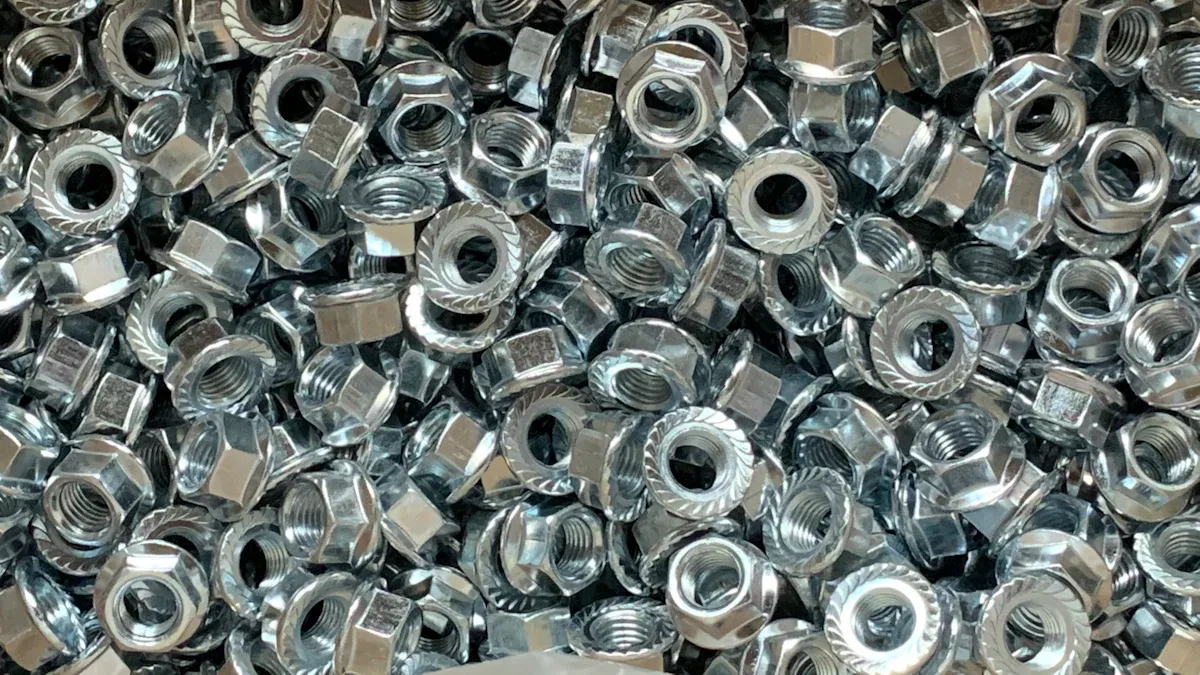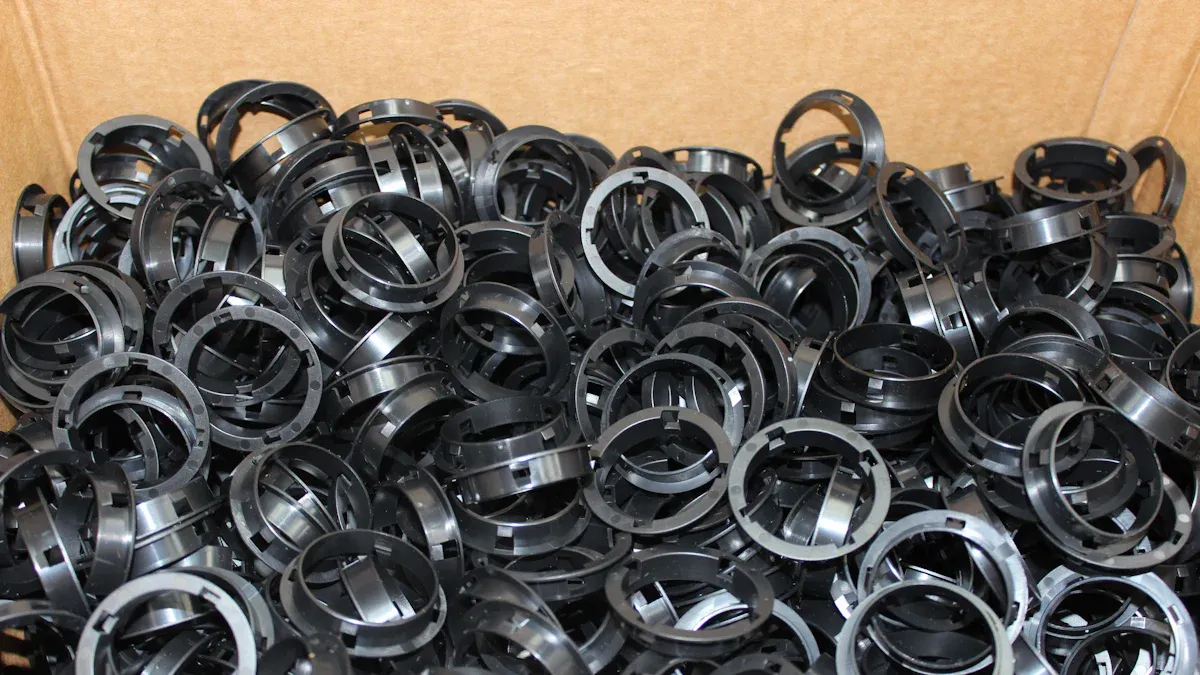
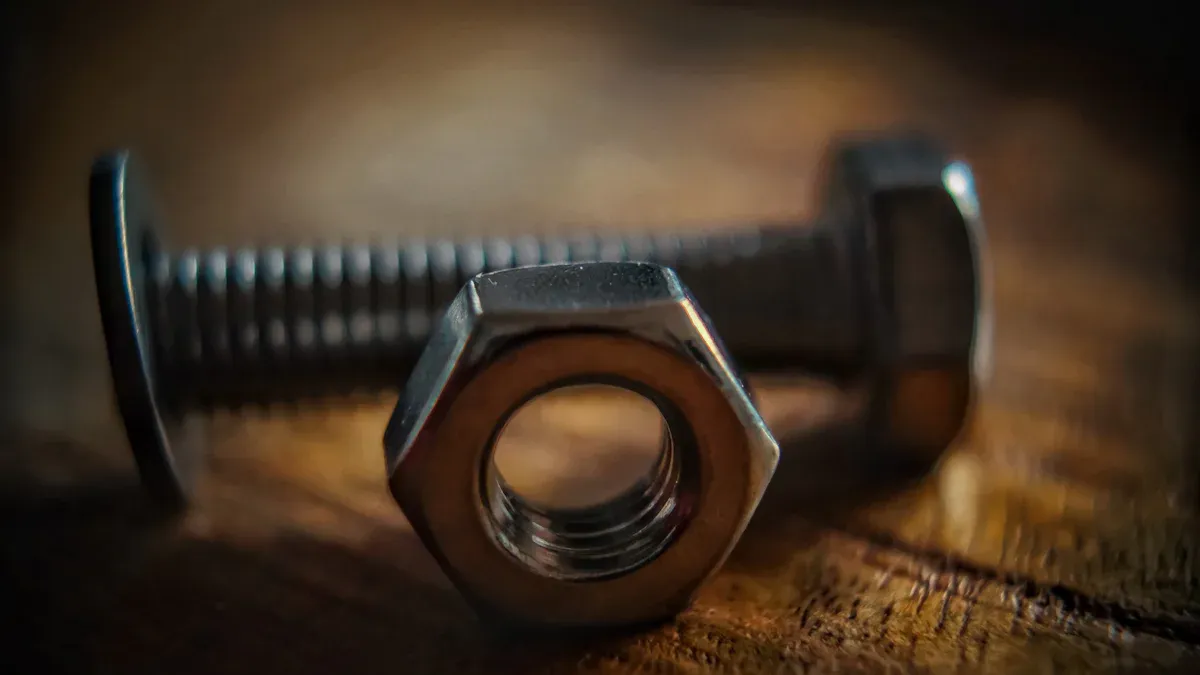
The flange nut definition describes a specialized fastener with a built-in flange that acts as a washer, providing enhanced load distribution and vibration resistance. The definition of flange nut distinguishes it from standard nuts and bolts, as the flange nut eliminates the need for a separate washer and offers faster installation. Custom fasteners manufacturers often supply flange nuts for industries such as automotive, machinery, and construction due to their reliability in fastening. The global flange nut market reached USD 907.6 million in 2022, and projections show steady growth driven by demand for custom fasteners.
| Feature | Flange Nut | Regular (Hex) Nut |
|---|---|---|
| Design | Built-in flange | Standard six-sided nut |
| Vibration Resistance | Excellent | Moderate |
| Load Distribution | Even and wide | Depends on washer |
| Installation Speed | Faster | Slightly slower |
| Cost | Slightly higher | More affordable |
| Best For | High-vibration, precision | General applications |
- Flange nuts are widely used in automotive, machinery, and construction for secure fastening and reliability.
Flange Nut Structure and Design
Basic Anatomy of a Flange Nut
Flange Shape and Size
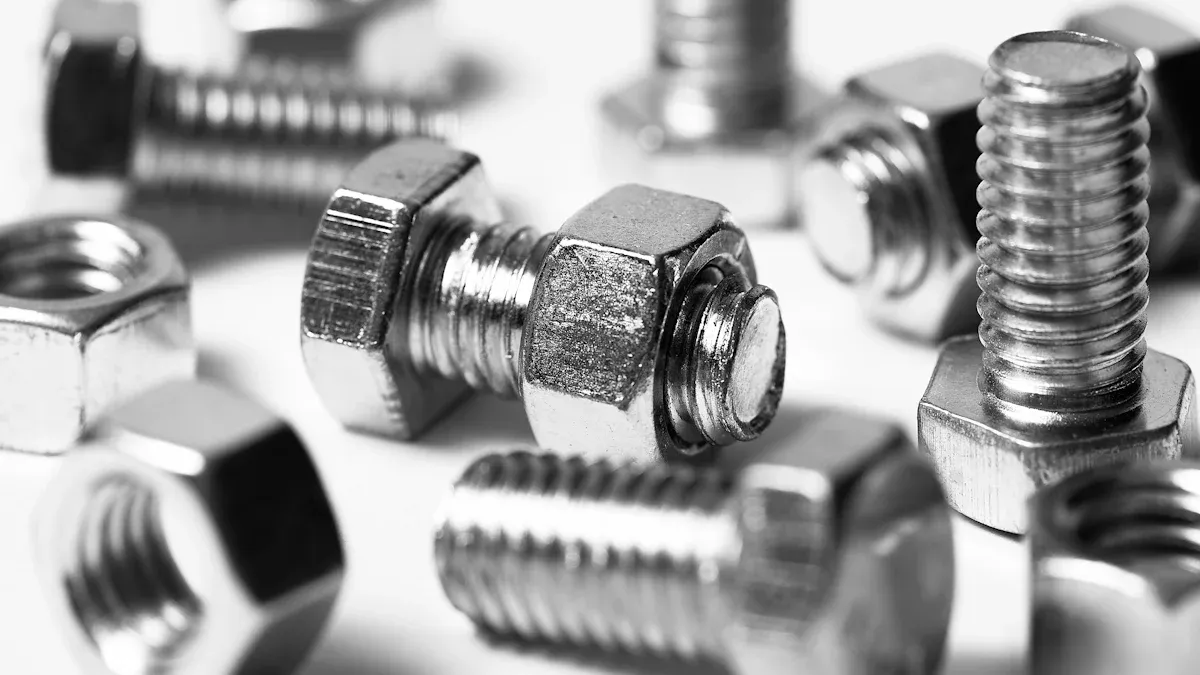
A flange nut features a hexagonal body with an integrated flange at one end. The flange extends beyond the nut’s base, creating a larger bearing surface. This design increases the contact area with the workpiece, which helps distribute the load more evenly. The larger contact area reduces pressure on the material, lowering the risk of localized deformation. The flange acts as a built-in washer, improving mechanical strength and stability.
The dimensions and tolerances of flange nuts follow international standards, such as DIN 6923. These standards ensure compatibility and reliability in various applications. The table below outlines the standard dimensions and tolerances for flange nut anatomy:
| Dimension | Description | Tolerance Range |
|---|---|---|
| Nominal Diameter | Size of the bolt that the nut fits (e.g., M8 for M8 bolt) | Specified by DIN 6923 |
| Height of the Nut | Affects engagement with the bolt | Specified by DIN 6923 |
| Flange Diameter | Provides a larger bearing surface for load distribution | Specified by DIN 6923 |
| Thread Pitch | Determines how tightly the nut screws onto the bolt | Specified by DIN 6923 |
| Measurement Tools | High-precision tools like micrometers and calipers used for accuracy | Regularly calibrated |
Thread Types
Manufacturers produce flanged nuts with various thread types to suit different applications. Common thread types include coarse and fine threads. Coarse threads offer quick assembly and disassembly, making them suitable for general use. Fine threads provide greater resistance to loosening from vibration, which is essential in high-stress environments. The choice of thread type depends on the specific requirements of the application, such as load, vibration, and ease of installation.
Materials Used in Flanged Nuts
Steel Flange Nuts
Steel remains the most common material for flanged nuts. Carbon steel offers a balance of strength and affordability, making it ideal for general industrial applications. Alloy steel provides higher strength and toughness, which suits high-stress and high-temperature environments, such as automotive engines.
Stainless Steel Flange Nuts
Stainless steel flanged nuts deliver excellent corrosion resistance. The chromium content in stainless steel forms a protective oxide layer, shielding the nut from rust and chemical damage. This property makes stainless steel flange nuts suitable for marine, chemical, and outdoor environments where exposure to moisture and corrosive substances is common.
Brass and Other Materials
Brass flanged nuts provide good electrical conductivity and resist corrosion in mild environments. Their aesthetic appeal also makes them popular in decorative and electrical applications. Aluminum flanged nuts are lightweight and resist corrosion, making them suitable for aerospace and automotive industries where weight reduction is critical.
| Material | Mechanical Properties |
|---|---|
| Carbon Steel | Low cost, good mechanical properties, suitable for general industrial applications. |
| Alloy Steel | Higher strength and toughness, suitable for high strength, high temperature, and high pressure conditions. |
| Stainless Steel | Excellent corrosion resistance, ideal for chemical, food, and medical industries. |
| Brass | Good electrical conductivity, aesthetic appearance, resistant to corrosion in mild environments. |
| Aluminum | Lightweight, good corrosion resistance, high strength-to-weight ratio, suitable for aerospace applications. |
Note: The choice of material directly affects the performance and longevity of flanged nuts. Stainless steel, for example, excels in harsh environments due to its superior corrosion resistance.
Surface Finishes for Flange Nuts
Zinc Plating
Zinc plating is a common surface finish for flanged nuts. This coating provides a protective barrier against moisture and chemicals, enhancing corrosion resistance. Zinc-plated nuts are suitable for both indoor and outdoor applications, especially where exposure to humidity or mild chemicals is expected.
Black Oxide
Black oxide is another popular finish. This micro-porous coating alone offers limited corrosion resistance. However, when treated with rust-preventive oil, black oxide creates a hydrophobic barrier that prevents moisture from reaching the metal surface. This treatment significantly improves the nut’s resistance to rust, especially in environments with high humidity.
Other Coatings
Manufacturers may apply additional coatings to further enhance the durability of flanged nuts. Options include nickel plating, phosphate coatings, and specialized polymer finishes. These coatings provide extra protection against harsh chemicals, abrasion, and extreme temperatures.
- High-quality materials like stainless steel and alloy steel offer greater resistance to corrosion.
- Stainless steel flange nuts perform well in wet or outdoor environments due to their rust resistance.
- Protective coatings such as zinc plating further improve corrosion resistance in challenging conditions.
Key Features of Flange Nuts
Integrated Flange and Washer Functionality
Load Distribution
Flanged nuts stand out for their ability to distribute load more effectively than traditional nuts and washers. The integrated flange creates a wider contact surface, which spreads the force across a larger area. This design reduces the risk of material deformation and enhances joint stability. Thin flange nuts maintain a flange diameter similar to standard nuts, ensuring effective load distribution even in compact assemblies. They also offer anti-loosening performance, which is crucial for maintaining joint integrity under load.
| Feature | Flange Nut | Traditional Nut + Washer |
|---|---|---|
| Load Distribution | Better due to wider contact surface | Less effective, relies on separate washer |
| Assembly Steps | Fewer steps, integrated design | More steps, requires separate components |
| Stability Under Vibration | Enhanced stability due to increased surface contact | Less stable, may require additional locking mechanisms |
The integrated load-distributing flange provides effective load distribution across the joint, even in reduced-height designs. This feature minimizes protrusion while still offering superior performance compared to standard hex nuts.
Protection of Fastened Materials
The flange on flanged nuts acts as a built-in washer, protecting the fastened materials from damage. By increasing the bearing surface, the flange reduces localized pressure and prevents the nut from digging into softer materials. This protection is especially important when working with delicate or finished surfaces, as it helps maintain the integrity of the workpiece throughout the fastening process.
Locking Mechanisms in Flanged Nuts
Serrated Flange Nuts
Serrated flange nuts feature teeth on the underside of the flange. These serrations grip the mating surface, increasing friction and enhancing resistance to loosening under vibration. Serrated designs are ideal for high-vibration environments, such as automotive and heavy-duty industrial applications. The use characteristics of flange nuts with serrated flanges include excellent vibration resistance and improved joint security.
| Type | Vibration Resistance | Surface Protection | Finish |
|---|---|---|---|
| Serrated Flange Nuts | Excellent | Moderate | Less clean |
| Non-Serrated Flange Nuts | Less effective | High | Clean and flush finish |
- Serrated flange nuts have teeth that grip the mating surface, enhancing their ability to resist loosening under vibration.
- They are ideal for high-vibration environments, such as automotive and heavy-duty industrial applications.
Non-serrated Flange Nuts
Non-serrated flange nuts provide a smooth, flush finish and offer high surface protection. While they do not deliver the same level of vibration resistance as serrated versions, they remain suitable for applications where surface finish and protection are priorities. Non-serrated designs are often used in assemblies where aesthetics or material preservation is important.
Vibration Resistance of Flange Nuts
Flanged nuts are designed to resist loosening caused by vibration. The larger flange surface enhances grip on the material, which is essential in mechanical and automotive applications where vibrations are common. Laboratory and field tests have shown that locking mechanisms, such as those found in serrated flange nuts, maintain their grip effectively under continuous vibration. This performance makes flanged nuts a preferred choice for critical fastening tasks in environments subject to movement and shock.
| Type of Lock Nut | Description | Effectiveness in Preventing Loosening |
|---|---|---|
| Metal Lock Nuts | Made entirely of metal, suitable for high-temperature applications. | Highly durable and effective in demanding conditions. |
| Bearing Lock Nuts | Secures bearings onto shafts, preventing loosening from vibration. | Essential for maintaining alignment in industrial machinery. |
| Prevailing Torque Lock Nuts | Creates friction between nut and bolt threads to resist loosening. | Highly effective in high-vibration environments. |
| Serrated Flange Lock Nuts | Features a serrated surface to increase friction against the mating surface. | Enhances resistance to loosening under vibration. |
Tip: Selecting the right locking mechanism ensures the reliability of the fastening, especially in applications exposed to constant vibration.
Ease of Installation
Flange nuts offer a significant advantage in terms of installation efficiency. Their integrated flange design eliminates the need for a separate washer, streamlining the assembly process. Installers can position and tighten a flange nut in a single step, which reduces the number of components handled during fastening. This simplicity not only saves time but also minimizes the likelihood of assembly errors.
The following table highlights key differences in installation between flange nuts and traditional nut-and-washer combinations:
| Feature | Flange Nuts | Standard Nuts + Washers |
|---|---|---|
| Installation Time Savings | Yes, eliminates the need for washers | No, requires additional components |
| Risk of Installation Errors | Reduced due to simplified assembly | Higher due to multiple components |
| Vibration Resistance | Better grip, less loosening | Standard grip, more loosening risk |
Installers often find that using a flange nut reduces the total assembly time, especially in high-volume production environments. The reduced part count means fewer items to track and handle, which leads to a more organized workspace. Fewer steps in the assembly process also translate to lower labor costs and improved throughput.
In addition, the integrated flange ensures consistent placement and alignment during fastening. This feature proves especially valuable in automated assembly lines, where precision and repeatability are critical. The risk of misplacing or omitting a washer disappears, which further enhances reliability.
Tip: Choosing flange nuts for projects with repetitive assembly tasks can lead to measurable gains in productivity and quality.
The ease of installation provided by flange nuts makes them a preferred choice in industries where speed, accuracy, and reliability are essential. Their design supports efficient fastening while maintaining strong and secure joints.
Types of Flange Nuts
Serrated Flange Nuts
Serrated flange nuts feature a series of angled ridges or teeth on the bottom side of the flange. These serrations bite into the mating surface when tightened. This design increases friction and helps prevent the nut from loosening due to vibration or movement. Serrated flange nuts work well in automotive assemblies, heavy machinery, and equipment that experiences constant motion. They provide a secure grip, even on surfaces that are not perfectly smooth.
Tip: Serrated flange nuts should not be used with surfaces that require protection from scratches or marring. The teeth can damage painted or finished materials.
The serrated design eliminates the need for additional locking washers. Installers often choose these nuts for applications where reliability and vibration resistance are critical.
Non-serrated Flange Nuts
Non-serrated flange nuts have a smooth bearing surface on the underside of the flange. This smooth surface distributes the load evenly without damaging the connected materials. Non-serrated types are ideal for use with softer materials, such as aluminum or plastic, and in assemblies where appearance matters. These nuts provide a clean, flush finish and help protect delicate surfaces from indentation or abrasion.
Installers often select non-serrated flange nuts for electrical enclosures, decorative fixtures, and assemblies where aesthetics and surface protection are priorities. They offer reliable fastening without the risk of surface damage.
| Feature | Serrated Flange Nut | Non-serrated Flange Nut |
|---|---|---|
| Vibration Resistance | High | Moderate |
| Surface Protection | Lower | Higher |
| Application | Machinery, Auto | Electrical, Decorative |
Metric vs. Inch Flange Nuts
Flange nuts come in both metric and inch sizes to match the standards used in different regions and industries. Metric flange nuts follow international standards such as DIN or ISO, and their sizes are measured in millimeters. Inch flange nuts, also known as imperial, use measurements in fractions of an inch and follow standards like ANSI or SAE.
Choosing between metric and inch flange nuts depends on the specifications of the project and the hardware in use. Automotive manufacturers in Europe and Asia typically use metric sizes, while many North American industries still rely on inch-based fasteners.
Note: Always match the nut size and thread type to the bolt or stud for proper fit and performance.
The selection of the correct size ensures compatibility, safety, and ease of maintenance. Understanding the differences between these types helps engineers and technicians avoid assembly errors and ensures reliable connections.
Self-locking Flange Nuts
Self-locking flange nuts combine a flanged base with a built-in locking mechanism. This design prevents loosening caused by vibration or dynamic loads. Manufacturers often use these nuts in environments where safety and reliability are critical. The self-locking feature typically involves a deformed thread or a nylon insert that increases friction between the nut and the bolt. This friction holds the nut in place, even when exposed to constant movement.
The following table highlights the unique features of self-locking flange nuts and their common industries:
| Unique Feature | Description | Common Industries |
|---|---|---|
| Flanged Design | Distributes load and reduces the risk of damage to the material being fastened. | Automotive, Machinery, Construction |
| Self-Locking Feature | Prevents loosening under vibration, ensuring secure fastening. | Railway, Aerospace, Industrial Equipment |
| Corrosion Resistance | Enhances durability in harsh environments through special coatings or materials. | Marine Applications, Outdoor Structures |
| Ease of Installation | Can be installed quickly without needing additional washers. | Furniture Assembly, Electronic Devices |
Self-locking flange nuts offer several advantages. They provide secure fastening in high-vibration settings, such as railway systems and aerospace assemblies. Their corrosion resistance makes them suitable for marine and outdoor structures. Installers appreciate the ease of installation, as these nuts do not require separate washers or locking devices. The combination of these features ensures that self-locking flange nuts meet the demands of modern engineering applications.
Specialty Flange Nuts
Specialty flange nuts address unique requirements in specific industries. Manufacturers produce these nuts in a variety of materials, including steel, stainless steel, nylon, aluminum, and plastic. Each material offers distinct benefits, such as enhanced corrosion resistance or reduced weight. Specialty flange nuts often feature additional properties, such as electrical insulation or high-temperature resistance.
The table below summarizes the features and applications of specialty flange nuts:
| Feature | Description | Material | Common Applications |
|---|---|---|---|
| Flanged Design | A large, flat surface that distributes load and reduces the risk of damage. | Steel, Stainless Steel, Nylon | Automotive, Machinery, Construction |
| Self-Locking Feature | Prevents loosening under vibration, ensuring secure fastening. | Heavy-Duty Steel, Nylon | Railway, Aerospace, Industrial Equipment |
| Corrosion Resistance | Special coatings or materials enhance durability in harsh environments. | Zinc-Plated Steel, Stainless Steel | Marine Applications, Outdoor Structures |
| Ease of Installation | Can be installed quickly without additional washers. | Aluminum, Plastic | Furniture Assembly, Electronic Devices |
Specialty flange nuts serve a wide range of applications. In electrical and power systems, they secure components in control cabinets and installations. Furniture manufacturers use them to fasten metal frames and joints, simplifying assembly. The rail and aerospace industries rely on lightweight, high-strength flange nuts for non-critical assemblies. Marine environments benefit from 316 stainless-steel flange nuts, which resist corrosion from saltwater. Renewable energy sectors, such as solar and wind, use these nuts to secure elevated or moving parts.
Common uses for specialty flange nuts include:
- Electrical and power systems: Securing electrical installations and enclosure components.
- Furniture and home hardware: Fastening metal-based modular designs.
- Rail and aerospace industry: Lightweight, high-strength nuts for non-critical assemblies.
- Marine use: 316 stainless-steel nuts for docks and vessels.
- Solar and wind energies: Fastening elevated or moving parts.
Engineers select from various types of specialty flange nuts to match the demands of each project. The right choice ensures reliable performance, safety, and longevity in challenging environments.
Advantages of Using Flange Nuts
Enhanced Grip and Security
Flange nuts deliver superior grip and security in mechanical assemblies. The integrated flange increases the contact area between the nut and the workpiece. This design distributes clamping force more evenly, which helps prevent localized stress and material damage. Engineers often select flange nuts for applications that demand reliable fastening under dynamic loads. The wide bearing surface also reduces the risk of the nut embedding into softer materials. As a result, assemblies maintain their integrity even when exposed to vibration or shifting forces. Many industries, including automotive and construction, rely on flange nuts to ensure that joints remain secure throughout the product’s service life.
Reduced Need for Separate Washers
Flange nuts streamline the assembly process by eliminating the need for separate washers. Their unique design incorporates the washer function directly into the nut, which simplifies both installation and maintenance. This feature offers several practical benefits:
- Flange nuts combine the washer directly into the nut design, reducing the need for separate washers.
- They simplify assembly by minimizing manual placement and alignment issues.
- The fixed flange feature prevents rotation under heavy vibrations, enhancing joint reliability.
Installers save time because they do not need to handle multiple components during assembly. This efficiency reduces the risk of errors, such as missing or misaligned washers. Production lines benefit from faster throughput and lower labor costs. The integrated flange also ensures consistent load distribution, which improves the overall quality of the fastening.
Protection Against Loosening
Flange nuts protect against loosening through a combination of frictional and mechanical features. Their design addresses the challenges posed by vibration and dynamic loads. The following table outlines the main mechanisms that help prevent loosening in fastener assemblies:
| Mechanism Type | Description |
|---|---|
| Friction-Based Anti-Loosening | Enhances frictional resistance between thread interfaces. |
| – Spring Washers | Provide elastic compensation for preload reduction under dynamic loads. |
| – Self-Locking Nuts | Feature specialized nylon inserts or asymmetric thread structures that increase friction. |
| – Surface Treatment Solutions | Apply coatings that enhance thread engagement and resistance to rotation. |
| Mechanical Locking Anti-Loosening | Implements physical barriers to prevent rotation. |
| – Stop Washers | Engineered with tabs that create mechanical interlocks with adjacent components. |
| – Cotter Pin Systems | Utilize through-holes to secure the fastener assembly against rotation. |
| – Wire Locking Techniques | Form physical constraint networks between multiple fastener points. |
| Permanent Anti-Loosening Solutions | For maximum security without disassembly needs. |
| – Thread Adhesive Technology | Creates chemical bonds between mating threads. |
| – Welded Connections | Forms metallurgical joints that prevent rotation. |
| – Riveted Assemblies | Establishes permanent mechanical interlocking. |
Flanged nuts often use friction-based and mechanical locking features to maintain joint security. These mechanisms ensure that the nut remains tight, even when subjected to continuous movement or shock. This reliability makes flange nuts a preferred choice for critical fastening applications.
Time and Cost Savings
Flange nuts deliver significant time and cost savings across a wide range of industries. Their integrated washer design streamlines assembly and disassembly, reducing the number of components required for each fastening point. This efficiency translates directly into labor savings and lower material costs. Companies that adopt flange nuts often report faster installation times and improved workflow on production lines.
Manufacturers benefit from the simplified assembly process. Workers no longer need to handle separate washers, which reduces the risk of misplaced or dropped parts. Fewer components mean fewer inventory items to track and reorder. This reduction in complexity leads to smoother operations and less downtime during maintenance or repairs.
Many large-scale operations have documented substantial improvements after switching to flange nuts. For example:
- A major petrochemical plant in the United States saved approximately 112 hours of production time by eliminating bolt-related delays after implementing flange nuts with integrated washer functionality.
- A Canadian oil refinery achieved a 94% reduction in disassembly time on a reactor vessel. What once required several days for bolt removal became a routine task completed in a fraction of the time.
These real-world examples highlight the dramatic impact flange nuts can have on project timelines and labor costs. Faster assembly and disassembly allow teams to complete maintenance and repairs more efficiently, minimizing equipment downtime. In industries where every hour of production counts, these savings can translate into substantial financial benefits.
The cost advantages extend beyond labor. By removing the need for separate washers, companies reduce their purchasing and storage expenses. Fewer parts also mean less risk of assembly errors, which can lead to costly rework or equipment failure. The reliability of flange nuts helps maintain consistent product quality, reducing warranty claims and customer complaints.
Tip: Companies seeking to optimize their assembly processes should consider flange nuts for applications that require frequent maintenance or experience high vibration. The time saved during installation and removal can quickly offset the slightly higher initial cost of these specialized fasteners.
Common Uses and Applications of Flanged Nuts
Automotive Industry
Flanged nuts play a critical role in automotive engineering. Engineers rely on these fasteners to secure components that experience constant vibration and movement. The suspension system uses flange nuts to connect shock absorbers, control arms, and sway bars. These nuts maintain reliable fastening under intense vibrations, which enhances vehicle safety. Automotive manufacturers also use flanged nuts in the frame and chassis, where they handle structural loads and prevent surface damage. In the engine bay, flange nut uses include securing engine mounts, exhaust systems, and valve covers. These nuts provide a firm grip despite exposure to high temperatures and vibration. Serrated flange nuts are essential in brake systems, steering assemblies, and transmission mounts. Their locking effect prevents loosening, which is vital for critical systems.
- Distribute pressure over a larger area to improve load-bearing capacity.
- Maintain a tight connection under intense movement.
- Create a more even clamping force to prevent loosening caused by heat cycles.
- Resist loosening from vibration, especially in brakes and steering.
Tip: Automotive technicians select flanged nuts for their ability to withstand harsh conditions and ensure safety in high-performance vehicles.
Construction and Building
Construction professionals depend on flanged nuts for structural stability and safety. These nuts distribute load and resist vibration, which is essential in building and bridge construction. Workers commonly pair flanged nuts with heavy hex nuts and structural bolts to enhance stability. Standards such as ASTM A193 and ASTM A194 govern the materials and mechanical properties of flange nuts in construction applications. These standards specify chemical composition and mechanical strength, ensuring compatibility and performance.
- ASTM A193 specifies materials for bolts, including grades for different types of steel.
- ASTM A194 outlines nut materials, ensuring compatibility and performance.
- Flanged nuts are used for load distribution and vibration resistance.
- Enhance stability in structures like buildings and bridges.
Note: Compliance with ASTM standards guarantees the reliability and safety of fasteners in construction projects.
Machinery and Equipment
Manufacturers and engineers use flanged nuts in machinery and equipment to secure components subjected to high stress and vibration. These nuts are common in industrial machines, conveyor systems, and manufacturing equipment. Their ability to distribute load and resist vibration makes them essential in environments where stability is critical. Flanged nuts facilitate easy installation, which improves efficiency during assembly and maintenance. Construction teams employ these nuts to fasten steel beams and join metal frameworks, ensuring secure connections.
- Used in automotive industry for exhaust systems and engine parts.
- Common in manufacturing and machinery for assembling equipment and components.
- Employed in construction for fastening steel beams and joining metal frameworks.
Flange nut uses extend across multiple industries, providing reliable fastening and stability in demanding applications. Engineers value these fasteners for their performance and versatility.
Electrical and Plumbing
Electricians and plumbers rely on flange nuts for secure and efficient fastening in a variety of systems. These nuts play a vital role in both electrical and plumbing installations due to their unique design and practical benefits.
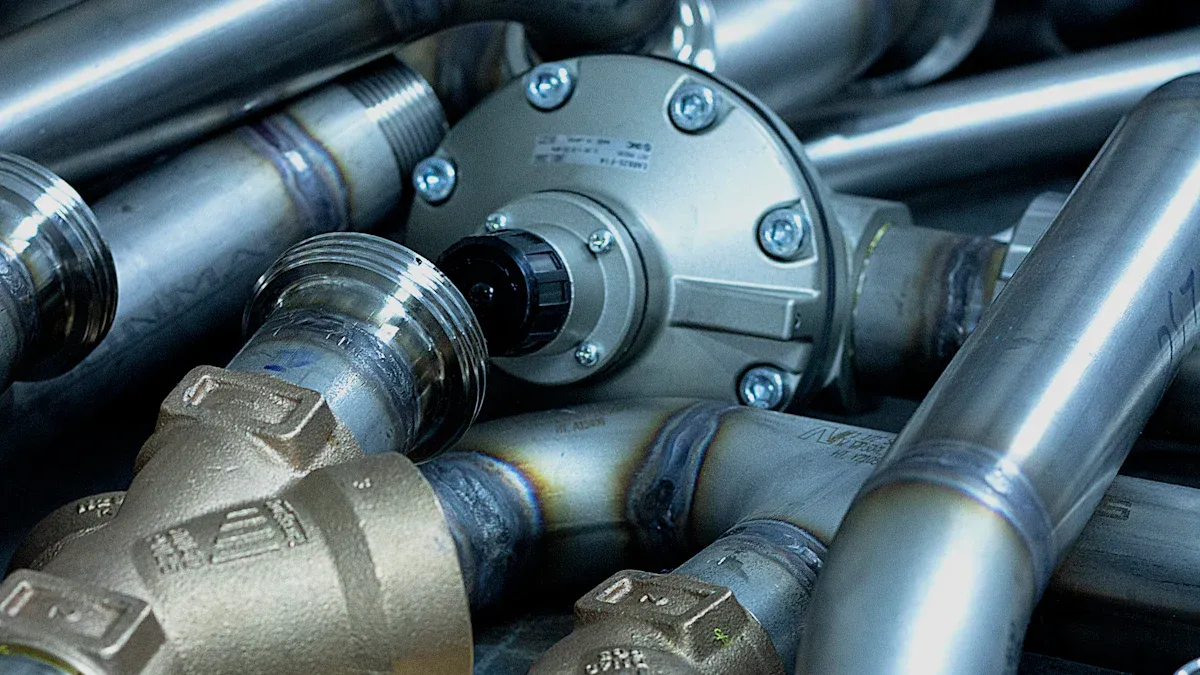
- Flange nuts secure pipes, cables, and conduits, providing a stable base for fastening.
- The wide flange helps achieve a tight seal at joints, which prevents leaks of liquids or gases.
- This sealing capability is essential for safe operation and environmental protection.
- Installers appreciate the ease of installation, especially in tight or hard-to-reach spaces.
- The integrated flange reduces the need for additional washers, streamlining assembly.
In electrical panels, flange nuts fasten cable trays and conduit fittings, ensuring reliable connections. In plumbing systems, they help maintain leak-free joints in water and gas lines. The versatility of flange nut uses extends to HVAC systems, where they secure ductwork and mounting brackets. These features make flange nuts a preferred choice for professionals seeking dependable and efficient fastening solutions.
Note: Proper sealing at joints not only prevents leaks but also protects sensitive electrical components from moisture and corrosion.
Manufacturing and Heavy Industry
Manufacturing and heavy industry demand robust fastening solutions that can withstand high loads and constant use. Flange nuts meet these requirements with their strong clamping force and reliable performance.
| Nominal Size (M) | Maximum Clamping Force (kN) |
|---|---|
| M8 | 56.3 |
| M10 | 92.7 |
| M12 | 145.2 |
| M16 | 252.8 |
| M20 | 395.6 |
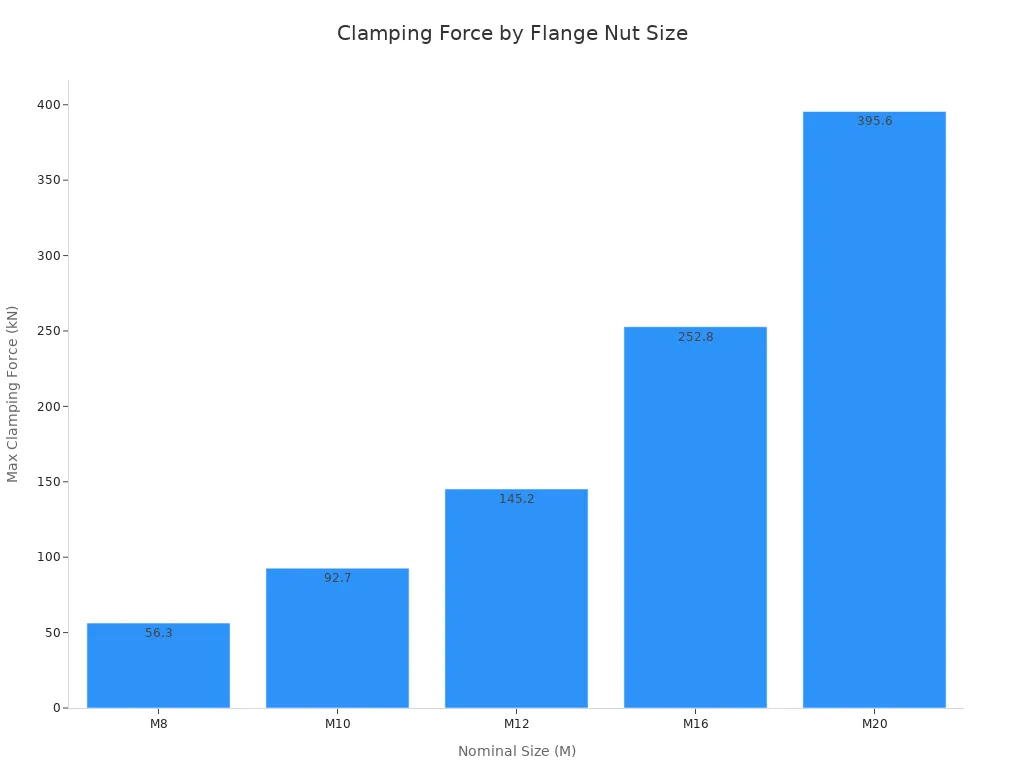
Assembly lines and heavy machinery rely on flange nuts to maintain structural integrity under stress. The electric power industry also depends on these fasteners for infrastructure development. The global market for flange nuts and bolts is projected to reach USD 90.57 billion by 2025, reflecting their importance in industrial applications.
| Nominal Size (M) | Width Across Flats (S, mm) | Flange Diameter (d, mm) | Nominal Height (m, mm) | Thread Pitch (mm) | Recommended Bolt Grade | Maximum Clamping Force (kN) |
|---|---|---|---|---|---|---|
| M8 | 13.0 / 13.5 | 16.8 / 17.5 | 8.0 / 8.6 | 1.25 | 8.8 / 10.9 | 56.3 |
| M10 | 16.0 / 16.5 | 20.8 / 21.5 | 9.5 / 10.2 | 1.5 | 8.8 / 10.9 | 92.7 |
| M12 | 18.0 / 18.5 | 24.0 / 24.8 | 12.0 / 12.8 | 1.75 | 10.9 / 12.9 | 145.2 |
| M16 | 24.0 / 24.5 | 33.0 / 33.8 | 15.0 / 15.8 | 2.0 | 10.9 / 12.9 | 252.8 |
| M20 | 30.0 / 30.5 | 40.0 / 40.8 | 18.0 / 18.8 | 2.5 | 12.9 / 14.9 | 395.6 |
Manufacturers select flange nuts for their ability to deliver high clamping force and resist loosening in demanding environments. These fasteners support the assembly of heavy equipment, structural frames, and power generation systems. Their consistent performance and ease of installation make them indispensable in modern industrial applications.
How to Select the Right Flange Nut
Selecting the right flange nut requires careful consideration of several factors to ensure safety, durability, and optimal performance. This guide outlines the most important aspects to evaluate before making a decision.
Assessing Load Requirements
Engineers must first determine the load requirements for the intended application. The load a flange nut must withstand depends on the forces acting on the joint, the type of materials being fastened, and the environment in which the assembly operates. The following table summarizes key factors to consider:
| Factor | Description |
|---|---|
| Material Composition | Choose based on environment and strength requirements. Common materials include carbon steel, zinc-plated steel, stainless steel, brass, and nylon. |
| Thread Size and Pitch | Ensure compatibility with your bolt or stud. Standard sizes include metric and imperial. |
| Flange Diameter and Thickness | Larger flanges spread load better but require more space. Measure the contact surface to avoid interference. |
| Tensile Strength and Grade | Check the tensile strength rating for critical joints. Higher grades indicate greater strength. |
| Surface Finish | Affects appearance and corrosion protection; select based on visibility and exposure conditions. |
Selecting the correct flange nut based on these factors helps prevent joint failure and ensures reliable performance in demanding environments.
Choosing the Right Material for Flanged Nuts
Material selection plays a crucial role in the longevity and effectiveness of flange nuts. Different environments and applications require specific materials to maximize performance and minimize maintenance. The table below highlights common materials and their ideal uses:
| Material | Application | Key Property |
|---|---|---|
| Stainless Steel | Marine | Corrosion resistance |
| Galvanized Steel | Outdoor Construction | Rust protection |
| Custom Materials | Various Industries | Optimal performance |
- Stainless steel resists corrosion, making it suitable for marine environments.
- Galvanized steel prevents rust in outdoor construction.
- The choice of material impacts load-bearing capacity and durability, especially in high-stress settings.
Selecting the appropriate material ensures that the flange nut will perform reliably throughout its service life, even in harsh or specialized conditions.
Matching Thread Size and Type
Compatibility between the flange nut and the bolt or stud is essential for a secure connection. Thread size and pitch must match exactly to avoid stripping or cross-threading. Metric and imperial thread standards are both common, so verifying the correct standard is necessary before installation.
Tip: Always measure both the diameter and the pitch of the bolt to ensure a precise fit. Using mismatched threads can compromise joint integrity and lead to premature failure.
Proper thread matching not only guarantees a tight fit but also simplifies maintenance and replacement in future applications. This attention to detail supports long-term reliability and safety in any assembly.
Considering Environmental Factors
Engineers evaluate environmental factors before selecting flange nuts for any application. The operating environment influences the performance and longevity of fasteners. Moisture, temperature extremes, chemicals, and exposure to saltwater can accelerate corrosion and weaken materials. Stainless steel flange nuts resist rust in marine and outdoor settings. Zinc-plated steel offers moderate protection against humidity and mild chemicals. Brass flange nuts perform well in electrical installations where conductivity and corrosion resistance matter.
Temperature also affects material choice. High temperatures can reduce the strength of carbon steel and cause coatings to deteriorate. Alloy steel flange nuts withstand elevated temperatures in industrial machinery. In environments with frequent temperature fluctuations, installers prefer materials that maintain structural integrity.
Chemical exposure presents another challenge. Flange nuts in chemical plants or laboratories must resist acids, alkalis, and solvents. Stainless steel and specialty polymer coatings provide reliable protection. Engineers assess the compatibility of materials with the substances present in the environment.
A table below summarizes common environmental factors and recommended flange nut materials:
| Environmental Factor | Recommended Material | Typical Application |
|---|---|---|
| High Humidity | Stainless Steel, Zinc-Plated | Outdoor, Marine, HVAC |
| High Temperature | Alloy Steel, Stainless Steel | Industrial Machinery, Engines |
| Chemical Exposure | Stainless Steel, Polymer | Chemical Plants, Labs |
| Electrical Conductivity | Brass | Electrical Installations |
Tip: Always match the flange nut material to the environmental conditions to prevent premature failure and ensure safety.
Cost and Availability
Cost and availability influence the selection of flange nuts in every project. Engineers balance performance requirements with budget constraints. Stainless steel flange nuts cost more than carbon steel but offer superior corrosion resistance. Zinc-plated nuts provide a cost-effective solution for general applications. Specialty materials, such as brass or polymer, increase costs but deliver unique benefits.
Availability depends on regional standards and supply chains. Metric flange nuts dominate European and Asian markets. Inch-sized nuts remain common in North America. Engineers verify that the chosen flange nut matches the bolt or stud in the assembly. Local suppliers often stock standard sizes and materials. Custom or specialty flange nuts may require longer lead times and higher prices.
A guide helps engineers compare options and make informed decisions. They consider the total cost, including installation, maintenance, and replacement. Bulk purchasing reduces unit costs and ensures consistent supply. Engineers also factor in the cost of downtime if fasteners fail or require frequent replacement.
Note: Selecting readily available flange nuts streamlines procurement and minimizes project delays.
A table below compares cost and availability for common flange nut materials:
| Material | Relative Cost | Availability | Typical Use |
|---|---|---|---|
| Carbon Steel | Low | High | General Industry |
| Stainless Steel | Medium-High | Medium | Marine, Outdoor, Chemical |
| Brass | High | Medium-Low | Electrical, Decorative |
| Polymer/Plastic | Medium | Low | Specialty Applications |
Engineers weigh these factors to select flange nuts that meet technical, environmental, and economic requirements.
Flange nuts provide a unique fastening solution with their integrated washer design and enhanced load distribution. These fasteners offer strong vibration resistance, easy installation, and reliable joint security. Engineers value flange nuts for their ability to reduce assembly time and protect materials. When selecting flange nuts, they consider load requirements, material compatibility, and environmental factors. Choosing the right flange nut ensures safe, efficient, and long-lasting connections in automotive, construction, and industrial projects.
FAQ
What is the main advantage of a flange nut?
A flange nut provides integrated load distribution. The built-in flange acts as a washer, which spreads force over a larger area. This feature reduces material damage and increases joint stability.
Can flange nuts be reused?
Engineers can reuse non-locking flange nuts if they remain undamaged. Self-locking or serrated types may lose effectiveness after removal. Always inspect for wear before reusing.
Are flange nuts suitable for outdoor use?
Stainless steel or zinc-plated flange nuts resist corrosion. These materials perform well outdoors. For marine or chemical environments, stainless steel offers the best protection.
How do serrated flange nuts prevent loosening?
Serrated flange nuts use angled teeth under the flange. These teeth grip the mating surface, increasing friction. This design resists loosening from vibration or movement.
What tools are needed to install flange nuts?
Installers use standard wrenches or sockets. The hexagonal shape fits common hand and power tools. No special equipment is required.
Do flange nuts fit both metric and inch bolts?
Manufacturers produce flange nuts in both metric and inch sizes. Always match the nut’s thread type and size to the bolt for proper fit.
When should a non-serrated flange nut be used?
Non-serrated flange nuts work best with soft or finished surfaces. They prevent scratching and provide a clean appearance. Use them when surface protection matters.
Tip: Always check the application requirements before selecting a flange nut type.