Engineers require precise data to ensure the mechanical integrity of pressurized systems. The top downloadable flange bolt charts for 2025 are the comprehensive ASME B16.5 and B16.47 resources from Texas Flange. This chart ranks #1 for its accuracy and clear, printable PDF format, ideal for office and field use. A reliable Flange Bolt chart helps prevent common failures. Whether using parts from a standard bolt casting or sourcing from a custom fasteners manufacturer, accurate specifications are critical. Many connection failures stem from simple oversights:
- Failure to Use the Correct Lubrication: Incorrect lubrication compromises bolt integrity and leads to uneven gasket compression.
- Not Accounting for Thermal Expansion: Temperature changes can cause flange misalignment and increase stress on connections.
The Top 5 Downloadable Flange Bolt Charts for 2025
Selecting the right reference material is a critical first step in any piping project. While many resources exist, a few stand out for their accuracy, usability, and comprehensive data. This review covers the top downloadable charts available to engineers and technicians in 2025.
1. Texas Flange Charts – The Best Overall
Texas Flange provides the industry’s gold standard for downloadable flange bolt charts. Its resources are widely recognized for their adherence to core industry standards and exceptional clarity, making them the top choice for most engineering applications.
Source and Download Access
Engineers can access these charts directly from the Texas Flange website’s “Technical Data” section. The company offers them as free, high-resolution PDF downloads that do not require registration, ensuring immediate access for professionals in the office or the field.
Covered Standards (ASME B16.5 & B16.47)
The primary chart from Texas Flange consolidates data for the two most critical ASME standards governing pipe flanges.
- ASME B16.5: Covers pipe flanges and flanged fittings from NPS ½ through NPS 24.
- ASME B16.47: Covers large-diameter steel flanges for NPS 26 through NPS 60, including both Series A and Series B specifications.
This comprehensive coverage ensures users can find the correct asme flange bolt pattern for nearly any standard industrial application from a single document.
Included Data Points
The chart is dense with essential information, presenting all necessary dimensions for flange selection and bolt-up procedures. Key data points include:
- Nominal Pipe Size (NPS)
- Flange Outside Diameter (OD)
- Number of Bolts
- Diameter of Bolts
- Length of Stud Bolts for Raised Face (RF) and Ring Type Joint (RTJ) flanges
- Diameter of Bolt Holes
Why It’s Ranked #1 for 2025
Texas Flange earns the top rank for its unmatched combination of accuracy, comprehensive standard coverage, and professional presentation. The high-resolution PDF is designed for printing, remaining legible even when used on a job site. Its data is sourced directly from the relevant standards, providing engineers with a trustworthy reference that minimizes the risk of errors in specification and assembly.
2. Piping-Mart Technical Data – Best for Material Specs
Piping-Mart offers a collection of technical charts that excel in providing detailed material specifications alongside dimensional data. This focus makes it an invaluable resource for procurement specialists and materials engineers.
Source and Download Access
Users can find these charts in the “Technical” section of the Piping-Mart website. They are available as individual web pages and are easily printable directly from a web browser. While not a single consolidated PDF, the modular format allows users to select and print only the specific information they need.
Focus on Bolt and Gasket Materials
Piping-Mart distinguishes itself by integrating material data directly with flange dimensions. The charts often include common ASTM material grades for bolts (e.g., A193 B7, B8, B8M) and corresponding recommended gasket types. This integration helps engineers ensure material compatibility, a critical factor for service life and safety.
Unique Features for Procurement
The resource provides data points that directly support the purchasing process. It often lists standard material grades and corresponding temperature limits, helping procurement teams source compliant materials without cross-referencing multiple documents.
Note for Procurement Teams: Use these charts to verify that supplier quotes align with both dimensional and material requirements for the specified pressure class and service temperature. This practice helps prevent costly procurement errors.
Ideal Use Cases
Piping-Mart’s charts are best suited for engineers and procurement professionals during the design and purchasing phases. They are excellent for creating material take-offs (MTOs), writing purchase specifications, and verifying the technical compliance of sourced components.
3. Engineering ToolBox Charts – Most User-Friendly Layout
Engineering ToolBox is a well-known online resource for engineers, and its flange bolt charts are prized for their simplicity and exceptional readability. The design prioritizes quick data retrieval over exhaustive detail.
Source and Download Access
The charts are available as standard web pages on the Engineering ToolBox website. Users can easily print them, and the clean, ad-free layout translates well to a physical copy. The platform is free to access and widely used for quick calculations and data lookups.
Design and Readability
The standout feature of Engineering ToolBox is its clean, tabular design. The information is presented in a straightforward bolt size chart with clear headings and ample white space, which significantly reduces the chance of misreading data. This user-centric layout is perfect for engineers who need to find a specific dimension quickly.
Best for Quick Field Reference
Due to its simple layout, this resource is ideal for field technicians and engineers who need a quick, on-the-spot reference. A laminated printout can serve as a durable job aid for verifying bolt counts and diameters before starting a bolt-up procedure.
Data Presentation Style
The data is organized logically, allowing for rapid scanning. A typical table for a specific flange standard and class will present information in a highly intuitive format.
| NPS (in) | Flange OD (in) | No. of Bolts | Bolt Diameter (in) |
|---|---|---|---|
| 4 | 9.00 | 8 | 0.625 |
| 6 | 11.00 | 8 | 0.750 |
| 8 | 13.50 | 8 | 0.750 |
This clear, uncluttered style makes it a favorite for those who value speed and ease of use.
4. Rolled Alloys International Charts – Best for International Standards
Rolled Alloys provides essential resources for engineers working on global projects. Their documentation is specifically tailored to accommodate international and European standards, filling a critical gap left by many US-centric providers.
Source and Download Access
Professionals can locate these specialized charts within the “Literature” or “Technical Resources” section of the Rolled Alloys website. The company typically offers these documents as downloadable PDFs, designed for easy printing and distribution among international project teams.
Coverage of DIN/EN Standards
The primary strength of the Rolled Alloys charts is their focus on non-ASME standards. They provide detailed specifications for flanges governed by European norms, which are critical for projects in Europe or for equipment sourced from European manufacturers. Key standards covered often include:
- EN 1092-1: The primary European standard for steel flanges, designating PN (Pressure Nominal) ratings.
- DIN (German Institute for Standardization): German standards that are still widely referenced globally.
This coverage ensures that engineers have accurate data for flange systems specified outside of the typical ASME framework.
Cross-Standard Comparison Data
Some Rolled Alloys documents offer valuable comparison data. They may show the nearest equivalent flange dimensions between ASME, EN, and DIN standards. This feature is invaluable for project managers and engineers attempting to integrate equipment from different regions, helping to identify potential mismatches in bolt circles or face dimensions early in the design process.
Global Project Suitability
The inclusion of DIN and EN data makes these flange bolt charts indispensable for global engineering firms. Teams working on international oil and gas, chemical processing, or power generation projects can rely on this resource for compliant specifications. It ensures that procurement and construction activities align with regional regulatory requirements, preventing costly rework and delays.
5. Port-Log All-in-One Resource – Best for Integrated Data
Port-Log offers a uniquely comprehensive digital resource that extends beyond basic dimensions. It functions as a complete bolt-up guide by integrating practical data points needed for assembly, making it a favorite among field engineers and technicians.
Source and Download Access
Port-Log provides its data through a web-based platform. Users can navigate to the relevant flange size and class to view a complete data sheet. These pages are printer-friendly, allowing technicians to create physical copies for on-site use. The platform consolidates information that would otherwise require consulting multiple sources.
Additional Technical Data (Wrench Sizes)
A standout feature of the Port-Log bolt size chart is the inclusion of tooling information. Alongside bolt diameter and length, the charts specify the required wrench and socket sizes for standard heavy hex bolts. This seemingly small detail saves significant time in the field, as it eliminates the guesswork and trial-and-error associated with tool selection.
Field Tip for Technicians: 🔧 Before heading to the job site, print the relevant Port-Log page. This simple step ensures you have the correct bolt dimensions, gasket details, and tool sizes all in one place, streamlining the entire assembly process.
Integrated Gasket Information
Port-Log excels by presenting gasket dimensions directly alongside the flange and bolt data. The charts often include the inside diameter (ID) and outside diameter (OD) for standard gaskets compatible with a specific flange. This integration helps confirm that all three components—flange, bolts, and gasket—are correctly matched before assembly begins.
Value as a Comprehensive Guide
Port-Log’s resource is more than just a dimensional chart; it is a practical field guide for mechanical assembly. By consolidating flange dimensions, bolt specifications, gasket sizes, and tooling requirements into a single, easy-to-read view, it empowers technicians to perform their work efficiently and accurately. This all-in-one approach minimizes the risk of assembly errors and enhances operational safety.
How to Select the Right Printable Bolt Pattern Chart
Choosing the correct printable bolt pattern chart is a foundational step for ensuring safety and system integrity. A systematic approach guarantees that all critical variables are accounted for before any assembly work begins.
Step 1: Identify the Governing Flange Standard
The first step is to identify the standard that governs the flange in question. Different asme standards for bolt patterns dictate dimensions, materials, and pressure ratings.
ASME B16.5 for Standard Pipe Flanges
This standard is the most common for industrial process systems. It covers pipe flanges and fittings from NPS ½ through NPS 24. These flanges are essential in many sectors:
- Oil and Gas Industry: Used in pipeline systems and refineries.
- Power Generation: Crucial for boiler and turbine systems.
- Chemical Processing: Applied in reactors and piping.
ASME B16.47 for Large Diameter Flanges
For larger projects, engineers use ASME B16.47. This standard covers flanges from NPS 26 through NPS 60. It is divided into two distinct series:
- Series A: Specifies heavier, stronger flanges ideal for new pipelines.
- Series B: Specifies more compact, lighter flanges often used in retrofit projects.
| Feature | ASME B16.5 | ASME B16.47 |
|---|---|---|
| Pipe Size Range | NPS ½ – 24″ | NPS 26 – 60″ |
| Pressure Classes | Up to 2500 | Up to 900 |
| Flange Types | Wide variety | Primarily Weld-Neck & Blind |
API Spec 6A for Wellhead Equipment
This standard is specific to the oil and gas industry for wellhead and Christmas tree equipment. Its specifications are designed for the extreme pressures found in drilling and production.
International Equivalents (DIN/EN)
For global projects, engineers may encounter DIN (German) or EN 1092-1 (European) standards. These use a PN (Pressure Nominal) rating system and have different dimensions than ASME flanges.
Step 2: Determine the Required Pressure Class
After identifying the standard, the next step is to find the correct pressure class. This dimensionless number indicates a flange’s pressure-handling capability at various temperatures.
Understanding Class Ratings (150 to 2500)
Class ratings (e.g., 150, 300, 600) are not direct pressure values in PSI. A flange’s maximum allowable pressure decreases as its service temperature increases. For example, a Class 300 carbon steel flange can handle 605 PSI at 500°F but only 530 PSI at 700°F.
Locating Class Data on Your Chart
Flange bolt charts organize data by pressure class. An engineer must locate the table corresponding to the project’s required class to find the correct asme flange bolt pattern.
How Pressure Class Impacts Bolt Quantity and Size
Higher pressure classes require greater containment. This directly affects the bolt pattern. As the pressure class increases for a given pipe size:
- The number of bolts increases.
- The diameter of the bolts increases.
- The bolt circle diameter (BCD) expands.
A 6-inch Class 150 carbon steel flange withstands 140 psi at 600°F. In contrast, a 6-inch Class 300 flange, which is physically larger and stronger, withstands 570 psi at the same temperature. This shows the direct link between flange classes and corresponding patterns.
Step 3: Verify Material and Gasket Specifications
The final step involves confirming material and gasket details, which are critical for determining what size bolts to use and ensuring a proper seal.
Common Bolt Material Grades (e.g., A193 B7)
ASTM A193 B7 is a common high-strength chromium-molybdenum steel alloy used for bolts in high-pressure and mid-temperature service. Its mechanical properties make it ideal for petrochemical plants, refineries, and power generation. As bolt diameter increases, its minimum required tensile and yield strength decrease.

Gasket Impact on Bolt Length
The type of gasket directly impacts the required bolt length. A thicker gasket or a different flange face style will change the distance between flanges, requiring a different length stud bolt.
Raised Face (RF) vs. Ring Type Joint (RTJ) Flanges
RF and RTJ are two common flange face types. An RTJ flange has a groove to house a metal ring gasket, which requires the flanges to be pulled closer together than an RF flange. For this reason, flange bolt charts list separate bolt lengths for RF and RTJ flanges.
Step 4: Confirm All Required Data Points
A final verification of all data points ensures the selected chart is appropriate for the specific application. This last check prevents costly errors during procurement and assembly.
Basic Dimensions vs. Torque Specifications
Engineers must distinguish between dimensional data and assembly specifications. A standard flange bolt chart provides basic dimensions. These include the bolt diameter, length, and the total number of bolts required for a given flange size and class. However, these charts often do not include torque specifications.
Torque values, which dictate how much to tighten a bolt, are highly dependent on friction. They are not universal constants. A separate, specialized torque chart is necessary for proper assembly. These charts provide torque values based on bolt size, material grade, and the lubricant used. Using a dimensional chart for torque information is a common but critical mistake.
The Need for Lubrication Factors
Lubrication is essential for achieving the correct bolt tension during tightening. It reduces friction between the nut and bolt threads, as well as between the nut and the flange surface. Without proper lubrication, the applied torque may be consumed by friction instead of stretching the bolt to create the necessary clamping force.
Important Note: Different lubricants have different friction coefficients, known as the “K-Factor.” A torque value calculated for one lubricant will be incorrect if another is used. Always confirm that the torque chart being used matches the specific lubricant applied in the field. This prevents both under-tightening, which can lead to leaks, and over-tightening, which can damage the bolt or flange.
Cross-Verifying Chart Accuracy
Before finalizing any specifications, an engineer must cross-verify the chart’s accuracy. This involves comparing the data against the original industry standard (e.g., ASME B16.5) or another trusted resource. Discrepancies can arise from typographical errors or outdated information. A thorough verification should confirm several key details:
- Bolt Size and Threading: Ensure the bolt diameter, length, and thread specifications (e.g., fully or partially threaded) match the project requirements.
- Material Grade: Verify the bolt material (e.g., ASTM A193 B7) meets the required tensile strength and chemical composition for the service conditions.
- Industry Standards: Confirm that the chart aligns with the correct industry and manufacturer standards for the application.
This final check is a critical quality control measure. It ensures that every component specified contributes to a safe and reliable mechanical joint, upholding the integrity of the entire system.
A Deep Dive into the Flange Bolt Size Chart Data
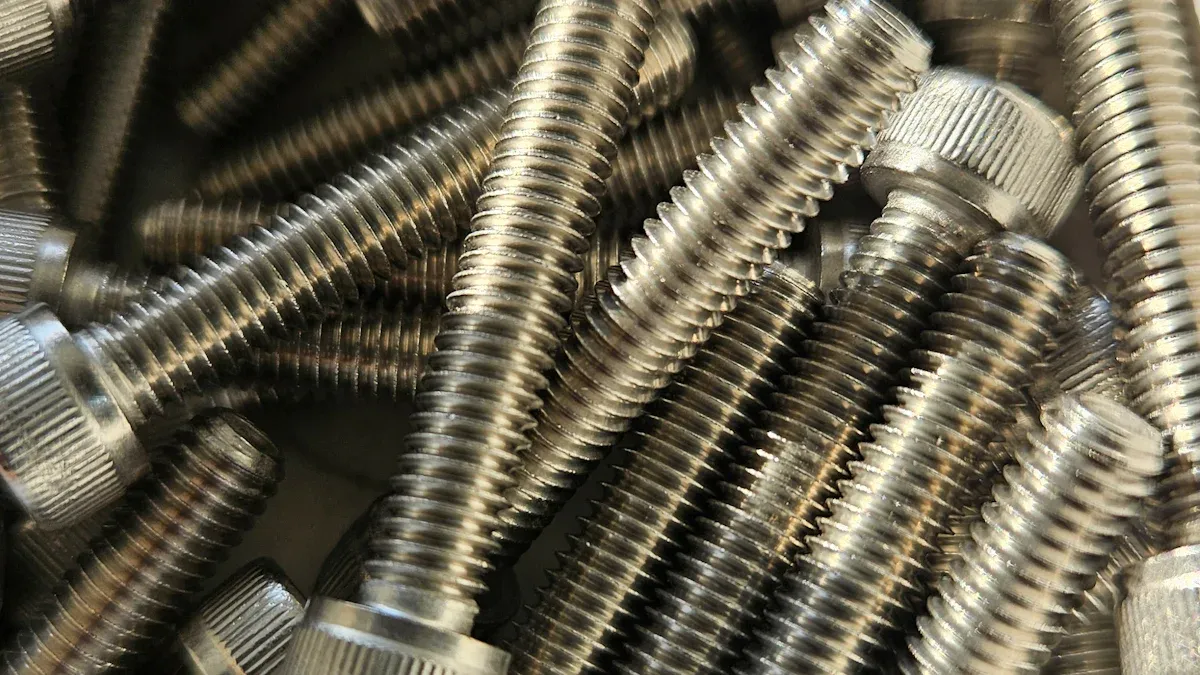
A flange bolt size chart contains critical data for ensuring a secure, leak-free connection. Understanding how to decode this information is a core skill for any engineer or technician involved in piping systems.
Decoding Bolt Dimensions and Quantity
The fundamental dimensions for any flange connection are determined by the pipe size and the system’s pressure requirements.
Nominal Pipe Size (NPS)
Nominal Pipe Size (NPS) is the starting point for identifying the correct flange dimensions. It is a North American set of standard sizes for pipes used for high or low pressures and temperatures. An engineer first identifies the NPS to find the corresponding data on a chart.
Number of Bolts Required
The number of bolts required for a flange increases with both the pipe size and the pressure class. A higher pressure class demands a stronger seal, which requires more clamping force distributed across more fasteners. This ensures the joint can withstand the operational pressure.
Diameter of Bolts
Similar to the bolt quantity, the diameter of the bolts also increases with higher pressure classes. Larger bolts provide greater tensile strength. A bolt size chart specifies the required standard bolt sizes and the corresponding bolt hole size. The hole size is slightly larger than the bolt diameter to allow for easy installation.
| NPS (in) | Class 150 – No. of Bolts | Class 150 – Diameter (in) | Class 300 – No. of Bolts | Class 300 – Diameter (in) |
|---|---|---|---|---|
| 2 | 4 | 5/8 | 8 | 5/8 |
| 4 | 8 | 5/8 | 8 | 3/4 |
| 6 | 8 | 3/4 | 12 | 3/4 |
| 8 | 8 | 3/4 | 12 | 7/8 |
| 10 | 12 | 7/8 | 16 | 1 |
| 12 | 12 | 7/8 | 16 | 1-1/8 |
Calculating Bolt Length (RF vs. RTJ)
Bolt length depends on the flange face type. Engineers calculate the theoretical length to ensure proper engagement. A common formula is:
- L = 2 (s + n + h + rf) + g
- L: Stud Bolt theoretical length
- s: Free threads (approx. 1/3 of bolt diameter)
- n: Nut height
- h: Flange thickness
- rf: Height of raised face
- g: Gasket thickness
Understanding Bolt Torque Specifications
Torque is a rotational force, but its true purpose is to create preload—the tension that stretches a bolt and creates clamping force.
The integrity of a flanged joint relies on achieving the correct bolt preload. This preload compresses the gasket effectively, forming a reliable seal that can withstand internal pressure and temperature changes.
What is Bolt Torque?
Bolt torque is the rotational force applied to a nut to achieve the necessary bolt tension. It is a critical parameter because it directly influences the preload, which determines the joint’s ability to prevent leaks.
Key Factors Affecting Torque Values
Torque is not a universal constant. It is affected by friction between threads, the nut face, and the flange surface. Material type and bolt diameter also play significant roles.
Using Torque Charts Correctly
Engineers must use a dedicated torque chart, not a dimensional bolt size chart, for assembly. Torque charts provide values based on bolt size, material, and the specific lubricant used.
The Critical Role of Lubricant (K-Factor)
Lubricant is essential for achieving accurate preload. It reduces friction, which is quantified by the K-Factor (or nut factor). An incorrect K-Factor can lead to insufficient clamping force or bolt failure. For example, an unlubricated bolt might have a K-Factor of 0.25, while a lubricated one could be 0.16, drastically changing the required torque.
Navigating Different Flange Standards in Charts
Different standards govern flange dimensions, and they are not interchangeable. Understanding these differences prevents costly design and assembly errors.
Key Differences: ASME B16.5 vs. B16.47
These two ASME standards cover different size ranges and define the asme flange bolt pattern for most industrial applications.
| Feature | ASME B16.5 | ASME B16.47 |
|---|---|---|
| Size Range | NPS 1/2 to NPS 24 | NPS 26 to NPS 60 |
| Pressure Class | CL150 to CL2500 | CL75 to CL900 |
Series A vs. Series B in ASME B16.47
ASME B16.47 is further divided into Series A and Series B for large-diameter flanges. These two series have distinct physical characteristics.
| Feature | Series A | Series B |
|---|---|---|
| Thickness & Weight | Thicker, heavier | Lighter, thinner |
| Fasteners | Fewer, larger bolts | More, smaller bolts |
| Bolt Circle Diameter | Larger bolt circle diameter | Smaller bolt circle diameter |
| Applications | New piping projects | Replacements, renovations |
Common Pitfalls and Misinterpretations
Engineers must avoid common mistakes when reviewing common asme bolt patterns by flange type. A frequent error is assuming Series A and Series B flanges are interchangeable; they are not. Their different bolt circle diameter and hole size specifications make them incompatible. Always verify the standard, class, and series to select the correct standard bolt sizes and ensure system integrity. The bolt circle diameter is a critical dimension that dictates the positioning of the bolts, and any mismatch will prevent proper assembly.
Best Practices for Using Printable Charts in the Field

A printable chart is only as good as its condition and application on the job site. Field conditions—dust, moisture, and heavy use—can quickly render a standard piece of paper useless. Therefore, engineers and technicians must adopt best practices for preparing their charts and verifying data on-site to ensure both safety and accuracy.
Printing and Protecting Your Charts for Durability
The journey from a digital file to a reliable field tool involves thoughtful preparation. A durable, legible chart prevents errors and withstands the rigors of a worksite.
Recommended Print Settings for Clarity
For maximum readability, professionals should print charts directly from a high-resolution PDF source. It is best to use a laser printer set to a high-quality black and white setting. This ensures crisp lines and clear text, which are essential for reading small-print dimensions without error.
Laminating for Weather and Wear Resistance
Once printed, laminating the chart is a critical step. A laminated chart is resistant to water, grease, and physical tears. This simple protective measure transforms a disposable printout into a durable, reusable job aid that can be wiped clean and used across multiple projects.
Digital vs. Physical Copies on Site
While digital copies on tablets or phones offer convenience, they come with drawbacks like battery dependence, screen glare, and potential damage. A physical, laminated copy remains the most reliable tool.
Pro Tip: 💡 Field personnel should carry both. Use a digital device for quick lookups and the laminated chart as the primary, fail-safe reference during assembly. This dual approach ensures data is always accessible.
On-Site Verification and Critical Safety Checks
Before any wrench is turned, a series of verification steps must occur. These checks confirm that the components match the specifications and that the assembly is prepared for a safe, leak-free seal.
Double-Checking Chart Data Against P&IDs
The flange bolt chart is a reference, but the project’s Piping and Instrumentation Diagrams (P&IDs) and engineering drawings are the authoritative documents. Technicians must cross-reference the chart’s data with the P&ID to confirm the correct flange size, pressure class, and material specifications are being used for that specific service line.
Pre-Job Toolbox Talk and Procedure Review
A pre-job toolbox talk is essential for aligning the entire team. During this meeting, the supervisor should review the bolt-up procedure and lead a physical inspection of all components. Key verification checks include:
- Component Inspection: Visually inspect bolt threads, nut faces, and flange sealing surfaces for any damage, corrosion, or defects.
- Material Verification: Confirm that the bolts, nuts, and gasket materials match the project specifications (e.g., ASTM A193 B7 bolts).
- Surface Preparation: Ensure flange faces are clean and free of rust, old gasket material, or debris. Use a wire brush to clean bolt and nut threads.
- Alignment Check: Verify that flanges are parallel and concentric. Forcing misaligned flanges into place adds dangerous stress to the system.
- Gasket Use: Always use a new gasket specified for the service. Reusing gaskets is a common cause of joint failure.
Documenting Bolt-Up Procedures and Torque Values
Accurate record-keeping is the final step in a quality bolt-up procedure. Technicians should document the final torque values applied to each flange, the type of lubricant used, and the date of assembly. This documentation creates a traceable record for quality assurance and future maintenance activities.
For immediate, reliable data in 2025, the Texas Flange chart remains the top recommendation due to its comprehensive ASME coverage and clarity. Selecting standard-compliant and accurate flange bolt charts is a critical step for ensuring the mechanical integrity and operational safety of any pressurized system. Professionals can bookmark this guide and the recommended resources to streamline their engineering workflow and uphold the highest standards of quality and safety in their projects.
FAQ
What is the difference between ASME B16.5 and B16.47?
ASME B16.5 governs standard flanges from NPS ½ to 24. ASME B16.47 covers large-diameter flanges from NPS 26 to 60. Engineers use the B16.47 standard for major pipeline projects and other large-scale industrial applications.
Why are there two bolt lengths (RF vs. RTJ) on a chart?
Raised Face (RF) and Ring Type Joint (RTJ) flanges have different sealing surface designs. An RTJ flange requires a shorter bolt to accommodate its grooved face. Charts list both lengths to ensure correct bolt selection for the specific flange type.
Can I use a flange bolt chart for torque values?
No. A flange bolt chart provides dimensional data only. Professionals must use a separate, dedicated torque chart for assembly. Torque values depend on bolt size, material grade, and the specific lubricant used.
What does a flange pressure class mean?
A pressure class is a dimensionless rating. It indicates a flange’s pressure-handling capability at various temperatures. A higher class signifies a stronger flange. It can withstand greater pressures and requires a more robust bolt pattern.
Why is bolt lubrication so important?
Lubrication reduces friction during tightening. This ensures the applied torque correctly creates bolt tension (preload). Proper preload is essential for achieving a reliable, leak-free seal and preventing damage to the flange components.
Safety Alert: ⚠️ Using the wrong lubricant or no lubricant can lead to joint failure. Always verify the lubricant’s K-Factor matches the value used to calculate the required torque.
Are Series A and Series B flanges interchangeable?
No, they are not interchangeable. ASME B16.47 Series A and Series B flanges have different bolt circle diameters and bolt hole patterns. Attempting to connect them will result in a dangerous mismatch.
What is the most common bolt material for flanges?
ASTM A193 Grade B7 is a highly common bolt material. This chromium-molybdenum alloy steel offers excellent tensile strength for high-pressure and high-temperature service. It is a standard choice in petrochemical and power generation industries.