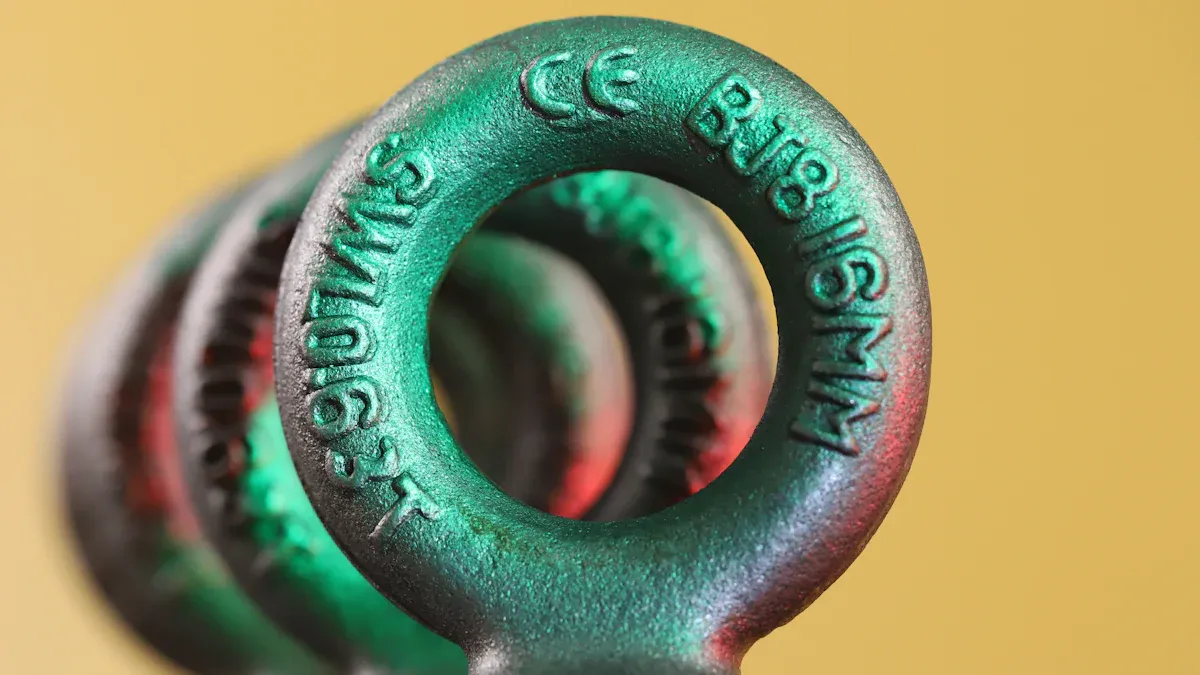
The top eye bolt anchor brands in 2026 showcase distinct specializations. Hilti leads in heavy-duty industrial settings. Simpson Strong-Tie provides excellent value for general construction. CMCO excels in marine environments. Many projects require specific Anchor Bolts. A skilled custom fasteners manufacturer can produce custom anchor bolts or other custom fasteners for unique needs.
Note: The right choice depends on your project’s specific load, environment, and budget requirements.
| Brand | Primary Application | Key Strength |
|---|---|---|
| Hilti | Heavy-Duty Industrial | Maximum Load Capacity |
| Simpson Strong-Tie | General Construction | Best Overall Value |
| CMCO | Marine & Corrosive | Corrosion Resistance |
Detailed Reviews of the Top Eye Bolt Anchor Brands
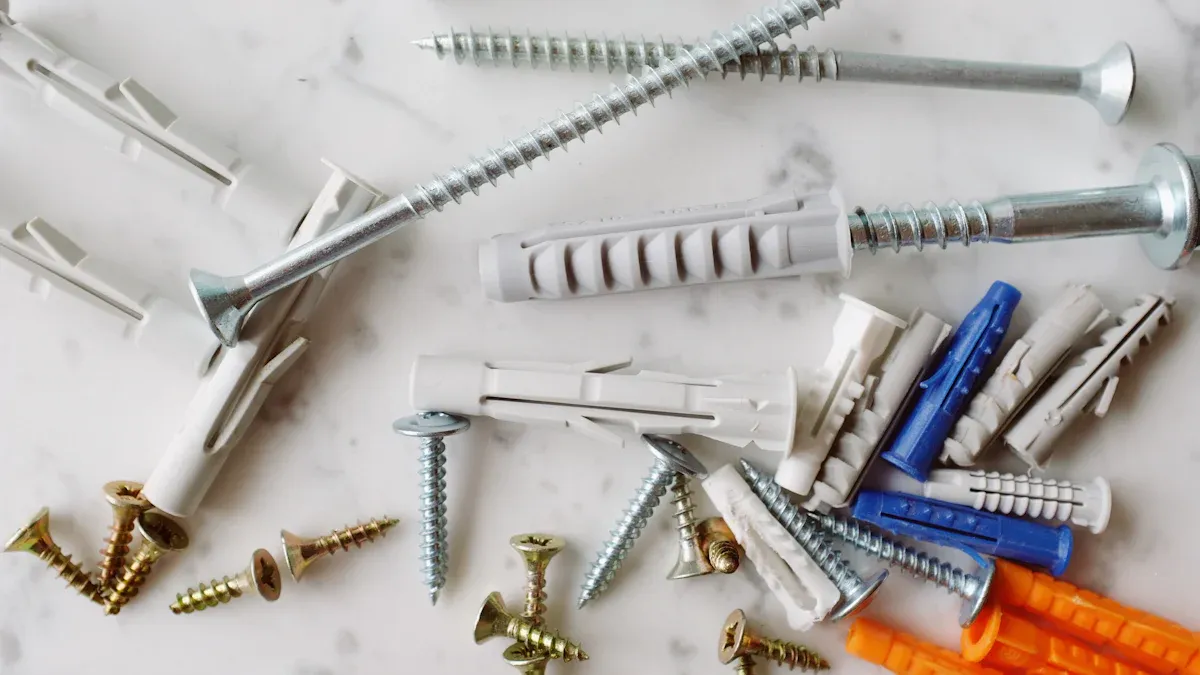
This section provides an in-depth look at the leading eye bolt anchor manufacturers of 2026. Each brand offers unique strengths tailored to specific applications, from heavy industrial rigging to general-purpose construction. Understanding these differences is key to selecting the right component for your project’s safety and success.
Hilti: The Heavy-Duty Champion
Hilti has solidified its reputation as the premier choice for demanding, safety-critical applications. The brand’s engineering focus prioritizes maximum performance and reliability over cost, making it a staple in industrial construction and heavy machinery installation.
Load Capacity and Structural Integrity
Hilti eye bolts are engineered for superior load-bearing capabilities. The company provides extensive technical data, ensuring engineers can specify anchors with confidence. Their products consistently meet or exceed stated Working Load Limits (WLL), a critical factor in overhead lifting and structural anchoring. Structural integrity is paramount, with each design undergoing rigorous testing to prevent failure under extreme stress.
Material Composition and Forging
Hilti exclusively uses high-grade alloy and carbon steel in its manufacturing process. The company employs a hot-forging method, which aligns the steel’s grain structure to the shape of the eye bolt. This process eliminates internal voids and creates a component with exceptional tensile strength and fatigue resistance compared to cheaper bent-wire or cast alternatives.
Suitability for Lifting and Rigging
Hilti eye bolts are specifically designed and rated for lifting and rigging operations. Many models feature a shoulder, or collar, which provides greater stability for angular lifts.
Professional Tip 💡: Always use shouldered eye bolts for angular loading. A non-shouldered eye bolt’s capacity is drastically reduced when pulled from an angle and should only be used for perfectly vertical lifts.
Installation Systems and User Feedback
Hilti offers a complete system, including specialized epoxy adhesives and installation tools that work in concert with their anchors. This ecosystem approach guarantees proper installation and optimal performance. Professional riggers and industrial contractors consistently praise Hilti for its reliability and the peace of mind that comes with using a fully certified system.
Simpson Strong-Tie: The Best Value All-Rounder
Simpson Strong-Tie has earned its place among the top eye bolt anchor brands by delivering reliable performance at an accessible price point. It is the go-to brand for residential and light commercial construction projects where value is a primary consideration.
Performance vs. Price Evaluation
Simpson Strong-Tie excels in the performance-to-price ratio. While its products may not match the extreme load ratings of Hilti, they offer dependable strength for a wide array of common tasks. For projects that do not require the highest industrial specifications, this brand provides a safe and economical solution without compromising on quality.
Product Range for Light to Medium-Duty
The brand offers an extensive catalog of eye bolts suitable for light to medium-duty applications. This includes:
- Anchoring support wires for decks and pergolas.
- Creating tie-down points in wood or concrete.
- Suspending lightweight fixtures or signage.
Their diverse range of sizes and thread types ensures compatibility with most standard construction materials and hardware.
Market Availability and Purchase Ease
A key advantage of Simpson Strong-Tie is its widespread availability. You can find their products in major home improvement stores and construction supply distributors across the country. This accessibility makes it easy for both professional contractors and DIY enthusiasts to source the exact parts they need without long lead times.
User Reviews for Common Applications
User feedback for Simpson Strong-Tie is overwhelmingly positive for its intended uses. Contractors appreciate the product’s consistency and reliability for everyday jobs. Homeowners find the products easy to install and effective for projects like setting up shade sails or securing garage shelving.
CMCO (Columbus McKinnon): The Corrosion Resistance Leader
When projects are exposed to moisture, salt, or chemicals, CMCO is the undisputed leader. As one of the top eye bolt anchor brands for harsh conditions, its focus on material science provides unmatched durability where other anchors would quickly fail.
Performance in Harsh Environments
CMCO eye bolts are engineered to perform in the most corrosive environments. They are the standard choice for marine applications, wastewater treatment plants, and chemical processing facilities. Their ability to resist rust and degradation ensures long-term structural safety and reduces the need for frequent inspections and replacements in hard-to-access locations.
Material Analysis: 316 Stainless Steel
The secret to CMCO’s durability lies in its use of marine-grade 316 stainless steel. The addition of molybdenum to the steel alloy gives it superior resistance to chlorides, such as salt.
- High Corrosion Resistance: A minimum of 16% chromium content creates a passive, self-repairing oxide layer on the surface.
- Superior Pitting Resistance: Molybdenum content specifically counteracts pitting and crevice corrosion caused by saltwater and chemicals.
- Inherent Strength: The material maintains its strength and integrity without requiring external protective coatings that can chip or wear away.
The material’s properties make it uniquely suited for challenging settings.
| Property | Value (316 Stainless Steel) |
|---|---|
| Corrosion Resistance | Excellent (marine-grade), resists pitting and crevice corrosion |
| Temperature Tolerance | Up to 870°C (1598°F) |
| Typical Yield Strength | 205 MPa |
| Tensile Strength | 515 MPa |
Long-Term Durability and Maintenance
While the initial investment in a CMCO 316 stainless steel eye bolt is higher, its life cycle is significantly longer in corrosive settings. These anchors require minimal maintenance, as they do not need periodic re-coating or treatment. This long-term durability prevents premature failure and protects the integrity of the entire structure.
Cost-Benefit for High-Corrosion Settings
The upfront cost of a CMCO eye bolt is easily justified in high-corrosion environments. The total cost of ownership is lower when you factor in the elimination of replacement parts, reduced labor for maintenance, and prevention of catastrophic failures. For any project exposed to the elements, choosing CMCO is a sound financial and safety decision.
Other Notable Brands in 2026
While Hilti, Simpson Strong-Tie, and CMCO dominate the primary categories, several other manufacturers hold significant influence. These other top eye bolt anchor brands offer specialized solutions, catering to niche markets with exceptional quality and innovation.
Fischer: Innovator in Concrete Anchoring
Fischer has carved out a reputation as a leader in fastening technology, particularly for concrete applications. The brand focuses on creating integrated systems where the anchor and the plug work together for maximum performance. This synergy provides exceptional safety and reliability in solid and hollow building materials.
Fischer’s eye bolts demonstrate a commitment to innovative design. Key features include:
- High Load Capacity: The eye screw achieves its strength through ideal interaction with specialized plugs, like the SX Plus for solid materials and the S H R for hollow block.
- Enhanced Safety: A high-quality weld seam prevents the eye from opening under load, a critical safety feature.
- Advanced Plug Technology: The accompanying fischer plugs, made of high-quality nylon, feature expanding wings that prevent rotation during installation. Their slim geometry also allows for secure fixing close to concrete edges.
Did You Know? 💡 Fischer plugs can be turned during installation. This directs the expansion force parallel to the edge of the concrete, reducing the risk of spalling or cracking.
Ken Forging: Leader in Domestic Forging
Ken Forging stands out for its unwavering commitment to domestic manufacturing and superior forging techniques. The company produces all its products in the United States, offering customers complete material traceability and stringent quality control.
All Ken Forging products are proudly forged in the USA at their 250,000 sq. ft. facility in Jefferson, Ohio.
The company’s drop-forging process distinguishes its eye bolts. This method crafts each eye bolt from a single piece of steel. The process effectively eliminates weak points and potential failure areas common in lesser manufacturing techniques. This technique produces eye bolts that are exceptionally strong and resistant to wear. Ken Forging implements a thorough quality control program to guarantee reliability.
- Full Traceability: Every part can be traced back to its original material lot.
- Lot Control: Batches are carefully managed to ensure consistency.
- Rigorous Testing: Products undergo 200 percent proof-load tests and magnetic particle inspections to detect any surface flaws.
American Eagle Rigging: Rigging Hardware Specialist
American Eagle Rigging focuses on the complete rigging and lifting ecosystem. While they supply high-quality eye bolts, their primary value lies in providing a comprehensive range of certified rigging hardware. Professional riggers and safety managers trust this brand for system-wide compatibility and compliance.
The company acts as a one-stop shop for lifting assemblies. They provide everything from the anchor point to the hook, ensuring every component is correctly rated and works together safely. This system-based approach simplifies procurement and gives project managers confidence that their entire lifting setup meets or exceeds industry standards like ASME. Their expertise is in the application of the hardware, not just its creation.
Head-to-Head Comparison by Critical Factors
Choosing the right eye bolt involves more than just picking a brand. It requires a detailed analysis of how each product performs against critical metrics. This section breaks down the top brands by load capacity, material quality, and usability to help you make an informed technical decision.
Load Capacity and Safety Ratings
The primary function of an eye bolt is to bear a load safely. Understanding how brands approach capacity ratings and safety standards is the most important step in the selection process.
Working Load Limit (WLL) Comparison
Working Load Limit (WLL) is the maximum mass or force that a piece of lifting equipment is certified to handle. It is the most critical number for ensuring operational safety.
- Hilti consistently offers the highest WLLs, specifically engineered for heavy overhead lifting and dynamic structural loads. Their technical data sheets provide precise load values for various installation depths and base materials.
- Simpson Strong-Tie provides reliable WLLs for light to medium-duty applications. Their ratings are ideal for static loads in general construction, such as bracing, tie-downs, or suspending moderate-weight fixtures.
- CMCO provides robust WLLs comparable to other industrial-grade brands. Their focus, however, is on maintaining that load capacity over time in corrosive environments where other materials would degrade and lose strength.
Safety Mandate ⚠️: Never exceed the manufacturer’s stated Working Load Limit. The WLL already accounts for a safety factor; pushing beyond it risks catastrophic failure.
Analysis of Safety Factors
A safety factor is a ratio of an anchor’s ultimate breaking strength to its WLL. A 5:1 safety factor means an anchor rated for 1,000 lbs can withstand 5,000 lbs before failure. Premium brands engineer their products with higher safety factors for critical applications. Hilti and CMCO, targeting industrial and high-risk environments, typically design with a conservative 5:1 safety factor for lifting. Simpson Strong-Tie often uses a 4:1 safety factor, which is sufficient and standard for many general construction building codes.
Compliance with ASME and ASTM Standards
Reputable manufacturers demonstrate their commitment to safety and quality by adhering to established industry standards. Compliance ensures that an eye bolt has predictable dimensions, material properties, and performance characteristics. Top brands design and test their products to meet or exceed key specifications.
Most industrial-grade eye bolts, especially those for lifting, conform to ASME B30.26 (Rigging Hardware) and ASME B18.15 (Forged Eyebolts). Material composition and strength are governed by ASTM standards.
Key standards met by leading brands include:
- Dimensional Standards: ASME B18.15, ASME B18.2.1
- Material Grade Standards: ASTM A489 (for carbon steel lifting eye bolts), ASTM A193 (for alloy and stainless steel bolting), and ASTM F593 (for stainless steel bolts).
Engineers and project managers should always verify that the chosen product carries the proper certifications for the project’s jurisdictional and safety requirements.
Material Quality and Durability
The material an eye bolt is made from determines its strength, fatigue resistance, and lifespan, especially when exposed to environmental stressors.
Carbon Steel vs. Stainless Steel vs. Alloy Steel
Each material offers a distinct balance of strength, corrosion resistance, and cost.
- Carbon Steel: This is the most common and cost-effective material. Brands like Simpson Strong-Tie often use carbon steel with a protective coating (like zinc or galvanization) for good performance in mild environments.
- Stainless Steel: This material contains chromium, which creates a passive, corrosion-resistant layer. CMCO specializes in Type 316 stainless steel, which includes molybdenum for superior resistance to chlorides (saltwater) and chemicals.
- Alloy Steel: This is carbon steel that has been mixed with other elements (like chromium, nickel, and molybdenum) and then heat-treated. This process creates a material with exceptional strength and toughness, making it the choice for Hilti’s heavy-duty lifting and rigging eye bolts.
Forged vs. Bent Wire Manufacturing
The manufacturing process has a profound impact on an eye bolt’s integrity. Forged eye bolts are essential for any lifting or safety-critical application.
Warning: Bent wire eye bolts, even if the eye is welded closed, should never be used for lifting. They are made from weak, low-carbon steel and are not tested for load capacity. Using one for lifting is a primary cause of rigging failure.
The difference in performance is stark. Forging aligns the grain structure of the steel, creating a continuous, stronger part.
| Feature | Forged Eye Bolts | Bent Wire Eye Bolts |
|---|---|---|
| Manufacturing | Hot-forged from a single piece of alloy or carbon steel. | A piece of steel wire is bent into shape; may be welded. |
| Strength | Superior strength and fatigue resistance. | Poor mechanical properties; not physically tested. |
| Application | Designed and rated for overhead lifting and rigging. | Light-duty, non-load-bearing uses only (e.g., guide wires). |
| Failure Mode | Fails predictably at ultimate load. | Can stretch, open, and fail suddenly under a low load. |
| Safety | Required for all applications where safety is a concern. | Never use where worker safety or product integrity is a risk. |
Brands like Hilti, CMCO, and Ken Forging exclusively produce forged eye bolts for their load-rated products.
Galvanization and Coating Effectiveness
For carbon steel eye bolts, a protective coating is the first line of defense against corrosion.
- Hot-Dip Galvanization (HDG): This is a robust process where the eye bolt is submerged in molten zinc, creating a thick, durable, and metallurgically bonded coating. It offers excellent protection for outdoor use.
- Zinc Plating (Electro-galvanization): This process applies a thin layer of zinc. It is suitable for indoor or dry environments but offers minimal protection against moisture.
Simpson Strong-Tie offers many products with HDG, providing a great balance of durability and cost for construction projects. However, any damage to the coating, such as from tool marks or abrasion, can create a site for rust to begin. For true “set it and forget it” corrosion resistance, CMCO’s 316 stainless steel remains superior.
Installation and Usability
An anchor is only as good as its installation. The complexity, tools required, and compatibility with different materials are key factors in its real-world performance.
Installation Complexity and Tools
- Hilti: Often requires a system-based approach. Installation may involve specialized epoxy adhesives (chemical anchoring), correct hole drilling procedures, and specific torque wrenches. This complexity ensures maximum reliability but requires trained installers.
- Simpson Strong-Tie: Prioritizes ease of use. Their eye bolts are typically designed for straightforward mechanical installation into wood or concrete, requiring standard tools like drills and wrenches.
- CMCO: Installation is generally straightforward, similar to other mechanical anchors. The primary consideration is not the process but ensuring that galvanic corrosion is prevented by using compatible stainless steel washers and nuts.
Thread Type Compatibility
Matching the eye bolt’s thread to the anchor hole or nut is non-negotiable. The most common thread type in the U.S. is Unified National Coarse (UNC), known for its quick installation and tolerance in less-than-perfect threads.
However, different applications may require other types. Leading suppliers offer a variety to ensure proper fitment.
- UNC Imperial is the standard for many brands like Suncor Stainless.
- Metric Threads are common for equipment manufactured internationally.
- BSW (British Standard Whitworth), UNF (Unified National Fine), and BSF (British Standard Fine) threads are also available from specialist suppliers like ULS Lifting for specific engineering requirements.
Always verify the thread type (e.g., 1/2"-13 UNC) before procurement to avoid costly and dangerous mismatches.
Anchorage Suitability: Concrete, Wood, Steel
Different eye bolts are optimized for different base materials, or substrates.
| Brand | Best For Concrete | Best For Wood | Best For Steel |
|---|---|---|---|
| Hilti | ✅ Excellent (with chemical/mechanical anchors) | ✔️ Good | ✔️ Good (tapped holes) |
| Simpson Strong-Tie | ✔️ Good (with mechanical anchors) | ✅ Excellent (lag screw threads) | ❌ Not typically used |
| CMCO | ✔️ Good (with anchors) | ✔️ Good (lag screw threads) | ✅ Excellent (tapped holes) |
Hilti’s systems excel in concrete anchoring. Simpson Strong-Tie’s lag screw eye bolts are perfect for wood framing. CMCO and other shouldered machine thread eye bolts are ideal for tapping into steel plates or using with a nut and washer for through-bolting.
Price and Long-Term Value
A project’s budget often dictates material choices. However, the initial price of an eye bolt tells only part of the story. A comprehensive evaluation of long-term value, including maintenance costs and manufacturer support, reveals a more accurate picture of the true investment.
Cost Comparison for Standard Sizes
The upfront cost of an eye bolt varies significantly by brand, reflecting its material, engineering, and intended application. For a standard 1/2-inch shouldered eye bolt, the market in 2026 shows a clear pricing structure.
- Simpson Strong-Tie (Value Tier): This brand offers the most budget-friendly options. A standard galvanized carbon steel eye bolt from Simpson Strong-Tie is ideal for projects with tight budgets where environmental conditions are mild.
- CMCO (Specialty Tier): CMCO’s 316 stainless steel eye bolts carry a higher initial price. The cost reflects the expensive alloying elements and complex manufacturing required for superior corrosion resistance.
- Hilti (Premium Tier): Hilti products command the highest price point. This cost covers extensive research and development, superior alloy steel, rigorous testing for heavy lifting, and the integration into a complete, certified system.
Budgeting Tip 💡: Match the anchor’s price tier to the project’s risk level. Using a premium Hilti anchor for a simple garden tie-down is unnecessary, while using a low-cost bolt for overhead rigging is dangerously negligent.
Analysis of Total Cost of Ownership
Total Cost of Ownership (TCO) provides a more accurate financial metric than initial price alone. It calculates the full lifecycle cost, including purchase, installation, maintenance, and eventual replacement. In corrosive environments, a higher initial investment often leads to a lower TCO.
The choice between a galvanized steel eye bolt (common from brands like Simpson Strong-Tie) and a stainless steel one (the specialty of CMCO) perfectly illustrates this principle.
| Feature | Galvanized Steel | Stainless Steel |
|---|---|---|
| Initial Cost | Lower due to a simpler galvanizing process. | Higher due to complex manufacturing and expensive alloying elements. |
| Maintenance Cost | Can be higher over time. It requires regular inspections and touch-ups if the zinc coating is damaged. | Typically lower. Its inherent corrosion resistance means less frequent maintenance and no need for coatings. |
| Replacement Frequency | May require more frequent replacements, especially where the zinc coating wears off in harsh environments. | Offers a longer lifespan. It reduces the need for frequent replacements due to superior durability. |
| Lifecycle Cost | Potentially higher because of more frequent repairs and replacements. | Lower total cost of ownership due to its durability and long lifespan. |
For a seaside project or a chemical plant, a CMCO stainless steel eye bolt’s higher upfront cost is easily justified. It eliminates the recurring labor and material costs associated with replacing corroded galvanized bolts every few years.
Warranty and Manufacturer Support
Warranty and support are crucial components of an anchor’s value, providing assurance of quality and access to expert guidance.
- Hilti offers some of the most comprehensive support in the industry. Their value extends beyond a simple product warranty. They provide customers with access to field engineers, detailed technical data for complex calculations, and on-site training for installation teams. This level of support is invaluable for safety-critical and large-scale industrial projects.
- Simpson Strong-Tie provides robust warranties against manufacturing defects. Their primary support comes through extensive, easy-to-understand documentation, load tables, and widespread availability. Their customer service is accessible and helpful for common construction questions.
- CMCO backs its products with strong warranties and provides detailed material certifications. Their support focuses on ensuring compliance and proper material selection for corrosive environments. They offer expertise in metallurgy and performance in harsh conditions.
Ultimately, the best manufacturer support aligns with the project’s needs. A professional rigger benefits most from Hilti’s engineering team, while a residential builder finds excellent value in Simpson Strong-Tie’s accessible documentation.
2026 Market Trends and Innovations in Eye Bolt Anchors
The eye bolt anchor industry is evolving rapidly. Manufacturers are moving beyond traditional steel forgings to embrace material science breakthroughs and smart technologies. These innovations promise stronger, more durable, and more intelligent anchoring solutions for the future.
Advancements in Material Science
The foundation of any anchor is its material. In 2026, the focus is on creating alloys and coatings that deliver unprecedented strength and longevity.
Emergence of New High-Strength Alloys
Engineers are increasingly demanding materials that offer a better strength-to-weight ratio. In response, manufacturers are exploring advanced alloys like duplex stainless steels. These materials combine the properties of different steel types to provide both superior strength and excellent corrosion resistance. The result is a lighter eye bolt that can handle loads previously reserved for much heavier carbon steel components.
Developments in Anti-Corrosion Coatings
Graphene is emerging as a game-changing material for surface protection, poised to overcome the limitations of traditional coatings. Its unique properties make it ideal for creating next-generation anti-corrosion finishes.
- Graphene oxide (GO) variants improve dispersion and adhesion.
- New application methods include single-layer films and graphene/organic composite coatings.
- The material’s impermeability and inherent strength create a highly effective barrier against moisture and oxidation.
These developments promise eye bolts with significantly longer service lives, even in the most aggressive industrial and marine environments.
Smart Technology Integration
Digitalization is transforming the world of rigging and anchoring. Smart technology provides real-time data and simplifies compliance, adding a new layer of safety and efficiency.
IoT-Enabled Load Monitoring Systems
The most significant innovation is the integration of Internet of Things (IoT) technology. Manufacturers are embedding miniature sensors into high-capacity eye bolts. These sensors continuously monitor stress and load, transmitting data wirelessly to a central system. If an anchor approaches its Working Load Limit, the system can send an immediate alert to site managers, preventing overloads before they become catastrophic failures.
Digital Traceability and Certification
Verifying an anchor’s authenticity and specifications is now easier than ever. Many premium eye bolts in 2026 feature a permanently marked QR code or an embedded RFID chip.
Scanning the anchor with a mobile device instantly links to a secure digital record. This record contains crucial information like material certifications, manufacturing date, load test results, and inspection history.
This technology provides undeniable proof of compliance and streamlines safety audits.
Evolving Safety Standards and Regulations
As technology advances, the rules governing its use must also adapt. Regulatory bodies are working to keep safety standards in step with industry innovation.
Upcoming Changes to ASME B30.26
Industry experts anticipate updates to key rigging standards like ASME B30.26. Future revisions will likely include guidelines for the use of IoT load monitors and requirements for digital traceability. These changes will formalize the role of smart technology in ensuring worksite safety.
Impact of Global Supply Chains on Quality
Global supply chains present both opportunities and challenges. While they allow for cost-effective manufacturing, they also increase the risk of counterfeit or substandard components entering the market. This trend reinforces the importance of the digital traceability systems mentioned earlier. It also places a greater emphasis on sourcing from reputable brands like Hilti and Ken Forging, which maintain strict quality control over their entire manufacturing process.
Selecting the correct component from the top eye bolt anchor brands is a critical safety decision. Hilti serves heavy-duty industrial needs, CMCO excels in corrosive environments, and Simpson Strong-Tie provides excellent overall value.
Use this final checklist for your selection:
- Define your precise load requirement.
- Assess the environmental conditions for corrosion risk.
- Align your choice with the project budget.
Choosing a correctly rated, high-quality eye bolt is a core reliability strategy. This proactive step prevents system failures, ensuring project safety and long-term structural integrity from the start.
FAQ
What is the difference between a shouldered and non-shouldered eye bolt?
A shouldered eye bolt has a collar that provides stability for angular loads. A non-shouldered (plain pattern) eye bolt lacks this collar. It is suitable only for perfectly vertical, in-line lifts. Using a non-shouldered bolt for angular lifts is extremely dangerous.
Can I reuse an eye bolt after a heavy lift?
Professionals advise against reusing eye bolts that have been subjected to shock loading or lifted near their capacity. The bolt may have invisible stress fractures. Always inspect eye bolts for any signs of stretching, bending, or thread damage before each use.
Safety First ⚠️: When in doubt, replace the eye bolt. The cost of a new anchor is minimal compared to the cost of a failure.
Why is a forged eye bolt better than a bent wire one?
Forging shapes a single piece of steel, aligning its internal grain structure for maximum strength. Bent wire eye bolts are weak and have no certified load rating. Forged bolts are required for all lifting and safety-critical applications.
What does WLL stand for?
WLL stands for Working Load Limit. It is the maximum mass or force that an eye bolt is certified by the manufacturer to handle safely. Never exceed the WLL. This value already includes a safety factor.
How do I choose between galvanized and stainless steel?
Your project’s environment dictates the best choice.
- Galvanized Steel: Use for dry, indoor, or mild outdoor conditions. It offers good protection at a lower cost.
- Stainless Steel: Choose for marine, coastal, or chemical environments. It provides superior, long-term corrosion resistance.
What is a safety factor in rigging?
A safety factor is the ratio of an anchor’s ultimate breaking strength to its Working Load Limit (WLL). For example, a 5:1 safety factor means an eye bolt with a 1,000 lb WLL will not break until it reaches 5,000 lbs.