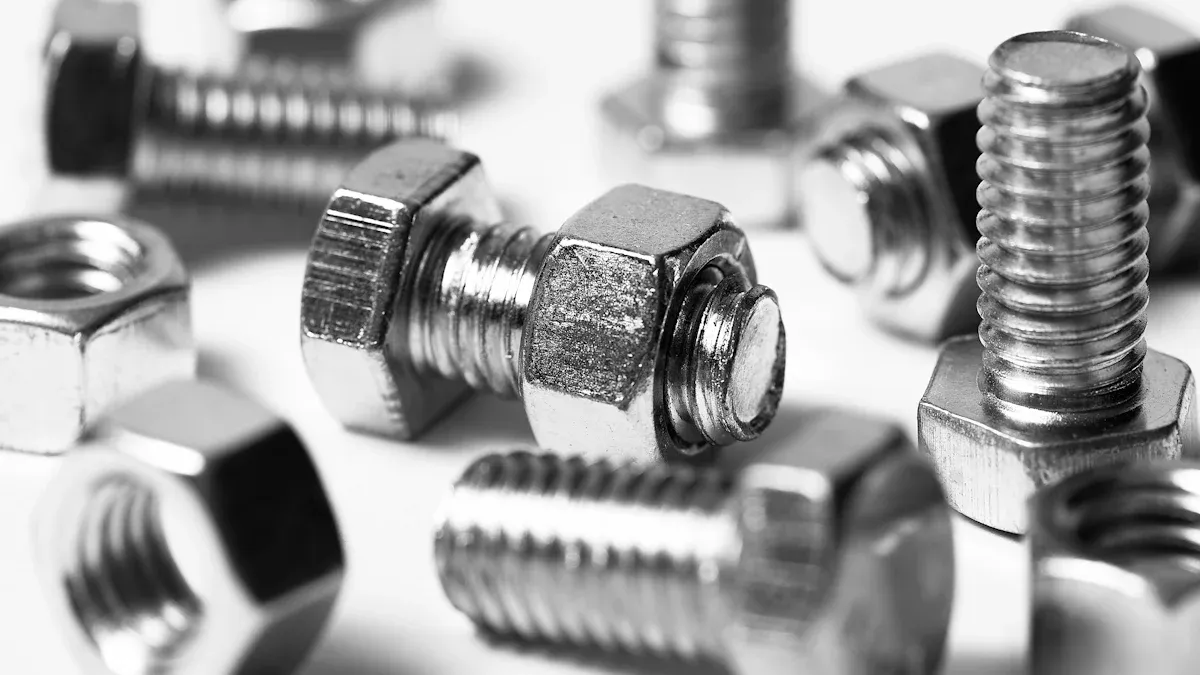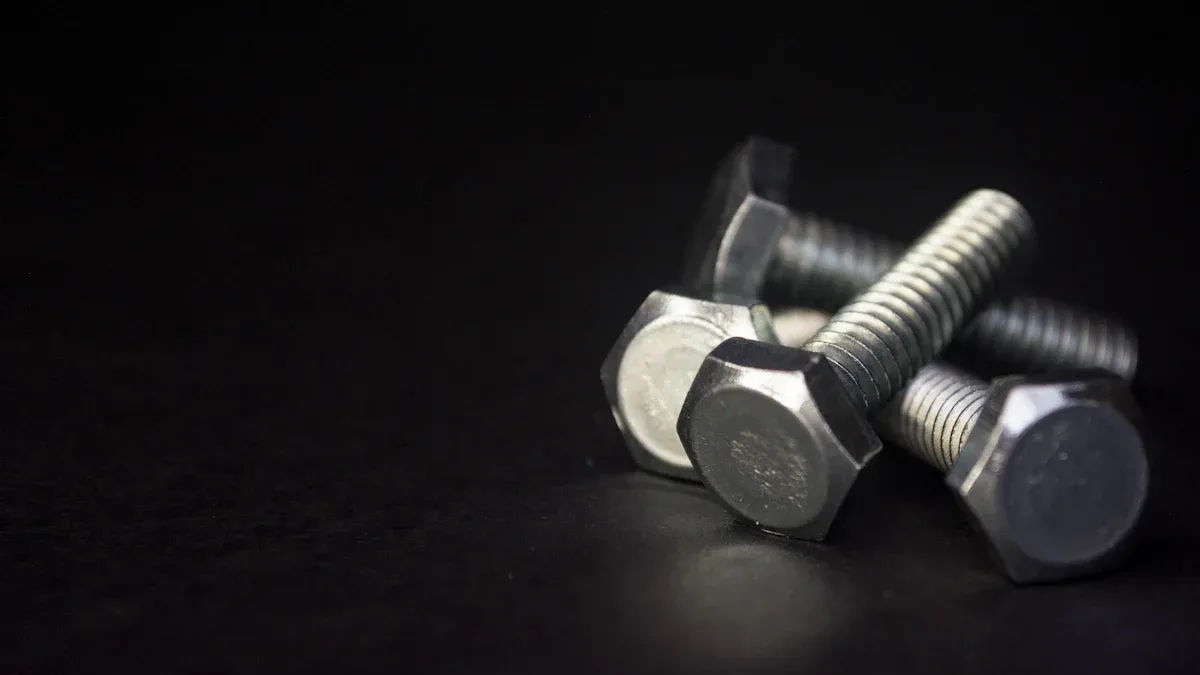

In 2026, top concrete wedge anchor brands define the market through specific strengths. Hilti’s Kwik Bolt TZ2 delivers unmatched performance for critical seismic applications. For projects demanding value, Red Head’s Trubolt+ remains the leading choice for standard-duty wedge anchors. Simpson Strong-Tie’s Strong-Bolt 2 excels as a versatile wedge anchor in general construction. While these anchors cover most jobs, a custom fasteners manufacturer can supply custom anchor bolts and other specialized Anchor Bolts for unique project requirements.
A Detailed Look at 2026’s Top Concrete Wedge Anchor Brands
Choosing the right anchor requires a deep understanding of what each brand offers. The leading concrete wedge anchor brands distinguish themselves through engineering focus, material quality, and target applications. This detailed analysis explores the top contenders for 2026, helping you match the right product to your project’s specific demands.
Hilti: The Benchmark for Performance
Hilti continues its reign as the industry benchmark for ultimate performance and safety. The brand invests heavily in research and development, delivering high-performance anchors for the most demanding structural applications. Engineers and contractors trust Hilti when failure is not an option.
Kwik Bolt TZ2 and Series Analysis
The Hilti Kwik Bolt TZ2 (KB-TZ2) stands as the pinnacle of wedge anchor engineering. Hilti designed this anchor for maximum reliability in the toughest conditions. Its advanced geometry provides superior expansion, ensuring exceptional load-bearing capacity even with smaller edge distances and anchor spacing. The KB-TZ2 series offers a focused range of sizes tailored for heavy structural steel, equipment, and facade systems.
Unmatched Seismic and Cracked Concrete Ratings
Hilti’s primary advantage lies in its best-in-class approvals for seismic and cracked concrete conditions. The KB-TZ2 provides unparalleled safety margins in dynamic loading scenarios, a critical factor in modern building codes. Its qualifications are extensively documented.
💡 Hilti KB-TZ2 Approvals The anchor’s robust performance is validated by top-tier industry testing and reports. Key approvals confirm its suitability for critical connections:
- It is seismic tested in accordance with ACI 355.2 and ICC-ES AC 193.
- The product holds an active
ICC-ES report (concrete)for cracked and uncracked conditions.- It also maintains a separate
ICC-ES report (masonry)for use in grout-filled CMU.
Premium Material and Corrosion Resistance
Hilti utilizes premium-grade carbon steel and stainless steel in its anchors. The standard carbon steel models feature a high-quality zinc coating for interior dry conditions. For more corrosive environments, Hilti offers 316 stainless steel and specialized high-corrosion-resistant (HCR) steel options, providing long-term durability for infrastructure like bridges and tunnels.
Best for Critical Structural Connections
Professionals specify Hilti anchors for projects where load capacity and life safety are paramount. Common applications include securing steel columns, heavy machinery footings, post-tensioning brackets, and seismic retrofitting. The high cost reflects its superior engineering and exhaustive testing, making it an investment in structural integrity.
Simpson Strong-Tie: The Versatile and Reliable Choice
Simpson Strong-Tie has built a reputation for providing comprehensive and reliable building solutions. Their wedge anchors exemplify this approach, offering an excellent balance of high performance, broad code compliance, and accessibility for a wide range of construction projects.
Strong-Bolt 2 Model Evaluation
The Strong-Bolt 2 is Simpson’s flagship wedge anchor, engineered for both strength and ease of use. It features a tri-segmented clip, where each segment adjusts independently to provide more reliable follow-up expansion if the hole is slightly oversized. This design detail enhances its holding power in real-world job site conditions, making it a trusted choice for general construction.
Extensive Range of Sizes and Materials
Versatility is a core strength of the Strong-Bolt 2 line. Simpson offers one of the most extensive selections of wedge anchors on the market. The product is available in diameters from 1/4″ to 1-1/4″ and in various materials, including zinc-plated carbon steel, hot-dip galvanized steel, Type 304 stainless steel, and Type 316 stainless steel. This vast range ensures a suitable anchor exists for nearly any application.
Widespread Code Compliance and Availability
Simpson Strong-Tie excels in securing widespread code approvals. The Strong-Bolt 2 is a pre-approved product under ICC-ES ESR-3037, making it a go-to for projects requiring straightforward inspection and compliance. This approval confirms its suitability for cracked and uncracked concrete based on rigorous testing to ACI 355.2 and ICC-ES AC193 standards, aligning with International Building Code (IBC) requirements. This broad acceptance, combined with extensive availability through commercial distributors, simplifies procurement and project planning.
Balancing High Performance with Cost
The Strong-Bolt 2 occupies a competitive space in the market. It delivers performance that meets or exceeds the requirements for most commercial and residential applications without the premium price tag of Hilti. This makes it an ideal specification for projects needing certified, high-capacity anchors on a moderate budget.
Red Head: The Leader in Value
For decades, Red Head has been synonymous with dependable, cost-effective fastening. The brand continues to lead the market in value, providing reliable fastening solutions for standard-duty applications where budget and volume are primary considerations.
Trubolt+ Anchor Assessment
The Red Head Trubolt+ is a workhorse anchor known for its straightforward design and consistent holding power. While it may not carry the extensive seismic ratings of its premium competitors, the Trubolt+ is a fully-threaded, torque-controlled wedge anchor that provides secure fastening in solid concrete. Its design is proven and trusted for countless standard applications.
Competitive Pricing for Volume Projects
Red Head’s key advantage is its competitive price point. For large-scale projects requiring thousands of anchors—such as installing commercial shelving, racking, or interior partition walls—the cost savings can be substantial. This makes Trubolt+ the preferred choice for contractors working on tight bids.
Solid Performance in Standard Applications
The Trubolt+ delivers solid performance in the applications it was designed for: static loads in uncracked concrete. It is an excellent choice for fastening handrails, signage, light-duty equipment, and electrical conduit supports. For these common tasks, its capacity is more than sufficient, providing a safe and secure connection.
Accessibility for Professionals and DIYers
One of Red Head’s greatest strengths is its accessibility. Trubolt+ anchors are widely available at major home improvement retailers and local hardware stores, in addition to professional supply houses. This widespread availability makes them a convenient option for contractors on the go and for skilled DIYers tackling projects like installing a garage workbench or wall-mounted shelving.
Powers Fasteners: The Consistent Innovator
Powers Fasteners, now part of the DEWALT family, carves out a significant market share by focusing on consistent innovation and certified performance. The brand is a formidable competitor, often challenging premium brands on technical specifications while maintaining a competitive price point. Engineers and contractors frequently specify Powers for projects that demand robust, code-compliant solutions without the highest-tier budget.
Power-Stud+ SD1/SD2 Line Review
The Power-Stud+ SD1 and SD2 are the workhorses of the Powers wedge anchor lineup. These anchors are fully threaded, torque-controlled fasteners designed for heavy-duty connections in solid concrete. The SD1 is a versatile anchor for a wide range of static applications, while the SD2 is engineered for superior performance in cracked concrete and seismic conditions. Both models demonstrate proven performance, making them a trusted choice for structural and non-structural fastening.
Features for Installation Speed and Reliability
Powers designs its anchors with the installer in mind. Key features are engineered to enhance both the speed and reliability of the installation process.
- One-Piece Wrap-Around Clip: The expansion clip design ensures uniform expansion pressure against the hole wall. This feature provides reliable follow-up expansion, accommodating slight variations in hole diameter.
- Stamped Length ID: The head of each anchor is stamped with a length identification code. This simple but effective feature allows for easy post-installation inspection, confirming that the correct anchor length and embedment were used.
These details reduce guesswork on the job site and contribute to a more dependable connection.
Broad Approvals for Varied Concrete Conditions
A major strength of the Power-Stud+ line is its extensive list of approvals for diverse base materials. This versatility makes it a reliable specification for complex projects where concrete conditions may vary. The anchors carry numerous code listings and approvals.
💡 Certified for Demanding Conditions The Power-Stud+ SD2 is rigorously tested and qualified for critical structural applications. Key qualifications include:
- Tested according to ACI 355.2 and ICC-ES AC193.
- Qualified for cracked and uncracked concrete.
- Approved for seismic and wind loading (Seismic Design Category A-F).
These anchors are not just for standard concrete. Their approvals cover a wide spectrum of materials, giving engineers confidence in their specifications.
- Normal-weight concrete
- Structural sand-lightweight concrete
- Concrete over steel deck
- Grout-filled concrete masonry (CMU)
These broad certifications, including ICC-ES ESR-2818 and City of Los Angeles LARR-25787, simplify the submittal and inspection process.
A Strong Competitor in Performance
Powers Fasteners directly competes with other top-tier concrete wedge anchor brands on performance. The load values and seismic ratings of the Power-Stud+ SD2, in particular, position it as a strong alternative for many applications where premium anchors might otherwise be specified. By delivering high-level, certified performance at a mid-range price, Powers offers exceptional value for projects that require documented reliability and structural integrity.
Head-to-Head Feature Comparison of Wedge Anchors
Selecting the right product from top concrete wedge anchor brands requires a direct comparison of key performance metrics. This analysis breaks down how Hilti, Simpson Strong-Tie, Red Head, and Powers Fasteners stack up against each other in load capacity, material durability, and code approvals. Understanding these differences is critical for matching an anchor to specific engineering demands.
Tensile and Shear Load Capacity
An anchor’s primary job is to resist forces. Tensile load is the pull-out force trying to extract the anchor from the concrete. Shear load is the side-to-side force acting perpendicular to the anchor. The ultimate capacity of all wedge anchors depends heavily on diameter, material strength, and embedment depth.
💡 Embedment Depth is Crucial Minimum embedment is the shallowest depth an anchor can be installed to achieve its published load rating. Deeper embedment generally provides higher load capacity. Failing to meet the minimum depth drastically reduces an anchor’s holding power.
| Embedment Depth | Typical Anchor Type | Ultimate Tensile Load (lbs) in 4000 psi Concrete |
|---|---|---|
| Shallow (1-2 inches) | Light-Duty Screw Anchors | 2,000-3,000 |
| Standard (2-4 inches) | 1/2″ Wedge & Sleeve Anchors | 4,000-7,000 |
| Deep (4+ inches) | 3/4″ Wedge Anchors | 8,000-12,000+ |
Hilti’s Load Performance
Hilti’s Kwik Bolt TZ2 consistently delivers the highest tensile and shear values in the industry, especially in cracked concrete. Its advanced expansion mechanism creates a more reliable connection, allowing it to carry extreme loads. For example, a single 3/4-inch Hilti anchor can achieve ultimate shear loads well over 10,000 pounds. This superior performance makes it the default choice for life-safety systems and heavy structural connections.
Simpson Strong-Tie’s Load Performance
Simpson’s Strong-Bolt 2 offers exceptional load capacities that meet the demands of most commercial construction. Its performance values are highly competitive and often approach those of premium-tier anchors. The tri-segmented clip design provides reliable expansion, ensuring strong holding power for applications like securing structural ledgers, racking, and machinery.
Red Head’s Load Performance
Red Head’s Trubolt+ provides solid and dependable load capacities for standard-duty applications in uncracked concrete. While its ultimate load values are lower than those of Hilti or Simpson, they are more than sufficient for static loads. These anchors are ideal for fastening handrails, signage, and light equipment where seismic performance is not a requirement.
Powers Fasteners’ Load Performance
Powers’ Power-Stud+ SD2 directly challenges the top-tier brands on load capacity. It provides excellent tensile and shear values in both cracked and uncracked concrete. Its certified performance in seismic conditions makes it a strong and cost-effective alternative for structural applications. The SD1 model offers robust capacity for a wide range of static-load projects.
Material Quality and Corrosion Resistance
The anchor’s material determines its lifespan and suitability for different environments. Corrosion can severely compromise an anchor’s structural integrity over time.
Hilti’s Premium Steel Options
Hilti uses high-grade carbon steel and stainless steel to manufacture its anchors. Beyond standard zinc plating and 316 stainless steel, Hilti offers a proprietary high-corrosion-resistant (HCR) steel. This specialized material provides extreme durability in the most aggressive environments, such as coastal zones, chemical plants, and tunnels.
Simpson’s Stainless Steel Grades
Simpson Strong-Tie provides comprehensive anchoring solutions with a vast material selection. Their wedge anchors are available in:
- Zinc-plated carbon steel for dry, interior use.
- Hot-dip galvanized steel for exterior use in non-marine environments.
- Type 304 stainless steel for damp or freshwater environments.
- Type 316 stainless steel for saltwater and corrosive chemical exposure.
This range covers nearly every common construction scenario.
Red Head’s Standard Coatings
Red Head focuses on value by standardizing its material offerings. The majority of Trubolt+ anchors feature a zinc-plated carbon steel finish. This coating provides effective corrosion protection for interior, dry applications and is a key factor in the brand’s budget-friendly price point.
Powers’ Material Versatility
Powers Fasteners offers a versatile lineup of materials for its Power-Stud+ anchors. The line includes standard zinc-plated, hot-dip galvanized, and stainless steel options. This material diversity allows specifiers to choose a Power-Stud+ anchor for projects ranging from interior build-outs to infrastructure exposed to the elements.
Approvals for Cracked Concrete and Seismic Use
Code approvals provide third-party verification that an anchor performs as expected under specific conditions. ICC-ES (International Code Council Evaluation Service) reports are the gold standard for building product compliance in the United States.
Hilti’s Extensive ICC-ES Reports
Hilti leads the industry with the most extensive and stringent code approvals. The KB-TZ2 has best-in-class ratings for cracked concrete and all Seismic Design Categories (A-F). Engineers specify Hilti when project requirements demand the highest level of documented safety and reliability, leaving no room for uncertainty.
Simpson’s Broad Seismic Approvals
Simpson Strong-Tie excels at securing broad, easy-to-use code approvals. The Strong-Bolt 2 holds a clear ICC-ES report (ESR-3037) for use in cracked and uncracked concrete, including seismic applications. This widespread acceptance simplifies the design and inspection process, making it a trusted, compliant choice for general contractors.
Red Head’s Approvals for Select Models
Red Head’s Trubolt+ anchors carry approvals for use in uncracked concrete. They are a proven and reliable choice for applications where seismic forces are not a design consideration. For standard, non-structural fastening, these anchors meet all necessary requirements.
Powers’ Comprehensive Certifications
Powers Fasteners invests heavily in certifications, positioning the Power-Stud+ SD2 as a formidable competitor. It holds comprehensive ICC-ES reports (e.g., ESR-2818) for cracked concrete and high seismic use. These robust approvals give engineers the confidence to specify Powers as a high-performance alternative in demanding structural projects.
Price Point and Overall Value
The final purchase decision for many projects comes down to budget. The price of an anchor reflects its engineering, material quality, and the level of testing it has undergone. Understanding the value proposition of different concrete wedge anchor brands is key to making a cost-effective and safe choice.
Hilti: Premium Investment
Hilti anchors occupy the highest price tier, a cost that reflects a total system investment. The premium price funds extensive research, best-in-class seismic testing, and comprehensive engineering support. Contractors who choose Hilti are not just buying a fastener; they are buying performance assurance.
💡 Total Cost of Ownership The value of Hilti extends beyond the anchor itself. The price includes access to:
- Expert engineering support and design software.
- On-site consultation and installer training.
- The peace of mind that comes with unparalleled safety and liability reduction.
For critical infrastructure and high-stakes structural connections, the higher initial cost is justified by minimizing risk and ensuring long-term structural integrity.
Simpson Strong-Tie: Mid-to-High Range
Simpson Strong-Tie provides an exceptional balance of cost and certified performance. Its wedge anchors are priced in the mid-to-high range, making them accessible for a wide array of professional projects. This price point delivers anchors with robust code approvals, including seismic ratings, without the premium expense of the highest-tier options. The brand’s value lies in its combination of reliability, widespread availability, and straightforward code compliance. This makes it a smart, dependable choice for general contractors managing budgets for commercial and residential construction.
Red Head: Budget-Friendly
Red Head solidifies its market position as the leader in value. Its anchors are the most budget-friendly among the top brands, making them the go-to choice for high-volume projects with standard load requirements. The lower price point is achieved by focusing on proven designs for uncracked concrete and using standard zinc-plated materials. For projects like interior framing, light-duty racking, and non-structural attachments, Red Head offers dependable performance that significantly lowers the total bill of materials.
Powers Fasteners: Competitive Mid-Range
Powers Fasteners delivers a compelling value proposition by offering high-performance anchors at a competitive mid-range price. The Power-Stud+ SD2, with its extensive seismic and cracked concrete approvals, directly competes with more expensive options on a technical level. This allows engineers and contractors to achieve certified performance while managing project costs effectively. Powers represents a strong “value engineering” choice, providing an opportunity to meet demanding specifications without allocating a premium budget.
Understanding Anchor Specifications and Types
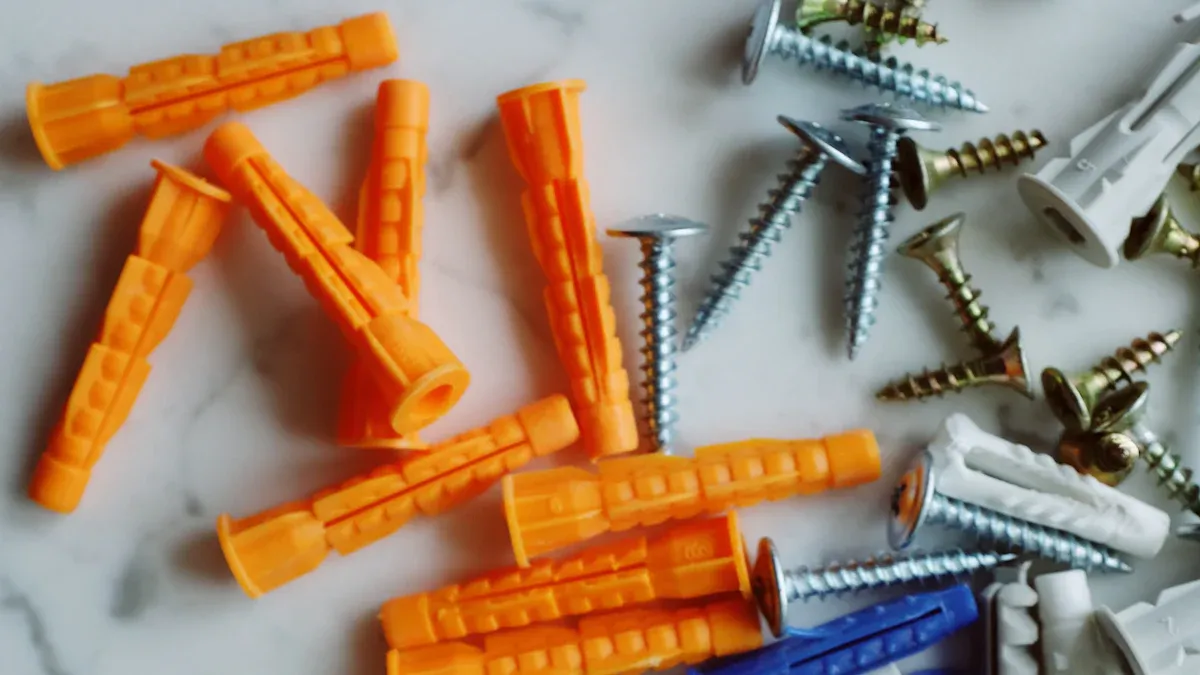
Choosing the right anchor involves more than just picking a brand. A professional must understand the fundamental differences between anchor types, materials, and the codes that govern their use. This knowledge ensures the selection of safe and appropriate fastening solutions.
Key Differences: Wedge Anchors vs. Screw Anchors
While both wedge anchors and screw anchors fasten objects to concrete, they achieve their holding power through distinct mechanical principles.
How Wedge Anchors Work
Wedge anchors are a type of expansion anchor. Their holding power comes from a mechanical wedging action.
- Tightening the nut pulls the anchor stud upward.
- This movement forces an expansion clip between the anchor body and the wall of the drilled hole.
- The resulting outward pressure creates a strong frictional grip against the concrete.
How Concrete Screw Anchors Work
Concrete screw anchors function more like a traditional screw. They create their own connection without expansion forces.
- These anchors feature specialized, hardened threads.
- As the screw anchor turns into a pre-drilled pilot hole, its threads cut and tap into the concrete.
- This action forms a secure mechanical interlock directly with the base material.
When to Choose Each Type
Wedge anchors typically offer higher ultimate load capacities, making them ideal for heavy structural applications. Screw anchors are often preferred for temporary installations or applications close to an edge, as they impart lower stress on the concrete. Many screw anchors are also removable.
Comparing Brands like Tapcon
Brands like Tapcon are synonymous with concrete screw anchors. While excellent for light to medium-duty tasks, their load performance and applications differ significantly from heavy-duty wedge anchors from brands like Hilti or Simpson. Specifiers must match the anchor type to the job’s engineering demands.
Decoding Material and Finish Types
An anchor’s material dictates its durability and resistance to corrosion.
Zinc-Plated Carbon Steel for Interior Use
Zinc plating is a thin, electroplated coating applied to carbon steel anchors. It provides basic rust protection suitable only for dry, interior environments. This finish is the most common and cost-effective option.
Hot-Dip Galvanized for Exterior Use
Hot-dip galvanizing involves dipping the anchor in molten zinc, creating a much thicker coating that is metallurgically bonded to the steel. Governed by standards like ASTM A153, this process provides robust corrosion protection for exterior use in non-coastal areas.
| Characteristic | Hot-Dip Galvanized | Zinc-Plated (Electroplated) |
|---|---|---|
| Coating Thickness | 1.7 mils minimum | 0.2-0.4 mils typical |
| Adhesion | Metallurgical bond | Electrochemical adhesion |
| ASTM Specification | A153 | Commercial standards |
304 and 316 Stainless Steel for Corrosive Areas
For environments with moisture or chemical exposure, stainless steel anchors are necessary. Type 316 contains molybdenum, giving it superior corrosion resistance over Type 304, especially against chlorides found in coastal or de-icing salt zones. However, both types can be vulnerable to Stress Corrosion Cracking (SCC) in certain aggressive environments.
High-Corrosion-Resistant (HCR) Steel
For the most extreme conditions, manufacturers like Hilti offer proprietary HCR steel anchors. These advanced alloys provide maximum protection in highly corrosive settings like tunnels and chemical plants, far exceeding the performance of traditional stainless steel.
The Importance of Code Approvals
Code approvals provide independent verification of an anchor’s performance.
Understanding ICC-ES Reports
The International Code Council Evaluation Service (ICC-ES) issues reports that building officials rely on to verify compliance. As stated in IBC Section 104.11, these reports provide design procedures for alternative materials like post-installed anchors, making them critical for project approval.
Cracked vs. Uncracked Concrete Ratings
Concrete can develop fine cracks under tension or from shrinkage. Anchors rated for “cracked concrete” are engineered to maintain their load capacity even if a crack forms at their location. Many engineers default to assuming cracked concrete for a conservative and safe design.
Navigating Seismic Design Categories
For structures in earthquake-prone regions, anchors must have seismic approvals. These ratings, which correspond to Seismic Design Categories (A-F), confirm that an anchor has been tested to withstand the dynamic loads generated during a seismic event.
Installation Best Practices for Top Brands
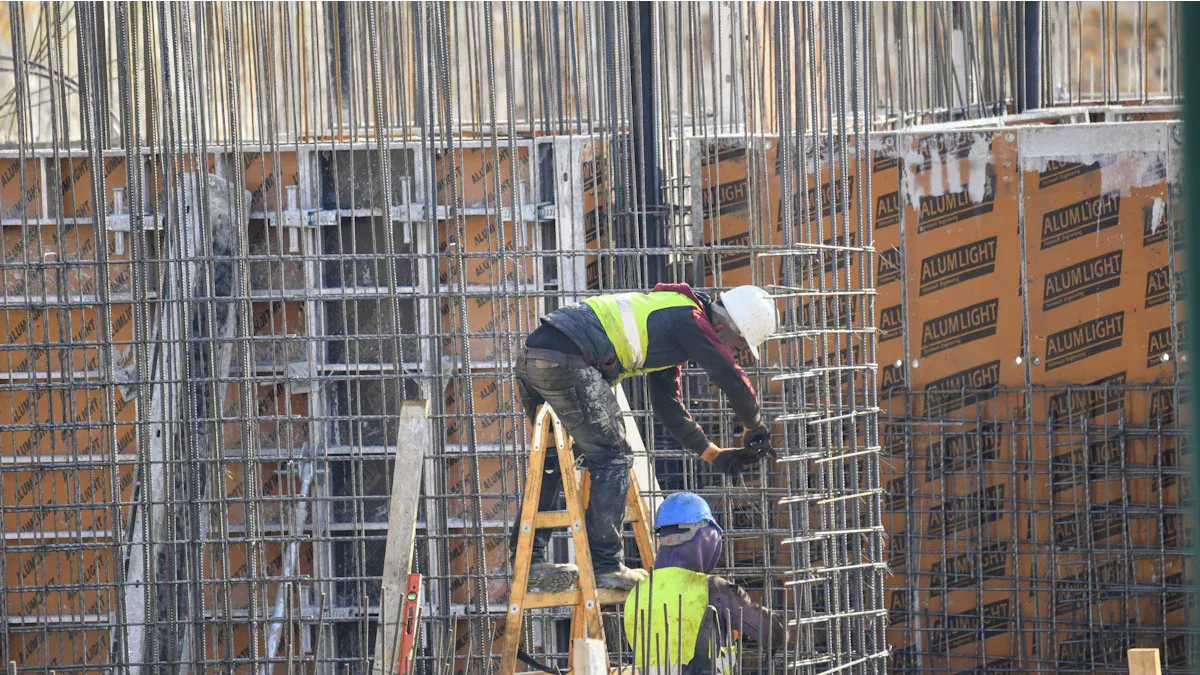
An exceptional anchor’s performance is only as good as its installation. Even premium products from top concrete wedge anchor brands can fail without adherence to proper procedures. Following manufacturer guidelines for drilling, cleaning, and torquing is not just a recommendation; it is a requirement for achieving published load capacities and ensuring structural safety. A correct installation process guarantees that the fastening solutions perform as engineered.
Proper Hole Drilling and Cleaning
The first steps of the installation process—drilling and cleaning the hole—are foundational to a secure connection. Errors at this stage can compromise the entire fastening.
Drill Bit Diameter and Wear
The diameter of the drilled hole is critical. For a 1/2-inch wedge anchor, the installation requires a 1/2-inch diameter hole. Installers must use carbide-tipped bits that meet ANSI Standard B212.15 to ensure precise dimensions. A worn bit will create an undersized hole, while a low-quality bit might drill an oversized one. An oversized hole prevents the anchor’s expansion clip from properly engaging the concrete, drastically reducing its holding power.
The Critical Step of Hole Cleaning
Concrete dust and debris left in a drilled hole act as a lubricant, preventing the anchor’s expansion mechanism from gripping the concrete. This is a critical step in the installation. The standard procedure involves a sequence of blowing compressed air into the hole, brushing it with a wire brush sized to the hole diameter, and blowing it out again. This “blow-brush-blow” method ensures the hole walls are clean for maximum friction.
Manufacturer-Specific Requirements
While general best practices apply, manufacturers may have specific requirements for their easy-to-install anchors. For example, some high-performance systems may require specialized hollow drill bits that clean the hole during drilling. Always consult the manufacturer’s printed installation instructions (PII) or technical data sheet for the specific anchor being used. This documentation provides the authoritative guidance for a successful installation.
Setting the Anchor and Applying Torque
Properly setting the anchor and applying the correct torque are the final steps in the installation that activate its holding power.
Correct Embedment Depth
Each anchor is designed for a specific embedment depth to achieve its rated capacity. The anchor must be driven into the hole until the washer and nut are snug against the fixture. A shallow installation will not engage enough concrete to develop the required strength. Many anchors have a length identification code stamped on the head to allow for post-installation inspection of the embedment depth.
Using a Calibrated Torque Wrench
Applying the correct torque is essential. Under-torquing leads to an under-expanded wedge and reduced holding power. Over-torquing can cause the anchor’s steel to fail or even crack the surrounding concrete. A calibrated torque wrench is the only tool that can ensure the specified torque is applied accurately.
💡 Torque Specifications Torque values are specific to the anchor’s diameter and manufacturer. For example, a 1/2″ Red Head wedge anchor requires 55 ft-lbs of torque. Always verify the correct value in the product’s technical data.
Common Installation Mistakes to Avoid
Improper installation is a significant cause of anchor failure, with some estimates suggesting up to 80% of certain anchors are installed incorrectly. Common mistakes include:
- Incorrect Hole Size: Using a worn or wrong-sized drill bit.
- Poor Hole Cleaning: Skipping the “blow-brush-blow” step.
- Improper Torque: Guessing the torque instead of using a calibrated wrench.
- Shallow Embedment: Not driving the anchor to the required depth.
Avoiding these pitfalls is crucial for a safe and reliable installation.
Project-Based Recommendations for 2026
Matching the right brand to the job ensures safety, compliance, and budget control. Specific project demands dictate the ideal anchor choice. This guide provides clear recommendations for common applications.
For Heavy Structural Loads: Hilti
Engineers specify Hilti when performance is non-negotiable. The brand provides robust solutions for the most demanding structural connections where failure could be catastrophic.
High-Rise Construction and Steel Columns
Securing primary steel columns and moment frames requires the highest load capacities. Hilti’s KB-TZ2 excels in these applications. Its superior performance in cracked concrete and seismic conditions provides the necessary safety factors for tall structures.
Heavy Machinery and Equipment Footings
Industrial equipment generates significant vibration and dynamic loads. Hilti anchors offer unparalleled reliability for fastening heavy machinery footings. Their design resists loosening over time, ensuring operational stability and safety.
Critical Seismic Retrofitting
Upgrading existing buildings to meet modern seismic codes is a life-safety priority. Hilti’s extensive testing and best-in-class seismic approvals make it the definitive choice for retrofitting projects. Engineers trust these anchors to perform predictably during an earthquake.
For General Construction: Simpson Strong-Tie
Simpson Strong-Tie offers versatile and code-compliant solutions for a wide range of commercial and residential projects. The brand balances strong performance with excellent availability.
Residential Sill Plates and Ledgers
The Strong-Bolt 2 is an ideal choice for securing sill plates to foundations or attaching deck ledgers. Its reliable performance and widespread code approvals simplify inspections for residential builders.
Commercial Racking and Shelving
Warehouse and retail environments require secure fastening for heavy racking systems. Simpson Strong-Tie provides dependable anchors that meet the load requirements for these common commercial installations.
Projects Needing Wide Availability
Contractors often need reliable products on short notice. Simpson Strong-Tie’s extensive distribution network ensures that code-compliant fasteners are readily available, keeping projects on schedule.
For Standard Duty and Budget Projects: Red Head
Red Head leads the market in value for standard applications. It is the go-to brand for high-volume projects where cost is a primary factor.
Interior Handrails and Guardrails
The Red Head Trubolt+ provides more than enough strength for securing interior handrails and guardrails. These static, non-structural applications are a perfect fit for this cost-effective anchor.
Light-Duty Machinery Fastening
Many workshops and facilities need to fasten light-duty equipment to concrete floors. The Trubolt+ offers a secure connection for machinery that does not produce heavy dynamic forces.
Non-Structural Attachments
For high-volume, non-structural tasks, Red Head is unbeatable. Common uses include:
- Securing electrical conduit straps
- Fastening interior partition wall tracks
- Anchoring lightweight signage
These applications benefit from the brand’s low cost and dependable holding power.
Exploring Other Notable Brands
While the market leaders offer a wide range of solutions, other specialized brands provide compelling alternatives for specific project requirements. These manufacturers often build their reputation on a distinct value proposition, such as domestic manufacturing or unique product innovations.
American-Made Options: Thunderstud
Thunderstud has carved out a significant space in the fastener market by focusing on a key differentiator: domestic production. The brand is a leading choice for contractors and agencies needing to comply with projects that specify American-made components.
Brand Overview and Focus
Thunderstud anchors its brand identity in its commitment to manufacturing products entirely in the United States. This focus appeals directly to projects with “Buy American” provisions, common in government and public works contracts. Customers choose Thunderstud to support domestic industry and ensure a transparent supply chain. The brand’s primary focus is on producing reliable, standard-duty wedge anchors that meet the needs of general construction while fulfilling domestic sourcing requirements.
💡 The “Buy American” Advantage For federally funded infrastructure projects, specifying a brand like Thunderstud simplifies compliance. It provides clear documentation that the materials meet domestic sourcing mandates, preventing potential delays or disqualifications during the procurement and inspection phases.
This strategic positioning makes Thunderstud a go-to supplier for a specific but important segment of the construction industry. The brand delivers consistent quality and dependable performance for projects where the origin of the materials is as critical as their mechanical properties.
Product Offerings and Applications
Thunderstud provides a robust lineup of wedge anchors designed for solid concrete applications. The product range covers the most common environmental conditions encountered in construction, ensuring a suitable option is available for various job sites. Their material offerings demonstrate this versatility.
- American Zinc Plated Thunderstud Anchors: A cost-effective choice for interior applications or dry, damp environments.
- American Hot-Dipped Galvanized Thunderstud Anchors: Ideal for exterior use where moderate corrosion resistance is needed.
- American 303 & 316 Stainless Steel Thunderstud Anchors: Specified for projects requiring superior corrosion protection, such as in coastal areas or facilities with chemical exposure.
These anchors are well-suited for a variety of standard-duty tasks. Contractors commonly use them for fastening structural steel angles, securing conduit supports, and anchoring machinery bases in non-seismic zones. For example, a 3/8″ x 2-3/4″ Zinc Plated ThunderStud Anchor is a workhorse product for securing interior fixtures to concrete. By offering a full suite of domestically produced anchors, Thunderstud provides a reliable and compliant solution for a wide array of construction and infrastructure projects.
In 2026, specific project requirements—engineering, environment, and budget—determine the ideal choice among top wedge anchors. A summary of recommendations includes:
- Hilti: The clear choice for ultimate safety and performance in critical applications.
- Simpson Strong-Tie: Versatile, code-compliant solutions offering a balance of cost and reliability.
- Red Head: Dependable, budget-friendly solutions for standard-duty projects.
A careful evaluation of load demands ensures the selection of the correct wedge anchors for a secure, lasting connection.
FAQ
Can you reuse a wedge anchor?
Professionals never reuse wedge anchors. The expansion clip deforms permanently during the initial installation. Removing and reinstalling the anchor compromises its certified load capacity and creates a significant safety risk. It is a one-time-use fastener.
What happens if you over-torque a wedge anchor?
Applying excessive torque can yield the anchor’s steel bolt or cause cone-shaped failure in the concrete. Both outcomes result in a drastic loss of holding power. Always use a calibrated torque wrench to apply the manufacturer’s specified torque value.
Why is hole cleaning so important?
Concrete dust inside the hole acts as a lubricant. It prevents the expansion clip from properly gripping the concrete walls. This action significantly reduces the anchor’s pull-out strength. Proper cleaning ensures maximum frictional resistance and holding power.
How close to an edge can you install a wedge anchor?
The minimum edge distance varies by anchor diameter and brand. Installing an anchor too close to an edge can cause the concrete to break out.
💡 Pro Tip: Always consult the manufacturer’s technical data sheet for specific minimum spacing and edge distance requirements to ensure a safe installation.
Can you use a wedge anchor in brick or block?
Wedge anchors are designed specifically for solid concrete. Their high expansion forces can easily crack or break hollow or softer materials like brick or CMU block. Installers should use sleeve anchors or concrete screws for these base materials.
Do you need a special drill bit for wedge anchors?
Installers must use an ANSI-compliant carbide-tipped drill bit that matches the anchor’s diameter. A worn or incorrect bit creates an improperly sized hole. This prevents the anchor from setting correctly and achieving its rated load capacity.