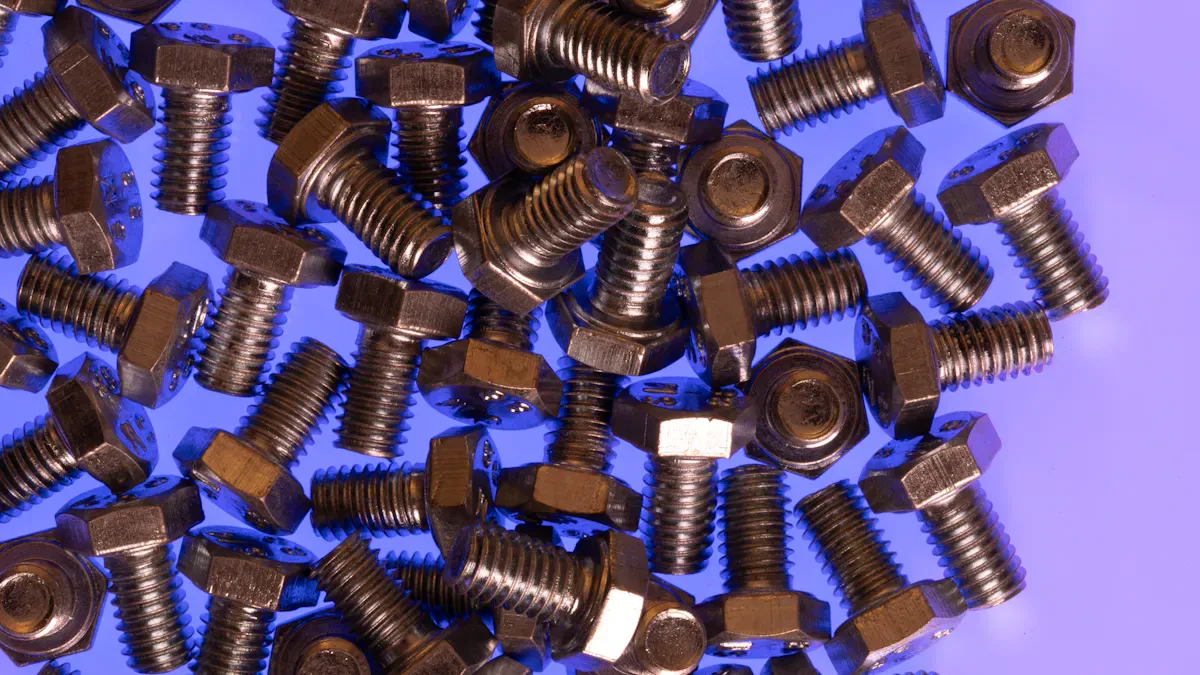

Selecting the correct bolts is critical for structural integrity. Improper fastener selection contributes to a high percentage of structural failures in outdoor projects.
For connecting 4×4 posts to a standard double joist, the premier choice is a hot-dip galvanized carriage bolt. This bolt should be a 1/2-inch diameter and 8 inches long. This specific combination provides the necessary strength and corrosion resistance for a safe, durable structure.
While standard bolt casting meets most needs, a custom fasteners manufacturer can supply custom fasteners. These carriage bolts provide the essential strength for a secure connection with these bolts.
Calculating the Perfect Carriage Bolt Length
Determining the correct bolt length is a straightforward process. It ensures a secure connection without waste or structural compromise. A simple calculation based on the materials involved provides the necessary figure for selecting the right bolts.
The Basic Formula for All Bolts
A universal formula helps builders find the minimum bolt length for any connection. This calculation prevents the common mistake of choosing bolts that are too short for the job.
Understanding the Components
The calculation requires three key measurements. Builders must account for the actual dimensions of all materials, not their nominal names.
- Post Width: A standard 4×4 post has an actual width of 3.5 inches.
- Lumber Width: This is the total thickness of the joist(s) or beam being attached. A single 2x board is 1.5 inches thick, while a double joist is 3 inches thick.
- Hardware Allowance: This accounts for the thickness of the washer and the height of the nut. A standard allowance is 1/2 inch.
The Calculation: Post Width + Lumber Width + Hardware
The formula provides the minimum required length for your bolts. Always use actual measurements for accuracy.
Correct Bolt Length = (Actual Post Width) + (Actual Lumber Width) + (Washer & Nut Allowance)
Example for a 4×4 post and a double 2x joist:
3.5" (post) + 3.0" (joists) + 0.5" (hardware) = 7.0 inches
Based on this calculation, a 7-inch bolt is the absolute minimum. Professionals typically select the next standard size up, an 8-inch bolt, to ensure a safe margin.
Why Extra Length is Non-Negotiable
Opting for a slightly longer bolt is a critical safety practice. This extra length accommodates real-world variables and ensures the connection meets structural standards.
Ensuring Full Nut Engagement
A secure connection depends on the nut fully engaging the bolt’s threads. Structural engineering standards, such as those from the Research Council for Structural Connections (RCSC), require the end of the bolt to be at least flush with the outer face of the nut. The Industrial Fasteners Institute (IFI) even recommends that at least two full threads extend past the nut. Using a bolt that is too short prevents full engagement of the threads, which severely compromises the strength of the connection. Sufficient length guarantees all the nut’s threads grip the bolt, creating the holding power required for structural posts.
Accommodating Lumber Variations and Swelling
Lumber is not always perfect. The dimensions of pressure-treated wood can vary slightly from board to board. Furthermore, outdoor wood swells as it absorbs moisture and shrinks as it dries. These minor changes can affect the total thickness of the assembly. An extra fraction of an inch in bolt length provides a crucial buffer, ensuring the hardware remains properly seated and the threads stay engaged despite these natural material changes. This foresight prevents connections from loosening over time. These carriage bolts provide the essential strength for a secure connection with these bolts.
Common Scenarios: Matching Bolt Length to Your Job
Applying the bolt length formula to real-world projects clarifies the selection process. The following section details some common scenarios and required bolt lengths, demonstrating how to choose the correct hardware for different structural assemblies. Each calculation relies on the actual dimensions of the lumber, not the nominal sizes.
Scenario 1: 4×4 Post to a Single Joist (e.g., 2×8)
This connection is common in smaller structures or for specific framing details. A builder must account for the true thickness of the lumber. Lumber undergoes drying and planing after it is cut, which reduces its final size. A board sold as a 2×8, for example, has an actual thickness of only 1.5 inches.
| Nominal Size | Actual Thickness | Actual Width |
|---|---|---|
| 2×8 | 1-1/2 inches | 7-1/4 inches |
Required Bolt Length: 5 to 6 Inches
The calculation for this assembly is straightforward. It combines the post width, the joist thickness, and the hardware allowance.
Calculation:
3.5" (4x4 Post) + 1.5" (Single 2x Joist) + 0.5" (Hardware) = 5.5 inches
This result means a 5.5-inch bolt is the minimum required length. Since bolts are sold in standard increments, a 6-inch bolt is the correct choice. This provides the necessary extra length for full nut engagement and accommodates any variations in the wood.
Scenario 2: 4×4 Post to a Double Joist (e.g., two 2x10s)
Attaching posts to a double joist or rim joist is a standard practice in deck construction. This assembly provides significant structural support. The total width of the lumber is the combined thickness of two 2x boards, which is 3 inches (1.5″ + 1.5″).
Required Bolt Length: 7 to 8 Inches
Industry standards, including those from the American Wood Council, recommend an 8-inch bolt for this connection. The calculation confirms this choice.
Calculation:
3.5" (4x4 Post) + 3.0" (Double 2x Joist) + 0.5" (Hardware) = 7.0 inches
A 7-inch bolt meets the absolute minimum requirement, leaving no room for error. Professionals choose 8-inch carriage bolts as the standard. This ensures a secure connection and provides a margin of safety, making it the premier choice for attaching deck posts. These longer bolts guarantee the connection remains strong.
Scenario 3: 4×4 Post to a Triple Beam (e.g., three 2x10s)
Heavy-duty structures often use triple-laminated beams to support significant loads. These beams consist of three 2x boards fastened together, creating an actual thickness of 4.5 inches (1.5″ x 3). Securing posts to such a substantial beam requires longer bolts.
Required Bolt Length: 8 to 9 Inches
Engineering guidelines specify a longer fastener to pass through the thicker assembly. The required bolt length increases to accommodate the additional lumber.
Calculation:
3.5" (4x4 Post) + 4.5" (Triple 2x Beam) + 0.5" (Hardware) = 8.5 inches
The calculation shows a minimum length of 8.5 inches. Therefore, a 9-inch bolt is the correct fastener for this application. Using shorter bolts would fail to provide adequate thread engagement, compromising the safety and stability of the entire structure.
Scenario 4: Connecting Two 4×4 Posts Together
Builders sometimes connect two 4×4 posts side-by-side. This technique, known as laminating, creates a stronger, more substantial structural element. This method is useful for building up fence gate posts or creating custom-dimension supports. The connection requires bolts that can pass through the full width of both posts.
A key detail for this calculation is the actual width of the lumber. A post sold as a 4×4 is not actually 4 inches wide. The planing process at the mill reduces its final size.
| Nominal Size | Actual Dimensions (inches) |
|---|---|
| 4×4 | 3.5 x 3.5 |
Therefore, two 4×4 posts bolted together have a combined actual width of 7 inches.
Required Bolt Length: 7 to 8 Inches
Calculating the correct bolt length for this assembly is critical for a secure bond. The formula combines the width of both posts with the standard hardware allowance. These bolts must have sufficient length to ensure a safe connection.
Calculation:
3.5" (Post 1) + 3.5" (Post 2) + 0.5" (Hardware) = 7.5 inches
The calculation shows a minimum required length of 7.5 inches. Since carriage bolts are typically sold in half-inch or full-inch increments, an 8-inch bolt is the correct choice. Using 7-inch bolts would be dangerously short, preventing the nut from fully engaging the threads. The 8-inch length provides the necessary clearance for the washer and nut, guaranteeing a strong, reliable connection between the two pieces of wood.
Why 1/2-Inch Diameter is the Standard for Posts
While length ensures a bolt passes completely through an assembly, the diameter determines its fundamental strength and ability to handle structural forces. The diameter of a bolt directly impacts its capacity to resist failure. Choosing the correct bolt diameter is a non-negotiable aspect of safe construction, ensuring the long-term structural integrity of the project.
The Role of Bolt Diameter in Structural Safety
A bolt’s diameter dictates its ability to manage two critical forces: shear and bending. A larger diameter provides more steel cross-section, which translates directly to greater strength against the loads that decks, fences, and other structures experience daily.
Understanding Shear Strength
Shear strength is a fastener’s ability to resist forces that try to slice it in half. Imagine a deck joist attached to a post. Gravity and the weight on the deck (the load) pull the joist downward. This action puts a powerful shearing force on the bolts holding it in place.
- Force Direction: The post and joist move in parallel but opposite directions.
- Bolt’s Job: The bolt must resist being cut at the point where the two pieces of wood meet.
A bolt with a larger diameter has more material to resist this slicing force. This increased strength is essential for preventing a sudden, catastrophic failure where a joist could drop from a post.
Resisting Bending Forces from Wind and Use
Structures are not static. Posts are subjected to lateral (sideways) forces from wind, people leaning against railings, or the natural movement of the structure. These forces try to bend the bolts within their holes. A bolt with an insufficient diameter can flex or permanently bend under this load, leading to a loose, wobbly connection. A thicker bolt provides superior rigidity, maintaining a tight fit and preventing the connection from weakening over time.
Comparing Common Bolt Diameters
Builders have several common bolt sizes to choose from. However, for securing structural posts, only one diameter hits the perfect balance of strength and practicality. The correct choice is critical for meeting structural load requirements.
| Bolt Diameter | Suitability for 4×4 Posts | Analysis |
|---|---|---|
| 3/8-Inch | ❌ Not Recommended | These bolts lack the necessary shear strength for primary structural connections. They are better suited for non-structural applications like attaching railing balusters or decorative elements. |
| 1/2-Inch | ✅ The Industry Standard | This diameter provides excellent strength for the typical load a 4×4 post will bear. It is robust enough to ensure structural integrity without removing too much wood from the post. |
| 5/8-Inch | ⚠️ Generally Overkill | While offering immense strength, these large bolts require drilling a hole that can compromise the integrity of a 3.5-inch wide 4×4 post. The remaining wood on either side of the hole may be too thin, creating a new weak point. |
3/8-Inch Bolts: Too Small for Structural Posts
A 3/8-inch bolt simply does not have the mass to provide the necessary strength for a post-to-beam connection. Its lower capacity to handle a heavy load makes it a risky choice. Using these smaller bolts for a critical structural joint violates professional building standards.
1/2-Inch Bolts: The Structural Sweet Spot
The 1/2-inch diameter bolt is the undisputed champion for this application. It offers a massive increase in strength over a 3/8-inch bolt, providing the safety factor needed for deck and fence posts. Its size is substantial enough to handle significant shear and bending forces. At the same time, it does not remove an excessive amount of material from the 4×4 post, preserving the wood’s own structural capacity.
5/8-Inch Bolts: Overkill for Standard 4×4 Posts
Using 5/8-inch bolts for a 4×4 post is a case of diminishing returns. The hole required for this bolt is so large that it can weaken the wood around it. The primary goal is a strong connection, which includes both the fastener and the wood. These larger bolts are better reserved for connections involving bigger lumber, such as 6×6 posts or heavy-duty beams.
Code Requirements for Carriage Bolts for Deck Building
Building codes exist to ensure public safety. These regulations provide minimum standards for construction materials and methods, including the size of fasteners. When it comes to carriage bolts for deck building, codes are very specific.
What the International Residential Code (IRC) Requires
The IRC is a model code used as a baseline for most local building codes in the United States. The prescriptive deck-building guides based on the IRC, such as the American Wood Council’s DCA 6, explicitly call for 1/2-inch diameter bolts for attaching beams and joists to posts. Following this guideline ensures the connection meets established safety standards. These codes specify these carriage bolts to handle the expected load.
Why You Must Always Check Local Building Codes
The IRC is a model, not the final law. Your local city or county building department has the final say. They may have amendments or different requirements based on regional factors like high winds, seismic activity, or soil conditions.
Professional Tip: Always contact your local building inspector’s office before starting a project. They can provide the specific requirements for your area, including fastener sizes and placement. A quick phone call can prevent a failed inspection and costly rework.
Choosing the Right Material for Your Carriage Bolts
Selecting the right material for carriage bolts is just as important as choosing the correct size. The material dictates the bolt’s lifespan and its ability to maintain strength over time, especially in outdoor environments. The right choice prevents premature failure and ensures a safe, long-lasting structure.
The Critical Need for Corrosion Resistance
Outdoor structures face a constant battle with moisture and the elements. This environment demands fasteners with excellent corrosion resistance. Modern building materials have made this requirement more critical than ever.
How Modern Treated Lumber Destroys Incorrect Bolts
The chemical preservatives in modern pressure-treated lumber are highly corrosive to certain metals. Unlike older Chromated Copper Arsenate (CCA) lumber, today’s wood treatments rely on different formulations.
- Alkaline Copper Quaternary (ACQ): Contains high levels of copper and an ammonium compound.
- Copper Azole (CA): A copper-based preservative effective against rot and pests.
These newer treatments contain significantly more copper. This high copper content creates an environment that rapidly corrodes unprotected steel bolts, compromising their strength and ability to carry a load.
The Dangers of Using the Wrong Bolt Material
Using an incompatible bolt material with treated lumber leads to rapid deterioration. The bolt will rust and lose mass, which directly reduces its structural strength. This weakened state compromises the connection’s ability to handle its designed load, creating a significant safety hazard. A failed bolt can lead to the catastrophic collapse of a deck or fence.
Material Deep Dive: What to Buy for Outdoor Posts
Builders have three primary material options for bolts. Only two are suitable for securing outdoor posts.
Hot-Dip Galvanized (HDG): The Industry Standard
Hot-dip galvanized bolts are the go-to choice for most outdoor construction. These steel bolts are dipped in molten zinc, creating a thick, protective coating. This process, governed by standards like ASTM A153, provides robust corrosion resistance. The resulting strength makes hot-dip galvanized bolts a reliable and cost-effective solution for connecting posts.
Stainless Steel: The Premium Choice for Coastal Areas
For ultimate corrosion resistance, stainless steel is the superior option. While more expensive, its performance in harsh environments is unmatched.
Pro Tip: In coastal areas with salt spray, builders must use Type 316 stainless steel. This “marine-grade” stainless steel contains molybdenum, an element that provides enhanced protection against chloride corrosion. Type 304 stainless steel, while also corrosion-resistant, is not suitable for marine environments and will degrade. For maximum strength and longevity near the ocean, 316 stainless steel bolts are essential.
Electro-Galvanized (Zinc-Plated): For Indoor Use Only
Electro-galvanized bolts have a very thin zinc coating applied using electricity. This finish offers minimal protection and is designed for indoor, dry applications only. These bolts will rust quickly when used outdoors, losing their load-bearing strength and creating a dangerous connection.
Matching Your Hardware to Prevent Failure
The integrity of a bolted connection depends on every component. Mismatching materials can lead to a specific type of corrosion that undermines the entire assembly.
Why Washers and Nuts Must Match the Bolt Material
A fundamental rule of construction is to use hardware of the same material. If using hot-dip galvanized carriage bolts, the washers and nuts must also be hot-dip galvanized. Likewise, a stainless steel bolt requires a stainless steel washer and nut.
The Risk of Galvanic Corrosion Explained
When two different metals are in contact in the presence of an electrolyte (like moisture), they form a small battery. This electrochemical reaction, known as galvanic corrosion, causes one metal to corrode much faster than it would alone. For example, pairing a stainless steel bolt with a galvanized nut will cause the nut to rapidly degrade, compromising the connection’s strength and its ability to support the load.
A Guide to Proper Installation
Selecting the correct hardware is only half the battle. Proper installation ensures that the bolts perform to their maximum structural capacity. This step-by-step installation guide outlines the professional process for securing posts, guaranteeing a safe and durable connection.
Tools and Materials Checklist
A successful installation begins with having the right equipment on hand. Gathering all necessary items before starting prevents delays and ensures a smooth workflow.
Essential Tools for Installation
Professionals rely on a specific set of tools to achieve a secure and clean installation. Using the correct equipment prevents damage to both the hardware and the wood.
- Power Drill: A powerful drill is necessary to bore through multiple layers of lumber.
- Drill Bits: For clean holes, builders often use a spurred wood bit, which minimizes splintering.
- Spanner or Ratchet: A socket set or adjustable spanner is required to tighten the nuts.
- Hammer or Rubber Mallet: This tool helps seat the carriage bolts without damaging the bolt head or wood surface.
- Clamps: Strong C-clamps or F-clamps hold the joist and post tightly together, preventing movement while drilling.
The Complete Hardware List
The hardware list is simple but critical. Every component must be the correct size and material for the job.
- 1/2-Inch Diameter Carriage Bolts of the correct length
- 1/2-Inch Hot-Dip Galvanized or Stainless Steel Washers
- 1/2-Inch Hot-Dip Galvanized or Stainless Steel Nuts
Note: Always ensure the washers and nuts are made of the same material as the bolts to prevent galvanic corrosion.
Prepping the Post and Joists
Preparation is a key step for structural integrity. Correctly marking and spacing the bolt holes prevents the wood from splitting under load.
Marking Your Bolt Locations
Precision is paramount. A builder should use a tape measure and a square to mark the exact center points for each bolt hole.
The old carpenter’s adage, “measure twice, drill once,” is especially true here. Inaccurate marks lead to misaligned bolts and a weaker connection.
Following Code-Compliant Spacing Rules
Building codes specify minimum distances for bolt placement. These rules ensure the bolts do not compromise the wood’s strength. A builder must maintain proper spacing from the edge of the lumber and between the bolts themselves to avoid creating a weak point that could crack under pressure.
Drilling the Hole Correctly
The quality of the drilled hole directly impacts the strength of the connection. A clean, straight hole allows the bolt to function as designed.
Selecting the Right Drill Bit Size
To achieve a snug fit, the drill bit diameter must match the bolt’s shank diameter. For 1/2-inch diameter bolts, a builder must use a 1/2-inch drill bit. This precise sizing is not optional. It ensures the square neck of the bolt can bite firmly into the wood, preventing the bolt from spinning during tightening.
Tips for Drilling a Straight, Clean Hole
Drilling through 7 inches or more of wood requires technique. A builder should keep the drill perfectly level and perpendicular to the wood surface. For the cleanest possible hole, they can drill halfway through from one side, then complete the hole from the opposite side. This method prevents “blowout,” or splintering, as the bit exits the wood.
Installing and Tightening the Carriage Bolts
The final steps of the installation process involve inserting and securing the bolt. This phase is crucial for achieving the connection’s full strength. A builder’s attention to detail here ensures the hardware functions correctly for a safe and lasting structure. This part of the proper installation is where the connection gains its final rigidity.
Inserting the Bolt and Seating the Head
After drilling the hole, a builder inserts the bolt. The bolt should slide through the hole with minimal resistance. Once inserted, the square neck under the bolt’s head must be seated into the wood. A firm tap with a hammer or rubber mallet drives the square shank into the wood fibers. This action locks the bolt in place, preventing it from spinning while the nut is tightened. This step is fundamental to the entire installation.
The Correct Order: Washer, then Nut
The hardware assembly order is not arbitrary. On the threaded end of the bolt, a builder must first place the washer, followed by the nut.
The washer serves a critical purpose. It distributes the clamping force of the nut over a wider surface area. This prevents the nut from digging into and crushing the wood fibers, which would weaken the connection.
Skipping the washer or placing it in the wrong order compromises the integrity of the joint. The correct sequence is always: bolt head, wood assembly, washer, then nut.
How Tight is “Tight Enough”?
Over-tightening bolts is a common mistake that can be as damaging as under-tightening. The goal is to achieve a “snug-tight” condition. This means the nut is tight enough to pull the washer firmly against the wood surface. For softwood posts, specific torque values are often impractical due to the wood’s variability.
- Many builders tighten until the washer begins to slightly compress or depress the wood fibers.
- Experience shows that on softwoods like Southern Yellow Pine, washers can sink significantly with as little as 10-13 ft-lbs of torque.
- Applying excessive force crushes the wood, creating a weak point.
A professional tightens the nut firmly with a wrench and then stops once the washer is seated. This ensures the carriage bolts provide maximum clamping force without damaging the structural members. These bolts are now correctly installed.
Common Mistakes and How to Avoid Them
Even with the right plan, simple mistakes during hardware selection can compromise a project’s safety and longevity. Builders can avoid common pitfalls by understanding the consequences of poor choices and learning how to identify the correct hardware.
Mistake 1: Choosing a Bolt That’s Too Short
Selecting a bolt with inadequate length is a critical error. The bolt’s length directly affects its ability to secure a connection properly.
The Problem of Insufficient Thread Engagement
A bolt that is too short cannot achieve full nut engagement. This means not all of the nut’s threads grip the bolt’s threads, which severely reduces the connection’s holding power and overall strength. The connection cannot develop its designed strength if the threads are not fully engaged.
The “Two-Thread” Rule of Thumb
A widely accepted guideline helps builders verify proper engagement. This rule ensures the connection has maximum strength.
- Most codes of practice require the bolt’s threads to project past the nut.
- This projection ensures the full number of threads act in shear when the bolt is under tension.
- A common recommendation is for at least two full threads to be visible beyond the nut. This provides certainty of full engagement.
Following this rule for the bolt’s length guarantees the connection’s structural integrity.
Mistake 2: Using the Wrong Bolt Diameter
The bolt diameter is just as important as its length. Using the wrong diameter introduces significant risks to the structure.
The Risk of a “Sloppy” Fit in the Hole
Drilling a 1/2-inch hole for a 3/8-inch bolt creates a sloppy fit. The bolt will have excessive room to move, preventing a tight connection and reducing its ability to resist shear forces. The correct bolt diameter should match the drill bit diameter.
Compromising the Wood’s Structural Integrity
Using a bolt with a smaller diameter than intended concentrates pressure on the hole’s edges. This intensified compression can lead to continuous shear failure and matrix cracking in the surrounding wood fibers. This damage weakens the posts and compromises the structural integrity of the entire assembly. The correct diameter distributes forces properly, preserving the wood’s strength.
Mistake 3: Using Interior-Grade Hardware Outdoors
Using hardware not rated for exterior use is a frequent and dangerous mistake. The material of the bolts is crucial for durability.
The Rapid Failure of Zinc-Plated Bolts
Electro-galvanized, or zinc-plated, bolts are designed for indoor use only. When exposed to moisture and treated lumber, their thin zinc coating fails quickly. Rust forms, eating away at the steel and diminishing the bolt’s diameter and strength. This corrosion process rapidly weakens the carriage bolts, leading to a potential structural failure.
How to Identify a Failing or Rusted Bolt
A visual inspection can help identify incorrect or failing hardware. Builders can distinguish between proper hot-dip galvanized bolts and improper zinc-plated bolts by their appearance.
| Feature | Hot-Dip Galvanized (Outdoor) | Electro-Galvanized (Indoor) |
|---|---|---|
| Appearance | Dull, matte gray finish | Shiny, bright silver finish |
| Texture | Rough, sometimes uneven or spangled | Smooth and uniform |
Any sign of red rust on bolts, washers, or nuts indicates that the hardware is failing and must be replaced immediately to restore the connection’s strength.
Mistake 4: Over-Tightening the Nuts
A common misconception is that tighter is always better. When installing carriage bolts, excessive force can be just as destructive as a loose connection. Professionals understand that the goal is to achieve optimal clamping force, not to apply the maximum possible torque. Over-tightening damages the wood, permanently weakening the very structure the fastener is meant to support.
The Danger of Crushing Wood Fibers
Wood is a fibrous material. Its strength comes from the integrity of these long, interconnected fibers. When a builder over-tightens a nut, the washer concentrates immense pressure onto a small area. This force can exceed the wood’s compressive strength.
The result is crushed wood fibers. The washer sinks into the post or beam, creating a depression. This damage is irreversible.
By crushing the wood, a builder creates a new, man-made weak point in the structural member. This damaged area can become a collection point for moisture, accelerating rot and further compromising the connection over time.
Once the fibers are crushed, the connection loses its initial tension. The nut may feel tight, but the assembly is no longer properly clamped. This can lead to movement and instability in the structure. The primary purpose of the bolts, to hold the assembly rigid, is defeated.
Using a Wrench Correctly to Avoid Damage
Achieving the correct tightness, known as a “snug-tight” condition, requires control and observation. While impact drivers are excellent for speeding up work, they can easily deliver too much torque. For the final tightening, a hand wrench provides the necessary feedback.
A builder should tighten the nut until the washer makes firm, even contact with the wood surface. The key is to watch the washer closely.
- Stop Tightening: The moment the washer begins to visibly press into or slightly compress the wood fibers, the connection is snug-tight.
- Avoid Sinking: The goal is to seat the washer firmly against the wood, not sink it into the wood.
- Use Hand Tools: A socket wrench or spanner gives a builder the tactile feedback needed to feel when the nut is seated, preventing the sudden application of excessive force.
Properly tightened bolts ensure a secure, long-lasting connection that preserves the structural integrity of the wood. This careful approach prevents damage and guarantees the hardware performs as intended.
For maximum safety when securing 4×4 posts, a builder’s most reliable choice is a 1/2-inch diameter hot-dip galvanized bolt. The correct material, like hot-dip galvanized or premium stainless steel, stainless steel, stainless steel, stainless steel, stainless steel, stainless steel, stainless steel, stainless steel, provides essential corrosion resistance and strength. A builder must always calculate the required length for the specific assembly. The bolt’s diameter and length are critical for structural integrity. Remember, proper installation is just as crucial as selecting the right carriage bolts; the installation process ensures the connection’s final strength and preserves the structural integrity of the posts. The diameter, length, and material all contribute to the overall strength of the installation.
FAQ
What is the best all-around bolt for a 4×4 post?
A builder’s premier choice is a 1/2-inch diameter, hot-dip galvanized carriage bolt. The length depends on the specific lumber assembly. This combination provides the necessary structural strength and corrosion resistance for most outdoor projects like decks and fences.
Can a builder reuse old carriage bolts?
No, a builder should never reuse old bolts for structural connections. Hidden fatigue or corrosion can compromise their strength. For maximum safety and to meet code requirements, they must always use new, properly rated fasteners for every project.
Is a washer needed under the carriage bolt head?
A washer is not required under the bolt’s head. The square neck is designed to grip the wood directly. A builder must place the washer on the threaded end of the bolt.
Correct Order: Bolt Head ➡️ Wood ➡️ Washer ➡️ Nut
What happens if the bolt is too long?
An overly long bolt is not a structural issue, but the excess threads can be a safety hazard. After tightening the nut, a builder can cut the extra length off with a grinder or hacksaw for a clean, safe finish.
Why use carriage bolts instead of lag bolts?
Carriage bolts provide a stronger connection. They pass completely through the wood and are secured with a nut, offering superior clamping force. Lag bolts act like screws and have less withdrawal resistance, making them less suitable for critical structural joints.
How many bolts are needed per connection?
For a standard 4×4 post-to-beam connection, building codes typically require two 1/2-inch diameter bolts. A builder must always consult their local building codes for specific requirements regarding the number and spacing of fasteners.
What size drill bit should be used?
A builder must use a drill bit that exactly matches the bolt’s diameter.
- For a 1/2-inch bolt, use a 1/2-inch drill bit.
- For a 3/8-inch bolt, use a 3/8-inch drill bit.
This ensures a snug fit, which is essential for the connection’s strength.