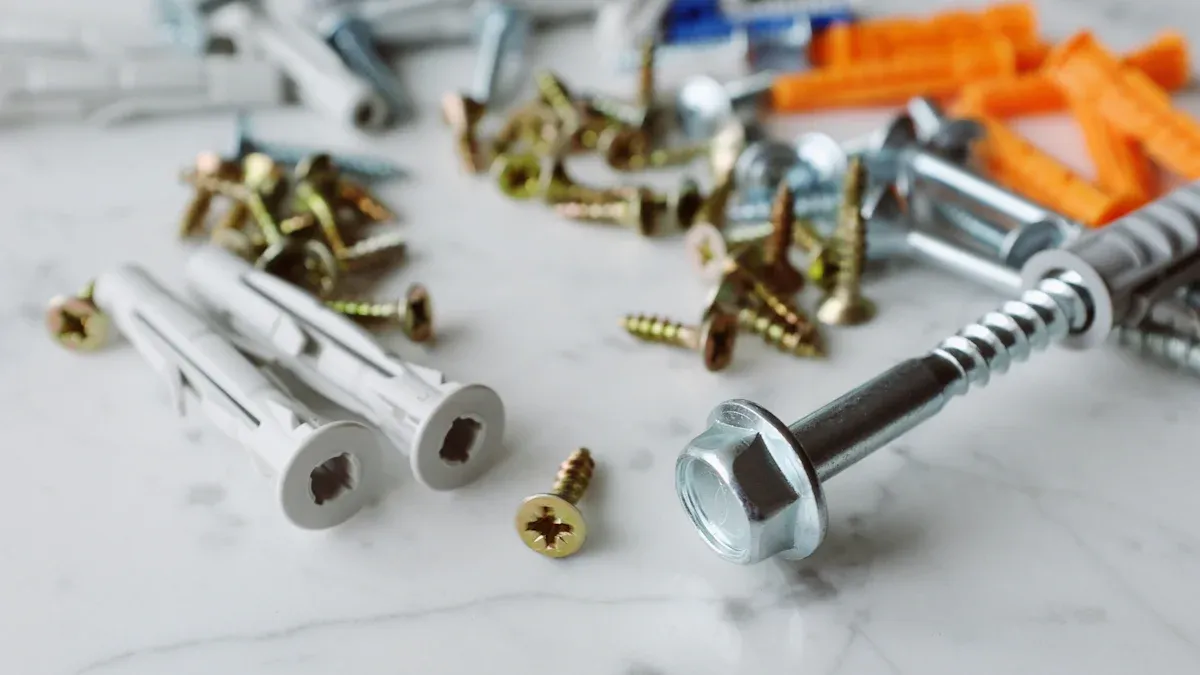
The DIY home improvement sector shows sustained expansion, with a historical compound annual growth rate of 4.7% from 2019 to 2024. This growth increases the demand for reliable hollow wall anchors. The E-Z Ancor Twist-N-Lock often stands out as the best hollow wall anchors solution due to its high strength and simple installation. While a custom fasteners manufacturer can supply custom anchor bolts for unique needs, most DIYers will find their solution among common hollow wall anchors. This guide details top options, from simple expansion types to robust Anchor Bolts, for any project.
Understanding the Basics of Hollow Wall Anchors
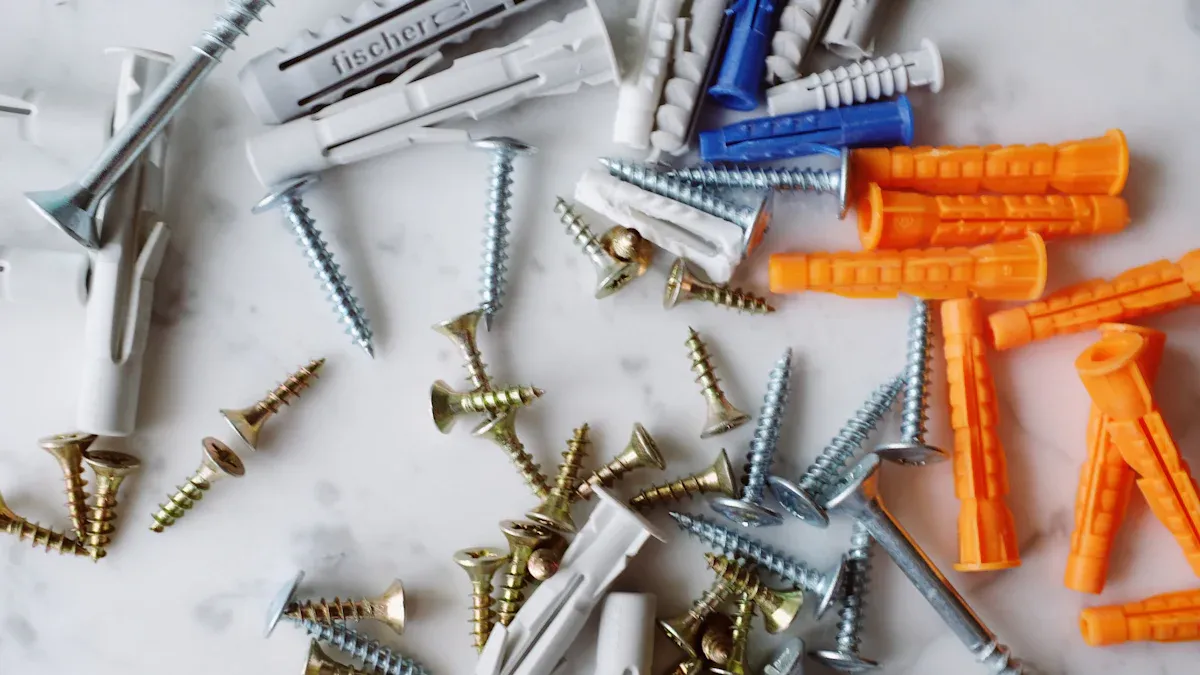
Before drilling into a wall, a DIYer must understand the tools for the job. Hollow wall anchors are essential for securely mounting items where no wooden stud is present. This section breaks down what they are, why they are necessary, and how they work.
What Is a Hollow Wall Anchor and Why You Need One
Many homeowners learn a hard lesson about hollow walls. They drive a screw into drywall, hang a picture, and later find it on the floor with a crumbled hole in the wall. Hollow wall anchors prevent this common mishap.
The Problem with Standard Screws in Drywall
Drywall, or gypsum board, is a soft material. It consists of a gypsum core pressed between two sheets of paper. A standard screw’s threads have nothing substantial to bite into. The gypsum simply crumbles under load, offering almost no holding power. This makes it impossible to hang anything heavier than a small, unframed poster without additional support. These specialized hollow wall fasteners solve this fundamental problem.
How Anchors Create a Secure Hold
Hollow wall anchors function by creating a strong anchor point behind the wall’s surface. When a user tightens the screw, the anchor expands or flares out inside the wall cavity. This action creates a mechanical stop that braces against the back of the drywall, distributing the weight over a larger surface area. This mechanism resists the pullout force far more effectively than a simple screw. These versatile hollow wall anchors are used to hang items like mirrors, pictures, and coat hooks.
Anatomy of a Wall Anchor
While there are many types of hollow wall anchors, most share a similar three-part structure. Understanding these components helps in selecting the right product.
The Anchor Body (Sleeve/Toggle)
The anchor body is the main component inserted into the wall. It can be a plastic sleeve, a metal expanding sleeve, or a metal toggle bar. The material composition often dictates its strength; options include plastic for lighter loads and stainless steel for heavy-duty applications. These general-purpose hollow wall fixings and cavity wall fixings form the foundation of the secure mount.
The Screw or Bolt
The screw or bolt serves two purposes. First, it activates the anchor’s expansion mechanism. Second, it is the component that actually holds the item being mounted to the wall. The screw passes through your fixture and into the anchor body.
The Expansion Mechanism
This is the clever part of all hollow wall anchors. The mechanism is how the anchor body secures itself.
- Expansion: Some anchors, like ribbed plastic types, expand outward to press tightly against the inside of the drilled hole.
- Flaring/Toggling: Other hollow wall anchors, such as molly bolts and toggle drywall anchors, flare out or flip open behind the wall, creating a much stronger brace.
Pro Tip: Always check the manufacturer’s specifications for the anchor’s weight rating and grip range. The load capacity is a critical factor, and choosing the right size ensures a safe and secure installation for all hollow wall anchors.
How to Choose the Right Hollow Wall Anchor
Selecting the correct anchor prevents project failure and wall damage. A DIYer can confidently choose the best hollow wall anchors by following a simple three-step process. This involves identifying the wall material, calculating the object’s weight, and considering the installation method.
Step 1: Identify Your Wall Type
The wall’s composition is the most critical factor. Different materials require specific types of hollow wall anchors for a secure hold.
Drywall (Gypsum Board)
Most modern homes use drywall. It consists of a soft gypsum core between paper layers. A simple pushpin test can identify it; the pin will slide in easily. Knocking on drywall produces a hollow sound between studs.
Plaster and Lath
Older homes often feature plaster walls. These are much harder and more brittle than drywall. A pushpin will not penetrate easily and may cause the surface to crack. Plaster walls tend to produce a consistent, dull thud when knocked.
Hollow Concrete Block
Found in basements, garages, or some exterior walls, hollow concrete block is hard and porous. A pushpin will not enter at all. Drilling into this material is necessary for any mounting project, and it requires robust cavity wall fixings.
Wall ID Cheat Sheet 🕵️
- Pushpin Test: Easy entry means drywall. Resistance or cracking suggests plaster. No entry means concrete or brick.
- Knock Test: An alternating hollow and dense sound indicates drywall over studs. A uniform dull thud points to plaster.
- Visuals: Straight cracks at joints are common in drywall. Irregular, web-like cracks often appear on older plaster walls.
Step 2: Determine the Object’s Weight
The anchor’s holding power must exceed the weight of the item being hung. Manufacturers rate their hollow wall anchors for specific load capacities.
Light-Duty (Under 25 lbs)
This category includes small picture frames, smoke detectors, and lightweight decor. Simple plastic expansion anchors are usually sufficient for these tasks.
Medium-Duty (25-50 lbs)
Items like curtain rods, small shelves, and bathroom hardware fall into this range. These require stronger hollow wall anchors, such as metal molly bolts or higher-rated self-drilling anchors.
Heavy-Duty (50+ lbs)
For large mirrors, televisions, or kitchen cabinets, a DIYer must use heavy-duty hollow wall fasteners. Options like toggle drywall anchors or strap toggles provide the necessary strength to prevent accidents.
Step 3: Consider the Installation Method
The installation process varies by anchor type, affecting project speed and tool requirements.
Self-Drilling Anchors
These all-in-one hollow wall fixings are prized for their speed. They feature a sharp tip that bores directly into drywall, eliminating the need for a pilot hole.
Pre-Drilled Expansion Anchors
This common category includes plastic anchors and molly bolts. They require a user to drill a pilot hole first, making the installation process slightly slower.
Toggle-Style Anchors
Toggle-style hollow wall anchors offer maximum holding power. They require a pre-drilled hole large enough for the toggle mechanism to pass through before it flips open behind the wall.
| Feature | Self-Drilling Anchors | Pre-Drilled Expansion Anchors |
|---|---|---|
| Pilot Hole | Not required | Mandatory |
| Installation Speed | Very Fast | Slower |
| Best Use Case | Quick, light to medium-duty jobs | General light to medium-duty jobs |
The 10 Best Hollow Wall Anchors for Any DIY Project
A DIYer’s success often depends on choosing the right component for the job. This review details the top anchors available, breaking down their features, strengths, and ideal applications. This analysis will help any project owner select the best hollow wall anchors with confidence.
1. E-Z Ancor Twist-N-Lock 75 lb
Best For: All-Around General Use
The E-Z Ancor Twist-N-Lock is a favorite among DIYers for its excellent balance of strength and simplicity. It provides a reliable hold for a wide range of medium-duty items, such as heavy picture frames, mirrors, and small shelves, making it a versatile addition to any toolbox.
Key Features
This anchor’s standout feature is its self-drilling design. The sharp, aggressive threads cut directly into drywall, which removes the need for a separate drilling step. This significantly speeds up the installation process.
- Installation requires no pre-drilling.
- A user can drive the anchor with a standard #2 Phillips screwdriver.
The anchor’s holding power is substantial for its class. Its performance in standard residential drywall makes it a dependable choice for most household projects.
| Attribute | Value |
|---|---|
| Product | 75lb Twist-N-Lock Anchor |
| Wall Thickness | 1/2″ Drywall |
| Weight Capacity | Up to 75 lbs |
| Condition | For items hung flush to wall |
Important Note: The manufacturer’s weight rating is per job, not per anchor. Using multiple anchors in a small area does not multiply the total supported weight.
Pros & Cons
| Pros | Cons |
|---|---|
| Extremely fast installation | Only suitable for drywall |
| No pilot hole or drill required | Can create a larger hole than needed for very light items |
| High strength-to-effort ratio | Not ideal for brittle or old plaster walls |
2. The Original TOGGLER SnapToggle BA
Best For: Mounting TVs and Heavy Mirrors
When a project demands maximum strength, the TOGGLER SnapToggle is a top-tier solution. It is one of the strongest heavy duty hollow wall anchors on the market. Its design is engineered to support significant loads, making it the professional’s choice for mounting flat-screen TVs, large mirrors, and heavy cabinetry.
Key Features
The SnapToggle uses a patented two-part system. A robust metal channel is inserted through a pilot hole and flips into position behind the drywall. Attached plastic straps allow the user to pull the channel tight against the back of the wall. The user then snaps the straps off, leaving a secure, threaded receiver ready for the bolt. A key advantage is that the bolt can be removed and reinserted multiple times without losing the anchor in the wall cavity.
Pros & Cons
| Pros | Cons |
|---|---|
| Exceptional holding power (often 200+ lbs) | Requires a relatively large 1/2″ pilot hole |
| Bolt can be removed and reinserted | Higher cost per anchor than other types |
| Works in a wide range of hollow wall thicknesses | Installation is more involved than self-drilling types |
3. Hillman Ribbed Plastic Anchors
Best For: Very Light-Duty Items
Ribbed plastic anchors are the classic, economical choice for hanging very light objects. A DIYer will find them in countless hardware kits. They are perfect for tasks like securing smoke detectors, hanging small unframed art, or mounting lightweight thermostat controls where holding power is not a primary concern.
Key Features
These simple hollow wall anchors function through expansion. After a user drills a pilot hole and taps the plastic sleeve into place, driving a screw into the sleeve forces it to expand. The external ribs on the anchor body are designed to bite into the drywall, preventing the anchor from spinning as the user tightens the screw. They are available in various sizes, each corresponding to a specific drill bit and screw size.
Pros & Cons
| Pros | Cons |
|---|---|
| Extremely inexpensive and widely available | Very low weight capacity (typically 10-20 lbs) |
| Simple and straightforward installation process | Not suitable for plaster or crumbly walls |
| Comes in many sizes for different screws | Cannot be used for ceiling applications |
4. ARROW 160455 Molly Bolt
Best For: Medium-Duty Shelving
The molly bolt, a classic sleeve-type anchor, is a trusted solution for mounting medium-duty items like towel bars, curtain rods, and moderately loaded shelves. Its all-metal construction provides a significant upgrade in strength over plastic anchors, offering DIYers peace of mind for items that will bear a consistent load.
Key Features
A molly bolt works by expanding its metal sleeve behind the drywall. The installation requires a pre-drilled pilot hole. The user inserts the anchor and turns the screw. This action collapses the sleeve, creating four legs that brace against the back of the wall. A key advantage is that once the anchor is set, the user can remove the screw to position the fixture and then re-insert it without losing the anchor.
- Pointed-tip versions can be hammered into drywall, removing the need for a drill.
- The anchor’s flange prevents it from falling into the wall cavity.
- Provides a secure, threaded machine screw point for mounting.
| Feature | Specification |
|---|---|
| Anchor Type | Sleeve-Type Expansion |
| Typical Load | 25 to 50 lbs |
| Primary Material | Steel |
| Removability | Screw is removable; anchor body is not |
Pros & Cons
| Pros | Cons |
|---|---|
| Strong and reliable hold for medium loads | Requires a precisely drilled pilot hole |
| All-metal construction is very durable | Can be difficult to remove from the wall |
| Allows for screw removal and re-insertion | Not suitable for plaster or thin walls |
5. ITW Brands 25310 Bulldog Anchor
Best For: Plaster and Older Walls
Plaster walls present a unique challenge; they are harder than drywall but also more brittle. The ITW Bulldog Anchor is specifically engineered to handle this environment. It provides a secure hold without cracking or crumbling the surrounding plaster, making it one of the best hollow wall anchors for renovation projects in older homes.
Key Features
The Bulldog anchor combines ease of installation with a design that respects delicate wall materials. A user simply hammers the anchor’s sharp point into the wall until it is flush. No pre-drilling is required. When the user drives the screw, a pair of fins on the anchor body pop out and lock behind the wall material. This provides a secure brace without the intense outward pressure that can damage old plaster.
Installation Tip 🔨 When hammering the Bulldog anchor into plaster, use gentle, firm taps. Avoid excessive force to prevent creating hairline cracks on the wall surface. The anchor is designed to pierce the material, not shatter it.
Pros & Cons
| Pros | Cons |
|---|---|
| Excellent performance in plaster and lath | Lower weight capacity than toggle bolts |
| Fast, drill-free installation | Creates a noticeable hole if removed |
| Anti-rotation fins prevent spinning | Not intended for very heavy applications |
6. Cobra DrillerToggle
Best For: Fast Heavy-Duty Installation
The Cobra DrillerToggle offers an innovative solution for projects that need high strength without a complicated installation. It merges the speed of a self-drilling anchor with the immense holding power of a toggle bolt. This makes it one of the most efficient heavy duty hollow wall anchors for mounting grab bars, wall-mounted desks, and television brackets.
Key Features
This anchor features a self-drilling tip that bores a clean hole into drywall with just a screwdriver. Once through the wall, the metal toggle mechanism flips into position with a simple push. The user then tightens the screw, which pulls the toggle bar tight against the back of the drywall. These hollow wall anchors provide a powerful and reliable hold. The performance is impressive; a standard #8 screw-sized DrillerToggle has a pull-out resistance between 23 and 38 pounds and a shear strength (for hanging) between 50 and 80 pounds, with the final capacity depending on the drywall’s thickness.
- Combines drilling and anchoring into one fast step.
- The toggle mechanism provides a very high load capacity.
- Works in drywall from 1/2″ to 5/8″ thick.
Pros & Cons
| Pros | Cons |
|---|---|
| Extremely fast for a heavy-duty anchor | Creates a larger hole than other anchor types |
| Exceptional shear and pull-out strength | Higher cost per anchor |
| No separate drill bit or pilot hole needed | The anchor is not easily removable or reusable |
7. Qualihome Strap-Toggle
Best For: Large Items with Wide Mounts
The Qualihome Strap-Toggle is an excellent choice for mounting items with wide or awkward mounting brackets, such as TV mounts or large art pieces. Its design solves a classic problem associated with traditional toggle bolts, making it one of the best hollow wall anchors for complex heavy-duty jobs.
Key Features
The defining feature is the plastic strap system. A user drills a hole, slides the metal toggle channel through, and uses the straps to pull it tight against the back of the wall. The user can then slide a plastic cap down the straps to lock the anchor in place. This allows the user to remove the bolt completely to position the fixture, something impossible with traditional toggle bolts.
- The anchor stays in place without the bolt.
- Simplifies mounting large items that require precise alignment.
- The metal channel distributes the load over a wide area for superior strength.
Pros & Cons
| Pros | Cons |
|---|---|
| Bolt can be removed and re-inserted easily | Requires a 1/2″ or larger pilot hole |
| Very high load capacity for heavy items | More expensive than traditional toggle bolts |
| Makes mounting large fixtures much easier | Plastic straps can feel less robust than all-metal designs |
8. Glarks Wing Nuts Toggle Bolts
Best For: Budget Heavy-Duty Hanging
For pure, unadulterated strength on a budget, the classic wing nut toggle bolt is hard to beat. The Glarks assortment kit provides a cost-effective supply of these heavy duty hollow wall anchors. They are the go-to solution for hanging the heaviest household items, including plant hooks from a ceiling or heavy-duty garage shelving.
Key Features
This anchor’s strength comes from its simple, robust design. It consists of a machine bolt and a spring-loaded “wing” toggle. A user drills a hole large enough for the collapsed wings to pass through. The bolt must be passed through the fixture before inserting the anchor into the wall. Once inside the wall cavity, the wings spring open, creating a large, secure brace against the back of the drywall.
Cost-Effectiveness 💰 Buying these hollow wall anchors in a multi-pack like the Glarks kit offers significant value. While the upfront cost seems higher, the price per anchor is often much lower than buying them individually. For example, a 24-piece kit priced at $136.00 USD breaks down to just $5.67 USD per anchor, providing a ready supply for multiple projects.
| Product Description | Total Price (USD) | Quantity (pieces) |
|---|---|---|
| Glarks 24pieces Toggle Bolt and Wing Nut Kit | 136.00 | 24 |
Pros & Cons
| Pros | Cons |
|---|---|
| Extremely high holding power, suitable for ceilings | Installation can be clumsy; dropping the anchor means losing it in the wall |
| Very cost-effective when purchased in kits | Requires a very large pilot hole |
| All-metal construction is exceptionally strong | The bolt cannot be removed without the anchor falling |
9. CONFAST Zinc Self-Drilling Anchors
Best For: Quick Electrical Fixtures
The CONFAST Zinc Self-Drilling Anchor provides a fast and sturdy solution for mounting light to medium-duty items. Its metal construction gives it an edge in durability over plastic self-drilling types, making it a favorite for securing electrical faceplates, conduit clamps, and other fixtures where a metal anchor is preferred.
Key Features
Similar to other self-drilling designs, this anchor features a sharp tip that bores its own hole into drywall using a standard Phillips screwdriver. The zinc body provides a more rigid and durable hold than plastic. These hollow wall anchors are ideal for jobs where speed is essential, but a user desires more strength than a basic plastic plug can offer. While excellent for electrical work, their application is broader.
- The large #8 anchor holds up to 50 lbs in 1/2″ drywall.
- They are good for heavier applications like big pictures and shelves.
- A user can also use them to hang artwork securely.
Pros & Cons
| Pros | Cons |
|---|---|
| Fast installation with no pre-drilling | Not suitable for plaster or brittle walls |
| Zinc construction is stronger than plastic | Can damage drywall if over-tightened |
| Provides a secure hold for medium-duty tasks | Creates a larger hole than a pre-drilled anchor |
10. The Hillman Group Power-Stud Anchor
Best For: Hollow Concrete Block
Mounting items to hollow concrete block, often found in basements or garages, requires a specialized anchor. The Hillman Group Power-Stud Anchor is a heavy-duty wedge anchor designed specifically for this demanding application. It provides industrial-grade strength, making it the top choice for securing wall plates, machinery, or heavy-duty shelving directly to concrete masonry units (CMU).
Key Features
The Power-Stud’s design ensures a permanent, high-strength connection in solid and hollow concrete. A DIYer drills a pilot hole into the block, cleans it of debris, and then hammers the anchor into place. Tightening the nut pulls the stud upward, forcing a metal sleeve to expand and wedge itself firmly against the interior walls of the concrete. This mechanical interlock creates an exceptionally strong hold that resists both shear and pull-out forces.
- All-steel construction provides maximum durability and load capacity.
- The expansion clip ensures a reliable and consistent hold.
- It is a through-bolted anchor, meaning a user can mount the fixture and anchor simultaneously.
Installation Criticality ⚙️ Proper installation is paramount for wedge anchors. A user must drill the hole to the correct diameter and depth. Thoroughly cleaning the hole of all dust and debris with a wire brush and compressed air is essential for the anchor to achieve its maximum rated strength.
These are some of the most robust hollow wall anchors available for masonry applications.
| Attribute | Specification |
|---|---|
| Anchor Type | Wedge Expansion Anchor |
| Primary Material | Carbon Steel, Zinc Plated |
| Best Use | Hollow Concrete Block, Solid Concrete |
| Installation | Requires hammer drill and hole cleaning |
Pros & Cons
The Power-Stud offers unmatched strength but requires more effort to install than typical hollow wall anchors.
| Pros | Cons |
|---|---|
| Extremely high load capacity for heavy items | Installation requires a hammer drill |
| Creates a permanent, vibration-resistant hold | Not suitable for drywall or plaster |
| Relatively affordable for its strength class | Forgiving of over-tightening, but can crack block if done improperly |
This anchor is a true heavy-duty solution. It provides confidence when other hollow wall anchors are not strong enough for the base material.
A Closer Look at Heavy Duty Hollow Wall Anchors
Standard anchors are not sufficient for every project. Certain jobs demand a higher level of strength and security. Understanding when and how to use heavy duty hollow wall anchors is a critical skill for any DIYer tackling a major installation. These robust fasteners provide the confidence needed to hang significant weight without relying on a wall stud.
When Do You Need a Heavy-Duty Anchor?
A DIYer should upgrade to a heavy-duty anchor for any item weighing over 50 pounds. Common examples include large flat-screen televisions, kitchen cabinets, heavy mirrors, and wall-mounted desks. One should also consider these anchors for items under 50 pounds that will experience dynamic force, such as grab bars or shelving that will be frequently accessed. These heavy duty hollow wall anchors are engineered to handle substantial shear and pull-out forces.
Comparing Top Heavy-Duty Options
The two primary categories for heavy-duty applications are toggle-style anchors and sleeve-type anchors. Each has distinct advantages.
Toggle Bolts vs. Strap Toggles
Both traditional toggle bolts and modern strap toggles offer immense holding power. Their primary difference lies in the installation process. A strap-toggle’s design allows a user to set the anchor in the wall and then remove the bolt, which simplifies mounting large fixtures. Traditional toggle drywall anchors require the user to pass the bolt through the fixture before inserting the anchor, making alignment more difficult.
| Feature | Classic Toggle Bolt | Strap-Toggle |
|---|---|---|
| Installation | Bolt must pass through fixture first | Anchor is set before mounting fixture |
| Bolt Removal | No, anchor will fall into wall | Yes, bolt can be removed and re-inserted |
| Best For | Budget-friendly heavy hanging | Large, awkward items like TV mounts |
Heavy-Duty Sleeve-Type Anchors
Heavy-duty sleeve-type anchors, like large molly bolts, provide another reliable option. Their all-metal construction offers a significant strength increase over plastic hollow wall anchors. They work by expanding a metal sleeve behind the drywall. While very strong, they typically have a lower maximum load capacity compared to toggle-style hollow wall anchors.
Safety Tips for Heavy Installations
Safety is paramount when mounting heavy objects. A failure can result in property damage or injury. Following proper procedure ensures a secure and lasting installation.
Safety First Checklist ⚠️
- Find Studs: Always use a stud finder first. Attaching directly to wall framing is the most secure method. Studs are typically 16 inches apart.
- Use a Partner: Never attempt to lift or mount a heavy or large item alone. A partner prevents accidents and helps with alignment.
- Choose Correctly: When studs are unavailable, use appropriate hollow wall anchors like toggle bolts that expand behind the wall for maximum support.
- Distribute Weight: For very heavy items, consider mounting a wooden cleat across two or more studs. You can then attach your fixture to this board, distributing the weight evenly.
- Use Proper Tools: Employ a power drill with the correct bit size for your chosen hollow wall anchors to avoid damaging the wall. A level is essential to ensure the item is straight.
Quick Installation Guide for Common Anchor Types
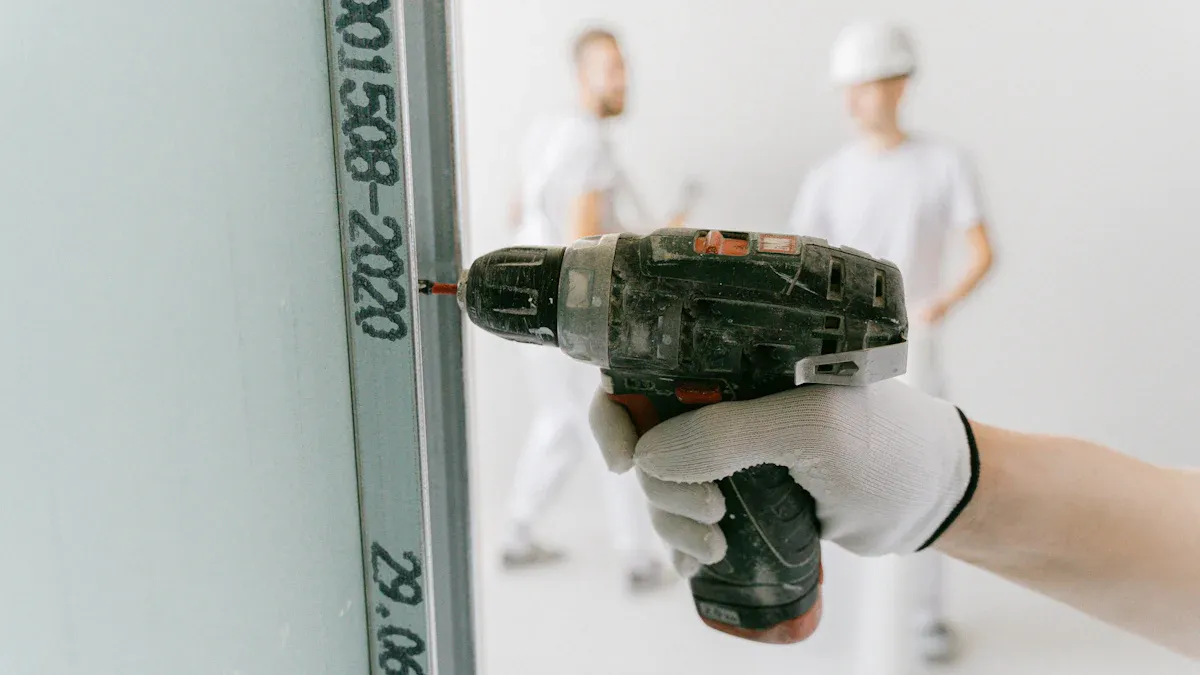
Knowing how to properly install an anchor is just as important as choosing the right one. A correct installation ensures maximum holding power and prevents wall damage. This guide provides simple, step-by-step instructions for the three most common types of hollow wall anchors.
How to Install a Self-Drilling Anchor
Self-drilling anchors are popular for their speed and convenience. A user can complete the installation in under a minute with just a screwdriver.
Step 1: Mark Your Spot
A user first determines the precise location for the anchor. He or she uses a pencil to make a small, clear mark on the wall.
Step 2: Drive the Anchor
The user places the sharp tip of the anchor on the pencil mark. He or she applies firm, steady pressure with a Phillips screwdriver, turning clockwise. The anchor will bore its own hole and drive itself into the drywall until the head is flush with the wall surface.
Pro Tip 💡 Avoid over-driving the anchor. Stop turning as soon as the anchor head is flush with the wall to prevent stripping the drywall and weakening the hold.
Step 3: Set the Screw
The user positions the fixture over the anchor. He or she then inserts the provided screw through the fixture and into the anchor, tightening it until the item is secure.
How to Install a Molly Bolt (Sleeve-Type Anchor)
Molly bolts offer a stronger hold than plastic anchors and are ideal for medium-duty applications. The installation requires a drill.
Step 1: Drill a Pilot Hole
A user selects a drill bit that matches the anchor’s specified diameter. He or she drills a clean hole at the marked location. Drilling a hole slightly smaller than the bolt’s diameter helps create a snug fit.
Step 2: Insert the Anchor
The user gently taps the molly bolt into the pilot hole with a hammer. The anchor’s head should sit flush against the wall. The small teeth under the head will grip the drywall to prevent spinning.
Step 3: Expand the Sleeve
A user turns the screw clockwise with a screwdriver. He or she will feel resistance as the metal sleeve behind the wall begins to collapse and expand. A user should stop tightening once the screw feels very firm to avoid damaging the sleeves.
Step 4: Mount Your Item
The user now unscrews the bolt from the expanded anchor body. He or she positions the item over the hole, re-inserts the bolt, and tightens it to secure the fixture.
How to Install a Toggle Bolt Anchor
For heavy-duty jobs, toggle drywall anchors provide superior strength. Their installation requires a larger hole but offers unmatched support.
Step 1: Drill the Hole
A user drills a hole large enough for the folded toggle wings to pass through. The anchor’s packaging will specify the required drill bit size.
Step 2: Assemble the Bolt
The user removes the spring-loaded wings from the bolt. He or she then passes the bolt through the mounting hole on the fixture before re-attaching the wings.
Step 3: Insert the Toggle
A user follows a simple two-step process for insertion:
- He or she folds the spring-loaded wings inward, pinching them down against the bolt.
- With the wings held down, the user pushes the toggle mechanism completely through the hole until the wings deploy behind the wall.
Step 4: Tighten and Secure
The user pulls the bolt outward to ensure the wings are braced against the back of the wall. While maintaining tension, he or she tightens the bolt with a screwdriver until the fixture is held firmly in place. These hollow wall anchors are excellent for ceiling applications.
Common Mistakes to Avoid When Using Wall Anchors
Even the best anchor will fail if a user installs it incorrectly. A successful project requires attention to detail and an awareness of common pitfalls. A DIYer can ensure a secure and long-lasting mount by avoiding a few frequent errors that can compromise an anchor’s integrity. These mistakes are easy to make but also simple to prevent with the right knowledge.
Using the Wrong Drill Bit Size
One of the most common installation errors is using an incorrectly sized drill bit. The anchor’s packaging specifies the exact bit diameter needed for a reason. Deviating from this recommendation directly impacts the anchor’s holding power.
- Drill bit too small: If a user drills a hole that is too narrow, the anchor may not insert fully. This prevents expansion-style anchors from flaring correctly, resulting in a very weak grip. Forcing the anchor can also damage the drywall itself.
- Drill bit too large: When a user creates a hole that is too wide, the anchor fits loosely. It has insufficient material to bite into, which dramatically reduces its weight-bearing capacity and makes it likely to pull out under load.
Over-Tightening the Screw
More force is not always better. A DIYer can easily over-tighten the screw, which strips the anchor or the surrounding drywall and ruins the installation. This mistake is especially common with plastic anchors and self-drilling types in soft gypsum board.
Warning Sign ⚠️ A primary indicator of an over-tightened screw is when it spins freely but does not tighten further or back out. This often means the screw’s threads have been damaged or have pushed past the anchor’s threaded section into a void.
Once this happens, the anchor has lost its holding power and must be replaced. A user should tighten the screw until it is snug and the mounted item is secure, then stop.
Choosing an Anchor with Insufficient Weight Capacity
Selecting an anchor based on guesswork is a recipe for disaster. The anchor’s weight rating is not a suggestion; it is a safety limit. Using an anchor with a rating lower than the object’s weight undermines the entire mounting system. Weak or improvised hollow wall anchors are not designed to handle significant forces and can fail unexpectedly.
The risks of using an underrated anchor are significant:
- The anchor point itself can break or pull out of the wall, causing the object to fall.
- This failure can lead to costly damage to the object, the floor, and the wall itself.
- A falling heavy object, like a mirror or television, poses a serious risk of injury to anyone nearby.
A user must always choose an anchor rated to support the full weight of the object, including any dynamic forces from use, like items being placed on a shelf.
Not Accounting for Wall Thickness
A frequent oversight is failing to consider the thickness of the wall material. The anchor’s “grip range” is a critical specification that dictates the wall thicknesses it can work with. An anchor designed for standard 1/2″ drywall will not function correctly in thicker or thinner walls. Its expansion mechanism will either fail to deploy or will not brace properly against the back of the wall.
A DIYer must know the wall’s composition before selecting an anchor.
- Wall thickness is crucial for an anchor to expand correctly inside the wall cavity.
- Different wall constructions, such as single (13 mm) or double (26 mm) plasterboard, require different sizes of hollow wall anchors.
- Some anchors are designed for a specific range, like ⅜” to ⅝” drywall, while specialized versions exist for very thin materials like hollow doors.
Reusing a Pilot Hole Incorrectly
When an anchor fails, it leaves behind a compromised hole that is wider and weaker than the original. A common mistake is attempting to force a new anchor of the same size into this damaged opening. This approach will not work, as the new anchor will have nothing to grip and will spin or pull out easily. The hole must be properly repaired before it can be reused.
Repairing a Damaged Anchor Hole 🛠️ A user should not reuse a failed pilot hole without first reinforcing it. He or she first removes any remnants of the old anchor and cleans all loose debris from the hole. Next, the user fills the hole with a suitable patching compound or a specialized anchor hole repair kit. After the patch has fully hardened according to the product’s directions, the user can drill a new, properly sized pilot hole in the repaired spot for a secure installation. Rushing the drying process is a common error that leads to a weak repair.
Ignoring the Anchor’s Instructions
The single most detrimental mistake is discarding the manufacturer’s instructions. The small paper insert included with the anchor packaging is not a suggestion; it is a technical guide essential for a safe installation. It contains all the critical information needed for the anchor to perform as designed.
This guide specifies non-negotiable details, including:
- The exact drill bit diameter required.
- The anchor’s maximum weight capacity.
- The compatible wall thickness or grip range.
Ignoring these instructions invalidates the anchor’s stated performance and is the root cause of most other installation mistakes. Following the manufacturer’s guide is the simplest and most effective way to ensure a secure, reliable mount every time.
A DIYer can select the perfect fastener with confidence. The process becomes simple when a user matches the anchor to a few key factors.
- Wall Type: Identify drywall, plaster, or concrete block.
- Object Weight: Choose an anchor rated for the load.
- Installation Method: Pick a style that fits the project’s needs.
For most household projects, the E-Z Ancor Twist-N-Lock is a dependable, go-to choice. A user with a little know-how and the correct hollow wall anchors can hang almost anything securely. This guide provides the foundation for using hollow wall anchors successfully.
FAQ
Can a user reuse a hollow wall anchor?
Most hollow wall anchors are not designed for reuse. Removing an anchor often damages it or the wall. A user should always use a new anchor for a new installation to ensure maximum holding power and safety.
What should a DIYer do if they hit a wood stud?
Hitting a stud is a good outcome. A user should abandon the anchor and drive a wood screw directly into the stud. This provides a far stronger hold than any hollow wall anchor. A stud finder helps locate them beforehand.
How does someone remove an old molly bolt?
A user can remove a molly bolt in two ways:
- Unscrew the bolt slightly and tap it to push the anchor body flat.
- Use pliers to pull the head away from the wall and snap it off. The user then pushes the remaining anchor body into the wall and patches the hole.
Can hollow wall anchors be used in a ceiling?
Only specific heavy-duty anchors, like toggle bolts, are rated for ceiling use. A user must check the manufacturer’s specifications. Standard plastic or self-drilling anchors are unsafe for overhead loads and should never be used on a ceiling.
Why did my anchor spin when I tightened the screw?
An anchor spins for two main reasons:
- The pilot hole was drilled too large.
- The screw was over-tightened, stripping the drywall.
In either case, the anchor is compromised. A user must remove it, repair the hole, and start over.
Do the weight ratings of multiple anchors add up?
No, weight ratings do not simply add up. Placing two 50 lb anchors next to each other does not mean they can hold 100 lbs. The drywall itself is the limiting factor. A user should always select a single anchor type rated for the object’s total weight.