
Choosing the right expansion bolts is critical for safety in heavy-duty applications. Professionals select a specific anchor based on the base material and required load capacity.
- A Wedge Anchor provides maximum strength in solid concrete.
- A Sleeve Anchor offers excellent versatility for both concrete and masonry.
For unique projects, a custom fasteners manufacturer can produce custom anchor bolts. The correct selection of Anchor Bolts ensures a secure and lasting installation, matching the fastener to the job’s specific demands.
Top Expansion Bolts for Heavy-Duty Applications
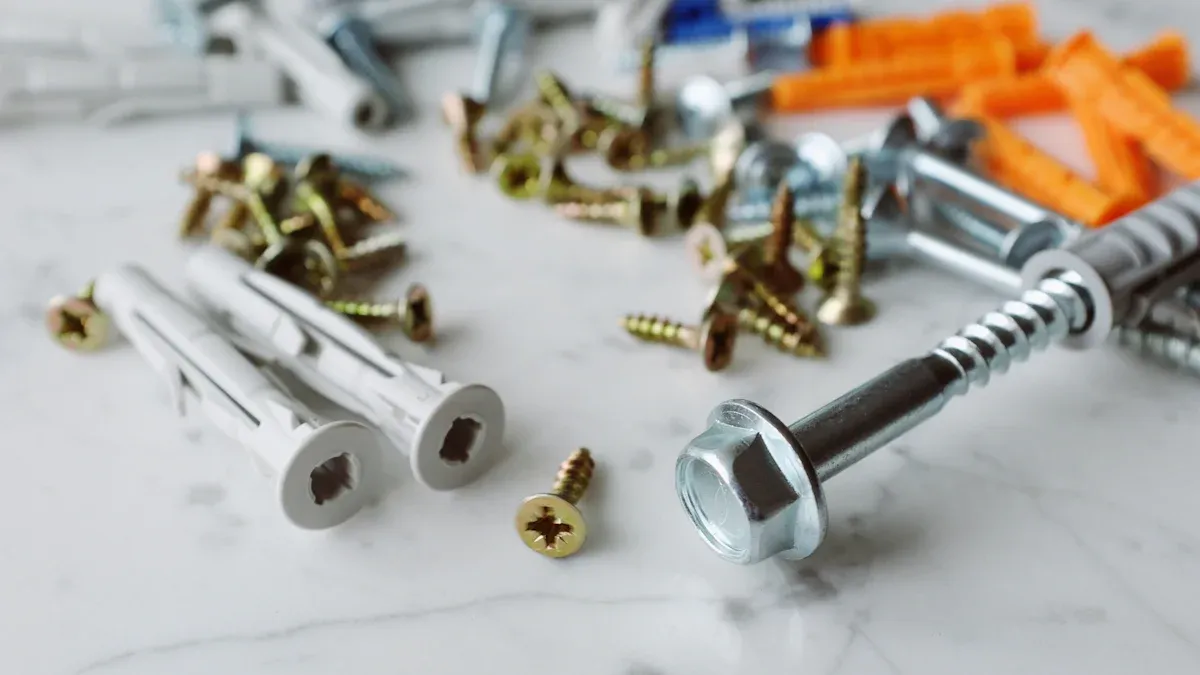
Selecting the best anchor bolts for a project requires understanding the primary types of anchor bolts and their specific strengths. Professionals evaluate each anchor based on its design, holding power, and suitability for the base material. This section explores the most common expansion bolts for heavy-duty applications.
Wedge Anchors: The Gold Standard for Concrete
What Are Wedge Anchors?
Wedge anchors are high-performance mechanical expansion anchors designed exclusively for solid concrete. They consist of a threaded stud, a nut, a washer, and an expansion clip. When a user tightens the nut, it pulls the stud upward, forcing the expansion clip to wedge tightly against the walls of the pre-drilled hole. This action generates immense friction and holding power by compressing the concrete.
Key Features and Benefits
Wedge anchors are renowned for their exceptional tensile (pull-out) and shear (side-to-side) load capacities. Their simple, one-piece design makes installation straightforward and reliable. These concrete anchors are available in various materials, including zinc-plated carbon steel for indoor use, hot-dipped galvanized steel for moist environments, and stainless steel for maximum corrosion resistance. Many high-quality wedge anchors are tested to rigorous industry standards, such as ACI 355.2 and AC193, ensuring their performance and safety.
Pro Tip: The holding power of a wedge anchor is directly related to its diameter and embedment depth. Deeper embedment and larger diameters provide significantly higher load values.
The following table illustrates the ultimate load capacities for carbon steel wedge anchors in 4000 PSI concrete, showing how strength increases with size and depth.
| Anchor Diameter (in.) | Embed. Depth (in.) | Tension (LB) in 4000 PSI | Shear (LB) in 4000 PSI |
|---|---|---|---|
| 1/4 | 1-1/8 | 1771 | 1813 |
| 3/8 | 1-1/2 | 3636 | 5121 |
| 1/2 | 2-1/4 | 6714 | 9377 |
| 5/8 | 3-3/4 | 8747 | 12928 |
| 3/4 | 3-1/4 | 11314 | 17050 |
| 1 | 4-1/2 | 18250 | 27605 |
| 1-1/4 | 5-1/2 | 22971 | 42690 |
Note: These are ultimate loads. A safety factor of 4:1 is recommended for calculating safe working loads.
Ideal Heavy-Duty Applications
The superior strength of the wedge anchor makes it the top choice for securing heavy loads to solid concrete. Common applications include:
- Attaching structural steel columns and beams.
- Anchoring heavy machinery and industrial equipment.
- Securing racking systems in warehouses.
- Fastening guardrails, handrails, and support ledgers.
Limitations and When to Avoid
A wedge anchor is not suitable for all materials. Its powerful expansion mechanism can crack or break weaker base materials.
- Avoid using in brick, block (CMU), or other masonry. The expansion force is too concentrated and will likely cause the material to fail.
- Not for shallow concrete. A wedge anchor requires a minimum embedment depth to achieve its rated load capacity.
- Not removable. Once set, a wedge anchor cannot be removed without damaging the concrete.
Sleeve Anchors: The Best Masonry Anchors for Versatility
What Are Sleeve Anchors?
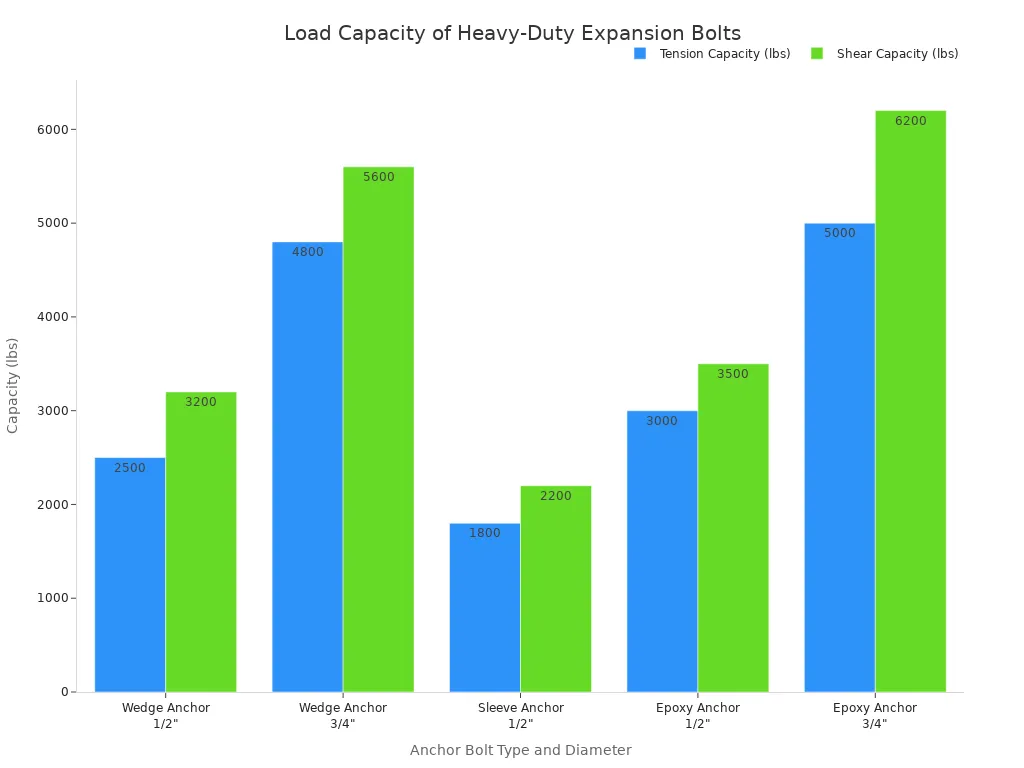
Sleeve anchors are versatile expansion anchors suitable for a wide range of base materials, including concrete, brick, and concrete block. A sleeve anchor consists of a threaded bolt, a nut, a washer, and a full-length expandable sleeve. As the user tightens the bolt, it draws a cone-shaped expander into the sleeve, causing the sleeve to flare out and press against the interior of the drilled hole. This mechanism distributes the load over a larger surface area compared to a wedge anchor.
Key Features and Benefits
The primary benefit of a sleeve anchor is its versatility. It is one of the best anchor bolts for projects involving multiple base materials. The sleeve’s expansion provides a secure grip in both solid and hollow materials without exerting the intense, focused pressure of a wedge anchor. This makes it ideal for more brittle materials like brick. Sleeve anchors are available in various head styles, including hex nut, flat head, and round head, to suit different finishing requirements.
Ideal Applications in Masonry
The sleeve anchor excels in medium-duty applications in masonry materials.
- Solid Brick: The anchor expands gently, providing a secure hold without cracking the brick.
- Hollow Block (CMU): The sleeve can expand within the hollow cavity, offering reliable fastening for items like window frames, signage, and shelving brackets.
- Solid Concrete: It provides good holding power, though typically less than a wedge anchor of the same diameter.
Limitations and Performance in Concrete
While versatile, a sleeve anchor has lower ultimate load capacities than a wedge anchor in solid concrete. For true heavy-duty structural connections in concrete, a wedge anchor is the superior choice. In hollow block applications, a sleeve anchor is effective for medium loads, but for heavier loads, professionals may consider chemical anchors with screen tubes, which provide a stronger bond within the block’s cavity.
Drop-In Anchors: For Flush-Mounted Applications
What Are Drop-In Anchors?
A drop-in anchor is a female-threaded anchor designed for flush mounting in solid concrete. It consists of a short, cylindrical steel tube with an internal expander plug. After the user places the anchor in a pre-drilled hole, they use a special setting tool to drive the internal plug downward. This action forces the anchor’s sides to expand and lock it into the concrete. The internal threads then accept a standard machine bolt or threaded rod.
Key Features and Benefits
The key advantage of a drop-in anchor is its flush-mount design. Once set, nothing protrudes from the concrete surface, allowing for easy removal of the fixture and a clean finish. This makes it ideal for applications where machinery or equipment may need to be moved later. The anchor remains permanently in the concrete, ready for re-use. Many drop-in anchors, such as the 3/8″ Mini Dropin™, carry FM Global and UL approvals, certifying them for overhead use in fire sprinkler and electrical systems.
Ideal Heavy-Duty Applications
Drop-in anchors are excellent for medium-to-heavy-duty overhead applications.
- Suspending pipe hangers for plumbing, HVAC, and fire sprinkler systems.
- Hanging cable trays and electrical conduits from concrete ceilings.
- Anchoring machinery that requires a flush surface when removed.
Installation Nuances and Tooling
Proper installation of a drop-in anchor is critical and requires a specific tool.
- Drill a hole to the specified depth.
- Clean the hole thoroughly of all dust and debris.
- Insert the anchor, threaded-end-up, until it is flush with the surface.
- Insert the correct setting tool and strike it firmly with a hammer until the tool’s shoulder meets the top of the anchor. This ensures the anchor is fully set.
⚠️ Warning: Failure to use the proper setting tool can result in an improperly set anchor, leading to significantly reduced holding power and potential failure.
Strike Anchors: Fast and Simple Installation
What Are Strike Anchors?
A strike anchor is a pre-assembled mechanical anchor designed for rapid installation in solid concrete. Its design includes a cylindrical steel body, a nut and washer, and an internal expansion pin at the bottom. The user installs the anchor by drilling a hole, inserting the anchor, and driving the internal pin flush with a hammer. This action forces the anchor body to expand, creating a secure, friction-based hold against the concrete.
Key Features and Benefits
The primary advantage of strike anchors is their installation speed. In a time-trial study, strike anchors demonstrate a significantly faster installation speed compared to wedge anchors. Data from construction projects indicates that strike anchors can reduce installation duration by approximately 25-40% relative to traditional methods. This efficiency comes from the anchor having fewer installation steps. Conversely, wedge anchors’ setting process can be more time-consuming. Once set, the pin sits flush, making the anchor tamper-resistant.
Pro Tip: The tamper-resistant nature of a set strike anchor makes it a good choice for securing fixtures in public spaces where preventing unauthorized removal is a priority.
Ideal Heavy-Duty Applications
The speed of strike anchors makes them ideal for projects with many fastening points, where reducing labor time is critical. They perform best in static load situations in solid concrete. Common heavy-duty applications include:
- Fastening wood sill plates to concrete foundations.
- Securing electrical junction boxes and conduit straps.
- Anchoring support brackets for shelving and fixtures.
Performance Considerations
While fast and effective, strike anchors have specific performance limitations that professionals must consider. Their design is not suitable for all conditions or load types. These expansion bolts are best used for static loads where vibration is not a factor.
- Strike anchors are generally not recommended for overhead installations due to the risk of loosening under vibration.
- This anchor may be less effective in cracked concrete or under dynamic loads.
- While strike anchors offer high short-term load capacity in solid concrete, chemical anchors can achieve higher long-term capacities in cracked concrete or under dynamic loads.
Ultimately, their simple installation makes them a valuable option, but users must match them to the correct application to ensure safety and long-term performance.
How to Select the Right Heavy-Duty Expansion Bolts
Choosing the best anchor bolts involves more than just picking a size. A professional evaluates the load, the base material, and the environment to ensure a safe and durable connection. This systematic approach guarantees the selected anchor performs as expected.
Assess Your Load Capacity Requirements
Understanding Tensile and Shear Loads
Every anchor must resist two primary forces. Tensile load is the pull-out force trying to extract the anchor from the wall. Shear load is the side-to-side force acting perpendicular to the anchor. Many applications involve a combination of both. Professionals use a standard interaction formula to ensure the combined forces do not exceed the anchor’s capabilities.
- Ts and Ss are the actual tensile and shear loads applied.
- Ta and Sa are the permissible tensile and shear loads for the anchor.
How to Read Manufacturer Load Charts
Manufacturers provide charts detailing the ultimate load capacity of their products. These charts specify the maximum force an anchor can withstand before failure in a specific base material. Users must consult these charts to match an anchor’s strength to the project’s demands.
Factoring in Safety Margins
Engineers never design to an anchor’s ultimate load. They apply a safety factor to determine a safe working load. A common safety factor is 4:1, meaning the safe load is 25% of the ultimate capacity. The American Concrete Institute (ACI) provides detailed guidance on strength reduction factors, ensuring professionals account for installation variables and material conditions.
Match the Bolt to Your Base Material
Anchoring in Solid Concrete
Solid concrete provides the highest holding power for concrete anchors. The compressive strength of the concrete directly impacts performance. Studies show a clear correlation between higher concrete strength and the force required to pull out an anchor, meaning a stronger base material allows for a stronger connection.
Anchoring in Concrete Block (CMU)
Concrete block is weaker and often hollow. For this material, sleeve anchors are a better choice than wedge anchors because they distribute the expansion force over a larger area, reducing the risk of breaking the block.
Anchoring in Brick and Other Masonry
Brick is brittle and can easily crack under the high, focused pressure of a wedge anchor. Sleeve anchors are also ideal here, as their gentle, full-length expansion provides a secure grip without damaging the base material.
Special Considerations for Cracked Concrete
Concrete can develop hairline cracks under tension, which can severely reduce the holding power of standard expansion bolts. For these situations, installers must use an anchor specifically rated for cracked concrete.
- Wedge Anchors: Certain wedge anchors are designed to maintain their grip even if a crack forms.
- Concrete Screws: Anchors like the JC2-ST use a specialized thread geometry to ensure a secure hold in cracked substrates.
Consider Environmental Factors
Indoor vs. Outdoor Use
The anchor’s material and coating must match its environment to prevent corrosion and failure.
Zinc-Plated for Dry Environments
Zinc-plated steel is the standard for indoor, dry applications. It offers basic rust protection but will corrode quickly when exposed to moisture.
Hot-Dipped Galvanized for Moisture
For outdoor use or in damp locations, hot-dipped galvanized anchors provide a much thicker protective coating. This coating significantly extends the anchor’s lifespan in corrosive conditions.
| Coating Type | Lifespan in Coastal/Salty Air |
|---|---|
| Zinc-Plated | A few months |
| Hot-Dip Galvanized | 5-15 years |
Stainless Steel for Maximum Corrosion Resistance
For the harshest environments, stainless steel is the premier choice. Grade 316 stainless steel is recommended for marine, coastal, and chemical plant applications. It contains molybdenum, an element that provides superior resistance to corrosion from saltwater and industrial chemicals, making it a better long-term investment for these demanding settings.
Diameter and Length Selection
Properly sizing an expansion bolt is as critical as selecting the right type. Professionals determine the correct diameter and length by analyzing the fixture, the base material, and the manufacturer’s specifications to guarantee a secure and compliant installation.
Determining Bolt Diameter
The anchor’s diameter is often determined by the requirements of the object being fastened. The thickness of the material being fastened can influence the choice of anchor diameter. Engineers specify a certain bolt size in their plans, or the mounting holes on a piece of equipment will dictate the required diameter. The load capacity needed for the application also plays a significant role, as larger diameters provide greater holding strength.
Pro Tip: When installing an anchor through a fixture, the hole in the fixture must be larger than the anchor’s designated diameter. For instance, a 1/2-inch wedge anchor requires a 5/8-inch hole in the fixture, and a 1/4-inch anchor needs a 5/16-inch hole. This clearance allows the anchor to pass through smoothly.
Calculating Required Bolt Length
Calculating the correct bolt length prevents installation failure. The minimum required length is the sum of several key measurements. Installers must account for the thickness of the fixture, the required embedment depth in the base material, and the height of the nut and washer.
A simple formula helps determine the necessary length:
Fixture Thickness + Minimum Embedment Depth + Nut & Washer Height = Minimum Bolt Length
Manufacturers often provide a minimum and maximum embedment depth (ls,min and ls,max). This creates a range for the required bolt length.
- Minimum bolt length =
tfix(fixture thickness) +ls,min - Maximum bolt length =
tfix(fixture thickness) +ls,max
Selecting a bolt within this calculated range ensures it is long enough to achieve proper embedment without being unnecessarily long.
Understanding Minimum Embedment Depth
Minimum embedment depth is the shallowest depth an anchor can be set into the base material to achieve its published load values. This specification is one of the most critical factors for a safe installation. Manufacturers test their anchors extensively to determine this value.
⚠️ Warning: Never install an anchor at a depth less than the specified minimum embedment. A shallow embedment drastically reduces the anchor’s tensile and shear capacity, creating a significant risk of pull-out failure under load.
For example, the minimum length of a wedge anchor (MLWA) is found using the formula: FT + ME + NW = MLWA. Here, FT is the fixture thickness, ME is the minimum embedment, and NW is the nut and washer height. Adhering to this depth is essential for the anchor to function as designed.
Advanced Considerations for Professional Applications
Professionals in demanding fields must look beyond basic specifications. Selecting the best anchor bolts for critical heavy-duty applications requires an understanding of product-specific performance, seismic codes, and alternative anchoring technologies.
Top-Tier Product Recommendations
Hilti Kwik Bolt TZ2 for Seismic Loads
The Hilti Kwik Bolt TZ2 is a premier expansion anchor renowned for its outstanding performance in seismic conditions. Engineers specify this anchor for its reliability in cracked concrete and its compliance with the most stringent building codes.
Simpson Strong-Tie Strong-Bolt 2
The Simpson Strong-Tie Strong-Bolt 2 is a high-performance wedge anchor trusted for its consistent strength and ease of installation. It is a go-to choice for structural connections, offering extensive testing and code approvals.
High-Strength Grade 12.9 Bolts
For ultimate tensile strength, professionals often turn to Grade 12.9 threaded rods used with chemical anchors. This combination creates a powerful bond that can exceed the strength of many mechanical concrete anchors.
Understanding Seismic and Dynamic Loads
What Are Seismic Ratings?
A seismic rating indicates an anchor has been tested to perform reliably under the dynamic forces of an earthquake. Building codes like the International Building Code (IBC) reference ACI 318 standards, which require anchors in Seismic Design Categories C, D, E, or F to be qualified for use in cracked concrete. This ensures the anchor maintains its load capacity even if the base material is compromised.
When Are Seismic-Rated Anchors Required?
Building codes mandate the use of a seismic-rated anchor in regions prone to earthquakes. The IBC provides specific provisions for these situations.
- IBC Chapter 19 outlines design requirements for anchors in concrete.
- It allows exceptions for wall out-of-plane forces if the anchor’s design strength meets specific ASCE/SEI 7 equations.
- It also provides exceptions for shear loads on anchor bolts securing wood sill plates or steel tracks, provided they meet strict diameter, embedment, and edge distance rules.
Expansion Bolts vs. Other Heavy-Duty Anchors
Comparison with Adhesive (Epoxy) Anchors
Expansion bolts create a frictional hold, whereas chemical anchors (epoxy) form a bond with the concrete. This gives epoxy systems a higher tensile strength, making them superior for tension-zone applications.
Adhesives offer different cure times. Fast-cure types increase job site efficiency, while slow-cure options allow more working time for deep holes or large-diameter bars.
Comparison with Concrete Screws
Concrete screw anchors offer a distinct advantage in speed and removability. Unlike expansion anchors, they cut their own threads into the concrete, providing a secure hold without expansion forces. This makes screw anchors a versatile option for temporary or permanent installations where minimal stress on the base material is desired. The choice between expansion bolts and these alternatives depends entirely on the specific load and application requirements.
Step-by-Step Installation Guide for a Secure Anchor
A successful installation is the foundation of an anchor’s performance. Professionals follow a precise procedure to guarantee safety and reliability. This guide details the essential steps on how to install anchor bolts correctly.
Step 1: Drill the Hole Correctly
Selecting the Right Carbide Drill Bit
Installers must use a carbide-tipped drill bit that meets ANSI standards. The bit’s diameter must match the specified diameter for the anchor. A bit that is too large creates a loose hole, preventing the anchor from gripping properly. A bit that is too small will not allow the anchor to be inserted.
Drilling to the Proper Depth
The hole must be drilled to the depth specified by the manufacturer. This depth ensures the anchor achieves its required minimum embedment. Professionals often wrap tape around the drill bit or use a rotary hammer with a depth gauge to mark the correct depth, preventing an overly shallow or deep hole.
Ensuring a Perpendicular Hole
The installer drills the hole as straight and perpendicular to the surface as possible. An angled hole can cause uneven load distribution on the anchor. This misalignment compromises the anchor’s shear and tensile capacity, creating a potential point of failure.
Step 2: Thoroughly Clean the Hole
Why Cleaning is Critical for Grip
Concrete dust and debris left in the hole act as a barrier. This debris prevents the expansion mechanism from making full contact with the base material. Inadequate cleaning significantly reduces the anchor’s frictional grip and overall holding power.
Using a Wire Brush and Compressed Air
The most effective cleaning method involves specific tools. A stiff wire brush scrubs the interior walls of the hole to loosen fine particles. High-pressure compressed air then blows the dislodged debris out of the hole.
The “Brush-Blow-Brush-Blow” Method
Professionals rely on a proven sequence to ensure a completely clean hole. This repetition is critical for maximum performance.
- Brush: Insert the wire brush and scrub the hole thoroughly.
- Blow: Use compressed air to blow all debris out.
- Brush: Repeat the scrubbing action to dislodge any remaining dust.
- Blow: Blow the hole clean one final time.
Step 3: Insert and Set the Anchor
Tapping the Anchor into Place
The installer places the anchor into the clean hole. It should be a snug fit. A hammer is used to gently tap the anchor until the nut and washer are flush against the surface or the anchor reaches the required depth.
Using a Setting Tool for Drop-In Anchors
Drop-in anchors require a special setting tool. After inserting the anchor, the installer places the tool into the anchor body and strikes it with a hammer. This action drives the internal plug down, expanding the anchor body correctly.
Confirming Proper Seating
Proper seating is essential for a secure fastening. For a drop-in anchor, the shoulder of the setting tool will meet the top of the anchor when it is fully set. For a wedge anchor, tightening the nut to the specified torque value confirms that the anchor is properly seated and engaged with the concrete.
Step 4: Tighten to the Recommended Torque
The final step in the installation process is applying the correct amount of rotational force, or torque. This action is what sets the expansion mechanism and creates the anchor’s holding power. Proper torque application is not a suggestion; it is a critical requirement for a safe and secure fastening. Professionals understand that this step transforms a loose piece of metal into a reliable structural component.
Why Torque Specification Matters
Torque specification is the manufacturer’s instruction for achieving the optimal expansion force. Each anchor size and type has a specific torque value, measured in foot-pounds (ft./lbs.), required to function correctly. Applying this precise force ensures the expansion clip or sleeve presses against the concrete with enough pressure to create the necessary friction. For example, a manufacturer may specify that a 5/8-inch wedge anchor requires a torque value between 75 and 90 ft./lbs. This is typically achieved by turning the nut 3 to 4 times after it is snug. Following this guidance is essential for the anchor to meet its published load capacities.
Using a Calibrated Torque Wrench
Guesswork has no place in heavy-duty installations. Professionals must use a calibrated torque wrench to tighten the nut. This specialized tool allows the installer to set the exact torque value required by the manufacturer. As the installer tightens the nut, the wrench will click or signal when the preset torque is reached, preventing both under-tightening and over-tightening. Using a standard wrench makes it impossible to know if the correct force has been applied, introducing significant risk into the installation. A torque wrench is the only tool that guarantees precision.
The Risk of Over-Torquing
Applying too much torque is just as dangerous as applying too little. Over-torquing an expansion anchor can lead to immediate or long-term failure. The excessive force can stretch and weaken the bolt, potentially causing it to snap. It can also create extreme stress within the concrete, leading to spalling, cracking, or complete failure of the base material around the anchor. This damage permanently compromises the connection point.
⚠️ Warning: Over-tightening a wedge anchor can cause the concrete to develop a cone-shaped fracture below the surface. This type of failure drastically reduces holding power and is often invisible from the outside, creating a hidden and severe safety hazard.
Common Mistakes to Avoid with Expansion Bolts
An expansion bolt’s performance depends heavily on correct installation. Even the highest quality anchor will fail if the installer makes critical errors. Professionals avoid common mistakes to ensure every connection is secure and reliable. Understanding these pitfalls is the first step toward guaranteeing a safe, long-lasting installation.
Using the Wrong Drill Bit Size
The relationship between the drill bit and the anchor is precise. Using the wrong size bit is one of the most frequent and critical installation errors. It directly compromises the anchor’s ability to function as designed.
Effects of a Hole That Is Too Large
An oversized hole prevents the anchor’s expansion mechanism from making firm contact with the concrete. The anchor will feel loose and may spin in the hole during tightening. This lack of friction means the anchor cannot achieve its required holding power. The connection will be weak and unreliable, posing a significant safety risk.
Effects of a Hole That Is Too Small
An undersized hole makes installation difficult or impossible. An installer might try to force the anchor into the hole, which can damage the anchor’s threads or expansion clip. If the anchor does go in, it will be so tight that the expansion mechanism cannot set correctly when torqued, resulting in a poor connection.
Inadequate Hole Cleaning
A clean hole is non-negotiable for a secure installation. Concrete dust and debris left inside the hole create a barrier between the anchor and the base material, leading to a weak bond.
How Debris Reduces Holding Power
Dust and debris inside the hole can prevent the anchor from expanding correctly, dramatically weakening the hold. This fine powder acts like a lubricant, reducing the friction necessary for a strong grip. The expansion sleeve or clip will press against the loose debris instead of the solid concrete, severely diminishing the anchor’s load capacity.
The Risk of Anchor Pull-Out Failure
The most severe consequence of a dirty hole is anchor pull-out. The reduced friction can lead to a dangerous condition known as “slip in not cleaned bore holes.” Under load, the anchor can simply slip out of the hole because it never achieved a proper grip. This type of failure is sudden and can have catastrophic consequences, especially in overhead or critical structural applications.
Incorrect Embedment Depth
Embedment depth is the distance the anchor is installed into the base material. Manufacturers specify a minimum embedment depth required to achieve the published load values. Deviating from this specification is a serious error.
Dangers of Shallow Embedment
Installing an anchor at a depth less than the specified minimum is extremely dangerous. A shallow embedment provides insufficient material for the anchor to grip. This drastically reduces its pull-out strength and makes it susceptible to creating a cone-shaped failure in the concrete under a much lower load than it was designed for.
Issues with Excessive Embedment
While less common, drilling a hole too deep can also cause problems. If the anchor is set too deep, the top of the bolt may end up below the surface of the concrete. This can make it impossible to properly attach the fixture, nut, and washer, rendering the installation useless. It is crucial to follow the manufacturer’s guidelines for both minimum and maximum embedment.
Improper Tightening and Torque
Applying the correct torque is the final, critical step that activates the anchor. Both too much and too little force can lead to catastrophic failure. Professionals know that precision during this stage is not optional; it is a fundamental requirement for a safe and reliable connection.
Dangers of Over-Torquing the Anchor
Over-torquing an expansion bolt is a common but dangerous mistake. An installer who applies excessive force can cause several types of failure. The extreme rotational force can stretch the bolt’s steel beyond its yield strength, permanently weakening it or causing it to snap. This damage can occur immediately during installation or lead to a delayed failure under load.
The base material is also at risk. The immense pressure from an over-expanded mechanism creates concentrated stress points within the concrete. This can cause the surface to spall or crack around the installation point. In the most severe cases, it leads to a hidden failure mode.
⚠️ Concrete Cone Failure: Over-tightening can fracture the concrete below the surface, creating a cone-shaped breakout. The anchor is now holding onto a broken piece of concrete, not the solid base. This drastically reduces its holding power and creates a severe, invisible safety hazard.
Issues Caused by Under-Torquing
Under-torquing is equally problematic, though it creates a different kind of failure. An installer who applies insufficient torque fails to properly set the expansion mechanism. The anchor’s clip or sleeve does not expand enough to create the necessary friction against the walls of the hole. The connection will feel loose and will not achieve its specified load-bearing capacity.
This error results in several critical issues:
- Reduced Holding Power: The anchor cannot support its published tensile and shear loads.
- Vibration Loosening: The connection is highly susceptible to loosening under dynamic loads or vibrations from machinery.
- Anchor Slippage: Under a significant load, the entire anchor can slip within the hole, leading to a complete pull-out failure.
An under-torqued connection provides a false sense of security. It may appear stable initially but is a weak point in a structure, waiting to fail when a real-world load is applied. Using a calibrated torque wrench is the only way to guarantee that the precise, required force has been delivered.
Professionals recognize Wedge Anchors and Sleeve Anchors as premier choices for heavy-duty projects. A successful outcome hinges on a few critical principles.
- Installers achieve a secure fastening by matching the anchor to the specific base material.
- They must evaluate the project’s load capacity requirements to select the correct fastener.
- Following the manufacturer’s guidelines for drilling, cleaning, and torque is essential for safety and performance.
FAQ
What is the main difference between a wedge anchor and a sleeve anchor?
Wedge anchors provide the highest strength exclusively in solid concrete. Sleeve anchors offer versatile performance in concrete, brick, and block. Professionals select the anchor based on the base material and load requirements.
Can installers reuse an expansion bolt?
No, most expansion bolts are permanent installations. Attempting to remove one typically damages both the anchor and the concrete. Drop-in anchors allow for fixture removal, but the anchor body itself remains set in the concrete.
Why is cleaning the drilled hole so important?
Concrete dust prevents the anchor from making full contact with the base material. This debris reduces the friction needed for a strong grip. A clean hole is essential to achieve the anchor’s full holding power and prevent pull-out failure.
What happens if someone does not use a torque wrench?
Without a torque wrench, an installer cannot apply the correct setting force. Under-tightening results in a loose connection. Over-tightening can break the anchor or the concrete. Both errors create a significant safety hazard.
Which expansion bolt is best for brick?
Sleeve anchors are the ideal choice for brick and other masonry. Their expansion mechanism distributes pressure gently along the length of the anchor. This design prevents the brittle brick from cracking during installation.
How close to a concrete edge can an anchor be installed?
Installers must adhere to the manufacturer’s specified minimum edge distance. Placing an anchor too close to an edge or another anchor can cause the concrete to break out under load, leading to a connection failure.
Do I need a special drill bit for installation?
Yes, professionals use an ANSI-standard carbide-tipped drill bit. The bit’s diameter must exactly match the anchor’s specified hole size. Using the correct bit is critical for ensuring a proper fit and a secure installation.