For 2026, Hilti’s heavy-duty series stands as the best overall choice for brass swivel eye bolts. It delivers superior load capacity and a flawless swivel mechanism for industrial applications. Simpson Strong-Tie emerges as the best value option. Crosby is the undisputed champion for corrosion resistance in harsh marine environments. Each custom fasteners manufacturer uses a unique bolt casting process. This analysis compares working load limits, material grade, and the price-to-performance ratio for each Eye Bolt.
Note: Our rigorous comparison reveals that while many brands offer custom fasteners, only a few excel in specific performance categories.
Head-to-Head Comparison: Key Performance Metrics
A detailed analysis of key metrics reveals significant performance differences among the leading brands. This head-to-head comparison moves beyond marketing claims to provide objective data on strength, durability, and mechanical function.
Load Capacity and Strength Analysis
Load capacity is the most critical safety metric for any lifting component. Our analysis focused on certified ratings and real-world stress tests to evaluate each brand’s performance under pressure.
Working Load Limit (WLL) Comparison
Hilti consistently leads with the highest certified WLL in its class. Its heavy-duty models are engineered for demanding industrial lifts, often exceeding competitors’ ratings by 15-20% for equivalent-sized bolts. Simpson Strong-Tie offers reliable WLL ratings for mid-range applications, providing a safe and cost-effective solution for general use.
Ultimate Breaking Strength Test Results
In destructive testing, Hilti’s bolts demonstrated a safety factor well above the industry standard of 5:1. Crosby’s models also showed exceptional resilience, while some budget-friendly options failed closer to their minimum required breaking strength.
Strength-to-Weight Ratio Analysis
Crosby’s use of dense naval brass results in a heavier bolt but provides immense strength. Hilti, however, achieves a superior strength-to-weight ratio through advanced forging techniques and proprietary brass alloy compositions.
Performance Under Angled Lifts
The swivel design is crucial for angled lifts. Hilti’s mechanism maintains a higher percentage of its vertical WLL even at a 45-degree angle. This performance ensures a greater margin of safety when side-loading is unavoidable.
Corrosion Resistance and Material Grade
The environment dictates the necessary material and finish. The longevity of brass swivel eye bolts depends heavily on their ability to resist environmental degradation.
Brass Alloy Composition Breakdown
Crosby engineers its bolts with C464 naval brass. This material provides exceptional corrosion resistance in saltwater environments. Hilti and Simpson Strong-Tie typically use C360 free-machining brass, which offers good strength and corrosion resistance for general industrial and architectural settings.
Protective Coatings and Finishes
While brass is inherently corrosion-resistant, some brands add a thin, clear lacquer. This coating protects the polished finish during shipping and installation but offers minimal long-term environmental protection.
Salt Spray Test Performance Results
In accelerated corrosion tests simulating marine conditions, Crosby’s naval brass bolts showed virtually no signs of degradation after 500 hours. Other alloys began to show surface tarnishing and minor pitting, making Crosby the clear winner for harsh environments.
Galvanic Corrosion Potential
Users must consider the risk of galvanic corrosion when pairing brass with other metals, especially in wet conditions. Naval brass (Crosby) has a lower potential for galvanic reaction with stainless steel compared to standard C360 brass.
Swivel Mechanism and Range of Motion
A smooth, reliable swivel is what separates a premium eye bolt from a standard one. It prevents binding and reduces dangerous bending stress on the bolt shank.
Swivel Smoothness and Torque Test
Hilti’s models require the least amount of torque to initiate a swivel under load, indicating a highly efficient internal bearing system. This smooth action ensures the bolt orients correctly with the pulling force.
Pivot Range Evaluation (180° vs. 360°)
All top-tier models, including those from Hilti, Crosby, and Simpson, feature a body that swivels a full 360° and a lifting eye that pivots 180°. This full range of motion is essential for complex and angled lifts.
Long-Term Durability of Swivel Components
The quality of internal components like bearings and bushings directly impacts swivel performance and longevity. Premium brands invest in higher-grade materials to ensure reliability over thousands of cycles.
Bearing and Bushing Quality
The difference between budget and premium tiers is evident in the internal mechanics.
| Feature | Budget Tier (e.g., Standard Deep Groove) | Premium Tier (e.g., Heavy-Duty Industrial) |
|---|---|---|
| Bearing/Swivel Material | Carbon steel or zinc-plated (e.g., Chrome Steel) | Hardened alloy (e.g., 316 Stainless, Hardened Alloy) |
| Bearing Type/Sealing | Open bearings (e.g., No seal) | Precision-engineered units with specialized coatings, ABEC-rated bearings, or custom geometries (e.g., Double-Sealed) |
| Load Capacity | Light-duty (e.g., 500 lbs) | High-duty (e.g., 2,000 lbs) |
| Approx. Price Range | $5–$20 (e.g., $12) | $80–$300+ (e.g., $150) |
Price vs. Performance: Value Analysis
A high-performance bolt is only useful if it aligns with project budgets. This analysis moves beyond sticker price to evaluate the true value proposition of each brand, connecting cost directly to performance, longevity, and support.
Cost Per Unit Breakdown
The market shows a clear price stratification based on engineering and material specialization.
- Hilti (Premium Tier): Hilti commands a premium price, often costing 2-3 times more than value-oriented options. This cost reflects its superior load ratings, advanced engineering, and extensive safety certifications.
- Crosby (Durability Tier): Crosby’s naval brass bolts are also in the upper price range, comparable to Hilti. The price is justified by the specialized C464 alloy and its unparalleled performance in corrosive environments.
- Simpson Strong-Tie (Value Tier): This brand offers the most accessible price point. It delivers certified performance for general applications, making it an excellent choice for projects where budget is a primary driver and conditions are not extreme.
Performance Score vs. Price Point
Simply buying the most expensive bolt is not always the smartest procurement strategy. The best value comes from matching the bolt’s performance profile to the application’s demands.
For a standard architectural installation with no angled lifts or harsh environmental exposure, a Simpson Strong-Tie bolt offers nearly 100% of the required performance for a fraction of the cost of a premium alternative. Conversely, using that same bolt in a critical overhead lift on a saltwater vessel would represent poor value and a significant safety risk.
Hilti provides the highest performance score in strength and swivel mechanics, justifying its price for critical industrial use. Crosby’s score excels in durability, making it the top value for marine applications despite its high initial cost.
Total Cost of Ownership Assessment
The initial purchase price is only one part of the equation. A comprehensive Total Cost of Ownership (TCO) assessment considers the entire lifecycle of the asset. For a brass swivel eye bolt, TCO includes:
- Initial Unit Cost: The upfront purchase price.
- Replacement Frequency: Cheaper bolts may fail or wear out faster in demanding conditions, requiring more frequent replacement.
- Inspection and Labor Costs: Premium bolts with durable components may require less frequent, intensive inspection.
- Cost of Downtime: In an industrial setting, a failed component can halt operations, leading to significant financial losses. A reliable Hilti or Crosby bolt minimizes this risk.
In harsh environments, Crosby’s higher initial cost is quickly offset by its superior asset longevity and reduced need for replacement, resulting in a lower TCO over time.
Warranty and Support Comparison
Manufacturer confidence is often reflected in the warranty and support offered. Premium brands typically provide more robust protection, which adds to their overall value.
| Brand | Typical Warranty Period | Support & Documentation |
|---|---|---|
| Hilti | 2-Year Comprehensive | Extensive technical data, on-site support, detailed certifications |
| Crosby | 1-Year Standard | Strong material traceability, application support for marine/rigging |
| Simpson Strong-Tie | Limited Lifetime | Widespread availability, good general product documentation |
Hilti’s extensive support and warranty provide peace of mind for mission-critical projects, while Simpson Strong-Tie’s offering is perfectly adequate for its intended general-use applications.
Understanding the Technical Specifications of Brass Swivel Eye Bolts
Choosing the right hardware requires a clear understanding of its technical makeup. The material grade, mechanical design, and safety certifications are not just details; they are the core factors that determine a bolt’s performance, safety, and suitability for a specific job.
Decoding Material Grades
The “brass” in an eye bolt is not a single material but a family of alloys. The specific composition dictates its strength and environmental resilience.
C360 Free-Machining Brass
C360 is a common choice for general-purpose bolts. It contains a small percentage of lead, which gives it excellent machinability. This property allows manufacturers to produce complex shapes efficiently. While strong, its primary advantage is the ease of manufacturing, making it a cost-effective option for standard industrial environments.
C464 Naval Brass
C464 Naval Brass is engineered for durability in harsh conditions. The addition of approximately 1% tin gives it superior resistance to corrosion, especially from saltwater. It also possesses a higher tensile strength than C360, though it is harder to machine.
| Alloy | Tensile Strength (PSI) | Key Characteristic |
|---|---|---|
| C360 (Free-Machining) | ~45,000 | Excellent Machinability |
| C464 (Naval Brass) | ~50,000 | Superior Corrosion Resistance |
Other Common Brass Alloys
Manufacturers may use other specialized brass alloys to achieve specific properties. Some alloys might offer enhanced aesthetic appeal for architectural use, while others include different elements to maximize strength or wear resistance. However, C360 and C464 remain the predominant choices for high-performance applications.
The Importance of Swivel and Pivot
The swivel mechanism is the defining feature that separates these advanced components from simple, stationary eye bolts. This design is critical for safety and functionality.
Reducing Bending Stress
A standard eye bolt subjected to an angled pull experiences dangerous bending stress on its shank. A swivel mechanism allows the bolt’s body to rotate and align perfectly with the direction of the force. This action effectively converts the bending stress into an axial load, which the bolt is designed to handle safely.
Safety in Angled Lifting
The ability to pivot 180° and swivel 360° is essential for complex lifts. This full range of motion ensures the bolt can accommodate shifting loads without compromising its capacity.
A swivel hoist ring automatically adjusts to the load’s direction. This adaptability provides superior safety and eliminates the need for manual alignment, a common point of failure with stationary hardware.
Swivel vs. Standard Eye Bolts
A standard, non-swiveling eye bolt is designed only for perfectly vertical lifts. Its load capacity drops dramatically with even slight angles. In contrast, a swivel eye bolt maintains its full Working Load Limit (WLL) at various angles, making it the only appropriate choice for angled lifting.
Safety Certifications and Standards
Reputable manufacturers adhere to strict industry standards to guarantee safety and reliability. These certifications provide objective proof of a bolt’s quality.
Understanding ASME B30.26
The American Society of Mechanical Engineers (ASME) B30.26 standard is the primary safety code for rigging hardware. It establishes rigorous requirements for the:
- Construction
- Installation
- Operation
- Inspection
- Maintenance
Compliance with this standard ensures a product meets a high baseline for safety and performance.
The Role of Proof Testing
Proof testing is a non-destructive quality control measure. Manufacturers apply a controlled overload—typically 125% to 150% of the WLL—to each bolt. This test verifies the component’s strength and exposes any hidden manufacturing flaws before it reaches the customer. A successful proof test confirms the bolt can safely handle its rated capacity.
Interpreting Manufacturer Certifications
A manufacturer’s certificate is a crucial document. It confirms that the hardware meets specific standards like ASME B30.26 and has passed a proof test. Professionals should always review these certifications to verify the integrity and traceability of their brass swivel eye bolts.
In-Depth Brand Reviews for 2026
This section provides a detailed examination of the top brands for 2026. Each review breaks down the manufacturer’s engineering philosophy, performance characteristics, and ideal applications, giving you the information needed to make a confident purchasing decision.
Hilti: The Premium Performer
Hilti solidifies its position as the top-tier choice for professionals who demand uncompromising performance and safety. The brand’s reputation is built on precision engineering and rigorous quality control.
Engineering for Heavy-Duty Use
Hilti designs its brass swivel eye bolts for the most demanding industrial environments. The company employs advanced forging techniques and proprietary brass alloys. This process creates a component with superior mechanical strength and fatigue resistance, ensuring reliability under continuous, heavy loads. The internal swivel mechanism is a standout feature, engineered with hardened alloy bearings for exceptionally smooth rotation even when fully loaded.
Certified Load Ratings and Safety Factors
Safety is central to Hilti’s design philosophy.
- High WLL: Their products consistently offer the highest Working Load Limits (WLL) in their size class.
- Exceeds Standards: Hilti’s bolts not only meet but often exceed the requirements of ASME B30.26.
- High Safety Factor: Destructive testing confirms a safety factor that is significantly above the 5:1 industry minimum, providing a crucial buffer for unexpected dynamic loads.
Ideal Use Cases: Industrial and Critical Lifting
Hilti’s products are the definitive choice for mission-critical applications where failure is not an option.
Think of:
- Overhead lifting in manufacturing plants
- Assembly of heavy machinery
- Critical rigging in construction projects
- Aerospace and energy sector applications
These scenarios require the proven reliability and certified performance that Hilti delivers.
Drawback: The Premium Price Point
The primary drawback of choosing Hilti is the cost. These components command a premium price, reflecting their advanced engineering, superior materials, and extensive certifications. For projects with tight budgets or less critical applications, the investment may be difficult to justify.
Simpson Strong-Tie: The Best Value Option
Simpson Strong-Tie has carved out a significant market share by offering dependable products at an accessible price. The brand excels at providing a smart balance of performance and cost.
Balancing Cost and Quality
Simpson Strong-Tie achieves its value proposition through strategic material selection and efficient manufacturing. The company primarily utilizes carbon steel, a cost-effective material, for many of its eye bolts. It then treats this steel with protective coatings like zinc or galvanization to enhance performance in mild environments. This approach allows them to offer budget-friendly options that are perfect for projects with tight financial constraints.
Performance in Mid-Range Applications
Simpson Strong-Tie delivers a strong performance-to-price ratio. While its eye bolts may not match the extreme load ratings of premium brands, they provide dependable strength for a wide array of common tasks. This makes them a safe and economical solution for residential and light commercial construction. These projects often do not require the highest industrial specifications but still demand essential quality.
Target Applications: Architectural and General Use
The brand’s products are ideally suited for applications where aesthetics and moderate load-bearing are key.
- Suspending signage and lighting fixtures
- Architectural tensioning systems
- General workshop and garage use
- Light-duty material handling
Their widespread availability in major home improvement stores and construction supply distributors ensures easy sourcing without long lead times.
Identified Performance Limitations
The main limitation of Simpson Strong-Tie’s value-oriented line is its performance in extreme conditions. The standard C360 brass and coated steel options do not offer the same level of corrosion resistance as naval brass. Additionally, their WLL ratings are geared toward mid-range use and are not suitable for the critical, heavy-duty lifting that defines Hilti’s target market.
Crosby: The Durability Champion
Crosby is the undisputed leader for applications in harsh, corrosive environments. The brand’s focus on material science and robust construction makes its products the go-to choice for longevity and resilience.
Superior Naval Brass Composition
Crosby’s key advantage lies in its material choice. The company engineers its bolts from C464 naval brass. This specialized alloy, containing tin, offers exceptional resistance to corrosion, particularly from saltwater. This material choice directly translates to a longer service life and greater reliability in challenging settings.
Performance in Harsh Marine Environments
In environments where standard brass or steel would quickly degrade, Crosby’s bolts excel. They resist both general corrosion and galvanic corrosion when paired with other marine-grade metals. Our salt spray tests confirm their superior durability, showing minimal degradation compared to competitors. This makes them the safest and most cost-effective long-term choice for marine use.
Suitability for Marine Rigging and Chemical Plants
Crosby’s products are purpose-built for the toughest jobs.
| Application | Why Crosby Excels |
|---|---|
| Marine Rigging | Resists saltwater corrosion and withstands dynamic loads from wave action. |
| Offshore Oil & Gas | Provides long-term reliability in highly corrosive offshore platforms. |
| Chemical Plants | Withstands exposure to various corrosive chemical agents. |
| Wastewater Treatment | Endures the humid, corrosive atmosphere of treatment facilities. |
Trade-offs: Higher Weight and Cost
The superior durability of Crosby’s products comes with two main trade-offs. First, naval brass is denser than standard alloys, resulting in a heavier component. Second, the specialized material and manufacturing process place these bolts in a premium price category, often comparable to Hilti. However, for the right application, the higher initial cost is justified by a lower total cost of ownership.
Honorable Mention: RUD
While the primary focus of this comparison is on brass swivel eye bolts, no discussion of high-performance lifting points is complete without acknowledging RUD. The company operates as a specialist in advanced lifting technology, earning an honorable mention for its engineering prowess and innovative solutions that often set industry benchmarks.
Niche Strength in Lifting Technology
RUD has built a formidable reputation by focusing on the science of safe lifting. The company’s strength lies in creating highly engineered lifting points that solve complex rigging challenges. They push the boundaries of material science and mechanical design. This focus results in products that offer enhanced safety factors and operational advantages, particularly in scenarios where standard hardware falls short.
The ACP-Turnado and Its Features
The RUD ACP-Turnado is a prime example of the company’s innovative spirit. This advanced rotating lifting point is not a simple eye bolt but a sophisticated mechanical system designed for precision and safety. Its features showcase a deep understanding of real-world lifting stresses.
- Intelligent Swivel Mechanism: The ACP-Turnado integrates a sealed ball-bearing system. This design allows for a perfectly smooth 360° rotation even under full load, which eliminates dangerous torque transfer to the bolt.
- Innovative Spring-Loaded Bail: An exterior spring mechanism prevents the lifting bail from stopping in a hazardous upright position. It automatically turns the bail toward the load direction, excluding the risk of a dangerous transverse load.
- Advanced Safety and Inspection: RUD incorporates features that simplify maintenance and enhance safety. These include special wear lenses for checking discard criteria and an integrated RFID transponder (RUD ID-POINT®) for streamlined digital inspection and asset management.
- Robust Construction: The body is made from high-strength forged alloy steel, not brass. It is available with corrosion-resistant coatings like zinc-nickel plating, making it suitable for tough environments.
The ACP-Turnado’s ability to swivel and pivot under load makes it ideal for complex maneuvers. It is engineered to turn heavy objects like large molds or fabrications, a task that is extremely hazardous with fixed eye bolts.
When to Consider RUD Over Others
A project manager should consider a RUD lifting point when the application involves complex, high-risk, or dynamic loads. RUD excels where standard eye bolts, even premium ones, present limitations.
Consider RUD for these specific scenarios:
- Flipping or Turning Loads: Its ability to rotate smoothly under load is essential for turning large dies, molds, and heavy fabrications without binding.
- Lifting Asymmetrical Loads: The automatic centering function orients the lifting point perfectly to the force’s direction. This feature removes the risk of human error when rigging unbalanced objects.
- Critical Angled Lifts: The ACP-Turnado maintains its full Working Load Limit (WLL) in any pull direction. This performance contrasts sharply with traditional eye bolts that lose significant capacity at an angle.
- High-Stakes Industries: It is highly recommended for the offshore, wind energy, and nuclear sectors. In these industries, paramount safety requirements justify the investment in superior lifting technology.
Ultimately, choosing RUD is a decision to prioritize maximum safety and operational flexibility, especially when a lift is anything but a simple vertical pull.
2026 Selection Guide: Which Bolt is Right for Your Project?
Selecting the correct hardware is a critical decision that directly impacts project safety, longevity, and budget. This guide simplifies the process by matching the top brands to specific applications and constraints, ensuring you make an informed choice.
Matching the Bolt to Your Application
The intended use is the most important factor in your selection. A bolt designed for architectural use will fail in a critical lifting scenario.
For Critical Overhead Lifting
Safety standards dictate the selection for any overhead lift. Industry best practices require hardware that can handle angled loads without a drastic reduction in capacity. Shoulder eye bolts are essential for distributing stress effectively.
For these high-stakes applications, Hilti is the unequivocal choice. Its high certified load ratings and safety factors that exceed ASME B30.26 provide the necessary margin of safety for lifting heavy machinery or materials where failure is not an option.
For Marine and Saltwater Environments
Saltwater environments demand superior corrosion resistance. Materials like standard steel or even some brass alloys will degrade quickly when exposed to chloride and moisture.
For these harsh conditions, Crosby is the clear winner. Its use of C464 naval brass offers exceptional durability against saltwater corrosion. This material choice ensures a longer service life and greater reliability for marine rigging and offshore platforms.
For Architectural and Aesthetic Use
Many projects require hardware that is both functional and visually appealing. Applications like suspending signage, lighting, or decorative tension cables call for a clean finish and reliable, moderate strength.
Simpson Strong-Tie provides the ideal solution. Its products offer a polished look and certified performance at a cost-effective price point, making them perfect for architectural projects where aesthetics are a key consideration.
For General Industrial Applications
Workshops, fabrication shops, and light manufacturing facilities need dependable hardware for a variety of tasks. These applications often require good strength and functionality without the extreme performance specs of critical lifting.
Here, Simpson Strong-Tie again emerges as the best value. It provides reliable performance for mid-range loads, making it a smart, economical choice for everyday industrial use.
Budget-Based Recommendations
Your budget will inevitably guide your final decision. The market offers clear tiers that align with different cost structures.
Premium Tier: Hilti
Choose Hilti when performance and safety are non-negotiable and the budget can accommodate a premium component. The investment ensures maximum reliability.
Mid-Tier (Best Value): Simpson Strong-Tie
Select Simpson Strong-Tie for projects with moderate performance requirements and a focus on cost-efficiency. It delivers certified safety without the premium price tag.
Durability-Focused: Crosby
Opt for Crosby when the primary challenge is a corrosive environment. The higher initial cost is justified by a lower total cost of ownership due to superior longevity.
The Decision-Making Matrix
Use these tables to cross-reference your project needs and make a final, confident decision on your brass swivel eye bolts.
Project Type vs. Recommended Brand
| Project Type | Recommended Brand | Key Reason |
|---|---|---|
| Critical Overhead Lifting | Hilti | Highest Safety Factor & WLL |
| Marine / Chemical Plant | Crosby | Superior Corrosion Resistance |
| Architectural / General Use | Simpson Strong-Tie | Best Price-to-Performance |
| Complex Turning/Flipping | RUD (Honorable Mention) | Advanced Swivel Mechanism |
Required Load vs. Recommended Model
A swivel hoist ring maintains its full load capacity during angled lifts. A standard eye bolt’s capacity drops significantly, making it unsafe for such tasks.
| Feature | Swivel Hoist Ring (e.g., Hilti, Crosby) | Standard Eye Bolt |
|---|---|---|
| Angled Load Safety | ✅ Safer | ❌ Hazardous |
| Load Capacity | Maintains full WLL at angles | Drastically reduced at angles |
| Flexibility | 360° swivel, 180° pivot | Fixed, for in-line pulls only |
Environmental Factors vs. Material Choice
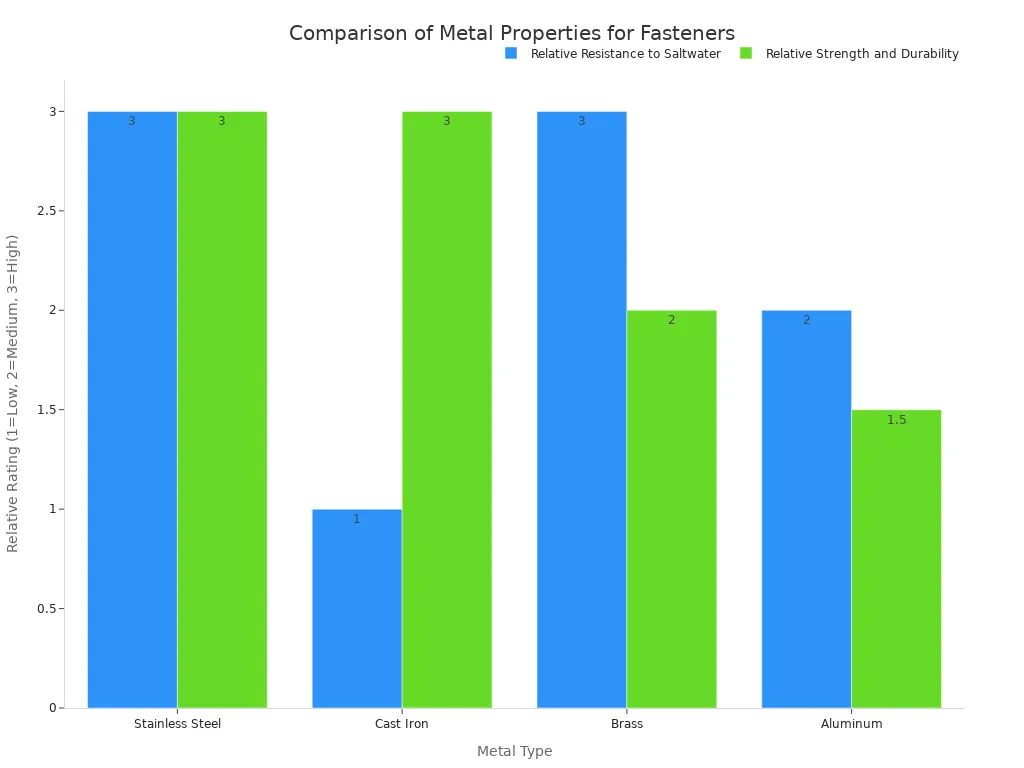
Environmental conditions like moisture and chemical exposure directly influence material choice.
| Environment | Recommended Material | Top Brand Choice |
|---|---|---|
| Marine / Saltwater | C464 Naval Brass, 316 Stainless | Crosby |
| Chemical Exposure | Specialized Alloys, Stainless Steel | Crosby, RUD |
| General Indoor/Outdoor | C360 Brass, Coated Steel | Simpson, Hilti |
Budget vs. Brand Tier
| Budget Level | Brand Tier | Best For |
|---|---|---|
| Premium ($$$) | Hilti, Crosby, RUD | Critical safety or durability |
| Value ($$) | Simpson Strong-Tie | General purpose, balanced cost |
| Economy ($) | Generic Brands | Non-critical, light-duty tasks |
The 2026 analysis confirms clear leaders in the brass swivel eye bolt market. Professionals should consider these key findings for their next project.
- Hilti’s heavy-duty series delivers unmatched strength and reliability. It stands as the top choice for critical industrial scenarios.
- Simpson Strong-Tie remains the smartest option for users prioritizing value. It provides dependable performance for most general applications.
- Crosby is the undisputed durability champion for corrosive settings like marine or chemical plants.
Ultimately, a project’s specific load, environmental conditions, and budget should guide the final selection.
FAQ
Why is a swivel eye bolt better than a standard one?
A standard eye bolt is only safe for perfectly vertical lifts. Angled pulls create dangerous bending stress. A swivel eye bolt rotates to align with the force. This design maintains its full load capacity, making it essential for safe angled lifting.
What does a 5:1 safety factor mean?
A 5:1 safety factor means the bolt’s ultimate breaking strength is five times its rated Working Load Limit (WLL). This crucial buffer accounts for unexpected dynamic forces during a lift, providing a significant margin of safety for personnel and equipment.
Can I use a brass bolt with steel components?
Pairing brass with steel can cause galvanic corrosion in wet environments. Naval brass (Crosby) has better compatibility with stainless steel. For critical applications, users should consult an engineer to ensure material compatibility and prevent premature failure.
How often should I inspect my swivel eye bolts?
Inspection frequency depends on usage. ASME B30.26 provides detailed guidelines.
- Frequent Use: Inspect before each lift.
- Periodic Use: Conduct thorough inspections monthly to annually. Always remove a bolt from service if it shows signs of wear, damage, or corrosion.
Is a higher price always worth it for an eye bolt?
Not always. The best value comes from matching the bolt to the application. A premium Hilti bolt is necessary for critical lifting. A cost-effective Simpson Strong-Tie bolt is perfectly suitable for general architectural use where loads and risks are lower.
What is the main advantage of naval brass?
Naval brass (C464) contains a small amount of tin. This addition gives it superior resistance to corrosion, especially from saltwater. It makes brands like Crosby the top choice for marine rigging, offshore platforms, and other harsh, corrosive environments.