Standard eye bolts are often inadequate for many lifting and rigging applications. Their use in angular heavy lifting presents significant safety risks. Proper hardware selection is critical in the lifting and rigging industry.
A study of crane incidents revealed a critical point about hardware failure:
- 27% of incidents involved dropped loads, often due to rigging failure.
Superior alternatives like hoist rings offer a solution. Hoist rings maintain full load capacity at angles where eye bolts fail. A custom fasteners manufacturer can supply specialized hardware, including hoist rings, Anchor Bolts, custom anchor bolts, and other custom fasteners for specific lifting needs.
Understanding the Dangers of Standard Eye Bolts in Heavy Lifting
Many rigging professionals mistakenly use standard eye bolts for complex lifts. This practice introduces significant risks. Understanding the inherent limitations of eye bolts is the first step toward improving job site safety. These fasteners are simply not designed for the dynamic forces present in most modern heavy lifting operations.
The Critical Limitations of Traditional Eye Bolts
Traditional eye bolts have a simple design. This design becomes a liability when the load is not perfectly vertical. Their limitations create dangerous and often unpredictable situations.
The Severe Danger of Angular Loading
Standard eye bolts are designed for in-line or vertical loads only. Applying a load at an angle, known as side-loading, introduces a dangerous bending force on the shank and threads. This force is something the eye bolts are not engineered to withstand, leading to a high risk of sudden and catastrophic failure.
Drastic Reduction of Working Load Limit (WLL)
An angular pull dramatically reduces the working load limit of shoulder eye bolts. The rated load capacities are only valid for a perfectly vertical (0-degree) pull. Even a small angle can render the hardware unsafe for the intended load. The reduction in the working load limit is severe.
| Direction of Pull | Adjusted Working Load Limit |
|---|---|
| 45 Degrees | 30% of Working Load Limit |
| 90 Degrees | 25% of Working Load Limit |
Alert: A 1,000 lb load lifted at a 45-degree angle effectively reduces the eye bolt’s working load limit to just 300 lbs. This massive derating is a primary cause of rigging failure.
High Risk of Bending, Shearing, and Fracture
The bending force from an angular load can cause the eye bolt to bend or deform. Once bent, the hardware is permanently compromised and must be removed from service. In a worst-case scenario, this stress can cause the eye bolt to shear off completely, dropping the load without warning.
Issues with Thread Engagement and Material Integrity
For eye bolts to achieve their full working load limit, the threads must be fully engaged in a clean, tapped hole. The receiving material must also be strong enough to support the load. Insufficient thread engagement or a weak base material can cause the eye bolts to pull out under load, even on a vertical lift.
Key Safety Principles Ignored by Improper Eye Bolt Use
Using eye bolts incorrectly violates fundamental rigging principles. These errors compromise the entire lifting operation and endanger personnel.
Miscalculating the Center of Gravity
Improper placement of eye bolts often occurs when riggers fail to locate the load’s true center of gravity. This results in an unbalanced load and unintended angular forces on the hardware, reducing the working load limit.
The Impact of Sling Angles on Hardware
Even with multiple eye bolts, the angle of the sling legs increases the force on each lifting point. A wider sling angle multiplies the tension, which can easily exceed the reduced working load limit of an eye bolt under an angular pull.
Violations of OSHA and ASME Standards
Using the wrong hardware violates industry regulations. Key standards govern the use of eye bolts and other rigging components.
- ASME B30.26 covers the identification, design factor, and proof load requirements for forged eye bolts.
- ASME B18.15 specifies the dimensions and capacities for eye bolts intended for lifting.
- OSHA defers to these ASME standards for best practices.
Failure to follow these standards, such as using an eye bolt without a manufacturer’s name or rated load, can lead to severe consequences. These include:
- Significant OSHA citations and fines
- Potential legal liability in case of an accident
- Costly operational downtime
Alternative 1: Hoist Rings – The Premier Choice for Angular Lifts
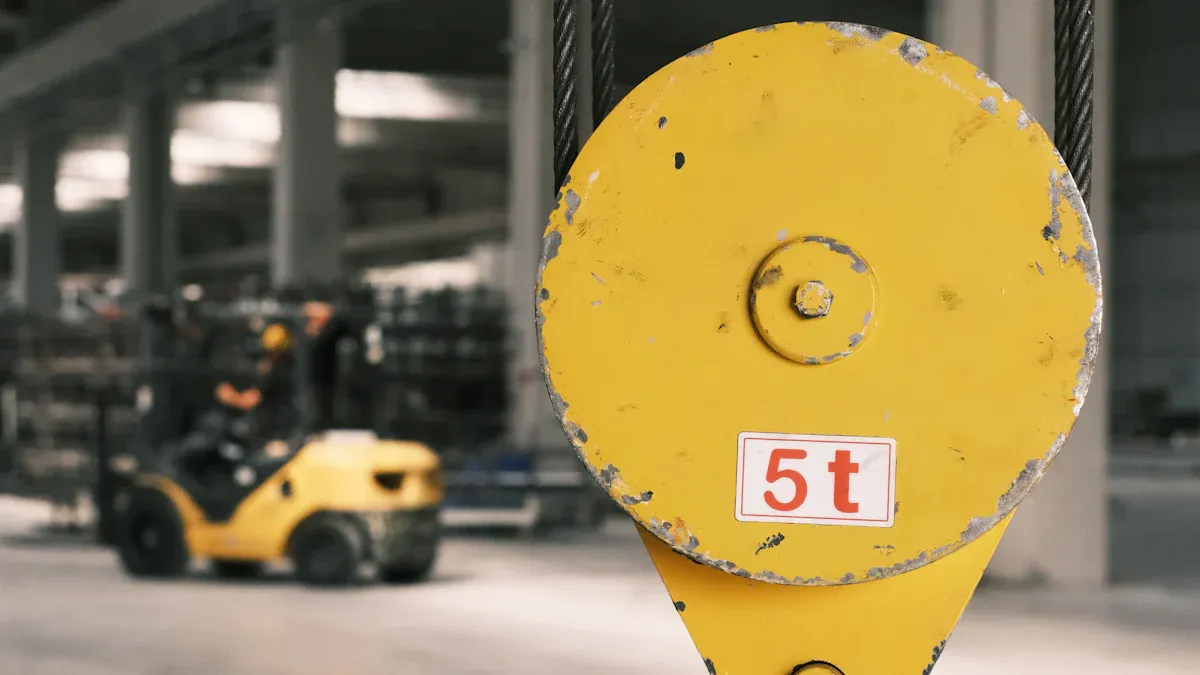
When angular lifts are necessary, hoist rings provide a superior and safer solution compared to standard eye bolts. These engineered devices are specifically designed to handle the dynamic forces of complex lifts, eliminating the primary dangers associated with side-loading. Using hoist rings is a critical step toward modernizing rigging safety and efficiency.
What Are Hoist Rings and How Do They Work?
Hoist rings are advanced lifting points that articulate to accommodate angular forces. Their unique mechanical design allows them to align perfectly with the sling angle, ensuring a safe and stable connection for any load.
Defining the Swivel and Pivot Mechanism
A hoist ring consists of two main components: a body that swivels and a bail that pivots. The body is a threaded bolt or base that secures the device to the load. The bail is a forged metal loop that the rigging connects to. This combination allows for a full range of motion.
How Hoist Rings Maintain Full WLL at Any Angle
The design of hoist rings allows them to maintain their full working load limit from any direction. The body can swivel a full 360 degrees, while the bail pivots 180 degrees. This articulation enables the bail to align directly with the lifting force. This prevents the introduction of bending stress, which is the main reason eye bolts see a drastic reduction in their working load limit during angular lifts. The hoist ring’s ability to adjust to the load’s movement is key to its consistent performance.
The Difference Between Hoist Rings and Swivel Eye Bolts
While both may swivel, hoist rings offer far greater functionality and safety than swivel eye bolts. The primary difference lies in the pivot action, which allows hoist rings to handle angular forces without a reduction in the working load limit.
| Feature | Hoist Rings | Standard Eye Bolts |
|---|---|---|
| Load Direction | Can handle a load from any angle | Designed for vertical (in-line) pulls only |
| Working Load Limit | Maintains 100% of working load limit at any angle | WLL is severely reduced at an angle |
| Articulation | Swivels 360° and pivots 180° | Fixed eye; no pivot action |
| Safety Risk | Low risk of failure in angular lifts | High risk of bending or shearing under side load |
Key Advantages of Using Hoist Rings for Heavy Lifting
The benefits of using hoist rings extend beyond just maintaining the working load limit. They offer enhanced safety, strength, and versatility for nearly any heavy lifting application.
360° Swivel and 180° Pivot Action
This full range of motion allows the hoist ring to adjust to shifting loads and accommodate multi-leg sling assemblies without compromising safety.
Complete Elimination of Bending Stress
Because the bail aligns with the sling, the load force is always directed through the center of the hoist ring. This design completely removes the dangerous bending stress that causes eye bolts to fail.
Superior Safety Factor in Dynamic Lifts
Hoist rings provide a higher safety factor when lifting, turning, or flipping a load. Their ability to move with the load prevents shock loading and ensures a stable connection throughout the operation.
Forged Alloy Steel for Maximum Strength
Manufacturers typically construct hoist rings from forged and heat-treated alloy steel. This material provides exceptional strength and durability, ensuring reliable performance under extreme stress.
Common Types of Hoist Rings
Different applications require specific solutions. There are several common types of hoist rings available to meet various operational needs.
Standard Center-Pull Hoist Rings
These are the most common types of hoist rings, designed for general-purpose lifting where the load is pulled through the center of the ring.
Side-Pull and Side-Load Hoist Rings
These specialized hoist rings are engineered for applications where a side pull is unavoidable, such as flipping dies or mounting on the side of a load.
Weld-On Hoist Rings for Permanent Applications
For permanent lifting points on machinery or structural components, weld-on hoist rings offer a secure, integrated solution.
Stainless Steel for Corrosion Resistance
In marine or chemical environments, stainless steel hoist rings provide excellent resistance to corrosion, extending the service life of the hardware.
Alloy Steel for Maximum Strength
For the most demanding heavy lifting tasks, alloy steel hoist rings deliver the highest possible capacity and fatigue resistance. These are one of the most popular types of hoist rings.
Best Use Cases for Hoist Rings
The superior design of hoist rings makes them the ideal choice for a wide range of complex lifting and rigging applications. Their ability to handle angular forces safely opens up possibilities where standard hardware would fail. Certain scenarios in manufacturing, fabrication, and installation particularly highlight their advantages.
Lifting, Turning, and Flipping Dies and Molds
Handling large dies and molds is a common but high-risk task. These components are not only heavy but also require frequent turning or flipping for maintenance and positioning. The articulation of hoist rings allows operators to safely manipulate the load without introducing dangerous side-loading stress. This makes them essential lifting equipment in many industrial settings.
- Automotive Stamping: Facilities use hoist rings for precise die handling during production line changes.
- Stamping Facilities: General stamping operations depend on these rings for lifting and turning large, expensive molds safely.
Handling Unbalanced or Shifting Loads
Many heavy objects have an off-center or unknown center of gravity. When lifted, an unbalanced load will tilt until its center of gravity is directly below the lifting point. This tilting action puts an immediate angular force on the connection hardware. Hoist rings automatically pivot and swivel to align with the sling angle, safely accommodating the shift and maintaining the full capacity of the connection. This prevents shock loading and ensures the load remains secure.
Note: The ability of hoist rings to adjust to a shifting load is a critical safety feature. It protects both the object being lifted and the personnel on the ground.
Any Application Requiring Side Loading
Any lift that is not perfectly vertical is a side-loading scenario. This is the exact situation where standard eye bolts experience a dangerous reduction in their working load limit. Hoist rings are engineered specifically for this purpose. They maintain 100% of their rated load capacity even when the pull is at a full 90-degree angle. This makes them the default, safe choice for any lift where a straight, vertical pull on the hardware is not possible.
Machinery and Heavy Equipment Installation
Placing heavy machinery requires precision and control. Installers often need to lift, slide, and nudge a heavy load into its final position. This process involves numerous small, angled pulls. Using hoist rings provides the flexibility to maneuver the equipment safely without needing to reposition the overhead crane for every minor adjustment. The rings articulate to follow the direction of the pull, ensuring the load is always securely connected during the entire installation process.
Alternative 2: Lifting Lugs – Engineered for Maximum Strength
For applications involving extremely heavy or oversized loads, lifting lugs provide a permanent, engineered solution that surpasses the capabilities of temporary hardware. Unlike hoist rings, which offer versatility, lugs are designed for raw strength and integration. They become a permanent part of the equipment, offering unparalleled reliability for specific, repetitive lifting tasks.
What Are Lifting Lugs?
Lifting lugs are custom-fabricated connection points that are either welded or bolted directly onto a heavy structure or piece of equipment. They are not off-the-shelf components but rather integral parts of the item being lifted.
Defining Permanent, Integrated Lifting Points
A lifting lug functions as a dedicated attachment point designed to handle a specific load. Once installed, it provides one of the most secure anchor points possible because it is fused or bolted to the load’s main structure. This integration eliminates the risks associated with threaded hardware backing out or failing under stress.
Engineered vs. Non-Engineered Lugs
The distinction between engineered and non-engineered lugs is critical for safety. An engineered lug is designed by a qualified person who calculates the material thickness, weld size, and geometry needed to support the intended load safely.
Warning: A non-engineered lug, often created without proper calculations, is extremely dangerous. It presents an unknown capacity and a high risk of failure, which can lead to catastrophic accidents.
Pad Eyes as a Common Form of Lifting Lug
A pad eye is a common type of lifting lug. It typically consists of a flat plate with a hole, or “eye,” cut into it for a shackle to pass through. This plate is then welded to the surface of the load, providing a simple yet robust connection point.
Key Features and Advantages of Lifting Lugs
Lifting lugs are the preferred choice in heavy fabrication and manufacturing due to their immense strength and durability. Their advantages are rooted in their custom-engineered and integrated design.
Custom Engineered for Specific, High-Capacity Loads
Engineers design each lug for a single purpose: to lift a specific load at a predetermined angle. This custom approach ensures the lug can handle the unique stresses of the application. The design process follows strict industry standards to guarantee safety and performance.
- ASME BTH-1 (“Design of Below-the-Hook Lifting Devices”) governs the design of the lug itself, especially the pin connection, to prevent shear or tension failure.
- AISC (American Institute of Steel Construction) manuals provide guidelines for the structural steel and welding requirements to support the load.
Unmatched Strength and Structural Durability
Because lugs are welded or bolted with high-strength fasteners, they become part of the structure they are attached to. This creates a connection with exceptional strength and durability, capable of withstanding immense forces without deformation.
Integrated Design for a Seamless Connection Point
The integrated nature of a lifting lug eliminates many potential failure points found in temporary hardware. There are no threads to strip or mismatched components to worry about. The connection is direct, simple, and incredibly strong.
Ideal for Extremely Heavy and Oversized Loads
Lugs are the go-to solution for lifting massive objects like pressure vessels, bridge sections, and large machinery components. Their ability to be custom-designed for a specific load makes them suitable for weights far exceeding the capacity of standard rigging hardware.
Types of Lifting Lugs
Lugs are generally categorized by their attachment method. The choice between them depends on the base material, the application, and whether welding is permissible.
Weld-On Lifting Lugs
Weld-on lugs are the most common type. A certified welder permanently attaches them to a steel structure. This method provides the strongest possible bond, making the lug an integral part of the equipment.
Bolt-On Lifting Lugs
Bolt-on lugs are used when welding is not practical or desired. They are attached using multiple high-tensile bolts. While still considered a permanent fixture, they can be removed and inspected if necessary.
Best Use Cases for Lifting Lugs
Lifting lugs are the definitive solution for specific, high-stakes lifting and rigging applications. Their engineered design makes them indispensable in industries where strength and reliability are paramount. Certain scenarios perfectly illustrate their value over temporary hardware.
Heavy Structural Steel Fabrication
Fabrication shops produce massive steel components like beams, columns, and trusses for buildings and bridges. These items are incredibly heavy and must be moved multiple times during production and transport.
- Engineers design and place weld-on lugs at strategic points on these structures.
- This allows for safe and efficient handling within the facility.
- The lugs provide a known, reliable capacity for every move, ensuring structural integrity is maintained throughout the fabrication process.
Shipbuilding and Offshore Rigging
The marine and offshore industries build enormous structures, from ship hulls to oil rig modules. These components weigh thousands of tons and must be assembled with absolute precision. Lifting lugs are critical in these environments.
Industry Standard: Shipbuilders weld large pad eyes directly onto hull sections and superstructures. These integrated points allow massive crane systems to lift and position the sections for assembly, ensuring a secure connection even in challenging offshore conditions.
Manufacturing Large Pressure Vessels and Tanks
Manufacturers of large industrial equipment, such as pressure vessels, boilers, and storage tanks, rely on lifting lugs. These cylindrical items are often awkward to handle and extremely heavy. Engineers calculate the precise location for lugs to ensure a balanced and stable lift. The lugs become a permanent feature, used for initial transport, installation, and future maintenance. This planned approach to lifting prevents damage to the vessel and ensures personnel safety.
Permanent Lifting Points on Heavy Machinery
Many large pieces of industrial machinery require periodic removal for service or replacement. A generator, turbine, or large press may need to be lifted out of its operational position.
- Manufacturers often install permanent lifting lugs on the machine’s frame during its initial construction.
- These pre-engineered points simplify future maintenance tasks significantly.
- Technicians can confidently attach rigging to these designated points, knowing they are designed to support the machine’s full weight safely.
Alternative 3: Shackles – The Versatile Rigging Connector

While hoist rings and lifting lugs serve as primary anchor points, shackles function as essential connectors in a rigging assembly. They are not direct alternatives to eye bolts for threading into a load. Instead, they complete the connection between the lifting device, the sling, and the load’s attachment point. Their versatility makes them a cornerstone of safe and effective heavy lifting operations.
The Role of Shackles in Heavy Lifting Assemblies
Shackles are the fundamental building blocks of almost any complex rigging setup. They provide a secure and reliable method for connecting different components.
Functioning as a Key Connector
A shackle acts as a removable link in a lifting and rigging system. It connects slings, wire rope, chain, and other hardware to a lifting point, such as a hoist ring or a lug. This function allows riggers to assemble and disassemble lifting configurations quickly and safely.
Understanding the Body, Pin, and Ears
A shackle has three main parts. The “body” is the main curved portion. The “ears” are the sections with holes at the end of the body. The “pin” passes through the ears to close the shackle. The load should always be applied to the body to maintain the shackle’s rated capacity.
Key Features and Advantages of Shackles
Shackles are indispensable in rigging due to their strength, adaptability, and the wide range of options available. They provide solutions for countless connection challenges.
High Versatility in Complex Rigging Setups
The primary advantage of shackles is their versatility. Riggers use them to create secure anchor points, connect multiple sling legs, and join different types of rigging hardware. This adaptability is crucial for building safe lifting assemblies.
Providing Secure Connections for Slings
Shackles offer a rated and reliable connection point for all types of slings. They ensure that the sling eye is not damaged and that the connection can handle the forces involved in the lift.
Safely Accommodating Multi-Leg Bridles
When using a shackle with a multi-leg sling, riggers must follow specific safety rules to prevent failure. Proper rigging technique is critical.
- The sling legs must rest on the shackle body, never on the pin.
- The included angle between sling legs should not exceed 120 degrees.
Wide Range of Sizes, Types, and Capacities
Shackles come in a vast array of sizes and types. This variety ensures that a rigger can always find the correct shackle with the appropriate capacity for any specific lifting task.
Types of Shackles for Lifting
Choosing the right type of shackle is critical for safety. The two most common types are anchor shackles and chain shackles, each designed for different load directions.
Anchor Shackles (Bow Type) for Multi-Directional Pulls
Anchor shackles, also known as bow shackles, have a larger, O-shaped body. This shape allows them to handle loads from multiple directions, making them ideal for use with multi-leg slings.
Chain Shackles (D-Type) for In-Line Pulls
Chain shackles, or D-shackles, have a narrower body. They are designed for straight, in-line pulls and should not be side-loaded. They are perfect for connecting two pieces of hardware in a straight line.
| Feature | Chain Shackle (D-Type) | Anchor Shackle (Bow Type) |
|---|---|---|
| Shape | Narrow “D” shape | Large, rounded “O” shape |
| Load Direction | In-line pulls only | Handles multi-directional pulls |
| Best Use | Single-leg slings | Multi-leg bridle slings |
Bolt-Type vs. Screw-Pin Shackles
The pin type determines the shackle’s suitability for certain rigging applications.
- Screw-Pin Shackles: These are best for temporary connections that are assembled and disassembled frequently.
- Bolt-Type Shackles: These use a bolt, nut, and cotter pin. They are required for long-term or permanent installations, especially where vibration could cause a screw pin to back out.
Specialized Synthetic Sling Shackles
These shackles have a wider, flatter body. This design increases the surface area for a synthetic sling, protecting it from damage and extending its service life.
Best Use Cases for Shackles
Shackles are fundamental components in safe rigging. Their proper application is essential for connecting slings and hardware securely. Professionals select specific shackles for distinct tasks to ensure the integrity of the entire lifting assembly.
Connecting Slings to Lifting Lugs or Hoist Rings
A shackle provides a smooth, broad surface for a sling eye. This connection method is superior to hooking a sling directly onto a lug. The shackle’s rounded body protects the sling from being cut or damaged under load. It creates a secure, rated connection point between the sling and the hardware attached to the load. This practice is a cornerstone of professional rigging.
Creating Multi-Point Bridle Sling Connections
Riggers frequently use anchor shackles to gather multiple sling legs at a single point. The wide, rounded body of a bow-type shackle can accommodate two or more sling eyes, creating a bridle hitch. This technique allows for balanced lifts on loads with multiple attachment points.
Important: When creating a bridle, riggers must ensure the sling eyes rest on the shackle body, not the pin. The angle between the sling legs should never exceed 120 degrees to avoid overloading the rigging components.
Side-Loading (Anchor Shackles Only)
Only anchor shackles are designed to handle side loads. Their O-shaped body distributes forces from multiple directions safely. This makes them the correct choice for multi-leg bridle slings where the pull is not perfectly in-line. Chain shackles (D-type) must never be side-loaded, as this can cause them to deform or fail. The anchor shackle’s ability to handle angular pulls makes it a versatile tool in complex rigging.
Long-Term or Semi-Permanent Connections (Bolt-Type)
For connections that will remain in place for extended periods, professionals use bolt-type shackles. These shackles feature a bolt secured with a nut and a cotter pin. This design prevents the pin from rotating or backing out due to vibration or load movement.
- Use Case: Attaching a sling to a spreader beam for repetitive lifts.
- Safety: They are mandatory for applications where a screw pin could loosen over time, creating a significant safety hazard.
This makes bolt-type shackles the industry standard for any long-term or critical rigging installation where reliability is paramount.
Comparison: Eye Bolts vs. Hoist Rings vs. Lugs vs. Shackles
Selecting the correct hardware is a critical decision based on the specific demands of the lift. Each component—eye bolts, hoist rings, lugs, and shackles—has a distinct role. A direct comparison based on key factors clarifies which device to use for maximum safety and efficiency.
Decision Factor 1: Load Angle and Orientation
The direction of the pull is the most important factor when choosing between eye bolts and their alternatives.
Straight Vertical Lifts (0 Degrees)
For a perfectly vertical lift with no angles, a properly installed shoulder eye bolt can be a suitable option. In this scenario, the load is in-line with the threads, and the hardware can support its full rated load capacity. However, even in this case, hoist rings offer a safety margin if any accidental side load occurs. Standard eye bolts are only for this ideal condition.
Angled Lifts (Up to 90 Degrees)
Angled lifts immediately disqualify standard eye bolts. The side load drastically reduces their rated load capacities and introduces severe bending stress. Hoist rings are engineered specifically for this purpose, maintaining their full strength at any angle.
| Feature | Shoulder Eye Bolts | Hoist Rings |
|---|---|---|
| Angled Lift Capacity | WLL is severely reduced (e.g., by 70% at 45 degrees). | Maintains 100% of WLL at any angle up to 90 degrees. |
| Movement | Fixed and rigid; cannot adjust to the load. | Pivots 180° and swivels 360° to align with the force. |
| Primary Failure Risk | Bending, shearing, or thread failure from side load. | Normal wear over time (when used correctly). |
Lifts Involving Rotation or Turning
Turning or flipping a heavy load requires hardware that can move with the object. The fixed design of eye bolts makes them extremely dangerous for this task, as rotation can cause them to unthread or shear. The 360° swivel and 180° pivot action of hoist rings allows them to articulate safely, making them the only appropriate choice for dynamic lifting.
Decision Factor 2: Permanence of the Lifting Point
The intended duration of the connection point also guides hardware selection.
Temporary and Versatile Setups
For temporary lifting points that need to be installed and removed frequently, threaded hardware like hoist rings and eye bolts are used. Hoist rings provide superior versatility and safety for varied tasks. Screw-pin shackles are also ideal for these quick, temporary connections.
Semi-Permanent Installations
For connections that will remain for an extended period but may eventually be removed, bolt-type shackles are the standard. They provide a secure connection that resists loosening from vibration.
Permanent, Integrated Points
When a permanent lifting point is required on a piece of machinery or a structure, lifting lugs are the solution. Welded or bolted directly to the load, they become an integral part of the item, offering unmatched strength and reliability for repetitive lifts.
Decision Factor 3: Load Capacity and Environment
The weight of the load and the operational environment are final considerations.
Standard Heavy Loads (Up to 20 tons)
Most industrial lifting falls within this range. Hoist rings are widely available in capacities that easily handle these loads. They offer an engineered and rated solution that is far safer than using oversized eye bolts for a heavy load.
Extremely Heavy Loads (Over 20 tons)
For exceptionally heavy lifts, custom-engineered lifting lugs are necessary. While standard hoist rings are available in capacities up to 250 tons, lugs are designed for a specific, massive load with virtually no upper limit. They are the default choice in shipbuilding and heavy fabrication.
Corrosive or High-Temperature Environments
Specialized materials are available for challenging conditions. Stainless steel hoist rings resist corrosion in marine or chemical settings. Similarly, manufacturers can fabricate lifting lugs from specific steel alloys to withstand extreme heat or corrosive elements, ensuring safe performance. Using the wrong material, like standard eye bolts in a corrosive area, can lead to rapid degradation.
Quick Reference Comparison Table
Understanding the correct hardware for a specific task is crucial for safe operations. The following scenarios illustrate the best choice for common lifting challenges.
Scenario: Lifting an Engine Block at an Angle
Lifting an engine block often involves an angular pull due to its shape and center of gravity. This situation creates a dangerous side load.
- Incorrect Choice: A standard eye bolt. Its capacity drops dangerously when side-loaded, creating a high risk of bending or shearing.
- Correct Choice: A hoist ring. The hoist ring’s bail pivots and swivels to align with the sling’s angle. This action eliminates bending stress and maintains 100% of the rated load capacity.
Professional Tip: Always use hoist rings for lifting objects with an off-center or unknown center of gravity. They automatically adjust to the load’s movement.
Scenario: Permanent Point on a Steel Beam
A fabrication shop needs a permanent, reliable lifting point on a large structural steel beam for repetitive handling.
- Incorrect Choice: A threaded eye bolt or hoist ring. These are not designed for permanent structural integration.
- Correct Choice: A weld-on lifting lug. An engineer designs the lug for the specific load. A certified welder attaches it, making the lug an integral part of the beam. This provides unmatched strength and reliability for the life of the structure.
Scenario: Connecting a 2-Leg Sling to a Load
A rigger needs to connect a two-leg bridle sling to a single lifting point on a piece of equipment.
- Incorrect Choice: Hooking both sling eyes directly onto a hoist ring or lug. This can damage the sling and create unsafe loading conditions.
- Correct Choice: An anchor (bow-type) shackle. The shackle connects to the lug or hoist ring. The wide body of the anchor shackle safely accommodates both sling eyes. This method completes the rigging assembly correctly and protects the equipment.
Scenario: A Simple, Straight Vertical Lift
An operator needs to perform a simple, straight vertical lift of a component with a pre-tapped hole.
- Acceptable Choice: A shoulder eye bolt. In this ideal scenario (a 0-degree vertical pull), a properly installed eye bolt can function at its full rated capacity. The shoulder must be flush with the load surface.
- Superior Choice: A hoist ring. Even in a straight lift, a hoist ring provides an extra layer of safety. If the load shifts or swings unexpectedly, the hoist ring will articulate to prevent dangerous side-loading. This makes it the safer option for any professional rigging operation.
Installation and Torque Specifications
Proper installation is as critical as selecting the right hardware. A high-quality component can fail if it is not installed correctly. Following manufacturer guidelines and industry standards for installation ensures that the lifting hardware performs to its rated capacity.
Proper Installation of Threaded Anchors
Threaded hardware like hoist rings and eye bolts depends on a secure connection with the load. Any error during installation can compromise the entire lift.
Preparing and Inspecting the Tapped Hole
Before installing any threaded anchor, a qualified person must inspect the receiving hole.
- The hole must be clean and free of debris, grease, or metal shavings.
- Threads must be undamaged and conform to the bolt’s specifications.
- The surface around the hole must be flat and smooth to allow the hardware to sit flush.
A compromised tapped hole cannot provide the necessary strength to support the load.
Correct Tightening and Torque Values
Over-tightening or under-tightening a threaded lifting point is a common and dangerous mistake. Manufacturers provide specific torque values for their products.
Alert: Always use a calibrated torque wrench to tighten hoist rings and eye bolts. Guessing the tightness by hand can lead to thread stripping or insufficient clamping force, both of which can cause failure under load.
Using Washers and Ensuring Full Thread Engagement
For hardware to achieve its full working load limit, the threads must be fully engaged. The bolt’s shank length must be correct for the hole’s depth. A hardened washer may be required to ensure the shoulder of the hardware seats perfectly flat against the load surface without bottoming out in the hole.
Welding Procedures for Lugs and Weld-On Rings
Welding creates a permanent, high-strength connection. This process requires precision and adherence to strict codes to guarantee safety.
Importance of Certified Welders
Only a certified and qualified welder should attach lifting lugs or weld-on hoist rings. These professionals have the training to create welds that meet the required strength and quality standards for overhead lifting. An improper weld is a hidden defect that can lead to catastrophic failure.
Pre-heating and Material Compatibility
Welders must understand the base material of the load. Certain high-strength or alloy steels require pre-heating before welding to prevent cracking. The welding procedure must also follow established codes. For example, the AWS D1.1 Structural Welding Code provides critical guidelines for welding lifting lugs to carbon steel structures, ensuring a durable and safe connection.
Post-Weld Inspection and Testing
After welding, a thorough inspection is mandatory. A qualified inspector performs a visual check for defects. In many cases, non-destructive testing (NDT) methods like magnetic particle or dye penetrant testing are required to find cracks invisible to the naked eye.
Safety, Inspection, and Compliance for Heavy Lifting Hardware
Selecting the correct hardware is only the first step in ensuring a safe heavy lifting operation. Rigorous adherence to standards, diligent inspections, and avoiding common errors are essential safety precautions. These practices guarantee the strength and durability of all components in a lifting and rigging assembly.
Adhering to ASME B30.26 Rigging Hardware Standards
The American Society of Mechanical Engineers (ASME) provides the definitive standards for rigging hardware. Compliance is not optional; it is a requirement for safe operations.
Manufacturer Identification and WLL Markings
Every piece of legitimate lifting hardware must display the manufacturer’s name or trademark and its working load limit. This information is critical. Hardware without these markings is untraceable and has an unknown capacity, making it unsafe for any lifting task. These markings confirm the hardware’s rated load capacities.
Design Factor Requirements
ASME standards mandate a specific design factor for rigging hardware, typically 5:1 for most components. This means the hardware’s minimum breaking strength must be five times its stated working load limit. This built-in margin provides a crucial buffer against unexpected dynamic forces during a lift.
Critical Inspection Procedures
Regular inspection is a non-negotiable part of any rigging program. It identifies potential failures before they can cause an accident.
Pre-Use Visual Inspection Checklist
Before each use, the rigger must perform a quick visual inspection of all hardware. This check looks for obvious signs of damage, such as cracks, bending, or excessive wear. This simple habit is the first line of defense against equipment failure.
Documented Periodic Inspections by a Qualified Person
In addition to daily checks, a qualified person must conduct thorough, documented inspections on a regular basis. These periodic inspections are more in-depth and create a historical record of the hardware’s condition, ensuring its long-term durability.
Criteria for Immediate Removal from Service
ASME B30.26 specifies clear conditions that require hardware to be removed from service immediately. Any component exhibiting these flaws has compromised integrity and poses a severe safety risk.
- Missing or illegible manufacturer identification or rated load capacities.
- Indications of heat damage, such as weld spatter.
- Bent, twisted, cracked, or stretched load-bearing parts.
- A 10% reduction in any original dimension due to wear.
- Excessive nicks, gouges, or corrosion.
- Damaged or excessive wear on threads.
- Any unauthorized welding or modifications.
- Inability of a hoist ring to pivot and swivel freely.
Common and Dangerous Mistakes to Avoid
Many rigging accidents result from preventable human error. Understanding these common mistakes is key to enhancing job site safety.
Mismatching Hardware Components and Sizes
Every component in a rigging assembly must be compatible. Using an undersized shackle or a hook with a lower capacity than the sling creates a weak link that will fail under load.
Exceeding the Working Load Limit (WLL)
The working load limit is an absolute maximum. Operators must never exceed it. Riggers must also account for sling angles, which can multiply the forces on hardware and easily surpass the component’s WLL.
Improper Installation or Failure to Torque
Threaded hardware must be tightened to the manufacturer’s specified torque value. Failure to do so can cause the component to fail under load.
Using Hardware with Visible Damage or Wear
Continuing to use hardware that shows any of the removal criteria is a dangerous gamble. Visible damage is a clear sign that the component’s durability is compromised and it can no longer support its designated load.
Choosing the correct lifting equipment is non-negotiable for safe lifting and rigging. Professionals must move beyond the limitations of standard eye bolts. The industry now has superior alternatives for modern lifting challenges.
- Hoist rings are the definitive solution for angular lifts. They preserve full load capacity where eye bolts fail.
- Lifting lugs provide unparalleled strength for permanent, engineered lifting points on massive equipment.
- Shackles serve as essential connectors that complete a safe rigging assembly.
By embracing hoist rings and abandoning outdated practices with eye bolts, professionals enhance operational safety. This protects personnel and improves efficiency in all lifting and rigging operations. Using the wrong hardware, like eye bolts for angled pulls, is a risk no one should take. The failure of eye bolts is preventable with proper hardware like hoist rings.
FAQ
Why are eye bolts unsafe for angled lifts?
Standard eye bolts are designed for vertical pulls only. An angular load introduces bending stress, which the bolt is not designed to handle. This action severely reduces the working load limit (WLL) and can cause the eye bolt to bend or shear, leading to catastrophic failure.
What is the difference between a hoist ring and a swivel eye bolt?
A hoist ring both swivels 360 degrees and pivots 180 degrees. This full articulation allows it to maintain 100% of its WLL at any angle. A swivel eye bolt only swivels and still suffers a dangerous capacity reduction when side-loaded, making it less safe for angular lifts.
When should a rigger use a lifting lug instead of a hoist ring?
A rigger should use a lifting lug for permanent, high-capacity lifting points on massive structures. Engineers custom-design lugs for specific, repetitive lifts on items like ship hulls or large machinery. Hoist rings are better for temporary, versatile lifting tasks where the anchor point is not permanent.
Can a rigger hook a sling directly onto a lifting lug?
No, riggers should not hook a sling directly onto a lug. This practice can damage the sling.
The correct method is to use a shackle as a connector. The shackle’s rounded body protects the sling eye from sharp edges and ensures a secure, rated connection.
What does the 5:1 design factor mean?
The 5:1 design factor is a safety requirement mandated by ASME. It means the hardware’s minimum breaking strength is five times its stated working load limit. This safety margin helps the hardware withstand unexpected dynamic forces that can occur during a lift.
How do I know when to remove hardware from service?
A qualified person must remove hardware from service immediately if it shows any signs of damage. This includes cracks, bending, excessive wear, heat damage, or missing manufacturer markings. Using damaged hardware poses an extreme safety risk and violates industry standards.